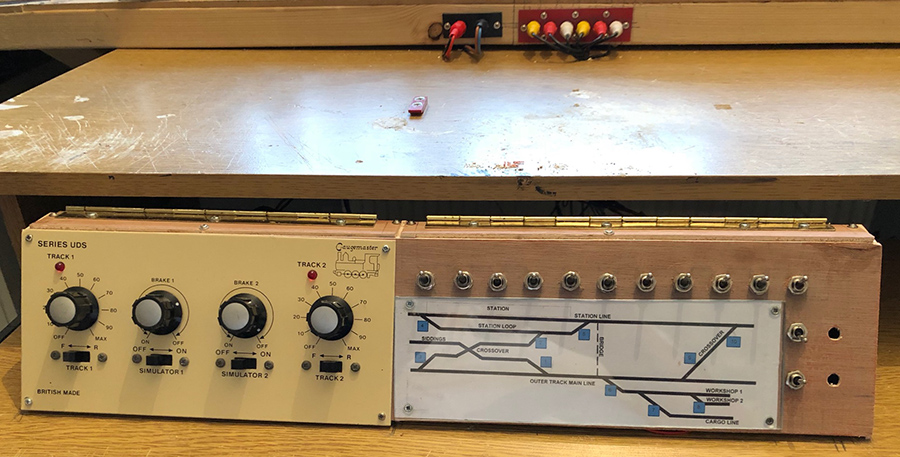
Louis has been in touch – he’s very cleverly ‘created’ a Marklin analog transformer:
“Hi Al
I am 65 years old and been on retirement for the last two years in Cape Town SA.
About a year ago I started on my first layout that is in a 4 x 4 meter (13 x 13 feet) room.
The last layout I worked on was in the sixties with my dad and I still have all the trains and tracks of that layout. These are all Marklin analog trains from about 1956 to 1965.
The layout has three loops and each loop can run two trains independently. This is possible by using the centre rail on the tracks for steam and diesel locos and the catenary system for the electric locos.
As everybody always want to see the track plan, I included it below. The layout is called CJH Junction in memory of my dad.
Because the trains are all analog AC and all turnouts and signals are electro mechanical I decided to keep the locos analog but use a computer system to control everything else. I am using the Adroit SCADA software that is used to control industrial sites.
It is even used in nuclear plants in Britain and by the Royal Navy. I am using it in the demo mode where there are 20000 inputs available for two hours before scanning stops. You only need to stop and start the server to have another 2 hours.
Interfacing to the layout, I had to develop electronics to control the turnouts and signals. These units are based on the Arduino Nano micro controller using software that I develop for these boards.
Below are some of the boards. The two on the left are multi input / output units and the pins are multi functional and can be programmed via the SCADA system. These include servo control, motor control, analog outputs, pulsed and latched outputs and sensing inputs.
The two units on the right have 6 digital controls and a MP3 player module. The one is used to play disco music at the town’s hotel and the other music at the church. The first song of the church is a single bell ring.
The SCADA system control the bell, ringing it the hour number on the hour and once on the half hour. I use the ringing of the bell to tell me the time when I am working in the workshop next to the train room.
There are other types of boards implementing other functionalities; these are railway crossing controls, keyboard inputs, traffic signal control and pedestrian crossing control. Power to the boards is 18V AC when controlling turnouts or 13V DC or above when 18V AC is not nearby. All DC voltages needed for the boards are generated on the boards, eliminating the need for multiple power supplies.
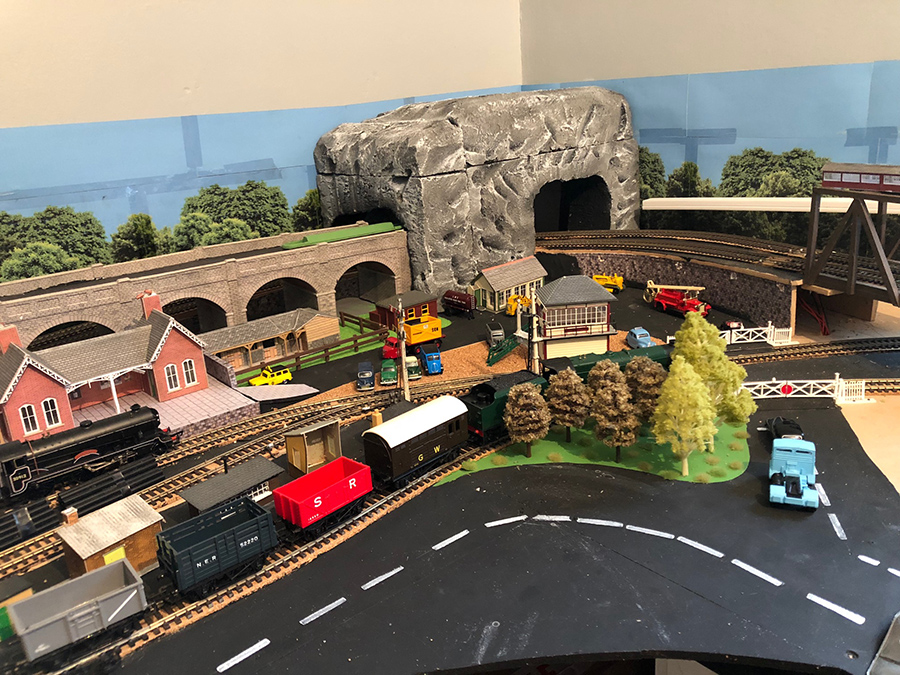
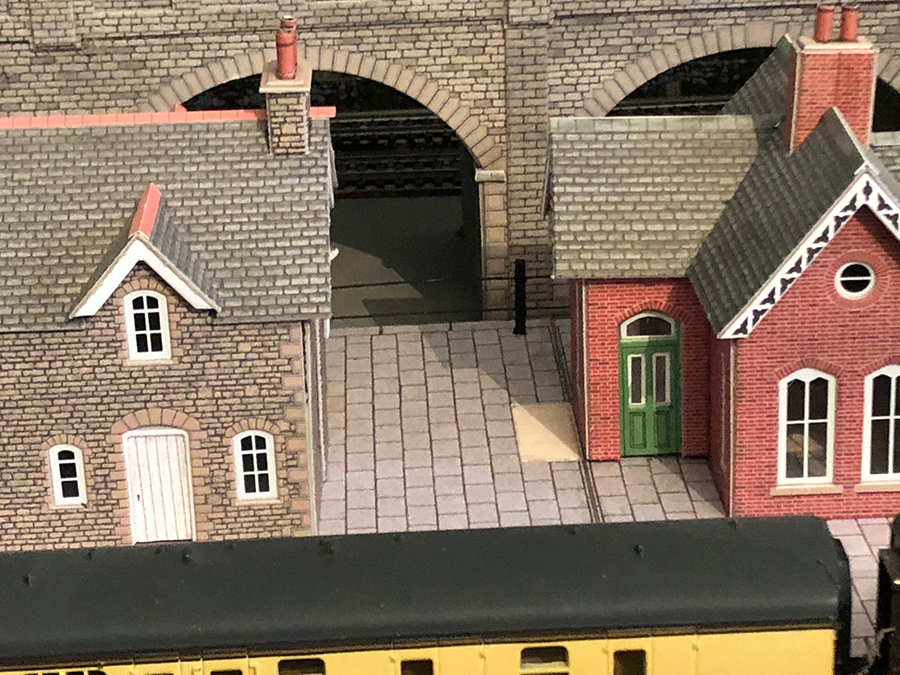
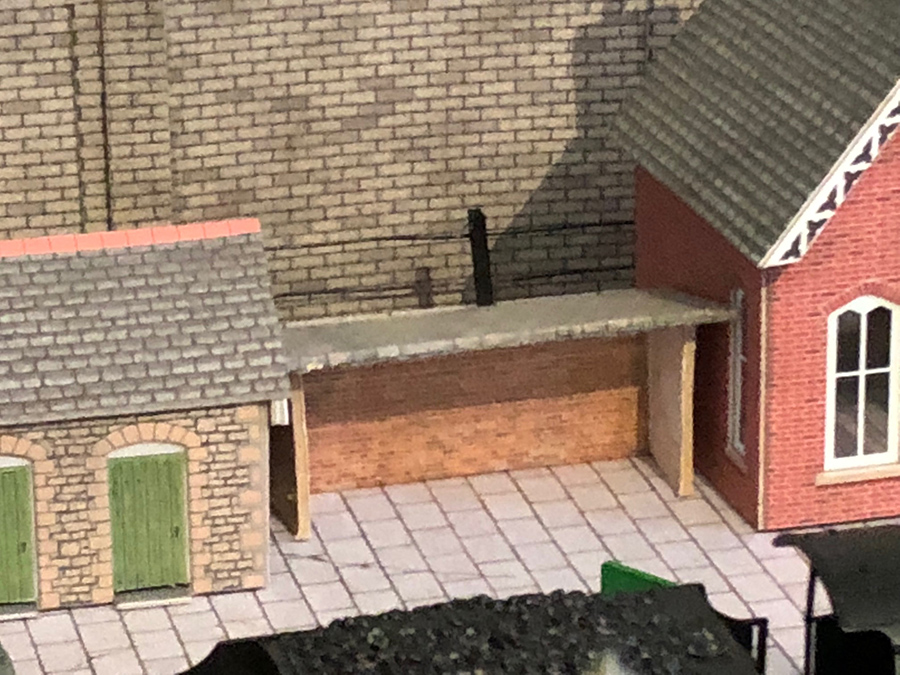
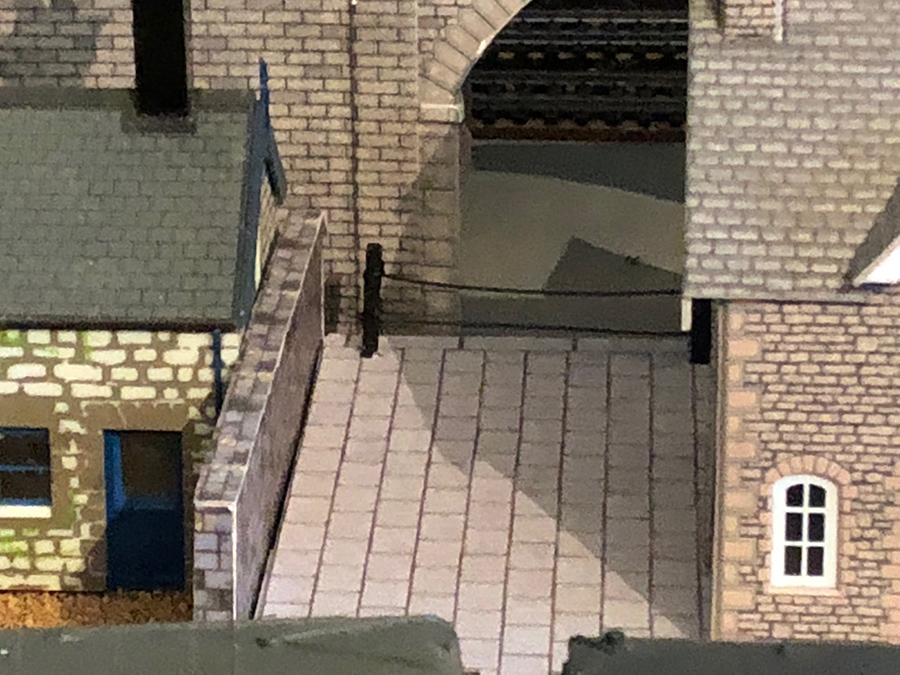
Below are some photos of the layout for my Marklin analog transformer:
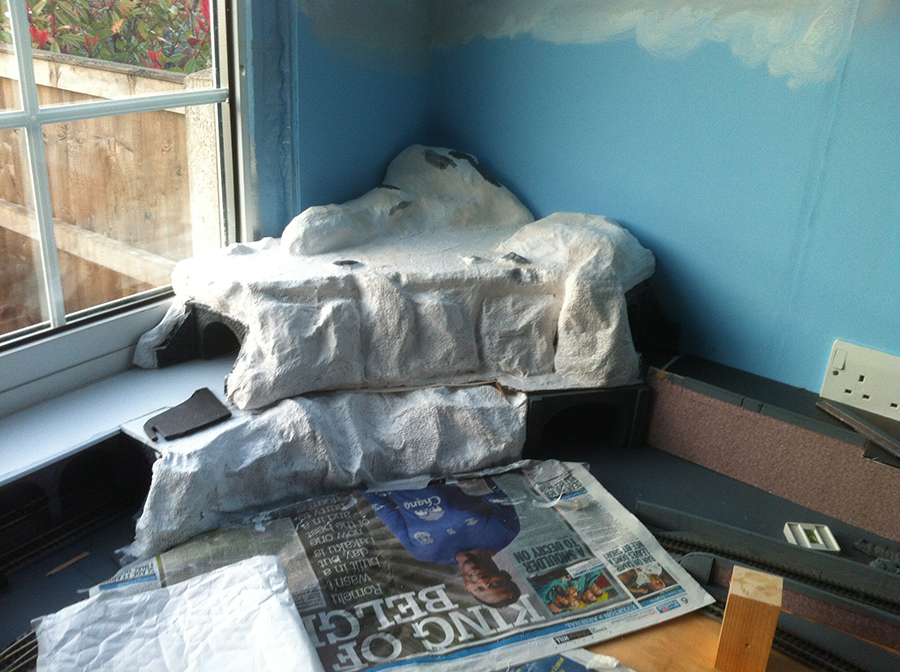
Table 01 with town on top of mountain – Right bottom of track plan
Table 03 with planned mine where the tree is. – Left bottom of track plan
Table 02 – Back part between tables 1 & 3. The front section will be the station.
If anybody wants more information or questions on my Marklin analog transformer, I will gladly provide it.
I have also put together a quick How To make pine trees if anybody is interested. I estimate that it will cost me about 5 dollars or less to make about a 100 trees.
Regards
Louis”
“Hello Al,
Like so many model railroaders I have decided to pick up the hobby in my retirement years.
As an adolescent I had a Lionel .027 layout but it was little more than one big oval with a side track or two and my Dad took care of the wiring issues. Later my son’s and I had an HO layout, but again it was a large oval with a couple of side spurs so I had no issues with the wiring.
Now that I am retired I wanted to rekindle some of the creative aspects of my personality and model railroading seemed like a good way to be creative. Two Christmases ago my wife gave me a Bachmann N gauge starter set, but a simple oval simply was not going to be sufficient. Thankfully my loving wife of 44 years is also very creative and she liked the idea of modeling a train layout so she did not object too strenuously when I started buying more track, engines, cars etc. Today I have a layout that is approximately 4ft x 7ft with four ovals nested inside the other.
Early on I found your blog and I have learned a great deal and enjoyed watching the videos from so many of your contributors. I purchased your e-publications and I have purchased a fairly large number of the paper buildings. My layout does not represent any specific line but it is geared towards an old west theme and many of the paper buildings work very well for my model. My wife and I very much enjoy watching Jim (I hope I have his name correct) do his tutorials on how to construct and customize these structures, he is a character and we like him very much!
The problem I am having is with the wiring of my switches. I have power controllers for each loop but I don’t really understand how to isolate each loop to it’s own control/power box while allowing the train to change from one track line to another. I know how to power the switch control but the use of insulating rail connectors and maintaining polarity eludes me. Can you or one of your contributors help me learn how to do this correctly?
Thank you for your help. Just for the record my wife and I retired six years ago and we down sized considerably. This is why I went to N gauge because it accommodates my ambitions while fitting the space available. We live in South Carolina (obviously U.S) in Murrell’s Inlet, about a mile as the crow flies from the beach. I can sit on my back porch, sipping my tea, and hear the waves on the beach. Life is simple and very good, mid-November and I am still wearing shorts and a T-shirt! Gotta love it!
Ed”
A huge thanks to Louis for sharing his Marklin analog transformer – my word, there is some clever stuff going on there. And yes, Louis, we’d love to learn more about it.
And who can help Ed? It’s a question that comes up a fair bit in my inbox.
That’s all for today folks.
Please do keep ’em coming.
And if today is the day you get started on your layout, the Beginner’s Guide is here.
Best
Al
PS Latest ebay cheat sheet is here.
PPS More HO scale train layouts here if that’s your thing.