The talented Dan has been back in touch, this time with some great tips on model railroad layout lighting:
“Lighting our layout is very important. We generally just think about having enough light to see everything. The first rule of thumb is that the higher the layout is the more light you need. We achieve this in various ways. Basic general overall with perhaps floods or spots.
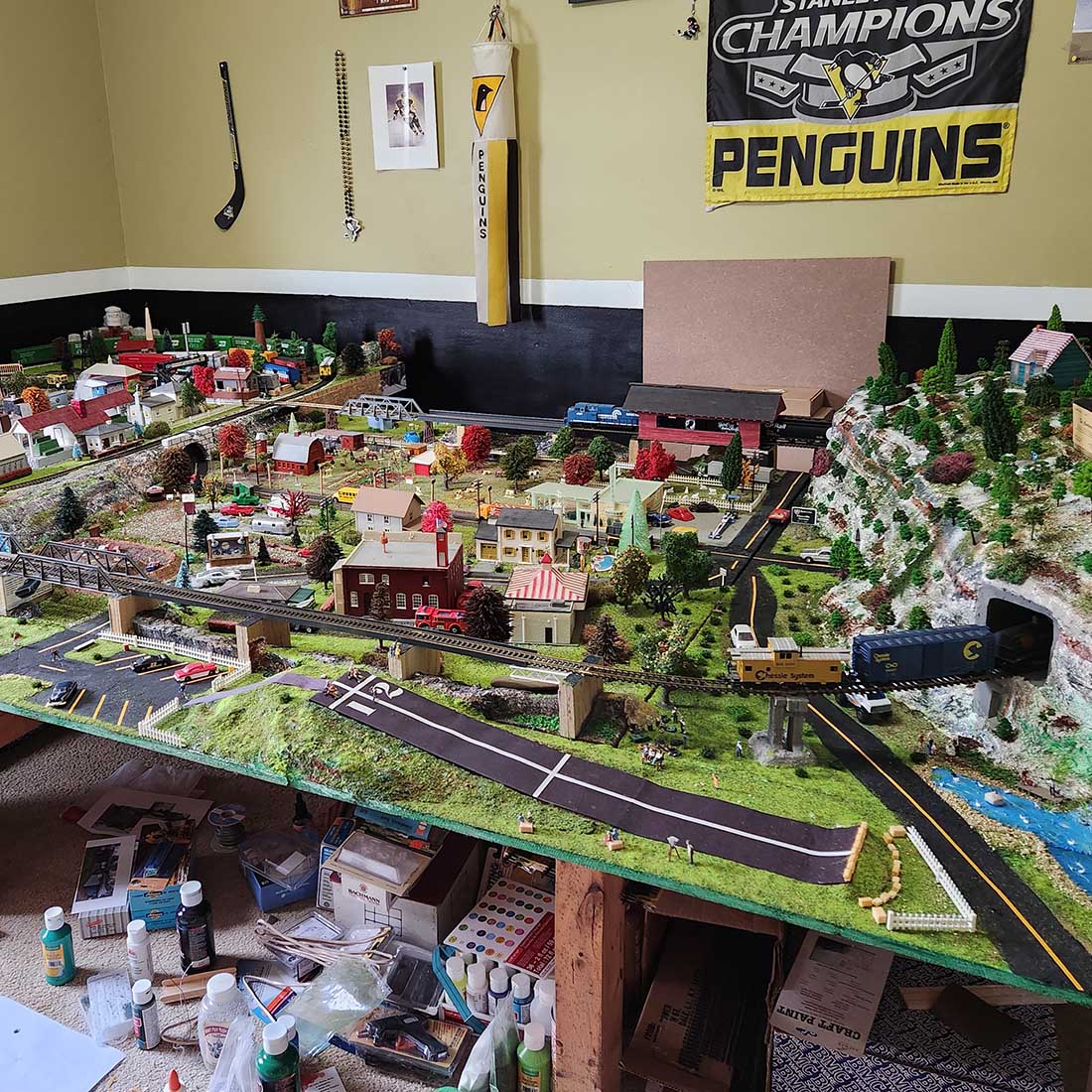
Photo 1 shows my overall lighting. Basically, fluorescent lights are well distributed.
This worked well for me. There are no areas of darkness or shadows. I wanted more or less a flat lighting If I wanted shadows, I would use some directional lamps to create the shadows I want. As is the layout photographs very well. I will show a few examples.
I use a flexible necked lamp with a 60 watt an incandescent bulb. I was an old reading lamp that you could extend the height of the light. My normal lighting is on 3 circuits.
The lights down the left wall are GE Light sticks. They have a warmer light level because I wanted that area to be redder to help with the desert look. It does not show much in this photo, but it does work. All the other lights are 50/50 on the 2 circuits.
Varying which lights I want, I can get the effects I will show you.
Photo 2 is a “sunset” view.
Photo 3 the same area without the “sunset” look.
Photo 4 is a scene I use sometimes at open houses. I don’t run trains over the trestle then because folks taking photos get a little too close for my comfort. I am busy talking and answering questions.
In fact, one of the braces at the fire barrel came up missing after such an occurrence.
So, I created this scene. A work crew fixing that issue.
This photo is in my “normal” lighting.
Photo 5 is with less normal lighting and using the lamp to bounce the light from the background behind the trestle.
Photo 6 has the same technique.
And photo 7 is a “Before” photo.
I hope you liked this. It is fun to put your model work in a different light.
Santa Fe Dan”
A big thanks to Dan for sharing his model railroad layout lighting tips.
You can see lots more of Dan’s work in the Hall of fame.
The talented Rob has been back in touch. This time he’s added a model ship to his stunning model railway:
“Hi Al,
It has been a bit quiet on my part of late. The reason that I have been so quiet is my latest project. I have been engrossed in building a ship in the scale of my railway, 4 mm per foot. The completed model is huge at 70 inches long. It looks fabulous to me as a background object behind the trains.
I started thinking seriously about building it in December. Here it is June, and I am just getting close to completion. When done, I will have weathering to do. That could take a while also. It has been a wonderful journey, and I have enjoyed every second of it.
The model is built from polystyrene plastic. I mostly used sheets of varying thicknesses. My inventory included 0.010″, 0.020″, 0.030″, 0.040″, 0.060″, and .125″ thick plastic. I also incorporated a number of shapes or strips in the finer details. I tried to fabricate most everything, from bollards to blocks to portholes. The only things I did not fabricate were the basic boats that form the lifeboats.
Styrene is welded by slightly melting it with a solvent, after which the two pieces flow together and become one. As a consequence, the ship is very lightweight but not particularly fragile. There are several videos detailing my progress on the project. The one here is about modeling canvas covers for things. In this case, I build covers for the lifeboats.
Thank you for all you do for the modeling community around the world.
Rob”
A huge big thanks to Rob for sharing his model ship update on his stunning layout.
Deans been back in touch. He’s added to the N scale mine kits on the blog:
“Greetings, Al, from across the great pond, from Dean in New Mexico.
In my last update I talked about filling in a hill and adding a gravel road (on my Santa Fe Northern N-scale layout) up to the location of a mine kit I was building using a Walthers N Scale Diamond Mine kit.
(A similar kit is also available in HO scale.)
Some of your readers suggested that I include some hints and instructions on how to build this kit.
Indeed, this is the hardest kit I have ever put together, particularly with my old shaking hands and fingers.
The entire assembly took over three weeks working sporadically. But the completed model is worth it.
See the video below to get a more complete picture of how I assembled this kit.
So here is what I learned: First, some general hints for a successful build which could be used for any kit you want to build:
Follow the instructions in the order that they are listed. I didn’t and I jumped ahead in a couple of spots. This led to difficulty in putting in a couple of the pieces and they had to be cut down to fit. No big problem, but it would have been easier If I had just followed the instructions.
Take your time in figuring out where and how to locate each piece. This can be difficult. In a couple of cases, I had to break apart joints to relocate a piece.
I was using Super Glue, medium consistency, and breaking joints did not lead to problems. If you use the kind of cement that welds the parts together, breaking parts apart might be impossible.
Use gluing aides as much as possible to hold pieces together correctly and make sure your joints are tight before final glueing. I’ll show examples of aides in the photos below.
Paint pieces before assembly, then touch up as needed when parts are together. I first sprayed the walls with aluminum paint then I weathered the parts with very dilute black paint followed by dilute red paint. These were smudged on with small cosmetic sponges.
Here are the tools I used:
Sprue cutters or nippers (Amazon).
A utility knife for trimming sprue points.
Nail files (grocery store) for final sanding.
Glue and applicator (Amazon). My Super Glue bottle came with several thin tubular dropper applicators which were very useful.
A square.
Paint. I used an airbrush and three colors of pre-mixed acrylic primer paint (Amazon) black, white, and gray. The paint came in the correct consistency for airbrushing. You could also use spray cans of paint.
In the first photo I’m holding a floor support to the loader building floor with clothes pins. Note how I’m squaring it up with the square.
In the next two photos I’m using my glueing jig (made from a square board with four metal plates attached). The pieces are held down with magnets and pieces of cardboard are used as spacers to help not to glue the parts to the jig
This shows one of the walls with window frames and glazing attached. The window frames were first glued in place then the glazing was attached. I used a foggy piece of transparency film since the glazing piece supplied by Walthers was not big enough to cover all the windows.
Above, I’m holding the final wall in place with a rubber band before glueing.
The two walls here were held with a 90-degree angle I 3D printed—you could make one out of a metal angle piece. It’s hard to see, but there is a slot in the white angle where the two pieces connect. The slot keeps the glue from running between the angle and the walls.
The stairs came in three parts which were very difficult to glue. Again, I printed out a small angle to help hold the pieces while gluing.
N scale mine kits:
I also 3D printed a rectangular piece to help hold the third part in place.
Here I’m holding the first two supports for the Slack Bin with magnets and my gluing jig. (Slack is small coal pieces and dust from the crushing process.)
And here is the final Slack Bin. This was a very difficult assembly to put together because of the many small parts.
And finally, two photos of the completed model. At this point I didn’t glue the roofs in place since I’m going to add lighting to this model.
I found I will have to relocate a passing track and loading spur in the location where I’m putting this building. I didn’t plan on this mine building when putting down the original track and the tracks were located too close together. Relocation and adding lights are two other installments in this saga.
As usual, see my YouTube video for lots more on this assembly:
If you leave any comments and questions below, I’ll try to answer them.
Thanks Al, for your great blog,
Dean”
A big thanks to Dean for adding to the N scale mine kits.