Terry has been in touch. He has a question: is there a way to switch between DC and DCC?
“Hi Al–I hope you or one of your readers may be able to help me with this question:
I currently have an old dc layout with the traditional block method where a single rail is connected throughout the layout and the other rail is insulated with plastic track connectors and used to define blocks–each with a separate on/off switch.
This way I can stop a train on a side-track-block,and run other trains around it.
I’m trying to convert to DCC where all rails are always powered and train movement is controlled through each engine not the track. I really don’t want to go through the hassle of removing all of the insulated joints.
The question is: can I just turn on all the existing switches in all the blocks without removing the insulated jointers, wire the transformer and controller for DCC and have it work properly.
I’ve asked this same question several times in other forums but have never gotten an answer. Hope your folks can help.
Thanks
Terry
Idaho USA”
Is there a way to switch between dc and dcc with complex layouts?
Please do post a comment below if you can help Terry.
As always, the clever stuff is in the comments – here was one of the first replies:
“Terry – absolutely you can!
My club layout is wired up this way, having been wired for analogue 30+ years ago, it now also has DCC docking stations and a command unit which we can plug in instead of the analogue controllers.
Now we run analogue on the first Tuesday of the month and DCC on the third.
Even for home use this can be useful (a) because it allows you to temporarily switch back to analogue if you want to run unconverted locos and (b) if you get a short circuit, you can switch out sections one by one until you identify the fault.
Richard”
A big thanks to Richard for helping with Terry’s Question: Is there a way to switch between dc and dcc with complex layouts?
Have a look at the comments below to see more – the comments are what I enjoy most about the blog.
Arnie’s (Hall of Fame member) has been in touch with his American Freedom train video:
“Hi Al,
I finally finished my video on the American Freedom Train (AFT).
I created my own replica in N scale of the original 1947 AFT locomotive and added to it 6 passenger cars of my own original paint scheme and my custom designed decals.
I created the passenger cars as a commemorative and tribute to the heroism and swelling pride of Americans following the World Trade Center attacks of 9-11-2001.
(These cars have their own 2001 Freedom Train locomotive I designed in 2002 to complement them in the style of the 1947 loco. But, if I can find the time, I am now thinking of creating a 2001 loco using a more modern diesel style.)
But here is my video of the newly created AFT loco of 1947-1949.
Once again, I am continuing the story line of Heritage celebrations and having the restored 1947 AFT loco lead an Excursion Train on a one day run through the Susquehanna Valley region.
I hope you will find it interesting and enjoyable.
Thanks again to you Al and the readers for all the support and encouragement to continue my modeling efforts.
Arnie.”
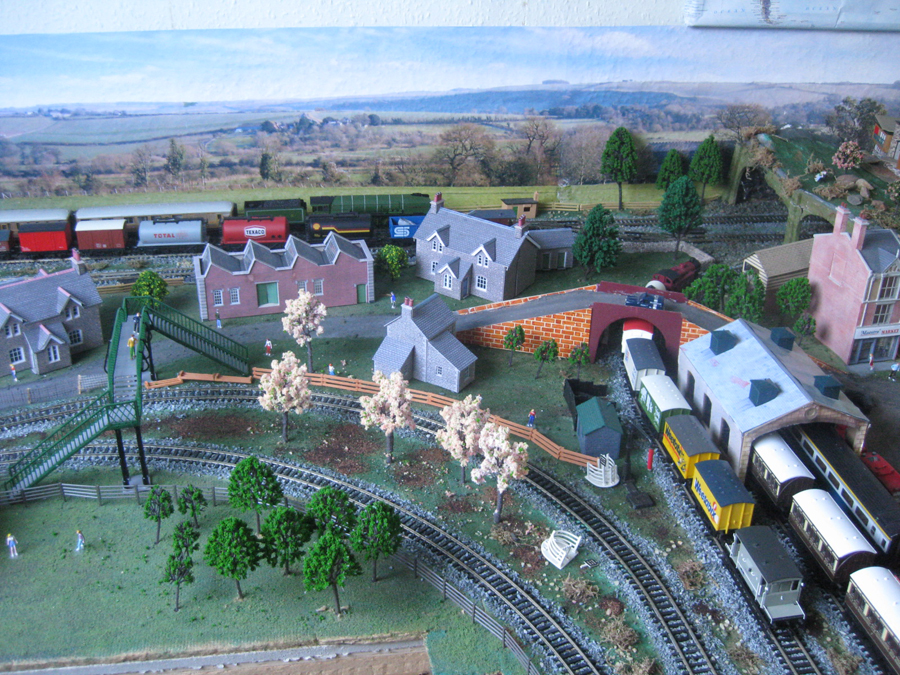
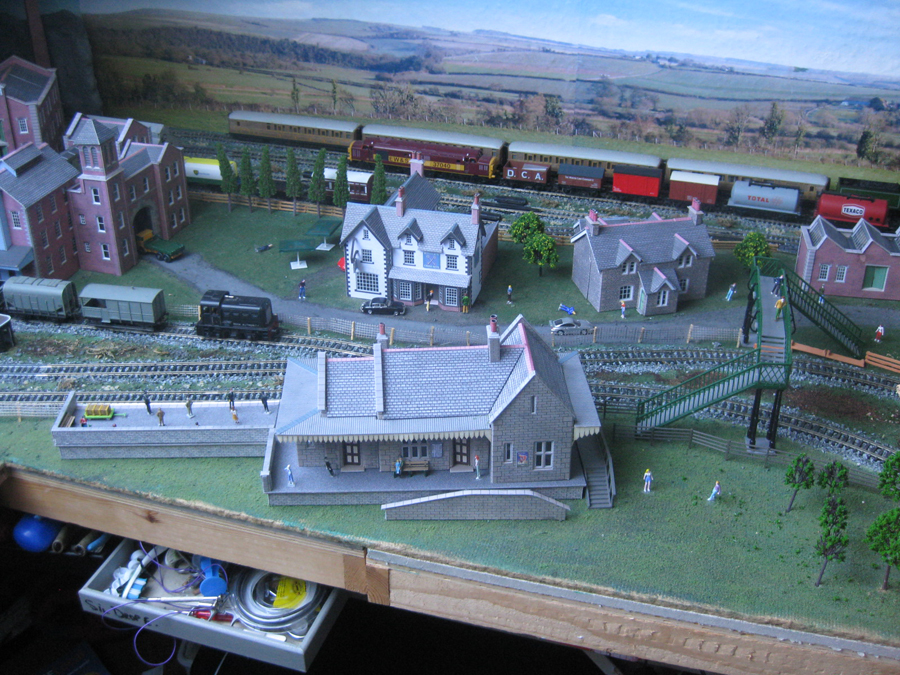
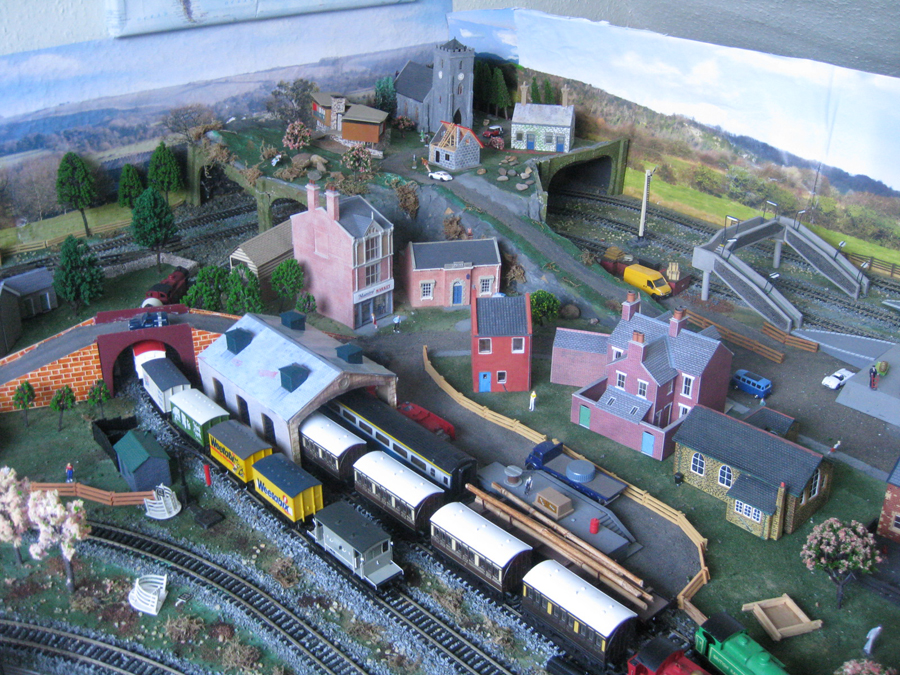
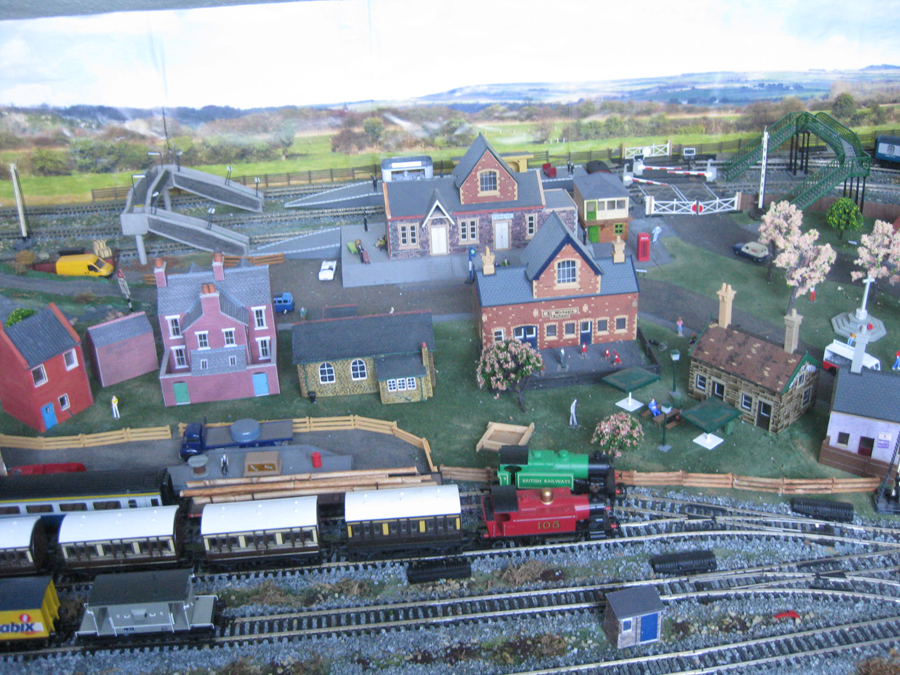
“Hi Alastair
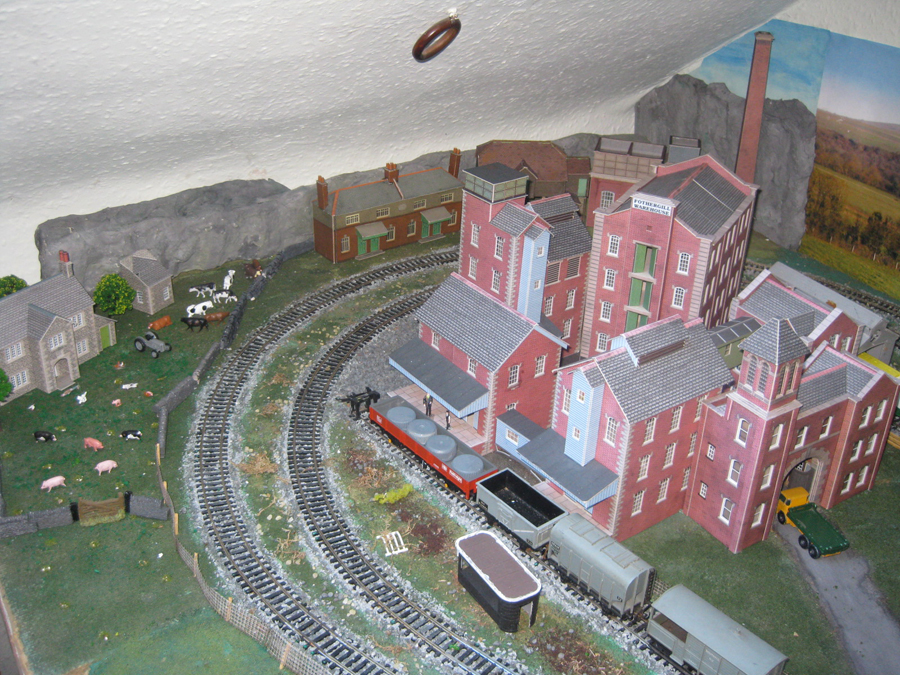
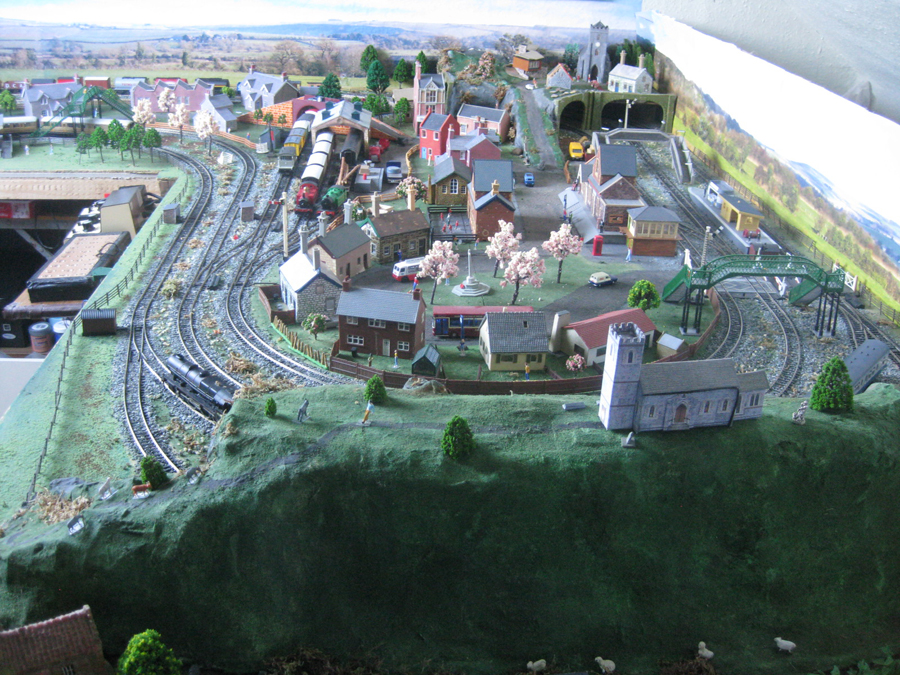
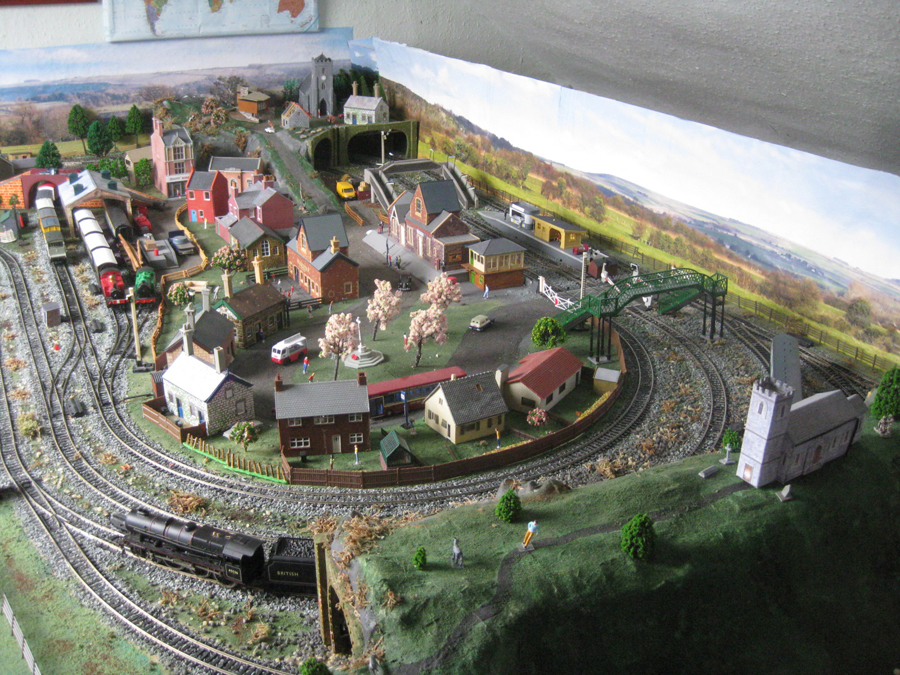
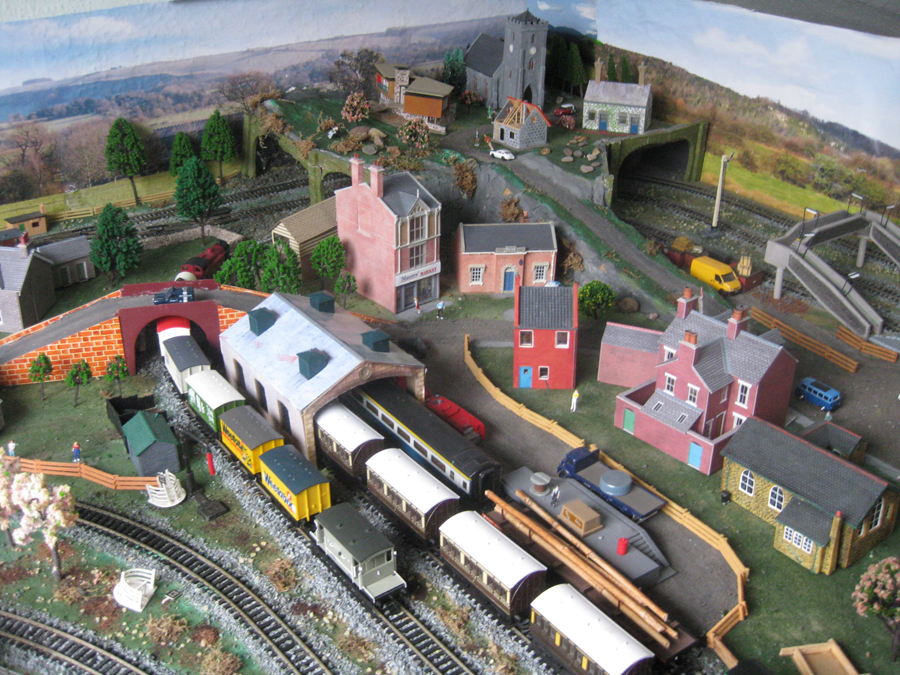
I enclose photos of my first attempt at a layout. It is the result of the last three winters.
It started out as 6 ft by 4ft and has grown into 10×4 with a 6×3 spur.I know it is not correct in time frame but with with the exception of the track and controllers 90% of everything has been from Ebay or Gumtree so it has evolved rather than planed.
I have found your Emails a great source of information.
As I get pleasure out of the creation of the layout rather than running it, I am now at a loss of where to go from here. I could always start again.
Regards
Tony”
“Hi Alistair
Have been getting all your mails since I started my N Scale Layout about 2 years ago and really enjoy seeing what is possible on a layout and also how ingenious modellers get to create their vision – sometimes on a shoestring budget.
My layout is nowhere complete and as it is basically a U shape unit about 30 centimetres wide and about 5 meters long running around our study. I ended up with situation of how to get sets from one level to the next as I don’t have space for the magic Helix. My layout (The St Matthews Island Railroad – named after my son, not a saint all the time but mostly!) depicts the seaside town on Moreton with some industries and a plateau above it. The trains need to move goods to and from the industries in the town and port up onto the plateau and interior of the island.
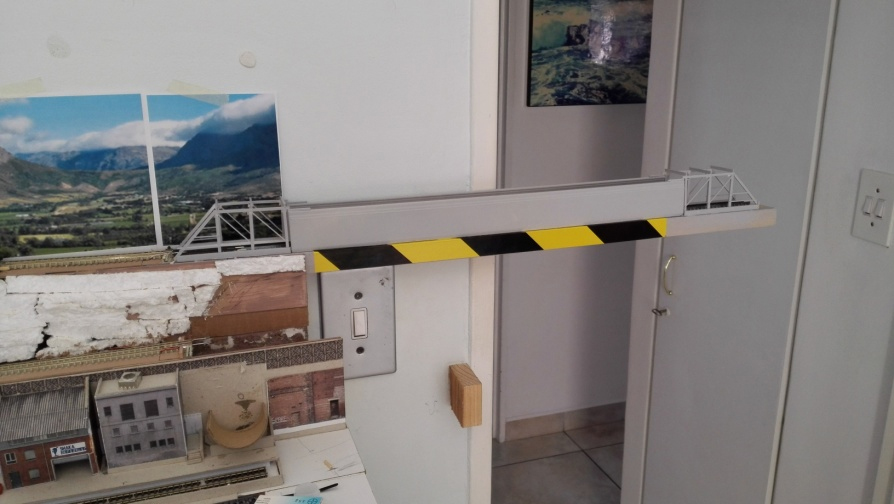
So after some investigation I came across those wonderful things called cassettes and the attachment shows a concept I am fine tuning to allow me to run trains “around” my island.
My layout is DC and is pretty hands on – no electric points, all hand operated with push pull mechanisms under the layout and the “finger of my Lord and Savoir” un-couplers . I want to play with my trains and not just watch them moving from one place to the next holding a consul like the kids of today in front of their computers….
Cassette concept for N Scale U Shape layout:
3 cassette mounting points to allow for sets to be moved onto next level or line
Created using Electrical Ducting mounted onto 1’ x 2’ timber plank.
Created Girder Beam Bridge set up just to create a decent effect.
2nd level.
Wooden block mounted to the wall is support for the lowest level which is set up under the frame holding the middle and top levels.
Relief buildings in foreground will be fixed to a removable panel which will give access to the lower level in case of derailment.
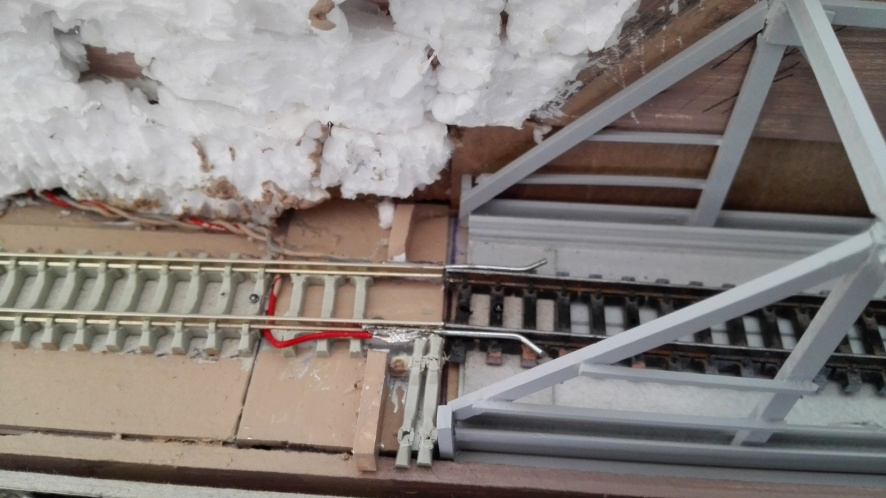
Electrical connections using paperclips soldered onto main rails, these have been tested and work fine.
One rail will be slit at one end to break circuit and stop the engine as it comes to the end of the cassette. When cassette is reconnected the other way around the engine will again pick up power to operate.
I will need to work on the rail alignment for finished product but this is just a prototype to see if concept works.
Problem is that all cassettes I make need to connect perfectly to all 4 exit points (3 on one side of layout and one on the other). This is going to be fun…..
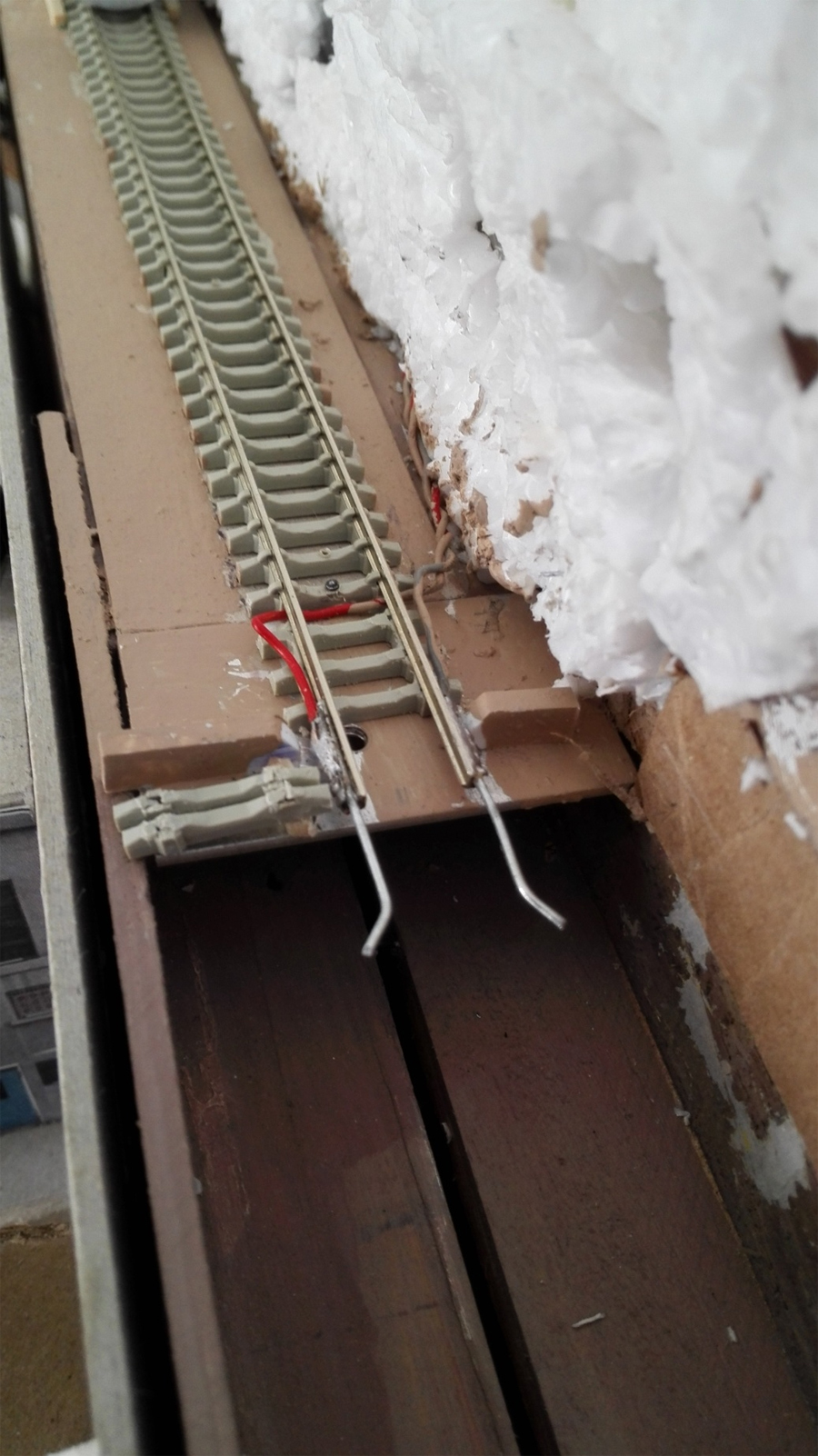
Main rail end point.
I used an L shaped piece of aluminium channel to form a lip under which the end of the cassette slides to secure the cassette in place.
The rails are raised off the aluminium to prevent any issues with current.
Keep up your postings as you are indeed helping many of us modellers bring to life something we have dreamt of and obviously spent many hours of work on.
Regards.
Colin”
A huge thanks to Arnie for sharing his American Freedom Train video. And to Colin and Tony.
I found Arnie’s video educational and fun – a joy to watch.
That’s all this time folks.
Don’t forget the Beginner’s Guide is here if you fancy rolling your sleeves up and getting stuck in.
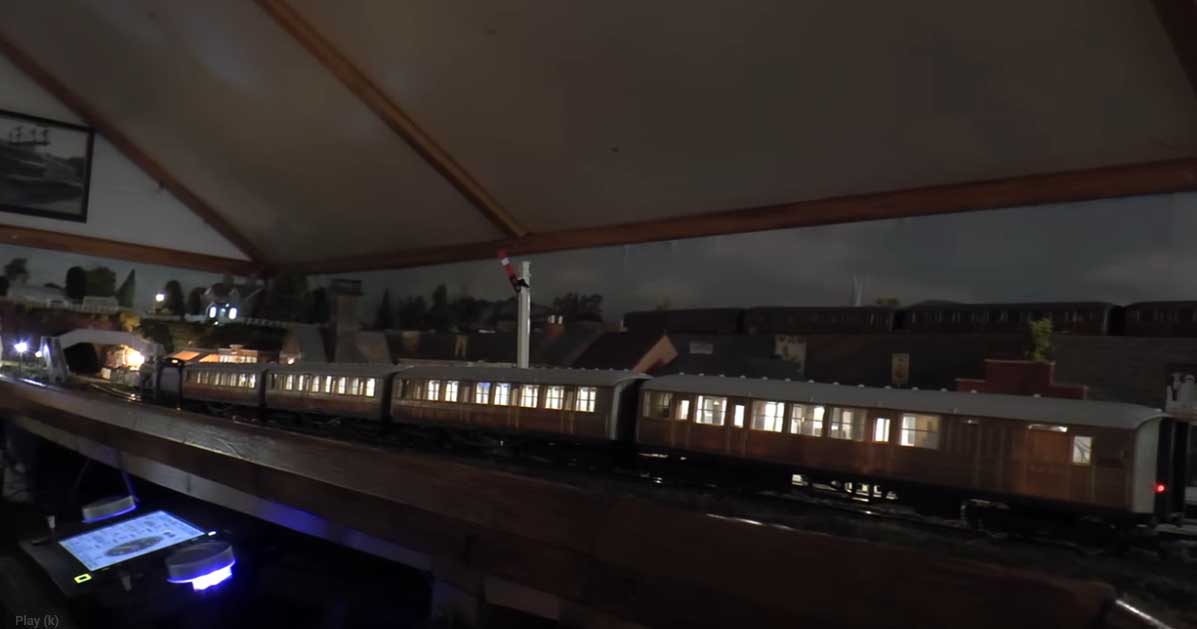
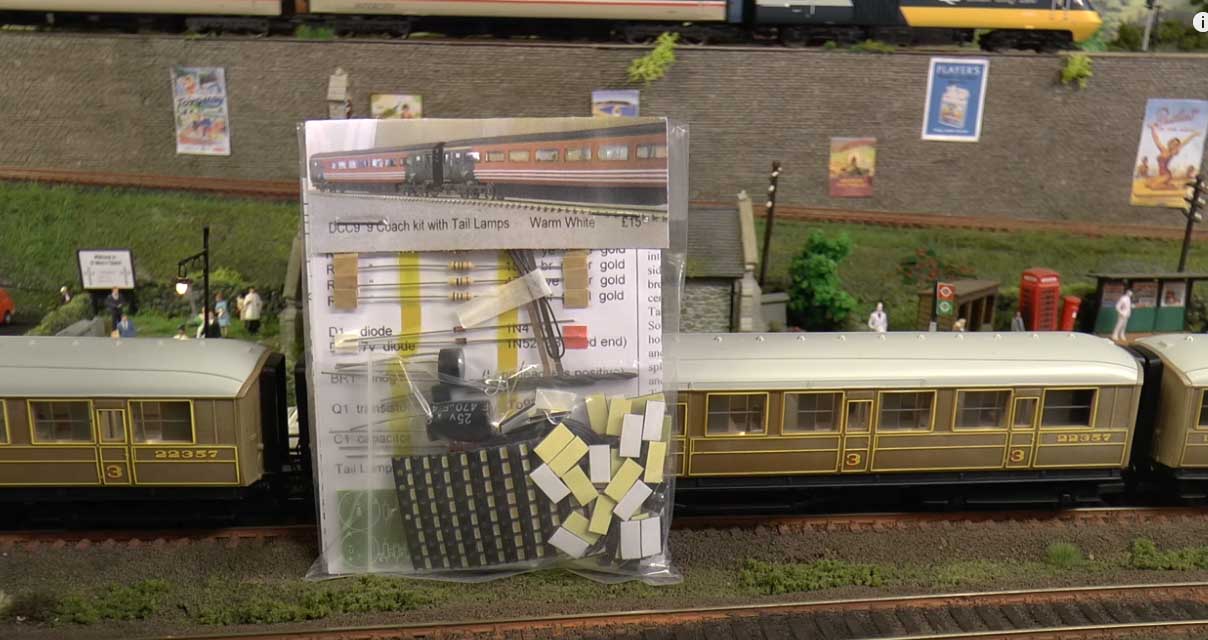
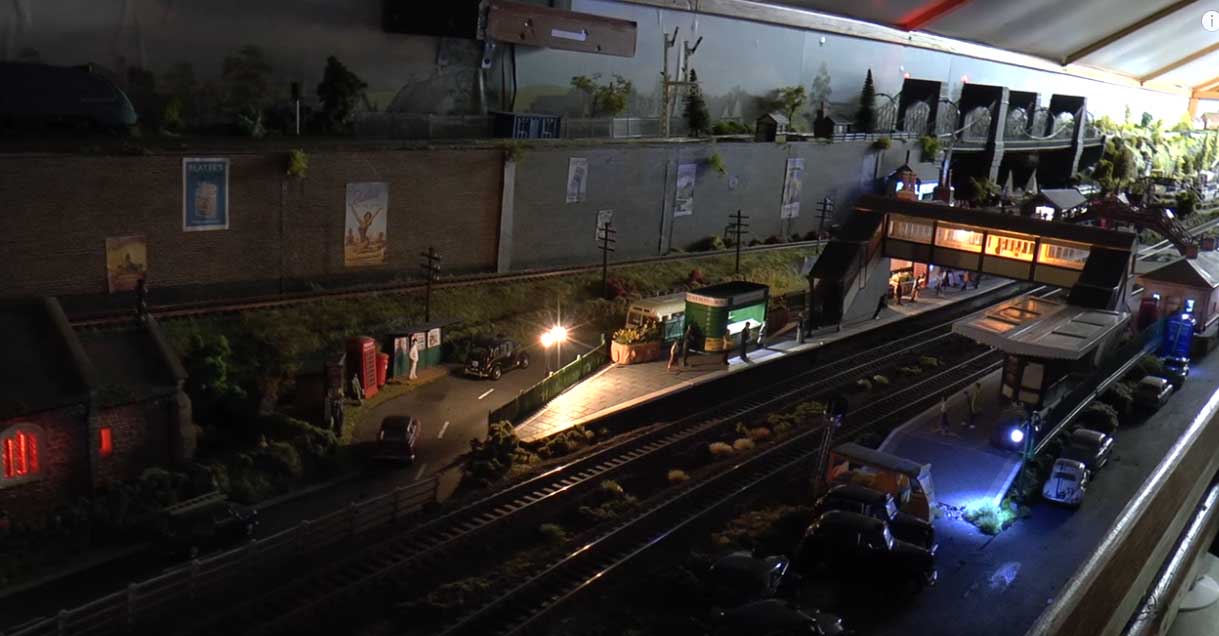
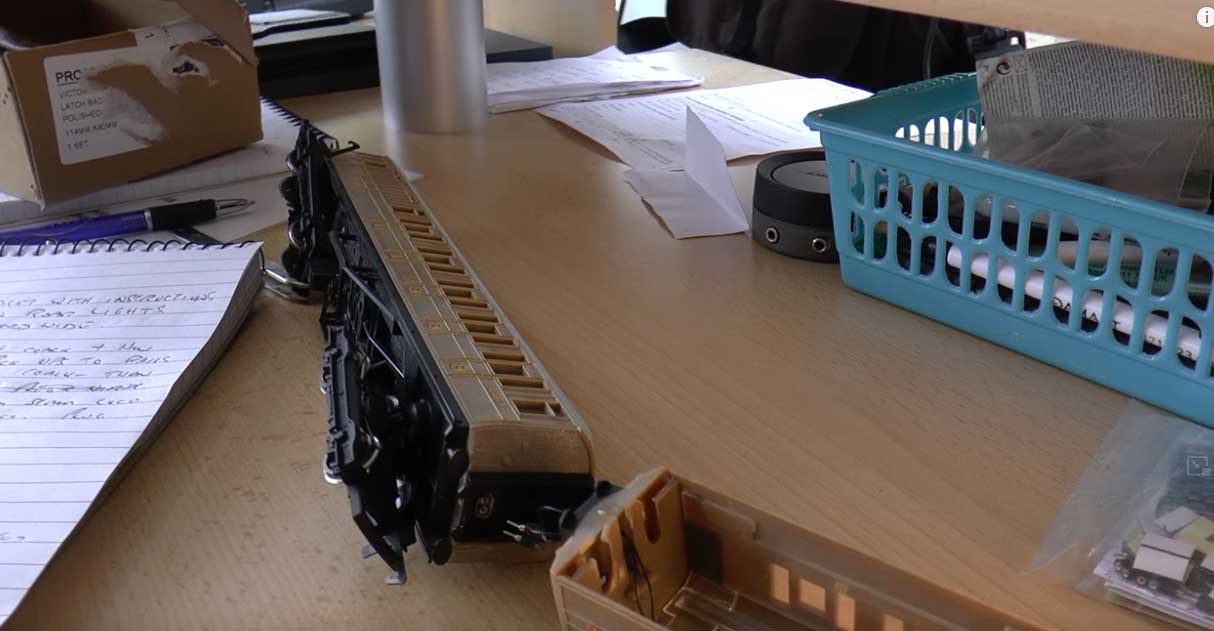
Dave’s been in touch with a great ‘how to’ on LED lights for model trains:
“Hi Al , just uploaded this video, its a way to add lights to rolling stock (coach interiors ) without breaking the bank.
Its all getting very expensive these days, but using this method its good as you can see and very reasonably priced …either doing it yourself or having them add the lights for you.
Regards
Dave”
Dave’s LED lights for model trains vid:
Now on to Fred:
“Al –
Started my first layout in February after cleaning out one end of the basement workshop.
My layout is about 25′ in N scale, with a full height hand painted, heavily lit diorama backdrop.
Haven’t done any landscape painting since the sixties, but find it makes for a better interface between 2D and 3D if you’re clever about it.
I’ve got all the track laid out – a somewhat elongated “dog bone” format with a deep water harbor (with oil refinery and a berthed custom built chemical tanker at the pier.)
This is next to the urban end of the layout which has an engine house and turntable, large “classification” yard, and several passenger platforms beneath a large passenger terminal and urban center.
I’m writing about it, rather than showing it because it’s going to take years, I suspect, and I’ve deliberately designed a project to occupy myself ’til I croak! (just turned 70.)
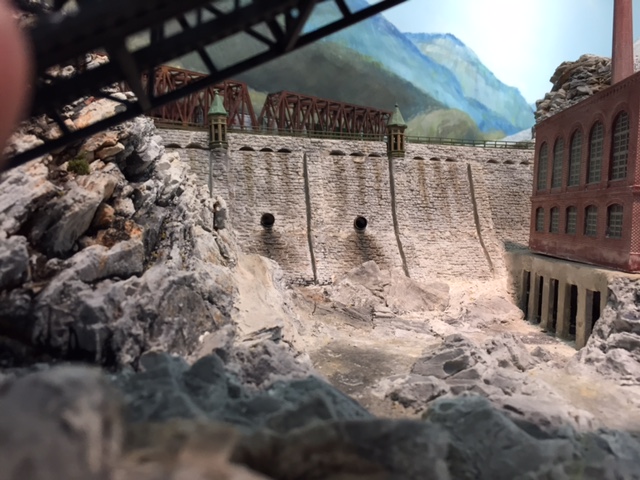
However, for your readers I’ve forwarded some photos of the other end, where I’ve spent most of my time modeling.
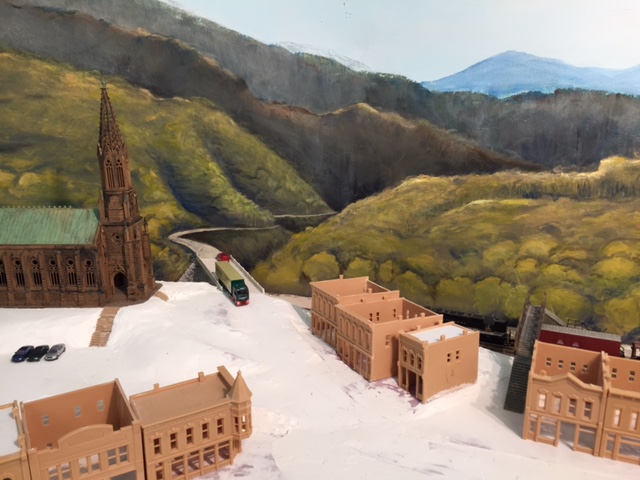
It’s a small early 20th century, late 19th century new England town I named “Maxwell Falls,” after one of my grandsons. (The city is (“Port Charles” after the other one.)
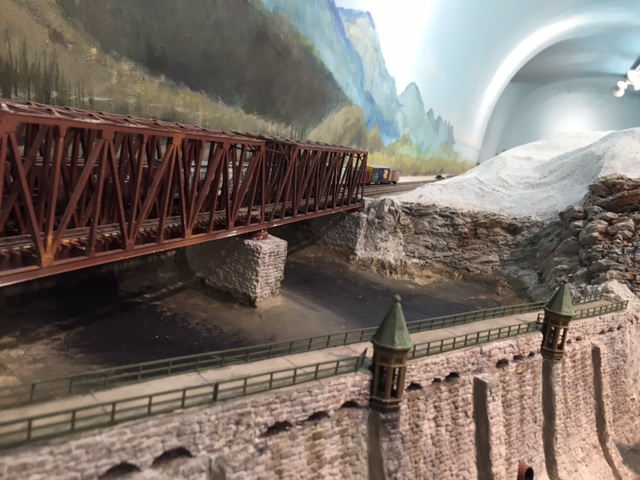
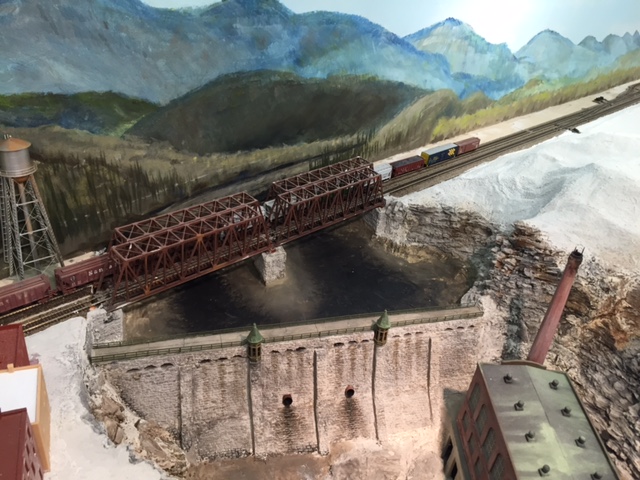
Everything is in plaster – moulded rocks, custom made dam, etc. I find it stains well, with thin washes and looks more realistic. Believe it or not, I think it will be another 6 or 7 months before I finish this end. I’ll keep you posted.
Cheers
Fred”
Linda has also been in touch again. I just loved her train room project (which you can see here.)
Well, this time, she’s added to it:
“Hi Al,
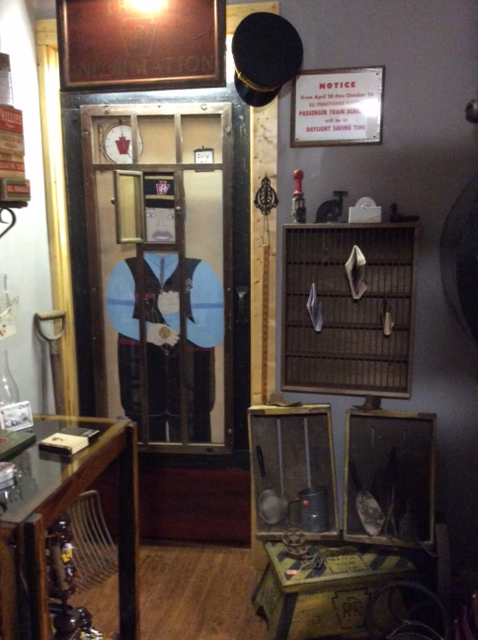
My second project was to fix up the door to our pantry.
We bought an old “Speak-Easy” door ( the divided brown door with the little window), built a frame around it, then took an old vinyl window blind and painted an old Conductor to look through the door.
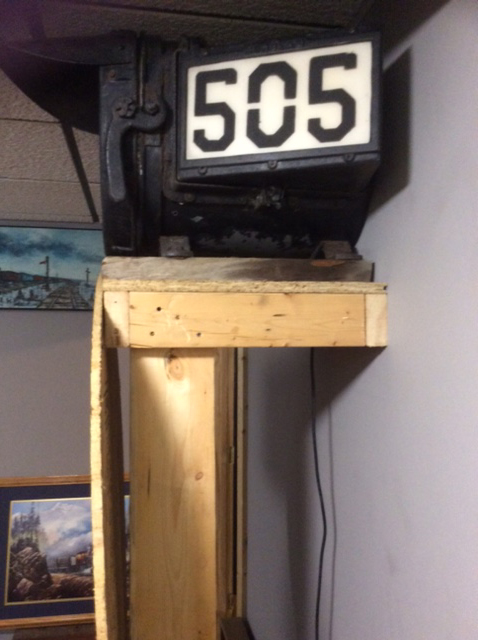
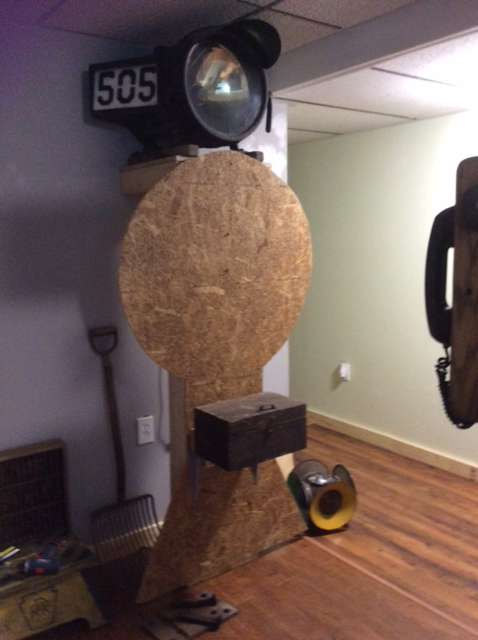
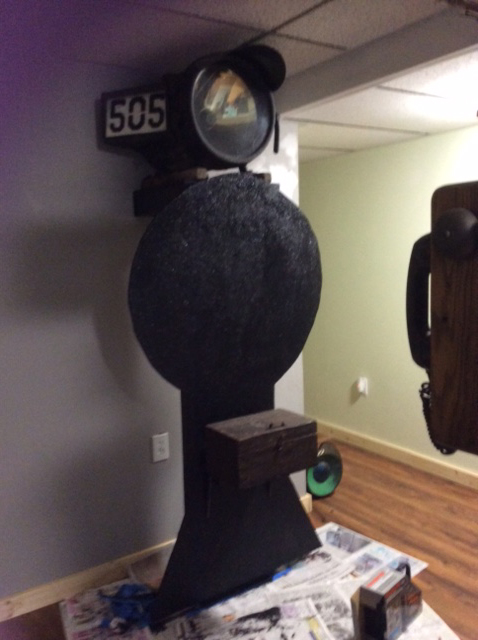
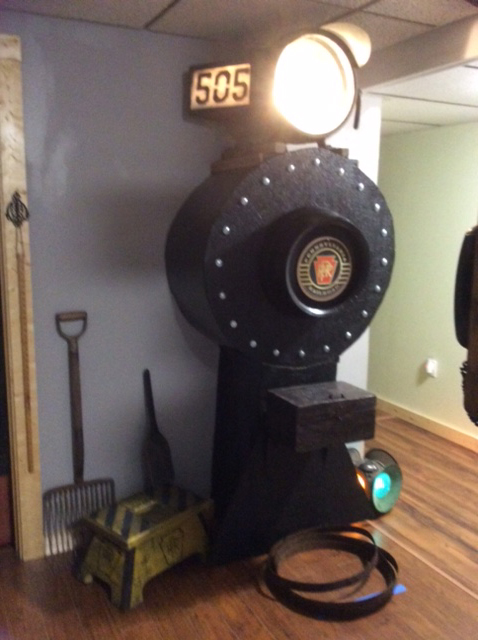
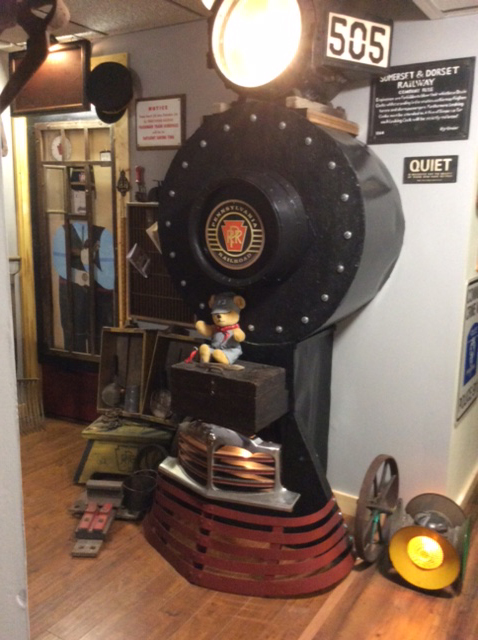
The third project was a great one. We acquired a headlight from an old Steam Engine. Had a stand built to set it on. Then proceeded to build our own Steam Engine coming out of the wall.
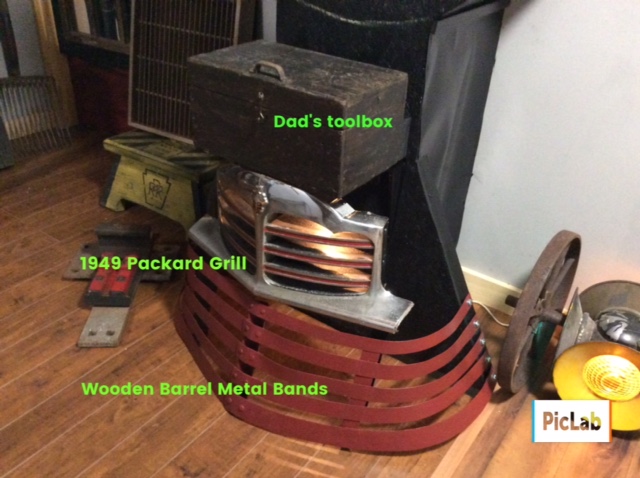
I cut out plywood for the front, got a plastic cut off beer keg end, for the front of the Engine, cardboard cover roll from an electric wire spool for the sides. Painted it all black, accented with PRR sign, carriage bolts for the rivets, wired the light to plug in on a remote, got my Dads old wooden toolbox for the front.
For the “cow catcher” a friend gave an old grill from a ’49 Packard auto then welded together with some metal straps off wooden barrels. Here are some pics.
“Mr. Lee,
I am 71 years old. The last time I started a train set I was about 8 years old, and I stopped playing with at about 12.
I haven’t stopped thinking about one day getting back into model trains.
The last 6 years I have started to collect some trains, my kids are all grown.
So the best tip I can give right now is ” don’t ever give up your dreams” I am going to start my dream train layout within the next year.
I keep all your videos in tips that I have found interesting and how to do the layouts. Thank you for all your tips.
Richard”
“Hi Al,
Have crazed or fogged glass? try olive oil with a q-tip it removes the haze look completely on most plastic especially on Kibri vehicle windshields
Best regards,
Jeffrey”
And lastly, on to another hall of fame member – Arnie. Some stunning pics of his layout after the intro:
“Hi Al,
As I had mentioned to you in recent email, I am working on completion of a new Heritage Series video on my 1947 American Freedom Train.
It’s just about done. But I thought I would send you this brief video introducing the topic and my plan to get it to you and the readers soon.