Tim’s turntable tip

“Al–

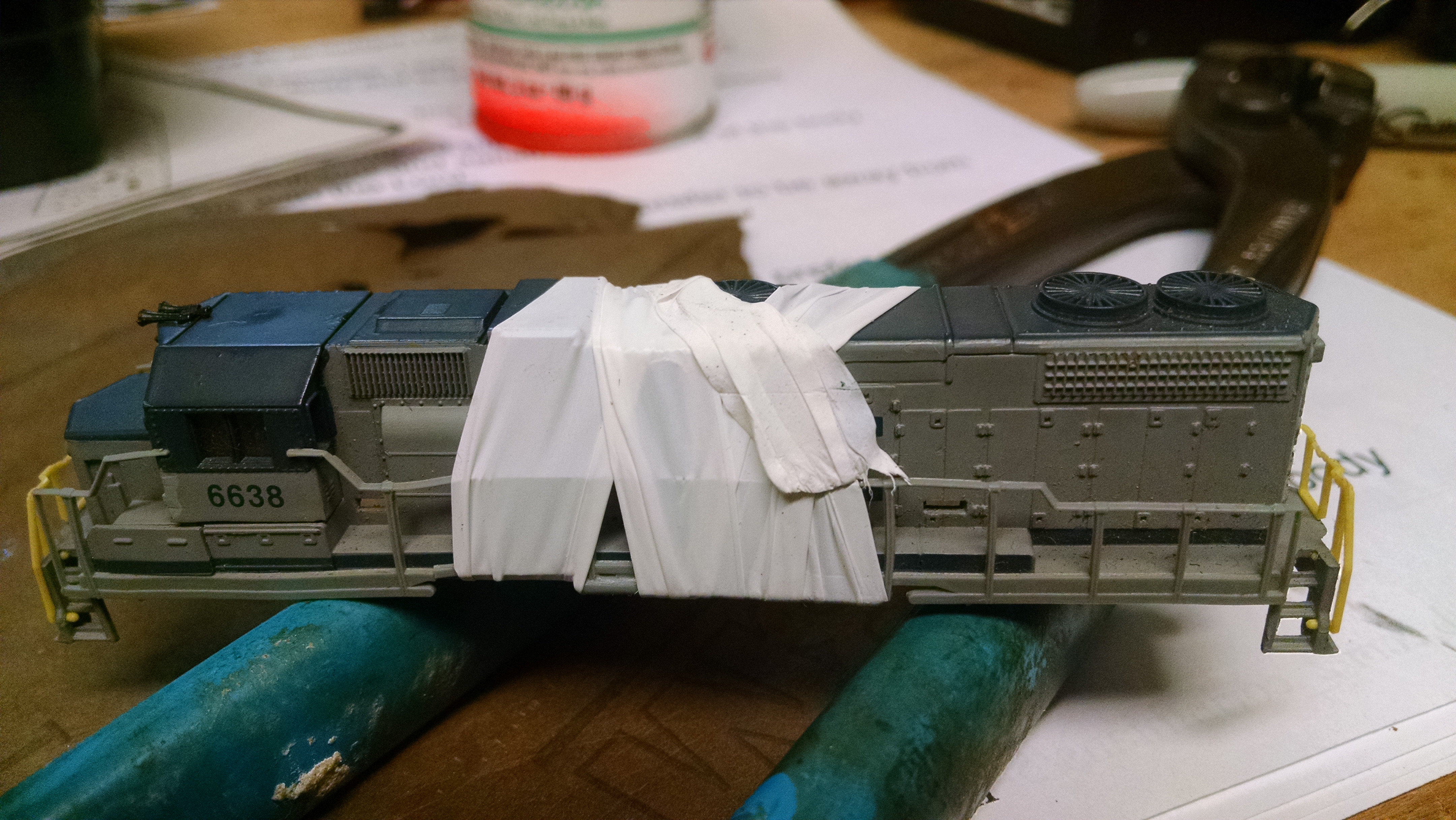
I have one for you; I was trying figure out how to hold one of those little bitty tiny N scale handrails in place while I glued it back in place with a bit of epoxy.

My hands are not stable, tape will pull the handrail right back off of its intended location, tape reversed with the shiny side toward the handrail will not let me position it correctly, etc., etc.

I looked around for a new trick and came up with using pipe tape (the stuff you use to prevent leaks on pipe thread) to wrap the locomotive.

It holds nicely, even stretching a bit like, but not too much like, a rubber band.

I have included a picture for you, and I really like all the tips!

This little guy is running around the tracks now, happy as can be!

Jerret”
IMG_20150417_123143494-tape repair


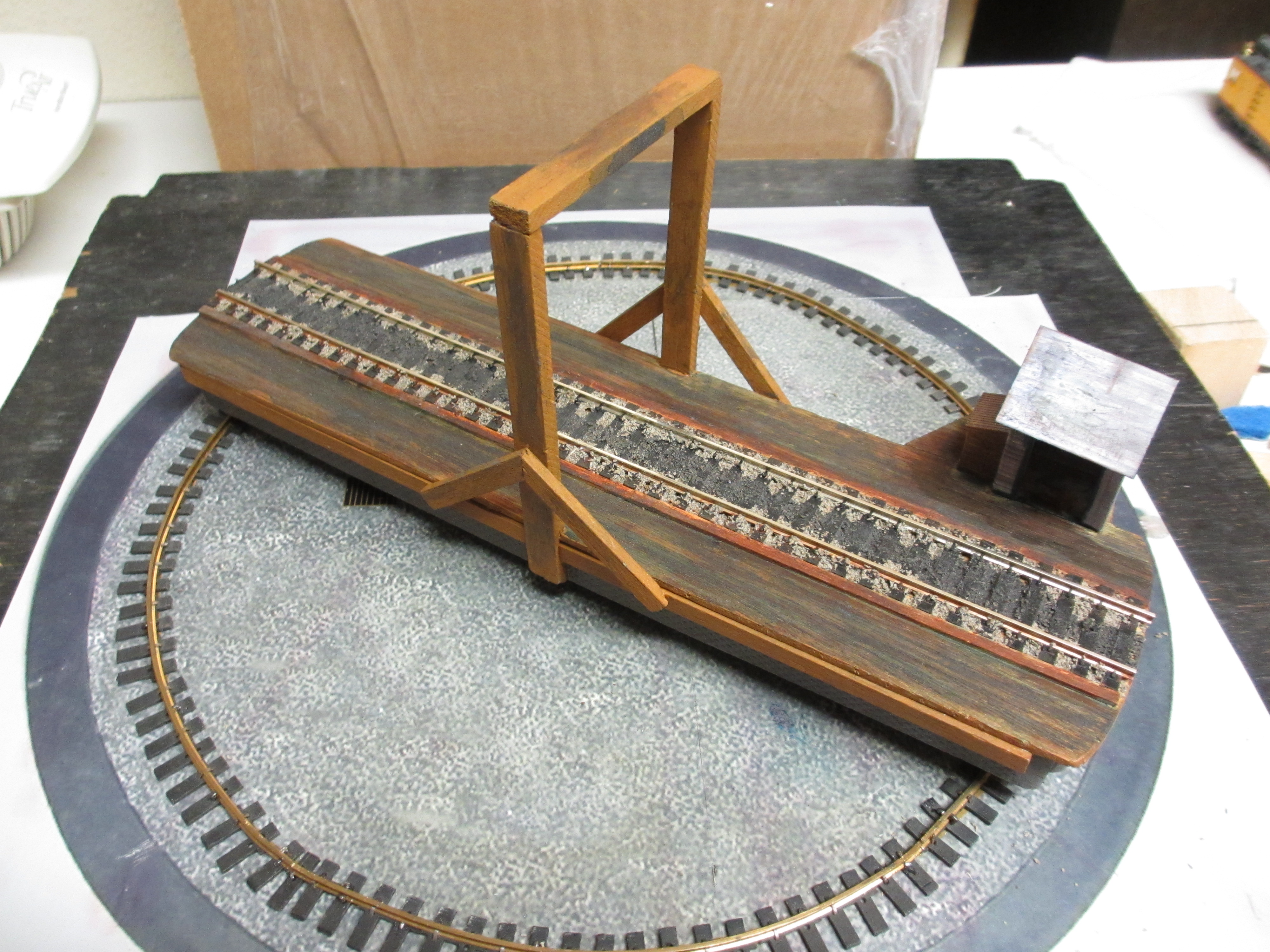
“Alastair here is a tip for Ken or anyone planning to scratch build a turntable:

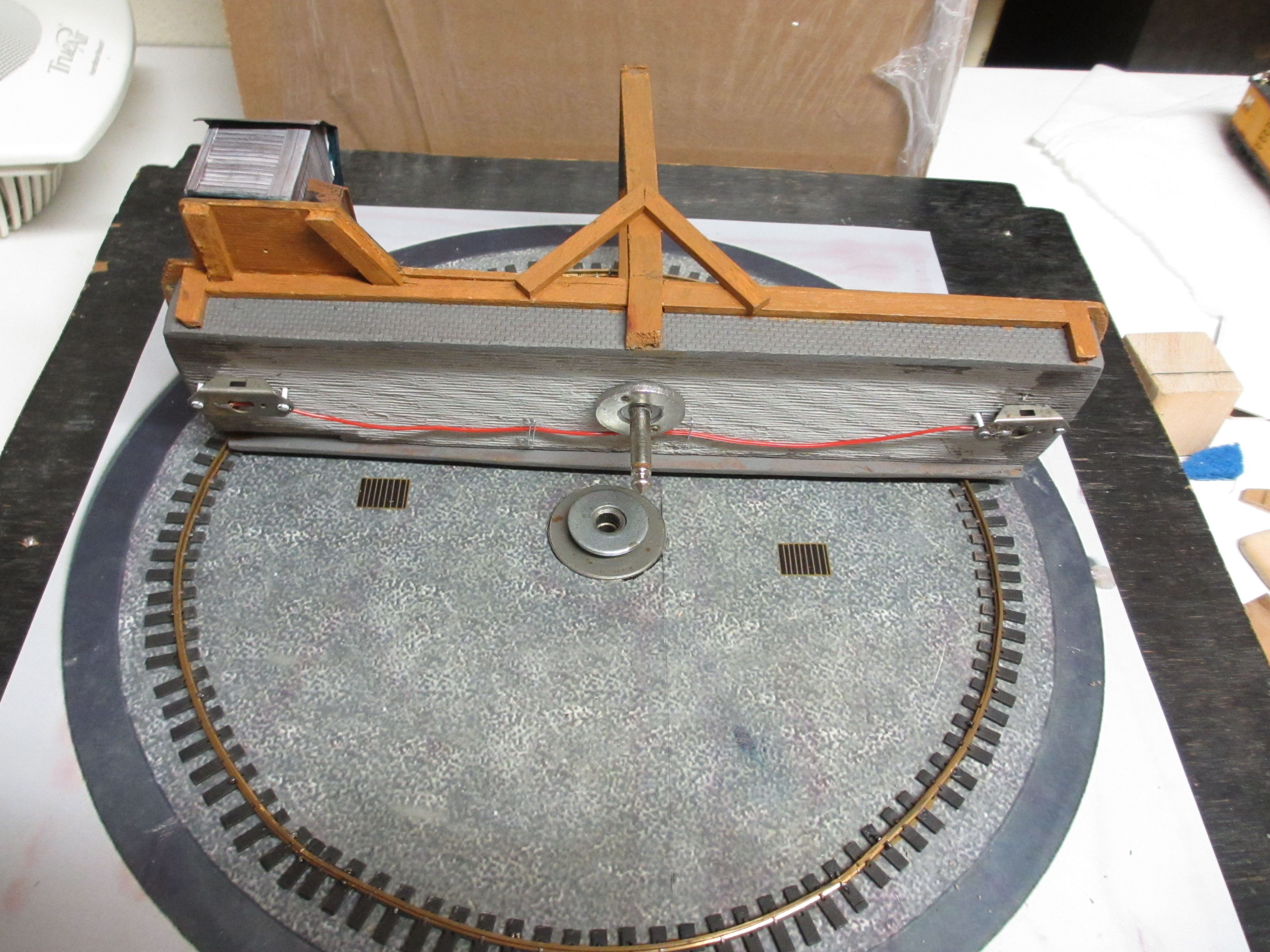
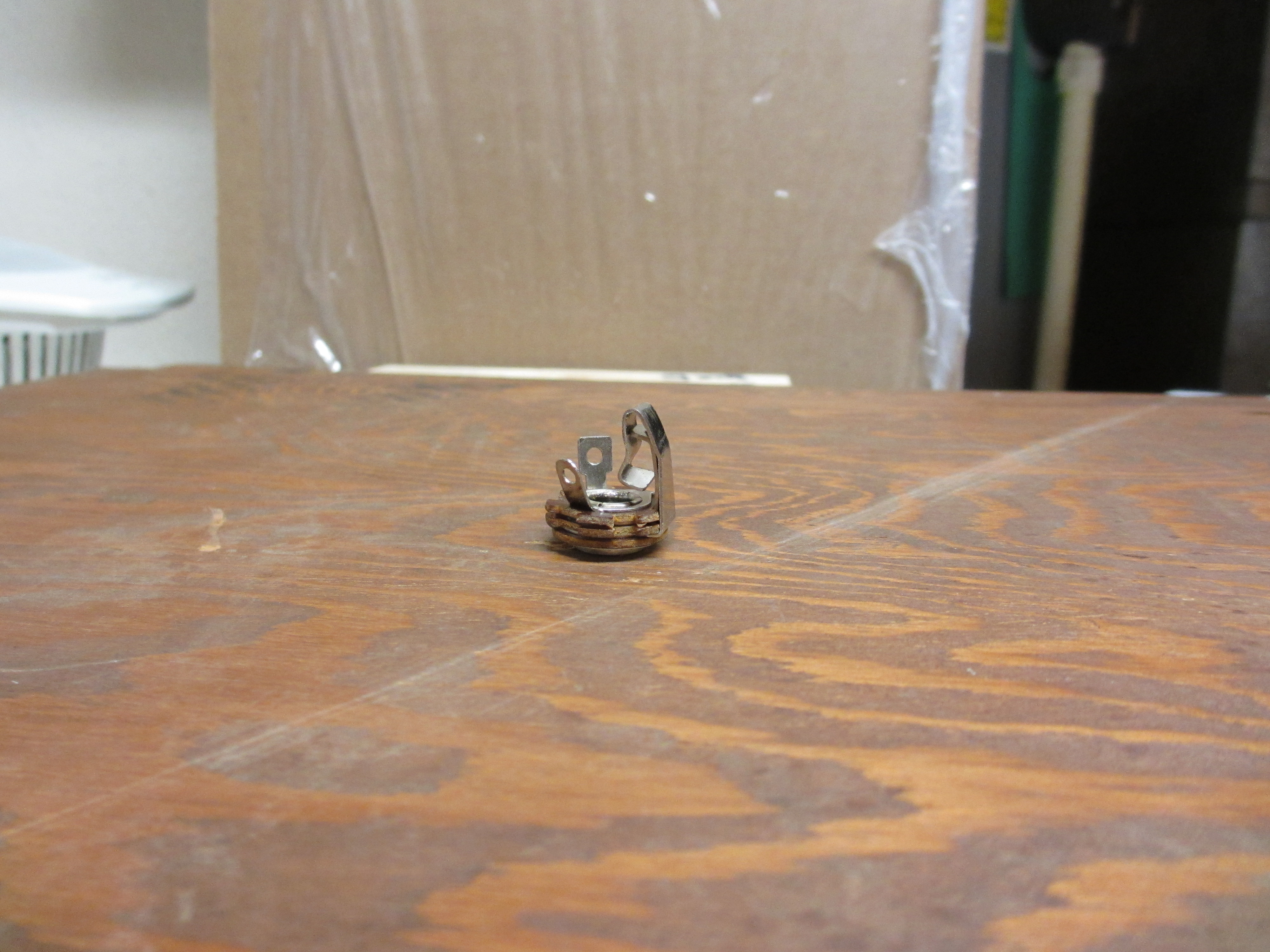
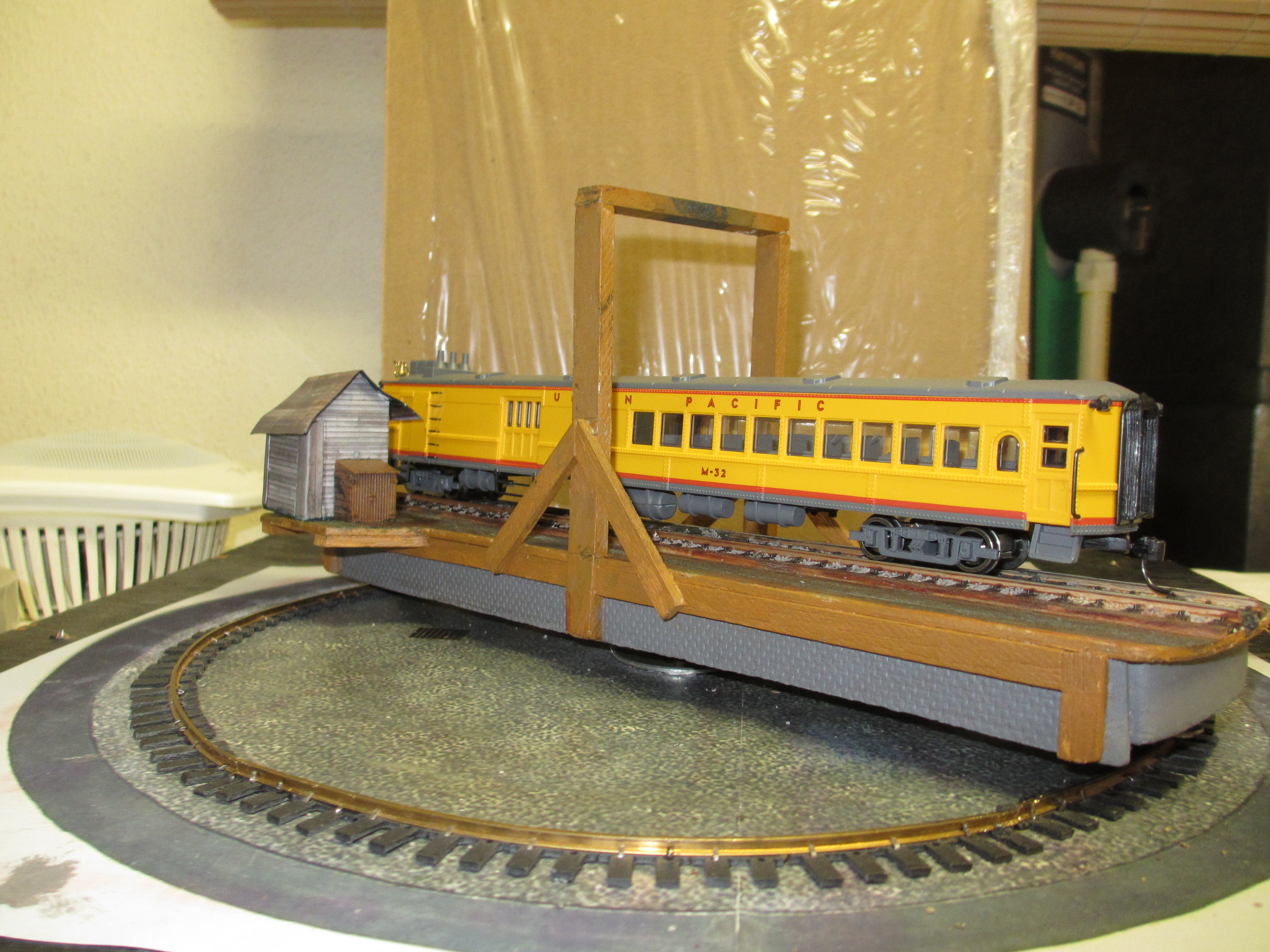
If you decide to make a scratch built turntable, you can use an old style large dual contact audio plug and jack as the spindle and pivot hole. This makes powering the track on the table very easy.

Wire the plug leads through the table to the rails and wire the jack from your track transformer.

When operating regular DC and completely turning your engine, the section(s) of inbound/outbound track(s) to the turntable must be isolated so that their polarity can be switched independent to that of the transformer.

This will allow the track to match the polarity of the rotated turntable, since this way of wiring keeps the polarity of the table constant.

Once the engine is off the turntable, the transformer direction can be changed to the new direction and then the isolated section must also be reversed again, to match the transformers direction.

The turntable will also need to be rotated back again to match the polarity of the next inbound engine.

The hard part is making sure that the plug is perfectly centered and perpendicular when screwed into the bottom of the turntable.

I got this tip from a video clip on scratch building a turntable, when I needed to build one to turn a doodlebug at the end of its branch run.

I am still working on how best to operate the table.

Since these pictures were taken, I have added wooden railings with a pit access ladder and a fine toothed gear around spindle and glued it to the bottom of the table.

I also found a roller bearing donut in my spare parts stash that reduces friction and stabilizes any wobble of the table due to the tightness or lack there of between the plug and jack.

The wire in the pic that runs the length of the table bottom is for an alignment indicating circuit.

When the tracks are properly aligned the table will complete a simple dc circuit to a light and battery (one light and battery with leads to each contact pairings) thru contacts in the pit walls at the center of each track and the opposite wall.

The bottom of the pit is just a picture from a computer paint program’s gravel texture with drawings of drains added.

The rail is old brass flex track cut in half and formed into a circle. Make sure that the alignment contacts on the table do not touch this rail or you will get a short in your circuit.

Alignment circuit:

wire to contacts on left side of pit }—@—+[batteries]~—{ wire to contacts on right side of pit

Best of luck,

Tim”
IMG_0667

IMG_0668


IMG_0669

IMG_0670


A big thanks to Jerret and Tim. After all these years, I’m still constantly amazed at what comes in.

And if today is the day you get going on your layout, the Beginner’s Guide is here.

Best

Al

PS Latest ebay cheat sheet is here.


Making HO scale gondola loads

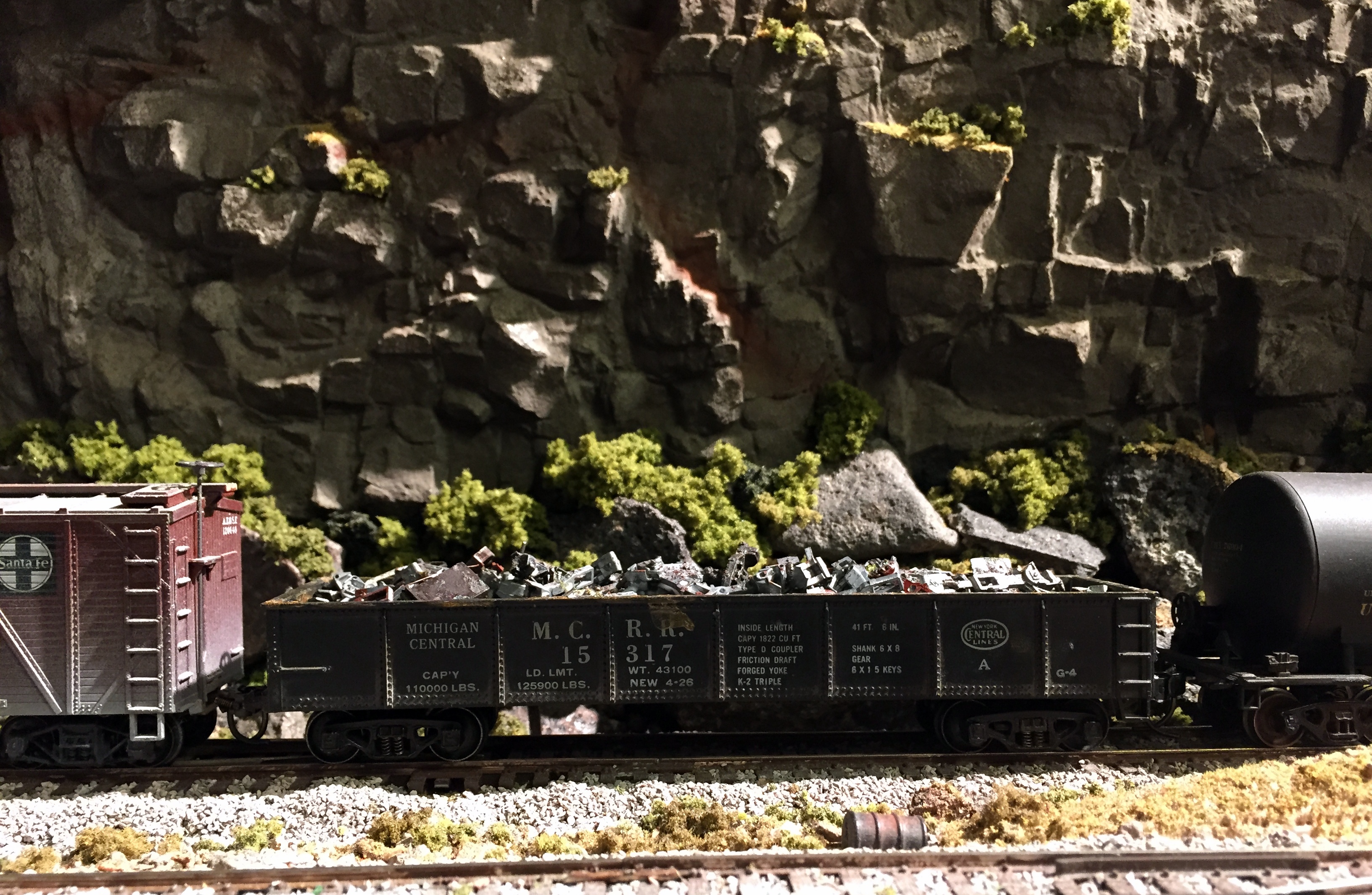
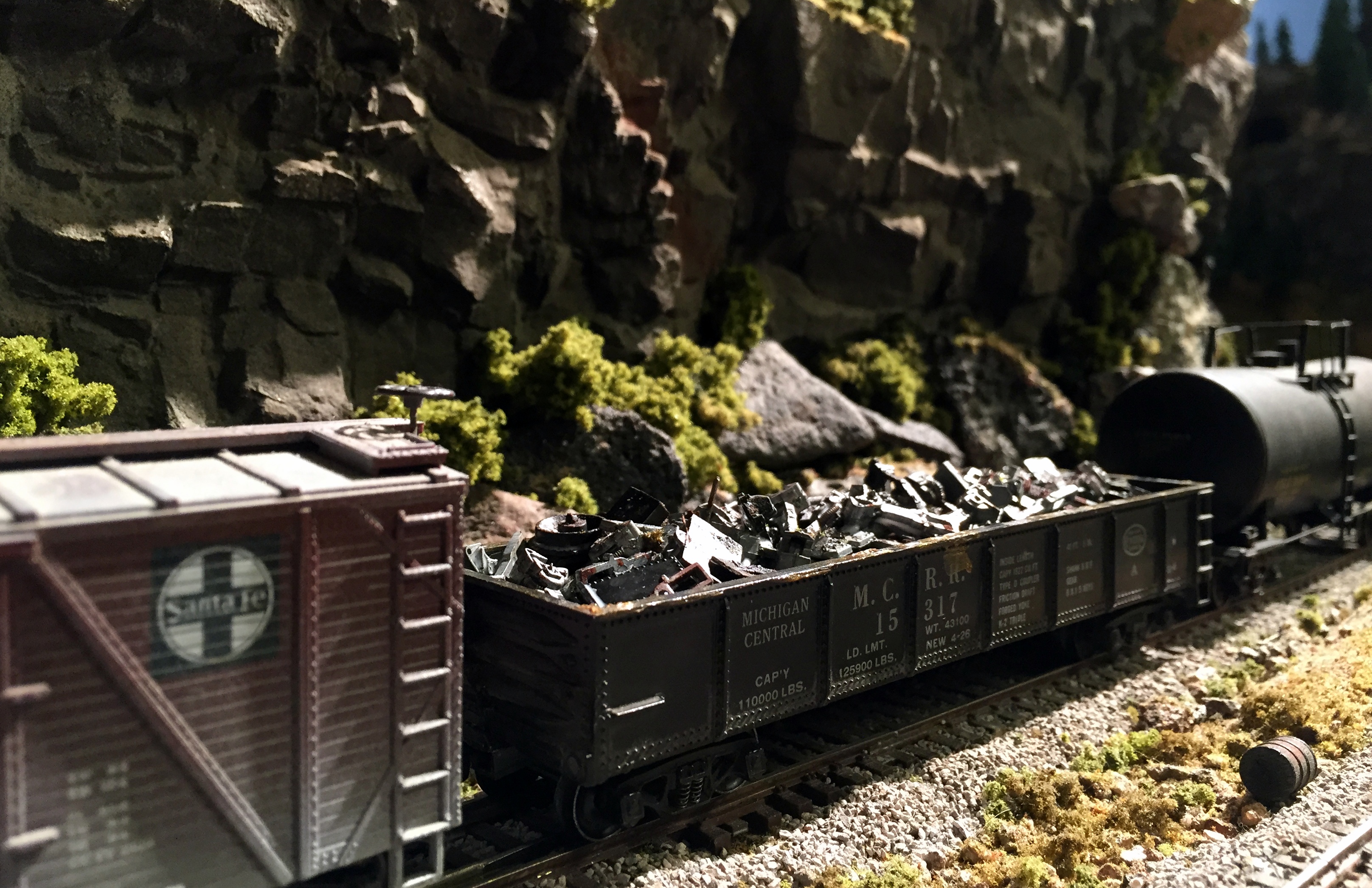
Mark’s been in touch – he’s shared how he has been making HO scale gondola loads:

He’s shared a very simple but effective ‘how to’:

“Hi Al,

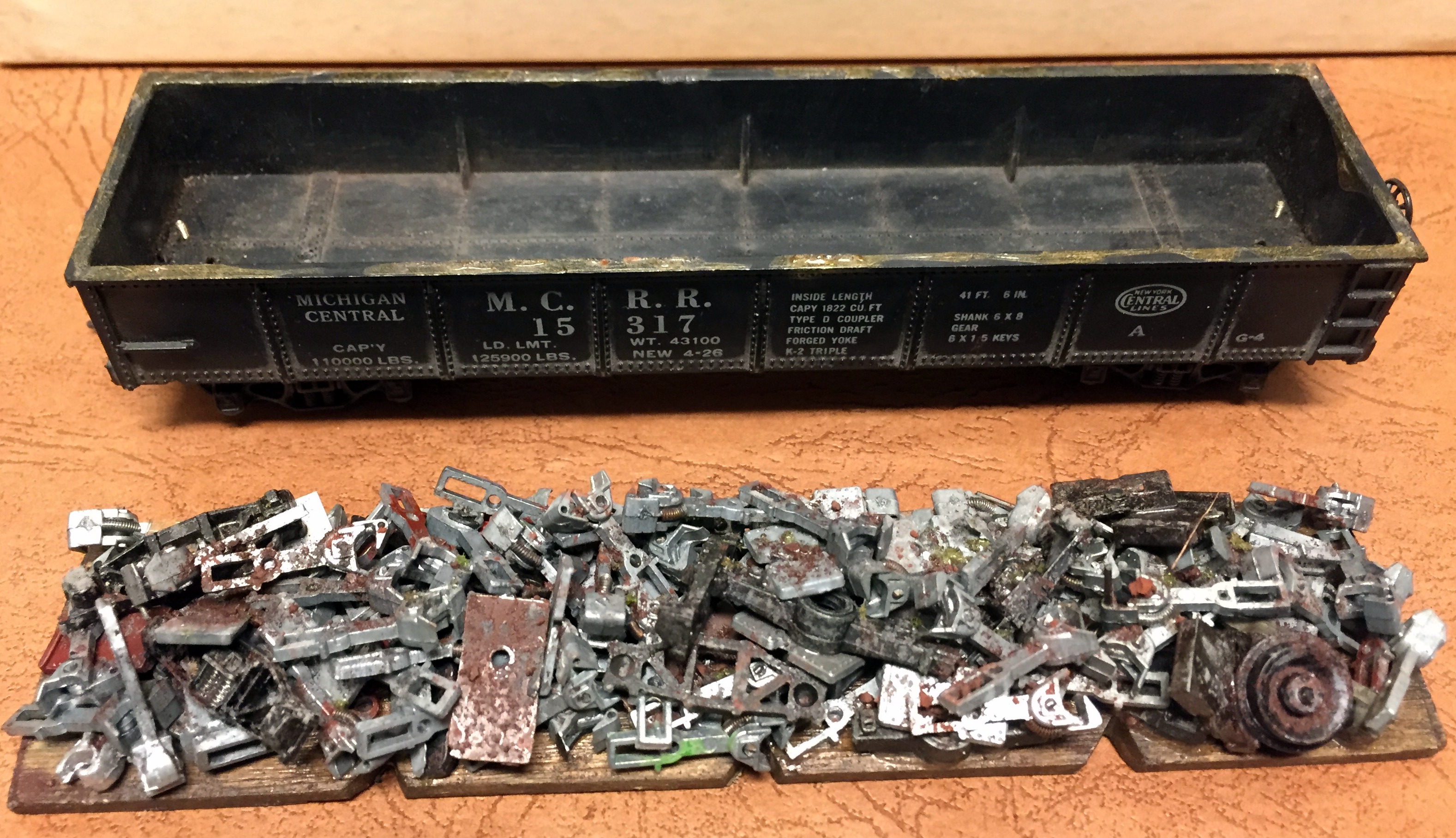
Looking around for a quick, fun, (and cheap) project this afternoon and I came across an old Varney gondola in the scrap box.

Added some metal wheels and Kaydee whisker couplers.

Cut out a load base from some scrap bass wood, piled some stuff on it from the scrap box along with some rust and dirt powder.

Then sprayed some alcohol on it to break surface tension and then drizzled some scenic cement on with an eye dropper.

Let it set in the Las Vegas sun for a bit to dry, dropped the load in and it was on it’s way!

Took about two hours and just a few bucks of parts.

Great way to enjoy an afternoon!

Thanks for looking!

Mark”

making ho scale gondola loads

making ho scale gondola loads

making ho scale gondola loads


A brilliant step by step from Mark for making HO scale gondola loads. I loved it – hope you did too. Simple, but effective.

There is also this post from the talented Dan:

Dan’s gondolas

I do enjoy the different ways people do things – there is no right or wrong way to do anything in the hobby.

Another post that springs to mind is Hemi’s. Like many of you, his coal cars contain real coal that is crushed down to scale.

Have a look and see, his post is here:

HO scale single hopper coal gondola

That’s all for today folks.

Please do keep ’em coming because it’s getting very thin on the ground this end.

And if today is the day you stop dreaming and start doing, the Beginner’s Guide is here.

Best

Al

PS Latest ebay cheat sheet is here.
PPS More HO scale train layouts here if that’s your thing.


OO scale model train layouts – Paul’s

Paul’s been in touch again, you may remember him from the OO scale model train layouts on the blog. Have a look at what he’s done now:

His last post is here, by the way.

Do have a read of his last post – his steam engine is over 50 years old and like so many of you, he couldn’t bear to get rid of it and it’s been languishing in a cupboard… until he had an idea for a retirement project:

“Alastair,

Here is a bit of an update to my original submission.

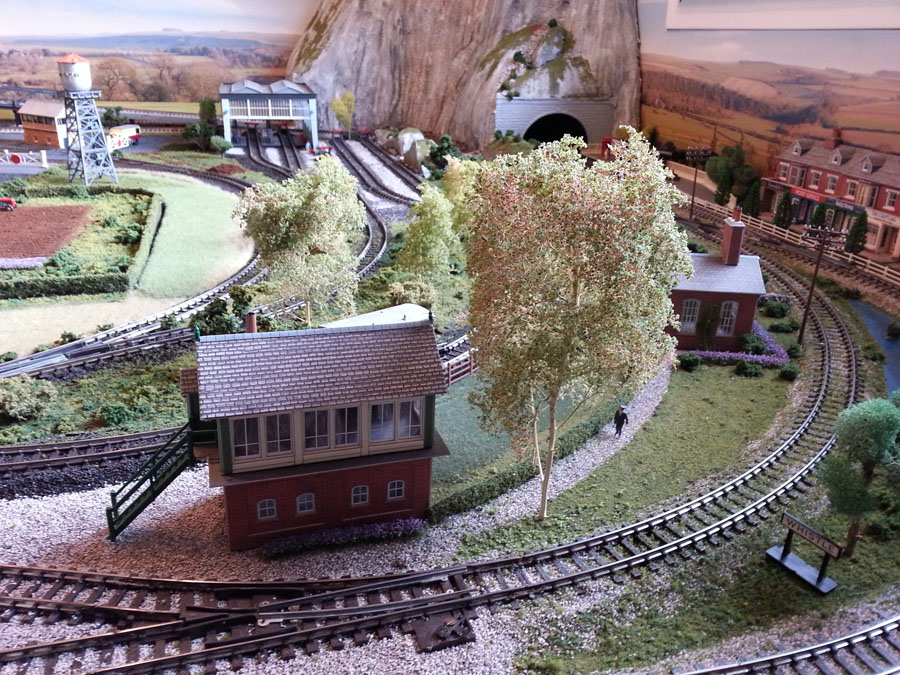
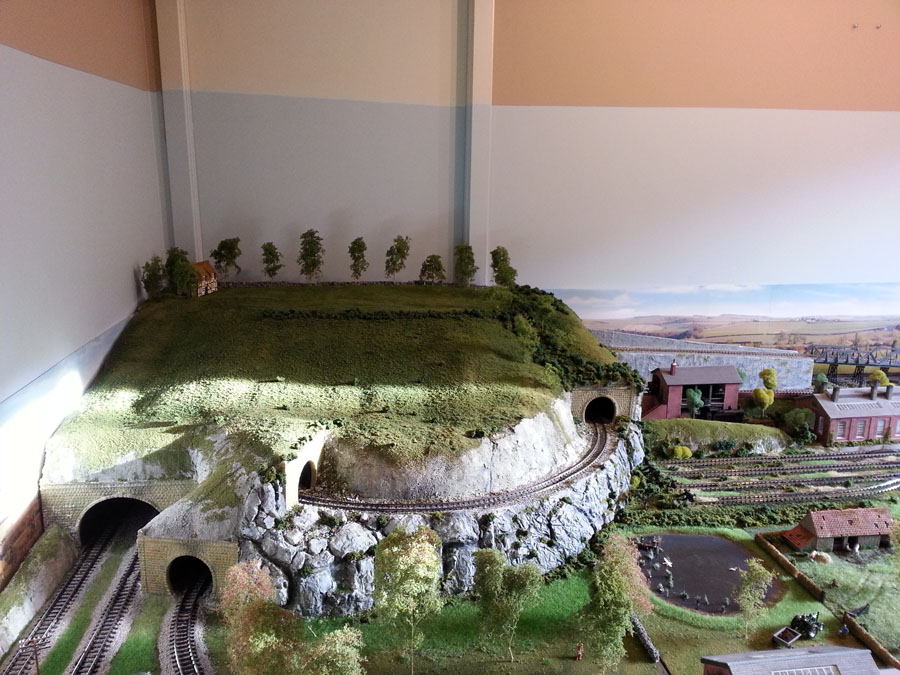
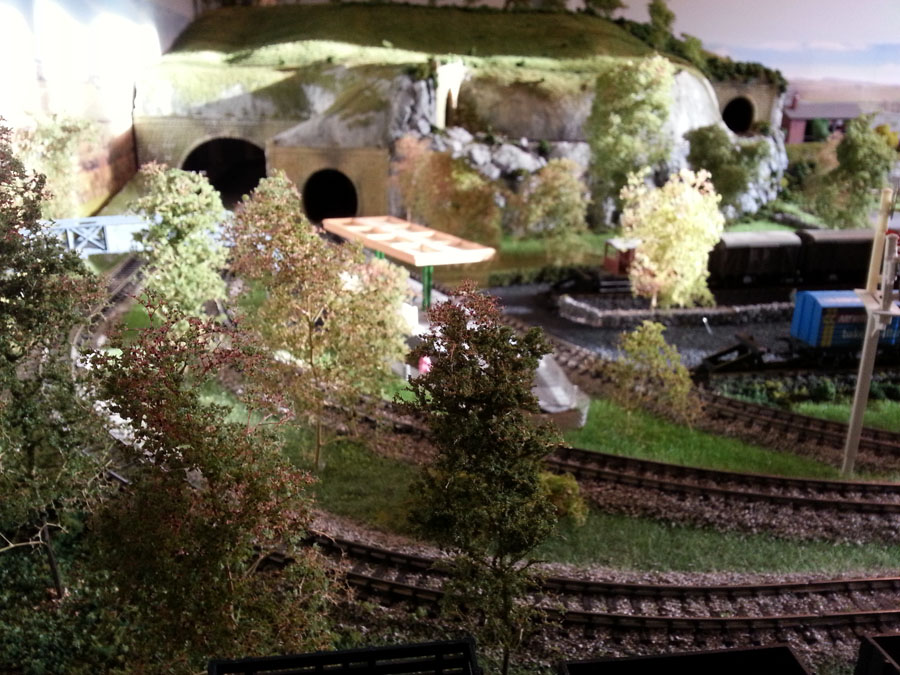
Here are a few pictures and a short running session video after another Winters worth of work on my layout.

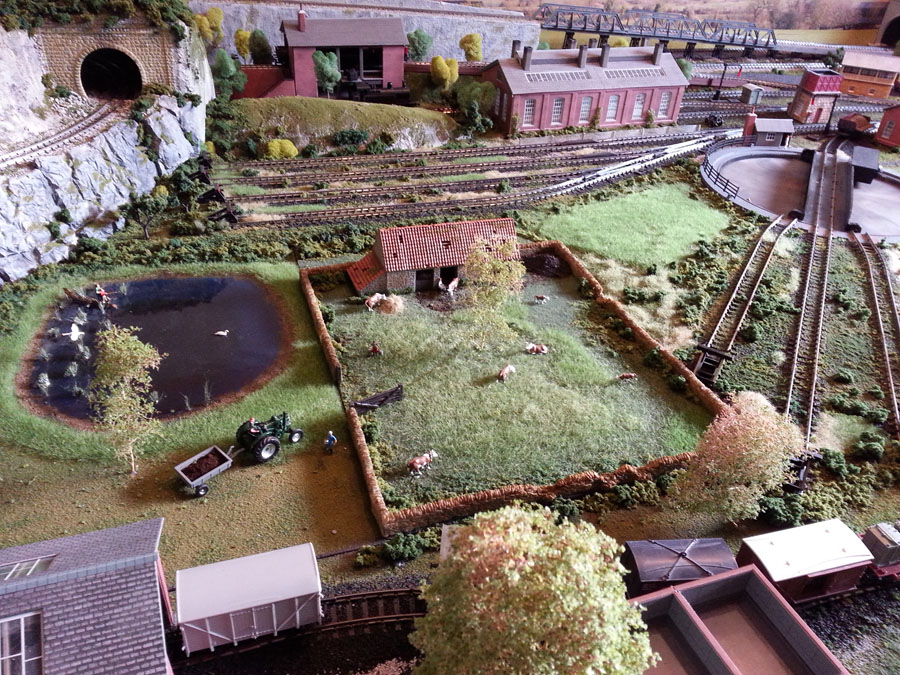
I still have a lot of detail work to do, including a scene on the hill with the farmhouse and some fine tuning on my track to try and reduce derailments.

Thanks,

Paul”

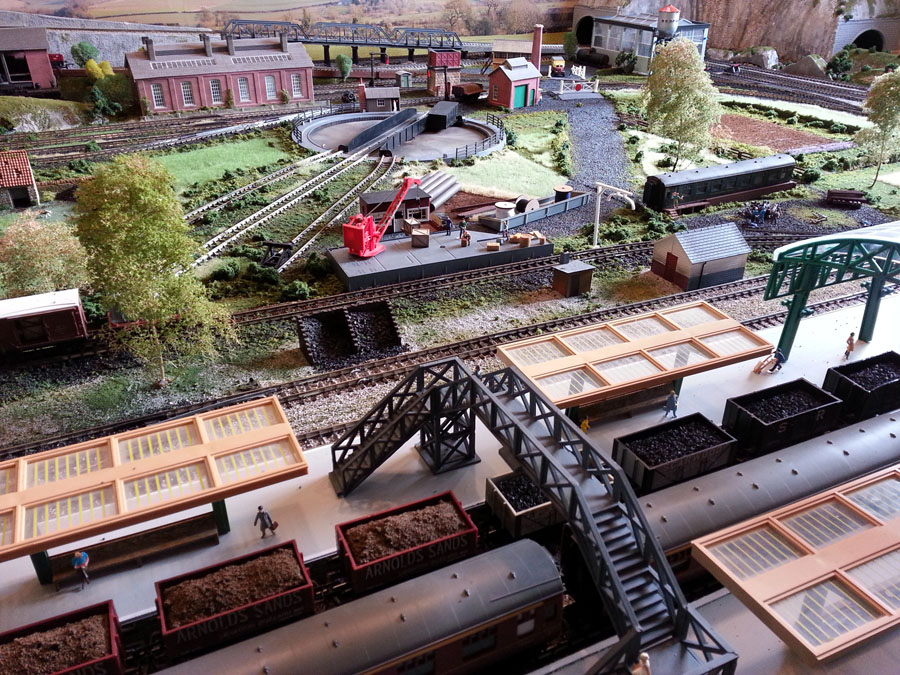
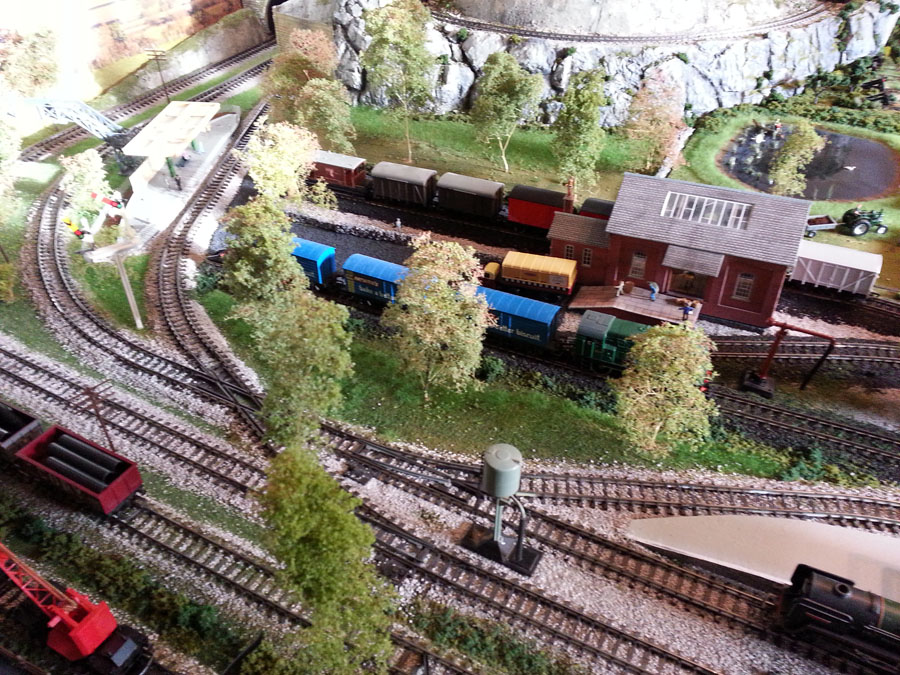
oo scale model train layouts

model train steam freight

oo scale model train layouts

model train signal box

oo scale model train layouts

oo scale model train layouts


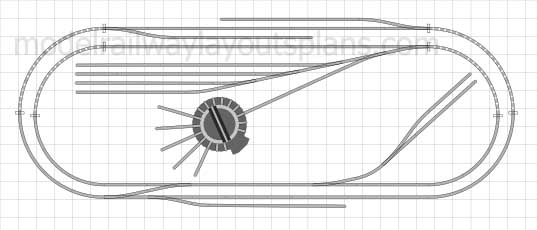
OO scale model train layouts:

track plan

model train sidings

oo scale model train layouts

model train layout overhead view


(Watch on youtube here.)

A huge thanks to Paul for adding to the OO scale model train layouts on the blog – a wonderful layout, with lots to keep him busy.

But that’s the thing with layouts – they’re never finished…

I’ve lost count of the layouts that are retirement projects, and the same goes for folks who couldn’t bear to throw out old loved trains that carry so many fond memories – so Paul’s ticked both boxes which really bought a smile to my face.

I also like the way he just made that all important start – here’s a few lines from his first post:

“I bought a 4×8’ sheet of plywood set on some portable legs and put down a simple oval with a small siding and yard. That lasted a couple of weeks, then I decided I wanted to do something larger and more permanent.”

It just goes to show (again!) it’s all about making that start.

Please do keep ’em coming folks.

And if creating your own model railroad is an itch you just have to scratch, the the Beginner’s Guide is here.

If you’d like to share what you’ve been up to, please do mail me. It’s getting a little quiet in my inbox.

Best

Al

PS More HO scale train layouts here if that’s your thing.


Need buildings for your layout? Have a look at the Silly Discount bundle.