“Best tip – model a location you can see or remember well, it’s so much more satisfying and it drives you to make things, such as buildings, rather than just make do with what you find in the shops.
You can still be original in how you ‘edit down’ the crucial elements of the scene to make it fit your space.
If you ARE going to just ‘wing it’ with a freelance design, keep asking yourself questions. Why is there a level crossing there, what’s that siding for, where are those points and signals worked from, how do people get to this station?
The railway never spent money on kit it didn’t need, and NEVER just came back from the Works thinking ‘this is cute, I wonder where it’ll fit’ like we do. (OK, that doesn’t explain why I just ordered a Hornby Sentinel…pretend you haven’t noticed.)
If you’re using set-track, remember you can lay out your proposed plan on the boards and check it will work – eg that the passenger trains will squeeze past each other in the loop, your Big Boy will go round that curve, or you can reach a derailment in the middle – before you start gluing and pinning stuff down.
And you can check your trains will drag themselves up your proposed inclines just by propping some track up on cardboard boxes and trying it. The world’s not flat, your scenery will always look better if it goes up above the railway and down below it, even if only by an inch or two.
If laying cork strip for roadbed under your track, if you either buy the halved kind, or slit it down the middle with a sharp craft knife, you can glue down one half to the track centreline you have marked on your board.
Cork strip this narrow bends easily to normal radius curves, and when it’s dry you just lay the other side of the cork against it.
You can then see easily where the centreline of the track should go by the cut line in the cork, which will be hidden when you add ballast. It’s neat, avoids ripples in the cork, and saves you transferring your plan to the full size job twice-over.
If you hang one end of a portable baseboard, with legs only at the far end, off the SIDE of one at right angles to it, it hardly matters how solid your joints are (and my baseboard frames are 4×1 pine and the fixings are M6 shouldered bolts, which is pretty titanic for a layout) gravity will still do its damndest to pull the cross-board over at an angle! I had to fit a removeable brace under the pair to hold them level to each other.
If soldering up an etched brass or nickel chassis kit, when you put the spacers and frames together use only a tiny blob of solder, then put the unit on a surface plate (or if you haven’t got one of those a bit of plate glass) and make sure it’s level all round before you run solder fully along the joints.
Otherwise, once you start soldering stuff together big-time, it will be almost impossible to correct any twist.
Always take a spare controller to an exhibition and make sure your wiring scheme has somewhere you can attach it easily! (Bitter experience talking here, but luckily I had a spare with me for wheel-cleaning purposes.)
Make notes of how you wire things, colour of wire, which pin number it goes through at baseboard joint connectors, etc. It’s a fair bet you won’t remember how you wired something up by the time it stops working five years later.
Rod”
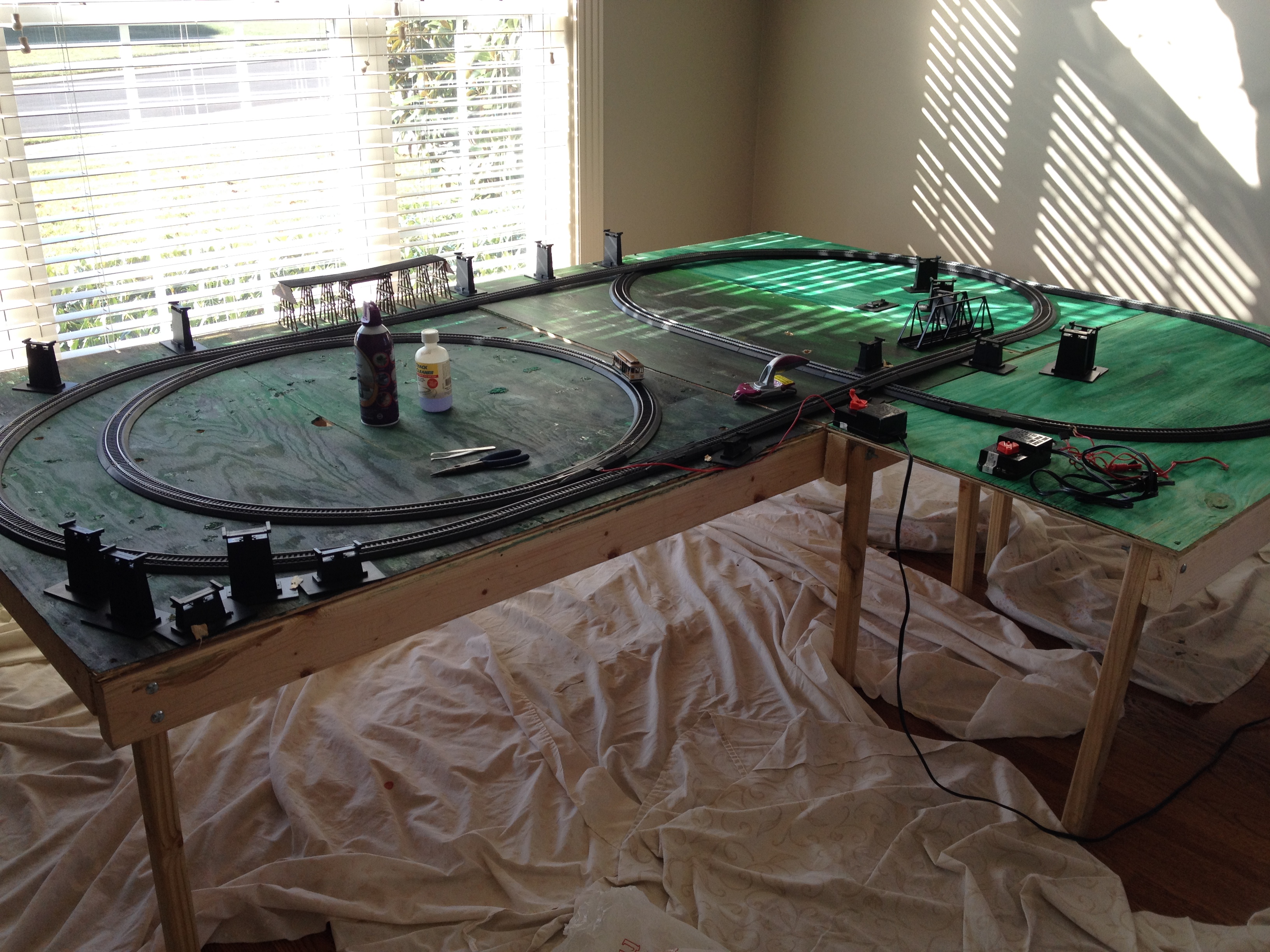
“Hi Al. I have been stalled on the Big Curve Project because I did not see how I could construct it.
I have spent considerable time making sketches trying to come up with a way to build it. I just couldn’t see how it was going to work.
Then a couple of days ago I had a new idea. Why not make the curve uniform and geometric. Why not just put the curves into a steady bend instead of the loose lines I was moving toward before.
Once I started down that path, it all started to come together and I think I am ready to start construction. I can now visualizr how it will go together where I could not do that before.
Here is part 3 of the series.
Thank you for all you do.
Rob M”
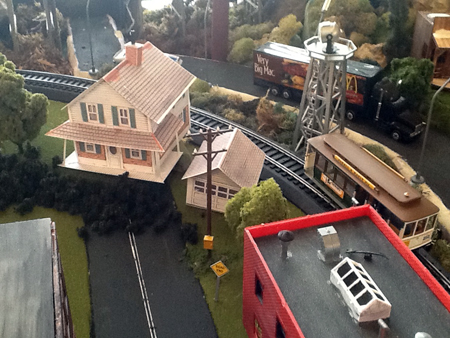
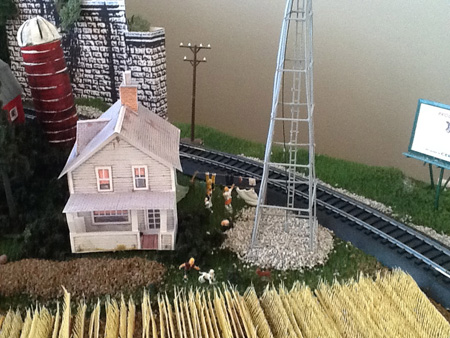
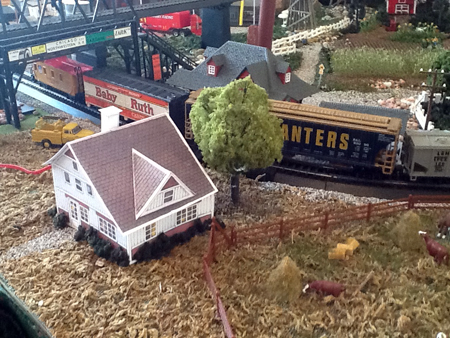
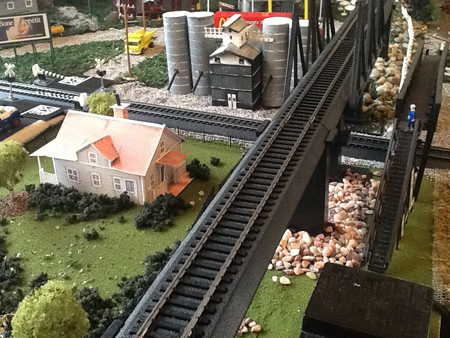
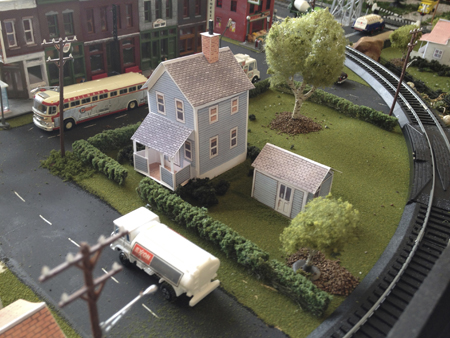
And lastly, I’ve had a couple of mails in asking about the paper size on the printout buildings, after Michael sent his layout in.
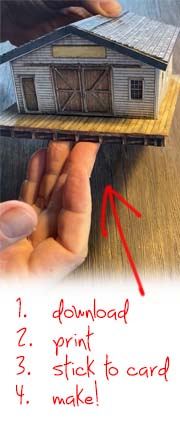
They print out fine on the US sized paper (8.5 x 11 inches) or the UK paper (8.2 x 11.6 inches).
You can adjust the scale of the building just by changing the print size percentage, when you go to print it out.
But I asked Michael, anyhow, just to be sure. Here’s what he said:
“Al, I didn’t have any issues printing.I followed the directions and reduced the print by the 87 percent. They all printed fine and I think the scale was spot on. I had to add the porch posts. I didn’t see them on the print out. Other than that, they worked great. I’m planning my next purchase soon.
Mike”
All the print out buildings can be bought on their own, or in a bundle (for the moment).
That’s all for today peeps.
Please do keep ’em coming.
And if today is the day you start making tracks to make tracks, the Beginner’s Guide is here.
Best
Al
PS Latest ebay cheat sheet is here.