Railroading scenery tips

Here’s the lastest, in from the ‘collective’. Please do keep them coming!


“I do appreciate the time you take and the information that you pass along.

So, I thought I would let you and the other readers know of something I have been doing.

Most home health stores and/or pharmacies receive in the shipping cartons for their lift chairs
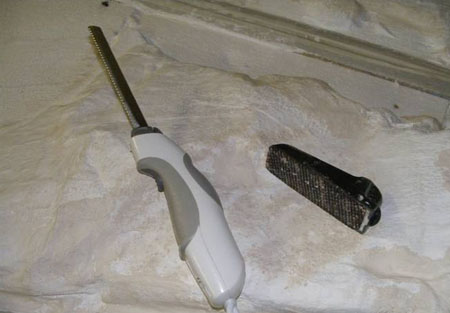
two blocks of polyfoam, guessing it is polystyrene, that which I have gotten, measures 3″x4″x29″.

I have used it in pretty basic landscaping and it works well. My biggest pleasure is that I can
have all I want and free, because otherwise the rest is trashed.

Bill”


“I use free styrofoam. You know the stuff they use for packing. It comes in verious shapes, sizes and thickness. Carve it to shape then paint. I use spray paint to make it look like rock or granite. Vakspar Stone looks like grannit and Krylon has different colors in theiir “Make it Stone!” Both paints are Premium Enamel and they do not harm the styrofoam in any way.

Wayne”


“When building mountains and hills I use Oatmeal (as in Quaker) to create texture. It’s inexpensive and easy to do and it dries hard as rock.

Marc”


“Al,

I attach the anode of a red LED to the cathode of a green LED and then attach the other ends together.
I put a 800 ohm resister on one end (series)and attach them to a track.
When the train travels one direction, the green LED lights. When traveling in the other direction, the red LED lights.
It’s an automatic switching signal powered by the track voltage and polarity.

–Ben”


“Here’s an old way to produce hills. Get several sheets of news print, but of the blank page kind. Soak them in water into which a small quantity of flour has been added. While wet, drape the sheets over a rough frame built from scrap wood stock and screen wire. Let dry.
Then color, using a water based dye, or water paints.
I learned how to do this from reading an old issue of Model Railroader, circa 1937.

Deranged Dragon 99”


“Hi Al,

Modelling Clay is ideal for making model railway scenery especially mountains, and if the clay is brown or terracotta it does not matter if it gets chipped after it has been painted.

To plant trees on the clay mountains and hills after the clay has set, drill a small hole and put a drop of super glue on the bottom of the tree and install.

Paul”


” I use real tree branches to make trees for my o scale layout. Bunch them like a real tree, and wire them together. Put some crayola air-dry clay on it for the trunk. Paint it brown. Trim any wire that is exposed-try to put it where it will not show. Then use a glue gun/glue to apply elk fern on the branches to make it look like a real tree. These can be made any size, or any way you like them to be. You should make a base as well, or use some other way to keep them upright. I always get a lot of compliments on them! Trim the branches to lengh with a pruner or wire cutter.

Cudds”


“Bark from trees such as oak or ash will make good rock faces.

Stewart”


“Not modelling directly, but this may help someone:

A lot of modellers use an electric soldering iron and get frustrated when the copper bit gets dirty and/or corroded with use, needing frequent “re-tinning”.
A way to eliminate this is to remove the bit from the iron and give it a protective coating of silver solder, a.k.a. silver-brazing alloy. Use an SBA with a minimum of 35% silver content.
SBAs come in 35, 45 and 50% silver – any of these will do. You won’t need much, as you’re only coating the operating end.

If you don’t know about silver-soldering – you have to clean off the bit down to shiny copper, coat with SBA flux (a paste of wetted borax powder also works), heat to a dull red with an LPG torch (until the flux melts and looks like clear water) then apply the SBA rod until it flows onto the bit. Allow to cool naturally.
Replace the bit in the iron, re-heat, “tin” with soft solder and use as normal. The bit will come clean with a wipe on a wet pad but not corrode any further.

Note: Be sure to clean the copper bit down to shiny copper before coating with SBA flux as soft solder will take on top of the SBA, but the SBA will not coat the bit if any soft solder or scale remains on the surface.

Dave.”


“put automatic transmission fluid on the tracks to increase electrical contact and reduce the need to clean the tracks just apply.

James”


“Hi Al,

Tip: If you ever find the need to clean the leaves out of your eaves trough, look on the bottom of the gutter.
If you have an asphalt roof you will find little stones that have come off the shingles.
Black stones make great coal loads, brown and grey can be used for ballast.
Best of all, it’s free.

Have a great modeling day!


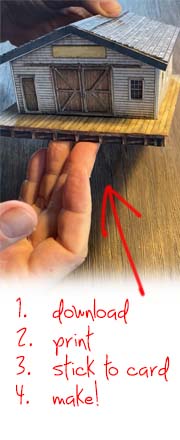
“Never make any print out scenery flat. Always recess it – it’s amazing the difference it makes – as this picture here proves.

Er….me. Al.”

Joking aside, if you look at the pictures of the green house made from the print out scenery, and compare it to the pictures of the blue and yellow houses, they are worlds apart. My boy is making up some new ones to show the difference.

Don’t forget to have a look at his latest edits on the ebay cheat sheet. You’ll save a fortune.

Best

Al

More on model railroad trees

Hot off the press after Martin’s superb model trees, Tom sent his ‘how to’ version in:

“Alastair

Please find attached a method of making a tree that you would find in an orchard. It uses readily available materials and is pretty cheap and quick to manufacture.
The trees shown are part of a war games table – `the orchard` of Gettysburg – but would be equally at home on a HO/00 gauge railway.


Referring to picture 1:

Collect the heads of dry teasel plants – can be found most of the year in country parks, woodlands etc.

Cut them to give a `trunk`.

I usually insert a pin – sharp side down and glue it with superglue – attachment to the base will depend on what the base is made of.

Using scissors trim up the outer surface – remove the long woody bits from the base of the `tree`. You can also trim away some of the sides to give a less even appearance.

Then using a spray adhesive – I use a mounting adhesive – which is good enough. Spray all of the tree liberally, and avoid the trunk and pin.

Roll the sprayed up tree into a fine powdered scatter material of suitable colour. Could use a variety of colours to indicate season – or indeed add some red pieces for fruit.

Stand tree up to dry.

With this method it only takes a few minutes for each tree to be made to completion.

The finished article – `Completed tree` & `Completed orchard trees` (If you look hard you can see advancing confederate troops beyond the orchard).

When I get the chance I will show how I made a wheat field – again using teasels, glue and scatter material.

Tom”


Impressive stuff from Tom.

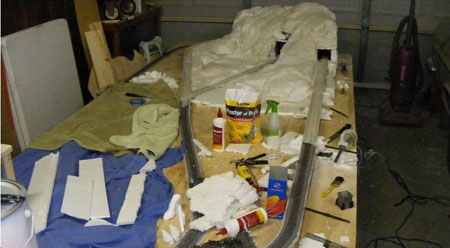
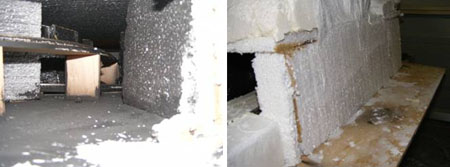
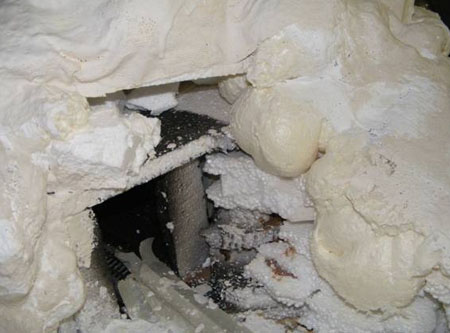
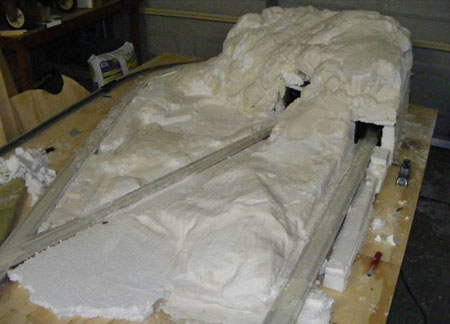
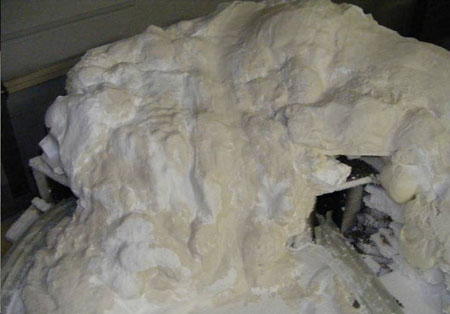
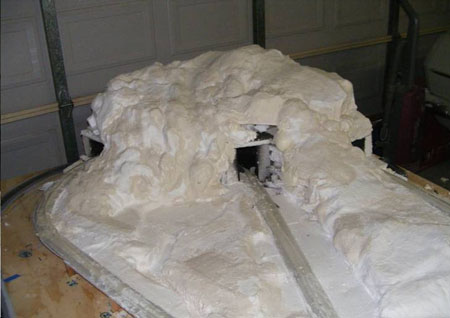
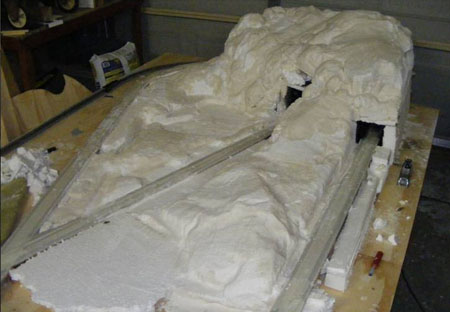
And lastly, Lou sent this in. Looks like it’s going to be a monster layout. Can’t wait to see it finished.


“Here’s some if my layouts. I just started 4 weeks ago.

Lou”


Hope I’ve helped!

And please let me know about your latest ‘steals’ in ebay (cheat sheet here).

Best

Al

PS Martin has sent in some more tree pics which are amazing. But I’ve run out of time today. Next time!

How to make trees like Martin – by Martin!

Martin posted this in reply to all your comments on his model trees (see ’em here).

But I thought it worth sharing with you all.

Judging by all the comments, you’re all looking forward to his ‘how to’ as much as I am.

In the meantime, here’s his short version. A big thank you Martin!

“Hi it’s Martin,

Not got around to making a step by step photo guide yet but a brief description for anyone wanting to make a start on your own trees.

“I used to make Christmas holly wreaths years agao, and remembered that I had lots of mild steel florist wires left over in my ‘it may come in handy someday’ box.

The wires I used are are around .9mm thick and 9″ long. There are 2 ways of working – upwards or downwards. First I’ll briefly tel you about the upwards method.

I get a bundle of about 21 wires and wrap masking tape around one end. I then grip with plyers and with mor plyers start twisting the wires to form a trunk, around a third of the length I seperate 3 wires and twist them together for the bottom branch, leaving the ends seperated to later add the foliage.

I go back to the trunk and twist them a little and then pull off 3 more wires at the opposite side and twist them together for the 2nd branch. I keep doing that up the trunk to form the tree, branches getting shorter as you go.
I must point out that it is best not to pull off 3 wires from the outside but instead try get one from within the trunk. This stops the branch from working loose.

When you are happy with the shape go to the bottom and remove the tape. This is so that you can pull some out to form roots (they make the tree stable) leaving 3 wires stuck out which I twist together to form a spike to stick into the scenery. If you have too many wires left over then clip them off level with the base of the roots.

Next is to paint the whole tree areature with PVA white glue. When dry you can add the bark mixture to cover the wires. This is made from a plaster type of powder mixed with PVA glue, not too thin but just enough to be able to paint it onto the trunk/branches with a small paintbrush. set it aside to dry (I stand them near a rad.). You will find that the bark has soked in between the wires so you may have to apply 2 or 3 coats.

When dry you can paint with a water based paint but remember that trees are not black.

Now adding foliage…. many different methods to do this.

1) One of the most effective (and the most expensive) is to glue pieces of wodland scenics fine leaf foliage by heavy stick contact adhesive onto the wires. (the top pic is this method)

2) Another method is by woodland scenics or bachmann foliage net which can be torn apart and draped over the branches. (2nd & 4th picks are this method)

3) The weeping willow is glue painted onto the multi- wires (you need thinner & many more wires to make these trees) A fine flock scatter is then applied to the many single wires. (a long job).

4) The last picture shows foliage made from bunches of fine hairs glued onto the wire branches. Then a very generous spray of max. hold hair spray. then apply a scatter gently onto the hair and it instantly transforms like magic. There are many different types of leaf scatter but to get a good effect it is best to use fine or medium grades. I also found that some types of manufactured leaves drop off the hair in time, but the flock material type stay on the tree.

Anyway I hope that this gives you some ideas and you have a go for yourself? I think that wire of around .5mm thickness is better but I need to use up my stock in the saved box!

I will explain the Downwards method another time.
Martin”

Really can’t thank Martin enough for sharing.

It reminded me of Dean’s post: Model train trees evergreen.

That’s all for today folks.

Please do keep ’em coming.

And if today is the day you get started on your layout, the Beginner’s Guide is here.

Best

Al

PS Latest ebay cheat sheet is here.

PPS More HO scale train layouts here if that’s your thing.



printable buildings

And there’s the Silly Discount bundle too.