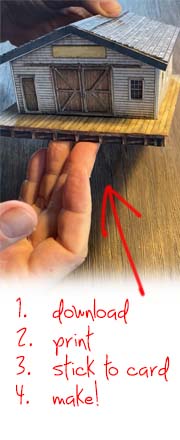
Alan got in touch. And I have to say, I agree with him. Why just dump your unused cars and locos in Model railroad storage boxes?
“Hi Alistair, I just thought that you may like to see the sought of thing that an odd mind like mine can come up with.
I wanted a storage shelf for my ‘O’ gauge vehicles and this was the start of “Justash Elf Village”, I could’nt see the point of plian shelves would appreciate all comments good or bad as we can always learn.
There are more photo’s of this and ‘Tramps End’ if you wish to see them.
Alan.”
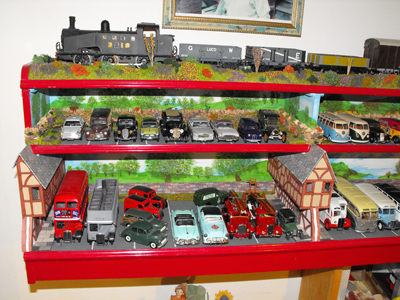
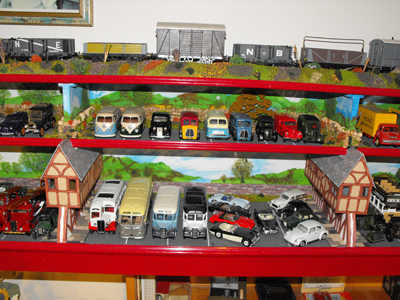
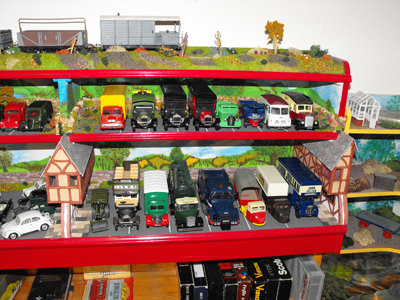
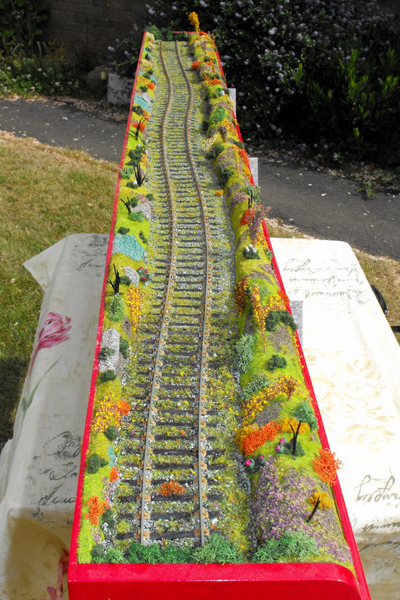
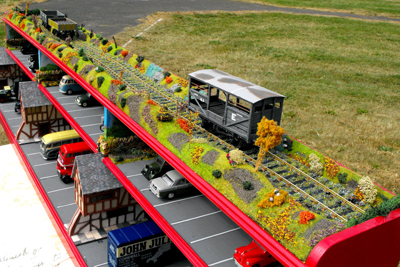
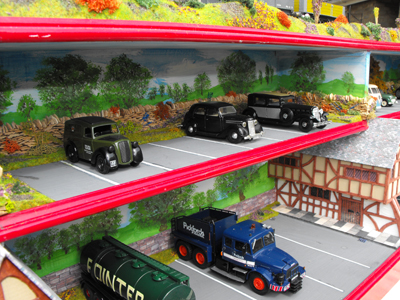
A big thanks to Alan for sharing his opinion on Model railroad storage boxes. I have to say, I do agree with him!
Next, Cameron:
“Hi Al
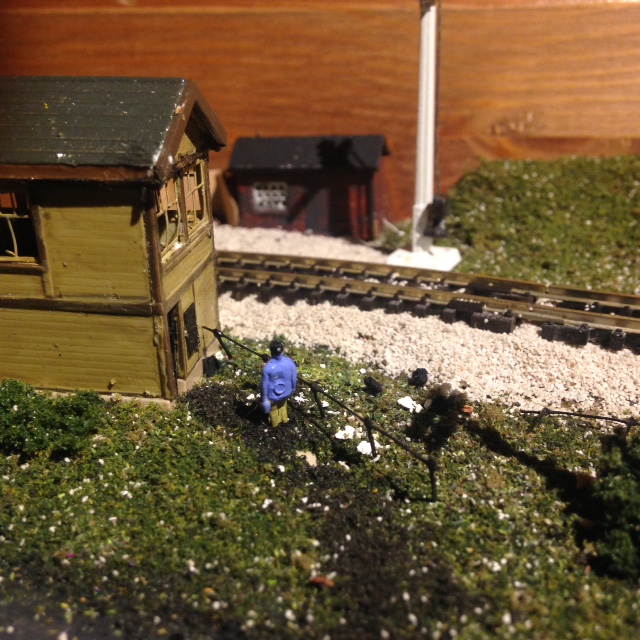
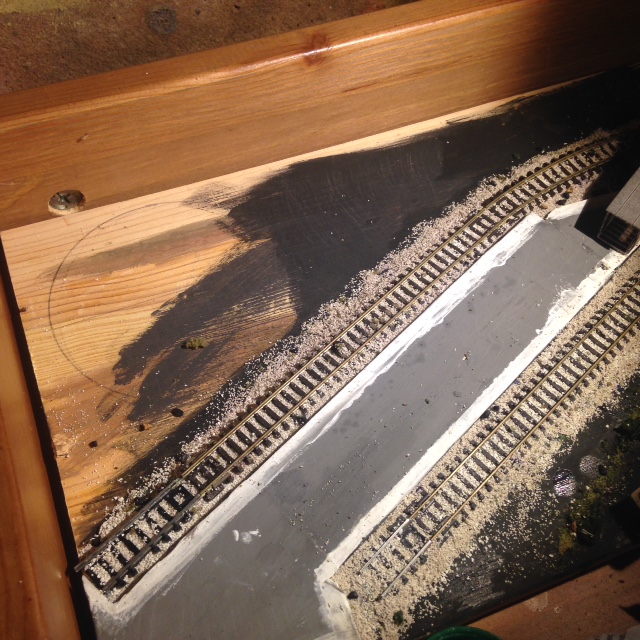
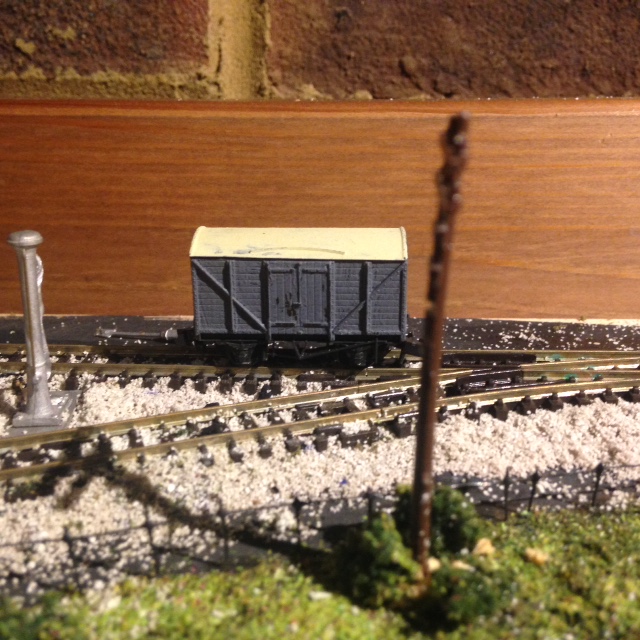
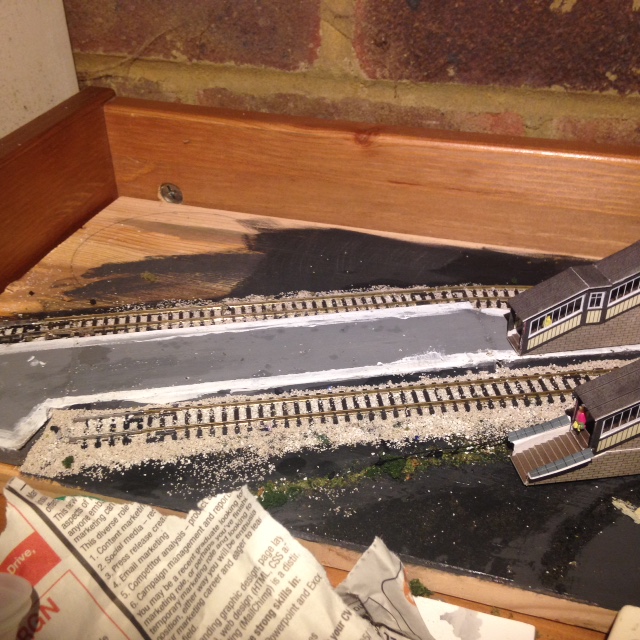
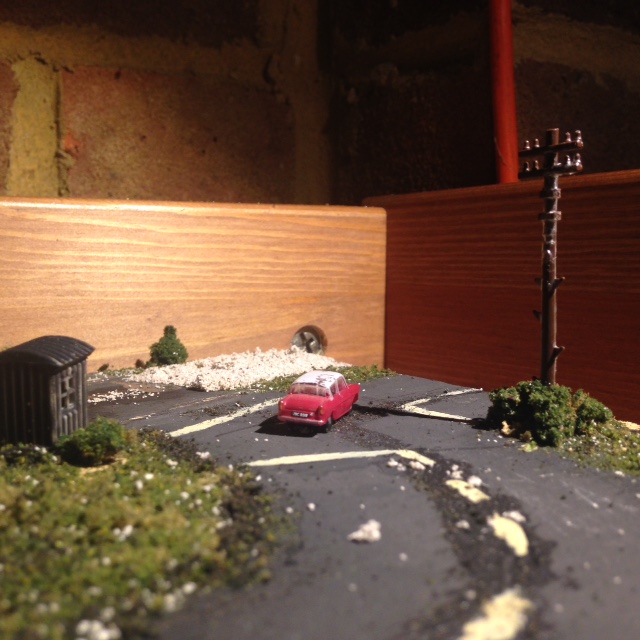
I am a beginner in the hobby and have very limited space for my layout. It is a 4ft long end-to-end terminus shelf layout based in the South of England. I am about 70% complete with a couple of buildings to build and people to place but I have a small problem.
As I said I have a very small layout so I’d like to use the space as much as possible. But there is an area (about 1/5 of the layout) that is blank. I haven’t placed any scenic stuff down or buildings because I was hoping for some suggestions from you and the other model railroaders in the forum.
So far I have one suggestion from a friend which is to put a turntable in because it’s a terminus but there simply isn’t enough space.
Thanks Al for all the hard work and effort you put in to keep this forum going. I find it very useful.
I have attached some pics too.
Cameron”
Now some more of your tips:
“Best method of creating a landscape? Sprays. Just spray your layout with a spray gun or can (obviously before anything goes on). Then cover with another colour or go straight to laying track, scenery, and other goodies.
Bit obvious but it helps!”
— Jamie
“To BROWN or not to BROWN.
I have never been very big on the black ties of flex-track. I usually lightly spray paint the flex track with a dull brown acrylic ( I suppose a gray would be OK too).
This makes the shiny black ties appear more natural and weathered. Sure this will paint the track but a light sandpaper will remove the paint, restores the contact and rail shine. I also sand the interior of the rails to improve wheel contact.
You can also paint switches, turnouts and crossings to blend but extra sanding is needed at all electrical points of contact of the throws and frogs of the turnout itself.
I usually do all of this “RR tie painting” anytime before applying ballast.”
GRADING is not too difficult to achieve as long as you don’t exceed a max of 4.5% elevation.
Take in consideration the height of an over/underpass. The elevation angle is determined by cumulative height of… “the cork-bed ballast, the track/ties and the tallest car plus .25″ clearance”. This will give the total inches/degree of elevation on a run of 100″.
Lets say that the total height is 4.5″; that converts to a 4.5% elevation over a 100″ of linear track. If the running length of track is say 75″ then the angle becomes greater to 6.7% (too great and possibly will stall any long run train). Compared to a running length of 120″ (10-feet) equals 4.2% angle of elevation/grading.
Multiply your grading/elevation by 2 to allow for down grading as well at the same “gentle decline”
— Ron
“My tip is get the correct couplers you need so you dont get them mixed up like tyco or the knuckle couplers”
— Jason
In reference to rail cleaning after painting or for general rail cleaning.
Never use sandpaper as even the finest grade of wet & dry will leave tiny scratches which will attract & trap dirt & grime.
If you need to clean paint from the rails after painting or spraying use a small piece of softwood the end grain of which is ideal for the job.Any residue left over can then be cleaned simply with a piece of cloth wrapped around your finger.
For general rail cleaning use Isopropyl alcohol or mentholated spirits.
Also to keep rails clean eliminate any plastic wheels from your stock as these are like dirt magnets & simply spread the dirt everywhere.Metal rails are much better & even help to keep rails clean & extend the periods between rail cleaning.
Tony”
“Cleaning Wheels:
To clean my N Gauge loco wheels, I use earbuds and vinegar.
Dip the earbud lightly in the vinegar and then gently run the wheels. The angle of the earbud helps get right into the flanges and it picks off loads of dirt and greasey grime. I then simply pass a current to the wheels to turn them round and continue cleaning. Once finished I use a clean earbud or soft lint free to remove any residue.
Hope this helps
John”
“Tony’s tip on using a piece of wood to clean track is great. I have used scrap pieces of 1×2 to clean my n-scale track for years. When it gets really bad I dip it in alcohol before use. I regularly run one hundred plus car length trains and have maximum grades of about 2.5% on my layout. So, smooth operation is absolutely a must. Another tip I use is to clean my wheels on a straight spot in the track I place a piece of paper towel, spay it liberaly with alcohol and the just run the train. Make sure the paper towel is small enough to only break contact on a single set of pick wheels on the locomotive and be sure to clean the track every few passes of the train or you will just make dirty track!
Ant”
That’s all for today folks.
Please do keep ’em coming.
And if today is the day you get started on your layout, the Beginner’s Guide is here.
Best
Al
PS Latest ebay cheat sheet is here.
PPS More HO scale train layouts here if that’s your thing.
And there’s the Silly Discount bundle too.