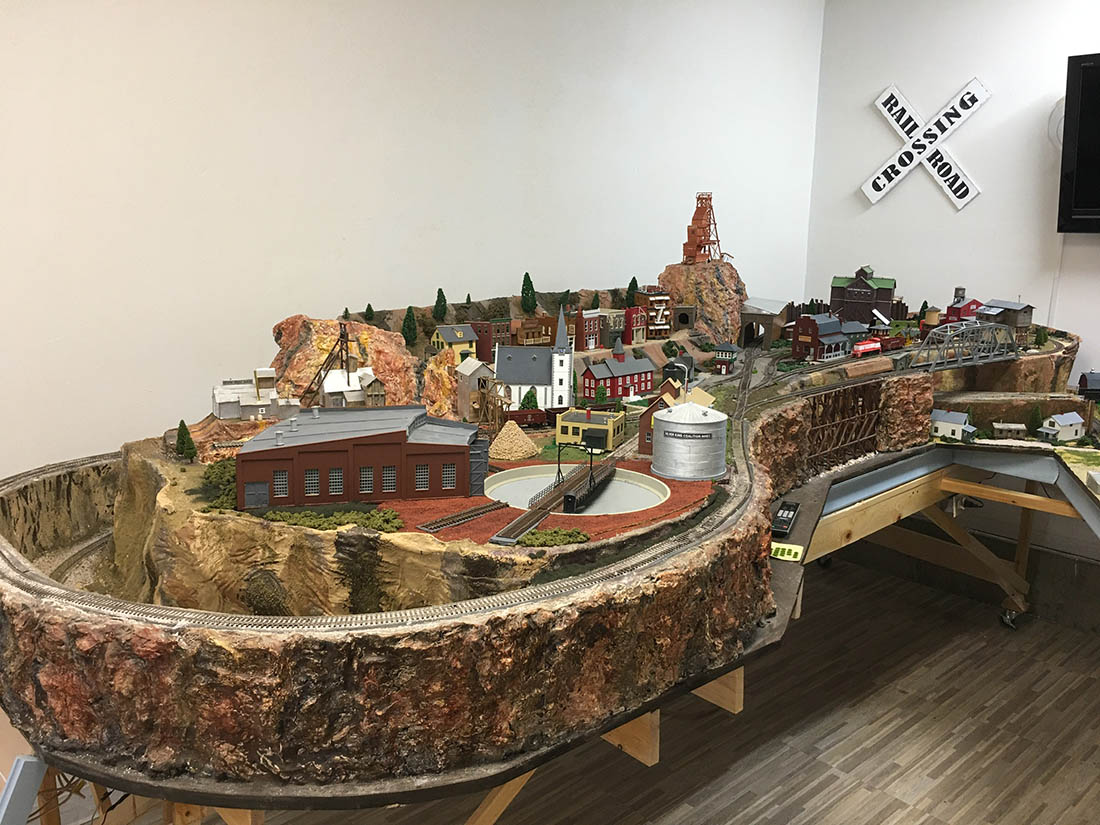
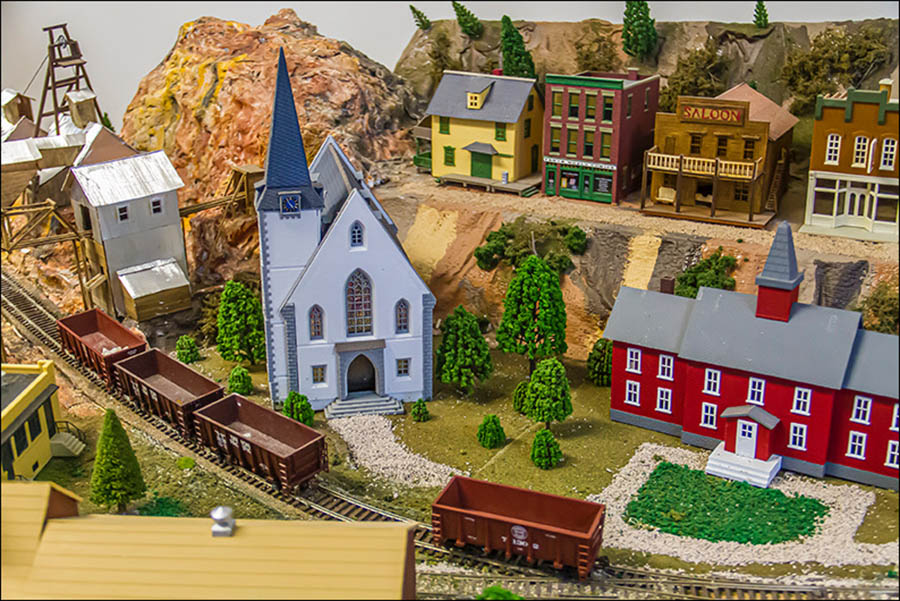
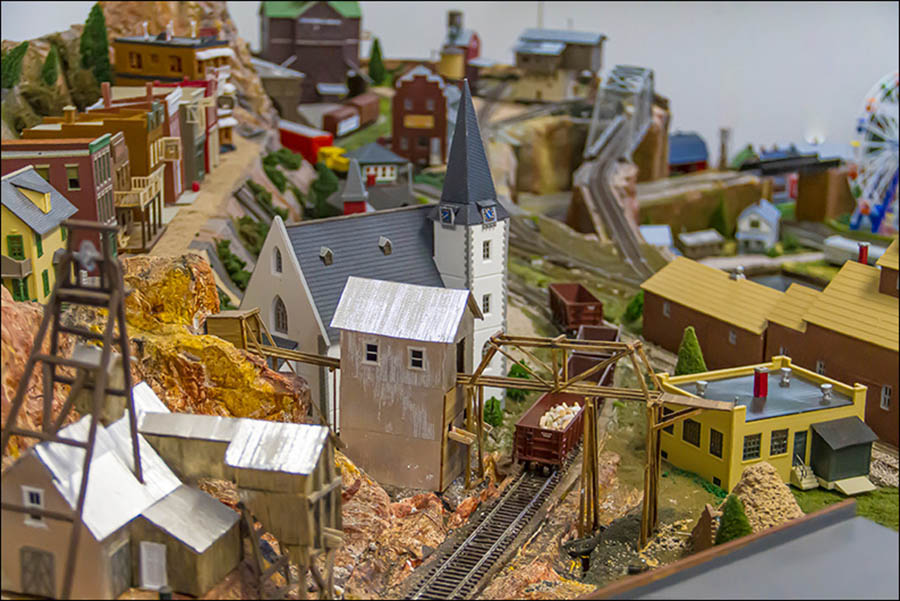
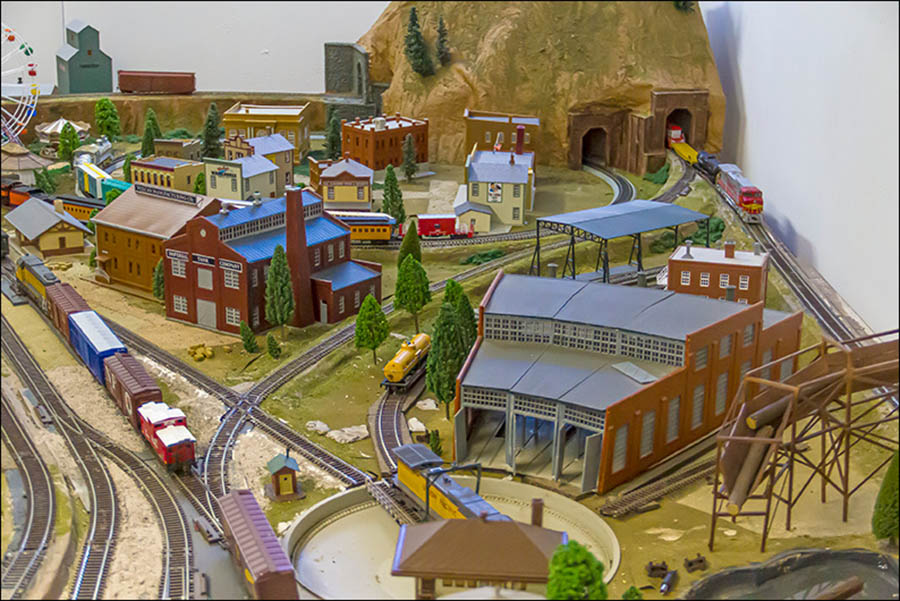
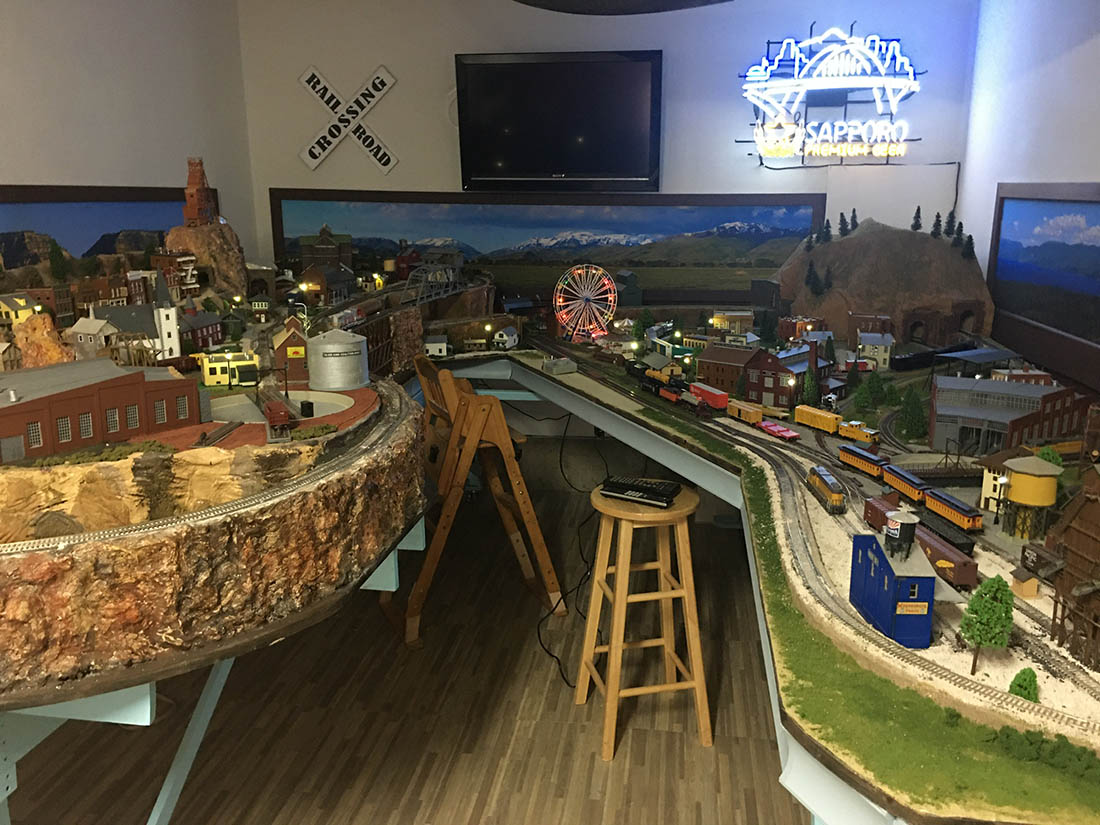
HO scale figure 8 layout

Bill’s been in touch with his HO scale figure 8 layout:

“Al,

I started my HO layout back in the ‘90s when my now 37-years-old son was a teenager and we were building it together.

Complexity of dealing with reversing polarity segments in DC, general lack of knowledge, and shifting interests caused the layout to languish for decades.

When we moved residences as part of downsizing in advance of my planned retirement, I decided to move the layout to an unused loft area in the new home (In retrospect clearly a mistake.)

There I began to work again on the layout. Free time following retirement contributed to my ability to focus on the layout.

Once the track was laid and DCC wiring was installed, I could run some trains — or at least locos to test my track.

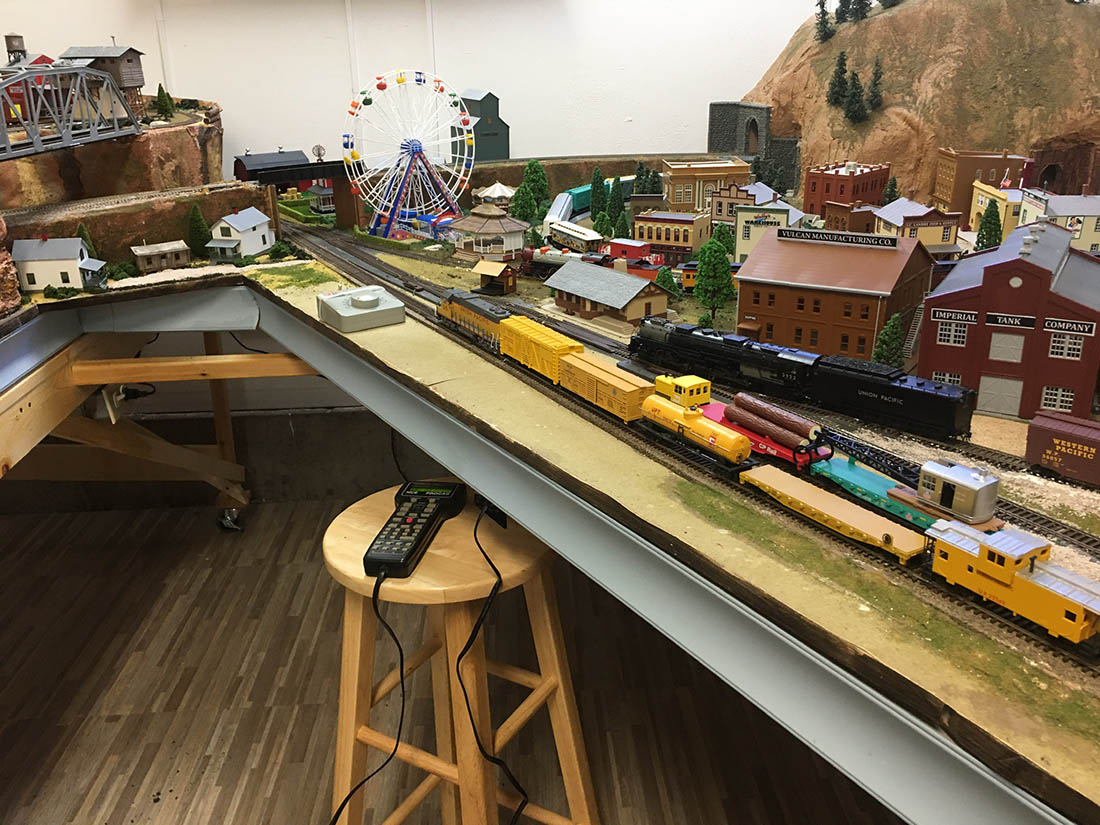
The track plan is a basic HO scale figure 8, with elevated cross-over and two reversing segments.

The design was modified from a book of track plans published by Atlas. The construction method (admittedly dated and I would never recommend today) involved making parallel cuts in the layout top surface with a sabre saw, and then inserting a series of increasingly larger strips of wood “wedged” from side to side beneath the cut strip to pry it upwards, forming an inclined ramp (and reversing the process on the downward slope).

I used a popular brand of what I would call introductory quality track and turnouts. No soldered joints. Some flex-track, but mostly set-track as specified in the plan. Mostly 22” radius curves.

It was a potentially fun layout, but I could not get my locos to run without constant derailments. And in some cases, I couldn’t even get them to run! The problems were multiple and different.

For example, slight variation in the rate of incline created at least one “dip” and transitions were poor, causing locos to derail or stop running, either for lack of electrical continuity or physical contact.

My N&W “A“ (2-6-6-4) loco especially disliked the dip in the incline, it’s front truck wheels and rear truck wheels would be on opposite “high” sides of the dip, suspending the tractionless drive wheels spinning between the loco above the dip. The loco may be “articulated,” but not that way!

Turn-out issues, problems with joiners and flex-track all revealed the dire consequences of my novice errors years before in inadequate attention to sound roadbed preparation practice and proper track laying technique. These issues were undoubtedly compounded by flaws unintentionally introduced by the inevitable twisting of the approximately 5’ X 9’ layout during the move.

Ultimately I determined that I could chase derailments for years, and never get the layout to run reliably, or START OVER. The latter is what I did: I tore off the entire top of the platform and installed new plywood and 1” foam as a base.

I also took this as an opportunity, using some model train layout-planning software available on the internet, to redesign the layout with larger 24” min. radius curves to better accommodate my larger locos and 80’ passenger cars. That process revealed that I would need to expand the layout, both in length and width.

That expansion is why I’m writing you. I am not a gorilla and the width of the layout — 5’6” — means that any detail in the middle of the layout is unreachable from the sides.

This presented a particular challenge as a critical set of turnouts, on opposite sides of a bridge crossing the stream that bifurcates the track, is located right in the middle of the layout — with the crossover of the figure 8 mainline crossing almost directly overhead — a busy place for track laying and scenery.

Climbing up on the top of the layout was no longer an option given the modern use of foam board overlaying the plywood top surface.

Scenic Woodlands inclines and risers solved both the “transition” and smoothness issues associated with elevation change. A switch to better quality PECO track, turnouts, connectors, and use of tracksetta guides promised far better basic track-laying practice, hopefully with concomitant improvement in performance and reduction in derailments.

But how to do all that in the middle of the layout?

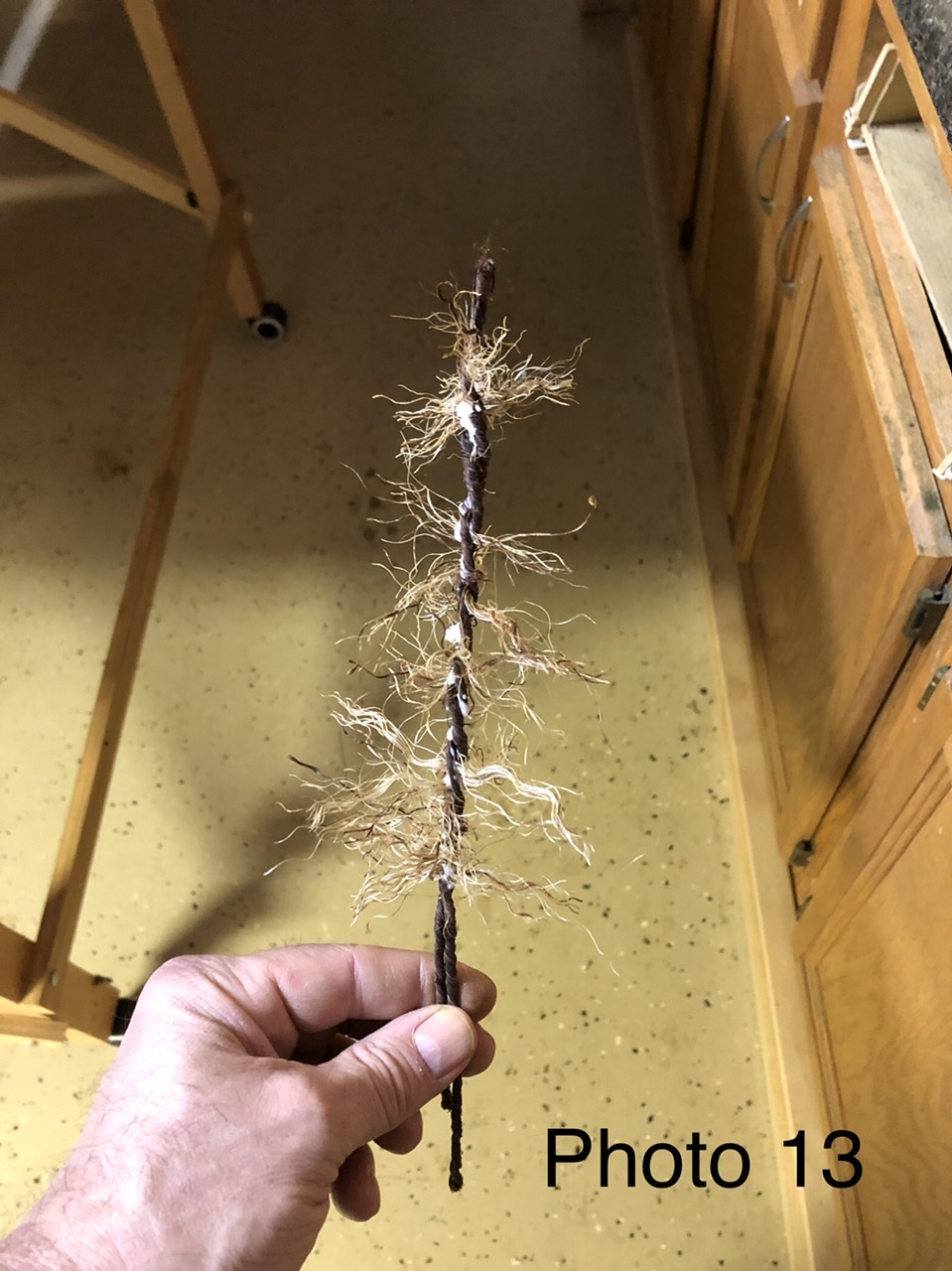
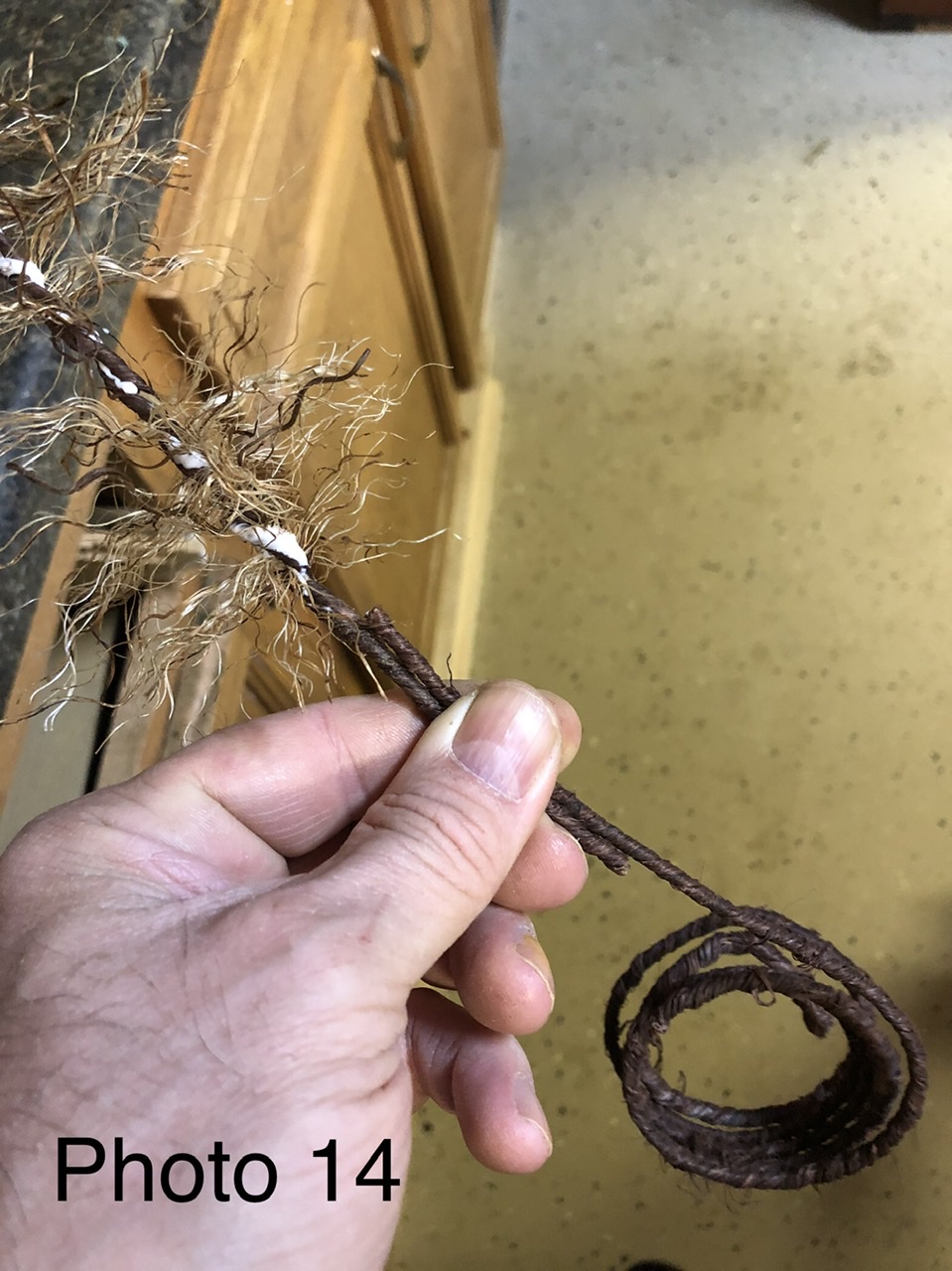
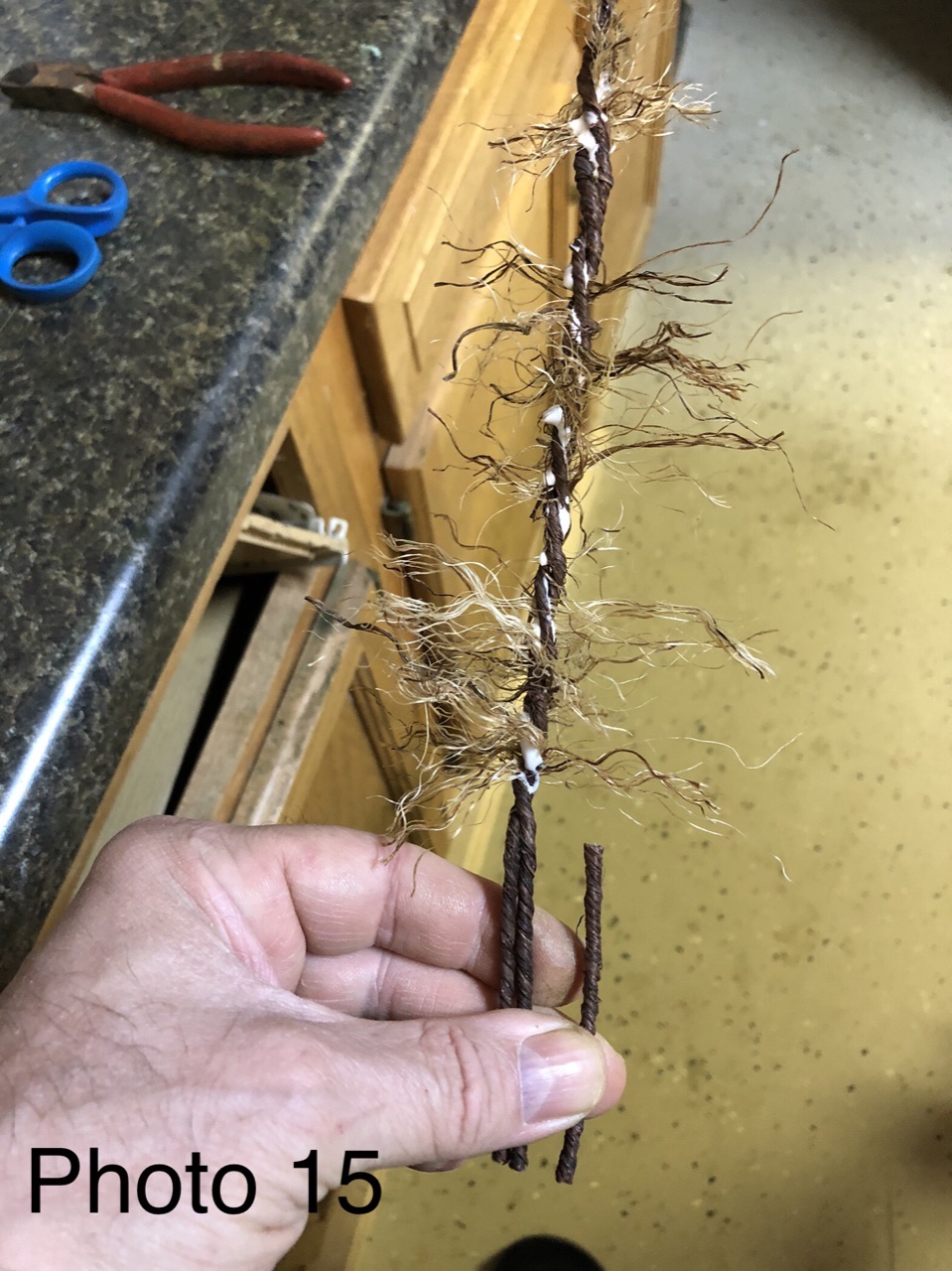
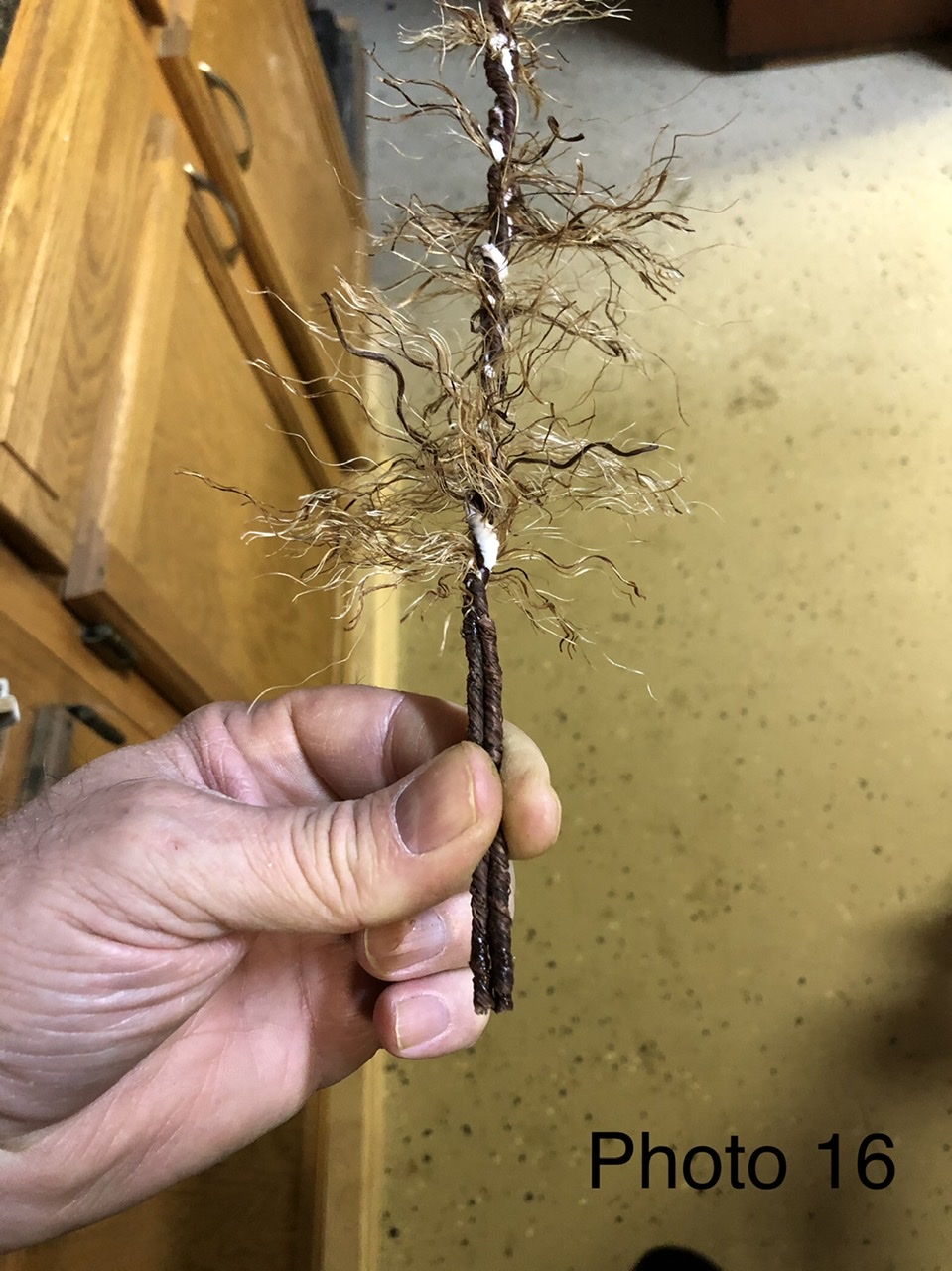
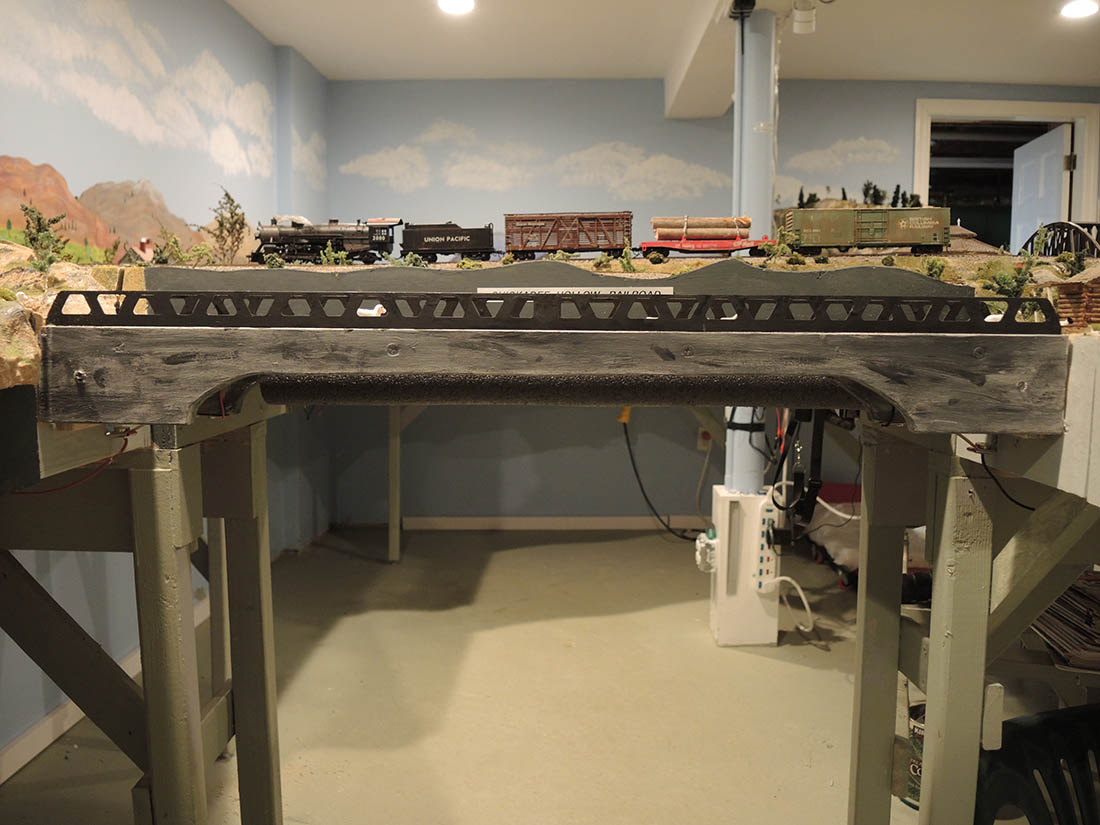
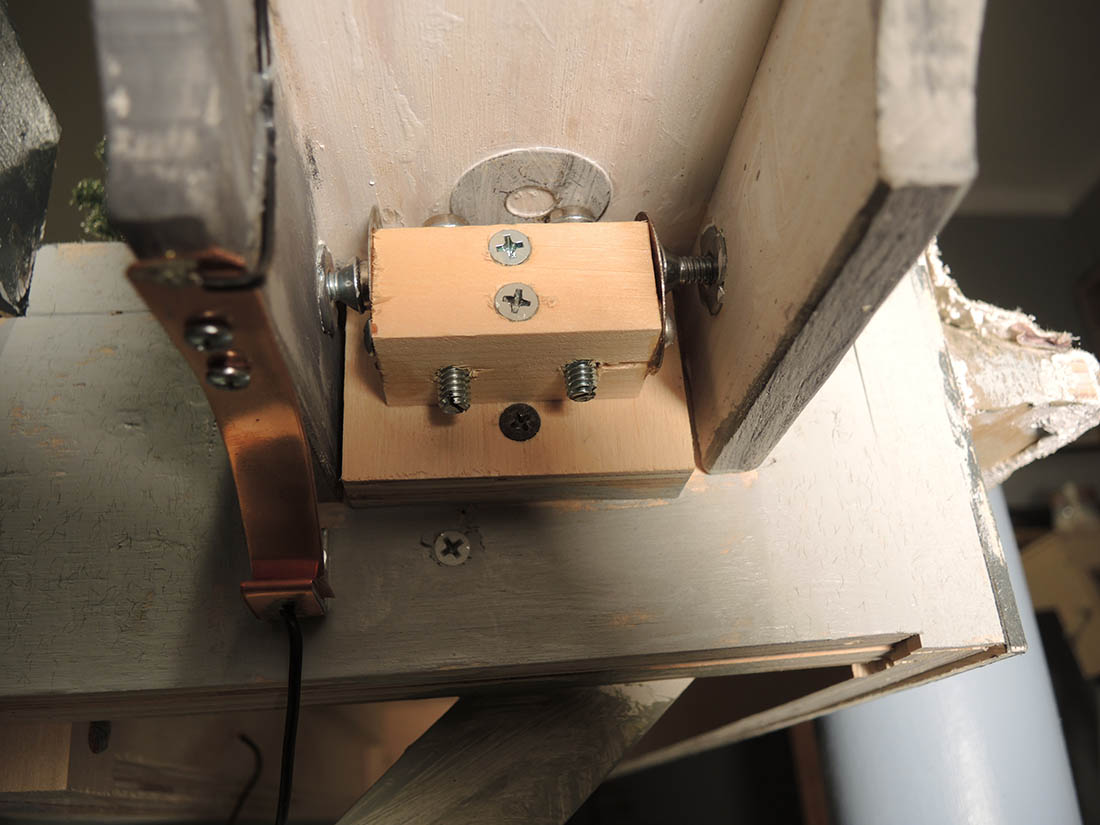
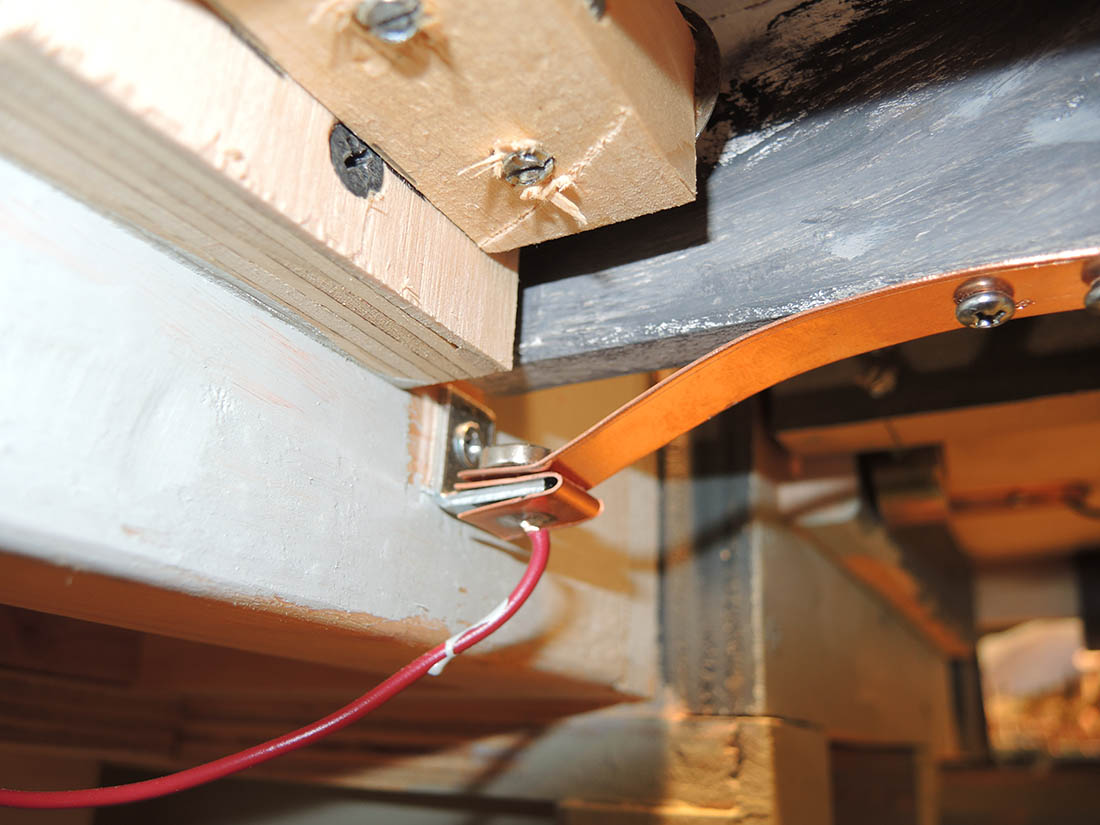
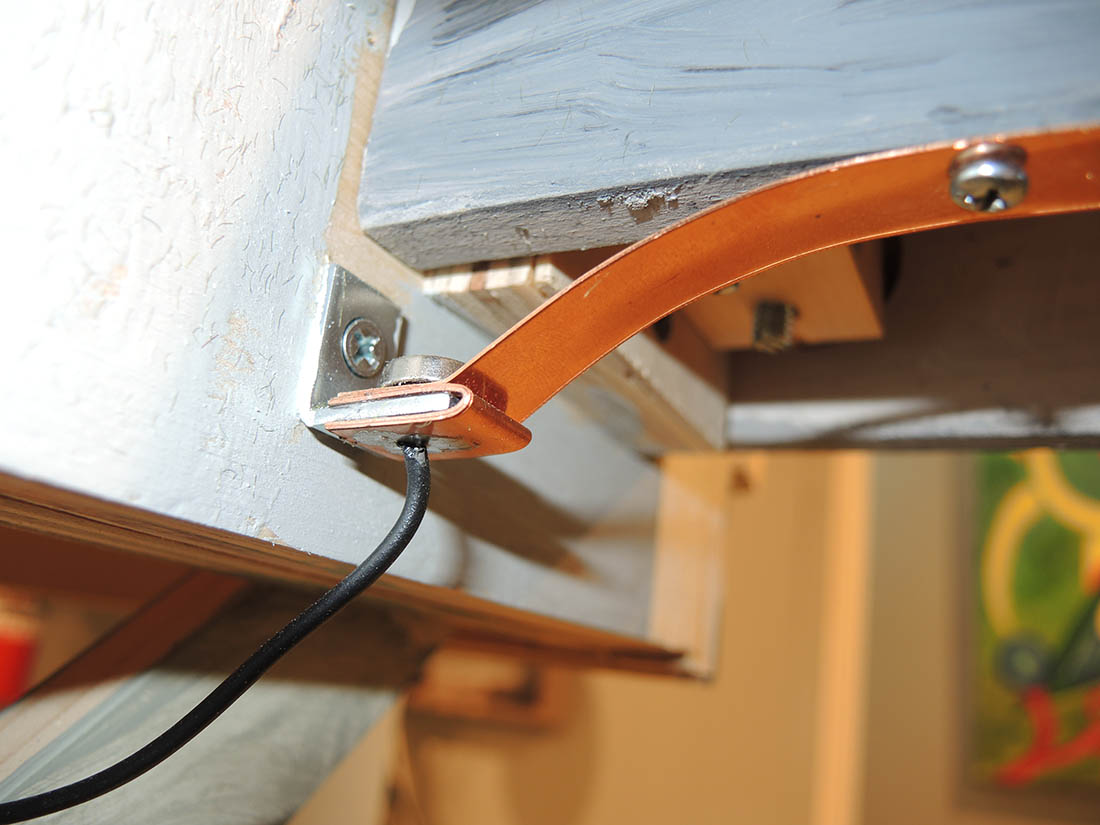
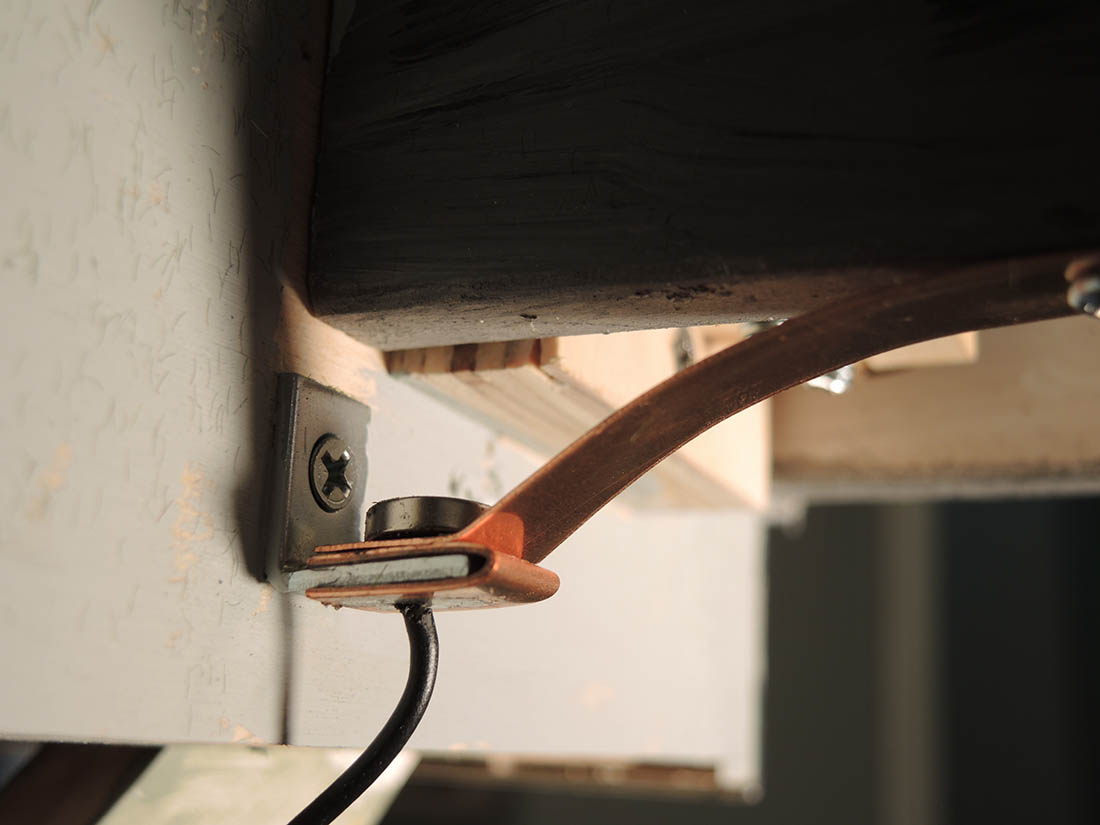
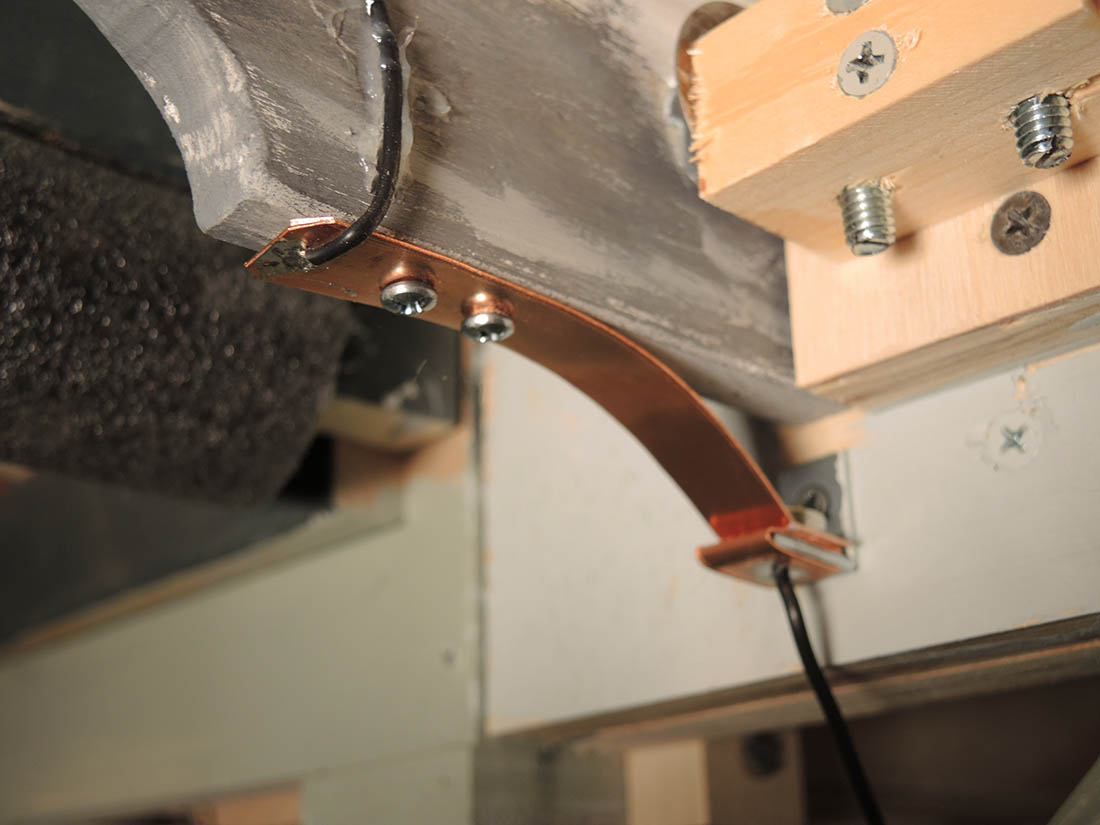
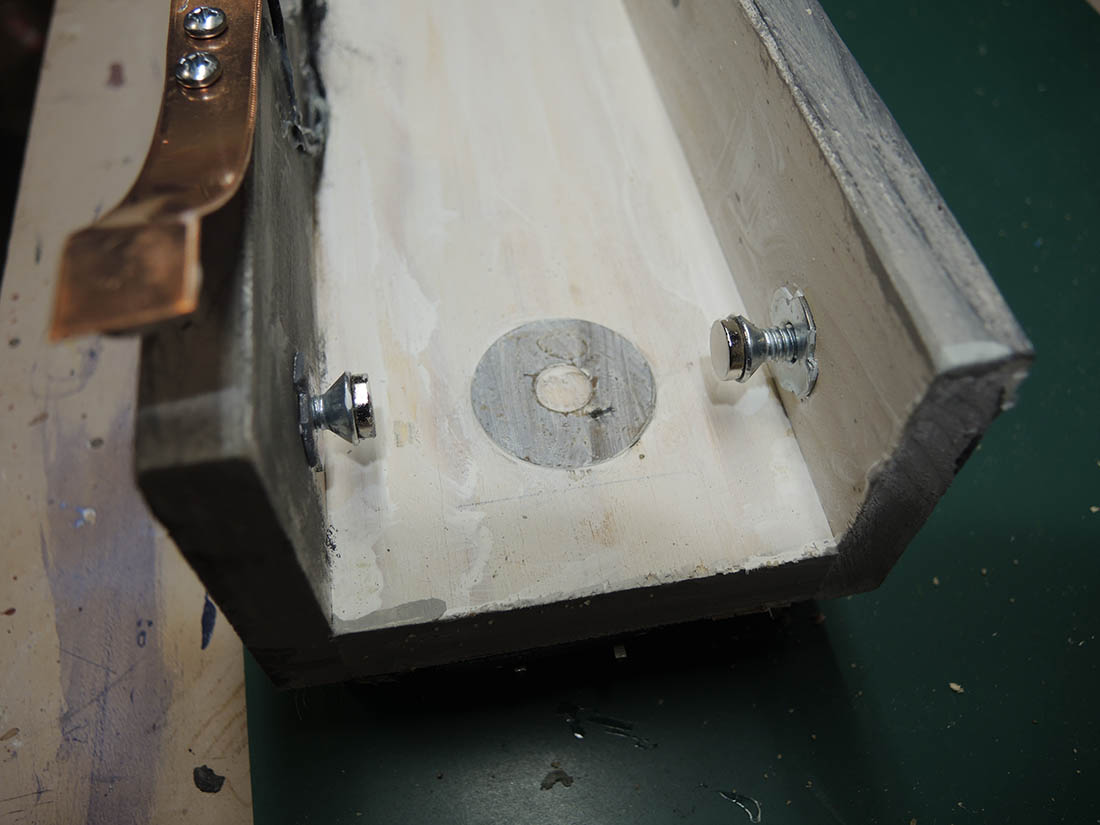
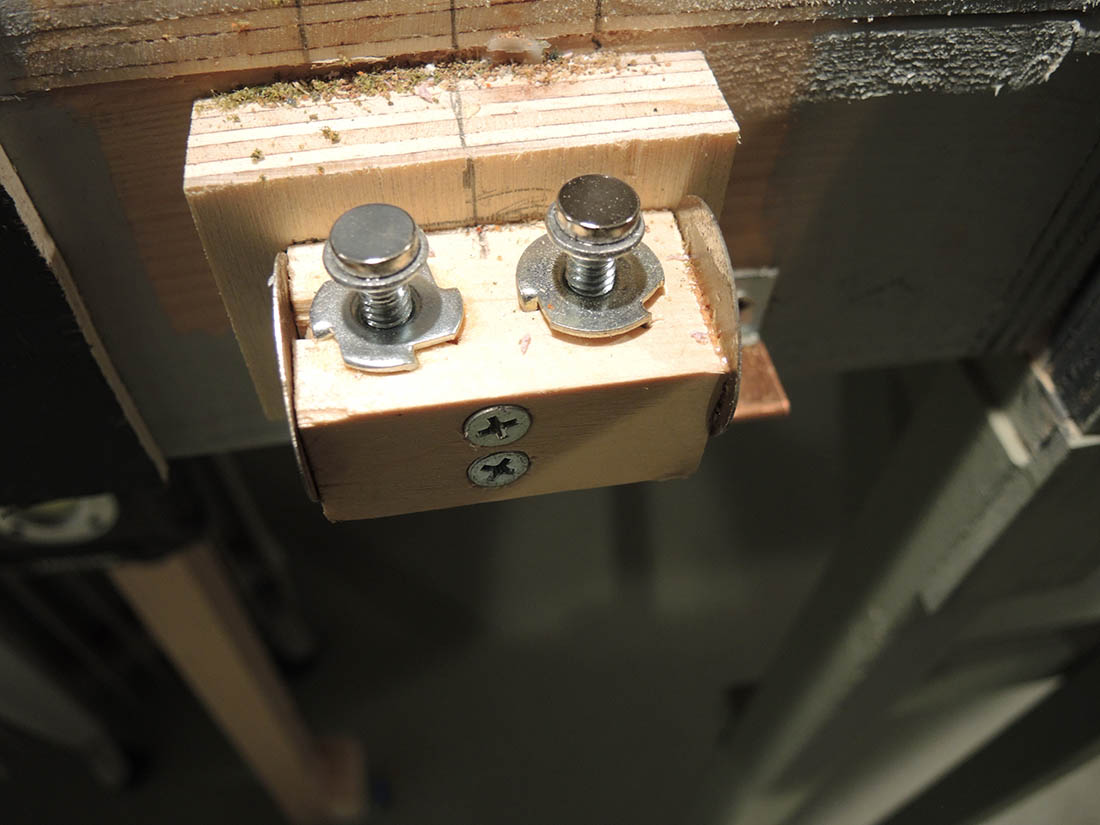
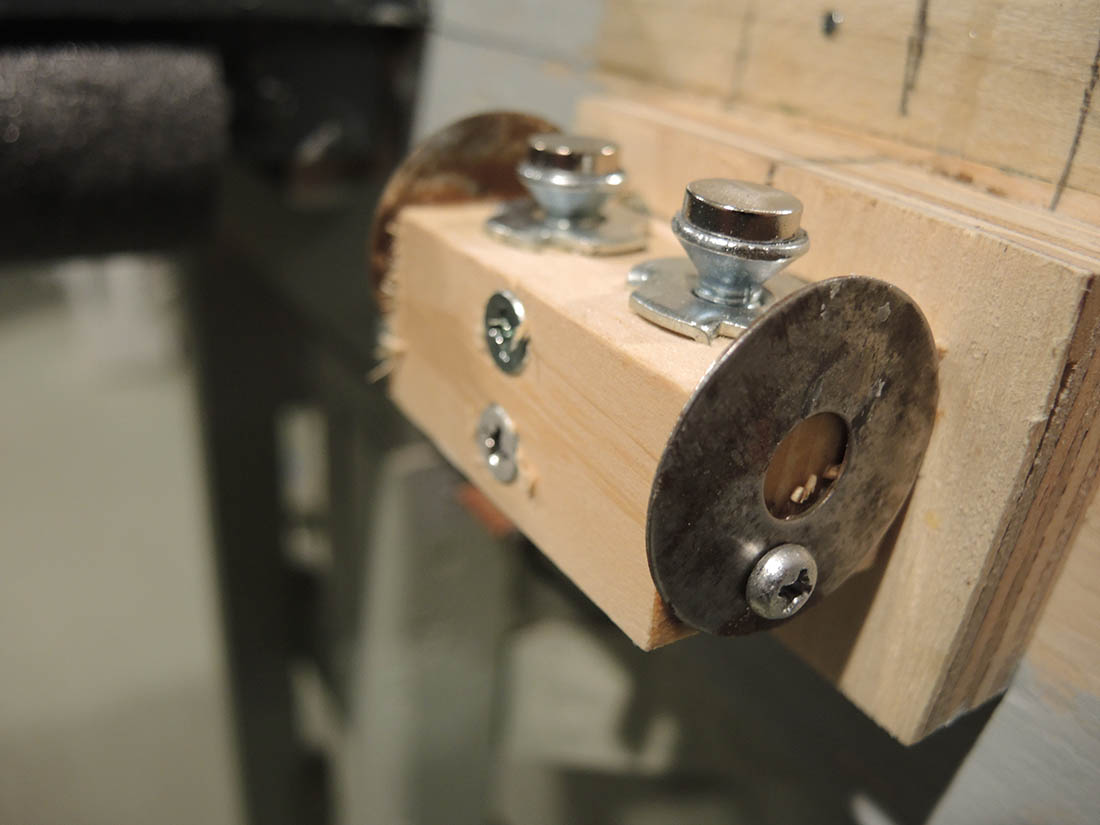
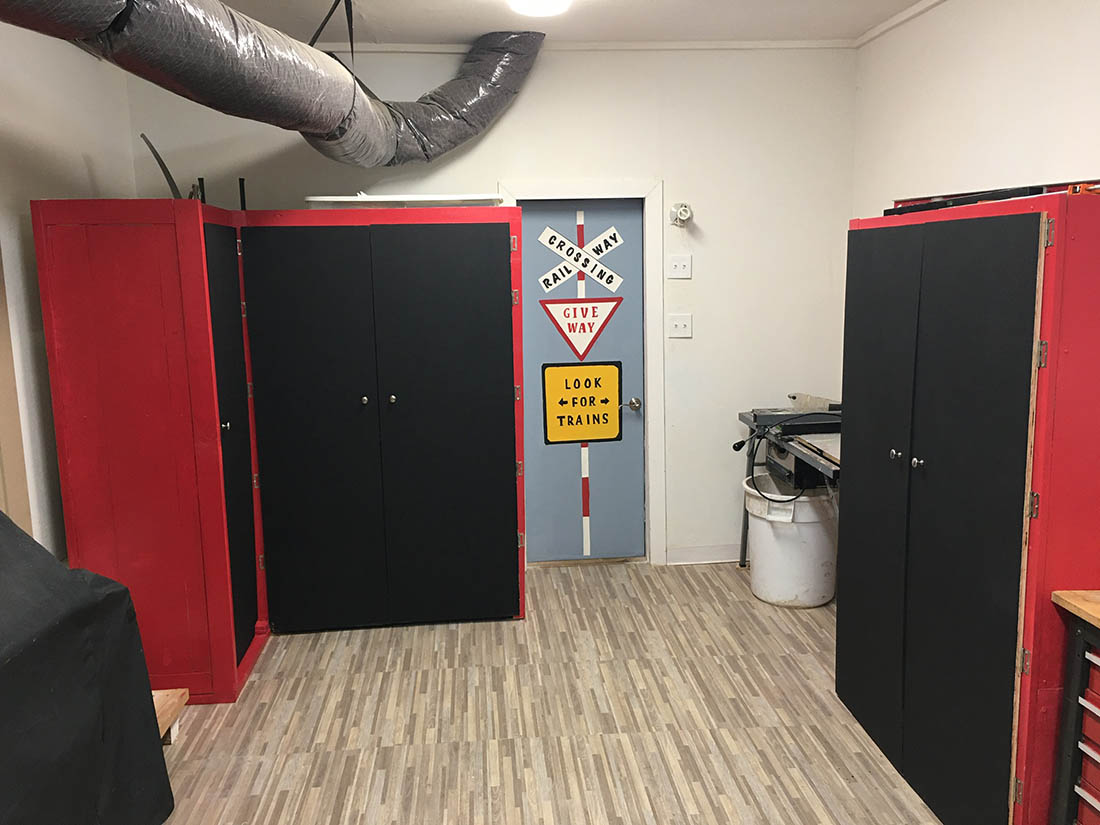
What I discovered is called a “tall creeper.” Mechanics on this side of the pond use it to access the engine compartment on pick-up trucks, the height of which can make it difficult, if not impossible, to perform routine service or repair the motor with ones‘ feed solidly planted on the ground while trying to bend over the fenders to access the engine compartment.

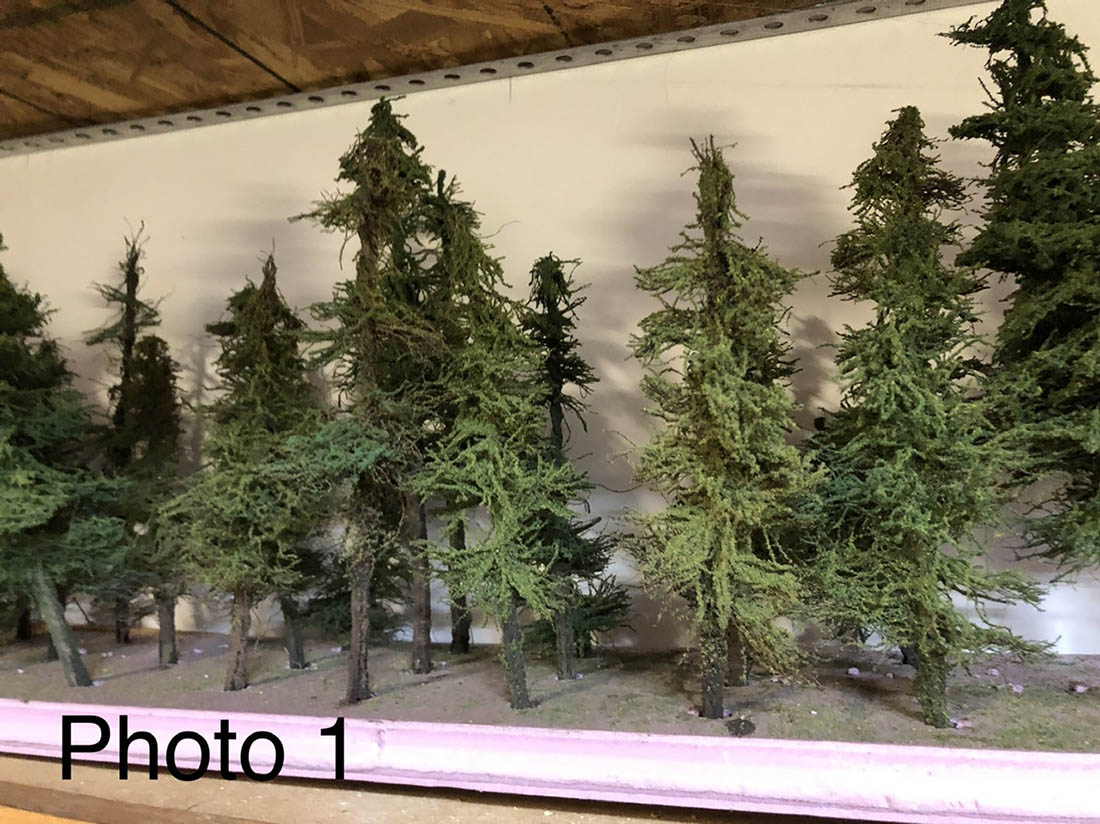
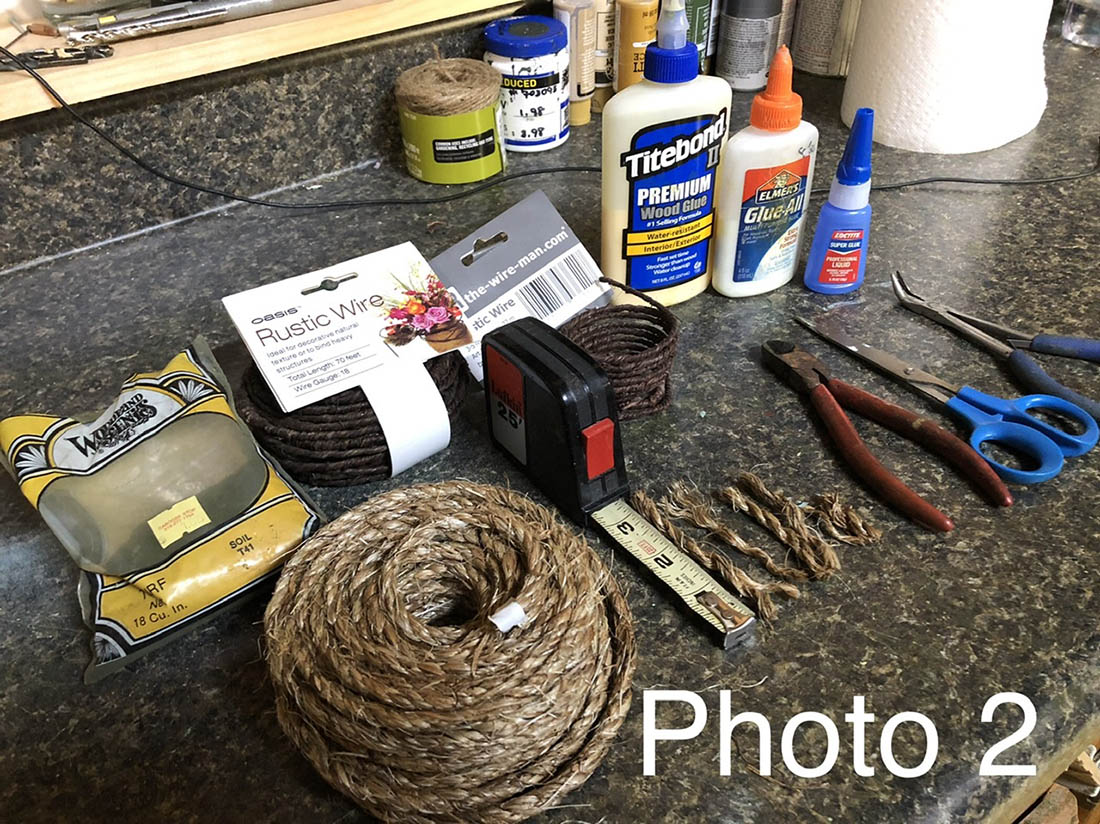
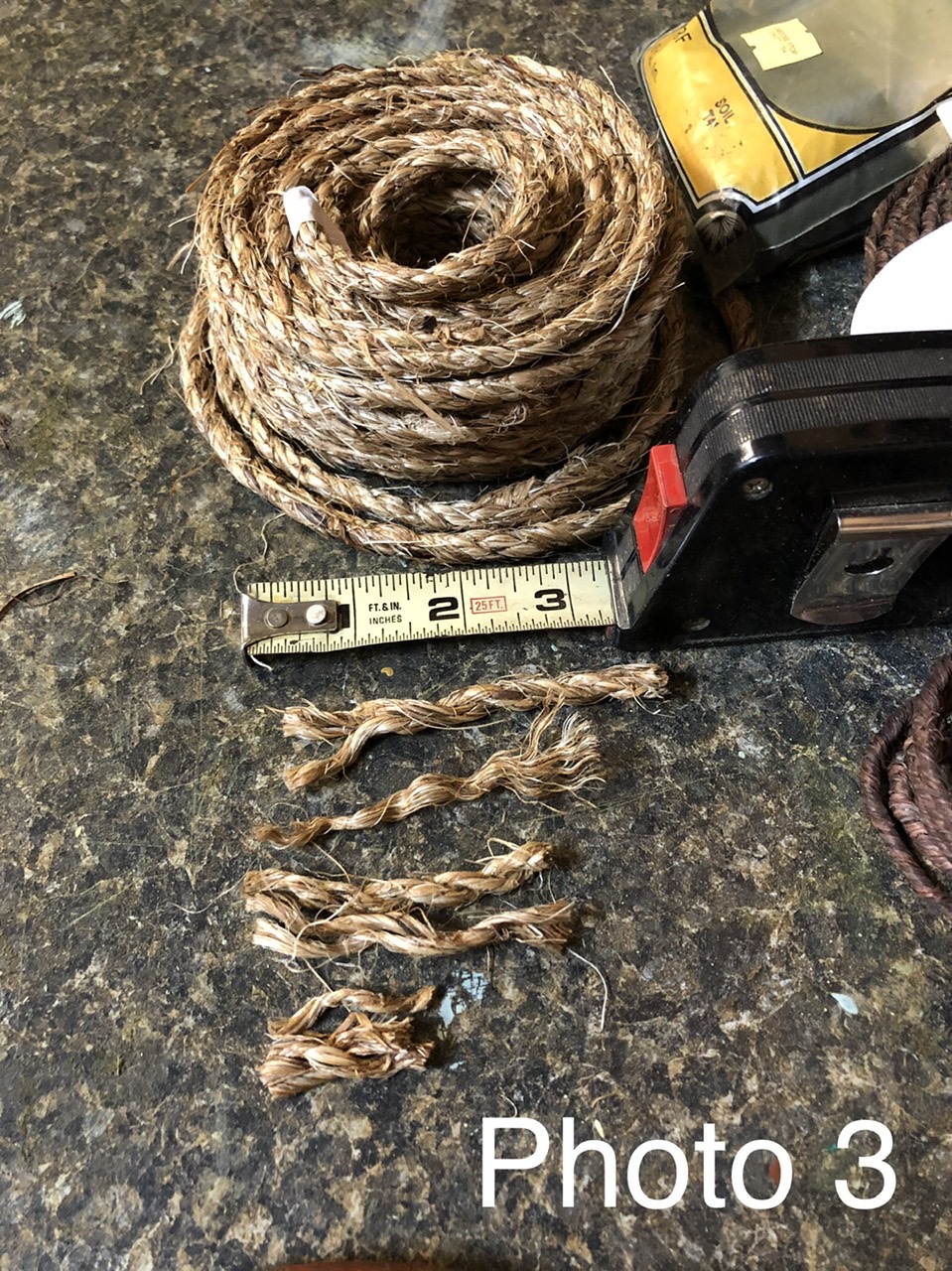
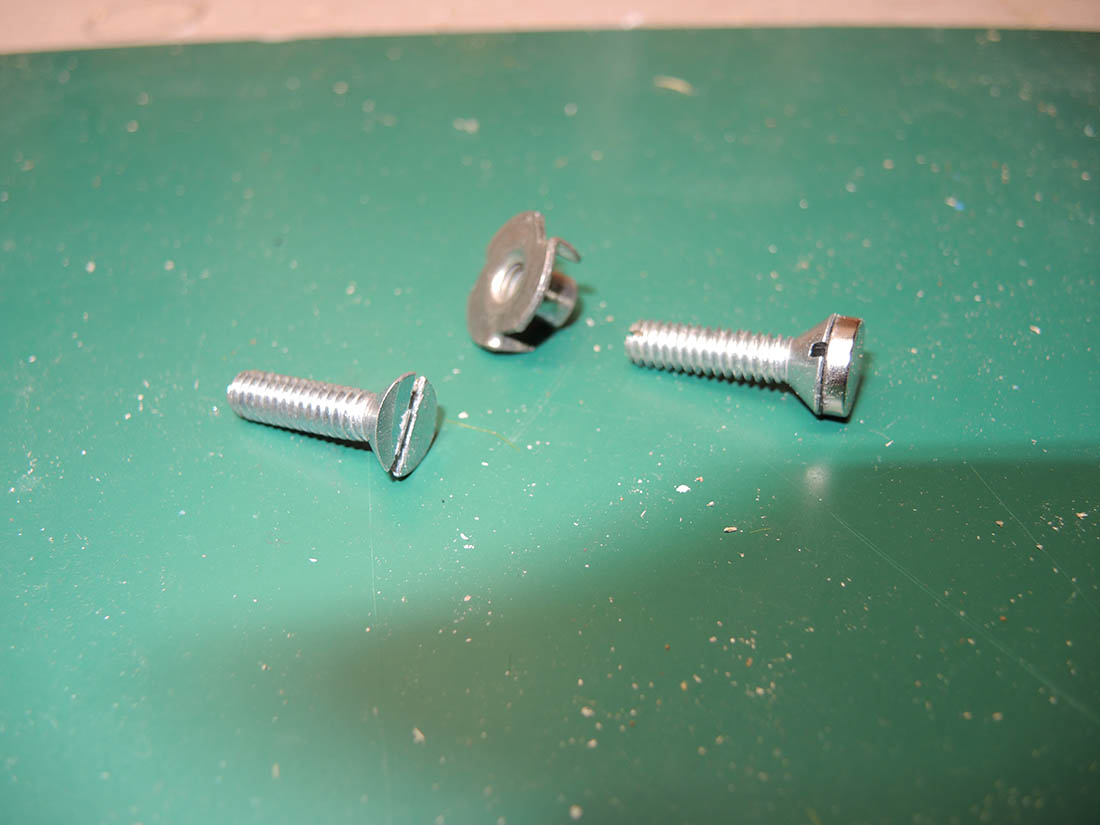
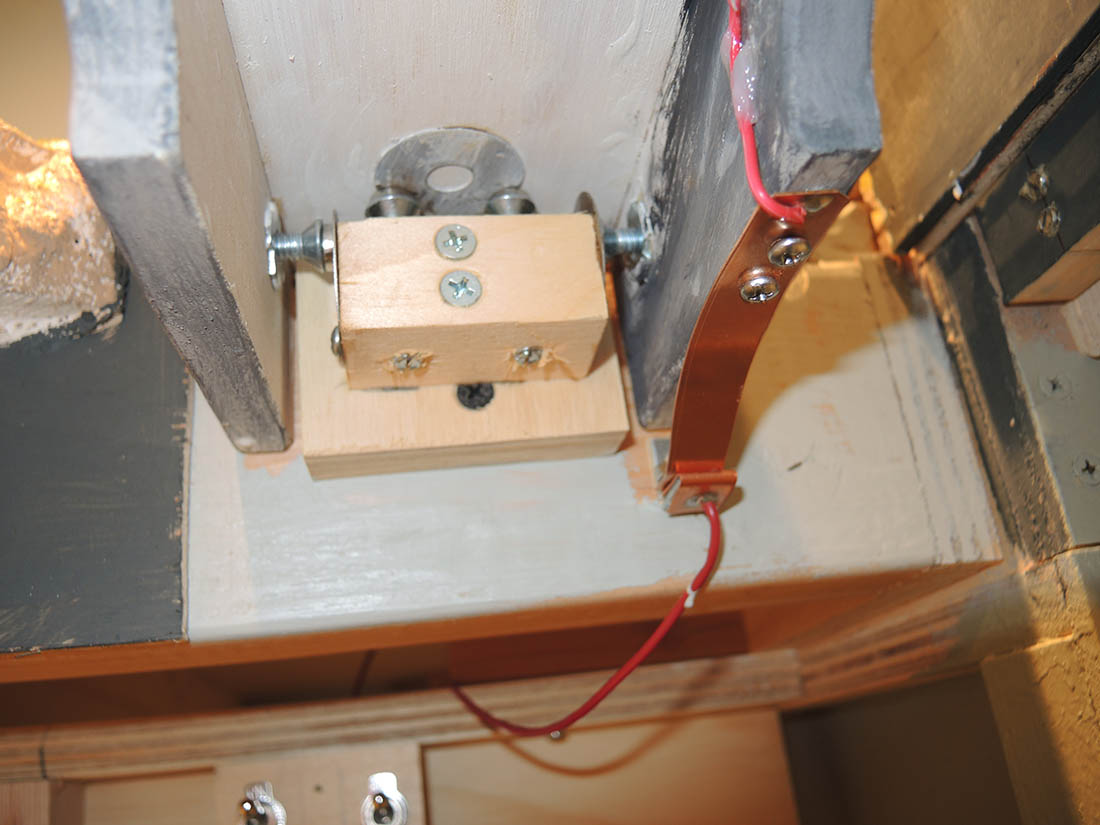
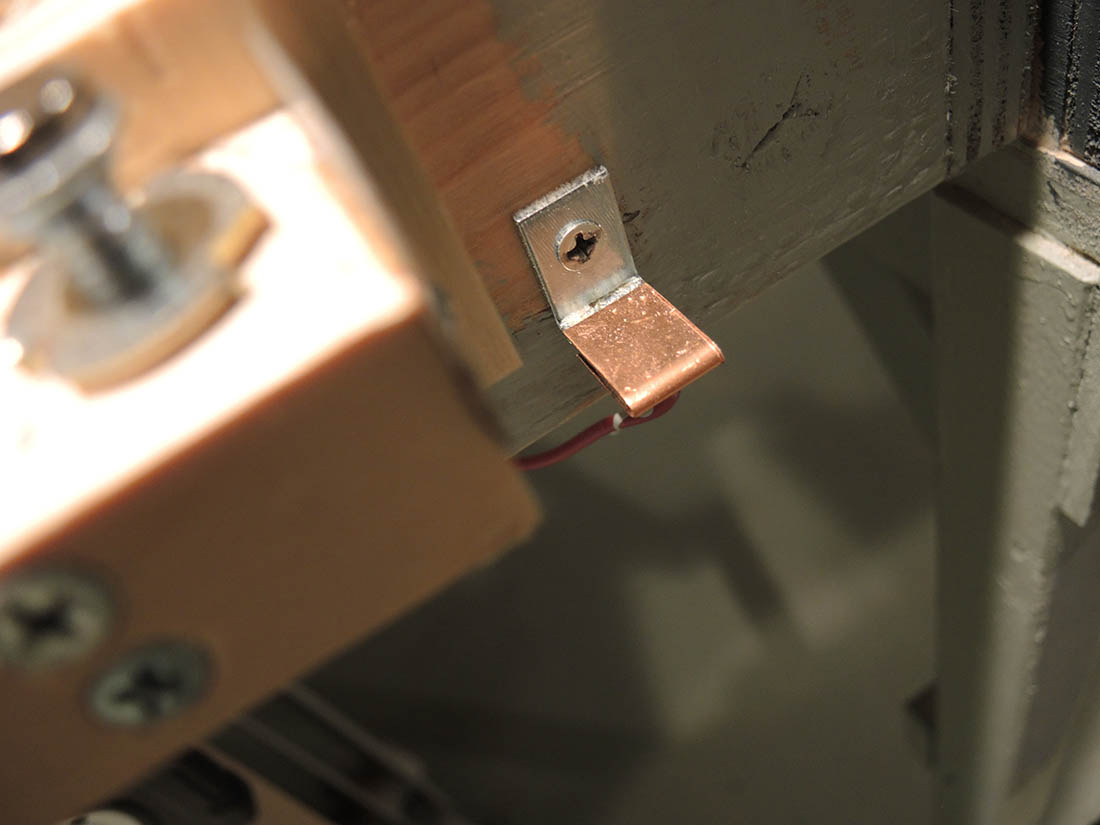
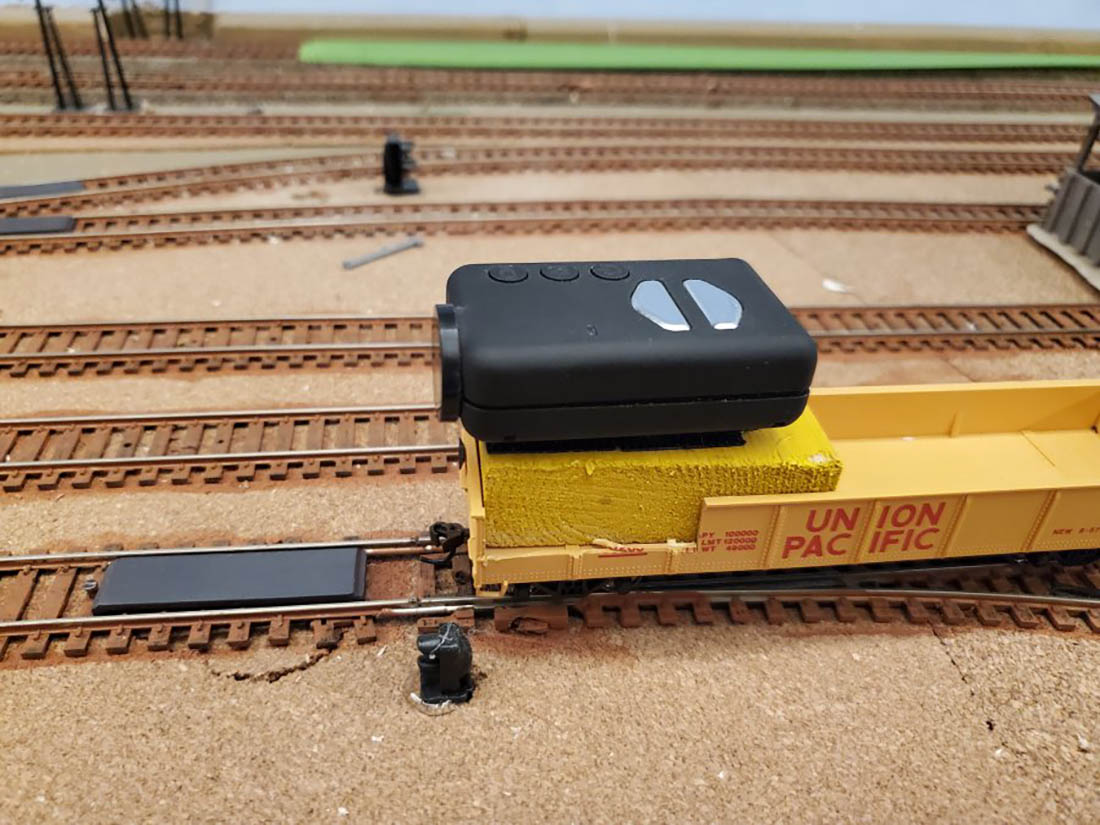
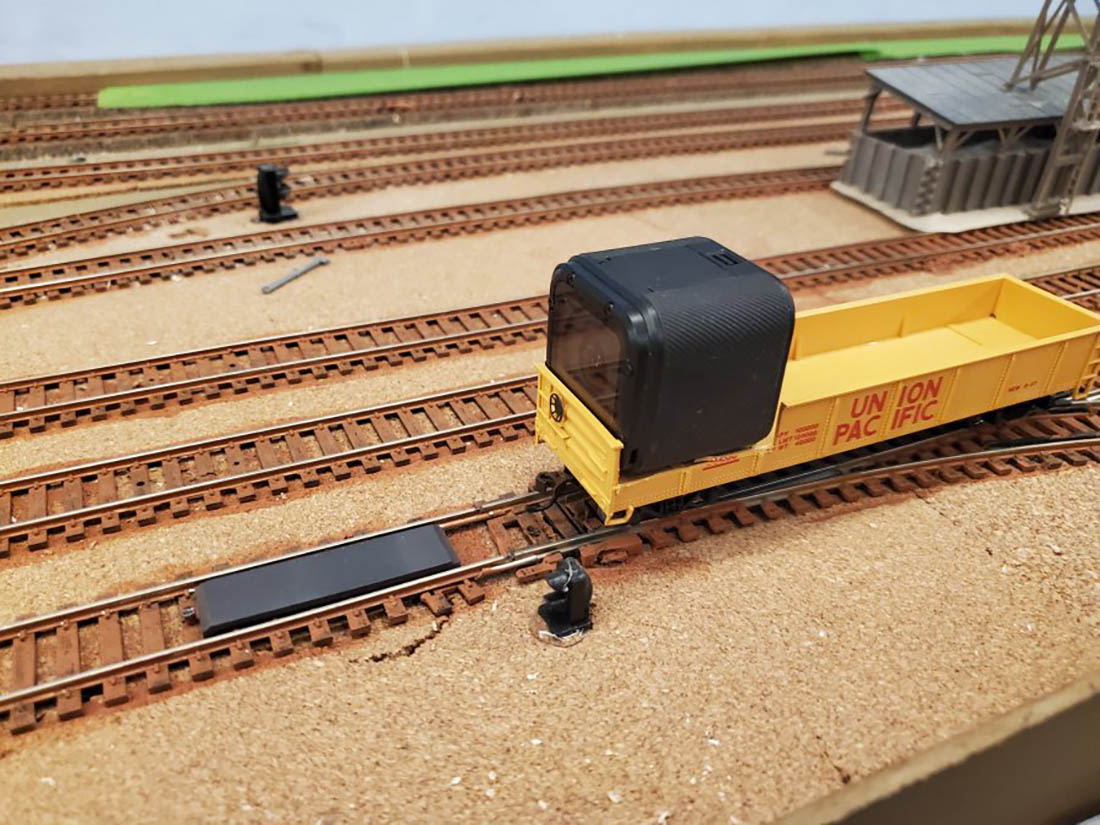
Here’s some photos.

HO scale figure 8

HO scale figure 8


HO scale figure 8

Works wonderfully and collapses to store under the layout when not in use. Height is adjustable too. Found it available States-side at Home Depot for under $200 with free home shipping! This thing opens a world of modeling possibilities.

As my new layout progresses, I’ll send some updates. But this discovery couldn’t wait.

Bill”

Now on to Walt, who has done something I’m always banging on about: making a start.

“Hey Alastair,

I am returning to the wonderful world of HO trains after a 50+ year hiatus!

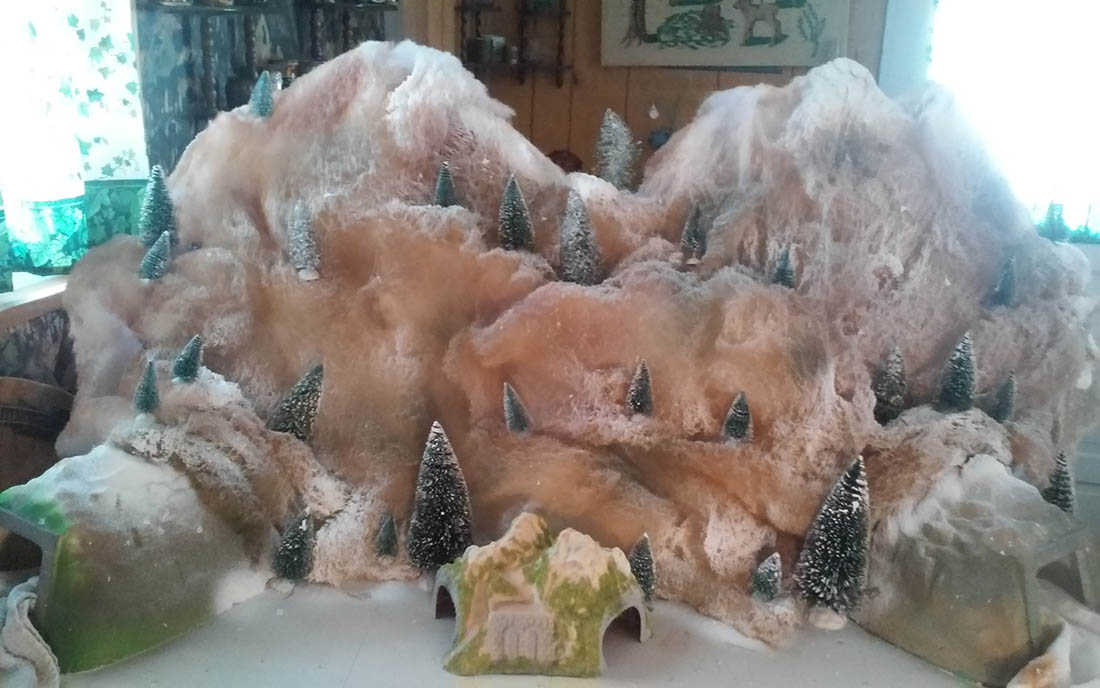
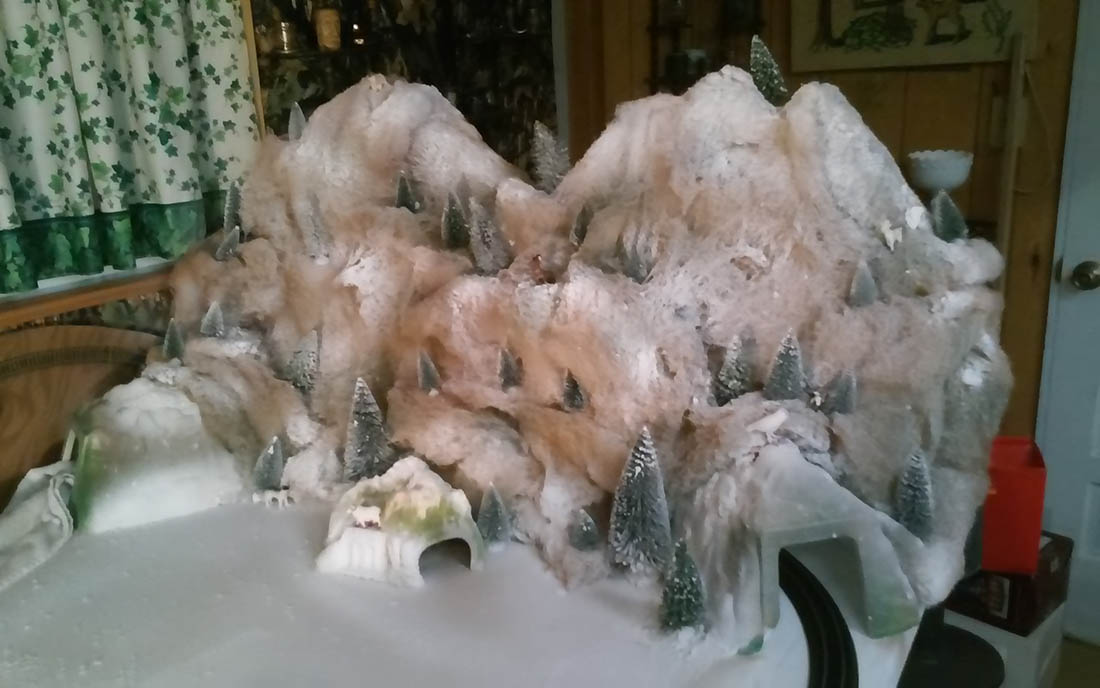
And I am incorporating the wife’s Dept 56 North Pole Series collection!

So my theme is going to be winter and snowy!

I am taking photos of my progress and was wondering if you were interested in showing others?

Sincerely,

Walt”

And it’s not just Walt, who has made a start, Clarke has too:

“Finally becoming a reality! Just retired and am starting my first layout, pic attached.

Rail laid & painted, two train operation going smoothly, all track and wiring for rails complete. Ballasting & scenery next.

Also putting lighting in place (Blue LED plus track lighting, for general illumination) now.

N Scale, figure 8, plus double around inner loop, single mainline outer loop, with double crossover for interchange.

Two train operation, or single train completes entire route in about a minute. Probably adding a reversing trolley as well.

Clarke”

Next, Cassio has been back in touch again – it’s always good to hear from him – it’s wonderful to see the layouts from different corners of the world:

“Hi Alastair.

I send another movie in my Bragança Layout, with two Union Pacific type 4400 locomotives.

If you like it, share it with your followers.

The last film sent had 2500 views.

Hugs.

Cassio”


I do like to publish the pics of the folk just making a start. Sometimes there’s not much to see, but that’s not the point. Making a start is all that matters.

Sadly, it’s the start that stops too many of us.

That’s all for today folks.

Please do keep ’em coming.

And if you’d like to make your start on your layout, just like Clark and Walt, the Beginner’s Guide is here.
Best

Al

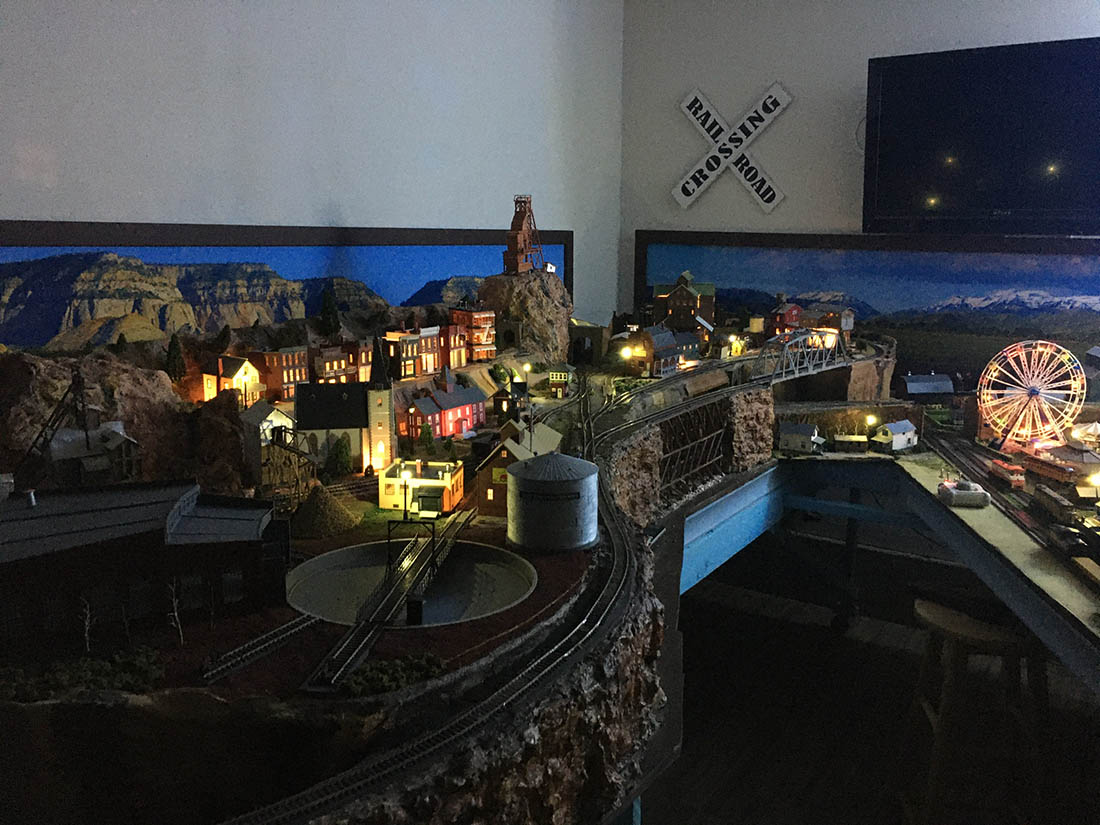
PS More HO scale train layouts here if that’s your thing.


Need buildings for your layout? Have a look at the Silly Discount bundle.

HO scale tunnels

Wayne’s been back in touch with his HO scale tunnels.

If you missed his first post it’s here.

And there’s also his scratch build, which is here.
“Hi Al,

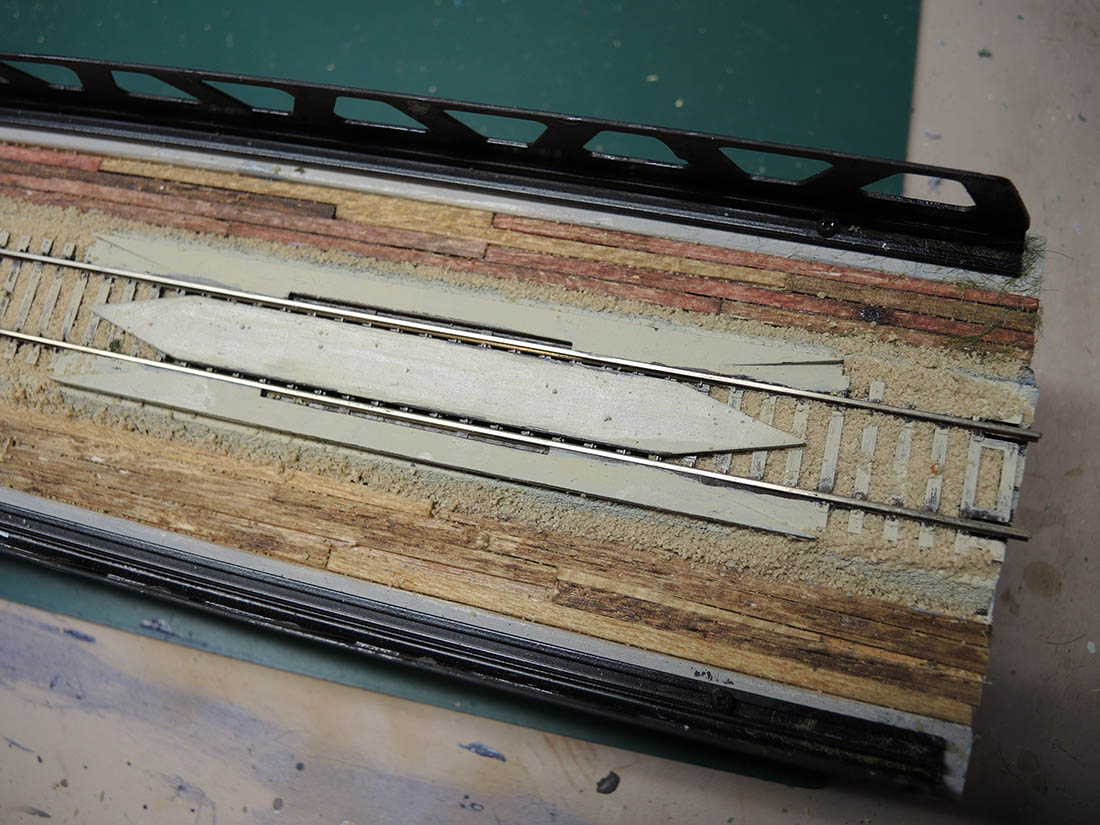
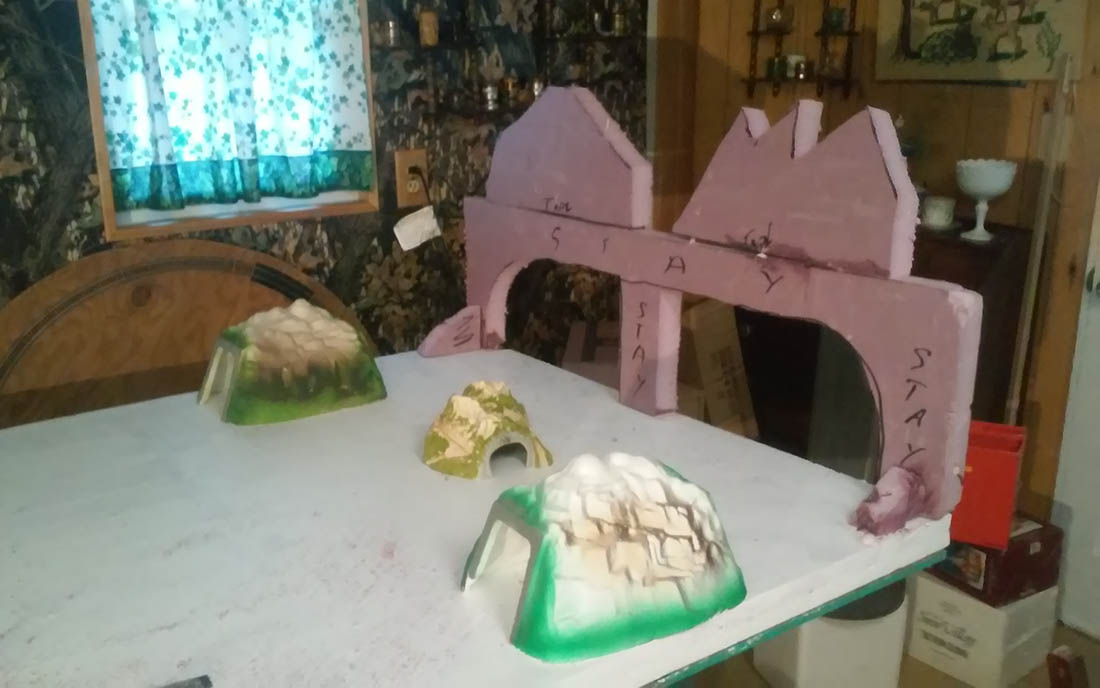
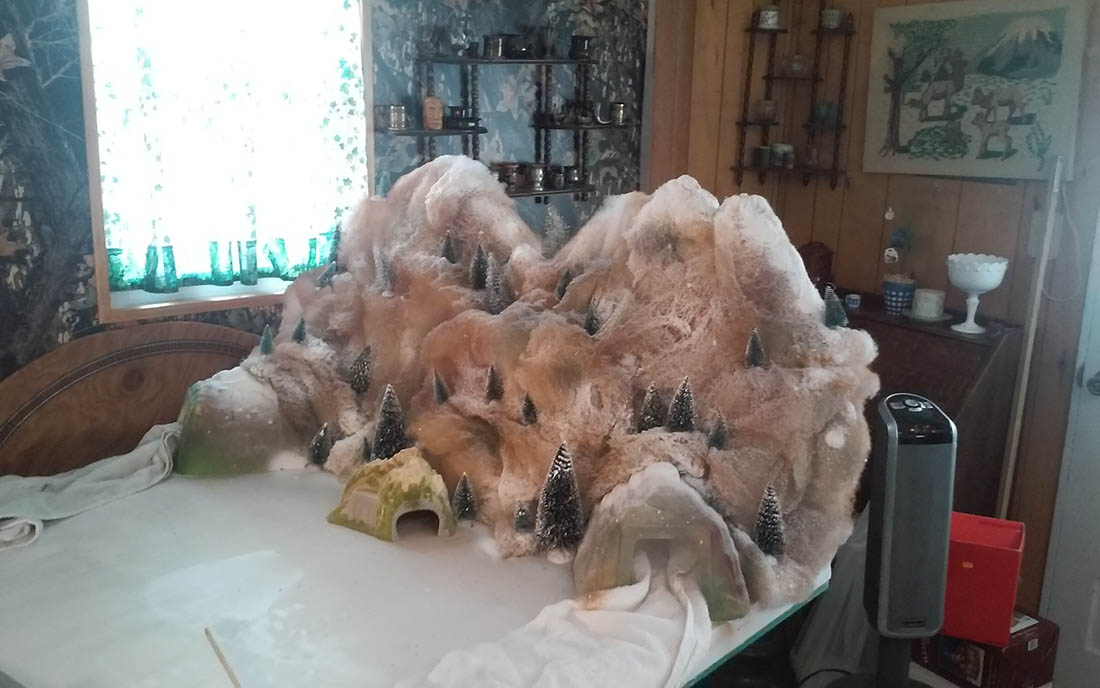
I have a start on my hills now.

I am trying to get something that looks like it might be finished.

I have three different colors on my hills. So far it seams that its going to work.

I still need to see if static grass can work on the hills. I am kind of pushing myself. I am leaving the middle of April for a 4 mo. road trip on my Harley trike.

While I am gone nothing will be done on the layout.

HO scale tunnels

HO scale tunnels

HO scale tunnels

HO scale tunnels

HO scale tunnels


Except for ballasting the track I think this part of the hillside is just done? Right, sounds good.


I guess its right, your layout is never done. I have just finished some of the mountains, and now I am tearing up track and roadbed.

I widened one leg of my coal mine, then started tearing up the roadbed for the icehouse.

I have cut about 1 1/2 in’s off the bottom of the icehouse. When I but it togeather, this thing was huge. Far too much ice for this layout.

Now I have added a office at one end, shortened the ice loading platform, added a couple of doors. Making a cattle holding pen with ramps. This is needed for the new beef packing co. that is in 1/2 of the ice house, plus lots of cows. Just for fun of it this is what we call free range cows!

Wayne”

A huge thanks to Wayne for sharing his HO scale tunnels – if you look at his earlier posts, you can see just how busy he has been, and what a project it is.

Can’t wait until the next update!

That’s all for today folks.

Please do keep ’em coming.

And don’t forget the Beginner’s Guide is here if you want to start on your layout – don’t let the start stop you!

Best

Al


Noch Baden Baden layout

Peter’s been in touch with his Noch Baden Baden layout.

“Hi Al

Thought I would give a quick update to my layout.

Still very much work in progress but thanks to the suggestions from your readers I am trying to attempt my version of Noch’s Baden-Baden layout (below).

I still need to purchase some extra ramps and finish building the mountains, but as you can see there will be a dual figure 8 track crossing the three mountains, with 3 double bridges (the 2 you can see plus 1 at the back of the layout).

Noch Baden Baden layout

Here’s Noch’s version below:

Noch Baden Baden layout

Peter”

A big thanks to Pete – I’m always banging on about making a start, and Pete looks like he’s jumped in with both feet. Can’t wait to see an update on his Noch Baden Baden layout.

And now on to Ray, who has sent in the latest video of his layout:

“Hi Al,

Just a follow up from my last email.

I’ve created a new video which shows a majority of my layout. Running three CSX locomotives.

Thanks for all you do.

Best,

Ray
Massachusetts, USA”


Now we have a question, from Peter.

It’s also the very reason I started the forum.

Although Steve’s question is quite technical, in the forum, anything goes – from complete beginner questions, to very specific questions like Steve’s.

If you want to make that start, you really can ask about anything you like on the forum.

What’s more, as you’ve seen from the comments on the blog, we’re a friendly bunch, so please don’t be shy about asking.

Ask and get started!

Anyhow, back to Steve. Who can help?

“Hi Al

I wonder whether anyone out there is able to answer a couple of questions I have about using an Arduino?

It’s a microcontroller that you can program to work servos, motors, LEDs and so on. I am quite new to them myself (I first heard about them from a post on your site). I’m fine with the programming, it’s wiring the components that I’m having problems with.

I am building a working level crossing, the older type used in the UK with gates rather than barriers. Each of the four gates is moved through 90 degrees by a servo. So far, so good, I have wired the servos up to the Arduino and written the code to make the gates open or close when I click a button on a remote control.

Each servo is connected to one of the Arduino’s output signal pins. At present that uses 4 of the pins, but as two of the servos move clockwise and two move counter-clockwise I think I can just use 2 pins instead of 4, with each of those pins sending the control signal to 2 servos. My first question is have I got that right?

I have three semaphore signals (Up, Down and a single line branch joining the Down line) guarding the level crossing, which I want to control from the same Arduino board using stepper motors rather than servos, so that I can program in a nice subtle “bounce” when the signal arm falls to danger. Each stepper motor needs to be attached to FOUR signal pins, plus the separate power supply, and I want to be able to work the signals one at a time rather than simultaneously.

Now, here’s my second question. Can I wire the four signal leads from all of the stepper motors together and use something like a relay wired into the power or ground wires of the motors to select the appropriate signal stepper motor for operation? Otherwise I will be running out of Arduino signal pins (2 or 4 for the gate servos, 1 more for the branch point servo, 1 for the infra-red sensor for the remote control and 12 for the three stepper motors).

Thanks in advance

Steve, Lincs, UK”


If anyone can help Steve, please do leave a comment below.

Now on to something completely different.

It’s an email I get sent often. It’s old, but gold. It did make me chuckle the first time I saw it.

Here you go:

The U.S. Standard railroad gauge (distance between the rails) is 4 feet, 8.5 inches.

That’s an exceedingly odd number.

Why was that gauge used?

Because that’s the way they built them in England, and English expatriates designed the U.S. Railroads.

Why did the English build them like that?

Because the first rail lines were built by the same people who built the pre-railroad tramways, and that’s the gauge they used.

Why did ‘they’ use that gauge then?

Because the people who built the tramways used the same jigs and tools that they had used for building wagons, which used that wheel spacing.

Why did the wagons have that peculiar wheel spacing?

Well, if they tried to use any other spacing, the wagon wheels would break on some of the old, long distance roads in England, because that’s the spacing of the wheel ruts.

So, who built those old rutted roads?

Imperial Rome built the first long distance roads in Europe (including England) for their legions. Those roads have been used ever since.

And the ruts in the roads?

Roman war chariots formed the initial ruts,which everyone else had to match for fear of destroying their wagon wheels.

Since the chariots were made for Imperial Rome, they were all alike in the matter of wheel spacing.

Therefore, the United States standard railroad gauge of 4 feet, 8.5 inches is derived from the original specifications for an Imperial Roman war chariot.

In other words, bureaucracies live forever .

So the next time you are handed a specification, procedure, or process, and wonder, “What horse’s ass came up with this?”, you may be exactly right.

Imperial Roman army chariots were made just wide enough to accommodate the rear ends of two war horses.

Now, the twist to the story:

When you see a Space Shuttle sitting on its launch pad, you will notice that there are two big booster rockets attached to the sides of the main fuel tank.

These are solid rocket boosters, or SRBs. The SRBs are made by Thiokol at their factory in Utah.

The engineers who designed the SRBs would have preferred to make them a bit larger, but the SRBs had to be shipped by train from the factory to the launch site.

The railroad line from the factory happens to run through a tunnel in the mountains and the SRBs had to fit through that tunnel.

The tunnel is slightly wider than the railroad track, and the railroad track, as you now know, is about as wide as two horses’ behinds.

So, a major Space Shuttle design feature of what was arguably the world’s most advanced transportation system was determined over two thousand years ago by the width of a horse’s ass.”

That’s all for today folks. Please do keep ’em coming.

And don’t forget the Beginner’s Guide is here if you want to get going on your own layout.

Best

Al