I hope you are secure, well stocked, and relatively safe in your corner of the world.
Boston is in a surge right now, and I’m more than ever thankful for this wonderful hobby of ours, where I can hunker down and lose all my cares in a world of my own, free from cover, job loss, and fear!
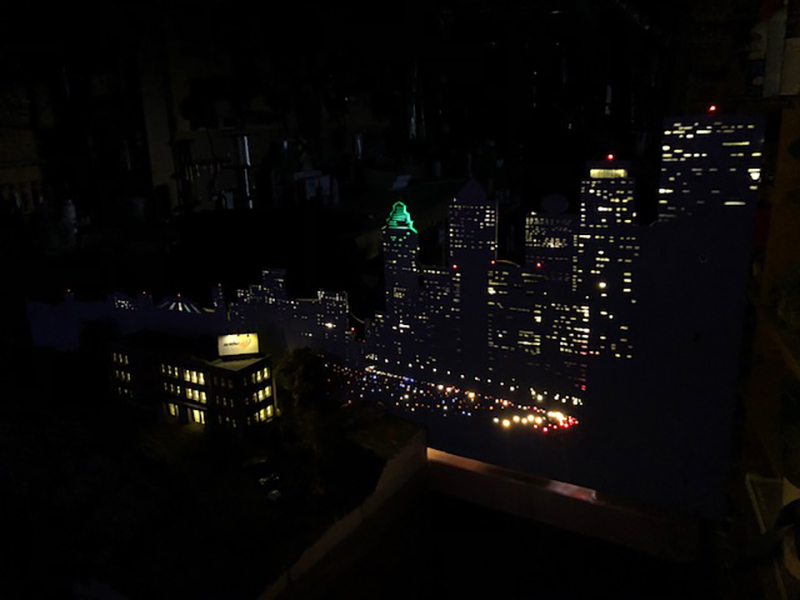
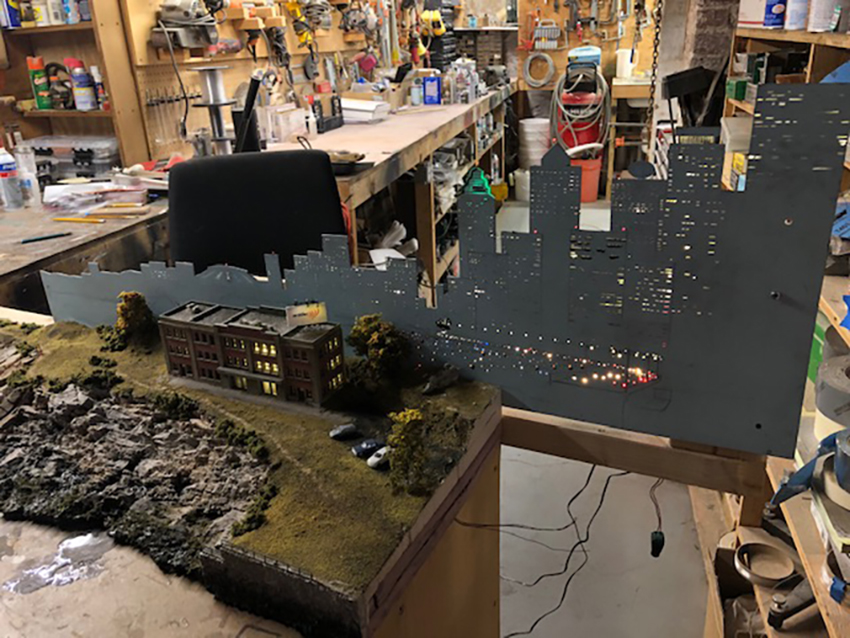
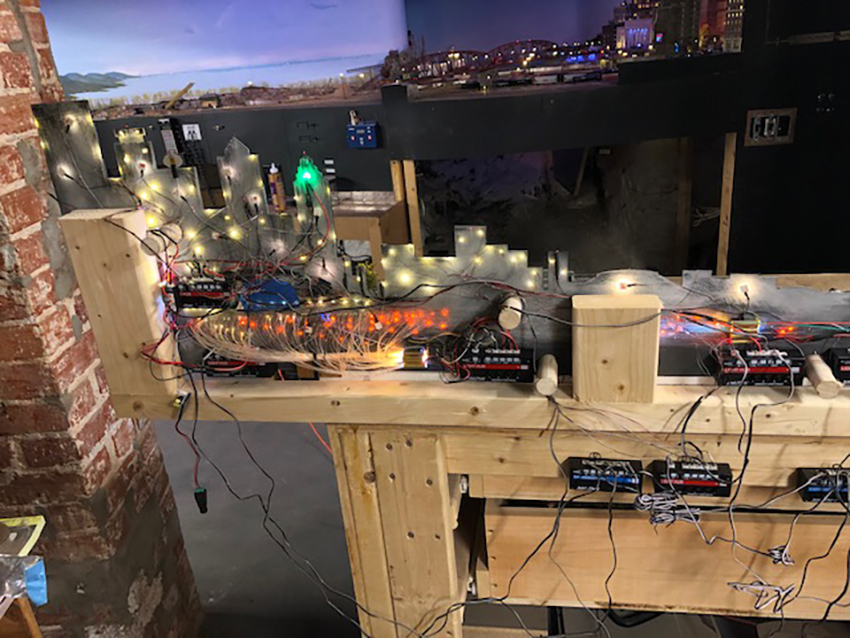
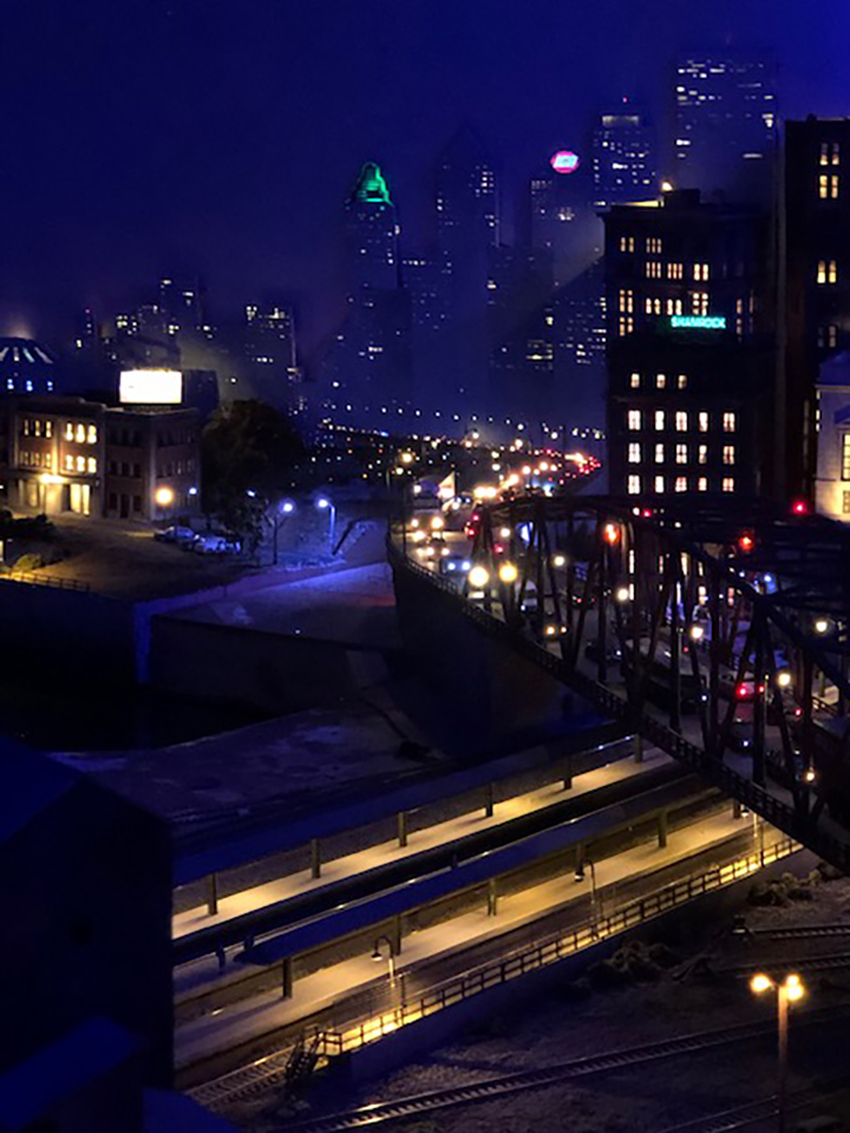
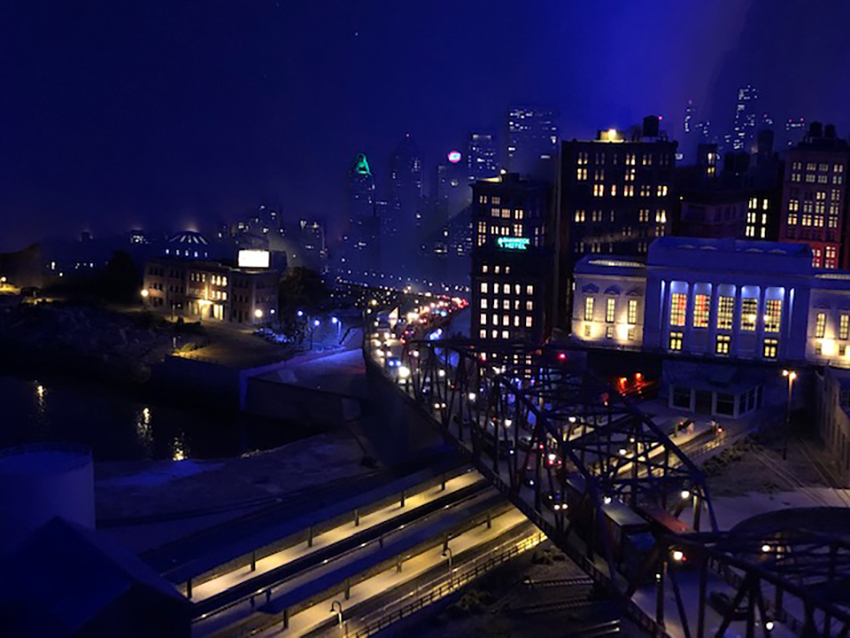
Anyhow, I sent you a video via mail drop to show you the progress of my harbor.
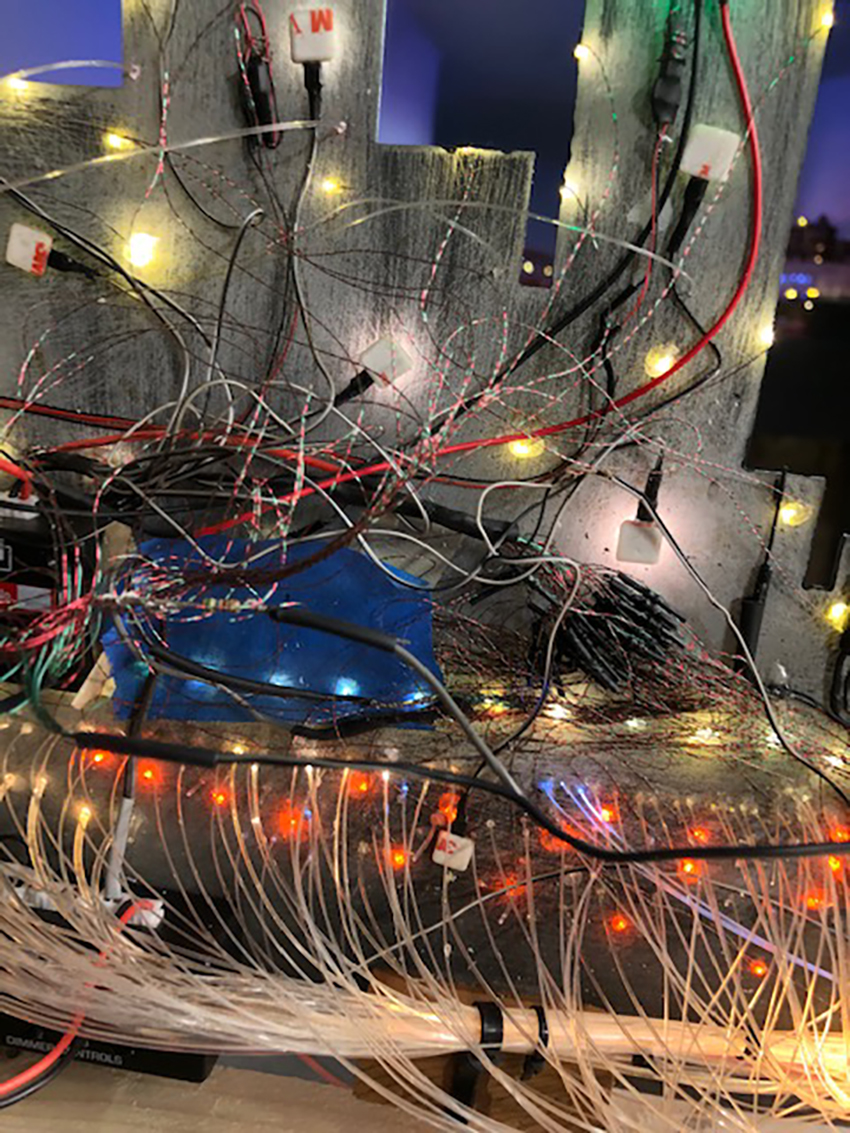
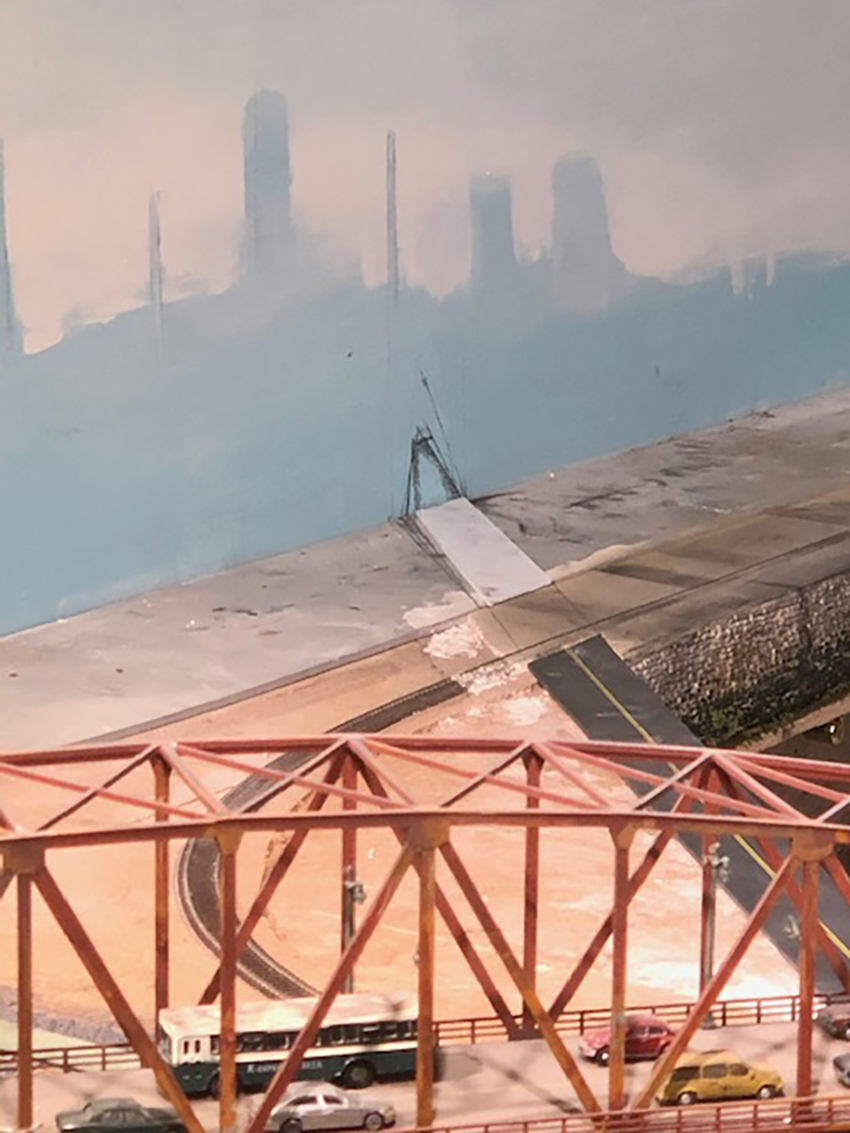
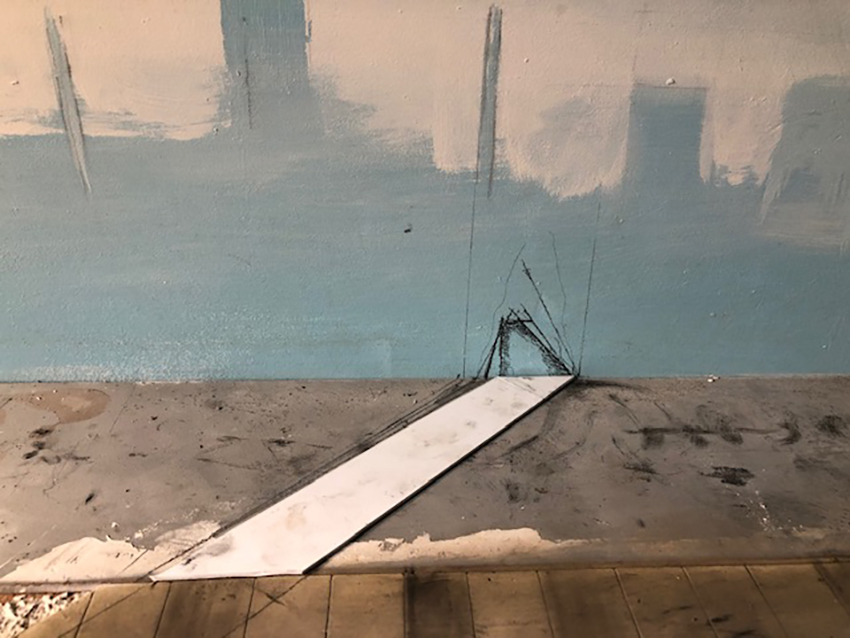
Check out the backdrop, for which some separate photos, and also some photos showing the weird perspective of my oil refinery access road through the refinery. It always amazes me to see the kinks in a straight line you have to impose between modeled road and rendered extension on a vertical backdrop.
I think that the visual tricks of backdrop making are probably the most stimulating and satisfying parts of my project.
Amy questions, please let me know.
Fred”
It’s a bit of a squint to see Fred’s video, but sorry, not much I can do about that.
A huge thanks to Fred – his layout is a real joy to see. It looks just as good at night as it does in the day.
Now on to Mike:
“Hi Al,
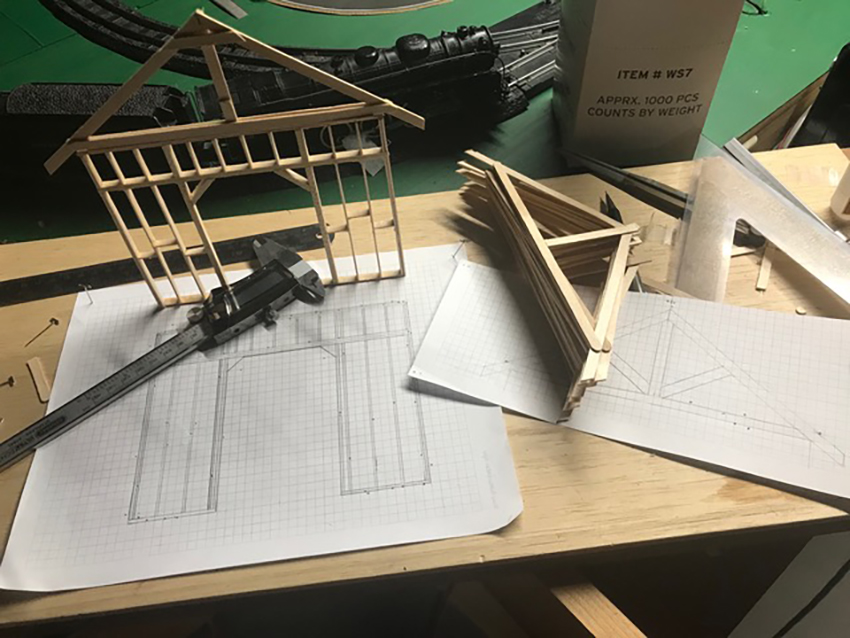
With time on my hands, bought a coffee at the local coffee shop and grabbed a stir stick, my imagination went off the rails.
$5 bought me a box of 1000 stir sticks, a quick drawing, small saw and glue and I was off.
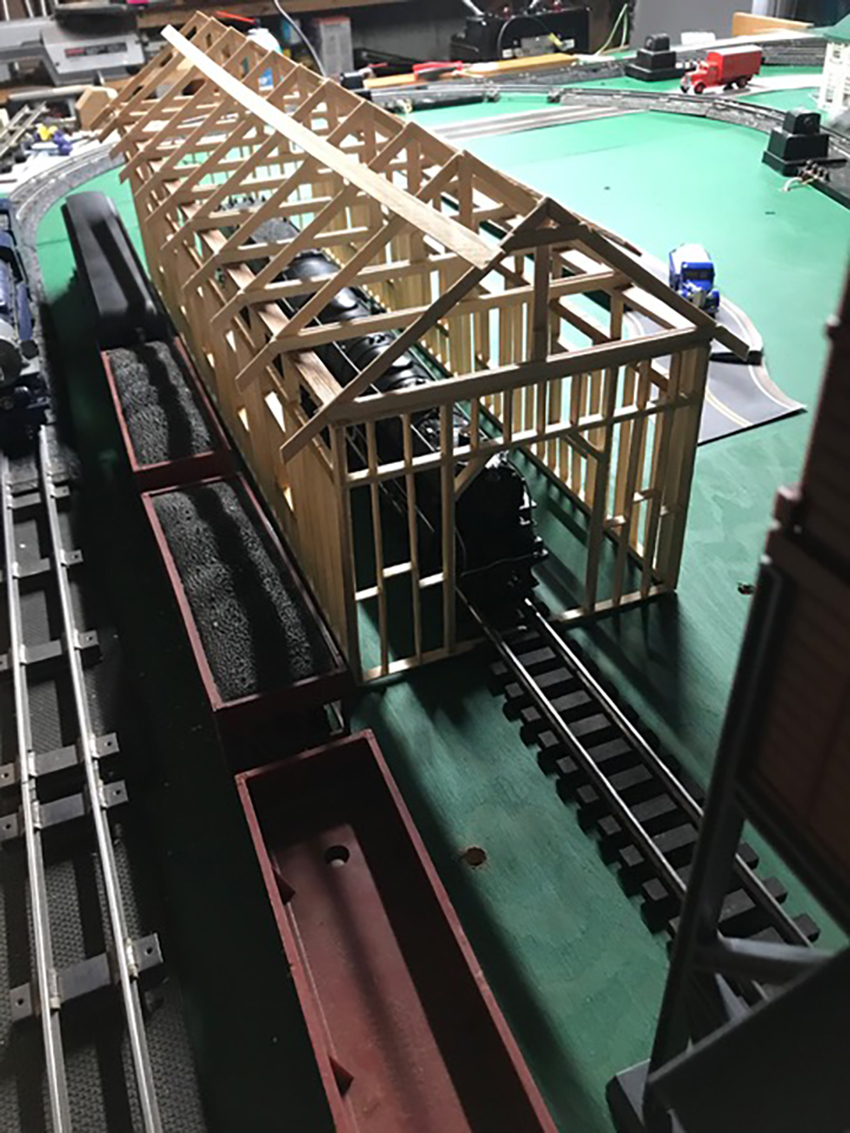
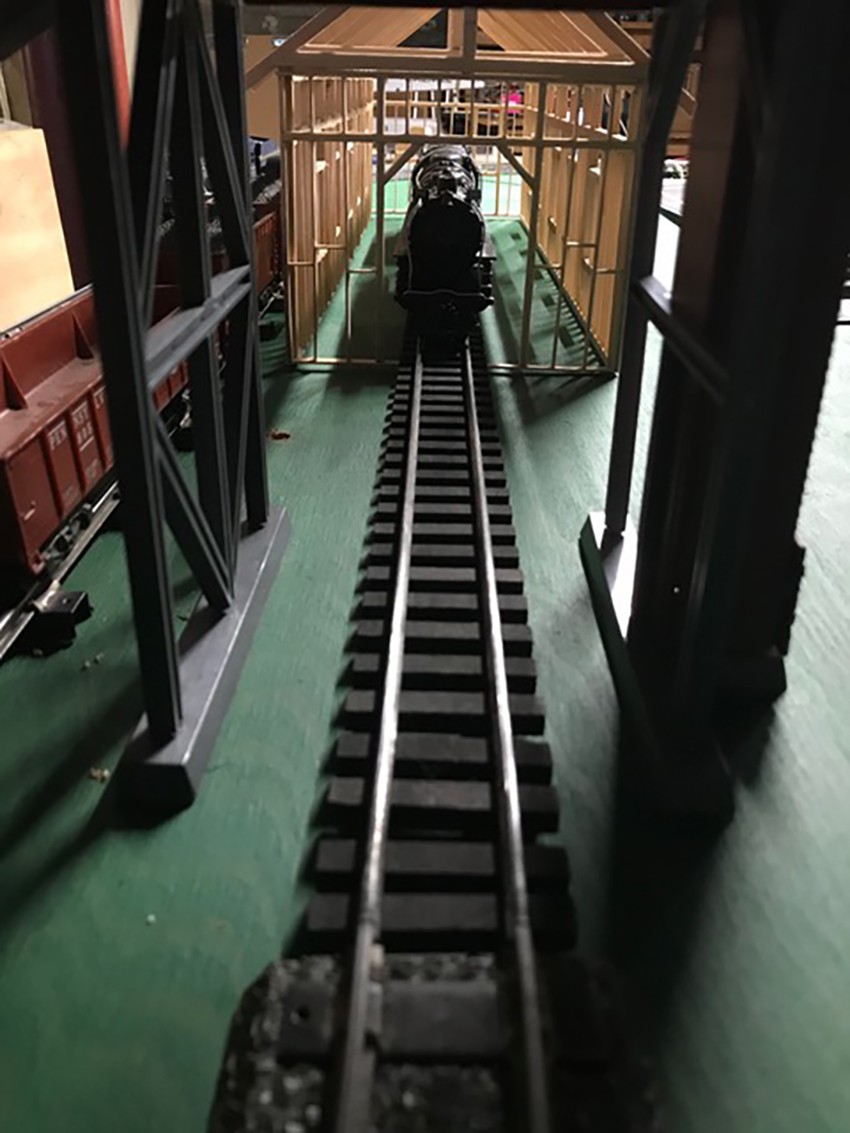
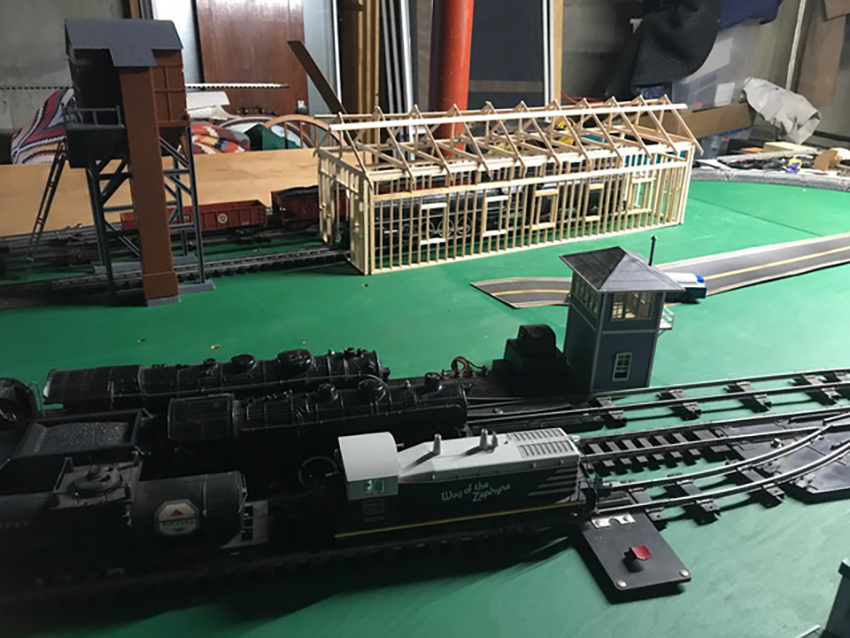
The framing is mostly done now the roofing and siding, followed by trim and windows. I can stay locked down for a bit longer.
Shed fits my 4-8-4 American Flyer steamer.
Mike Acebo
East Marion NY”
A big thanks to Fred for sharing his N scale white LEDs – stunning pics. Thanks to Mike too.
That’s all for today folks.
Please do keep ’em coming.
And don’t forget, if want to make your start on your layout, just like Mike did, the Beginner’s Guide is here.
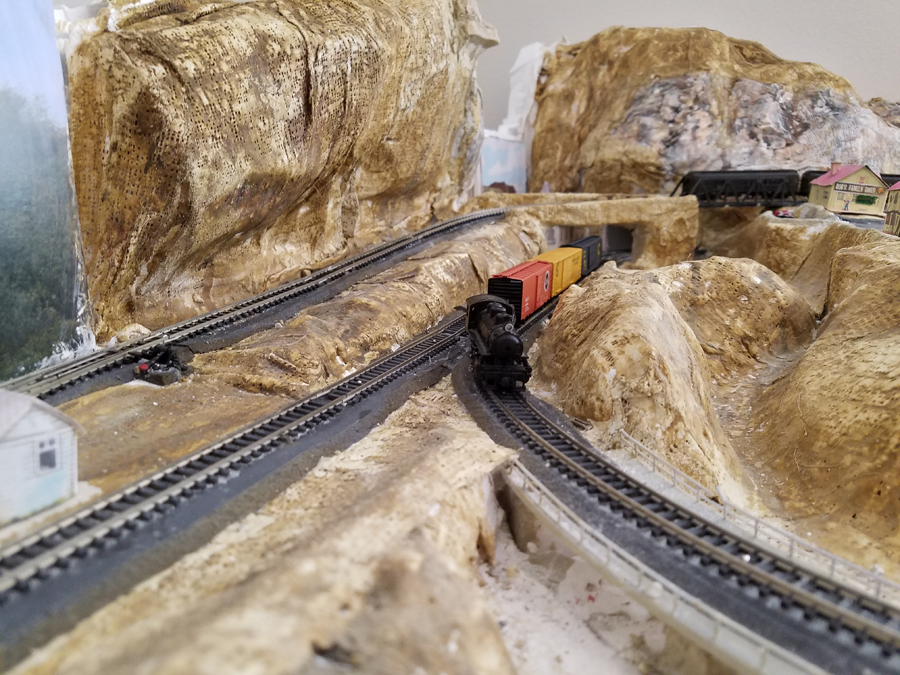
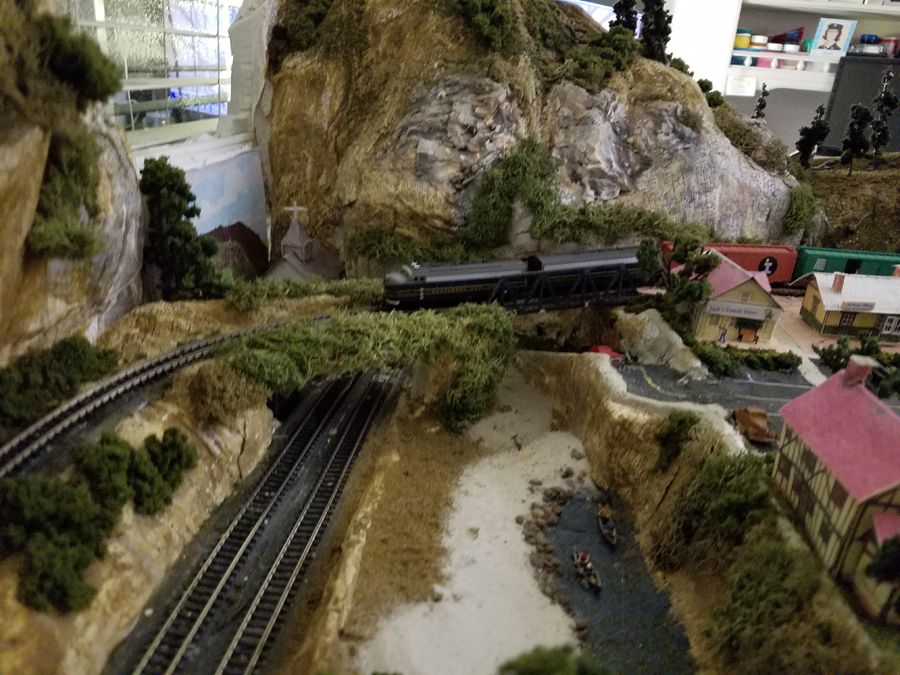
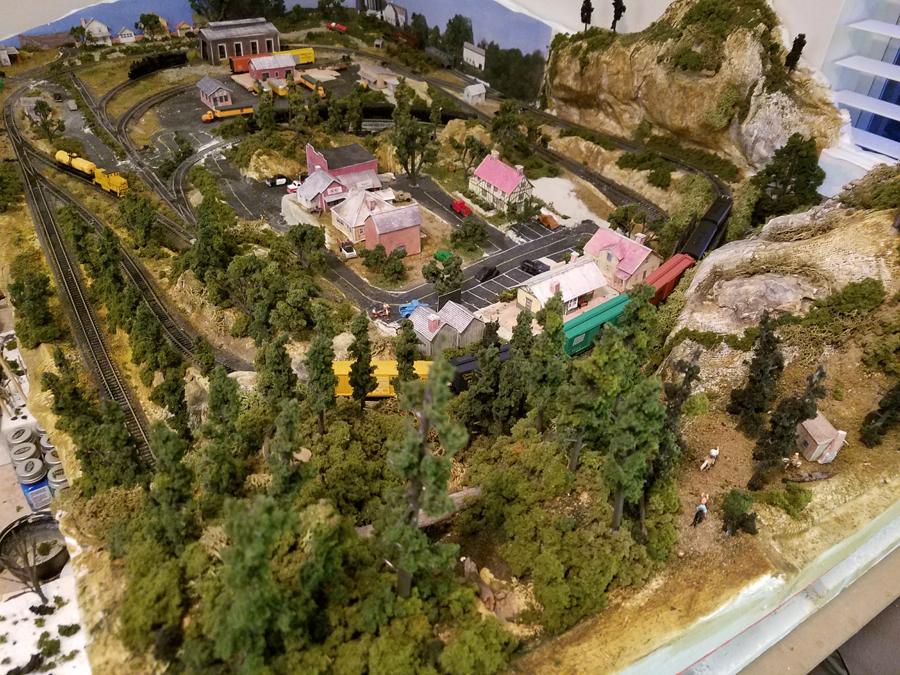
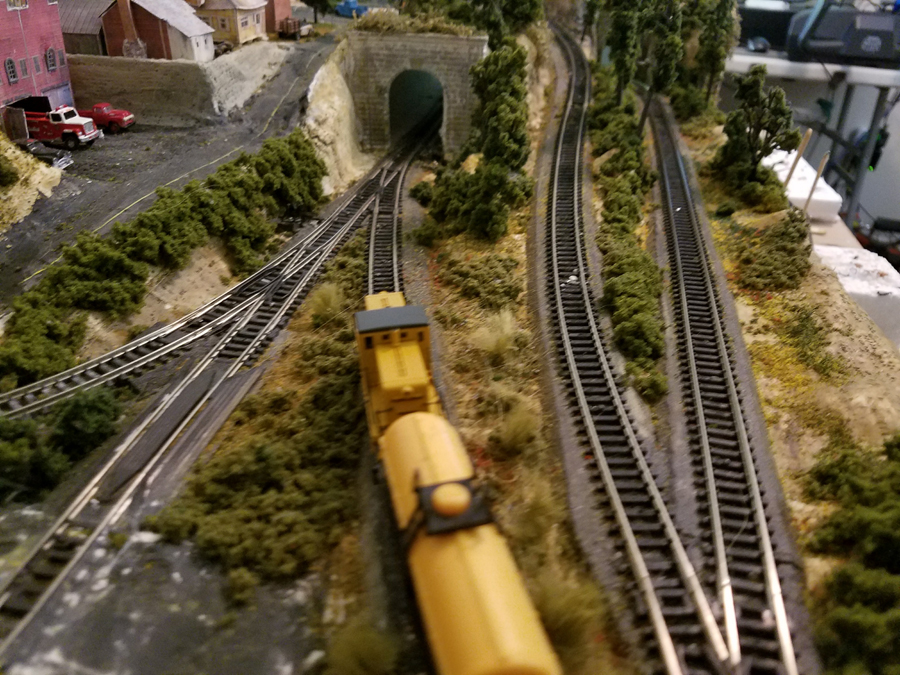
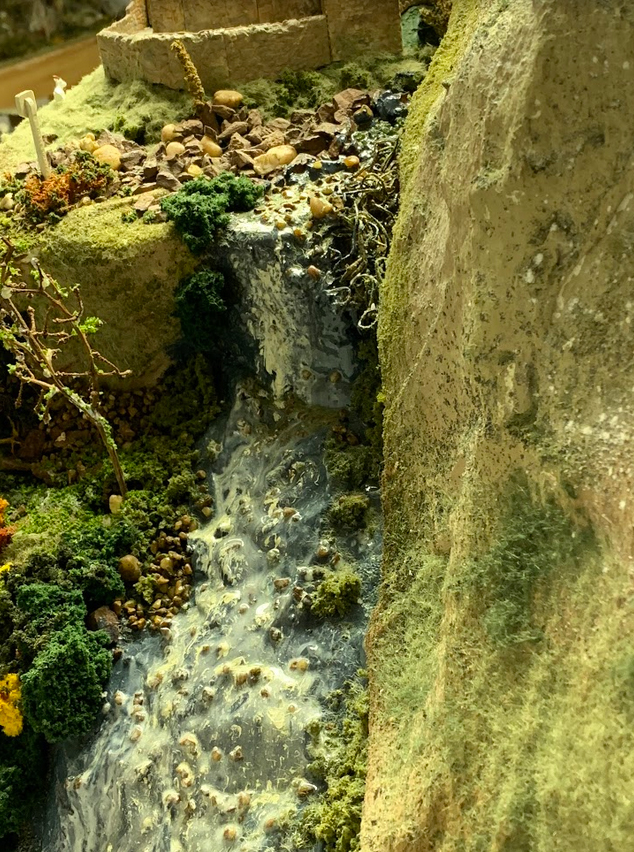
Peter’s been in touch with his impressive N scale rock cliffs:
Now on to Tom:
“In the 1950’s I grew up with a Lionel train table my dad built in the basement of our house in Berkley Michigan.
About a year ago I decided to build a N scale railroad in my house. I first had to do a lot of reading about the changes in model railroading from the 1950’s.
DCC – what a change from having to section off different areas of your layout.
Also what materials are now available for landscaping from card stock buildings to ground cover.
THE THEME:
The theme of my railroad takes place in the early 1950’s on the Baltimore & Ohio rail line between Baltimore and Cincinnati. The village is in the mountains of West Virginia along Highway 50.
The main line along this route takes you through the mountains into the rolling farm lands of eastern Ohio. There are two spears one that will take you up into the village with a stop at the passenger depot. The second spear is to the local coal mines and trucking fright yard.
SPECIAL SCENES:
Forest with a fly fishing river
Cabin in the woods
Tunnel through Mountains
Rock cliffs
Local park, swimming and picnicking area.
Canoeing on a lake
Rapids that end in a fishing lake with a viaduct running over the fishing lake.
Cave/wild animal den
Apple orchard
Farm with live stock
Wood frame Farm Houses
Local auto repair shop/gas station
Corn fields
Biker bar
Trucking depot
Engine house
Coal Mine
Village
Town Hall/Fire Station/Police station
Barber/Beauty shop
Bank
News Paper Stand
Train Depot/Post Office
Family restaurant
Doctor’s Office
Consignment clothing store/Bed and Breakfast
General Store
Trading Post/Auction House
Butcher Shop
Farmer’s Market/Produce Stand
Gas Station/mini mart
Church
Tom”
Now on to Peter:
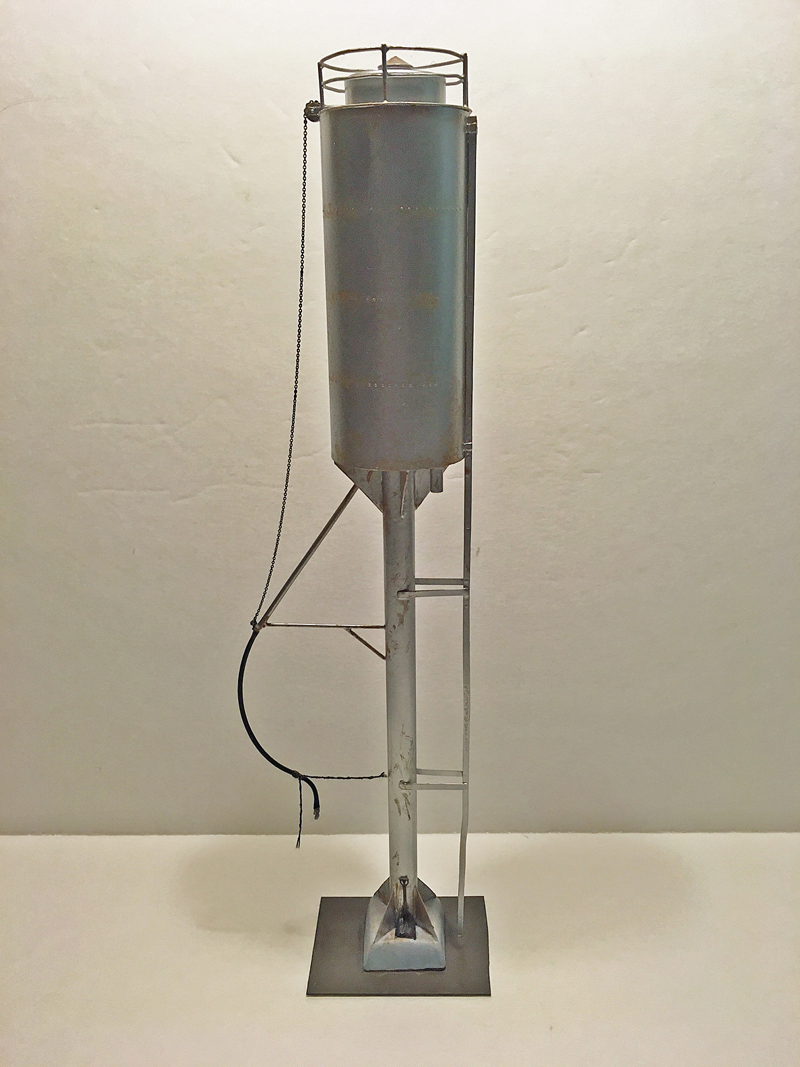
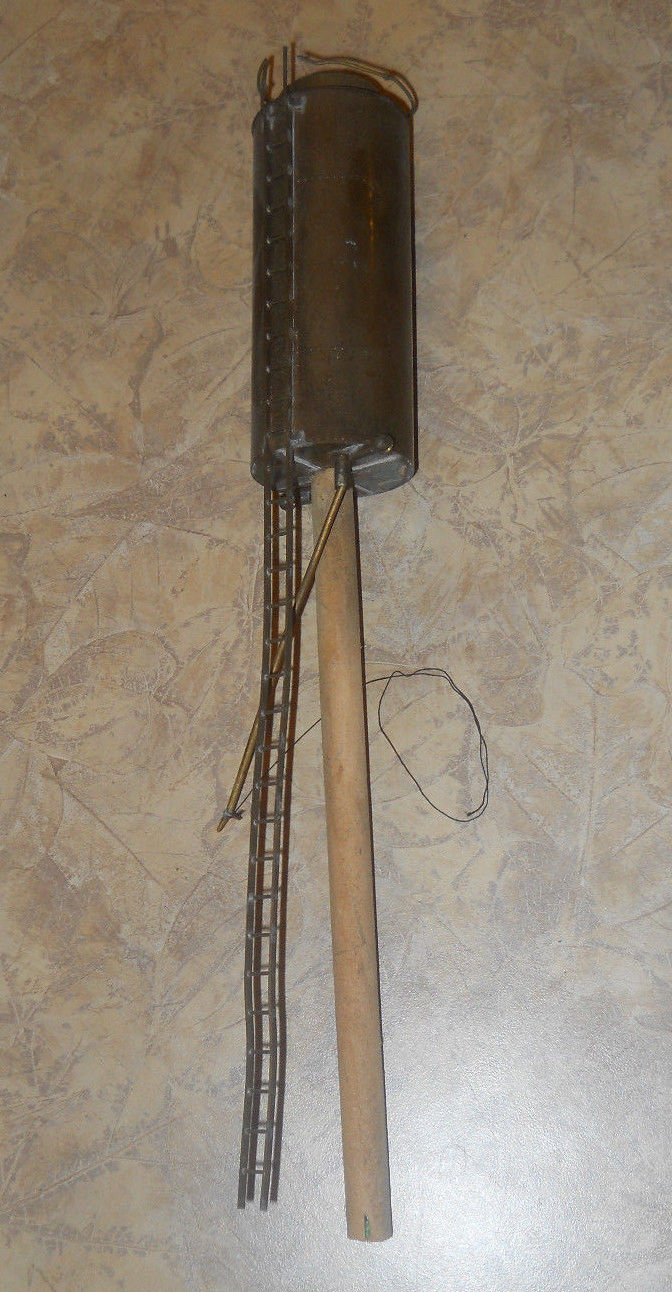
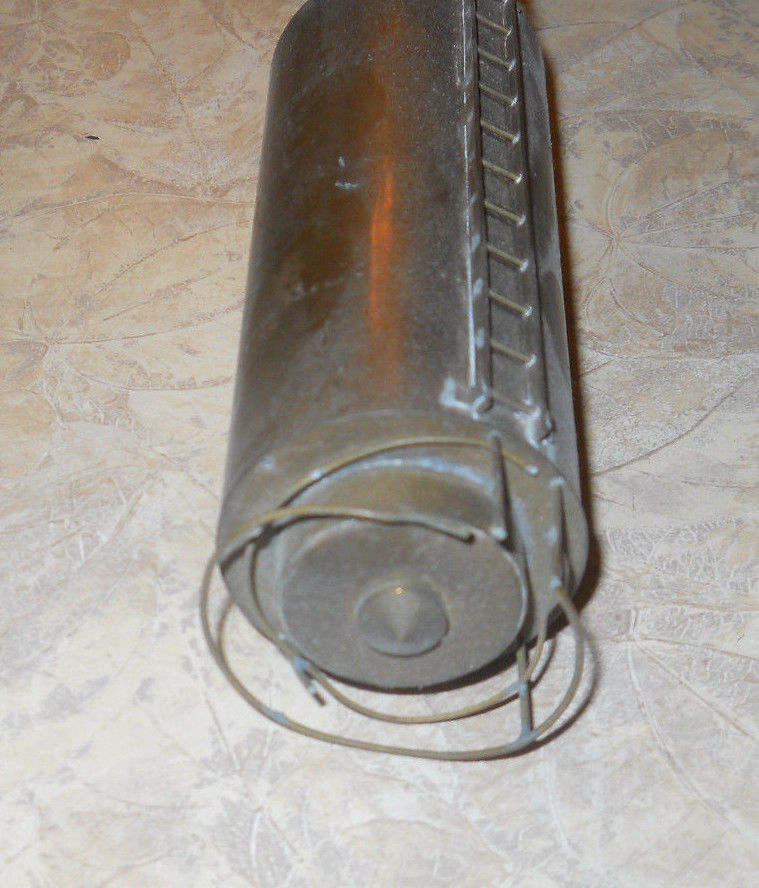
“Found this dilapidated sand tower on ebay and I made it all brass and a nice addition to an engine facility in O scale..
Peter”
A big thanks to Peter and Tom.
Loved what Peter did – he really did nurse it back to life.
And Tom’s N scale rock cliffs layout is a little stunner- not bad at all for a first effort!
Scott’s been back in touch with an update on his HO scale atlas track:
“Alastair: I love your site.
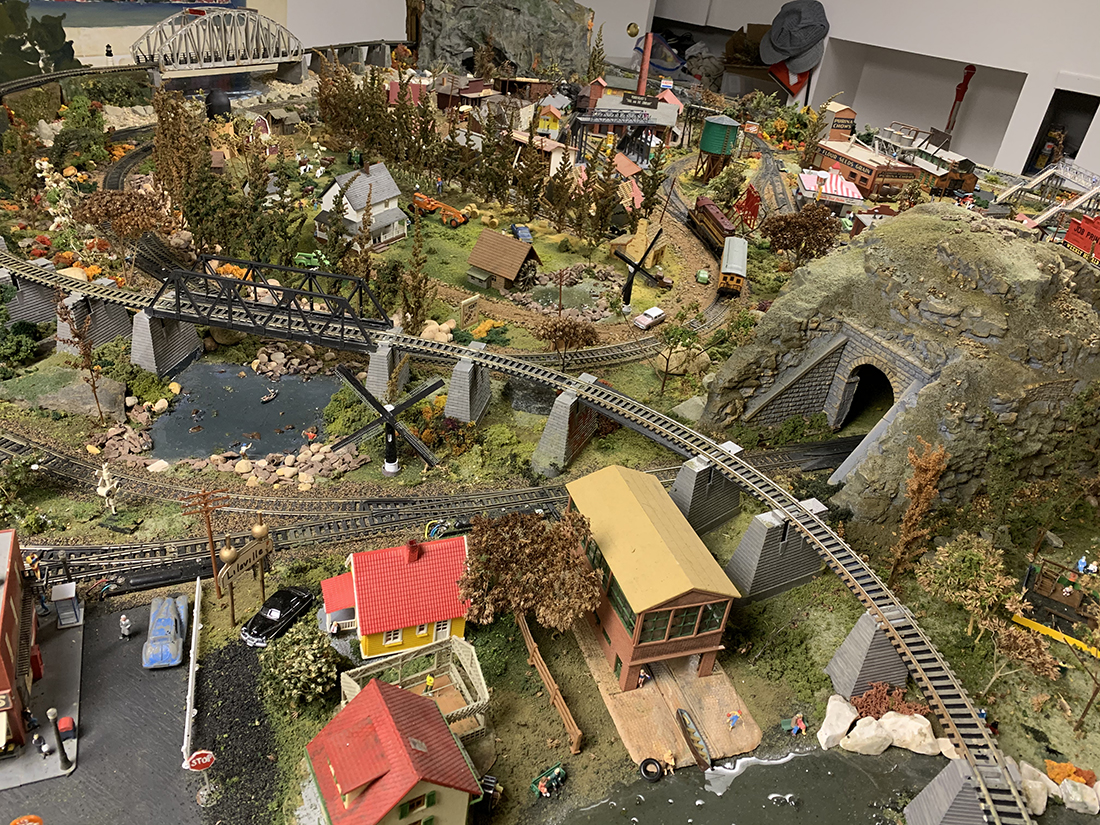
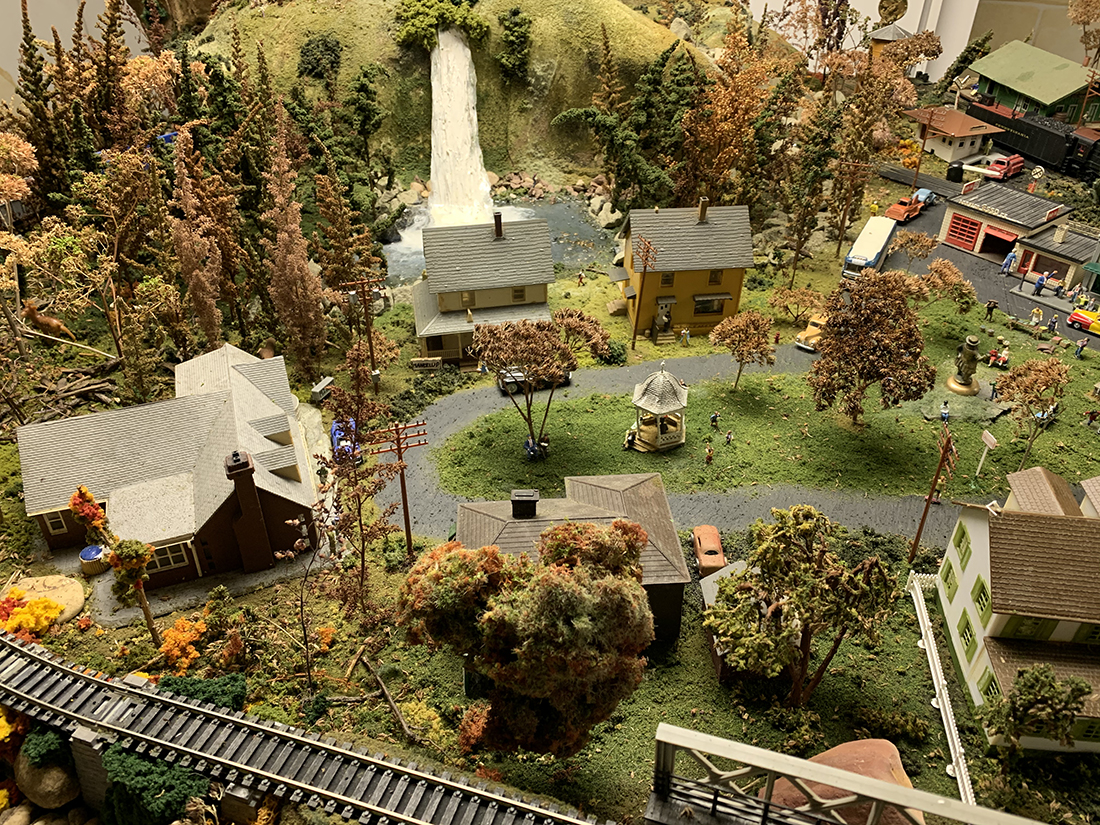
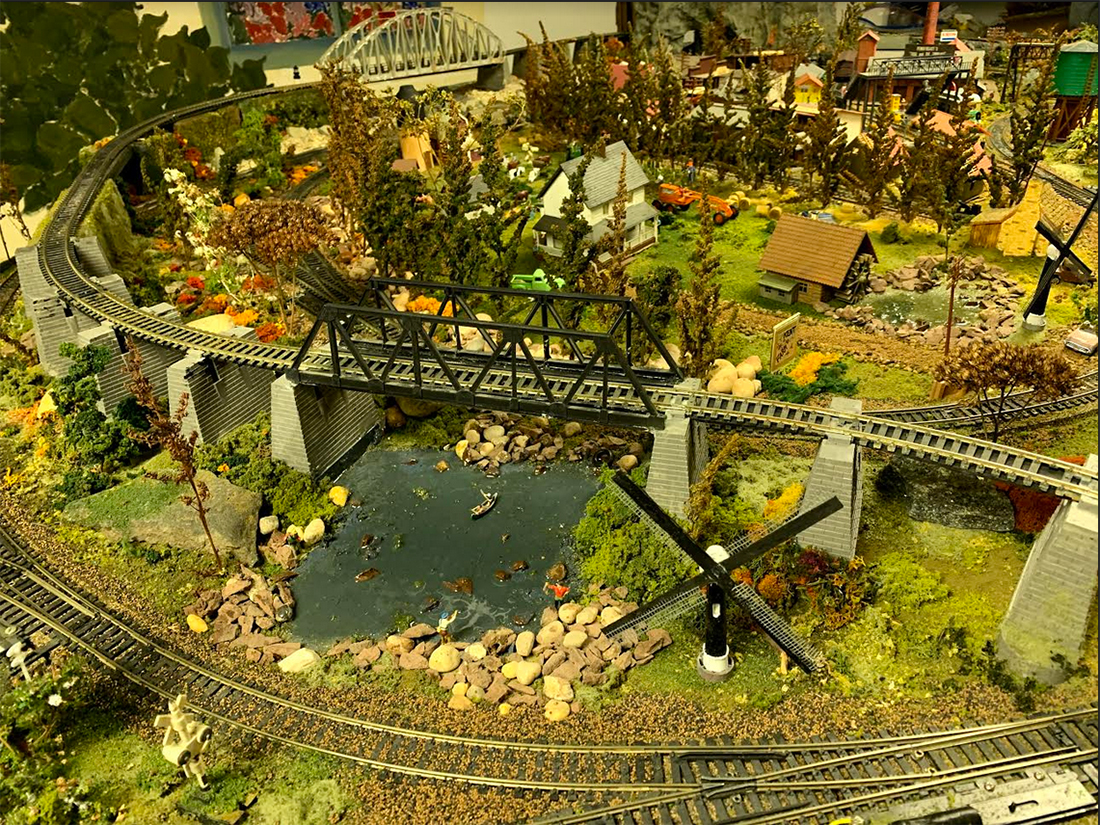
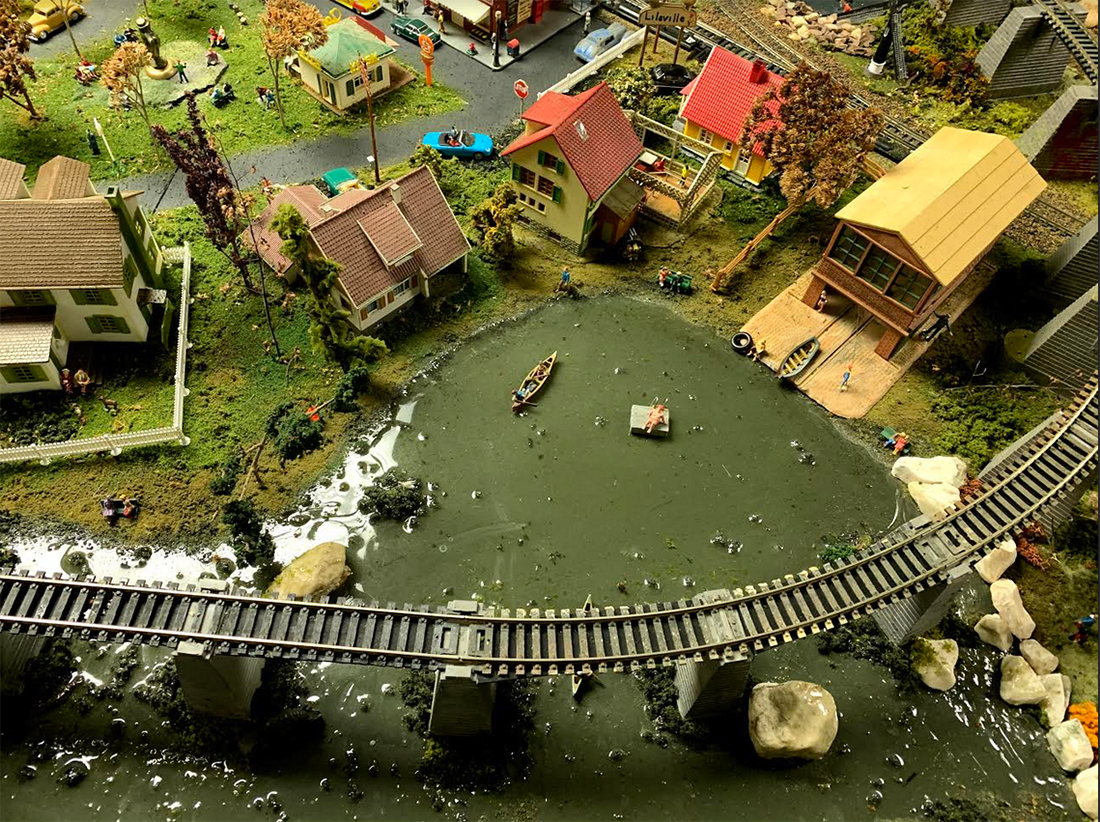
Over a year ago, I posted some pics of the DCC HO layout my wife and i have been working on since December 2017 and wanted to send you an update.
Many years ago I had an HO DC layout in a spare bedroom with mountains built into the walls and very difficult under table access to the parts of the layout where the train always derailed.
That layout came down due to a ceiling leak and i put the track, table and buildings (many of which i have had since I was a child in the 50s and 60s) into the attic in my garage.
In December, when our grandson was almost one, my wife and i started work on the present HO DCC layout in the basement.
My wife insisted on not putting the layout against the walls so access wold be easy and people could walk around and see the table from all angles. This turned out to be a brilliant idea as i no longer had to worry about placing every building so you could see the font of it and no longer had to crawl under the table to fix problems.
The table is designed to be seen from a height of three feet and the top is 5/8″ plywood squares screwed into 3/4′ x 34′ planks with 36′ x 1 3.4′ wood legs (unfortunately i did not install screw in spacers and has to use shims to level the table on the tiled basement floor.
The table surface measures 13 3/4′ x 5′ plus 7′ x 5′ for total area of 104 sq. ft.
The layout is made from old HO scale Atlas track (brass code 100).
The trains are DCC with NE Powercab controller.
We have 15 turnout switches and dc light bulbs in most of the buildings powered by an old Sound and Power & Light 9001 transformer. The bridge lights are X-Mas lights.
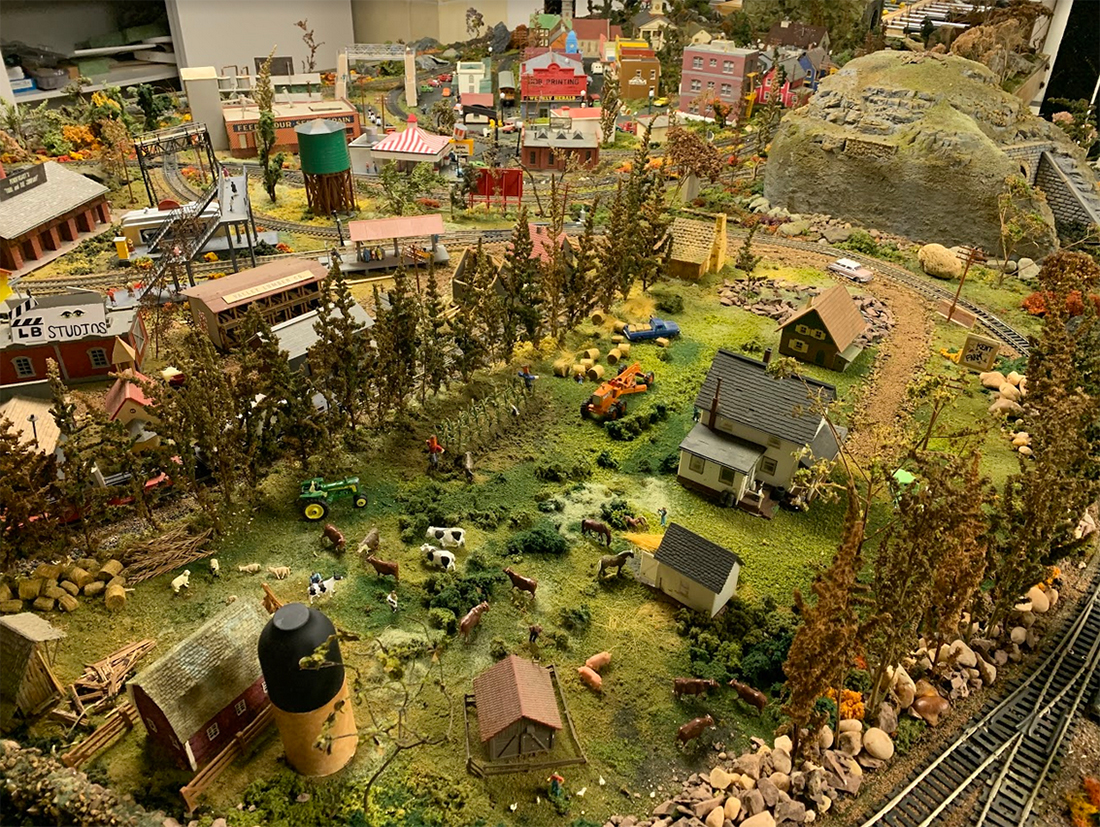
The setting is small town and rural 50s and early 60s. I run Broadway limited diesel and steam engines and many of my cars are from the 50s and 60s including the nuclear waste and chicken cars that light up and the nuclear missile and helicoptor carriers.
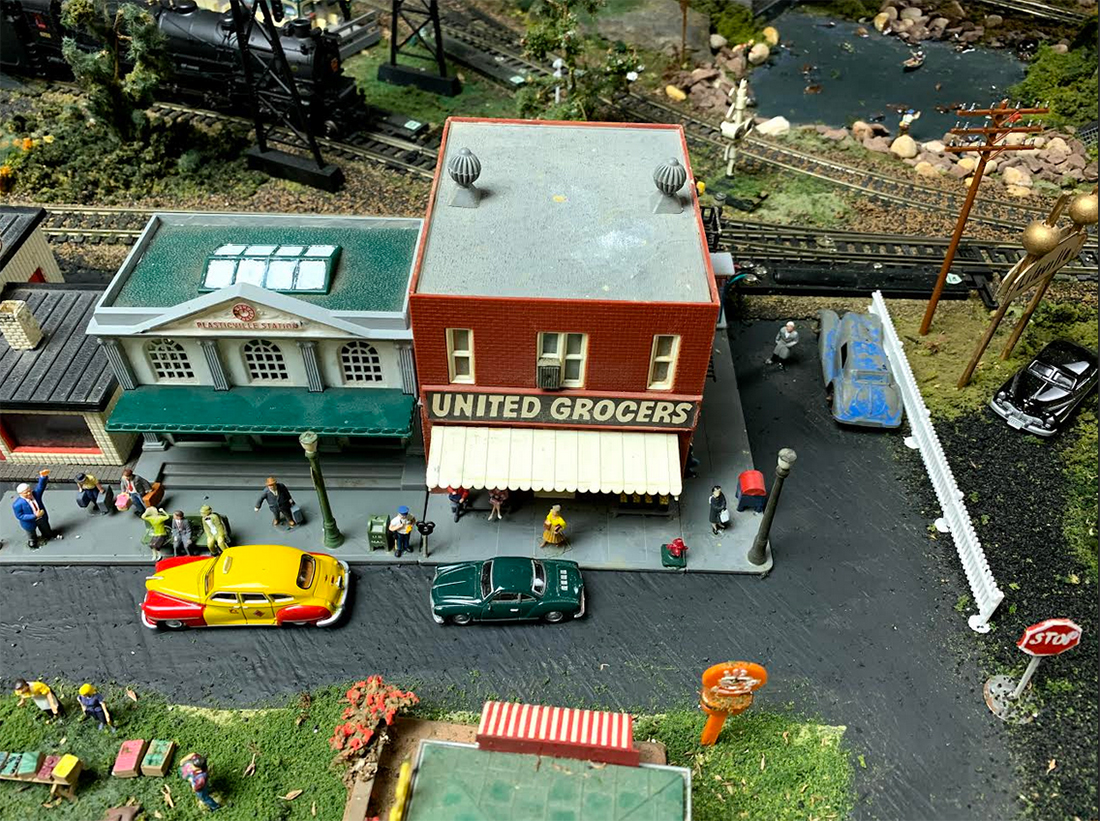
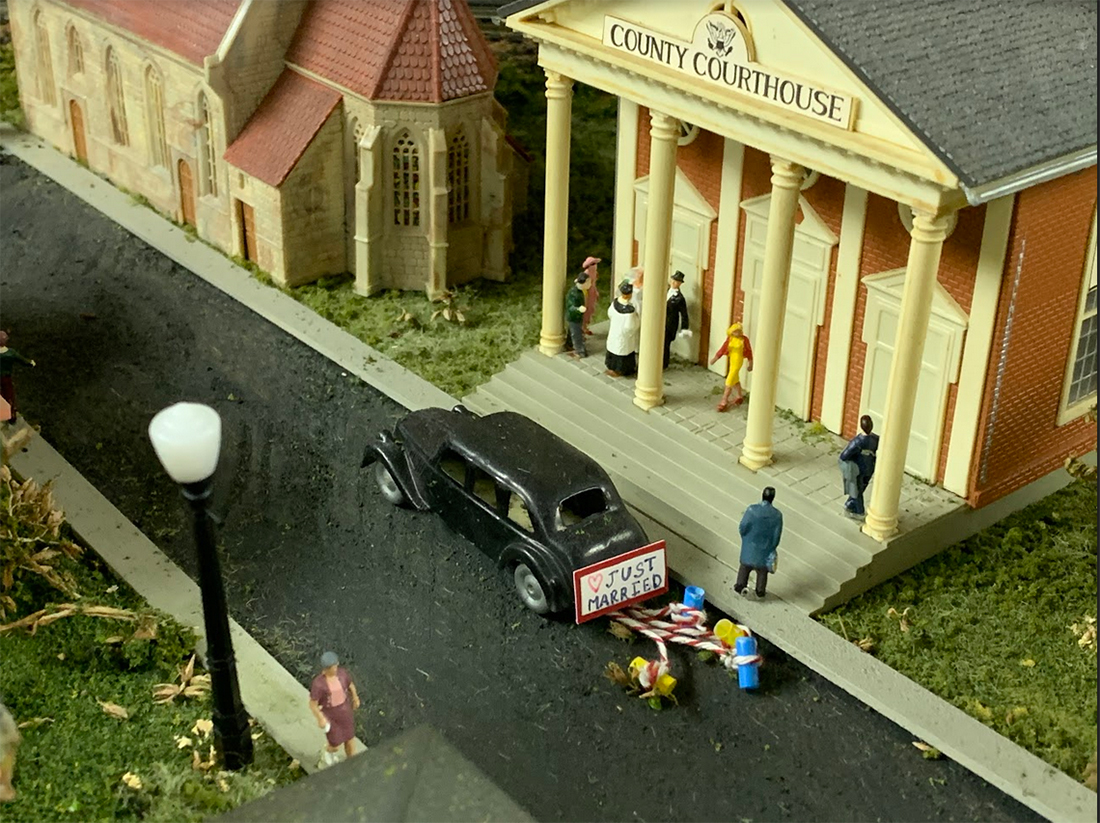
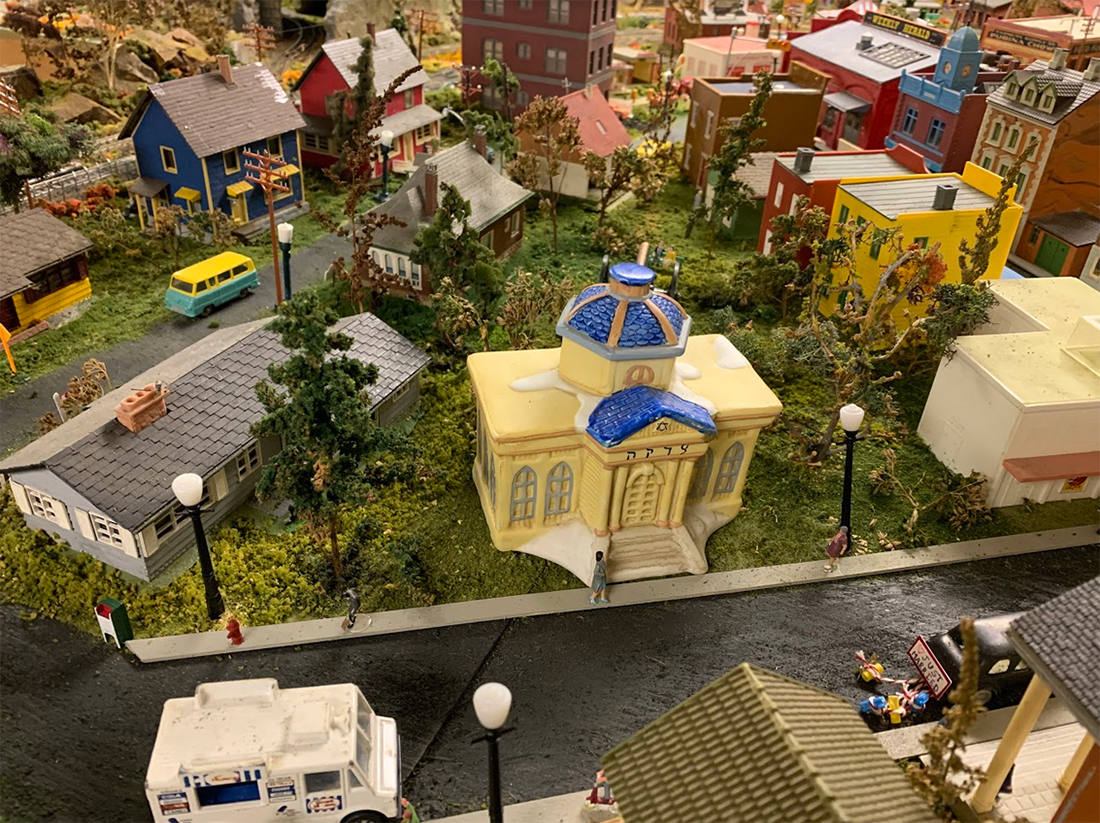
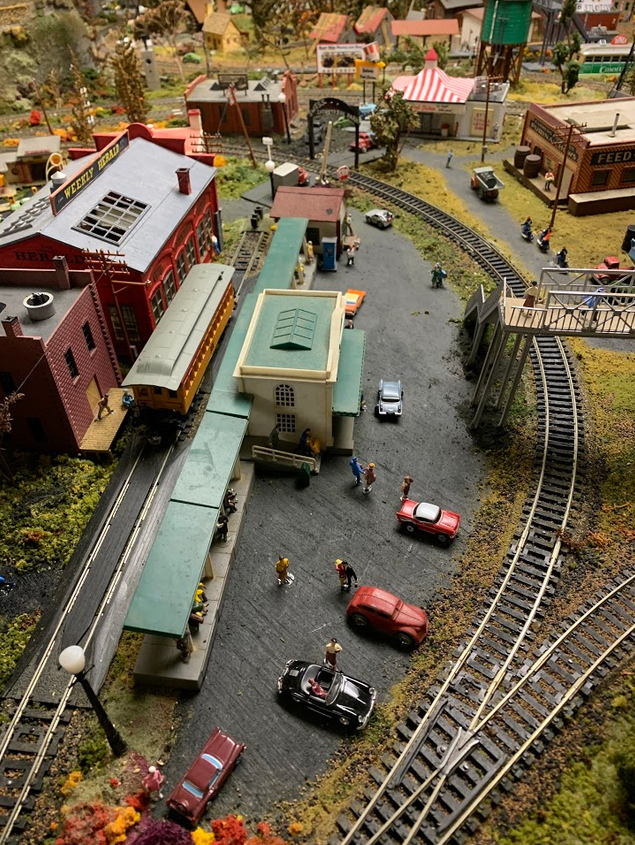
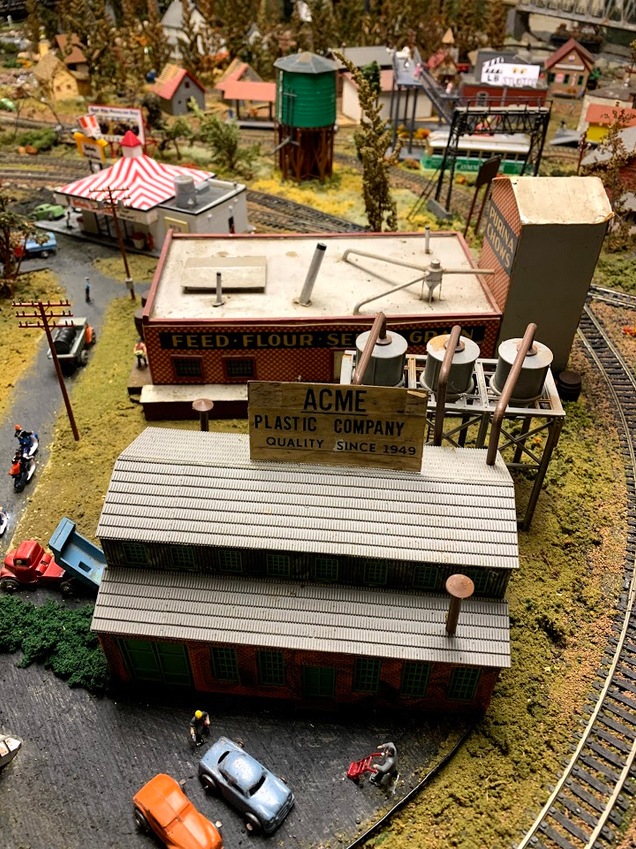
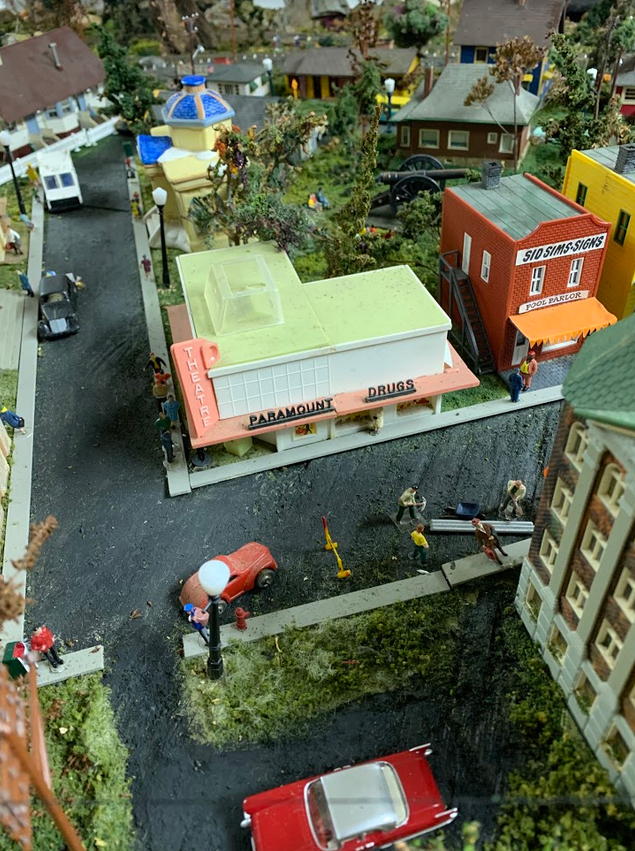
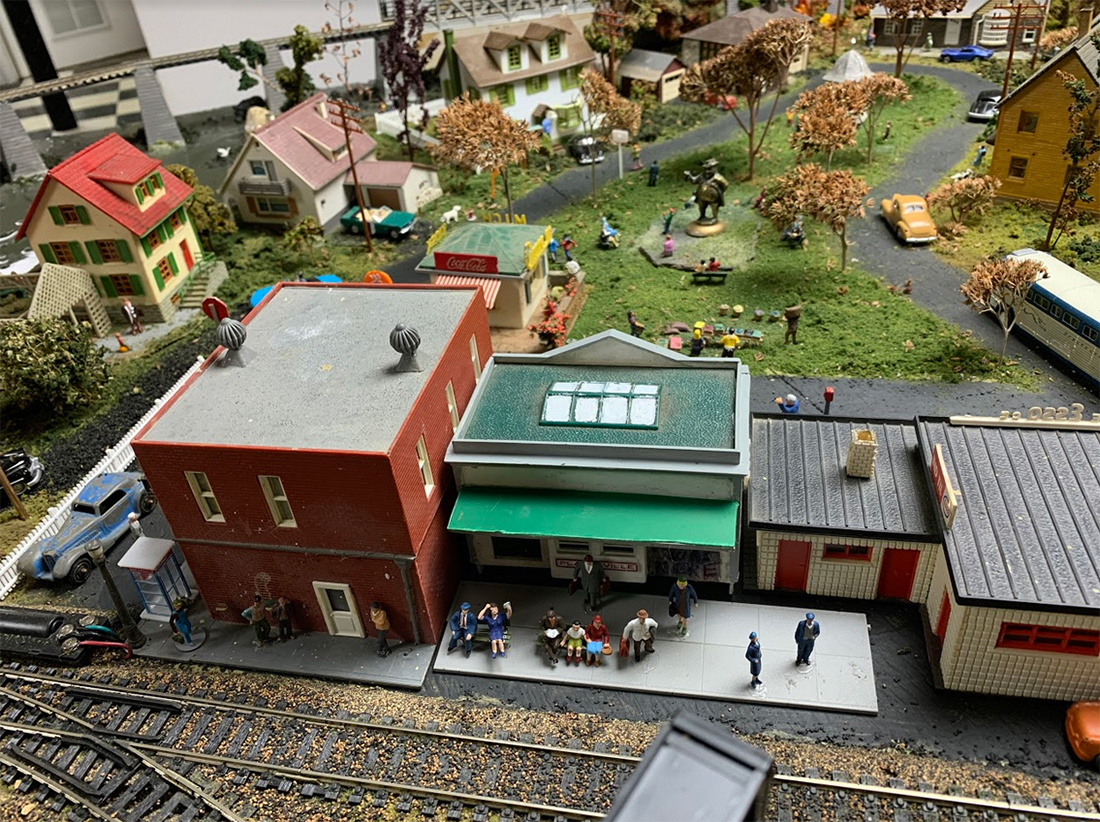
We have about 85 buildings, some of which are older than me (67) including a cardboard Purina Chow factory, old plasticville buildings, and a wooden butcher shop made from a German (possibly pre-war) kit where the roof lifts off so you can see the slabs of meat and the meat grinder on the counter.
We have more than 200 people and animals and hundreds of trees. We try to use natural substances where possible. Actual sand, rocks, flowers or twigs or grape vines for trees.
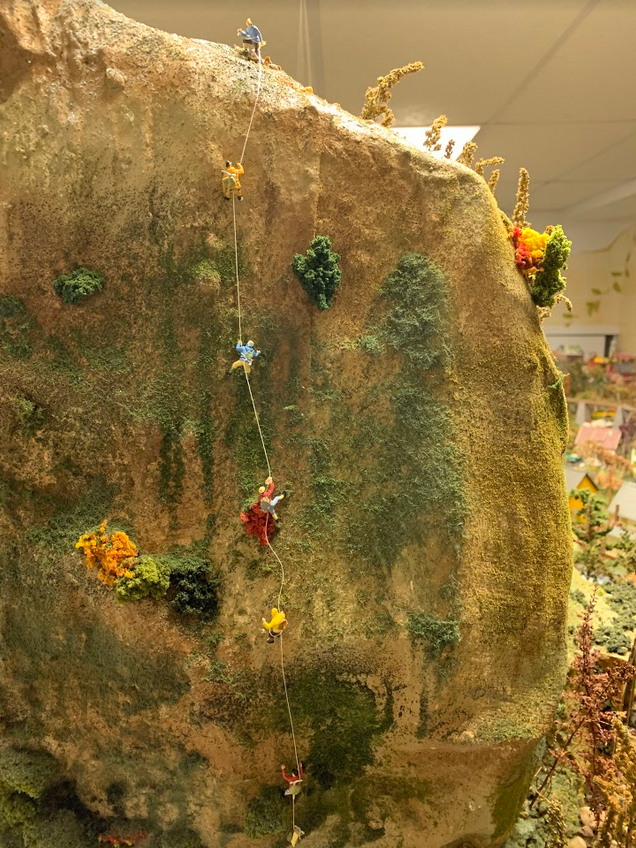
Mountains are mostly old school wire mesh covered in plaster cloth. Snow is dried out plaster sanded into flakes.
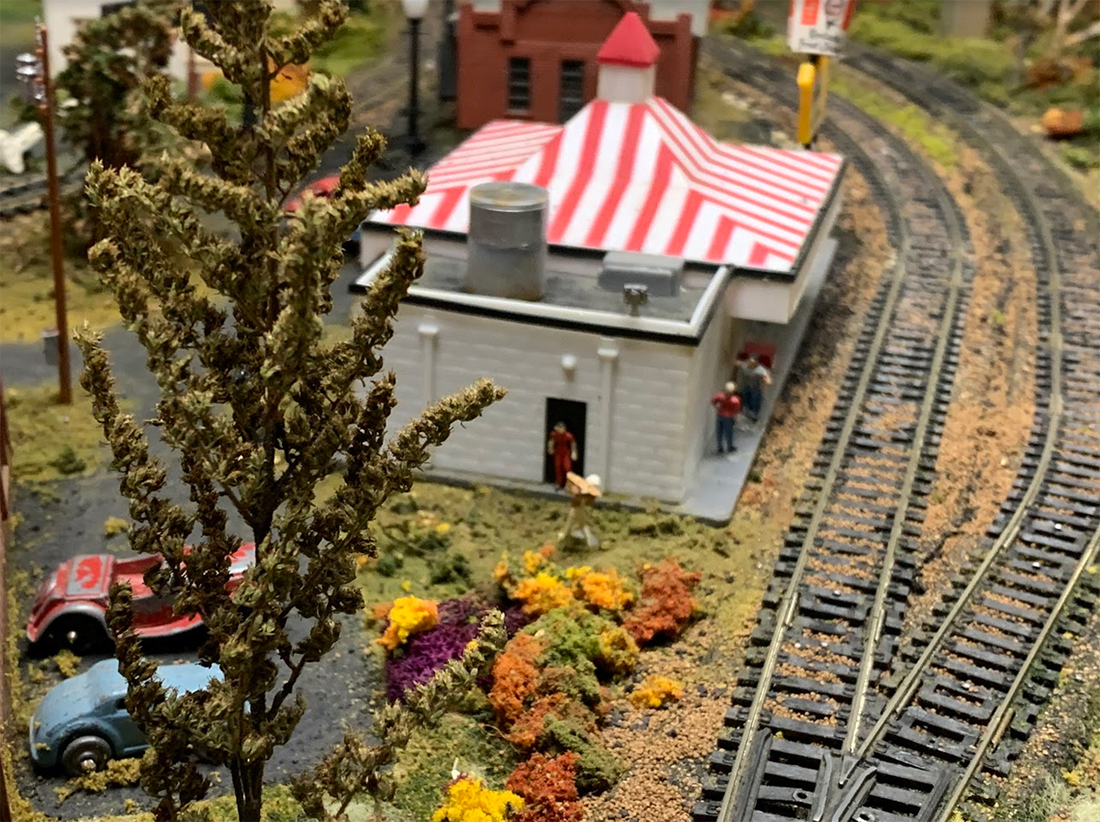
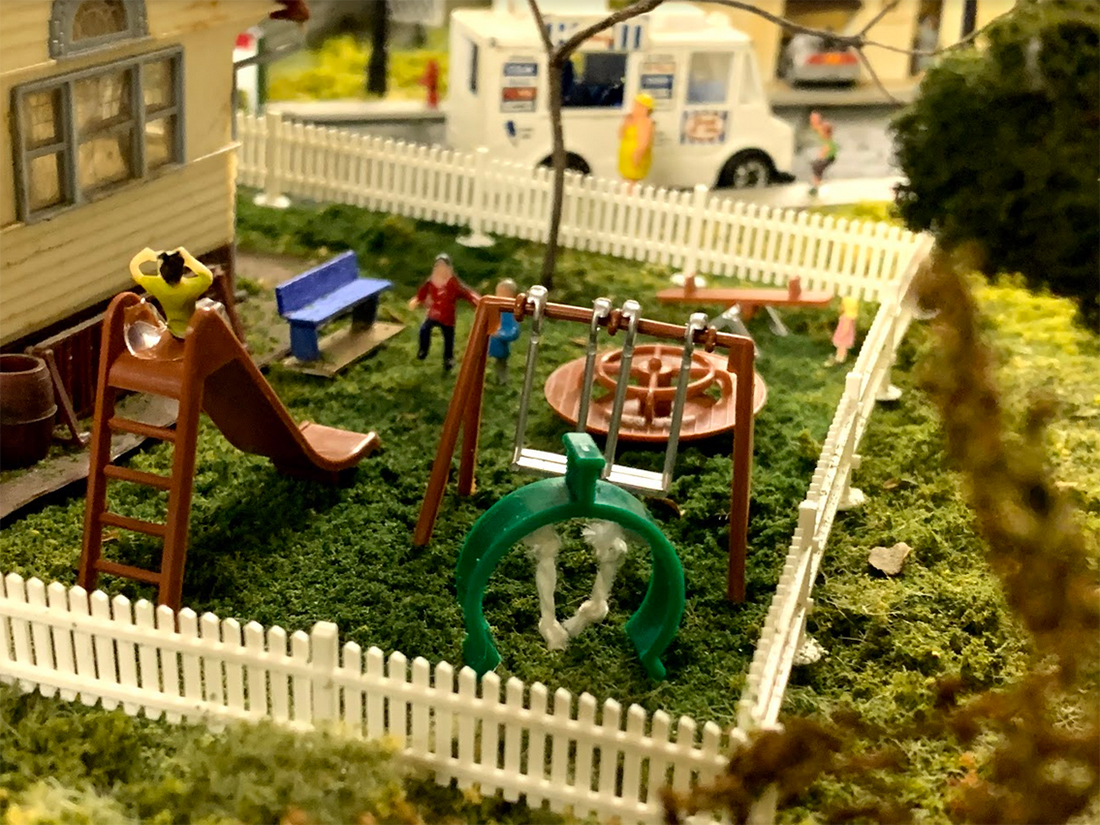
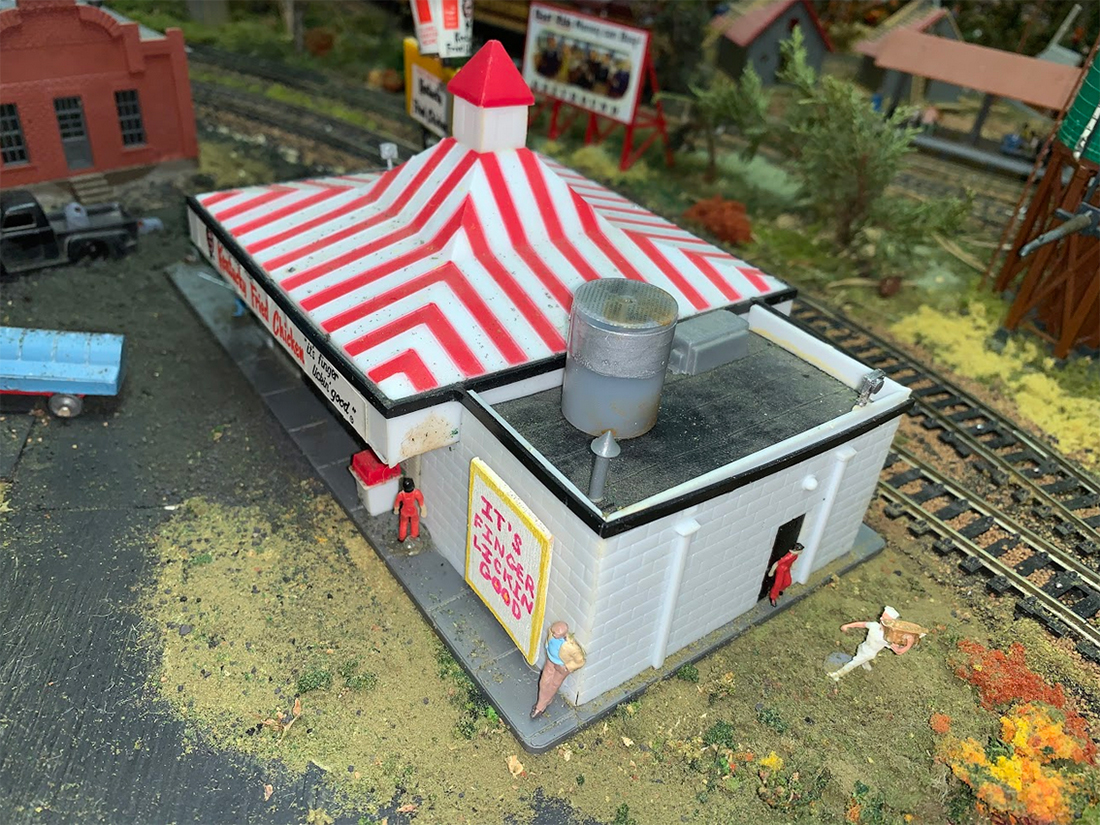
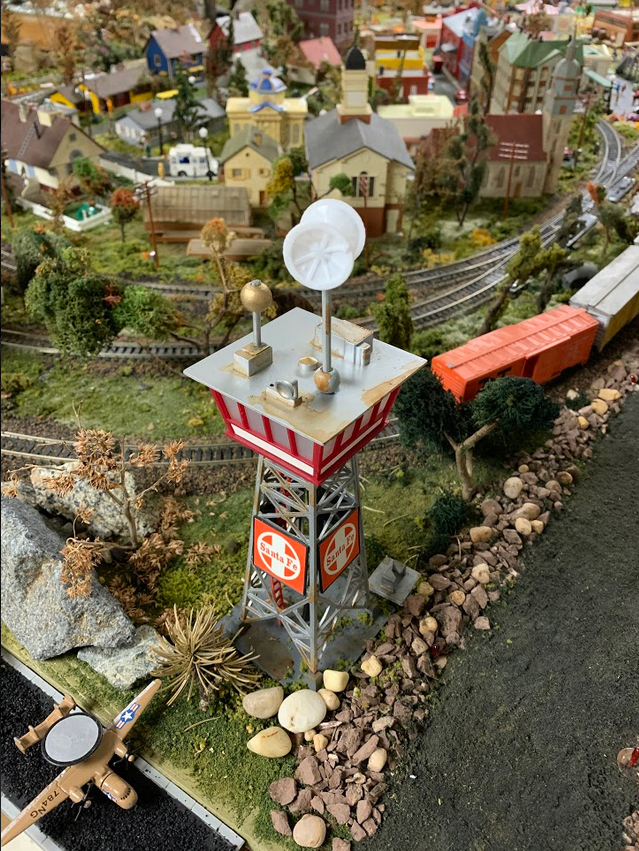
My wife finds ways to use household items or items you would normally throw away: the tear off seals on eggbeater boxes become radar dishes for the air control tower; paper clips and screening become wire mesh fences, the metal at the bottom of small glass candle holders become bases for the runway lights and interior building lights, the raft in our lake was modeled after one we saw in Antigua and is made from the plastic covers on office phones that are labelled line 1 and line 2 with paper clips for the rails, the windmills are made from discarded electric tooth brush stems with bristles pulled out, the farm silo is a toilet paper role with a rubber cap from some household item, the green rope swng in the school playground is a clip from something, the air unit on the roof of Kentucky Fried Chicken was moisture absorbant from a package we received.
The layout consists of two lines. The inner was based on Atlas HO No. 16 6 x 10 and the outer as freelanced with an elevation to 3”.
My wife designs the towns, does the streets and sidewalks, makes all of the signs, and is in charge of placement of people because everyone has a story and placement of each person must fit their story.
The two main towns are named for our grandchildren.
The industrial park is named for a friend who helped procure a number of the buildings. The houses are named for family and friends. When one couple told us they were moving, my wife had a for sale sign on their property the next day.
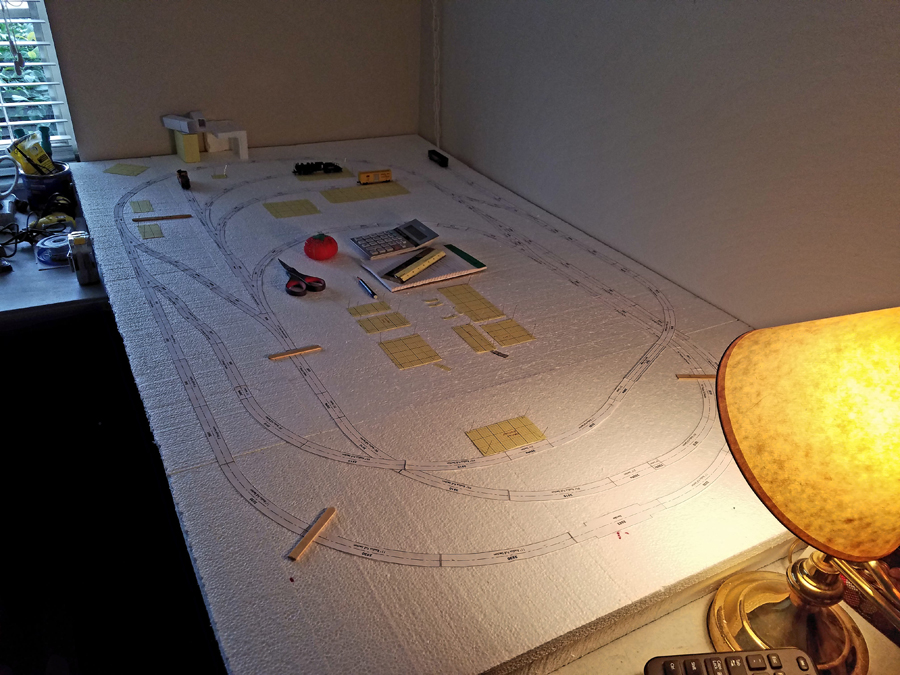
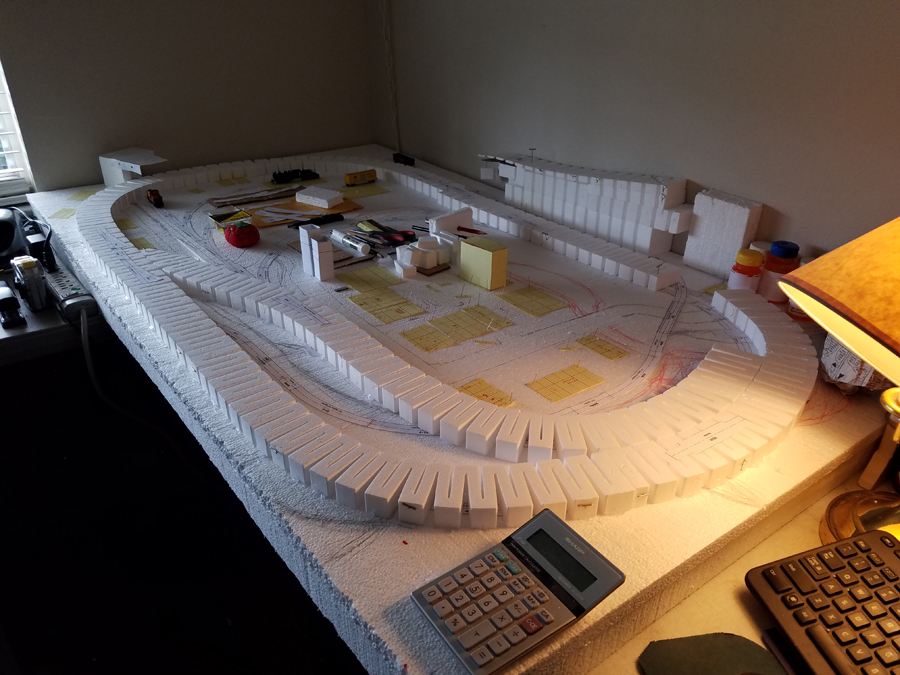
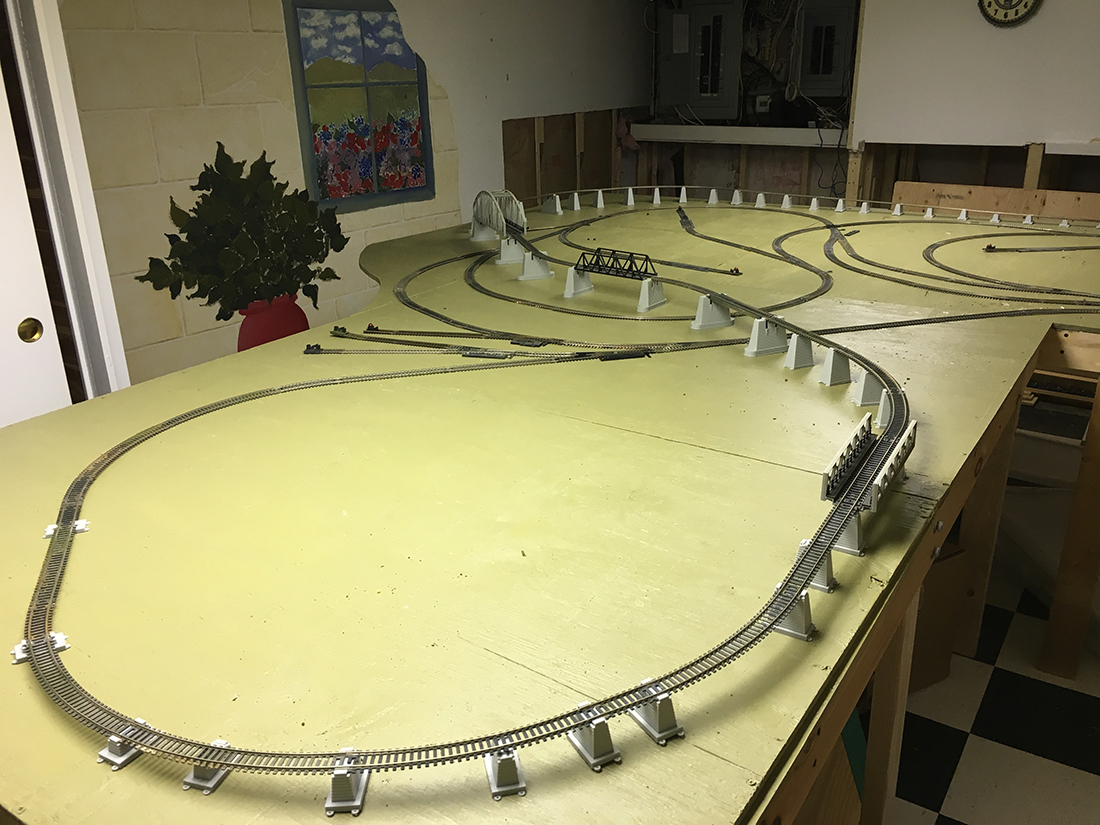
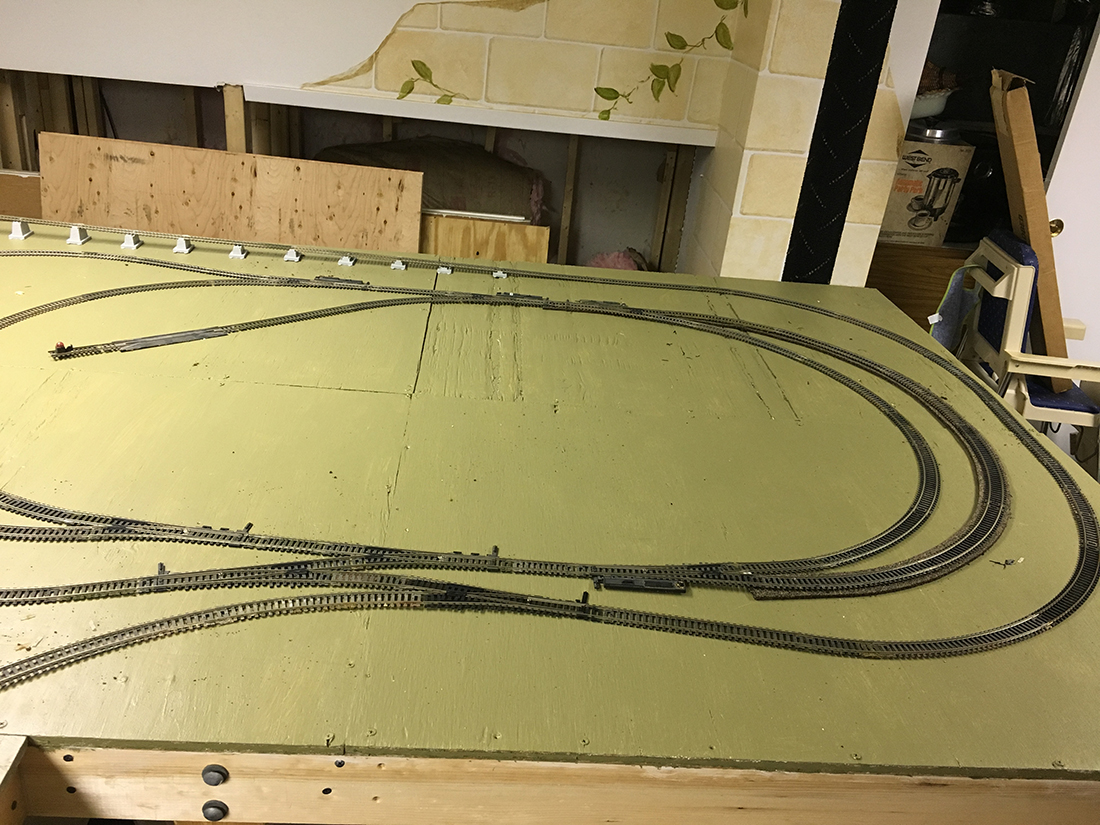
Here is the Atlas design for interior run and a pic of the layout in early days which was changed slightly to make the bridge cross water before turning.
Track plan for inner loop.
Hope you enjoy.
Scott”
What a layout – there’s a lot going on, but doesn’t look crowded. I loved it. A big thanks to Scott for sharing his HO scale atlas track.
I’m sure some will wonder where the trains are. All in good time. Remember, a layout can be whatever you want it to be.
A huge thanks to Scott.
That’s all for today folks.
Please do keep ’em coming.
And don’t forget The Beginner’s Guide is here if you want to grab the bull by the horns and get going on your very own layout.