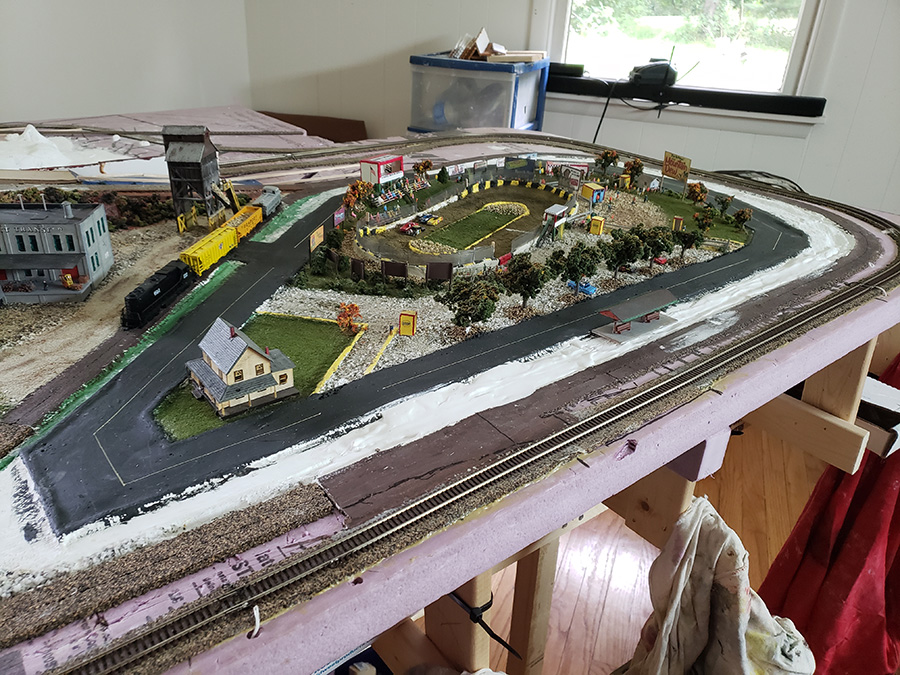
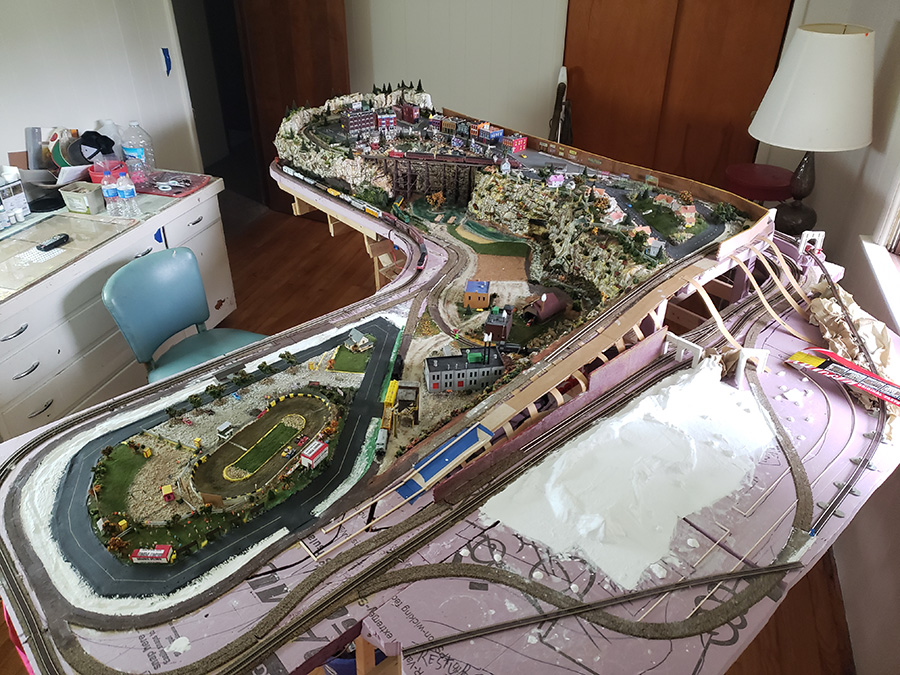
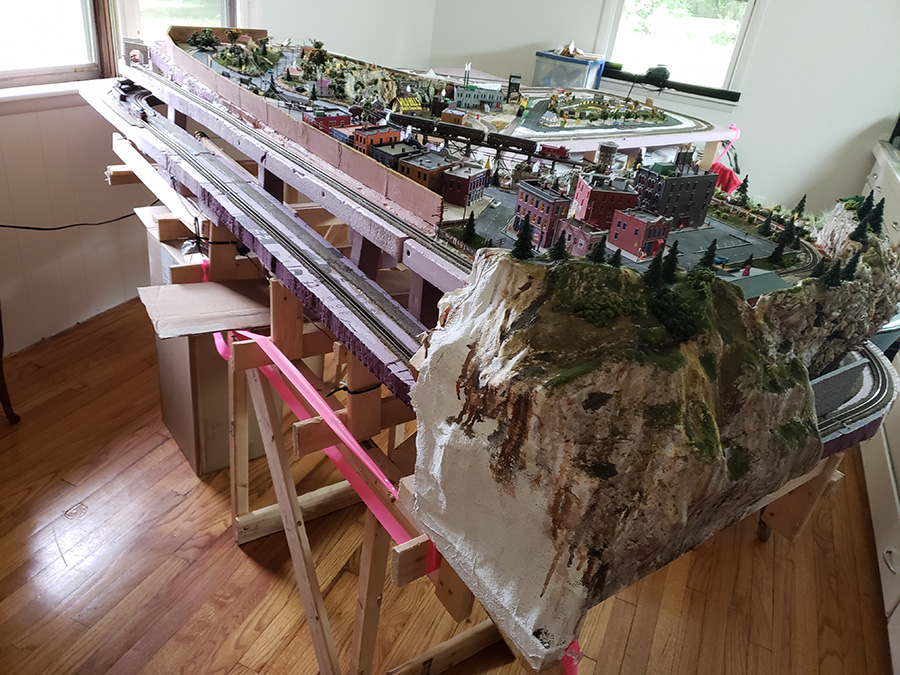
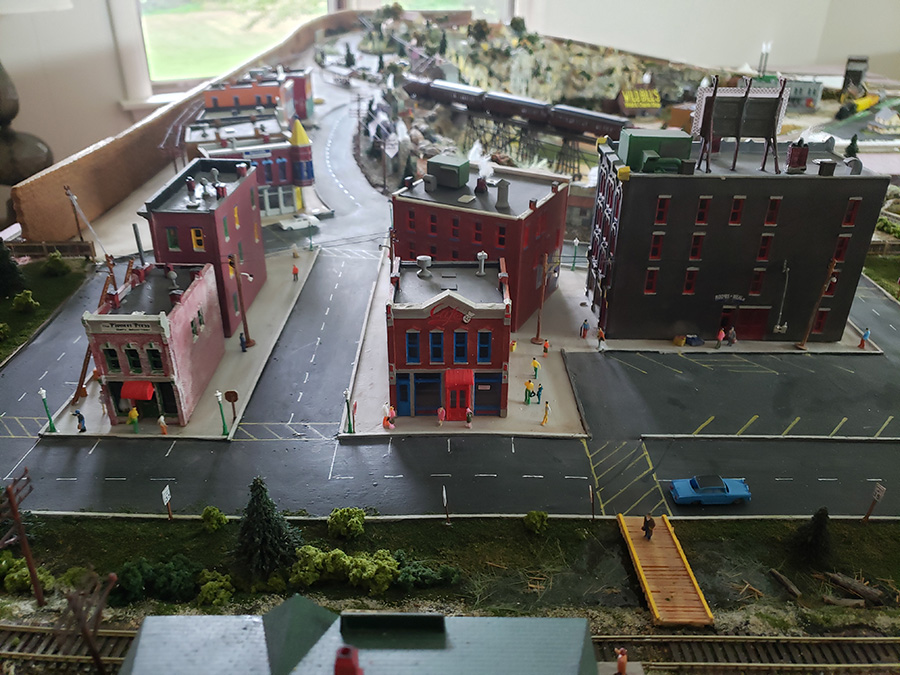
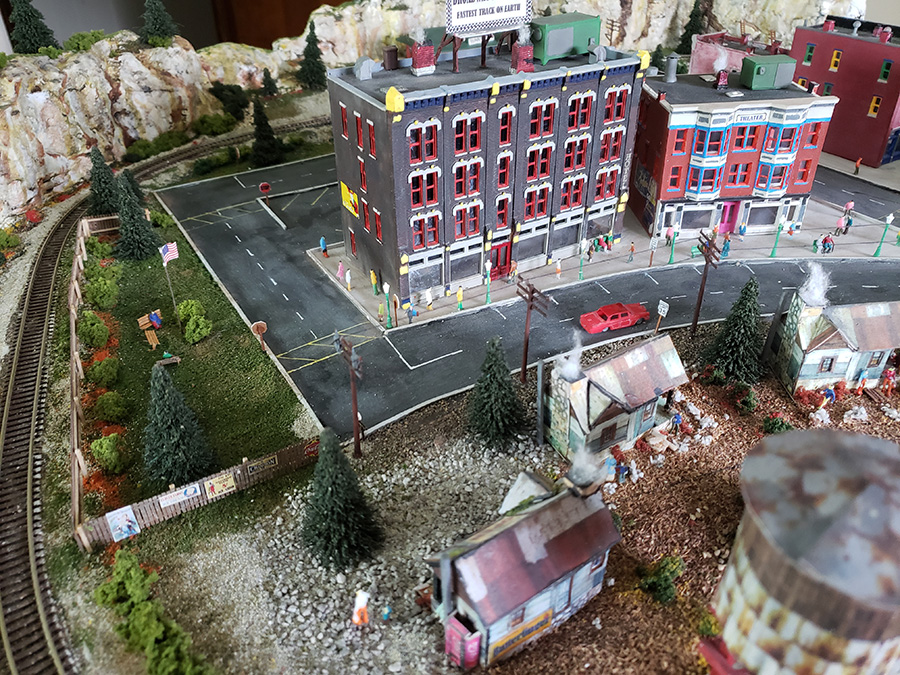
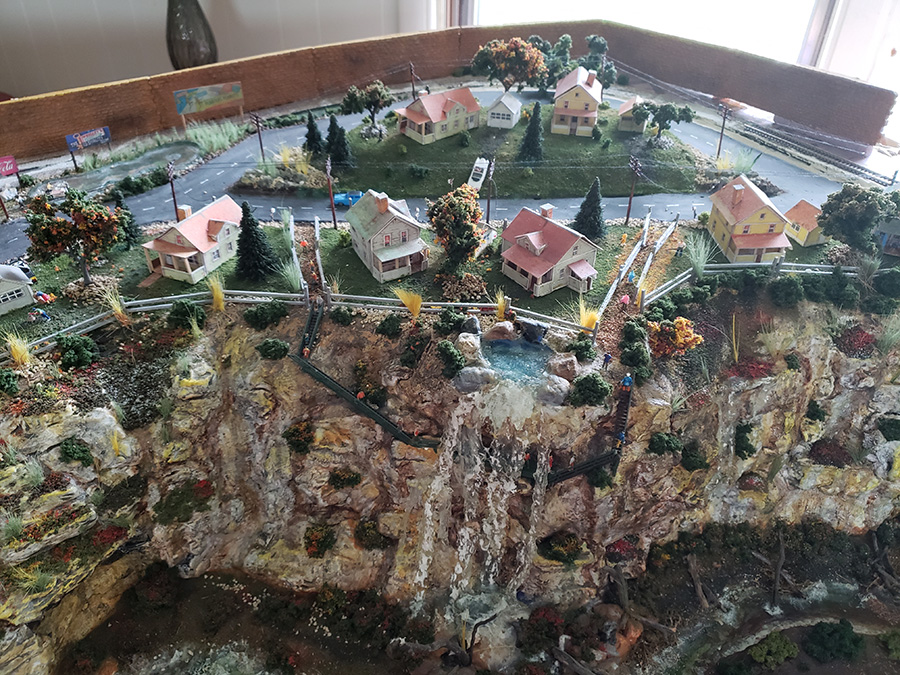
Cary’s been in touch with his G scale model train update:
“Hello Al and All,
I’m seven years into my G Scale model train garden layout and was finally able to finish laying track and start scenery work this summer.
I picked a nice, shady location for my layout but it also comes with a lot of maintenance. After clearing the site this Spring of leaves and branches, I realized I had some drainage
issues and had more digging to do. Drainage and keeping my ballast in place will be trial and error forsome time to come.
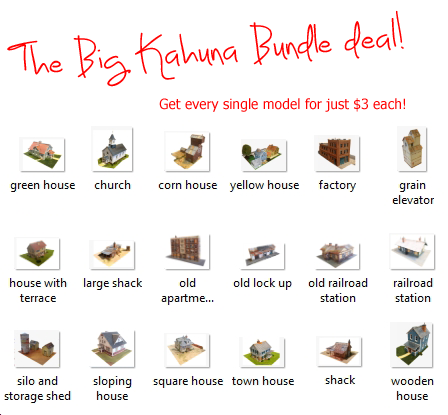
I then proceeded to set the 1/24 scale buildings I made over the last 6 years during the winter months so this summer was a real milestone I have been looking forward to for a long time.
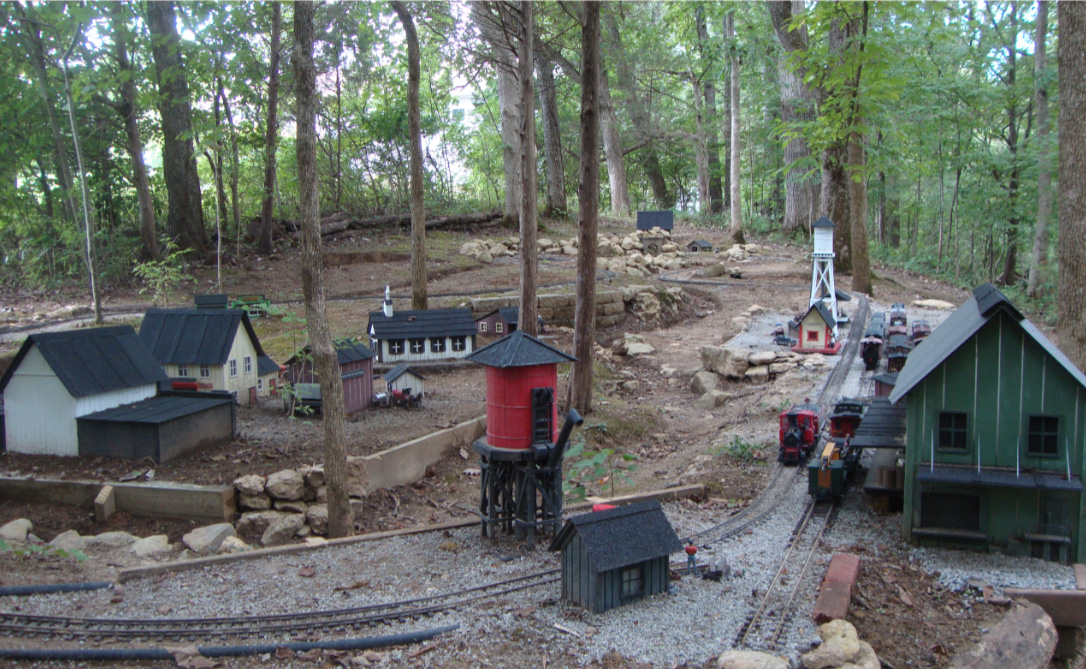
This summer was my first chance to run my trains a lot. Most of my layout is on a 3.5% grade so I had some reservations as to how my locomotives would actually perform. I’m using a 10 amp power supply with only one attachment point for about 120 feet of track. Voltage drop is not a problem but pulling those hills and wheel slip is a problem for two of my four engines. I’ve built my accessories for the Steam Era, but my diesel runs the best. Sealed trucks, heavier, longer and two motors seem to make for more reliable outdoor operation. My little LGB steam 0-4-0 runs well, heavy, powerful and NO idler wheels. As with all other aspects of this project, the plan keeps changing, so I'll need to give some serious thought
to my next locomotive purchase.
I don’t understand how dirt and small rocks manage to climb the walls of my buildings. I’m using a tank sprayer on my ATV to clean buildings and water plants.
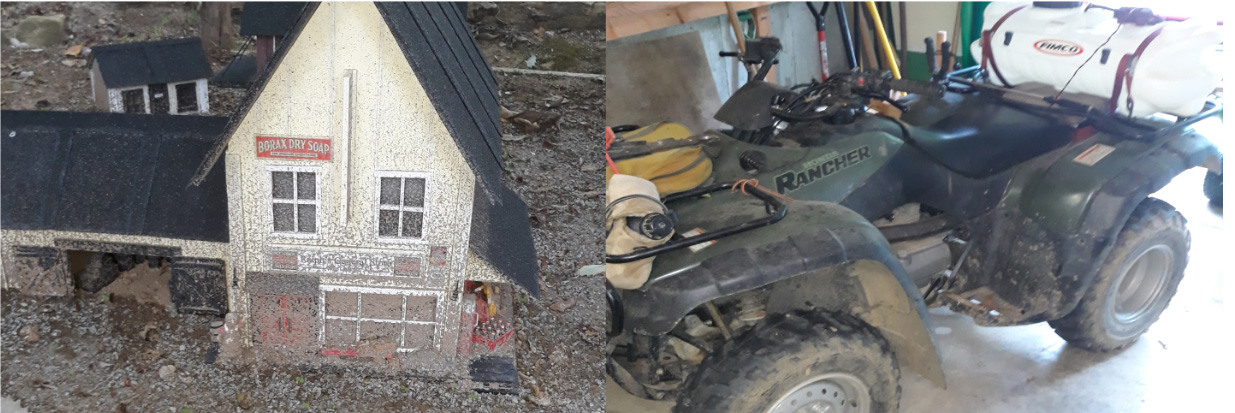
Early in this project I realized that hauling my trains in and out of the house would add greatly to the prep time so while my layout is open for the summer I leave the rolling stock on the storage tracks and put my locomotives in a weather proof tool box. In the Winter I bring in the trains, power supply and smaller accessories. I intend to leave the buildings out year round, we'll see how that works out.
I need plants that grow in the shade and that the deer won't eat. Animals, weather, tree branches, drainage…. why again did I want an outdoor train layout ???? Hey I'm a big kid playing in the dirt with my train set and having a blast!
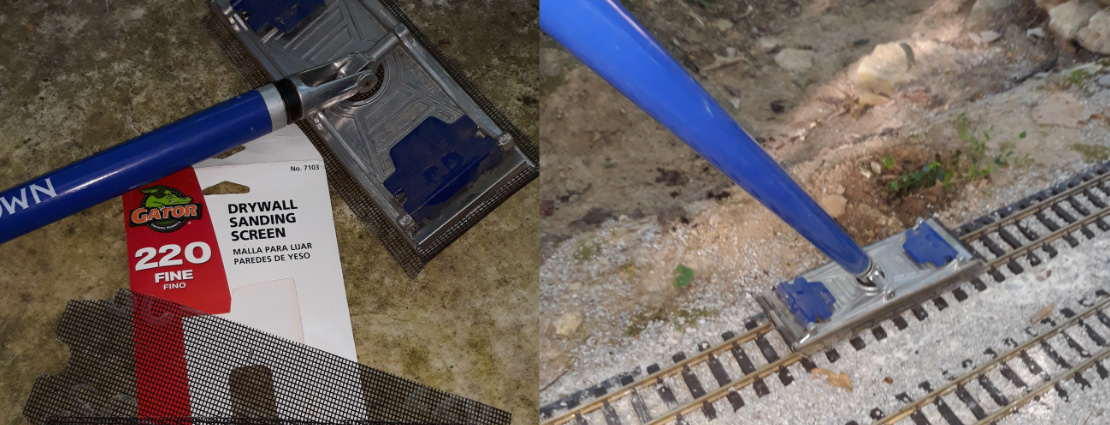
I’m cleaning the track with a pole sander and 220 grit drywall sanding screens. Even after sitting outside all winter, just a couple of swipes and the track is shiny and ready to run. But this needs to be done every time I run trains so some sort or track cleaning car is on the list for this Winter’s projects.
All in all this has turned into a great hobby that I believe will hold my interest for some time to come.
Running trains is not a simple flip of the switch, it takes about 30 minutes of preparation but I love working back in the woods. Now I’m shifting to the gardening part and look forward to seeing my layout fill in with plants over the next few years. Next summer I’ll be adding roads, vehicle bridges, crossings, a few more buildings and water towers, I like water towers!
I hope you’ll check out the video, I had great fun putting it together. Thanks to Al for the work he puts into his blog, seeing other’s projects and sharing my own adds a very enjoyable dimension to this hobby.
Happy Modeling!
Cary”
Latest ebay cheat sheet is here.
A huge thanks to Cary – what an amazing G scale model train project – and I couldn’t agree with him more: when it comes to trains, we’re all big kids.
If you want to see his progress, his last post is here.
That’s all for today – except for one quick question from Danny:
“Alastair,
Enjoying your guide book, l have a question, maybe some members could help with.
My old track from the 70’s is code 100, and I just acquired a lot of code 83 from a Friend. I must have lost some of my Code 100, so I asked my hobby shop about combining them,and they said no problem.
I asked about joiners that could adapt with 100 and 83, but the guy at the hobby shop said they don’t make them anymore, but there was no problem with using both together.
Does any one have experience with this,I am having some problems with combining them. Thanks for any advice.
Danny”
Please do post a comment below if you can help Danny, or let Cary know what you’re thinking.
That’s all for today folks.
Please do keep ’em coming.
And if today is the day you get started on your layout, the Beginner’s Guide is here.
Best
Al
PS Latest ebay cheat sheet is here.