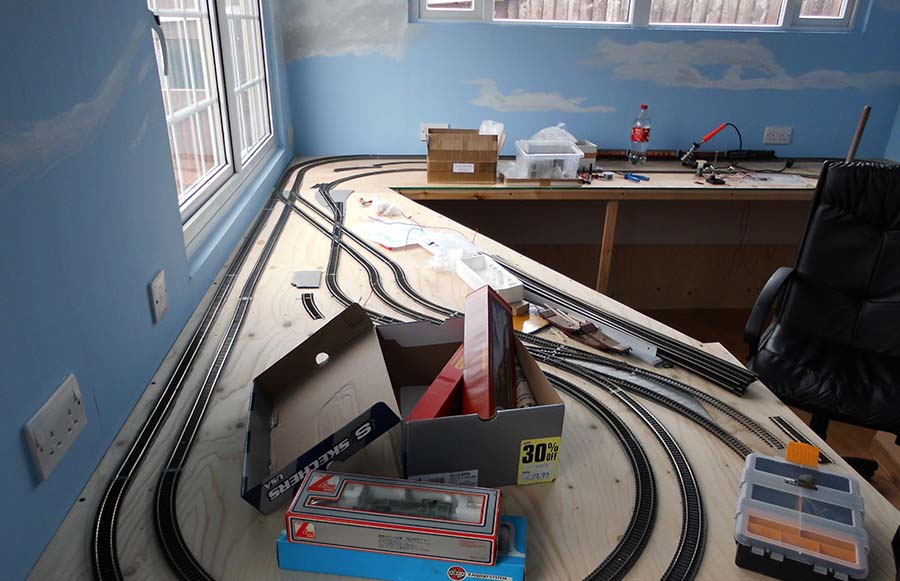
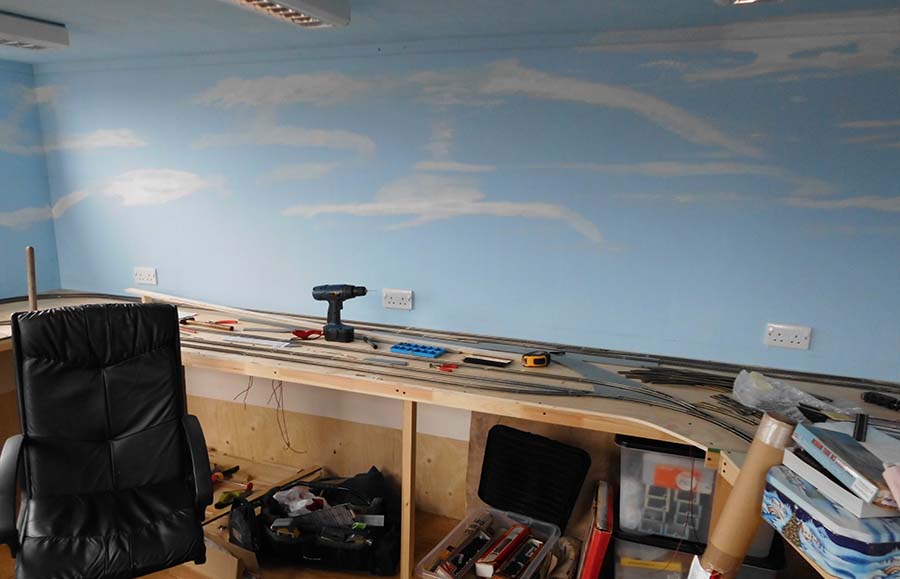
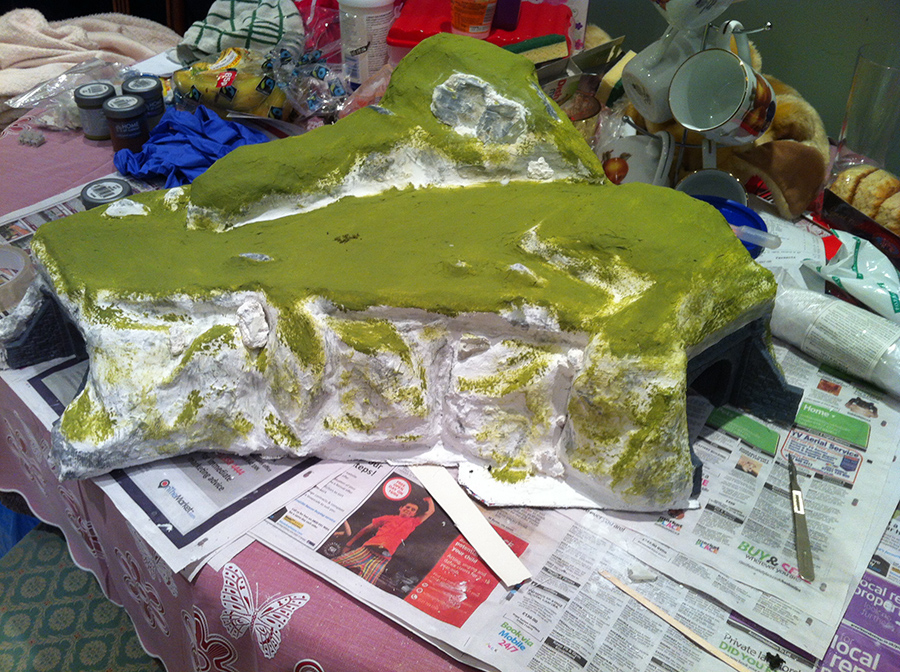
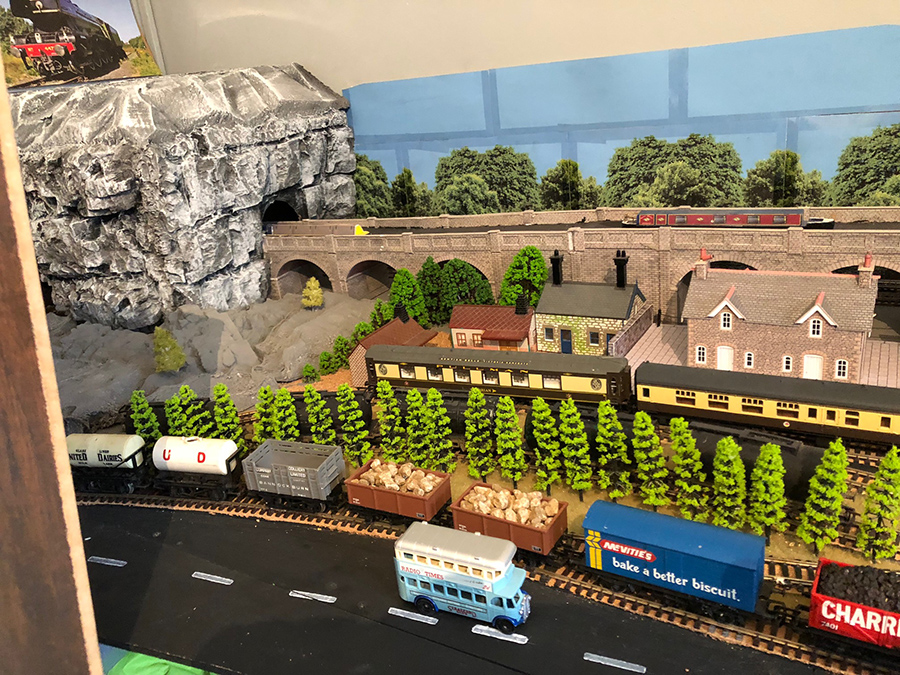
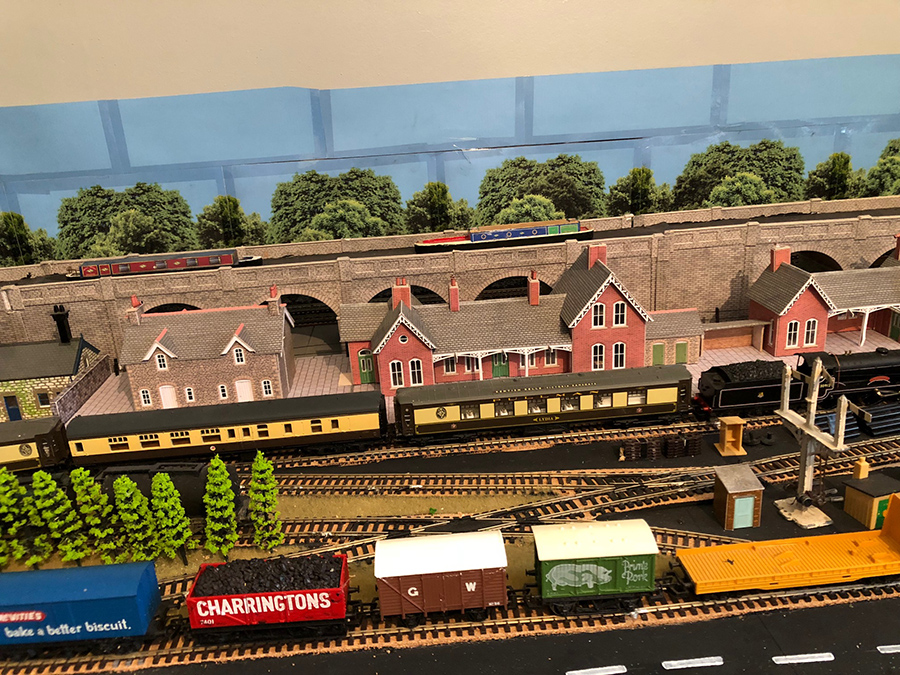
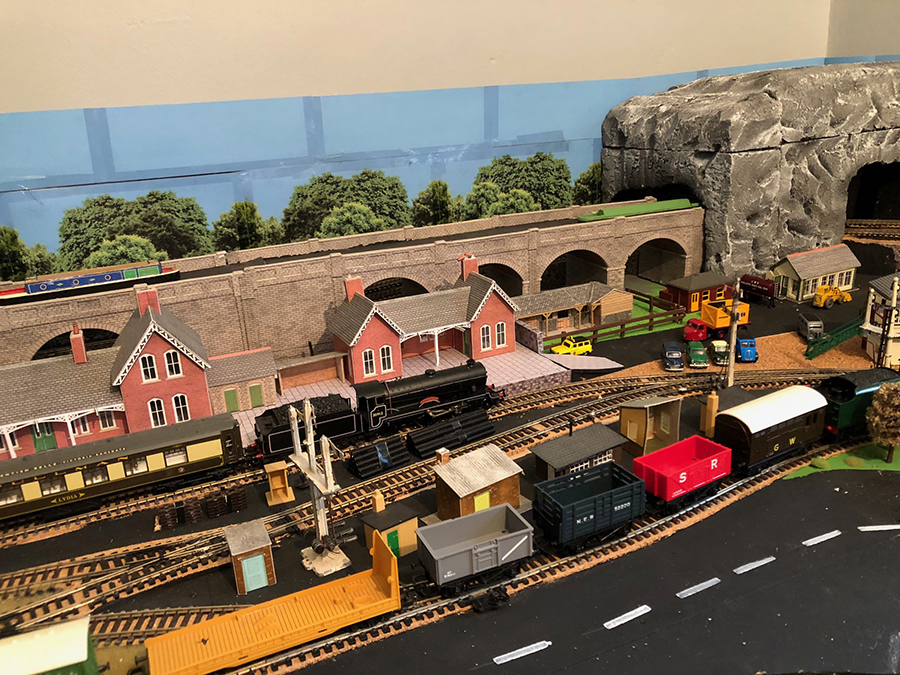
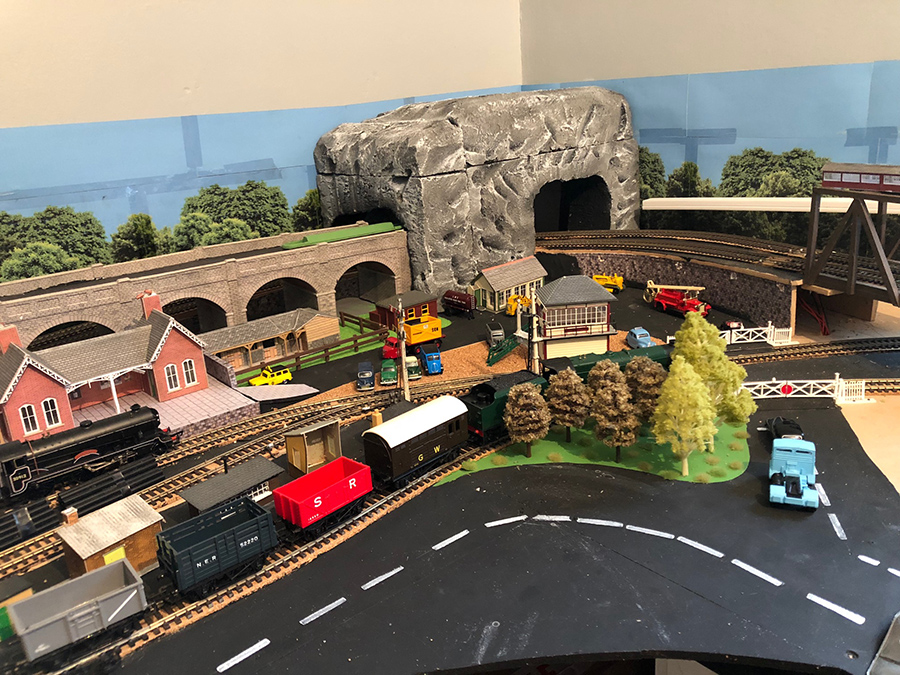
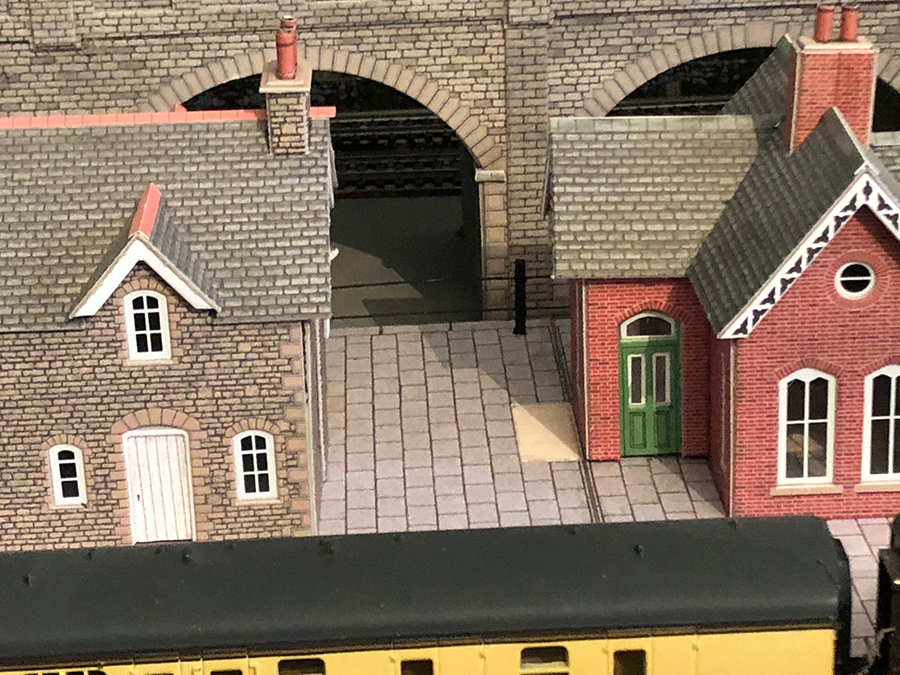
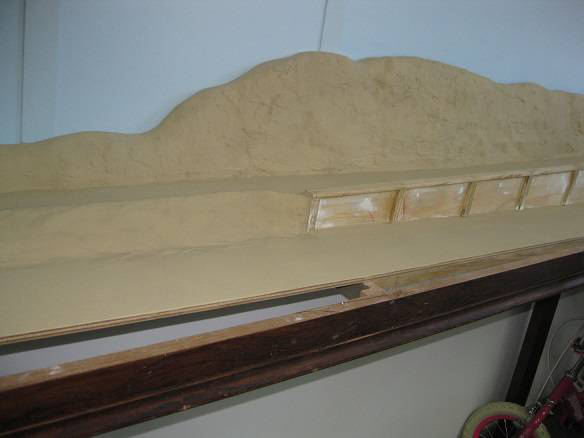
Brian and Andrew have been in touch – both with HO scale L shaped layouts:
“Hi Al,
You have not heard from me before but I have been receiving your messages for years now and looking at the tips and layouts that people have sent to you from near and far, and found them inspiring and helpful in many ways.
I had always wanted to build a model railway since I was a kid but didn’t have the money way back then and the room and time as work and family life took me through my middle years, but a recent move from house to bungalow has given me a place at the bottom of the garden to be able to try my hand at doing it.
I do love building it but often wonder if I will ever get it finished, I have been working on it for about 3 years now on and off and there is only the close family who have seen it.
I have taken photos at different stages except for the building of the baseboard track and electrics, so after a good 60 years of waiting, I am about a third of the way through and would like to share some photos of my efforts so far. its a long way from being finished, but I keep chipping away as and when I can.
These photos are at the starting of it all, more will follow until its up to date, if that’s ok.
Thanks to all who send you their tips and photo/videos.
And thanks to you Al for your world wide information.
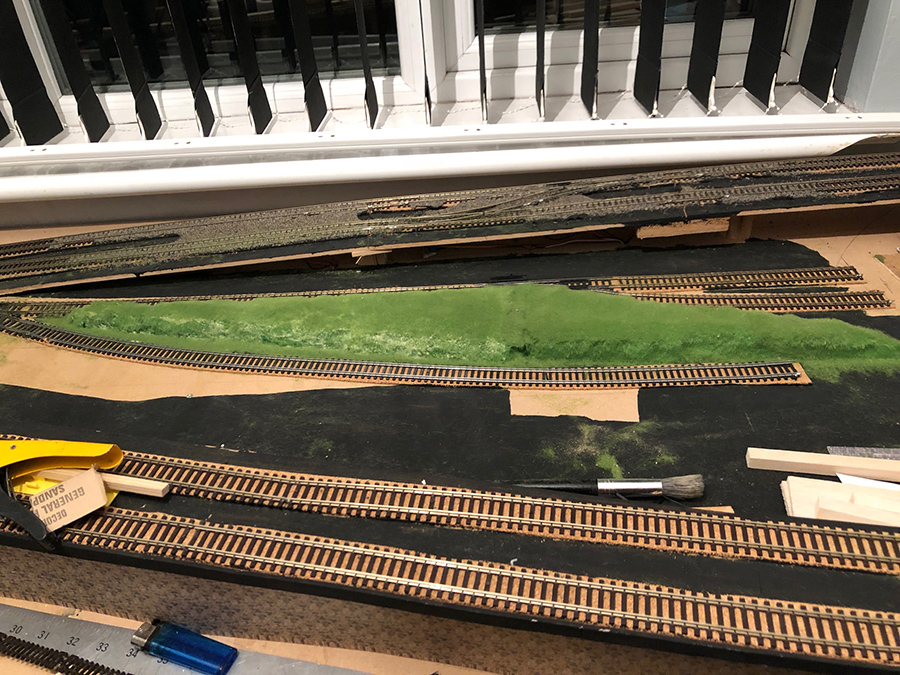
Well I moved my railway out of the shed as it was too cold and damp was affecting me and the buildings on my railway, so I decided to bring it in my spare room, so started again.
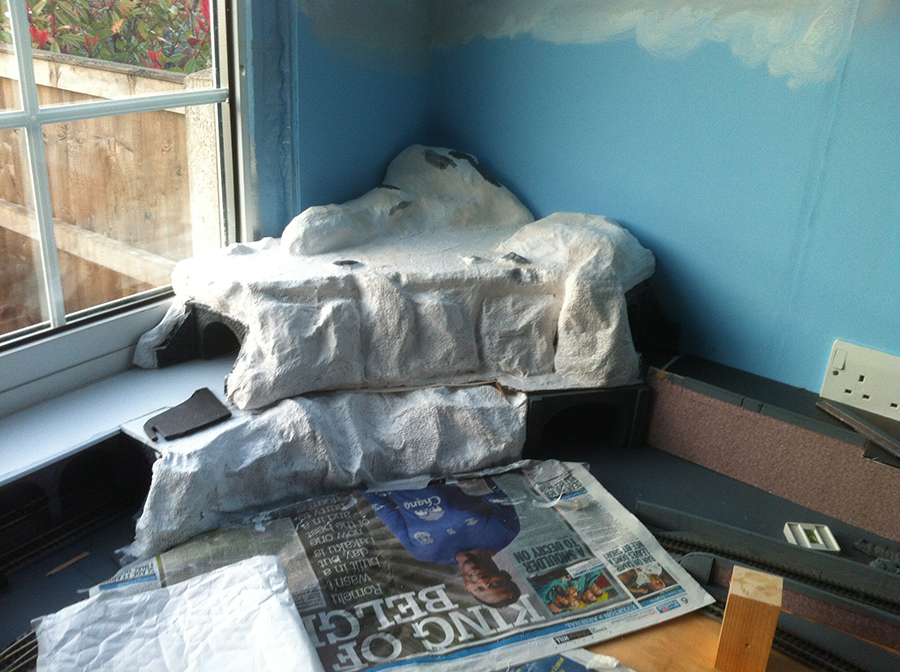
I am now developing an L shape layout with half a figure of eight with an elevated section on the curve.
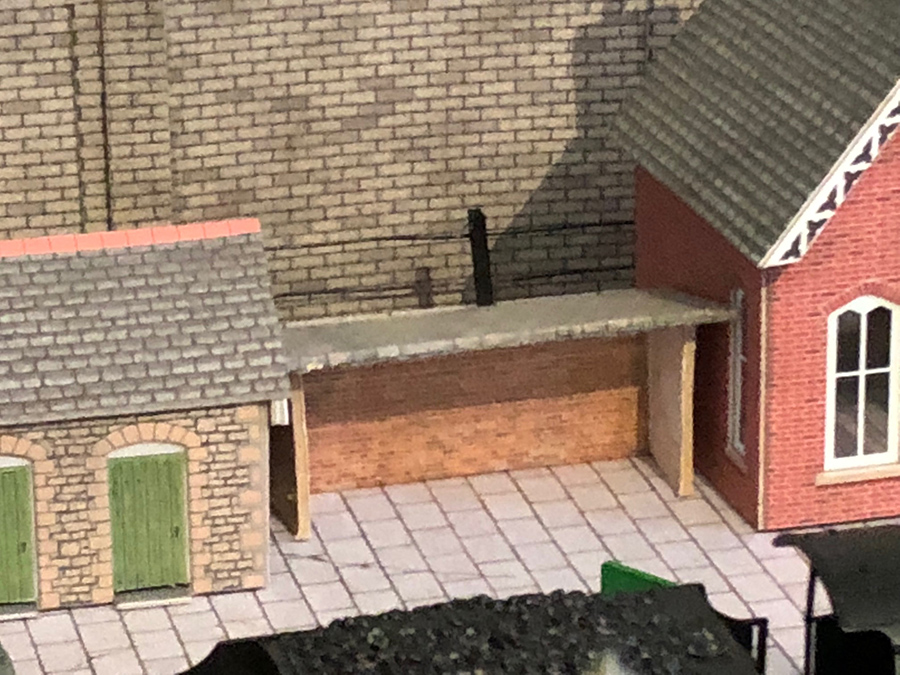
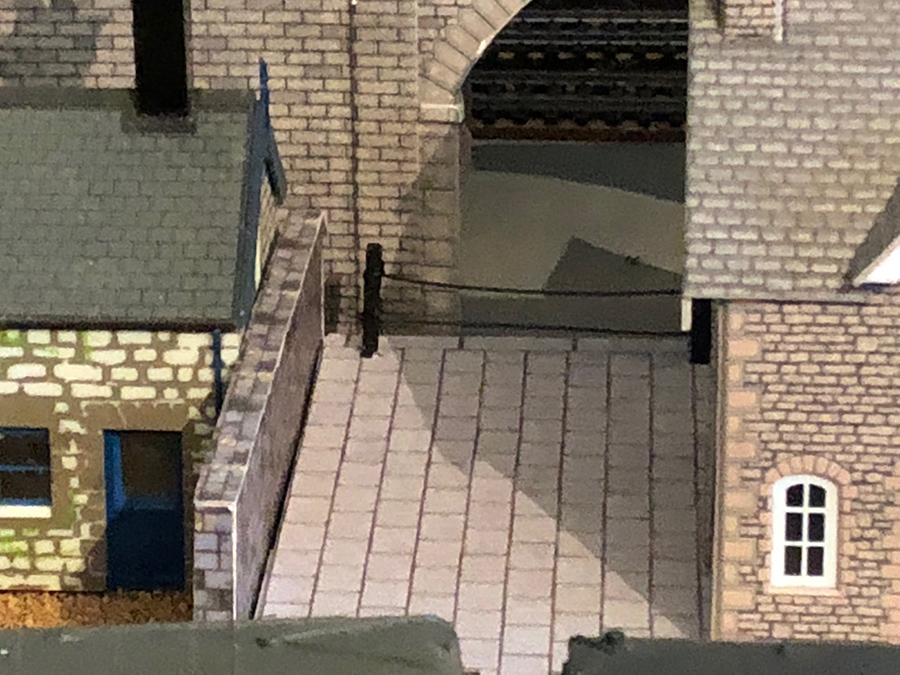
The village will be under the elevated section, I am at the moment doing the Station section and I must say it’s coming on well.
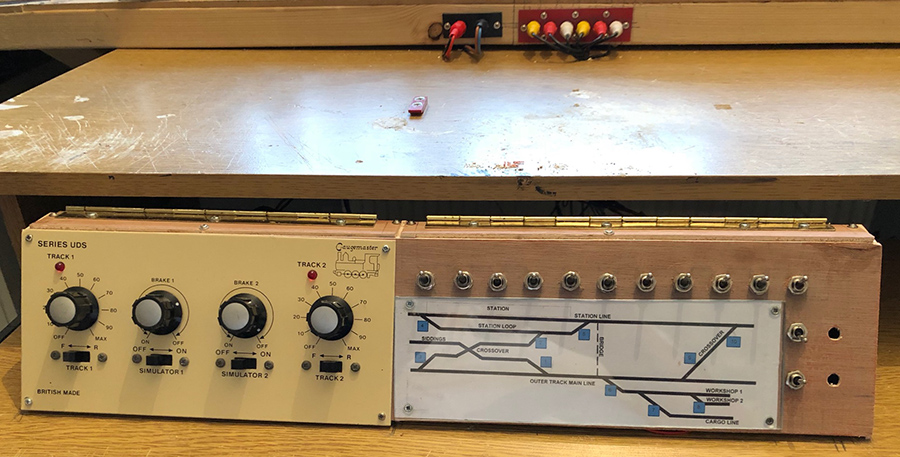
I have also reverted back to DC from DCC as it was too expensive. My controller is fitted under my work table as an integrated system. More pics to follow as I develop the sections.
I would welcome comments and suggestions from the plethora of great Modellers out there.
Andrew”
I do love seeing the updates – especially as a layout is never really finished.
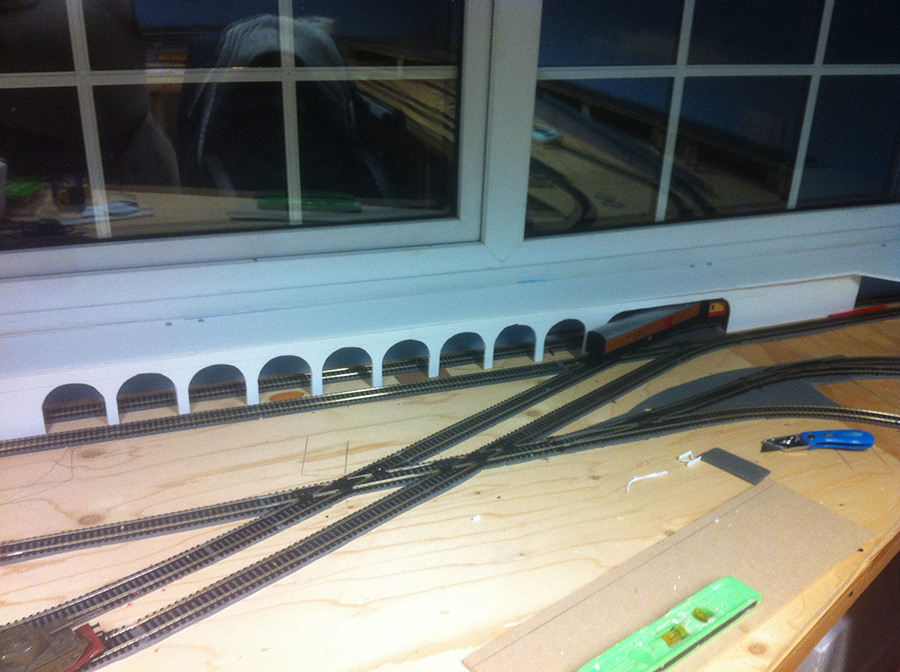
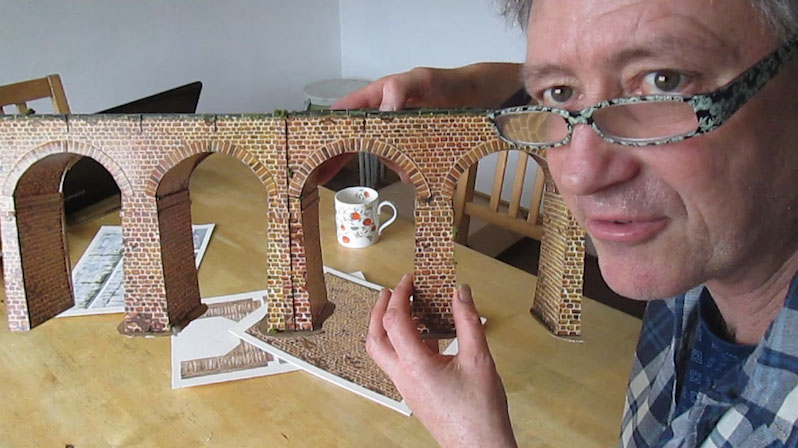
Andrew’s layout reminded me of John’s viaduct / arches:
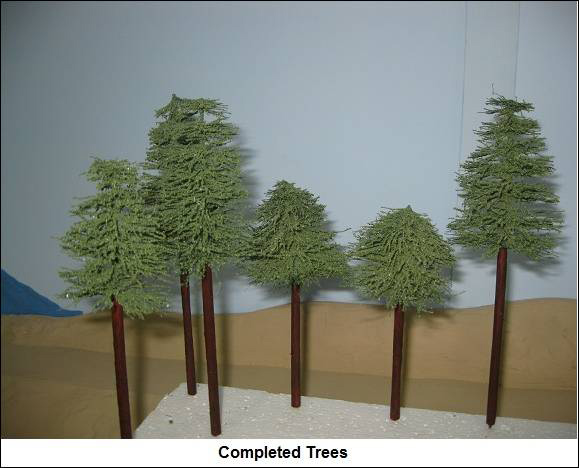
After the 1950’s computer controlled post I saw that some modellers wanted to see my pine tree how to.
To make the tree I do the following steps.
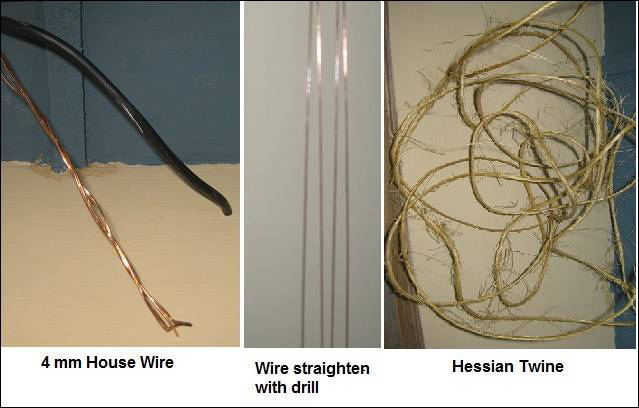
1. I got scrap lengths of 4 mm electrical wire (AWG 6) from the local electrical contractor.
2. Strip the plastic off and separate the strands, There is 7 strands in the wire.
3. Clamp each strand in a vice and then spin it with a drill to straiten them.
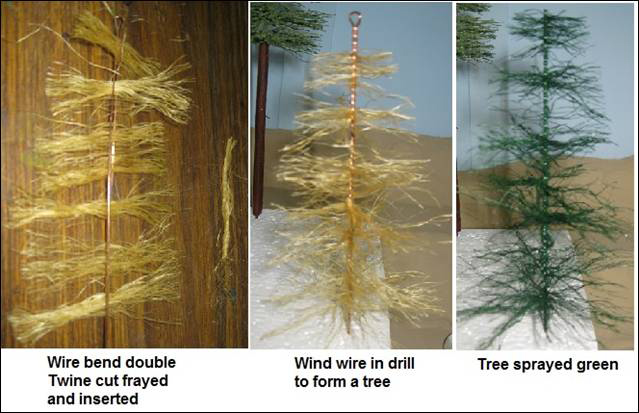
4. Use about 300 mm (12”) of wire or longer and fold it double with a loop at the closed end.
5. Unravel small lengths of hessian twine that will form the branches.
6. Insert the twine between the wires for the full length of the wires.
7. Insert the two open ends into a drill (I use my cordless drill) and hook the loop into a secured hook.
8. Wind the two wires together with the drill to form the tree. This method is well documented on the internet.
9. Snip off the top and use scissors to form the tree. Once done spray it green.
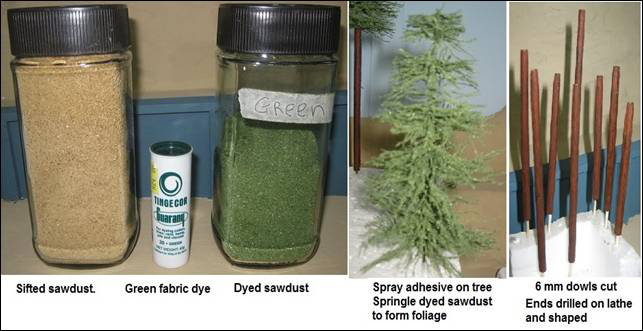
10. From the local woodwork or DIY shop get a bag of sawdust.
11. Sift the sawdust using a fine (flower) sift to remove any large pieces to get fine sawdust.
12. Mix some green fabric dye in water into a glass bowl.
13. Cover the bowl with a piece of cloth and then press it into the dye.
14. Add some sifted sawdust into the dye in the cloth. The cloth is used to get the coloured sawdust out. You only do it once without a piece of cloth then never again.
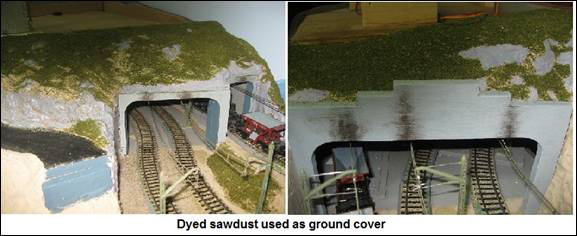
15. Put it out in the sun to dry. Different colours of sawdust can be used as ground cover.
16. Once dry put it into a shaker to sprinkle it on trees etc.
17. Spray the formed tree with spray adhesive and then sprinkle the coloured sawdust over it.
18. Make sure that you sprinkle over an open container to catch the excess sawdust.
19. Once done I lightly re spray the tree with adhesive to lock the sawdust into place.
Making pine trees for a model railroad:
20. To make the tree trunks I use a 6mm (1/4”) dowel cut into short lengths.
21. Drill small holes into both ends of the dowel. I use my woodwork lathe for this.
22. Shape the one end into a taper using a file and the lathe.
23. Use a rasp file or wire brush to scour the trunk length wise.
24. As a base, paint the trunk using Burnt Umber acrylic paint.
25. Use white PVA glue to glue a small nail into the bottom of the trunk. Helps with installation.
26. Trim the bottom wire of the tree to length and then glue it into the top of the trunk.
Regards,
Louis.”
A big thanks to Louis – it reminded me of Boyd’s excellent tree post:
“Just a reminder that it’s not too hard to come up with makeable things to save money on a RR platform.
On S.S. It would be hard to come up with the $$ to purchase what is needed. So I have been making most all of the scenery.
To go along with old time theme’s, I have made houses, and shops out of painted boxes. Log cabins out of dowels. And green painted wide popsicle sticks glued to cardboard for a roof. I live in the South, so I picked a bag full of Spanish moss, boiled it for 20 min’s. to kill germs and bugs. Expecting to chop it up in a food processor today for ground cover.
Made 2 wooden tunnel entrances and of course the mountain is still in progress. Also, I have made a RR bridge, and expect to make a covered bridge out of painted black popsicle sticks. With the sticks glued in x forms, I glued 2 cat food cans together, wound green wire around twice and tightened to look like cables, all to be a water tower. Black paint plus other colors does wonders to change the appearance of many items.
Also I was looking at bushes in the area, (Don’t know what kind?) but they look like pine, or spruce. On the tips of each branch they came to a point and looked just like small pine trees. I broke off a good number that will never be noticed. Already a darker green, I painted them a green I wanted, then sprayed with clear laquer to preserve. Hopefully they will not turn brown and fall off. These became a lot of free pine trees.
Most things you would want on a platform can be made with a little ingenuity. And popsicle sticks!
William”
“Dear Al,
I would like to add a small suggestion for scenery ‘stuff.’
I recently was in a situation where I needed to sharpen a bunch of pencils (~50). As I was about to empty the shavings, I stopped and looked and thought that the shavings would be excellent material for a layout. It’s dried, natural, and has that random curliness that can bring some realism to an area.
I know many people don’t use regular wood pencils anymore, but if you know a teacher or other organization that does, you could ask for them to save the shavings for you over a period of time. Voila, free material!
You could use as-is without painting or add paint or mix it in with other material as you see fit.
Also, shavings of the graphite part of the pencil would be great coal dust or weathering powder.
Enjoy!
Love all the good info shared on this site. Thank you to you and your contributors!
Susan”
“Hi Al,
a quick update on my new layout, after been on holiday for 2 weeks afraid not a great deal done, but least getting one side of the layout looking more like a railway again
Louis has been in touch – he’s very cleverly ‘created’ a Marklin analog transformer:
“Hi Al
I am 65 years old and been on retirement for the last two years in Cape Town SA.
About a year ago I started on my first layout that is in a 4 x 4 meter (13 x 13 feet) room.
The last layout I worked on was in the sixties with my dad and I still have all the trains and tracks of that layout. These are all Marklin analog trains from about 1956 to 1965.
The layout has three loops and each loop can run two trains independently. This is possible by using the centre rail on the tracks for steam and diesel locos and the catenary system for the electric locos.
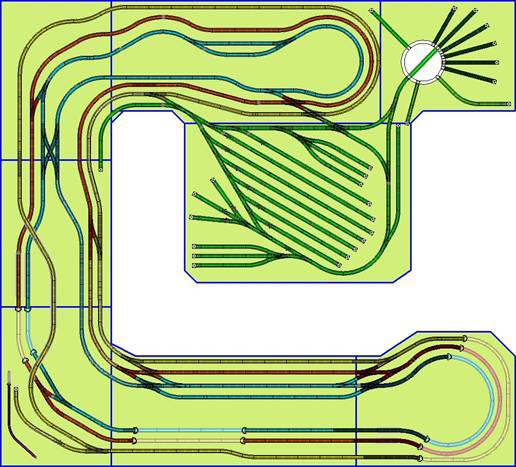
As everybody always want to see the track plan, I included it below. The layout is called CJH Junction in memory of my dad.
Because the trains are all analog AC and all turnouts and signals are electro mechanical I decided to keep the locos analog but use a computer system to control everything else. I am using the Adroit SCADA software that is used to control industrial sites.
It is even used in nuclear plants in Britain and by the Royal Navy. I am using it in the demo mode where there are 20000 inputs available for two hours before scanning stops. You only need to stop and start the server to have another 2 hours.
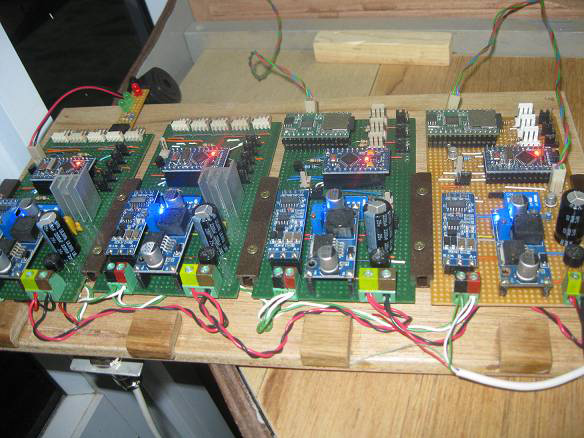
Interfacing to the layout, I had to develop electronics to control the turnouts and signals. These units are based on the Arduino Nano micro controller using software that I develop for these boards.
Below are some of the boards. The two on the left are multi input / output units and the pins are multi functional and can be programmed via the SCADA system. These include servo control, motor control, analog outputs, pulsed and latched outputs and sensing inputs.
The two units on the right have 6 digital controls and a MP3 player module. The one is used to play disco music at the town’s hotel and the other music at the church. The first song of the church is a single bell ring.
The SCADA system control the bell, ringing it the hour number on the hour and once on the half hour. I use the ringing of the bell to tell me the time when I am working in the workshop next to the train room.
There are other types of boards implementing other functionalities; these are railway crossing controls, keyboard inputs, traffic signal control and pedestrian crossing control. Power to the boards is 18V AC when controlling turnouts or 13V DC or above when 18V AC is not nearby. All DC voltages needed for the boards are generated on the boards, eliminating the need for multiple power supplies.
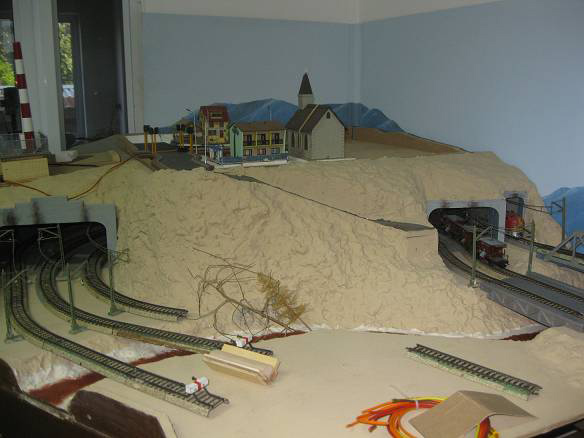
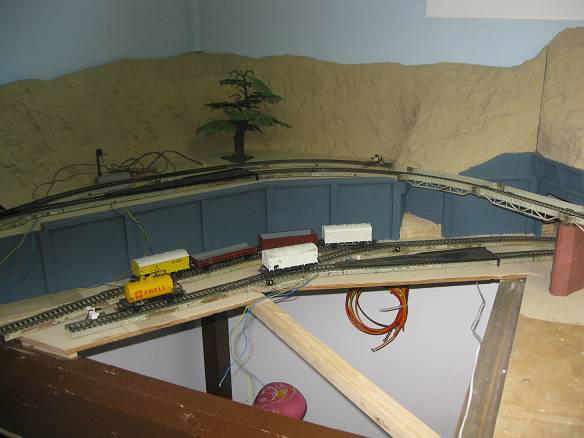
Below are some photos of the layout for my Marklin analog transformer:
Table 01 with town on top of mountain – Right bottom of track plan
Table 03 with planned mine where the tree is. – Left bottom of track plan
Table 02 – Back part between tables 1 & 3. The front section will be the station.
If anybody wants more information or questions on my Marklin analog transformer, I will gladly provide it.
I have also put together a quick How To make pine trees if anybody is interested. I estimate that it will cost me about 5 dollars or less to make about a 100 trees.
Regards
Louis”
“Hello Al,
Like so many model railroaders I have decided to pick up the hobby in my retirement years.
As an adolescent I had a Lionel .027 layout but it was little more than one big oval with a side track or two and my Dad took care of the wiring issues. Later my son’s and I had an HO layout, but again it was a large oval with a couple of side spurs so I had no issues with the wiring.
Now that I am retired I wanted to rekindle some of the creative aspects of my personality and model railroading seemed like a good way to be creative. Two Christmases ago my wife gave me a Bachmann N gauge starter set, but a simple oval simply was not going to be sufficient. Thankfully my loving wife of 44 years is also very creative and she liked the idea of modeling a train layout so she did not object too strenuously when I started buying more track, engines, cars etc. Today I have a layout that is approximately 4ft x 7ft with four ovals nested inside the other.
Early on I found your blog and I have learned a great deal and enjoyed watching the videos from so many of your contributors. I purchased your e-publications and I have purchased a fairly large number of the paper buildings. My layout does not represent any specific line but it is geared towards an old west theme and many of the paper buildings work very well for my model. My wife and I very much enjoy watching Jim (I hope I have his name correct) do his tutorials on how to construct and customize these structures, he is a character and we like him very much!
The problem I am having is with the wiring of my switches. I have power controllers for each loop but I don’t really understand how to isolate each loop to it’s own control/power box while allowing the train to change from one track line to another. I know how to power the switch control but the use of insulating rail connectors and maintaining polarity eludes me. Can you or one of your contributors help me learn how to do this correctly?
Thank you for your help. Just for the record my wife and I retired six years ago and we down sized considerably. This is why I went to N gauge because it accommodates my ambitions while fitting the space available. We live in South Carolina (obviously U.S) in Murrell’s Inlet, about a mile as the crow flies from the beach. I can sit on my back porch, sipping my tea, and hear the waves on the beach. Life is simple and very good, mid-November and I am still wearing shorts and a T-shirt! Gotta love it!
Ed”
A huge thanks to Louis for sharing his Marklin analog transformer – my word, there is some clever stuff going on there. And yes, Louis, we’d love to learn more about it.
And who can help Ed? It’s a question that comes up a fair bit in my inbox.