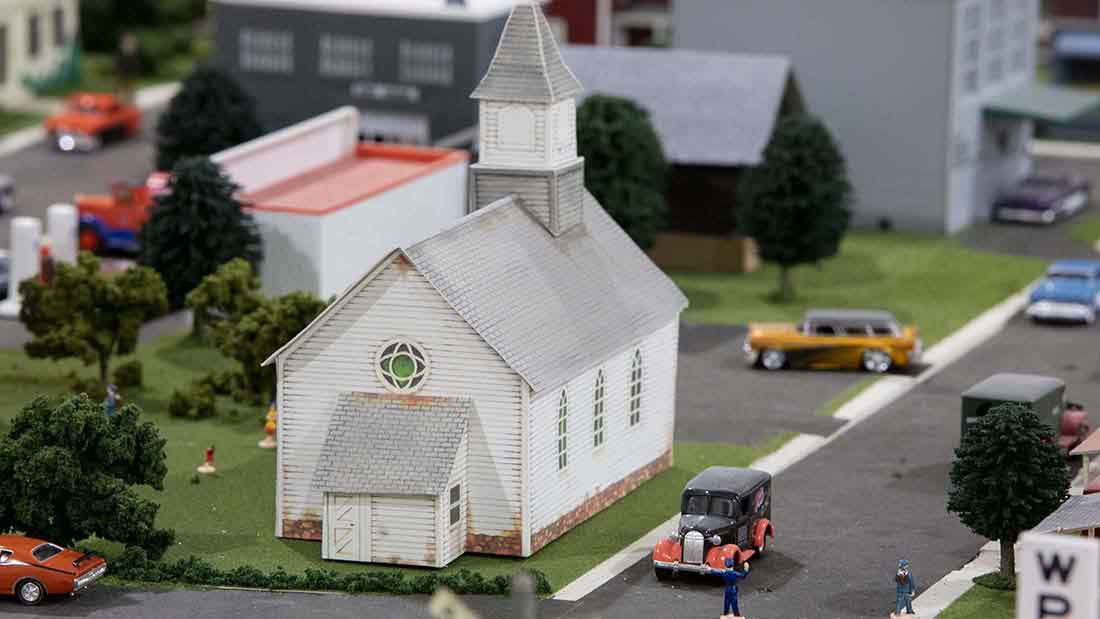
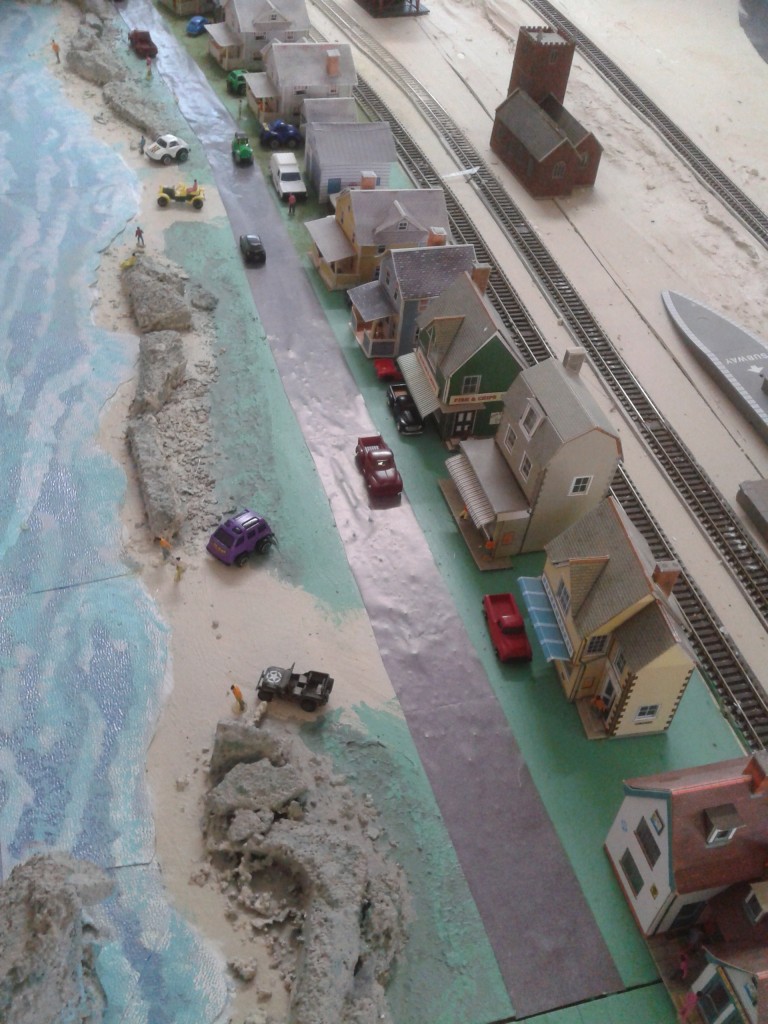
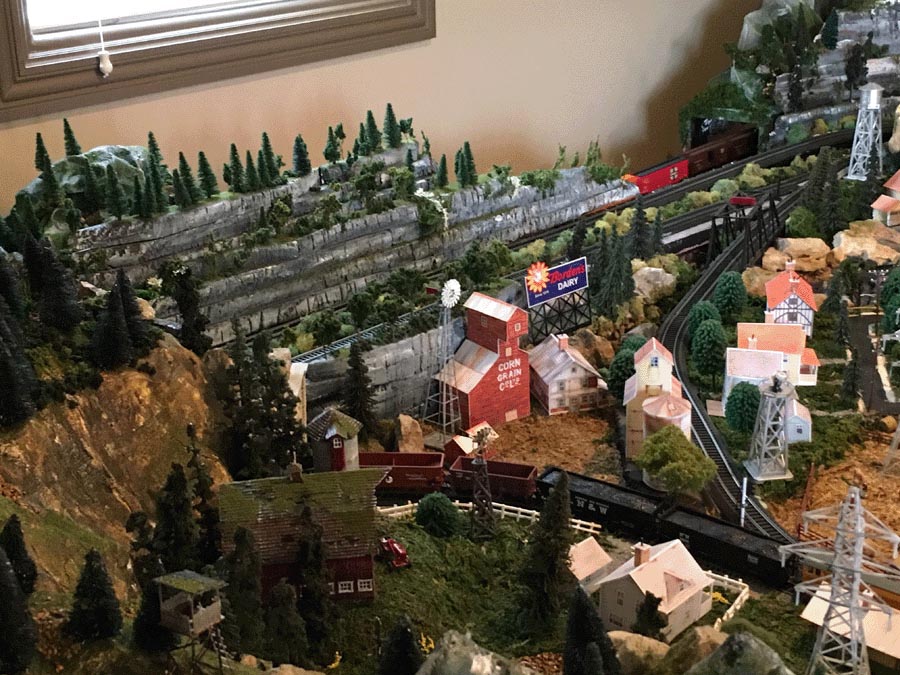
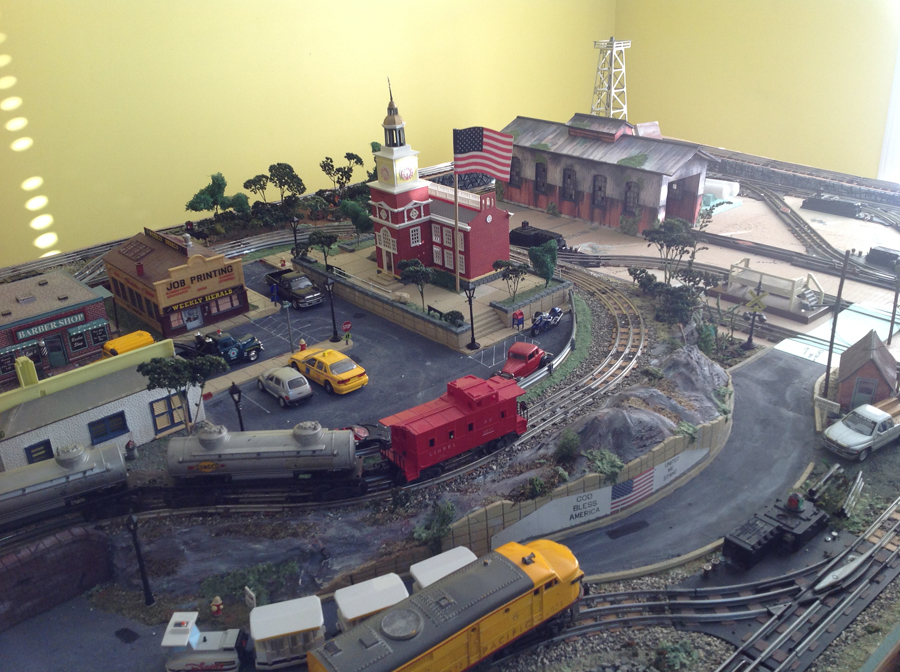
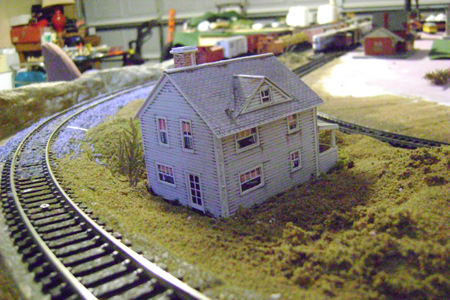
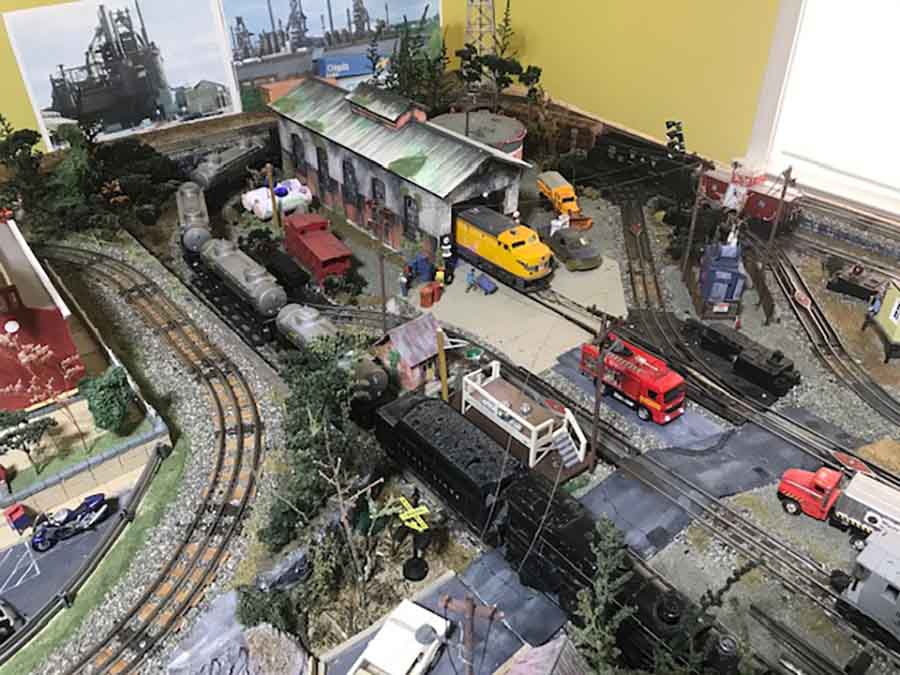
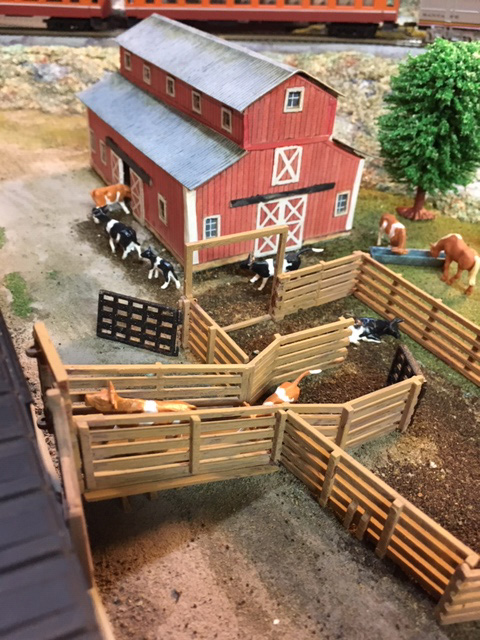
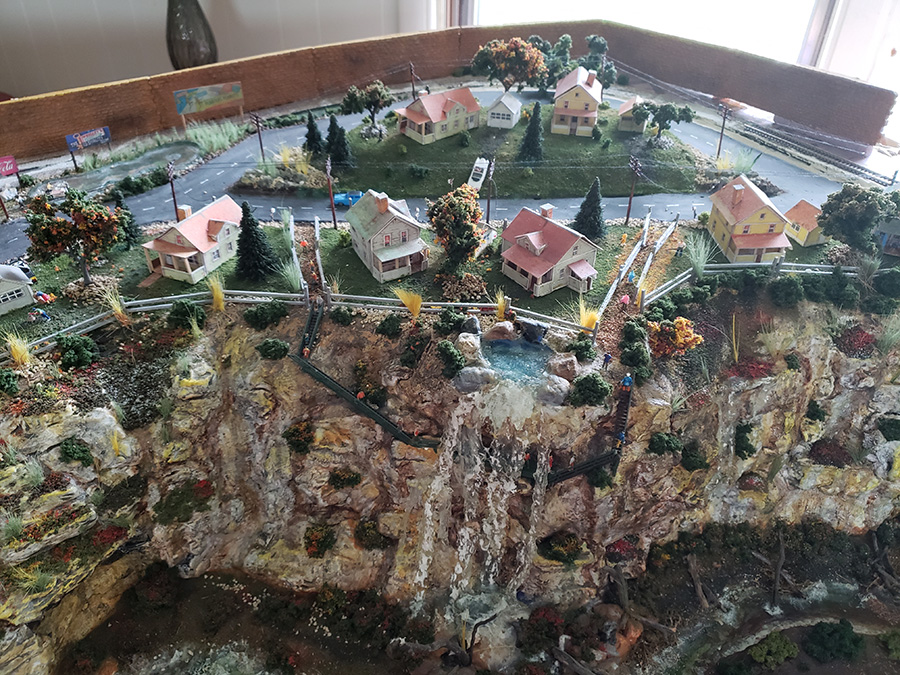
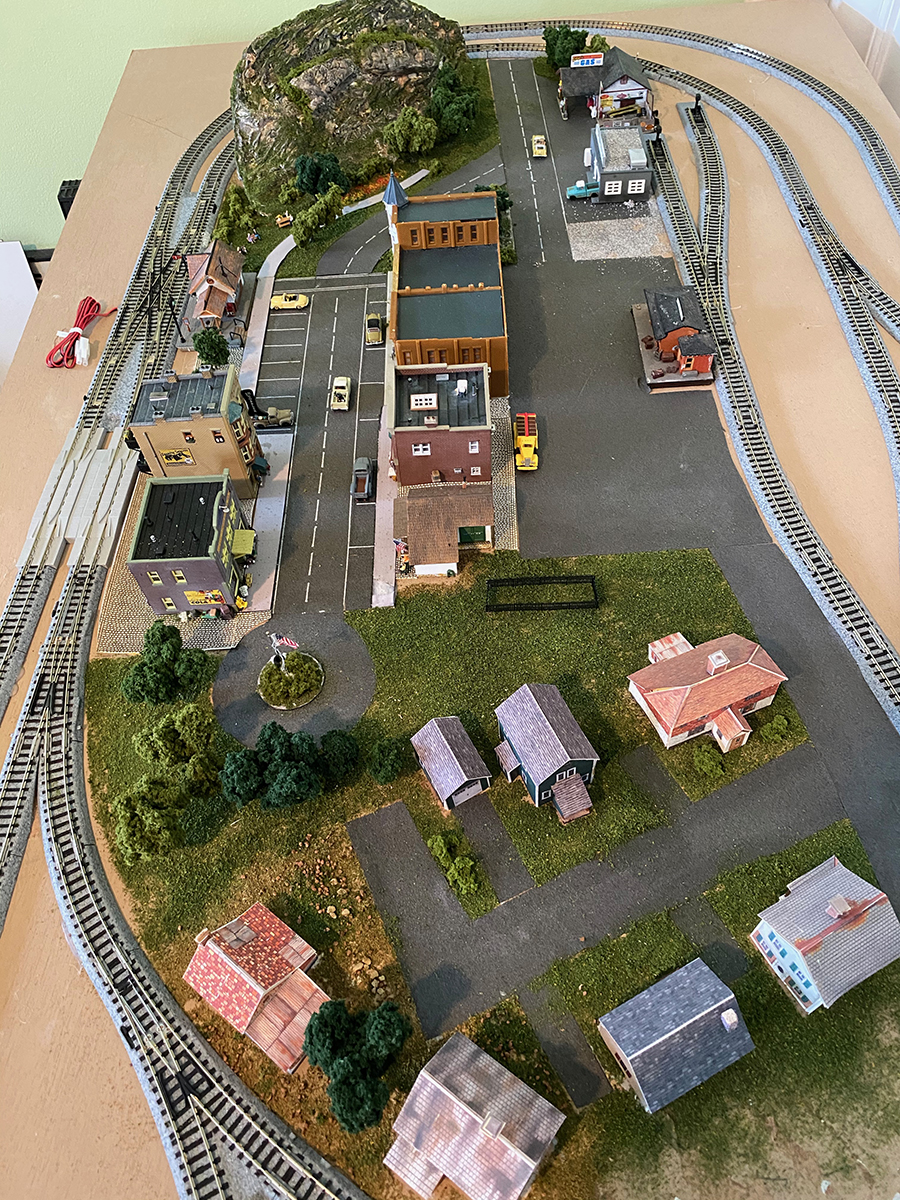
N-scale layouts

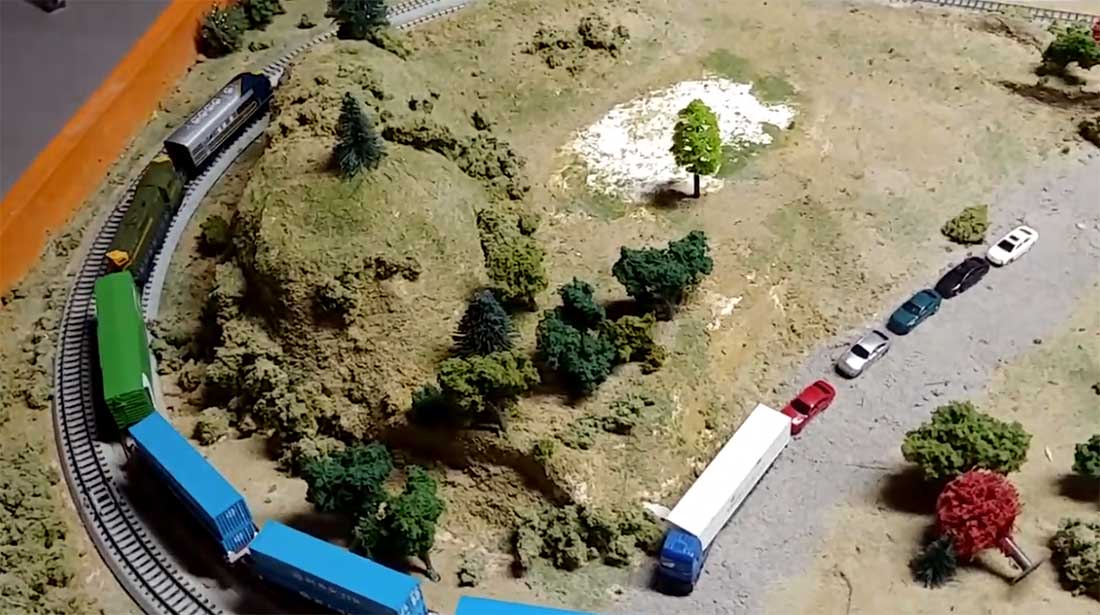
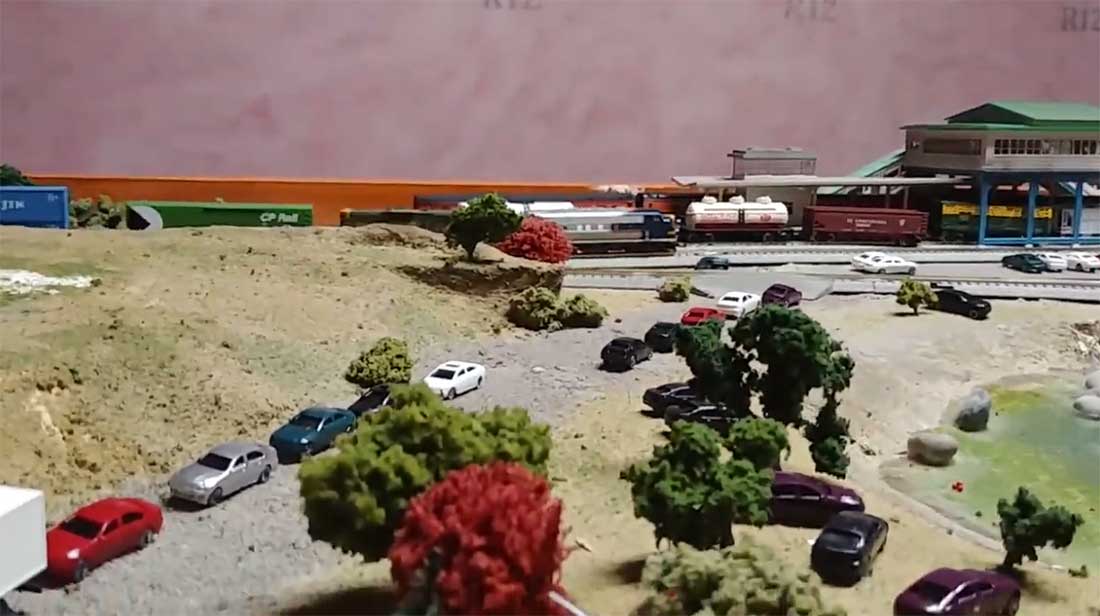
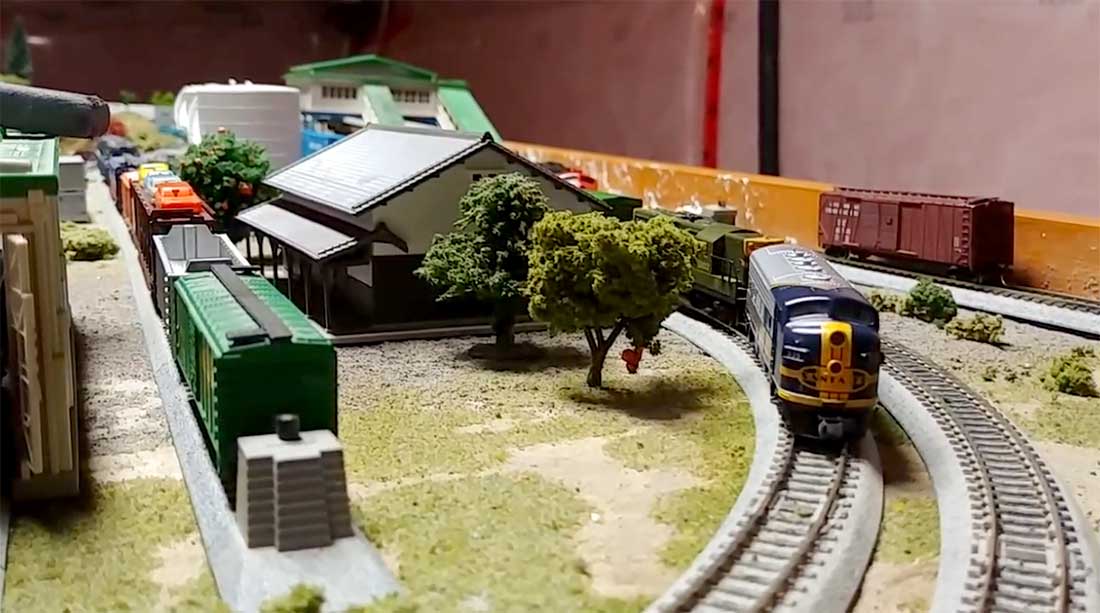
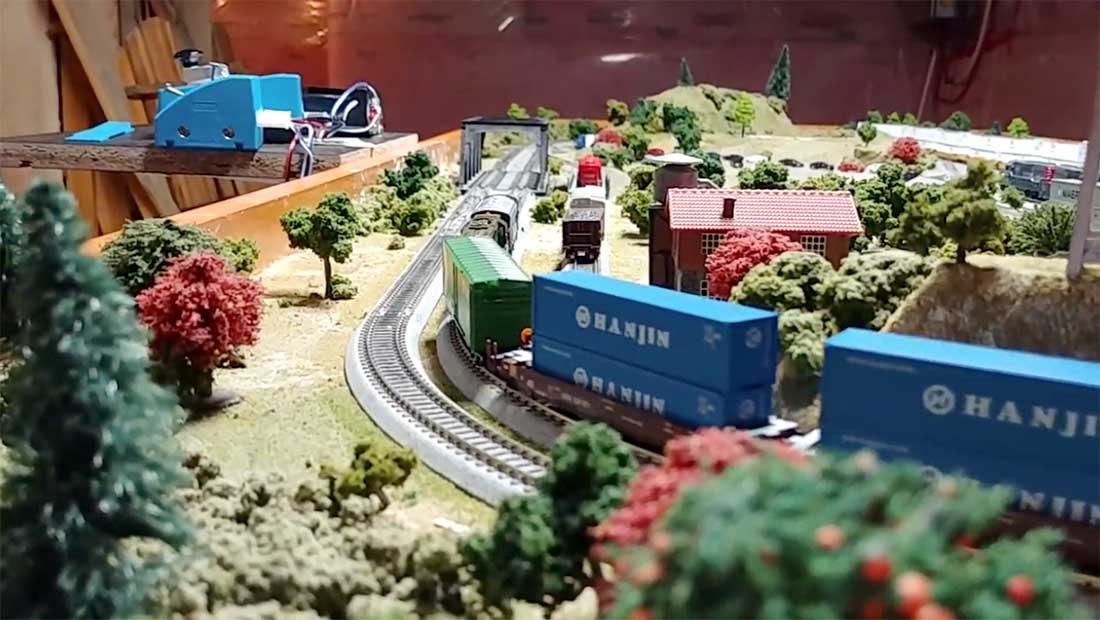
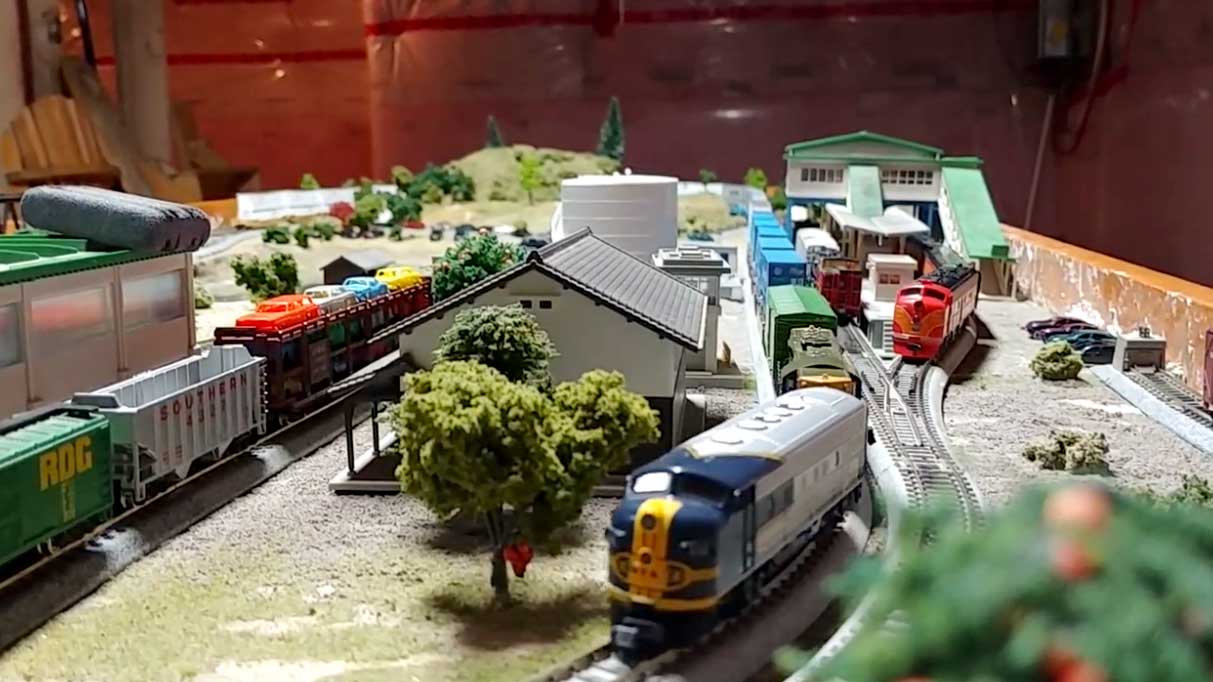
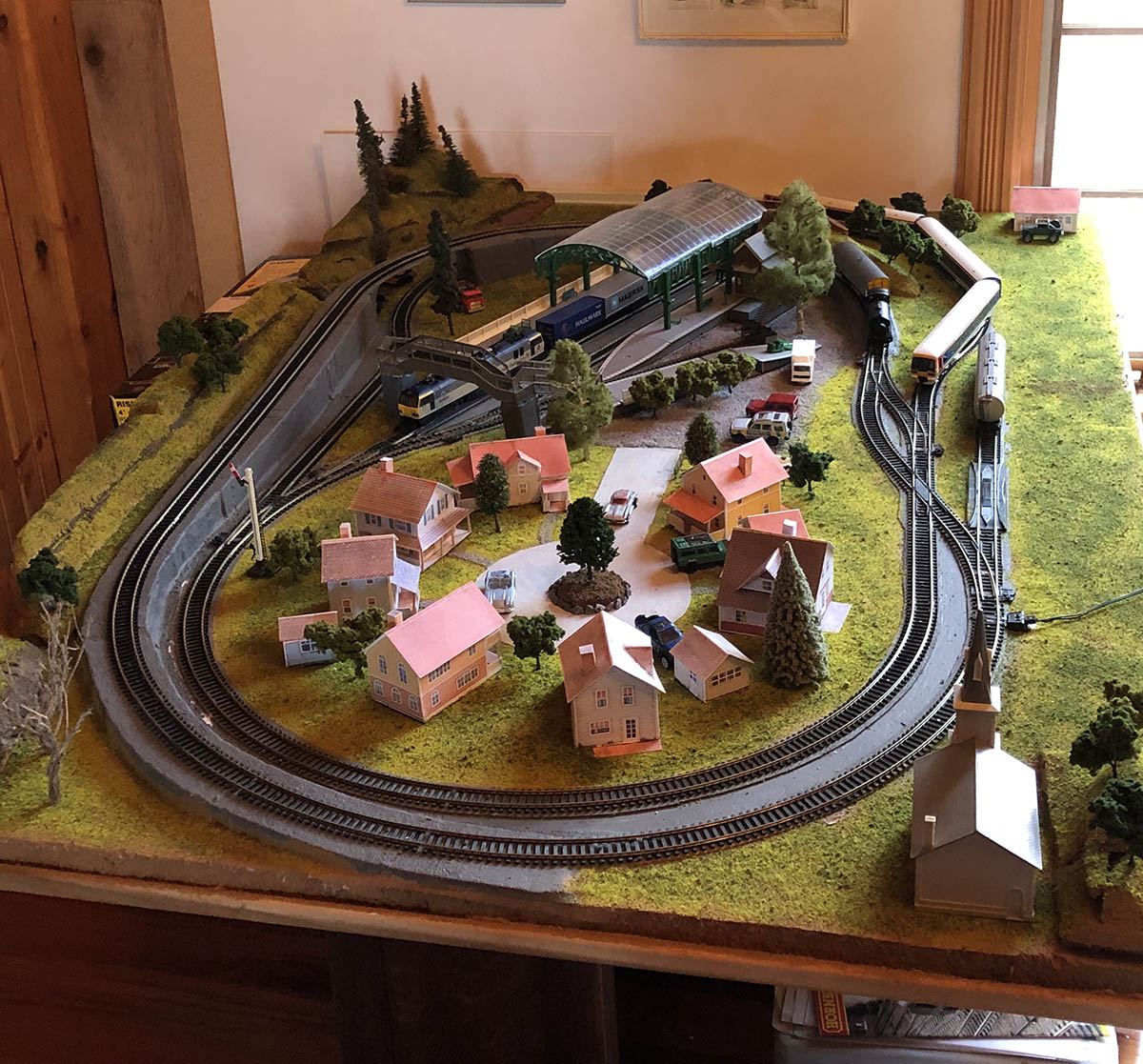
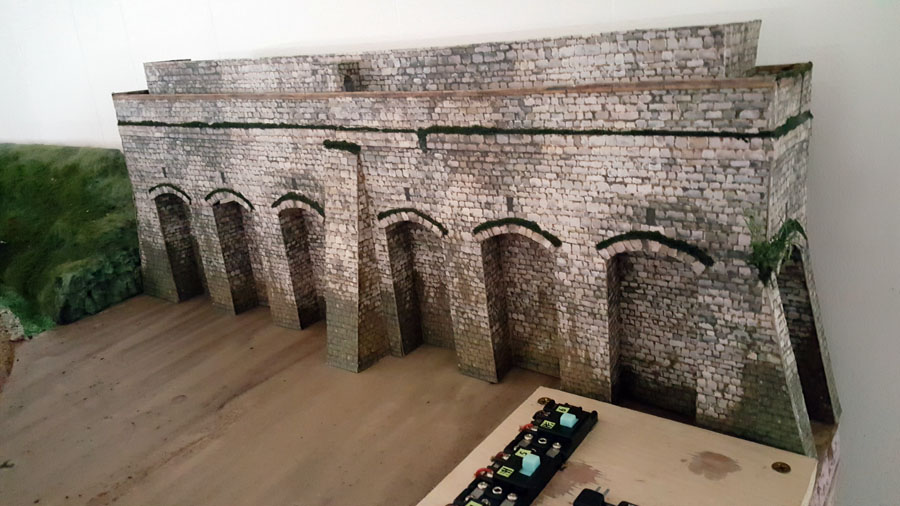
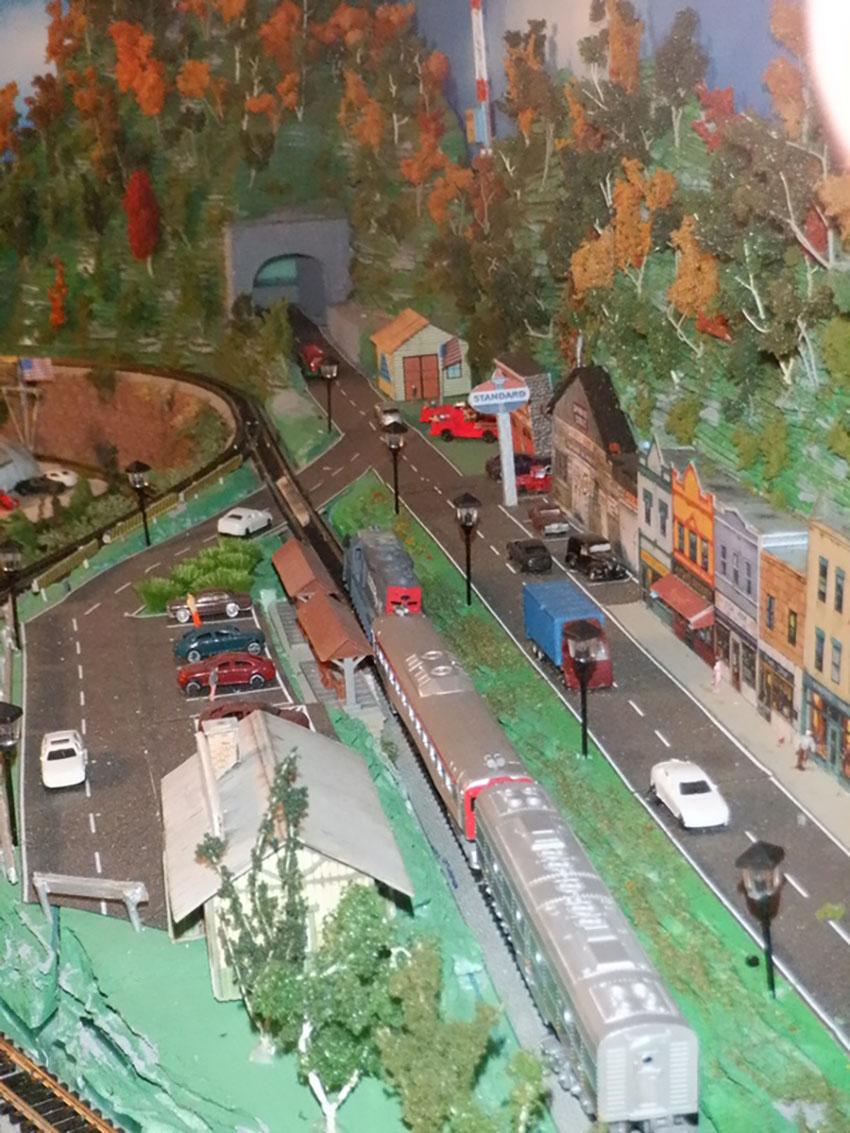
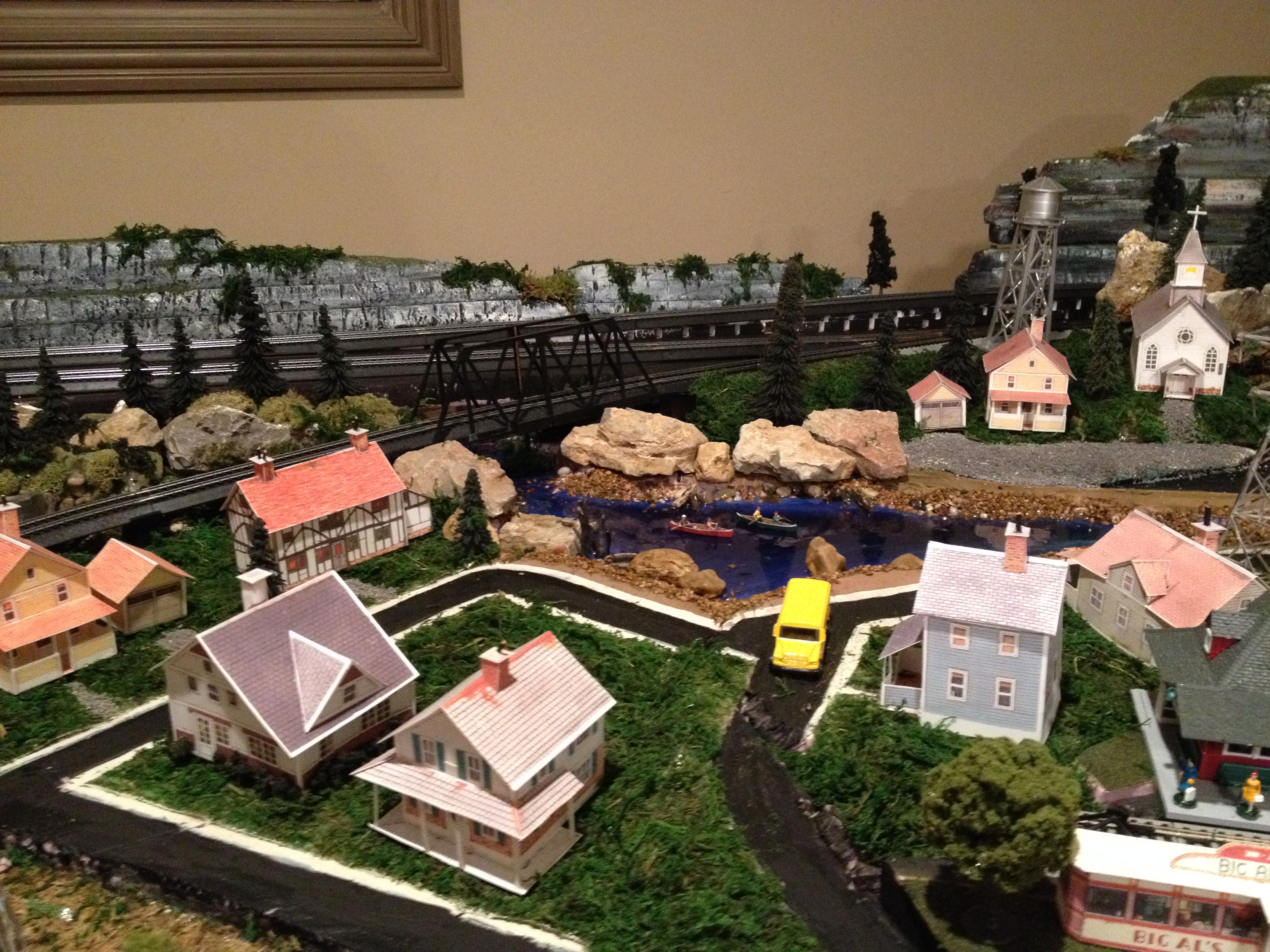
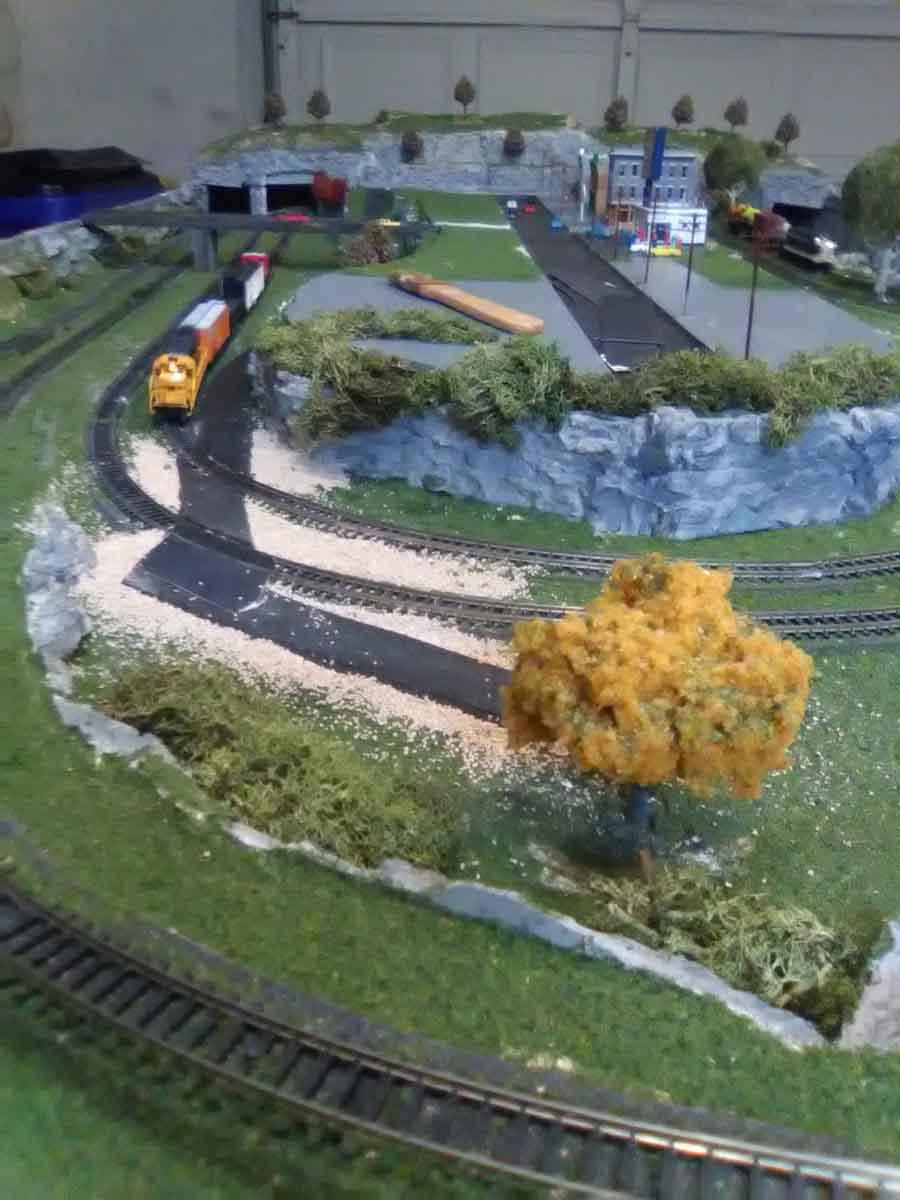
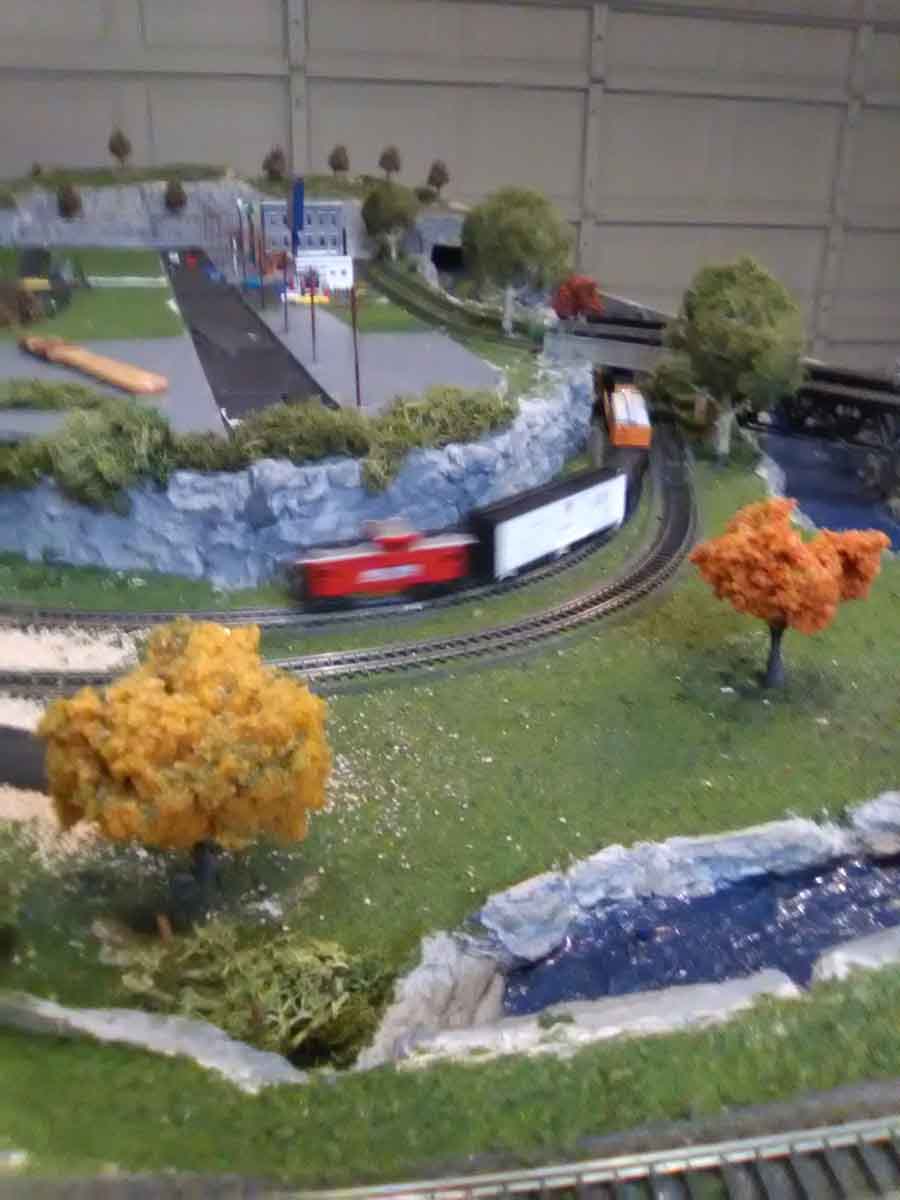
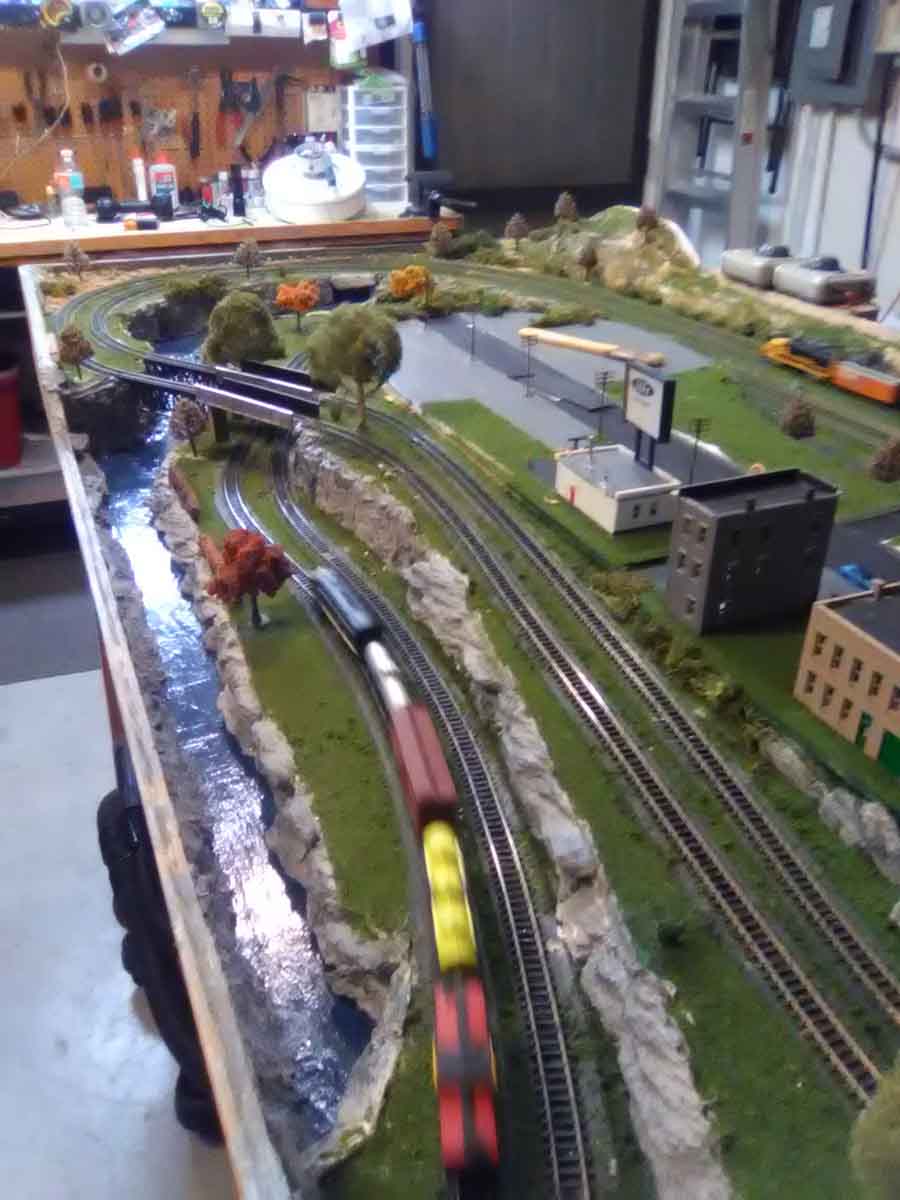
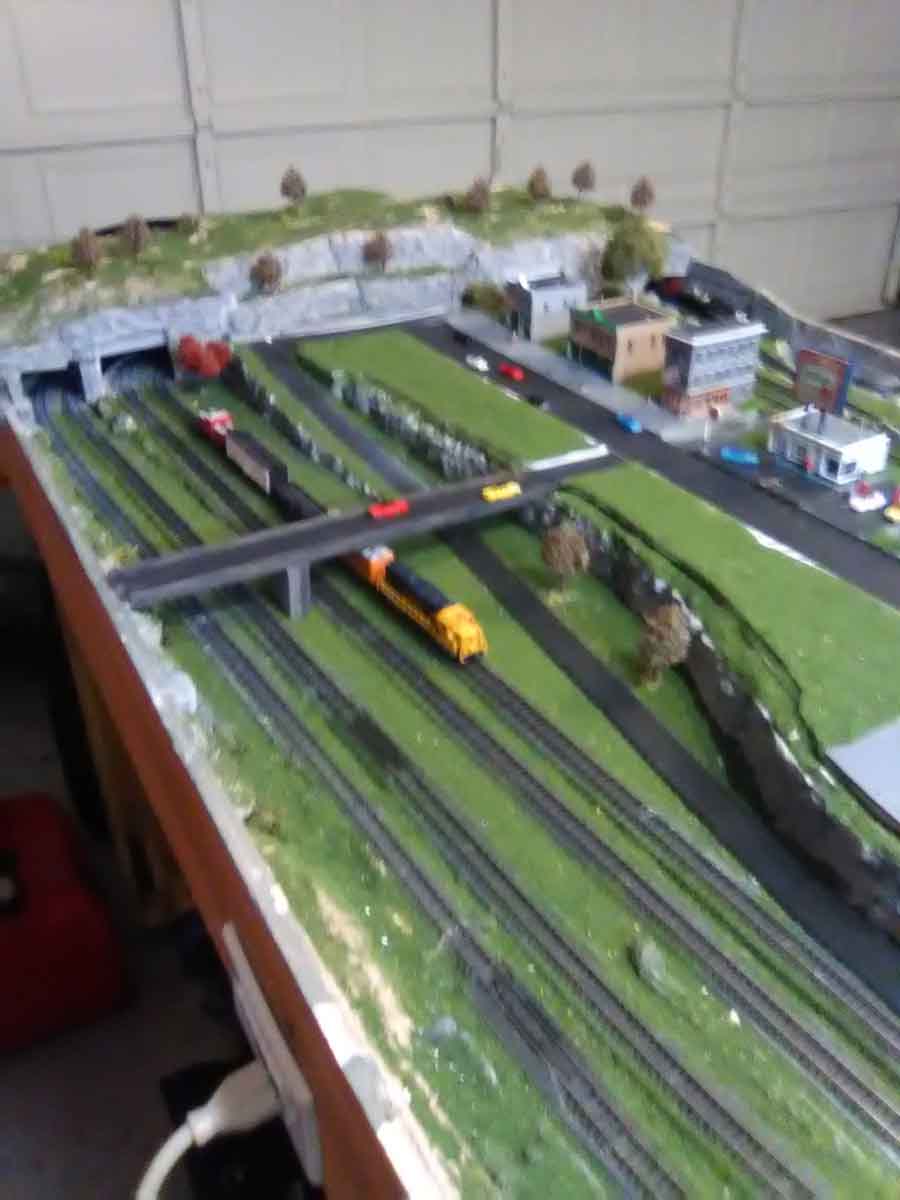
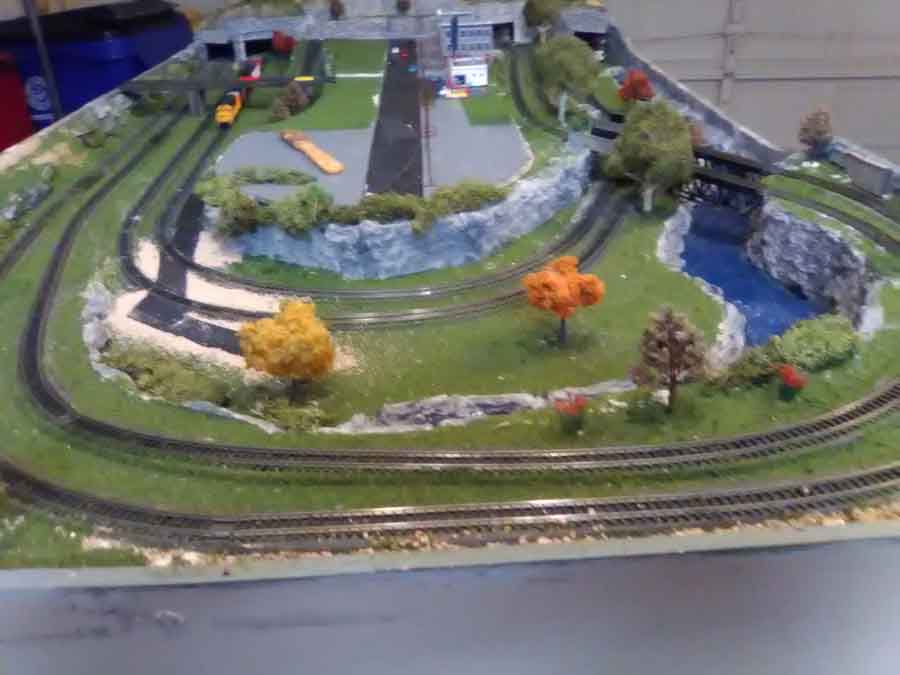
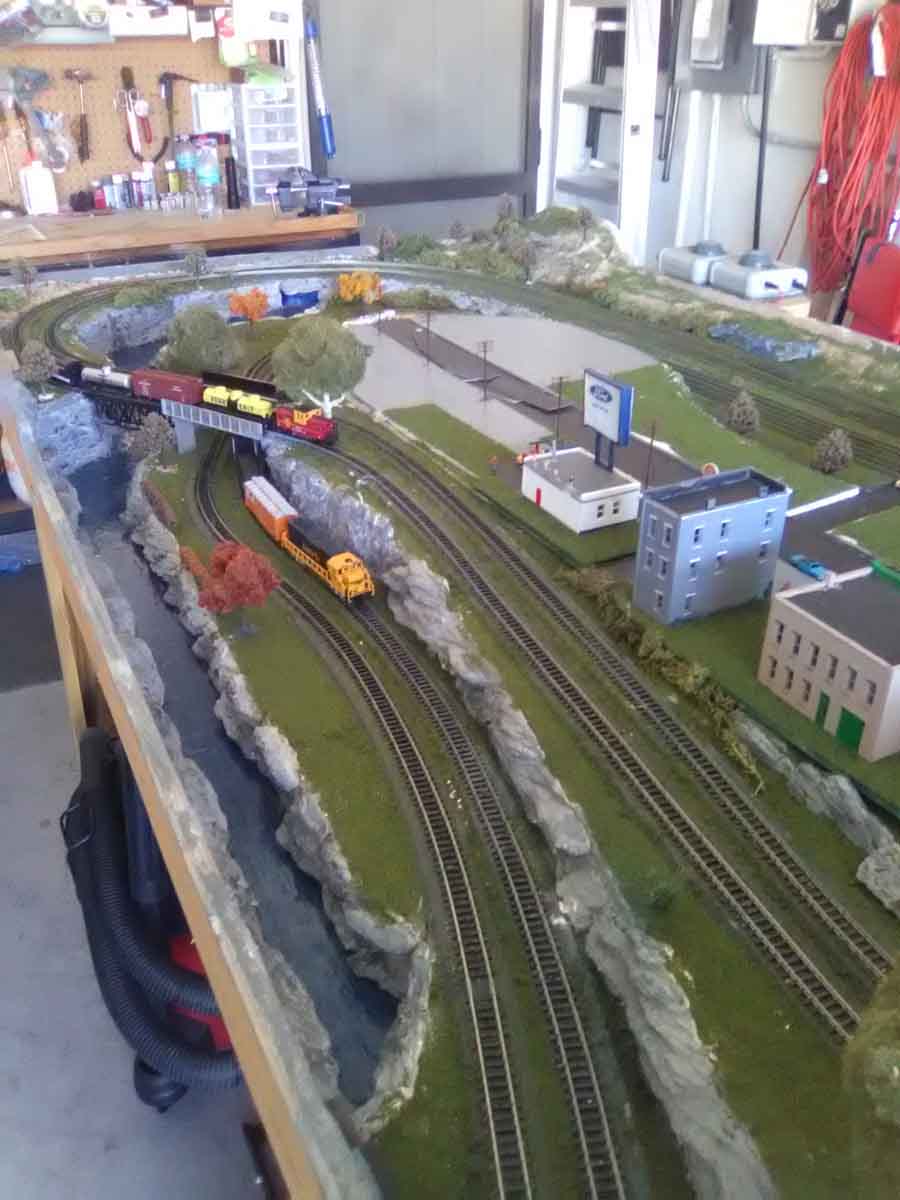
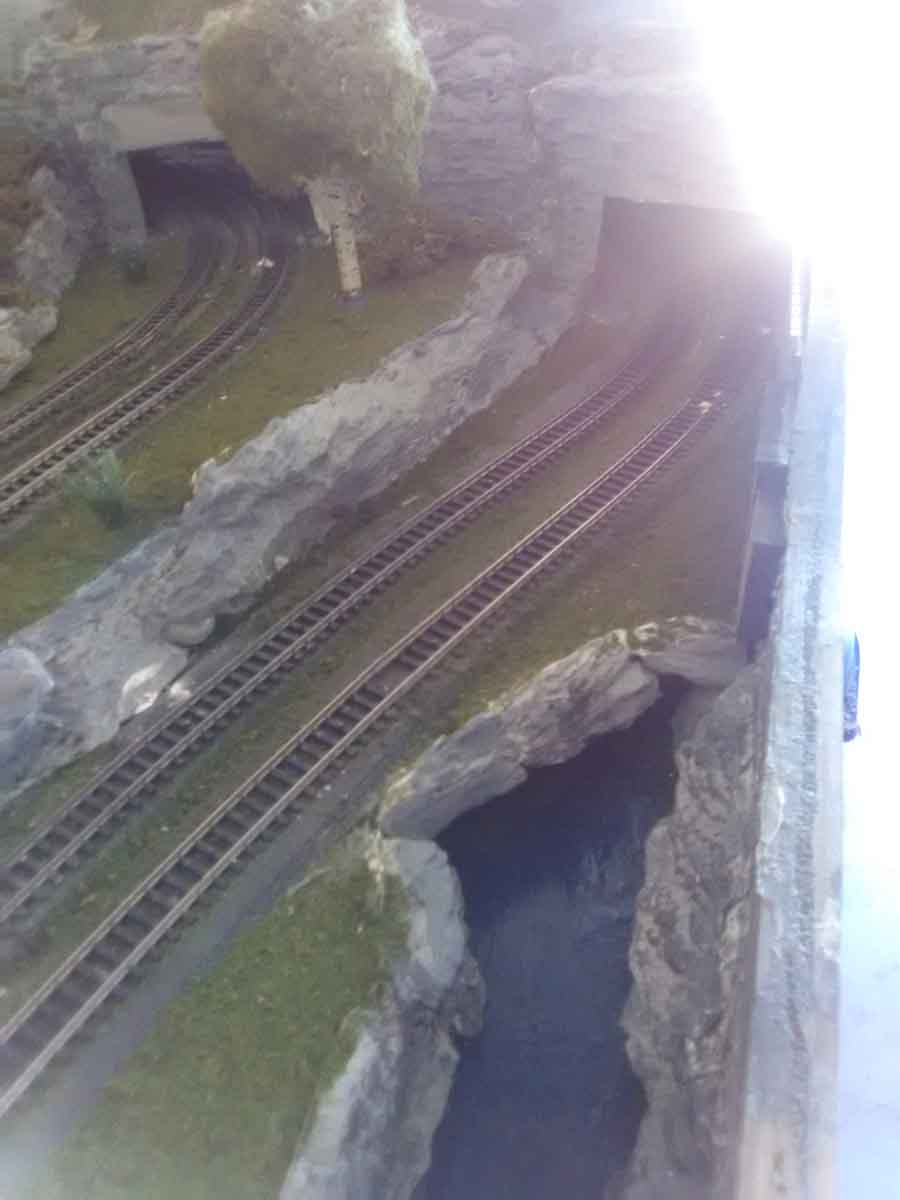
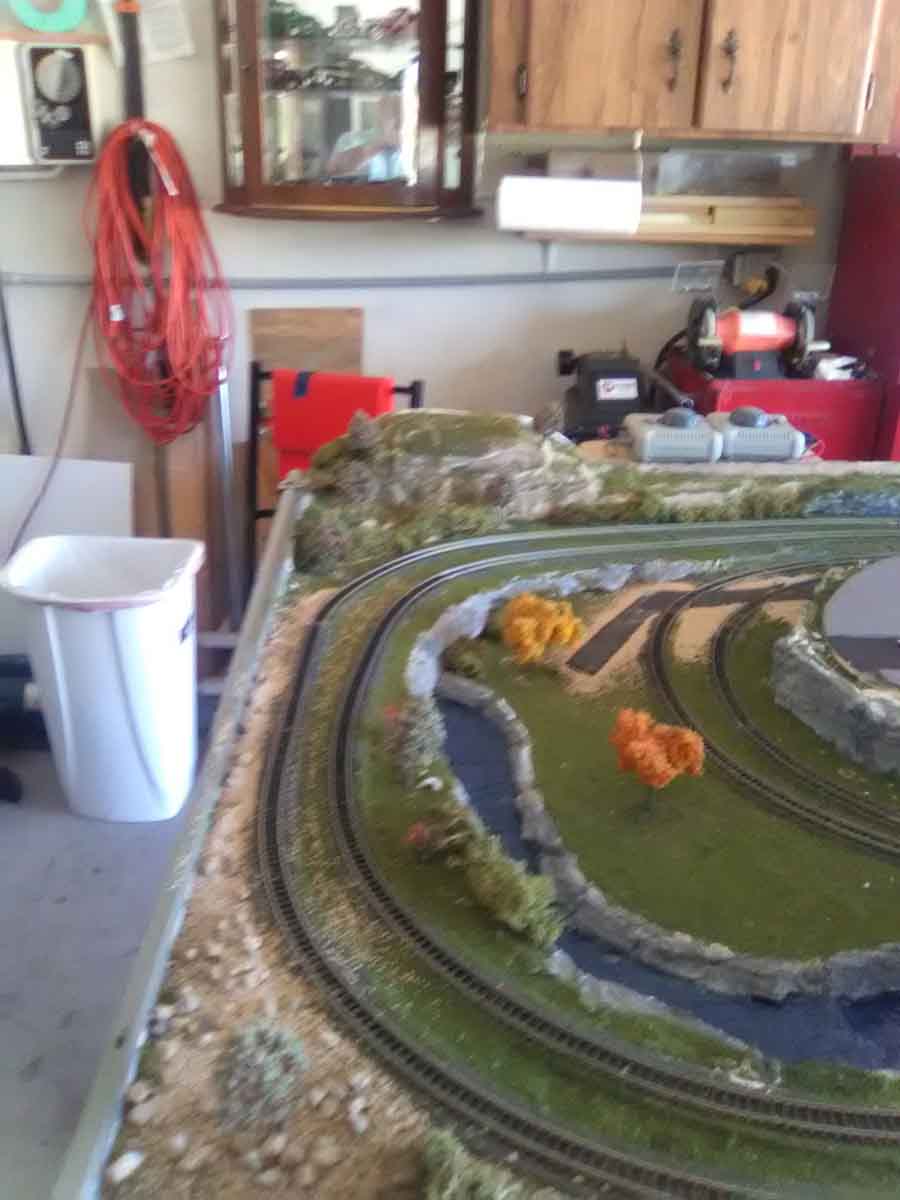
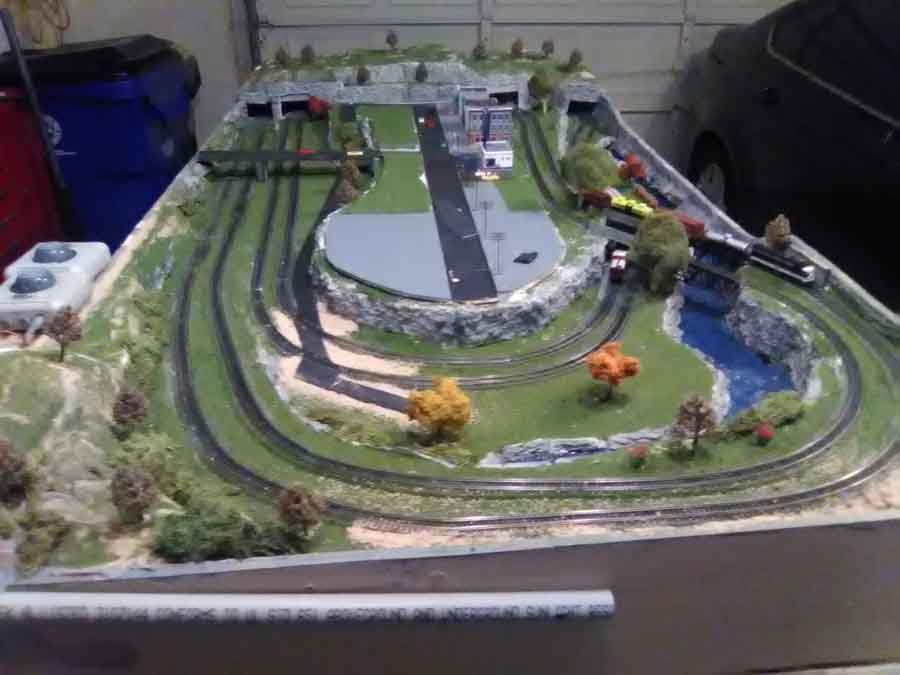
Wayne’s been in touch added to the n-scale layouts on the blog:

“Just call me the Conductor of the Landen-Meyer Railroad.

Landen is my soon-to-be four year old autistic grandson, who, like me, lives near trains, and we hear and see them often.

I decided a few years ago that, since I had time (trains are for 14 year olds, I hear?), I would get started early.

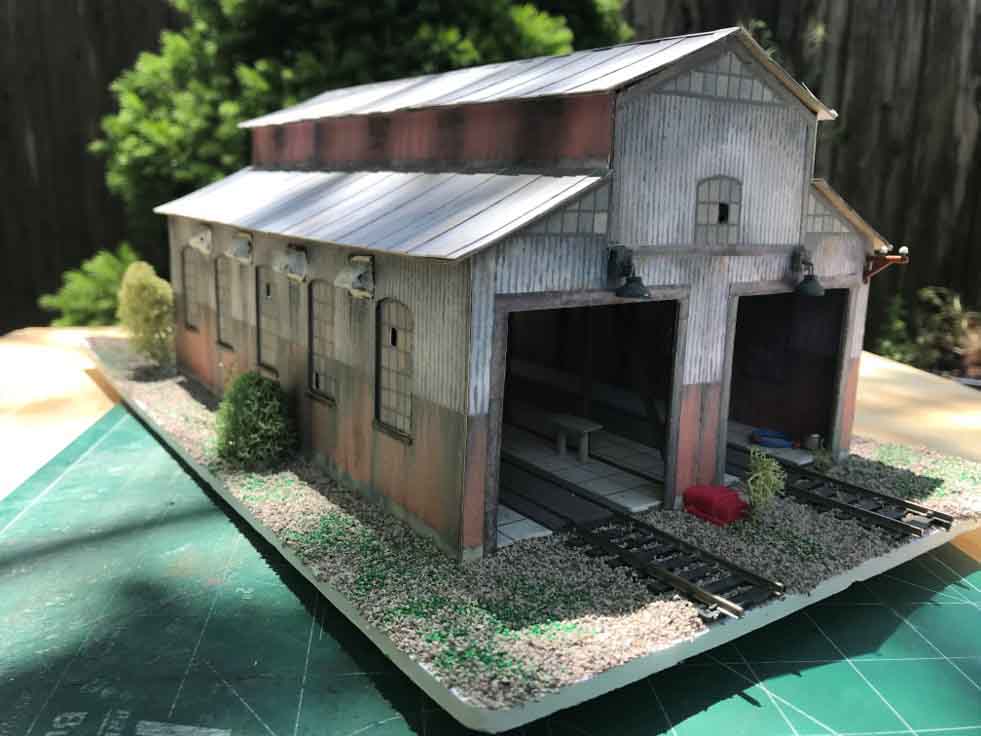
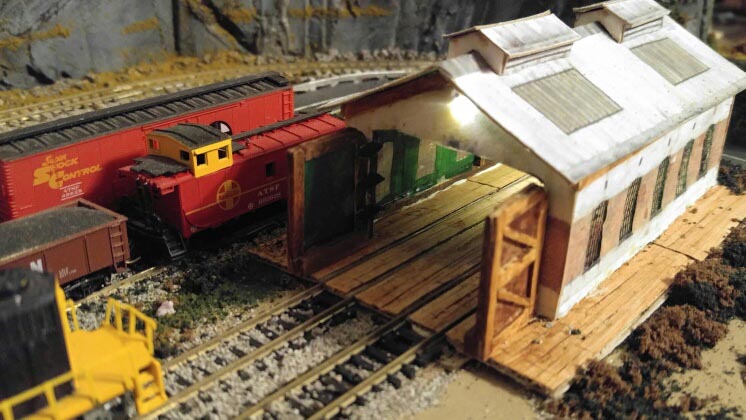
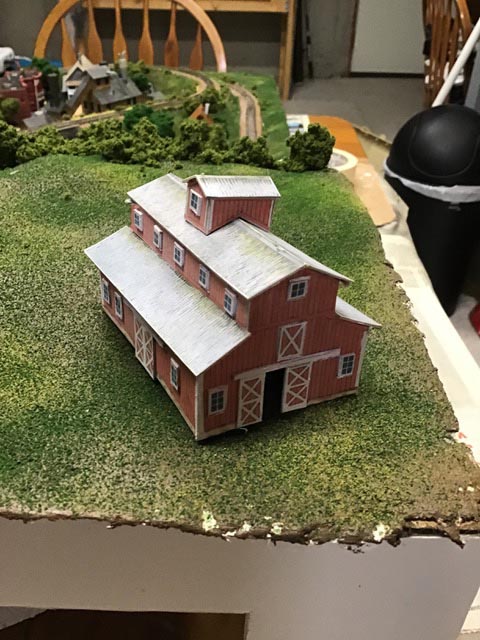
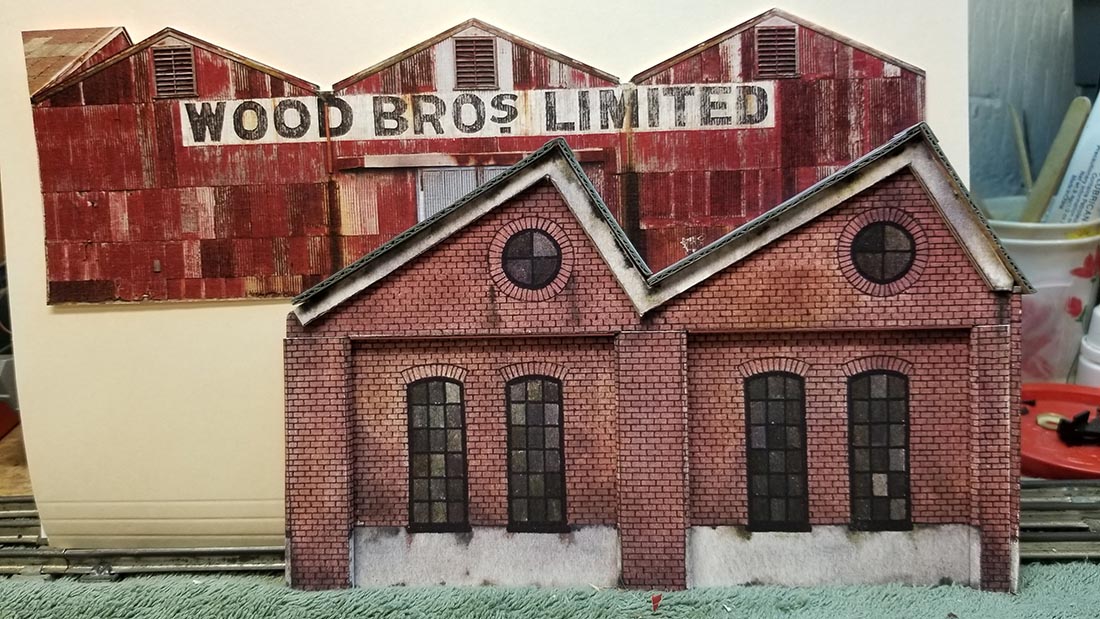
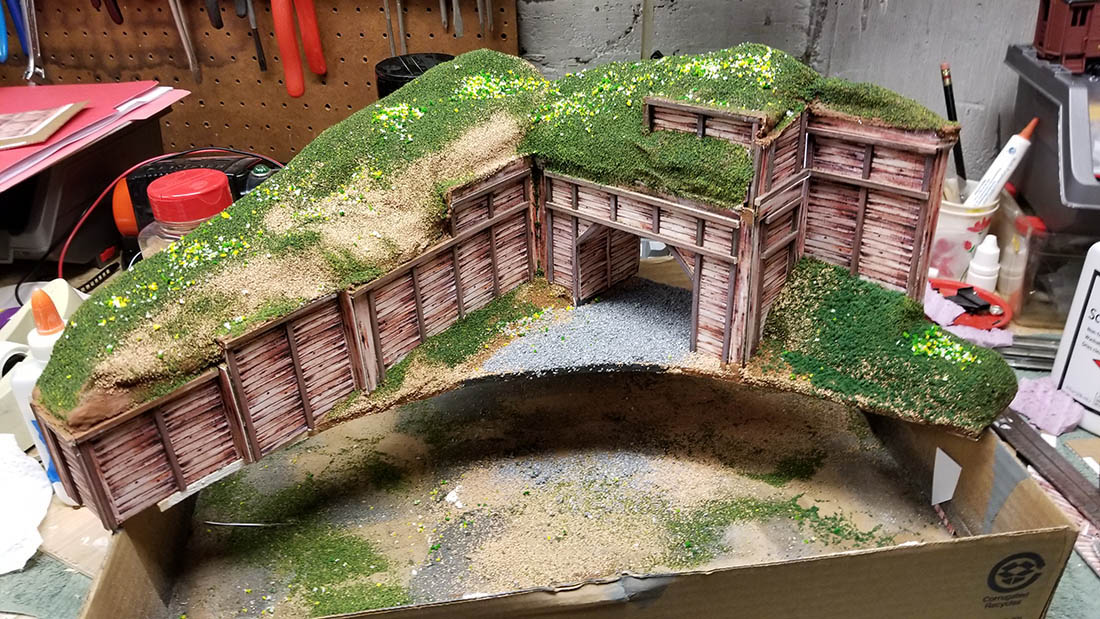
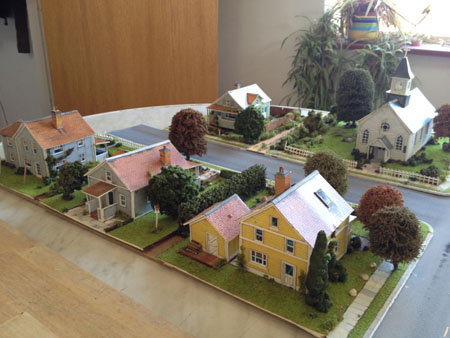
So, I began to spend time making content for an N-scale railroad. Several hundred trees, buildings, outhouses, a bridge or three are under construction.

Also, since I had no prior experience doing a model like this, I began doing little studies.

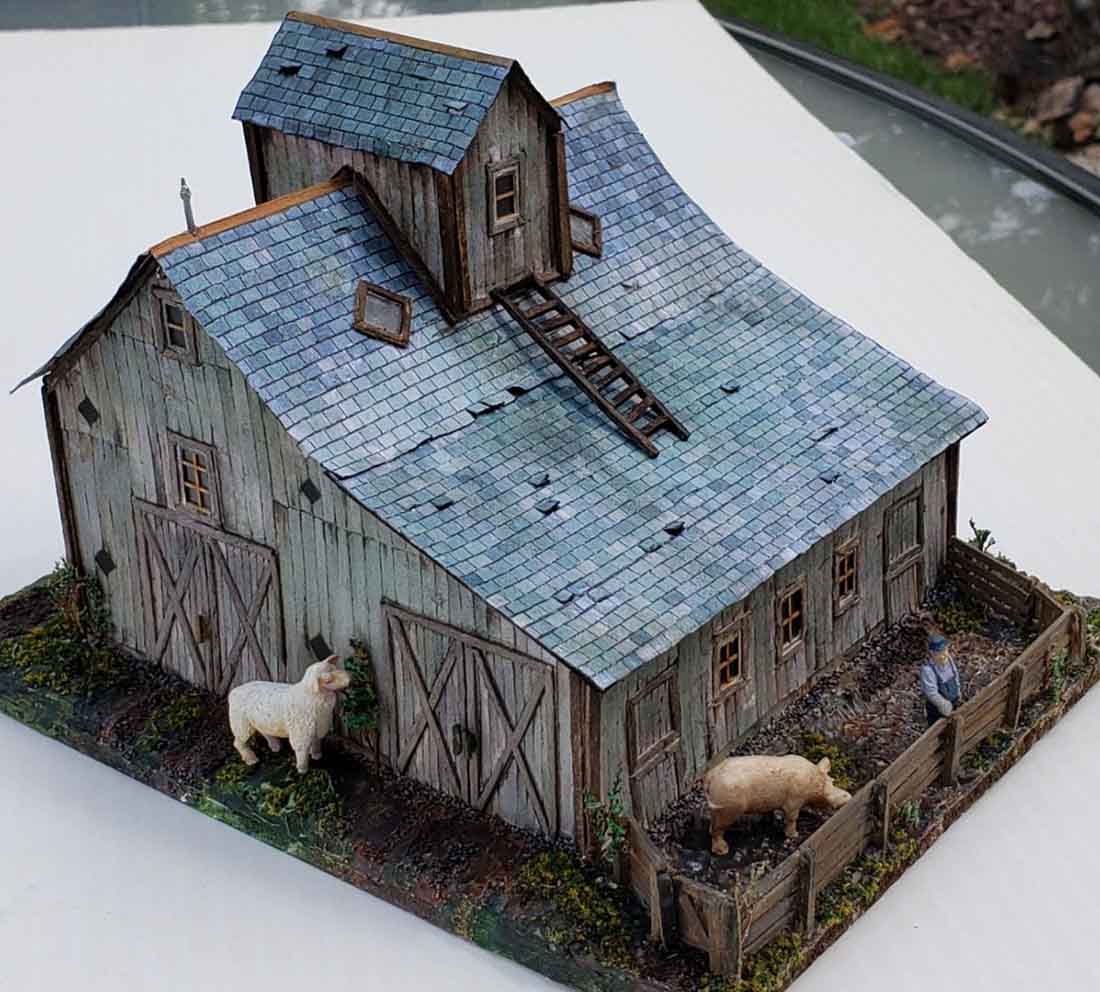
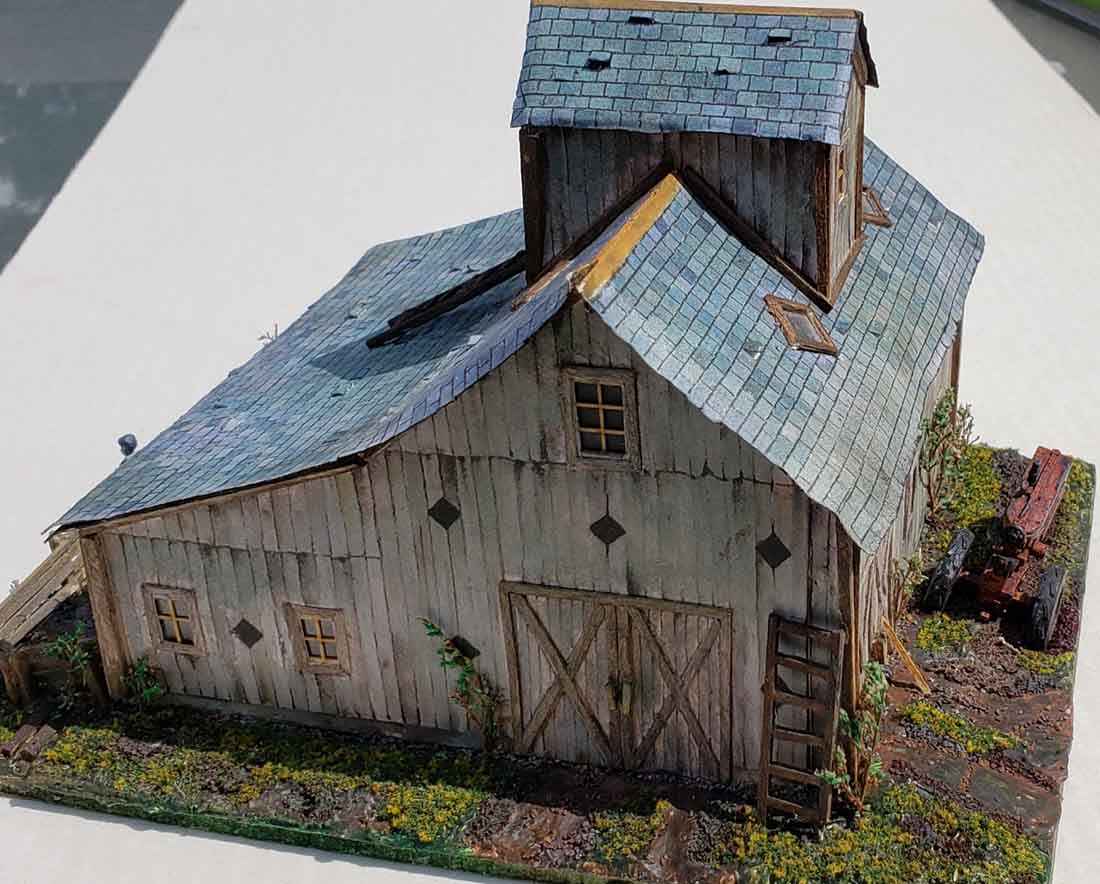
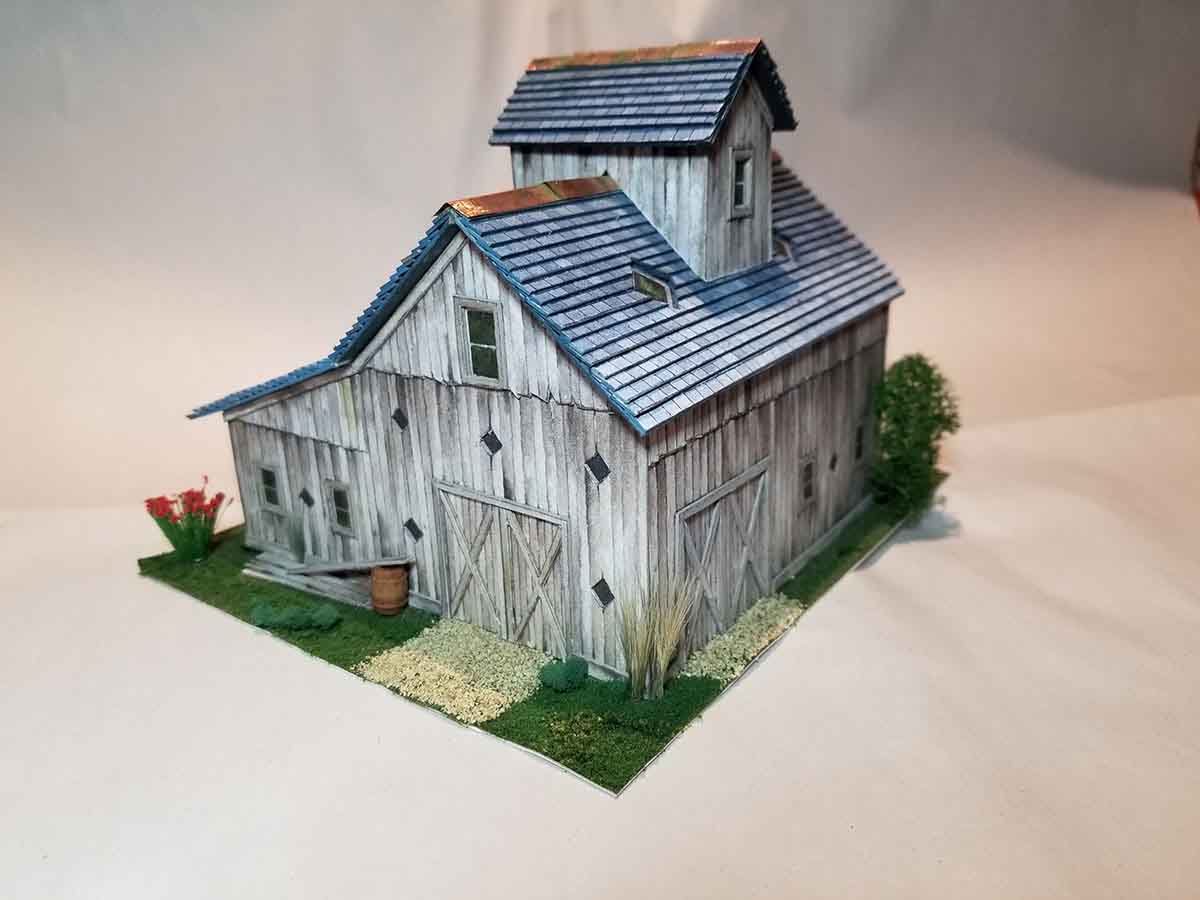
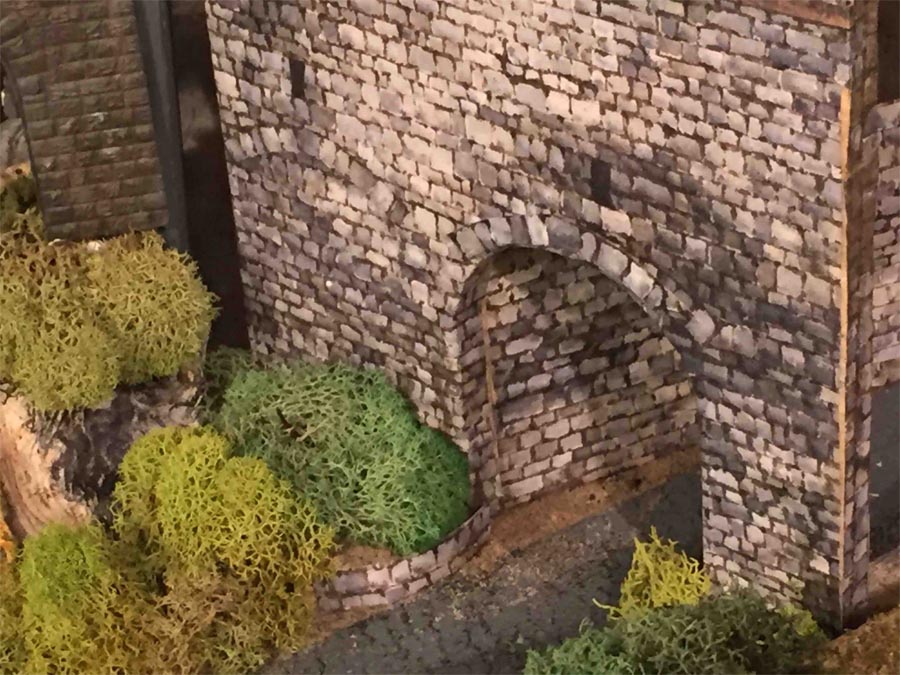
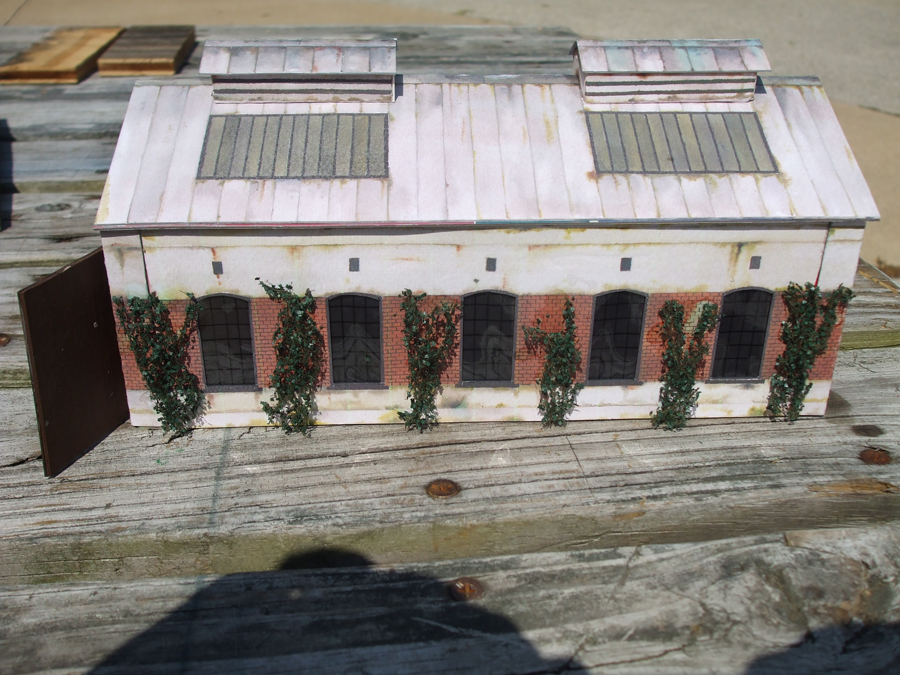
The idea in mind is an 1800’s abandoned gold mining district, and nothing in it is a “new” building, so I make them from scratch using those little cedar wraps that you soak and use on the barbeque. Trees are wire armatures, various colors, brands, and manufacture dates (composition varies), of abrasive scrubber pads glued in tree-fashion onto the remains of incense sticksbecause theysmell nice.

Rocks are plaster casts and some sculpting (when I get there).

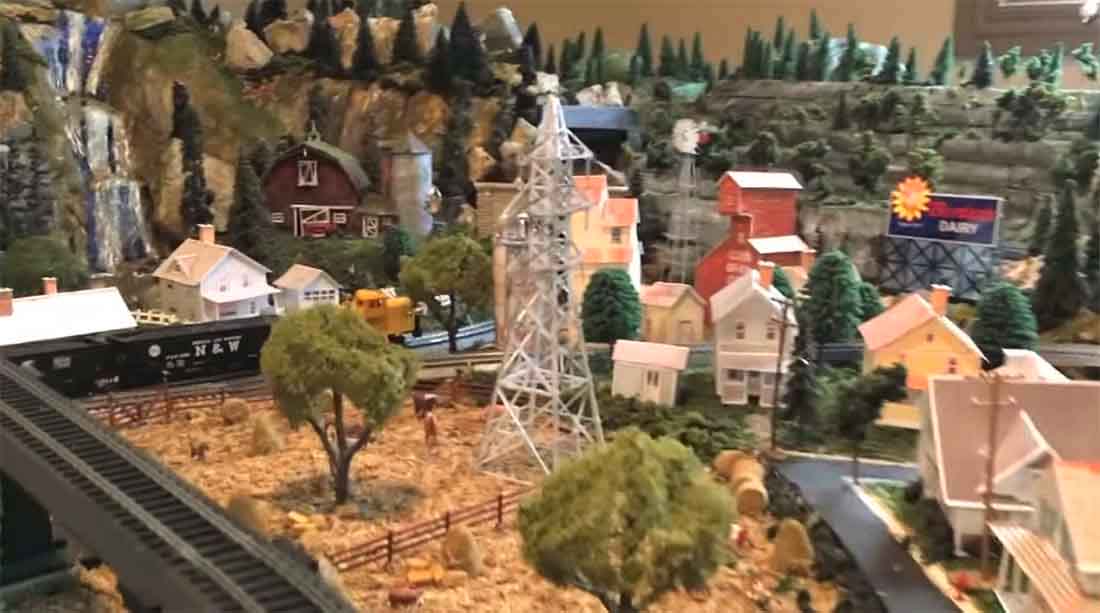
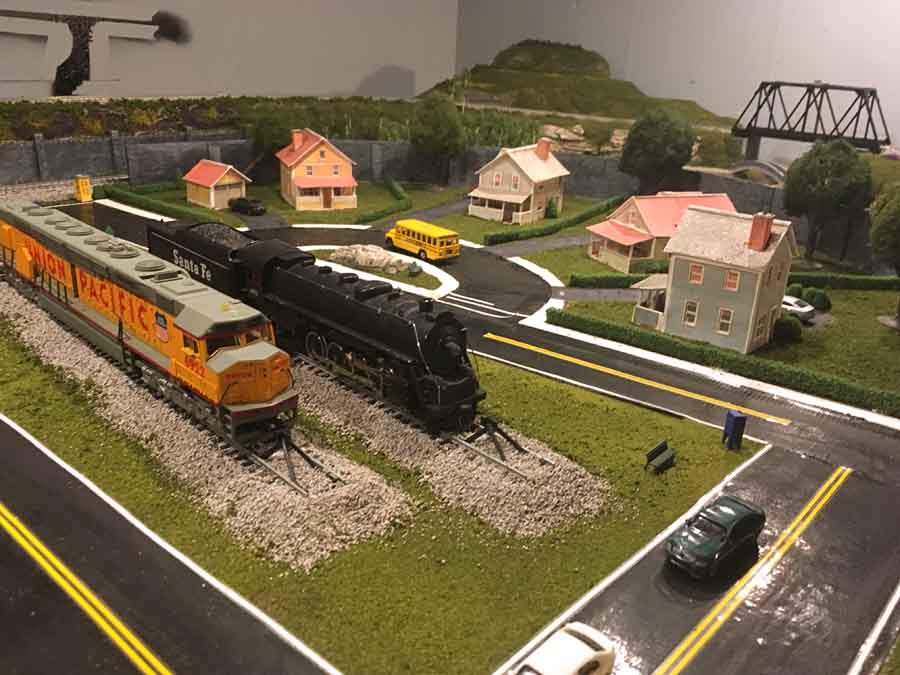
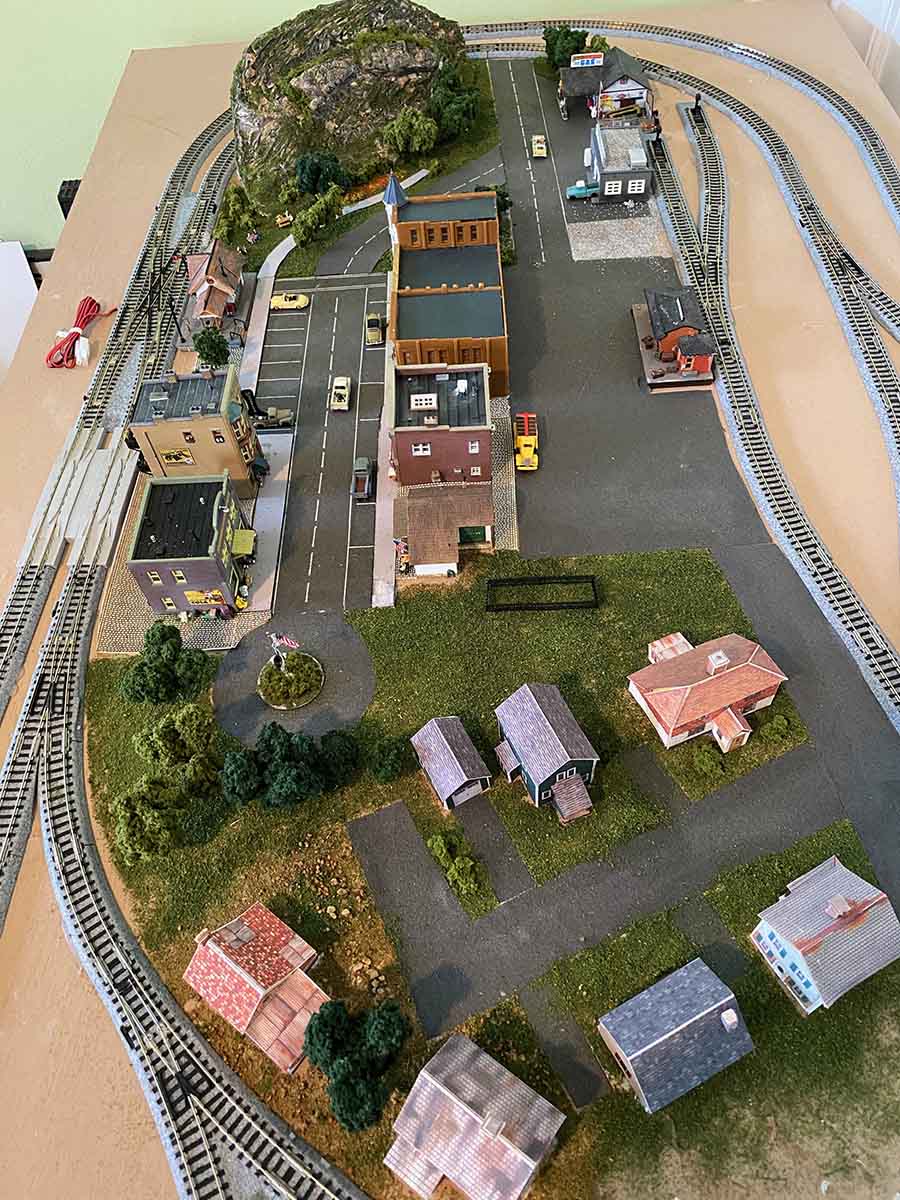
Here are some photos:

n-scale layouts

My first caboose and many trees (more now- this was almost two years ago).

The scale in the foreground has been replaced by a model railroader’s scale.

Executive outhouse studies.

One has a handicap ramp.

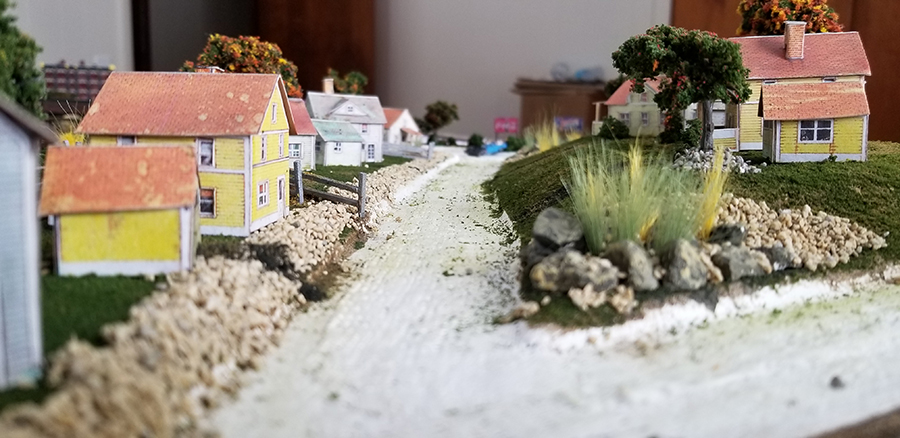
6inch (16cm) square Basic Concept- nothing but wood, abrasive-pad trees, acrylic color, and plaster in this one. Water in the hot tub needs to be changed.

As far as an actual TRAIN was concerned, for these past two years, all I had was that caboose. Sad, I know.

I’ve been told I do things backwards. So I finally got a small 24″ dia. set last Christmas (funny how that works) and some polystyrene packing blocks from a desk I bought:

n-scale layouts

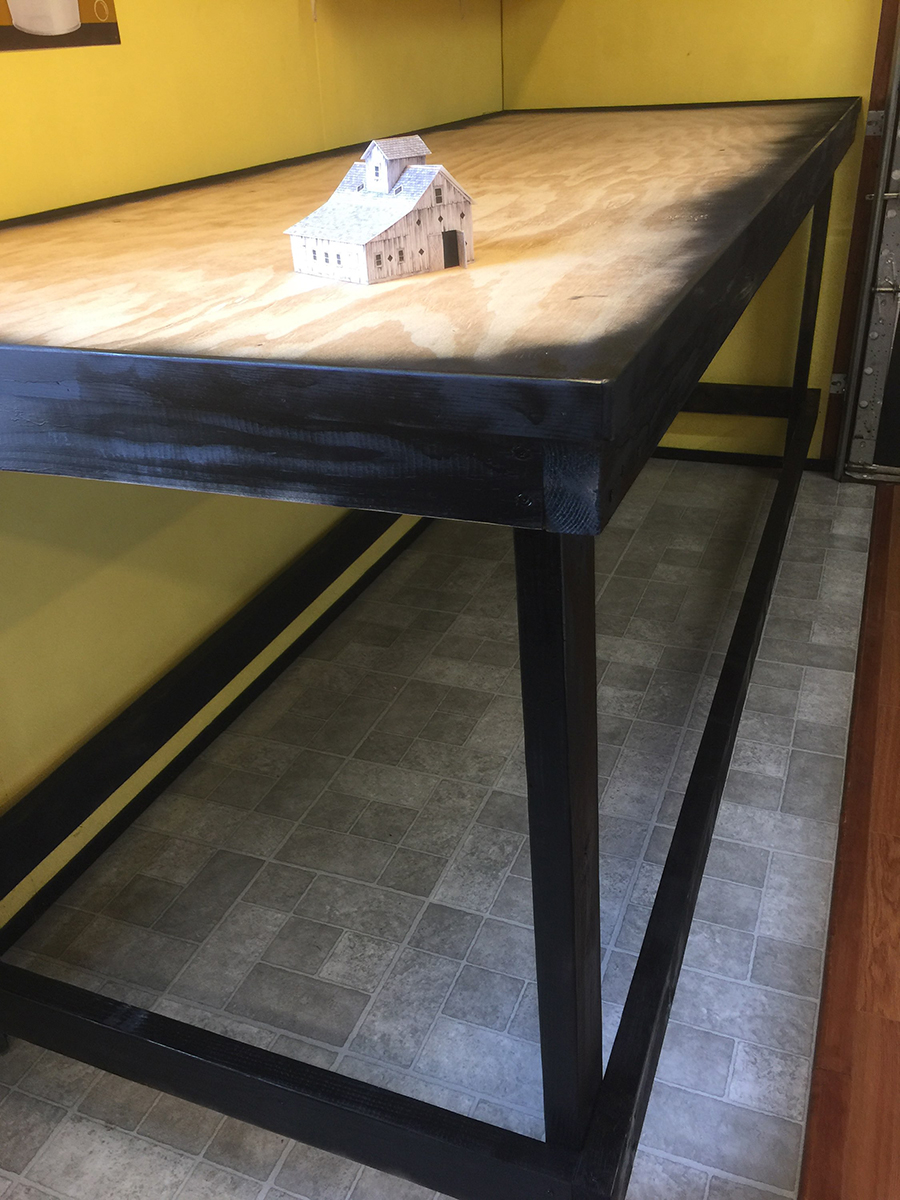
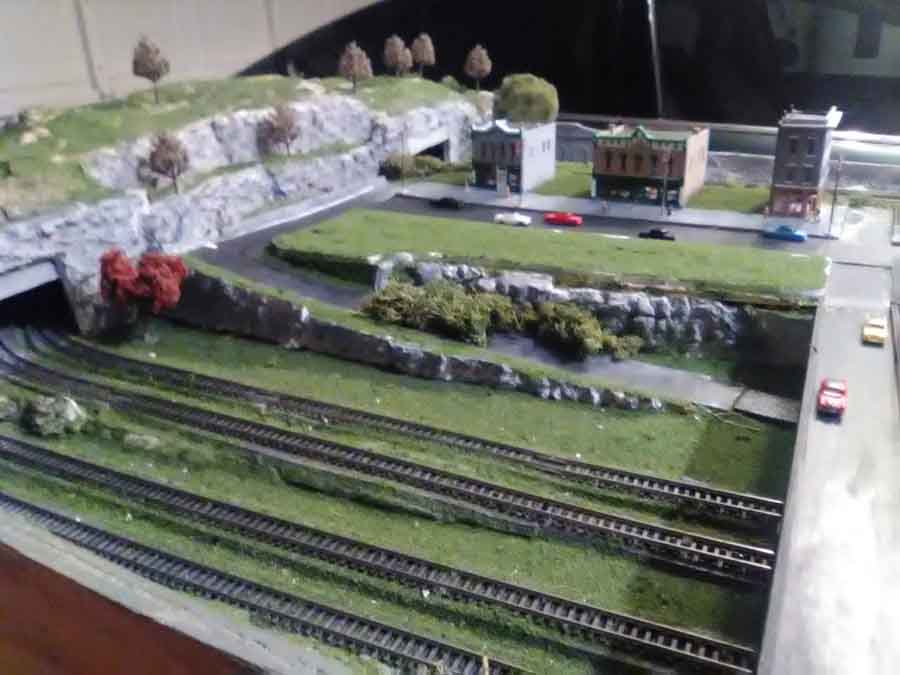
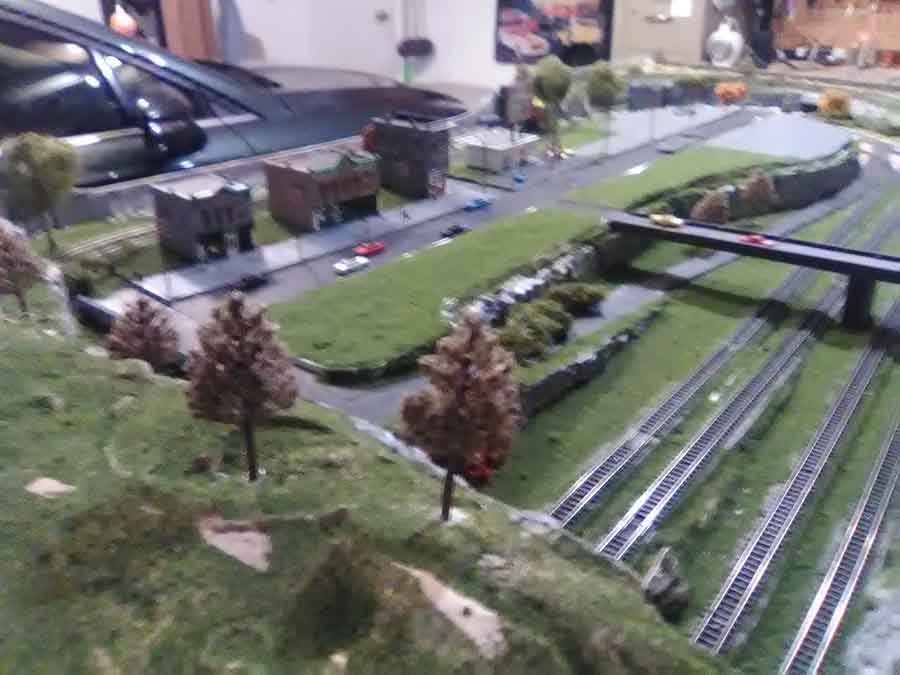
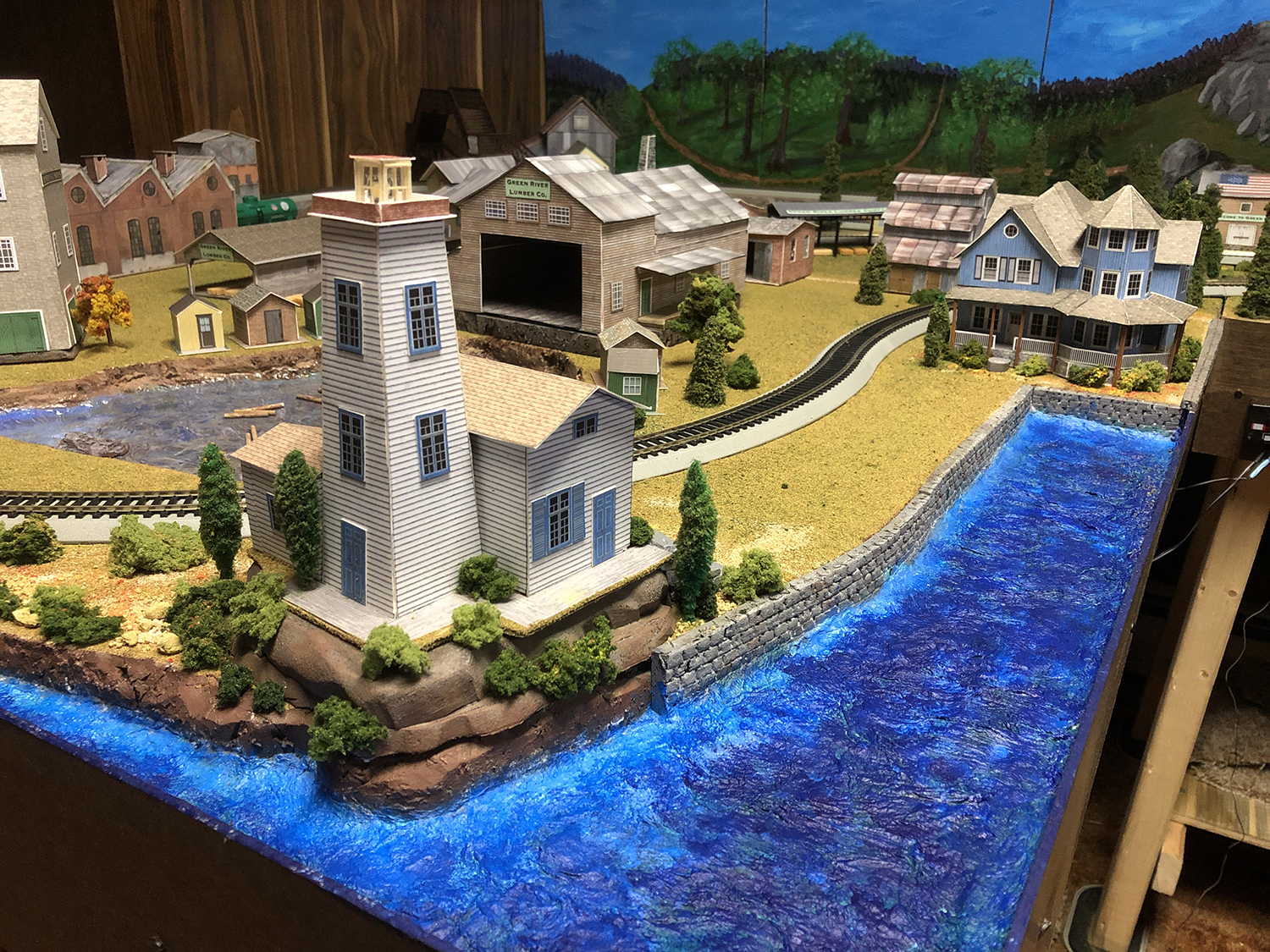
The base is a 30 inch square (76 cm) piece from a left over hollow core door blank. Sides will be finished in luan panels along with that clever idea for a cover having pneumatic pistons to operate. It’s a start, anyway.
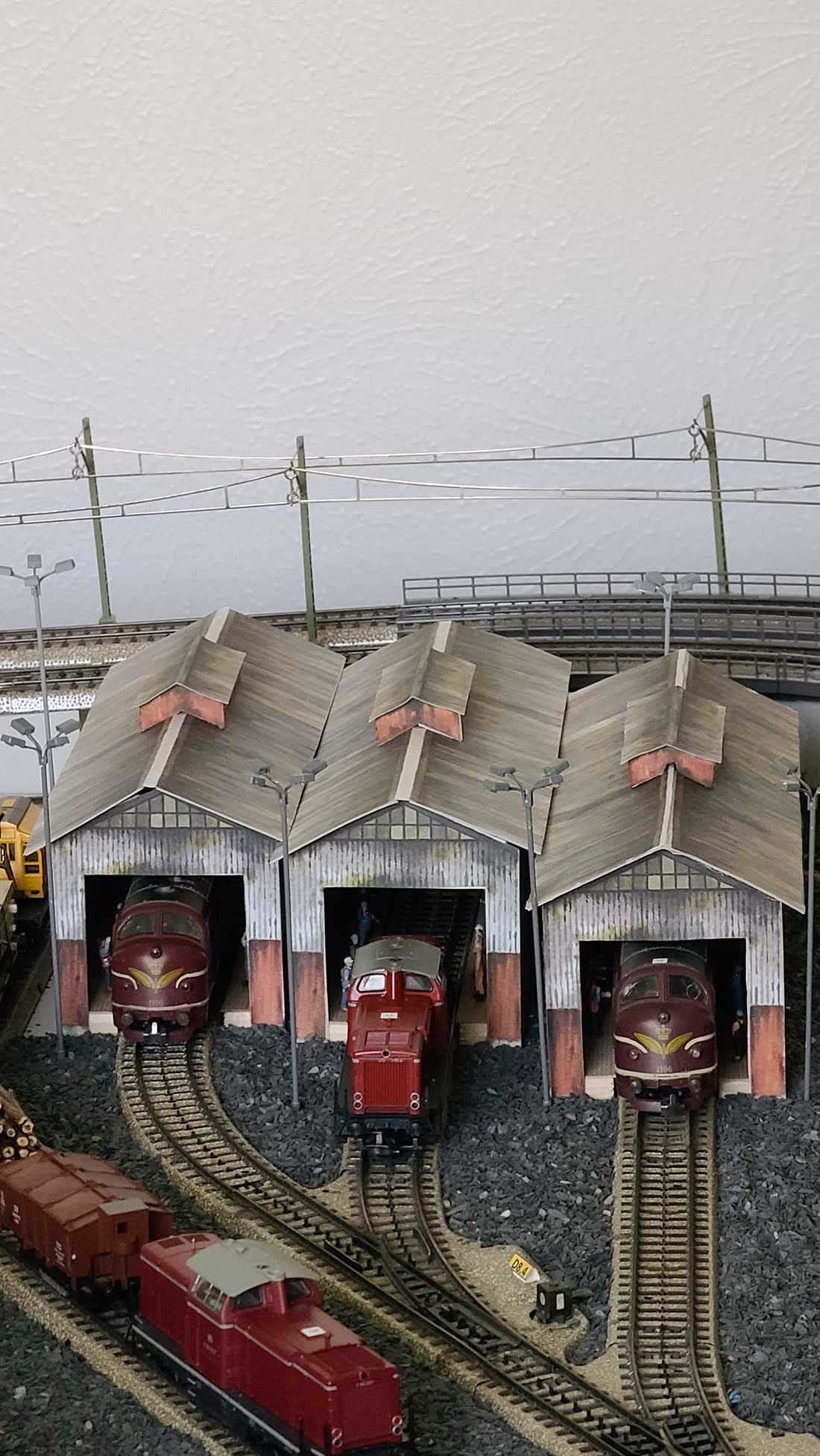
The idea is to encourage interest. Eventually, (I did say I have another ten years) this piece will be nestled into a larger layout with more trains

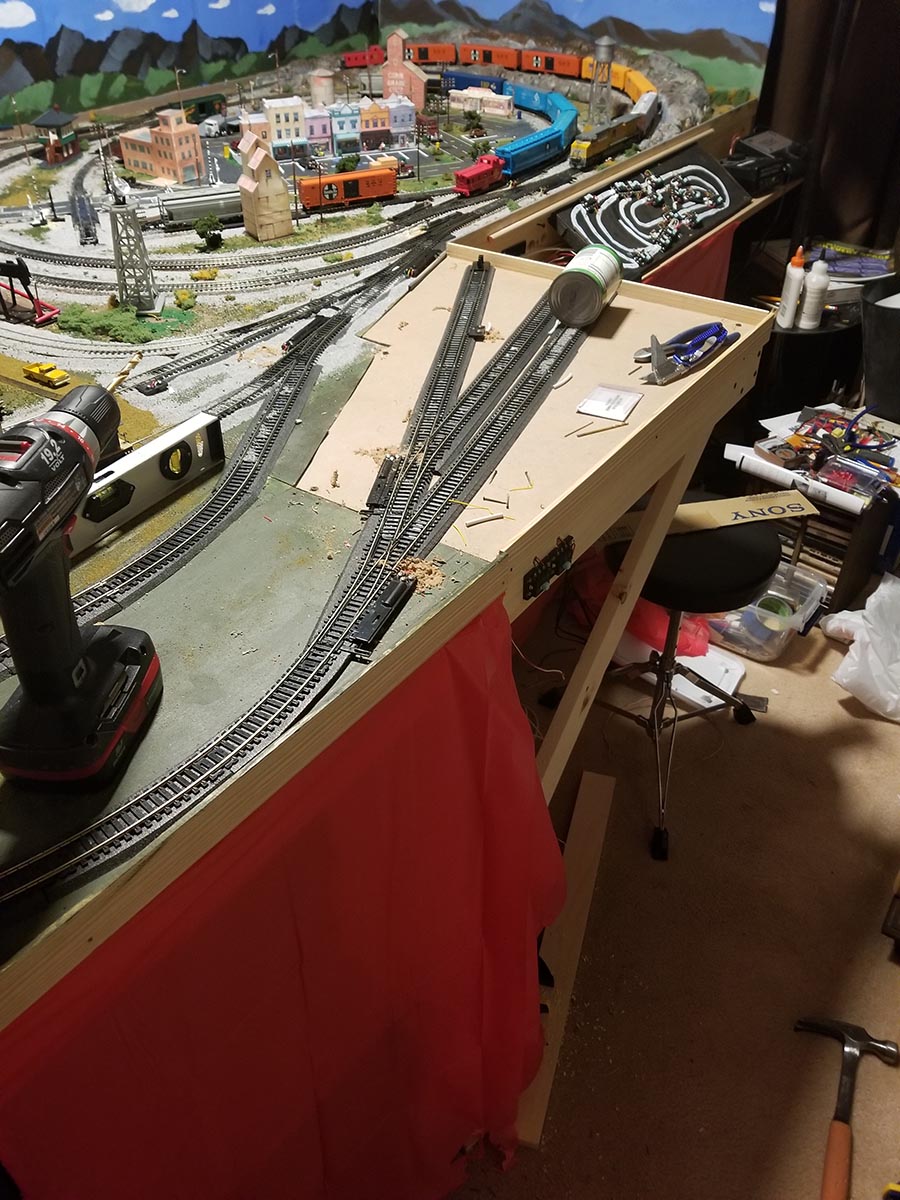
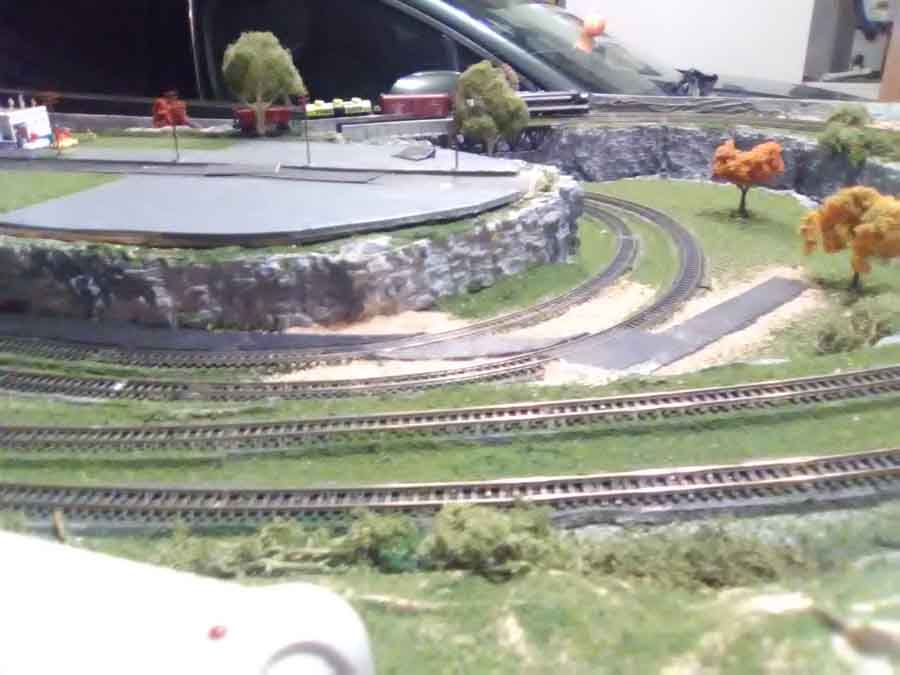
This is a photo of the “switcher tracks” centerpiece for part of that layout:

n-scale layouts


N-scale layouts:

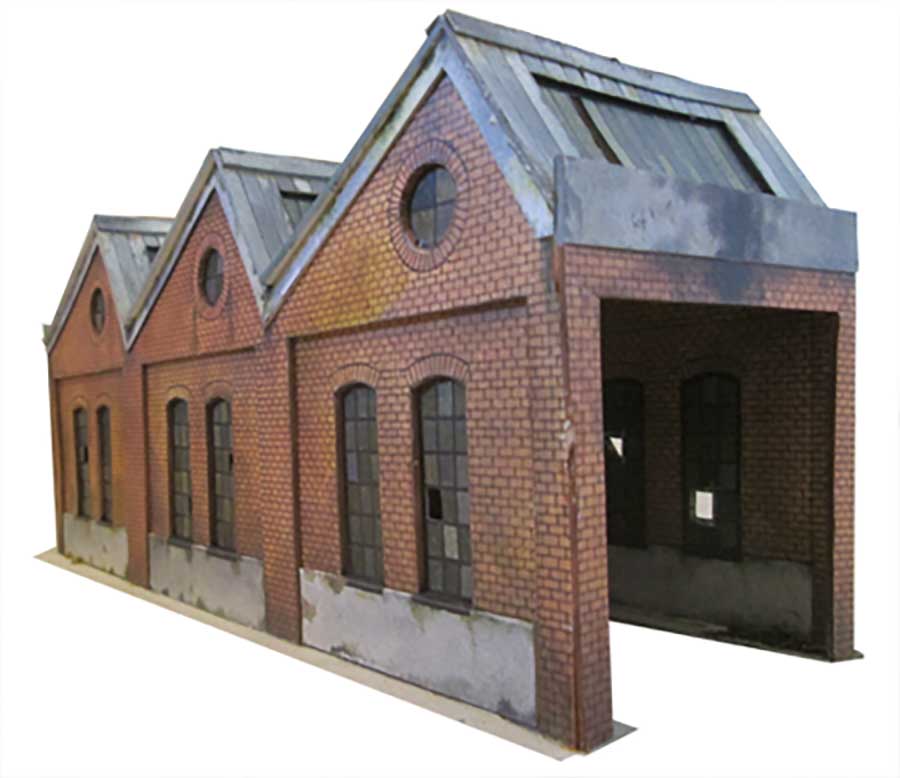
Kennecott Mill, AK.- abandoned, not quite fully 1800’s but a lot of character.

I have scoured the inter-webs over the last two years for abandoned buildings and have quite a collection to

exploit. Mine tunnels, Head frames, water-cannon mining, panning, dredging, and sluicing are all planned to be included.

If you like, I’ll keep you posted.

Be advised though, this is a long term investment.

But you all already knew that… 😊,

Finally, I often see questions about layouts by other N-scale layouts enthusiasts, but I have not seen any reference on your website regarding computer software for railroad modeling.

I offer the two that I know of:

The first is a freeware provided by Atlas:

https://shop.atlasrr.com/t-software.aspx

The second is a more robust version by SCARM:

https://www.scarm.info/index.php

This version is like Atlas’, but has a more thorough library of track manufacturers in it.

Purchasing the full version is reasonable, and gets you more goodies. Buildings are very primitive though.

Both offer terrain modeling, bridges and tunnels, track incline tools and a 3D viewer of your masterpieces.

Neither are particularly computer-intensive or difficult to use, but you need to experiment to understand them.

Here’s a screen shot of some N-scale layouts study:

n-scale layouts

Thank you for your support of my grandson’s new hobby.

I hope this interests and encourages others.

Wayne”

A big thanks to Wayne for adding to the N-scale layouts collection. Quite a few on the blog now!

“Hi Alister,

I enjoy reading your wide range of posts for the modeling railroad community.

I thought the fans of older steam engine kits might enjoy my rebuild of the Penn Line HO K-4 Pacific.

I originally built the kit in the late 50’s, and upon leaving for college, what little HO running stock I had was boxed away. A couple of years ago (now in my 70’s)I decided to rekindle my interest in an HO layout, and began by disassembling the old K-4 (I still had the original assembly manual and hex wrench for the drivers), stripping the paint from the metal castings, pickling in boiling vinegar, and spray painting with semi-gloss Krylon grill paint.

The soft iron hand rail had rusted, but all of the small brass stanchions were still in place. I removed the rail, straightened it, and removed the rust with 4/0 steel wool. After degreasing, I blued the wire with Birchwood-Casey paste gun bluing and polished to a high blue/black polish. I resent the rail to the original pattern (much better that I did when 15) and reinstalled.
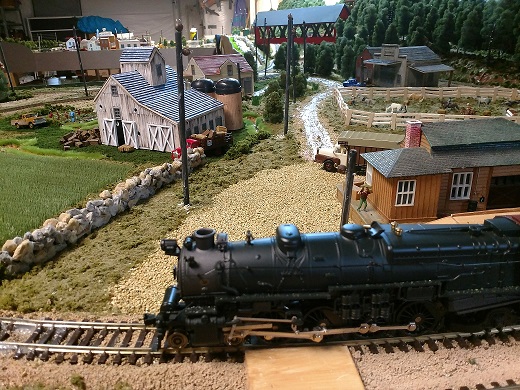
I made the coal load for the tender by placing a piece of plastic wrap in the tender well, filling it with fine synthetic coal, and wetting with the classic 2:1 70% isopropyl alcohol:Elmers white glue mixture. After drying, I removed the coal load and gently peeled off the plastic; worked well.

I had to remove the motor and polish the oxidized commutator, held in a mini-drill press with a loop of 1200 grit wet-or-dry (dry!) automotive paper. While not modern by any means, the old DC worm drive motor powers her around the layout quite smartly!

Enjoy,

Rob”

“Take a track cleaning car and clean the cleaning pad with TRANSMISSION FLUID! Leave just a very light coating on the pad then run the car over the road. This will not only clean the track but leave a thin film of fluid on the track to keep the track clean.

Moreover a quart bottle of fluid should be a lifetime supply for a very reasonable price!

Martin”


And Lawrence has been in touch again (his last post is here):

“Hi Al

Thought I would give an update on my track. But first I want to say I really envy those out there that have been doing it for years and have lots of trains, houses, people, and autos. And that have rebuilt their layouts more than once. Now to explain why.

I started from nothing and with a little research built a design that would work with the track and scenery I wanted. Built the table, laid the foam base and foam for mountains and rail risers (not knowing any better used the four-degree store bought items). Then I put the track down (refer to the attached picture, red and orange) and put the electrics for the track installed for DCC.

Then I decided I could afford a DCC passenger steam engine and tender (4-6-2). Had DC diesel engines and cars from when I was a kid. Found out that the steam radius is 19” minimum and not the 15” minimum of Diesels. Refer to the grey on the picture where I tore up the track and adjusted for steam. And ran the train for an hour in each direction without any derailment. YIPPEE

Affording a little at a time I worked on the scenery. Scratch building the 400 trees and most of the buildings. Used a couple plasticville houses from old set. Got to the decision on getting a new train or the water for the lake and river. The water won out. Used Deep Water as the rivers were from half to three quarter inches deep and the lake was three quarters deep = fifteen packages of the deep water.

Now the next interesting (frustration to the maximum) part. I wanted a freight engine and tender. When I could finally afford it, got it (4-8-2). Ran it on the tracks *&^%$#*&^%. It derailed on almost every arc. The engine is one inch longer and the tender is three inches longer. The traction wheels are smooth. Going up the four percent grade it could pull ONE car before slipping. Ordered the Bullfrog Snot.

In the mean time I tore up all the track shown in green on the picture. Now was also the time to install the 2 right hand switches, 2 left hand switches and the crossover. That means also the scenery in those area torn up. Spent a LOT (really a great amount) adjusting the track (sometimes one eight of an inch) to prevent an engine or tender derailment. Ran the engine (with and without power) across the track to find any kinks or curves too sharp.

The Bullfrog Snot came in and applied two coats on the traction wheels and now it can pull six cars up the hills before slipping and any amount on the flats. And just got all the track adjusted and ran both trains in both directions for over an hour without any derailments. YIPPEE And no problems with the double crossover at all. Again YIPPEE

Now I can go back and fix all the scenery that I destroyed in the process and on to the lights.

Lawrence”

A huge thanks to everyone for today’s post, especially to Wayne for adding to the N-scale layouts.

Please do keep ’em coming.

And if you want to join in the fun, the Beginner’s Guide is here.

Best

Al

PS Thank you for all the comments on the new ebay cheat sheet – glad I updated it.


Small O scale layouts

Got this in from John, and loved it. He’s added to the small O scale layouts on the blog:
“Dear Mr. Lee…

While looking over the post today I noticed someone asking about O Scale prints…

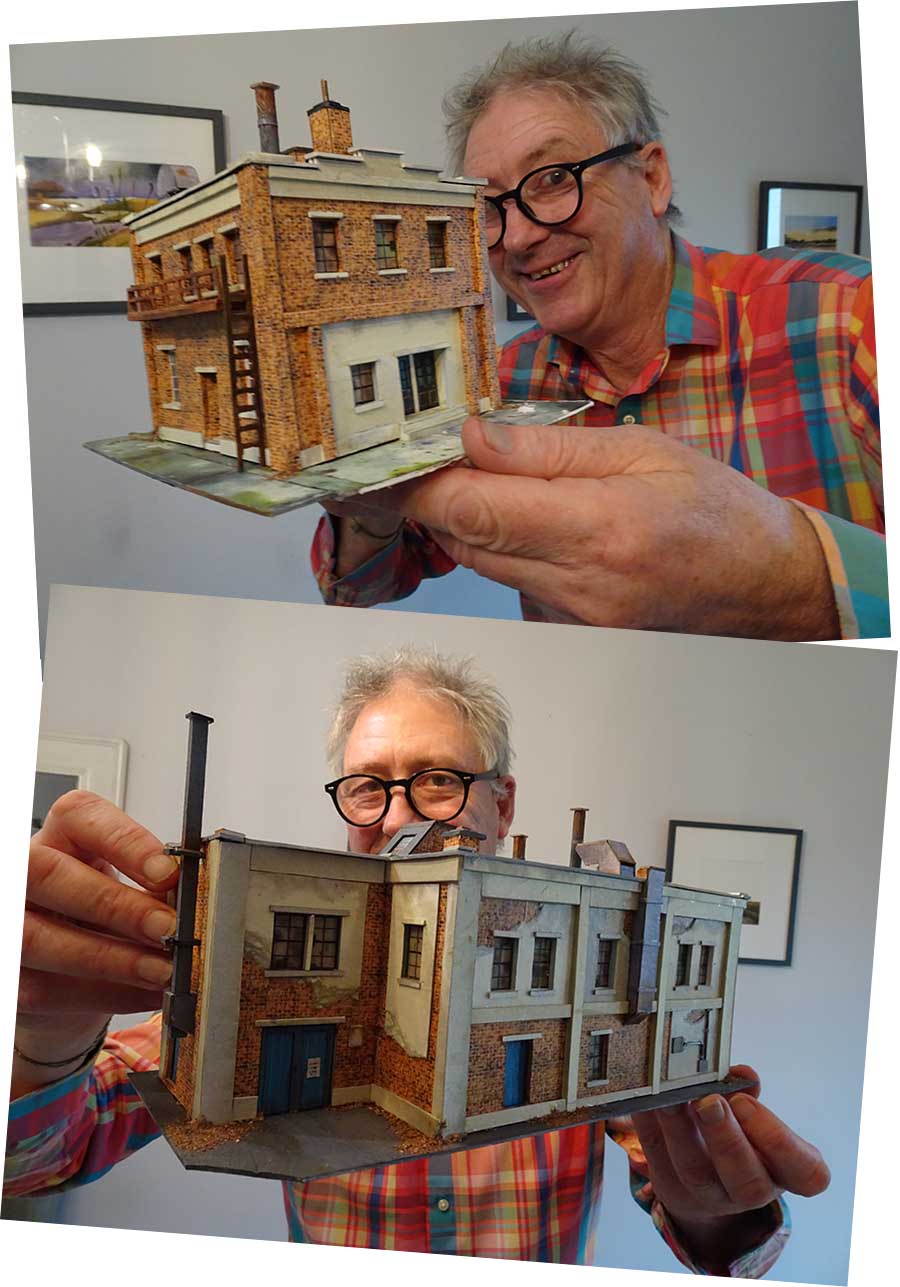
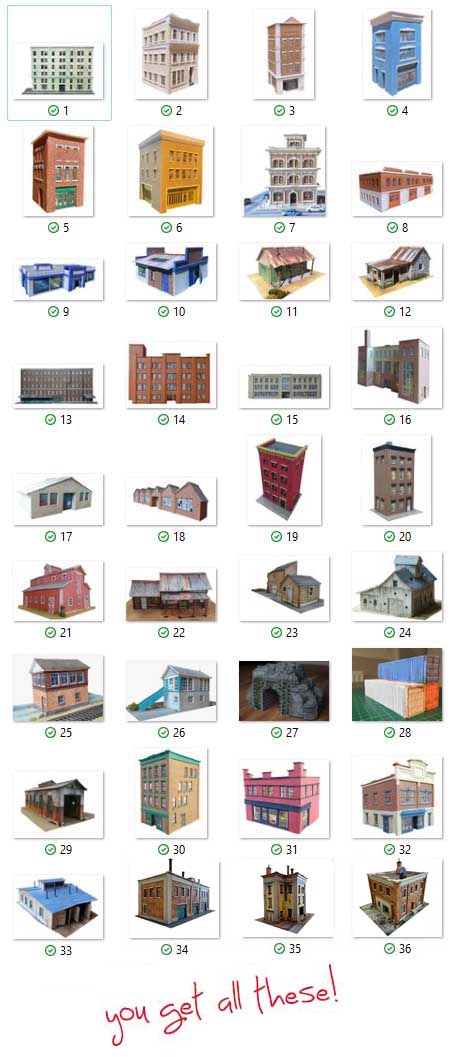
I know I have sent you mine before… And my “Grasse Pointe” On30 layout that used only your structures…

You have published them but would you like a recap of my “best hits” to show what can be done?

Also, right after I finished “Grasse Pointe” I decided to start cleaning up some stuff — What better way than to build a layout with the intention of selling it… Notice I said “Intention”…

Well after about two or three weeks I am essentially done and have decided to keep it and part with something else… I am running out of space for my little layouts!

John the printout builder and videographer is not the only John that might be a little “touched” if not downright bonkers.

Here is Inglenook Growers… HO Scale (U.S.)… Everything on it was salvaged from some other project — Including the baseboard!

The layout is a 3-3-5 pattern Inglenook. The main body of the layout is in a space that is one foot wide and four feet long… A “fiddle stick” held to the layout with a pair of hinges that have removable pins serves as the “headshunt” or switching lead… The theme is a produce warehouse at the end of a spur line… “Inglenook Growers”…

Just remember here in America “We eat what we can and what we can’t, we can.”

I believe on your side of the pond it would be said “Americans eat what the can and what they can’t they tin.”

The last photo in the set has the layout on end with the ironing board I often use to support my layouts…

While this layout is destined for my living room to serve as “art”, It is operable and the reason I have the photo of it standing “on end” is to make the point that anyone has room for some kind of layout and a chance to be an active participant in this wonderful hobby.

All the best…

John
California, USA
aka. John from Cali”

Small o scale layouts

Small o scale layouts

Small o scale layouts

shelf model railroad

model railroad shelf layout O scale

A big thank to John for adding to the small O scale layouts.

That’s all for today folks.

Please do keep ’em coming.

And if today is the day you get started on your layout, the Beginner’s Guide is here.

Best

Al

PS Latest ebay cheat sheet is here.

PPS More HO scale train layouts here if that’s your thing.


How to apply bullfrog snot

Larry has been in touch – he’s keen to know how to apply bullfrog snot, and whether it works:

“Hi Al. Keep up the great work on your blog. I have a question for you and your followers.

I have an n guage steam engine buy bachmann. On part of the track it pulls like a champ and on another part the wheels start to spin. I have cleaned the track and same thing happens.

I read on the internet about bullfrog snot. it is a coating you put on the wheels. If you would can you get me an answer if this stuff works or is there another solution?

Thanks,

Larry from Baltimore Md.”

how to apply bullfrog snot

And here’s just on of your replies for Larry on how to apply bullfrog snot:

“Larry, Bullfrog Snot is GREAT stuff, BUT I wouldn’t put it on EVERY drive wheel. Because those drive wheels MUST pick up electric on your Bachmann steamer, that said, look for the driver or drivers that have a little rubber-like band on the “tread” surface.

The part of the wheel that touches the tops of the rail heads. REMOVE that band from the driver, by either cutting it off, OR removing the side-rod and then with the engine upside down, ran at yard speed (VERY SLOW) apply the Bullfrog Snot to the indentation where that band once was.

LEAVE the engine running for about 12 minutes, at that slow speed keeping an eye on the Bullfrog Snot to make sure its as much as needed (thickness of said removed band) and if not, in 24 hours, apply another coat of it to the same place…. AGAIN allowing the engine to run at very slow speed!

Running he engine applying the Bullfrog Snot, you want to keep the wheels turning so the Bullfrog Snot is the same all the way around the driver as if you stop it and the Bullfrog Snot is still wet, it will “lump” at the lowest part of that driver, creating it to not roll smoothly on the rails….

Apply the Bullfrog Snot, with a tooth pick. Allow the tooth pick to literally “drag” the wet Bullfrog Snot AROUND the entire driver…..

Once you have a good first coating, even all the way around, then let it continue to run very slow for that 12 minute time period as after that the Bullfrog Snot, is starting to “set”, once 12 minutes has passed, leave it set for 24 hours to insure its fully “cure” NOT just “dry”!

IF more needs to be added after that 24 hour period has passed, the second application will require the same as the first did on application.

Speaking of this, I have a few that I have to do as well, both steam and diesel!

Hemi”


Now on to Tony:

“Well this is my first layout.

I was a carpenter by trade so I just kind of winged it. No track plan or anything.

It’s by far not the best but I feel that I’ve lucked out a bit. I built some of the buildings from scratch. all of the trees except the orchard.and made the mountains from screen and plaster thanks for looking

Tony”

HO scale model railroad

HO scale model railroad

HO scale model railroad

HO scale model railroad


Now on to Tom:

“This is what my coal load looks like from start to finish

( 1 ) I start with a piece of quarter inch From that I trace out from the hopper cut to size

( 2 ) then I’ll make some support in the middle to hold up that foam put a dab of silicone to hold a three pieces together

(3) then take Elmer’s School or cheap school glue then brush on the glue light Coat, then pour the ant sight coal, after that dries then I either make 3 mounds or 1 mound the length of the hopper on my. O gauge cars. I also do slag loads the same way.

here are the pictures start to finish

Tom”

model railroad coal load

model railroad steel load

model railroad gondola load

model railroad gondola load


model railroad gondola

model railroad gondola

model railroad gondola

“Hi Alistair,

Just spent most of Saturday figuring out how to work a new camera , for the layout , trust me, got the wrong pass word in , but once I got it , I could use this with Wi Fi , the result is fairly good ,also a couple of more things I have done , new sounds , and more of the gangway joining with the coaches

Regards

Dave”


New ebay cheat sheet yet still going strong

A big thanks to Tony and Tom.

And who can help Larry with how to apply Bullfrog snot?

That’s all for today folks.

Please do keep ’em coming.

And if today is the day you stop dreaming and start doing, the Beginner’s Guide is here.

Best

Al

PS Latest ebay cheat sheet is here.

PPS More HO scale train layouts here if that’s your thing.