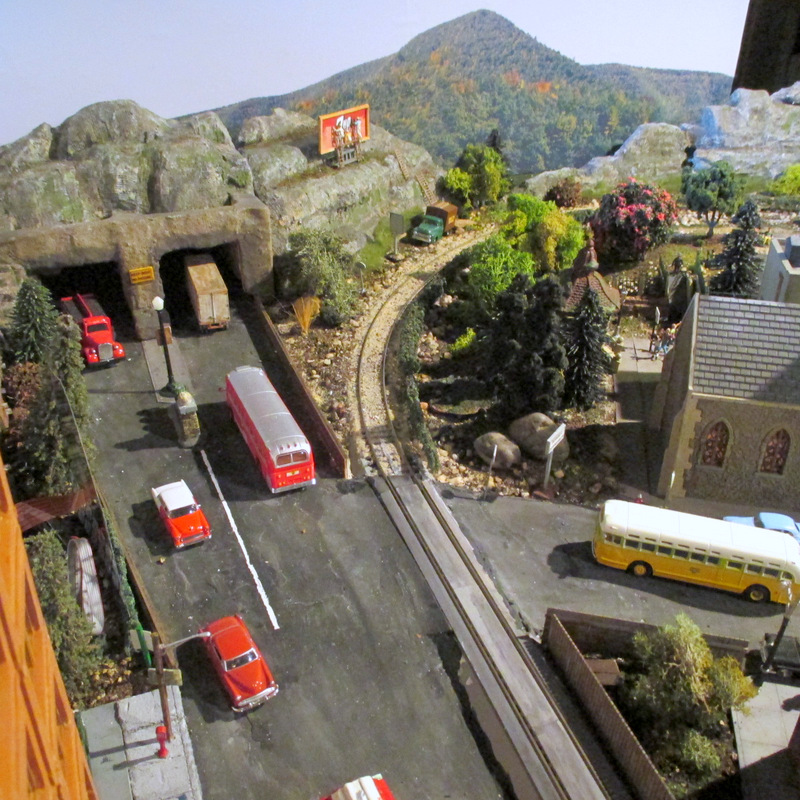
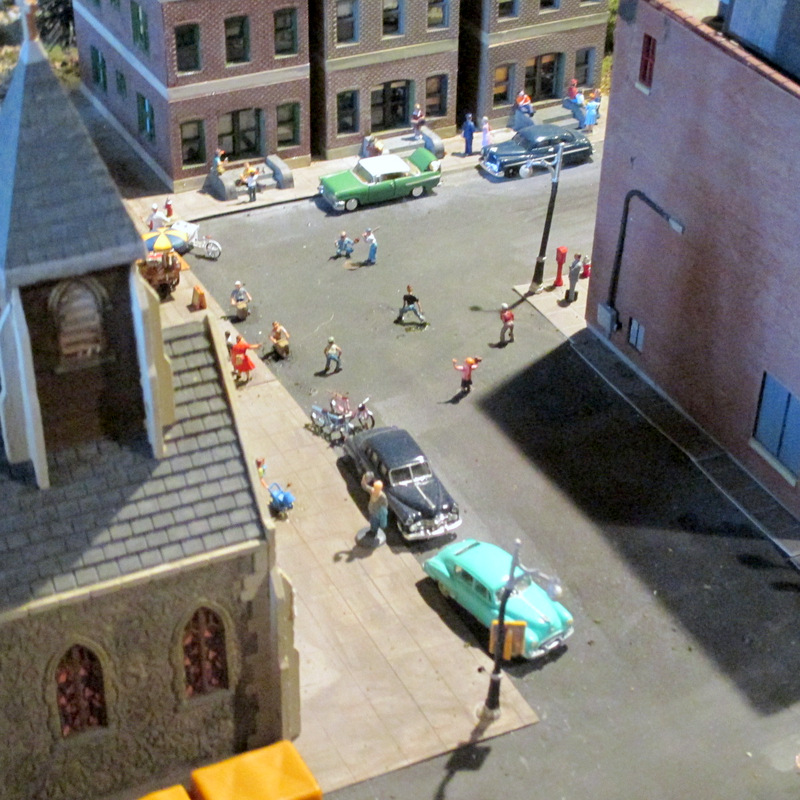
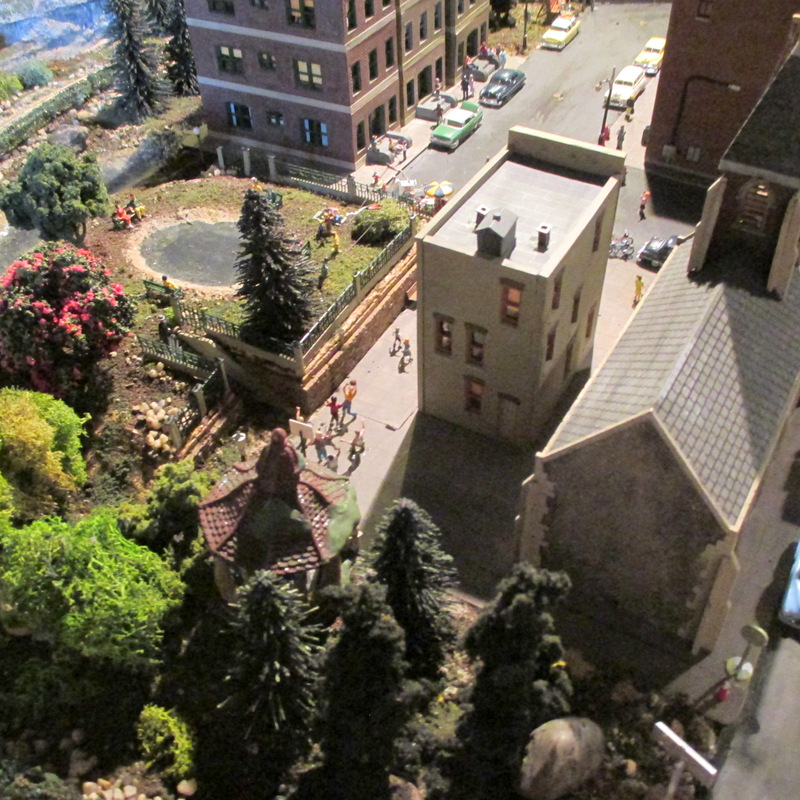
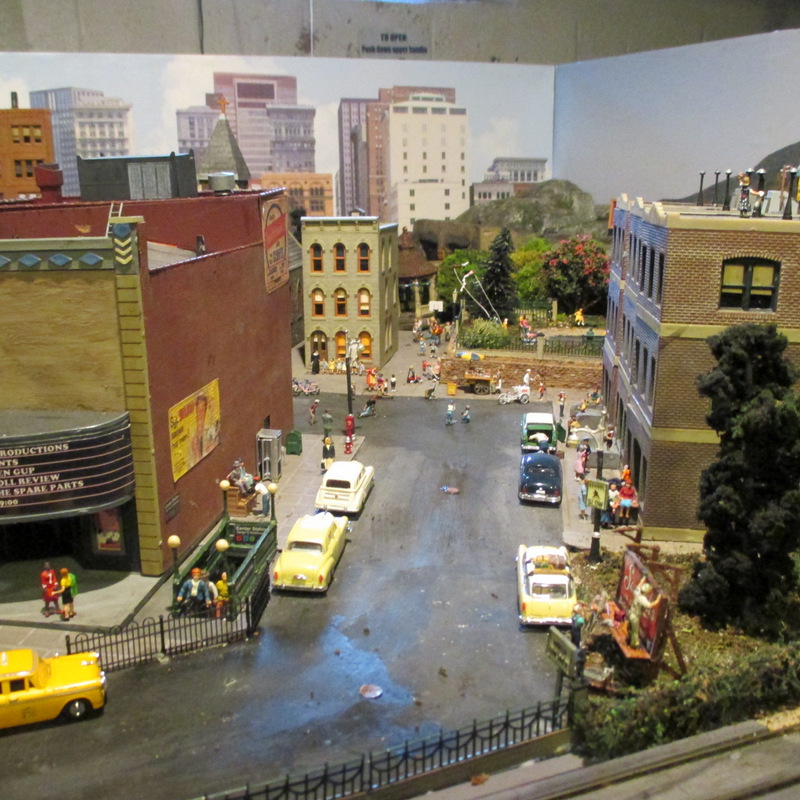
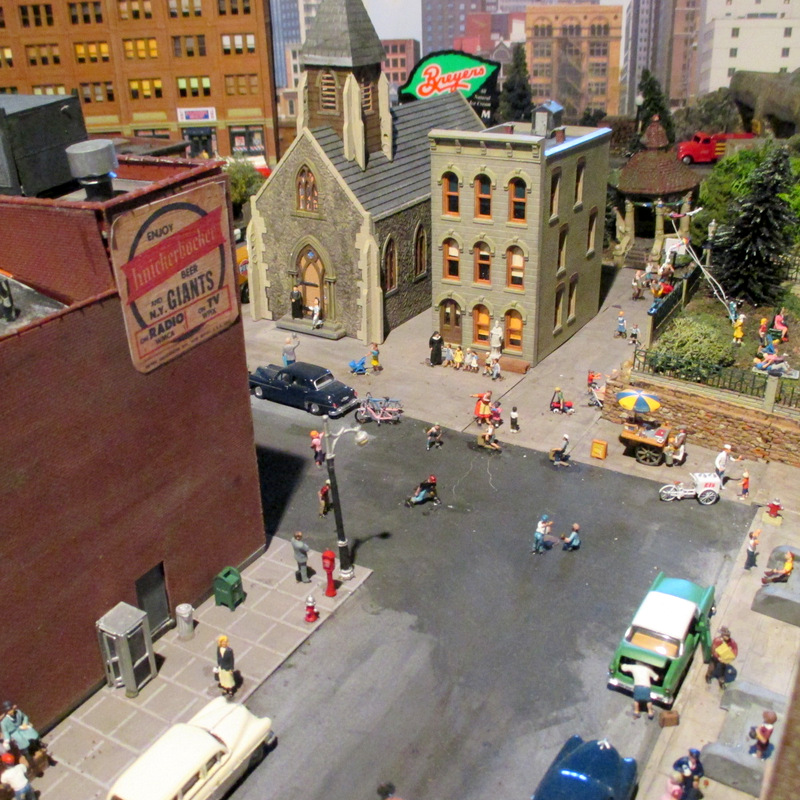
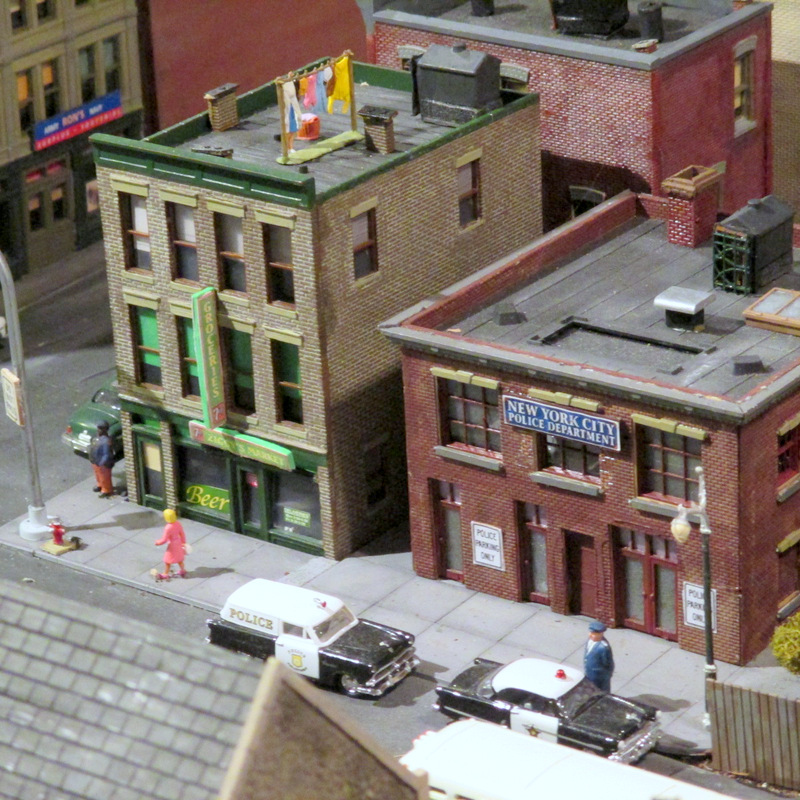
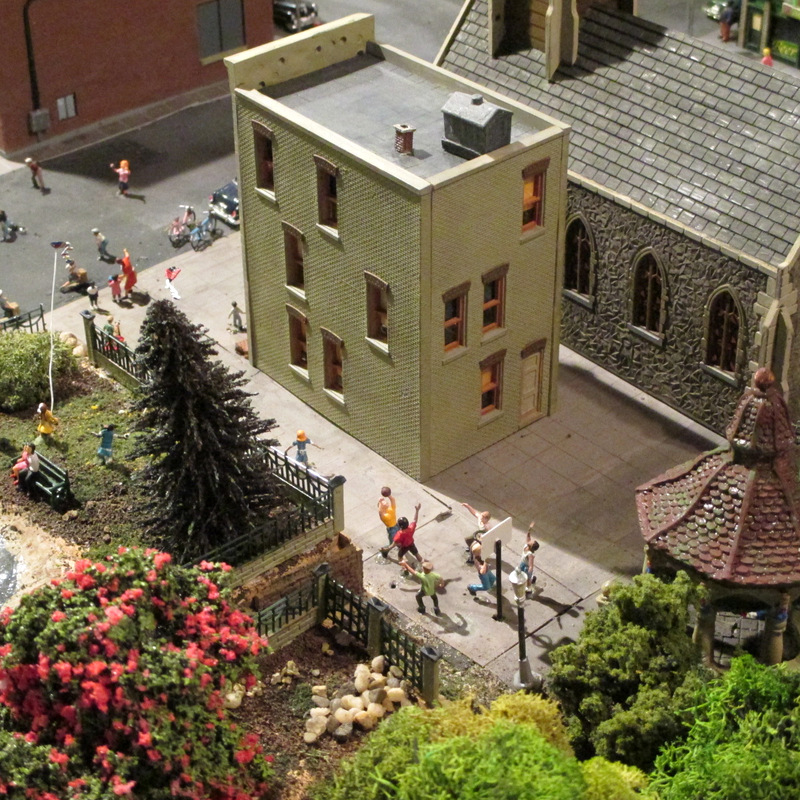
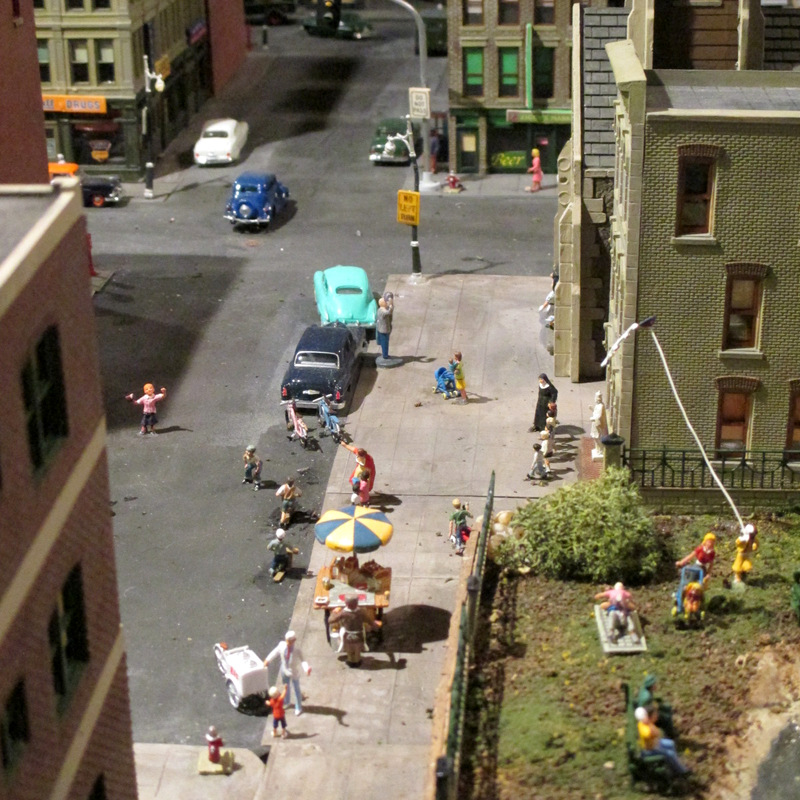
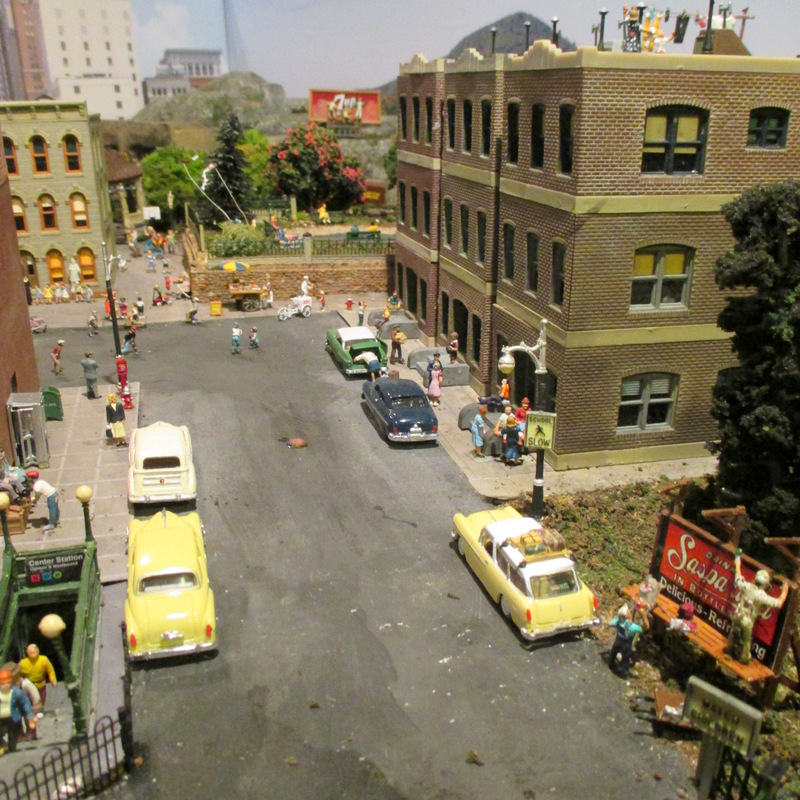
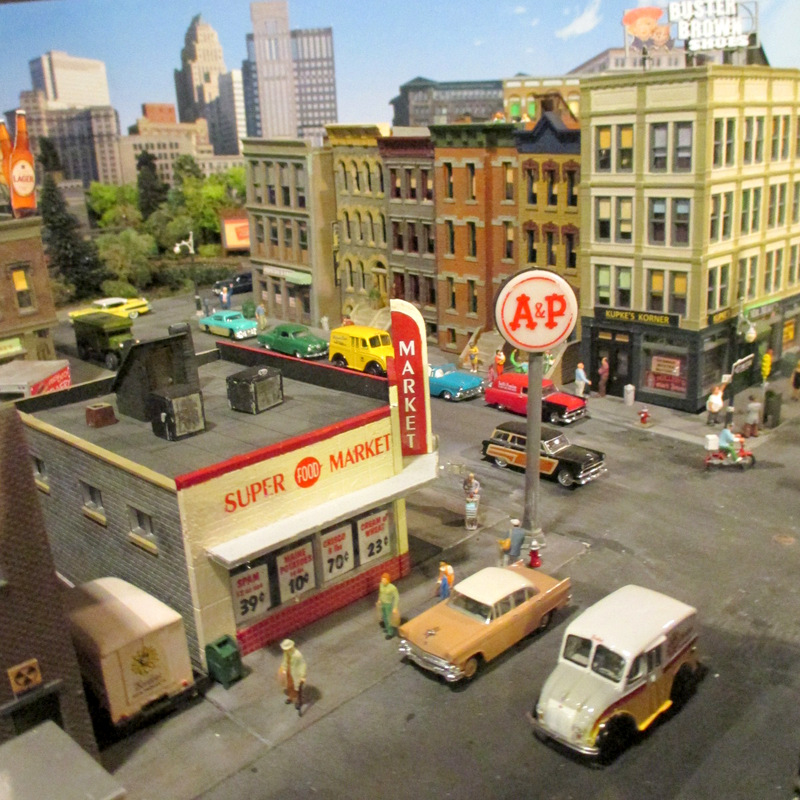
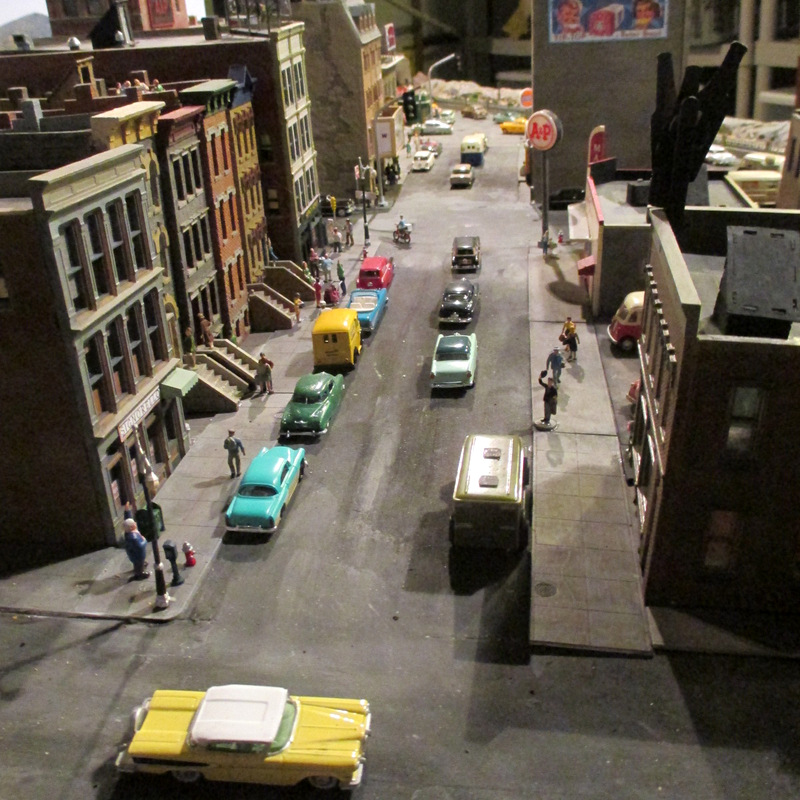
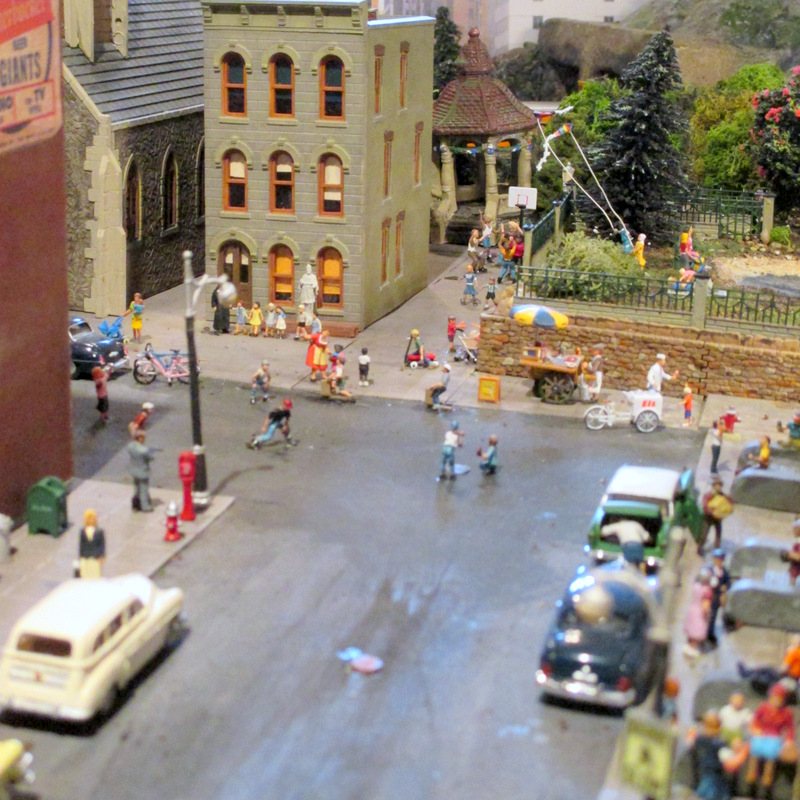
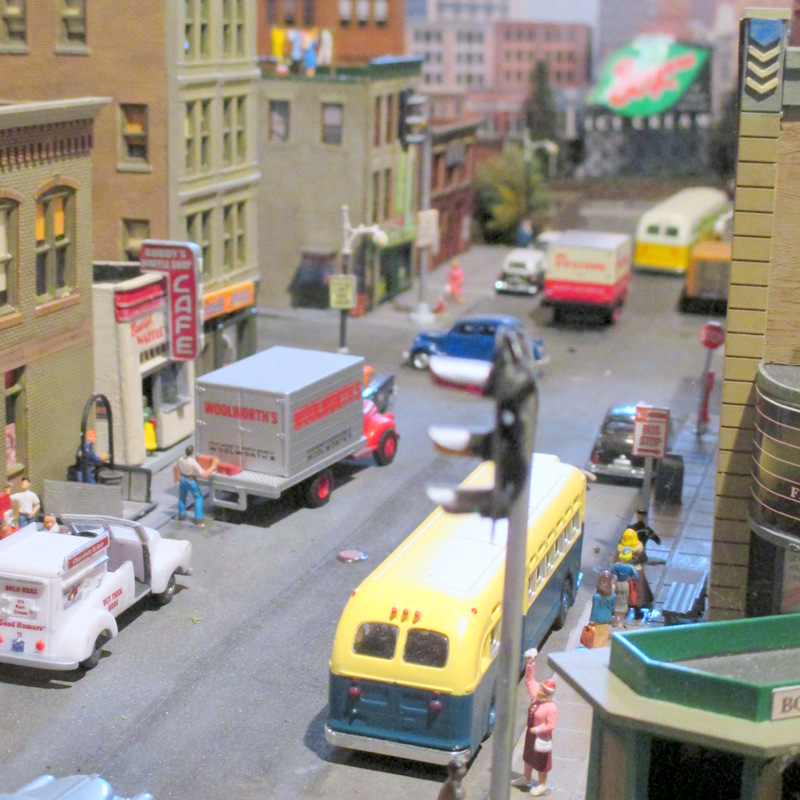
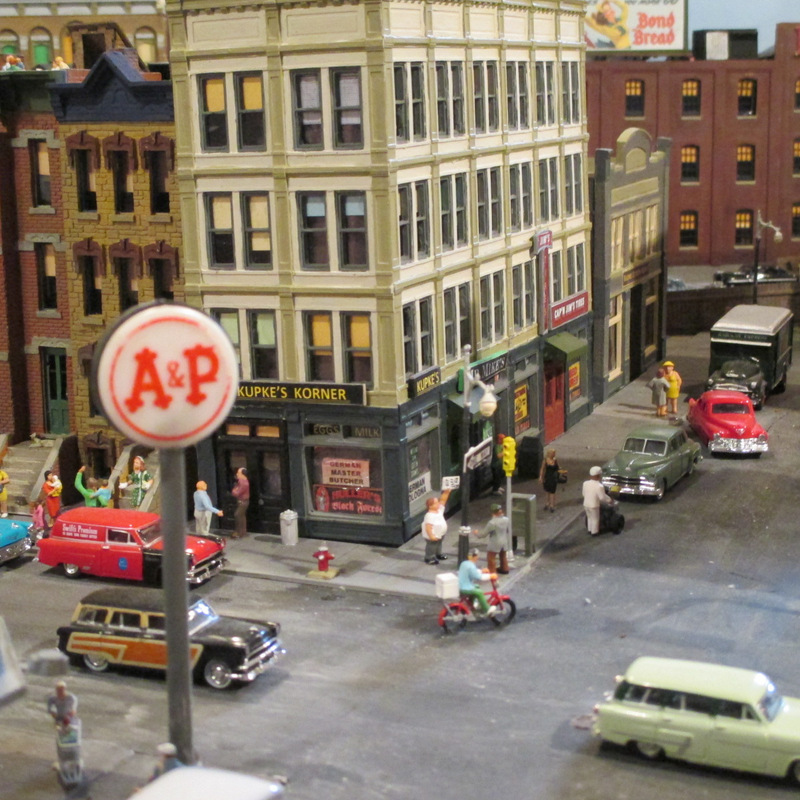
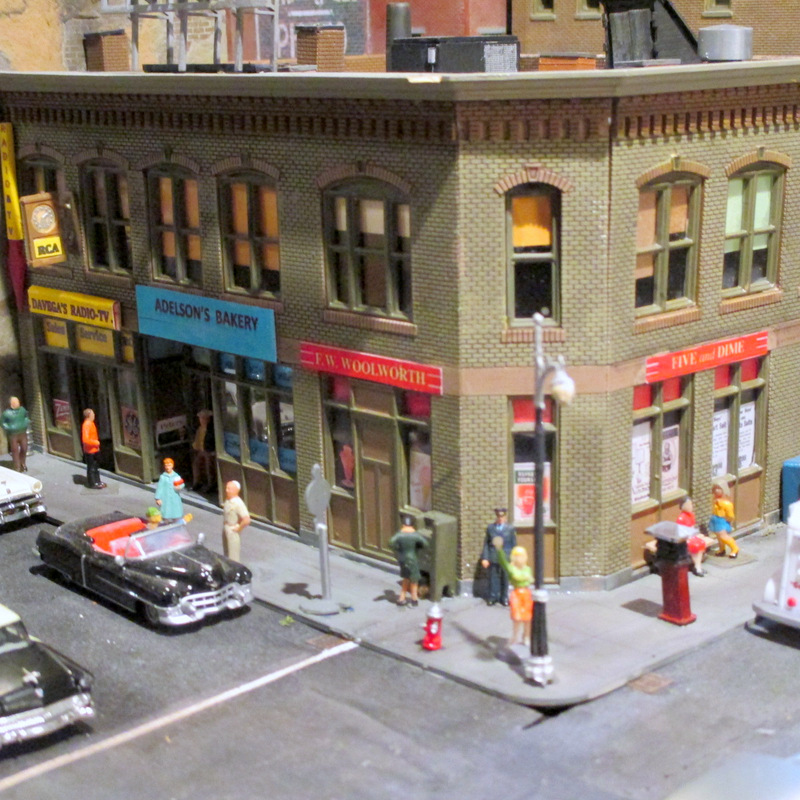
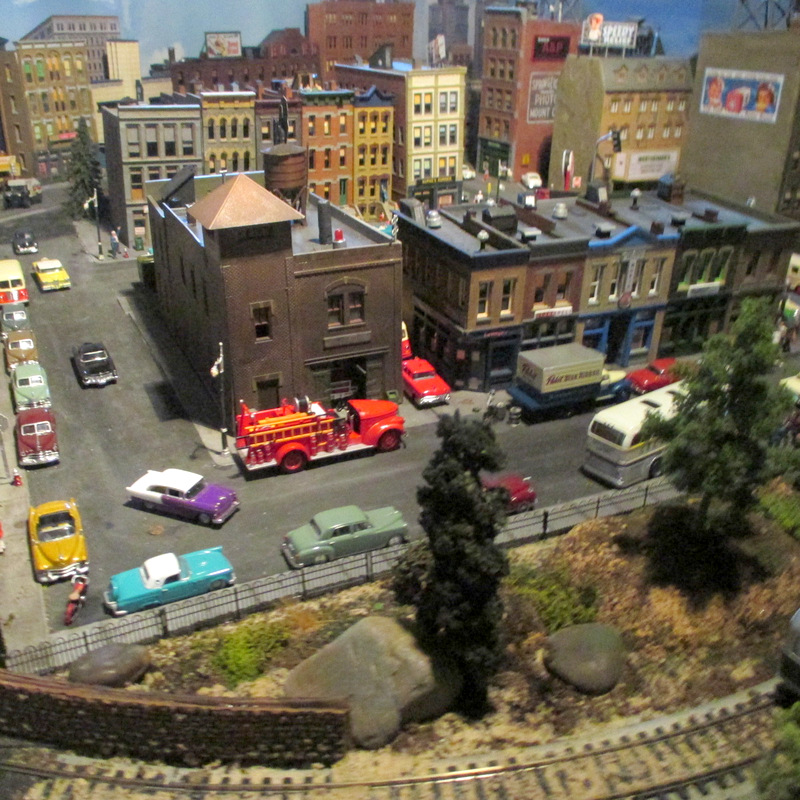
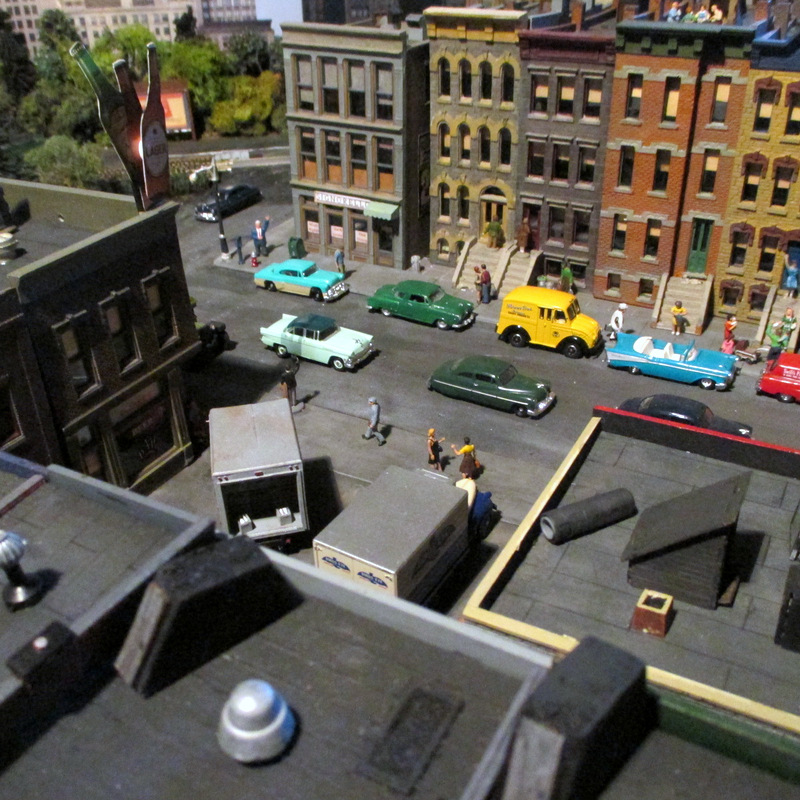
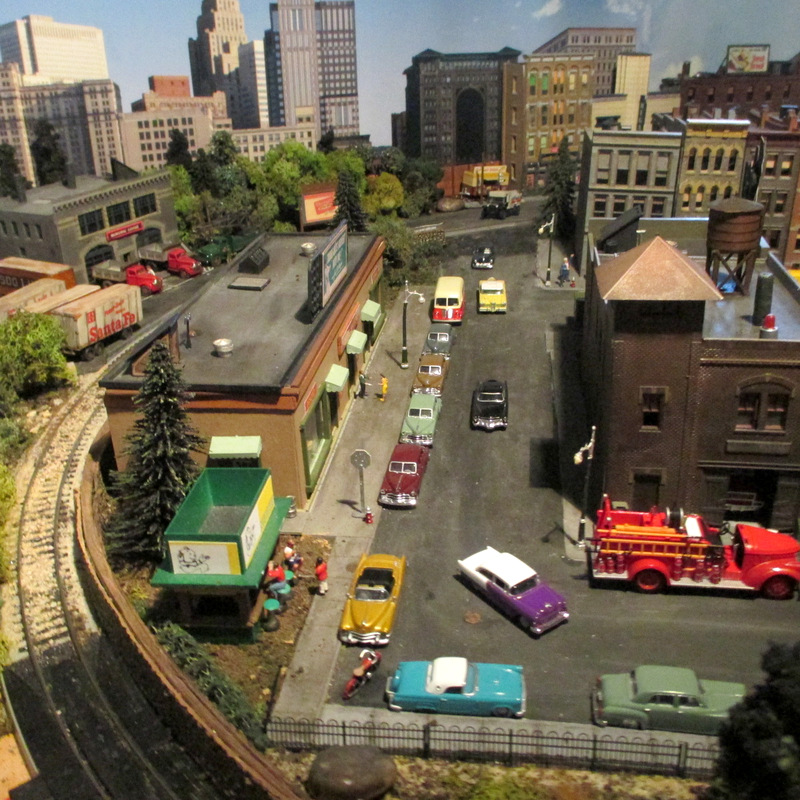
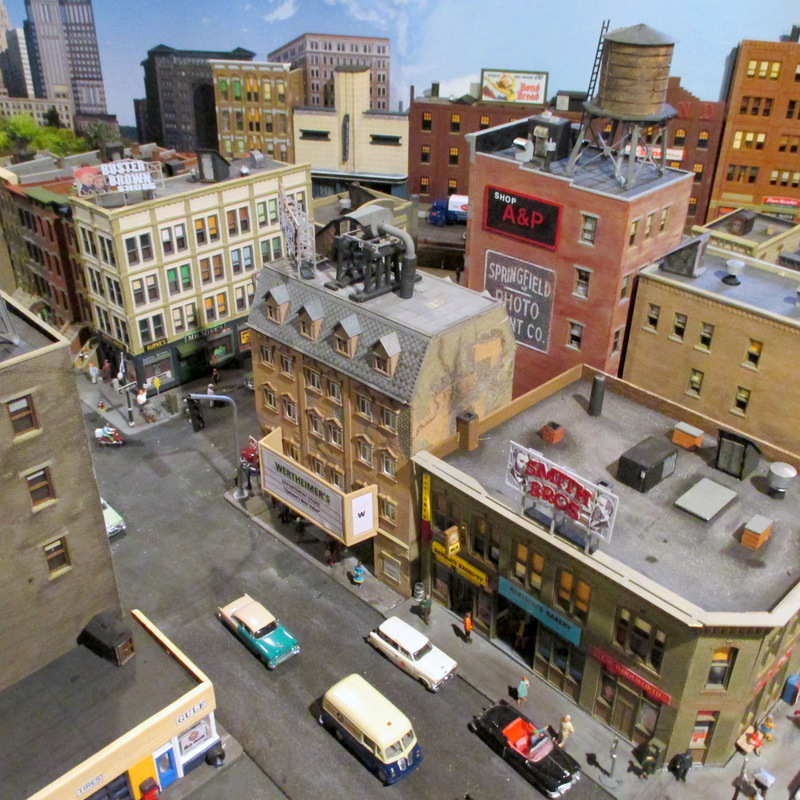
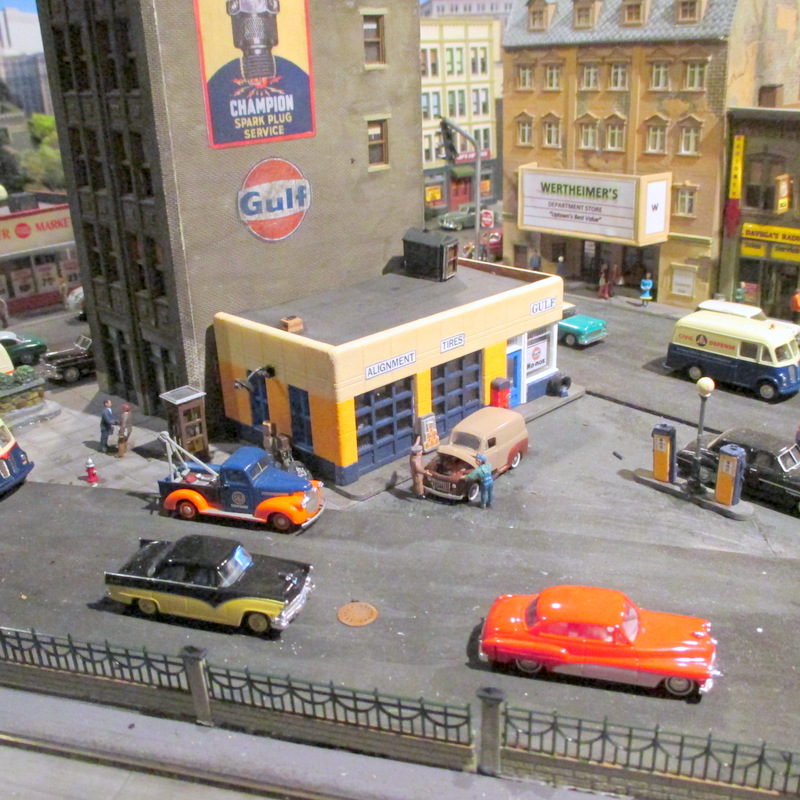
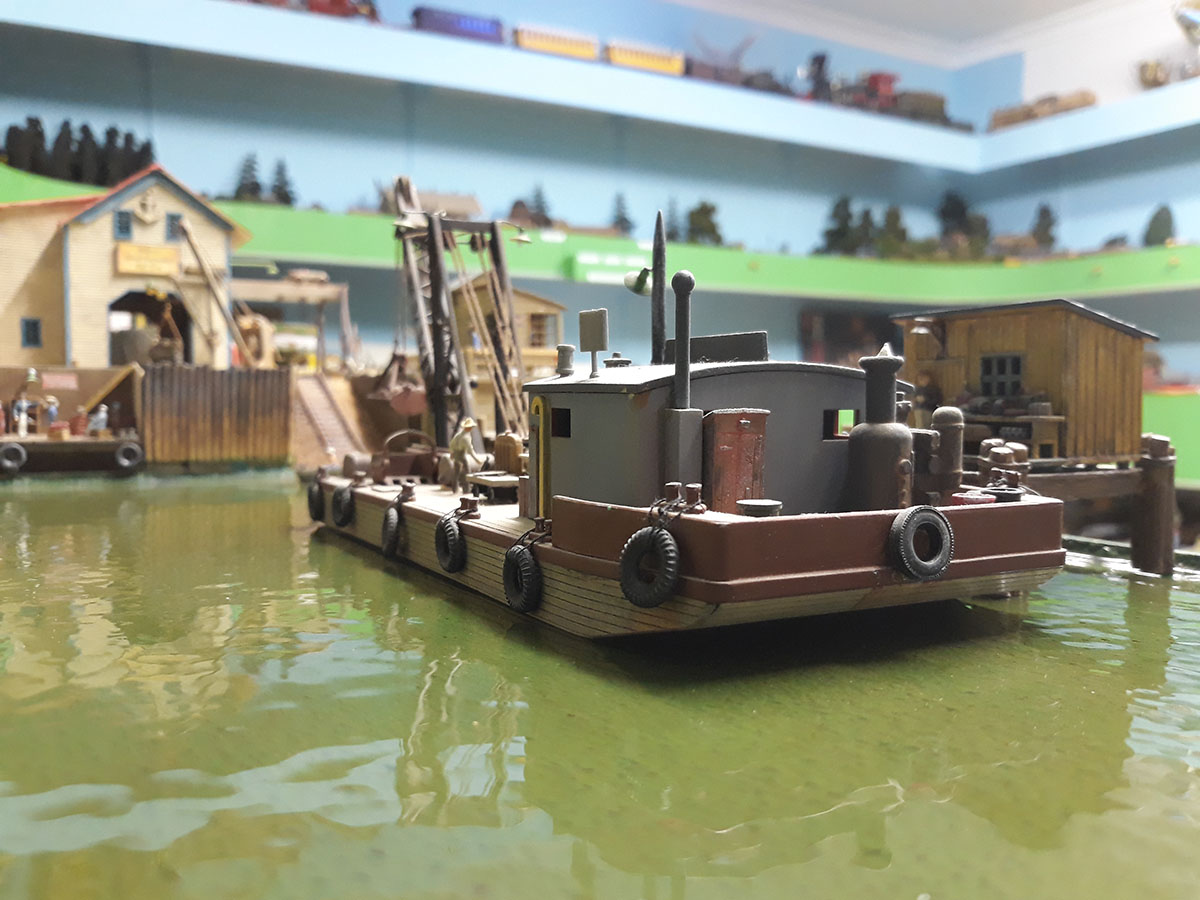
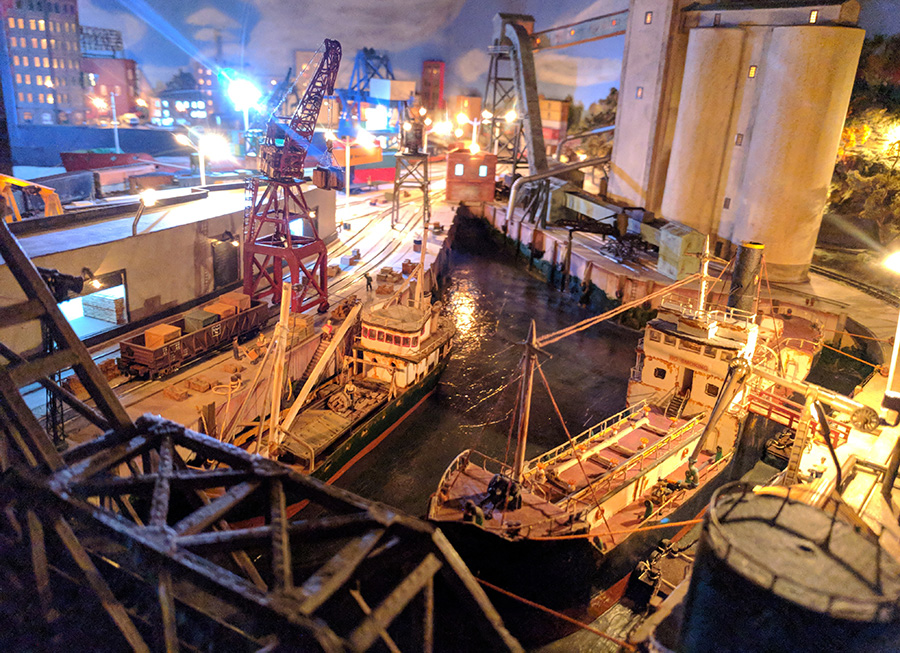
Lawrence has been in touch with his 50s theme model train layout:
“Al
Thanks for all the emails that you have been sending, and all the people that have sent to you, they are inspiration and helpful.
I finished the overhead system and got hooked. When I was in Denver in the early 70’s I went into a town north east into the mountains.
I remember this town with one paved road into the town with a paved road through the center of town.
The rest of the roads out of the town were dirt roads. Just east of Denver I saw farm land. So that was my initial idea to work on. And I decided on a 50s theme model train layout, with steam engines.
I started with only one engine that I have had for 20 years (Christmas tree track) being converted to DCC by the local shop.
Also a few OLD rolling stock and a couple of plasticville houses. I have one working DCC engine (new) at the present.
By watching your emails, lots and lots of utube shows, and the train store in the local city I started putting things together.
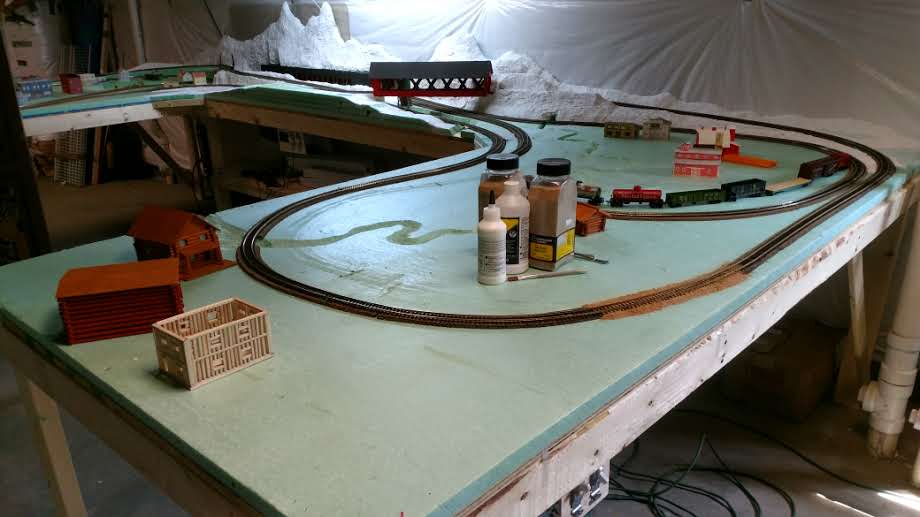
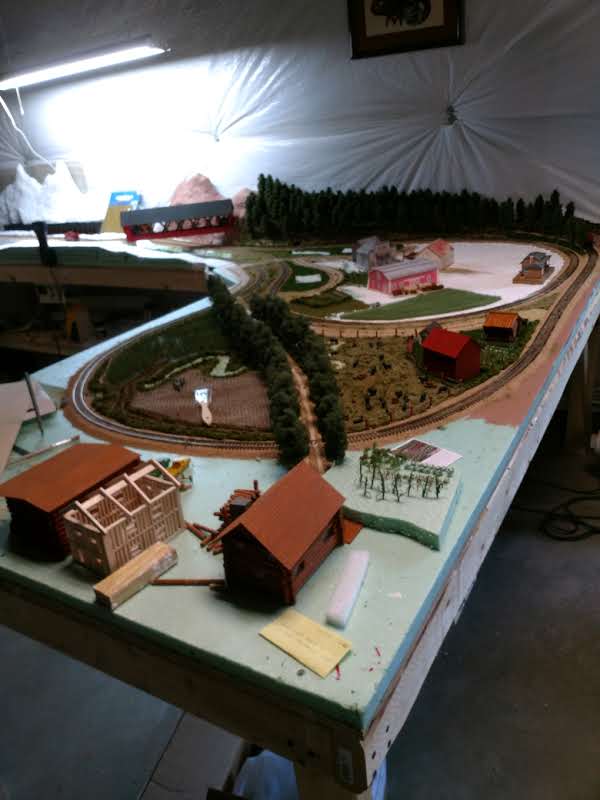
I started a couple of months back and decided on HO gauge. Built the tables to be U shaped around the furnace in the basement.
The legs of the U are 4×8 tables and the base of the U is 2×8 connection. I put one-inch insulation foam on the top for sound insulation.
Then on top of that is a layer of Perma-Mold for most of the layout as I progressed.
The trains will be steam only with one being passenger and one being freight. I have a very simple layout.
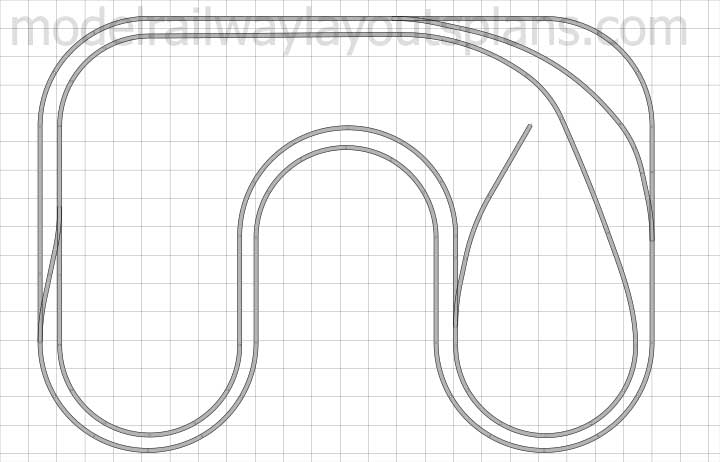
Two separate loops that both traverse the town, mountains and farm lands. Wired separately from beyond the DCC controller with switches on each table so I can shut one track off at a time.
I started by laying down the track and testing. I had gone on the web and I read that the minimum radius of the track should be 15 inches.
But then I found out for steam engines the minimum radius should be 19 inches. Rip the curves up and relay to the new radius. Then cut out my concept of the lake, rivers, and runs from the foam.
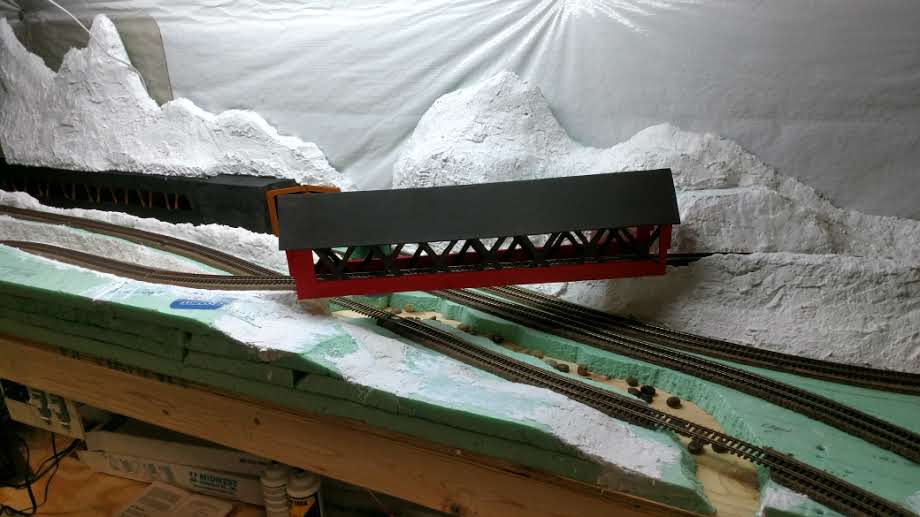
Deciding where I wanted the mountains I built them up with the same foam and plasta-molded to cover them.
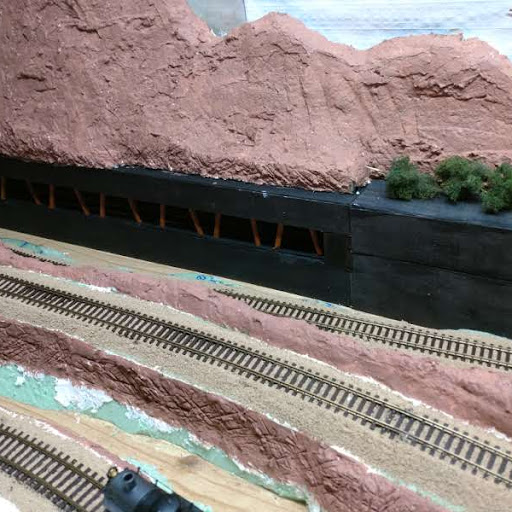
I am from New England and I loved the covered bridges so I just had to have one of them. Also went on the web and actually found ONE tunnel that had an open side.
The top pieces of the tunnel can lift off and the side girders can be slid out to gain access to the tunnel if needed.
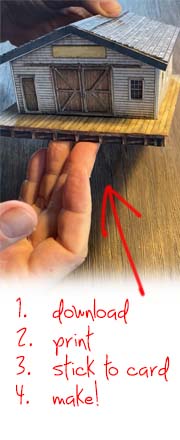
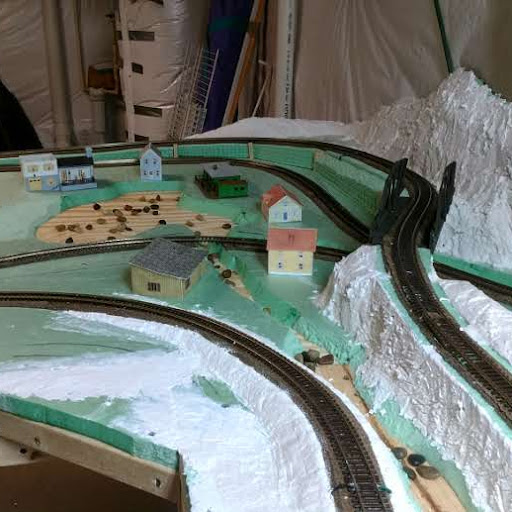
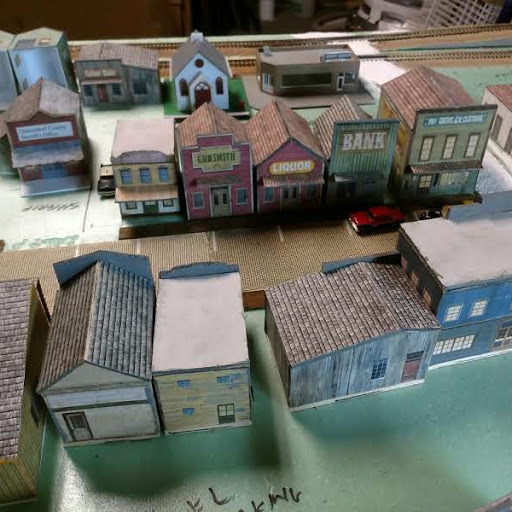
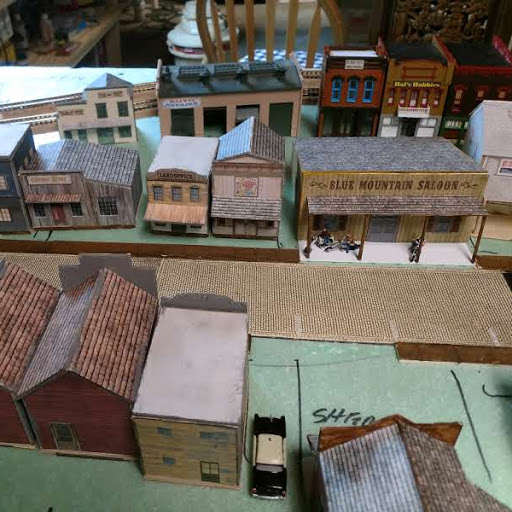
Ninety nine present of the stuff is scratch built. The log cabins are dowels from Lowe’s and notched the same as a real cabin. The town buildings should look familiar to you Al, as I downloaded them from your stuff.
I started building the town buildings with balsa wood but now rebuilding with Styrene so I can install the styrene windows and doors. And also prep for lights (lights (and people) LONG time in the future). I do have three plasticville building I put together and five that came from my Christmas setup. Giving a modern (for the time) of an old town with newer buildings.
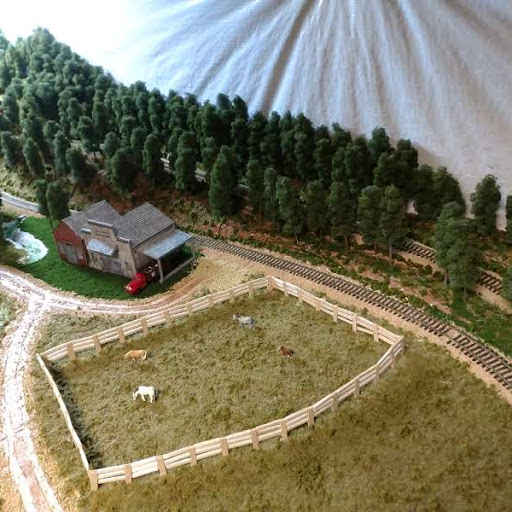
The early corn field, early wheat field, and the three types of fields are all Woodland Scenic products. The displayed 200 trees are from a Utube using bamboo skewers, furnace filter material, green paint, hair spray, and two types of Woodland Scenic grass. I expect I will be making another 300 trees yet. The country stone wall is made with Talus and Elmer’s glue. The town stone fence is ballast and glue. The large field fence is made from balsa wood, the corn field and farm ones from tooth picks, and the cow field is barbed wire.
I put a bunch of the basics in place to give me a concept of What and Where. I have started with the farms and working toward the mountains and the town. A lot of the little details will come with time. All the water effects will come later also.
So I have started on a project that will keep me busy for quite a while in the future. And thanks again for all your emails and all the other people out there that send the good information on what they have done.
Lawrence”
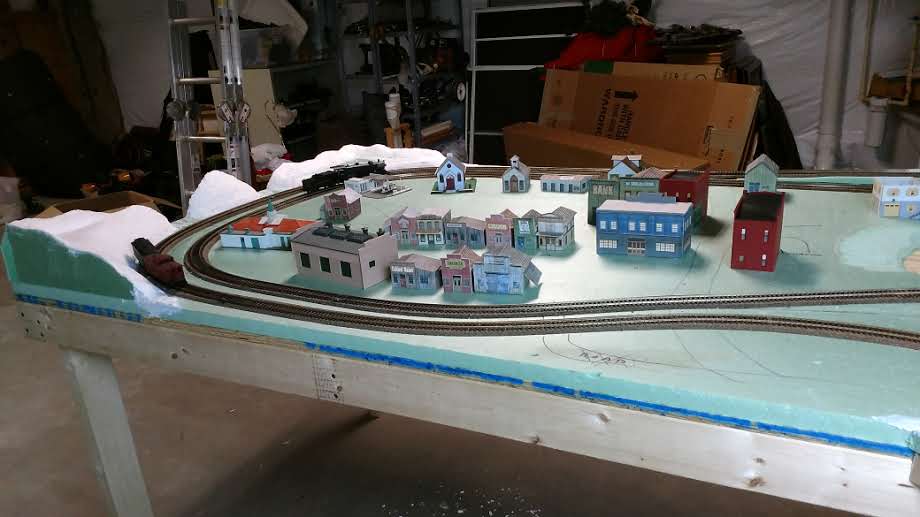
50s theme model train layout:
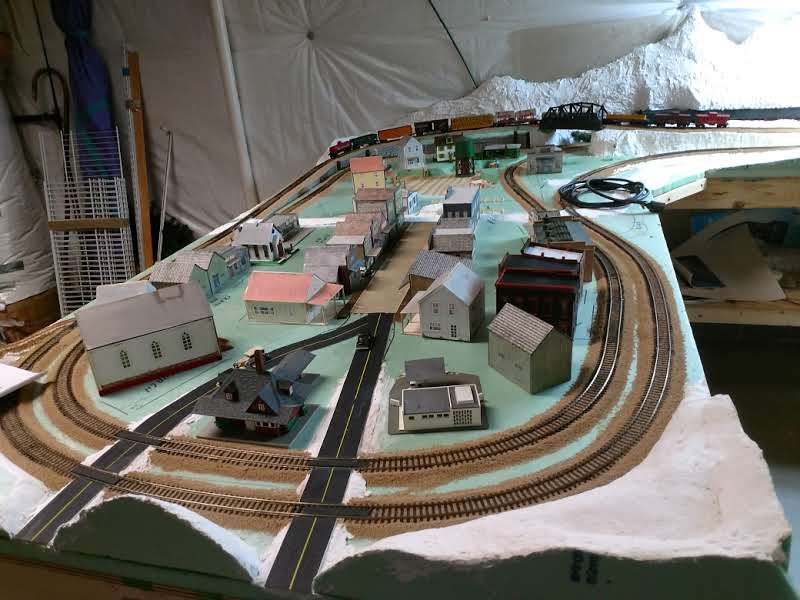
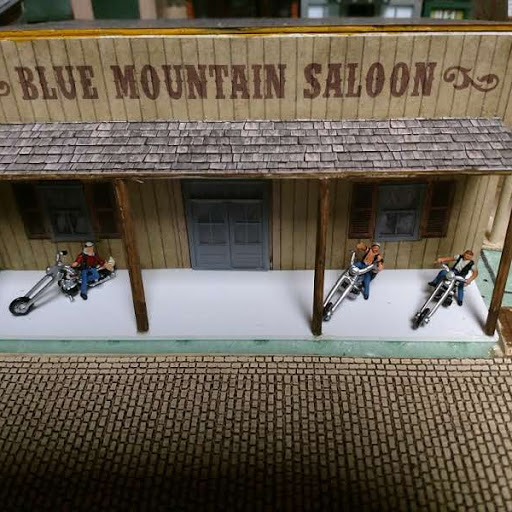
A huge thanks to Lawrence for sharing his 50s theme model train layout.
It’s really nice to read that the posts are inspiring some of you to get going on your own layout. And knowing that they are helpful makes it all worthwhile. Really does put a smile on my face.
The Beginner’s Guide is here if you want to take the plunge.
That’s all for today, folks.
Best
Al
PS Latest ebay cheat sheet is here.