N scale scratch building materials

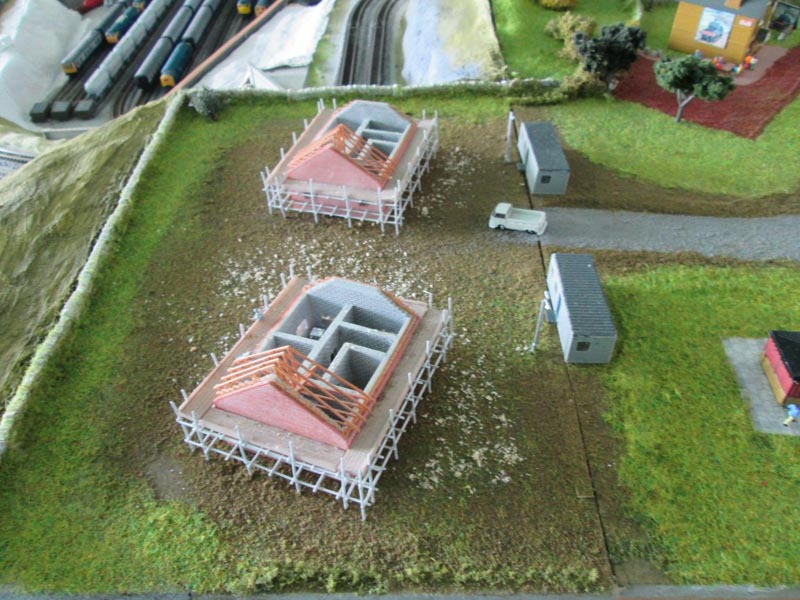
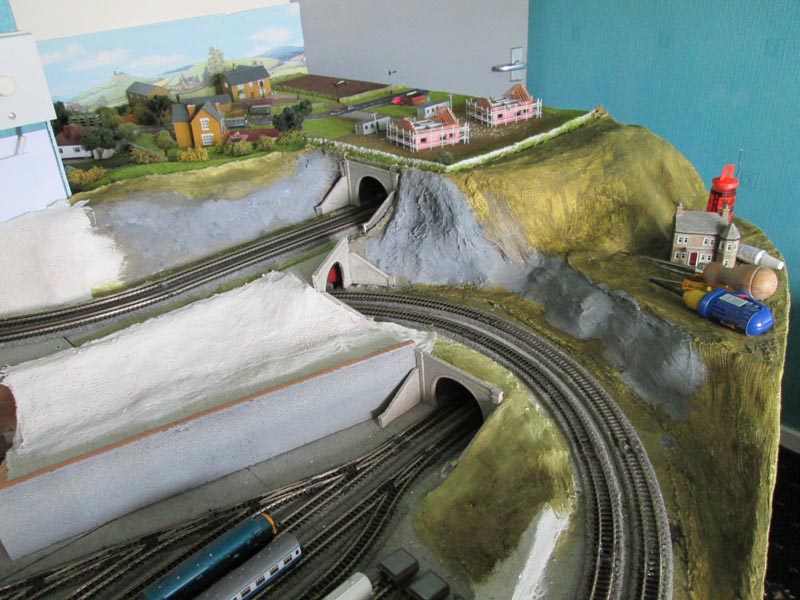
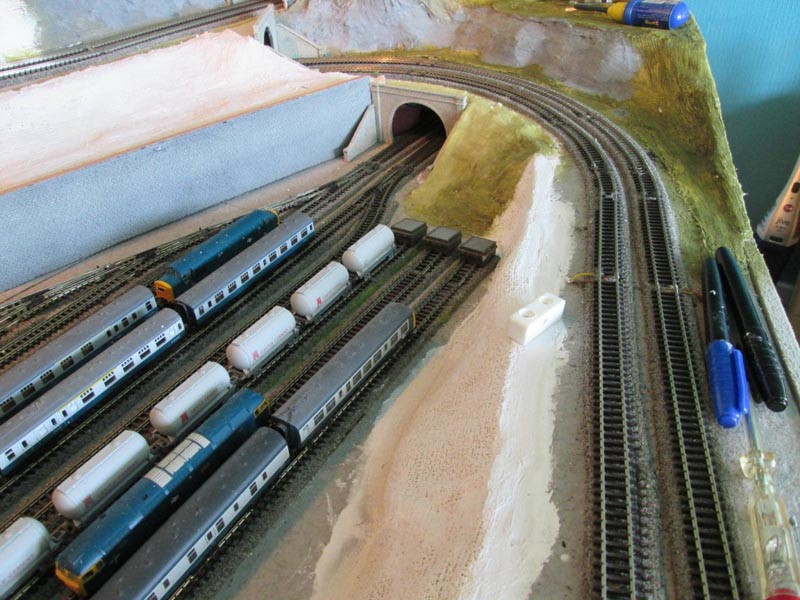
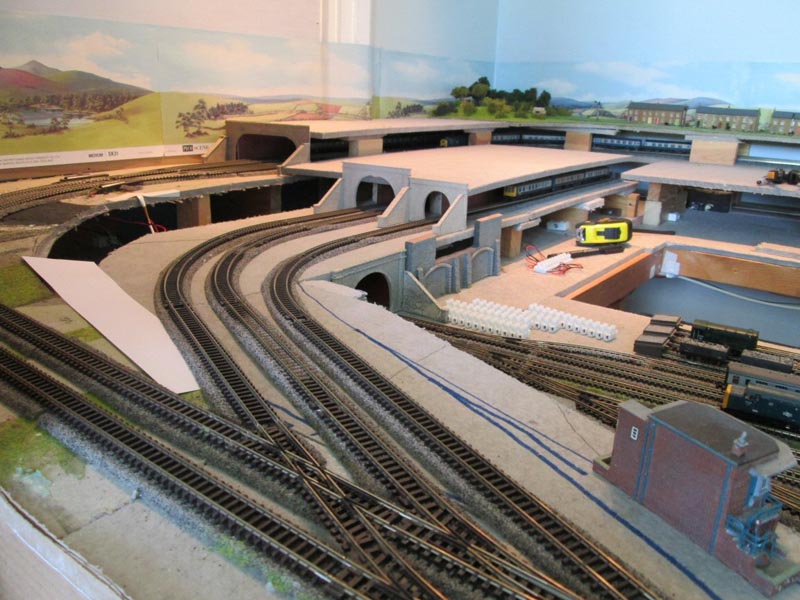
Lucien has been in touch with a great example of what you can use for N scale scratch building materials:

“In Romania hobby trains are few. This passion should be funded. In Romania it costs a lot to have a hobby because salaries are lower in the rest of Europe.

Now I am working as a TV journalist Romanian Television. I have not forgotten, but my old profession. During dictator Ceausescu I worked as a designer and I even made some of the elements of the models that explain dictator construction plans.

I still have some of the elements of a model ever since. It was a hall of large plants. equipped with an industrial railway.

My father gave me the passion for trains. When I was a child I received from him the first train on the 16mm kit. Later, when we had more trains, I realized that I can not build a diorama.It would be to occupied the entire apartment, unthinkable thing for my mother. I have risked everything to sleep outside with my trains and layout.

At 25 I bought an apartment, so the girls were thrilled. I took off with all the trains and the mother was also happy.

The first diorama I built for a priest. The guy did not really believe in God, but instead was fond of trains.It was the kind of guy who entrain if you have gone to the Railway station. He was carrying a crazy passion, and money. So he took his 9mm diorama

Later I realized that occupy space dioramas and women not much took place, so I switched to gauge Z (hi, hi, hi, just kidding!)

I’ve used, at the beginning, plastic material from phone cards. I have made the first bridges. Unfortunately in Romania there is no stores for Z format, so I chose to build them one after original plans which we have reduced to scale 1/220.

And then we used a plastic material particular whom we use for television blends

To amuse myself, I started to use and toothpicks in combination with various other materials

Romania has developed much in real estate and developers will show customers mock-ups after plans. I had a contract of buildings near a stations, so we’ve done, along with a Buddy, to 1/ 200th scale.

To amuse myself, I started to use and toothpicks in combination with various other materials”

Lucian”

N scale tooth pick wall

N scale tooth pick wall

N scale tooth pick wall

N scale tooth pick wall

N scale scratch building materials


N scale scratch building materials:

N scale tooth pick wall

model train house wall

N scale scratch building materials

N scale scratch building materials

N scale scratch building materials

N scale scratch building materials

N scale scratch building materials

n scale house

n scale house

N scale scratch building materials house


n scale house

n scale house

N scale scratch building materials house

n scale house

n scale house


“Hi Al,

When I first installed this modified ‘N’ scale to HOn3 Heljan turntable, it worked perfectly for about a day.

Then it twisted the drive shaft underneath, after it had a bind above and bent the drive shaft to about 2 degrees off vertical, then would only rotate 180 degrees and bind.

I left it for a couple of months (to regain my sanity) and then removed it carefully (I had allowed for a certain amount of lifting in case anything went wrong) and sorted out the problem. Got the drive shaft vertical to the underside of the pit again. Tested it and replaced it in the cut-out on the layout and hey presto, working like it should.

I used a 1 RPM 12 volt motor (ex Walther’s in the USA) underneath and run it on 1.5 volts to obtain a nice slow steady speed.

I am now able to turn the locomotives again and the roundhouse gang can get get back to work.

All the best

Brian”


Thanks to Brian and to Lucian for showing us how you really can use anything for N scale scratch building materials.

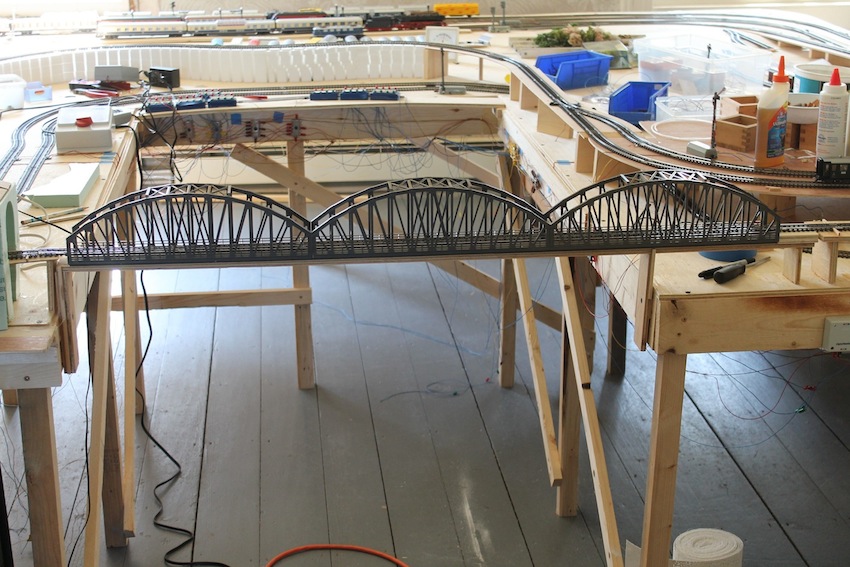
I have a whole load of stuff from Lucian. I can’t wait to show you his bridge – made from old credit cards believe it or not.

Please keep ’em coming folks.

Latest ebay cheat sheet is here.

And the Model Railroads Guide for Complete Beginners is here.

Best

Al


model train answers

Model train photography

Mark’s been in touch with another useful tip, this time on model train photography:

“Hi Al.

Here is another quick modeling tip.

One of the greatest pleasures of model railroading is being able to capture our work in photographs to share with family and fellow modelers.

With most scales, noticeably HO, a longer train (or even a large engine) will be in sharp focus at the front with the rest of the model blurred.

To overcome this problem, a number of photos (or “stack”), can be taken at different focus points along the train and then combined into just one single photo.

The key is to keep the camera on a tripod for stability and have a remote shutter release so ALL photos are stable with just different focus points.

This “stack” can then be used by any good photo program (I happen to use “Helicon Focus”) to convert the stack into one single photo.

The attached photo was accomplished in less than two minutes using my iPhone, a remote shutter release (such as the Camera 360 IOS) and the Helicon program.

The front of the engine is about 4 inches from the camera while the sky line at the rear is about 14 feet away.

The photo would be in even sharper focus with 10 to 15 focus points to work with but that would have taken another minute of two and I’m lazy so I used just 7 points for this photo. 😉

There are some very minor drawbacks to this procedure and I’ll be happy to address them if there is any interest in this type of model train photography.

Keep your rails shiny!

Mark <><" Model train photography


Now one form the archives:

“I have been watching and enjoying and learning from you emails for over three years now.

I signed up to get them when I was in the planning stages for my layout.

I spent three years working on it when I could and had some money to spend.

Now it is coming down so we can downsize to a smaller house.

So I asked my son to help me make a movie of the layout so I could remember it. I don’t know what space I will have for it in the new situation but I will build another layout.

Well the video turned out to be a great father and son project.

We had a great time making it while he was home from college this summer.

I saw that you don’t get many large guage train videos so I thought this might work for you.

Thanks for all you do.

Greg,
Sanford, Florida, USA”


Latest ebay cheat sheet is here – and still going strong too.

I did wonder how Mark got his pics so crisp and sharp. Now I know!

And it got me thinking, if there are any more model train photography tips out there, please do send them in.

And don’t forget the guide if you haven’t taken the plunge yet.

Course I’m biased, but it’ll save you a small fortune and many, many hours of mistakes.

Please keep ’em coming, folks.

Big thanks to Mark and Greg.

Best

Al


N scale modules

Gary has been in touch with a system that uses a type of N scale modules:

“Hi Al: First of all, let me say THANKS for the years of tips, tricks and ideas emanating from your emails and other modeler’s creative thinking.

I have only been using N scale modules for about 5 years, including a year in Iraq (fortunate enough to have my own ‘hooch’) and four years in Japan, where my wonderful wife allowed me a whole bed room to model and run trains.

As is the experience of most modelers, I feel I have been blessed with improved modeling skills over the years and would like to share an idea I haven’t seen in print anywhere else, and that is the idea of ‘Platform Modeling’.

It is a simple and very easy to work with system, and I hope most would agree, comes out with pretty good result (see a couple of pictures I have sent along with this narrative).

Here is how it works:

After you have your track laid, you begin by outlining a template (on a piece of paper) of the area you want to model. I try to keep the templates for the platforms to a manageable size, as they need to be somewhat portable to move them from work space to layout and back again until you’re satisfied with it, and finally place it ‘permanently’ on your layout.

After the paper template is made, I use it to cut out a thin piece of styrene or sturdy cardboard. Cardboard box is NOT suitable (too thick). But I have a friend who keeps me well supplied with cardboard dividers (thin sheets used to separate dry goods for shipping in bigger boxes) and glue two of these together.

Using these cardboard sheets also facilitates easy wiring as poking a hole through the platform and taping the wires to the bottom is very easy to do.

And that’s about the end of the story, because once your cardboard platform is ready, all that is left is to scenic it, which can be done anywhere because of the portability – that’s the best part of these N scale modules.

Anyway, hope the pictures help explain, and thanks again for your postings. Please don’t quit.

Sincerely,

Gary”

Before –

N scale modules

After –
N scale modules

Gary’s module reminded me of N scale modular layout.

“Al,

Happy to see you are drifting into the larger gauges. While I maintain an N gauge layout in my basement, I put on at least one display a year using Lionel Standard Gauge. It is part of a large display by the Bergen County Model Railroad Club. But dispatched ahead and attached are photos of a Standard Gauge setup being constructed slowly, a speed dictated by the fact it is 107 miles from my home and must be done on a time available basis.

Lionel Standard Gauge was produced from 1906 to 1939 and is 2 1/8” between the rails. It is a toy, thus, scale is not much of an issue. It is now back in production, but as reproductions of these ancient toys with more modern electronics including smoke and sound. It is all metal and thus, heavy, allowing it to make sufficient noise without help.

This layout is located in a large basement in rural Pennsylvania, USA. It was started for a friend who had built club display layouts with me for years. He passed away, having reached into his 90’s, last year, but this project continues to allow his family to enjoy his large collection of mostly antique trains, as they should be enjoyed, running and producing a tremendous amount of noise. Santa delivered his first train in the mid 1920’s.

The major issue faced in this location is that the ceiling is low and large ducts hang under that. I cannot stand up in most of the basement. Worse, the large air ducts hang over the layout were an eyesore. The solution was to cover them with clouds made of fire-proof pillow stuffing (Polly fiber).

The standard gauge operates on two loops, one a dog bone, going up and down 3% grade three levels. The second runs around the base rising only to reach a set of cross overs which connect the two lines. A storage yard is on a second table at right angles to the operating area. It is connected by a Y to the mountain line at mid-level. Above the standard line is an O gauge line which at one point goes though the clouds.

In these photos the locomotive is a reproduction by MTH of the classic Lionel 400. It is about 20 years old. The cars, however, all date from the 1920s. For years this train pulled by both reproductions and antiques, ran on the annual club display, built in three weeks each winter with an equal grade roaring up and down a hill with a train of 17-19 freight cars with a caboose.

Controlling antique locomotives, which use a pinion drive, on a hill is a major issue. They will take off when they go over the top. Some, shut off, would just role to the bottom of the hill. Thus, unless controlled by an operator who is never distracted, such layouts must be wired to two circuits one up and one down carefully set to avoid too much speed as it crosses the summit and starts down. Keeping heavy locomotives on the track is sort of important. This is not an issue with the reproductions.

John McHugh
Ho Ho Kus, NJ, USA”

QLW 2 8-9-15


lionel model train

lionel model train


Two fantastic posts today. A huge thank you to Gary for sharing his N scale modules and to and John too.

By the way, I don’t mind the larger scales at all – it’s just that not that many are sent in. So if you’re sitting on one, you know what to do.

And it doesn’t matter what scale takes your fancy either, there are more great tips and ideas in the guide. Have you taken the plunge yet? Why not give it a whirl and see what all the fuss is about.

Keep ’em coming folks.

Latest ebay cheet sheet is here (Thank you for all the comments).

Best

Al

PS More HO scale train layouts here if that’s your thing.


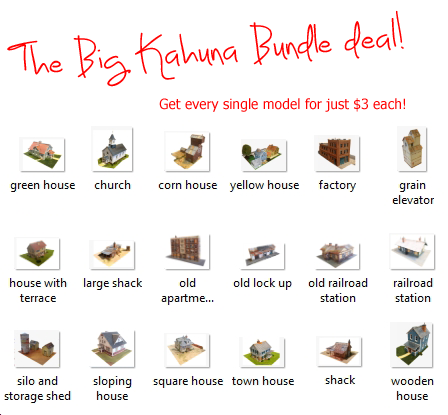
Need buildings for your layout? Have a look at the Silly Discount bundle.