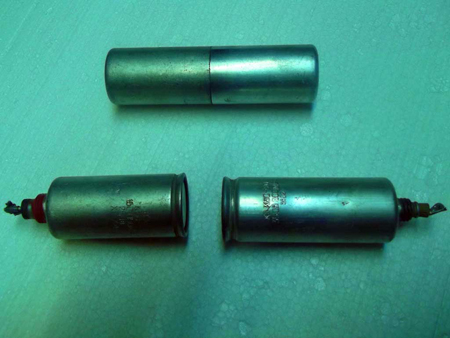
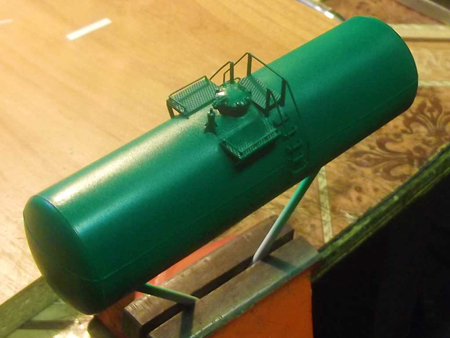
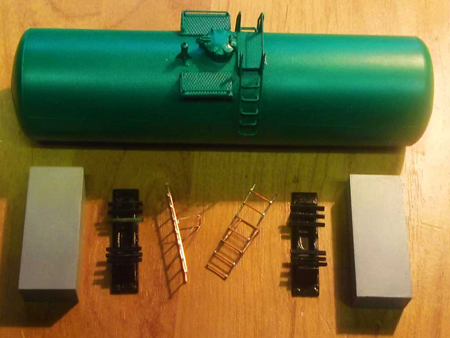
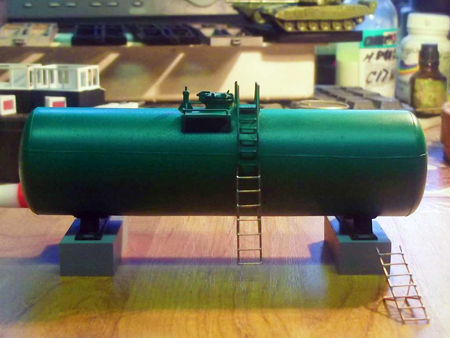
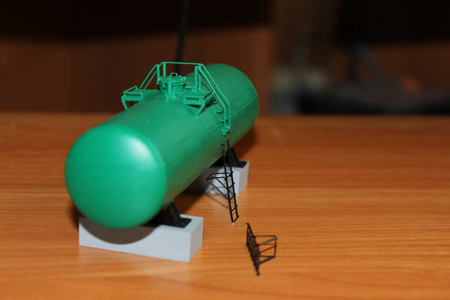
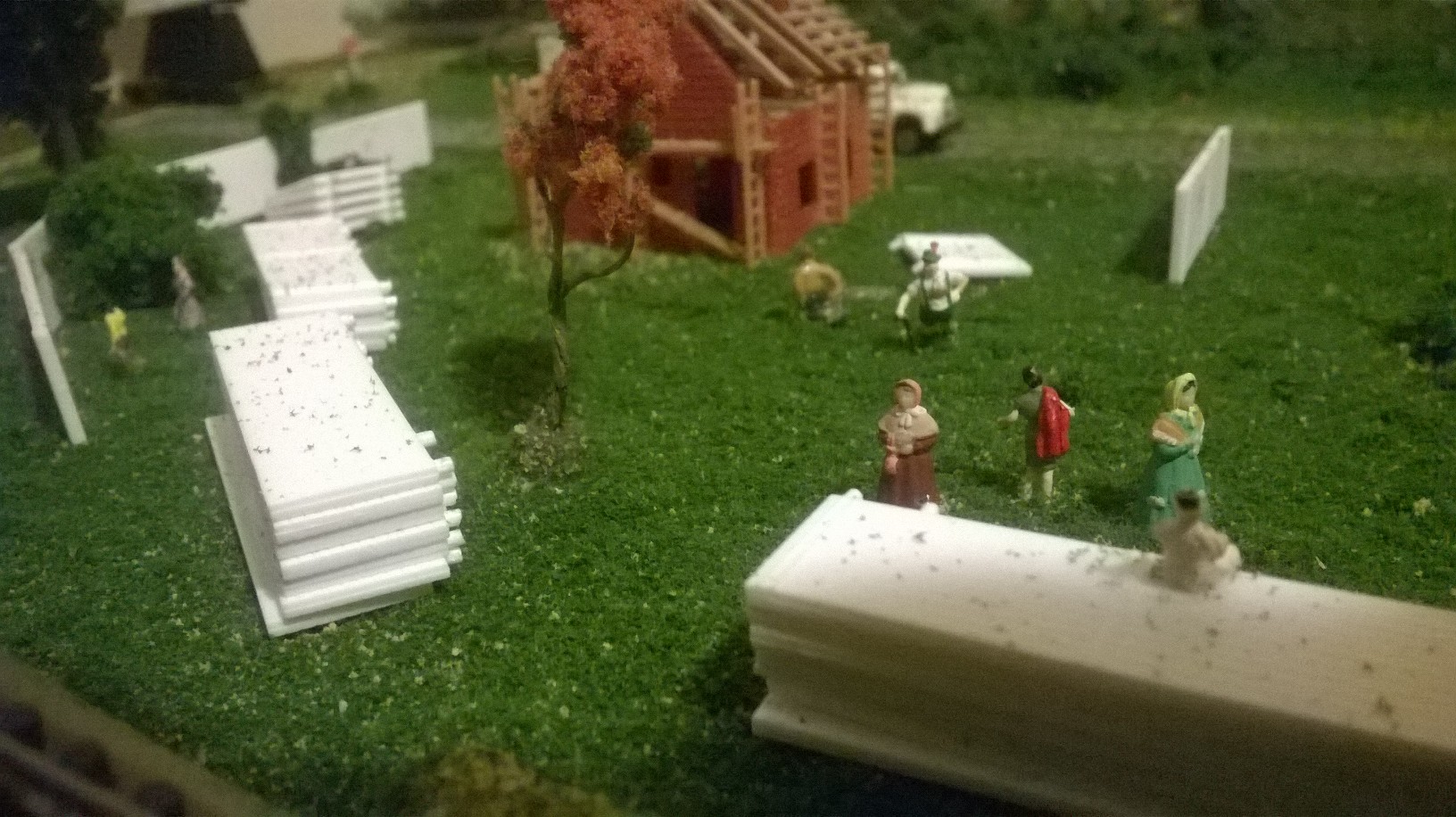
Here is fuel tank from two condensers. Diameter is 32 mm, suitable for 60 m3 capasity tank (H0 scale).
Ladder is made from copper wire. Wire was rolled to square shape, after that it was soldered.
Tank was made in a uniform rush, so my friend did not any photos of process, only ready product. Fuel tank equiped with breather, full size steps – as in original tank. Stand are close to original. Welding seems is made with string and glue.
Best regards,
Andrey”
“Hi Alastair.
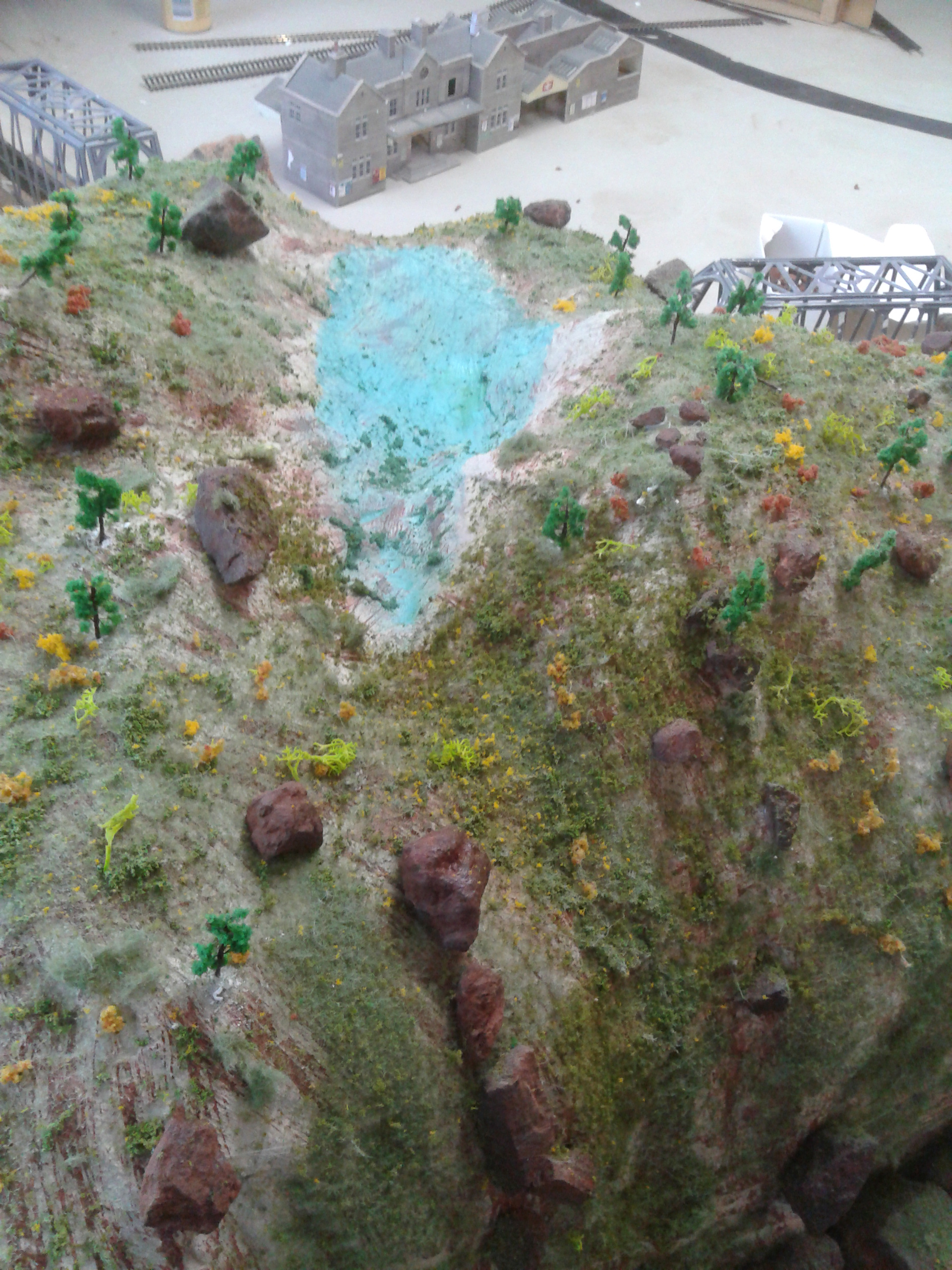
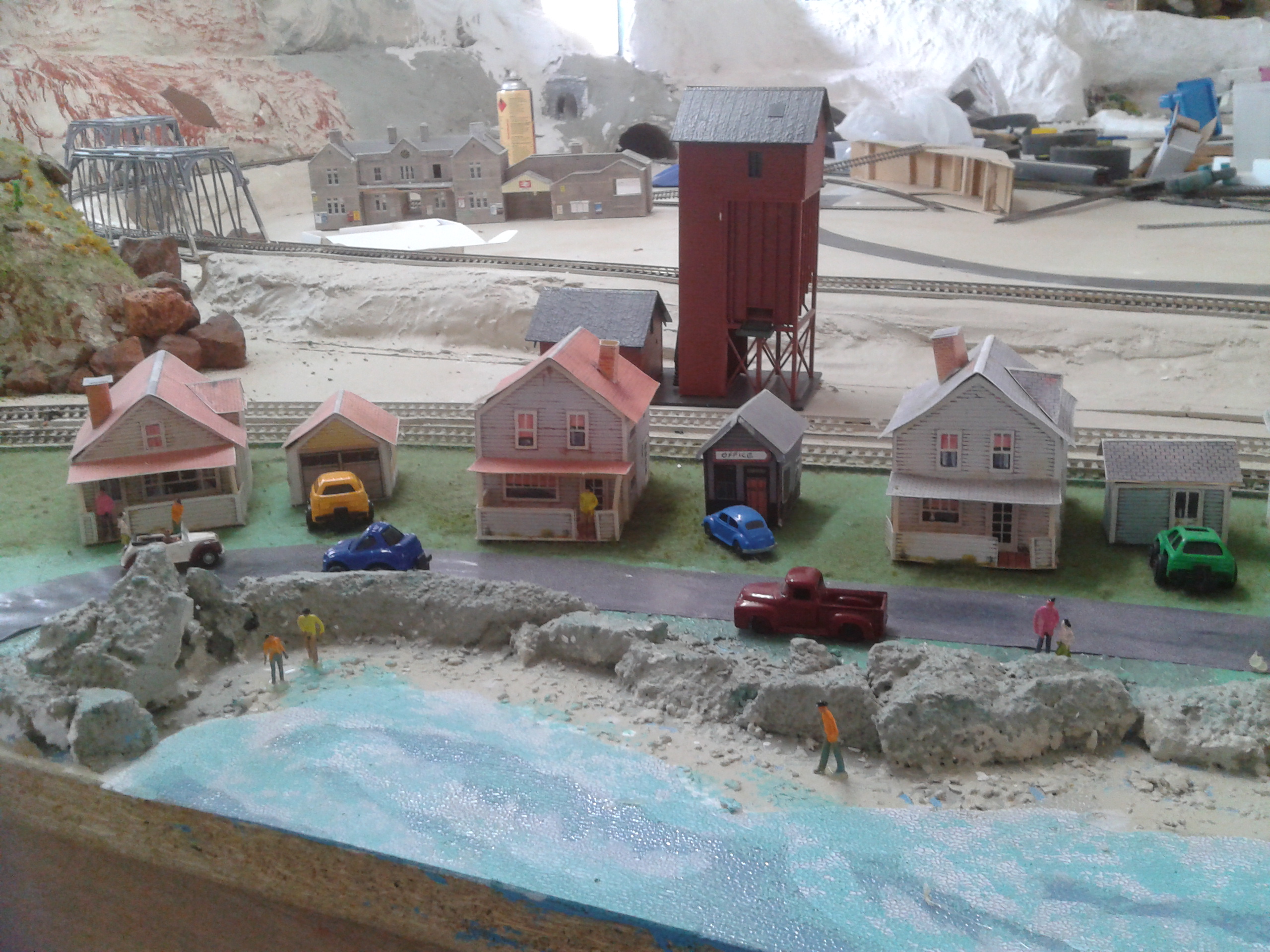
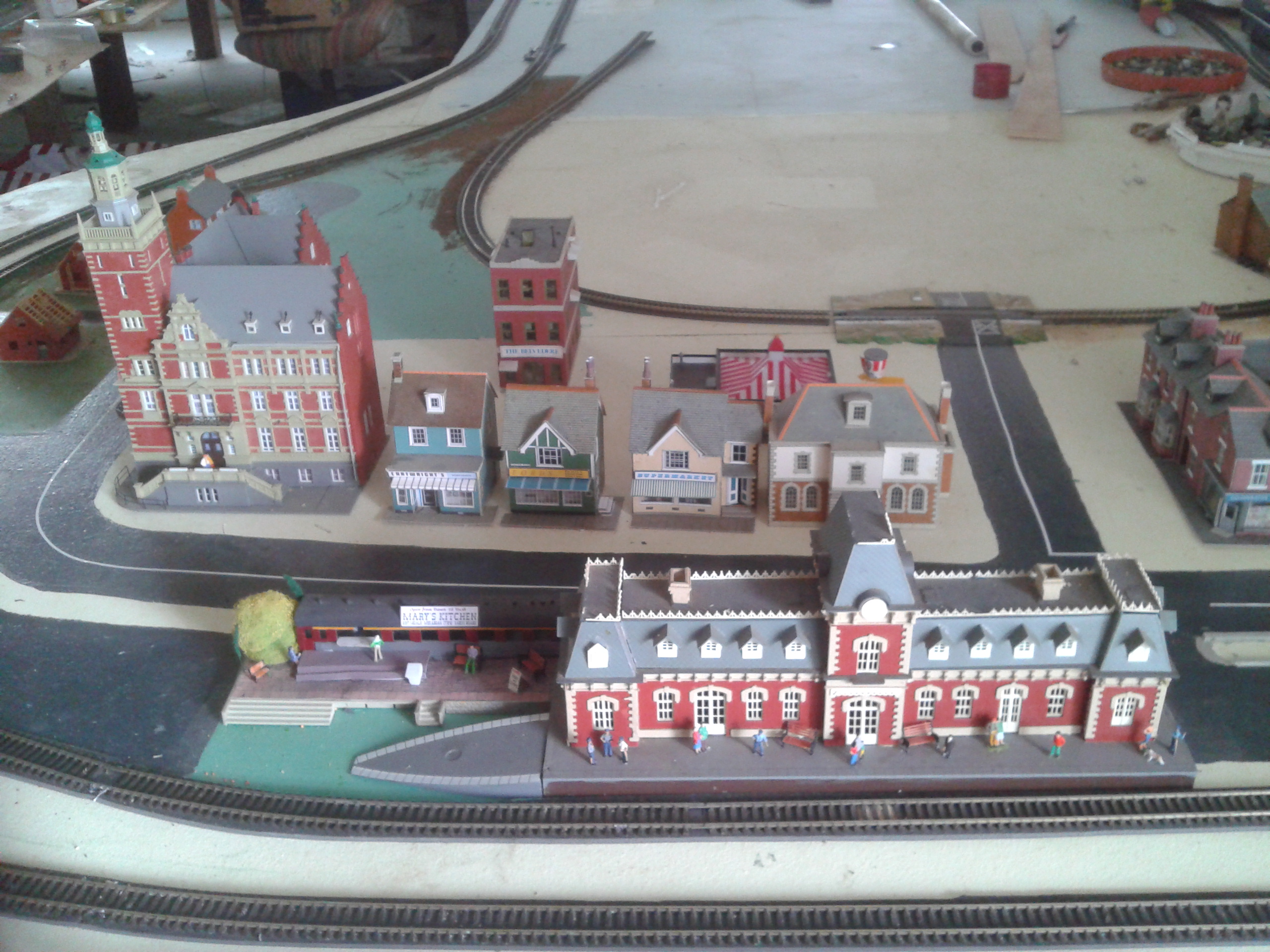
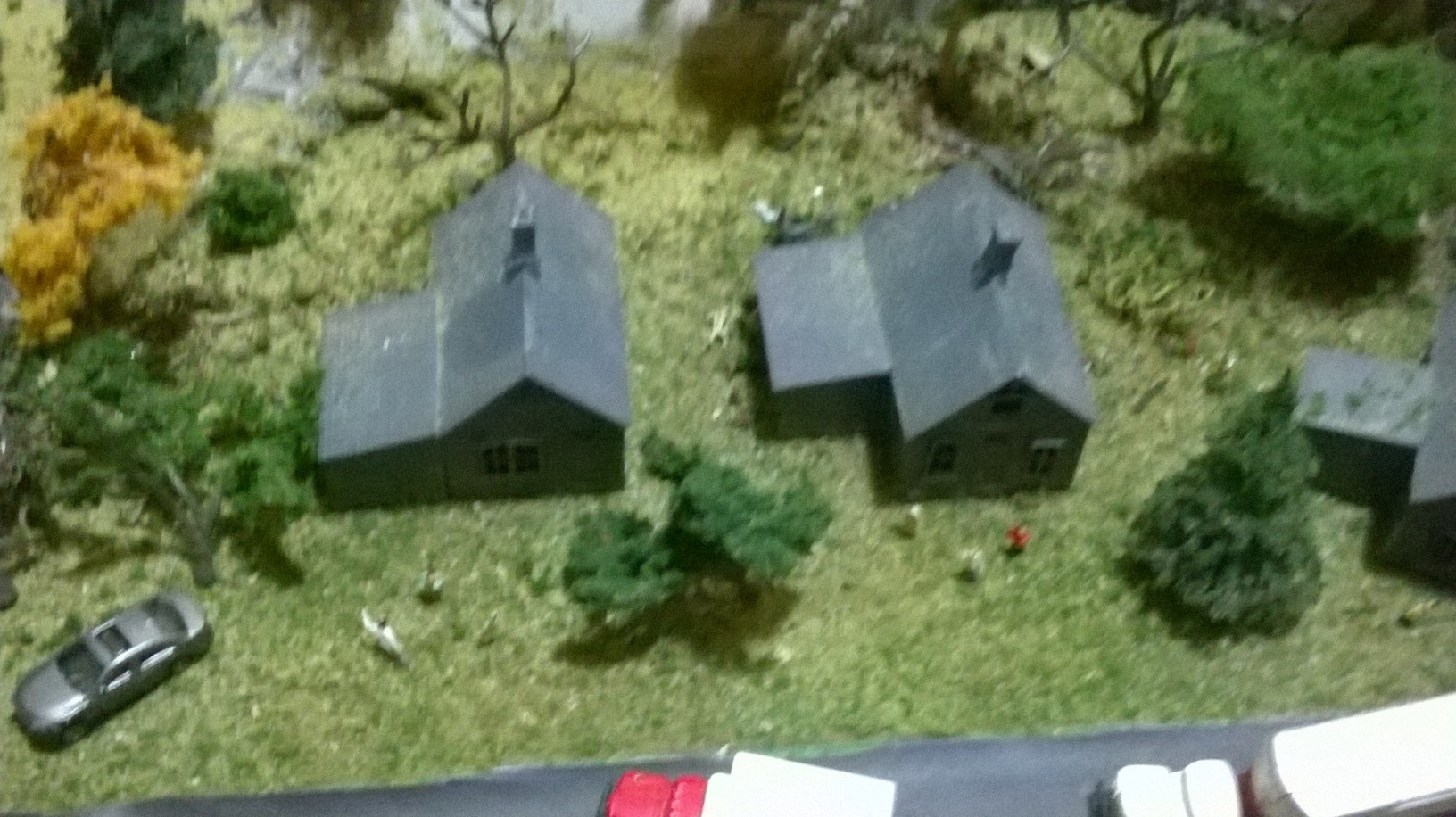
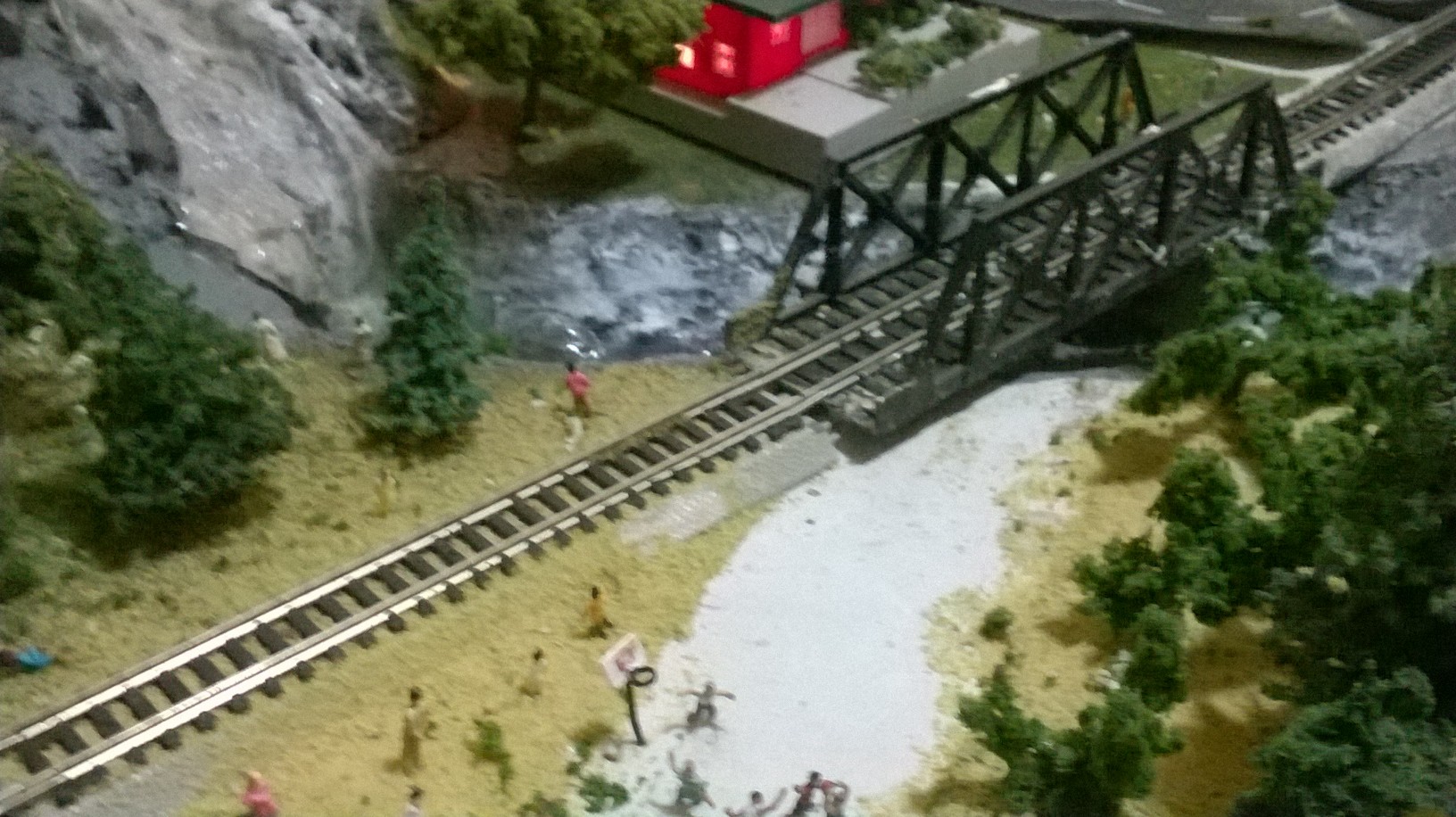
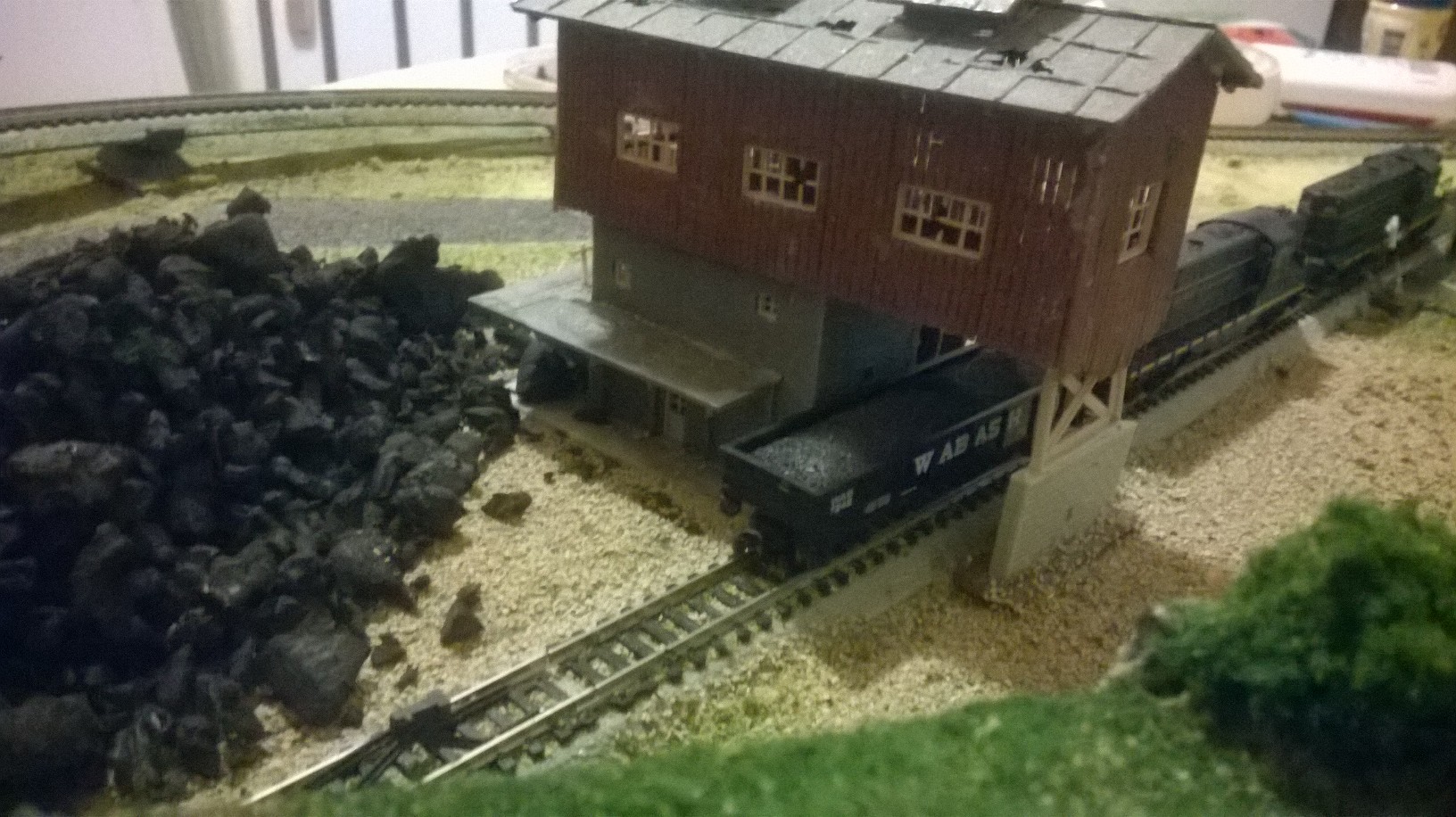
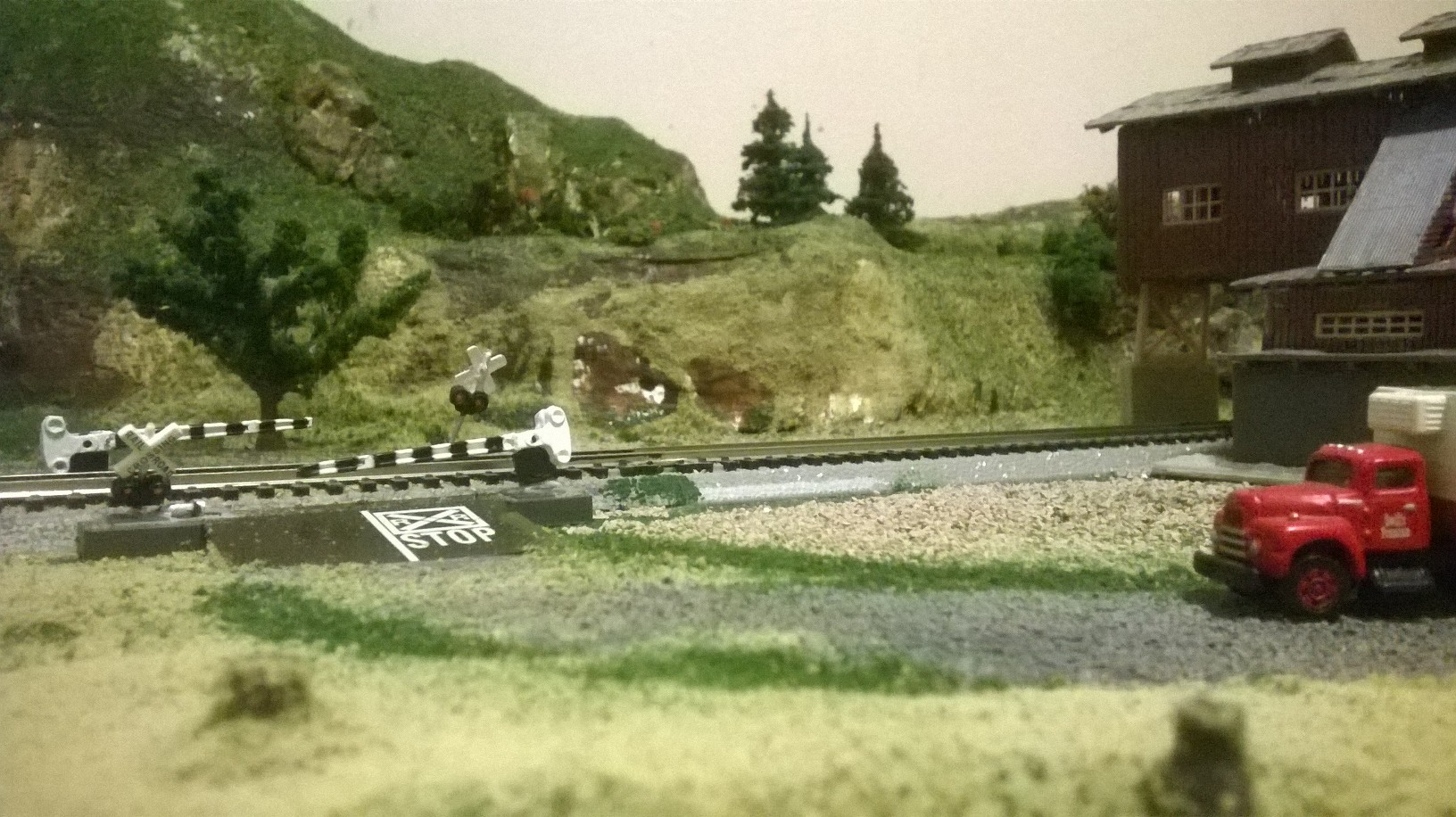
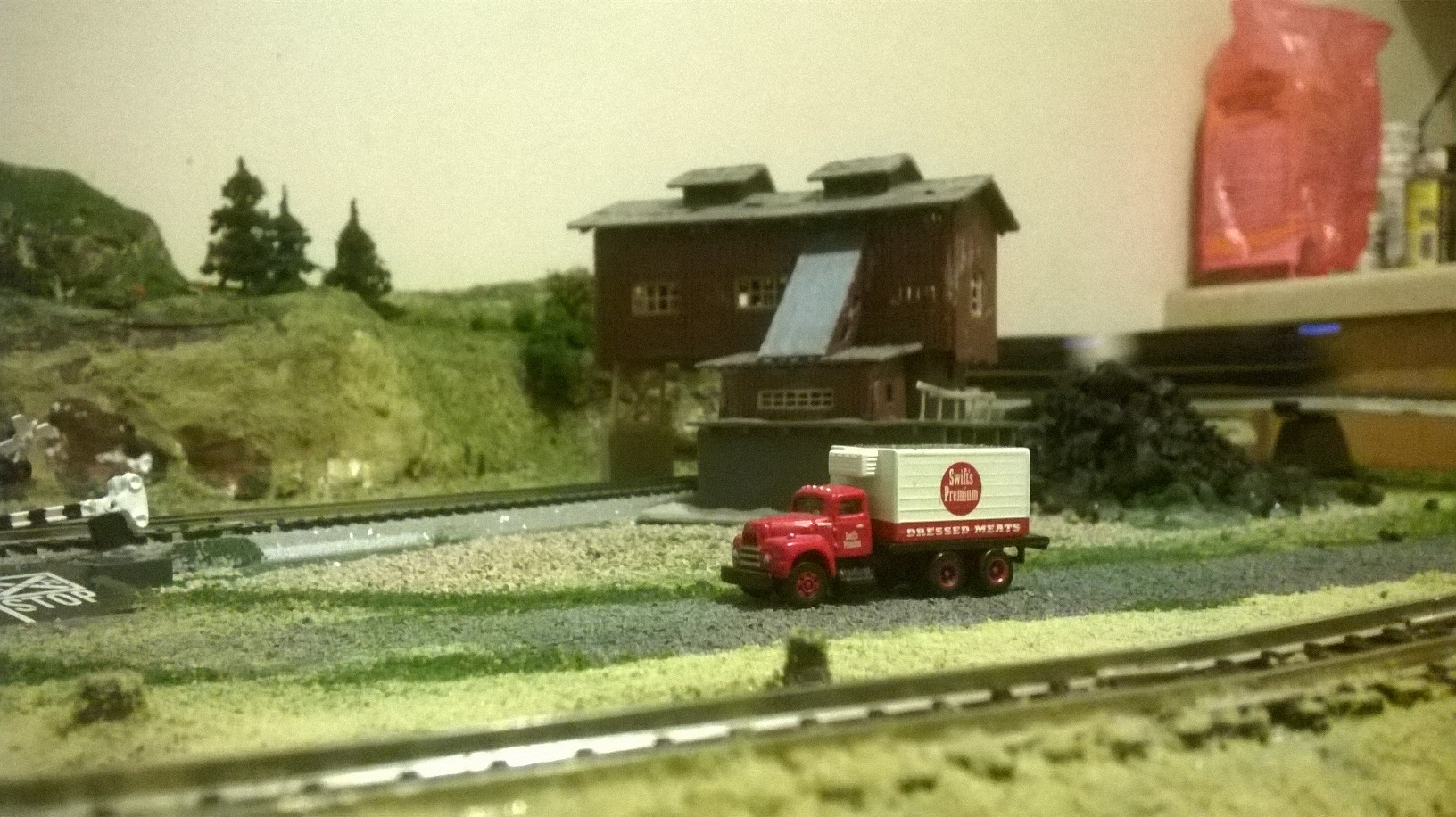
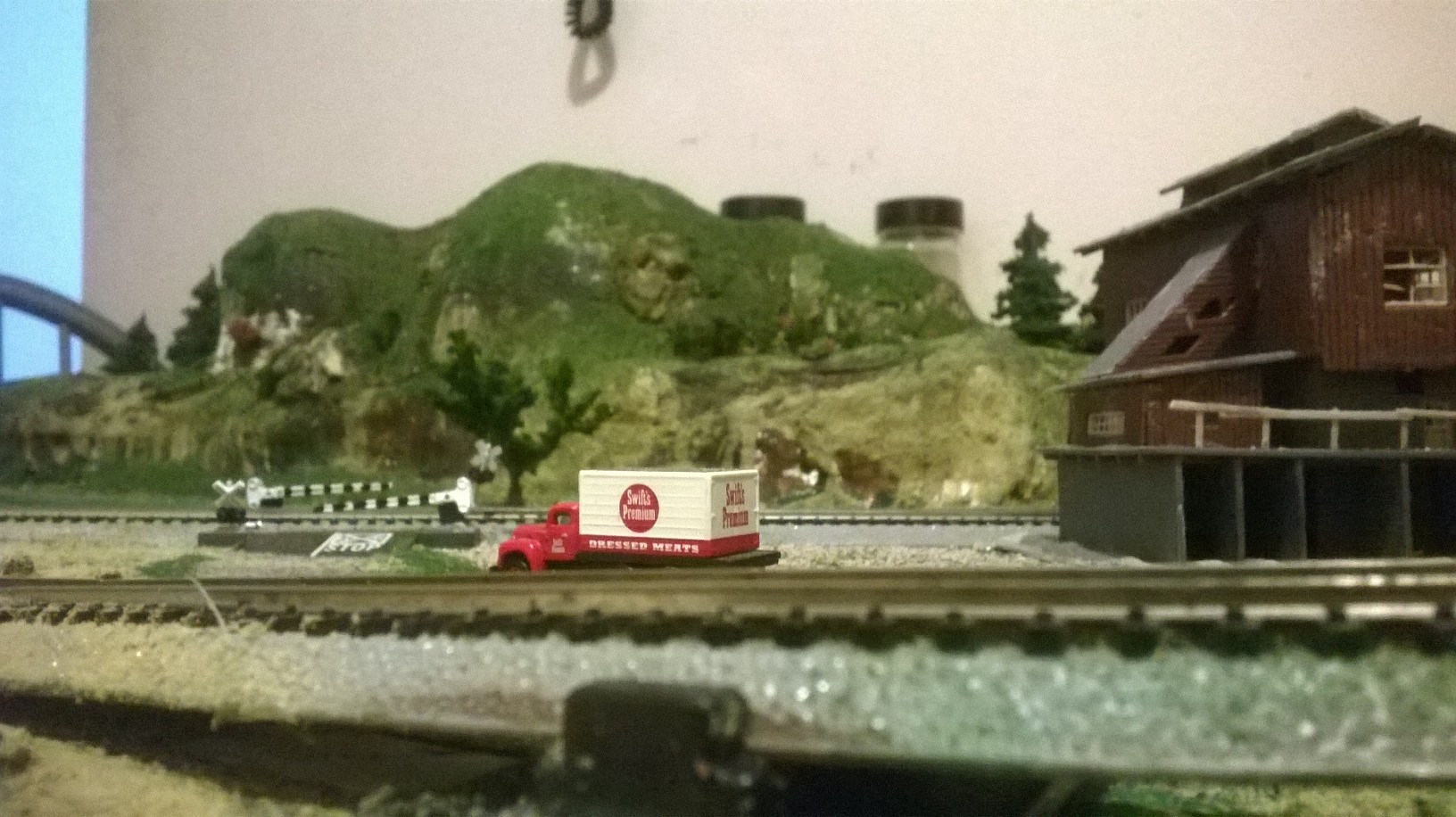
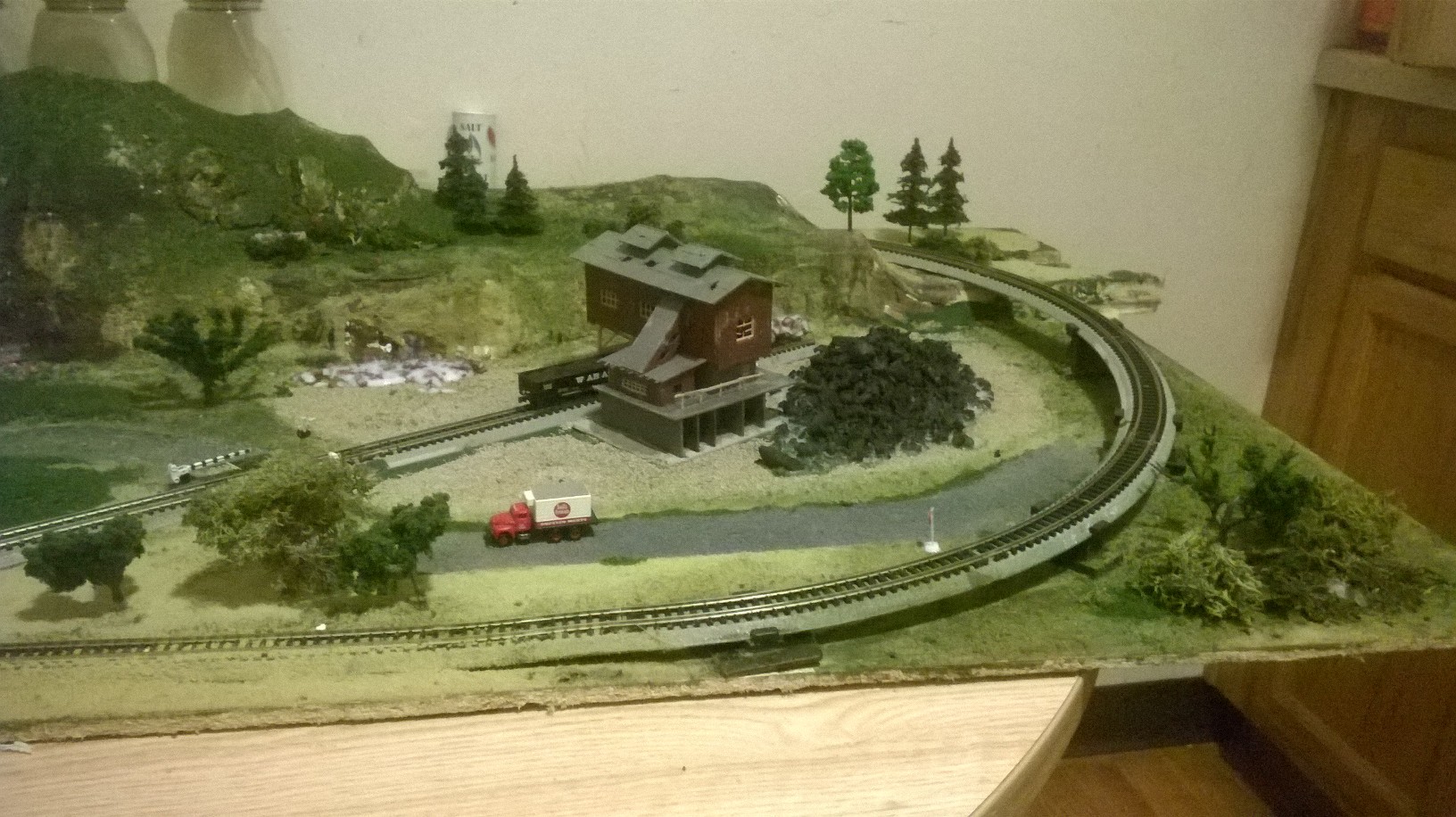
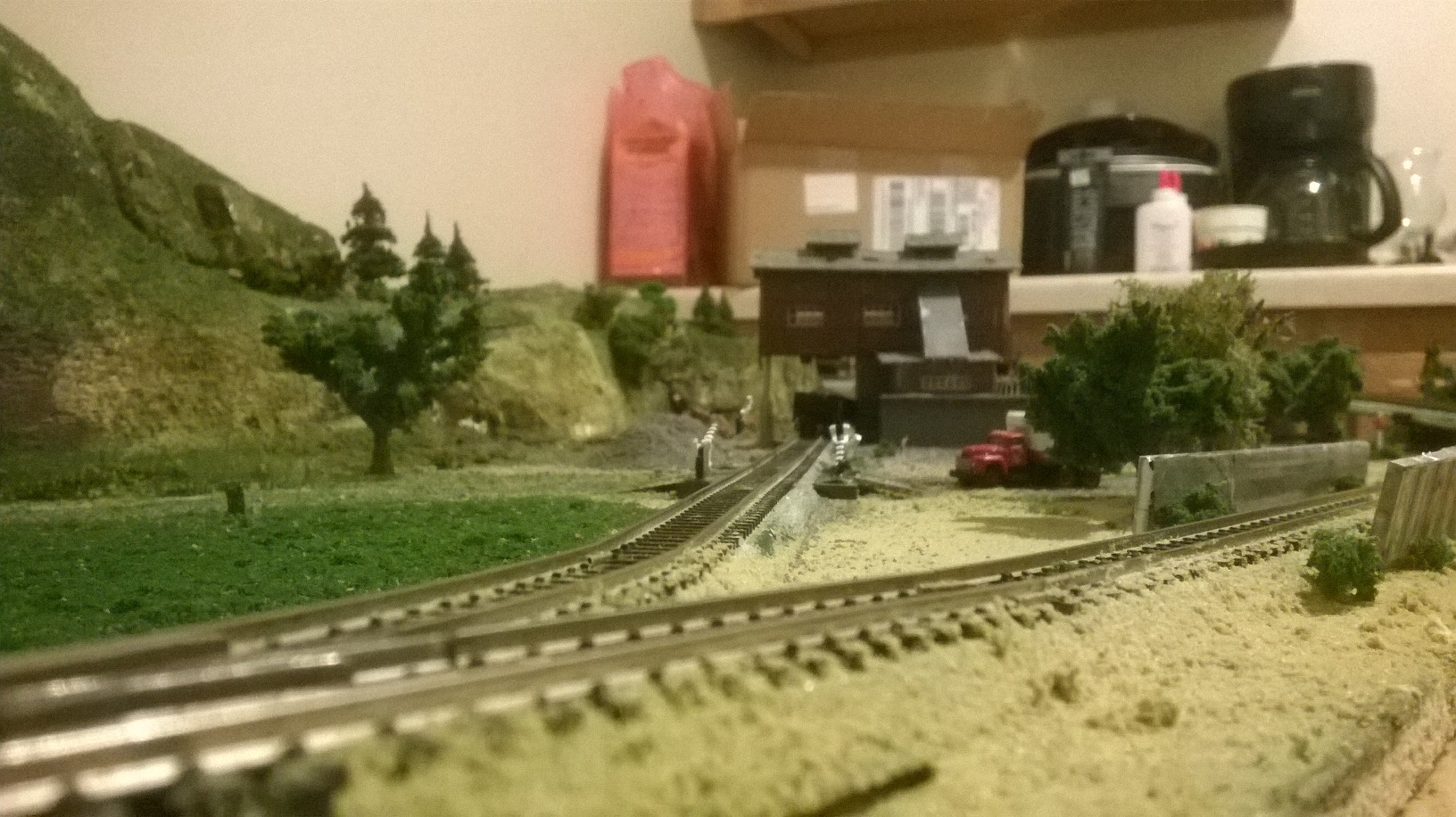
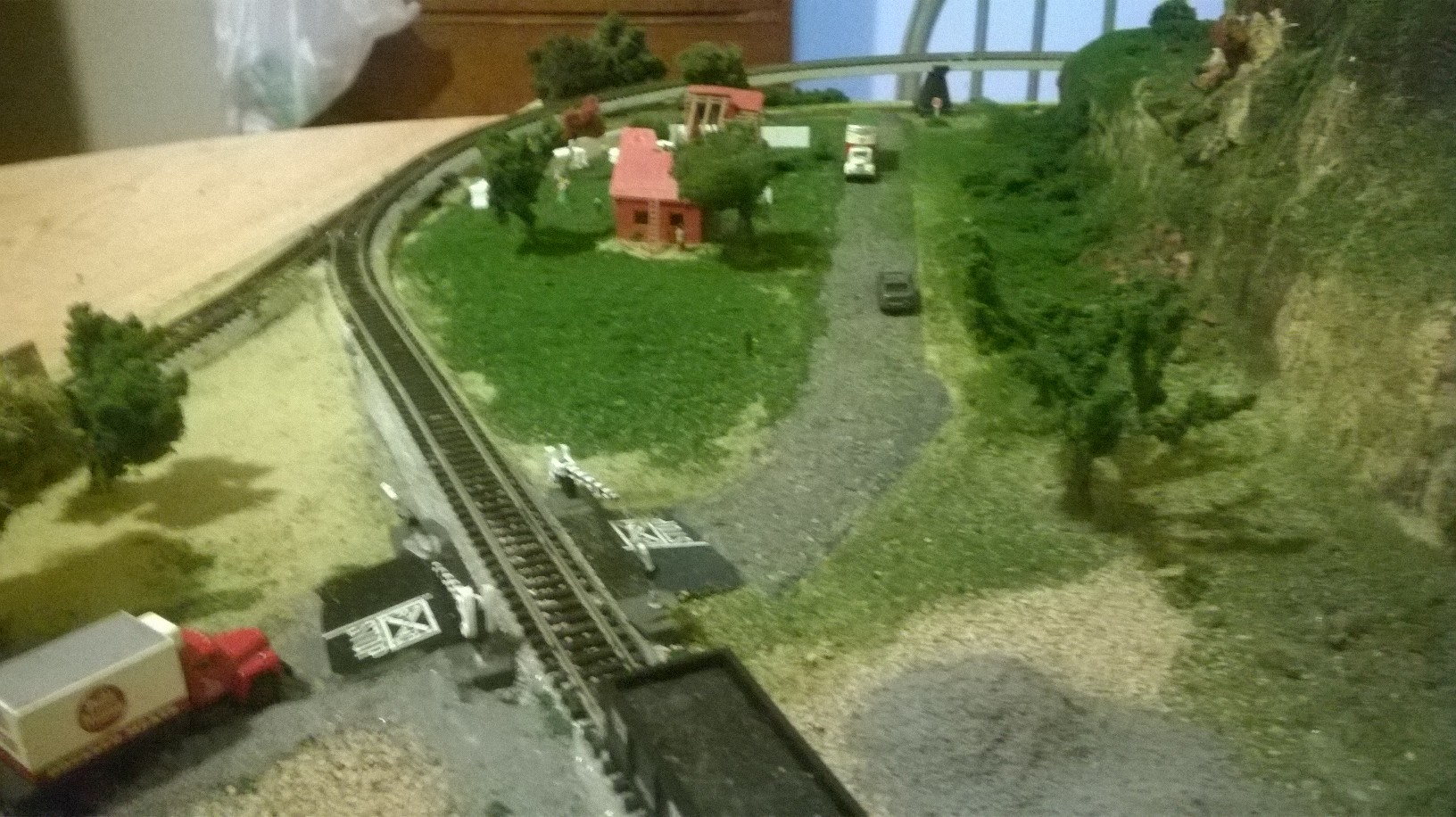
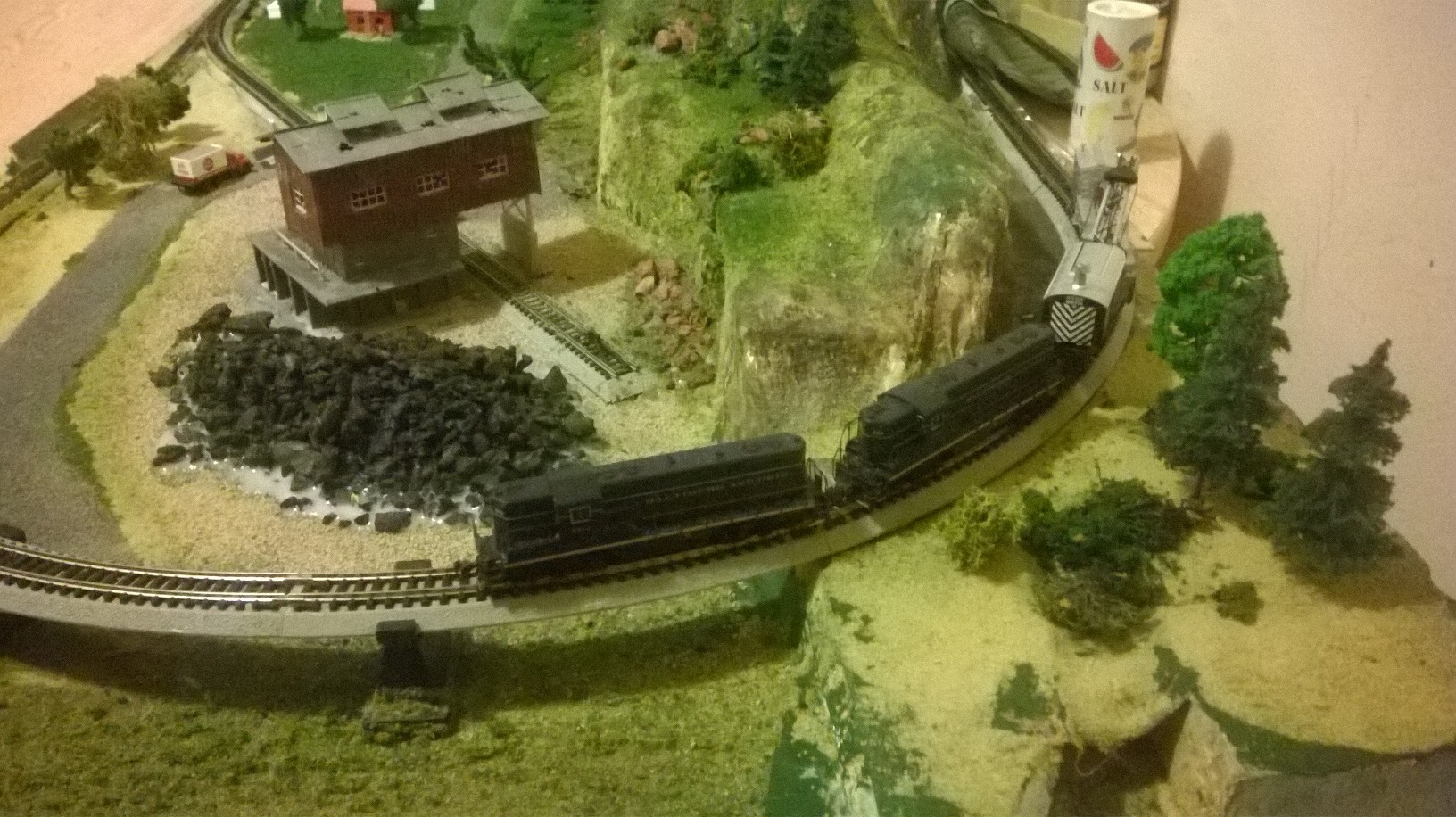
I have a few pictures for you. We are new to railroading I am doing the scenery and my DH is doing the railways, I have almost finished the beach scene and that is where I have put the buildings.
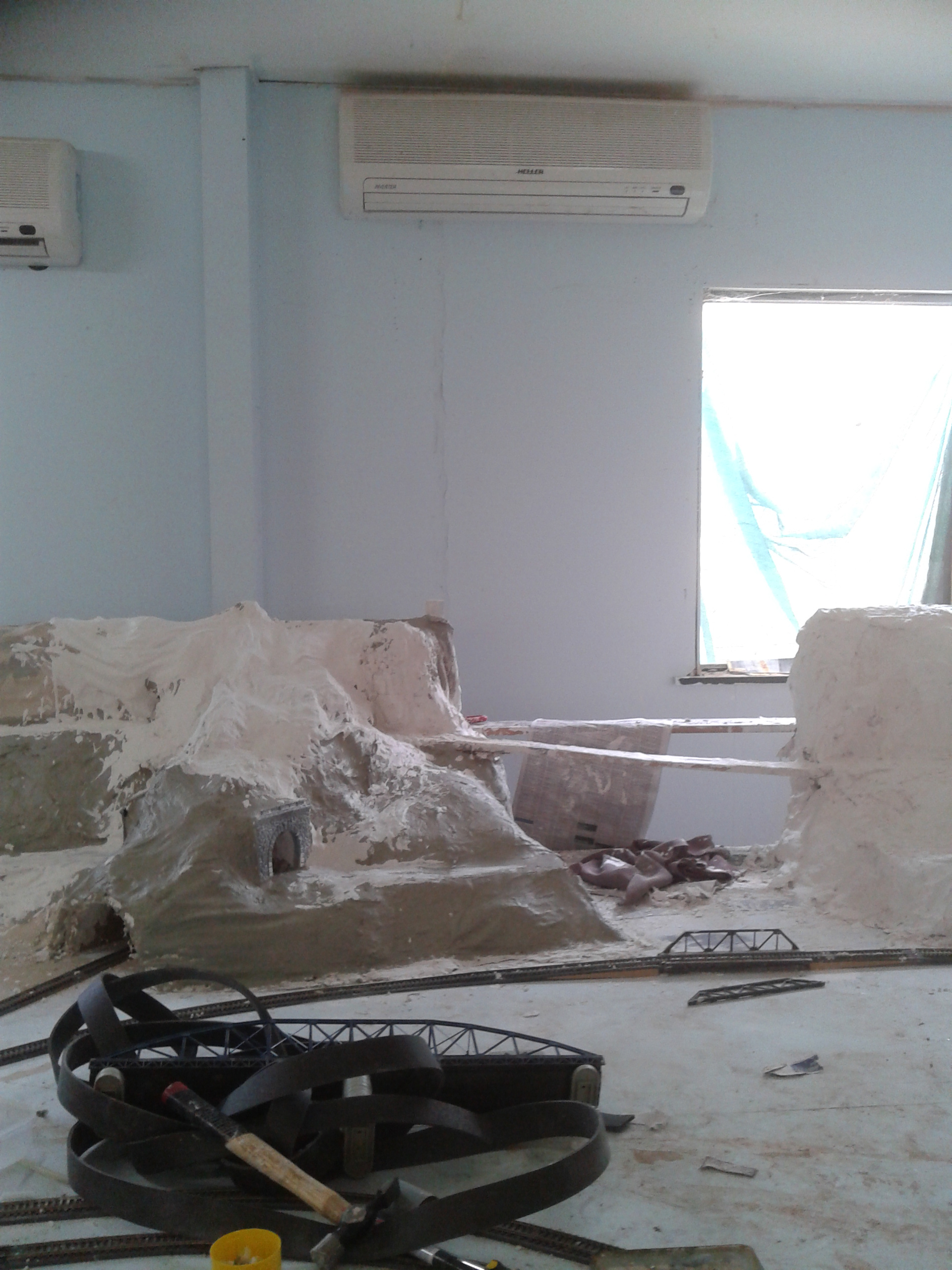
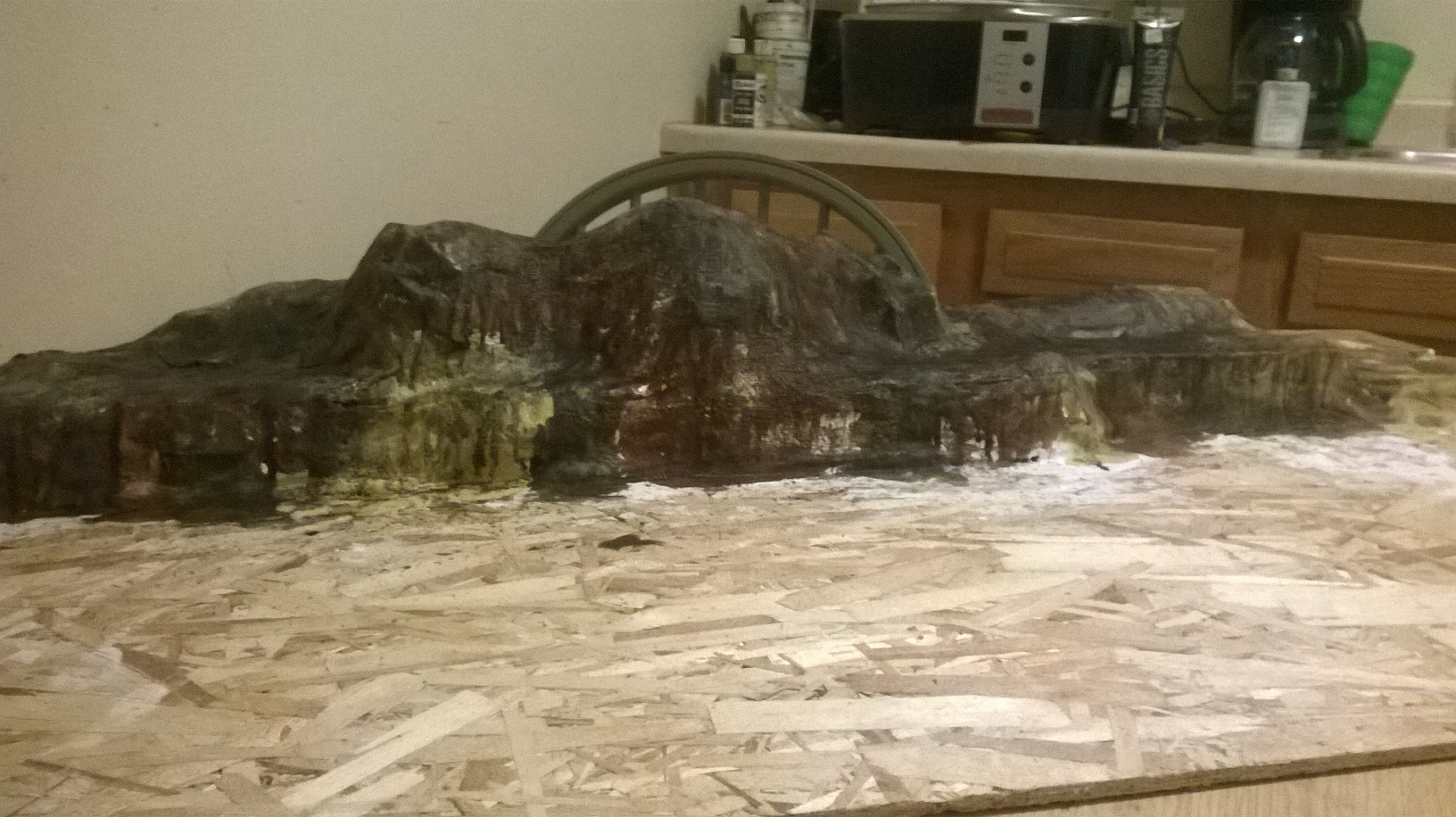
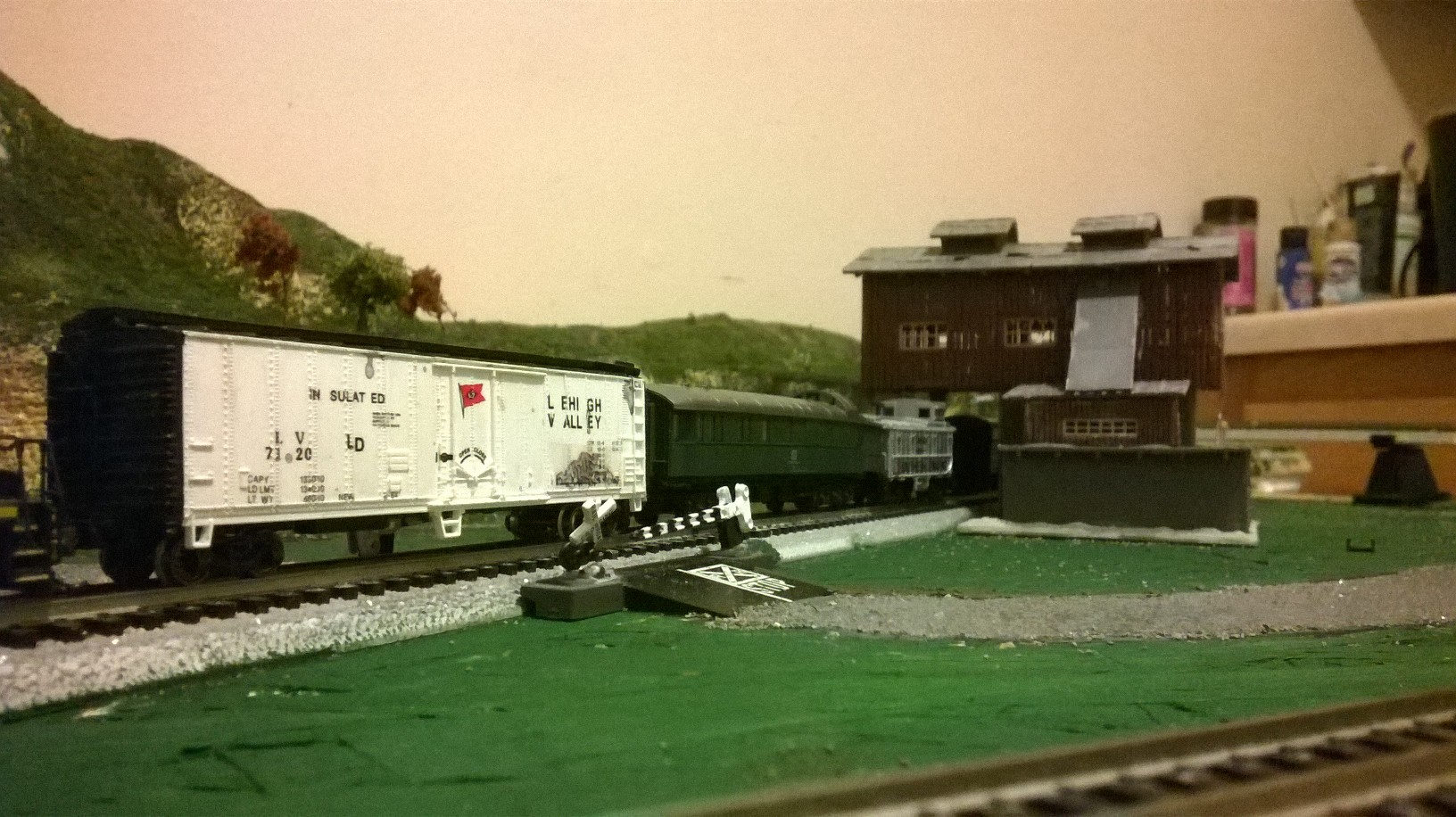
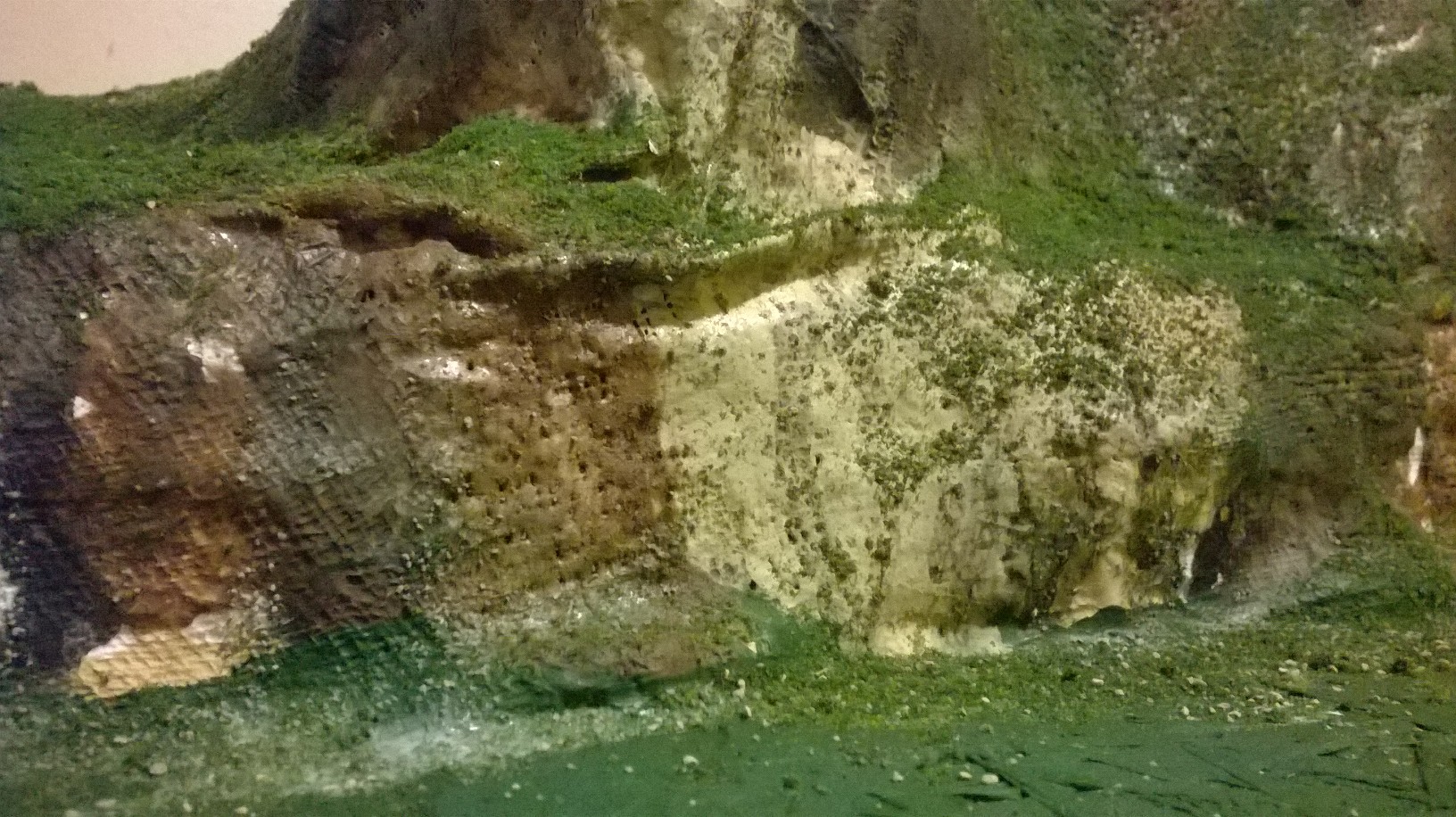
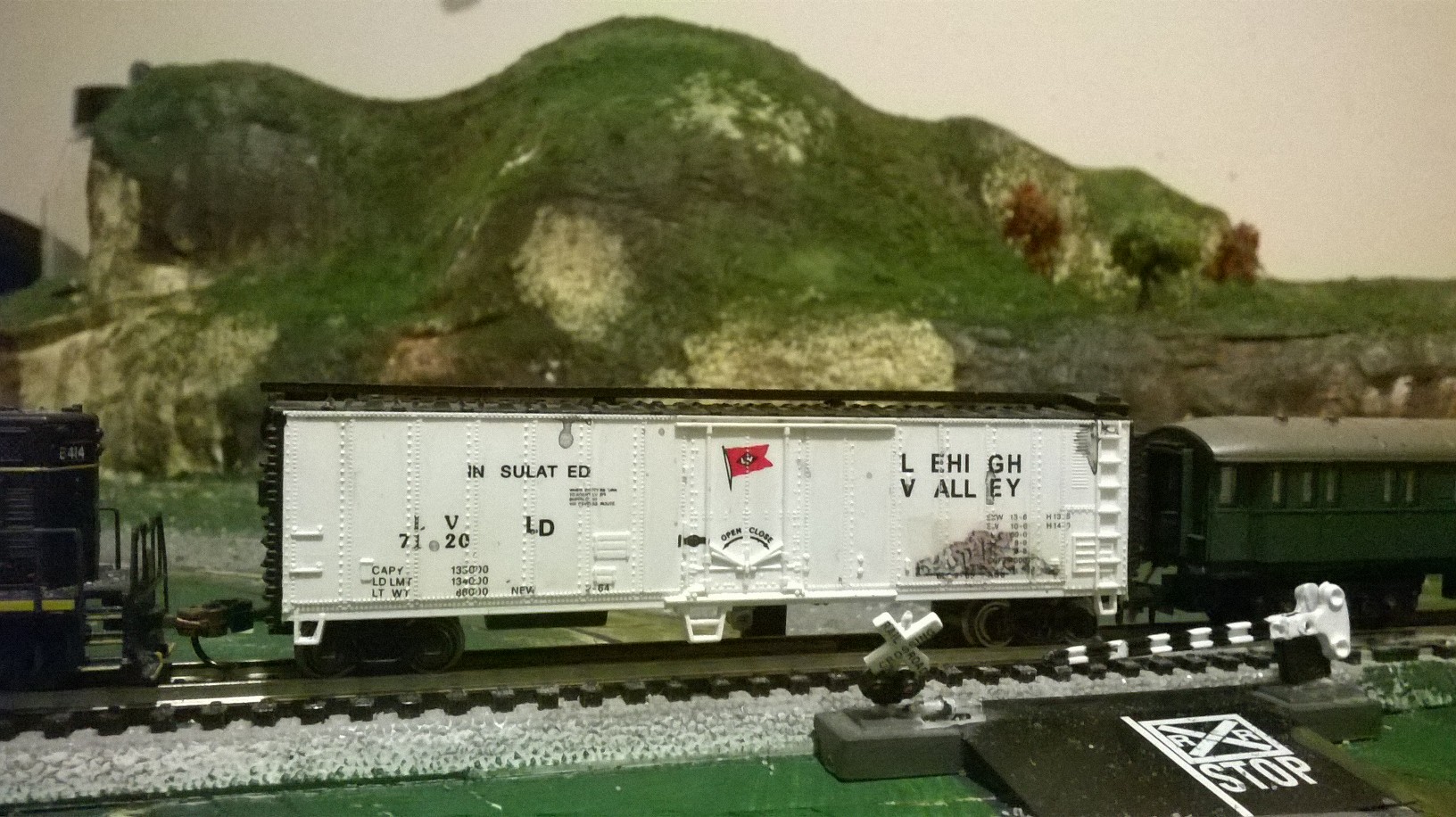
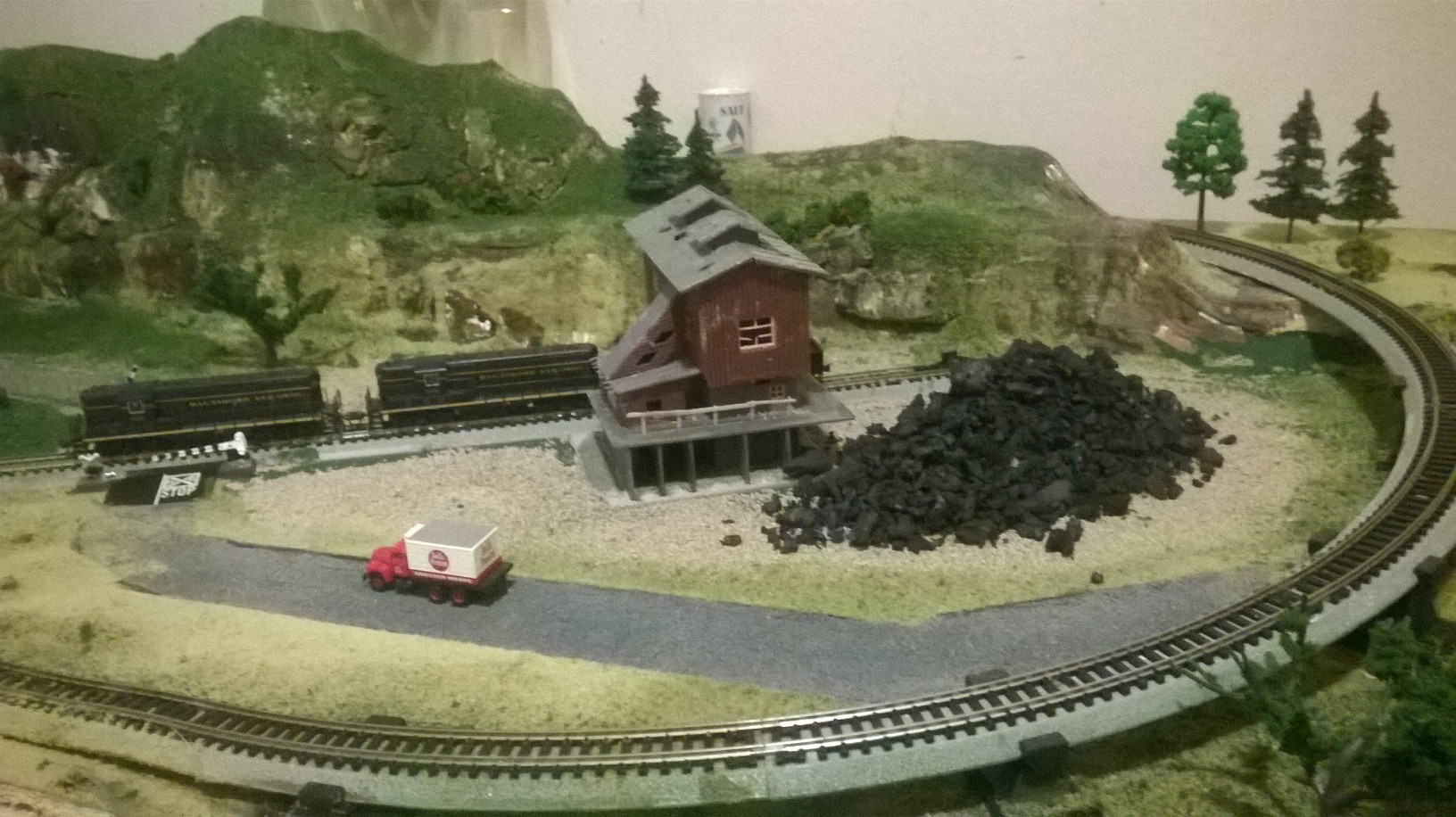
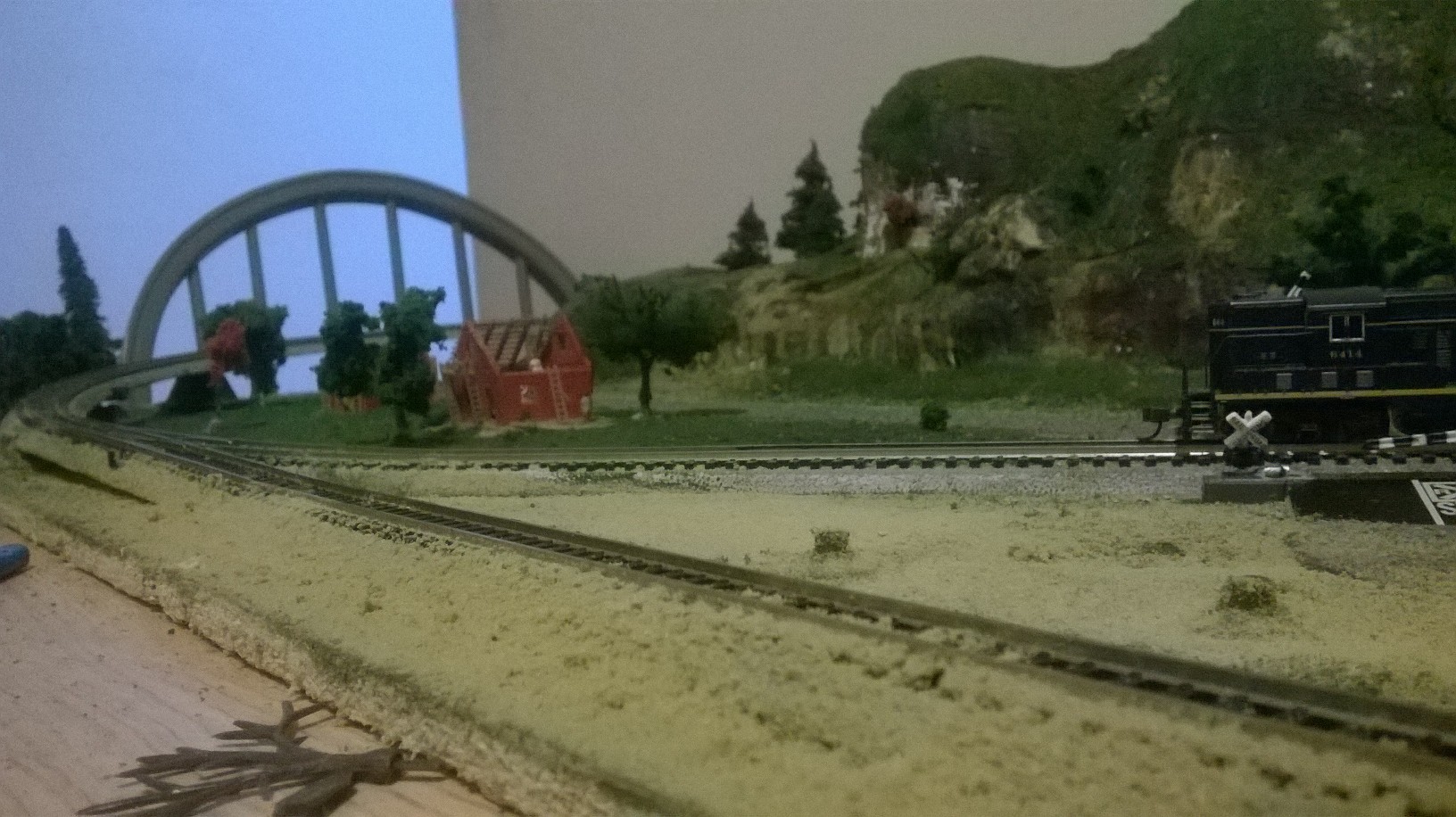
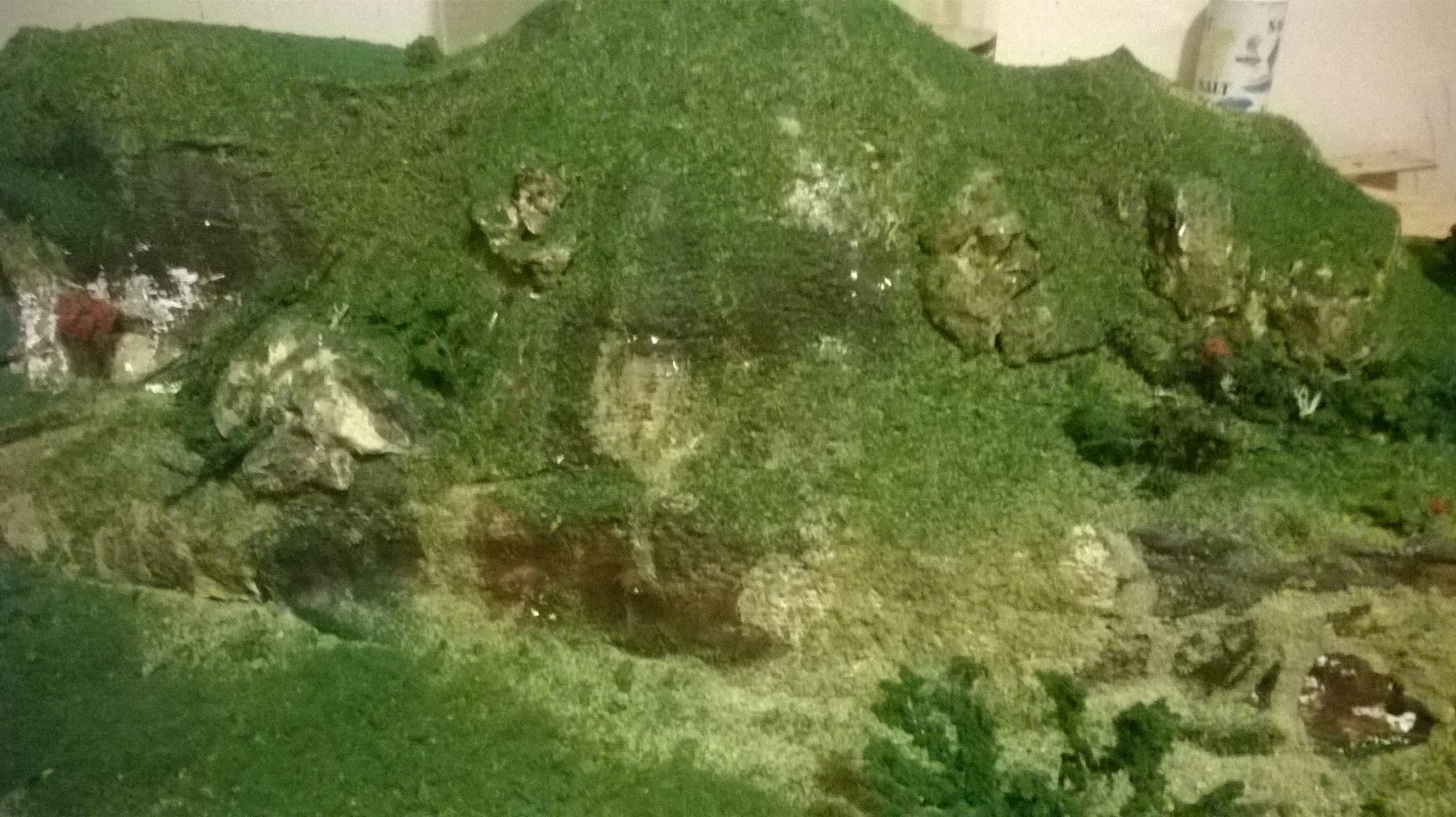
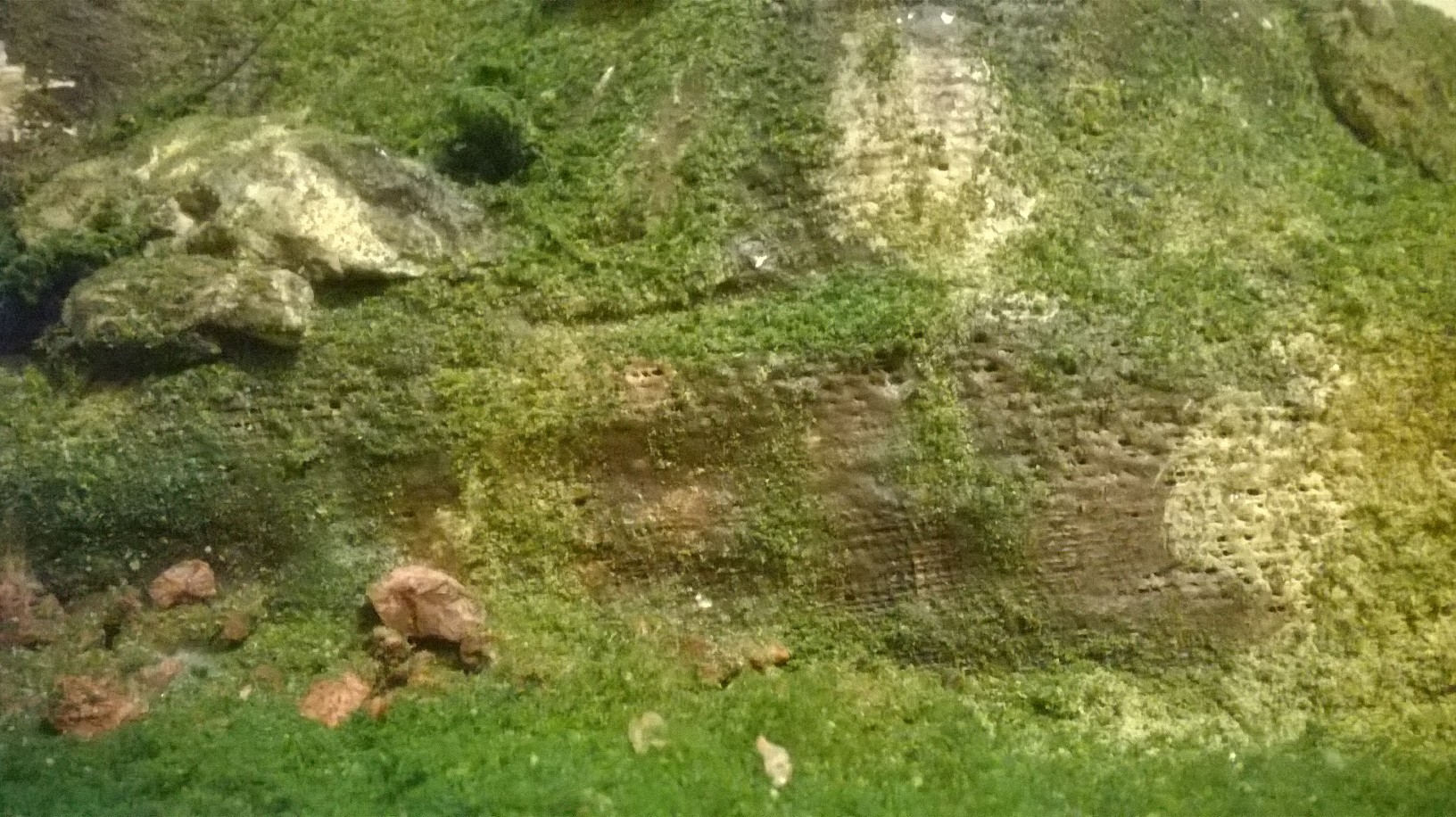
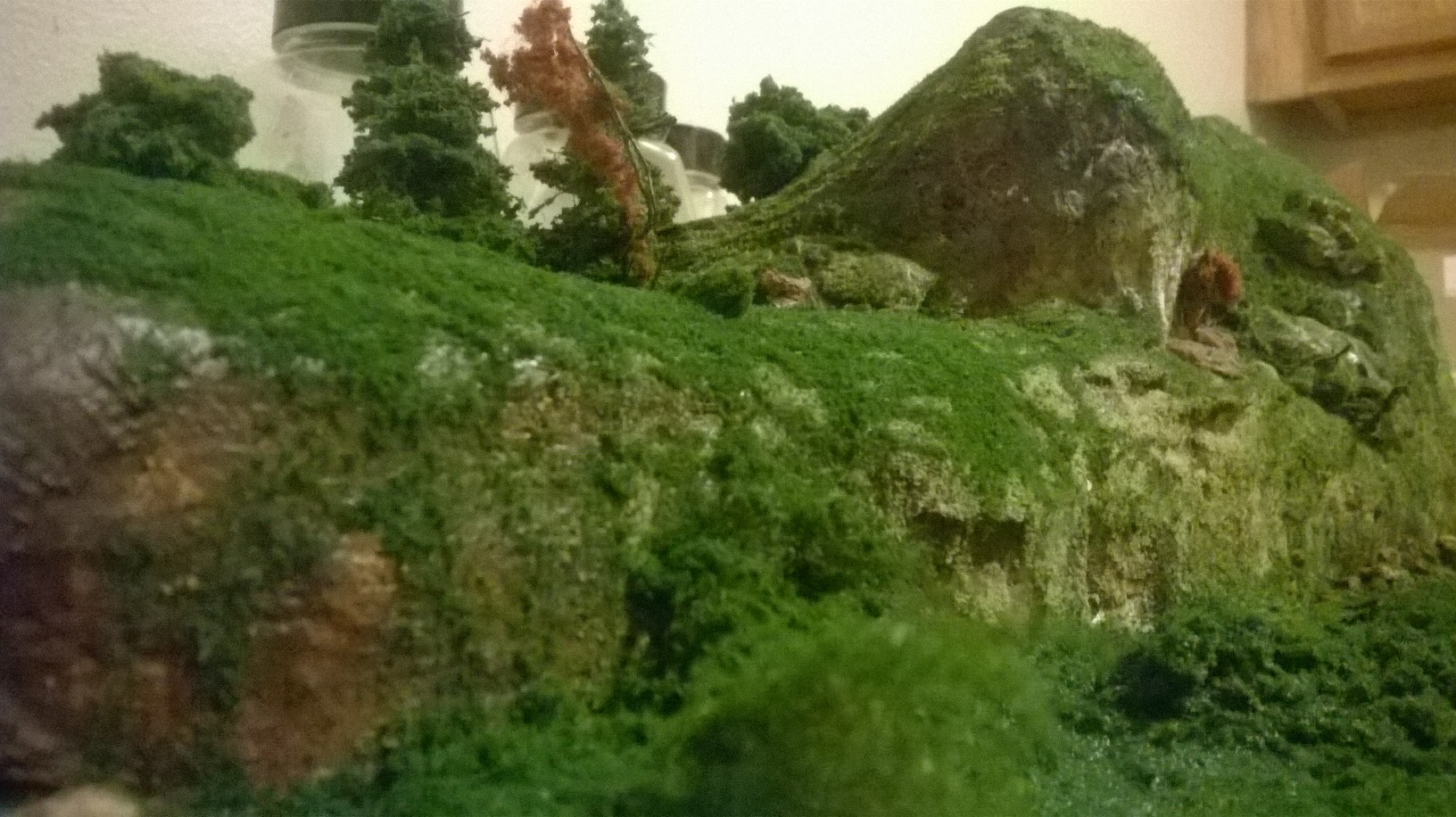
I hope you like what we are doing it is a huge layout it is in a room that is 24ft + 24ft and there is only enough room to walk around it. It is a work in progress as you can see from the pictures. We have a mountain that spans the back wall with a cutting near the middle. We also have some N gauge that we will run across the top of the mountain adding depth.
Litacats”
Loved Andrey’s friend’s oil condenser.
A great start from Litacats too – that’s going to be a huge layout.
Please do keep ’em coming!
And don’t forget the Beginner’s Guide if you want to get started on your layout.
Brian’s been in touch with is model train coffee table:
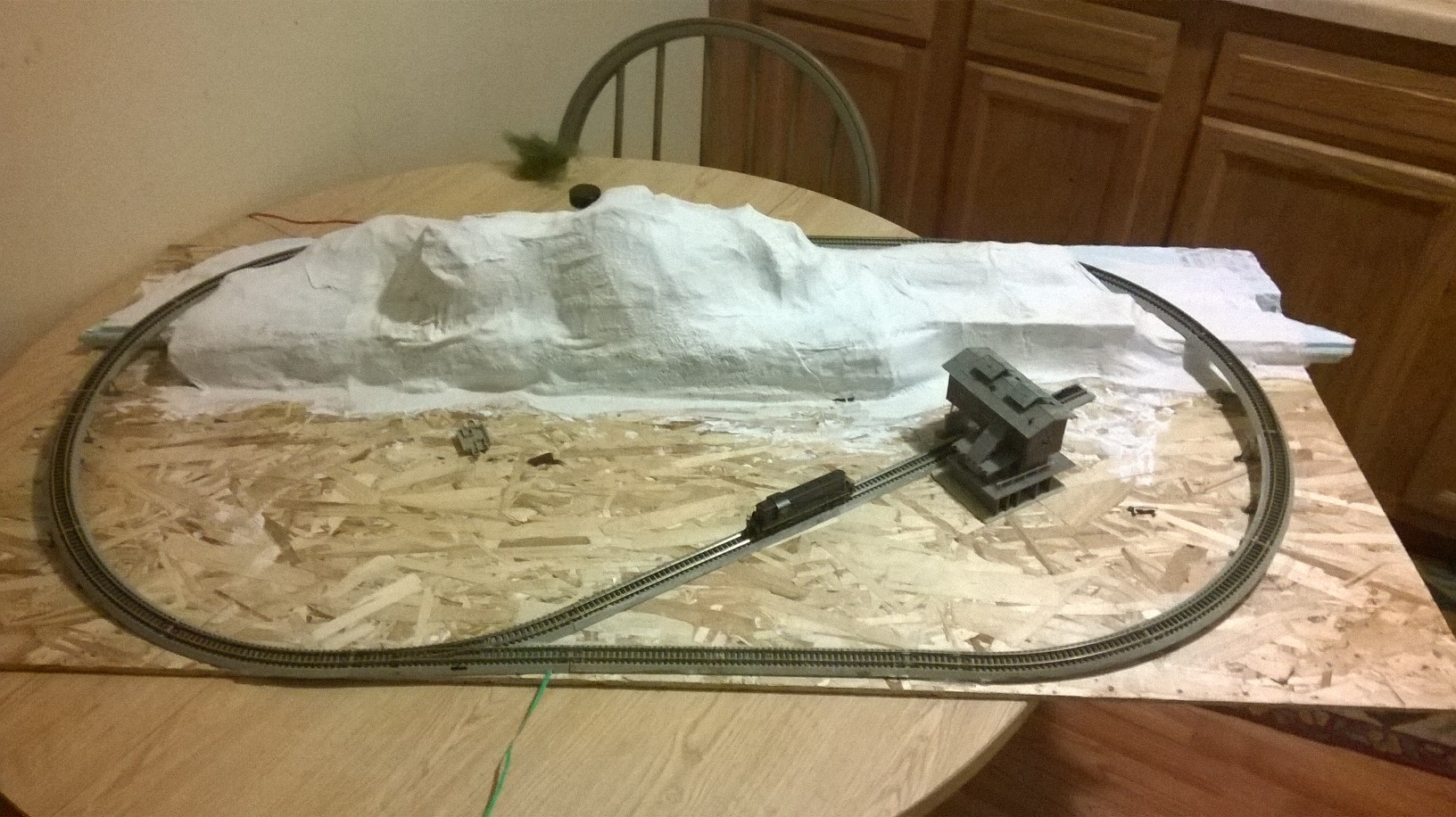
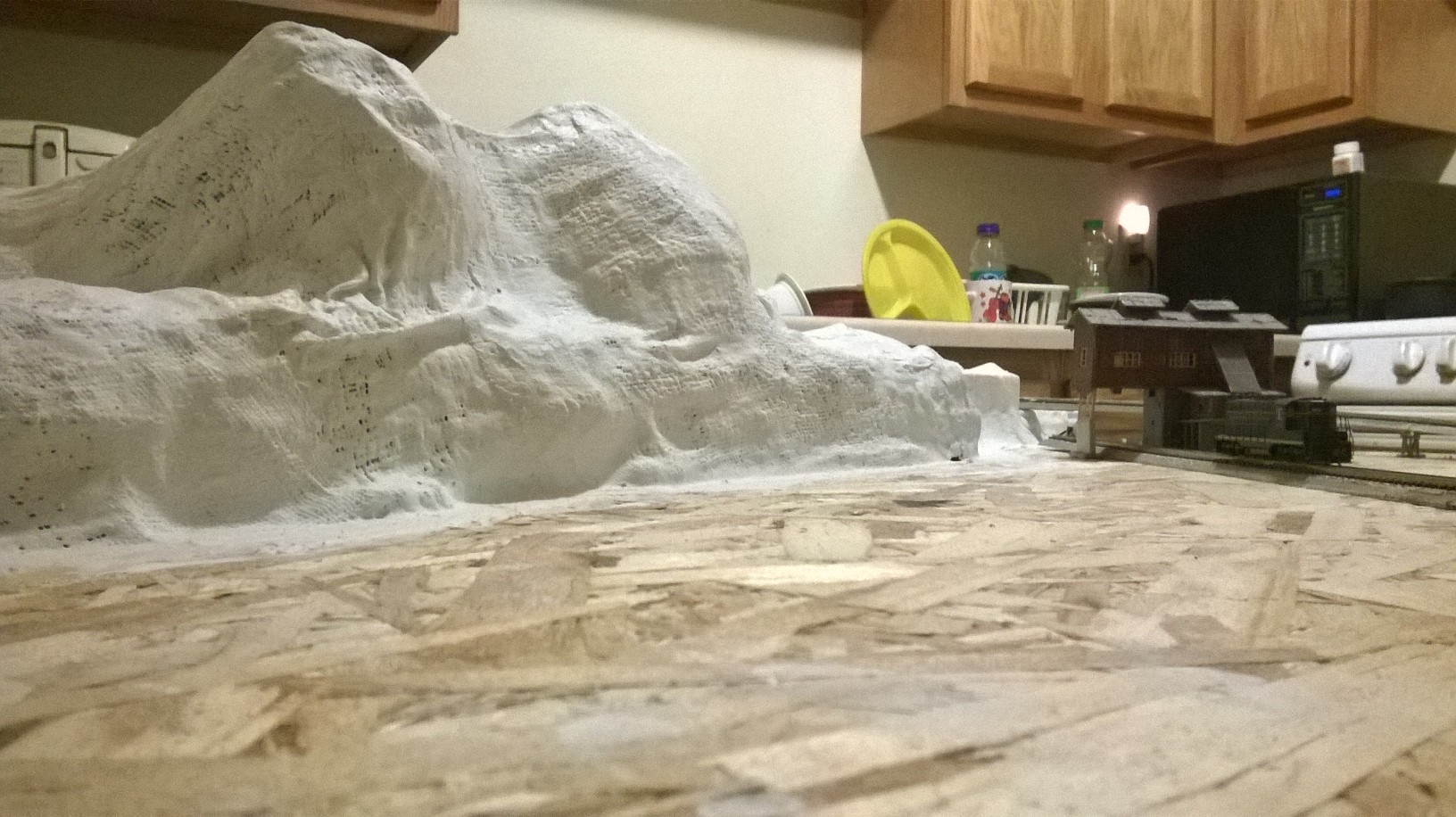
“Hello I’m 51 and I’m not a wood worker or can I say I’m a train layout expert, my last layout was HO and it was high school 🙂 !
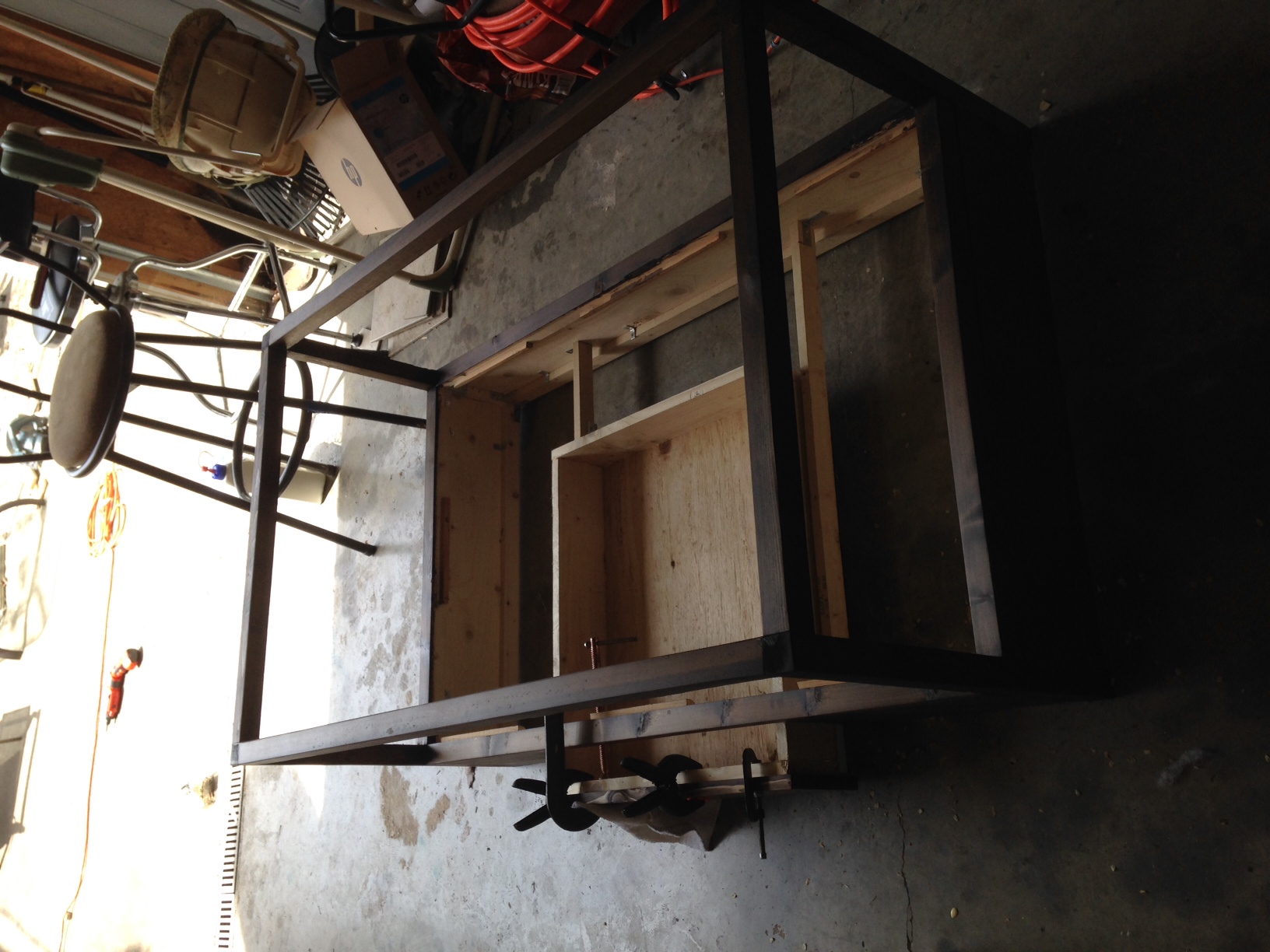
Our coffee table finally gave out at Xmas last year and I had a brain storm and lot of work (which I didn’t think of at the time).
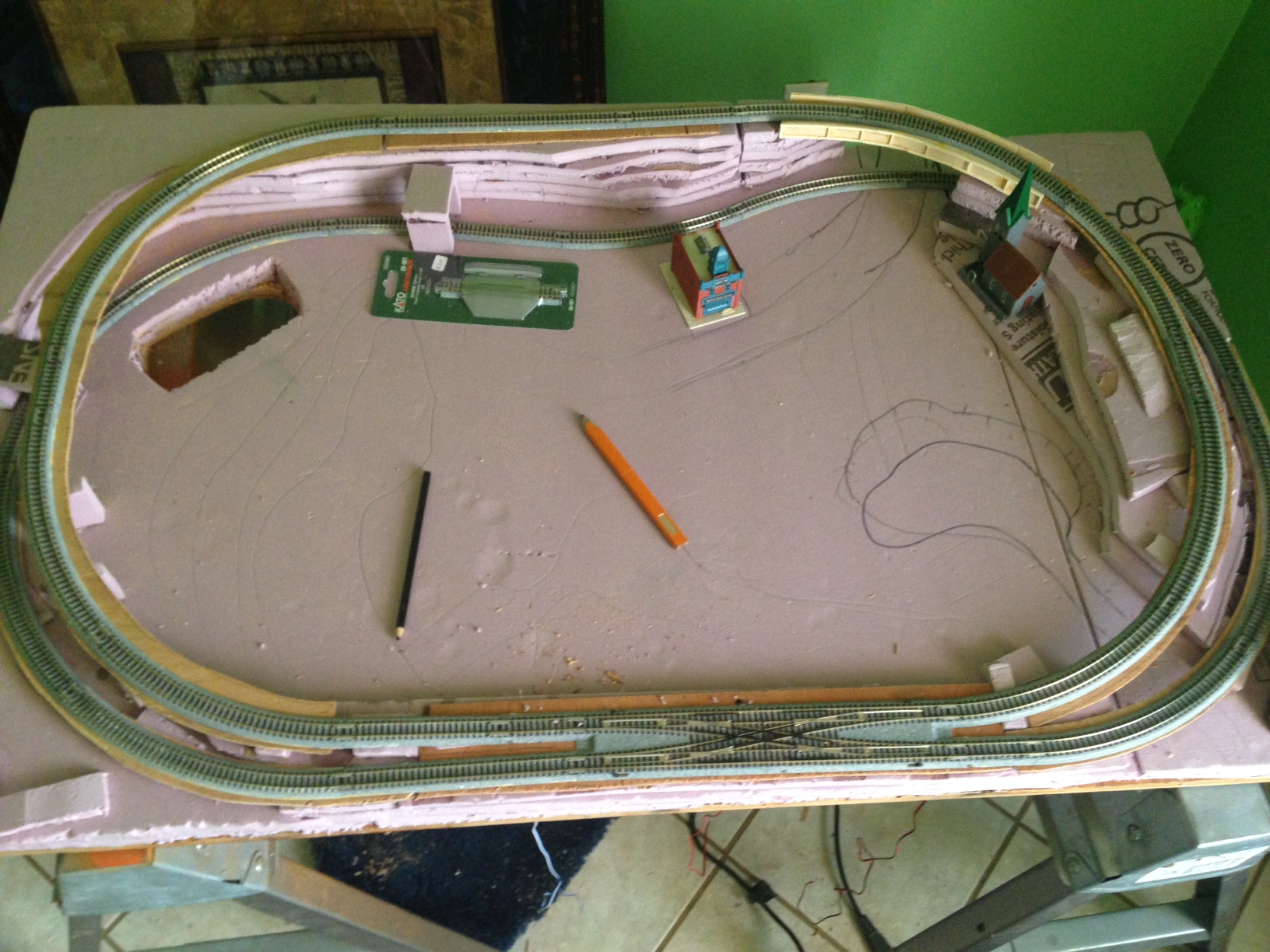
I asked the wife if I could build a new table with a train in it 🙂 she was for it, which blew my mind lol anyway here’s where I’m at.
It’s a simple double oval with kato track and a double crossover I can run two loco’s or one my inclines are steep but two of my engines run it ok, I’m going with the Illinois central scheme, living in Kentucky but from Southern ILL.
All comments are welcome 🙂
Brian”
A big thanks to Brian for sharing his model train coffee table.
There’s quite a few coffee table layouts on the blog now:
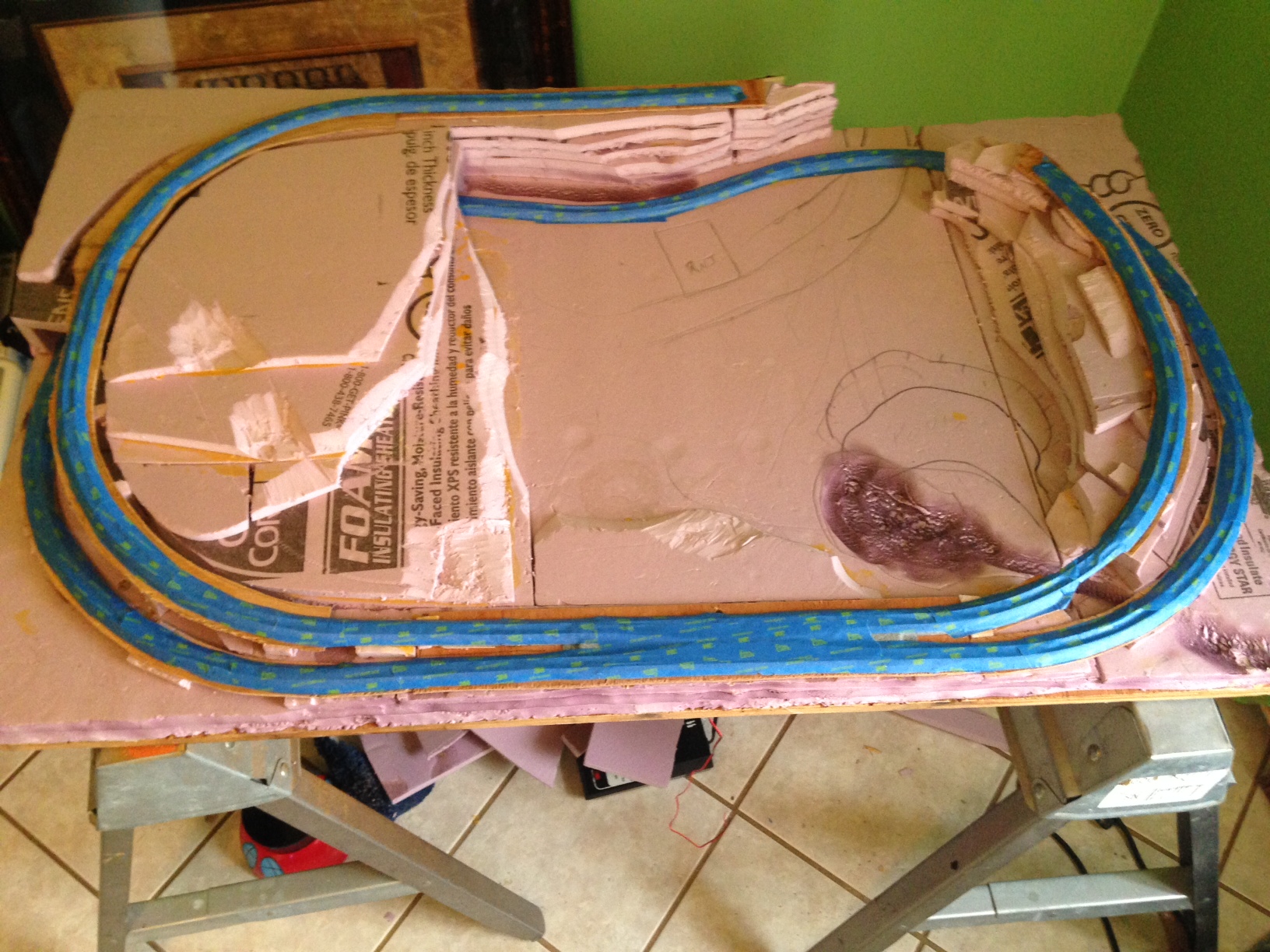
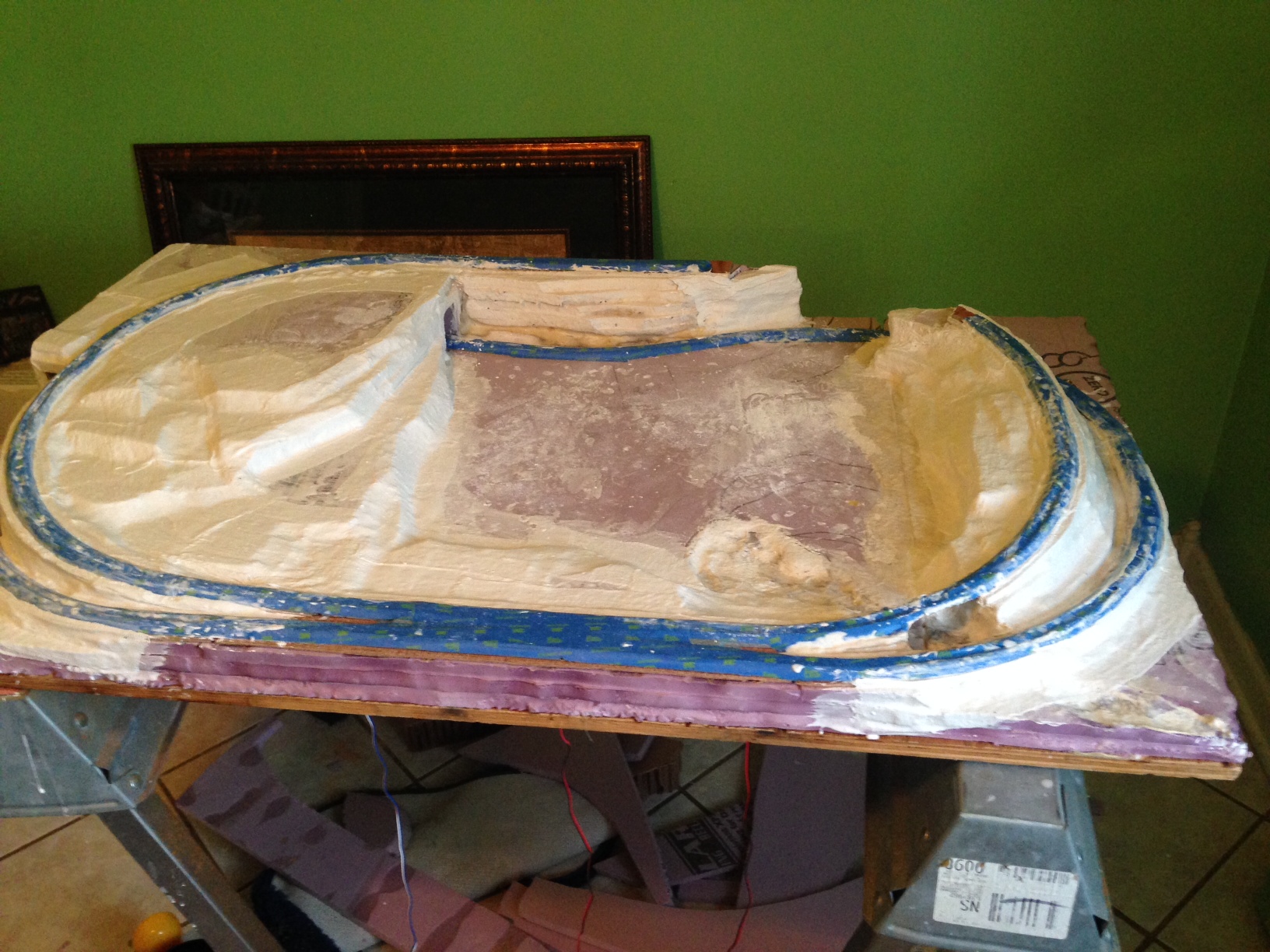
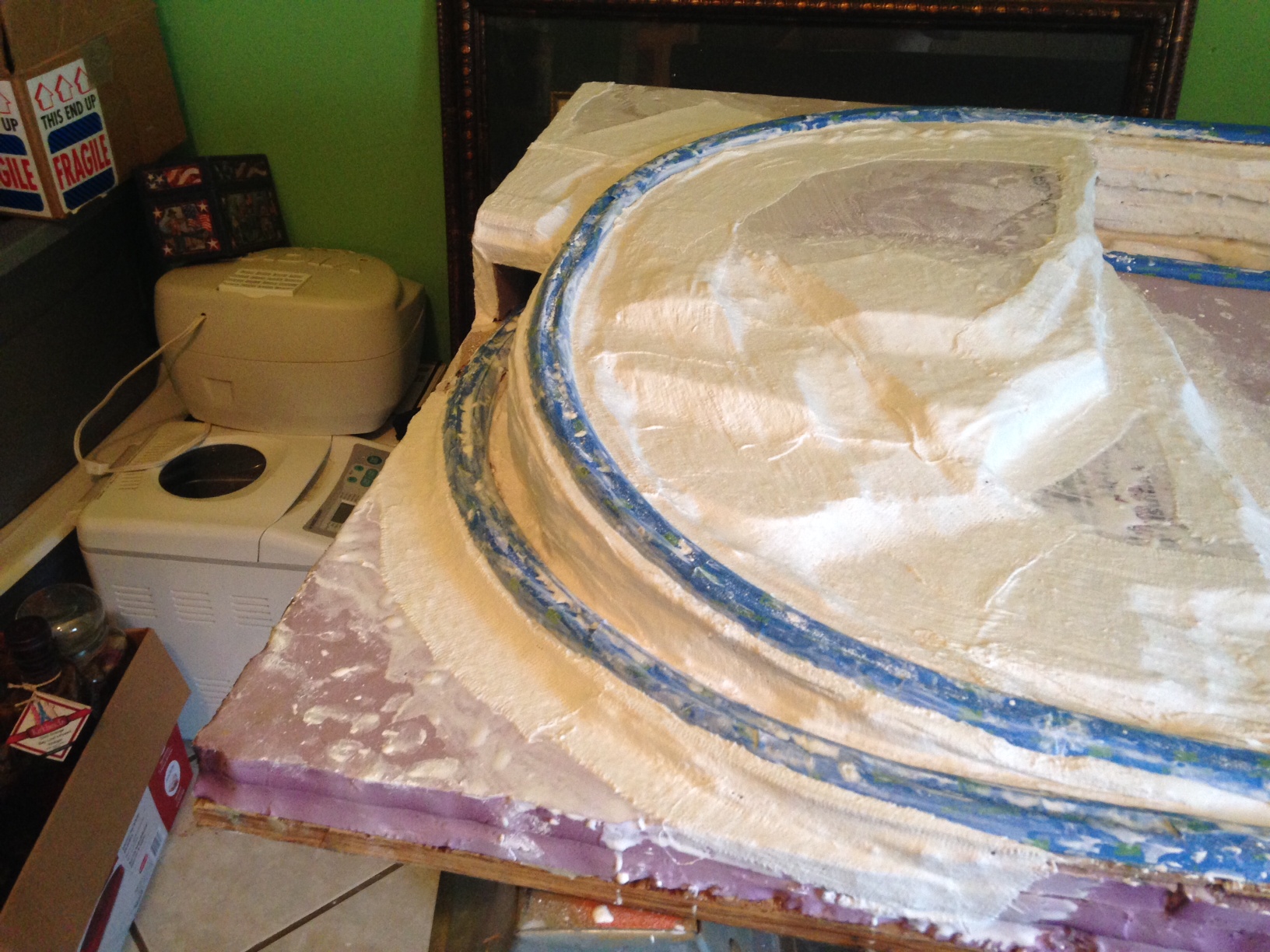
Be careful with the fibrous pink insulation. As a retired architect, I can tell you that it will become the next “Asbestos” insofar as litigation goes. The airborne particles get into your lungs and never go away – much like asbestos, causing you upper respiratory problems. It also causes minor skin irritations.
Better to use the white angel hair type and be safe.
As long as we are on insulation, try to use polyisocyanurate for scenery instead of polystyrene. Roofers use this in fire rated assemblies whereas the polystyrene (extruded or bead-board) is highly combustible. Besides sheets of constant thickness, it also is available tapered in 1/8″ per foot, 1/4″ per foot, 3/8″ per foot and 1/2 ” per foot increments making grades easy to attain. (divide the denominator into the numerator to obtain % of grade).
Fire access. Everyone wants to have the most mileage they can for track work and sometimes use multiple levels accessible by helix’s but there are several things that you should keep in mind:
1. That helix you installed when you were 25 or 30 is not as accessible when you are 65 so anything off the rails inside should have an alternate means other than shinnying up the middle.
2. Same goes for a duck-under clearance height. When you are 25 or 30, a 44 inch high layout seems ideal – until you have to drop to your knees to pass from one side to another. Consider using a height suitable for a office chair with casters to pass under. When you get older, getting down is the easy part – getting back up is the challenge.
3. You have the traditional spaghetti bowl layout for maximum run and invite operators and guests over to see the trains – how do they all get out in case of emergency? What if the lights go out? Do you have an exit plan? How about an extinguisher near an exit?
4. Operators come in all sizes in both height and girth. Are your aisle widths adequate for more than one to pass?
5. Layout construction materials can be made safe with just a little common sense. Do not use styrofoam insulation near hot electrical appliances, transformers, or where the potential for sparks fly (like inside a tunnel when a short occurs) and where you cannot easily get to it. Use proper size wiring for all circuitry. Yeah it’s great to go bargain hunting for wire but the telephone wire you got as a freebie is not suitable for higher amperage DCC. Layout lighting should be of the low voltage variety. I have seen Christmas tree lights used for buildings and to create sunsets but the older styles generate a lot of heat.
Be safe when you enjoy your hobby.
Charlie”
Next up, Walter:
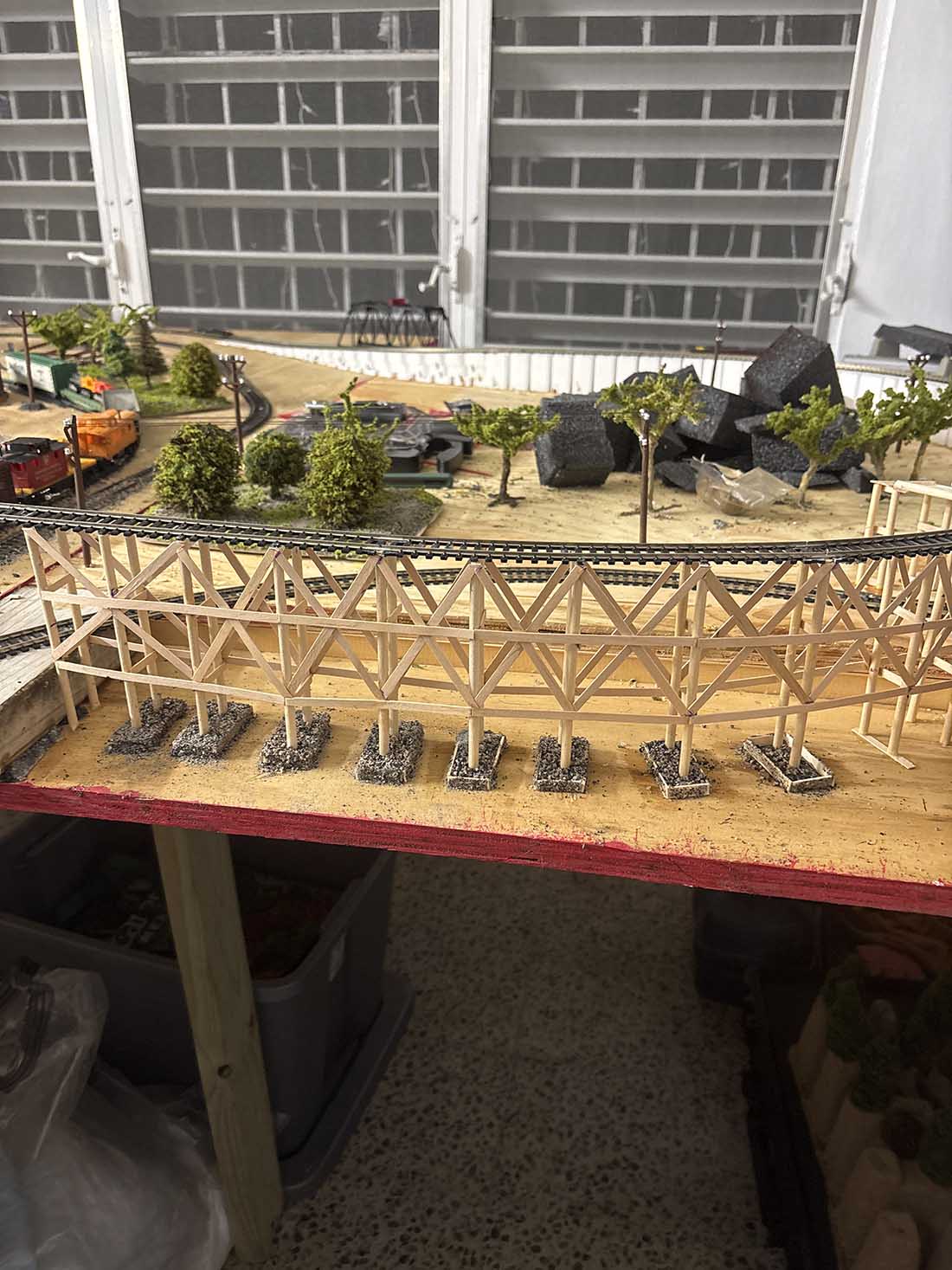
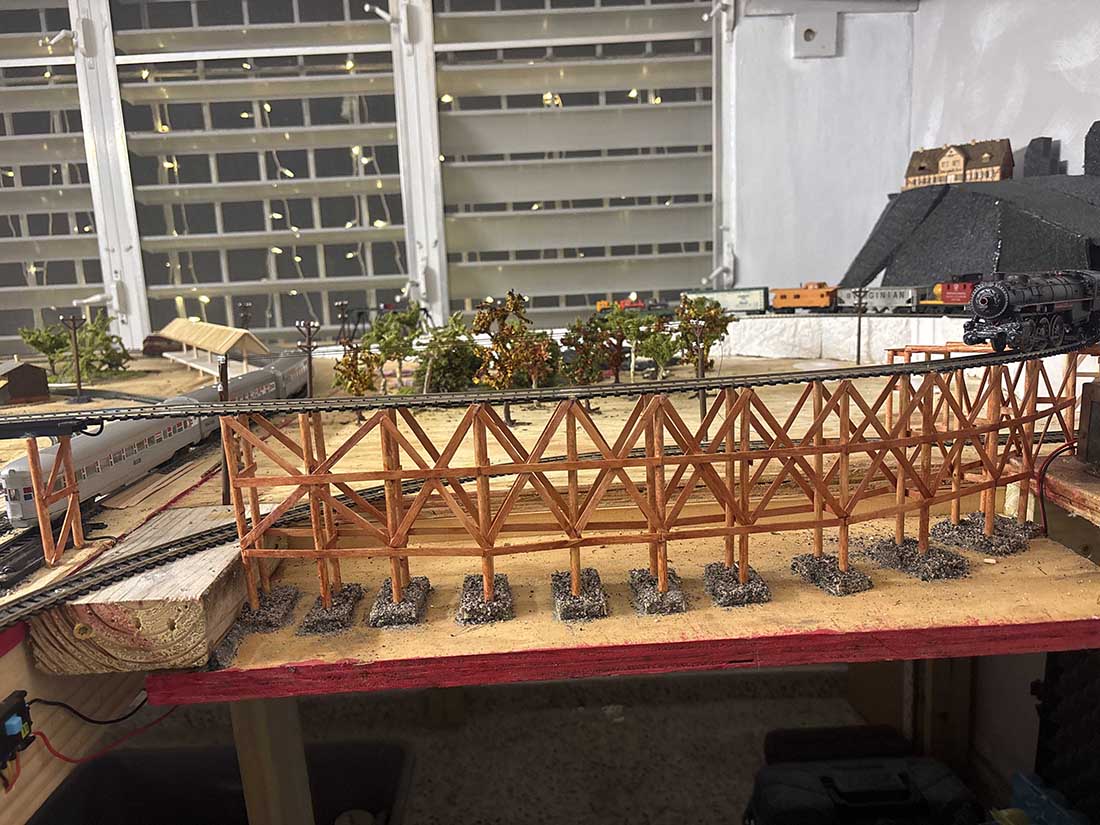
“Building a trestle bridge with gabions as bottom supports
Finished trestle:
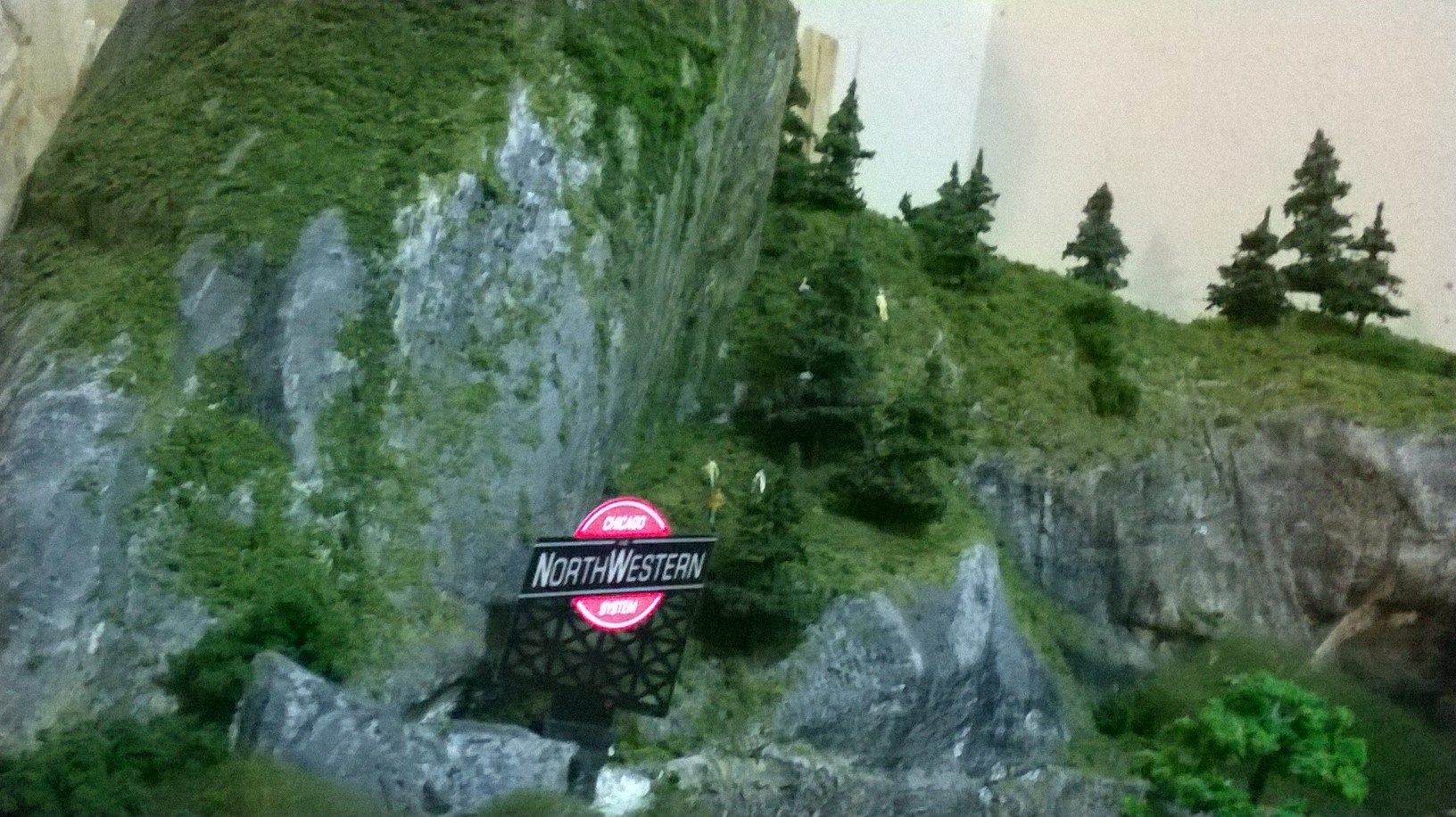
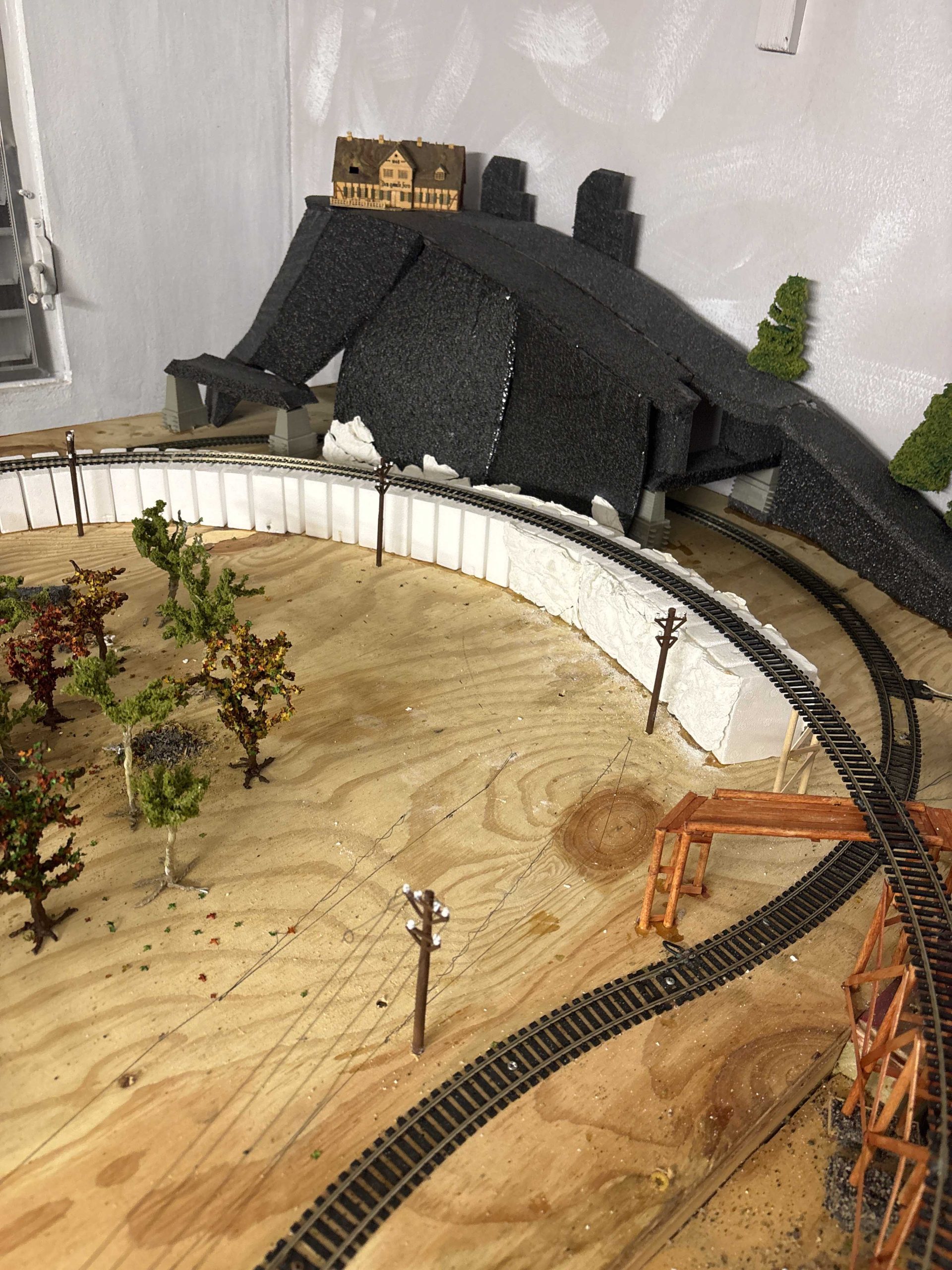
Started on a steep hill over a tunnel where a chalet is going to be. Also i have put some rocky areas along the slope track in front and on the skirt of the hill