I’m up against the clock today so I wasn’t going to post. But when this came in from Arnie…
“Hi Al,
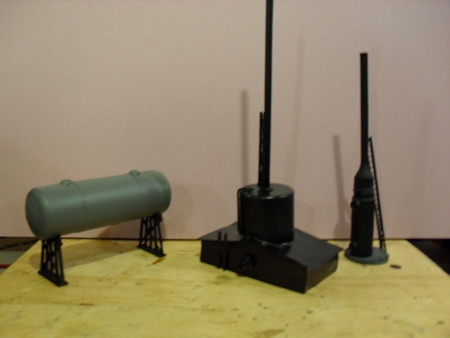
Just got your last posting. Really impressed with Bob’s (How-To) scratchbuilt Oil Refinery. While not easily replicated in N scale, it is very do-able in large scale like O and would make a great industrial scene addition on a layout.
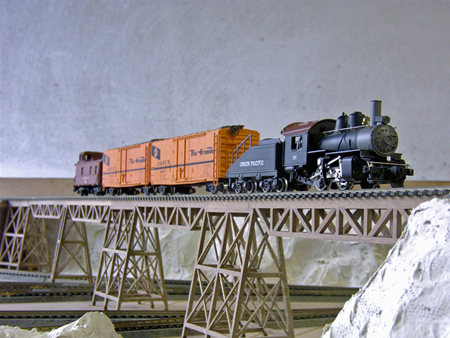
I’m writing to offer up another video I put together as inspired by the many readers asking me to continue sharing videos with them. The video I’m submitting for posting consderation is one I did almost a year ago. It is of steam freight operation on my N scale SV&GS Railway. However, I wanted to have some fun with the original video. So I edited it and gave it a retro 1950s cinematic look by creating an old film appearance and adding a ’50s intro/exit theme.
I hope you enjoy it.
Arnie”
Heading off to ebay? Have a look at the very latest ‘ebay cheat sheet‘.
“Here is a new idea to add weight to light boxcars etc.
I used cut up pieces of old n gauge track rails the length of the car and glued them to the inside base of the truck carriage flat for weight and then snapped the body back on.
Add as much as you need and it has a low center of gravity.
Ed”
“When gluing pieces of foam to each other I use the least expensive linoleum or carpet glue that I can find.
I full spread the glue using a 1/16”x 1/16” square notch trowel.
By full spreading the glue, you eliminate most of the gaps between the pieces of foam.
Also, the dried linoleum glue is soft and readily sands off, which eliminates most of the glue lines between the pieces of glued foam.
You still have to put some weight on the foam overnight ( 24 hours )while the glue dries. While the glue is still wet, it cleans up with warm soapy water.
For small areas, a caulking gun applied glue works fine, but if you are making a lot of mountains and stacking a lot of foam, the linoleum glue comes into it’s own.
It is fairly inexpensive and solves some common problems when gluing foam.
Randy”
“I use old pill bottles and cake frosting which is plastic for oil tanks, grain storage tanks and I also use my wife’s plastic canvas for ladders and walk ways on the storage tanks, they look like they are scale and all you have to do is glue them on. I also use my extra matt board for buildings, you can buy a 30″ x 40″ sheet for around $6.00.
James”
“Hello Al,
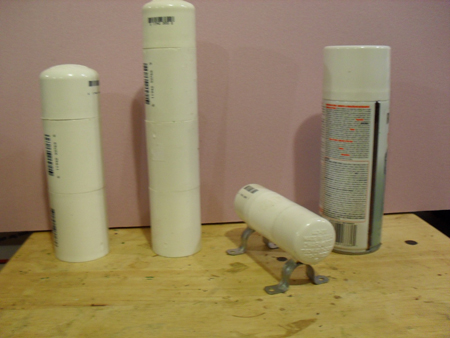
In between my other projects I decided to build an oil refinery.
It will fill a space in the back of my layout about 6 feet long and about 10 inches wide.
I’m using a lot of plastic straws for pipe, PVC pipe for storage tanks as well as cans and jars.
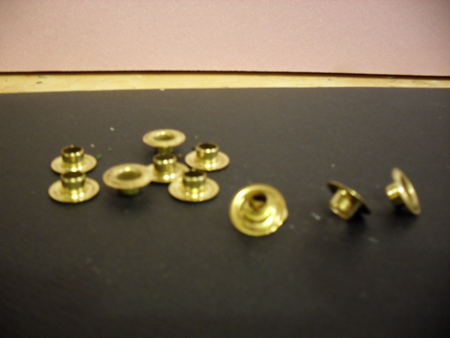
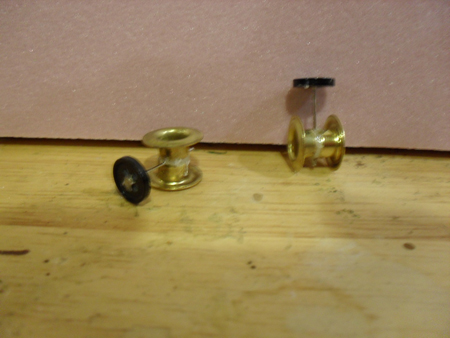
I built some shut-off valves from metal grommets with small buttons for wheels.
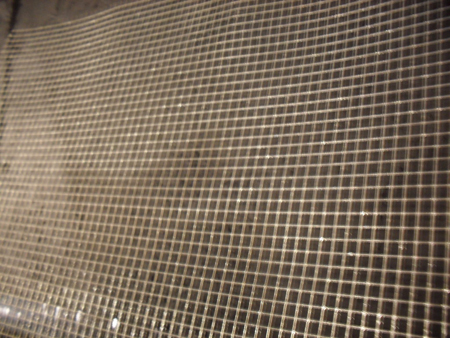
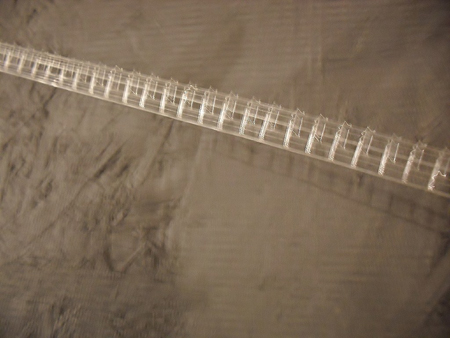
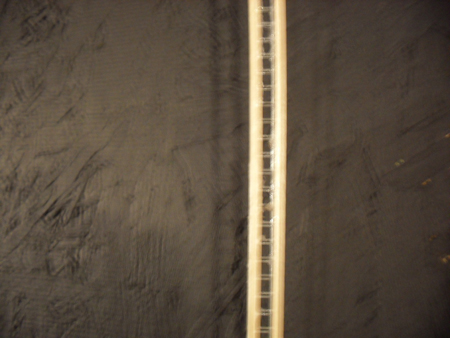
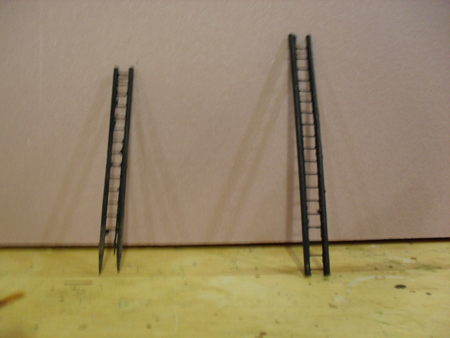
I use 1/4 x 1/4 metal screen (for O scale) to build my ladders as well as guard fencing. I glue the screen to wooden skewer sticks to make the ladders.
The picture of the single piece of screen came out blurry but I hope the idea is obvious.
I have completed my first sub-assembly and thought it might contain some ideas that may be of use to the group.
The easiest way to wire up LEDs is according to their power source & LED voltage rating.
Say for a 3V LED, and a 9V battery power supply, you wire up 3 LEDs in series: 3+3+3=9V.
Then if you need more than 3 LEDs in the model, you can connect 3 more 3V LEDs in series (or a series circuit), then connect this series circuit in parallel with the first series circuit.
This way you don’t need to do any calculations for adding resistors, or look up the resistor table to find the right one – less mathematics, less soldering. It’s got to be good, eh?
Because LEDs consume very little power, or in other words draw very little current, you can connect many series circuits of 3 x 3V LEDs in this fashion.
In my Thunderbirds Tracey Island model I connected:
4 x 1.5V AA batteries in parallel for a total 6V power supply.
Then I connected 4 x 1.5V LEDs in a series circuit.
I connected 10 of these series circuits to the batteries. 40 LEDs in total.
Once you have the circuits and the power supplies sorted out, you can add switches to control each circuit of 4, or more LEDs separately.
Before I used these LEDs in my model, I tested them vigorously.
I ran my 10 parallel legs of 4 x series LEDs off 6V battery power for 8 days continuously.
My conservative calculations estimated 3 days of running time, so they well exceeded my estimations.
Because these LEDs use very little power, they are awesome.
NOTE: Battery voltage is DC voltage. So, all of the above relates to DC circuits only.
Now, because everyone in the train modelling world uses 12V DC output from the power adapters.
I live in 240V AC land, so my power adapters are 240V AC input via 3 pin flat plugs, 12V DC output.
UK and Nth America will be different inputs but I think we all talk the 12V DC output language.
So, for a 12V DC circuit using bright 3V LEDs:
4 x 3V in series = 12V
Or
8 x 1.5V LEDs in series = 12V
How to arrange your LEDs series circuits
So, arrange your series circuits around your models, run a twin wire (+ and -) back to the power source for each series circuit.
Connect all your positives together, connect all your negatives together – no resistors required!
Then, you can decide how you want to switch them. Easy.
I have also wired LED interior lights in my VW transporter 9 seater.
I have estimated you could wire a house in LED lights and have them running for 1.5 days continuously off a 12 V DC battery. How good is that?
I am willing to help any modeller with composing circuits of any voltage, using any LEDs, with any amount of switches, in any layout, because you guys have given me so many good modelling tips so far.
Have a good day, Al!
BTW, I now design optical fibre networks. So as soon as Intel develops the optical micro processor, we will all stop warming up the planet with excessive amounts of heat dissipation from electrical devices. It will be all electrical supply to optical converters. If we transmit at visible wavelengths, then we don’t need an extra electrical device to convert the light source into a wavelength we can see…
Wouldn’t that be nice?
Our power bills will be a lot less.”
“Hi Al,
Thank you for the time and effort that you put into running your “Tips and How To” Site.
I wonder how Meany modellers throw away a great power supply for running their accessories each time they up grade their computers. The computers Power Supply. I run several.
Each power supply has mutable out lets in 3.3v, 5v &12v that I use to power up several bus-bars. The outlet wirers are colour coded to give you the voltages and the amperages of each supply.
I hope that this will help a little with recycling old computers.
Cheers,
Geoff”
“Hi Alastair,
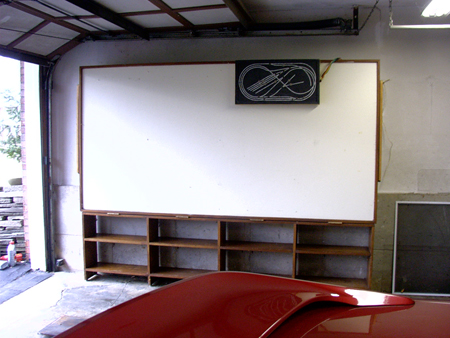
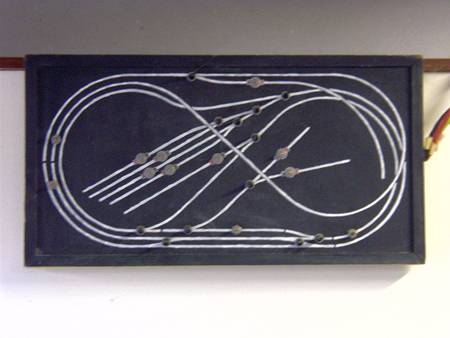
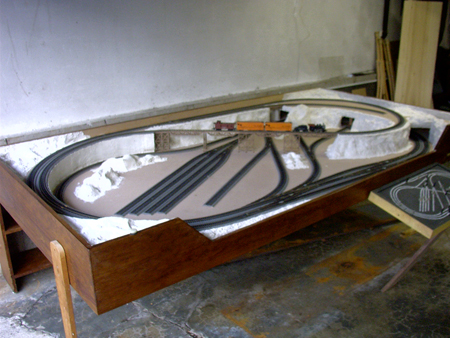
I started this layout with my kids and taught them how to build this railroad as their skills increased.
We didn’t have much room so I built it as a wall unit 10″ deep with shelves to store rolling stock when it was folded up against the wall.
They used the 4 x 8 flat side to post their school work.
All the wiring is in a 2 inch space between the railroad bed and the outside.
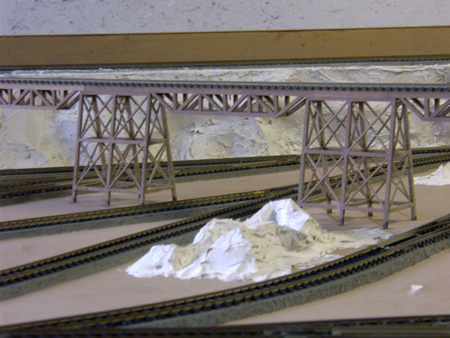
Two support legs swung out as it was lowered down to operating condition. All the scenery is crushed screen wire tacked in place and covered with plaster. We never finished it as they went off to school and their jobs took them else ware. So it sits in the garage gathering dust. Sad.
I enjoy looking at all the layouts that you post. Really nice work.