Rock formations for your railroad layout

Got this in from Dan.

Don’t care how many times you’ve made rock formations – there’s some good stuff here.


“Good morning I enjoy receiving your emails and the various links great ideas here is one for making ledges and rocks .

I spend a lot of time outside but am always on the look out for things I can use in my N scale railroad.

I have found tree bark a very good item to use for making rock ledges and rocks – search out trees that have thick layered bark such as hemlock or ash – I prefer hemlock as it has a reddish colour to it which gives it a good colour for rocks and ledges .

Also I have sanded the bark on a belt sander 60 or 80 grit to get the sanding dust ( wear a mask) and the dust can be used to give you a wash out effect below the ledge or rocks . But I also found it can be painted any colour you want.

I usually wire brush the bark to clean it out then break it of in irregulary pieces to suit the size of ledge I need – the I make a hole in the foam insert the bark and finish arround it with trees etc .

The other thing about layerd bark especially hemlock is if you seperate the layers the between layers looks like boulders . Check out the photos .

photo 1 – inbetween layers of barks – gives you rocks

photo2 – bark on edge place in foam with palster

photo 3 finished ledge with other cover

photo 4 CN loco passing rock ledges made from bark inset in foam with palster still needs trees shrubs etc I think folks will get the idea

regards

Dan”


A Big thanks to Dan.

And thanks also to anyone that’s emailed in about the ebay cheat sheet. Glad you like it. Latest one is here.

That’s all for today folks.

Please do keep ’em coming.

And if you want to start your model train layout, the Beginner’s Guide is here.

Best

Al


Building model railway inclines

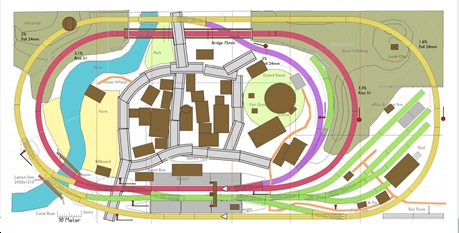
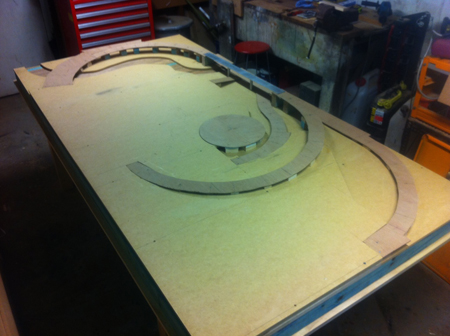
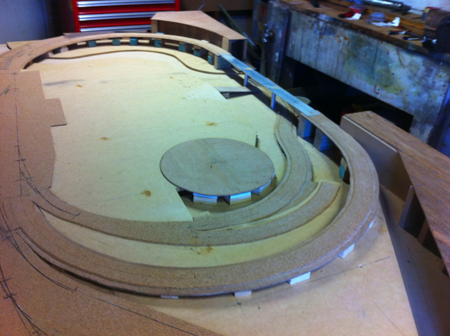
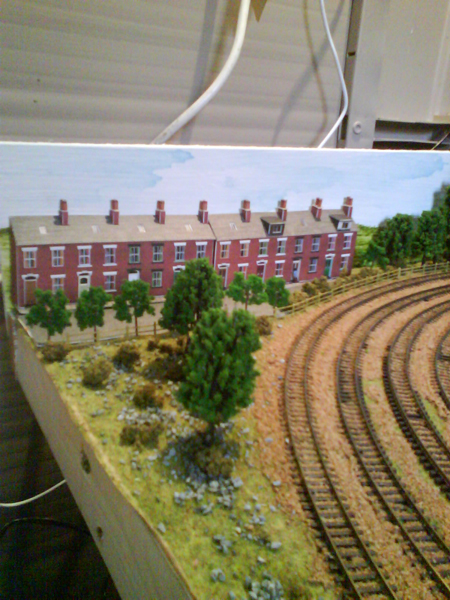
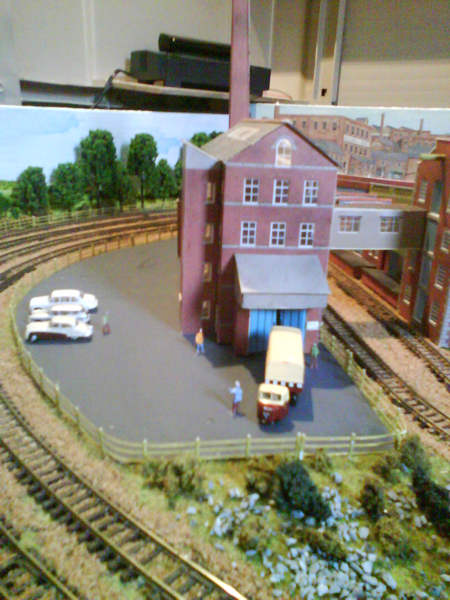
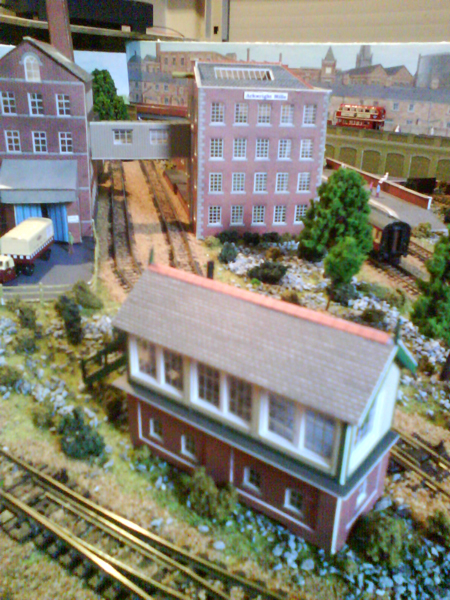
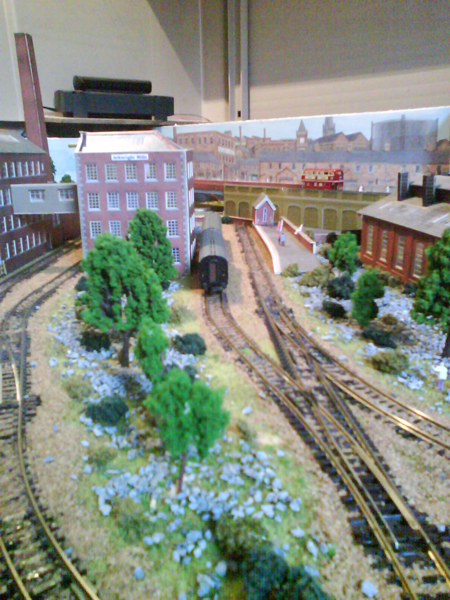
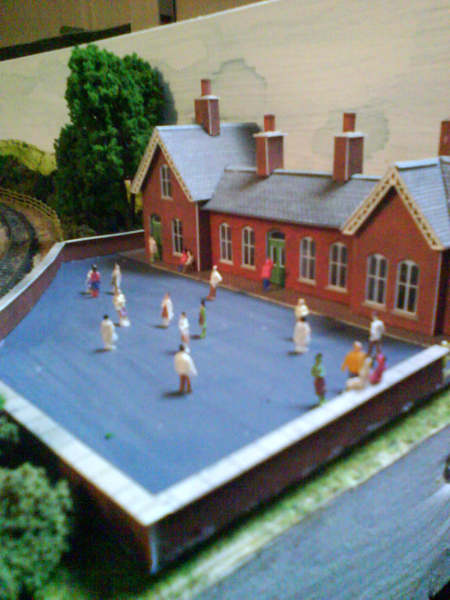
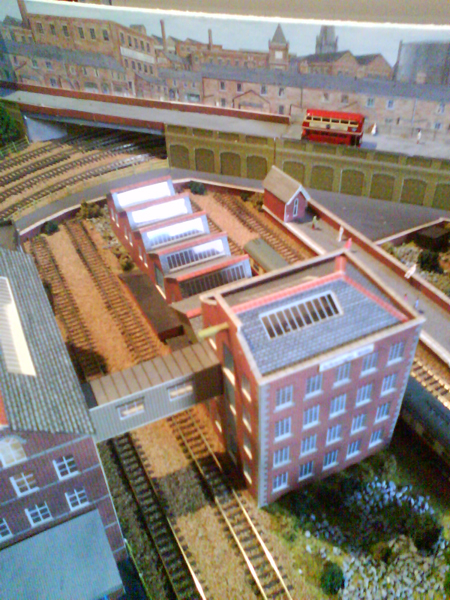
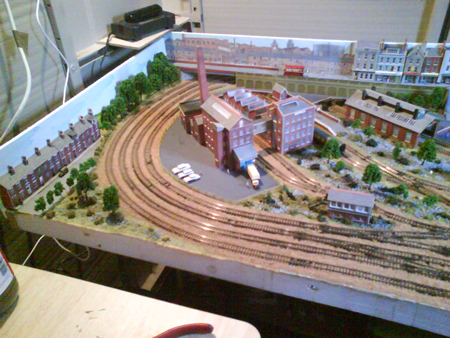
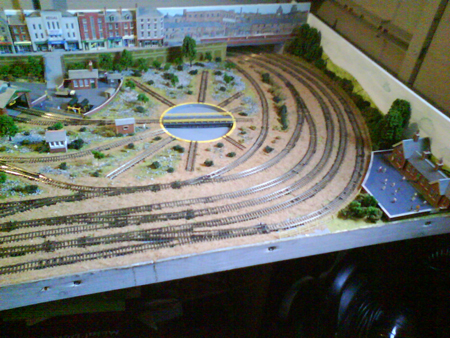
Alan’s been in touch – he sent in pics of his layout. If you’ve ever wondered about building model railway inclines, have a look at how Alan has done it:

“Dear Alastair i am not a big train modeller but every 5 or 6 years i seam to get the bug, so at Christmas I decided to start a fresh project hope you find it of some interest.

regards

Alan”

Building model railway inclines

Building model railway inclines

Building model railway inclines

Building model railway inclines

model train bridge

model train tunnel

model train tunnel

model railway tunnel

model railway train


Building model railway inclines:

Building model railway inclines

Building model railway inclines

Building model railway inclines

reverse loop

model train freight

model train steam passenger

Building model railway inclines


A superb layout – a big thank you to Alan. There’s lots of different methods when it comes to building model railway inclines, but I’m always reminded of Chris’s post:

How to make inclines.

Next up some more of your tips:

“Okay, here is a set of tips for those who make their own scenery materials.

1) For those that need to use a blender. Look about at garage sales, flea markets, swap meets and thrift stores like Salvation Army, Goodwill, Saint Vincent DePaul’s or other second-hand stores.
2) If possible, buy two blenders. That way if one burns out you have the other as a back-up or you can use them both at the same time when you have a large amount of something to process in a short time.
3) Keep your eyes open for a food dehydrator that you can use for drying wet or moist material in, like leaves, weeds and twigs for ground cover and trees, or decals and paint on your models.
4) And don’t forget looking for a good condition, but quiet hair dryer to use when drying your models or small areas of your layout.

Tip #5) You can combine tips #3 and #4 by making your own dehydrator. Find or make a fair sized box of thin wood or metal with matched grooves or wooden strip on the inside walls to hold racks made of wooden frames with screen material stapled on their bottom sides, that can slide in the grooves or on the wood strips inside the box. Then have a large enough hole in the bottom back of the box that will accept the barrel or hose of the hair dryer. The front door of the box can be made like a tray that fits over the front of the box and can be attached with a set of small hinges and a latch to secure it. When you need to dry something, place it on a rack and slide it on to the lowest level in your dehydrator, plug in the above mentioned hair dryer’s barrel or hose in the hole at the back of the box, close and latch the front door of the unit then turn on the hair dryer at lowest to medium setting. If you are drying something, remember to set the dryer on lowest heat, so as not to cause paint to bubble up or the material to be blown about.

R. Olivarez”


So then, in my ignorance, I asked, “What do you use a blender for?”


“Mr. Lee,

Easy answer about the use of blenders.

I had the need to use a blender when I was making some simple papier mache’ for a retaining wall that I needed for a light-weight layout that I am putting together. You basically tear apart egg cartons and newspaper by hand into small pieces. Put a hand full or so of the stuff in a blender, with some salted water and blend it into a pulp. Pour that into a container for temporary storage until you feel that you have enough. When I made the wall piece, I poured the mixture into a small bowl and added some white glue, stirred it well and poured it onto newspaper, laying on a flat surface. When it started to solidify, I took a fork and stroked the surface with long, soft strokes to create the impression of a rough texture. When it starts to firm-up, you could put curves into it by draping it over objects. When fully dried, carefully tear off the newspaper from around the edges. Due to the white glue, the papier mache’ will retain the desired shape. When dried and ready, it is glued in place, sealed and finished in whatever fashion as needed. You could also alter the piece by either ripping off or trimming um-needed material with a knife or scissors, until it fits in place.

You could use the homemade papier mache’ to create other things like tunnels, small hills and cliffs.

Another use for the blender. Take some dried, brittle leaves and put them into a blender, run it until the leaves have been ground to the desired consistency that you want. You then store the material in a container until needed for use as ground cover. (You could add some real dry dirt in with it.) The the same technique could be used with dried coffee grounds. It is surprising the realistic texture that you can get. Secure the material to your layout with the standard mix of water, white glue and liquid dish soap or you could use spray-on adhesive that you can get from almost any hardware store.

The reasoning for two blenders is in case one fails, you have the other as a backup. Another reason is while you maybe making your papier mache’ in one you could be using the other for making ground cover material.

R. Olivarez”


“If you have a HO gauge and you want to run fine scale OO gauge trains. The layout can be modified by relaying the curves with Hornby track, thus making possible to run big Hornby or Bach mann Branch line trains. There fore saving you the job of ripping it all up and starting again.

Paul”


“hi i just bought some telephone poles for my layout their made by lioneli wanted to mount them without damaging my brand new bauchmans grass mats the poles come with a plastic round stand the size of a quater with a hole on each side i didint want to screw on nail them down so i turned them upside down and glued on an old style thumtack with 5 min. epoxyi let them dry overnight when i mounted them they pushed into my 3/4 inch plywood easily and if you need to remove them the hole left from the thumtack is not seen so you can move them if you like.

Ron”


“Hey, I’m in a situation that I put my train up for winter & take it down for summer. I use 3 – 4 X 10
plywood boards. To give it some reality, I use green indoor-outdoor carpet for grass.Staple it on the sides & I can reuse it form year to year. The most trains I got on these boards is 18 running at once.

Tom”


“Alastair

Here is a tip that might save a fair bit for any modeler. When looking for timber/plywood for baseboards or inclines etc try your local export packer or engineering company, as export packers can have off-cuts especially softwood/plywood or OSB and engineering companies these days import components that usually come packed in plywood cases etc and it costs them to get rid of the waste timber / plywood board. Having worked for several export packers I can say that we often gave away free timber or ply to anyone who wanted to collect it. useful for building model railway inclines too

Hope this helps

Kevin”

A big thanks to Alan and all the others.

That’s all this time peeps.

Please do keep ’em coming.

And if creating your own model railroad is an itch you just have to scratch, the the Beginner’s Guide is here.

Best

Al

PS Latest ebay cheat sheet is here.

PPS More HO scale train layouts here if that’s your thing.


Another dose of model train modelling tips

“Hi Al,

Having built several model aircrafts of different shapes and sizes, I made the wings out of p.s. foam.

I use to cut it with a home made cutting device using a very thin guitar string connected to a 12Volt car battery.

You must make some mechanical arrangement that keeps the string tight at all times.

If you are electrically inclined and know how to connect an ampere meter in circuit,you can use any length of wire as long as you don’t draw more than 3 amps.

You can use this arrangement to cut tunnels,door and window holes in the foam blocks.

Please be careful not to use ALTERNATING CURRENT, You might find it a shocking experience. ONLY USE 12 VOLT D.C.

Hope the tip will help.

Regards,

Jan”


“Extrude beads of silicone from a caulking gun onto a sheet of plastic so that they are in contact side by side but leave slits between the beads.

Once cured peel them off the plastic and dry brush with white paint. Makes for a realist water fall

Bumpy chinille makes great evergreen trees spray with hair spray and dip in green ground foam

Tall Verbena, Ornamental Oregano, sage brush, when dried all make realistic shrubs and trees

Fred”


“I make my wife save the dryer softener sheets for me after she uses them.

They make excellent lightweight hard-shell scenery for use on portable modules.

The sheets are made of a very tough fiber that will hold a very thin layer of plaster.

This makes it possible to dip the sheets in the wet plaster, pull them through a pinched thumb and fore-finger to remove the majority of the plaster and leave a very thin, even coat over the sheet.

Since the sheets are much stronger than a wet paper towel more force may be used so the resulting plaster layer is about half as thick and therefore a lot lighter in weight, yet still strong enough to make a sturdy support for scenery work.

ED”


“Yes wonderful. Heres a tip for those of us who keep fish (in tanks) as well a Model Trains.

Use the waste activated carbon as ballast, its the correct size, black but can be air brushed and its free!

It can also make great coal fill for wagons

John”


“Hi Al —

Try this for better appearing plastic structures.

Before assembly, take some pumice (you can find this in pet stores for a reasonable price – chinchillas like to bath in it – or on line), spread a bit of toothpaste in a dish and sprinkle on some pumice.

Use a tooth brush to scrub the plastic parts in an appropriate direction. It not only removes the sheen, it also imparts a scale-sized wood grain to siding or texture to bricks, etc.

Using toothpaste as a vehicle allows the parts to easily be cleaned up with warm water.

On brick siding often all that is needed is some white or grey paint to fill in the mortar joints and then wipe the surface clean.

Whether you choose to use the parts as is or paint them, this scrubbing imparts a much more realistic appearance.

Jon”


Some super pictures of Alan’s layout next time – I wanted to put them on this mail, but I’m battling against the clock as always!

Don’t forget to have a look-see at the latest ‘ebay cheat sheet‘ before you head off there. You’ll save a dollar or two at least.

Best

Al