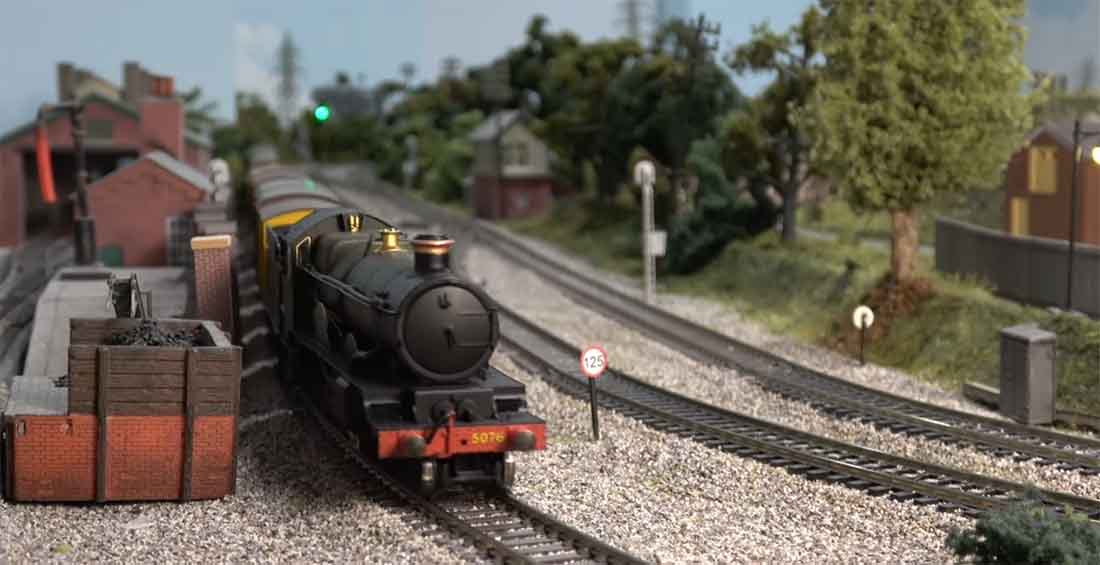
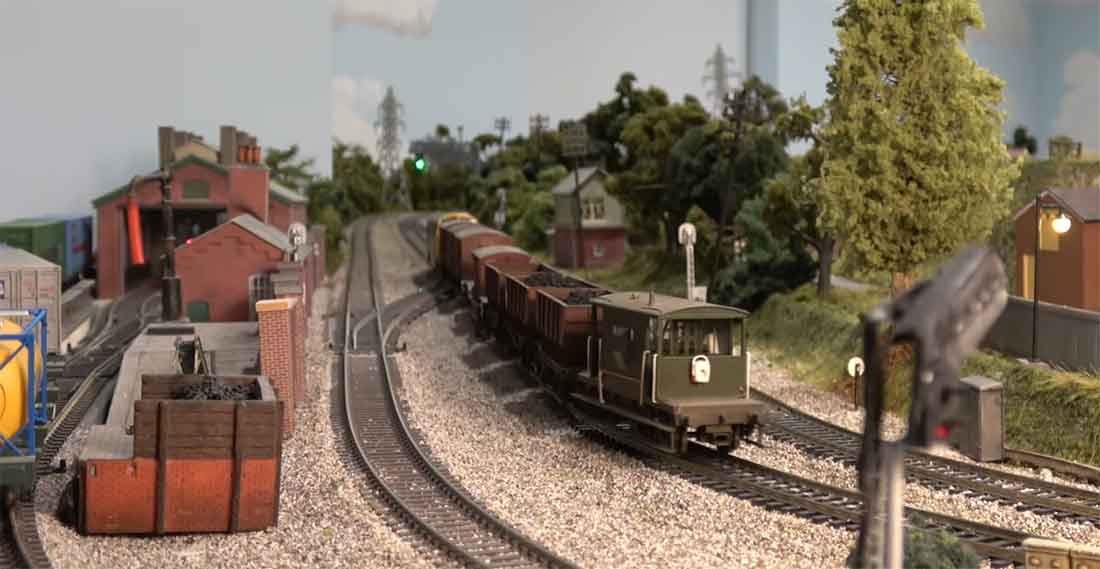
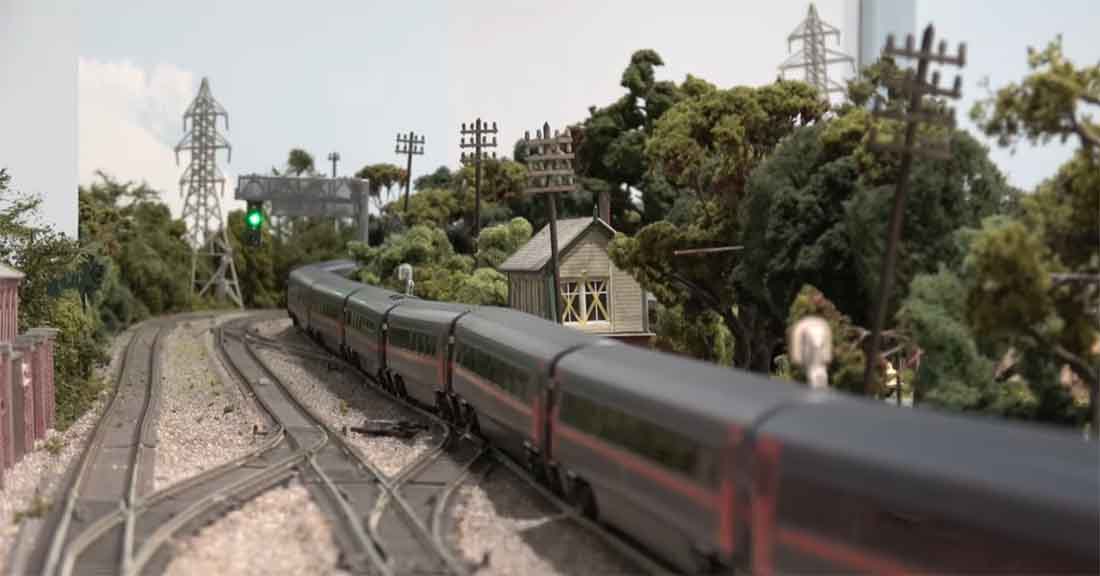
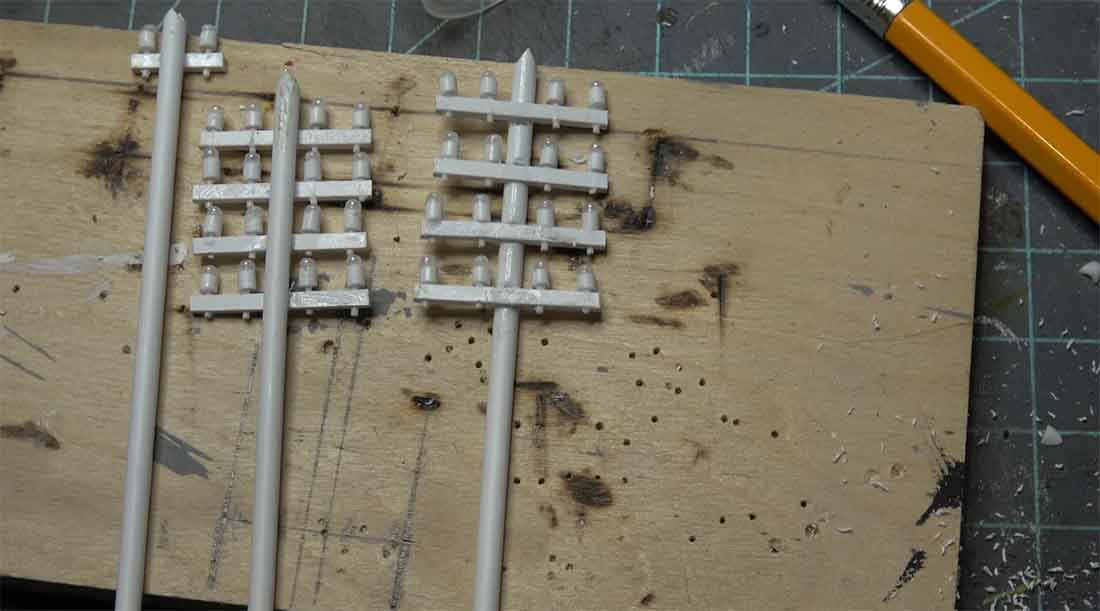
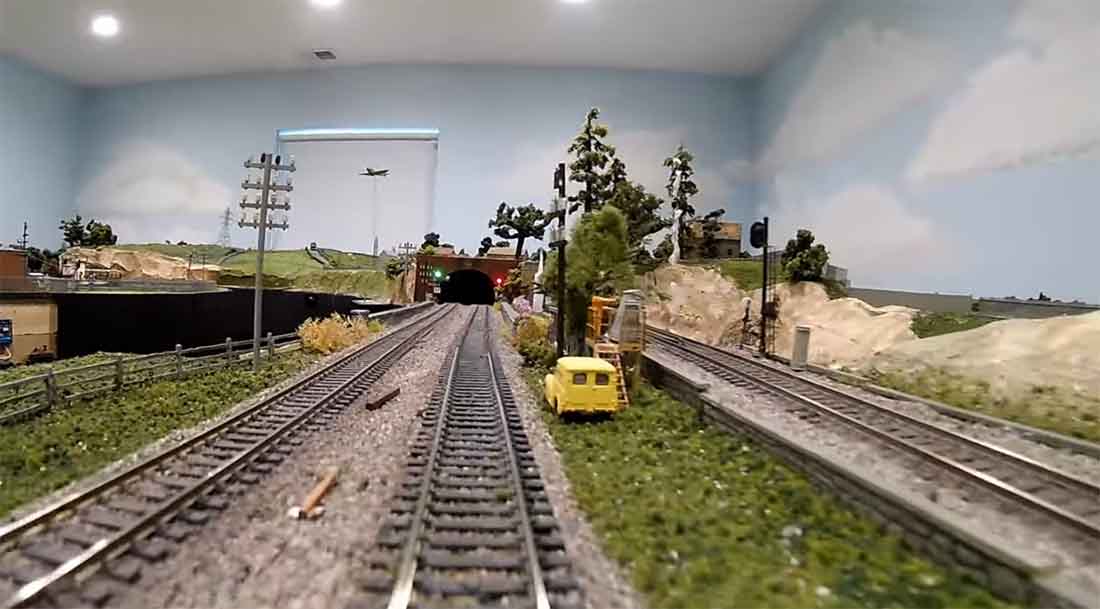
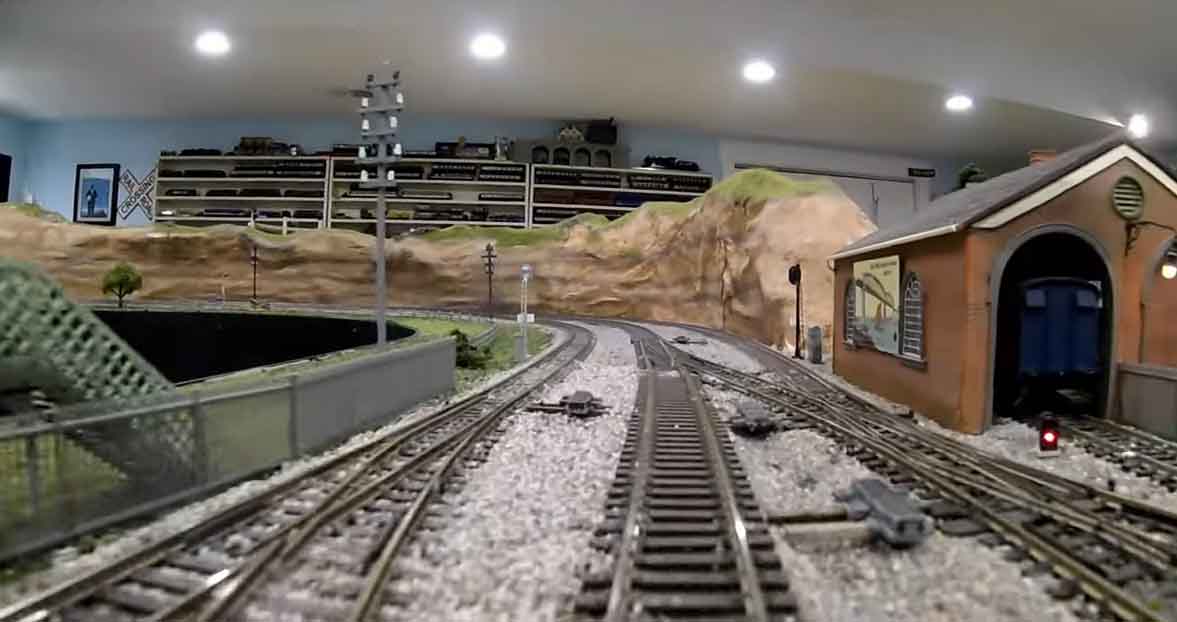
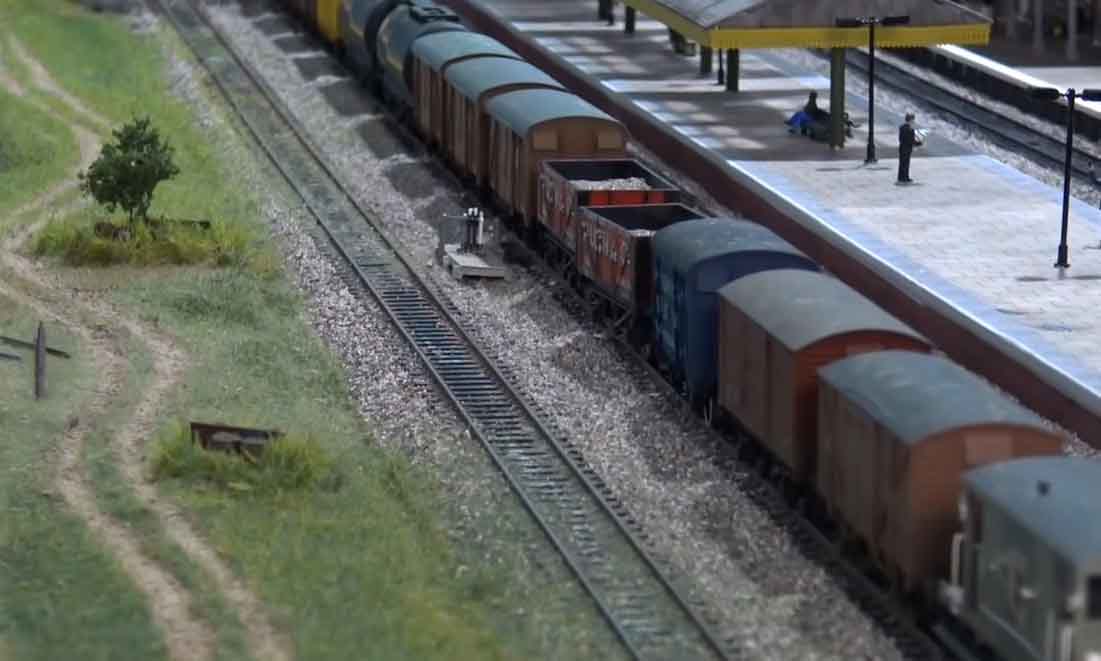
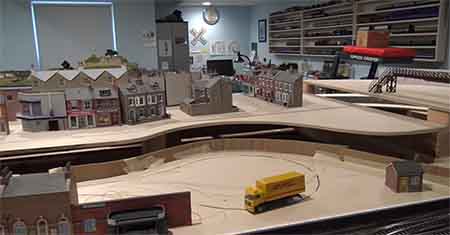
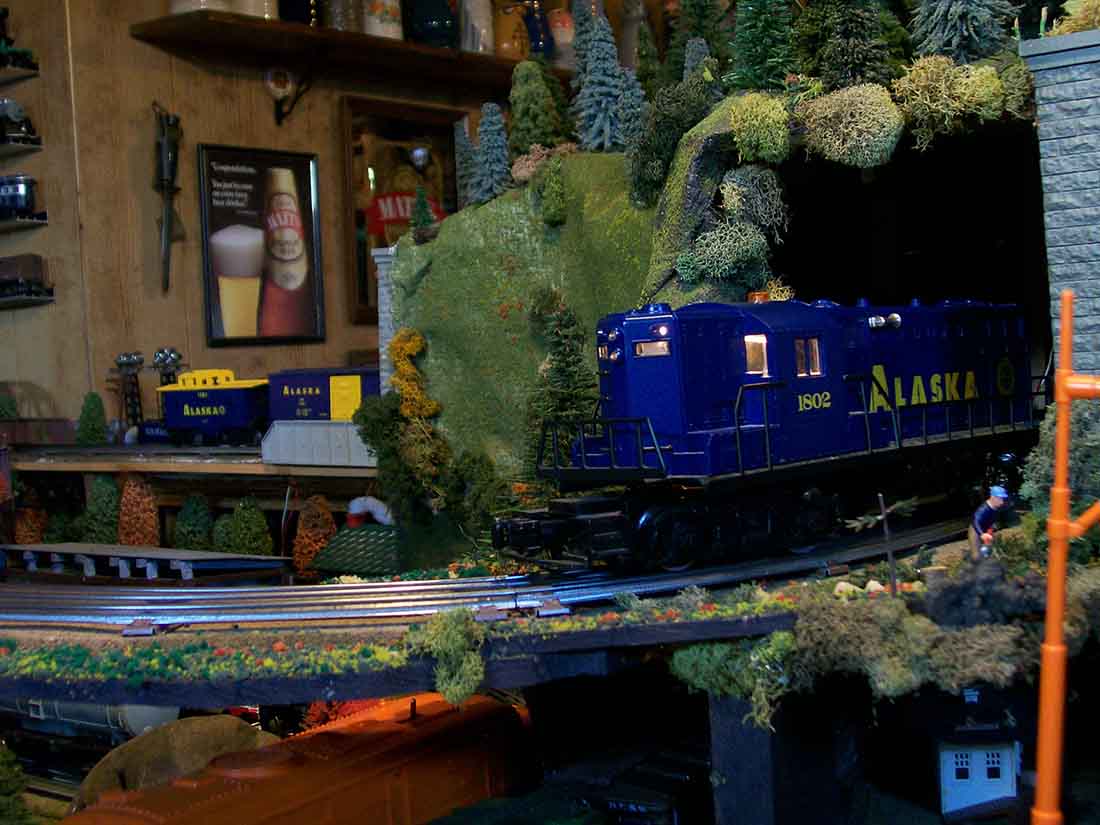
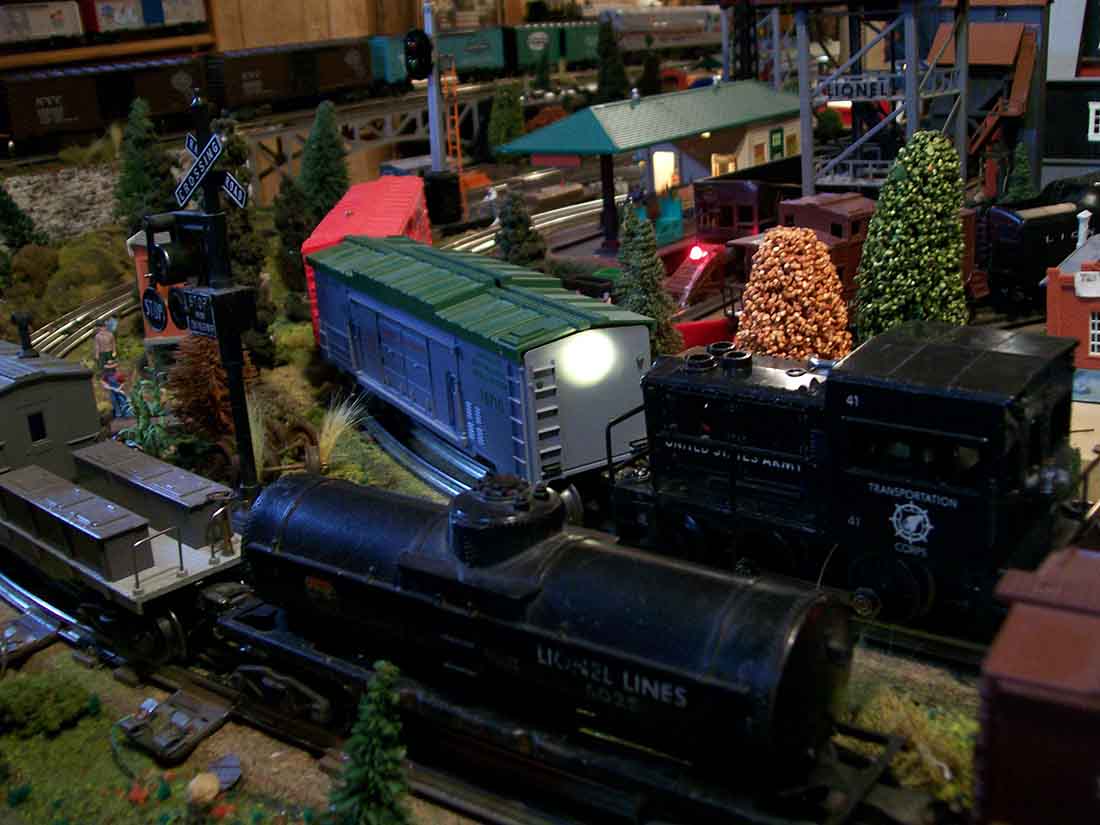
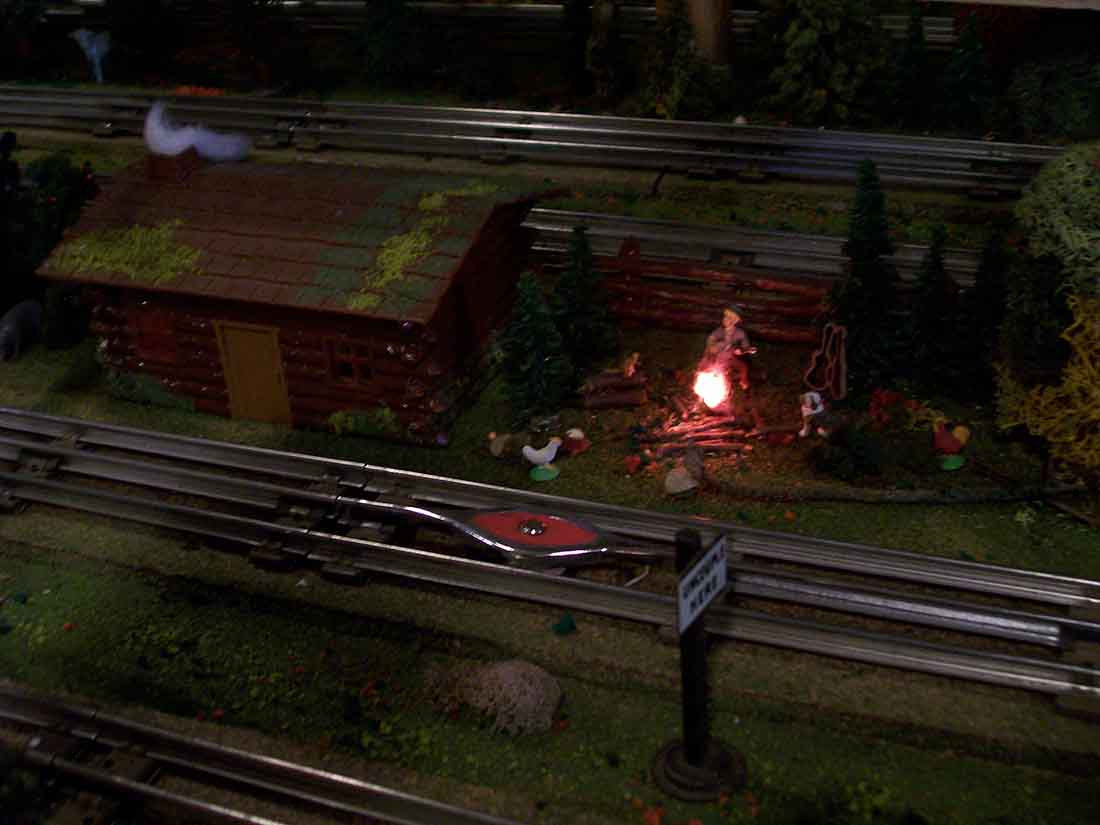
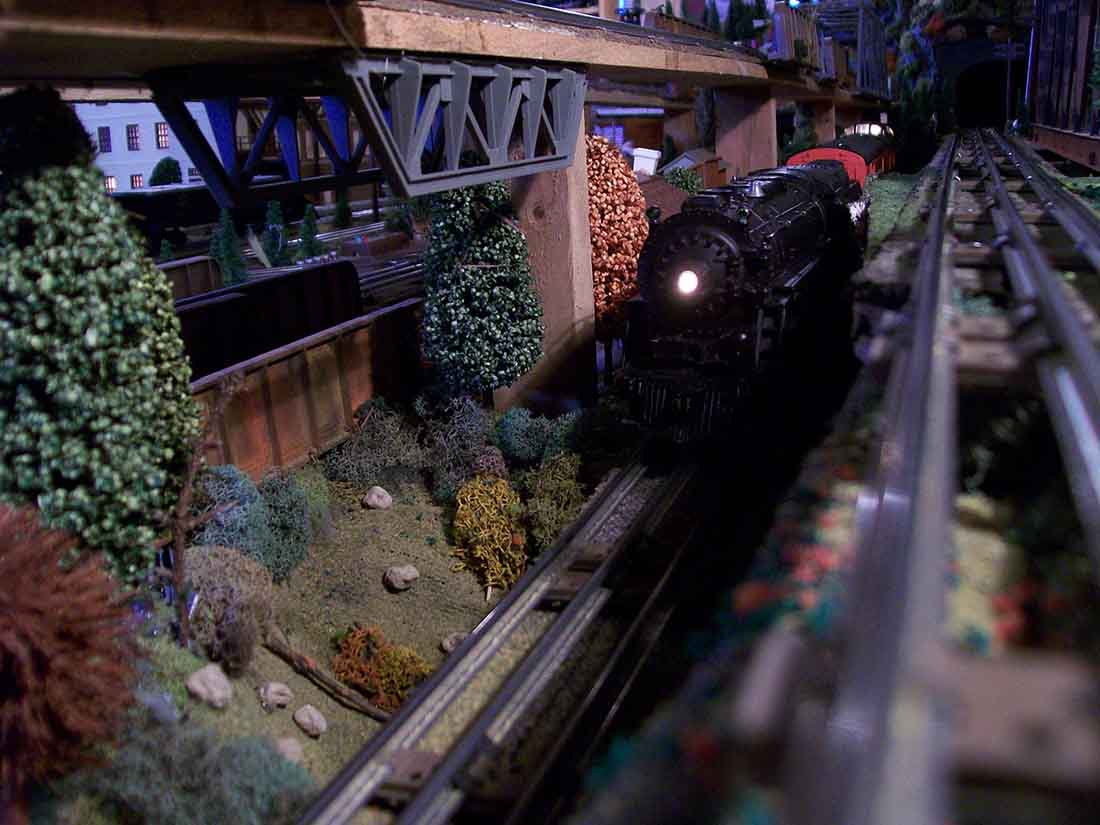
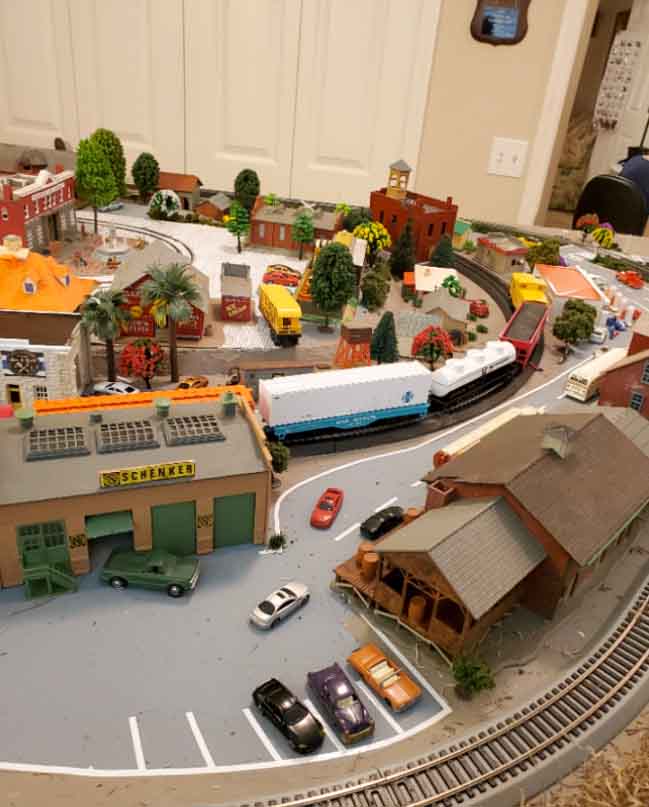
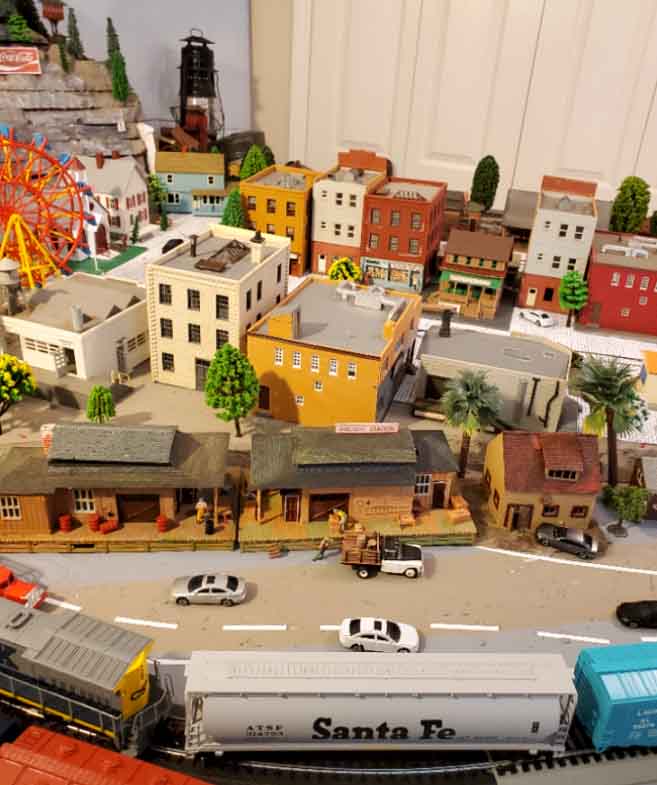
Greg’s been back in touch again, this time sharing pics of his Yellowstone steam locomotive:
“Hello again Al,
Wanted to share some more from the layout. Another great piece of “history” from the layout is a result of our anniversary trip last summer to Northern Minnesota area and my discovery of the DM&IR 2-8-8-4 Yellowstone steam locomotive.
Our trip included several train trips over the few days we were there including one on the North shore scenic railroad and a visit to the Lake Superior Railroad Museum in Duluth,MN.
It was here I learned about, and saw DM&IR 2-8-8-4 Yellowstone steam locomotive #227. The museum has this giant on display and in beautiful condition. This sparked a huge need to bring this memory to our layout.
The project would a lot of work, but the end result, as you can see, was well worth the effort.
I was very lucky to even find one of these locomotives for sale. When I got it it needed a few minor repairs from shipping. Then began the process of bringing this plan black locomotive to life.
I painted it to match the real one we had seen and been in the cab of on our trip. The detail painting of hoses and valves brought out so much life.
Next step, it needed a long train of ore cars and a caboose to pull it, helping bring it all to life on our layout. This part involved repainting and redecal of 36 ore cars as well as custom painting a caboose to bring up the backside.
The end result is a beautiful train, and a living memory of our trip, and a piece of history that will live on (in HO scale) for many years to come.
Here are some pictures of this project as well as a link to a video of this train in action.
Thanks Al!”
A huge big thanks to Greg for sharing his Yellowstone steam locomotive, it does look rather fun.
You all probably know what I’m going to say – this hobby is all about making a start, and what a way to dip your toe into the water.
If it’s been a few decades since you’ve played with trains, why not try a simple layout like John’s? Then just throw in the some scenery if you find yourself having fun.
A layout hasn’t got to be the size of the room you’re in, and it doesn’t have to consume every waking hour either. But in the same light, it’s nice to have one when you have the urge to lose yourself for a few hours.
Of course I’m biased, but when something makes you lose track of time, it’s something you should pursue. Because when time stops, and you find yourself wishing there was a few more hours in the evening so you could carry on, you’re on to good thing.
I suspect most people who potter on their layouts experience the same – time just disappears. And as we all know, this only happens when you’re having fun.
Old Taz has been back in touch with his N scale moving cars:
“Hi Al,
I hope this helps your viewers
How to: By Old Taz
This is not Faller nor Magnoril system, it’s good old back hills ingenuity, know how, got to have and go ahead, challenge me, little r. Thank you so much for your remarks, everyone!
I’m going to do my best, at telling you how I put this racetrack together. It’s not going to be easy for me because of all the master model builders I will be talking to. I mean it. You guys and gals do a great job at whatever you try. And Al, I can’t say enough about what you do for model train enthusiast, you are the best and keep up the good work. I look up to you every time I push the button on my computer to see what you’ve come up with now.
So, let’s get on with the show. A lot of the things I used you’re going to find right around your own house. You may have to order some gears, magnets Plexiglass and poster frames. (Just to get the plastic sheeting).
I used a piece of U-shaped metal to mount the plays on. You need something that will not bend, to keep tension on the chain. The bearings were made from a copper electrical connector and a nut.
The nut was drilled out to fit the connector, and the two were soldered together. The bolt I used for the shaft was one that didn’t have threads all the way up. The head was ground down like a carriage bolt.
The pulleys are made out of CDs. I used new ones as I have a lot of them that don’t get used anymore.
The bottom one was left full size the next two were cut to three inches in diameter and the top one was cut 1/4 of larger. After you cut these, you need to glue the edge because they will come apart.
The nut in the bearing was apoxyed in the center of the CD’s. A large gear was a proxy to the bottom of the CDs. (At one time I was going to use all gearing on the bottom and
This picture shows a framework that I built underneath to hold the floor.
There were holes cut in the floor to match the CD’s diameter plus 1/4 of an inch. This was bolted to the U-shaped metal piece. This space would be the depth of the wing and the magnet and 16th to an eighth of an inch in height.
Below shows you how I built the swing arm for the motor in the motor gear. (Here again the gear sizes I just had to play with to get close to the speed that I was looking for. There you can use a rheostat to adjust your speed if it’s not to your liking.
The sheet that I made the road way out of is actually two sheets, I couldn’t color the top or the bottom for the magnets would scrape it off. So, I painted between the two sheets. This was fastened down with six screws three in front three in back. The lighting is on this sheet and was wired with copper tape on the bottom outside of the track.
Below are good pictures to see the wings and how they are cut to go around the pulleys. All the wings are fastened to the chain, (This needs to be loosely done, not tight.) The wings are cut this way so that they follow the pulley and don’t make jerky turns.
You’ll note on the chain there’s something that looks like a safety pin. Well, it is! On the final one I took two large ones soldered them together to give me the tension that I needed to hold the chain in place. I did it this way so that the spring would lay down between the floor and the track.
The magnets were fastened on with hot glue and that way, if I had to move them into a different position, I could do so with my soldering iron and heating up the magnet and the glue and repositioning it. This also made sure that the magnet was flat against the wing.
You know I need a break and you probably do too sitting there reading stuff that put you to sleep Haha. So, let’s all go run our train for an hour or so and then come on back and we’ll do it again.
There I feel better don’t you.
Below show it with the track on in a little more detail. Of course, with the detail of the track the grandstands and all that other stuff, you ladies and gentlemen will never have any problem dealing with that. From what I’ve seen on AL’s website.
The N scale moving cars I cast myself, I bought cars made my own casts, I feel that if I don’t sell them, there for my own use, so I’ll keep myself out of trouble.
I have also taken metal, cars filled them with clay finished off the windows and made molds of them also. (there is a clay you can buy that you can use for molding.)
The cars that I’ve used here we’re bad molds. So, I cut the fenders off drilled out the windows, and some of them I carved engines in them. I would like to take that further, with the bumper’s radiator guards in the side skid guards on them. (Someday!!)
As far as the cars sliding out, I think this was due to it only being on one magnet.
Like I said before if you reverse the magnets in the front, you can make your car stand on its nose all the way down the track. I think it’s just something that I inherited with a few cars; I can’t make them all do that. Or can I! (challenge, challenge)
I hope this answers most of your questions. If not ask away. I will try to help you in any way.
Yours till the whistle blows.
Old Taz”
A huge big thanks to Old Taz for shaing his N scale moving cars. Here’s the vid from his previous N scale cars post:
It is fascinating seeing the cars whizz round without the scenery – clever stuff from Hall of Fame member, Old Taz.
Please do leave a comment below, I’d love to know what you all think on this one.
I will never tire of the inventions and solutions you all come up with.
Taz’s good old back hills ingenuity did remind of Rob’s Faller system video.