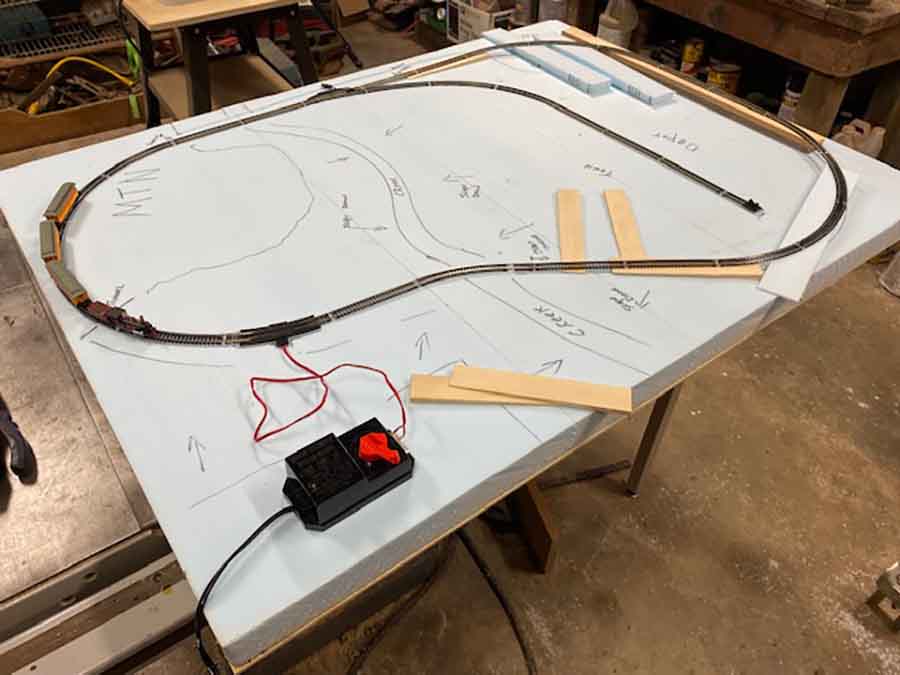
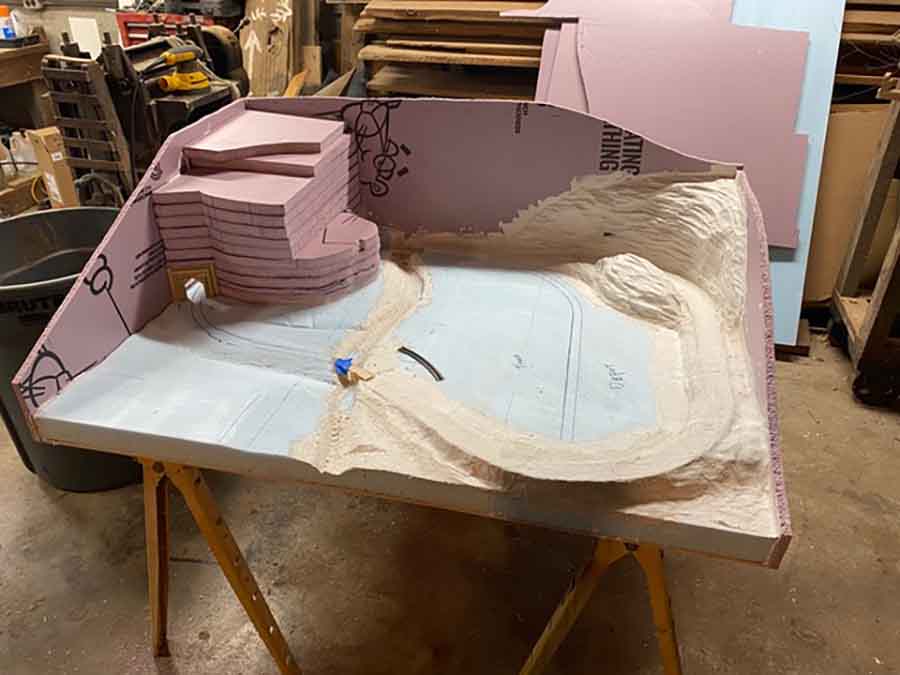
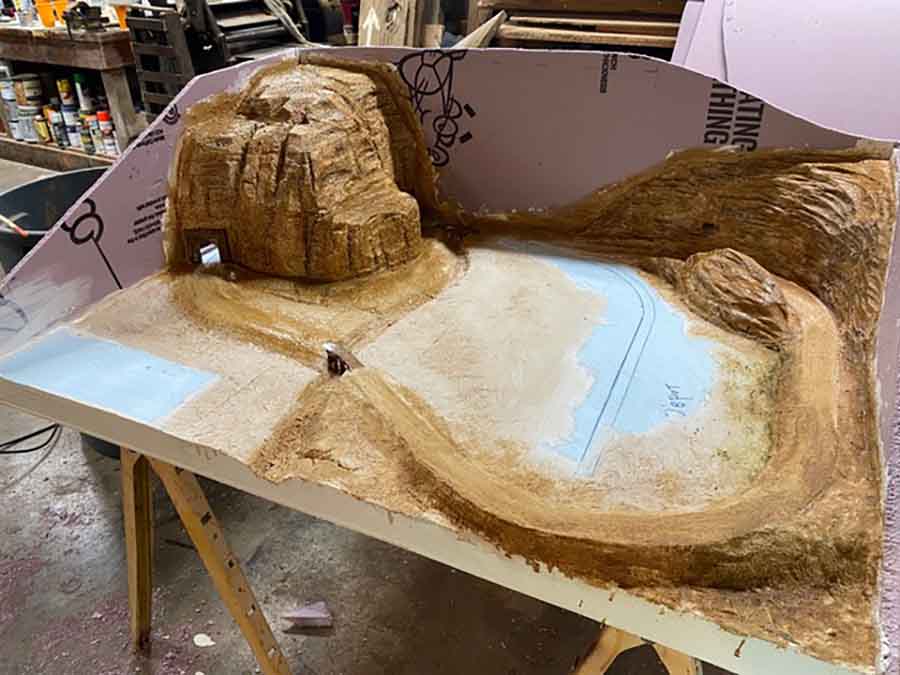
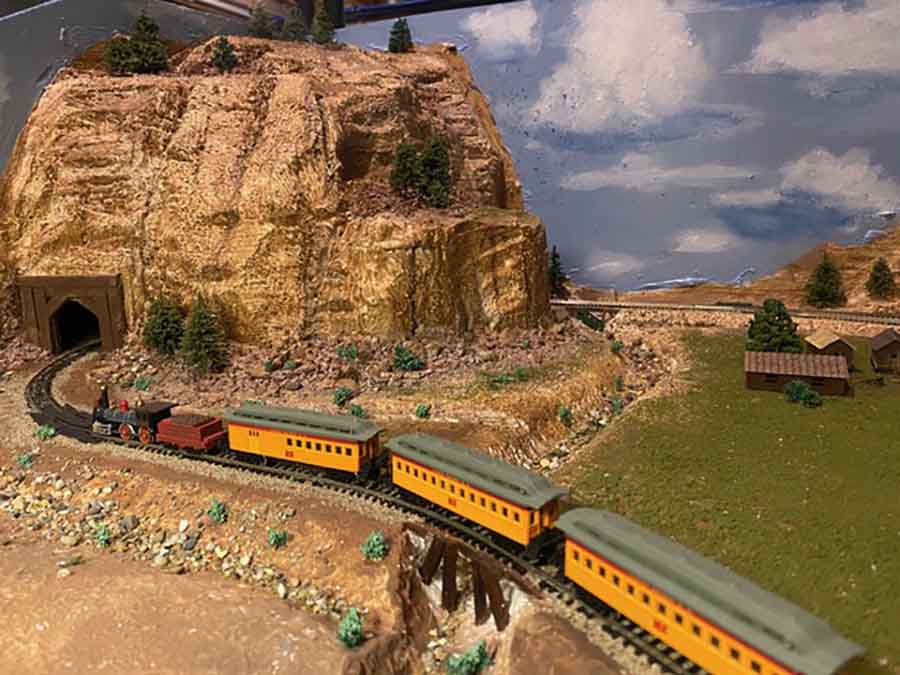
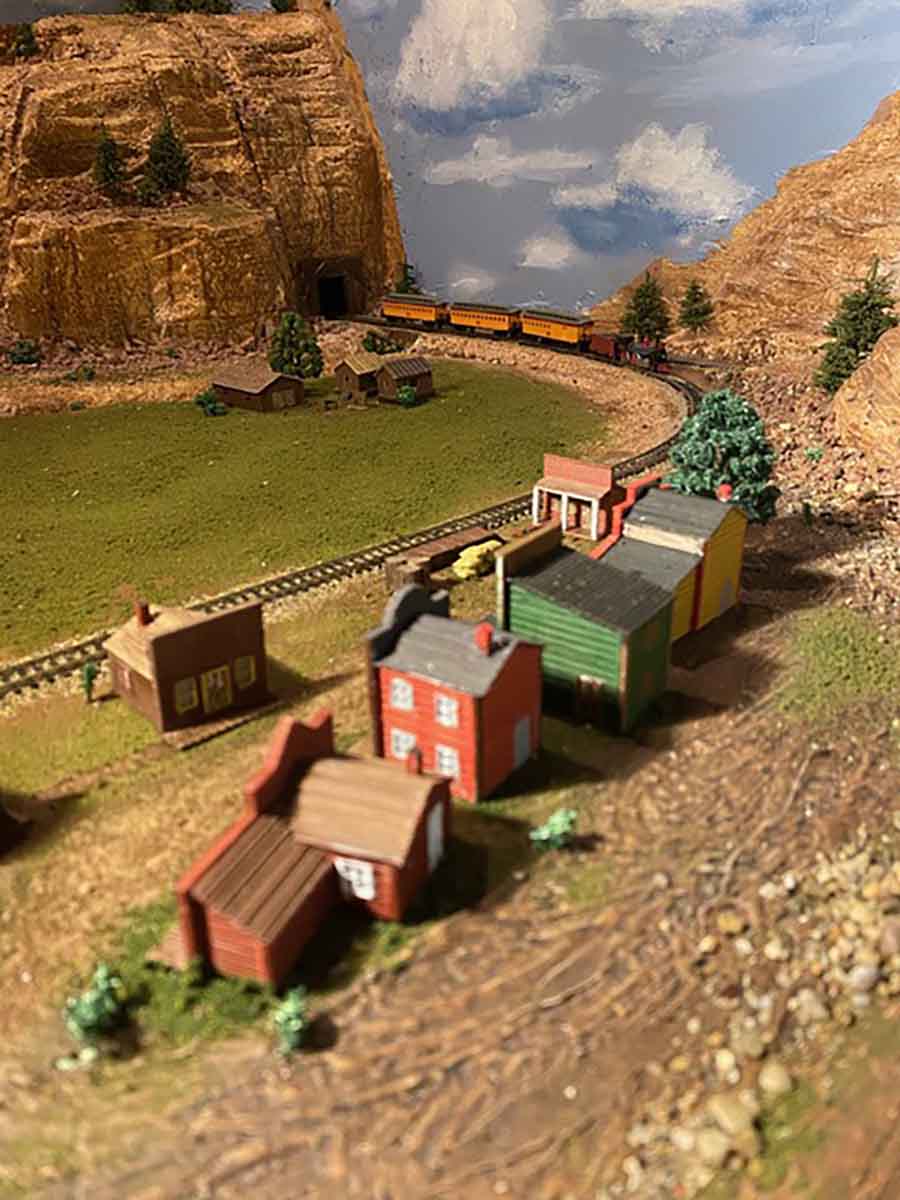
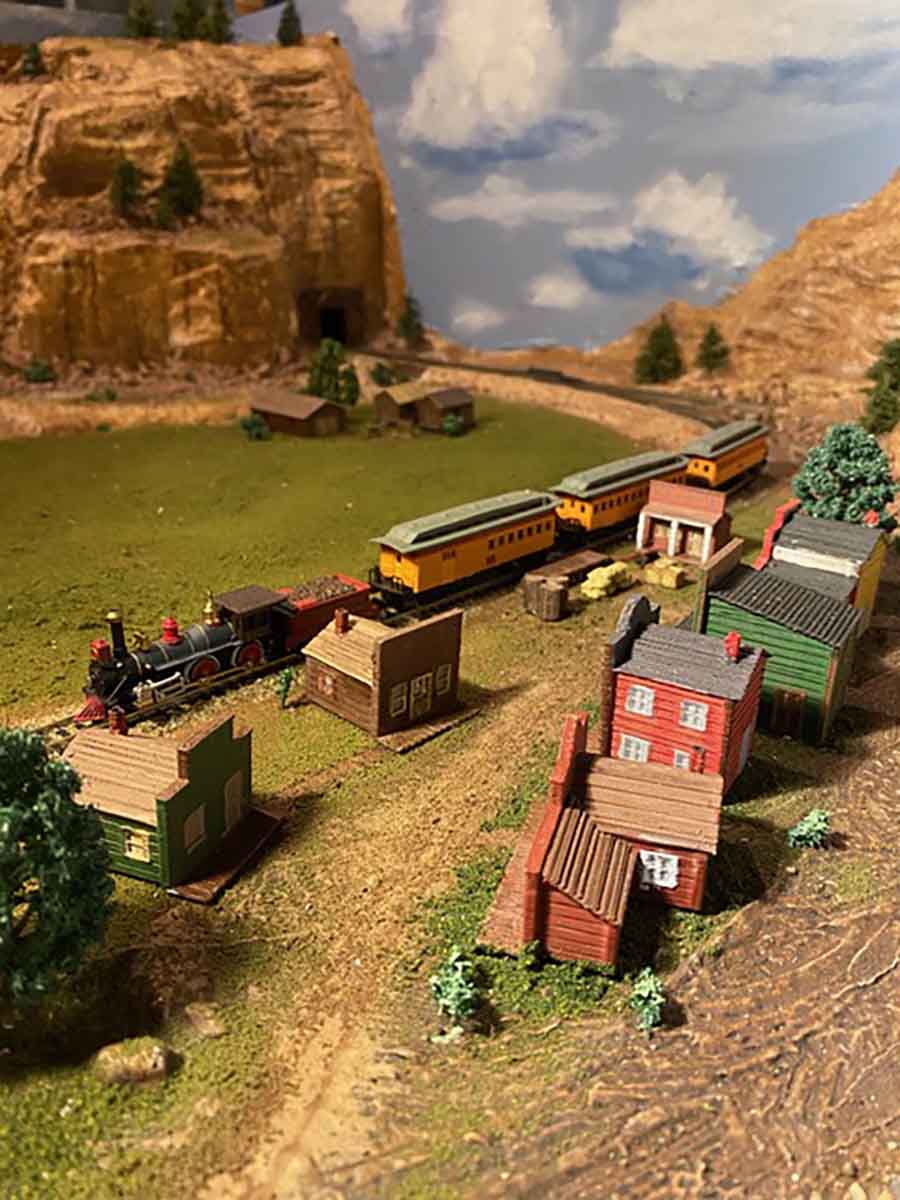
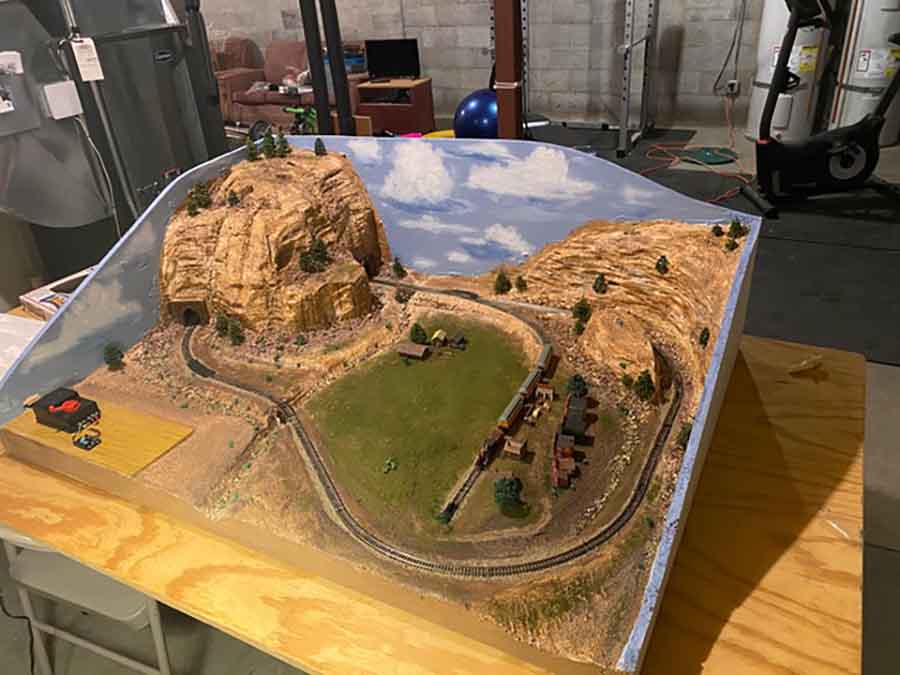
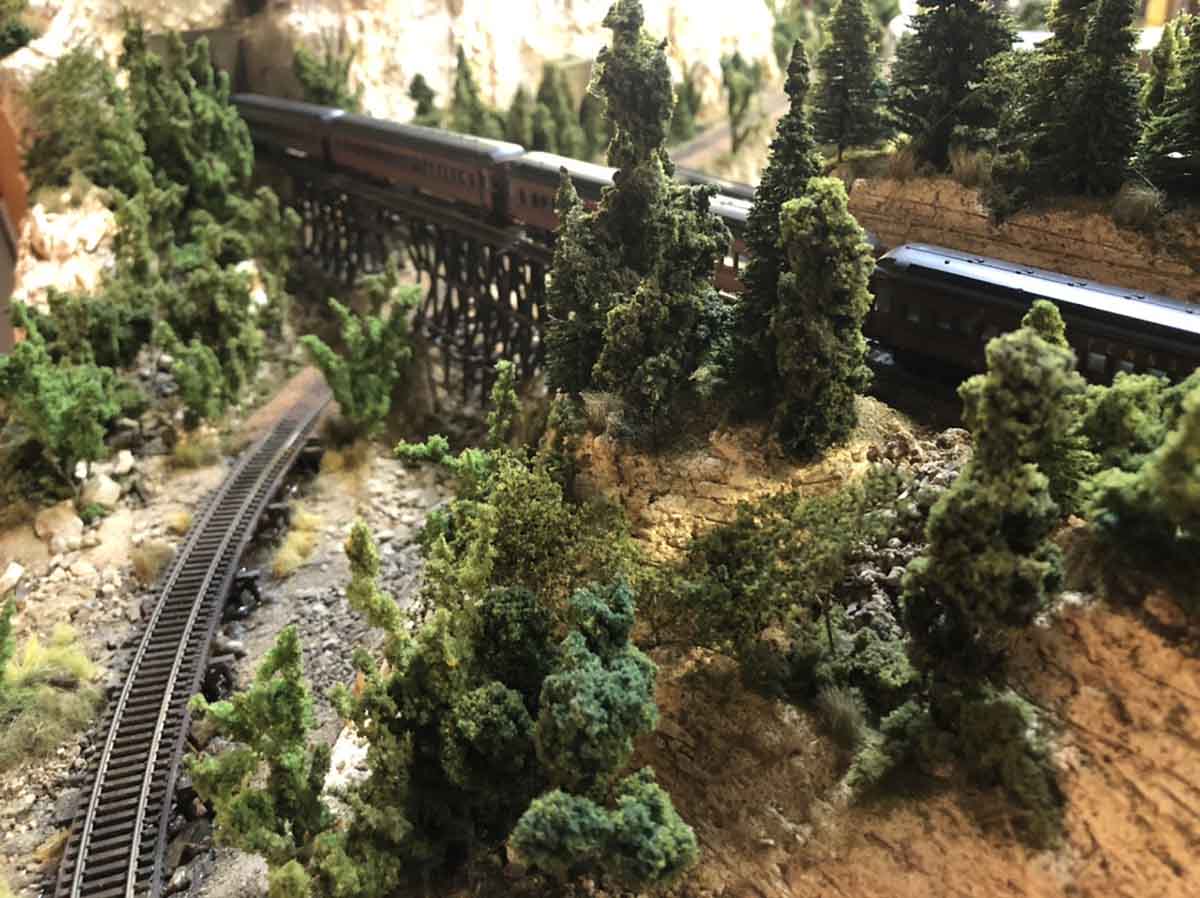
Dean’s been back in touch with part 4 of his N scale scenic ridge layout, which is a kit from Woodland Scenics.
“Al, this is the forth submission, in an 8-part series, discussing my construction of the N-Scale Scenic Ridge layout (kit from Woodland Scenics).
The series is aimed at a beginner model railroader, but I hope there are a lot of hints for those with more experience. In this session, I cover putting together and finishing the outer foam board walls and three fascia boards.
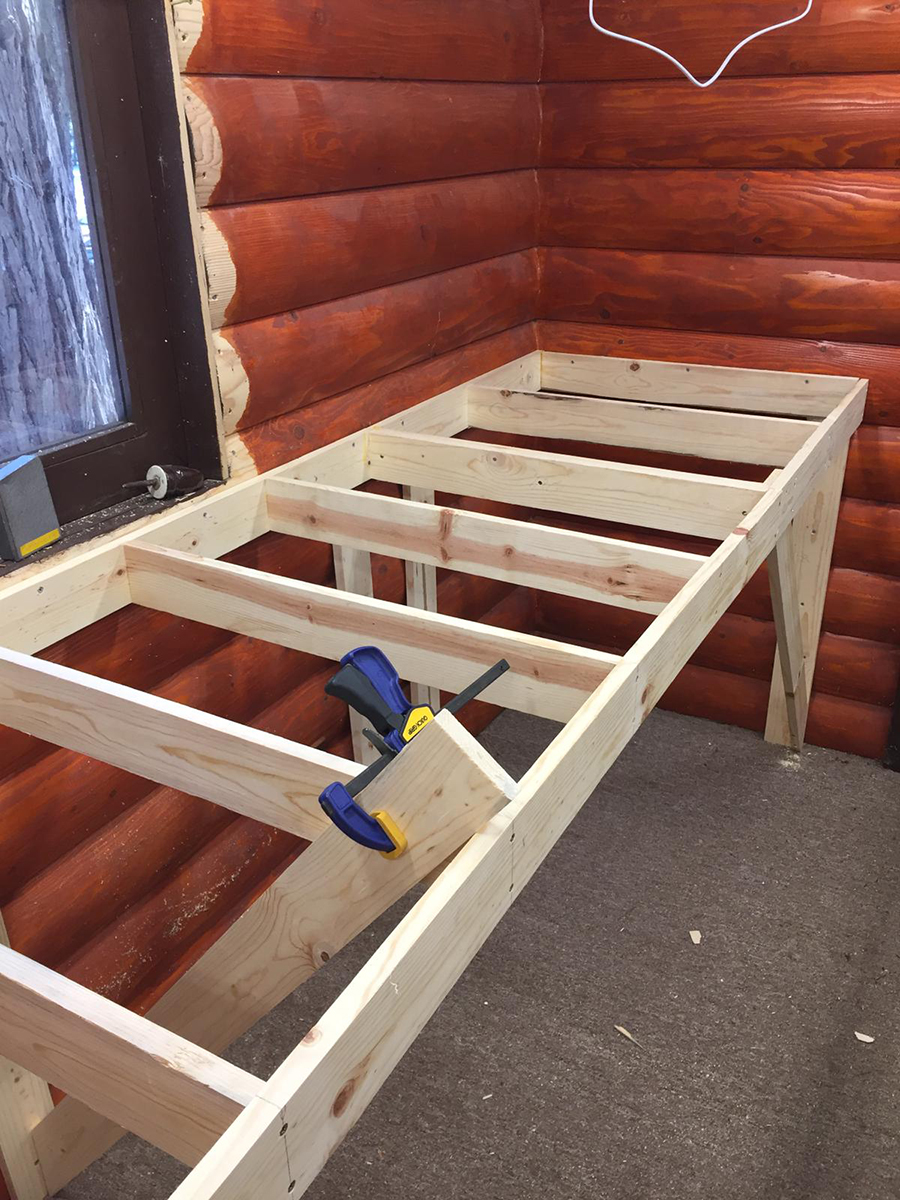
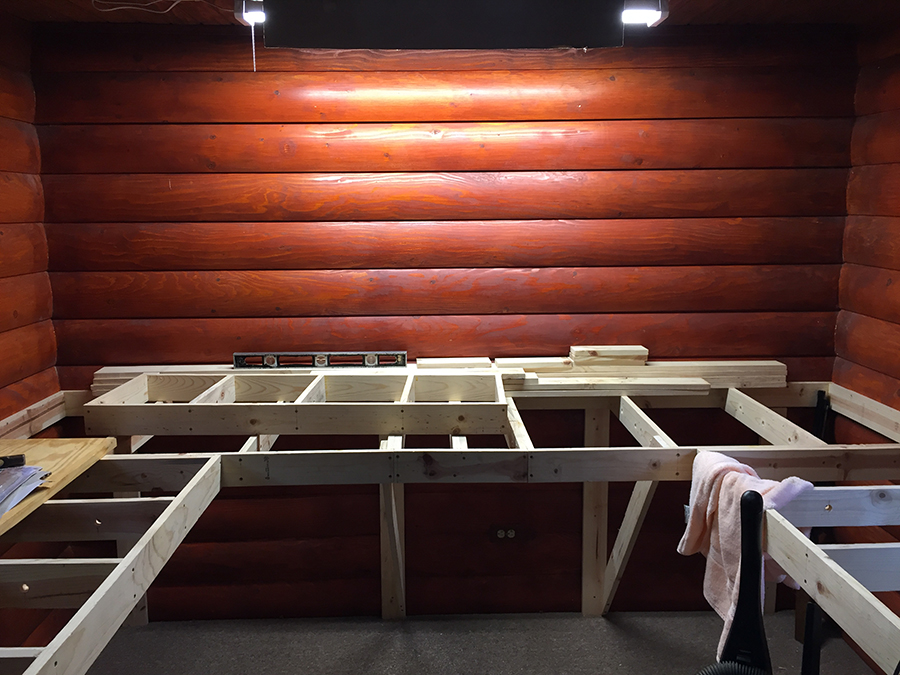
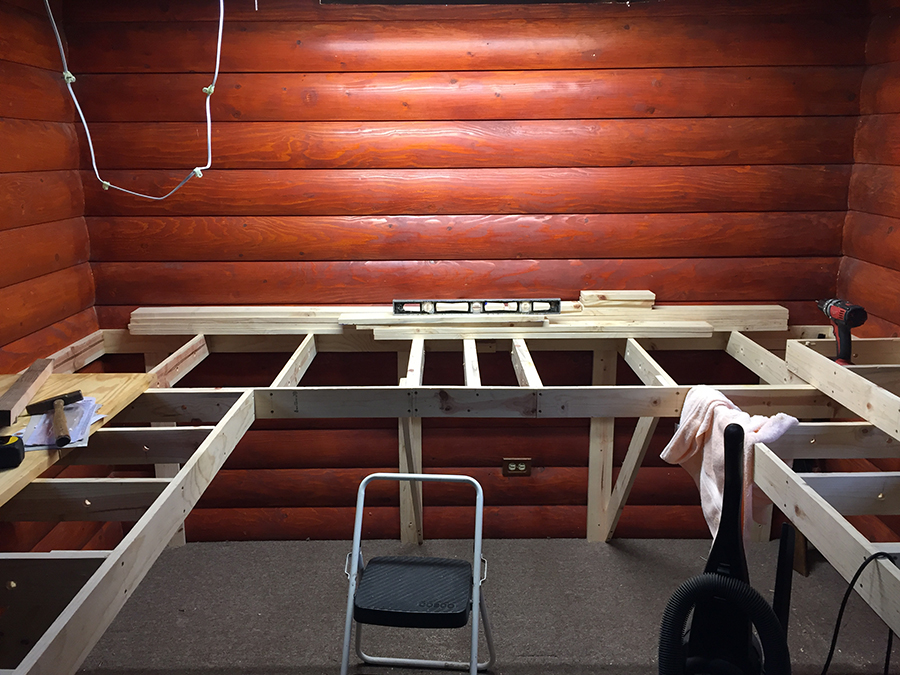
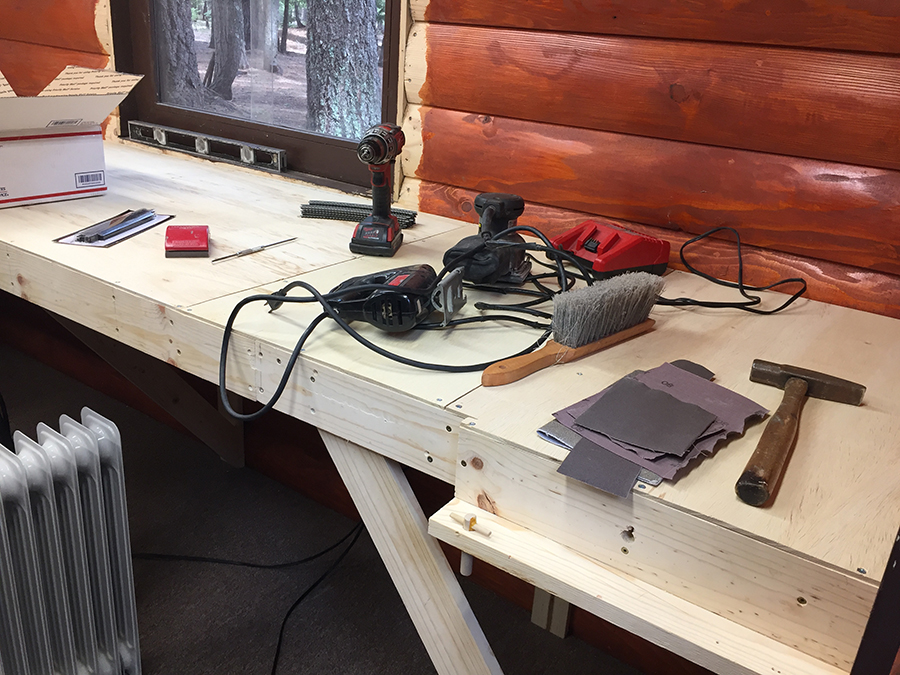
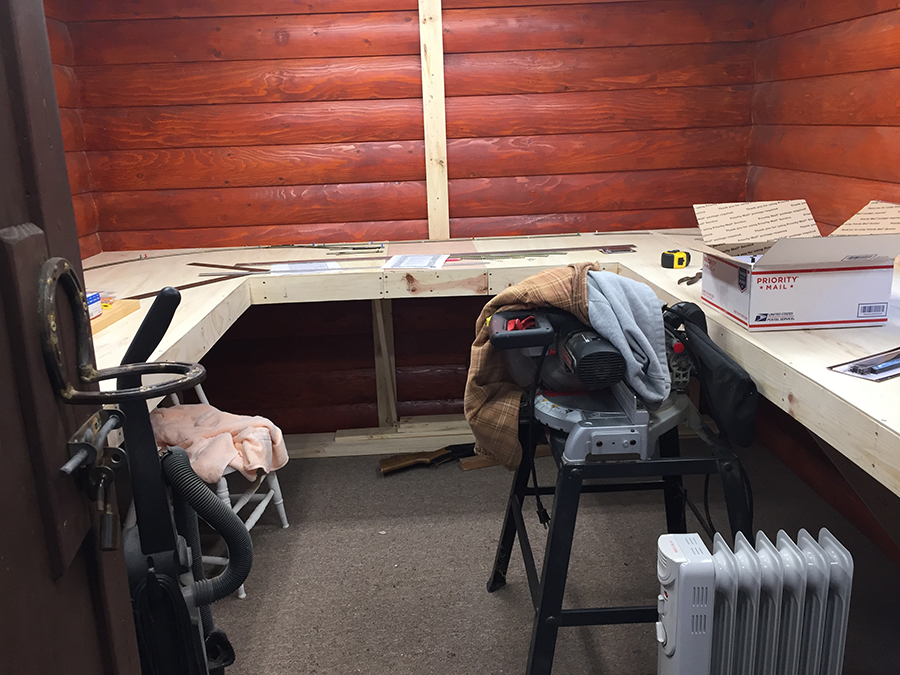
The foam board outer walls were cut and attached following the instructions in the Scenic Ridge manual. I added a ¼” horizontal foam board to help support to the left and back walls, as well as 2×2 boards at the corners, and 1×2 boards as shown to hold screws for the fascia boards.
Another photo of the supports and walls.
This shows the board and four supporting screws I added to strenthen the foam board I cut where I plan to run a road. The track will be repaired later.
The back wall was covered with plaster cloth to strengthen it.
After rolling out the plaster cloth, it was wetted heavily with water, then cloth was smoothed out.
The next shots show how I made the 1/8” (actually 3/16”) plywood to form the fascia boards for the three remaining sides. In all cases, the foam board walls were cut to the desired contours, then the plywood was cut to match the contours. The plywood was sanded smooth, then painted with matt, black paint.
Two more shots showing more info on fascia boards:
The front (in two pieces), note how the switch control board helps to hold the fascia straight.
The right side
The left and front side facia boards finished and painted. The DCC control panel can just be seen in its tray on the right.
The rear wall painted.
Finished front and right-side boards.
Bye, bye train.
And finally, here’s the youtube for my N scale Scenic Ridge layout:
A big thanks to Dean – if you want to see his previous post on his N scale scenic ridge layout, it’s here.
Once the final decision had been made, I sold most of the British locomotives, I’ve kept the cement works engines and rolling stock just in case I do decide to build another British layout, and started buying US outline as a replacement.
One very strong piece of advice, RESEARCH! This is vital if you want to get things right. Watch as many videos of US railways as you can. Anything almost goes with American railroads, but the basics are there to be obeyed.
There are basically two kinds of railroads in the states.
Class 1 lines, which are mainly the big ones, Union Pacific, BNSF (formed by the merger of Burlington Northern and the Santa Fe), Canadian Pacific and Canadian National, CSX etc…Connecting with but separately owned and managed are the short lines of which there are very many.
These can range from one loco short line with services 2 days a week to almost major companies with hundreds of miles of track and large locomotive rosters.
I decided the Empire Midland and Lake Shore RR would be a short line.
Now take the real places of Syracuse, Oswego and Watertown in New York State, and substitute them with Midland, Lake Shore and Empire respectively and you have the basis of the line.
The part we are interested in is the section to Lake Shore (Oswego) running some 40 miles south to Midland (Syracuse).
Using a short line principle I can run fairly modern engines with 1950’ streamliners and early 1st generation diesels to go with my O scale buildings.
Railway operators in America are more accustomed to rebuilding and re-engining old locomotives a lot more than in the UK. It’s a fascinating subject and well worth researching.
Now running east from Midland (Syracuse), is the main CSX and Amtrak line to Troy and onto New York.
This line runs along the side of the Mohawk River and Erie Canal. But… there was also another line that ran on the eastern side of the valley, connecting Syracuse and Troy.
The latter was lifted some time ago and is now, for the majority of it, a linear parkway and walk. The route can easily be followed on Google Earth, great for building O scale buildings.
If in the wonderful fertile imagination of every modeller, abandoned lines were never abandoned, here is where a secondary and much larger concern came to fruition, the Mohawk Valley Railway.
This line has running rights over the EM&LSRR and there is talk of a merger to stave off competition from CSX, a Class 1 railroad that runs in the area. In reality, the EM&LSRR is a CSX line, but in my world!
One of the wonderful things about shortlines, and mainlines for that matter is the interchanging and leasing of motive power. Quite often, a shortline will buy a surplus class 1 engine, paint out the road names in what ever colour they can lay their hands on and either substitute their own name or simply leave it blank.
Running numbers are very often kept the same as the original number. This is called patching and is very common on shortlines.
There is also a locomotive interchange system between companies where motive power is short. These are charged as hours worked and although no cash is exchanged for this, the lending company will expect to have the use of motive power from the borrowing company to match the deal. This works very well for most of the time.
There are also leasing companies who lease engines to companies for money. All in all it leads to a fascinating and colourful system, where it seems that anything goes… within reason!
Now back to the model. To change everything over, there was not a lot of work involved.
Locomotives and rolling stock are inherently longer, despite US O scale being 1/50 in comparison to the UK 1/43.5.
O scale buidlings
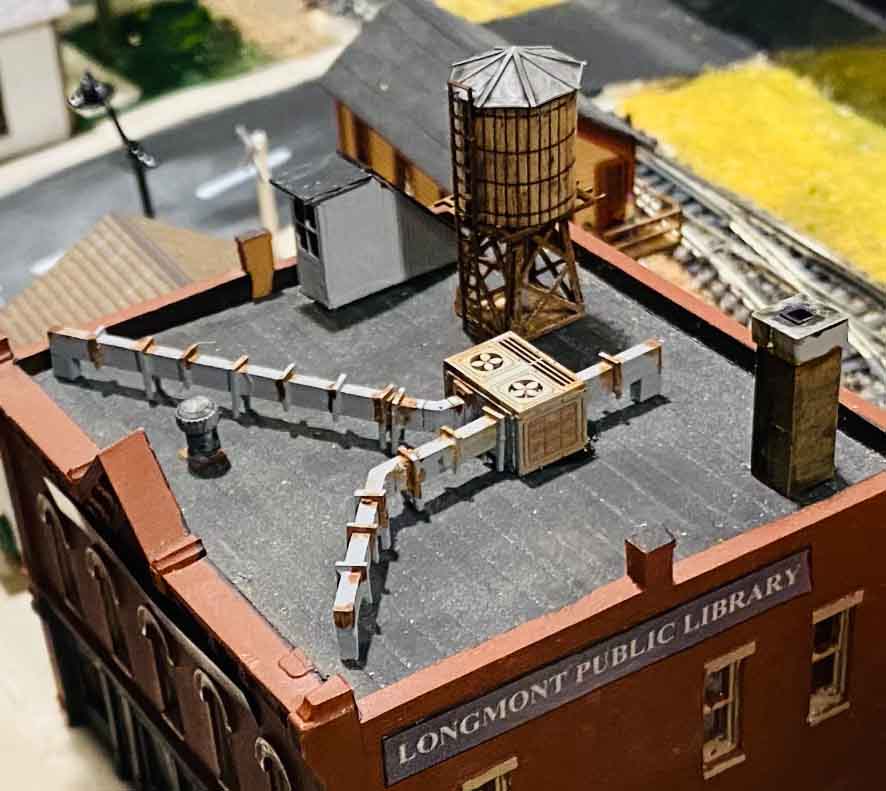
Some of the O scale buildings had to be moved due to the overhang of larger stock. Some had to be raised, again!
Some trackwork had to be relaid, especially around the loco sheds.
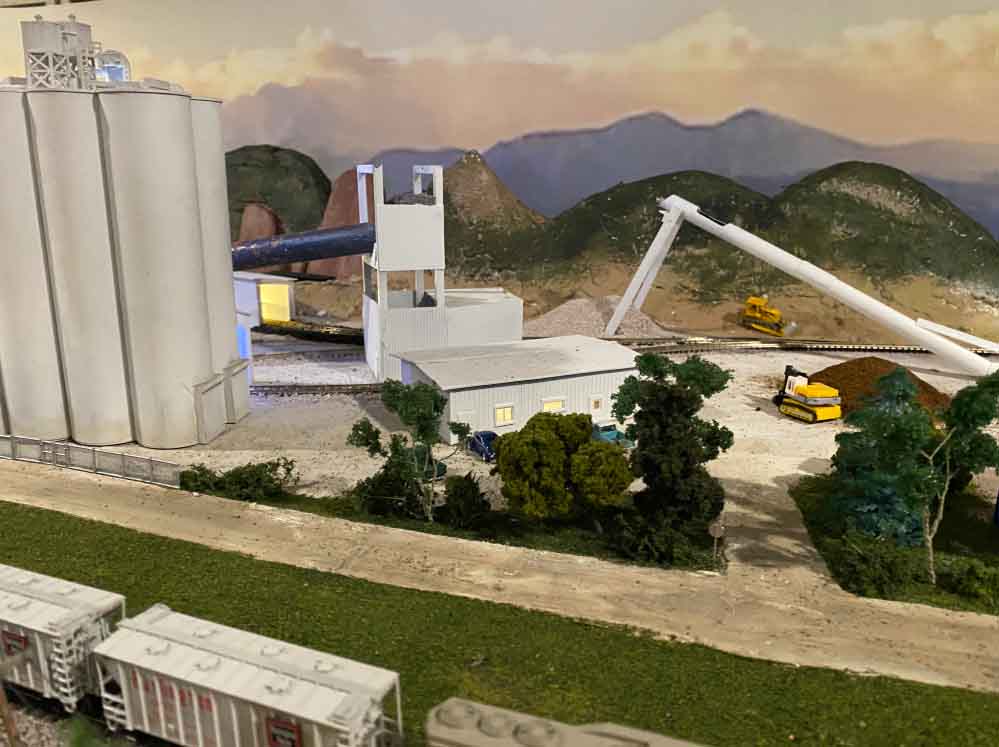
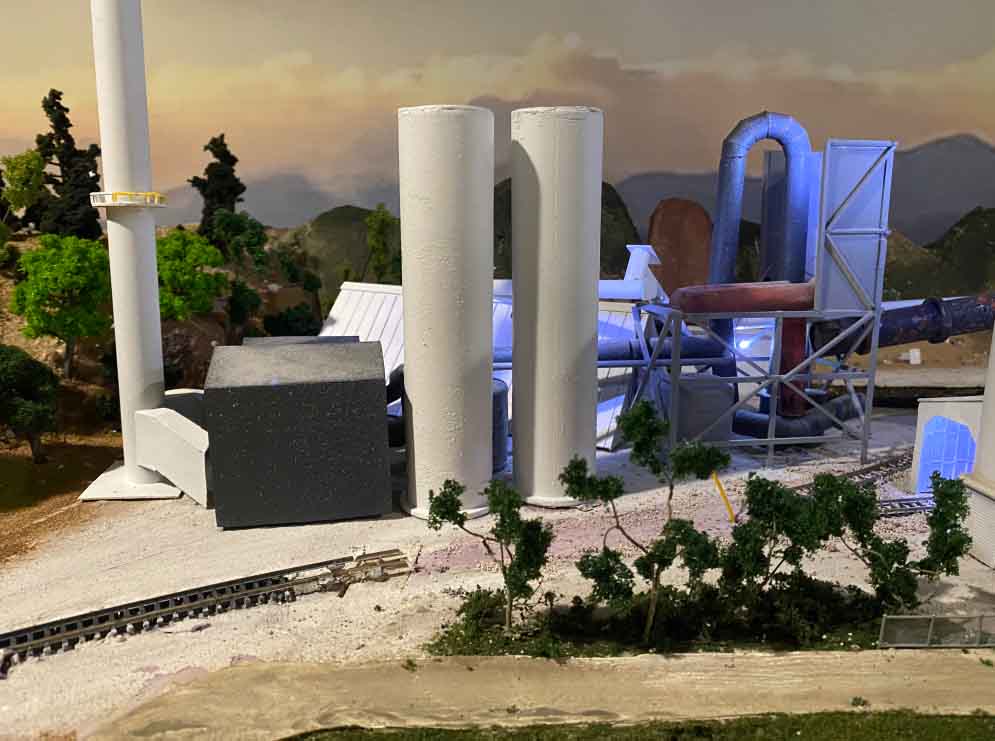
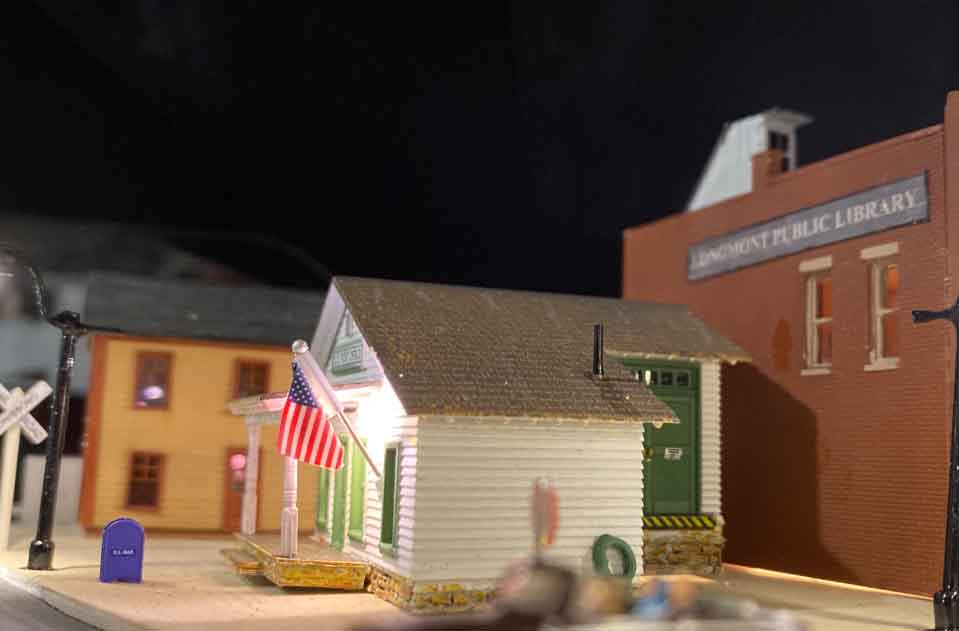
The harbour station was removed and replaced by the Ace Feed and Grain Stores. The biggest change came with the works changing from a cement plant to a flour and grain mill, the Fanny Frobisher Finest Flour Company. At long last, the line was ready for operations.
Now Kadee couplings are virtually standard on 2 rail US model lines, and I really recommend if you are thinking of going down the same lines as I have to make them your standard fitting…no more fiddling around with 3 links and a pole with a bent piece of wire attached to it… wonderful, just get your coupling heights correct and all the same.
The line has certainly grown from its intended origin, I now have more locos and rolling stock than I know what to do with, but it’s probably about right for a 40 mile shortline with several very large industrial customers along its route.
Being situated where it is, I can also run other companies locomotives like BNSF and Santa Fe, yes the merger was in 1996, but there are still locomotives running today in Santa Fe war bonnet livery, albeit very faded. Yes, US railways really are a prototype for everything setup.
I’ve started converting some engines to EM&LSRR livery of Regal Red and using a simplified Midland road name. There are also patched locomotives.
Recently, I’ve experimented with my own water slide transfers with some success and these can be seen on several wagons and the latest engine to the fleet, a GP38-2 which was in Burlington Northern colours and has been repainted into Mohawk Valley livery along with homemade decals, the results of which I’m very pleased with.
The acquisition of a 0-6-0 steam engine and a few coaches has brought about a heritage service, the first passenger trains since 1957, which run on the first Sunday of each month. There are also a couple of heritage diesels that have retained their original road names, numbers and livery, a poignant reminder to the fallen flags of yesterday.
In the future, I am thinking of introducing a card system for the consist of trains, which with the line having no run around loop will make spotting cars so much more interesting, as if it wasn’t complex enough getting engines to the correct end of trains…
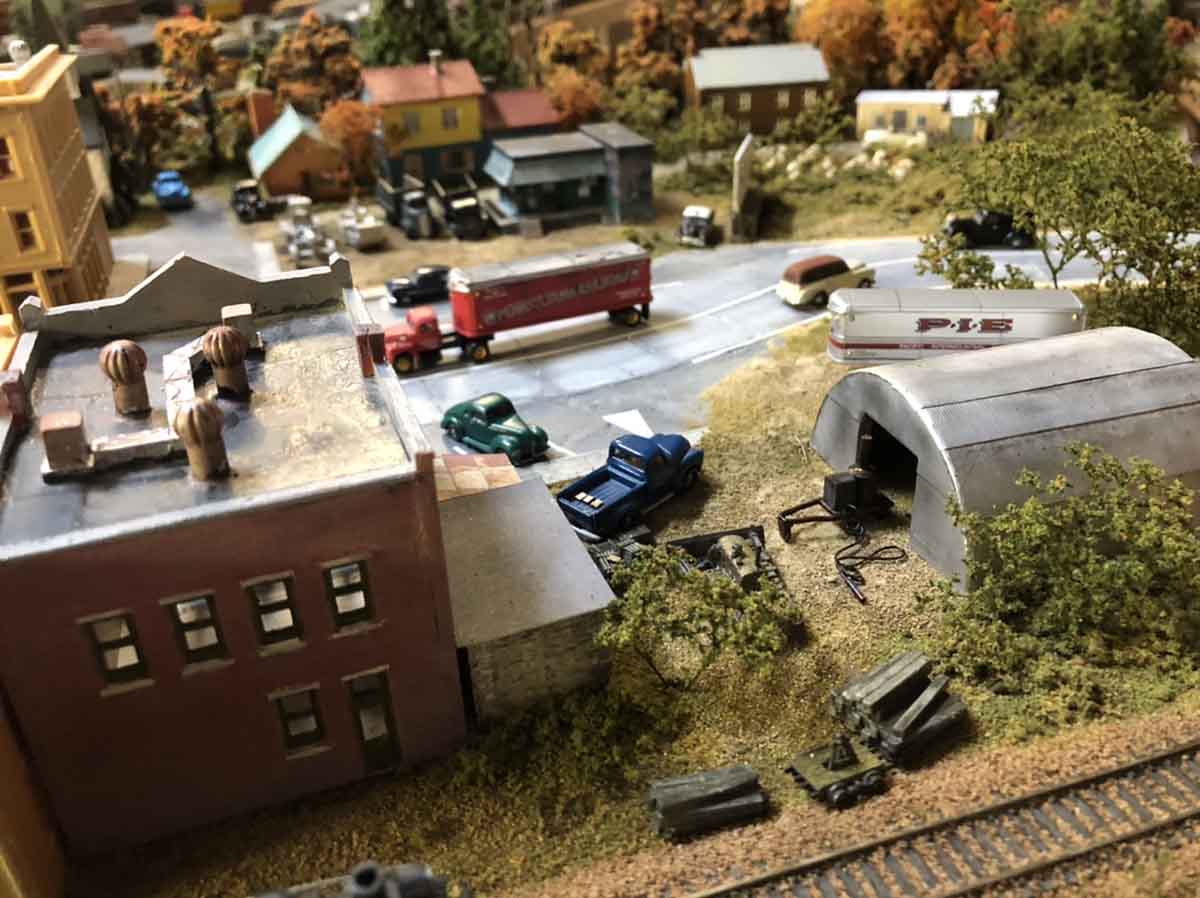
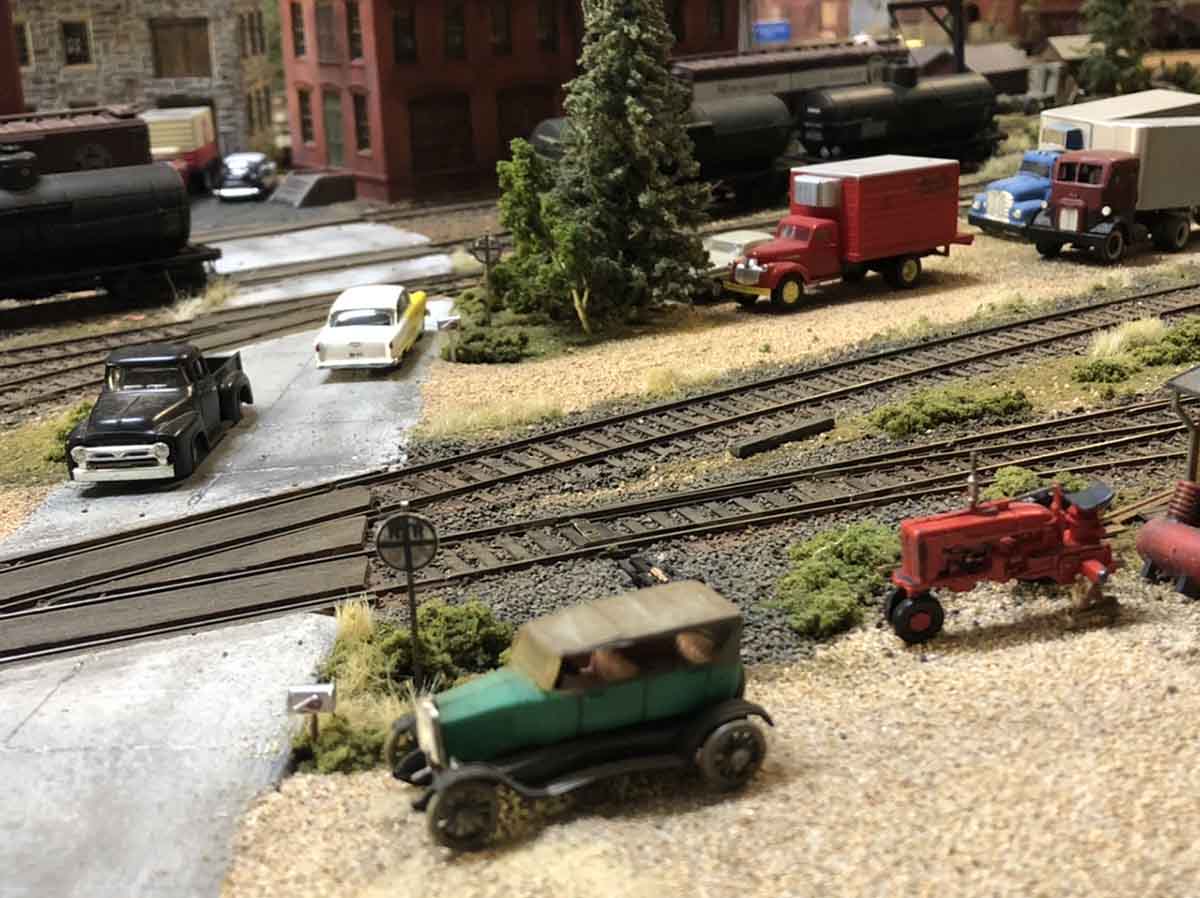
Clearance testing meant some changes to track and building location.
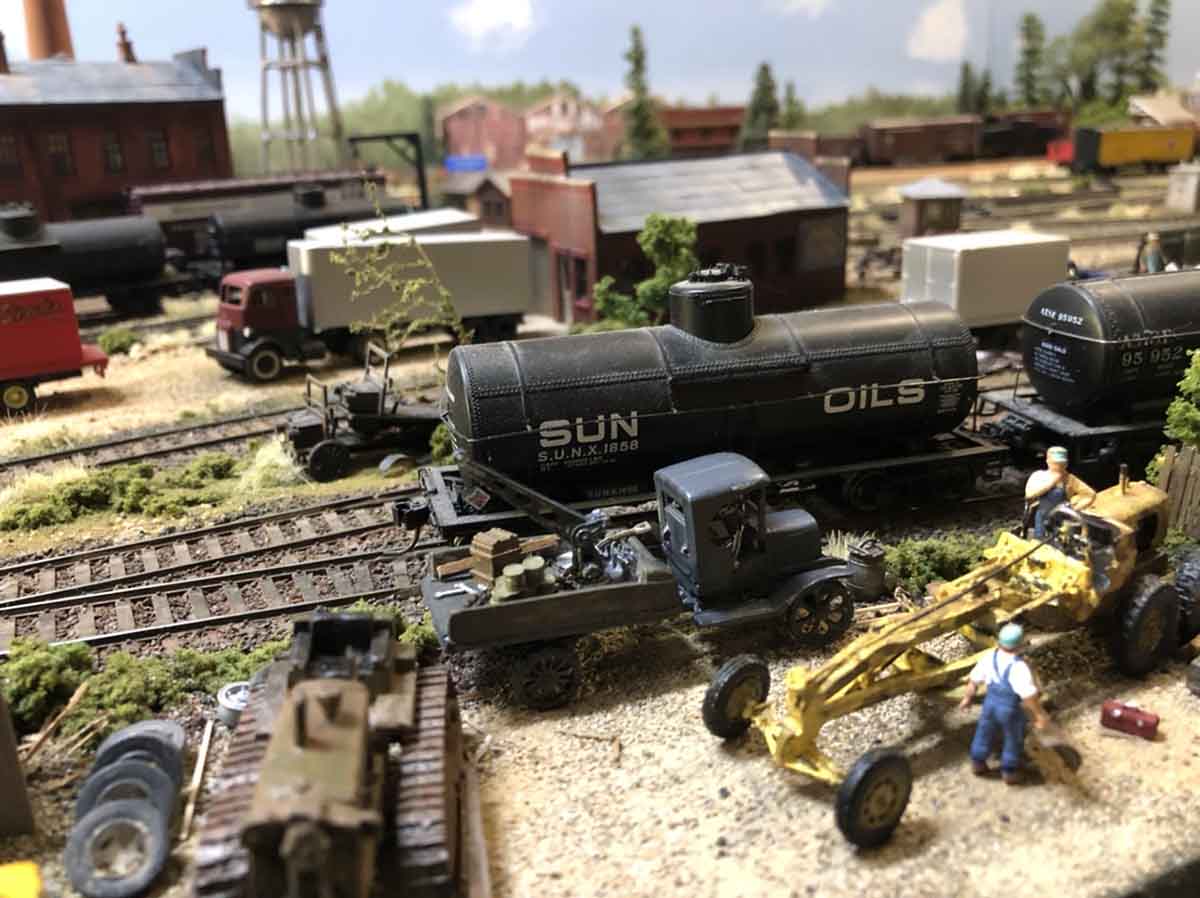
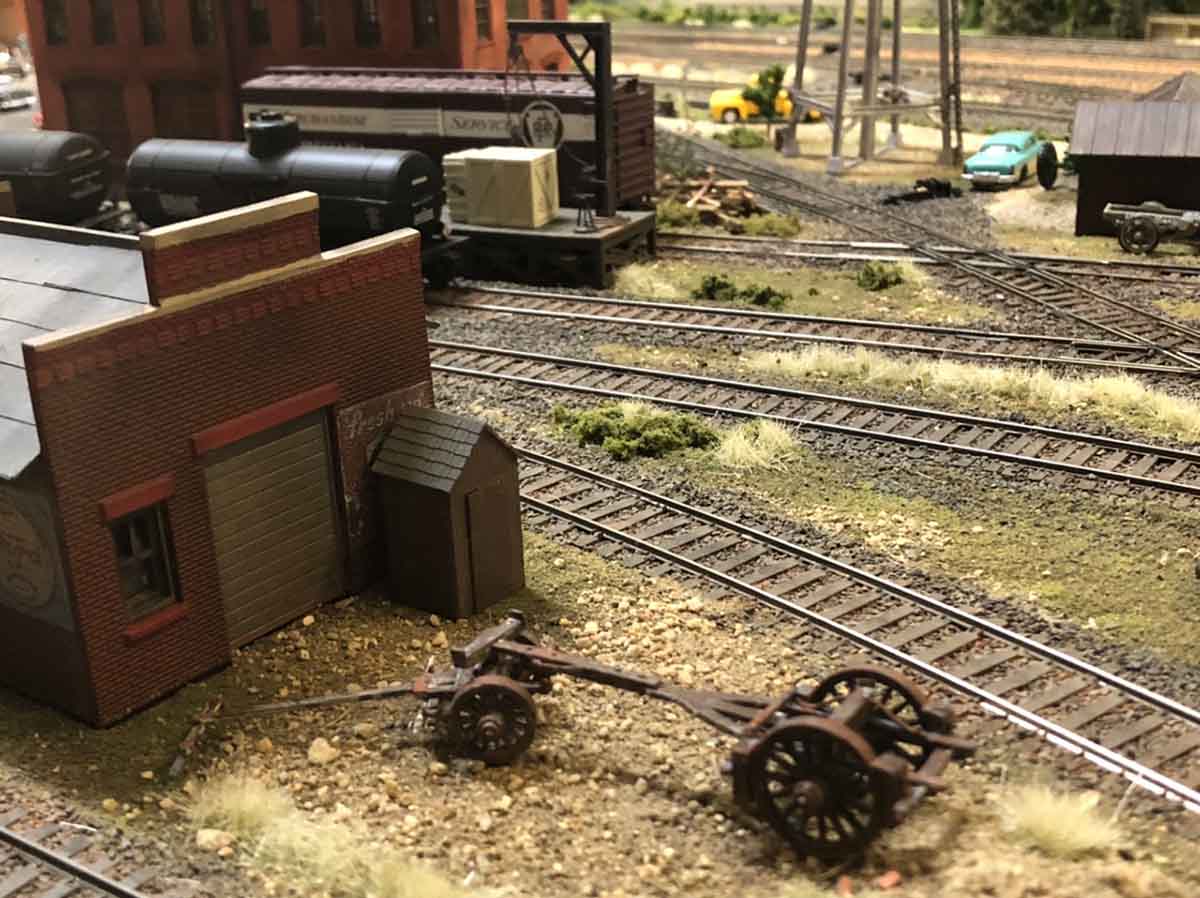
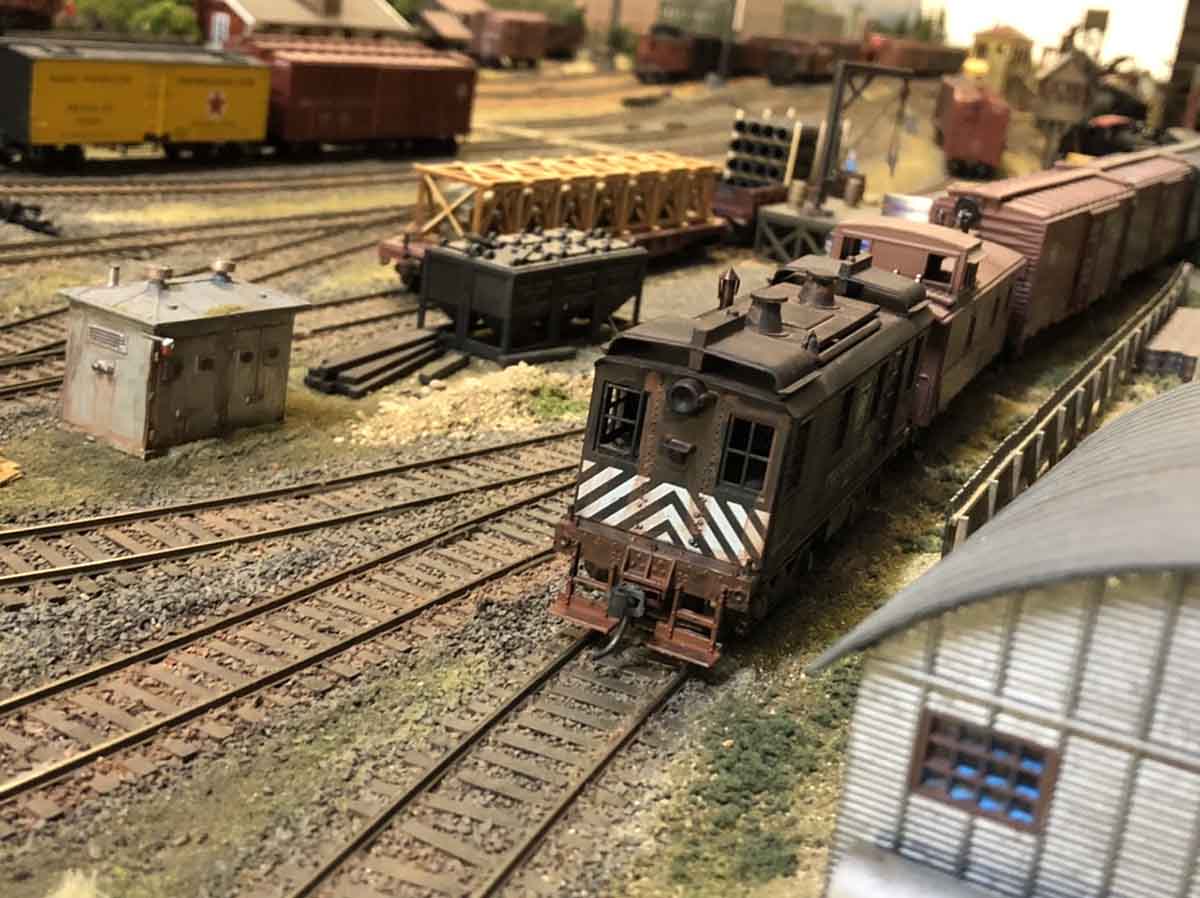
The new engine facility with several ‘foreign’ locomotives being serviced.
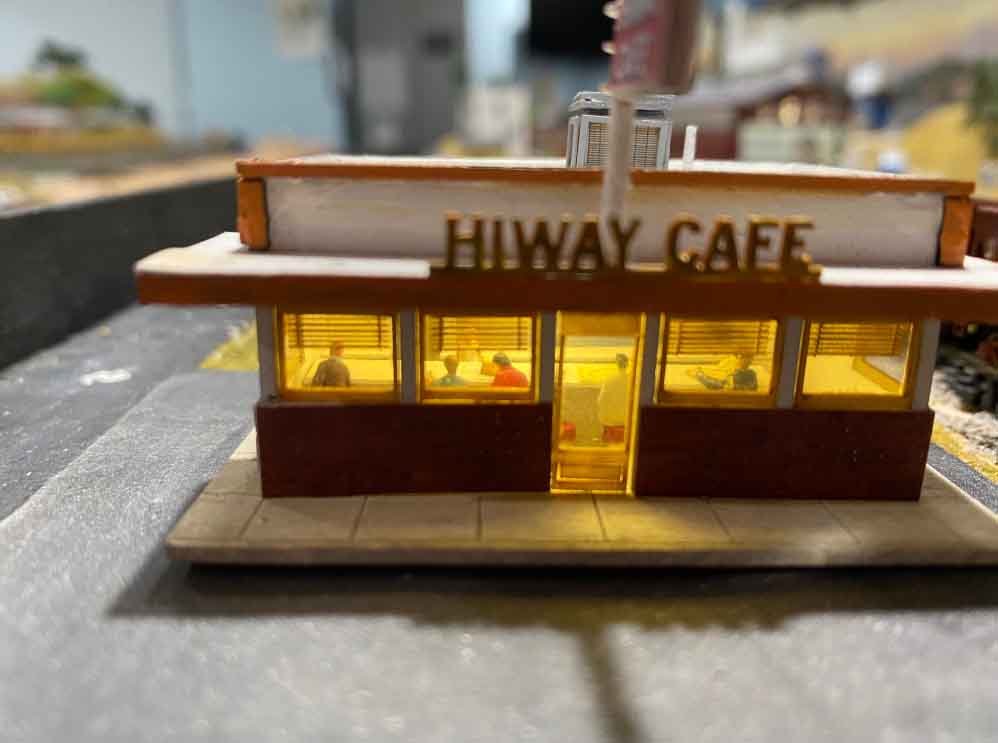
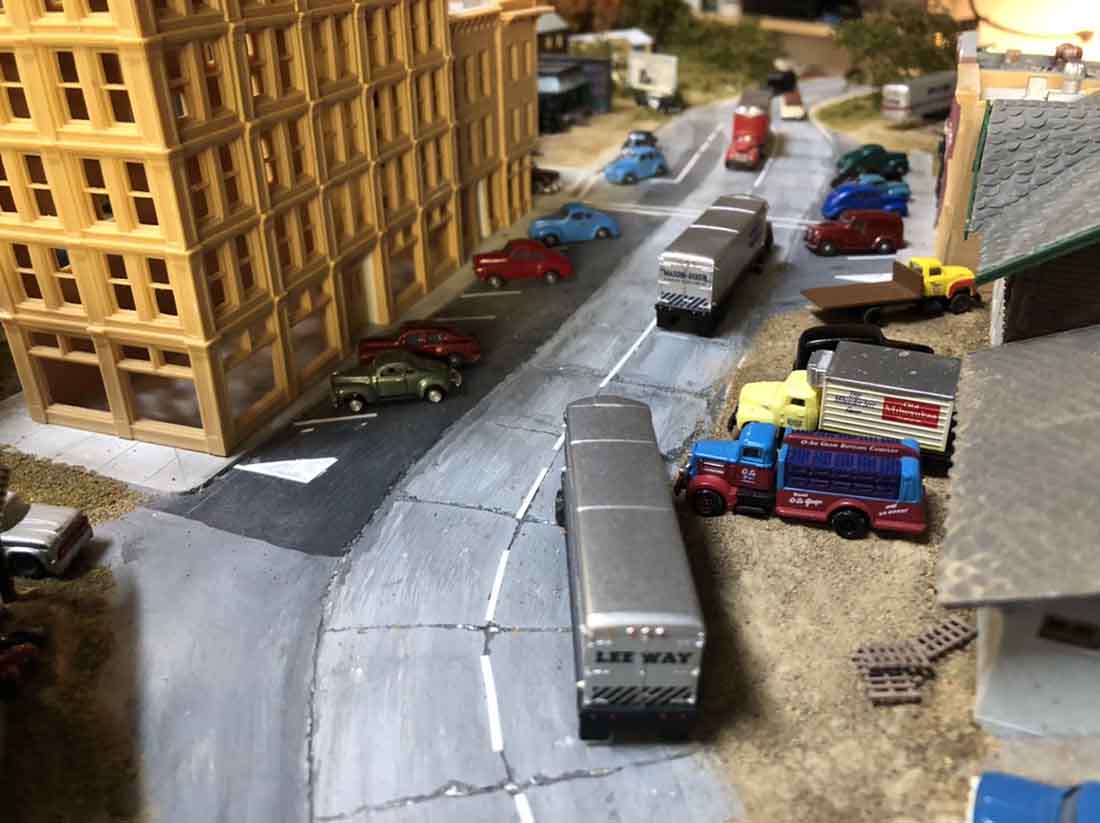
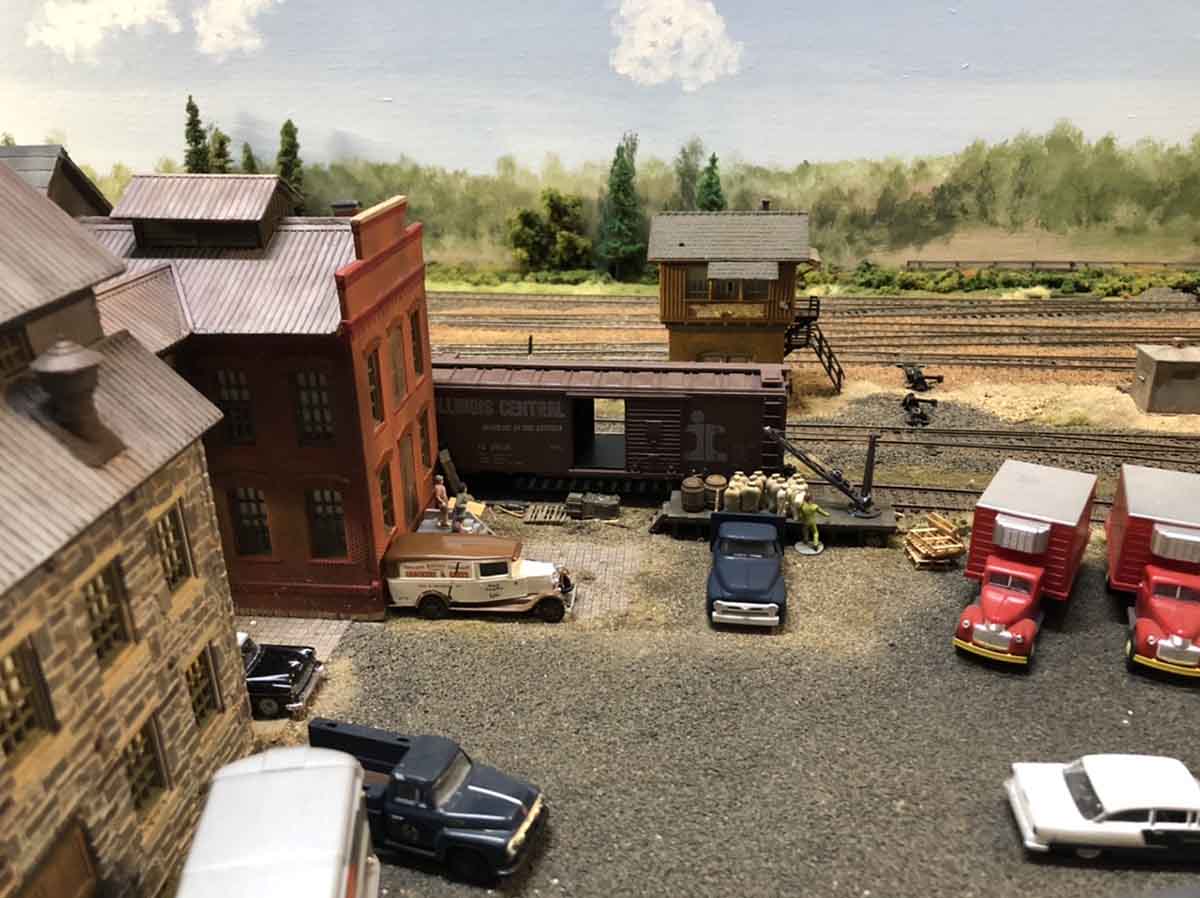
Lake Shore Harbor.
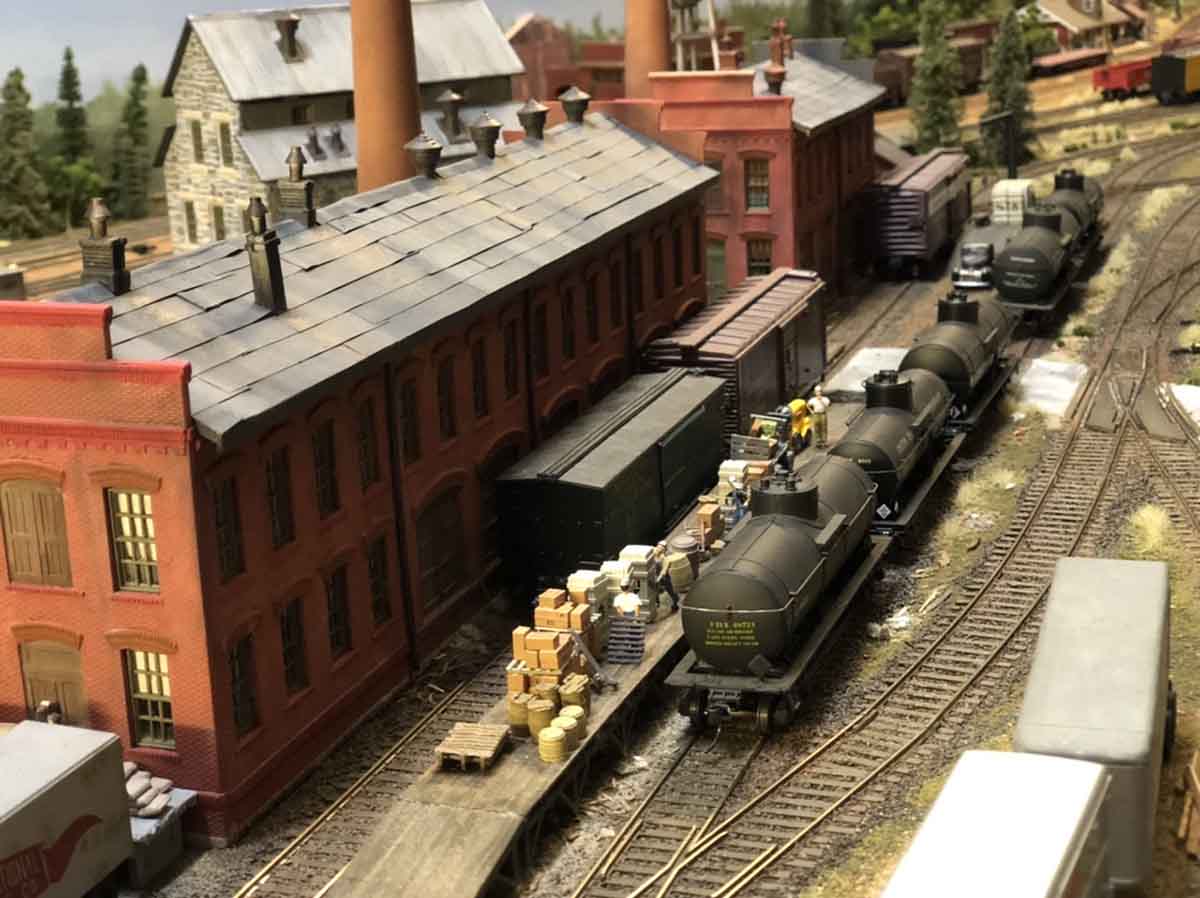
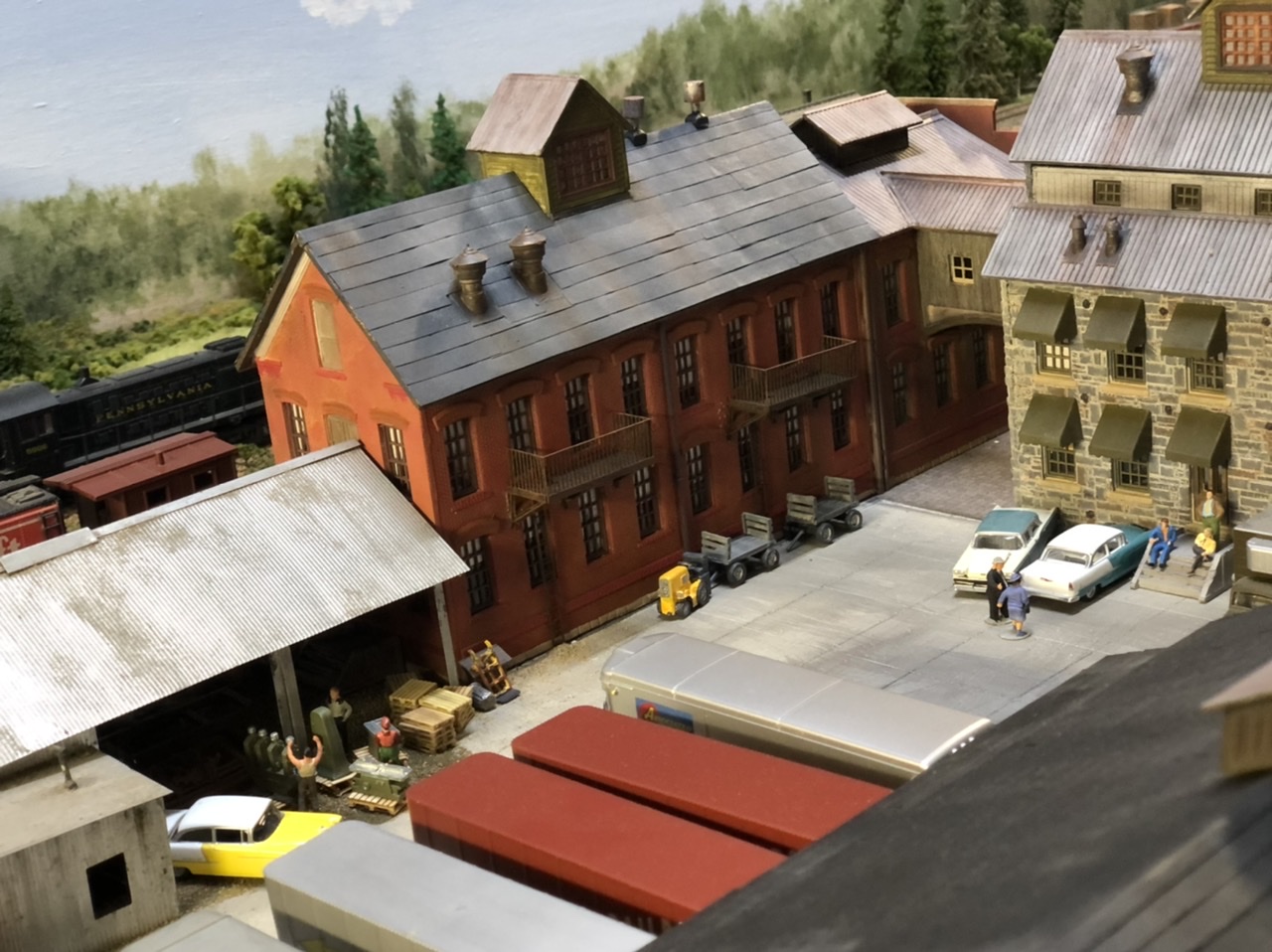
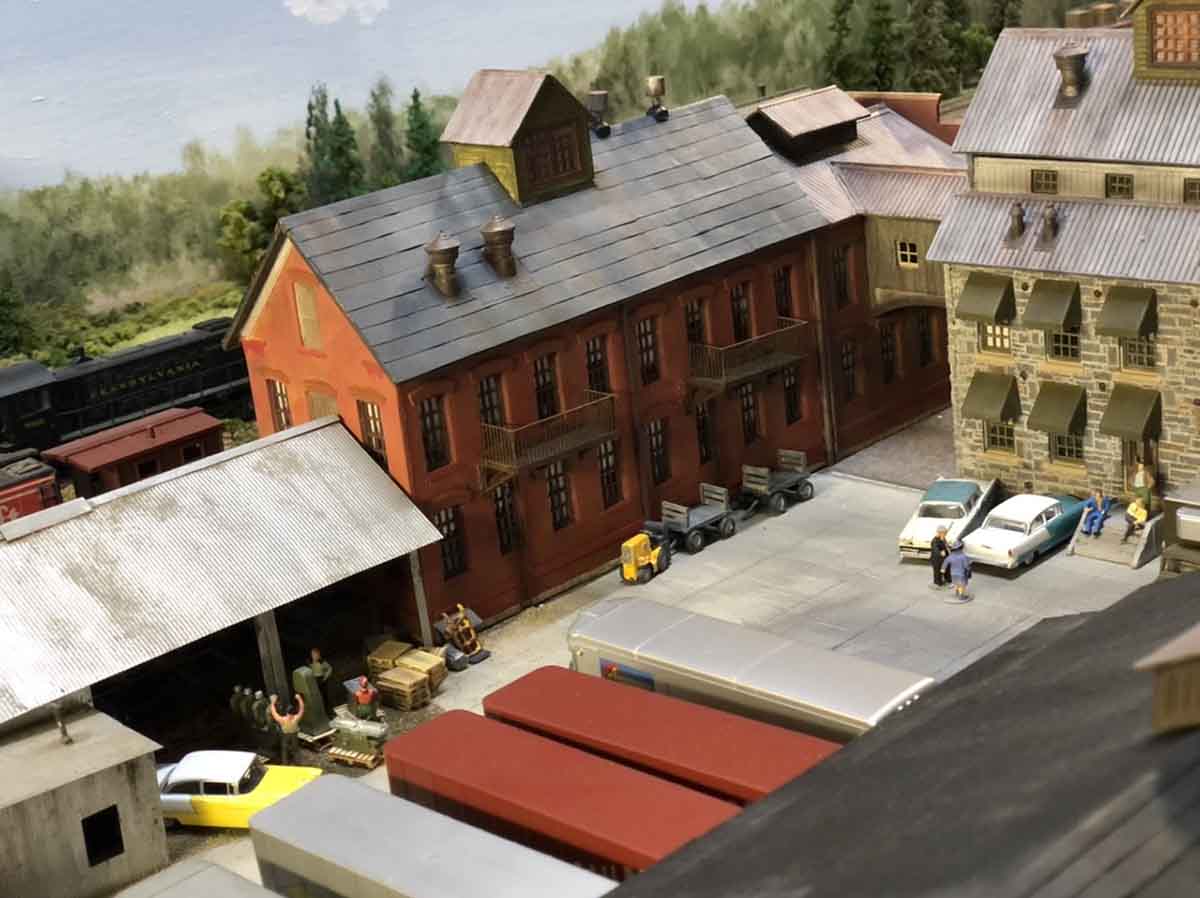
Fanny Frobisher’s resident locomotive ex PRR SW9 #8516
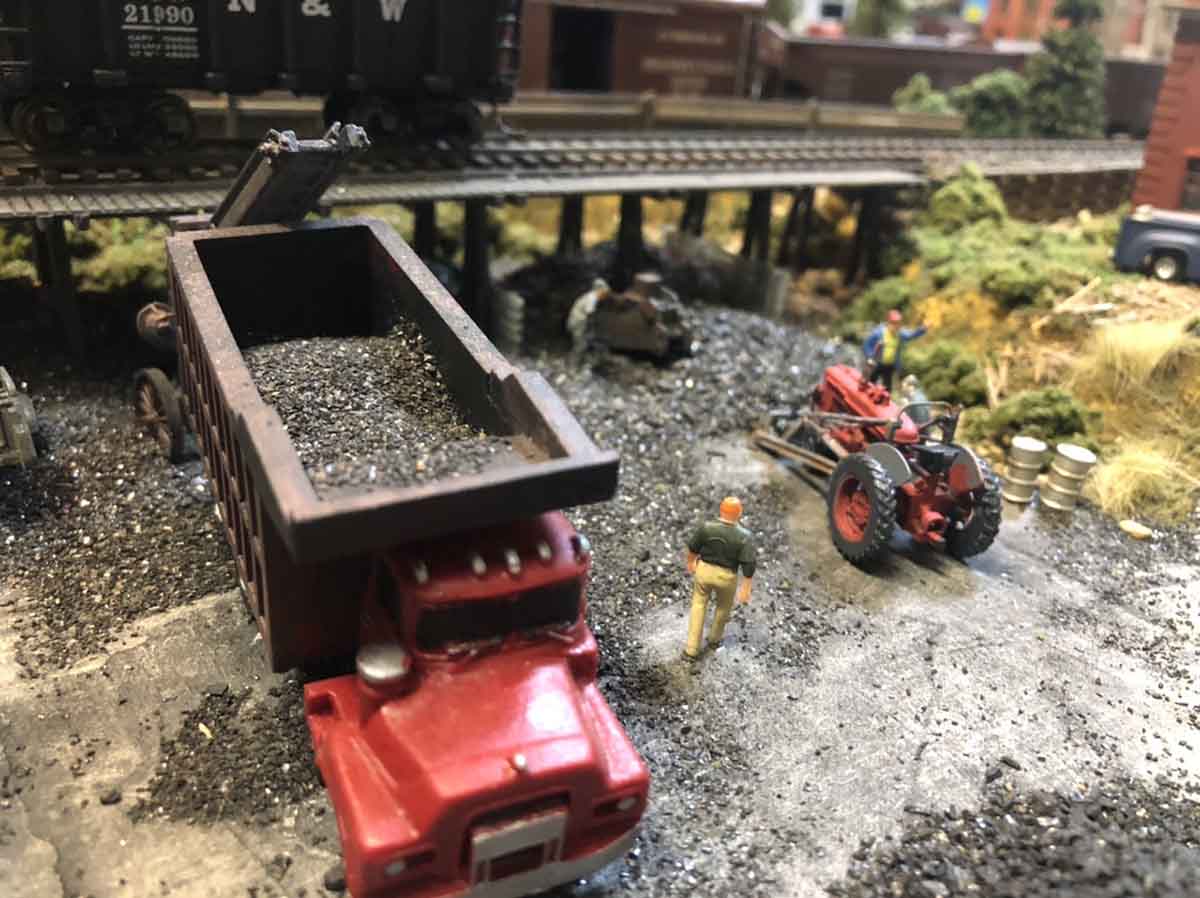
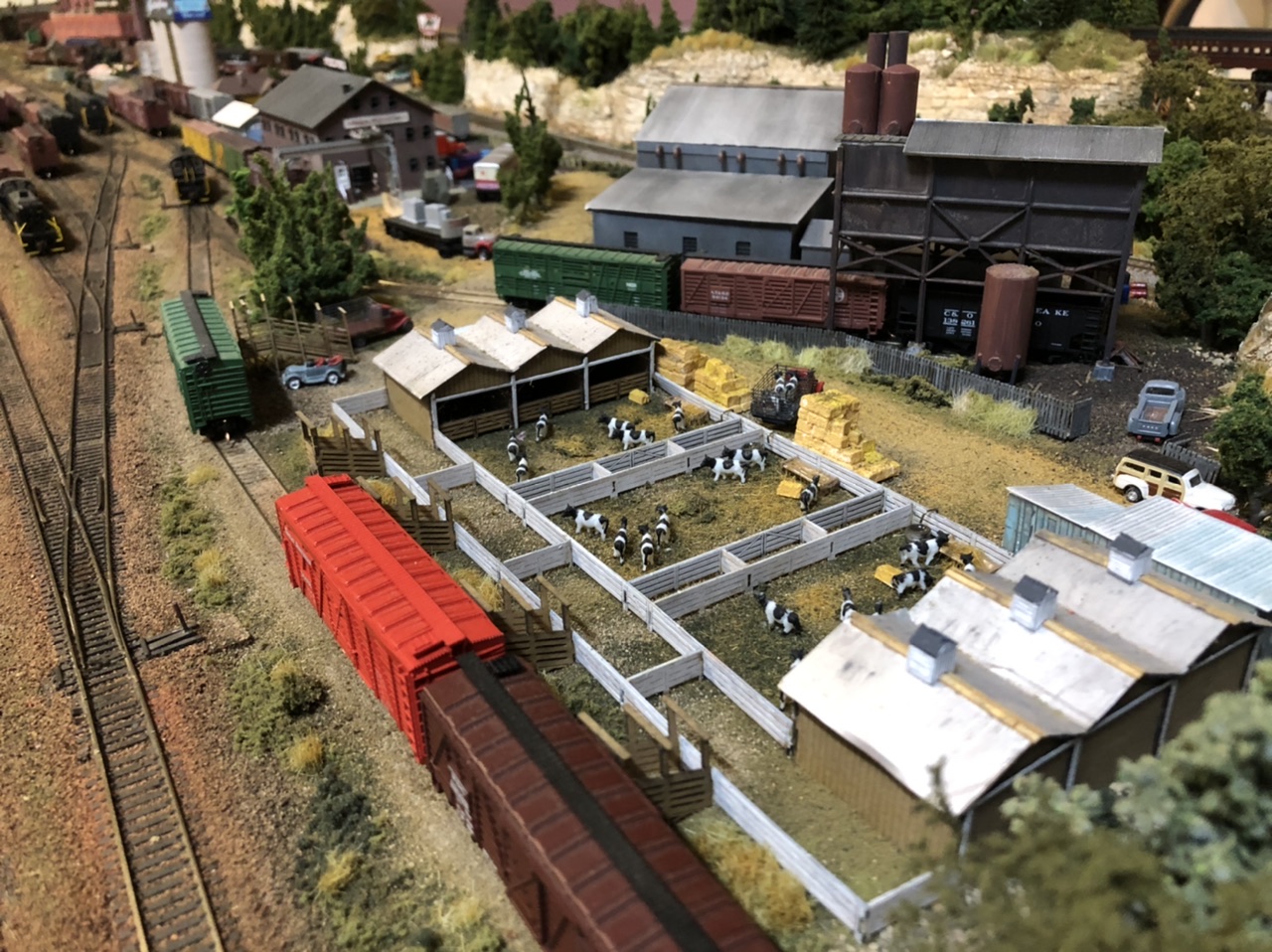
Corn oil loading plant, note the home made water slide transfers…
Patching road names on two ex UP locomotives.
New Midland livery and decals applied to #314.
Monthly heritage train, which has now increased to four coaches.
More patching…
Mohawk Valley Railway GP38-2 #2078 on a rare visit due to motive power shortage on the line.
I’m so pleased I made the change, and even though the price of US stock is rising, you can still pick up great bargains, even from sellers across the pond, though make sure you understand the extra fees and taxes that might apply.
I use eBay’s global shipping program, which, although is a bit more expensive, it does cover all those hidden taxes and charges making the importation fuss free.
Do remember though to research what you want to run… 3 rail or 2 rail.
If you want to go down the fictitious railway route, then again research how the system works.
Above all though, go and make a start. Google and YouTube are great places to fire your imaginations.
Cheers
Martin
A little but of North Eastern America in Coventry UK”
Love what Martin has done with his O scale buildings and his whole layout.
I’m often saying the layouts with a theme always look the best, and I think Martin’s is another example of this.
I thanked Martin for taking the time to write such a wonderful narrative, and he came back with this:
“Hi Al,
Many thanks for the quick reply and comments. I feel it’s like giving something back as a lot of layouts you have featured have given me a lot of inspiration, especially ones like Dangerous Daves’ and Farland Howe.
To me, there has to be a purpose to a model railway. I’m so pleased to see so many layouts actually being built and that is the main and important thing, making a start… there is also the question of space…in the UK is very much of a premium, whilst in the US…
Seeing so many youngsters being encouraged to take up the hobby is also absolutely brilliant.
I do enjoy seeing all the different layouts by people and some of the tips are so simple, you wonder why you never thought of them yourself…
Being in the UK, it’s difficult to accurately build an American line. Buildings differed greatly from state to state, but I’ve had several American colleagues comment, which have said that I’ve managed to come pretty close to the mark. As I keep on saying, it’s all about research if you want to be realistic.
I’d be very happy to have a follow up post where I can answer any questions as sharing knowledge is probably the greatest part of this hobby.
Cheers
Martin”
I hope you enjoyed Martin’s posts as much as I did, and it’s good to know the blog is still inspiring some.
That’s all for today folks.
A big thanks to Martin and his O scale buildings and layout – can’t wait to see more.
That’s all for this time folks.
Please do keep ’em coming.
And if today is the day you blow the dust of your old locos and find some track too, the Beginner’s Guide is here.
Martin’s sent this wonderful narrative and pics of his O scale layout 17×13:
“Hi Al,
I suppose I’ve been into model railways since a very young age, my earliest memories are of Hornby O gauge clockwork train sets for Christmas and then on to Tri-ang OO gauge.
When I was around 14, I dabbled in American HO with the fictitious name of the Empire, Midland and Lake Shore Railroad. This came to nothing, and I drifted in and out of the scene, trying gauges from N to G.
Nothing ever really lasted that long before other interests, music and girls took over, both costing much more than model railways ever did.
Fast forward now to my recent early retirement on health grounds and subsequently my age…
O scale layout 17×13
My loft is boarded and permission was granted for a model railway to be built there. I had a skylight fitted to aid ventilation and installed extra power to the wires that were already up there.
The loft had previously been used for storage of all those things that might come in handy one day, but never do… my woodworking skills are zero and I didn’t want to go to the expense of a wooden baseboard and the weight the floor would have to carry.
So, a search on eBay brought me to lightweight interlocking and height adjustable aluminium framed tables, at 3 for £30, these looked ideal and were bought.
When they arrived, I quickly took them into the loft and built them up. There were four height settings, the highest being just right, and metal clips to lock each table to the next one. They also had a flimsy hardboard top, which was not really useful as I bent very easily. More were ordered.
My neighbour was having their loft converted into more rooms and I ‘borrowed’ a sheet of insulation foam. This was ideal as I rested on the frame work of the tables and was so rigid I could overlap one table to another, making a very strong but lightweight base for the railway.
The foam also took PVA glue very easily and was great and very easy to work with.
The layout was to be a British based industrial line with a cement works and small harbour as the main points of interest.
It was to be O scale layout 17×13, DCC sound, and rolling stock started to be collected.
The tables were erected and the foam sheets glued to them after a thin coat of emulsion paint had been added to the top of the foam sheet to allow PVA glue to stick to it. The aluminium foil that covers these sheet won’t accept PVA glue.
I managed to buy some wonderful industrial buildings by the late Allan Downes which, after a bit of modification, they were On30 scale, fitted in perfectly.
Track and points were added. I made the usual mistake of trying to fit Clapham Junction into a matchbox area, and the first attempt was scrapped before it really began.
The second attempt was kept a lot simpler, it’s amazing how you can picture these things in your mind and when you come to put them into practice, there simply isn’t enough space or the curves are too tight.
Anyway, I planned an end to end in a U shape some O scale layout 17×13. Too old to start crawling under baseboards now.
The layout had to have the cement works, a harbour, an engine shed and a fiddle yard, though in hindsight the fiddle yard should have been made longer, but I hadn’t banked on going North American at that time.
More scenery and buildings were added along with a very small station at the harbour.
By this time the locomotive roster was getting too large for the layout….there were eight British Rail Class 08 shunters and twelve industrial engines, all supposedly working a relatively small cement plant and harbour!
I’d deliberately decided in the track plan not to have any run around loops, which made and still does, operation of the line very interesting and things certainly have to be worked out to get trucks into the correct position and have the locomotive on the correct end in doing so. The building of the line was great, it’s operation even better!
So, Frobisher Cement Works was born…Frobisher being the name of the road where I once lived.
I had many happy hours up in the loft, operating the line and teaching my 8 year old grandson how to ‘drive’ an engine using DCC in a prototypical manner.
The only bug bear of the whole thing was three link couplings…ARGH!
I spent more time fiddling around getting wagons to couple up that it almost came to a point where I would give up in total frustration.
I used set formations of wagons that only had to be coupled to engines, but quite often, buffer locking spoilt many a operating session.
I even experimented with using small magnets, and these worked quite well, but they were very fiddly to fit and just didn’t look right somehow. Then came the revelation!
I was sitting in front of the TV one night, when the usual drivel was being shown. I picked up my tablet and turned to YouTube for consolation. Now, harking back to my childhood, I’d always had a soft spot for North American railways, I’d always wanted a Triang transcontinental set and having spent some time working in Canada and holidaying in the New England area, found a channel that seemed interesting.
I stumbled across the Santa Fe Junction in Kansas City and I was hooked!
Five or six engines pulling countless and different looking wagons, many graffitied, which seemed to add to the attraction, and the horns on those engines just blew me away.
I started to do some research and via a very steep learning curve found that American O gauge was exceedingly affordable and very well made. Ideal for a O scale layout 17×13.
A beautiful DCC sound equipped engine could be bought for as little as £200…UK equivalent £6-700.
Freight stock, which is so detailed bought for as little as £12, although the norm was about £30 per car.
I quickly established what to buy and what not to buy. Avoid anything 3 rail, Lionel, Williams and MTH, although I can now convert these to 2 rail.
Look for Atlas, Weaver engines, but take care as some are three rail, and rolling stock for ready to run items and Red Caboose, Intermountain and All Nation for kits.
I made the mistake of not researching the different types of railway cars enough and found that most of the stock I was looking at and subsequently bought was not suitable for a present day line as roof mounted boards had long gone by the present date. Still, what I couldn’t use I could always sell or trade later.
So the decision was made to transport the layout 4000 odd miles the Northeast America!
The Empire Midland and Lake Shore Rail Road was about to be re-born…
Early days and planning.
Modifying the buildings to fit British O gauge.
The Engine Sheds start to take shape.
Scenery and the final buildings get added.
The harbour station…
The cement loaders in their heyday…
All of the engines were weathered to one degree or another…
Erm…something is not quite right here…Clearance testing!
The beginning of the end…
…the start of the new!
I hope you can find room to publish and I really wish I could send over more pics…I have hundreds.
Cheers
Martin
A little bit of North America in Coventry, UK.”
What an O scale layout 17×13!
I just love what Martin has done.
I love the back story, I love the narrative and the pics speak for themselves.
I can’t wait to see some more.
Please do leave a comment below.
It’s fab that no matter where you are in the world, your layout – your universe – can be anything you like it to be.
A bit of North America in Coventry, UK? No problem. That’s what this hobby is all about.
A huge big thanks to Martin.
Another O scale on the blog that really stands out for me is Tom’s O scale
That’s all for today folks.
Please do keep ’em coming.
Oh, and don’t forget the Beginner’s Guide, if today is the day you start your model railway, model railroad, or whatever you want it to be.