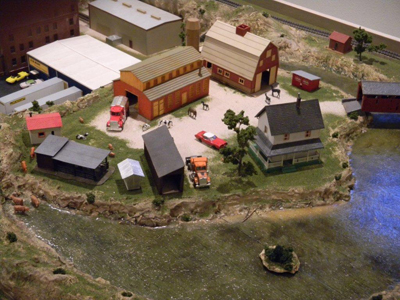
Lumber railroad – Steve’s

Steve’s been in touch with his lumber railroad.

The logging railroads are a very popular theme, and Steve has done an excellent job:

“Alastair,

First, THANK YOU for all you do to share everyone’s model railroading!!! It’s great to see what people around the globe are doing – using their experiences for learning and education!

Second, it’s hard to believe it’s been over 3 ½ years since I sent my original email regarding the OWLS (Ohio Western & Lima Short line).

I continue to plug away, focusing on the scenery, landscape & buildings. Alas, age has taken it’s toll and the old hands aren’t as steady as they used to be!!
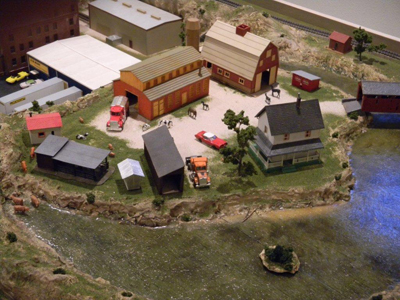
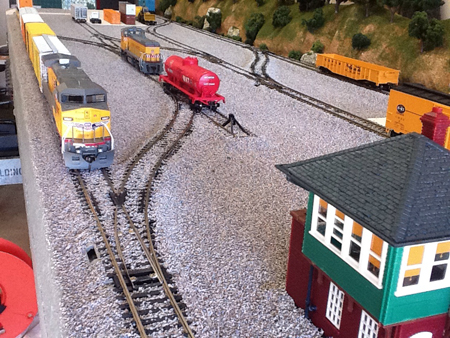
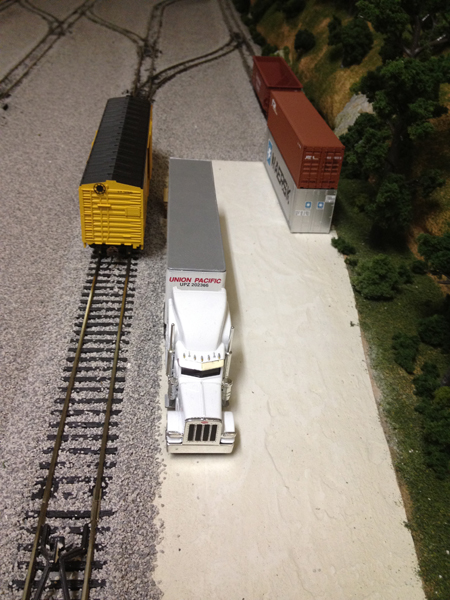
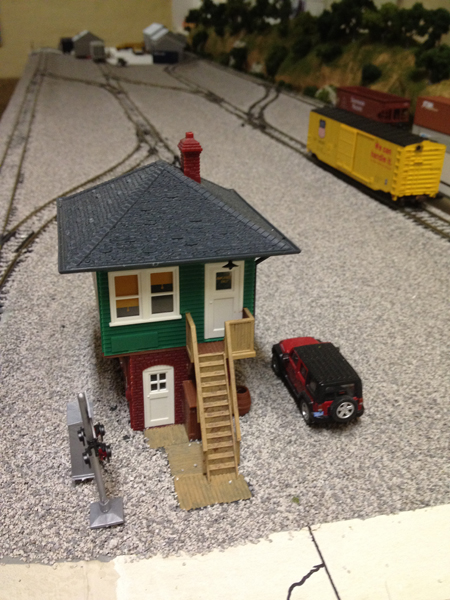
Here are recent photos of the OWLS Short line, mainly the progress I’ve made with the above mentioned areas.
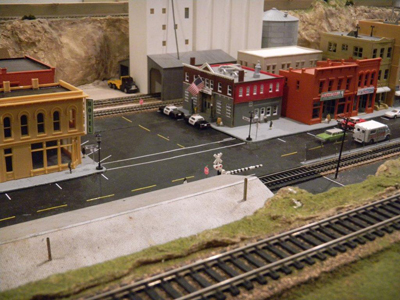
Again, THANK YOU for all you do!

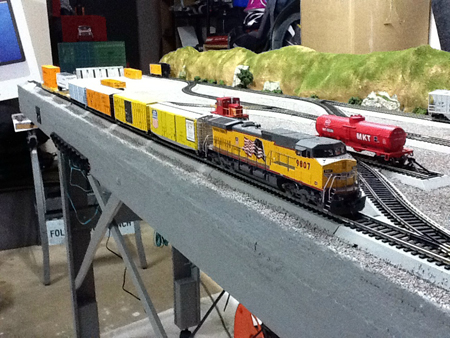
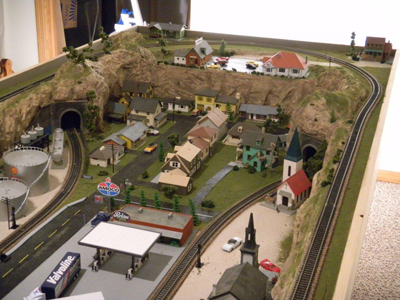
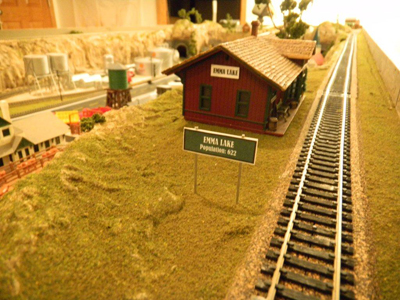
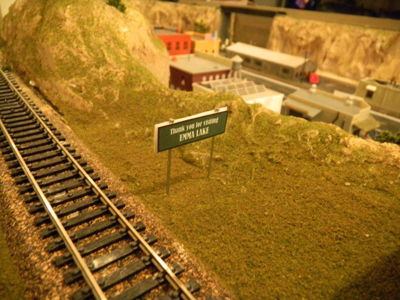
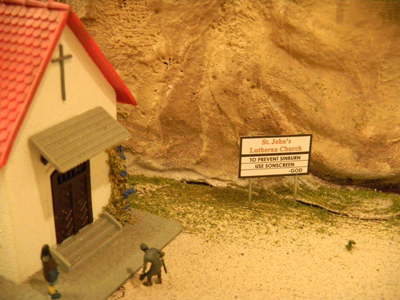
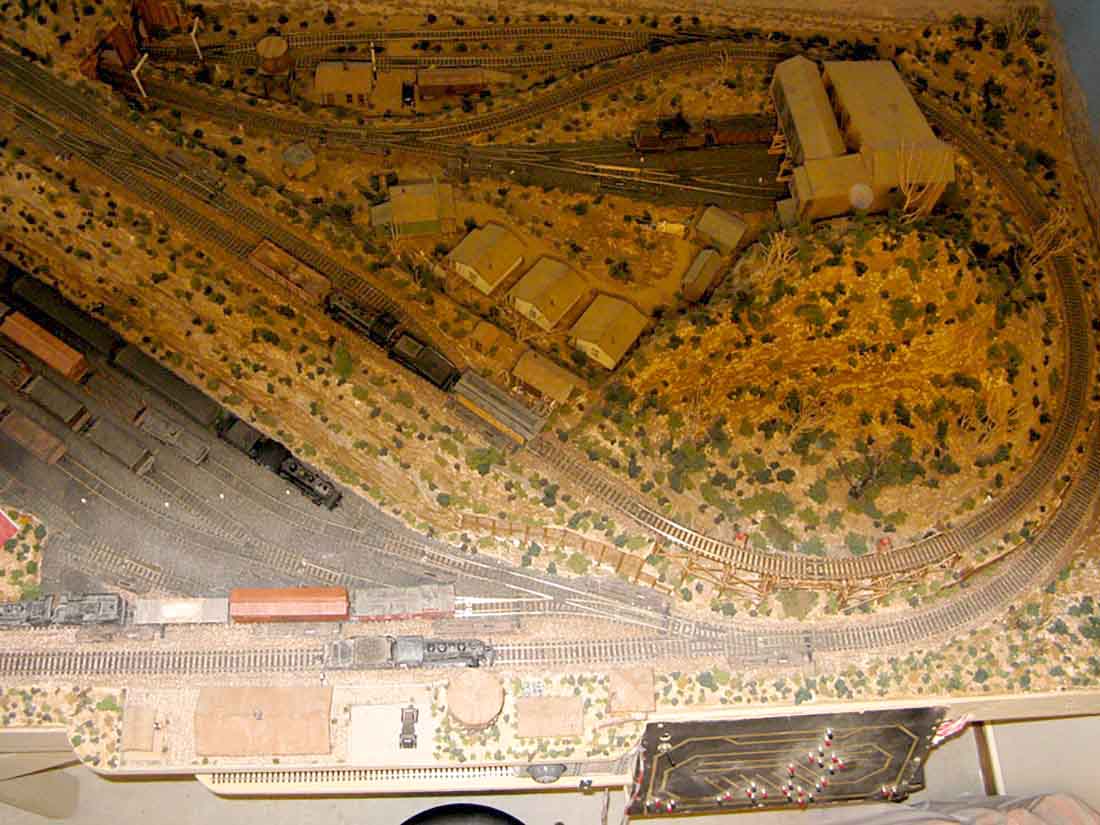
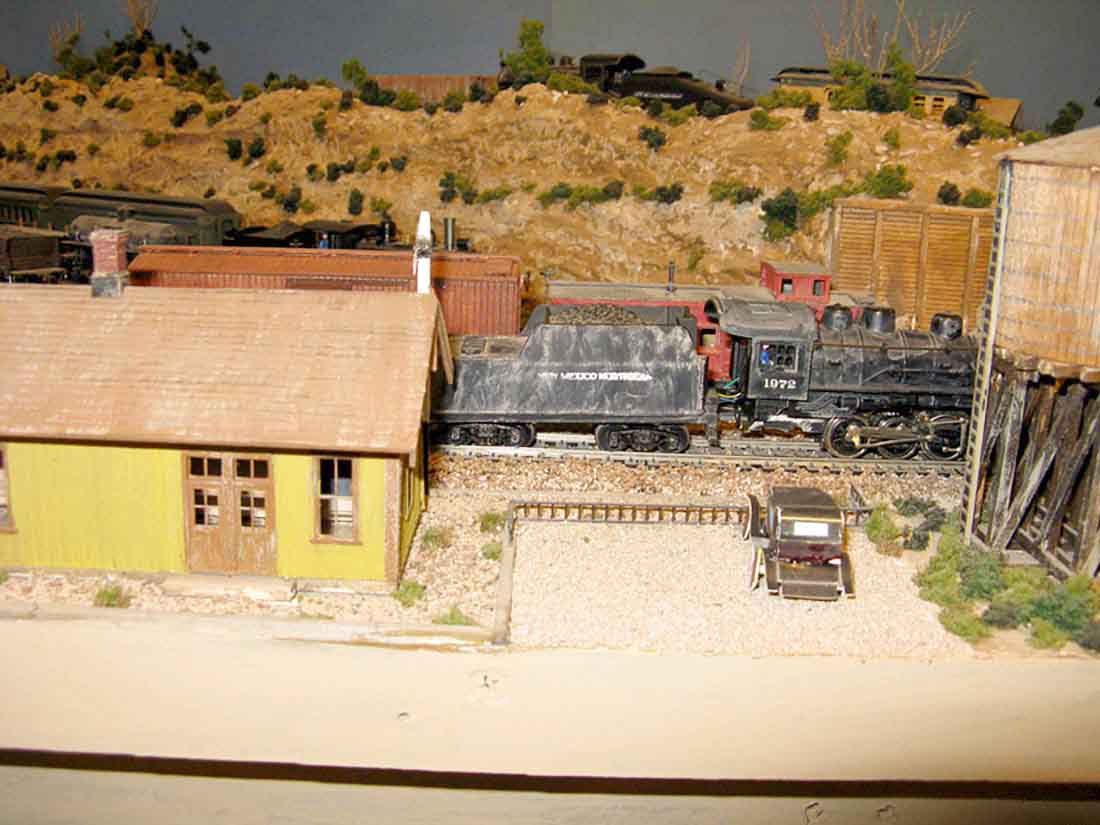
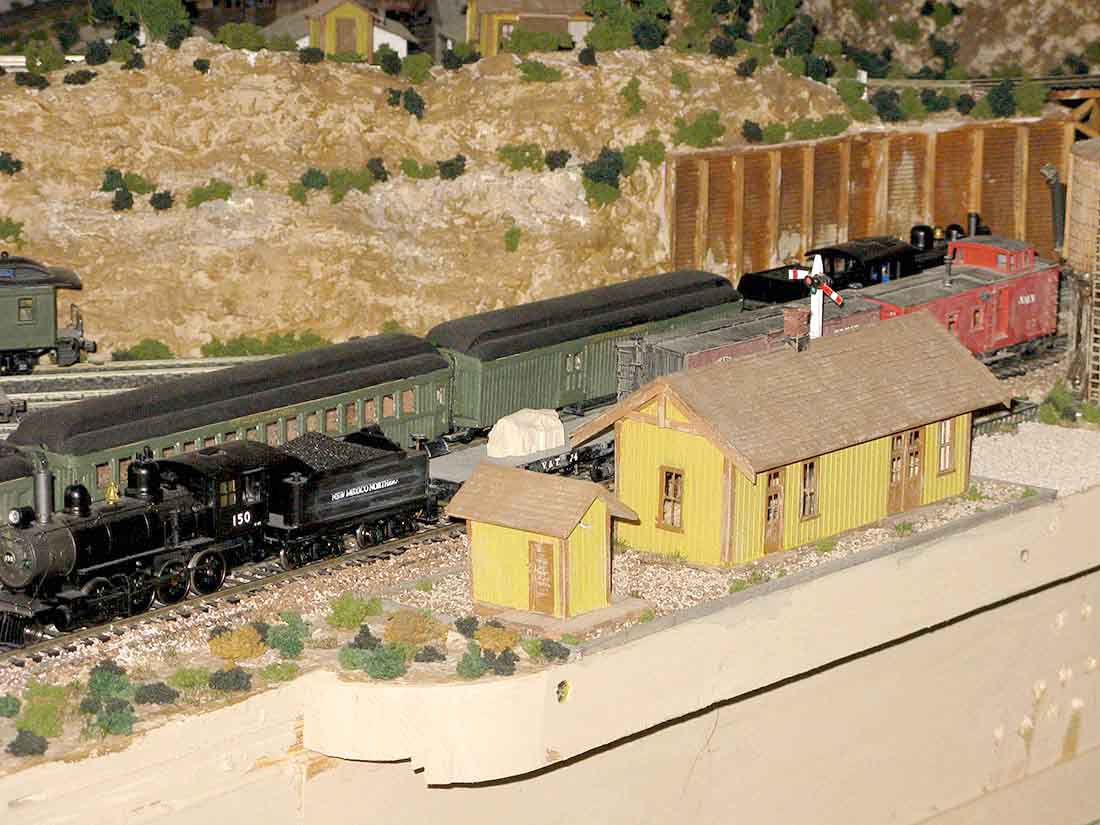
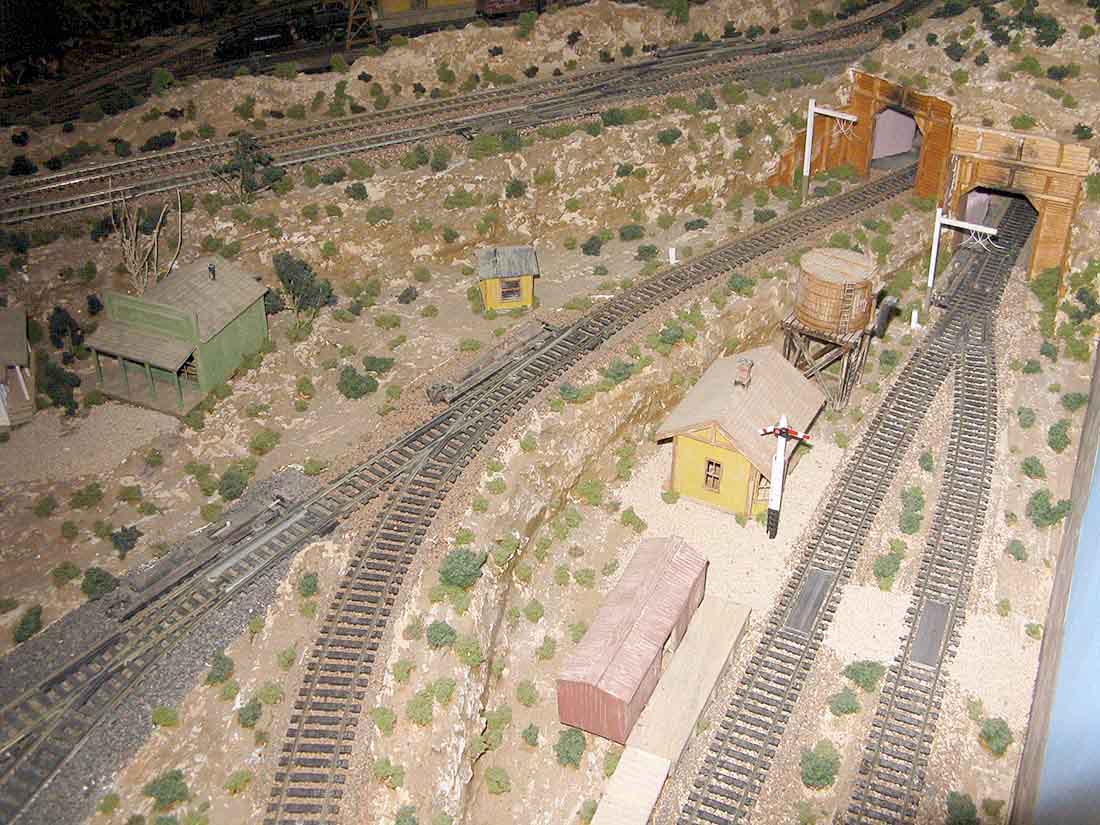
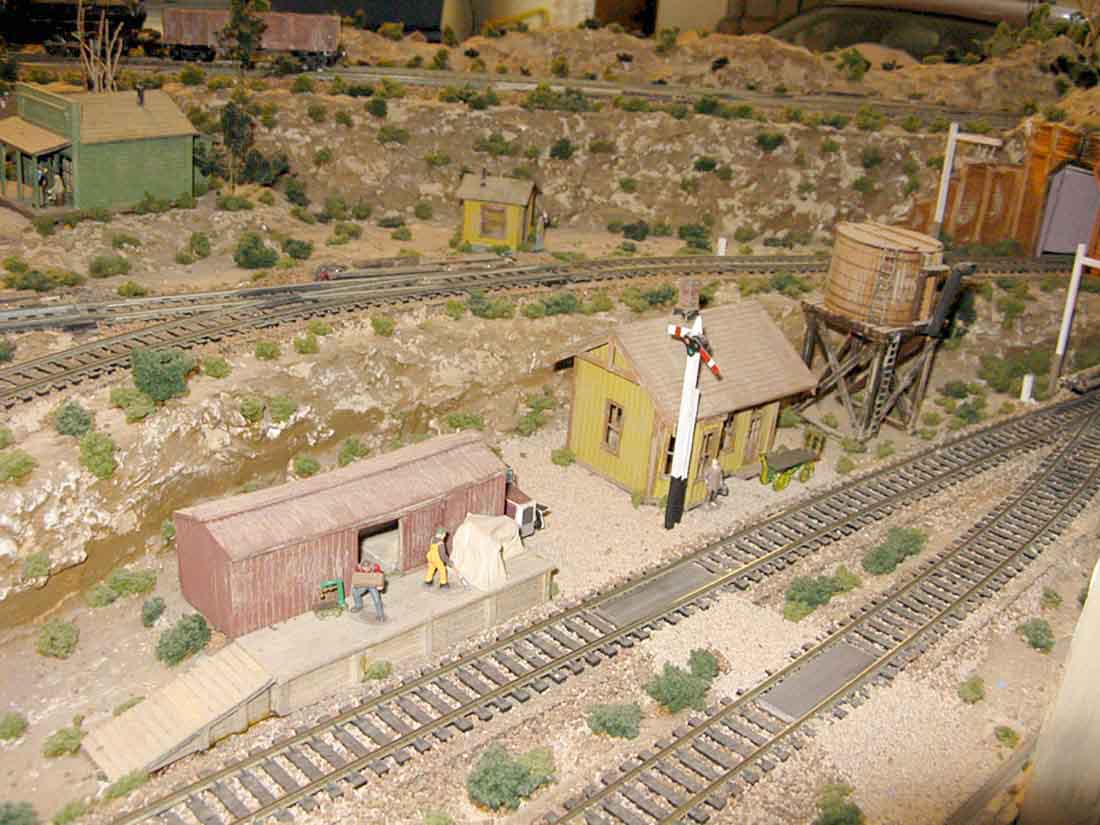
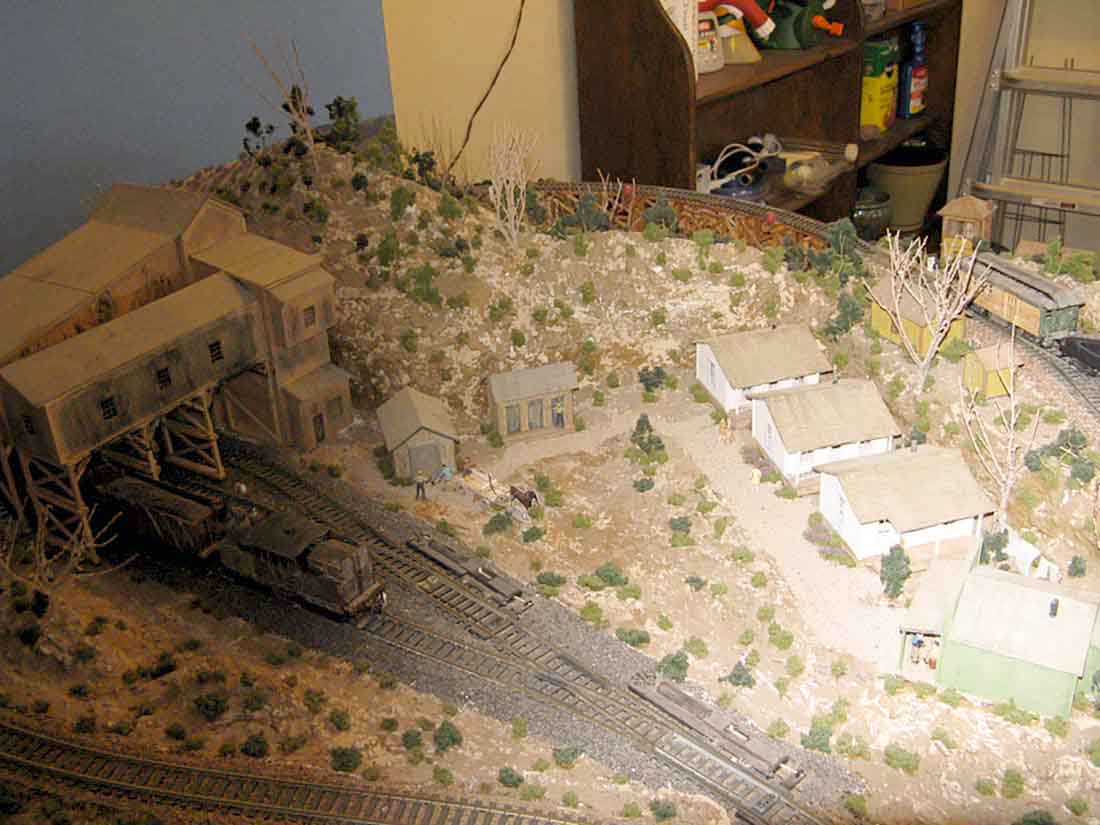
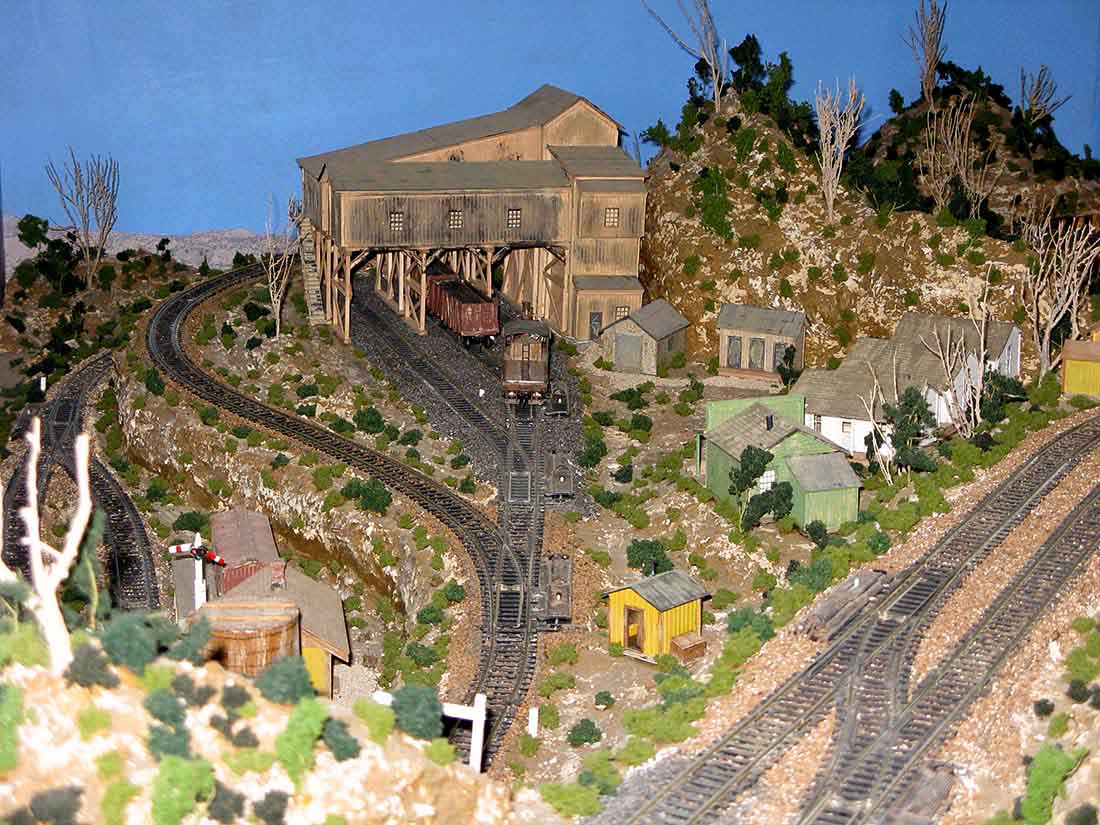
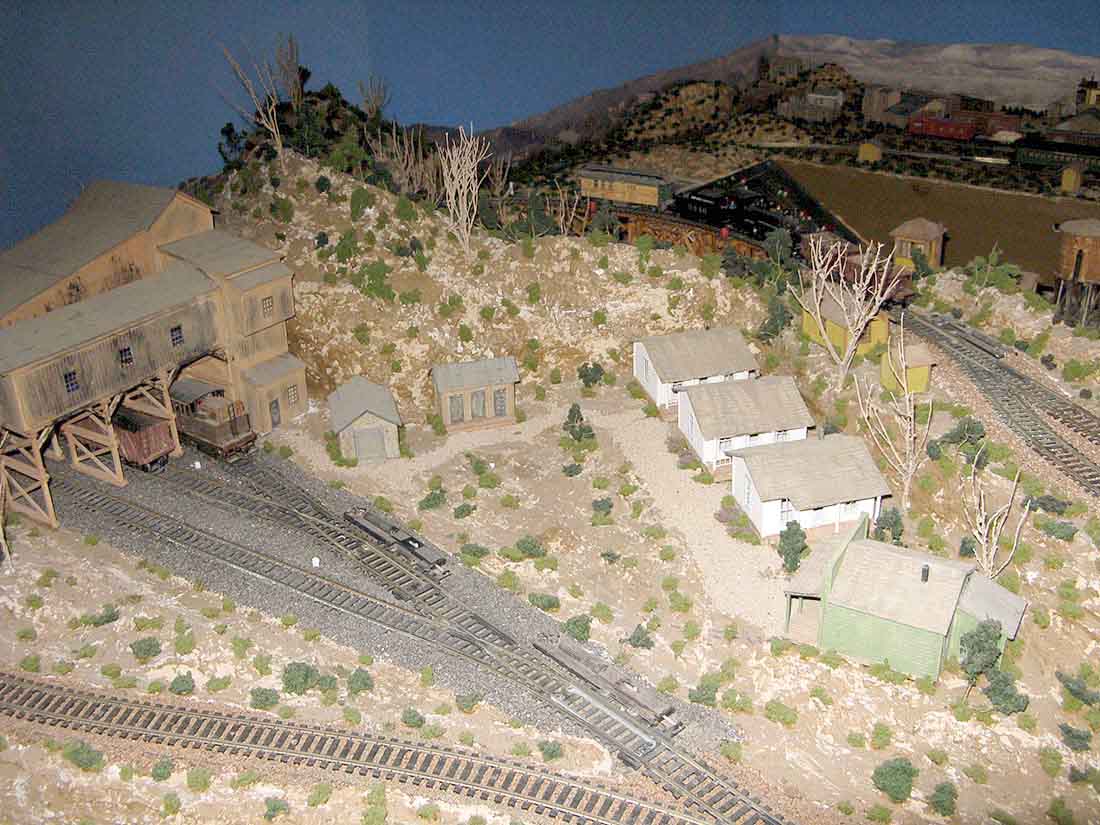
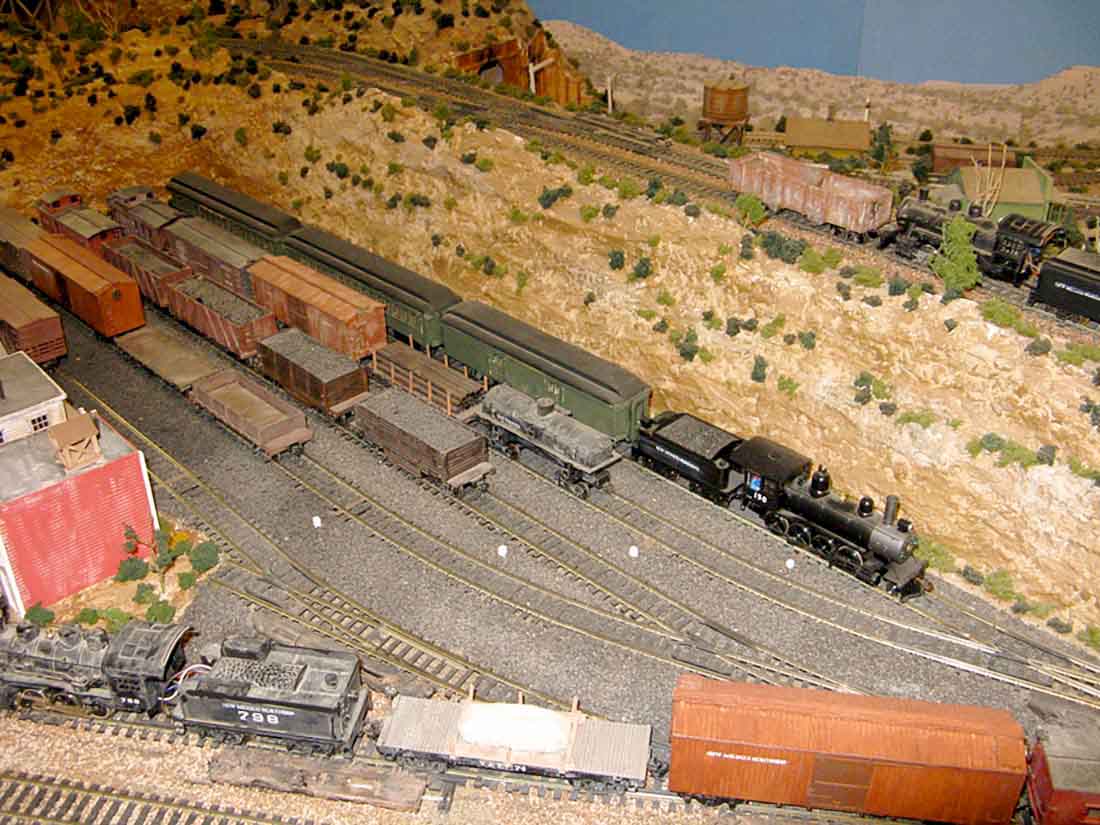
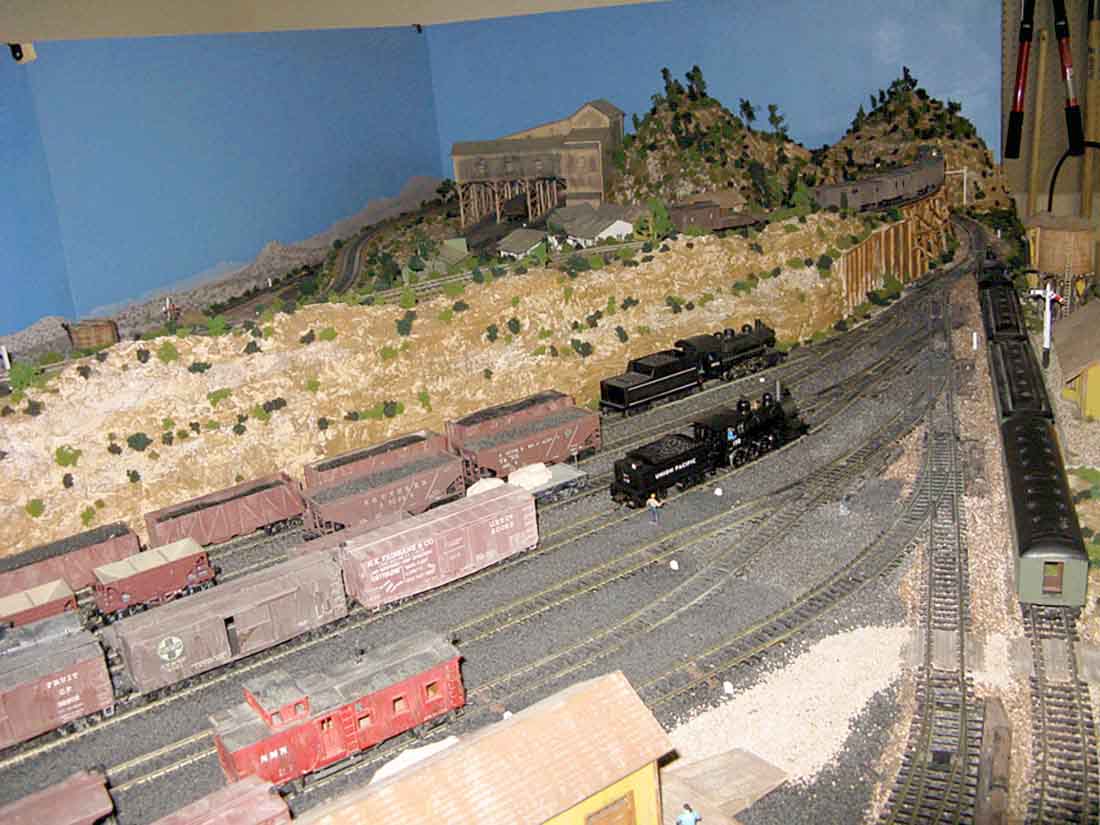
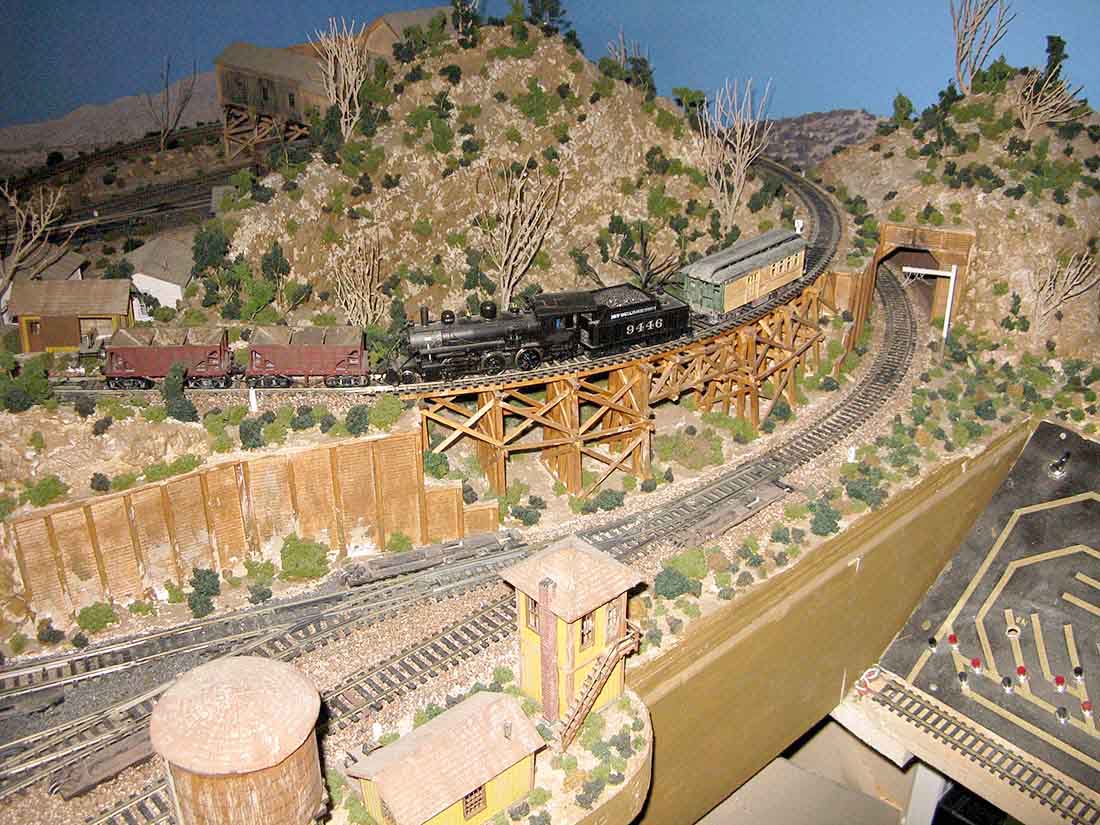
The layout is from about the late 1950 – 1960 time period and centers around a local logging/ lumber industry.

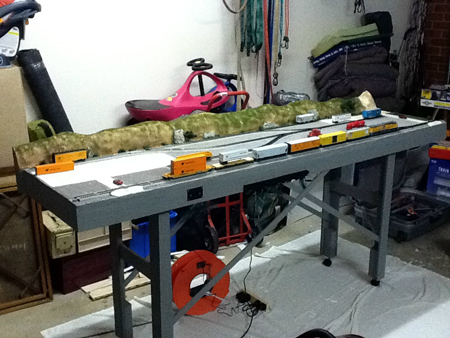
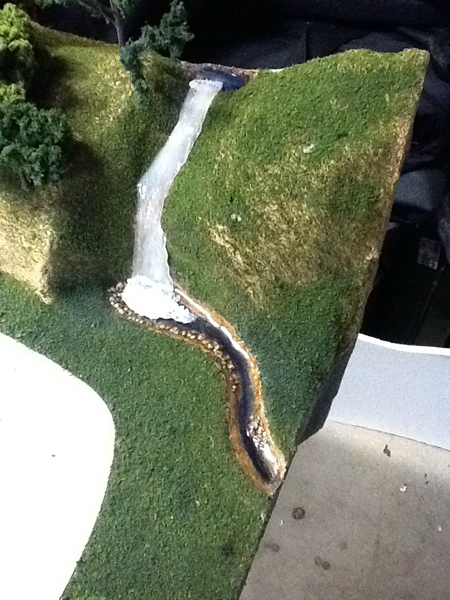
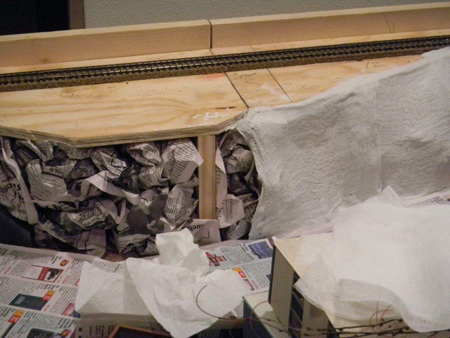
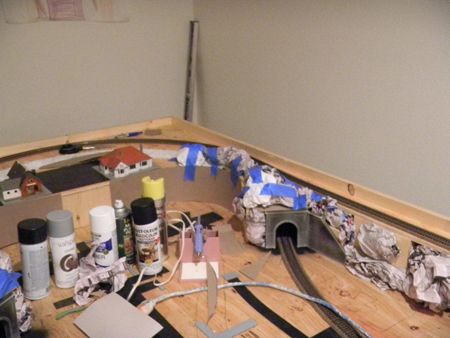
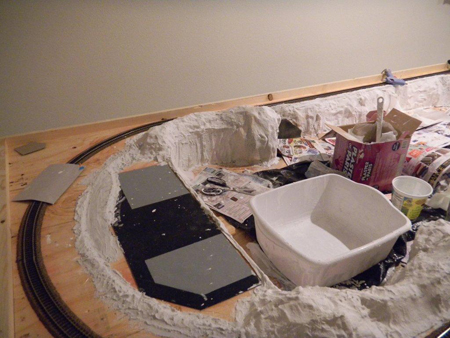
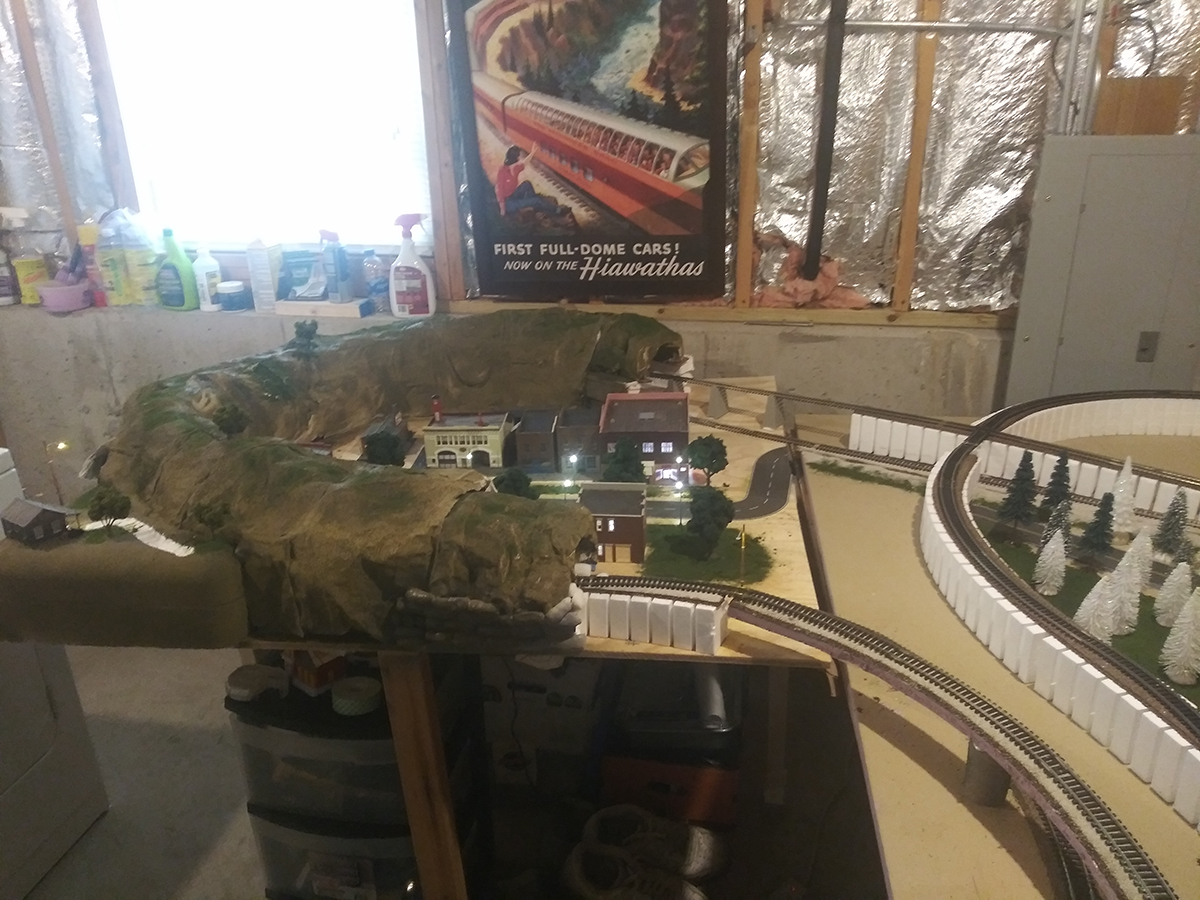
polystrene mountains for lumber railroad

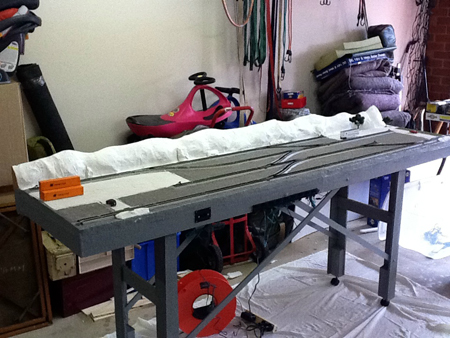
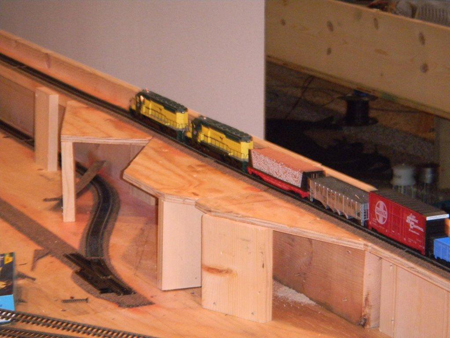
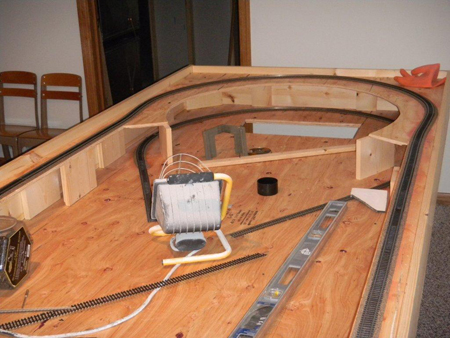
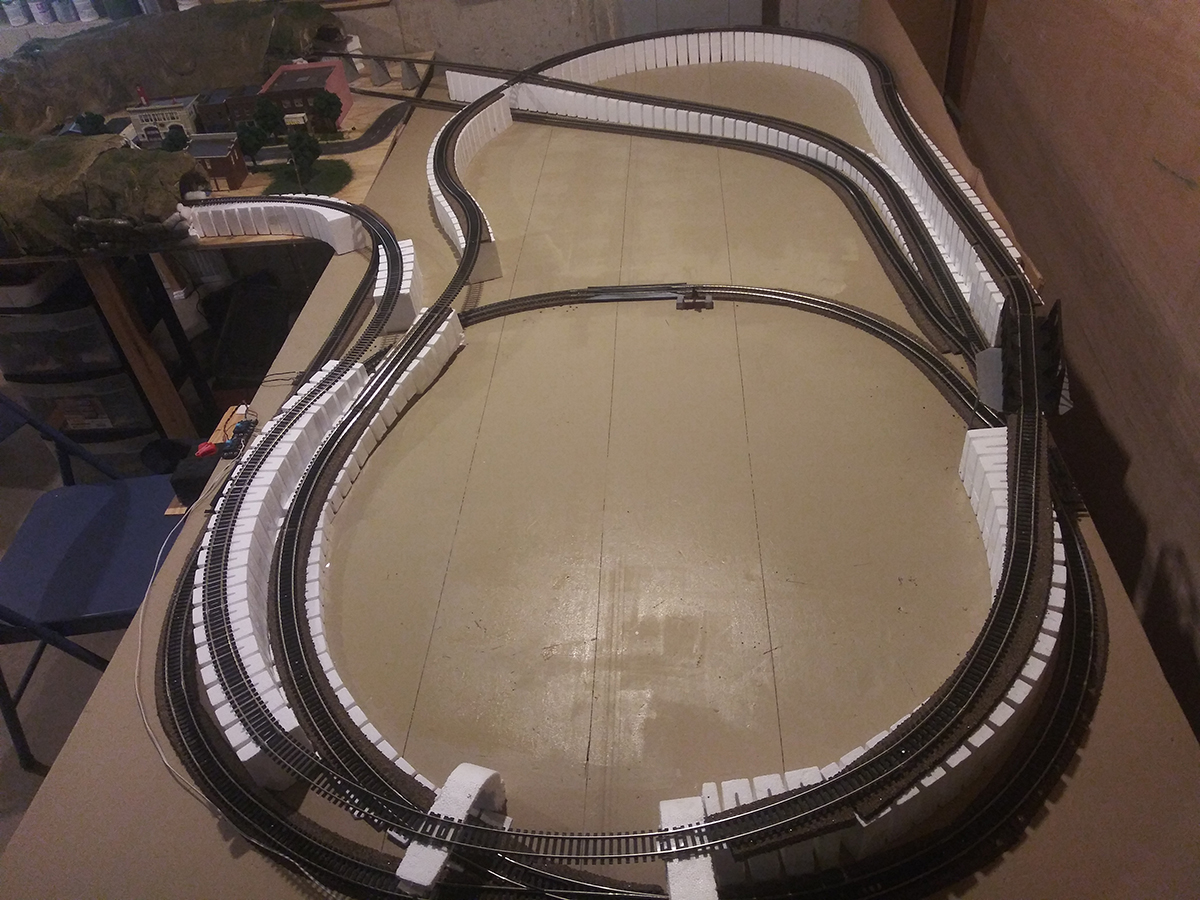
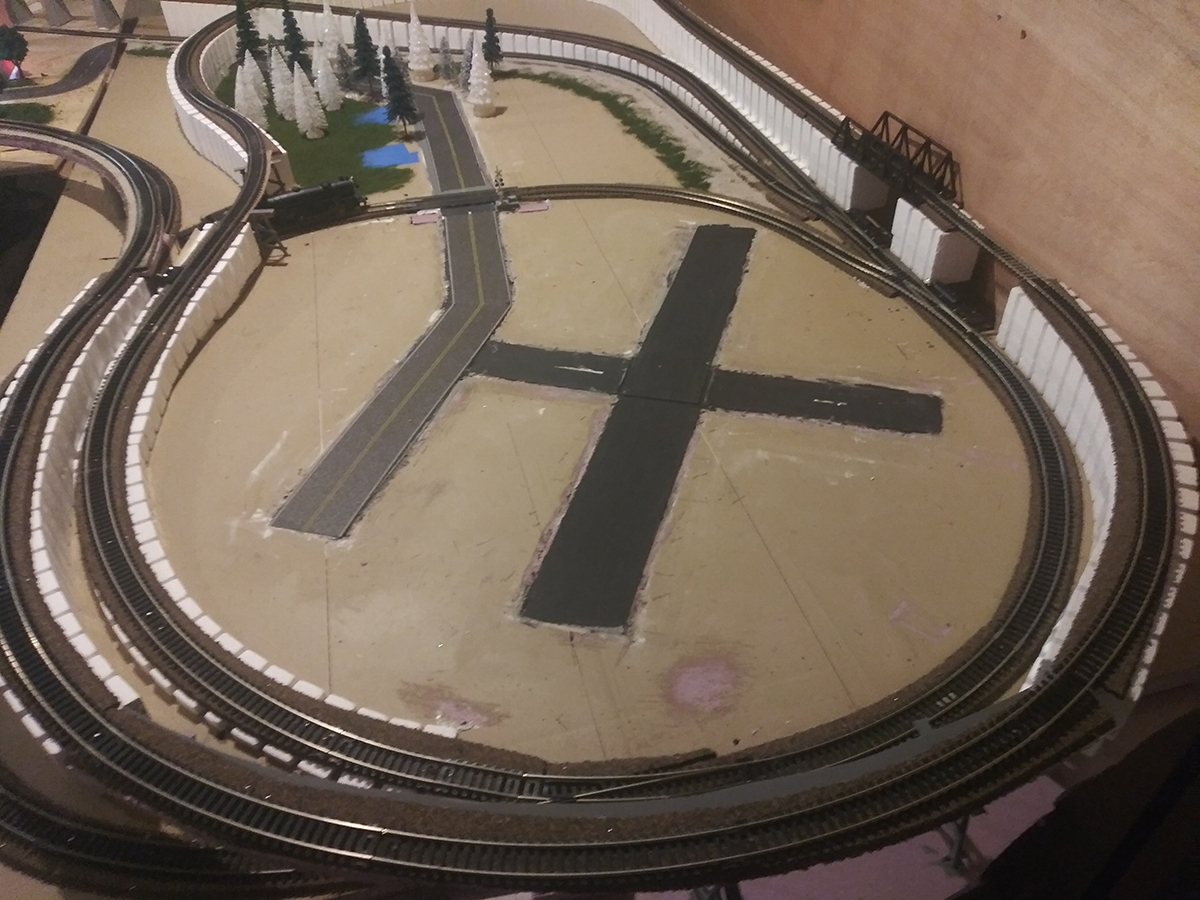
The sub roadbed made from pink insulation foam.

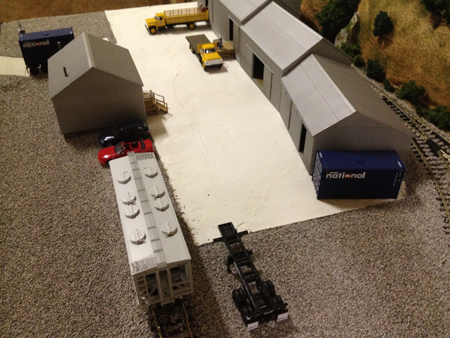
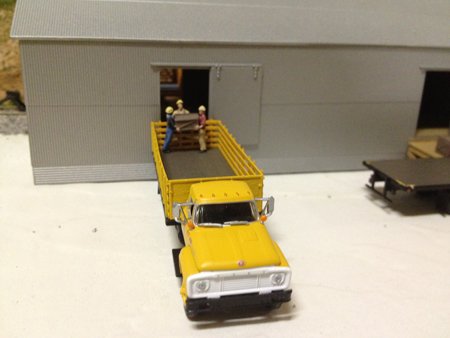
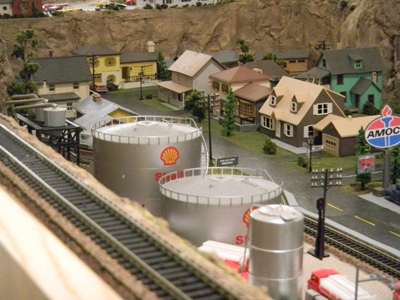
factories on N scale lumber railroad

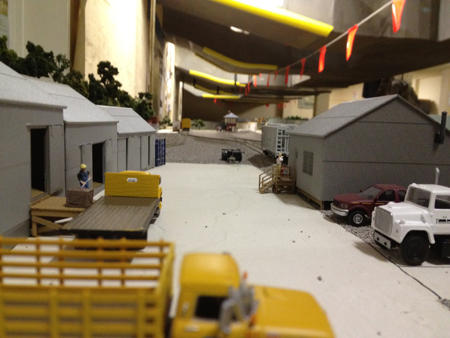
A a couple of the local industries.

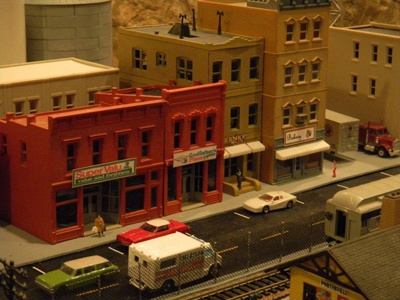
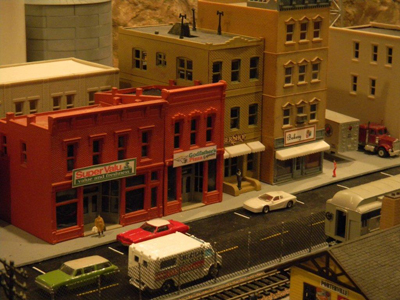
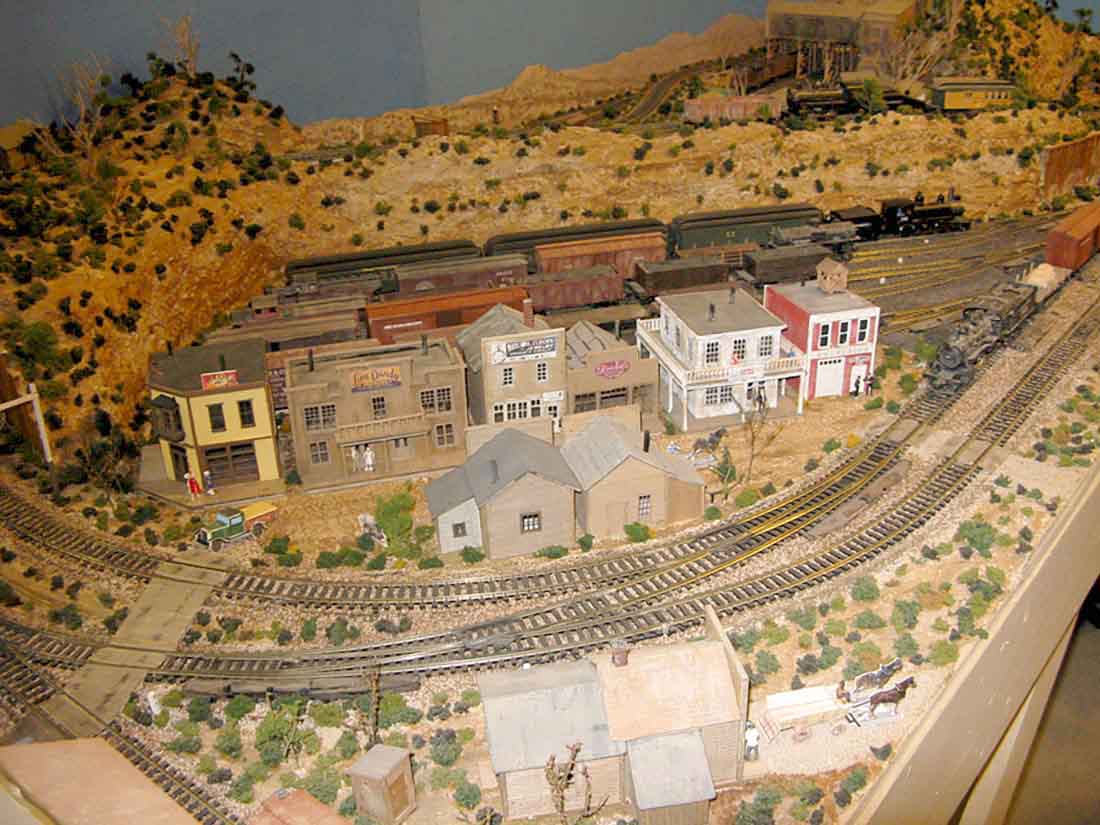
town center lumber model railroad

The center of town on a lazy Saturday afternoon.

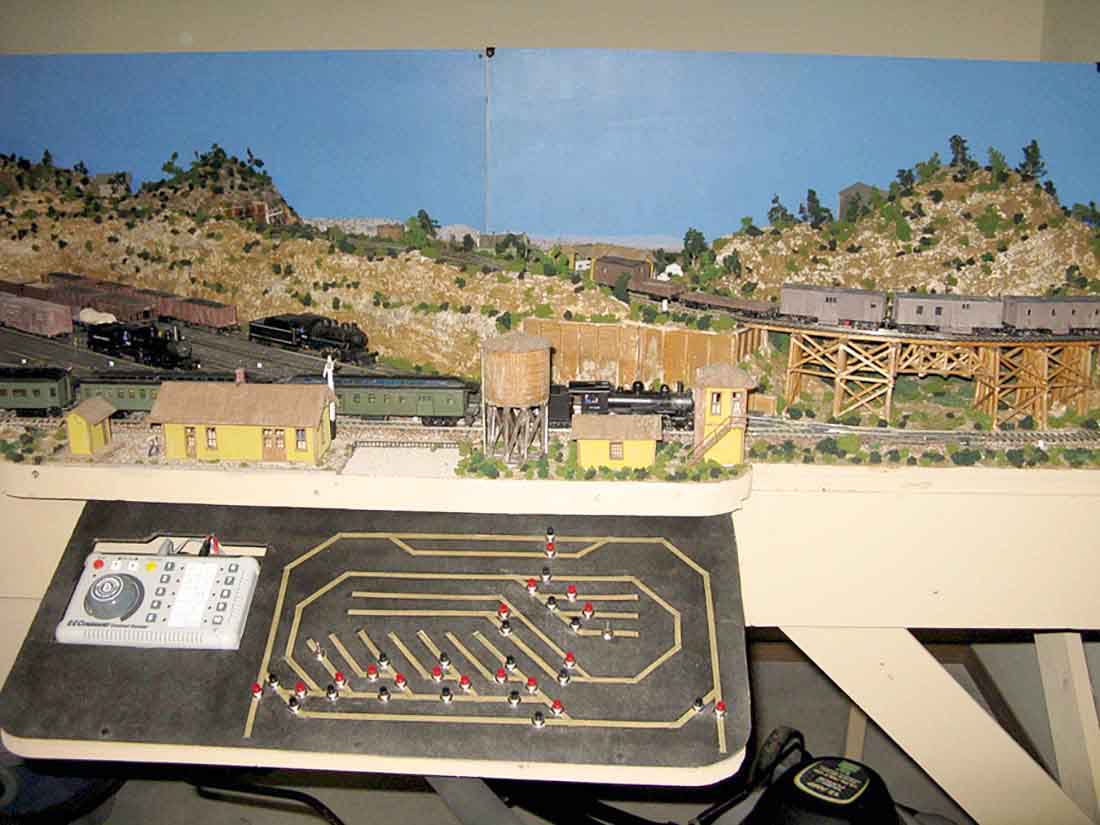
N scale control panel

The switches controlling track power, power to the industry & house LEDs, smoke system for the lumber mill & other buildings as well as sound system. The sound system has one set for daylight (trucks, cars, etc.) and one set for night time (crickets, owls, etc.)

harvesting timber for lumber railroad HO scale

Where the timber is harvested


timber loading platform

Retail outlet for the finished lumber

cutting trees for timber

Where the rough cut trees are converted to lumber

N scale lumber mill

Another look at the lumber mill and the shop for the ever ongoing work to repair/ refurbish trains and other manufacturing equipment

model train track plan diagram

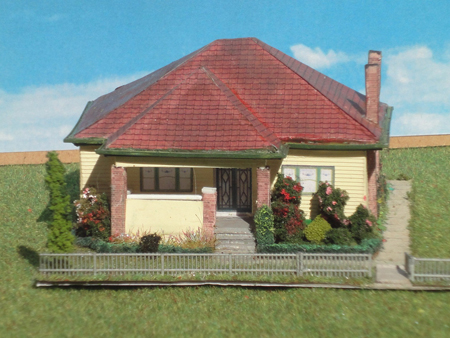
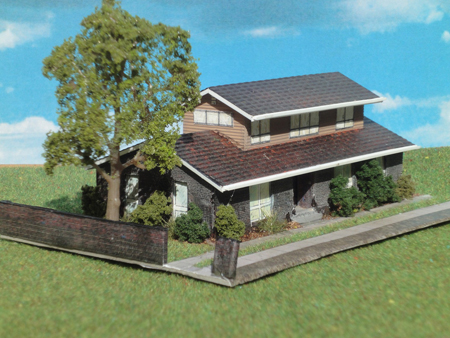
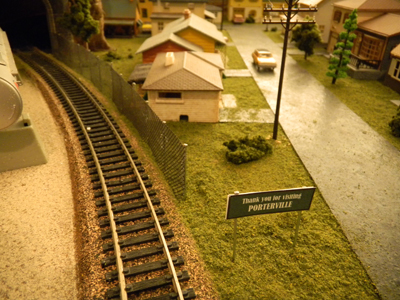
N scale lumber railroad houses in town

A look at some of the house in the little town.

Steve”

A huge thanks to Steve for sharing his lumber railroad – I do love an update.

If you’re looking for Steve’s first post, it’s here.

And now on to Dave:

“Hi Al,

Thanks for all your blogs.

I started to build my layout about 6 years ago when I retired. It really just evolved, starting on the dining room table, then grew legs. Of course, starting as a novice I made many mistakes as we all do.

The HO layout is 6.5ft x 4.5ft approx and was constructed using Peco code 100 set -track mainly to be able to shunt etc, using #2 curves as the smallest radii.

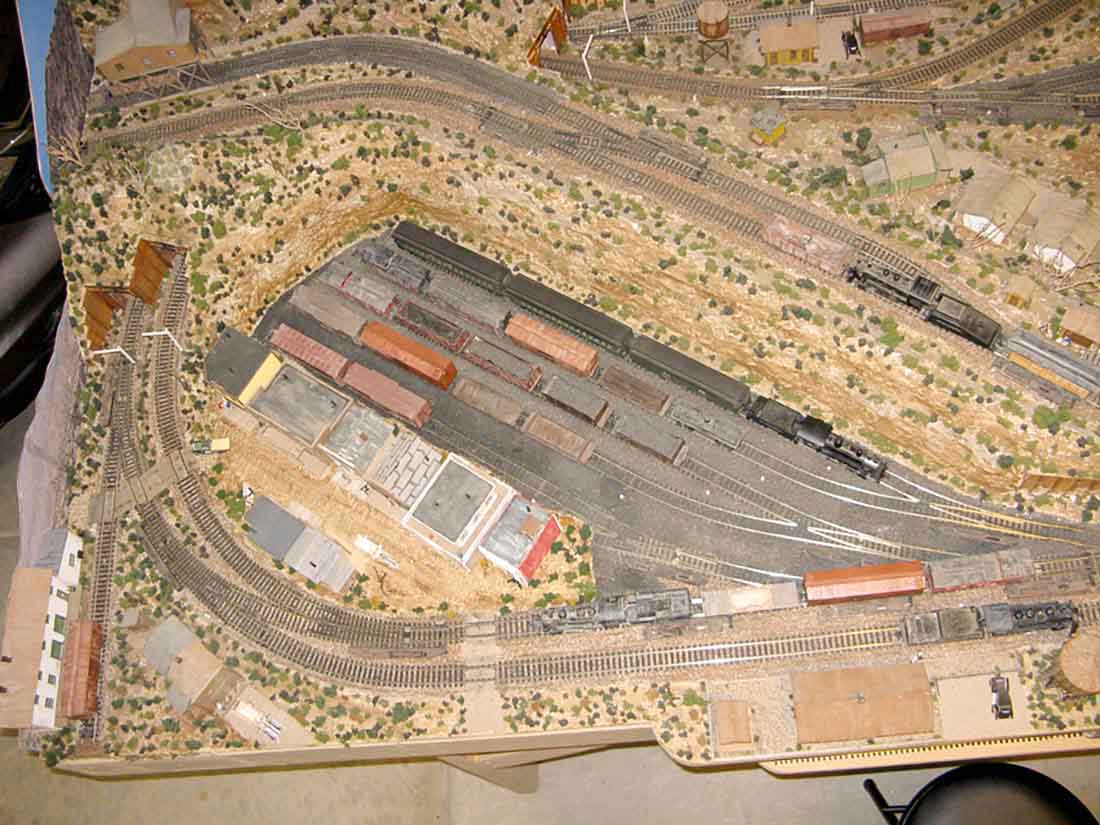
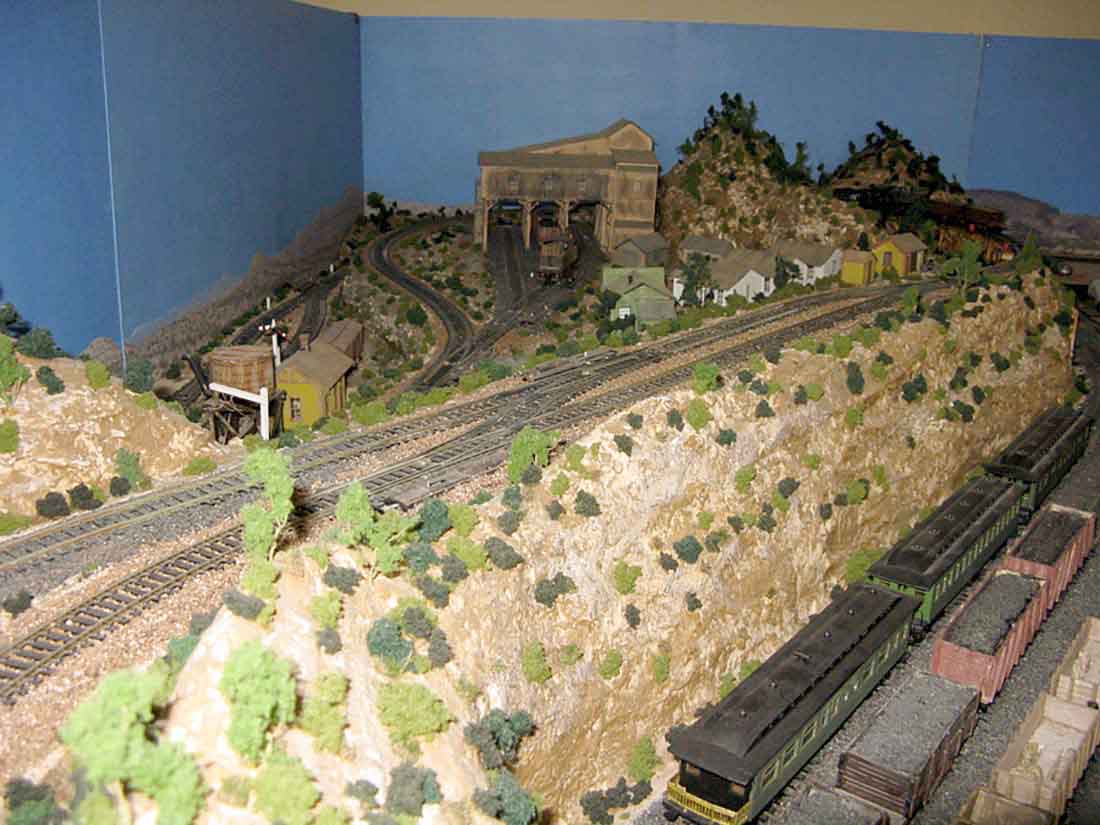
“Karrawidgee” (a fictitious town} is based on the Mallee type of vegetation found in the Western part of Victoria in Australia and is fairly accurate re Victorian Government Railway infrastructure.

It is all scratchbuilt including the vegetation which is Cedum plants and vitamised foam rubber. The vegetation was planted individually recently as we endure COVID19 lock-down and must admit was over it by the time I finished.

I started the layout with the river taking a lot of space and found I had to make many bridges to fit track in. All trestles are a different height and grade and constructed from the Vic Railway drawings to scale.

As a boy we lived near a railway branch line and the goods yard was my playground, so I guess it’s a bit nostalgic.

I have tried to make it as realistic as possible. Layout #2 will be in the NE of Victoria with new challenges in vegetation with many timber trestle bridges.

Hope it is of some interest.

Cheers,

David”

model railroad with backdrop

model railroad overhead view


model railroad overhead view

model train with backdrop

model railroad tracks scenery

model railroad towns in mountains

model train track sidings

model railroad platform sidings

A huge thanks to David for sharing his stunning layout – I loved it. Please do leave a comment below if you did too.

That’s all for today folks.

Please do keep ’em coming.

And if today is the day you get started on your layout, the Beginner’s Guide is here.

Best

Al

PS Latest ebay cheat sheet is here.

PPS More HO scale train layouts here if that’s your thing.


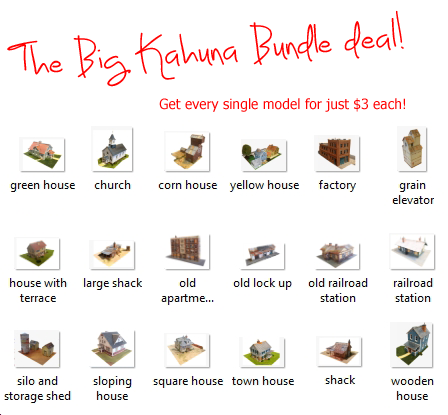
Need buildings for your layout? Have a look at the Silly Discount bundle.

HO freight trains – Frank’s

Frank’s been in touch – he likes running HO freight trains – and my word, he’s created quite a space to do exactly that:

“Originally my HO scale layout was located in a room I had a contractor build in our San Diego, California house attic.

As my layout inevitably grew, (evolved), I realized that the attic was too constraining. I raised the issue with my wife: “Should we move to a larger house or should I have a room built over our extended garage”. Her silent, cold, frozen stare told me that we were not moving.

Thus, I hired a contractor to build a room over our garage. What a problem! It took the contactor the better part of a year to demolish the entire two car garage which was attached to our home; drill down into the earth for earthquake proof construction, rebuild the garage, and over the new garage, construct the circa 30 by 30 foot model railroad room.

His comment: “All this for model trains?”

Oh well.

Next I purchased an HO layout computer program and, on my desk-top computer, designed a modified “bent-dog bone” type layout with 48 inch diameter loops at each end.

I ordered and assembled about a “baker’s dozen” pre-fabricated tables; purchased boxes of 4 by 6 foot sheets of 2 inch thick, blue foam boards; boxes of HO scale flex track, boxes of cork track bed; scores of turn-outs, many boxes of track, additional transformers, rolls of various sized wires, etc. etc.

The blue foam was put over the plywood table tops but installed under the cork road bed for sound suppression. It works fine; except I had to buy a special very long drill to drill holes through the foam for track power leads. The thick form permitted cutting creeks and rivers that passed under the track, allowed for track adjacent elevated town streets, and for main-line track road-way “cuts and fills”.

Finally the hip-high, two main line, designed layout was up and running. But I wanted more trains running simultaneously – I like running my HO freight trains. I then hired a contractor who installed a completely separate, eye level, 30 inches, and in places 48 inch wide shelf, around the layout room.

This shelf permits me to run four long HO freight trains on the eye level portion of the layout and two separate main line trains on the hip-high layout. Thus, now the layout will run 6 long trains simultaneously.

I like long trains, preferably HO freight trains of some 40 to 50 cars, snaking by parked fright cars and locomotives, across turn-outs, and through the country-side and towns. I have a built up town of some 35 or 40 structures/ buildings including various stores and a movie theater, which is reminiscent of, and named after the mid and late steam era city of Johnstown, (where the big flood occurred), Pennsylvania.

Is this it? Am I done, adding to or expanding the layout? Who knows?

Recently, my contractor quietly told me that to expand the current train room would require my wife, our dog, and me to move out of the house for about a year. NOTE: I am not dumb enough to raise this issue with my wife.

In building my layout I made every mistake in the book and scores that people never heard of.

Here are some random thoughts – suggestions – in no particular order:

Before beginning design for a new layout, determine if you love seeing long trains running, or if you prefer detail switching yards, and train “make up” activities. My layout has a plethora of yards, stub tracks, “Repair in Place” side tracks, and storage tracks, all wired up, but almost all of which I never use.

Don’t install track further away from you than ¾ of your arm’s reach. Don’t put track hidden behind buildings or scenery. Don’t put track in tunnels or mountains which have no “emergency” hand holes.

Don’t nail down or glue down track until you TWICE carefully go over it for vertical, horizontal and longitudinal alignments. Use a bubble level, to make sure the track rails are level with each other.

Repeatedly run your most de-railment prone locomotive, forward and reverse over, through and across every turn out before nailing or gluing them in place. This is a great “pull you hair out” test for steam, 4-8-4’s and other locomotives with training trucks.

Don’t connect one piece of flex track to another section of flex track without carefully inspecting the connections for critical alignments; don’t install a turntable unless you provide for very long, straight, entry and exit tracks, half as long again as your longest locomotive.

Watch out when installing multiple interconnected sections of flex track on curves. You may end up with “locked-in” stresses which may cause the flex track and/or cork track bed to rise up and contort over time, particularly in a room that may be exposed to hot temperatures. If using white glue to fasten down track/cork road bed, try not to dilute the glue. That weakens the glue and may cause “Hold-down” problems.

Don’t buy “cheap” when buying track. Watch out for track profile dimensions and characteristics when mixing track manufacturer’s products. Don’t install a second main line paralleling an already installed main line without careful consideration of all potential obstructions, tunnel entrances; and “overhang” problems of long passenger cars and long locomotives.

Don’t over complicate, and crowd together installations of freight yards; stub tracks, and turnouts without careful consideration of necessary clearances and wiring problems.

Don’t run electrical supply wires without firmly taping a tag to each end showing where the power is coming from and where it is going.

Don’t install a shelf over your layout without appropriate lighting underneath.

Don’t inter-connect different radius turn-outs, or curved sectional track.

Don’t end up with more than one main, central, total layout control station.

Don’t end up with power transformers that are under-powered for the final electrical loads. It is wise to install “re-railer” track sections in line with turn-outs, tight curves, entrances/exits to tunnels or difficult to reach track work.

Try to have “walking access” to each side or end of your layout surface. I’m old and it really is a “Pain” to get down on my knees and crawl under the layout tables.

Railroad room: Make sure you have sufficient lighting for detailed work as well as when having guests.

Air condition the room, if possible. Watch out for aisle widths: The aisle widths in my layout room are, in places 26 inches wide – too narrow; and other areas 36 inches which is just enough for people to pass each other. Don’t have power cords on the floor of the layout room even when covered with power cord safety covers.

Try to have an adjacent space and workbench for a repair/build/ inspection area with table lighting, and space for a wide assortment of tools, glues/lubricants, etc. My railroad room has a
very convenient, and necessary, attached restroom.

Currently, my layout includes some 100 structures, many of which are illuminated. I have some 26 steam locomotives, from 4-8-8-4’s to 0-6-0’s and circa 35 diesel locomotives; 5 different complete passenger car sets and well over one hundred freight cars – bottom line: ”Too much stuff”

Frank

San Diego, California”

HO scale cinema by tracks

HO scale model railroad shelf layout


HO scale model railroad steam locomotive

HO freight trains

HO

HO freight trains

HO freight trains

HO scale engine house

HO scale track

A huge thanks to Frank for sharing his HO freight trains – great pics and what a narrative too.

(I should really add it to the page of HO scale train layouts.

I did enjoy his list of things not to do.

That’s all for today folks.

Please do keep ’em coming.

And if today is the day you join in the fun, the Beginner’s Guide is here.

Best

Al

PS More HO scale train layouts here if that’s your thing.


Need buildings for your layout? Have a look at the Silly Discount bundle.

4×10 HO scale – Don’s

Don’s been in touch with his 4×10 HO scale:

“Hi Al,

When we got hit with Covid, and I was sitting around the house so bored, someone said to me that I need a hobby.

Well, I thought about my interest in trains, and helping my stepfather build his layouts when I was very young.

Most of my family were railroad people working for the B&O railroad at the time, and I was living in Baltimore where all of the facilities were.

The museum is still there, but I haven’t been back in many years.

I started reading Model Railroader, and began getting your tips with your readers sending in their layout photos. As you say, it’s all about getting started, so I did.

My layout is HO scale on 4×10 base.

I was a sales representative in my prior life, and know nothing about carpentry, electricity, tools, etc, so I had to read a lot about everything, and was amazed how model railroading has changed since my early years.

Most everything was Varney and Athearn kits in our basement. I had to learn about building the benchwork, wiring, DCC, and constructing mountains and tunnels. Well, I found out real fast, that I
could forget about the latter for now.

After three attempts, my mountains looked like multicolored lumps of foam and plaster. I am not very “artsy”, so, I just was content to build this first layout with just a rocky pass at one end. I am no longer in the days of brown mountain paper you could just wrinkle up, and there it was. That was then, now at 83 years old, the world is a little different.

I tried to use everything available in these modern times, so I could judge the pro and con of it all. That way on my next layout, I might know what I wanted to use, and what I did not want to use.

There was quite a learning curve for everything, and things got re-done many times. Most of my buildings are card stock, and you might recognize a few. I also used Model Builder software on my computer, trying to copy the looks of structures around my neighborhood.

I used Kato track because it was so easy with sure connections, but I later realized that it was sort of “limiting”, so I will use different track and roadbed next time. I will also make my layout larger so I can do more with it, as I learn to make those mountains and tunnels.

I went DCC using the starter control from Digitrax. I have that coupled with a row of Kato individual controls for my turnouts. Some might call this a “jury” rig, but it works for now until I learn more.

Living in Florida with constant high humidity, and having my layout in my garage (no A/C), I found things like the asphalt-like roadways shrunk over several days, so I had to revise how to install them. I just put patches in some of the seams to look like “roadwork repairs”.

Long story short, I am having a great time doing my first layout, and looking forward to a second one with improved methods, and material. It doesn’t represent any real life scene, but it is my little village of Rockingham named after the street on which I live.

It’s the first thing of this kind in the neighborhood, and everyone stops by to see how things are progressing.

These are a few scenes of my first attempt. Keep up your good work, and keep those tips coming. They give novices like me great ideas and advice.

Don R.

Port St. Lucie, Florida, USA”

HO scale 4x10 model railroad

HO scale model railroad 4x10

HO scale 4x10 model train

4x10 HO shops

4x10 HO scale shops


HO scale apartments

4x10 HO scale bridge embankment

4x10 HO scale shack

HO scale 4x10 turnouts

HO scale printable buildings

HO scale sidings 4x10 track

HO scale 4x10 diesel locomotives

HO scale 4x10 maintenace yard

A huge thanks to Don for sharing his 4×10 HO scale.

Of course, I’m biased, but I think those buildings look great – he’s done a really good job on them. Especially the houses from the printable buildings..

That’s all for today folks.

Please do keep ’em coming. I know I’ve said it lots recently, but it’s really thin on the ground this end, so if you have something to share, now’s the time to do.

And don’t forget the Beginner’s Guide is here if you want to make that start, just like Don did!

Best

Al