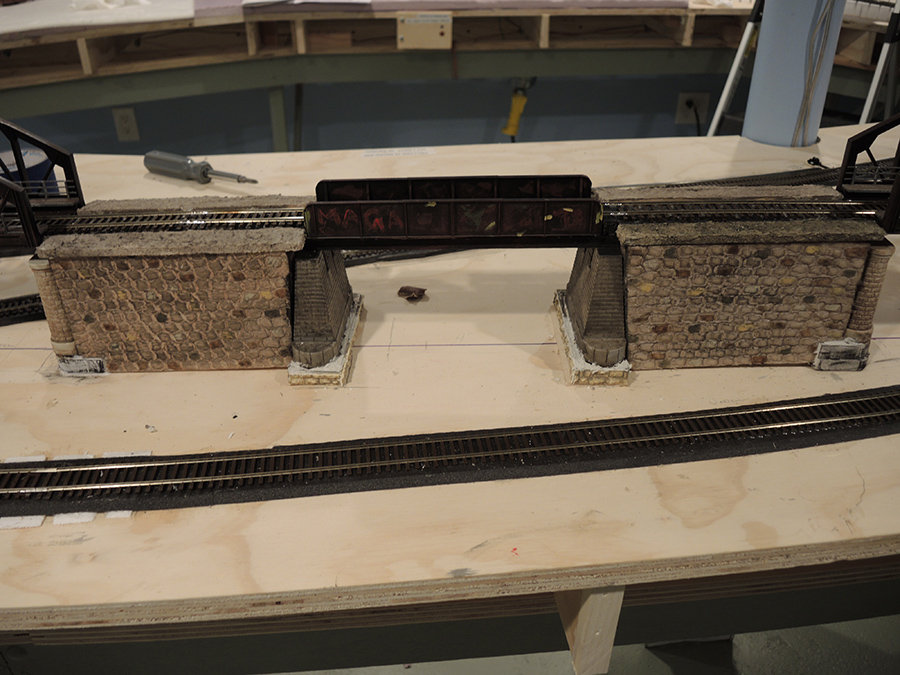
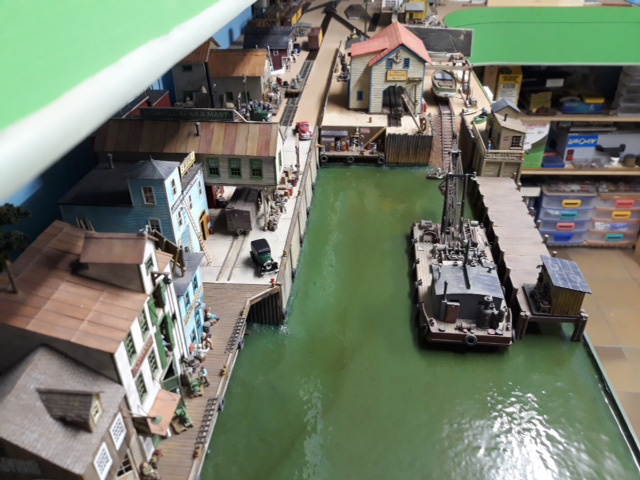
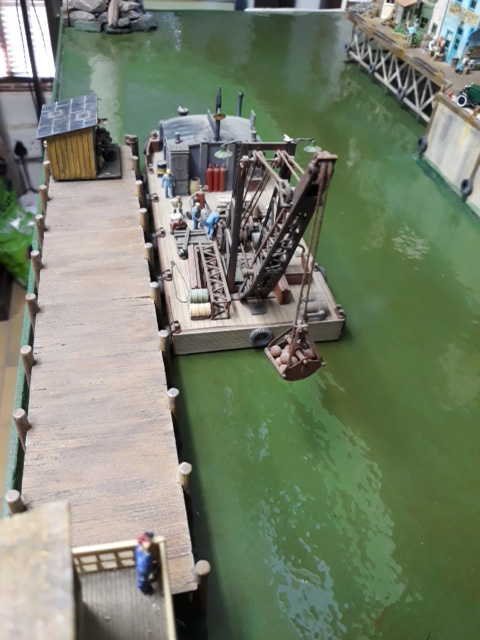
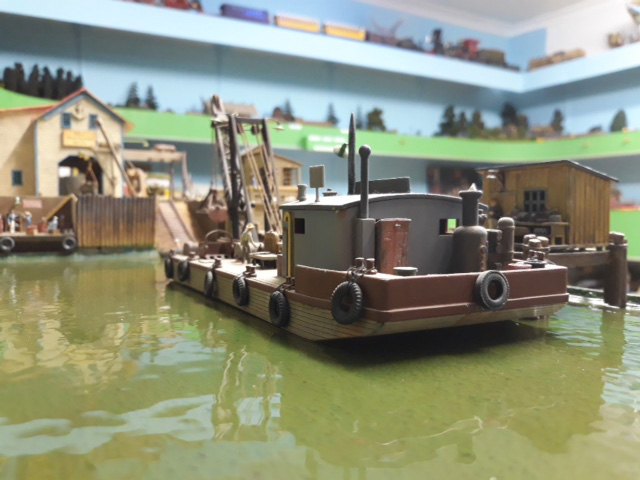
I have enjoyed seeing others layouts from your emails for years. I have just complete my two level O-scale layout taking about 3 years on and off.
My layout is not a single place and time but more so a collection of memories or places/buildings I really liked.
Over the past three 3 years I have acquired road names engines and rolling stock the ran through Saint Louis, Missouri USA.
Thanks,
Jim”
“Hi Al,
Thank you to all your readers and to you for sharing good ideas.
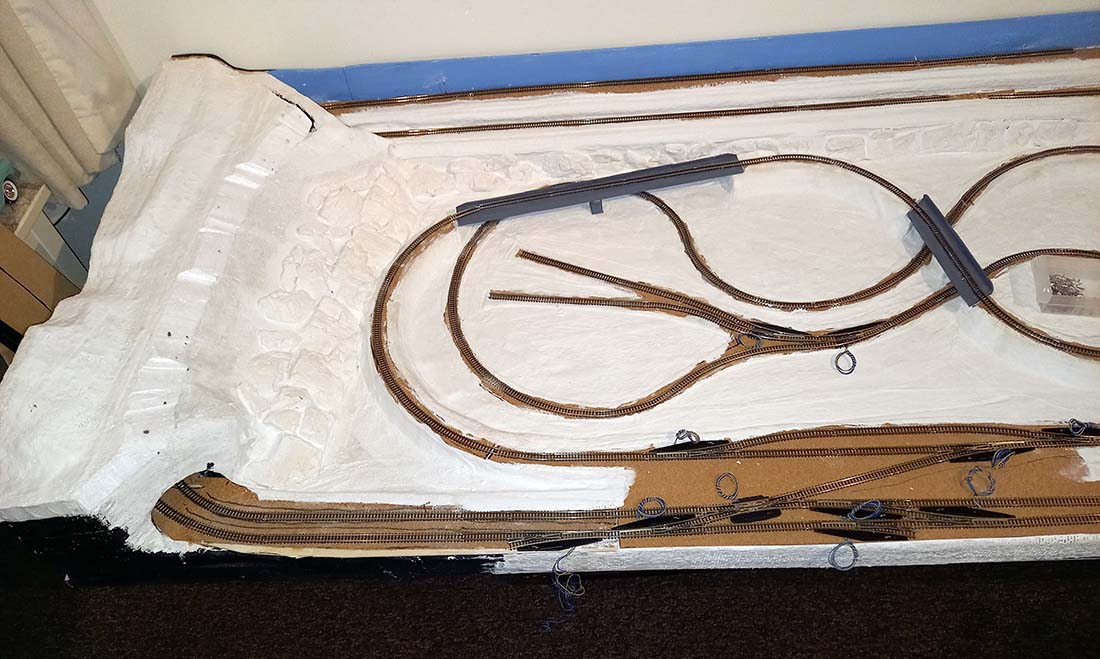
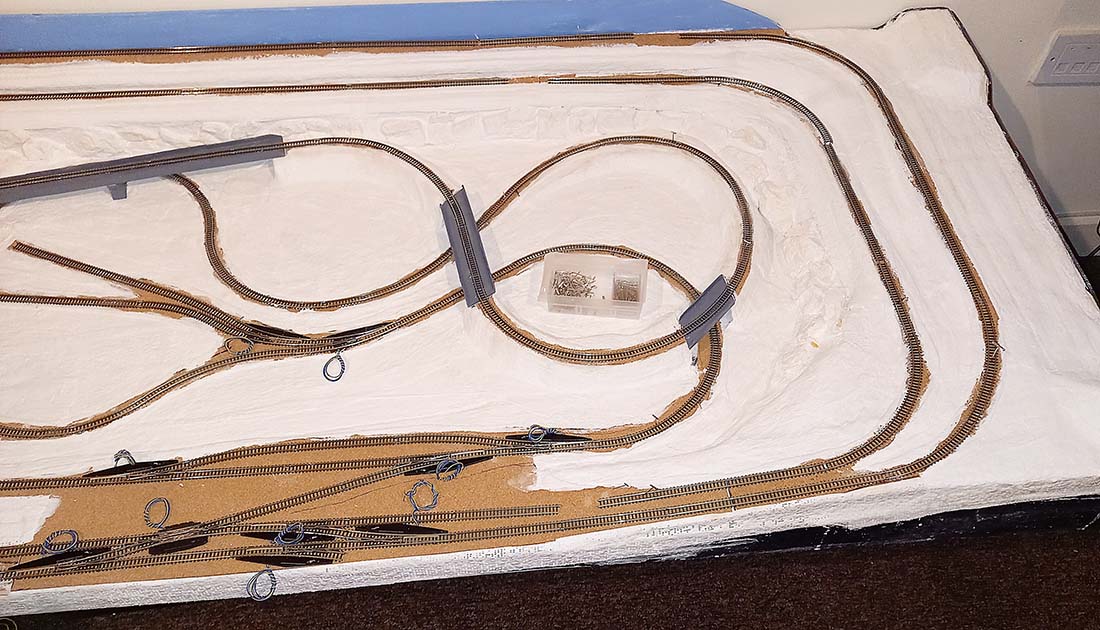
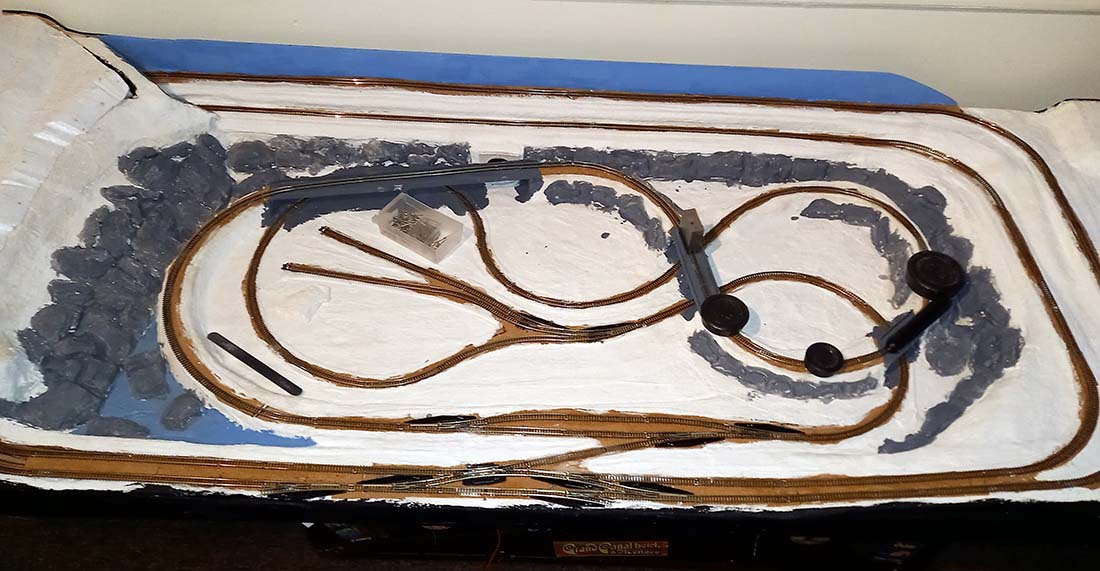
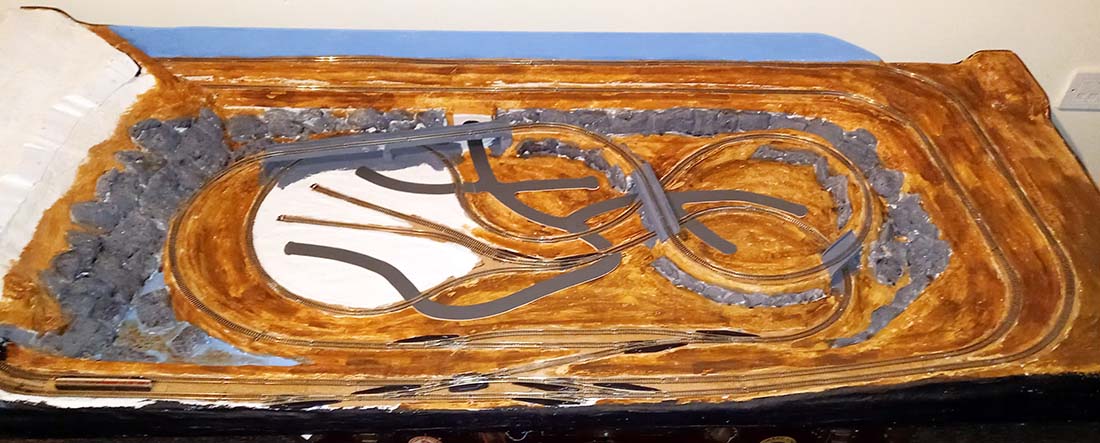
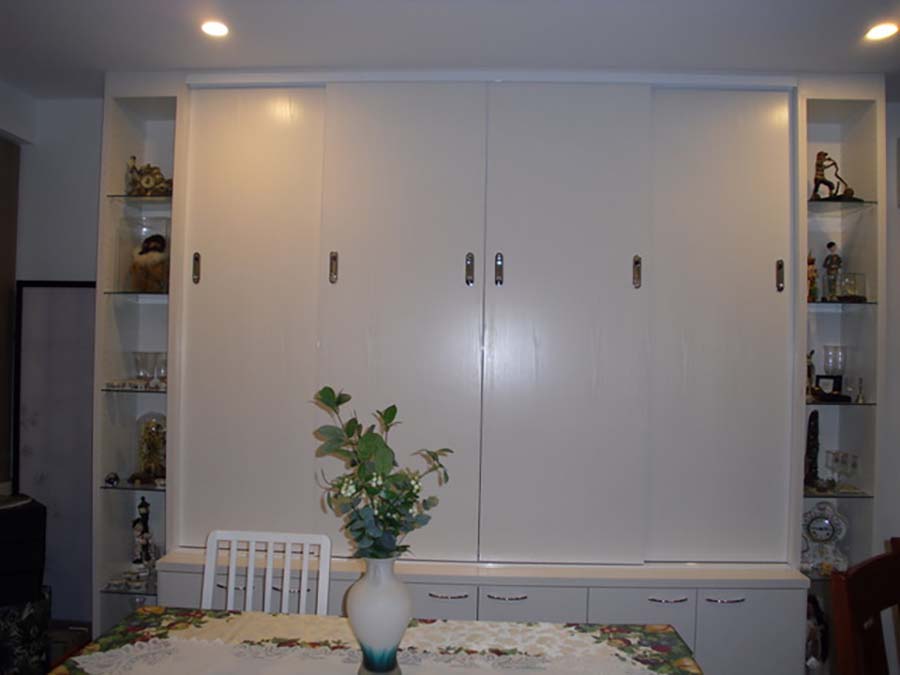
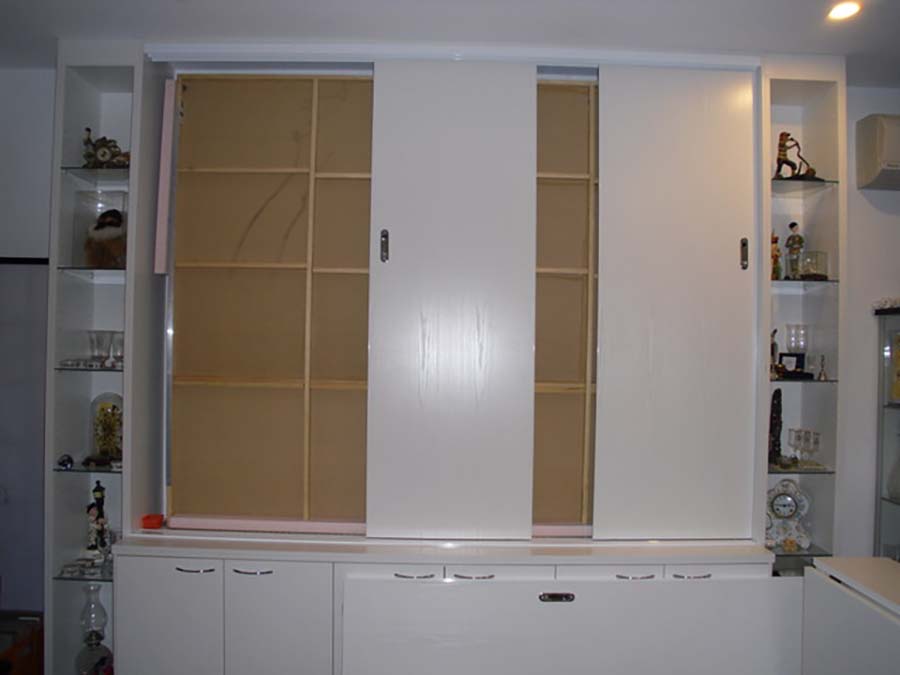
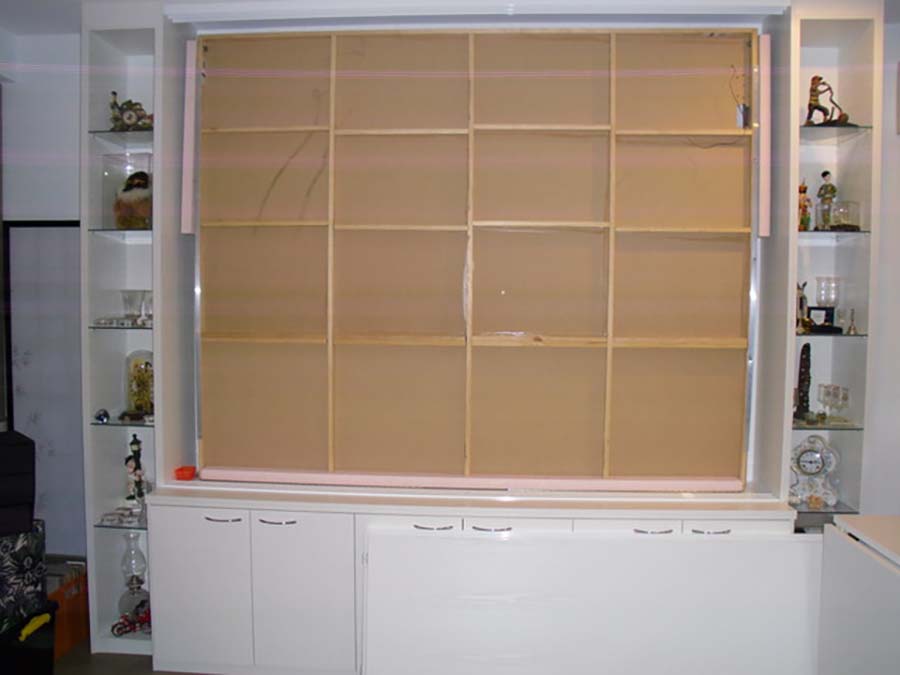
I saw your recent post from Roberto with recycled tracks rails as a cargo for his wagons. Attached are some photos of my use for the spare sleepers. I made coal bunkers with the redundant sleepers and coal from the foam that protected my last computer. Coal in the trucks is random lumps off the sole of old flip-flops (thongs in Australia)
Best wishes to you and all your readers
Andrew
Andrew”
A big thanks to Ben, Jim and Andrew.
That’s all for today folks.
Please do keep ’em coming it’s getting a bit thin on the ground this end again.
Lastly, if today’s posts have got your creative juices flowing, don’t forget the Beginner’s Guide is here.
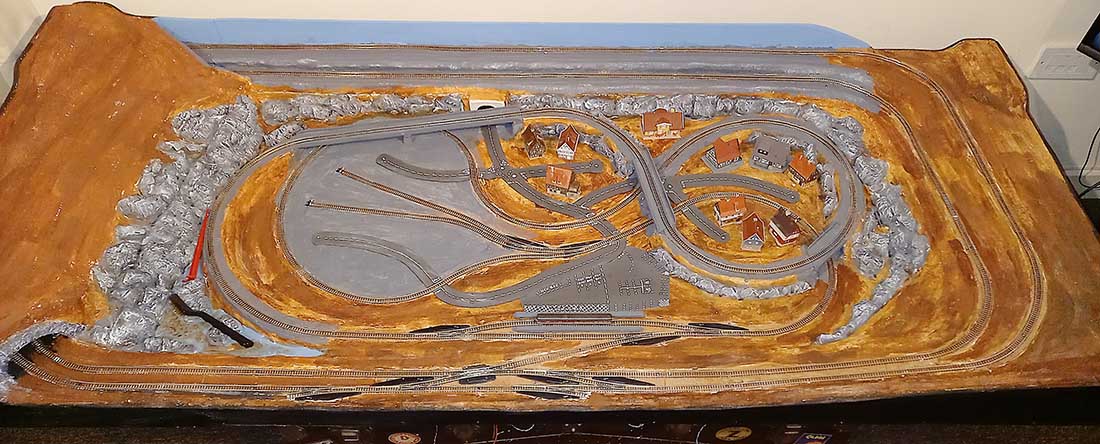
I know its been a while since my last post. From time to time life gets in the way of our hobby.
Through what I have learned on your web site [ I read all your posts. ] I believe I have done well on my side cliff coloration blend.
Still working on many other areas of my lay out and loving every time I get the chance to work on it.
Thanks again Al for all your posts.
Hope you like the latest pics from my train room.
Happy Modeling
Rich from N.J.”
Now on to Don.
He’s added the print out barn to his layout.
Course, I’m biased, but I think it looks great:
“Pic of your barn, home to my small herd of Texas Longhorns.
The rancher’s “bunk house” is behind it.
Hope you enjoy it and thanks for all of your work and time for the emails.
Don”
Next on to Tim for some more HO scale home layouts:
“Hello Al,
Sending some pix of a project I’ve been working on the past few weeks I want to recreate my youthful town main strip known as Ridge Avenue in the Roxborough area of Philadelphia.
I have purchased quite an inventory of HO scale buildings, and started in on one that was the mainstay of the area previously mentioned. That of course was the Roxy Theater. I bought a Walthers Rivoli Theater and went to work.
The kit was not lighting capable, so my first task was developing a scheme whereby said lighting could be accomplished. I finally got that worked out and implemented!
Pictures (attached) will show the movie house pretty near what I experienced as a kid!. 32 micro leds illuminate the marquee and the movie posters in the entryway, as well as ultra violet leds for top marquee illumination.
The weathering was accomplished by texture spray paint and cigarette ashes (poor mans pastel chalk). Hope pix will meet with your approval and considered worthy of your web site!
Tim
Cincinnati, Ohio (USA)”
“I have used several test stands and have had issues with most of them.
I made this in an afternoon for under $20. It has no moving parts, no adjustments needed.
It is a stable platform and works on any size locomotive.
This one picks up on painting and detailing and also has a short how to do making N Scale tree using the same materials.
Let’s dig in right where Part 1 left off. Note I’m starting with Photo 1 again for this part of the build since it’s in a different post.
Photo 1 shows the spray paint I use for the trees. These are camouflage flat earth colors – browns and dark forest greens. For these I wear a pair of latex gloves and go outdoors and stay the entire tree from top to bottom. Cover as much as you want as it does help blend everything together and covers the ground cover used to seal the various glued used during construction.
Photo 2 shows a painted tree. Note the tree has been roughly shaped at this point. This is the flat dark brown color of spray paint.
Photo 3 shows this batch of trees I made in various stages of completion. It’s very evident which trees have gone thru the painting process at this point.
Photo 4 shows how I set up a few containment stations so when I apply the foliage I capture excess for future use and also keep the bench reasonable clean. For the foliage I use a few different colors of woodland scenics ground cover. Burnt grass and mixed ground cover are the two I primarily use but I also use the weeds green color as well for some trees.
Photo 5 shows a quick spray station set up for application of extra hold hair spray to the trees. Again this keeps the mess down.
Photo 6 shows how I like to spray which is top down for the most part. This covers the branches but minimizes the amount of spray getting on the trunk which will need to be brushed off later.
Photo 7 and 8 show sprinkling the ground cover on the tree. Trees are rotated as you see fit snd after the first application I tend to spray the tree with hair spray again then sprinkle a different color of ground cover on lightly near the ends of the branches. Photo 8 shows a tree that has completed this part of the process.
Photo 9 shows a different style of pine tree I make using furnace filter material. I use the same materials for the trunk just keeping the rustic wire straight the full length. I use one long and then three progressively shorter sections of wire to build up the trunk.
To this I apply wood glue and ground cover as before. The furnace filter material I cut to rough shape and peel it as thin as I can and then round it snd cut notched in the outer ring of each piece so it looks more like branches.
These then I use a screwdriver to open a hole in the center and I slide it down the trunk and super glue in place. Gaps between I generally keep to about 1/4 to 3/8 of an inch. All other steps to finish are identical as noted in this post.
Photo 10 shows a completed tree waiting for clean up to remove excess material from the trunk. A small stiff brush works perfect for this task.
Photo 11 shows the same tree cleaned and layout ready
Photo 12 starts the construction of an N Scale tree roughly 4 inches tall. The same materials are used but here I’m using only a single trans of the rustic wire.
To start the build I super glue s few branches in different locations. I then hold the tree snd I dab on white glue to hold the next branches in different areas as I rotate the trunk.
Note that I go back and spot glue with super glue as well to make sure everything stays in place.
Photo 13 shows the completed tree before shaping
Photo 14 shows the tree getting ready for the first hair cut. Nothing fancy needed at this point but just get it into the basic shape you are after.
Photo 15 shows the model railroad trees after spray painting.
Photo 16 shows the tree after foliage has been applied. Same technique as used with other larger trees is fine with the smaller trees as well.
Photo 17 shows the tree after its trunk has been cleaned up and final trimming has been completed. It’s layout ready at this point
Hope folks give these a try. It’s very satisfying to make your own trees and cost effective too!
Best wishes
Bill in Virginia”
A huge thanks to Bill for sharing his model railroad trees ‘how to’.
If you want to see what his layout looks like, here’s his last video update: