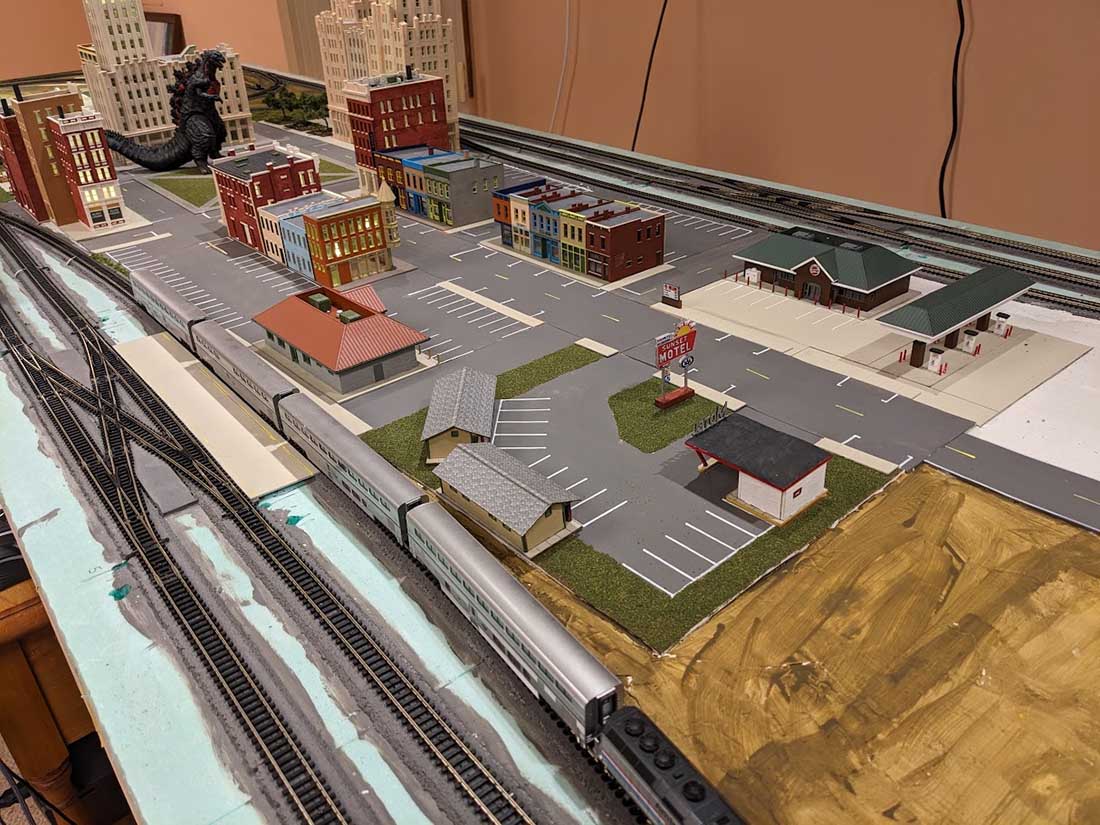
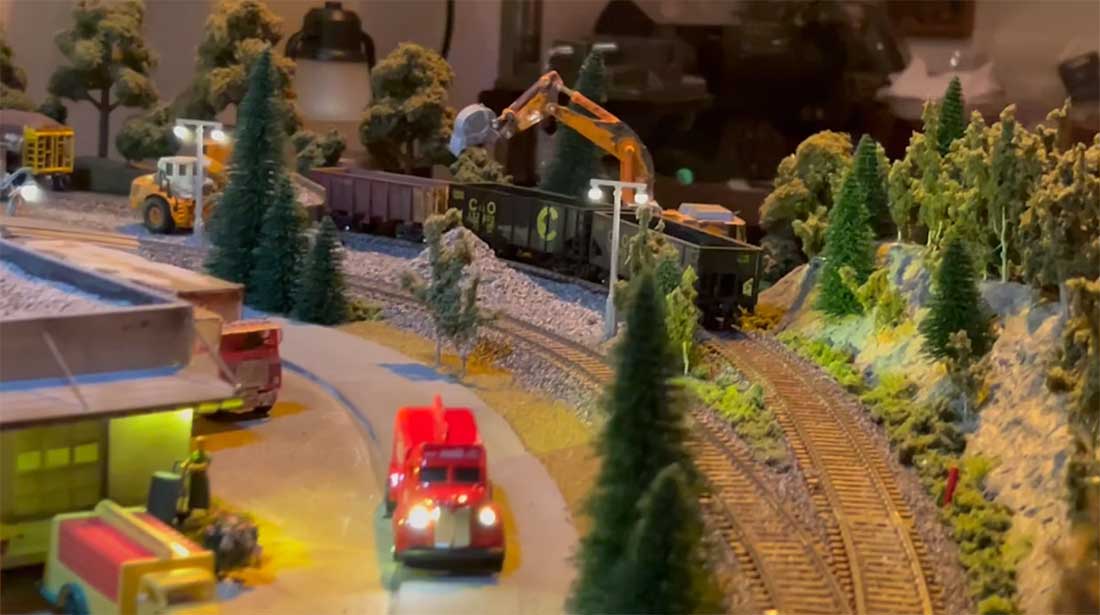
U shaped layout HO scale

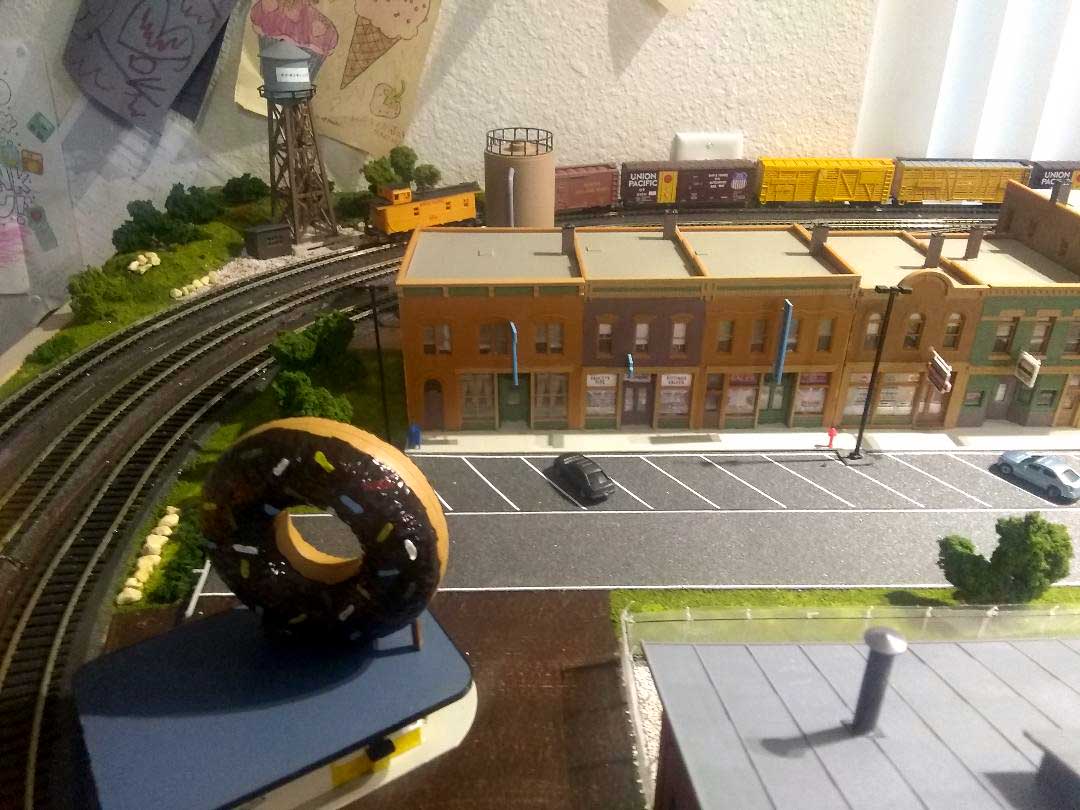
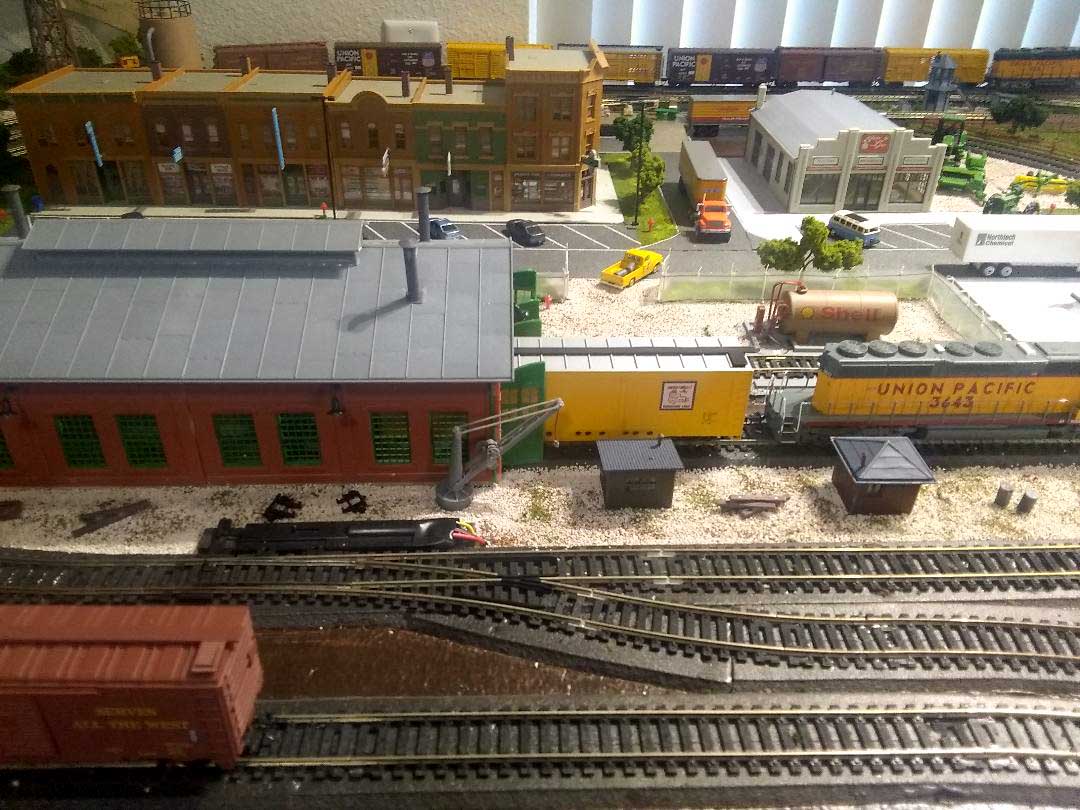
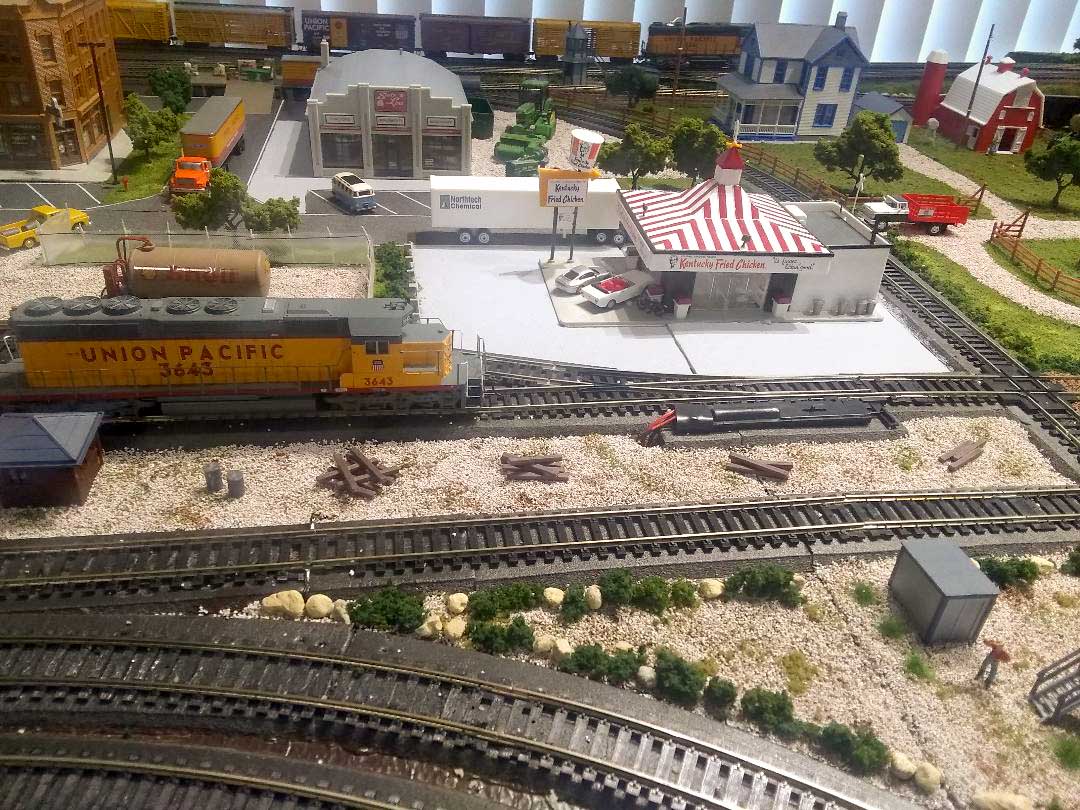
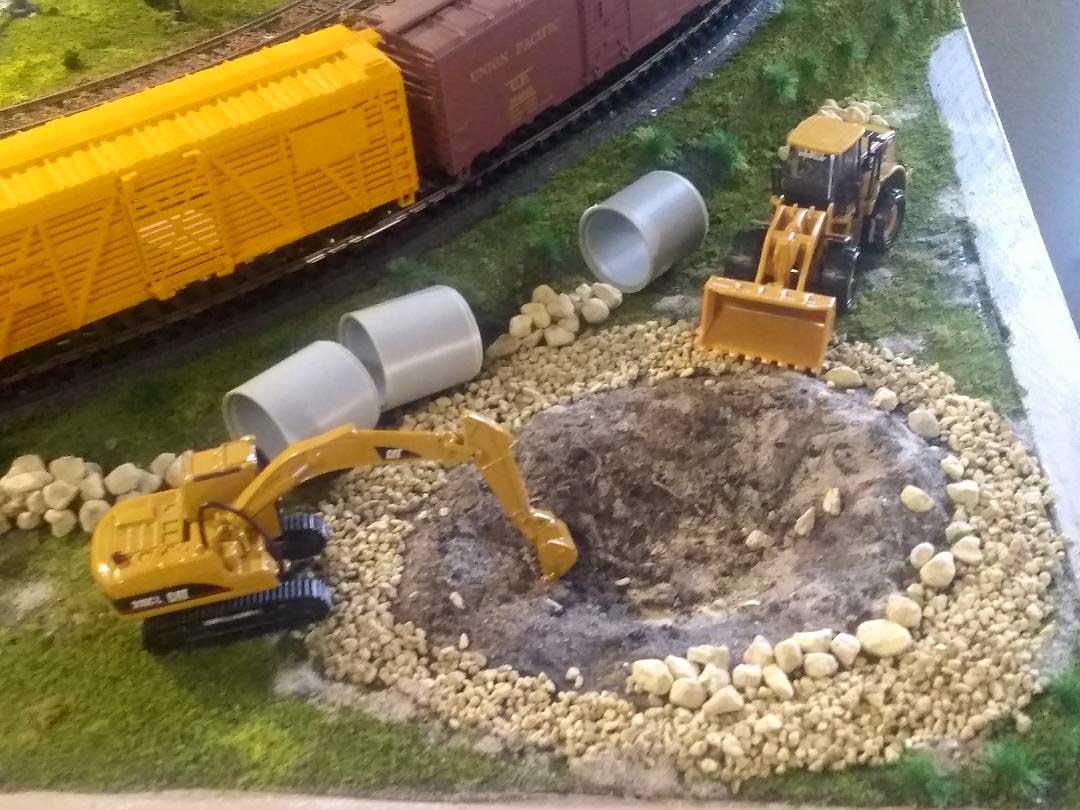
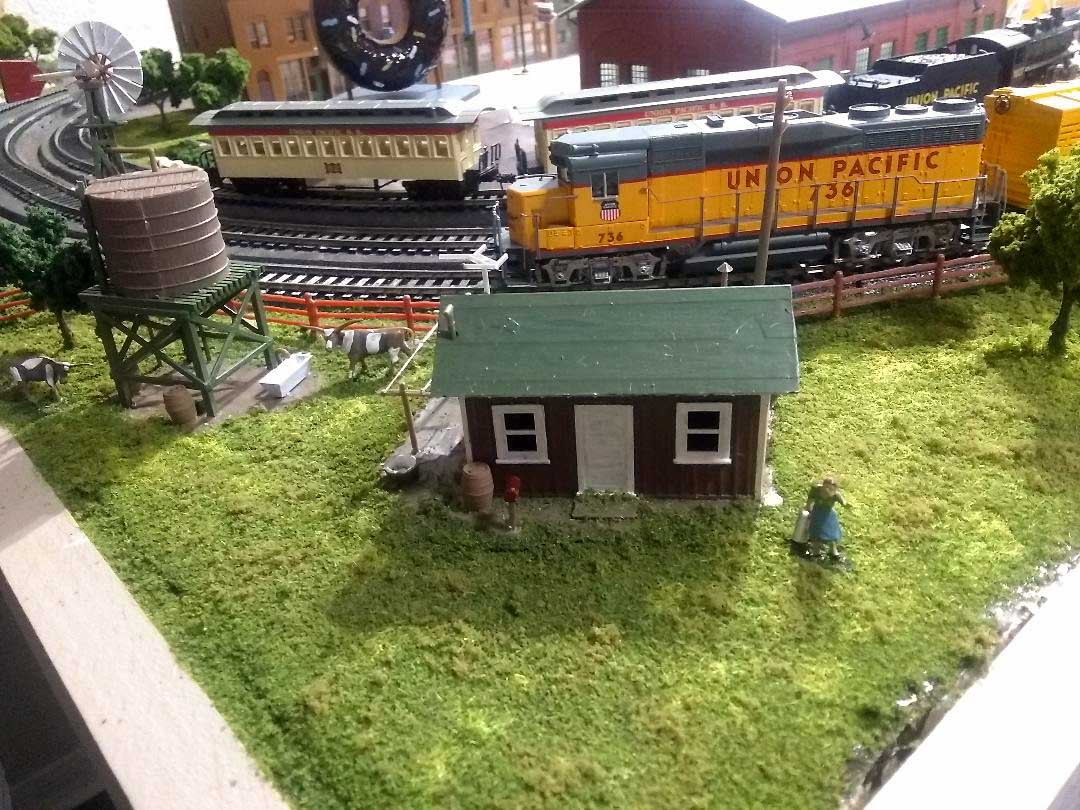
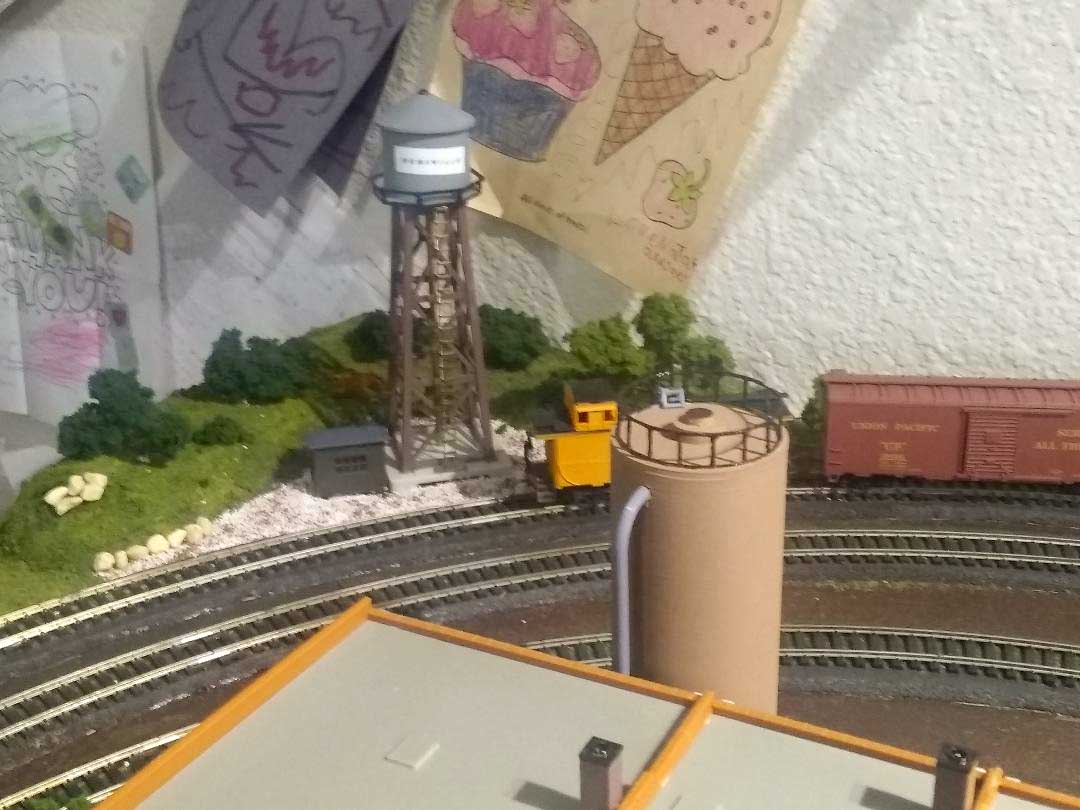
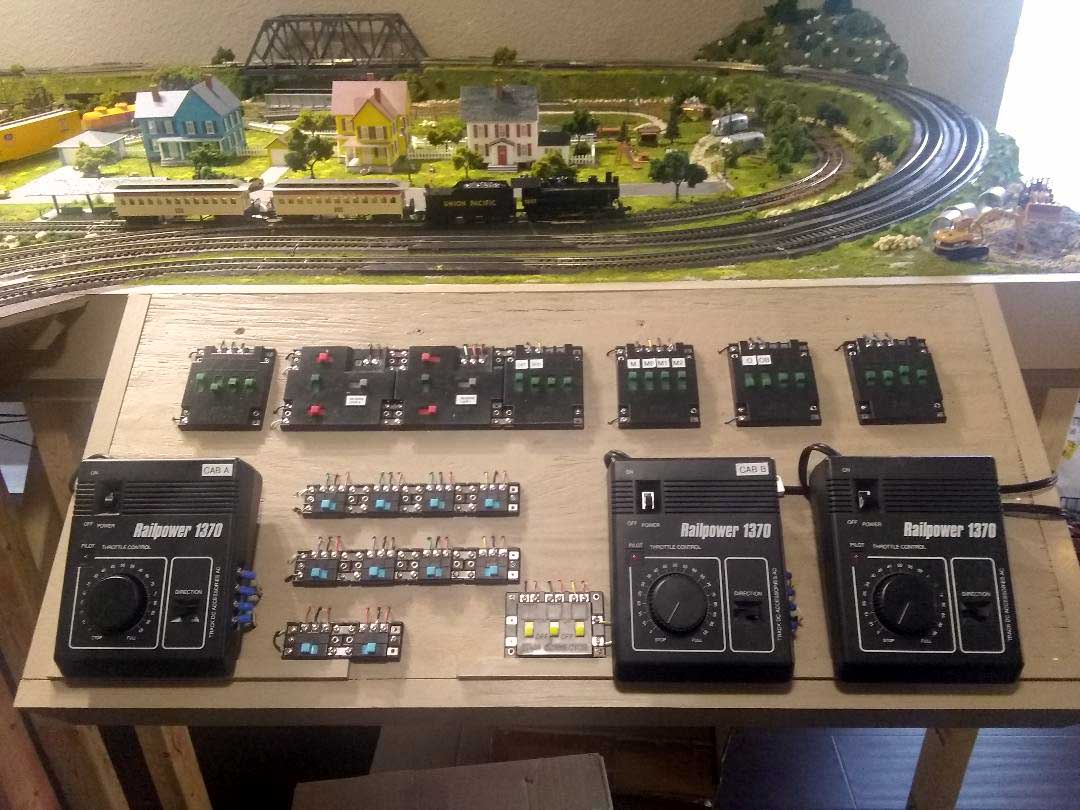
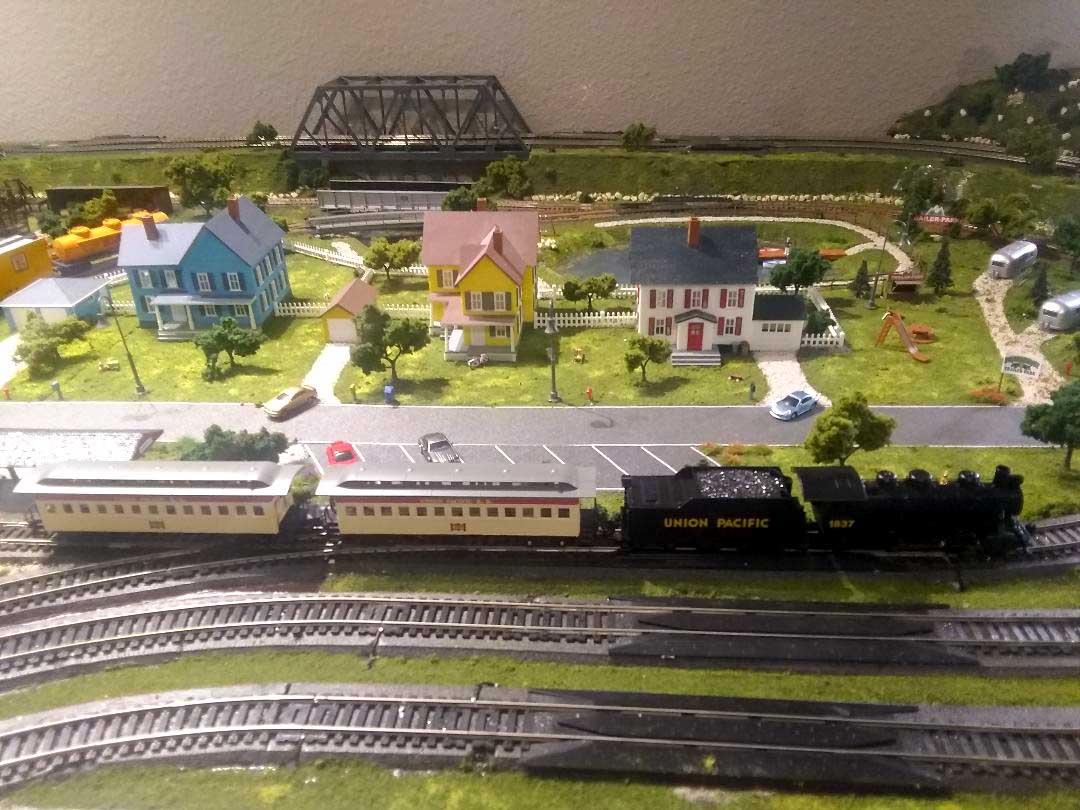
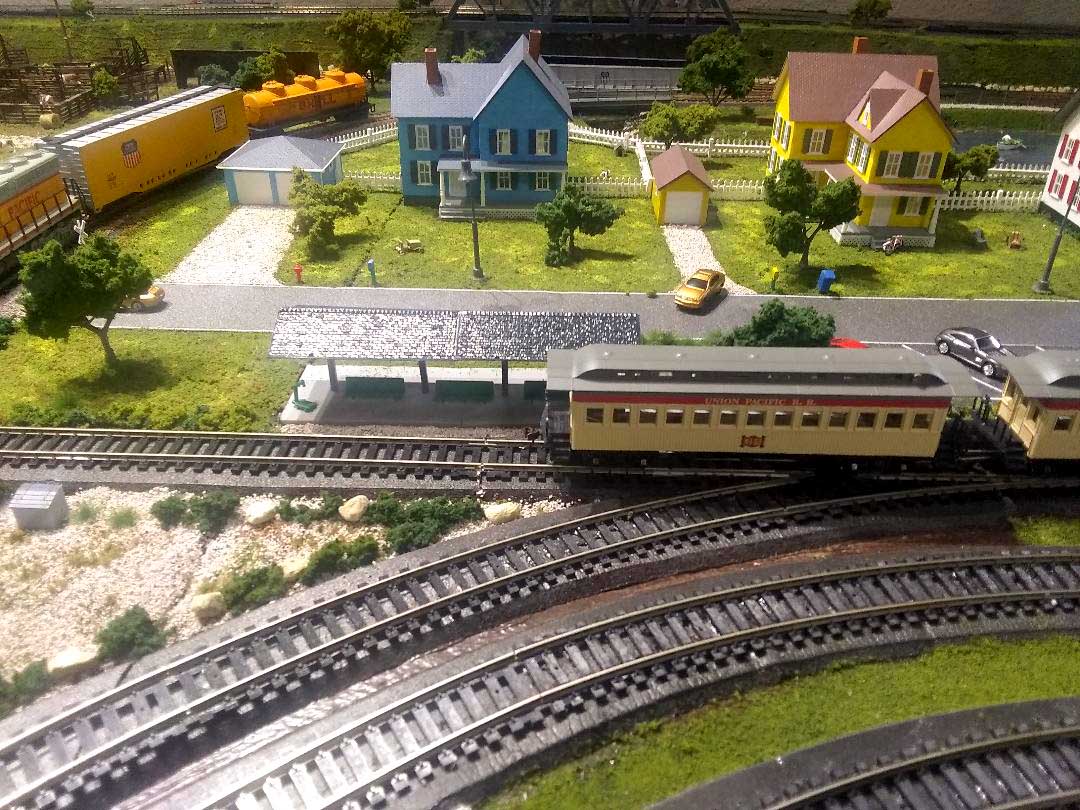
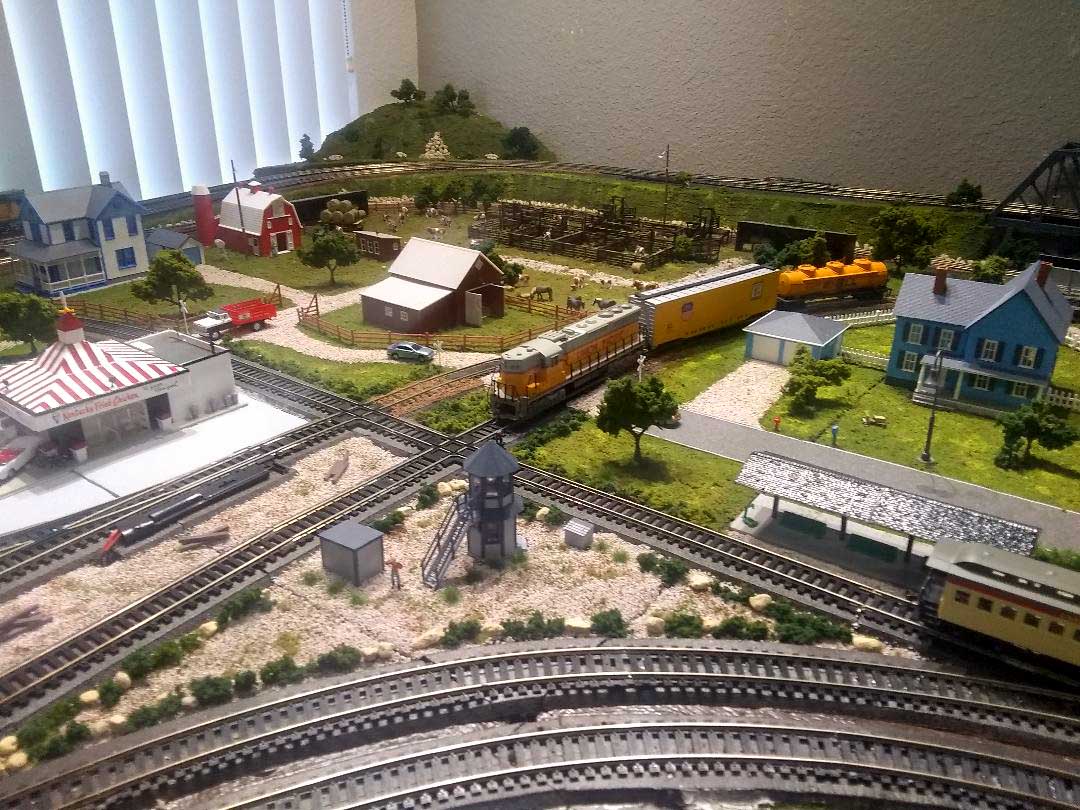
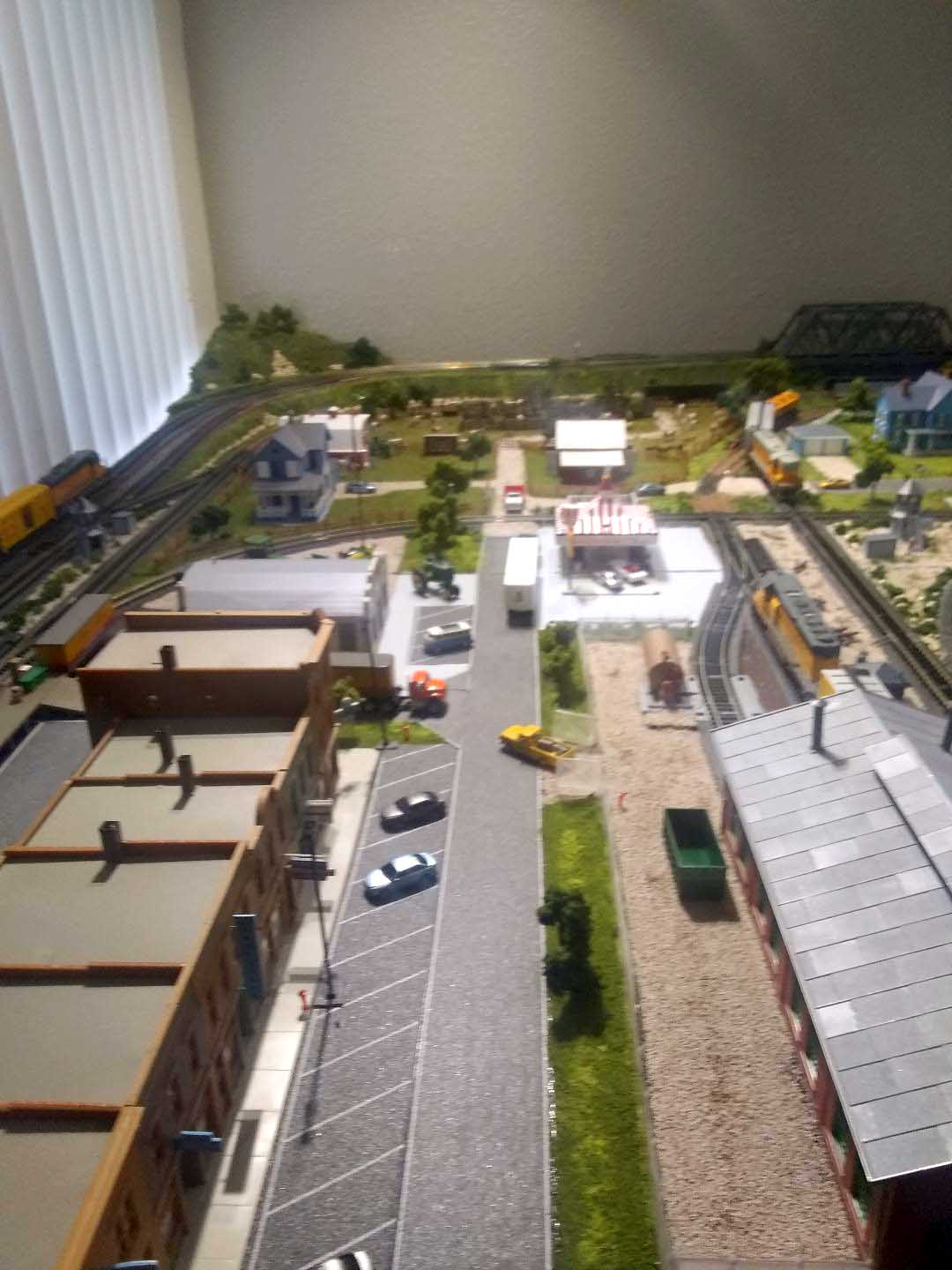
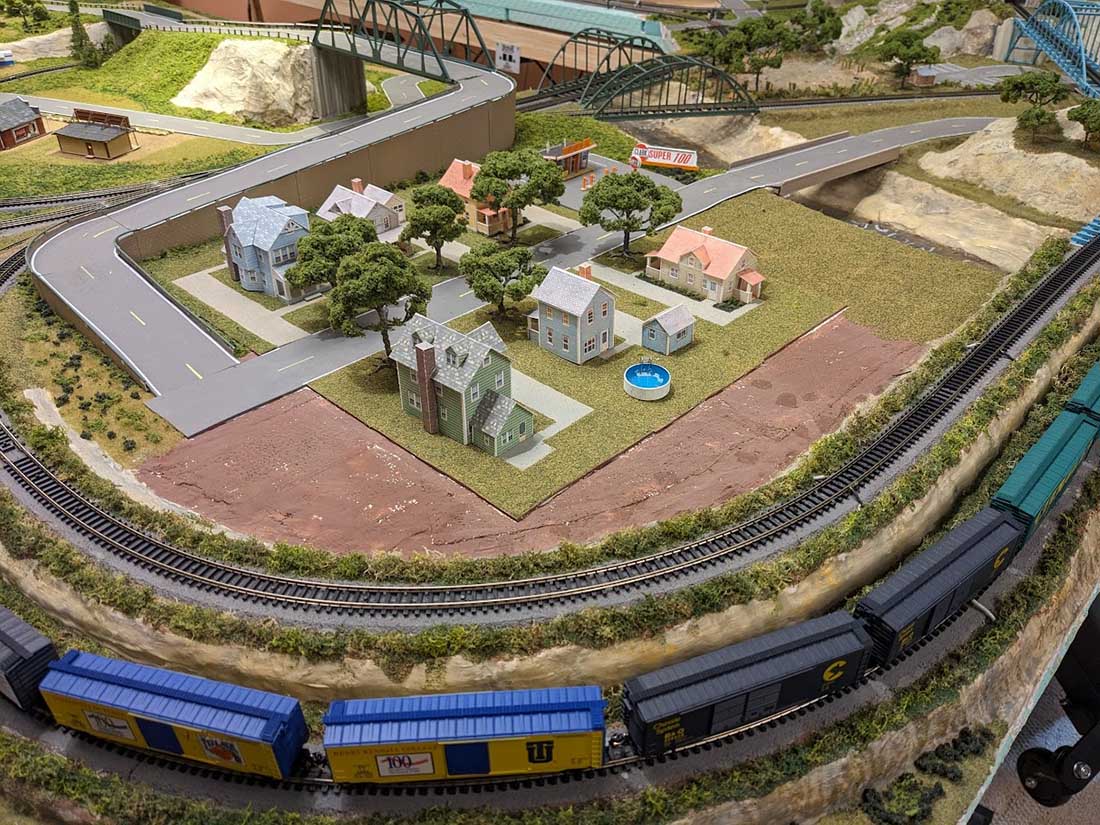
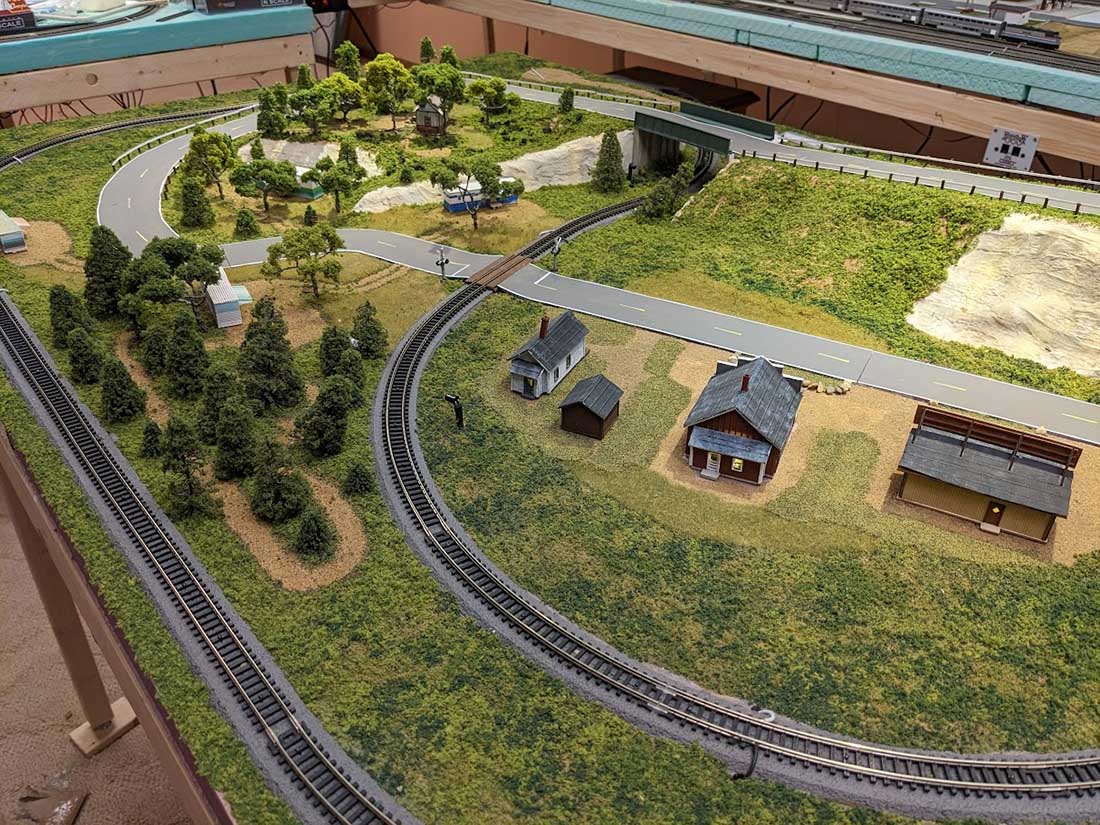
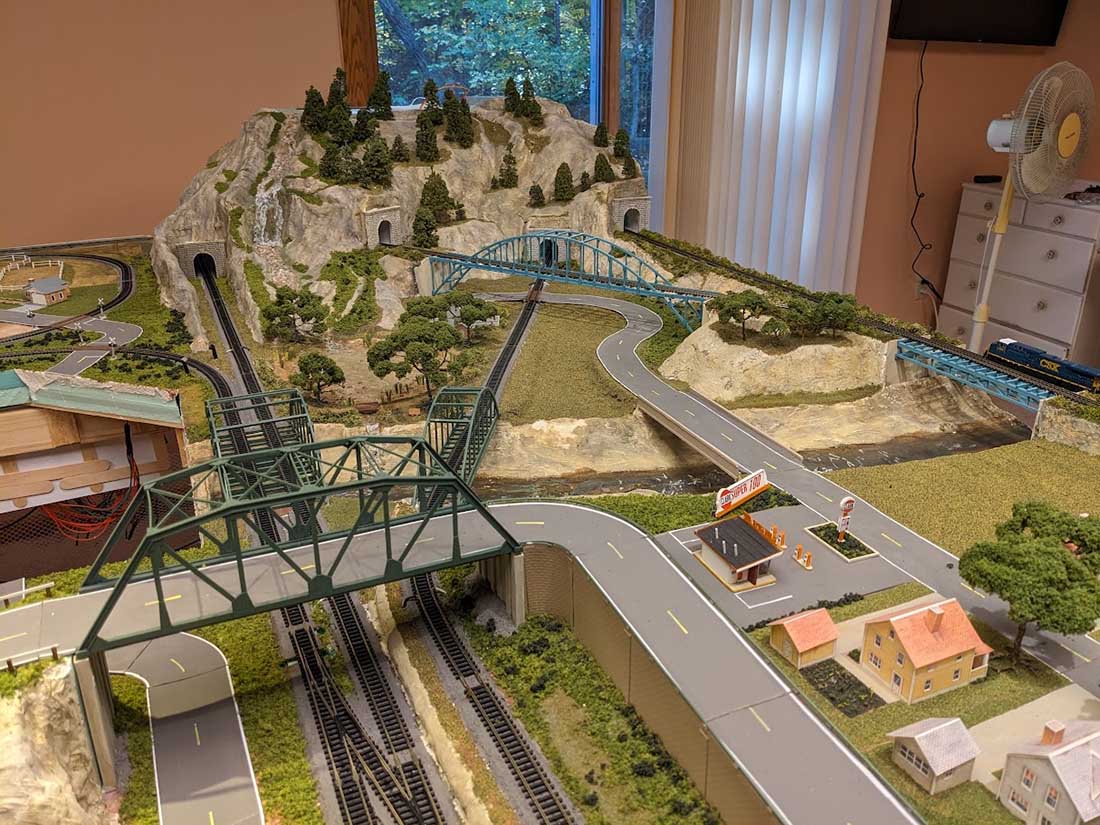
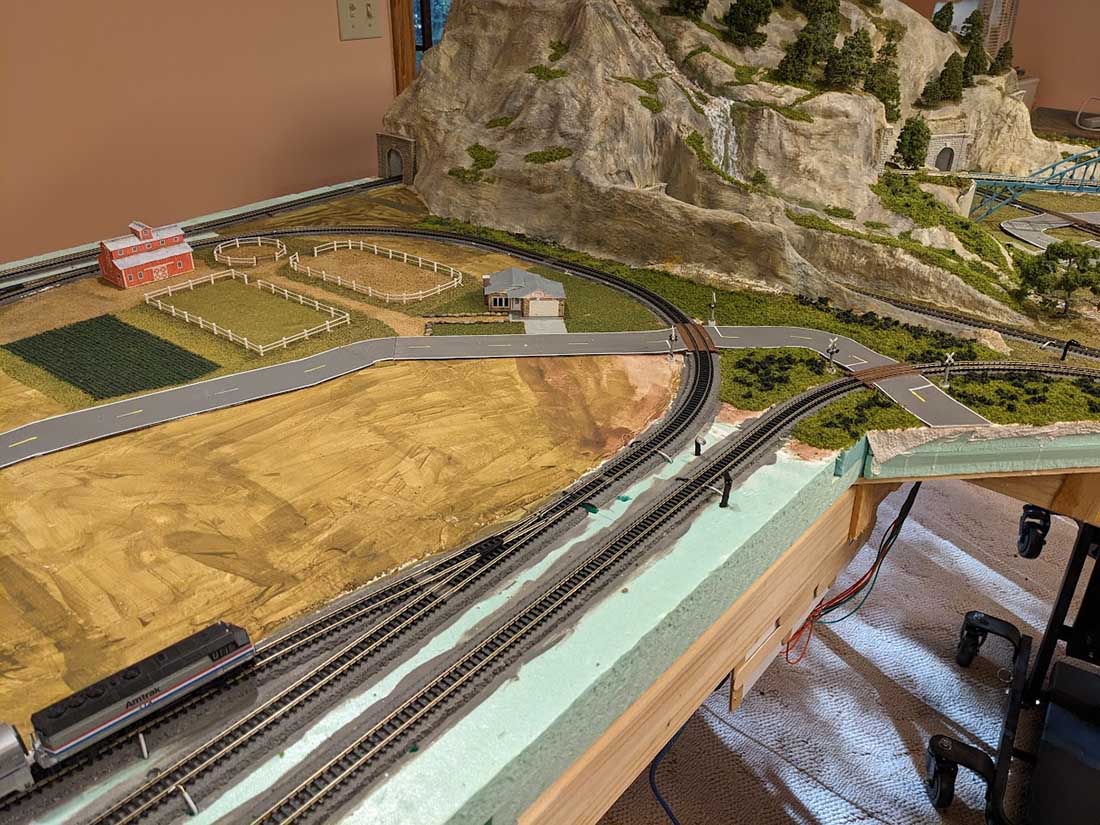
Michael’s been in touch with his U shaped layout HO scale:

“Hi Alistair,

I was seven when my father took me for a ride on the Penn RR as it made its way back to the railyard.

While he swept and cleaned the passenger cars, I got to sit with the engineer who let me blow the horn. Seventy-one years later I still love railroads and the sound of the horn or the whistle.

Though I started with Lionel 027 trains as a kid, I switched to HO when my sons were born. That was fifty years ago and the layout for the boys was, err, let’s just say not very good.

Fifteen years ago, shortly after my first grandson was born, I decided to take up the hobby more seriously. I scraped everything and started over.

With advice and diligence my second basement layout was considerably better; in fact, guests often commented it impressive. It was a horseshoe, 16 feet long with two 4×4 legs coming off the sides.

When I moved from Long Island, New York, to Flanders, New Jersey five years ago, I gave my precious away to a sailor on a US Navy cargo and ammo ship.

While at sea, he had contacted me when I made it known I’d be willing to give it away. We arranged for him and a fellow seaman to come to take it when their ship arrived at the port of Newark. They had to load it on to the ship for storage until it arrived in Virginia where he lived. He sent me a video of the layout being lifted onto the ship and it brought a tear to my eye.

Our new house doesn’t have a basement but, on the second floor there was an HVAC room that abutted a decent size storage area Three years ago I restructured the two areas into one decent sized room.

Then I began creating the “Flanders Valley RR”. I guess you could say I got lazy, because I began by ordering two Woodland Scenics Layout kits, Grand valley and River Pass.

I reconfigured the layouts into my imagining of a unique railroad I would call the Flanders Valley Railroad.

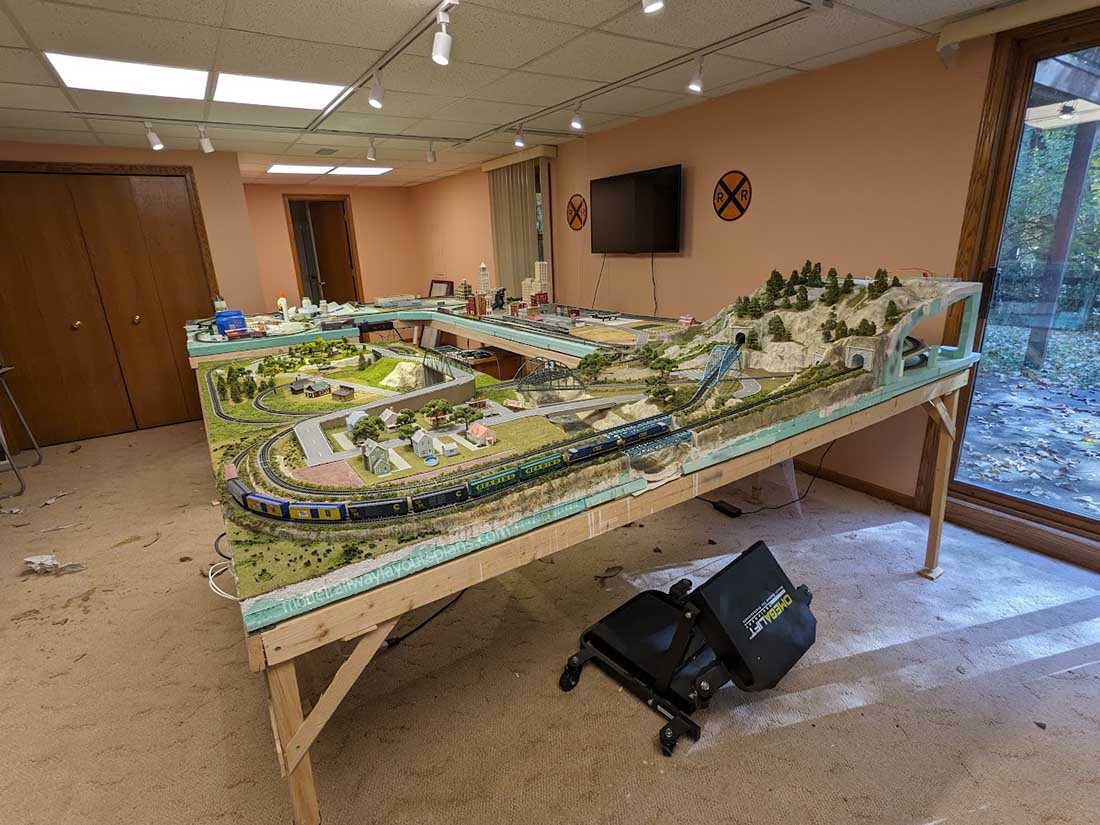
I created an “L” shaped layout: 12×4 with a 4×4 leg on one side. It was okay, but I wanted to be able to run four trains at once and it was happening. So, I added another 4×4 leg on the opposite side.

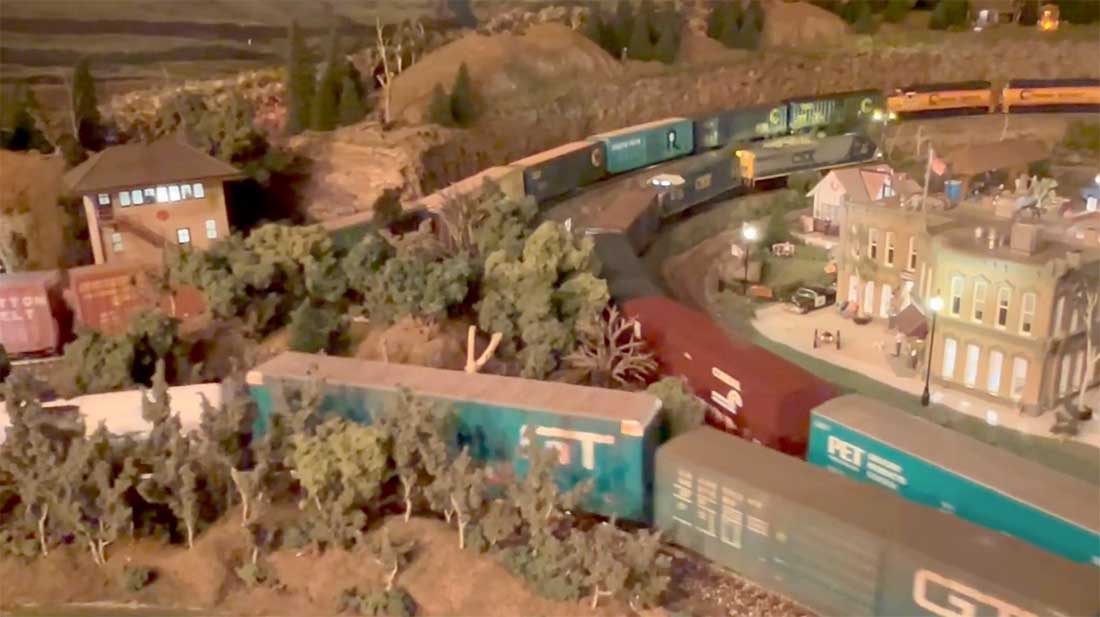
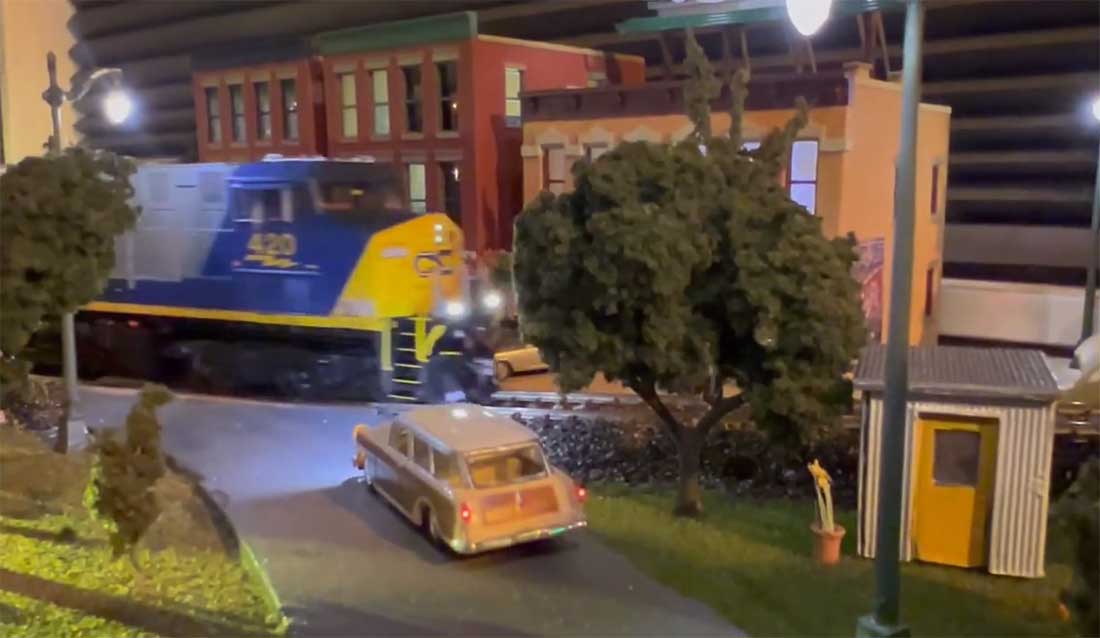
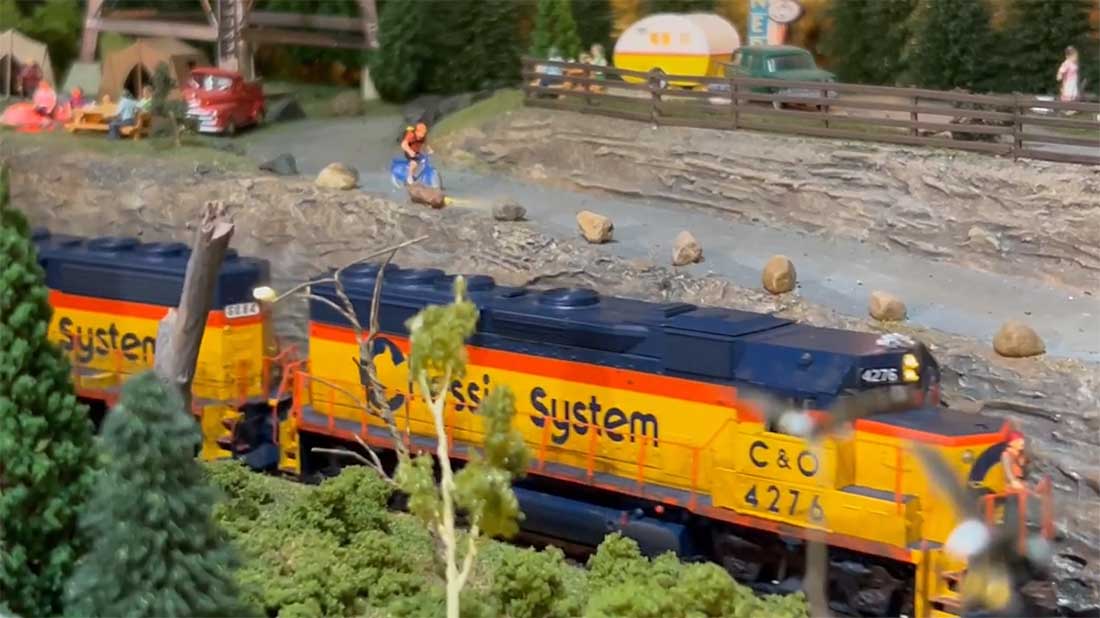
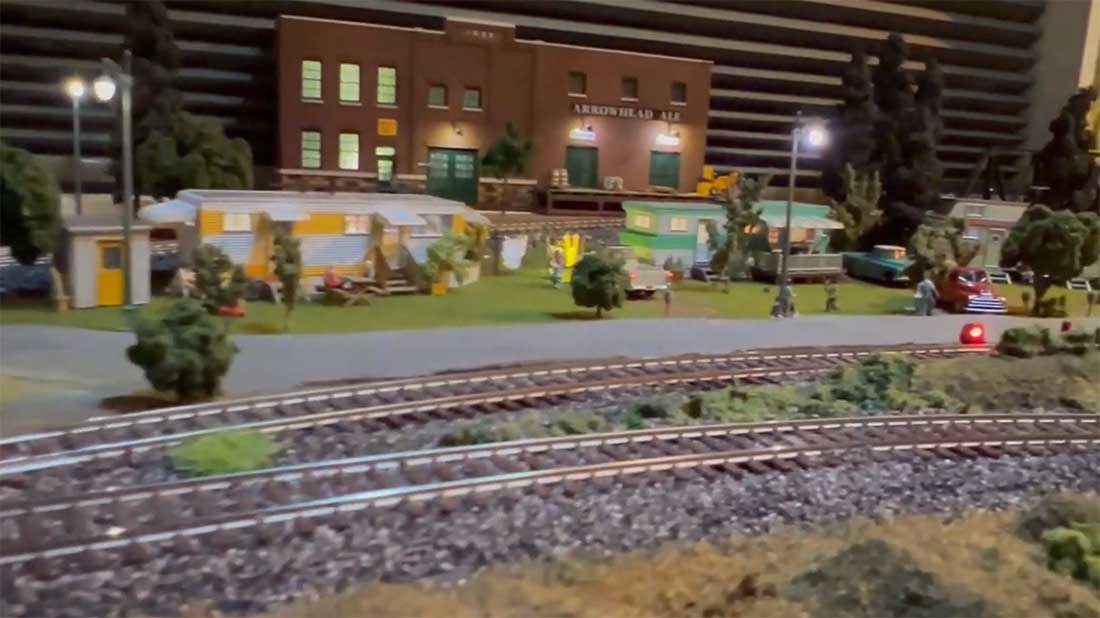
Thanks for the opportunity to tell my story, and hope it helps to appreciate how it’s turned out. I’m including a few photos and video.

Peace,

Michael (aka Doc)”

model train track plan

U shaped layout HO scale

 model railroad baseball

U shaped layout HO scale

model railroad police car

 U shaped layout HO scale


HO scale trackside river scene 2

U shaped layout HO scale

model train waterfront scene

U shaped layout HO scale

model train bridge

U shaped layout HO scale

model railroad roadside garage

U shaped layout HO scale

model railroad river rapids

U shaped layout HO scale

A big thanks to Michael for sharing his U shaped layout HO scale.

Lastly, thanks for your suggestions so far, for a new name for ‘boring Carl’.

My last few mails had some brand new printable buildings in them.

There were:

smokey joe's lock up printable building

Smokey Joe’s lock up

carl's brick store

Carl’s brick store

fat bob's store house printable building

Fat Bob’s store house

big tom's timber store printable building

Big Tom’s timber store

But a few were concerned that Carl’s name was rather dull compared to the others. So I asked for suggestions.

And then I had an idea: a competition.

Who ever comes up with the best name for Carl, wins all four buildings.

All four of ’em, totally free.

So if you want to read Carl’s description, and a better name pops into your head, just leave a comment below. You could win all four!

That’s all for today folks.

Please do keep ’em coming.

And if today is the big day where you stop dreaming, start planning and get going, the Beginner’s Guide is here.

Best

Al

PS More HO scale train layouts here if that’s your thing.


model railroad wooden timber warehouse printable building

Scenic backdrops for model trains

Glyn has been in touch with his take on scenic backdrops for model trains:

“Hi Al,

Thanks again for all you do for us through your blog.

Recently you have had a few posts about scenic backdrops and blending them into the foreground. It thought I’d add a few images which might be helpful.

Having made plenty of mistakes in the past, this time round I made sure I constructed my backdrop first and then painted it to match what I proposed to create in the foreground.

This obviously requires having a definitive track plan in place with some idea as to what scenic vignettes you want to model in the foreground. With that in place I started building my scenic elements from front to back using a combination of Construction foam, Woodland scenics shaper sheet (a little goes a long way), plaster and paper towels followed by application of rock molds using re-usable molds from a variety of manufacturers.

I create the foreground scenery (mountains, valleys and pastures) to go all the way to the back of the layout so that it almost abutts the backdrop. It’s important not to leave large gaps although smaller gaps can be plugged with vegetation.

Once the plaster is dry, I paint it using simple off-the-shelf artists acrylic paints available at hobby stores, using Woodland Scenics “leopard spotting” technique with burnt umber, black and yellow ochre.

The colors you use may vary depending on the final color combination you want for your rocks.

Once dry, I dry brush rocks with white to create and enhance highlights as well as giving depth to the rocks. This is a really important step as it gives tremendous 3-dimensional detail to the final outcome.

I try to match mountain peaks or rock features to the backdrop so that I can blend the transition with paint to make it appear as seamless as possible. Occasionally, as with the tallest mountain in this series, I will even pack a little plaster into the junction with the backdrop to make it appear completely contiguous.

Once this is done I step back and add paint or vegetation in the form of Woodland scenics clump foliage or small rocks as needed. The results can be quite realistic with a little time and patience.

You don’t have to be an artists to achieve this – just some imagination and studying real scenery.

The large bridge scene I created required convincing distance for the mountains, river and waterfalls. I used some photographs I’d taken to paint the backdrop and added a distant waterfall as a source for the river that would terminate in the waterfalls beneath my bridge construct.

Start by painting the distant mountains light progressing to darker with more detail as you approach the foreground. Using rock molds beneath the higher bridges created more 3-dimensionality and the depth I needed to create the dramatic waterfall cascading beneath the lower bridge span.

Using these simple principles you can achieve convincing realism at little expense without resorting to buying expensive scenic elements. Re-usable rock molds are invaluable and making your own trees using the many techniques described so well in Al’s blog can save hundreds of dollars.

In the end it’s all about having fun and being creative!

Glyn in Santa Fe”

scenic backdrops for model trains

scenic backdrops for model trains


scenic backdrops for model trains

scenic backdrops for model trains

A huge big thanks to Glyn and his tips on making scenic backdrops for model trains.

I have to say, I absolutely love Glyn’s stuff. It’s easy to see why when you look at his previous posts:

Marklin layout.

There’s also quite a lot of useful posts on backdrops now – here’s a few of them:

Model train backdrops.

Painting model railroad back drops.

HO back drops.

Model railroad photography backdrops.

Paint model train back drop.

Now on to Brian.

“Hi Alastair, attached is a video tour of my layout taken a couple of months ago.

I have done a lot on it as you would have seen from photos that I have sent in before.

I was unable to get it from my cellphones video camera up until now.

It is a 360 view of my train room.

I Hope that you can use it.

Brian”


I liked Brian’s video purely because like most people I’m a little nosey.

I like seeing the rooms people work in and how their set up is – I think that’s why all the best posts, as well having good close up pics of the layouts, have a pic or two of the layout in situ too.

That’s all for this time folks.

Thanks to Glyn for his scenic backdrops for model trains, and to Brian for sharing his layout room.

Please do keep ’em coming because it’s still really quiet this end.

And if creating your own model railroad is an itch you just have to scratch, the the Beginner’s Guide is here.

Best

Al

PS Latest ebay cheat sheet is here.

PPS More HO scale train layouts here if that’s your thing.


printable buildings

And there’s the Silly Discount bundle too.

How to make model trees for a train layout

The talented Dan has been in touch again, this time with how to make model trees for a train layout:

“Trees are an important part of many layouts. My Santa Fe layout required mostly pine trees where needed.

Of the 6 other layouts I have done, all required trees. Lots and lots of trees.

Here I will show how to make masses of trees in a timely manor. The concept is to have trees that look convincing and not take a lot of time to do. Sedum is a natural in accomplishing this task.

Sedum, sometimes called Everlasting (Autumn Joy is often called Stone Crop because it grows among stones), is a perennial plant and very hearty. The florets make the crown of the tree.

If you have followed any of my posts, you will find Sedum trees in all of them except the Santa Fe layout.

The process is very easy and rather quick. STAY UNTIL NEAR THE END OF THE PROCESS TO SEE HOW TALL TREES NEED TO BE. Your mind knows trees. A suggestion of trees and how tall they should be is perception.

In photo 11 note that you can still see the train. On this layout there is a stretch of track that is near the front of the layout. I put in what those of us call “Green Tunnels” because of the lush vegetation along the tracks. This kind of tree allows the viewer to see through the tunnel and see the train.

Sedum has a whitish-pink look during the growing season.

This is the fall look.

How to make model trees for a train layout

One reason people like Sedum is once the flowers die they over winter like this and the stems stand up to our winters very well. During the snows the tops have a white look among the red. Very attractive…..lets begin making the trees.

How to make model trees for a train layout

Spray glue on the flowers.

How to make model trees for a train layout

Sprinkle fine ground foam over the glue. Choose what ever color or blend you want.

How to make model trees for a train layout

We use a piece of block foam to hold the trees while getting “dressed” up.


How to make model trees for a train layout

There are some small pieces that can be removed as marked.

You are done! Now plant them as needed. Examples:

model railroad scenery

This owner wanted fall colors for his trees. Before you say “the red tree is too red…many of the trees here in Indiana and all across the Midwest will have trees just this red. They are just turning now October 9.

model train scenery

Here I have put several of the Sedum trees together to get a more group look. Look very carefully at the red tree and see that we used florist’s tape to hold them together. This is the only layout I used the tape.

HO scale valley trees

Hiding a helix with a tree filled hill.

ho scale trestle bridge trees

The trees are “open” enough to see the train and yet are convincing trees.

How to make model trees for a train layout

A park.

How to make model trees for a train layout

Around houses.

How to make model trees for a train layout

How tall should the trees be? That is the question.

Trees around my house. These trees are all 85 feet or taller. I know because I had to have several cut down and and they charge by the foot.

Here is an HO scale ruler. It is marked off as follows: 4″=30′, 5 1/2″=40′,7″=50′, 8 1/4″=60′,9 3/4″=70′, 11 1/4″=80′ and 11 3/4″=85″ the length of a standard US passenger car.

The trees do not need to be too tall to be effective. If I had a model house and “planted” my prototype 80+ foot trees they would overwhelm the house I wanted you to see.

As I said earlier, your brain takes care of the idea of a hill side of trees or surrounding a house and do not need to be full scale size to be a good look.

Santa Fe Dan”

A big thanks to Hall of fame Dan for sharing his take on how to make model trees for a train layout.

There’s quite a few fantastic scenery posts on the blog now. Here’s a few of them:

HO model train trees.

Make model train trees.

Model train large trees.

Making trees model railroad.

Making model trees.

Making model railroad trees.

That’s all for today folks.

Please do keep ’em coming.

And if today is the day you blow the dust of your old locos and find some track too, the Beginner’s Guide is here.

Best

Al

PS Latest ebay cheat sheet is here.

PPS More HO scale train layouts here if that’s your thing.