How to connect led strip lights to power supply

Bob’s been in touch with a useful ‘how to’: How to connect led strip lights to power supply.

“Hi Al,

I love your site and I can’t wait to read the latest installment each morning.

I have learned a lot from your blog so I thought that I would contribute a little with this power supply and hookup units “manifolds” as I like to call them , that I made.

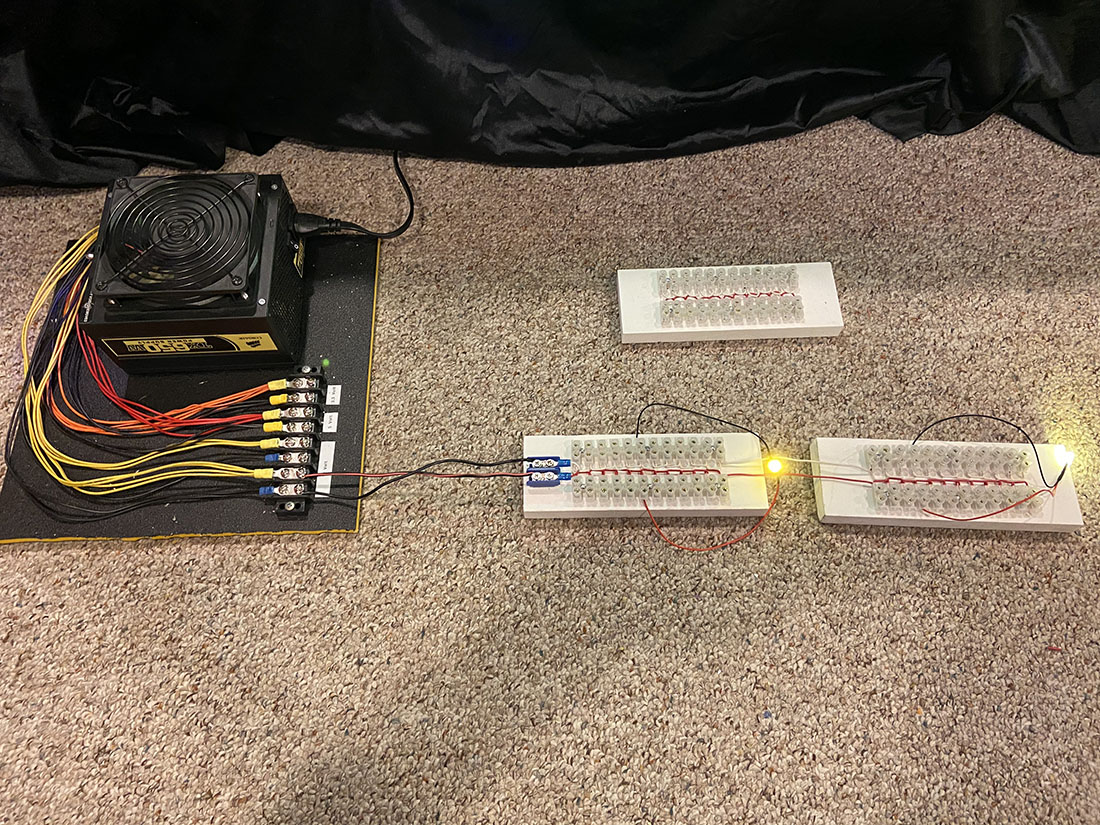
Under my layout are 8 of these “manifolds” shown in the first picture.

They are daisy chained together to form an expanded hook up for my lighting.

They are hooked up to a computer power supply that I converted to light my layout.

The supply has 12volt,5volt and 3.3volt supplies perfect for supplying whatever voltage is needed to light the entire layout!

All of my lighting is Led from the buildings to the street lights and the vehicle lights.

Hope you enjoy these pictures and hints ,maybe some of your readers will learn something as I have done from this site!!

Thank you for all of your hard work to keep this site going strong!!

Bob ( From Pennsylvania)”
power supply model railroad

power supply model rairoad

How to connect led strip lights to power supply

LED lights

LED lighting

LED lights model railroad

LED lights model railroad


Now on to Martin.

He makes no bones at all about being a modeler that likes to ‘make things work’ rather than getting lost in the scenery.

I know there are many of you just like Martin too.

And that’s fine – the wonderful thing about this hobby is you can just enjoy the parts you like.

Talking of which, wait to you see how Martin gets his stock off the layout so he can clean the track. It’s all in the vid!

“Al,

First of all, thank you for hosting this site.

I have thoroughly enjoyed seeing what everyone else is doing, but have been reluctant to show mine until now.

Like many others, I had a train set in my school days, which expanded haphazardly in the loft. This had to go when the slot car racing bug bit me in the 60’s.

Now I am retired, and after a few years of negotiation with domestic management, gained agreement to take over our spare bedroom / study and evict the bed.

I have been working on & off for a couple of years on the layout, progress has been slow because I have a number of other interests but the lockdown has given me the opportunity to catch up a bit.

I have made plenty of mistakes along the way, possibly the biggest one being leaving it far too long before getting your beginners guide!

So far, I have concentrated on getting a working layout so no scenery evident yet other than a section of ballasting but I thought you may be interested in the features I have managed to incorporate so far.

I should add that I was a bit ambitious in that my 8ft by 7ft layout incorporates 30 points and 2 double slips – maybe that is why I have spent so long getting things to run smoothly.

I am one of those modellers who gets most pleasure from making things work rather than the scenic aspect of the hobby.

Hopefully, when developed further, the layout will be a representation of the East Kent area, where I grew up going to school by train and later to work.

Although intended to be set in the late 1950 – early 1960 period, I also intend to include a Colonel Stephens line, assuming it stayed open into this era.

The baseboard is constructed in sections, the largest being 4ft X 2ft, made of 9mm ply on a 3X1 frame.

The sections are located with brass dowels and held together by 8mm coach bolts, sitting on, but not fixed to a 2X2 framework located on notches in the base board frames.

This allows any section to be removed without having to dismantle the whole layout.

Since this photo, I have added 2 extra legs and replaced 2 legs with old desk pedestals.

I started by using SCARM to develop the track plan and printed it full size which proved extremely accurate and made track laying relatively easy, although I did deviate from the plan in a number of places as I went on.

track plan

I have soldered dropper wires to every piece of track, to avoid relying on rail joiners for an electrical contact, and run these to the inner edge of the baseboard where the bus circuits are contained in trunking.

The layout gives point to point operation on 2 branch lines, and a double oval for continuous running as well as a small goods yard for operational interest.

The innermost loop is electrically isolated from the rest of the layout and connected as the DCC programming track, as well as being switchable to an analogue controller to allow me to test run a DC loco.3

I have used Peco code 100 track and points throughout, all operated by servos and controlled either from a mimic panel or by DCC from the main controller.

This is accomplished using equipment from Megapoints Controllers, which has so far proved easy to use and very reliable as well as being more cost effective than using solenoid point motors and DCC modules.

As a bonus, the customer service from Megapoints is second to none.

Although I thought I had allowed enough storage tracks for all my stock, I have already found that trying to clean the track with a layout full of stock is a nightmare, so I have made up a storage solution which I think may be of interest.

This allows me to clear the track and put everything out of harm’s way without handling the stock, and double as a fiddle yard.

I have made a short video to illustrate this, which I have sent as an attachment – I hope this is OK.

Regards

Martin.”

A big thanks to Bob for sharing his ‘How to connect led strip lights to power supply’ step by step. And thanks to Martin too.

That’s all for this time, folks.

Please do keep ’em coming.

And don’t forget the Beginner’s Guide is here if you want to join in with the fun.

Best

Al

PS Latest ebay cheat sheet is here


How to connect led strip lights to power supply

Bob’s been in touch with a useful ‘how to’: How to connect led strip lights to power supply.

“Hi Al,

I love your site and I can’t wait to read the latest installment each morning.

I have learned a lot from your blog so I thought that I would contribute a little with this power supply and hookup units “manifolds” as I like to call them , that I made.

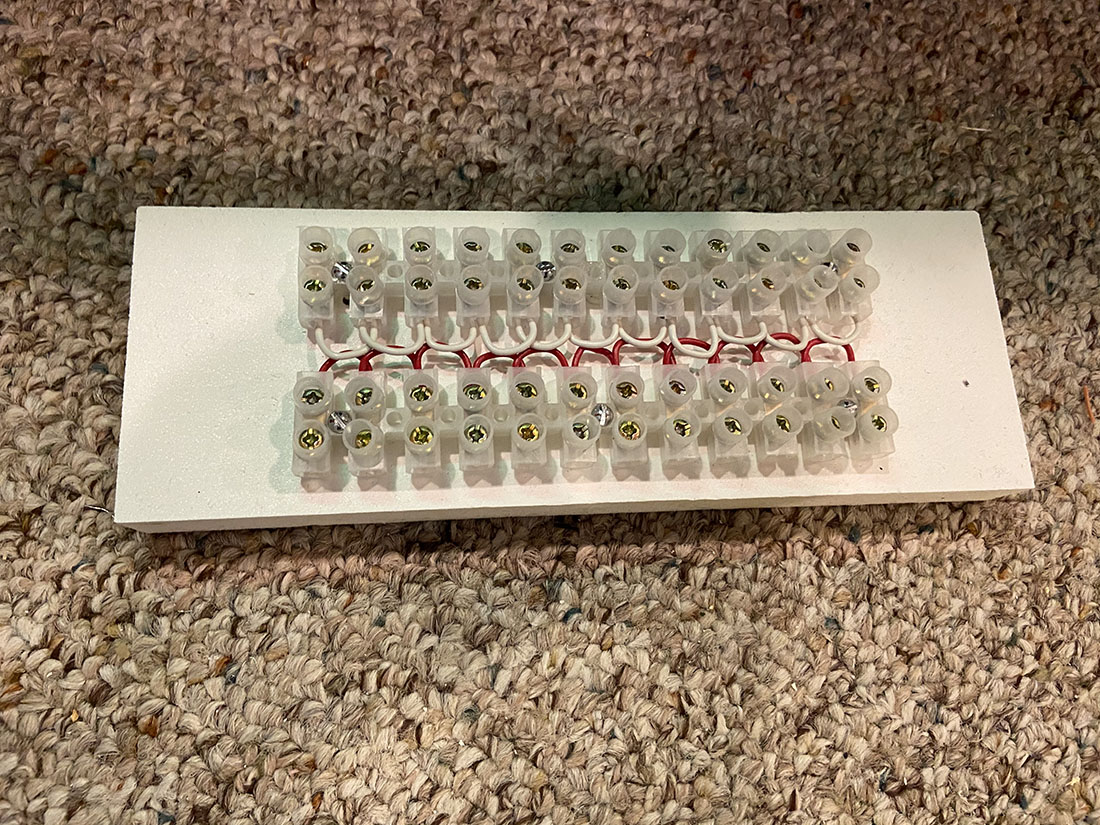
Under my layout are 8 of these “manifolds” shown in the first picture.

They are daisy chained together to form an expanded hook up for my lighting.

They are hooked up to a computer power supply that I converted to light my layout.

The supply has 12volt,5volt and 3.3volt supplies perfect for supplying whatever voltage is needed to light the entire layout!

All of my lighting is Led from the buildings to the street lights and the vehicle lights.

Hope you enjoy these pictures and hints ,maybe some of your readers will learn something as I have done from this site!!

Thank you for all of your hard work to keep this site going strong!!

Bob ( From Pennsylvania)”
power supply model railroad

power supply model rairoad

How to connect led strip lights to power supply

LED lights How to connect led strip lights to power supply

LED strip lights

LED strip lights model railroad

LED strip lights model railroad


Now on to Martin.

He makes no bones at all about being a modeler that likes to ‘make things work’ rather than getting lost in the scenery.

I know there are many of you just like Martin too.

And that’s fine – the wonderful thing about this hobby is you can just enjoy the parts you like.

Talking of which, wait to you see how Martin gets his stock off the layout so he can clean the track. It’s all in the vid!

“Al,

First of all, thank you for hosting this site.

I have thoroughly enjoyed seeing what everyone else is doing, but have been reluctant to show mine until now.

Like many others, I had a train set in my school days, which expanded haphazardly in the loft. This had to go when the slot car racing bug bit me in the 60’s.

Now I am retired, and after a few years of negotiation with domestic management, gained agreement to take over our spare bedroom / study and evict the bed.

I have been working on & off for a couple of years on the layout, progress has been slow because I have a number of other interests but the lockdown has given me the opportunity to catch up a bit.

I have made plenty of mistakes along the way, possibly the biggest one being leaving it far too long before getting your beginners guide!

So far, I have concentrated on getting a working layout so no scenery evident yet other than a section of ballasting but I thought you may be interested in the features I have managed to incorporate so far.

I should add that I was a bit ambitious in that my 8ft by 7ft layout incorporates 30 points and 2 double slips – maybe that is why I have spent so long getting things to run smoothly.

I am one of those modellers who gets most pleasure from making things work rather than the scenic aspect of the hobby.

Hopefully, when developed further, the layout will be a representation of the East Kent area, where I grew up going to school by train and later to work.

Although intended to be set in the late 1950 – early 1960 period, I also intend to include a Colonel Stephens line, assuming it stayed open into this era.

The baseboard is constructed in sections, the largest being 4ft X 2ft, made of 9mm ply on a 3X1 frame.

The sections are located with brass dowels and held together by 8mm coach bolts, sitting on, but not fixed to a 2X2 framework located on notches in the base board frames.

This allows any section to be removed without having to dismantle the whole layout.
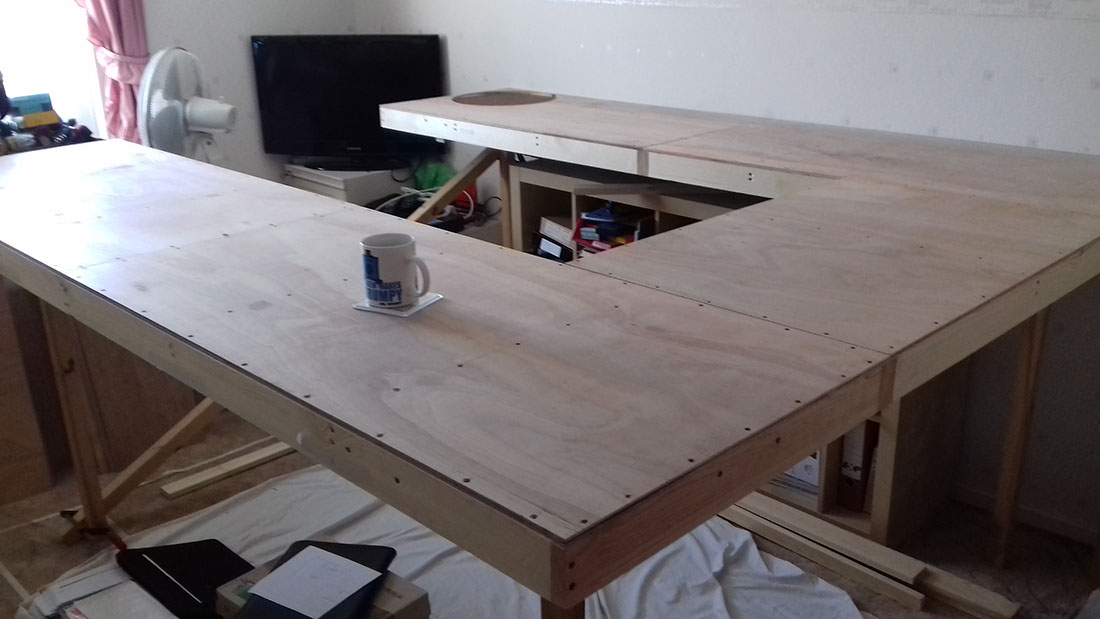
Since this photo, I have added 2 extra legs and replaced 2 legs with old desk pedestals.

I started by using SCARM to develop the track plan and printed it full size which proved extremely accurate and made track laying relatively easy, although I did deviate from the plan in a number of places as I went on.
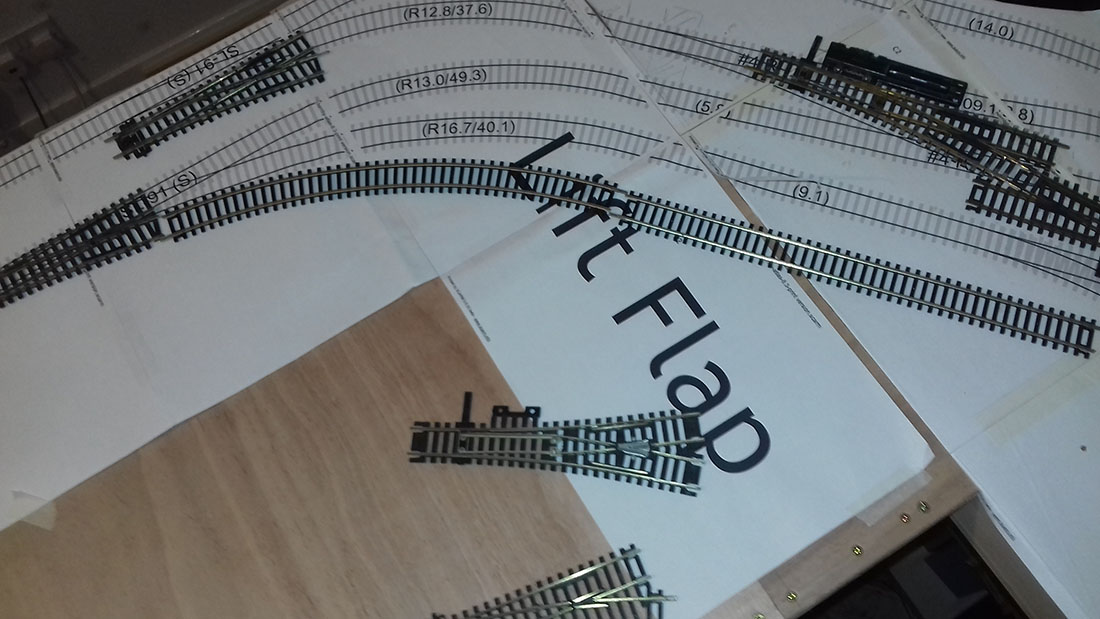
track plan

I have soldered dropper wires to every piece of track, to avoid relying on rail joiners for an electrical contact, and run these to the inner edge of the baseboard where the bus circuits are contained in trunking.

The layout gives point to point operation on 2 branch lines, and a double oval for continuous running as well as a small goods yard for operational interest.

The innermost loop is electrically isolated from the rest of the layout and connected as the DCC programming track, as well as being switchable to an analogue controller to allow me to test run a DC loco.3

I have used Peco code 100 track and points throughout, all operated by servos and controlled either from a mimic panel or by DCC from the main controller.

This is accomplished using equipment from Megapoints Controllers, which has so far proved easy to use and very reliable as well as being more cost effective than using solenoid point motors and DCC modules.

As a bonus, the customer service from Megapoints is second to none.

Although I thought I had allowed enough storage tracks for all my stock, I have already found that trying to clean the track with a layout full of stock is a nightmare, so I have made up a storage solution which I think may be of interest.

This allows me to clear the track and put everything out of harm’s way without handling the stock, and double as a fiddle yard.

I have made a short video to illustrate this, which I have sent as an attachment – I hope this is OK.

Regards

Martin.”

A big thanks to Bob for sharing his ‘How to connect led strip lights to power supply’ step by step. And thanks to Martin too.

That’s all for this time, folks.

Please do keep ’em coming.

And don’t forget the Beginner’s Guide is here if you want to join in with the fun.

Best

Al

PS Latest ebay cheat sheet is here



Railpower 1300 problems

Gary’s been back in touch with his Railpower 1300 problems.

On Friday, he posted about his electrical problem (which is here).

After a wonderful response from you lovely lot, Gary has sorted it – for now:

“Hi… Good Morning and Good afternoon to ALL

First, I want to thank everyone, Alastair and all the railroad modelers that responded to my call for help with the electrical problem I have been having with my layout.

The problem has been identified and – for now – the problem is solved and everything is functioning properly.

I will explain further down by what I mean “for now”

Right now a heartfelt THANK YOU to you all. I really can’t express fully my appreciation.

Now for the specifics:

The problem was the overheating on my original MRC1300 power pack which was providing power for all the AC accessories; Atlas switches and all lighting.

As of this morning, I had received 51 comments on the blog that Alastair had posted.

Three were on Tony’s layout, two mentioned possible shorts and the remaining 46 (90%) all suspected an overload of the power pack.

Friday morning I made a telephone call to technical support at MRC (Model Rectifier Corp), the manufacturers of the Railpower transformers.

I sent them the blog I sent to Alaistair and the videos and they were 99% certain that this is Railpower 1300 problems – an overload.

Also, which I had never noticed, was that the Railpower 1300 was very warm to the touch, not hot but very warm. MRC actually confirmed all of the causes that you all mentioned and also confirmed all the solutions that you also mentioned.

They first want me to disconnect all the wires from both the 1370 and 1300, plug them in, turn them on and see if they heat up. They did not, they stayed cool.

The next step to test was to split the AC power supplies between the 1370 and 1300 power packs.

Since the problem occurred with the 1300, they wanted me to just put AC1 bus on the 1300 and the remaining AC connections leave on the 1370. They told me that the amperage power on the 1300 was 3/4 of an amp and on the 1370, it was 1 and 1/4 amps.

Also that the voltage is the power and the amps are how long it will last before the Circuit Protector power packs kicks in and shuts down. The layout functioned with trains running and all lights on (buildings and signals) and switches working for 3 hours (HOORAY!!!!).

This morning (Saturday), I also added AC2 bus to the 1300 and the layout functioned with no problems for over one hour. Problem solved but with a BUT. I said earlier that the problem was solved FOR
NOW because I felt each power pack and they all were slightly warm, not very warm, not hot but slightly warm.

I don’t know if that is normal since I had never checked that before until now. I tried using my multimeter but I got crazy numbers. It is a Commercial Electric model #mmm-8301S Multimeter.

The instruction book really didn’t mention how to measure amperage. I am going to read through all your comments again because some of you mentioned that. I am also going on the internet to look up how to use this multimeter to measure amperage output or draw and also call MRC on Monday to ask if the power pack being a little warm is normal.

For now, my major worry (going under the layout looking for a short) did not come to pass; and now I know what to watch out for and what to be aware of if I add more accessories. I am going to get one more power pack AND I just have to become more electrically literate and knowledgeable.

Again, many thanks to you all and especially Alastair for posting my blog and having a site that can bring all of you and all your knowledge together to help one another.

God Bless you all.

Gary M from Long Island”

railpower 1300 problems

A big thanks to Gary for sharing his Railpower 1300 problems – and a bigger thanks to everyone in the comments that has helped.

Now on to Jeff.

Last week he sent me this:

“Hello,

Review your sight regularly, it’s great.

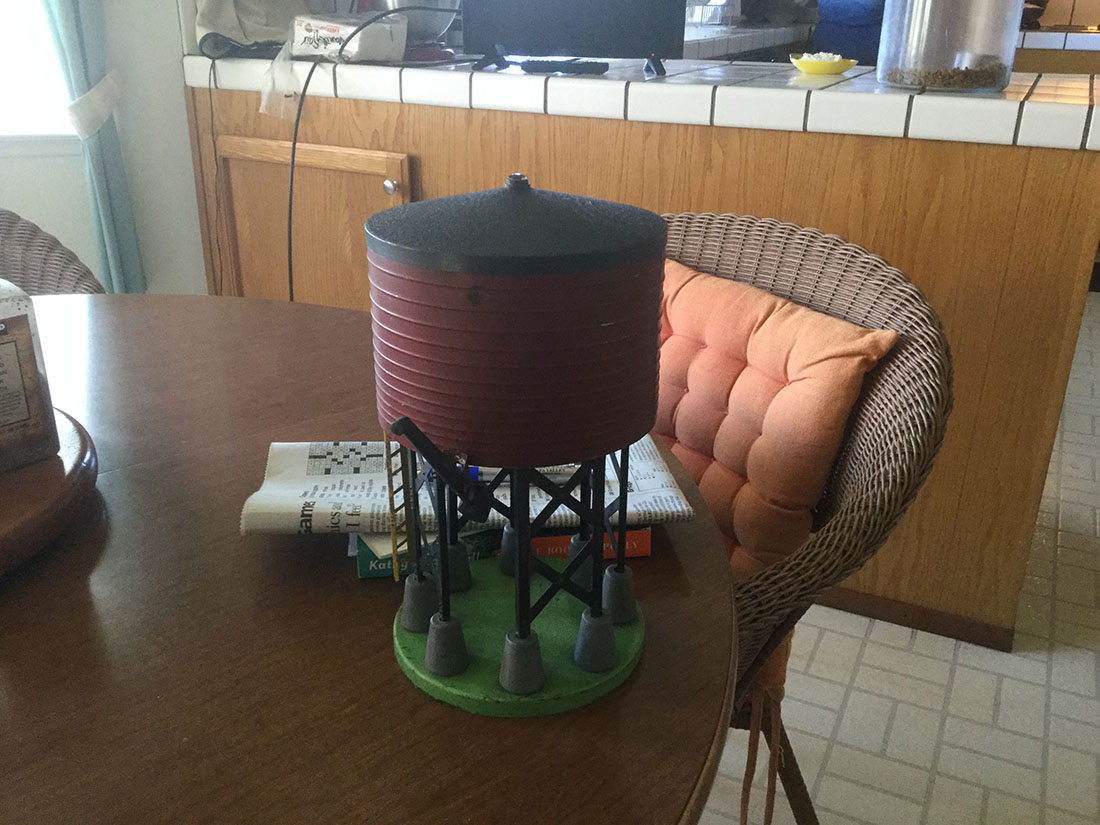
I got a #596 American Flyer Water Tank from eBay in good shape ( picture attached).

However, they cut off wires that operate tank water spout and lamp right at the underside of the tank. Can’t get to them.

I’ve tried to gently remove tank top, but it’s stuck firm.

Do you have any suggestions on how to remove the tank top safely?
Thank you,

Jeff”

water tower

But before I could post, I then received this from Jeff:

“Hi,

Re trying get top off of the tank.

I put a fantastic parts loosener called Kroil Oil, into seam, let it sit upside down for an hour.

I then taped gently around perimeter for 5 minutes with a rubber mallet taping a soft wood block against seam and it popped off, no damage.

I electrically repaired, works great. Onward.

Thank you,

Jeff”


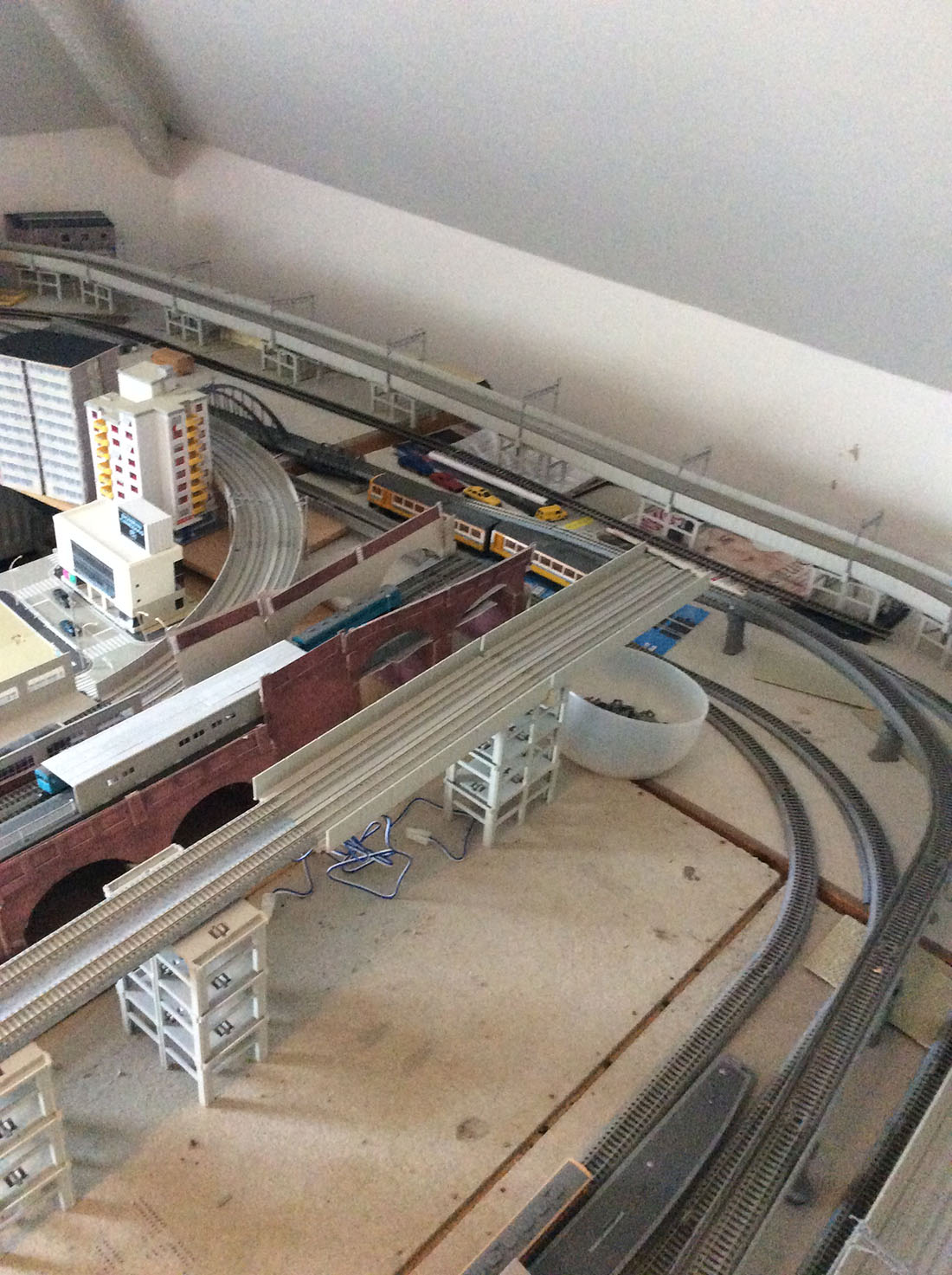
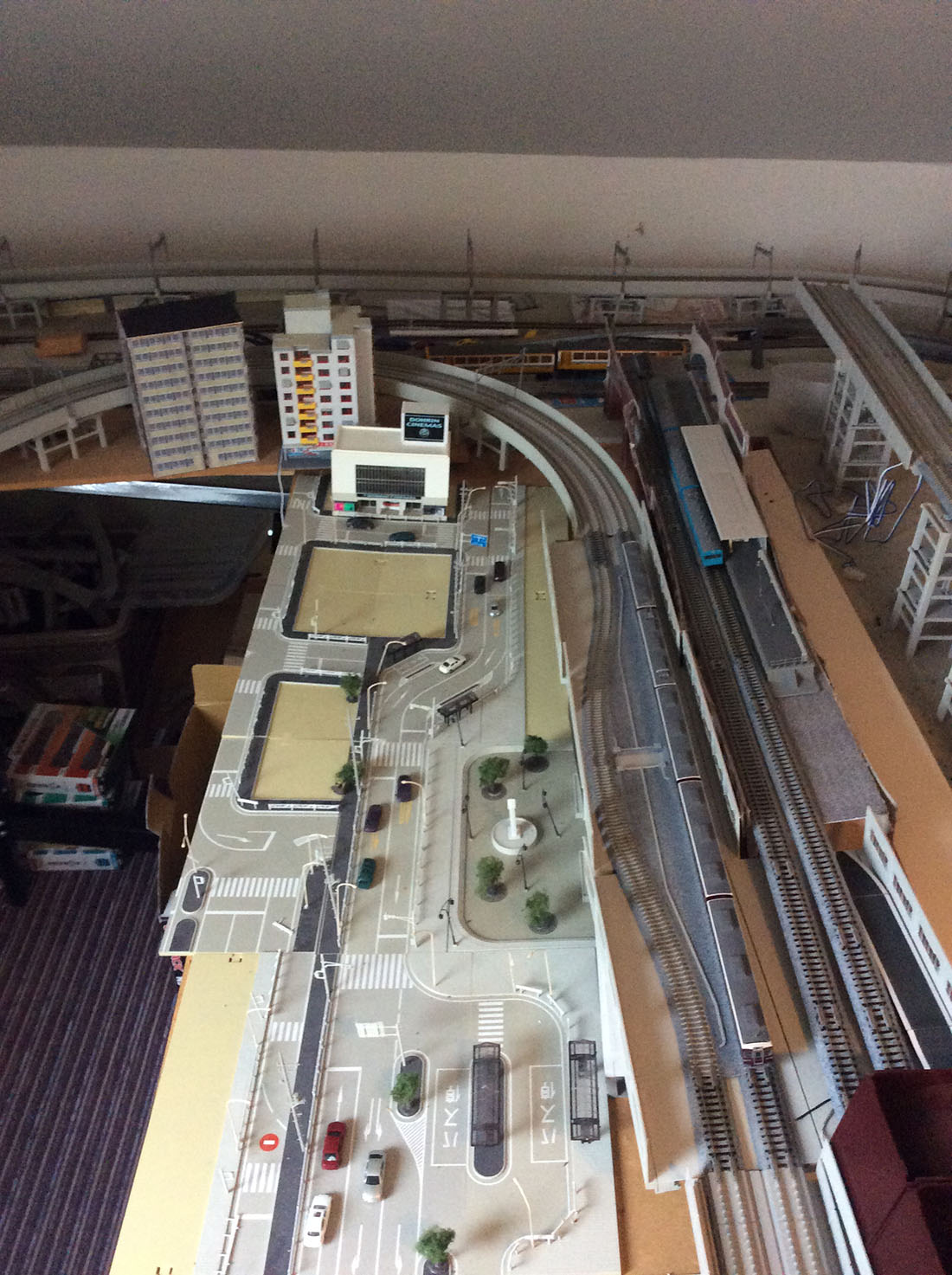
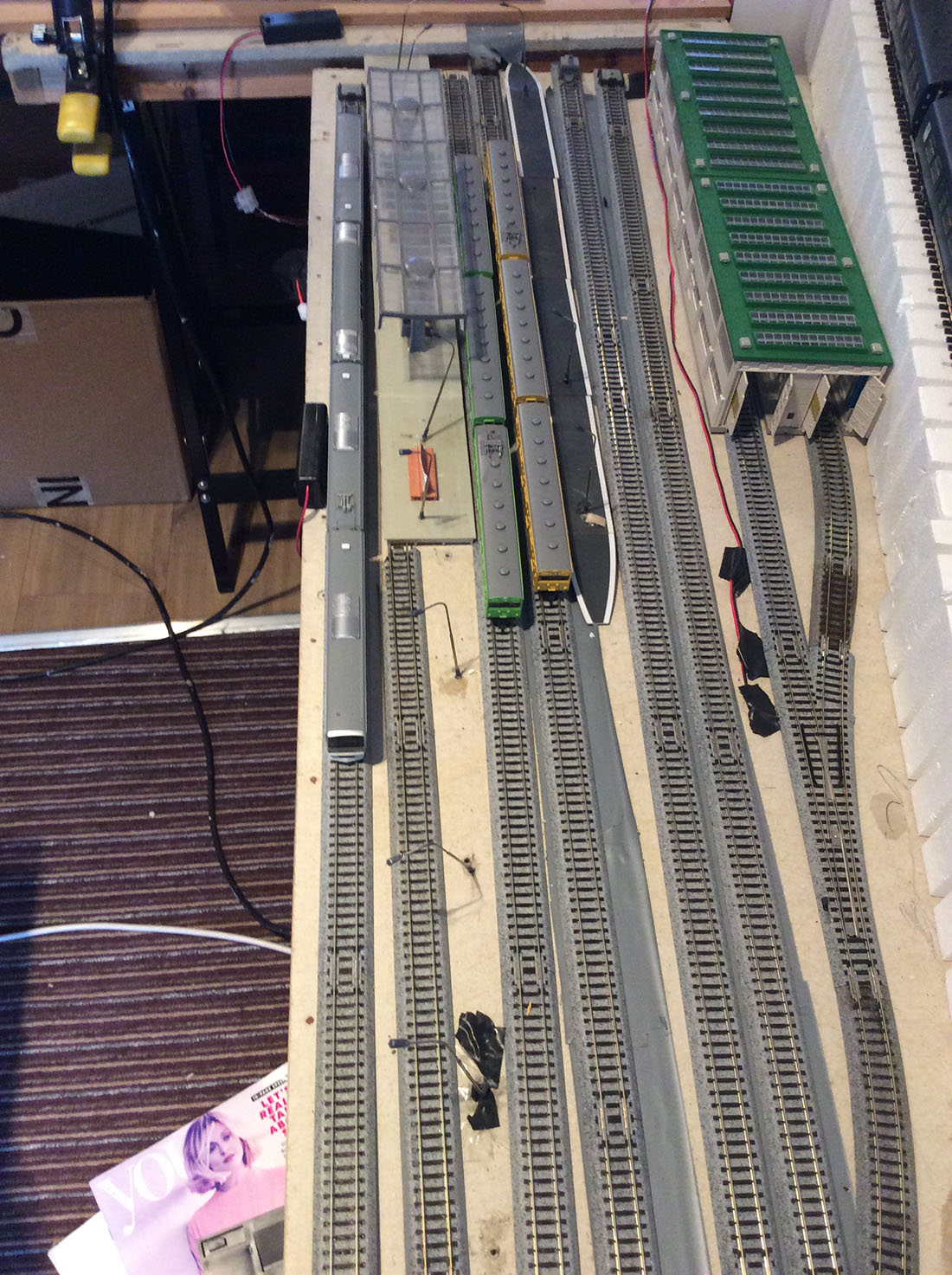
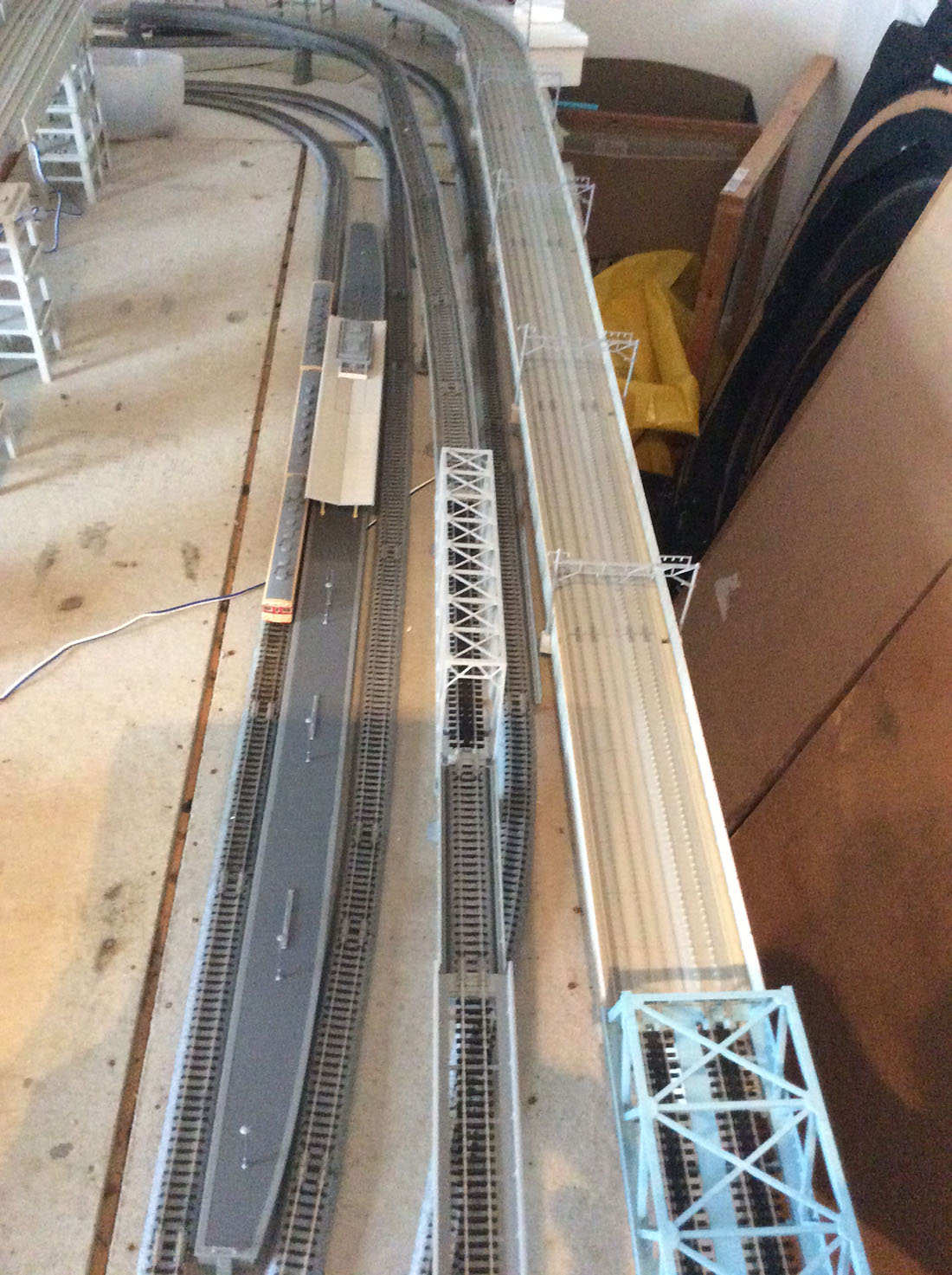
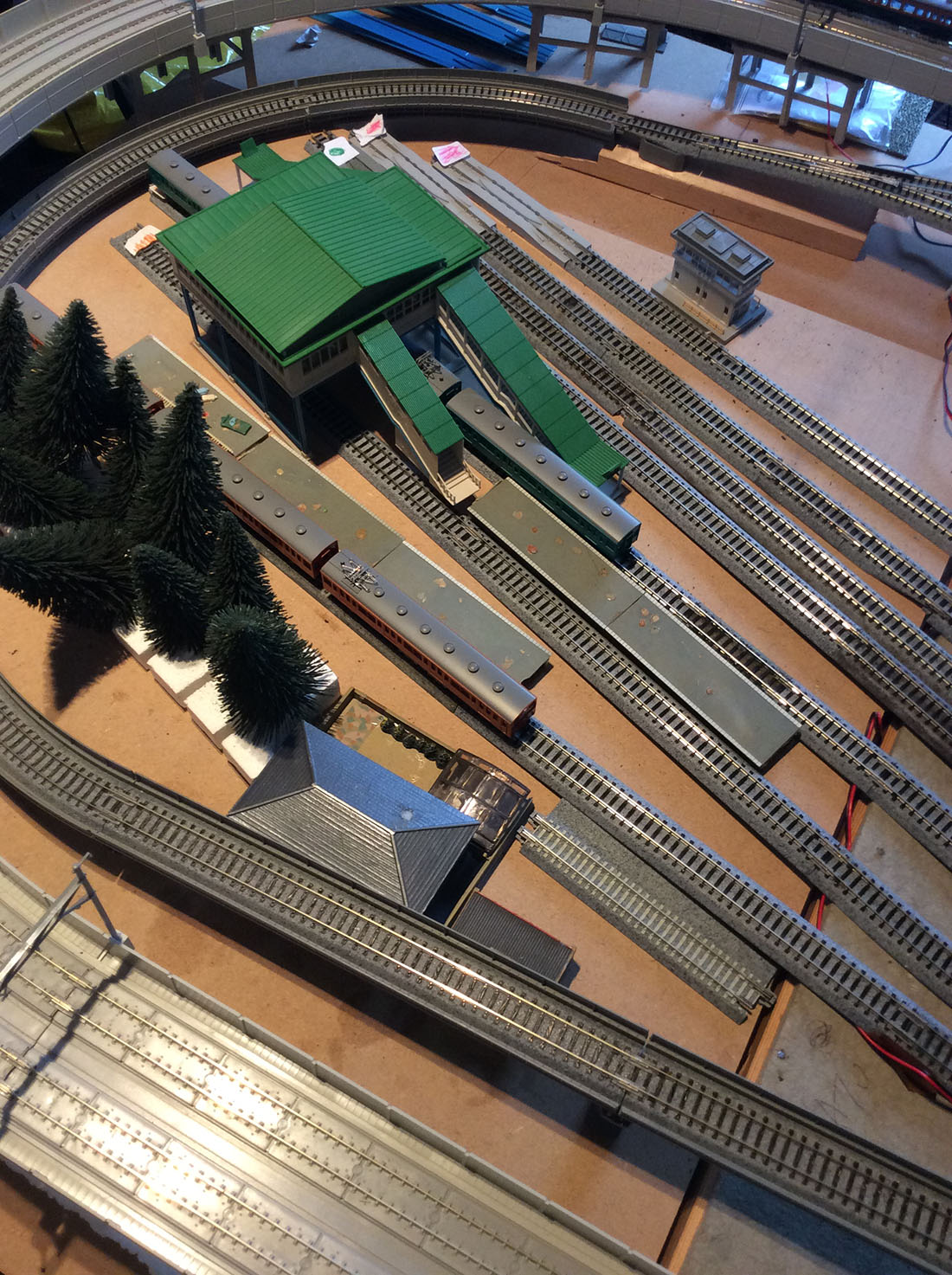
“Been working on my kato stations and platforms during lock down.

I have bought and built an extended platfrom. I have grouped all my point switches together o easy on Kato as there is no wiring or soldering to do.

I have bought 5, 3 car units – only 45 pound each. Basic units, no lighting but work well in five different colours. My next task is to have more scenery and extend my elavated track.

I would recommend Kato if you want a quick easy fix for a layout the quality is second to none.

Alan”


Railpower 1300 problems track

Railpower 1300 problems short

railpower track

railpower track problems

Now on to Jim – who has made a working drive in movie theater:

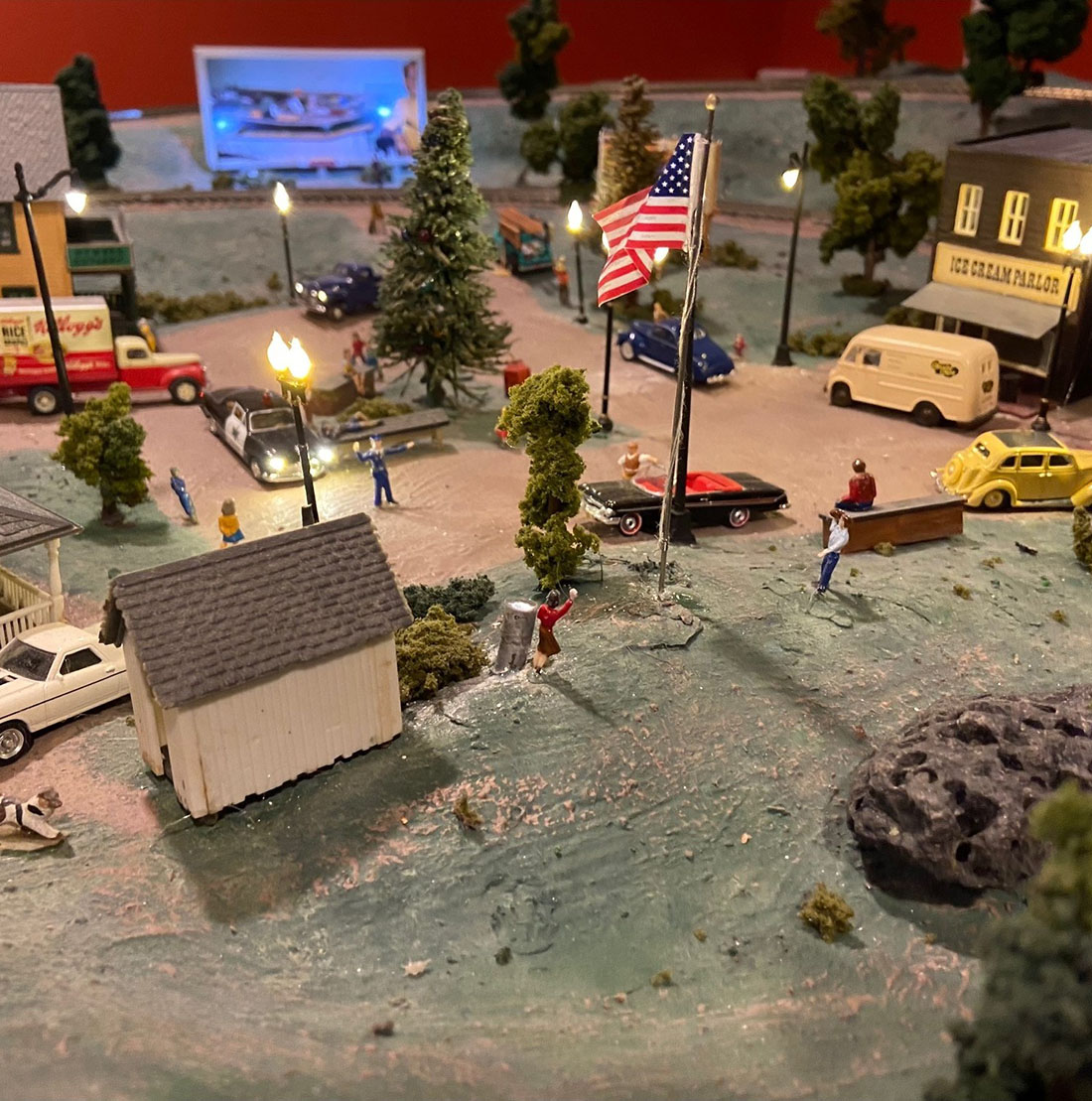
“This project started with a bit of nostalgia for the old time drive in movie theaters I went to as a child in Tacoma Wa.

We had a huge drive in with the largest screen in North America, called the Starlite.

While I had no room to replicate this, I decided to make a much smaller model that would fit on a future portion of my N-Scale layout.

Starting with a Blair Lines kit for a drive-in, I was inspired to take it further after seeing a tiny Video Player kit.

This little one-inch screen shows fairly high definition videos using miniature electronics. The video files are stored on a micro-SD card, and the whole thing can be powered by either a supplied battery, or USB connection (I chose the later so I would not have to worry about the battery running down).

This soon morphed into a full-blown kit bashed scene with vehicles from Showcase Miniatures, lighting from Miniatronics, fencing with graffiti, scraps from older kits, and lots of patience.

I took some stills of old drive-in snack bar ads, and created “Feature Presentation” and “Coming Attraction” images using Photoshop.

I spliced these together using Adobe Premier Pro and some original music I composed, to create the intro to the feature movie, “Walter’s Last Stand”.

This movie was made by a friend of mine in Arizona, a film maker, and runs about 45 minutes.

After transcoding the output using some software supplied by TinyCircuits.com, I was able to make this work on the module, as shown in the build video that I uploaded to Vimeo.com.

The project took about 6 weeks working evenings on and off. I call this my “Covid project”, as it was something fun to do while sheltering at home.

Jim”

A big thanks to Gary for sharing his Railpower 1300 problems. Also thanks to Jeff, Alan and Jim.

Can’t wait to see what’s in my inbox tomorrow – please do keep ’em coming.

And don’t forget, The Beginner’s Guide is here if you are tired of dreaming and want to start doing.

Best

Al

PS Latest ebay cheat sheet is here.