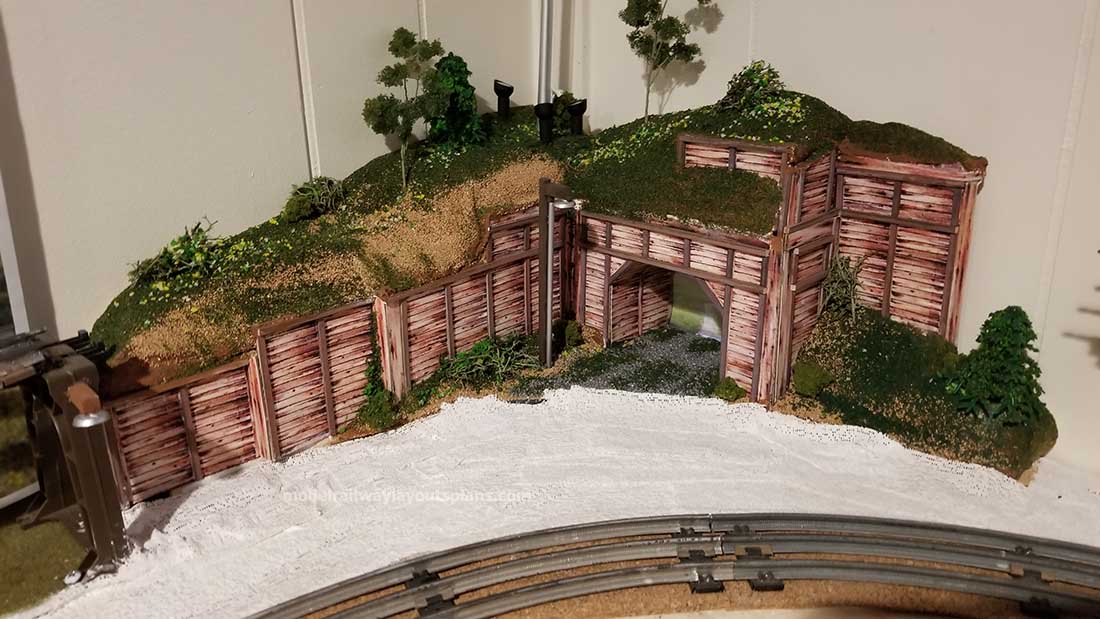
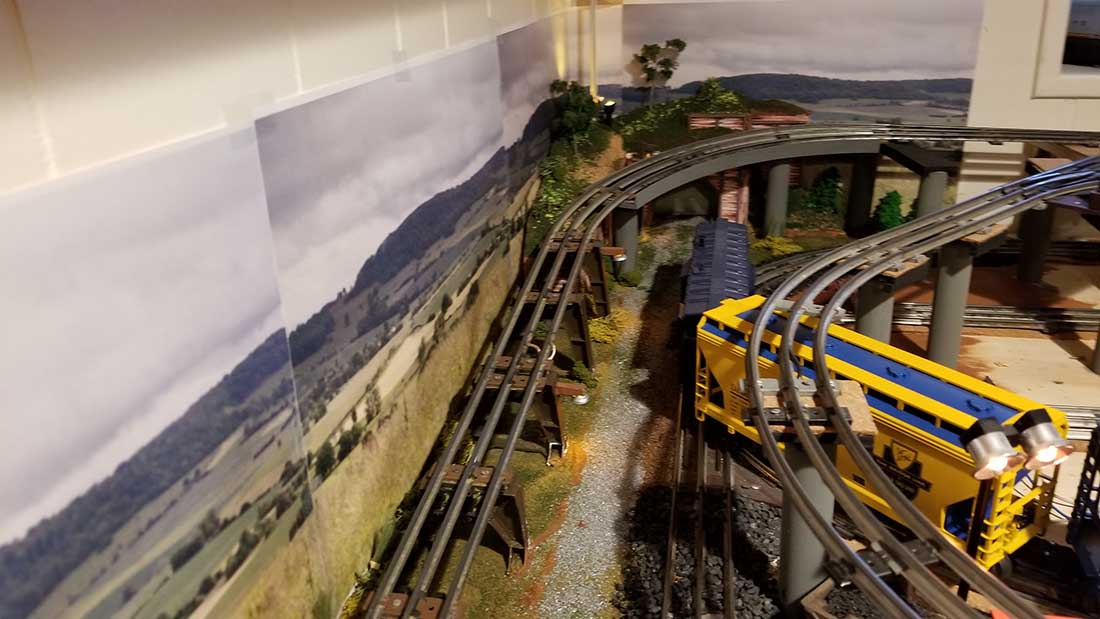
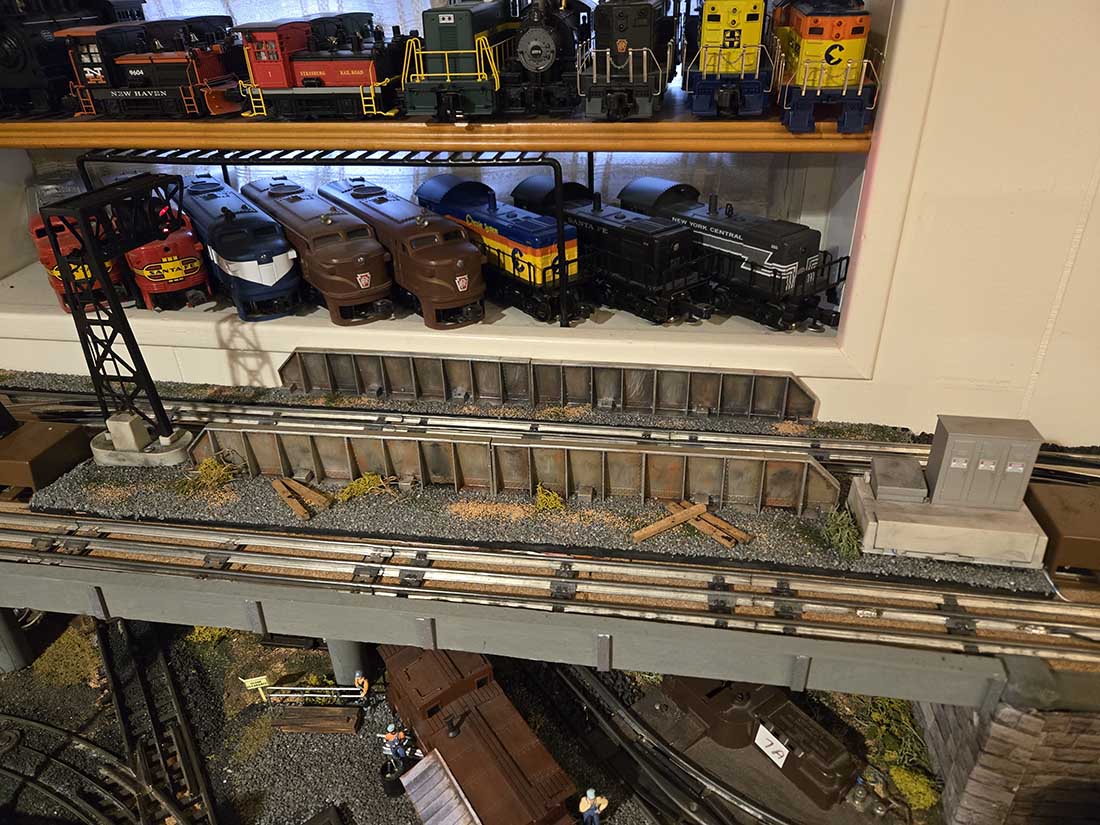
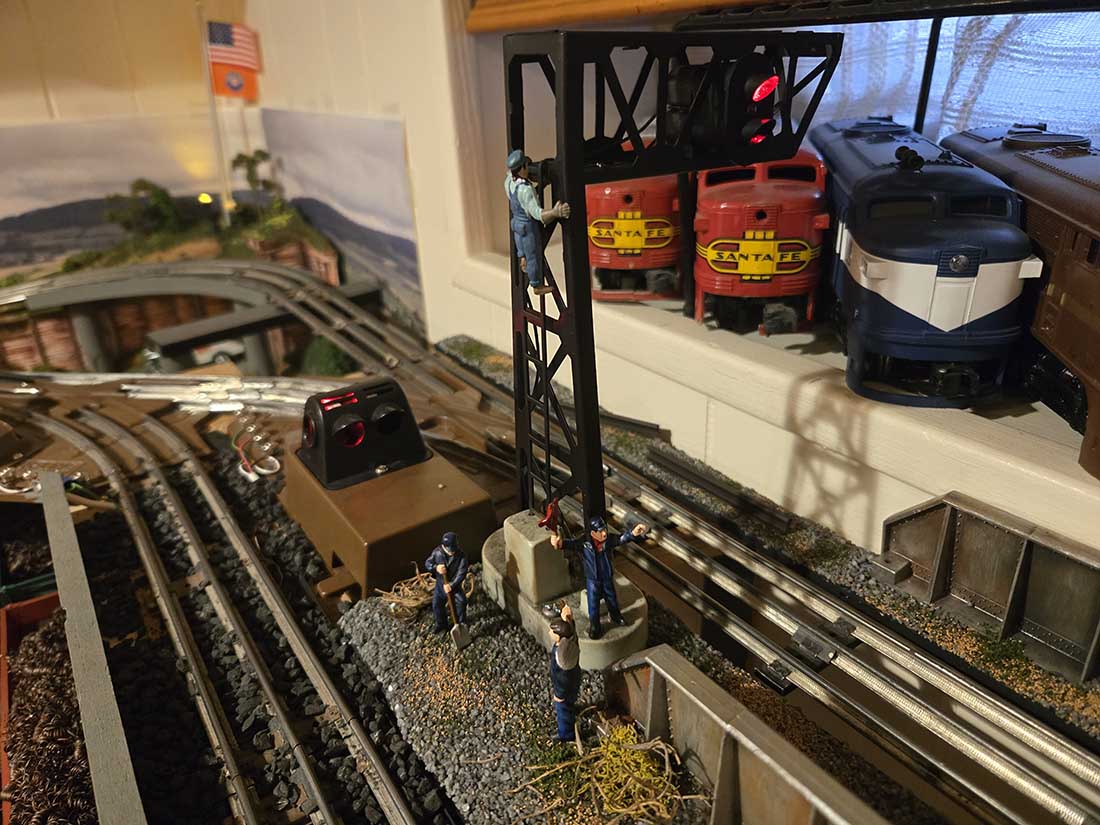
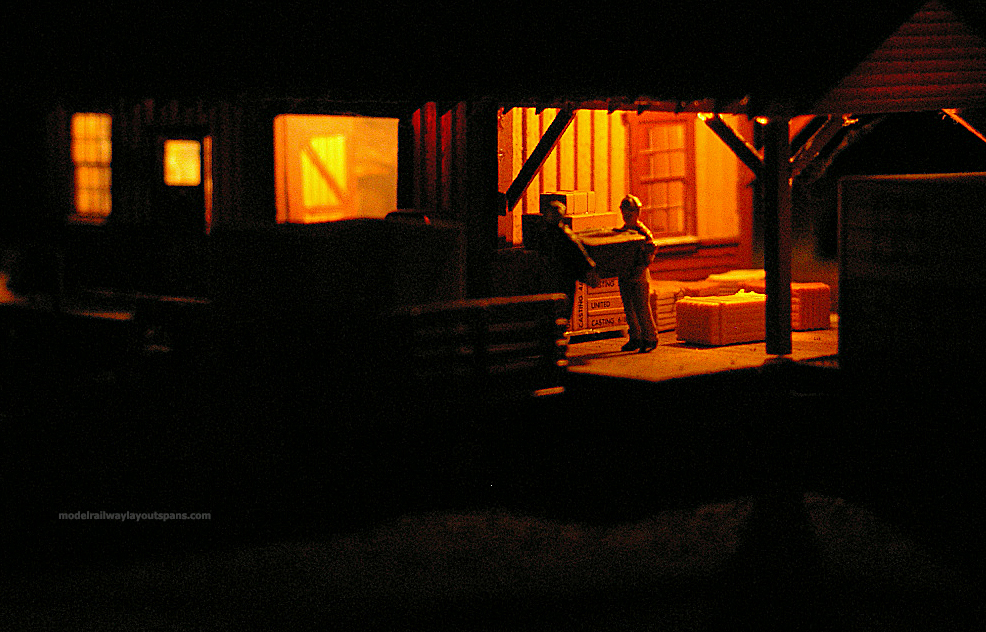
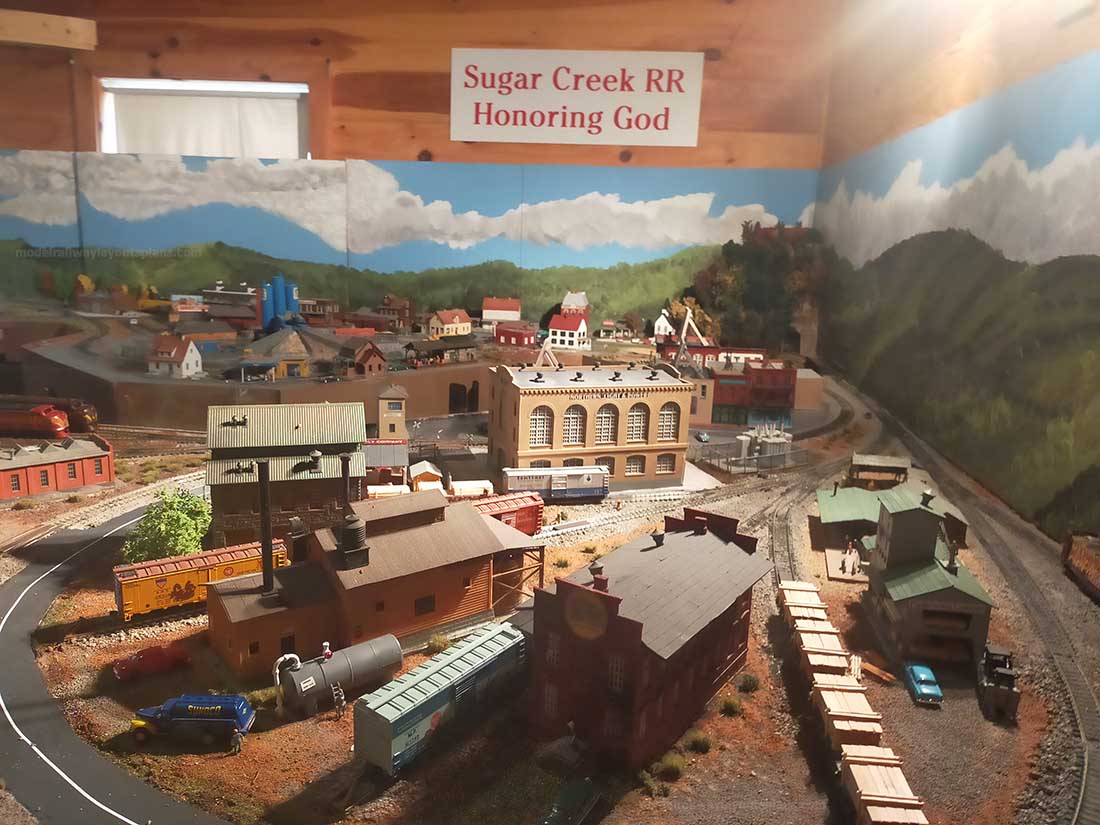
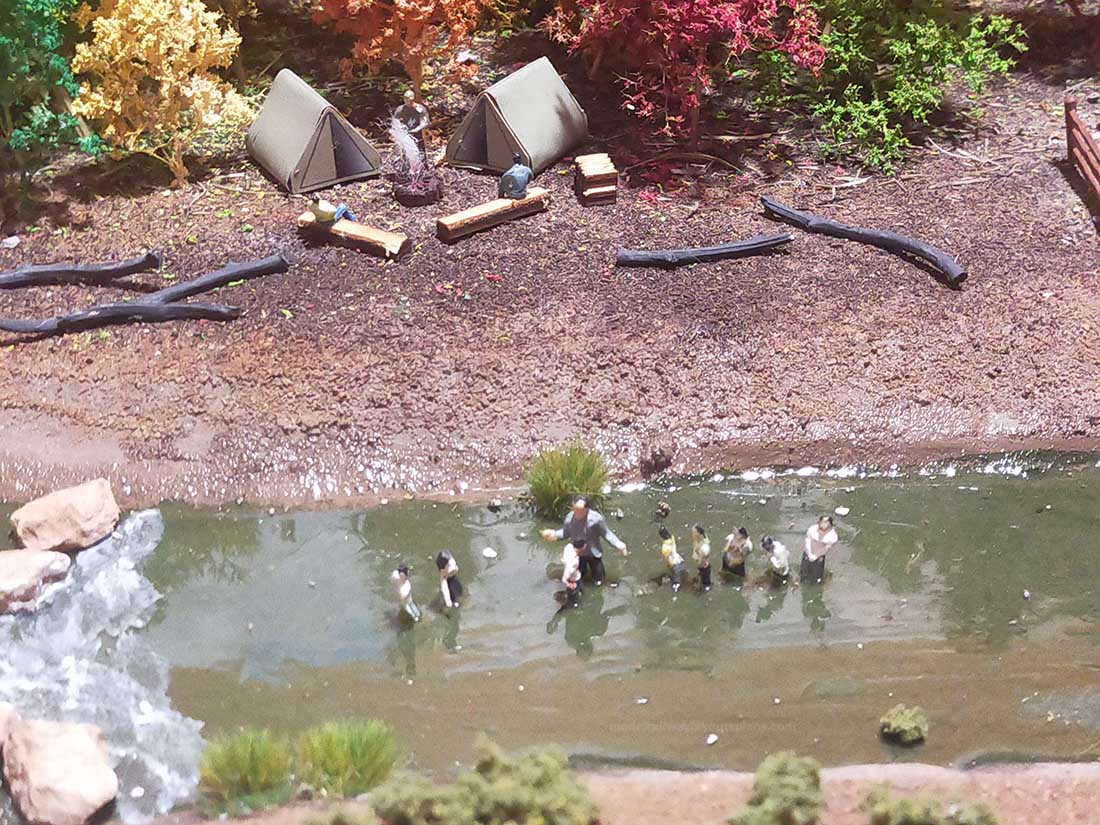
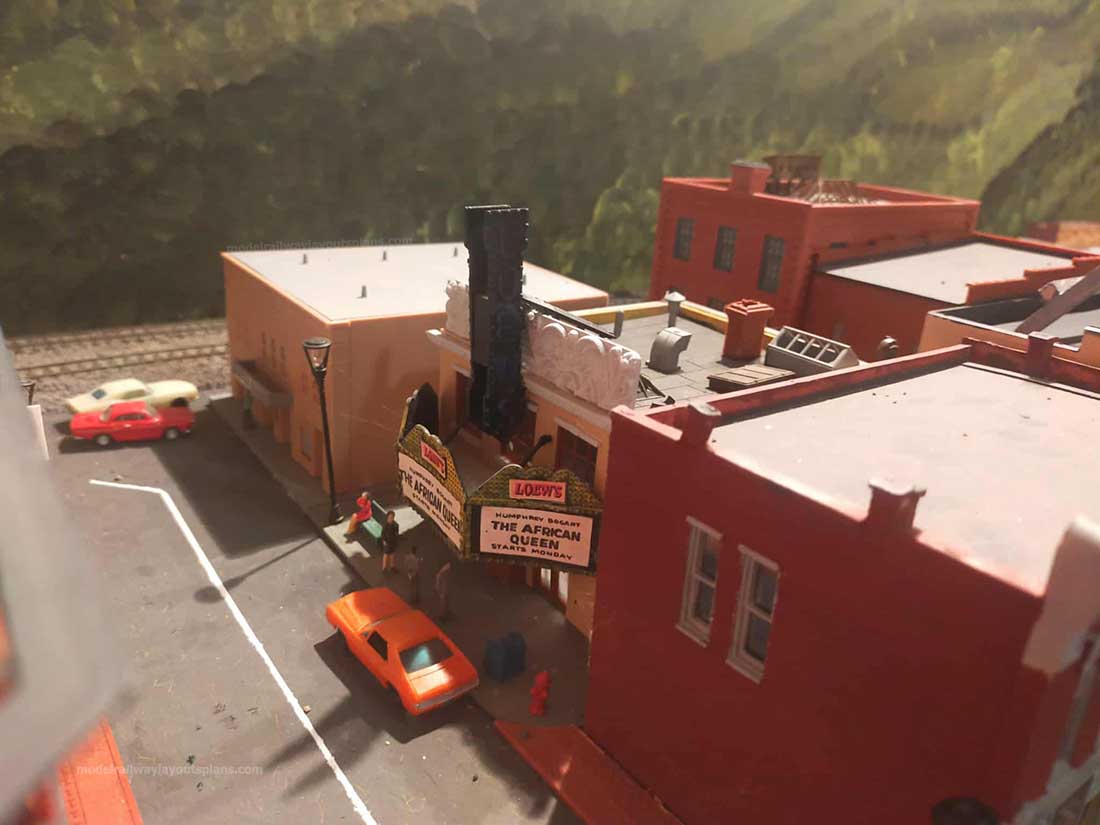
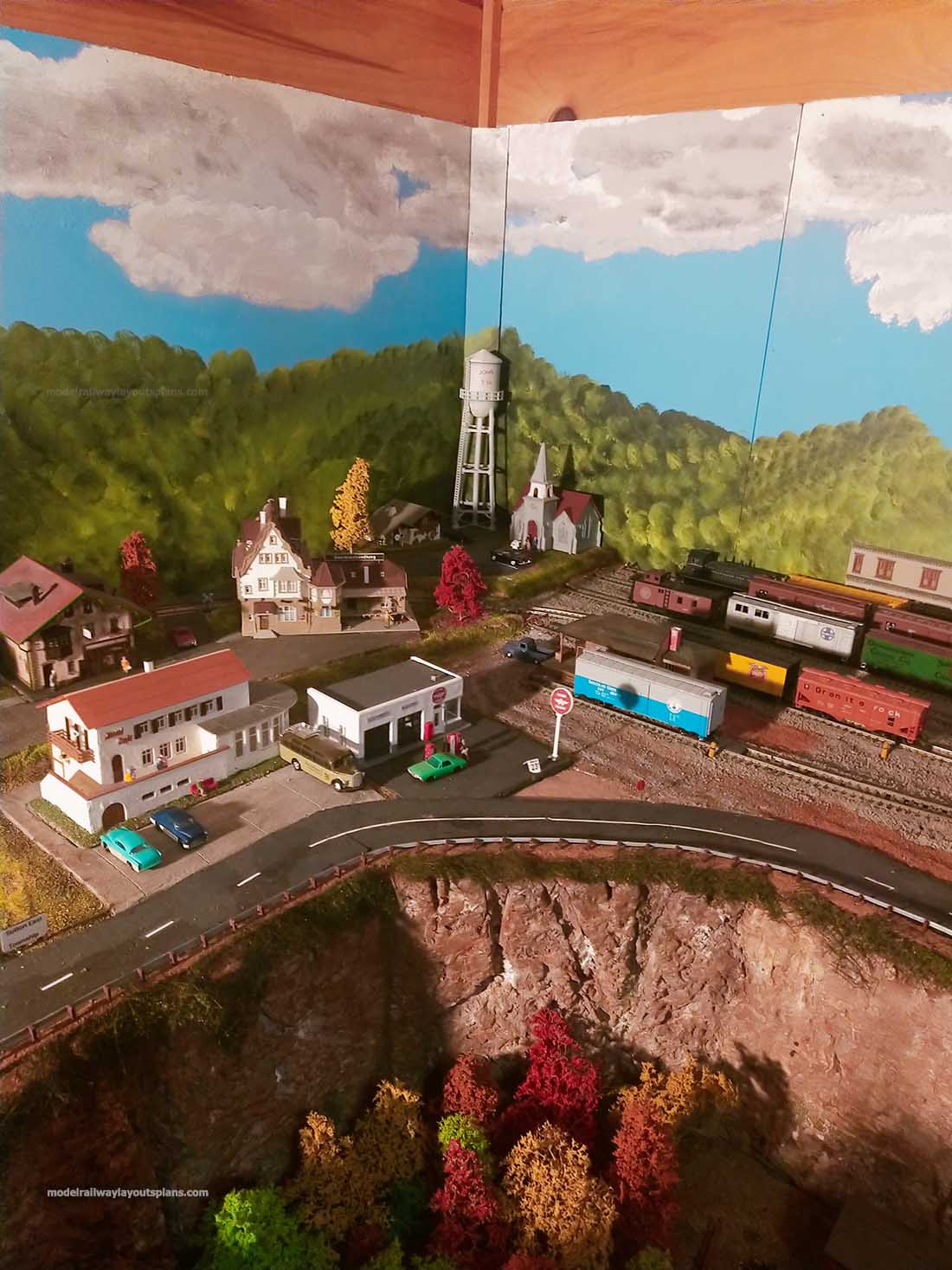
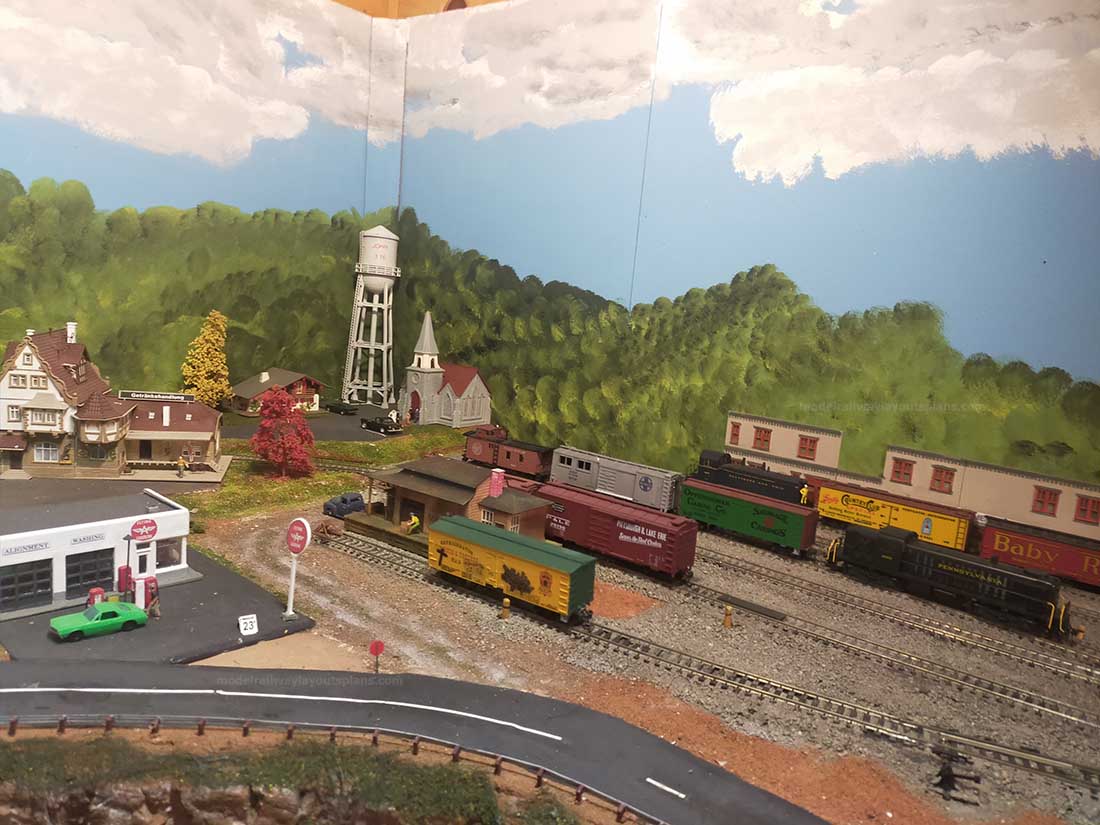
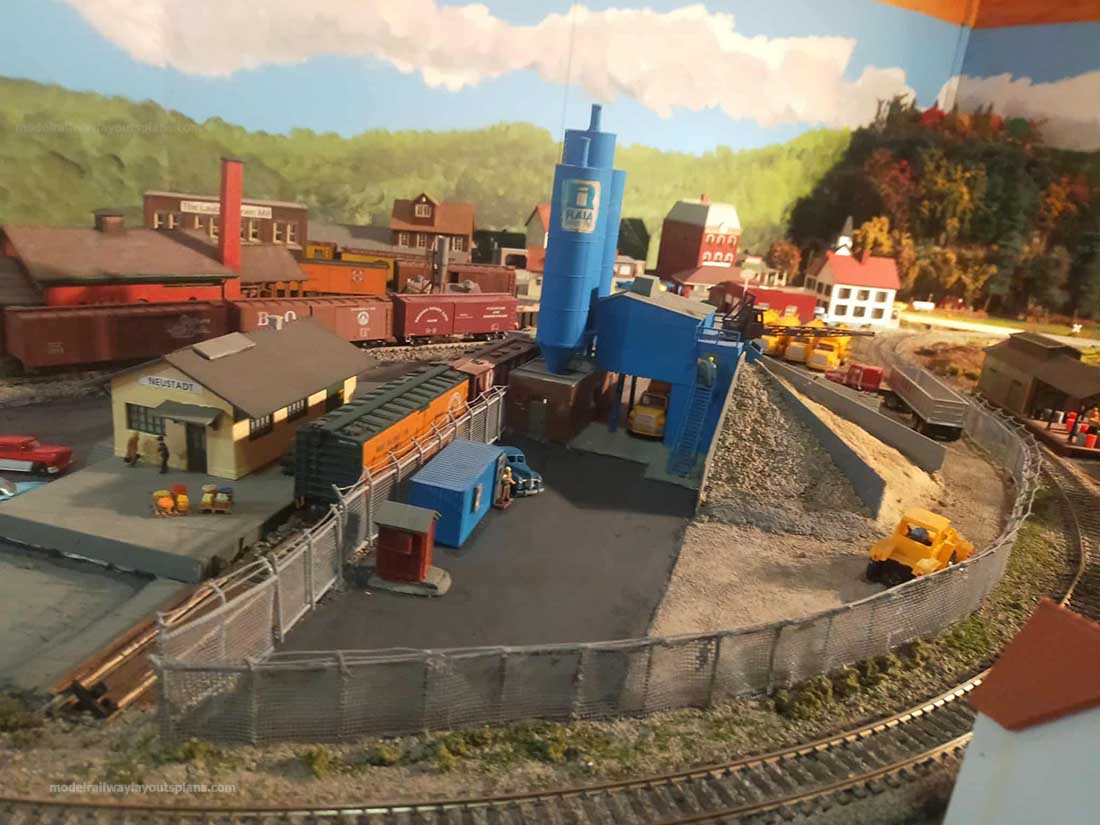
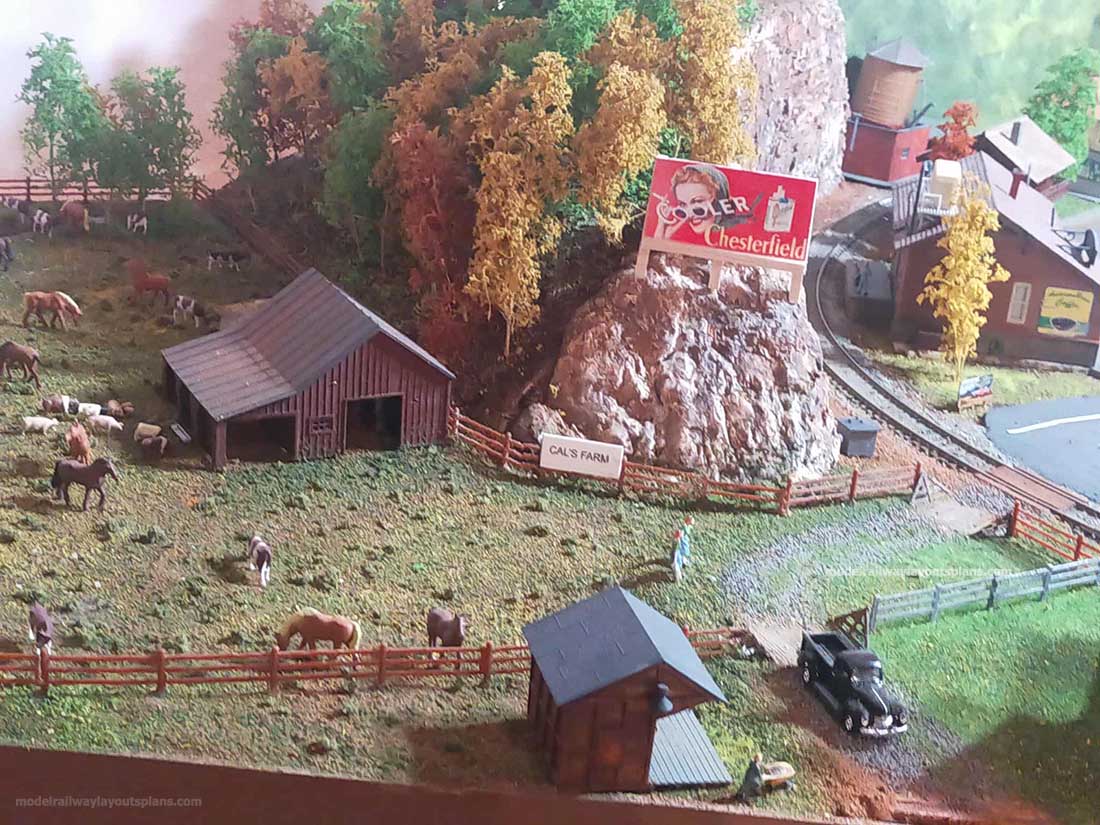
N scale dioramas

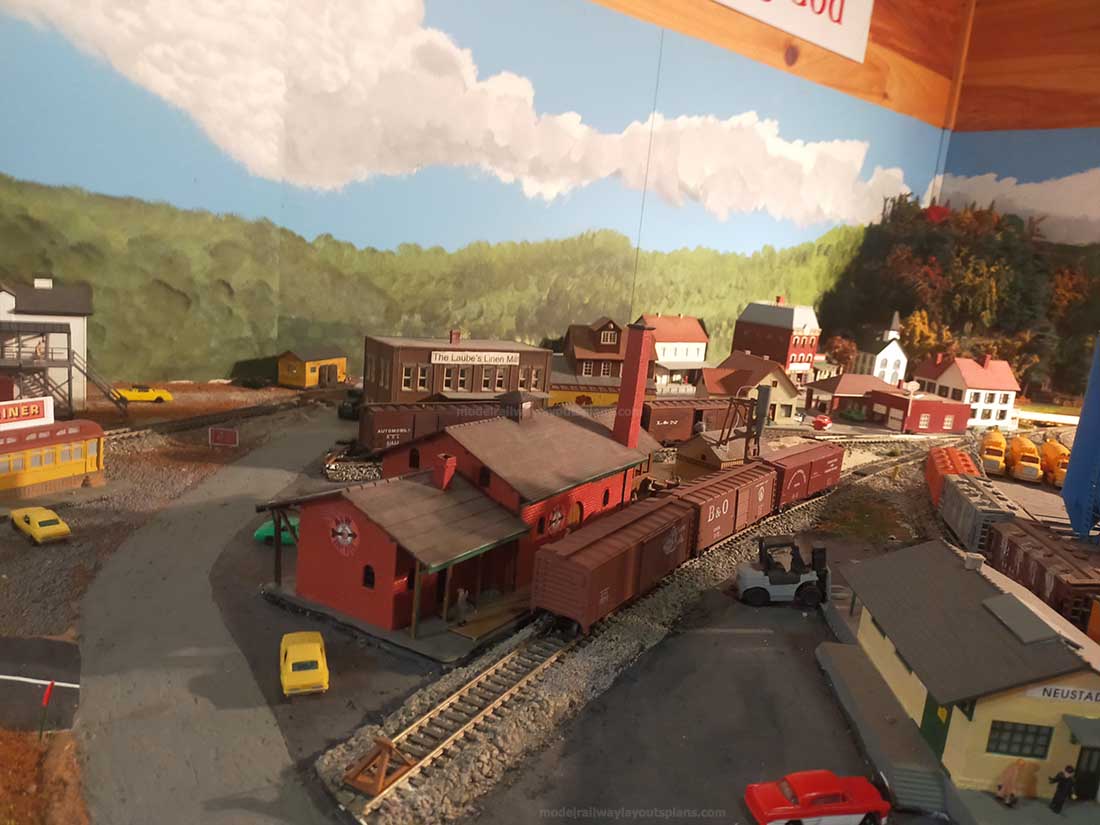
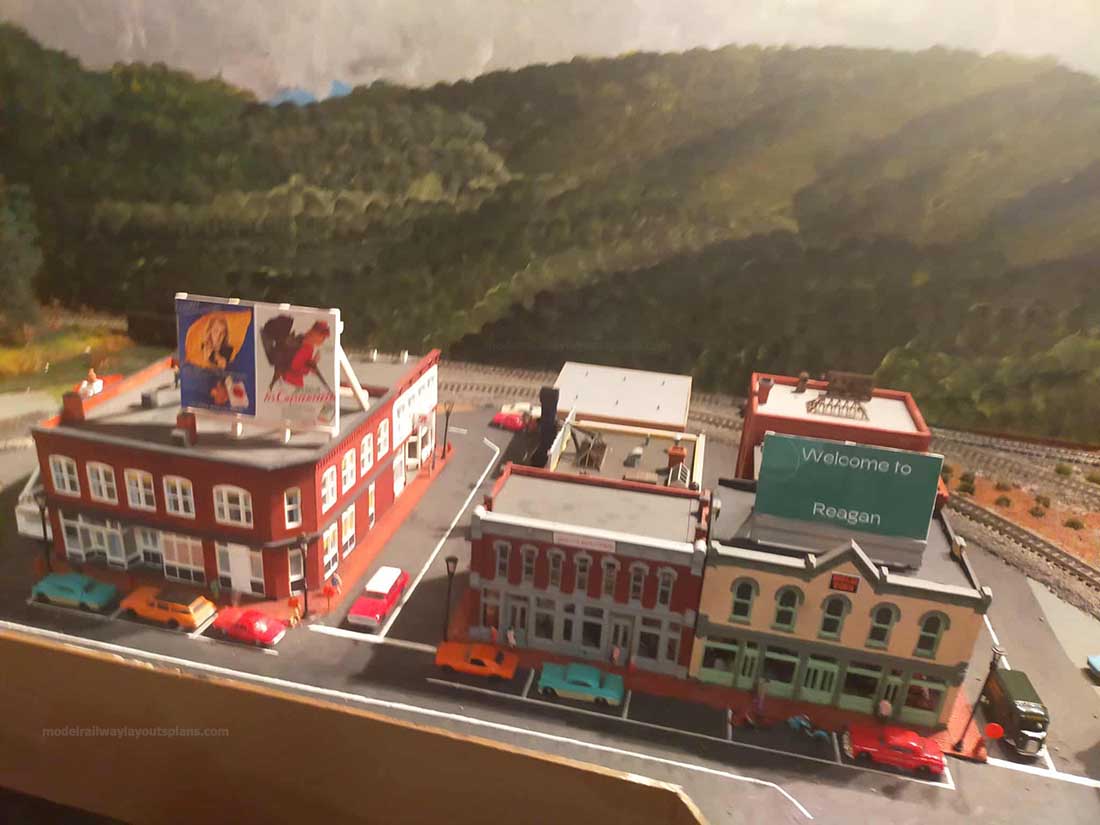
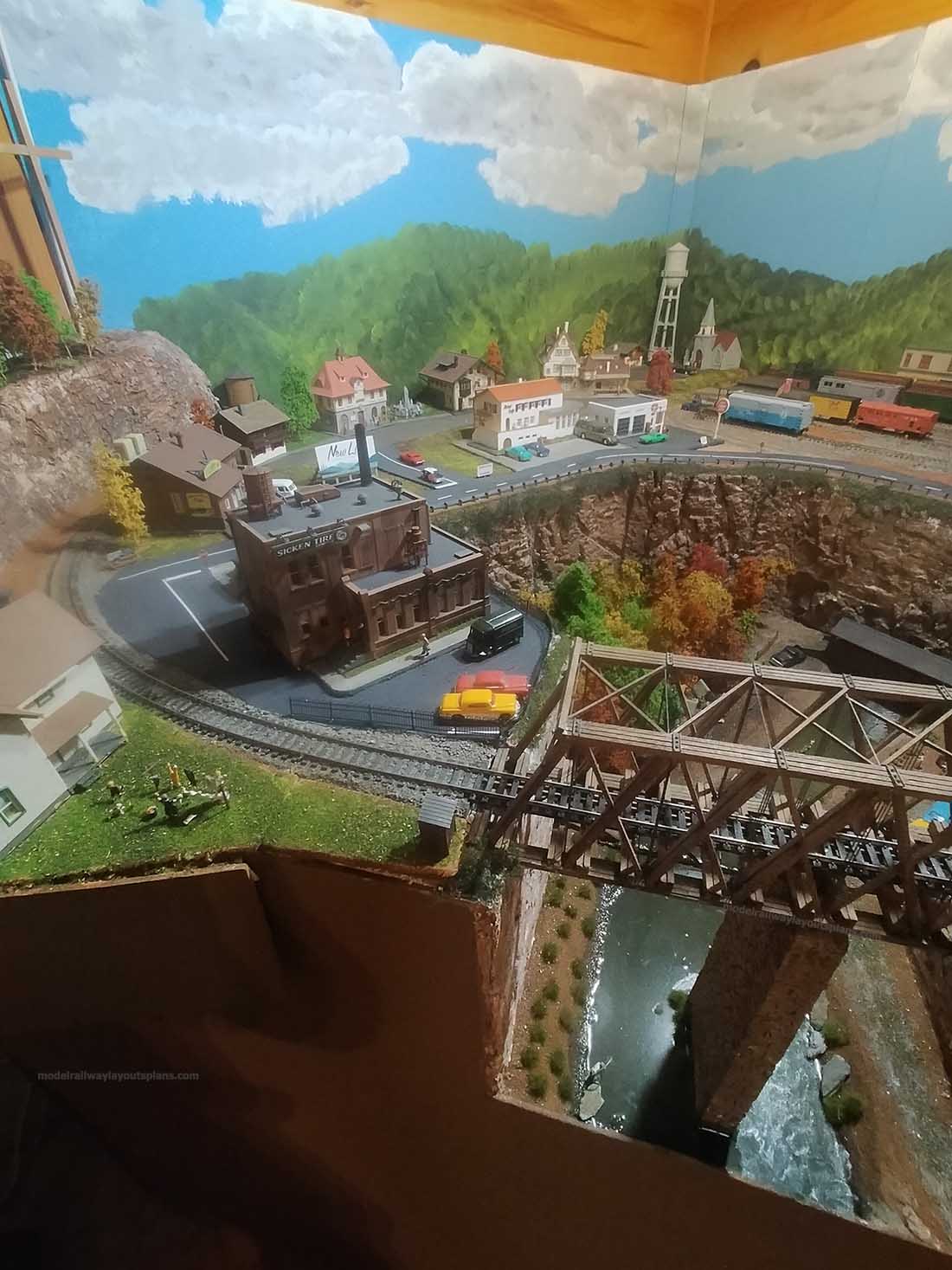
Bob’s been back in touch and added to the N scale dioramas on the blog:

“Al…good afternoon. Bob in Texas here with a new submission. I call it: Diorama of the Cowlitz River Truss Bridge to the Rescue.

Is there anything more forlorn than a model railroad hobbyist with nothing to build? That is the situation in which I recently found myself. No room to start a new project or add to an existing layout. My wife absolutely refused my request to build even a small shelf-layout in our bedroom.

As you probably recall, my last project was a Thomas Kinkade-inspired Christmas tree for the bed of my 1950 Chevrolet pickup, but that was eight months ago. I was in desperate need of a new project.

Inspiration came during a recent road trip from our home in Houston to San Antonio. Driving west on Interstate 10 just east of Sealy, we crossed the Brazos River. Immediately to our right is a magnificent triple truss bridge on a route Union Pacific still uses for freight traffic.

It is one of the few remaining truss bridges in Texas and, because of its location, one of the most photographed (as you can see in the satellite image it is right next to the interstate). I keep photographs of this and other historic bridges in an album.

If you have seen some of my previous submissions to Al’s blog you know that I much admire vintage timber trestle bridges. And…even though I have never included an iron truss bridge on any of my layouts I also appreciate their beauty and historic significance.

In their heyday, between 1880 and 1930, it is estimated by the Texas Historical Commission that there were thousands of truss bridges built in Texas. Now only a few, like the one that spans the Brazos River, remain in use.

When we returned from our trip I revisited my album and came across a photograph of another spectacular truss bridge that spanned the Cowlitz River in Northern Washington State. It is the subject of a beautiful video on YouTube called Crossing the Cowlitz: A Historic Washington State Rail Bridge.

The bridge was completed in 1911 using a Pennsylvania Truss Design…but sadly it has been demolished and replaced. While I didn’t have room to add the bridge to my current layout, I could at least construct an N Scale diorama using the photograph as inspiration.

First, I drew a simple schematic of the scene depicted in the photograph.

Next, I constructed a framework using 1×2 inch white pine, foam board, and craft foam covered with a layer of glue-impregnated paper.

I painted the rough framework with acrylic paint and glued Woodland Scenics Landscape Ballast to the river bed. I added Woodland Scenics Realistic Water, multicolored lichen, and an assortment of trees (most saved from previous projects).

The truss bridge was kit bashed and weathered to look rusted. The Intermodal container cars are coupled to three Union Pacific Locomotives. If you look closely at the photograph or watch the video you will see that there were actually four locomotives.

Of course, this is only a static display…however, I must say, building this diorama was completely satisfying and I hope you all enjoy it.

Now…what do I build next?

Thanks, Bob in Texas”

N scale dioramas base

N scale dioramas base

 N scale dioramas base with backdrop

N scale dioramas

N scale dioramas

N scale dioramas

N scale dioramas

N scale dioramas

N scale dioramas

A huge big thanks to Bob for adding to the N scale dioramas on the blog.

You may remember Bob from one of my fave layouts, which is this one: 16×16 HO scale layout.

Also, his last post will put a smile on your face: 1950 Chevrolet Christmas pickup.

And if it’s dioramas you are after, there are quite a few now, here’s a few of them:

Book nook diorama

Model railroad dioramas

Ben makes a model train diorama

N scale diorama

And my absolute fave when it comes to dioramas:

How to make a train diorama

That’s all for this time folks.

Please do keep ’em coming.

And if today is the day you get started on your layout, the Beginner’s Guide is here.

Best

Al

PS More HO scale train layouts here if that’s your thing.


Need buildings for your layout? Have a look at the Silly Discount bundle.
Narrow gauge railways – Brian’s

Brian, the Brit living just outside of New York has been in touch and added to the narrow gauge railways on the blog:

“Hi Al,

Its been a while since I last sent you an update on my model railway.

However, before I go on, I want to thank you for this wonderful blog for the model railway community, I look forward to receiving it in my inbox every morning and am fascinated by the skill of all the contributors. And we all have so much fun sharing our models on your site!

I have been cogitating as to whether to tell you about a new project I started about 2 years ago as I have not been too happy with the outcome. I have decided to tell all, so here it is.

Back in the summer of 2023, I was in the UK for a couple of weeks and visited my favorite model railway shop, Invicta Models in Sidcup.

They now have a section dedicated to narrow gauge railways. I have been interested in them since I was a kid when my parents took me on holiday to North Wales, so I just knew I had to build my own OO9 model railway.

The OO9 scale is OO (or HO here in the USA) but running on N scale track. The idea is to replicate narrow gauge railways which served mines and their local communities in the early 1900’s.

Peco and Bachmann, in particular, have launched some excellent products including models from the Ffestiniog Railway in the Snowdonia region of North Wales.

I decided I would build a layout which went in and out of mountains on a number of different levels. Because I did not know how much track I would need, I decided to use Atlas code 55 track as I can buy it over here in the States; I was expecting it to be similar to the Peco narrow gauge track but sadly it is more like main line track – my first mistake but I am stuck with that one.

On my OO layout, I have fastened down the track using spikes sunk into cork track bed. With this project, I decided to put the track directly on the plywood and the next challenge was fixing the track since there were no nail holes in the sleepers on the Atlas track – I don’t know why.

I didn’t want to glue it down in case I needed to make changes so I ended up using tiny screws (#2 by 1/4in) between the sleepers, not the perfect solution but one that worked.

I wanted to build something that would be easily transportable and started with a board 24×34 inches but this proved too small so I cut a new board 36×48 which is more satisfactory. All curves are 10 inch radius. The power is DC.

I had a vague idea as to what the finished product might look like but was not sure how to achieve it. I started by cutting lengths of plywood marginally bigger than the track and slowly started putting the layout together. Here are a few photos of the construction:

model railway track plan

narrow gauge railways

narrow gauge railways

One of the recommendations experienced modelers is to make sure the trains run well on the track before adding scenery. I decided to keep it simple by not having any points (switches) but clearly the track has many loops and curves and gradients.

I finally got it working well with the Hunslet 0-4-0 which I bought and so was able to start the mountain construction.

I made the mountains out of plaster cloth laid on top of platted strips of card and polystyrene sheets. I have been able to remove some of the polystyrene once the plaster cloth has hardened.

I made tunnel entrances out of craft sticks to make them look like mine tunnel entrances.

Finally, to ensure that any problem could be reached within the 2 mountains, I cut 1-inch green insulation board to cover the access holes at the top of each mountain and so the tops of the mountains are easily removable.

Not everything went smoothly. It’s surprising how much the track moved once the hardened plaster was in place.

Although my engine performed well before the mountains were in place, the tolerances for the clearance was too fine in places and I had to make difficult adjustments for the engines to pass under the track in places which left one gradient as a challenge for the Hunslet at a point where its hard to adjust the track.

narrow gauge railway mountains

narrow gauge railways mountains

 narrow gauge railways plaster

narrow gauge railways mountains


I spent a lot of time trying to decide what to put on the top of the two sides. Initially I was just going to have the tops of mountains but this did not suite.

I finally decided to link the 2 mountains with a bridge and railway line, also N gauge, to cross between the 2. This will be independent of the main track and have the shuttle electronics so I can let the trains run.

On the left side I have a small station an on the right an industrial complex.

narrow gauge railways

welsh loco N scale

N scale model railway buildings

narrow gauge railways


Its been an interesting exercise although I can’t say that I am totally happy with it. The transformation from the track layout to the finished model has left me with too much track hidden so there are only brief times when the train can be seen, otherwise it is in the tunnel most of the time.

Also, with the Hunslet I have problems with one of the gradients inside the tunnel which is impossible to change – before the scenery was added, the train and 1 coach ran perfectly but now the train and coach struggles to climb the gradient.

Then I had a lucky turn. This year when I was back in the UK I visited Sheffield where there is an amazing model railway shop – Rails of Sheffield.

From there, amongst other items, I bought the Ffestiniog Railway Double Farlie which is clearly more powerful than the Hunslet and has no problem with the gradient even with two coaches. So I put the Hunslet on the shuttle line at the top. At last I can run the trains with no problem.

At least now I can see what it looks like. Maybe at some point in the future I will dismantle it and create a simpler layout for my narrow gauge railway..

Thanks Al for publishing this for me and I look forward to comments and suggestions from the contributors.

Brian – Brit living outside of New York”

A huge big thanks to Brian for adding to the colection of narrow gauge railways on the blog.

Here are some more if they take your fancy:

Narrow guage layout – Julian’s

Narrow gauge model railway – Keith’s

Narrow gauge model railroad – Bill’s

On30 Narrow guage – Jeff’s

Narrow guage layout ideas Grant’s

That’s all for this time folks.

Please do keep ’em coming.

And if today is the day you get started on your layout, the Beginner’s Guide is here.

Best

Al

PS More HO scale train layouts here if that’s your thing.


Need buildings for your layout? Have a look at the Silly Discount bundle.
N scale track bed

Dean’s been back in touch. This time he’s been busy on his n scale track bed:

“Al, greetings from Dean in New Mexico.

I’m finally back to my new L-shaped N scale layout, the Santa Fe Northern RR, and have begun to lay track.

So far, I have put down all the track except the yards and sidings. I used Woodland Scenic roadbed glued down with Elmer’s glue to the 1-inch foam baseboard (over a 2” foam layer for support).

I used flex track which was glued with Alleen’s Tacky Glue, a glue used by craftspersons. I found it worked very well, and was equivalent to Woodland Scenic’s Foam Glue.

As your readers may remember, I use the software program SCARM (Simple Computer Aided Railway Modeller) to design all my layouts. SCARM can print out the layout design full sized on computer paper. Below is the map showing how the printed pages will print out.

model train track plan

In my last layout which had a top layer of 1/8” Masonite over three inches of white Styrofoam, I glued down the sheets to the Masonite with white glue. But when I tried that here, the foamboard warped. So, I just taped the paper sheets together with Scotch tape and secured the long edges of the line of paper sheets to the foamboard with shipping tape.

model train foam board for n scale track bed

I then marked the edge of the roadbed where it would go and cut the paper along that line with a hobby knife.

 model train track plan outline on foamboard

Then I put down a bead of Elmer’s glue and pressed the edge of the roadbed against the paper edge and secured the roadbed with T pins.

model train track plan outline on foam for n scale track bed

After that I ran two beads of Aleen’s Tacky glue where the track would go and placed the flex track down on the roadbed secured by T pins. I eyeballed the track in the center of the roadbed as it was glued.

model railroad track plan on paper for n scale track bed

I found a better way to locate the roadbed and track was to cut the paper plans down the center line of the track. Then I pulled the roadbed in two down its center (it is designed for this) and glued one side of it to the cut track plan.

gluing track bed on model railroad

When that was secured with more T pins, I pulled away the other side of the paper plans and glued the other half of the roadbed down in place. The cut line between the two halves provided a direct line to line up the track as I glued it down.

 glue track bed to model railroad for n scale track bed


I also found that I could use straight pins to hold the track down as the glue dried. I ended up with a perfectly centered track.

pinning track to trackbed for model railroad

I soldered power leads to the track rail joints before pushing them on to the track ends. These were added every 3rd or 4th rail length. In one case I joined two rail lengths on a curve. To hold a smooth curve, I soldered the rail joints while holding the track with a pair of pliers. The spatula was placed over the roadbed to protect it and also to hold the soldered wire in place.

soldering track model railroad for n scale track bed

Here’s a bird’s eye view of the layout and track as of now.

overhead view of model railroad construction

Finally, I ran a long train back and forth over the track to make sure it was good.

testing track on model railroad

For more info and a video of the running train:

Cheers,

Dean”

I big thanks to Dean for sharing his N scale track bed update.

If you want to see his previous post on making the table for this project, it’s at the bottom of this post: Model railroad church building.

That’s all for this time folks.

Please do keep ’em coming.

And if today is the day you get started on your layout, the Beginner’s Guide is here.

Best

Al

PS More HO scale train layouts here if that’s your thing.


Need buildings for your layout? Have a look at the Silly Discount bundle.