I don’t know who has more fun, John testing out the new prints, or us lot watching his ‘unique delivery style’.
Have a look and you’ll see exactly what I mean:
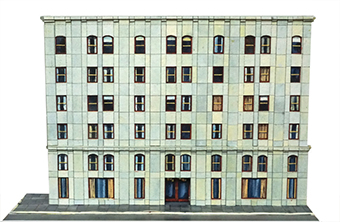
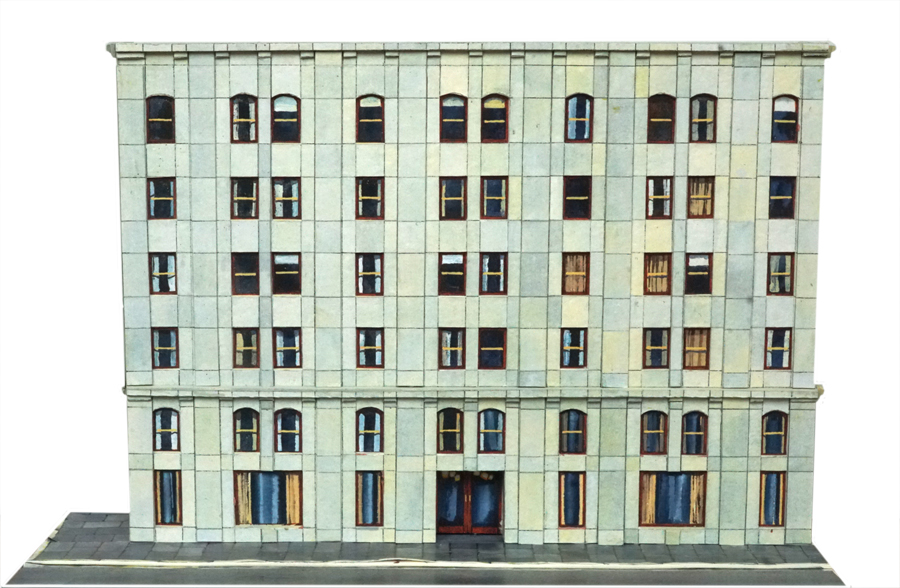
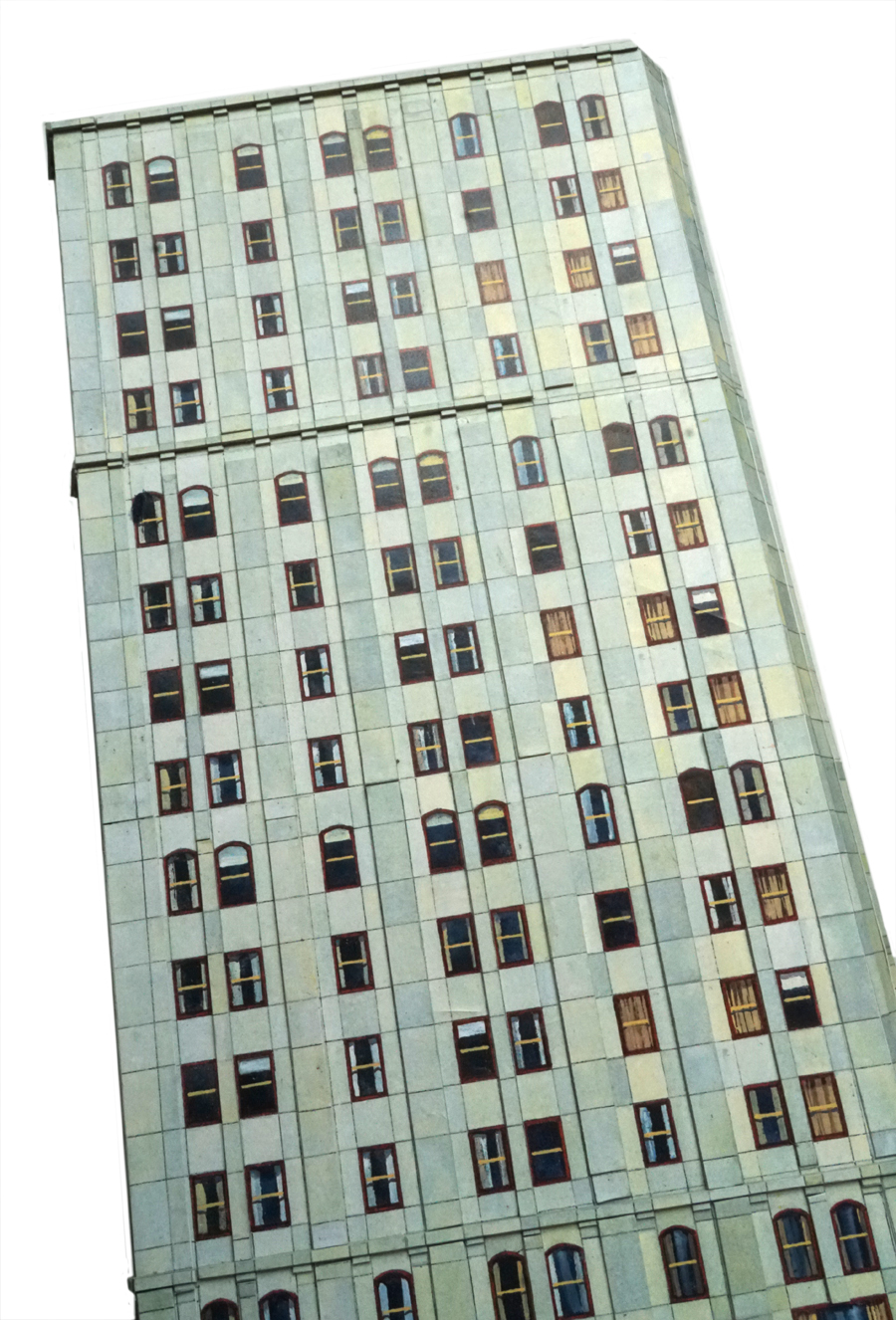
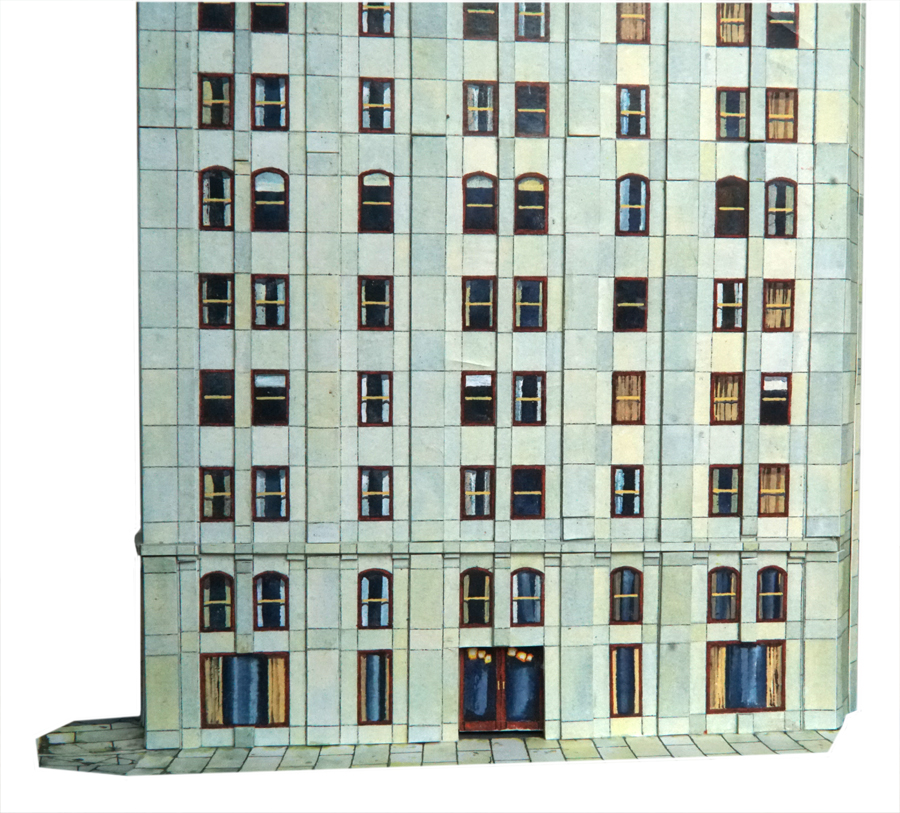
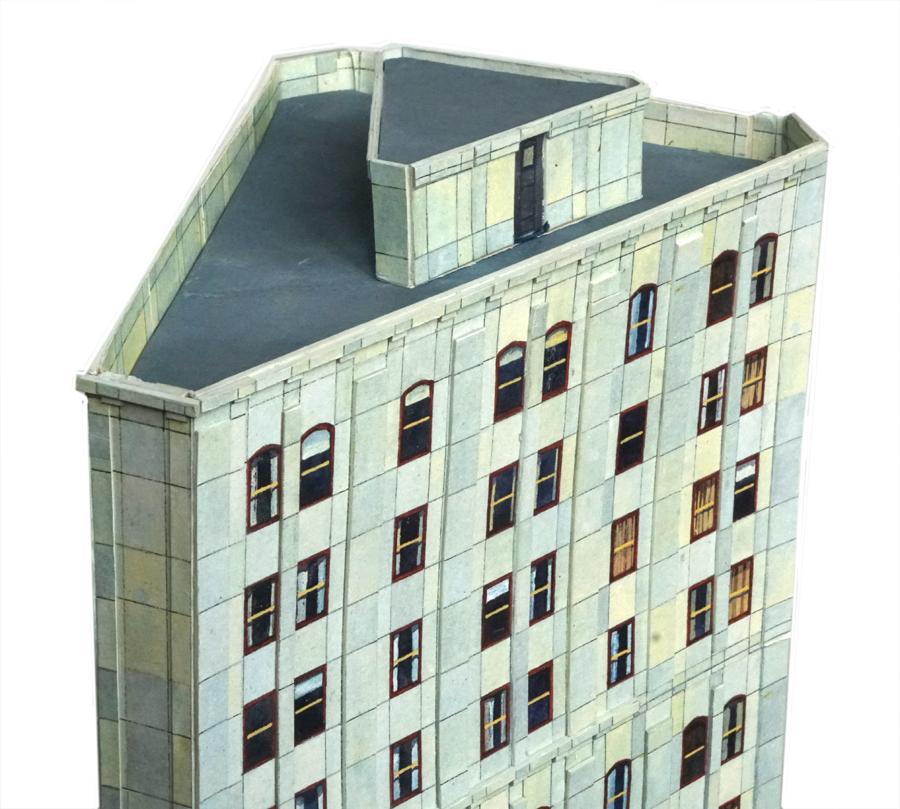
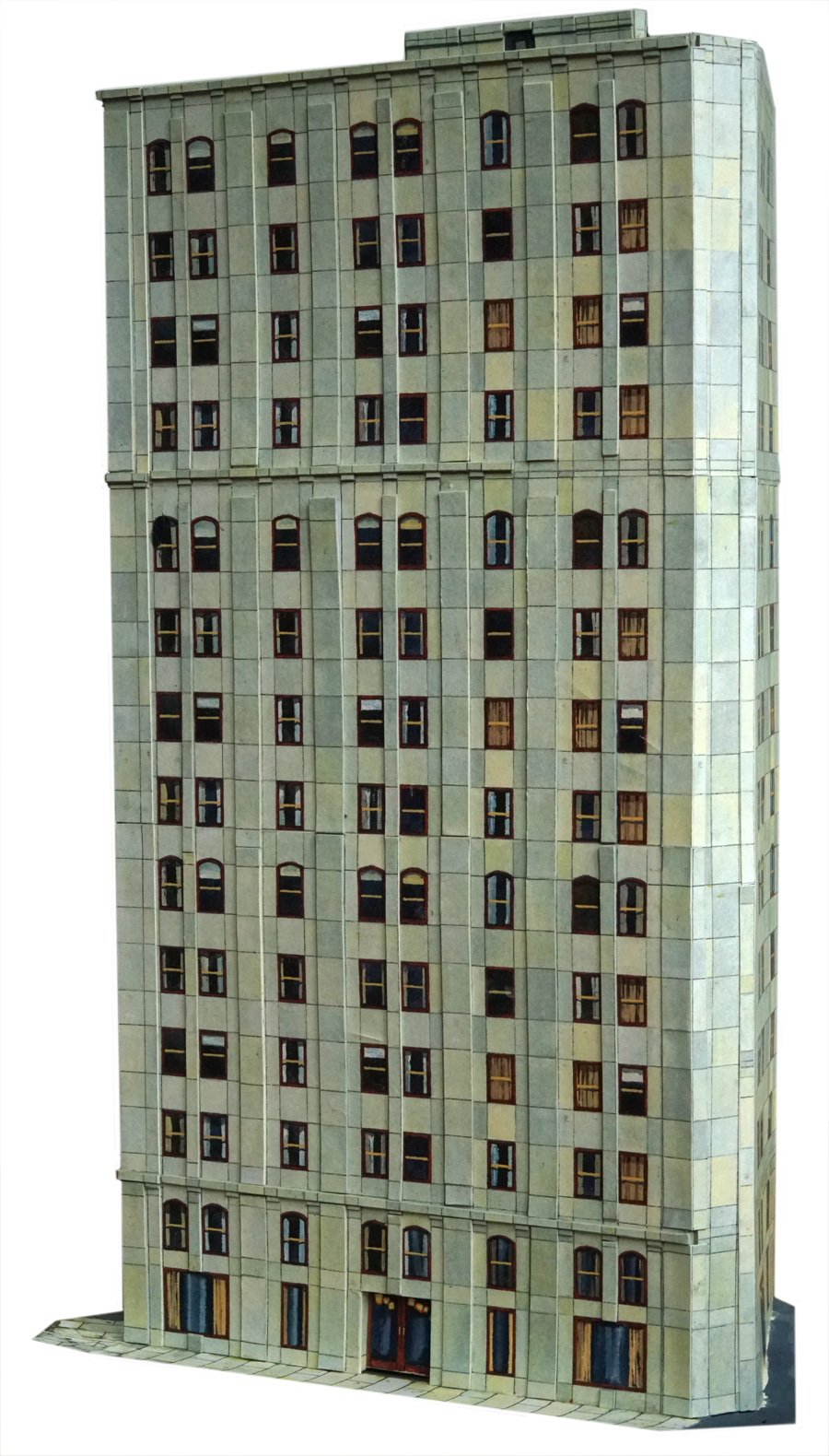
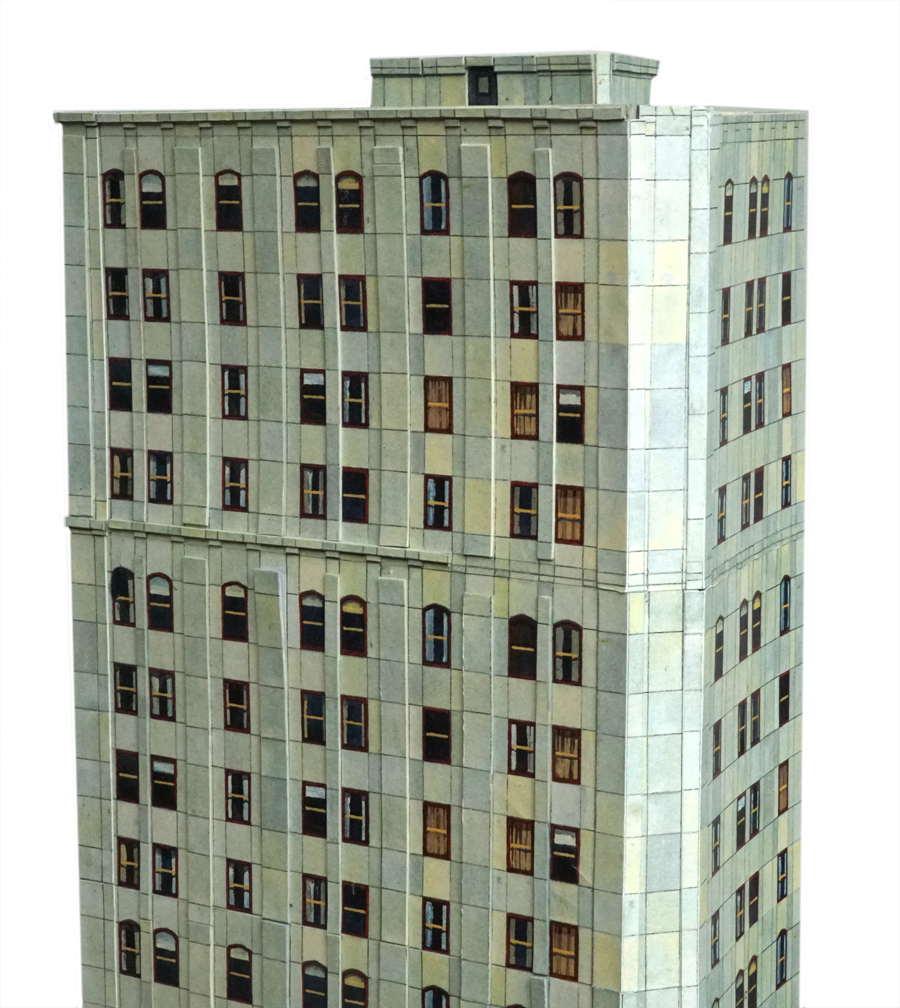
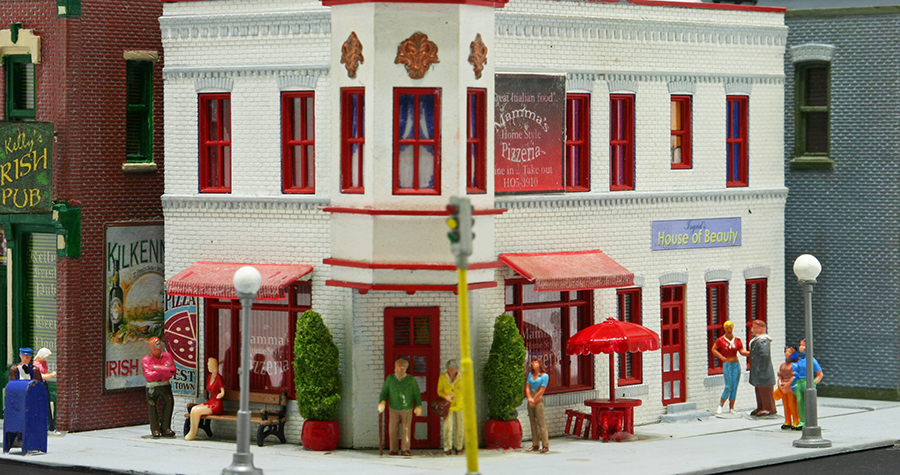
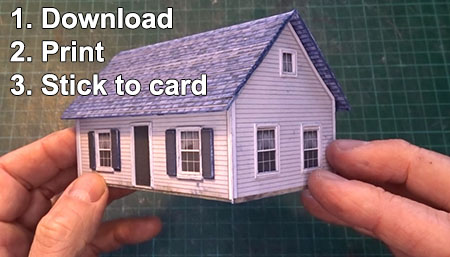
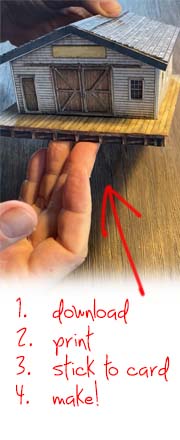
As with all the buildings in the store, they are made from print out scenery.
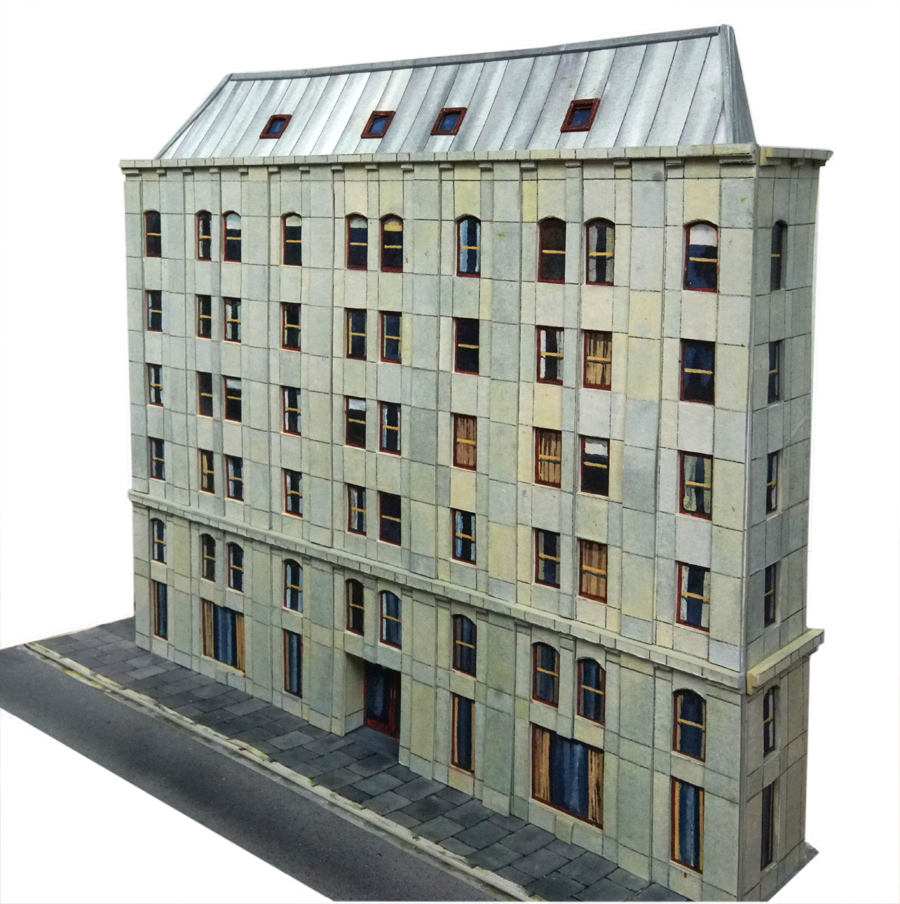
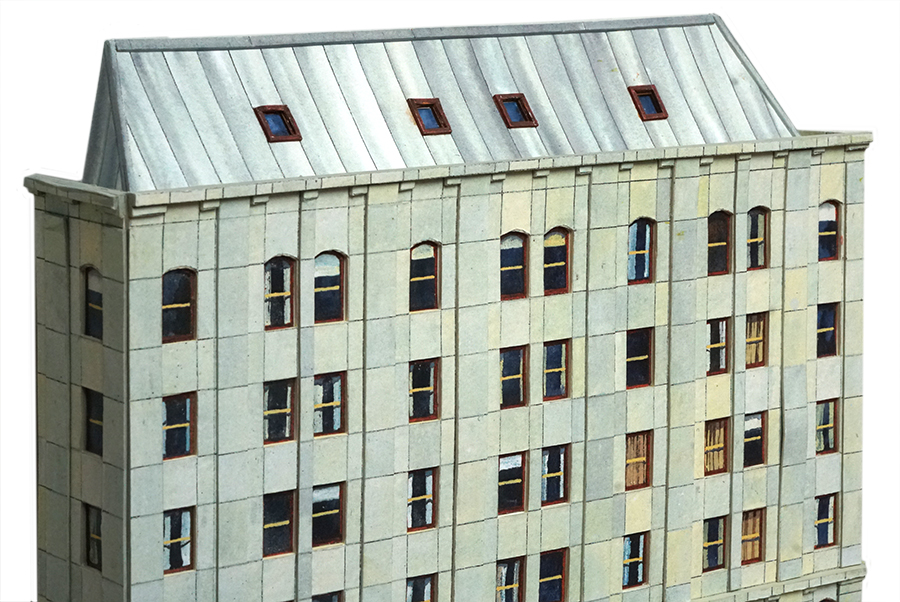
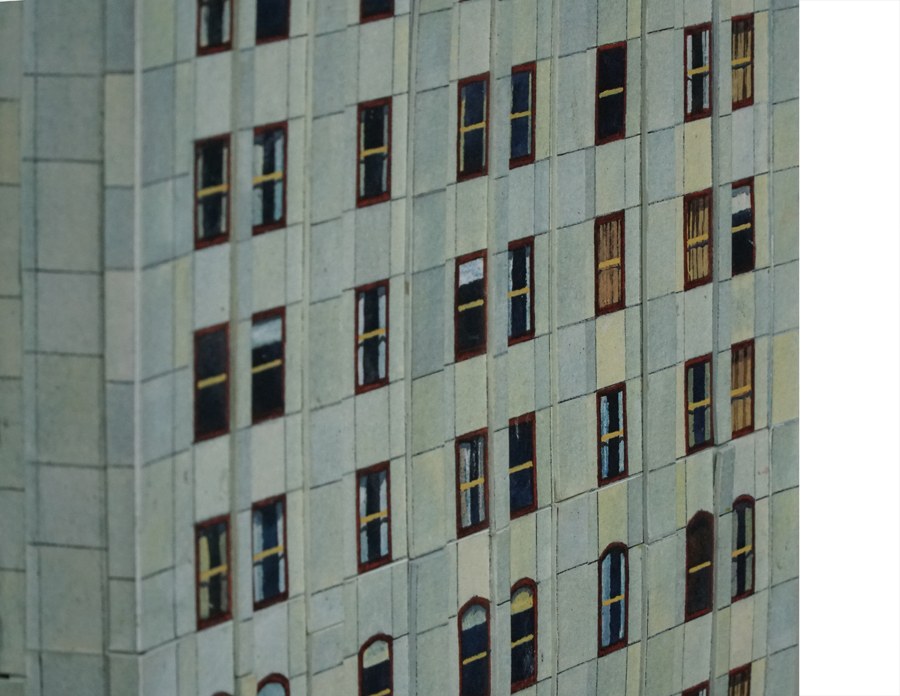
You just download, print, and make. Here’s what this office block looks like:
Here’s the clever part though, because you can print as many sheets as you like, you can scratch build until your hearts content – here’s what John did:
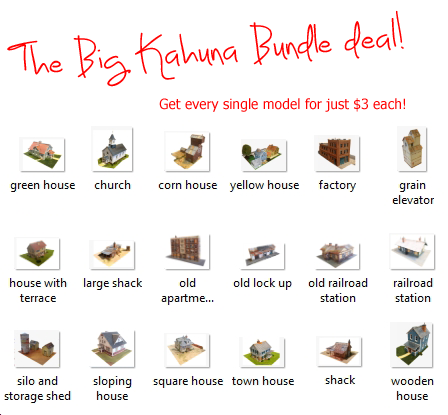
This office block is in the store for $9.97 – but right now, you can grab it for just $9 – with $193 worth of other buildings and the Beginner’s Guide too.
Course, I’m biased, but that’s a real steal.
For HO scale, you don’t need to do anything to the prints.
Don’t forget, once you have the download, you can print it out as many times as you like, so you can really experiment with different layers, and what card to stick it to.
That’s all for today folks.
Hope you enjoyed John and his vid on model train city buildings.
John’s unique delivery is a blast, it doesn put a smile on my face, and judging by your comments below, you lot feel the same too.
I do enjoy seeing the cars and trucks move with the Faller road system as well as the trains.
Perhaps the best part of a Faller system is when the grandkids see the cars ‘magically’ move – it adds another layer of mystery and intrigue to any layout. A big thanks to Rob for showing us this.
Thinking about it, he’s also done another really good ‘how to’ vid on this:
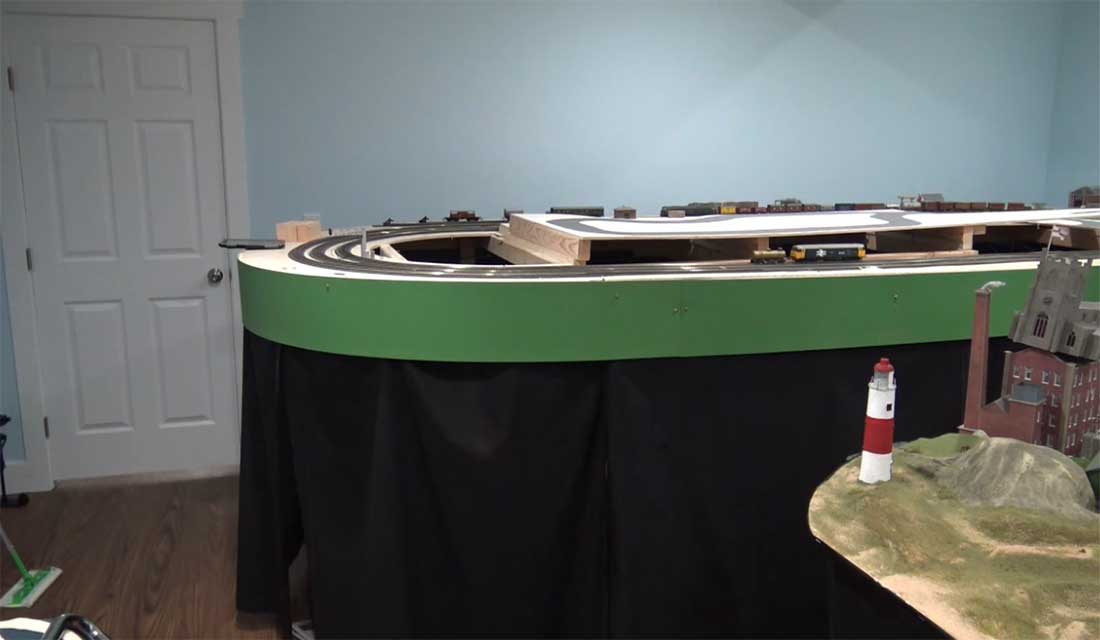
“I had all this material from two separate (previous) layouts. I moved to a new house and had to settle for a 10×12 bedroom.
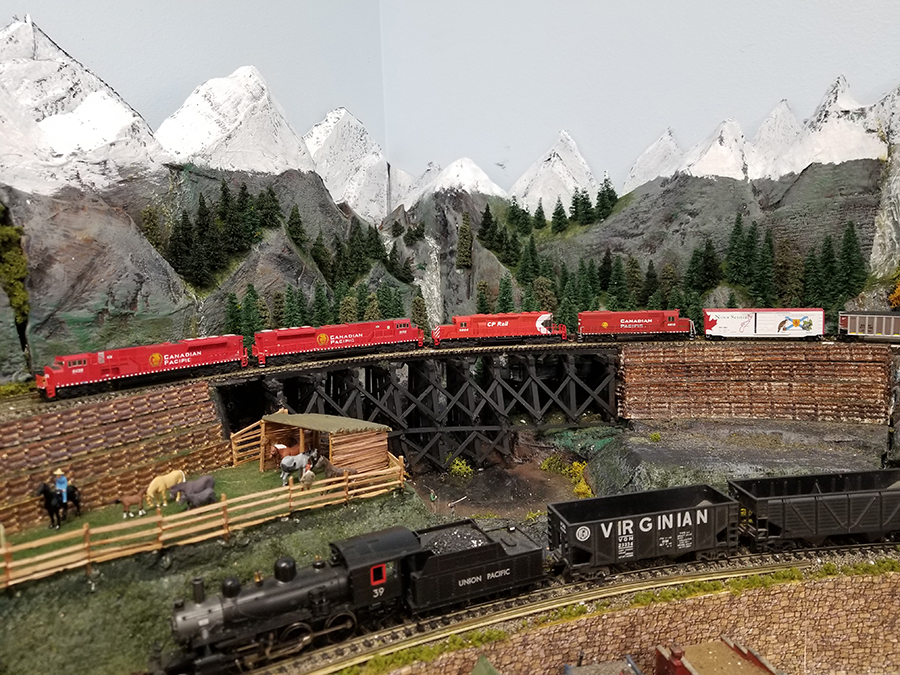
I thought I would try to incorporate two scales into one. I have two mains in HO towards the front of the layout and a loop of N scale on the back and the elevated part.
The mountains are made from 2 inch blue styrofoam standing upright and carved with a hot knive . Behind that I carved more mountains out of one inch foam.
Andy”
That’s all for today folks.
A big thanks to Rob for his Faller road system video, and to Andy too.
Please do keep ’em coming.
And don’t forget the Beginner’s Guide is here if you want to build your layout without the mistakes we all make.
I’ll leave you with this tip that made me smile:
“Morning:
My best tip would be “know your limitations on the size layout you intend to build.
Regards, Gary
P.S. I had to buy a different house to accommodate mine.”
Fred’s been back in touch with his stunning N scale, this time he talks us through his forced perspective model train backdrop:
“Hi Al –
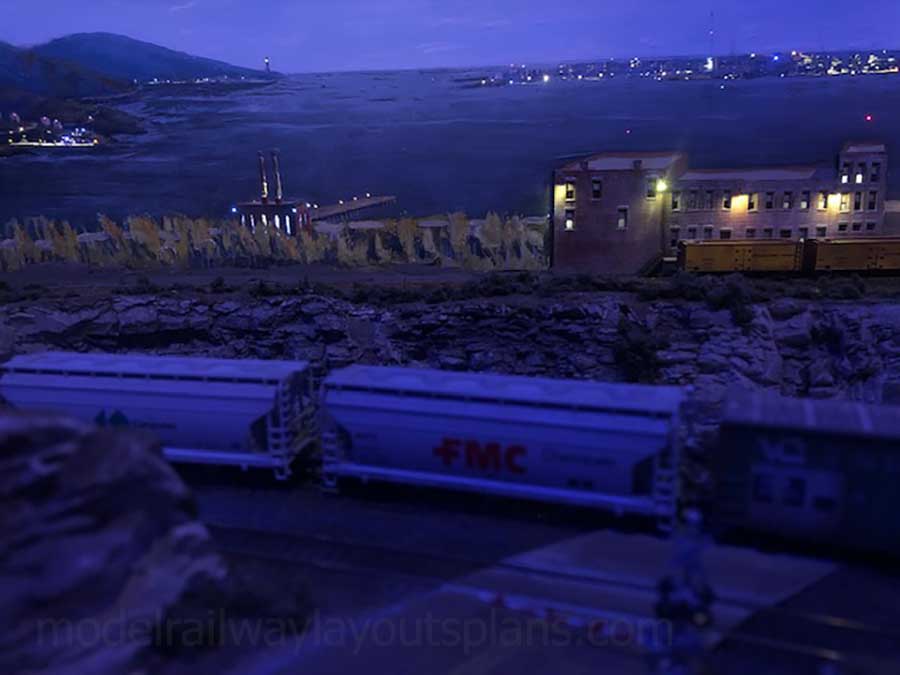
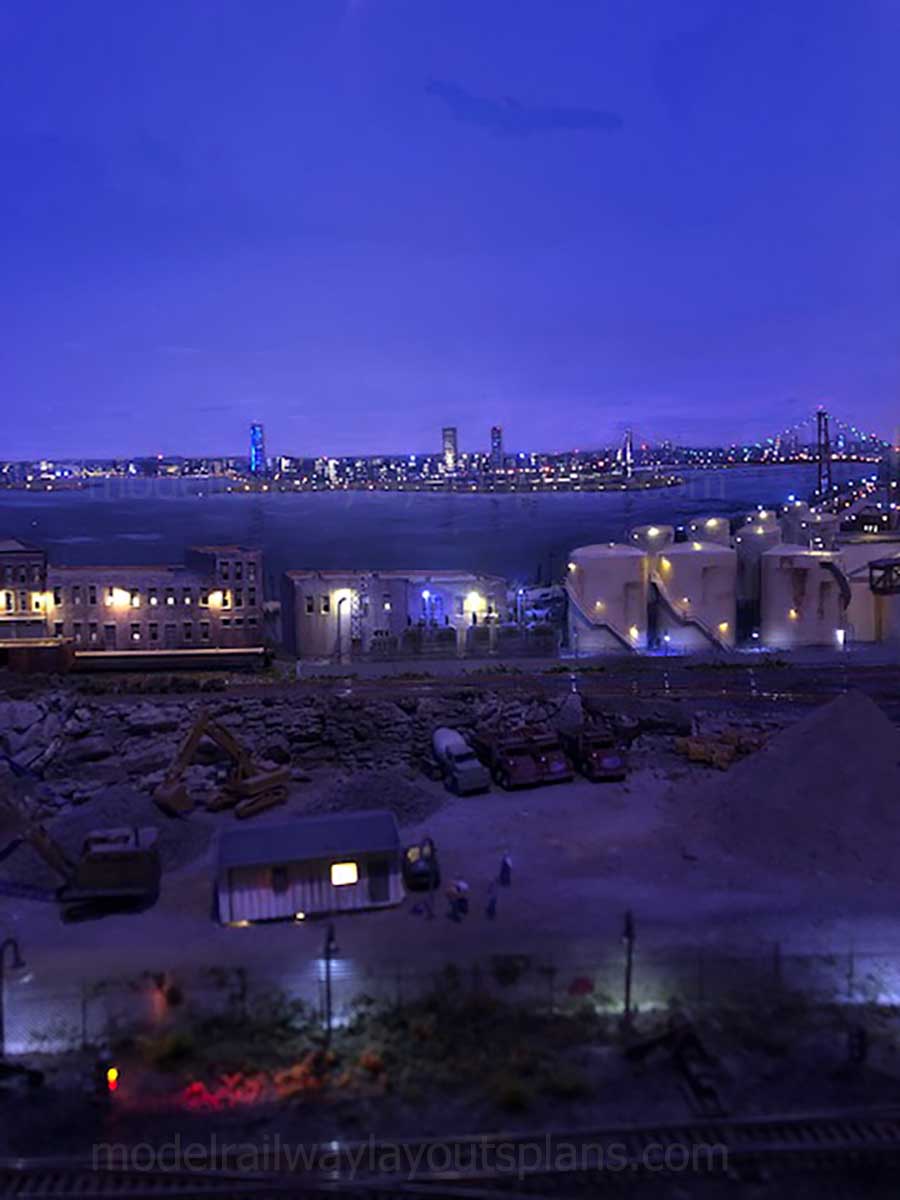
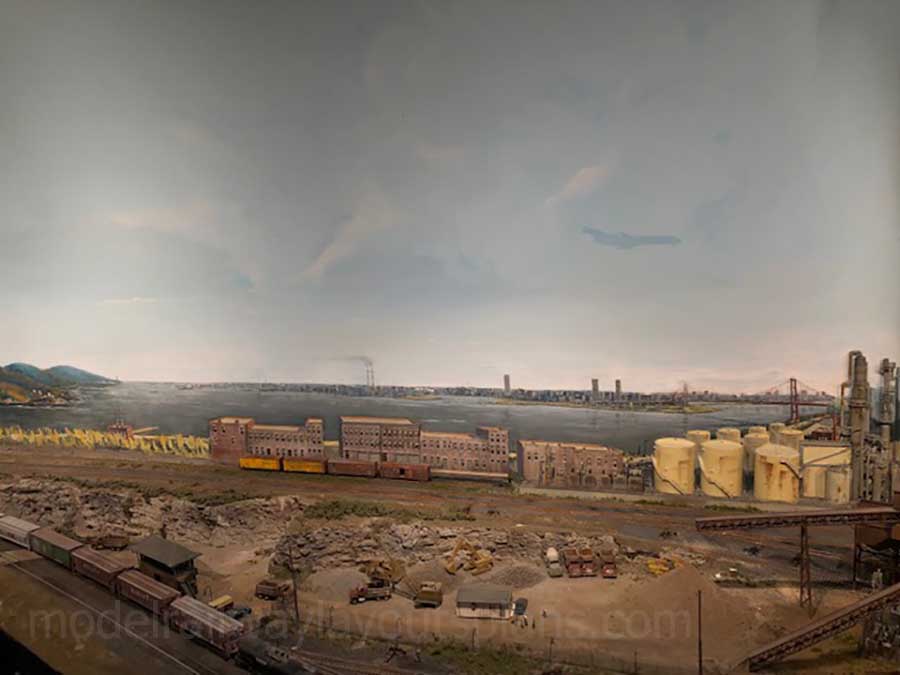
With this revision I had to use a kind of “relief” modeling technique in the middle ground to blend backdrop with the model.
Look in particular at tank farm: one three quarter relief tank, two one third relief, res are painted on landscape.
Buildings and freight dock are same – used front elevation from kits, but roofs are painted onto backdrop. Perspective layout was hair raising – broke all conventional rules regarding vanishing points, picture planes, scale dimunition, etc., but seems to work from most viewing points.
Most dioramas seek to limit the viewers’ point of view. But as a model layout with “walk by” access, the designer has to “frame” as many points of view as he can to minimize the number of places where the perspective is out of wack, and maximize the number of places where he can employ “distorted” perspective to great effect.
The 1/160 actual N scale often has to go out the window. What do I mean by that? Well one example would be my main street in the city, which is probably 2 1/2” wide at its mouth (near the viewer) and closer to 1 1/2” where it merges with the backdrop.
Street lights are about 4” apart at the start, but 1/2” closer together with each subsequent bay towards the backdrop, until by the time they get there, they might be only 1 1/2” apart, and of course they have to be smaller, which is why I made all my own lights.
If the main street were out in the open, it would appear to zig 30 degrees upon hitting the backdrop. Careful high rise placement in the foreground of the model preserves the apparent straightness of the main street.
The problems of horizon placement abound. The horizon on this “transition backdrop” between city and country ends of layout is higher than the distant horizon beyond the harbor. But here the viewer can stand close enough to touch it.
The harbor exists in a pocket of my house that was our original coal bunker during the 19th century, and as such is about 8 feet in from the face of the layout!
The only reason I built the rock crusher/ cement plant, with its smokestack was to place it at the end of the oil refinery and help visually “bifurcate” the two major sections of the layout.
I saw a lot of requests for a better look – plan, video of entire layout so that the guys could better understand it.
Took this “at dusk,” so they could see a bit more. Hope it helps.
I am combining HO and N to try and and get some degree of depth.
The steamer in the front is HO and the coal train is N.
Some will say ‘not prototipical’, but I’m having a ball.
Andy.”
Andy is getting a lot of bang for his buck using ‘forced perspective’ – it works so well, making a small layout seem instantly larger.
Now on to John:
“Greetings from Los Angeles Al!
The commercial plants and trees can prove to be costly if you need several…
I made these planters on ether side of the door by wrapping pipe cleaners around a sharpened pencil and then pressing them into the desired shape. Then I paint then with inexpensive acrylic green and glue them into the planters .
The planters are BEADS from the craft store..then I glue them to my structures ,or where needed om my layout You can make dozens of these for next to nothing…
John”
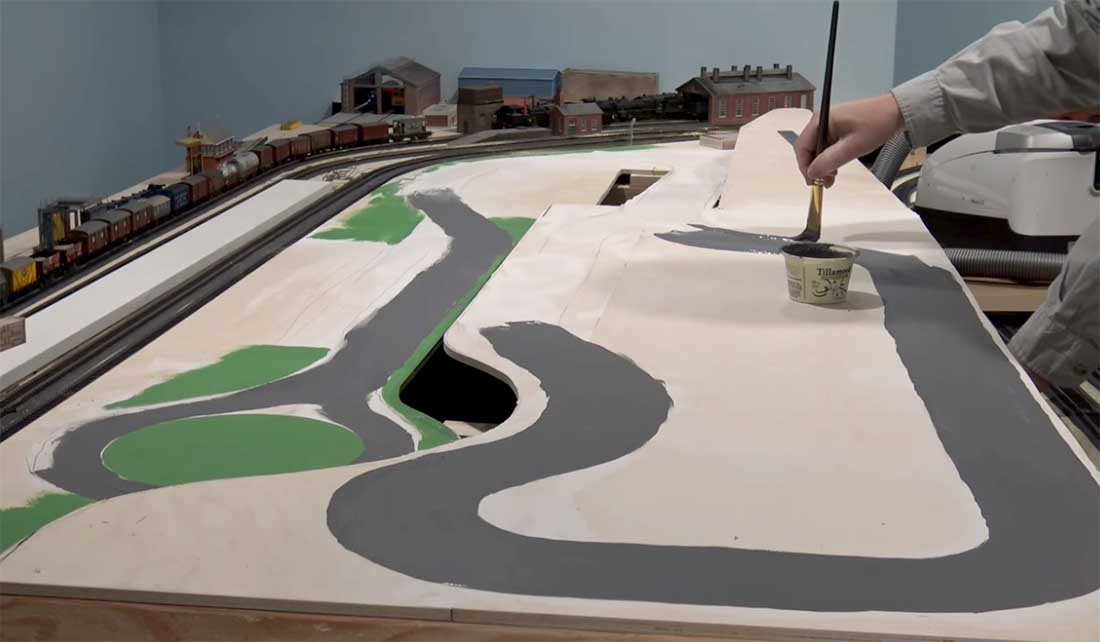
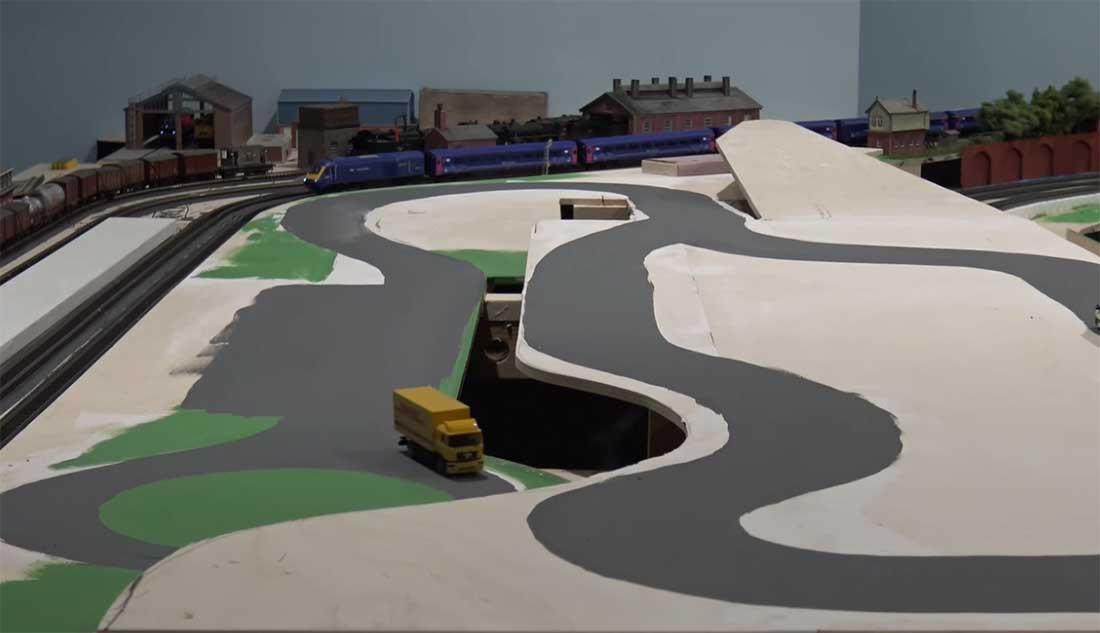
Now for the latest installment from Hall of Fame member, Rob, because everybody wants their cars and trucks to move on their roads too.
Since the first Faller video, the road has progressed to grooving for the guide wire and then to plastering and painting the road surface.
For those perhaps interested in trying a Faller Road, they may find it interesting to see what my experience is. In the end, I got a fairly smooth and satisfactory road.
Now, I just need a few more vehicles to add some more chaos to the layout.
And – fingers crossed – Andy will send us more pics of his project, it’s a fine looking bridge. I do like seeing the ‘forced perspective’ model train pics, and you get to play with two scales too.