Brian’s been in touch with his shelf layout HO scale – I do enjoy seeing your layout from the very start:
“I model in HO scale but based on 3 foot gauge, hence HOn3.
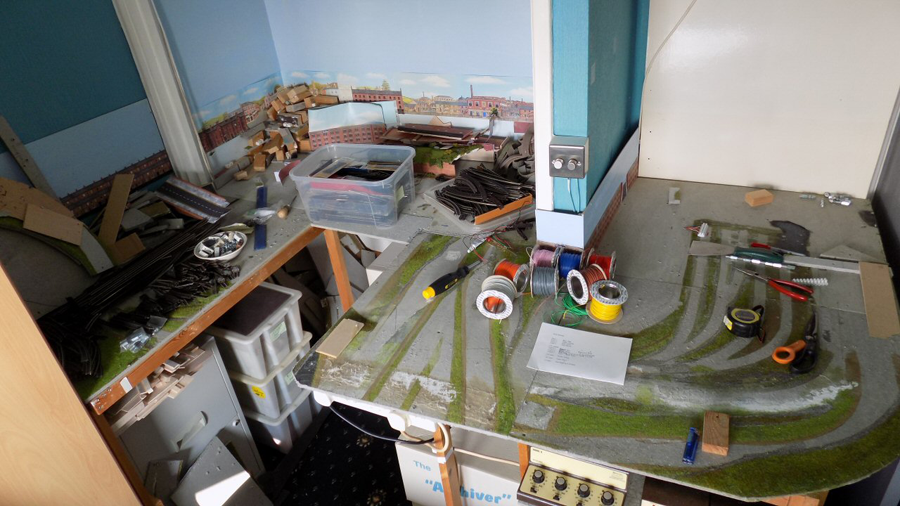
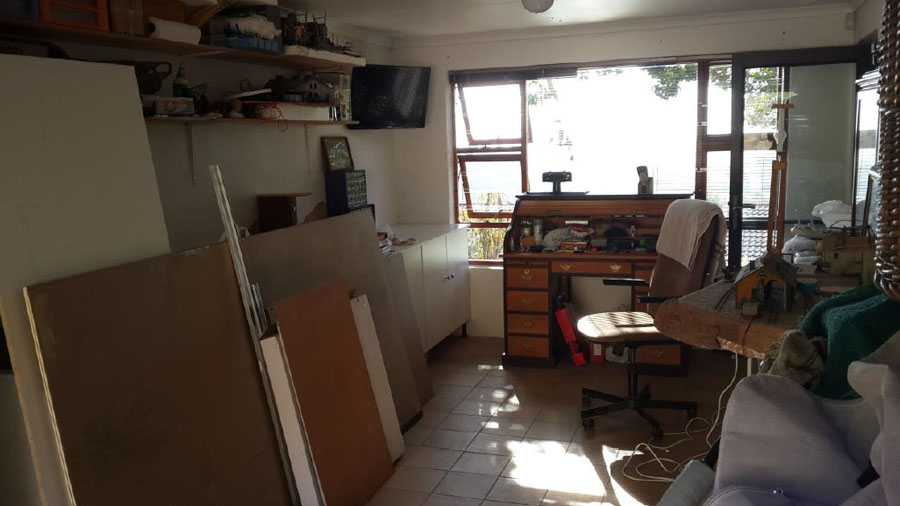
Below is the garage in the process of being converted into my train room. I put up a drywall 6 foot in from the garage door (behind me in this photo) as a storeroom for my wife’s household equipment.
Access to it is through the door at the back right. This left me with a 14ft X 10ft area for my layout.
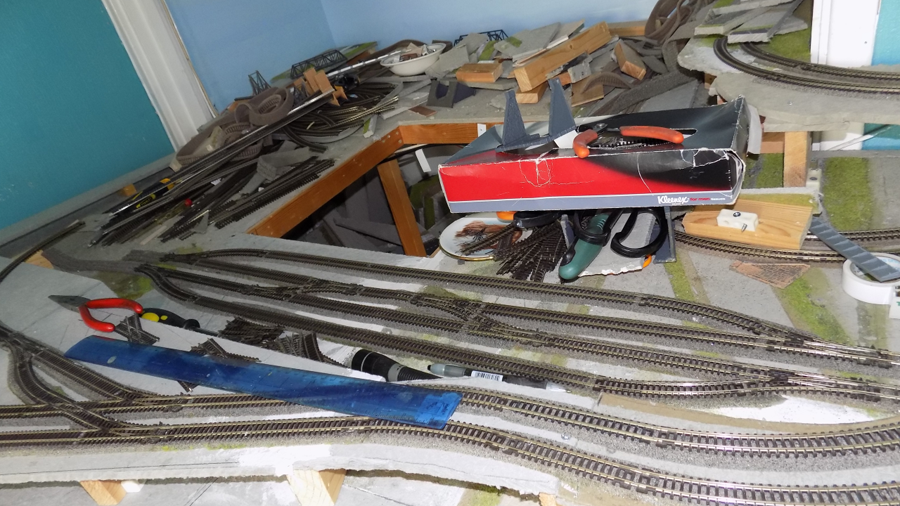
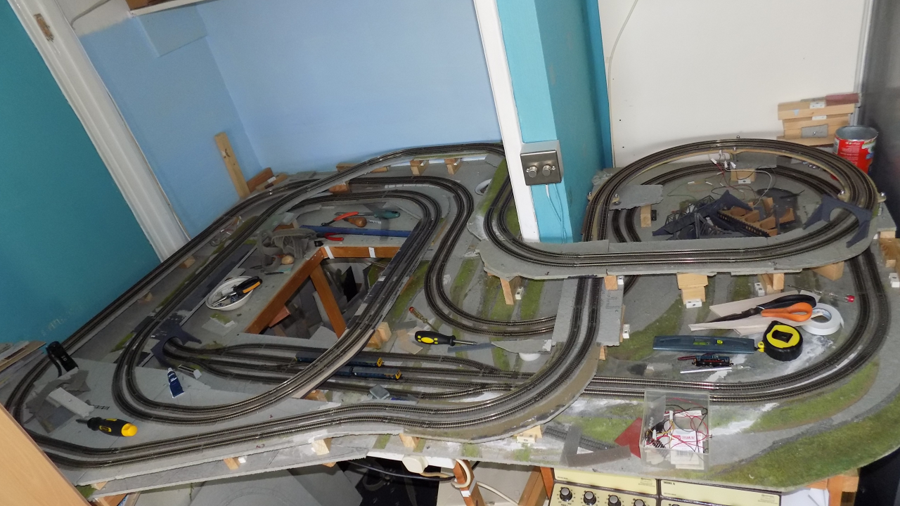
Below is progress with the upper level still to be erected. A must have, are cupboards below for storage of model train “stuff”
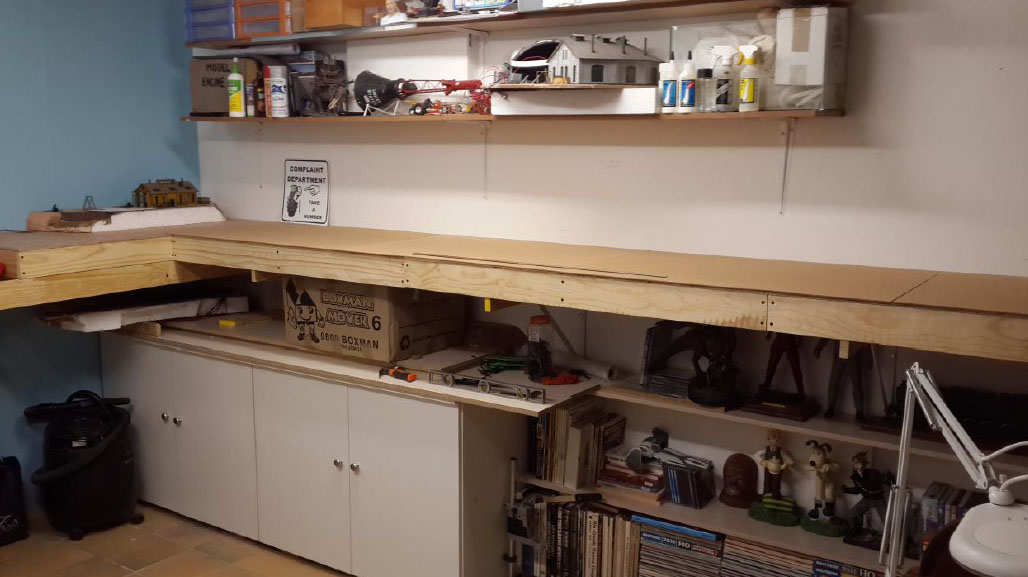
My layout is not so much about long runs (but will have a double loop and involved operation around logging shown in photos at the end) on the upper level.
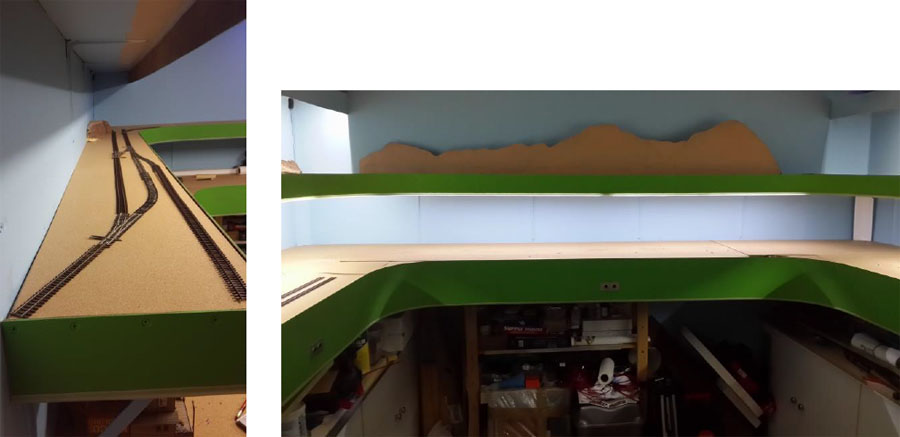
Left photo below shows the start of the logging area. Right photo shows all the lighting under the valances installed. Rear upper storage shelf in the middle has not been installed yet. It will have the strip lighting under it to light up the area where the sawmill will be situated.
Photos below show the top deck of my two level layout is more advanced than the bottom with track laid and operational. Scenery in certain sections is complete. Photos taken from left to right as you enter the room, first the top deck.
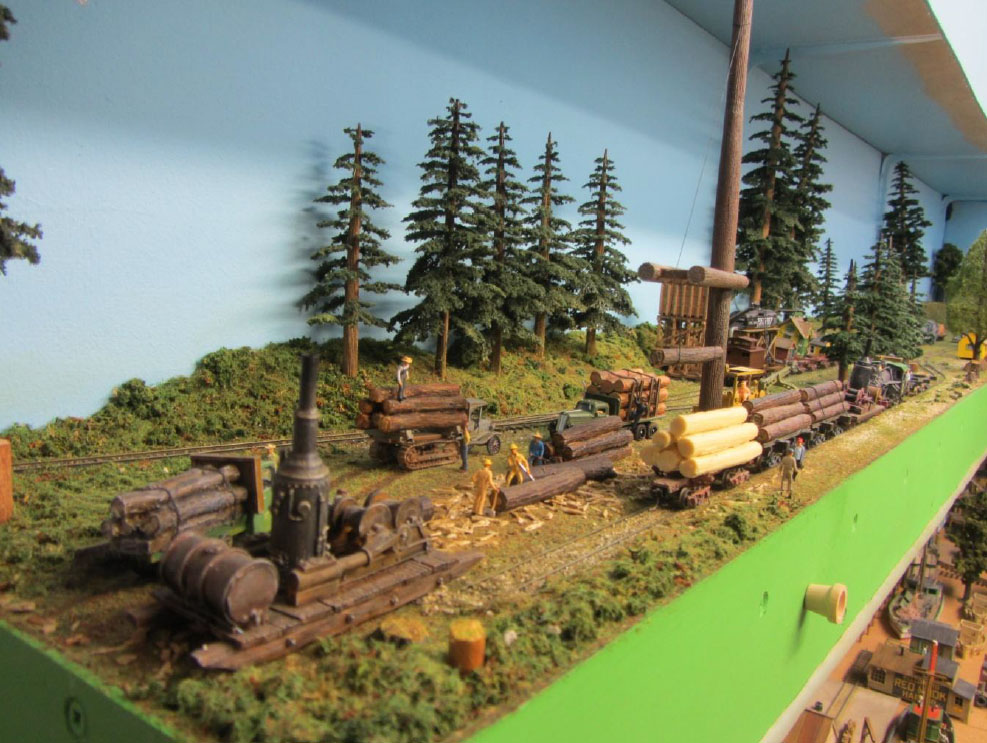
A busy logging scene. The knobs for operating switches on the fascia board are part of the Blue Point switch machines all around the layout. The Log skidder is one of many resin kits by Rusty Rails. Log loads are cast in resin by me before painting and weathering. The Vehicles are modified kits.
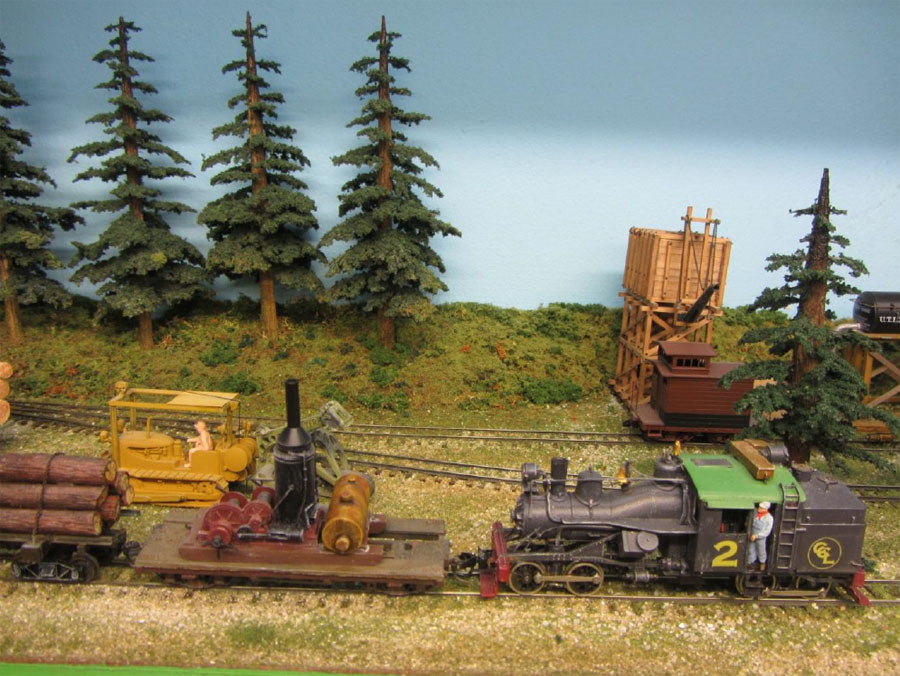
The loco in the photo above is a brass Westside Heisler (one of two that I have) painted and weathered by me as is the case with nearly all the locos except the two Blackstone locos. They still need to be weathered and a train crew added.
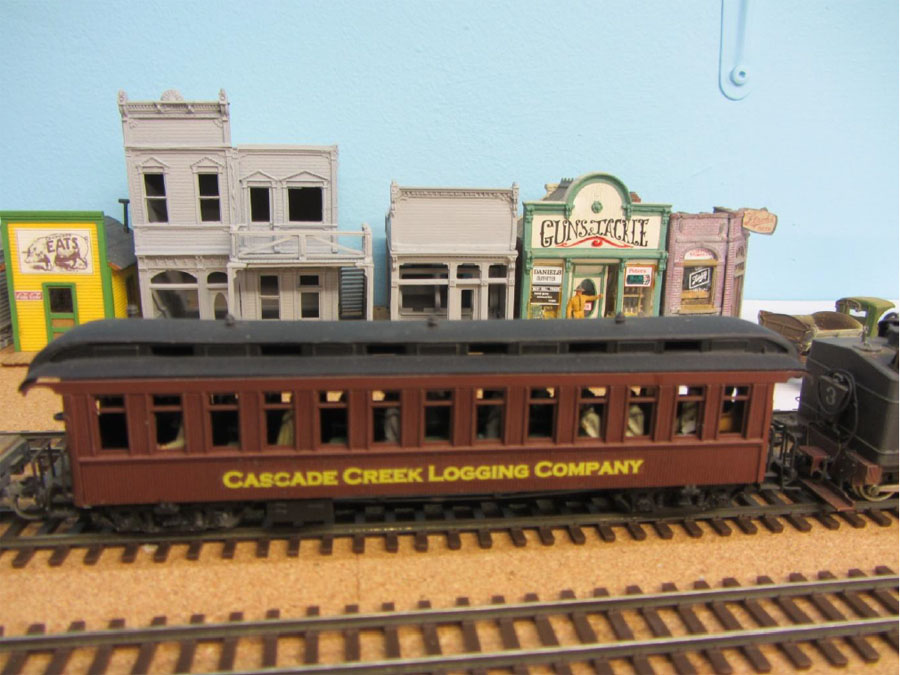
The photo below identifies what CCL stands for – Cascade Creek Logging. The Mallet is a very old PFM model.
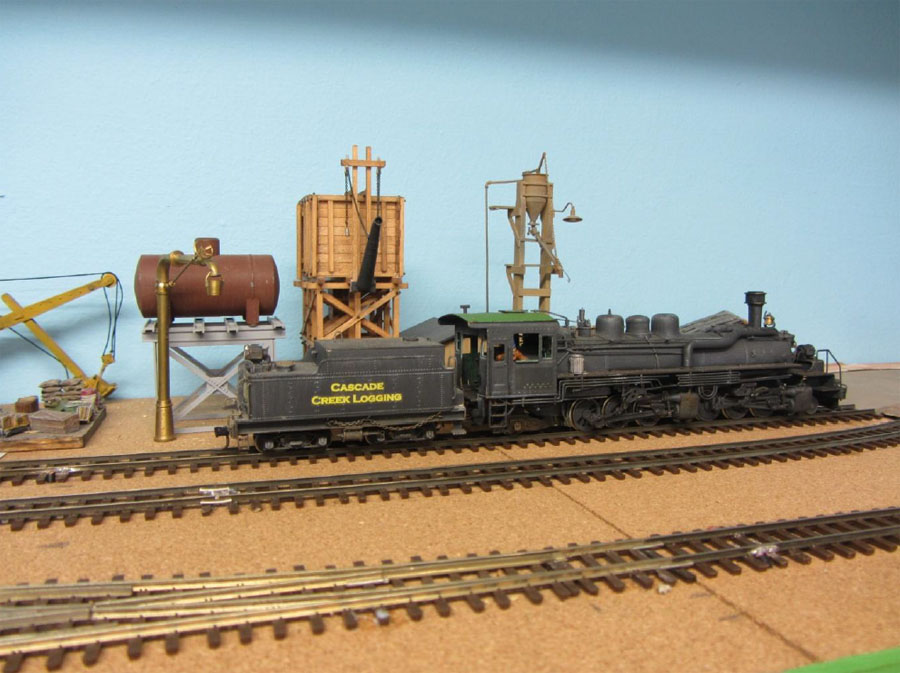
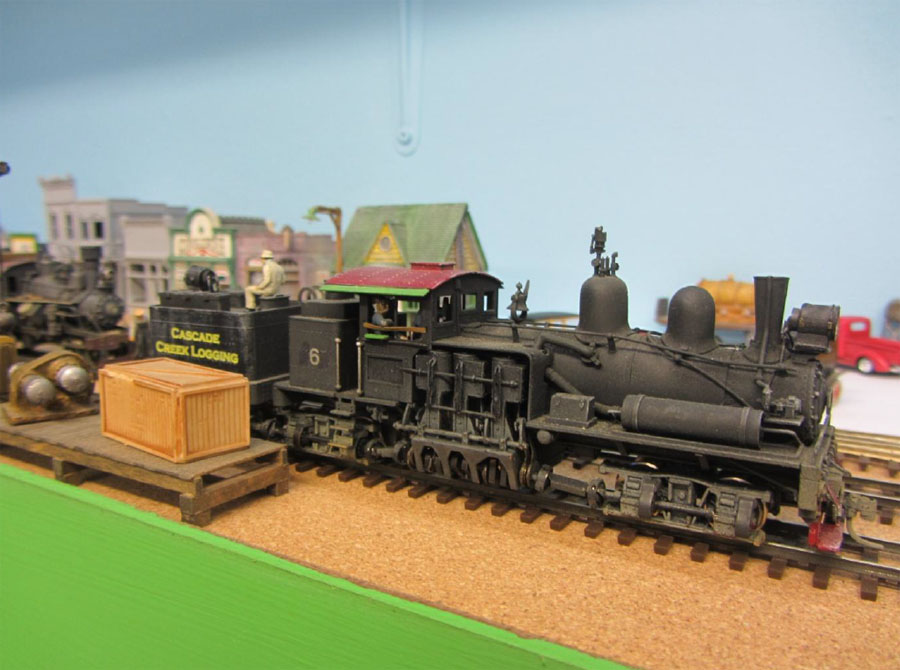
Photo below is a 3 truck Shay (one of two that I have) by Westside models.
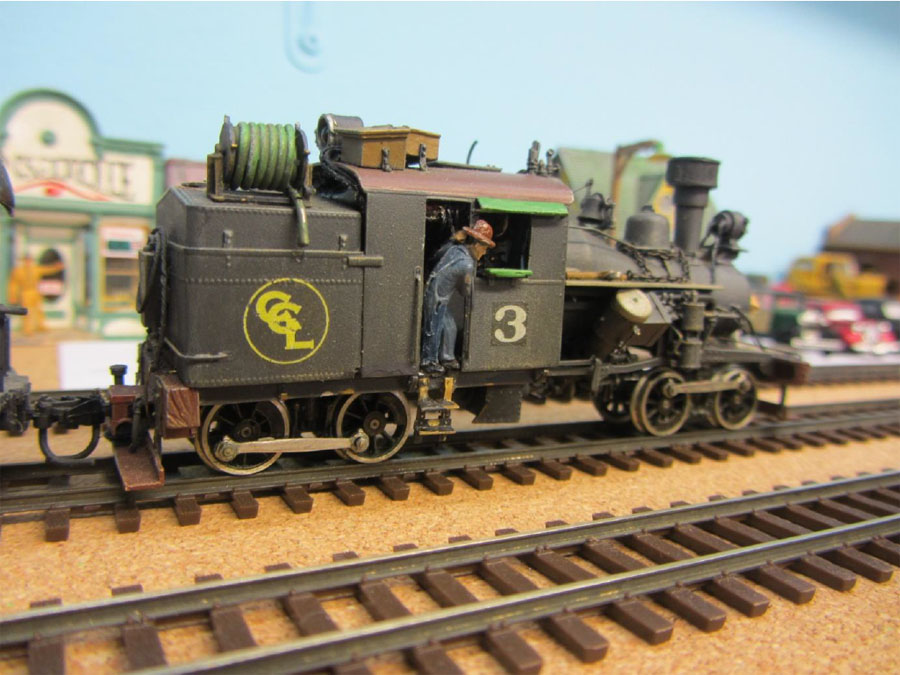
Below is the other Heisler, also a Westside model. Kadee couplers are used throughout on all locos and rolling stock.
A company Coach (CCLco) built from a (long gone) E&B Valley kit I have about eight of these.
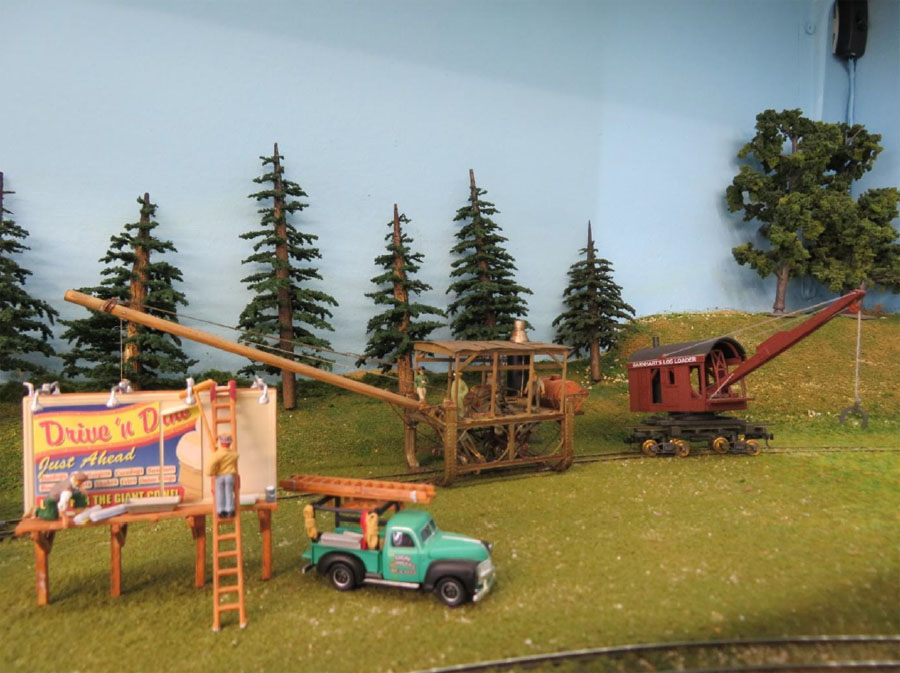
Below, a billboard and truck with figures is by Woodlands Scenics. Big Mcgiffert log loader is a Rio Grande Model and the truck mounted log loader by Walthers.
Below is a Woodlands Scenics Tie and Plank mill. Disconnects log trucks are by Rio Grande Models.
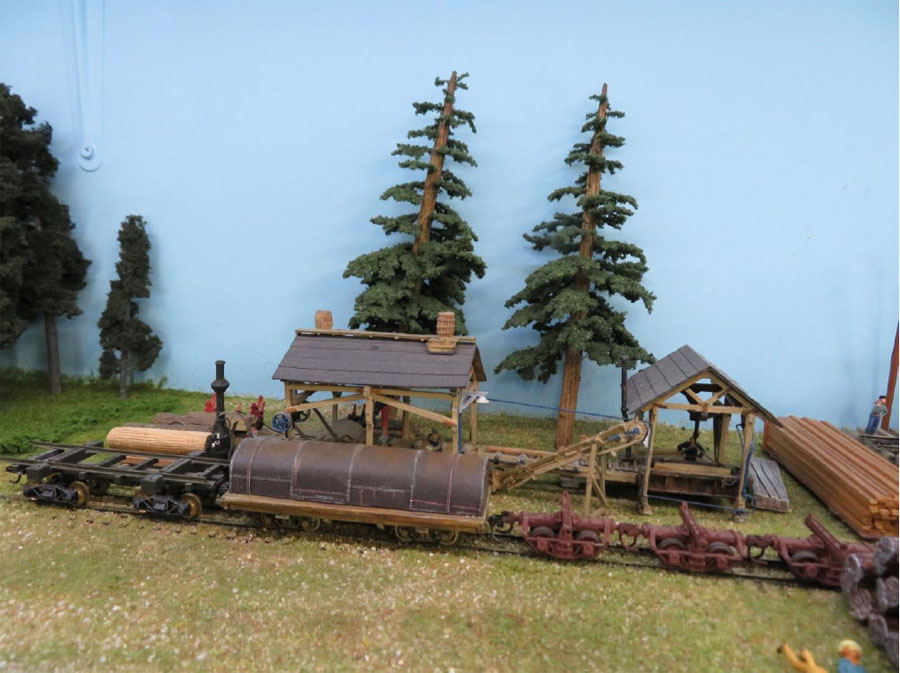
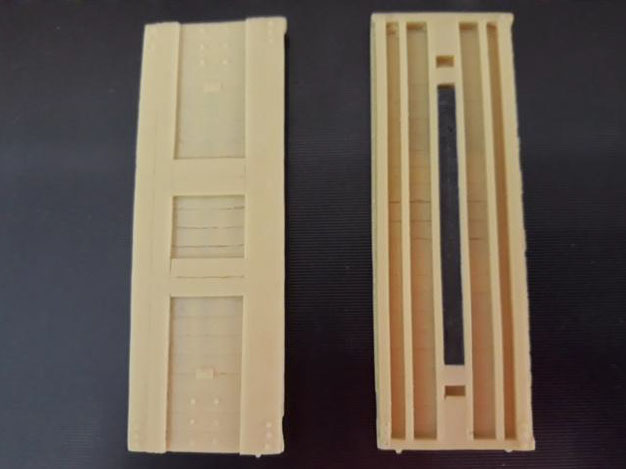
Flat car with water tank in above right photo (both) are cast from resin. Lead strips fitted between the beams of the car (shown below) to add weight before adding the bolsters and trucks, painting, staining and weathering.
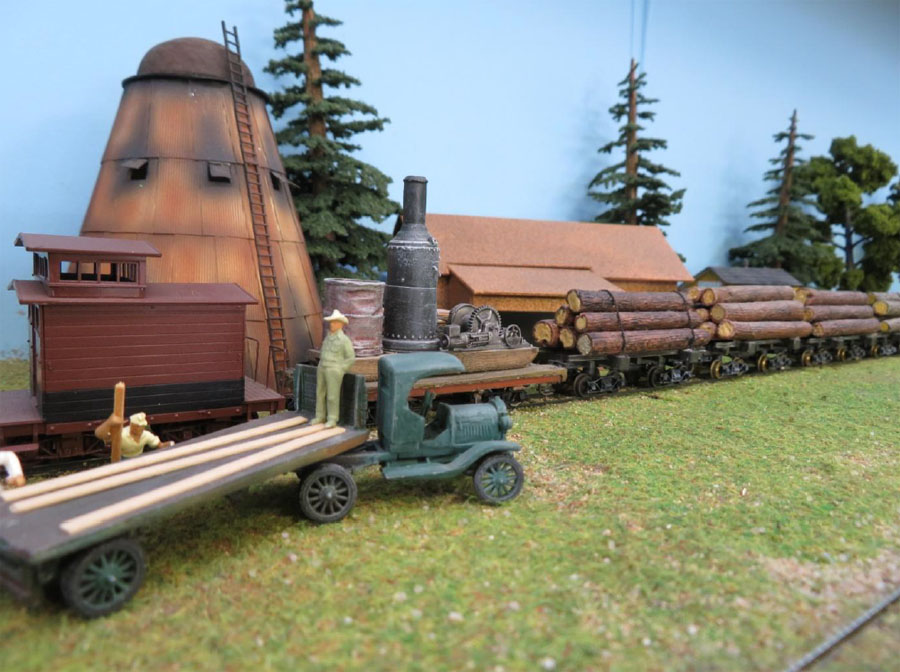
Photos below are: Tepee sawdust burner by JV Models. Caboose a Durango Press kit; Donkey log skidder on another cast flat car is a Scale Structures kit. Cast logs on HO Rivarossi log cars converted to Hon3: A Woodlands Scenics vehicle loading cut wood.
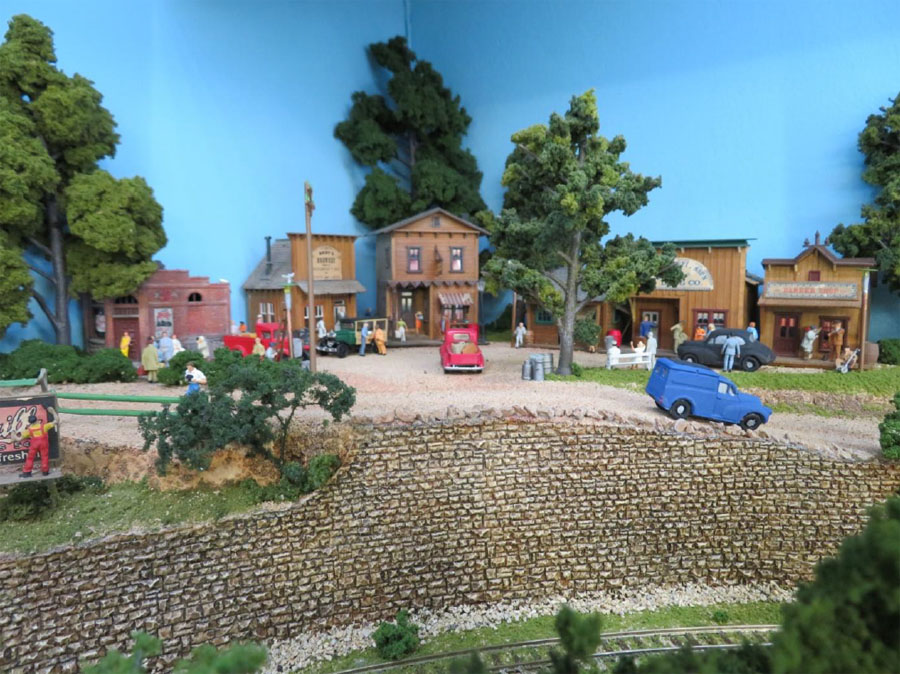
Above is mixture of Campbell and Woodlands Scenics kits all fitted with interior detail and lights
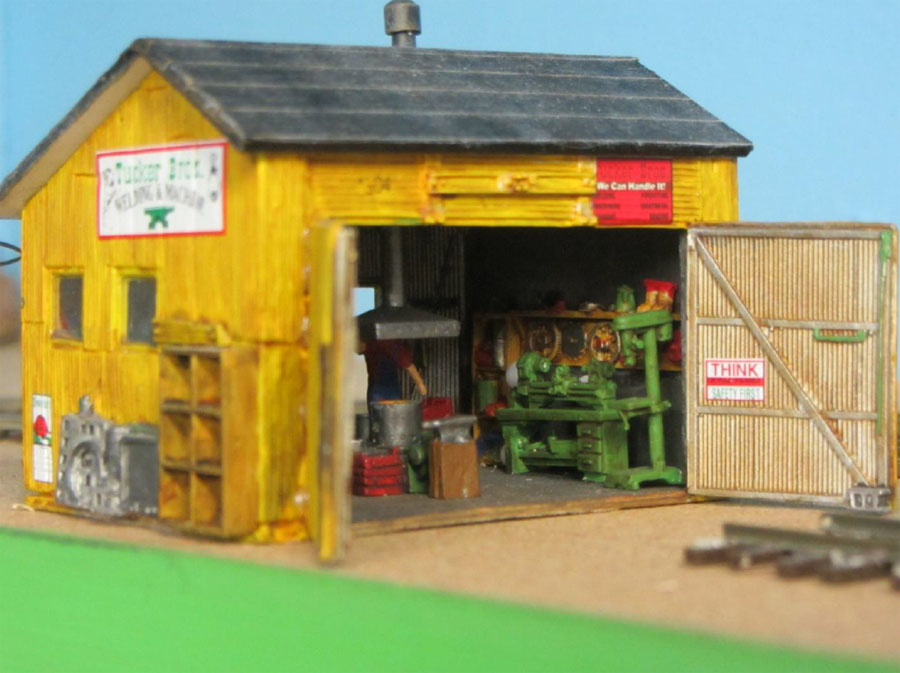
Below is a Woodlands Scenics Tucker Bros machine shop with lights and arc welding unit inside.
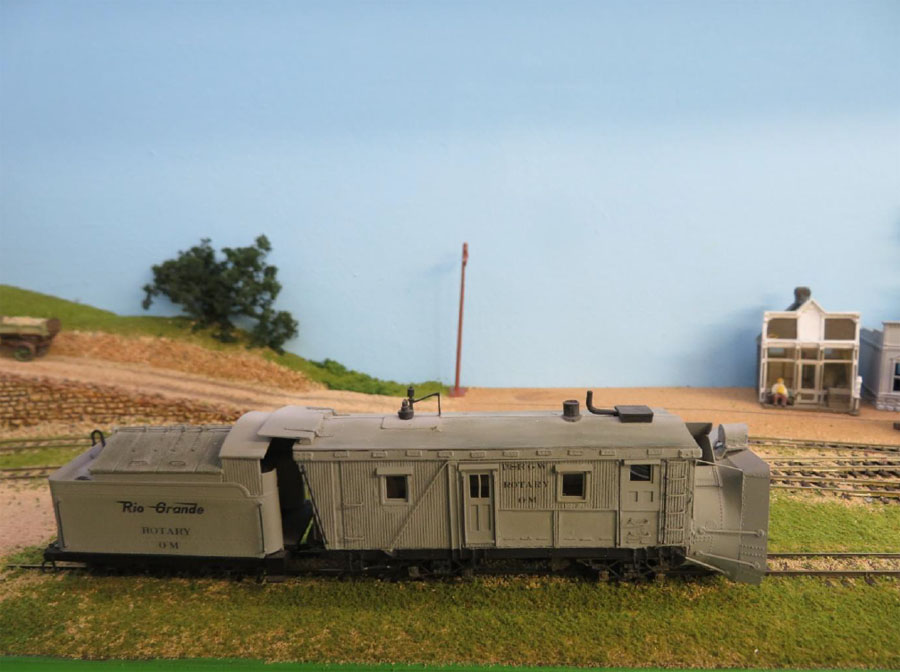
Below is a Rio Grande Models Rotary snowplow kit OM.
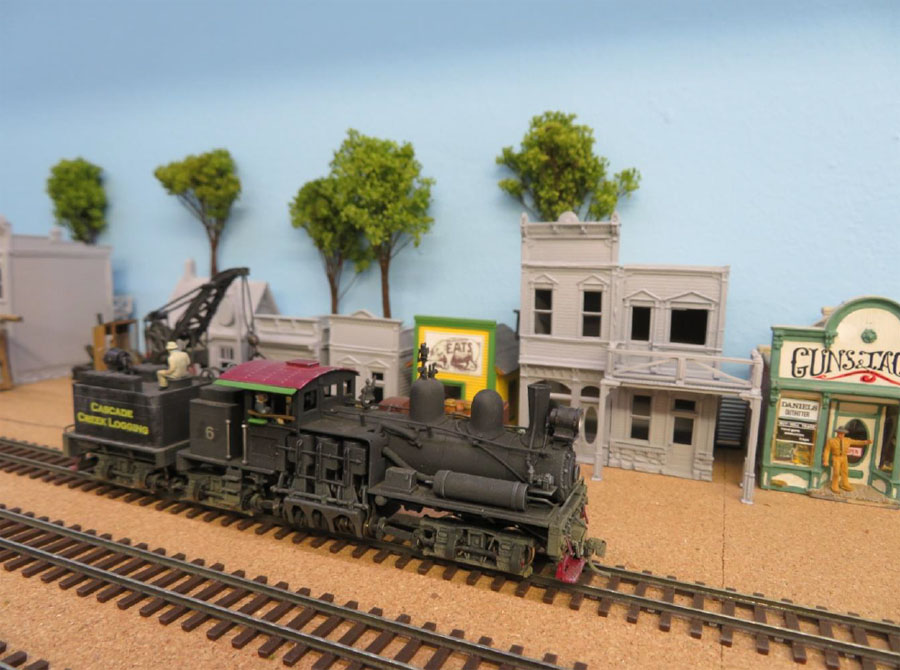
Above is another 3 truck Shay with mostly Woodland Scenics buildings in the background awaiting painting.
Below is a Woodlands Scenics gas station kit converted to small line side station with a working street light.
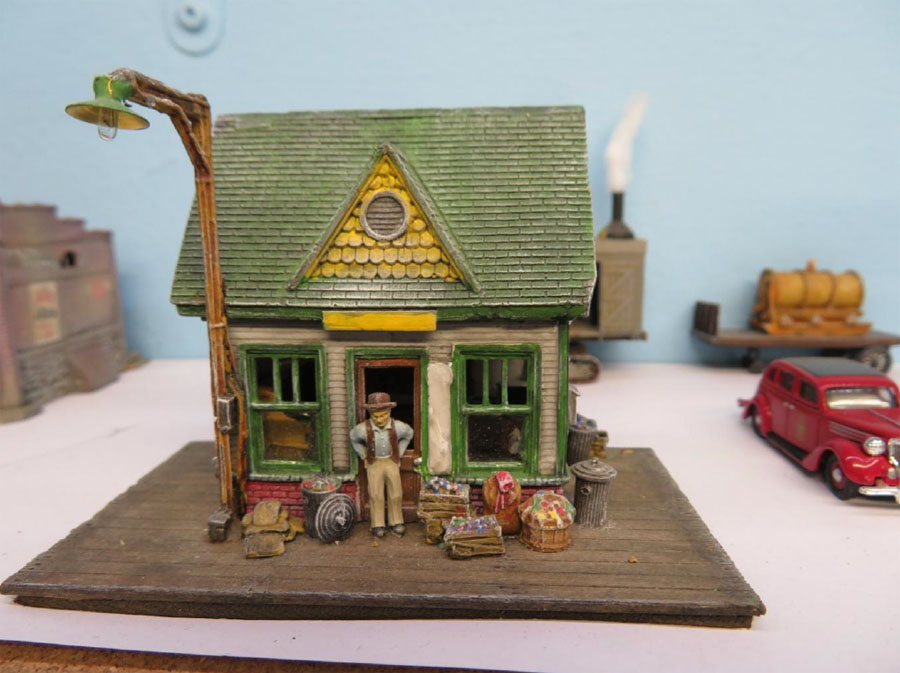
Below is a Design Preservation Models “practice” kit. Full interior detail and lights added from my “bits box”
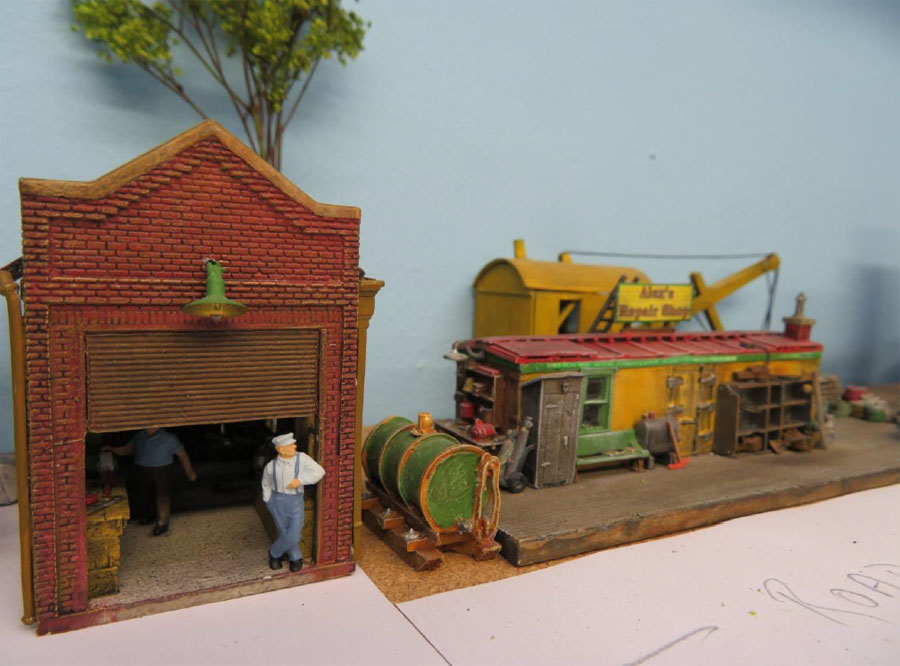
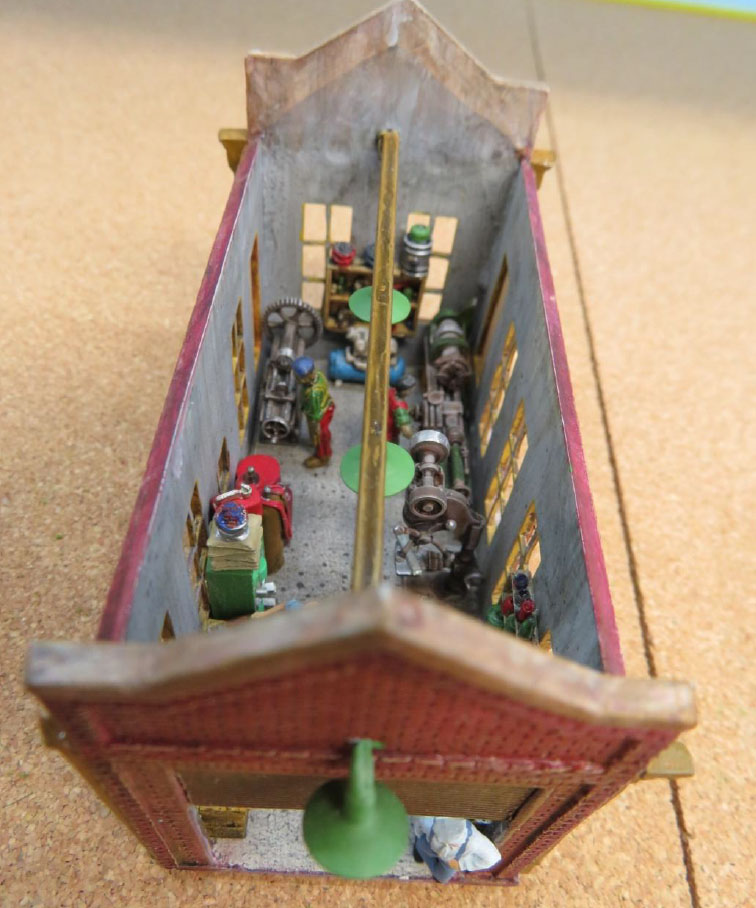
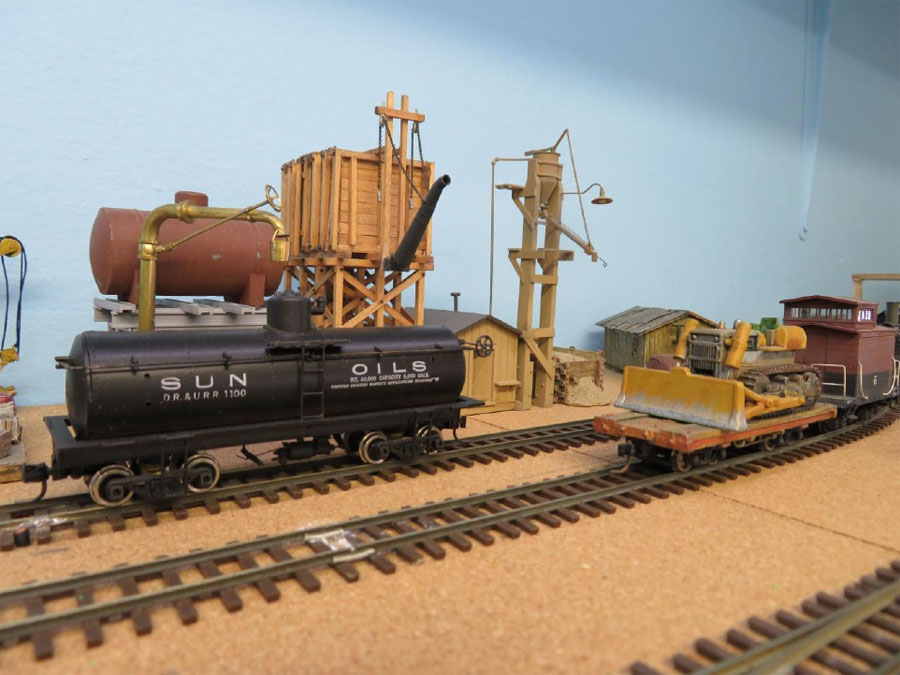
Top level terminus (Cascade Creek below). The tank car is by Narrow Gauge Car Shops.
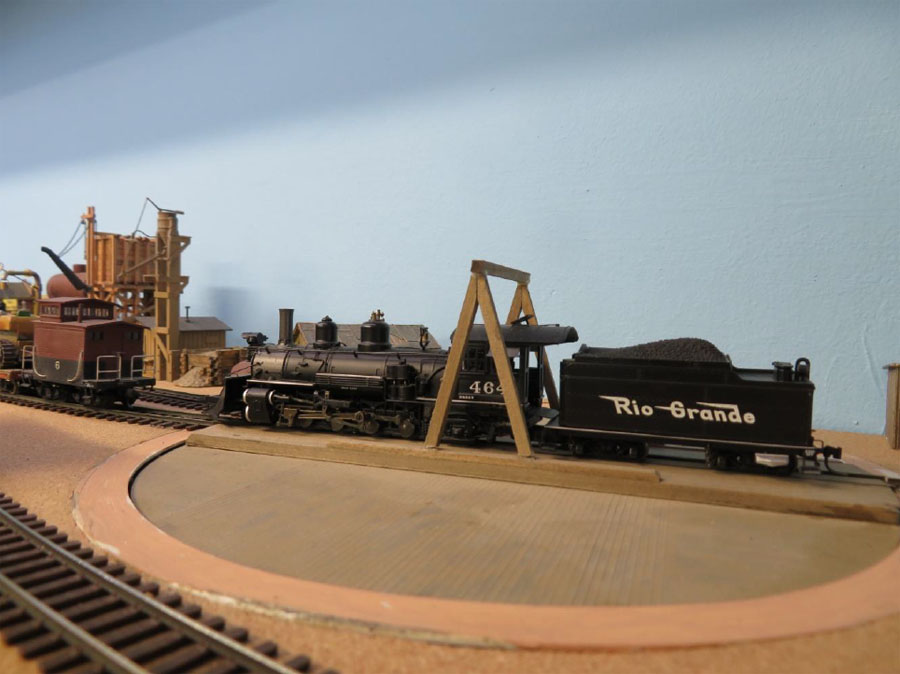
A Blackstone K27 (one of two that I have) on a modified HO (to HOn3) Atlas turntable with a Tamiya
gearbox mounted underneath.
The lower deck:
Lots of work to do but at least most of the structures are built and painted. Some photos to show the extent of the detail. I make sure that all my buildings have interior detail and lights.
The Lenz LH100 throttle (have 3) right rear is the DCC system I use to operate the layout. All locos are DCC with sound from tsunami and Blackstone.
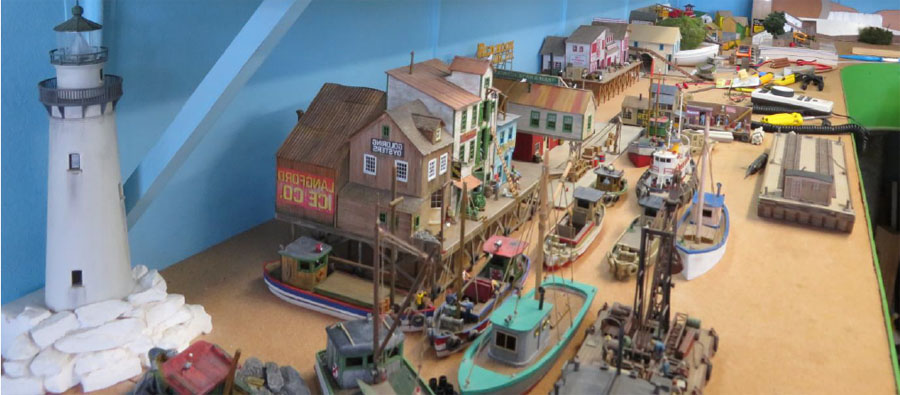

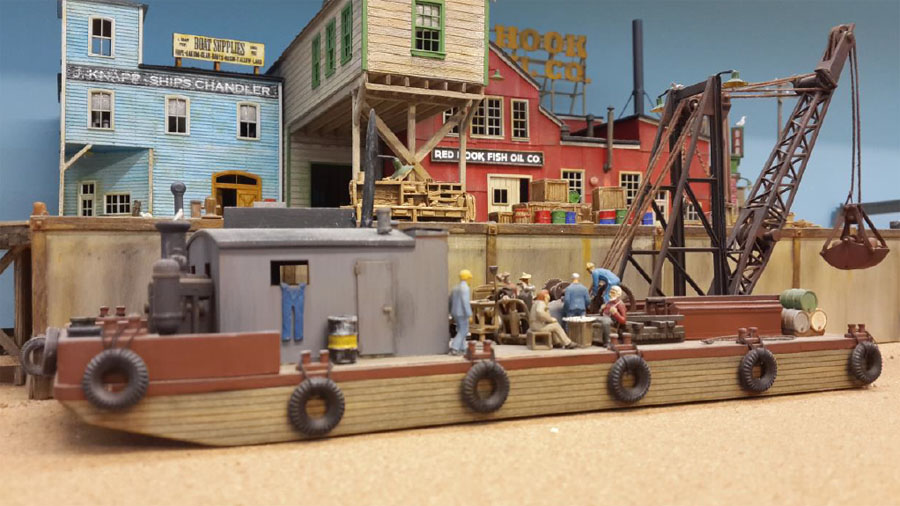
The harbour buildings are a 9 building limited edition set (only 350 made) by Foss Scale Models. All buildings have full interior detail with lights which were not supplied as original equipment.
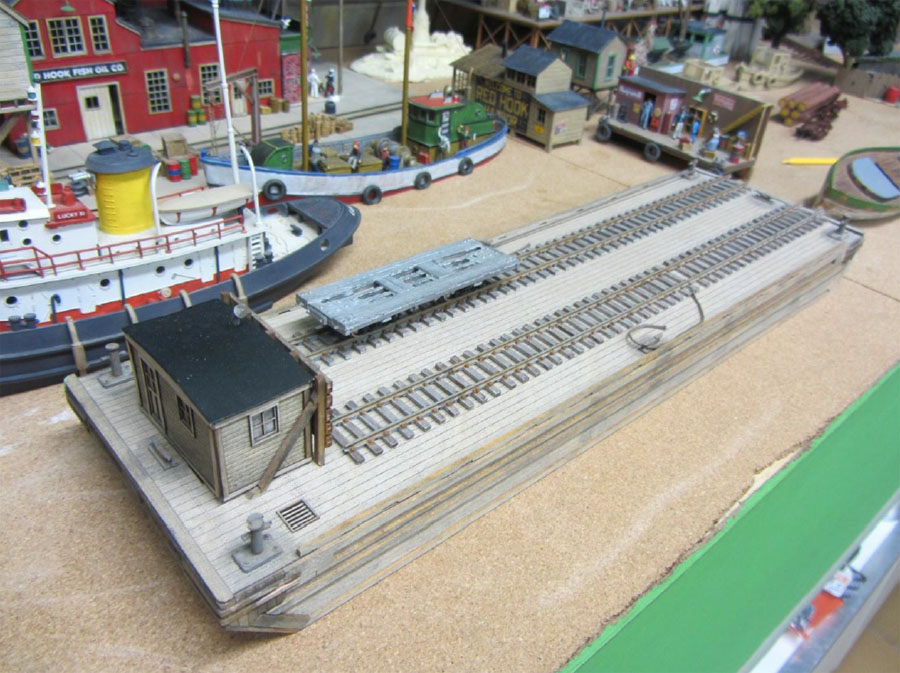
An American Model Builders barge kit below, converted to be a car ferry.
Some of the boats are modified resin kits by Rusty Rails.

Above, two Woodlands Scenics station kits made into a larger one!
The contractor’s barge is mostly scratch built but the hull and cabin supplied by Kibri.
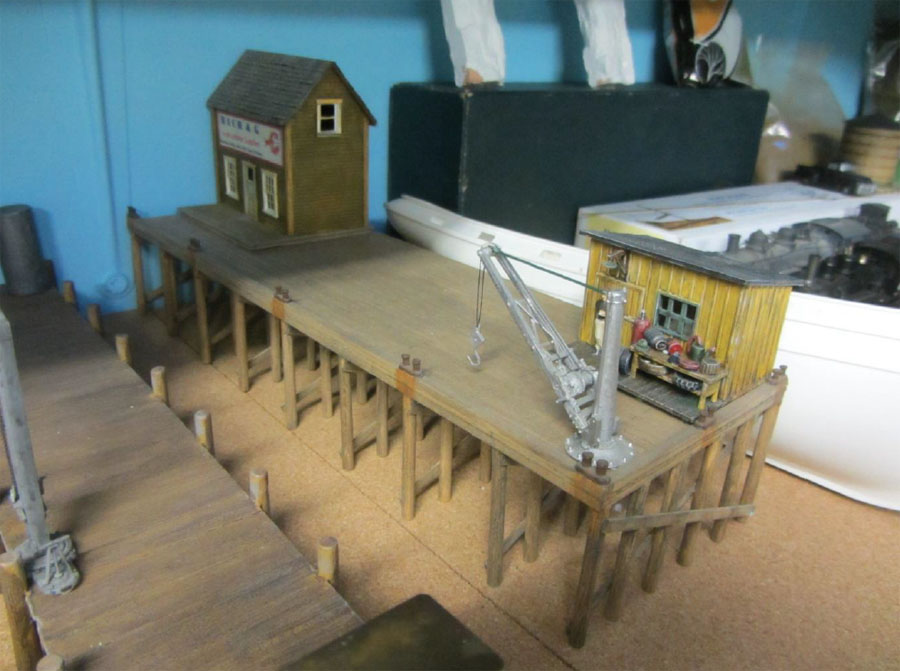
A few scratch built piers with a Campbell scale sheriff’s office modified into a lobster supplier.
Shelf layout HO scale Conclusion:
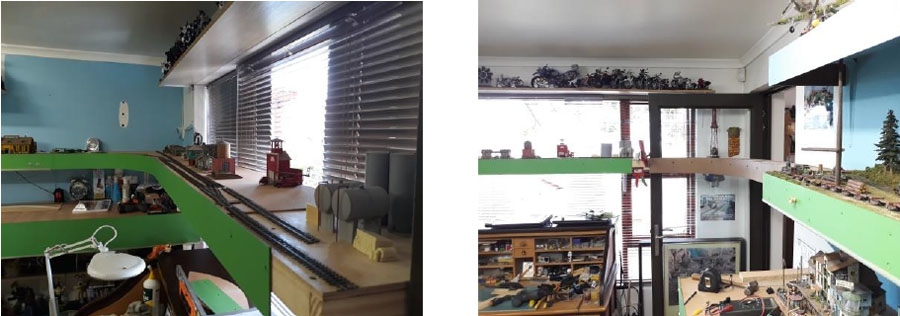
I have stated at the outset that this layout is a work in progress. Since the above photos were taken I have turned the top shelf layout into a continuous run by adding a joining section on the right, in front of the window as you enter the room. There will be a lift out section at the door shown in the right hand side photo. This shelf will have more industry on it. In the photos below, is the new section.
To get this far from the start of the build to the above has taken 14 months (started Nov 2016). This excludes 90% of the buildings which were salvaged from my previous layout in Cape Town.
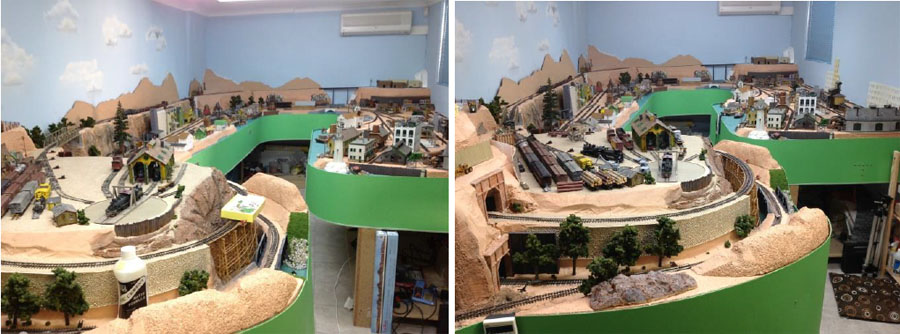
Photos below are of my old layout, 22 foot x 11 foot layout in Cape Town. (Lots of mistakes on it).
Brian”
A huge thanks to Brian for taking the time to share his shelf layout HO scale. I don’t know about you, but I loved it.
Can’t wait to see the updates too.
That’s all for today folks. Hope you enjoyed it as much as me.
And if you want to get going on your layout, the Beginner’s Guide is here.
Best
Al
PS The comments are still rolling in on the new ebay cheat sheet. Glad it’s working for you!