Here are some notes on the construction of a bridge for the Piedra Blanca and Pacific RR.
To cross over from the old section to the new, I needed to build a rather long bridge (two sections) over a river canyon and was worried about keeping it straight and level.
It’s the highest point on the railroad and the track had to rise up to it on both sides. The solution was to build the approach track level for several inches on both sides and to tape the bridge sections to the level during construction. Here are the progress pictures.
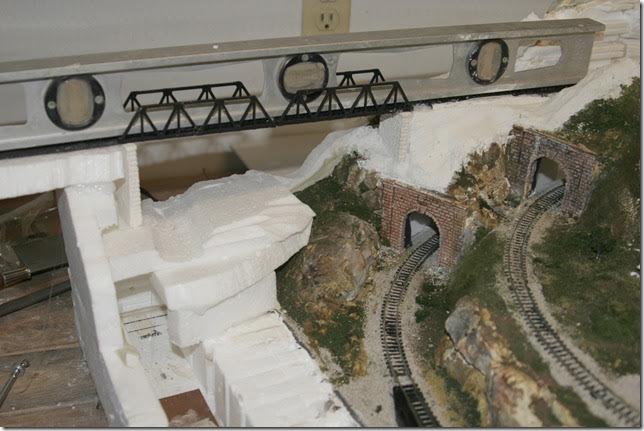
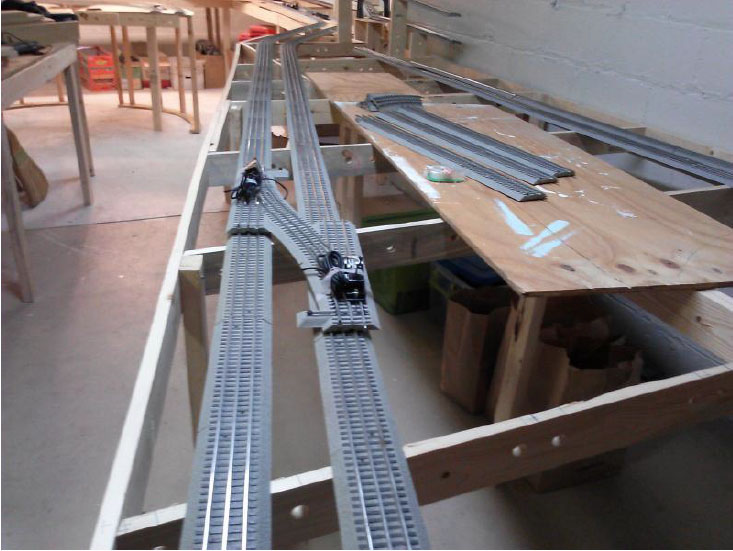
Photo one shows the track on both sides with the two bridge sections in place. Before adding the center support, I taped the bridge sections to the level to keep everything straight as I added the center support. Note the ease of construction of the sub-structure which was built up of bits and pieces of Styrofoam hot-glued together.
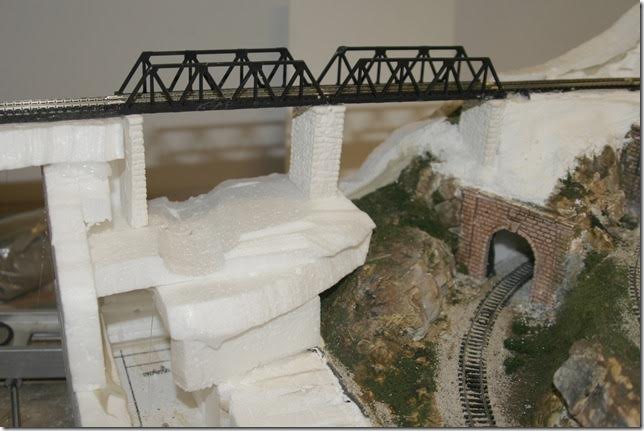
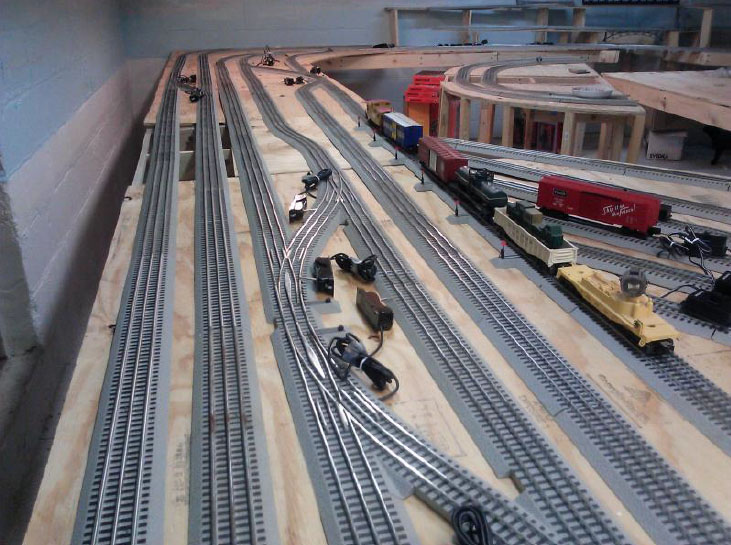
In photo 2 below I added the center support (two N scale bridge supports glued together). I fastened the support to the bottom of the bridge, then ran some plaster below it to hold everything steady. Then removed the level.
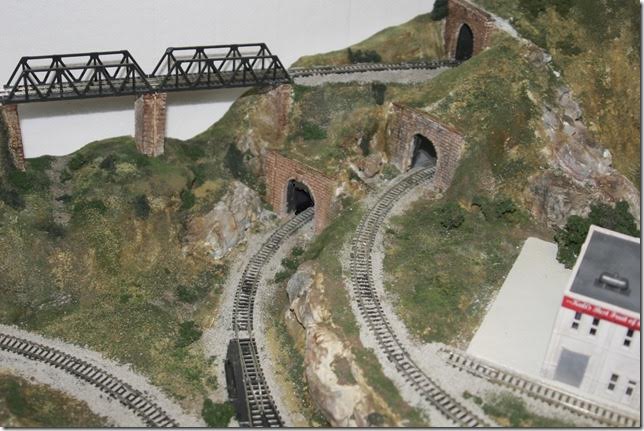
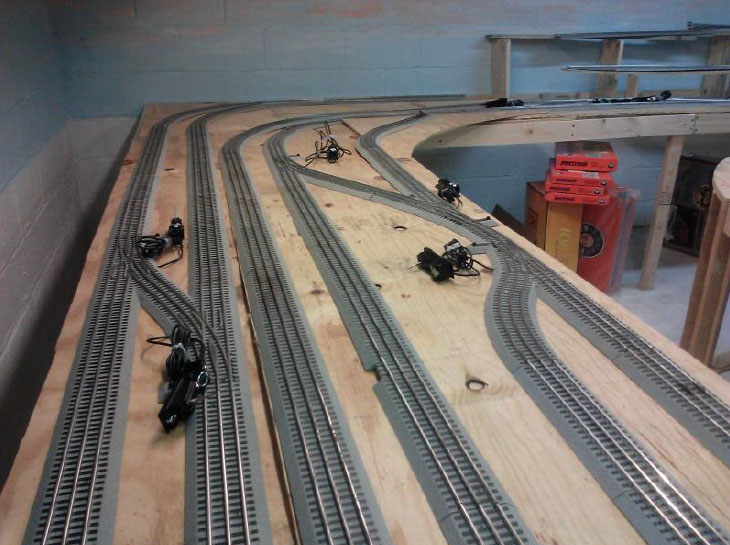
Photo three shows the new area covered with final scenery–plaster cloth with added ground cover, rocks, and bushes.
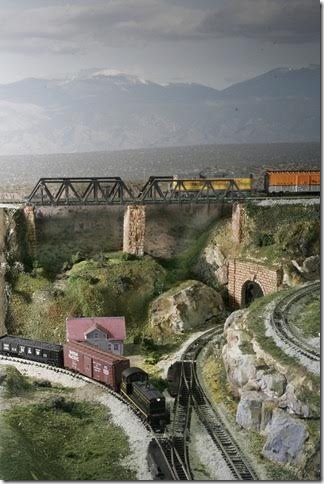
The final photo shows everything completed.
The house owners put up their house without benefit of a building permit and didn’t realize that it was built on the flood plain of the Piedra Blanca River which becomes a raging torrent in the spring. Thus, it has to be torn down or moved—not too costly since it is built of cardboard and paper. The backdrop is an actual photo of the mountains and White Rock Canyon near my house.
I’m already looking forward to the next update. A huge thanks to Dean.
And don’t forget today is the last day for the Embankment offer. Thanks for all your emails on it. Can’t wait to see some the piccies.
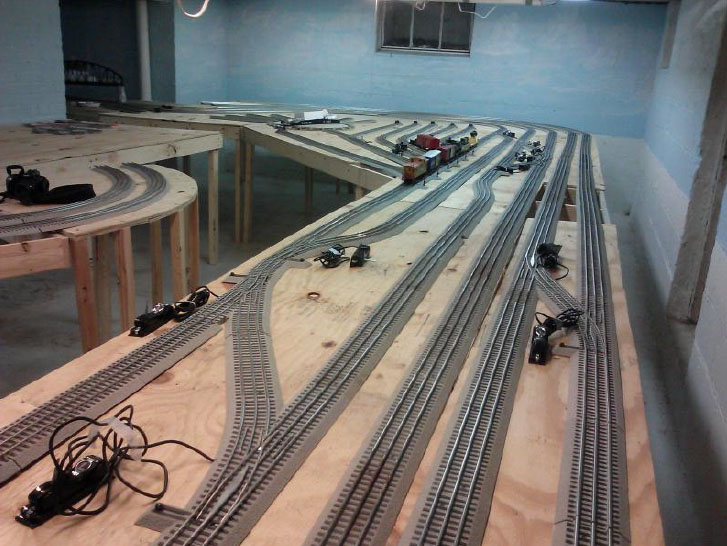
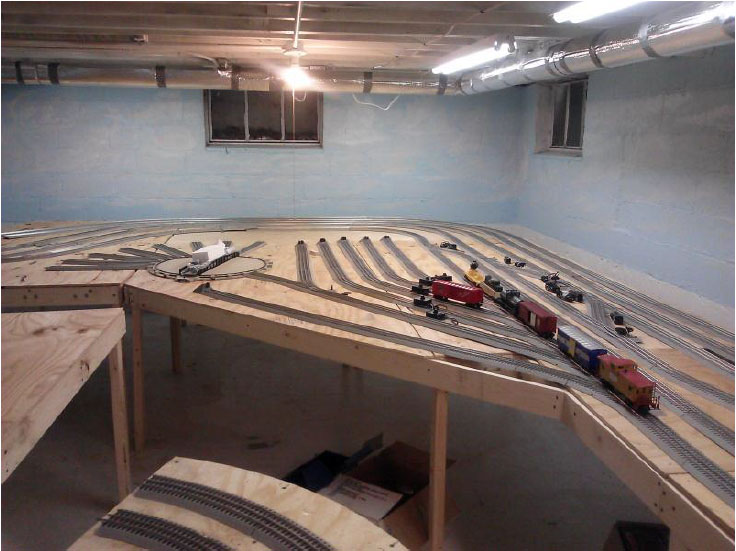
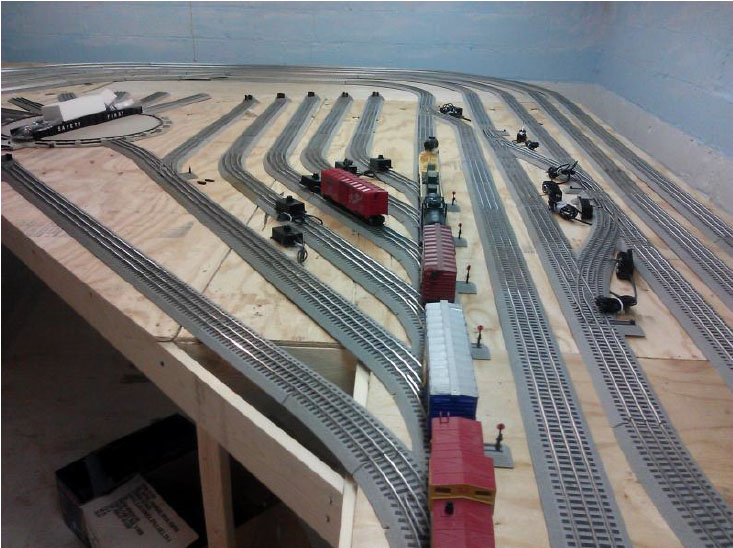
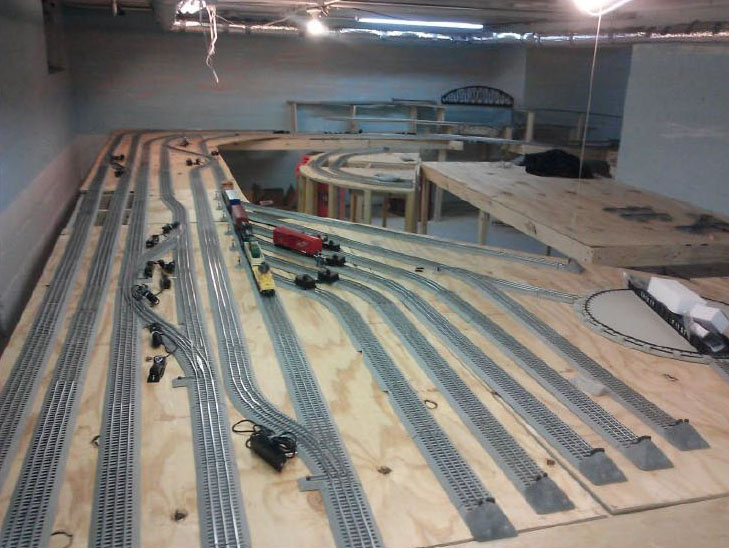
So why have I just posted Tim’s earlier pics now? Two reasons. I love progress pics. And Tim’s post, shows in spades how long a layout can take (Okay – Tim is the other end of the scale…)
A big thanks to Tim for adding to the large O gauge train layouts.
I think it’s really important just to make a start – and it’s best said by Kevin, who posted this comment recently:
“To all of you who are older, stop waiting to build, even if it’s an oval on the dining room table. There are no guarantees in life, except for the near universal love and enjoyment of model trains. Get to it.”
So I need your help. Please post a comment below – how long does an average layout take? (I know there is no such thing as an average layout… but let’s have a go).
And now on to John.
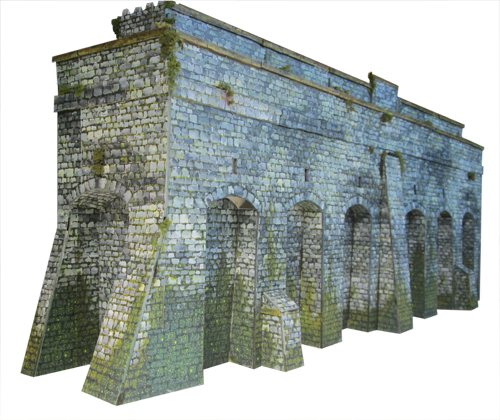
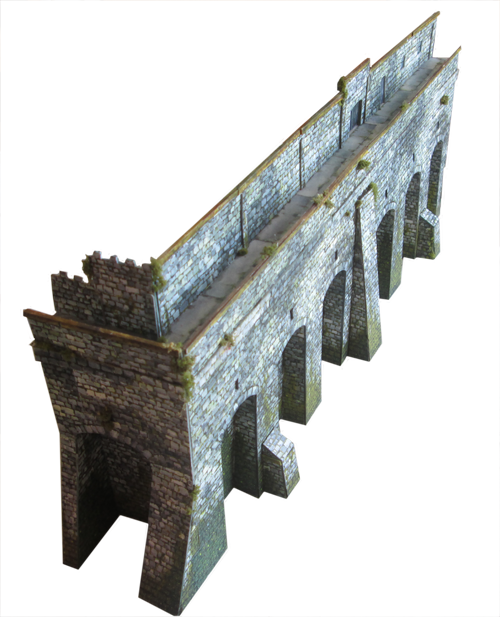
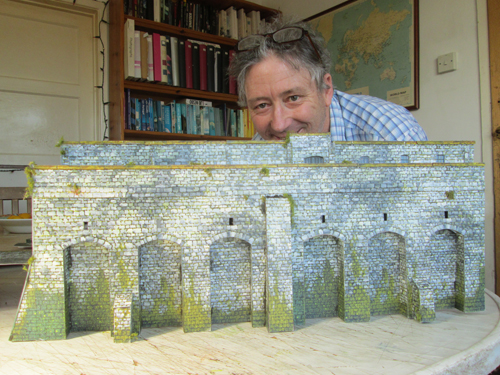
I still get emails on the embankment printable scenery, and how best to put it together.
Believe it or not, it’s all made from just one print (printed out lots of times…)
It really does show how this embankment is only limited by your imagination. You can make an embankment as long or as short as you like. Here are the pics of his ‘creation’:
So how did he do it? Well, John was kind enough to record this ‘how to’ video:
I really can’t thank John enough.
You can see the embankment and lots more printable scenery in the store.
That’s all for today folks – large O gauge train layouts, printable scenery and a question I really want to hear your answers on.
Cary has been in touch again with an update. This time he shows us how he makes his G scale people.
“My name is Cary in Crestwood, Kentucky. I’m 52 years old and started work on my garden railroad about 3 years ago.
It’s been slow going but I may be able to finally start laying track spring 2017. I did a post earlier this year on some of the buildings I was making, if you’d like to see it, it’s here.
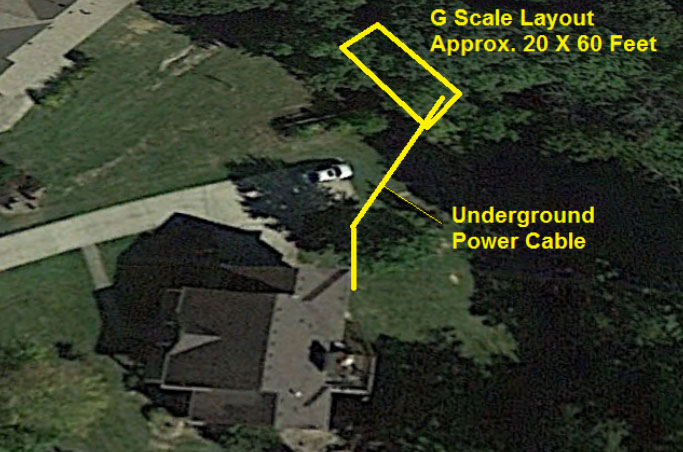
I always like seeing how people lay out their garden railroad in relation to their yard and house. In my case I selected a location in the woods behind my house. It’s heavily shaded which is nice, but I’ll have some cleanup every spring removing leaves and branches. The project has required a lot more digging than I anticipated chopping through roots and digging up rocks. I just finished running power to the site. I rented a trencher and ran about 100 feet of 10 gauge underground cable.
Here’s the layout so you have an idea of size:
The initial layout will consist of one loop and 3 dead end storage tracks. The operator’s station is raised to waist height so I can operate the switches without bending over.
I have just a little more ground work to do then I’ll be building a small deck to have a place to sit, relax, and watch the trains run. Then it’s on to laying track. I’m using LGB track and plan to solder the pieces into 6-8 foot sections. Those large sections will be joined together by a jumper wire soldered across the joint to allow for expansion/contraction. I plan to dig a 4-6 inch deep trench, fill with dense grade gravel, put the track on top and then ballast with more dense grade rock. If anyone has experience in this area, I would love to hear your comments.
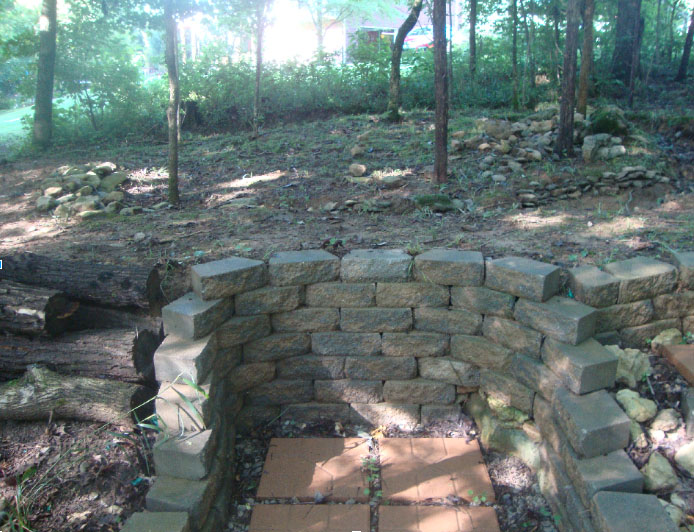
Operator’s Station
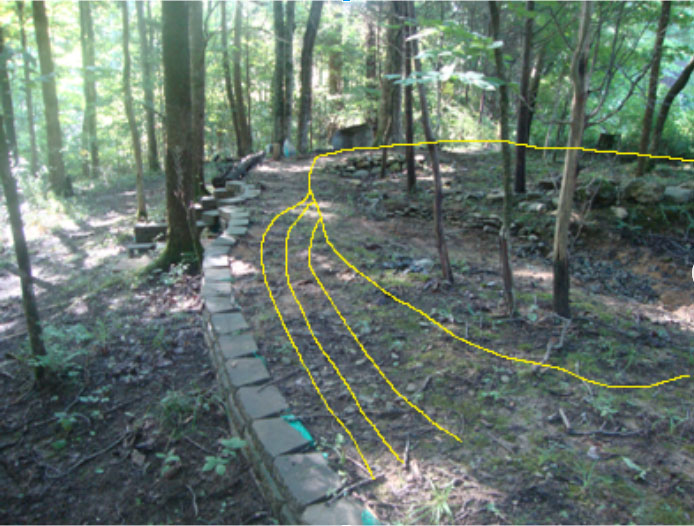
Storage tracks will run parallel with this retaining wall for ease of access.
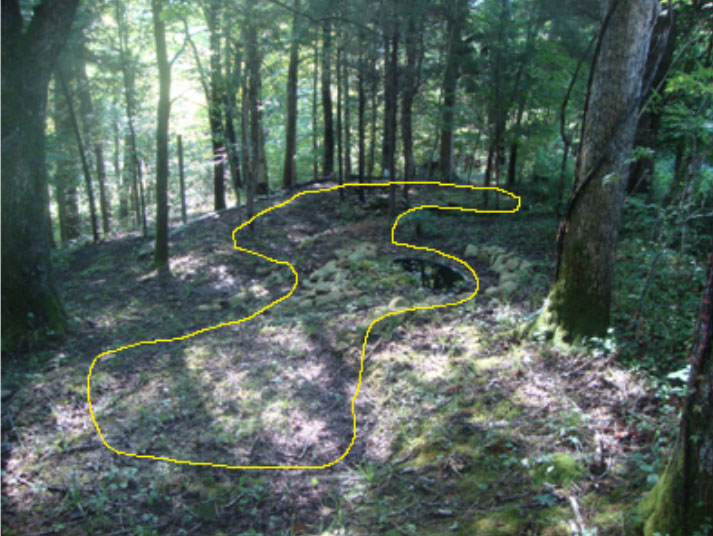
This is a view from the opposite end, the track will climb 2.5% grade to a high point behind the pond and then start the descent as it travels through town #2 and back to the operator’s station.
G scale people:
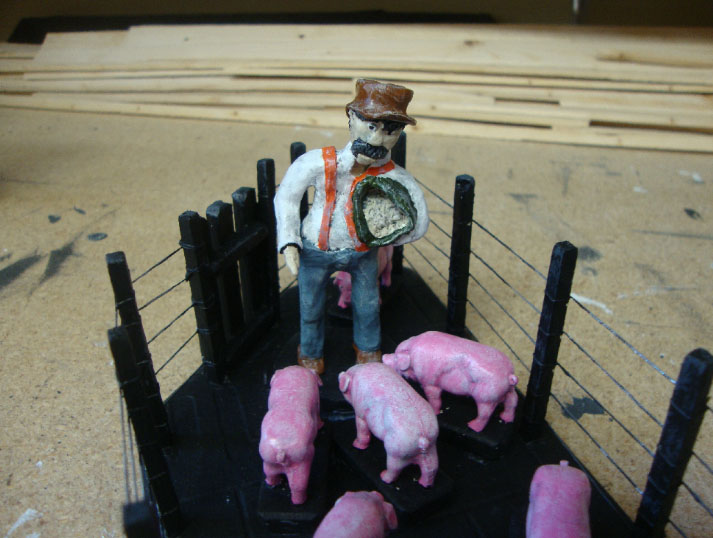
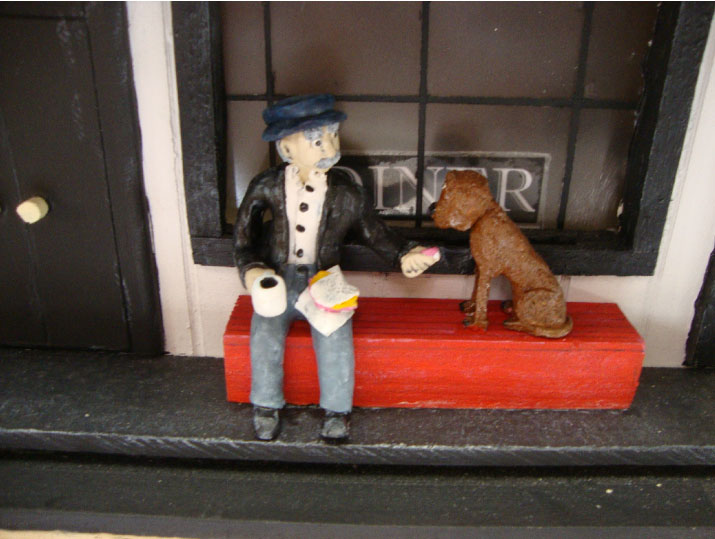
I’ve started using clay to sculpt figures. It takes some time and patience, but I’ve been quite pleased with the results. The Pig Farmer was my first attempt, could not believe how well he turned out. (I purchased the pigs)
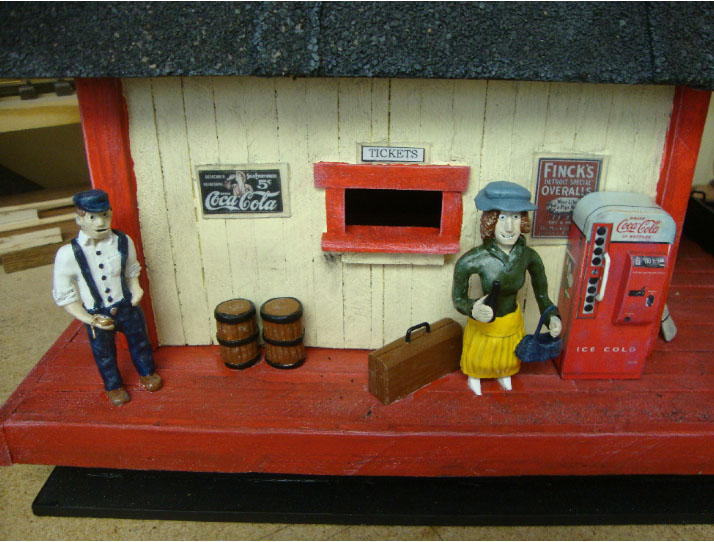
The Station Attendant and Lady Passenger drinking a coke. The coke machine came from a template I found at paperdiorama.com. The paper template is glued to a block of wood and then I applied several coats of clear polyurethane. The small barrels are also clay.
The Old Man and his Dog
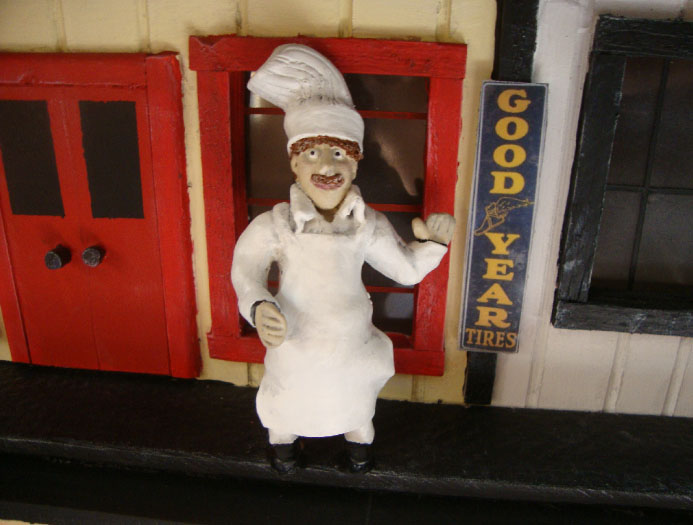
The Baker
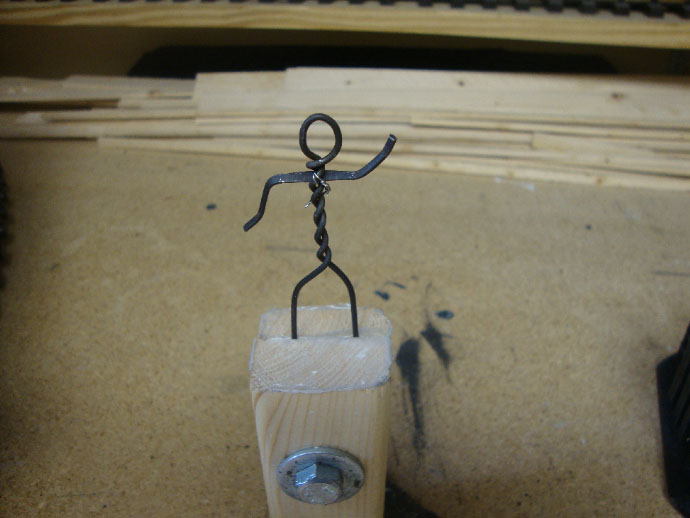
You start with a wire skeleton clamped between two pieces of wood. I’ve attached a piece a wax paper to the top of the wood clamp so the feet don’t stick to the wood.
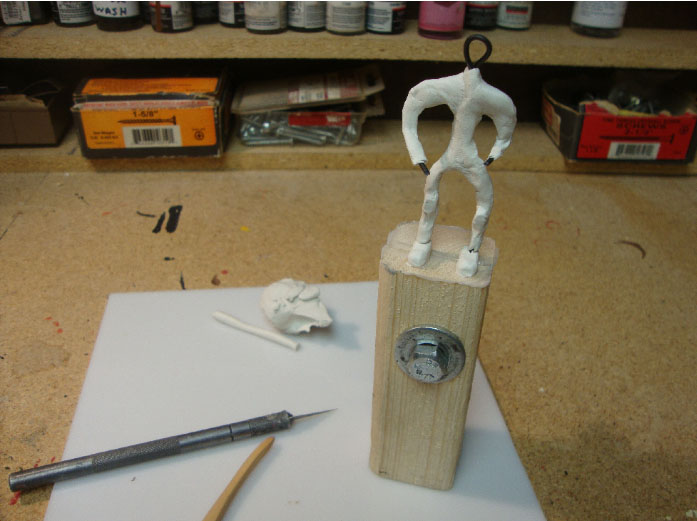
From there I build up the body features with clay. After that I roll out thin sheets of clay for clothing, add hats, beards etc…
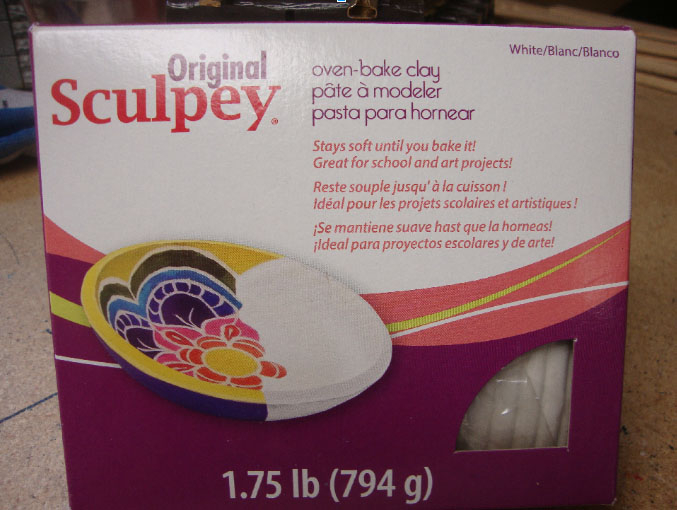
I’m using Sculpey clay. You can leave it out as long as you like. It gets little hard but then just work it a bit and it softens up again. Once your done sculpting put it in the oven at 275F and 15 minutes for every 1/4 inch of thickness. Once it’s fully cured you can sand and paint although I’ve found it doesn’t need sanding. I picked up 1.75 pounds of clay and a kit of sculpting tools for about $20 at the local hobby store. I like the idea that I can now make the specialty pieces I want inexpensively instead of trying to find them and buy them.
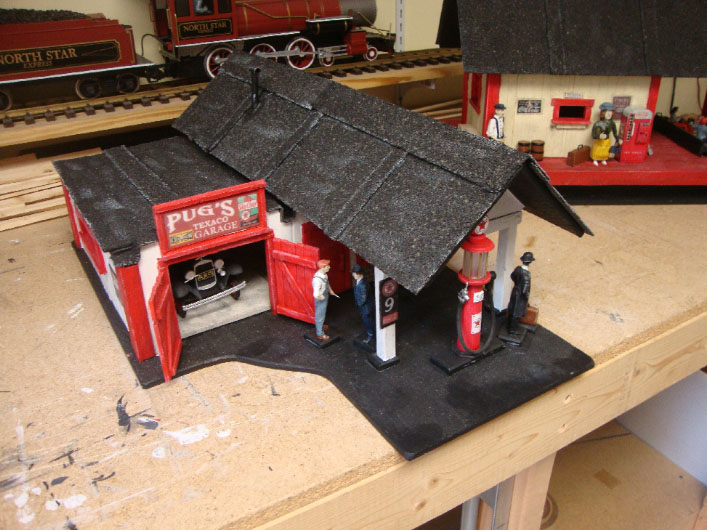
Here’s another project I recently completed, Pug’s Texaco and Garage. The base is concrete backer board, the vehicle is a 1/24 scale woody plastic model I thought too fragile to sit outdoors unprotected, but in the garage it works. The walls are birch plywood, the roof is also concrete board with real shingle material.
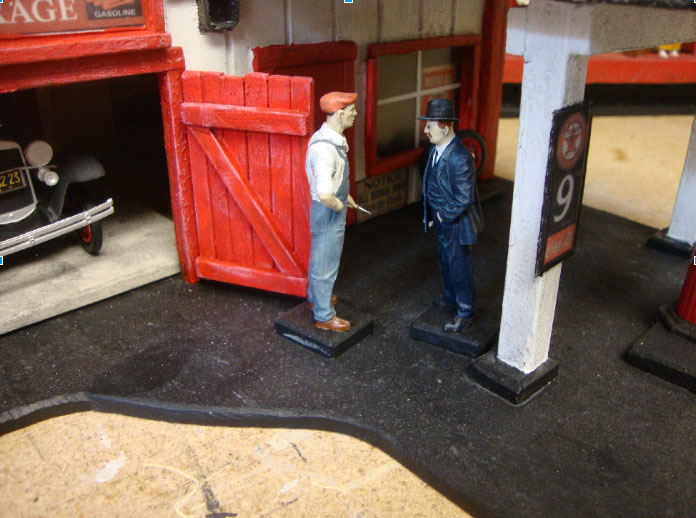
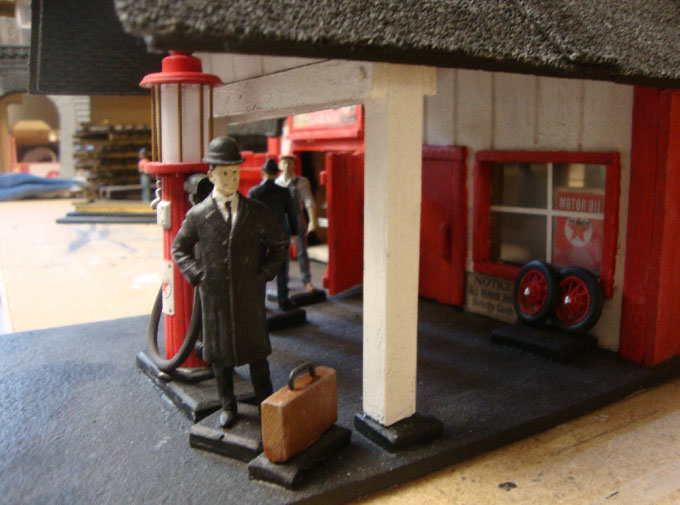
These are not clay figures. It was a kit of G scale people called Henry Ford and Company 1/24 scale. Kit #24003 made by the ICM company. The figures are highly detailed and were a joy to paint.
You’ll notice that the figures and accessories are raised. That’s so when I cover the base with dirt, they won’t look like they are buried up to their ankles.
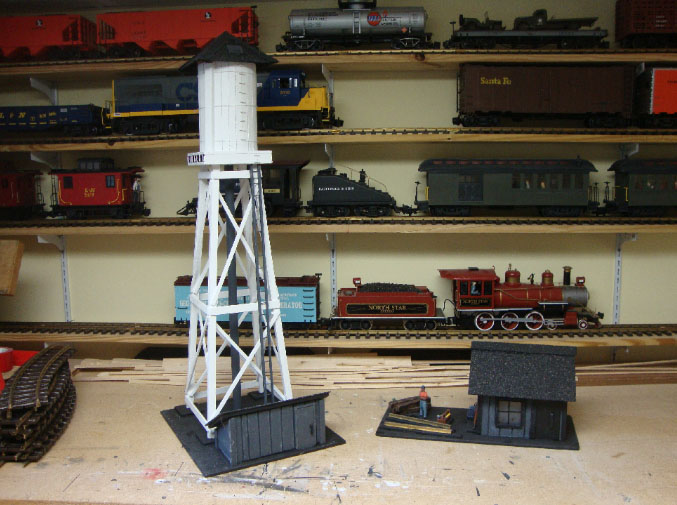
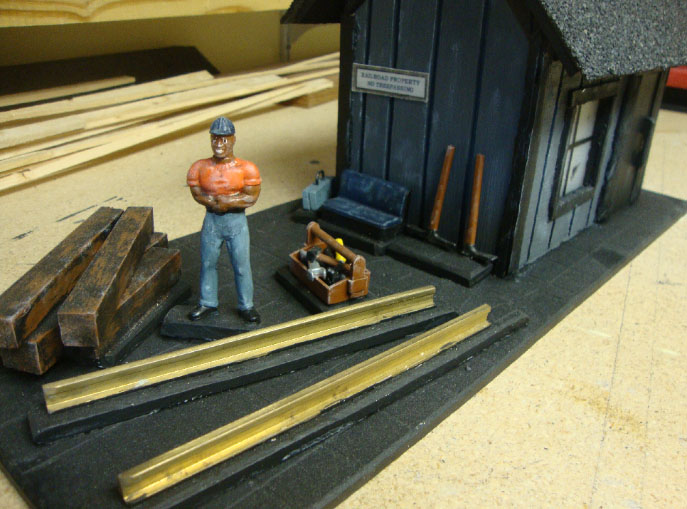
Here’s a few other projects, the town water tower and a track maintenance shed.
This figure was a toy as are the tools. Again everything is raised so when I cover the base with dirt, hopefully the items appear to be resting on top of the dirt.
Thanks to Alastair for sending the posts, it’s great to see what everyone is doing. Again, if anyone has experience laying G scale track outdoors, I’d be very interested in what you’ve learned.
Thanks, Cary”
As you all know, I do love seeing how a layout comes to life over the months, and Cary hasn’t disappointed. I can’t wait to see the next one. I think his G scale people from clay are wonderful.
A huge thanks to Cary for sharing his G scale people.