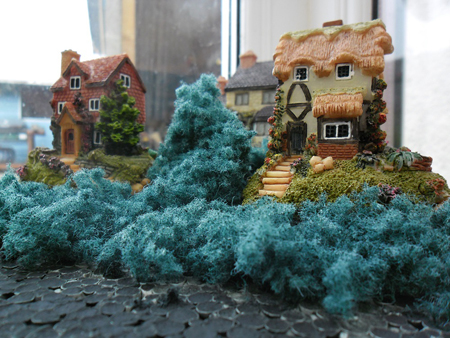
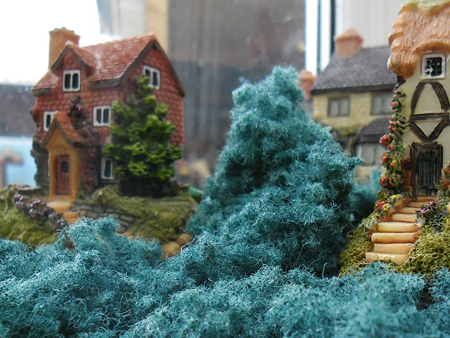
I picked the tip of using shredded pan scourer for vegetation from one of your emails.
Thought you might like to see the results. It can be shaped into hedges, bushes and trees.
I just put it in place and spray with PVA 20% mix with water.
I’m really pleased with it.
Thanks to the guy who sent it in
Chris”
“Hi Al,
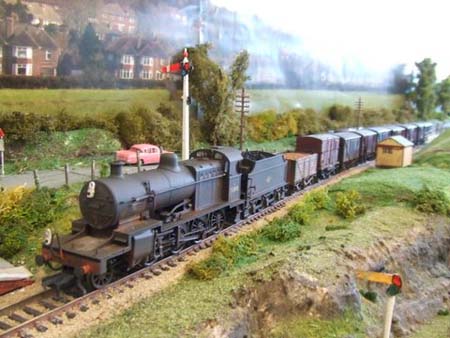
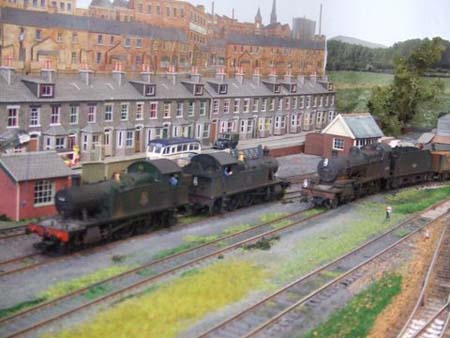
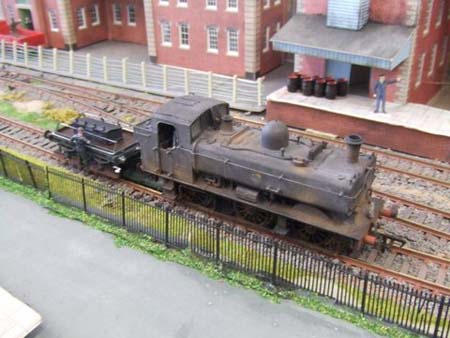
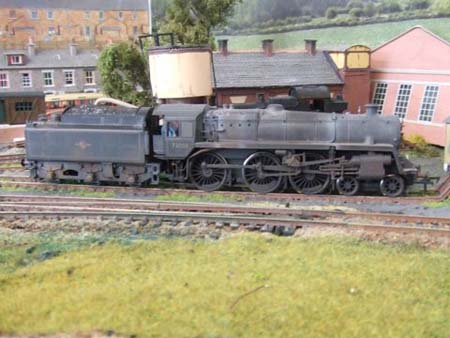
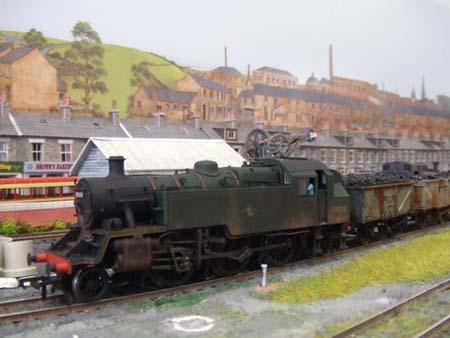
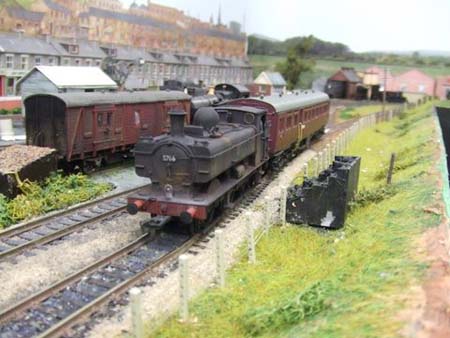
Here are 4 pictures of my weathered locos. I used humbrol weathering powders, smoke grey, rust and a little white ash. It is best to spray the locos with a matt clear varnish first so the powders adhere better. It’s a good idea to mask any glazing, I used artists liquid rubber which can be easily removed when it’s finished.
I also did the wheels, remember to rotate them so you don,t get un-weathered bits showing where the rods are.
I did not do the chassis because I was afraid it might affect the pick up wipers also I don’t think it’s noticable.
Alan”
“Hi Al got part 4 uploaded now , its a bit long , but a few tips in there , its beginning to take shape a bit now
Ian has been in touch with his coal mine track layout:
“Hi Alastair,
thanks for sending all of the tips and photos – they have been great help to someone like me who at the age of 66 is just starting out. I have been a scale R/C aeromodeller for over 50 years so I thought I would make a change. I am also learning the “lingo” which is very interesting.
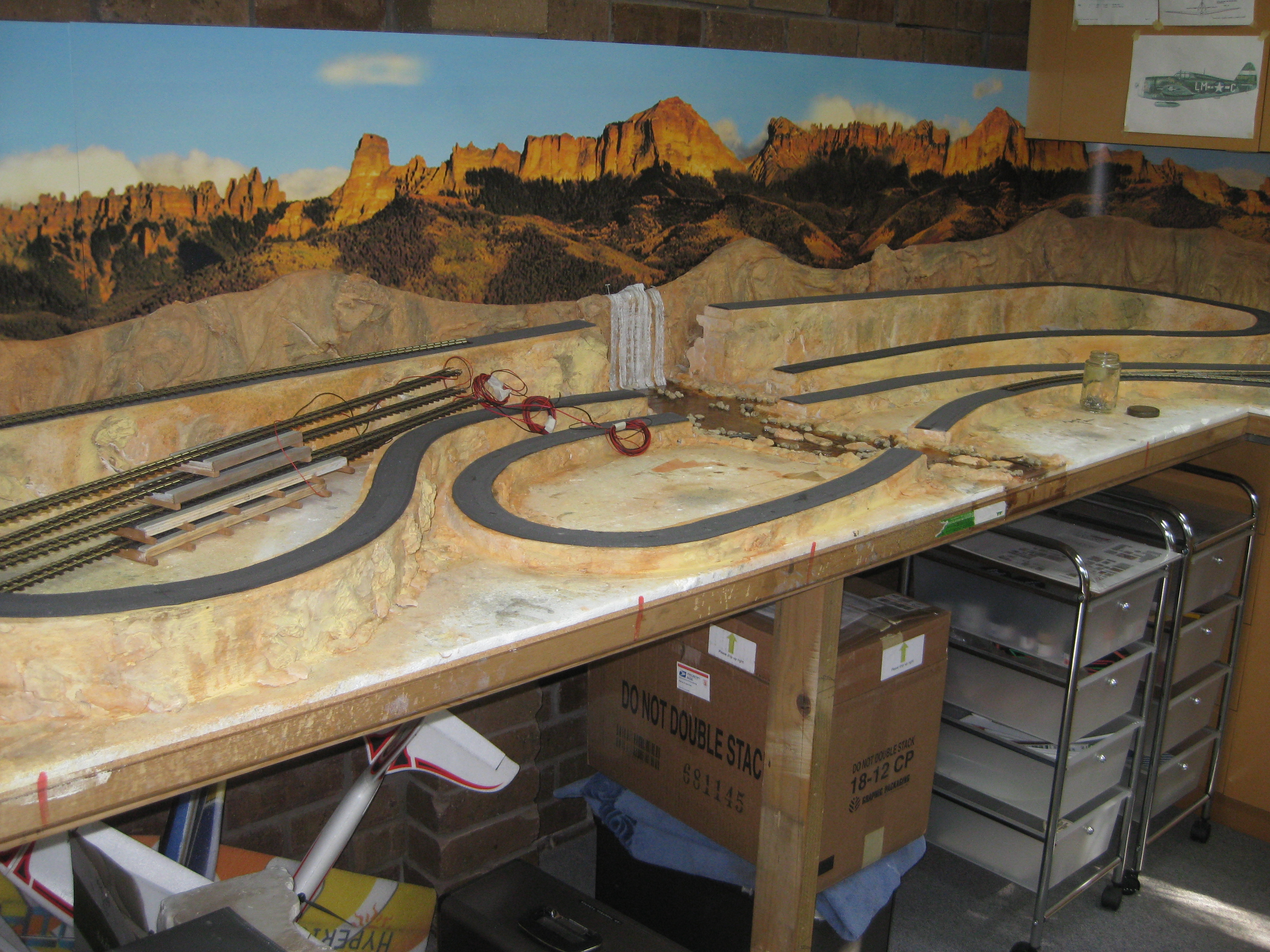
I have also included a shot of my layout so far. I only have a small area (3.5 mtrs X 2.4 mfrs “L” shaped) It will be two early 19th/20th century coal mine layouts with a river running through both.
I will be using On30 size Porter Spectrum locos pulling coal trucks around two separate tracks. These are perfect for tight curves.There is a siding and other areas of interest.
Because of the shallow depth of the layout I have digitally printed a background and 50mm in front of that a plaster cliff face with LED’s on the base between the two to give a more 3D effect (looks great at low light) The waterfall has bee “roughed in” and the river has to have the rapids enhanced before I can go any further.
You can see the four bridges stacked on the left wired up and set to go.. Before I can install them the track on the bridges will have to be have ballast added and then the wooden girders and the bridges glued in place, and after that the rest of the track will be laid with ballast.
Now, speaking of ballast I purchased a Proses Track Ballast Spreader. I have tried it out on a test piece of track and it works just fine but the leading edge of the spreader being 90 degrees catches on the “spikes” or whatever you call them, so what I did was lightly sand a 45 degree angle on the leading and trailing edges (there goes my aviation talk again) so they would ride over the lumps and bumps. I hope you can see it in the photo.
I was told when I started this hobby that you never finish a layout and I can see why. I have been going to model railway exhibitions for years and finally decided to bite the bullet. I have built a few scale buildings and trees but the installation will come much later.
I am more interested in running the two tracks for some time to make sure all is ok. As some parts of the tracks will be hidden behind trees and buildings they will be difficult to get to – so no tunnels on this layout. By the way I tried laying the track on a foam base with thin Super Glue and it works great. Just pin the track in place and a few minutes later ….. voila !!! All fixed down.
Going by my photo of the layout, if anyone has any comments please let me know – I am new to this.
Kind Regards
Ian”
A big thank to Ian for sharing his coal mine track layout.
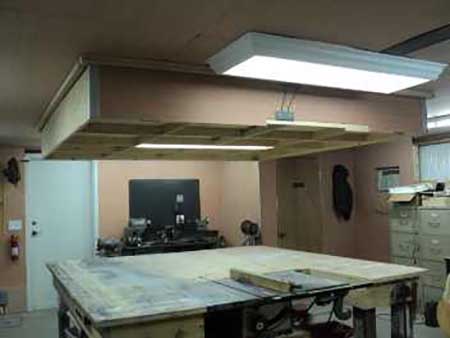
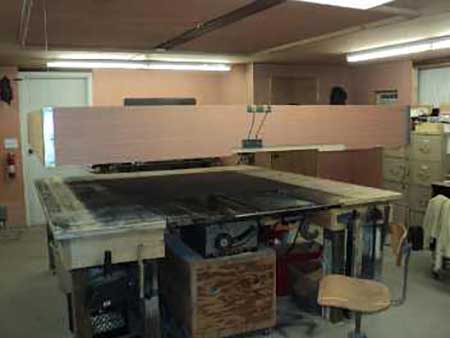
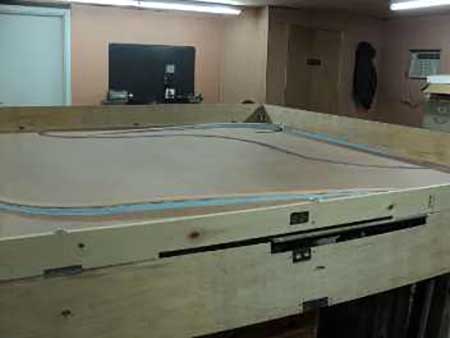
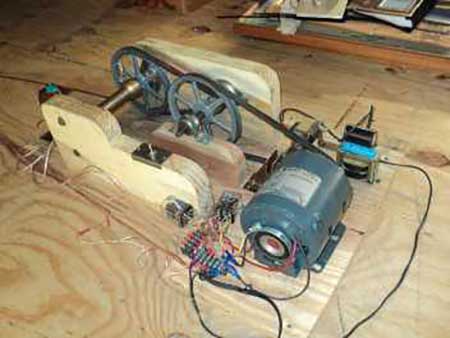
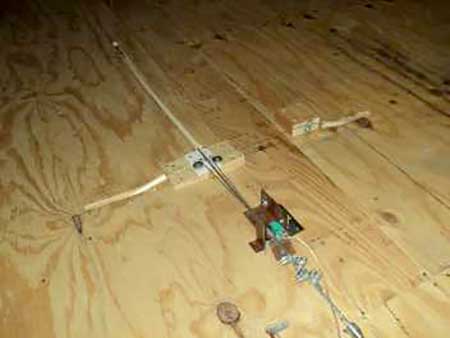
“Here’s how I solved the limited space issue in my workshop. The mechanism is made mostly of bits & pieces from junk box and scrap pile. The layout is just starting, but closed cell foamboard and 1/8” plywood will keep the weight down. The “picture frame on the ceiling makes the layout dust proof. All 4 “backdrop” sides fold down for easier access. The table is 8′ x 8′. It takes about 4 seconds to raise or lower. The light for the workbench automatically connects when the layout is up.To overcome reach issues to active track (N gauge), there will be a removable center section with no active components, just structures and scenery.
Jon in Texas”
“Dear Mr. Lee,
I have two tips to offer, maybe three…
Model railroading is the perfect hobby from my point of view…
From my point of view, model railroading offers more opportunities for creative self expression than any other hobby I am aware of.
Here are my tips… They apply to model railroading and to life..
1. It is more fun to be a participant than a spectator… build something!
2. Start small, failure is less painful and success comes more quickly.
3. Have fun… Play with new ideas and materials.
Sincerely,
John”
And now my friends, I’ve decided to put some of the questions I get time and time again to bed. So let’s start with this one:
How do you decide what scale to model in?
Answers please!
That’s all for today folks.
A big thanks to Ian for his coal mine track layout and to Jon too.
Sebastian has been in touch with his N scale water tips – and Frank has some sound advice too:
“Hi there!,
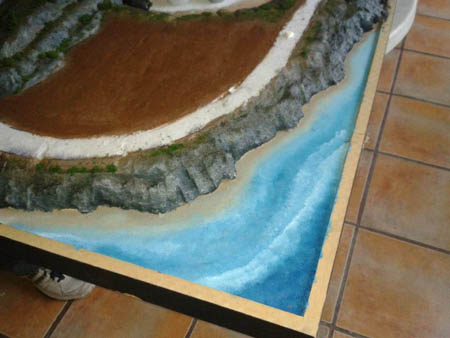
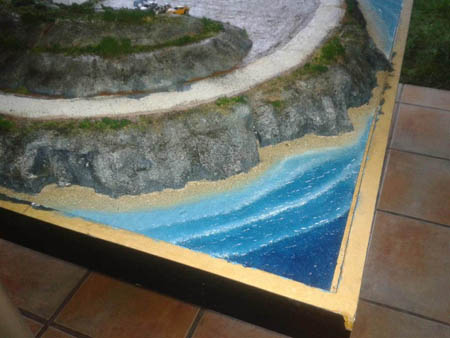
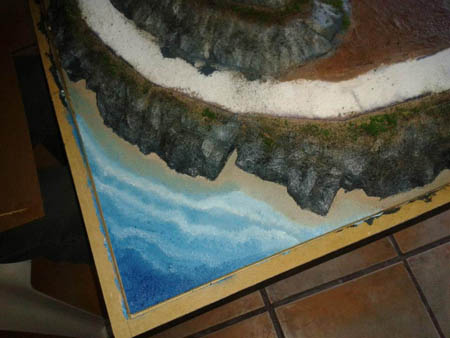
I’ve seen many people asking how to model water effects, and i’d like to share some tips from my n scale layout, if you like it, feel free to share it with everyone.
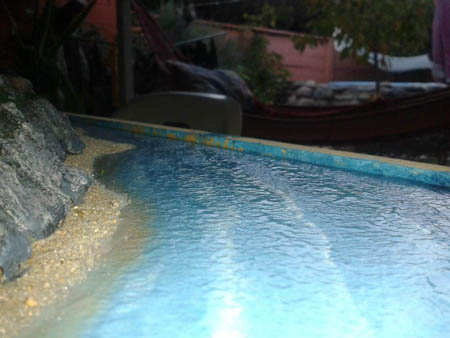
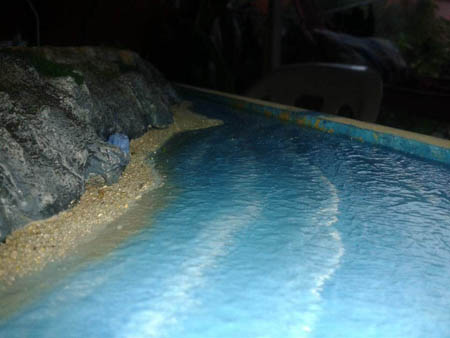
First of all, just paint with acrylic colours, and model water as you wish (waves, sea, deep water, etc). in my case, i painted dark blue to deep water, and mixes with white to model superficial water. white paint for waves with a normal brush to give those “foam” effects.
Finally, when paint get dry, cover the painted area with “mod podge” (i had some difficults to get it, because in my country (chile), nobody sells it).
Wait to dry, and enjoy the effect of waves, glow effect, and the best…on a cheap way!
Sebastian”
A big thanks to Seb for sharing his n scale water tips.
There are lots of posts on water scenery on the blog now, here are a few more:
There are lots and lots more but we’ll leave it there for the mo.
Now onto Frank:
“Hi Alistair,
I am just starting on the journey but I have quickly realized that catering to the hobby can be like pouring money down a big hole , with proper this and proper that could cost me a small fortune.
I have just laid the ballast for my track. This was after much deliberation -how much track to have and where to put it. I used all the help I could get from all different sources and then set up the lay out ,making sure the joins were square and then running the train (flying Scotsman) to make sure the turns were not too tight and that everything was tickety boo.
I priced up some ballast for the track but it seemed a bit expensive, and so used GAP7, gritty sand that is used to lay pavers. This appears to be about the right scale and works well. I got a 20Kg bag for $10 as opposed to about $50 worth of modelers stuff.
I used the accepted method of application (soaking and 50% glue)and after leaving it all to dry overnight, got out my dustbuster and gave it a once over. Of course some of the ballast was removed during this operation as well as the oversupply of ballast about the track.
During the track laying phase I had run the train around the track to ensure its smooth running as well as making sure the points were working,and carefully wiped any goo off the track as I went. This was repeated the next day when dry.
The carefully removed ballast (with the dustbuster) was replaced with homemade grass –to give it a more operational look.
The grass was made using a tip from another trainer. I used sawdust that I had for my fish smoker and put it in a jar with some green food colouring.Works well ,how green is dependent on the amount of colouring used obviously but I must have managed it alright because the grass is green and didn’t take too long to dry out, in fact it just soaked it up and I sort of judged when to stop.
The main thing is that I am happy with the way things have gone.
My next challenge is to assemble the cut out models that I have bought so that I can set up the rest of the landscape scenery to suit.
I have already thought of using the back boards as a way of extending this, because I have limited myself to an area of only 1.2 x 2.4.
I have braced the track bed and converted a single bed wooden frame (off the side of the road)to elevate the track to about eye height when sitting down (about 1.2m). This was achieved by using the beds’ slats as the legs. With 3 legs down each side the table is surprisingly level and also stable .
Regards
Frank”
Some sound advice from Frank. Don’t be shy with your tips if you have any – please do share!
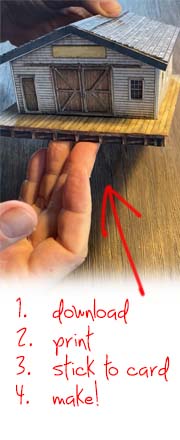
Lastly, if you’re after the silly discount link for the printable buildings, it’s here: