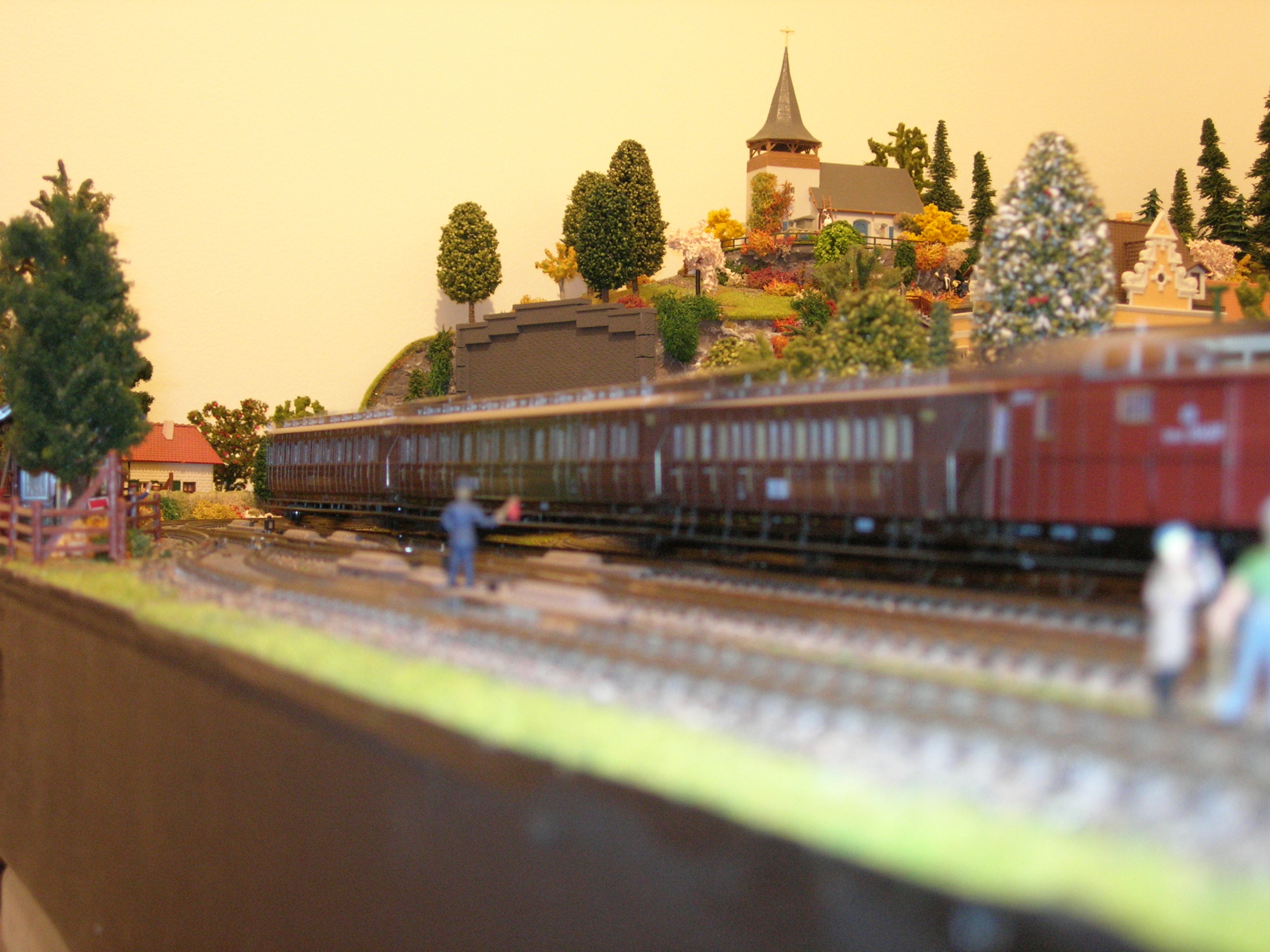
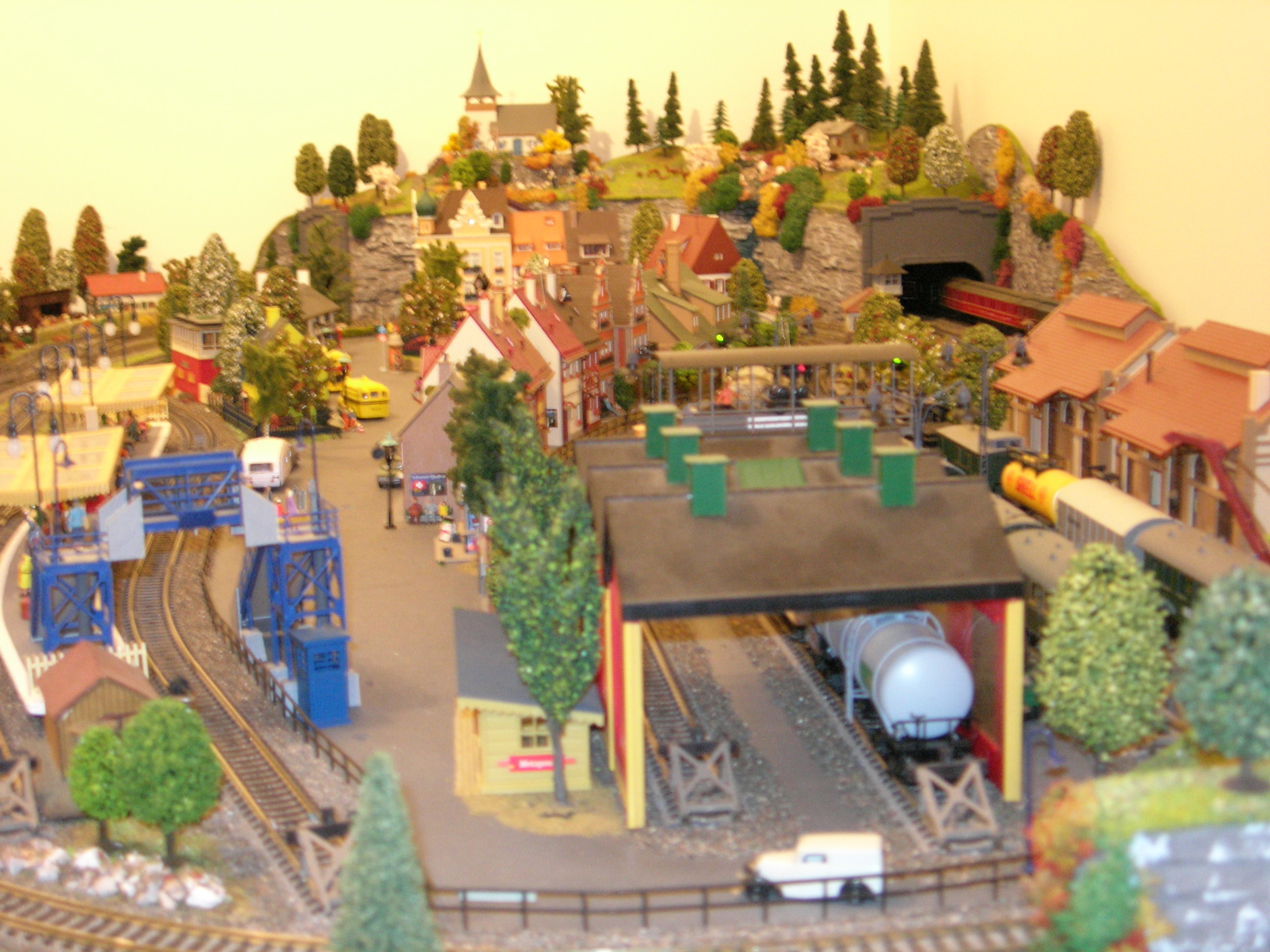
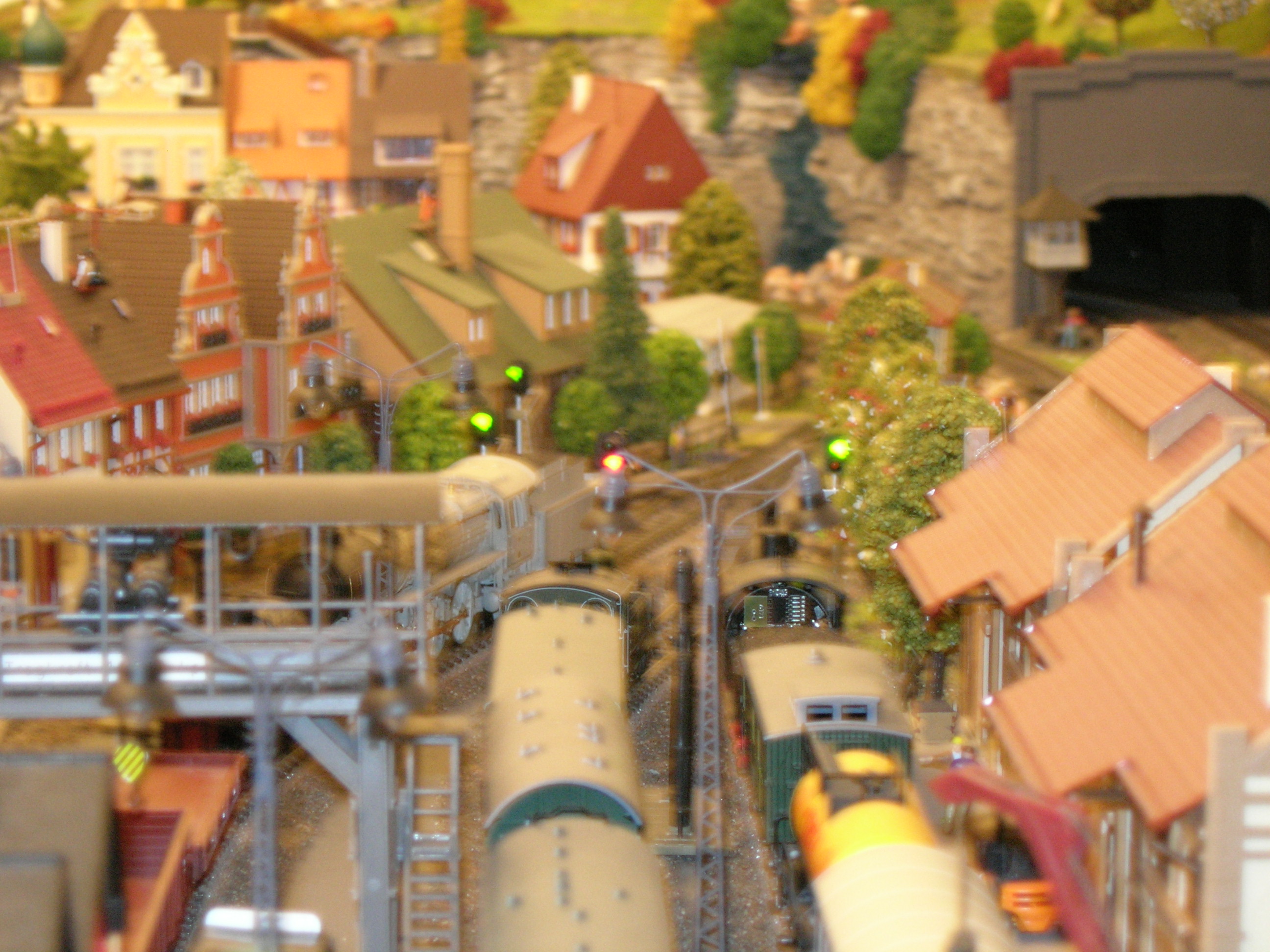
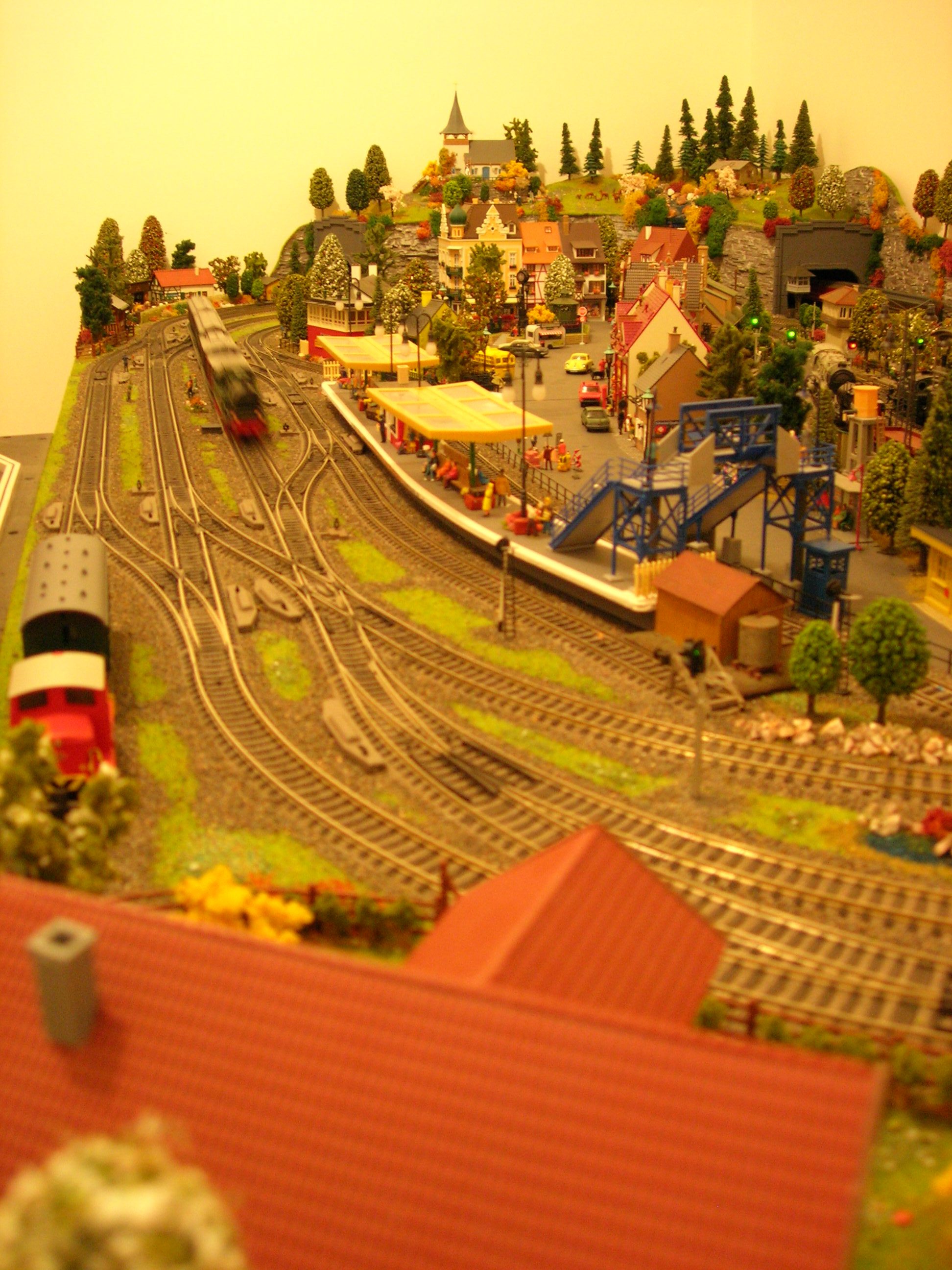
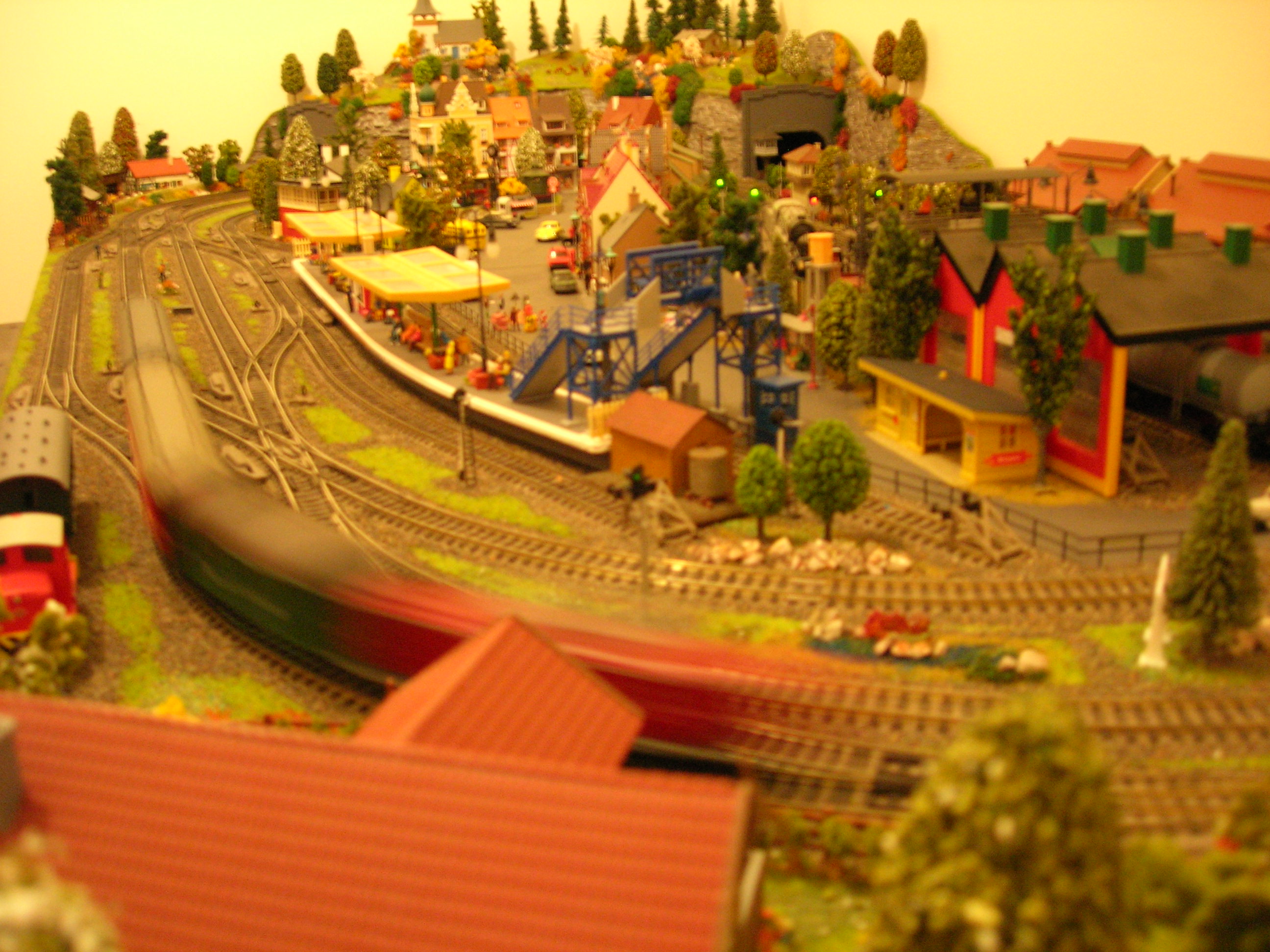
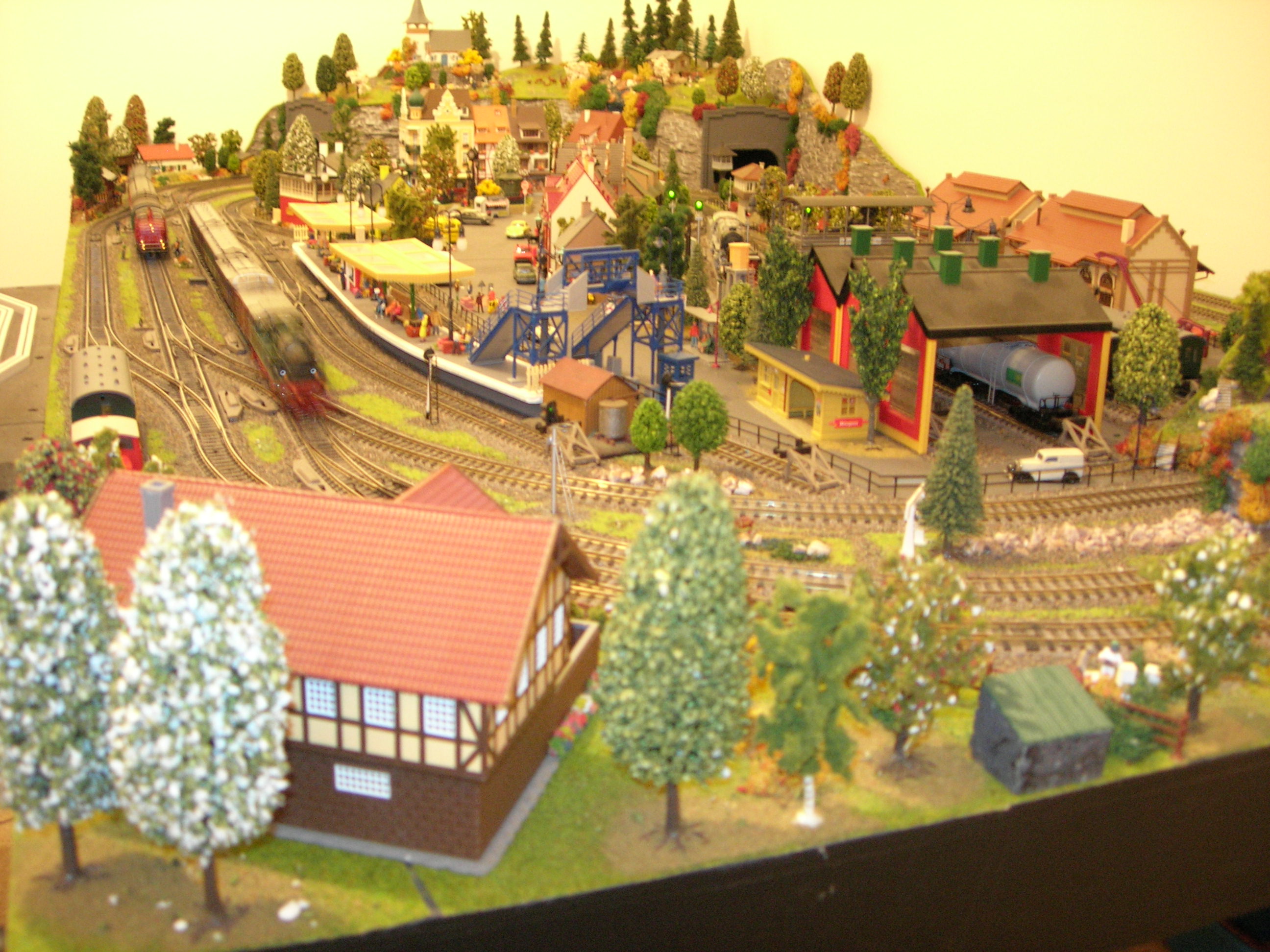
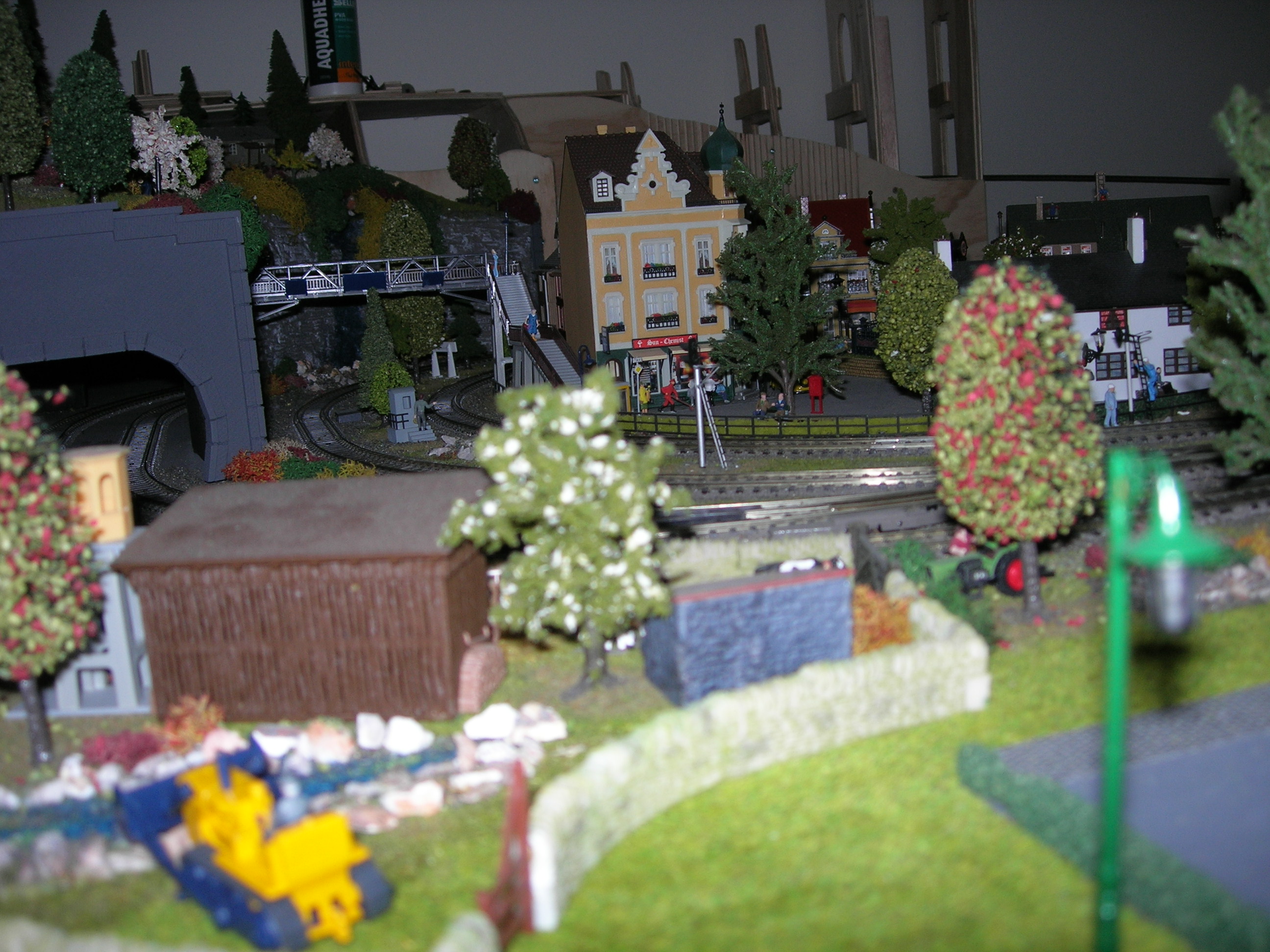
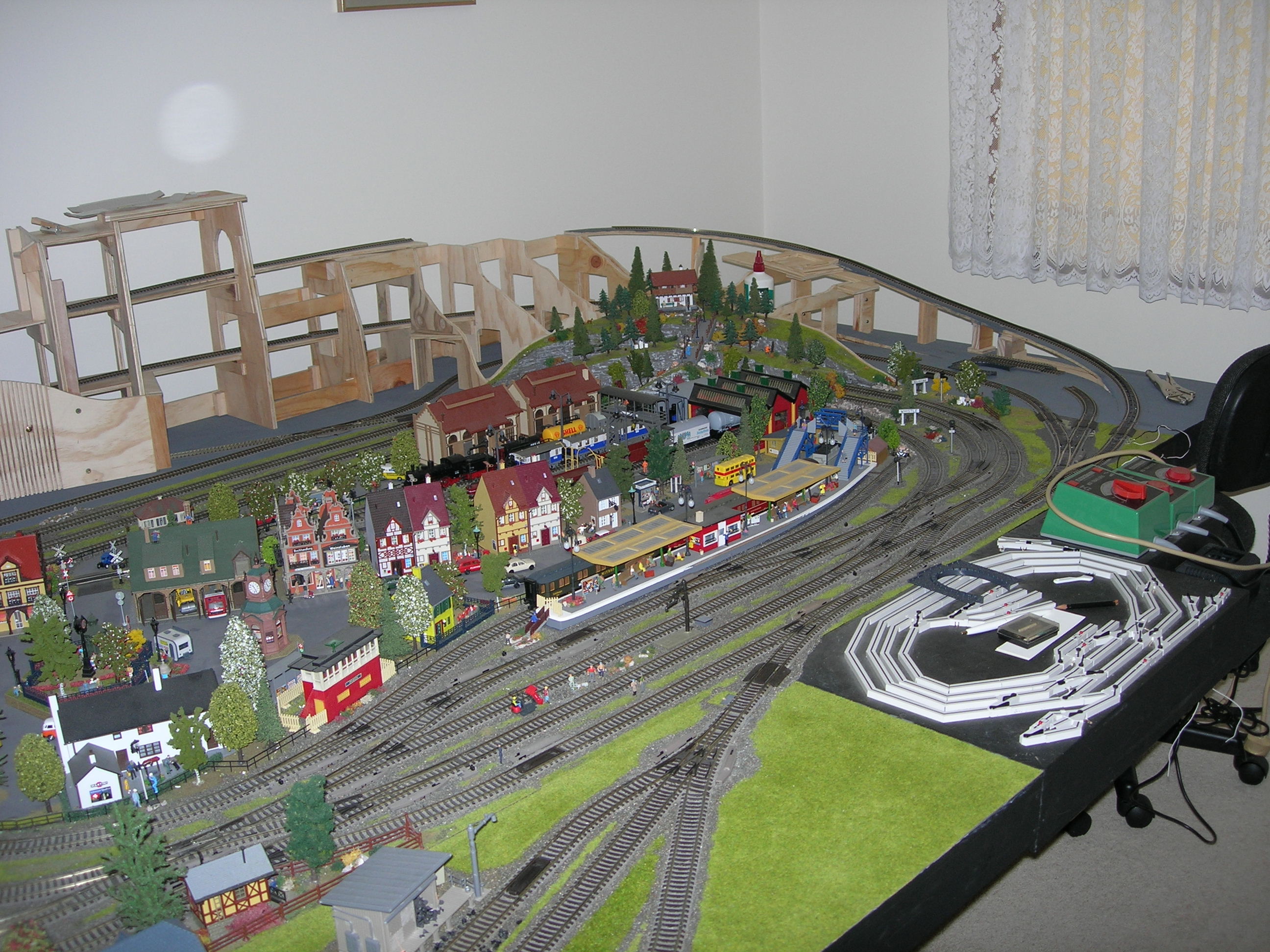
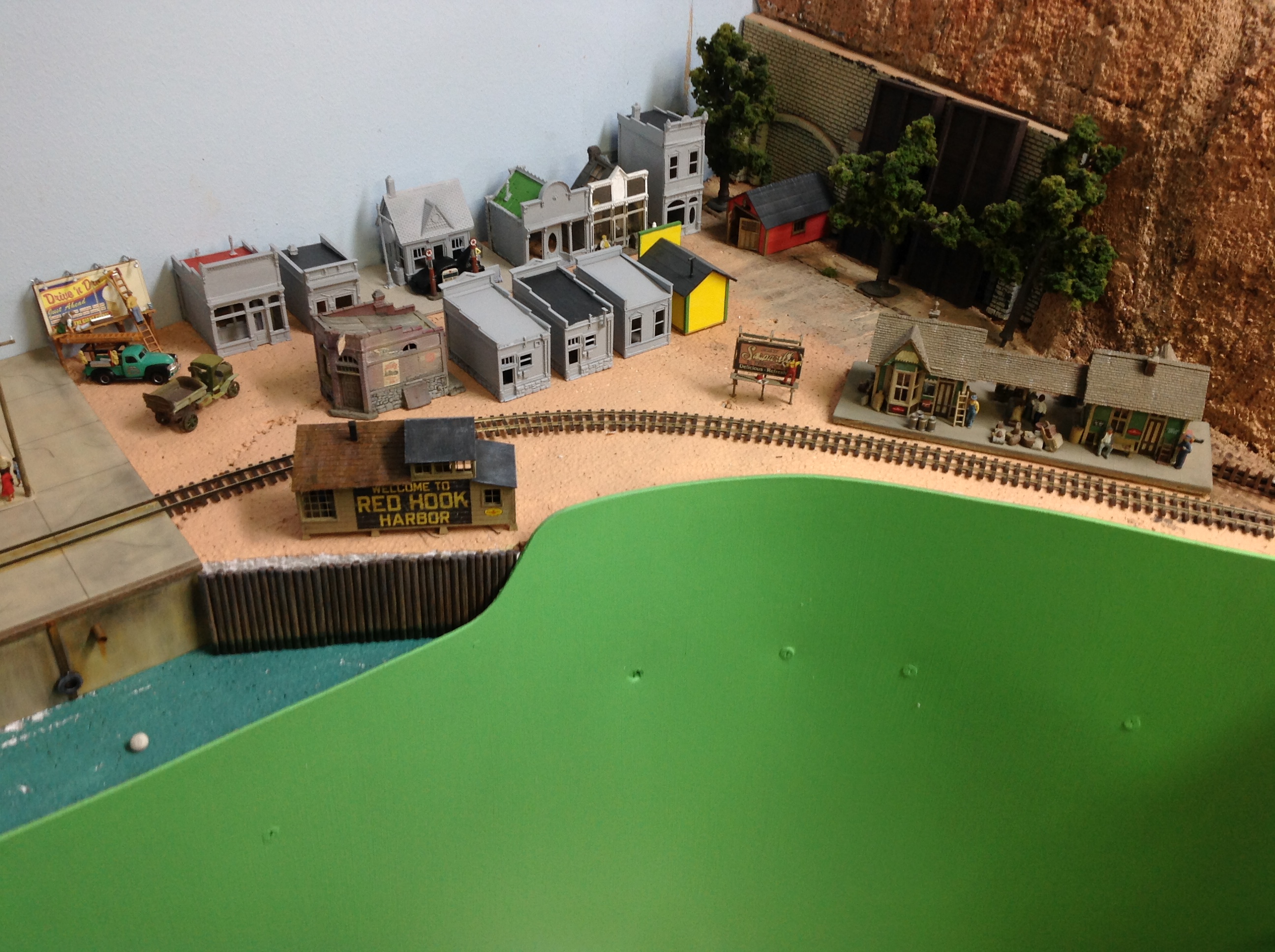
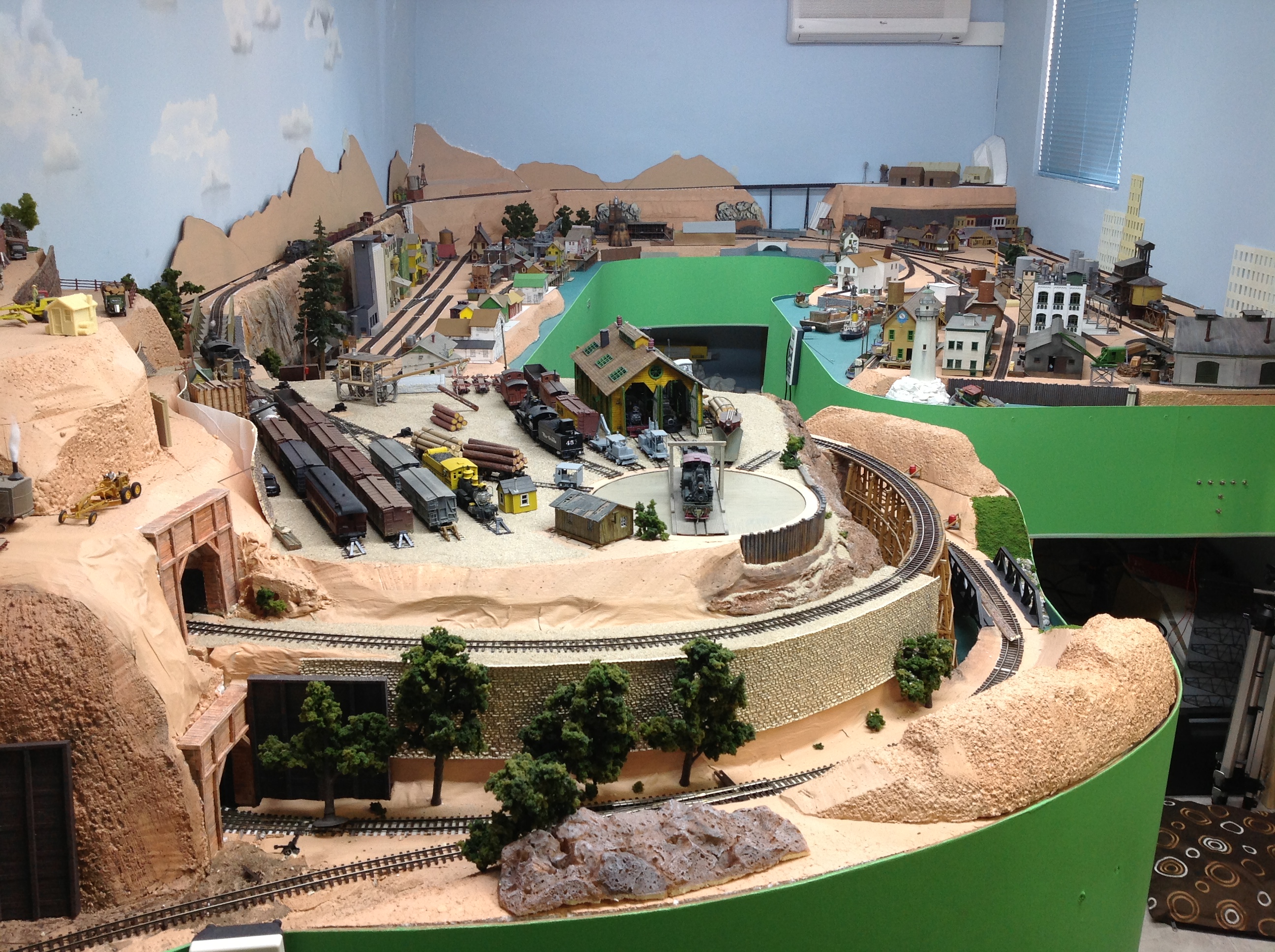
I love looking at all your subscribers tips & layouts, so I thought it was time I showed mine. Like a lot of modellers, I hark back to what I remember as a young teenager, going to school by train and hanging around loco sheds.
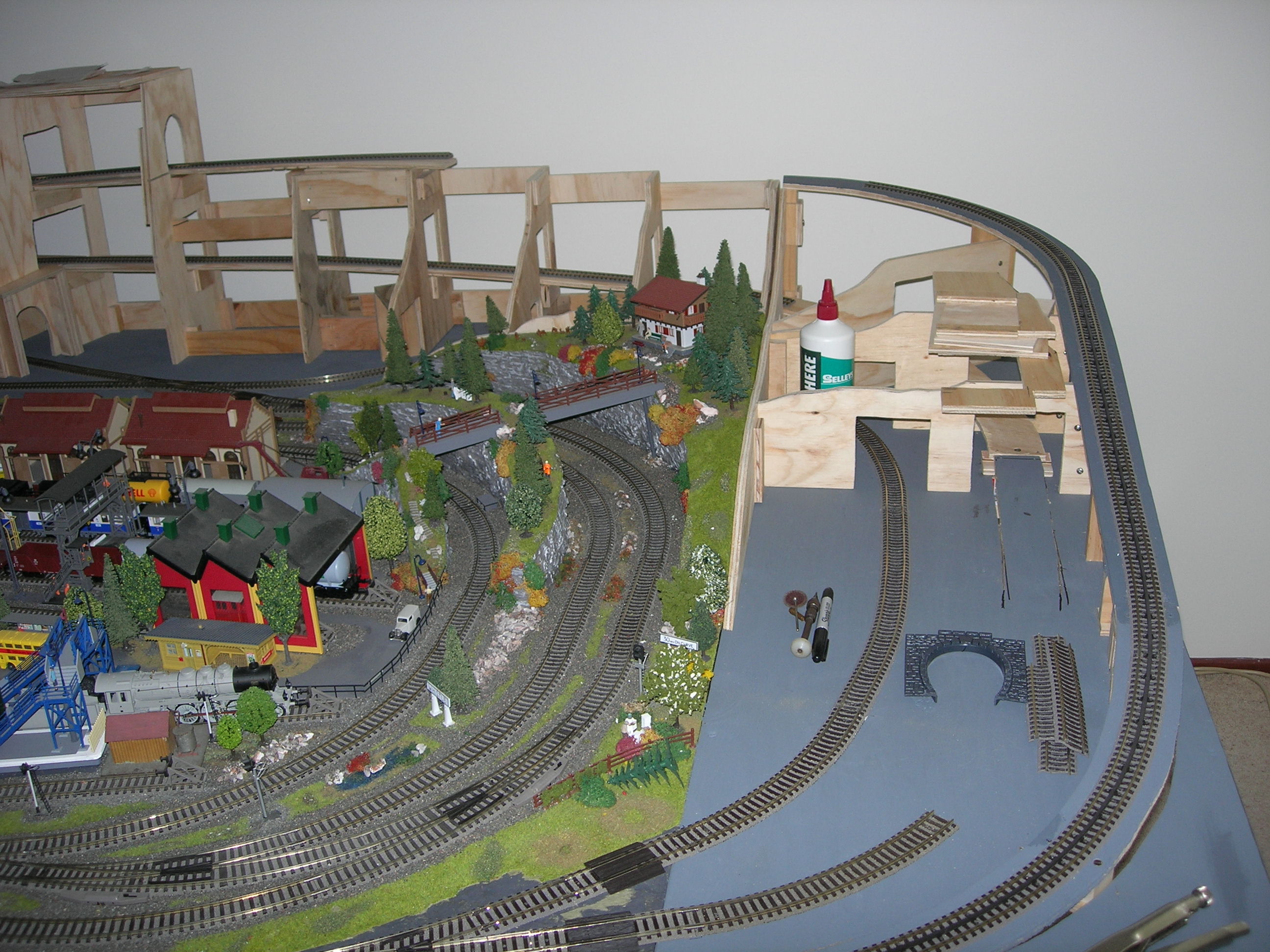
Located in a converted garage 17’x 7′ 6″ which has been doubled glazed and insulated my layout is based on a fictitious town called Bryncoch which means red hill in English. Actually it’s the name of the village I lived in as a child.
Inside the tunnel is a point & one track holds an auto train & the other an ex GWR diesel railcar, neither has to turn to run back. I try to make as much as I can, finding the most mundane objects are so expensive. it will never be finished, as I find running the trains less interesting than making things. I hope you get these 3 e mails ok and
If you require any more info or pics please let me know.
Bye for now
Alan”
“Try this out for corrugated roofing…
Buy some nylon hair combs with narrow spaces between the teeth. You’ll want combs with fairly stiff teeth, and you may have to experiment and perhaps cut them shorter than “as purchased” to get the correct stiffness. Forcefully drag the comb’s teeth over heavyweight aluminum sheet placed on a somewhat soft base. You’ll end up with embossed corrugations in the aluminum sheet resembling HO scale corrugated sheet metal. If you use lightweight kitchen aluminum foil, the piece you produce may be a bit delicate and may tear when dragging the comb over it, so use heavier household or commercial grade aluminum foil to get the results you want. Once you have the look you want, you’ll most likely need to air brush the pieces various colors to remove the polished aluminum surface and to give the look you want. The finished pieces can then be glued to what ever structure you have and carefully formed over many angled or curved surfaces.
A few of you kindly sent in this pic, of the train that was gnawing away at my curiosity:
How I couldn’t work out it’s a snowplow train is beyond me. But there you go.
Some really good stuff came in about the other to:
“The unit at 2:19 is a double-ended snow plow.
Most snow plows of that type had a “box” end on the rear which required the unit be turned to clear snow in the other direction (see attached photo.)
This one eliminated the problem by having a plow at both ends.
The NYC “Jet” passenger car was actually an RDC (Rail Diesel Car, self-propelled) that was modified.
Supposedly it reached a claimed speed of about 150 miles per hour. The one that followed that was the Russian version which reached roughly the same claimed speed.
Interestingly enough, the train that set the North American speed record at nearly 170 miles per hour used jet turbine engines — the United Aircraft Turbo Train, which was a double-ended train that didn’t have to be turned at the end of the line. Each locomotive had seven turbine engines.
Matt
San Bernardino, California
United States”
“Dear Al,
Very, very, good! Thanks I have saved it.
Actually some of the locomotives were very successful.
The Pennsylvania Duplex 4-4-4-4 and 6-4-4-6 were developed because the pistons and connecting rods from one cylinder per side were getting so big they played havoc with the tracks.
The idea was to have 4 cylindrers instead of 2 and divide the power to the eight drivers.
The Union Pacific needed the power of the Big Boys and the Huge Gas Turbine locomotives over the mountain grades. The UP is now using multiple diesels, some times as many as six in one train instead.
Likewise the C&O allegheny 2-6-6-6 mallets were very successful.
The Algerian (PLM)4-6-2+2-6-4 streamlined Beyer Garrett was built for fast Passenger trains in Algeria and still holds the world speed record for articulated locomotives.
The Mig15 jet engine is probably not a locomotive but an attempt at snow removal. The New York Central built an experimental snow removal vehicle by mounting a jet engine on a flat car.
It worked wonderfully blowing away the snow and the heat melted ice from the switches.
Unfortunately it also blew away the ballast from the tracks, braking lineside windows and injuring passengers waiting for trains in stations as it passed!
I’m going to send this post to all my buddies at the Peninsula Model Railroad Club in Newort News VA USA.
Thanks again.
Frank.”
I was very hesitant of posting the Weird and Wonderful video, but I’m glad I did now – especially now I know about the snowplow train.