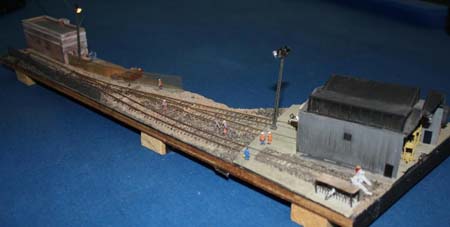
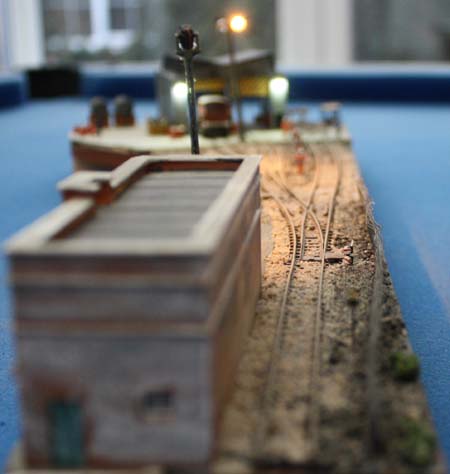
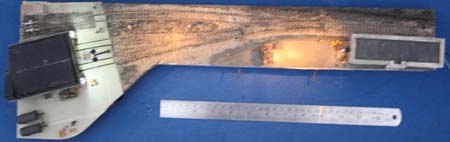
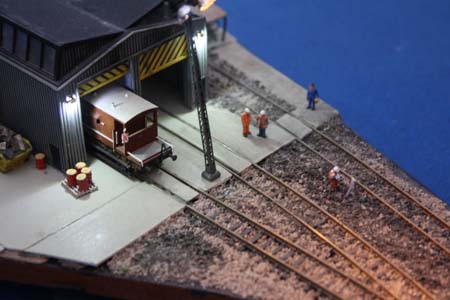
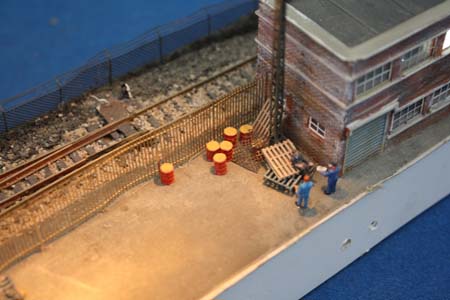
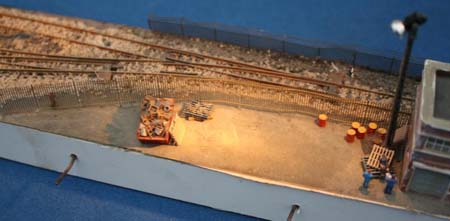
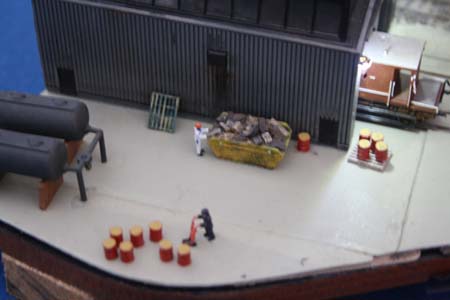
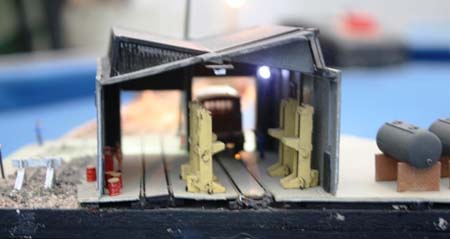
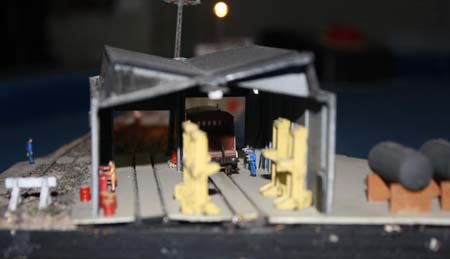
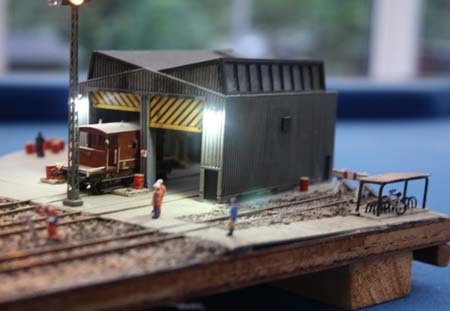
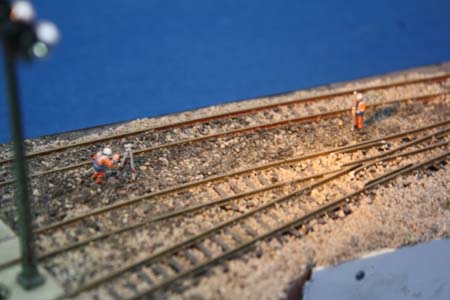
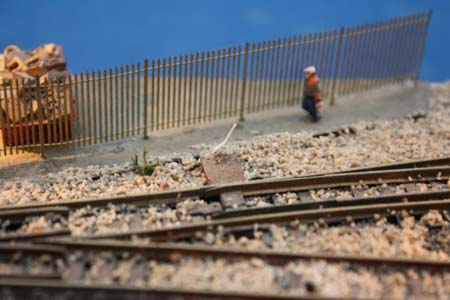
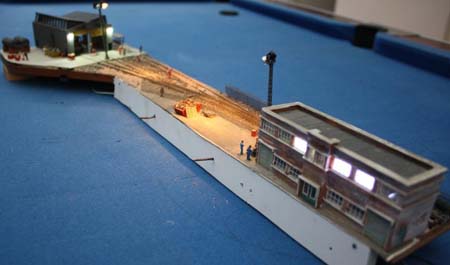
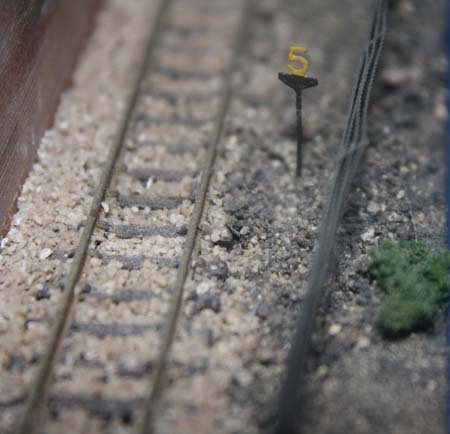
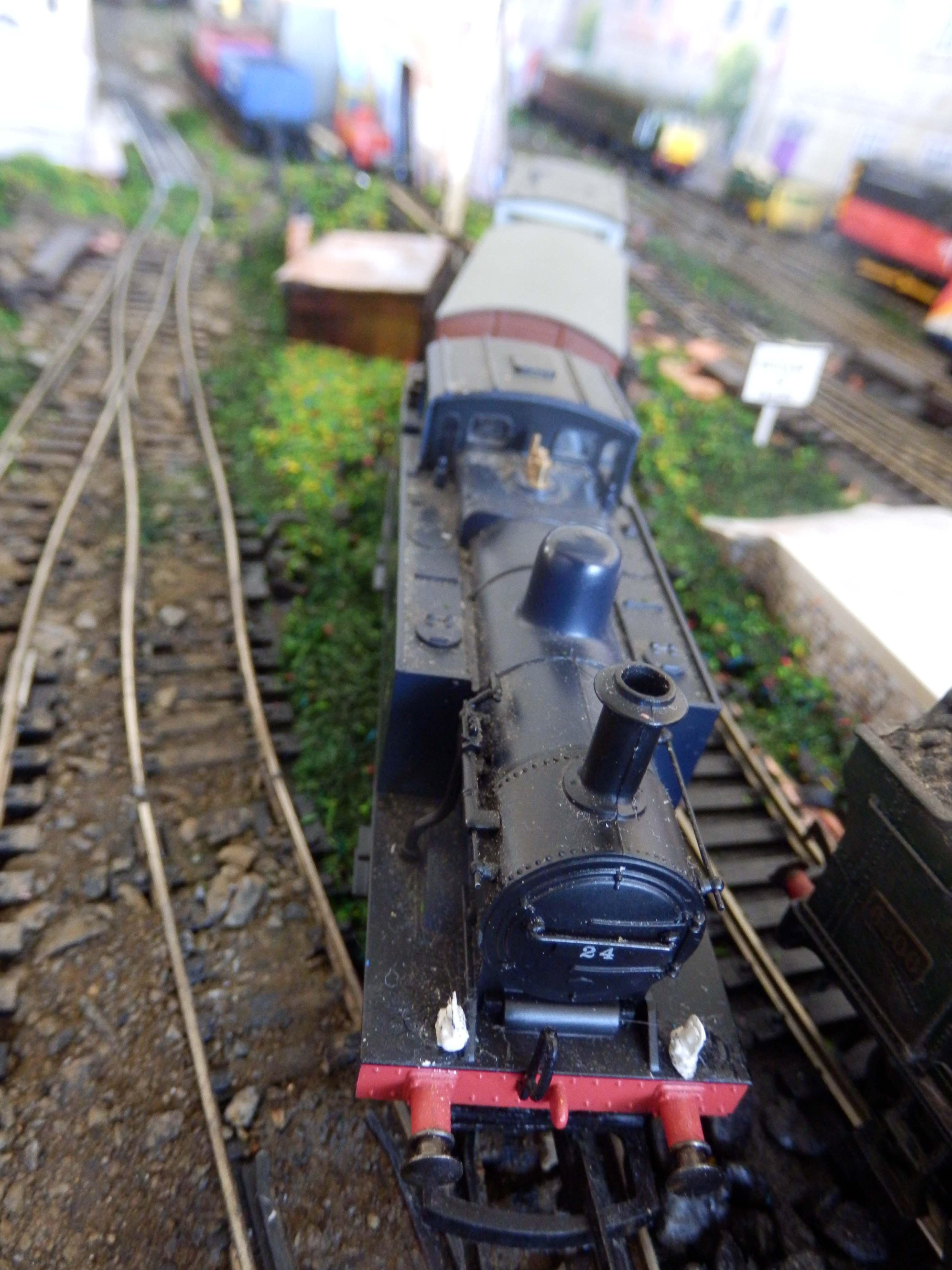
This is my 2 mm (‘N’ Gauge) micro wagon repair shop layout.
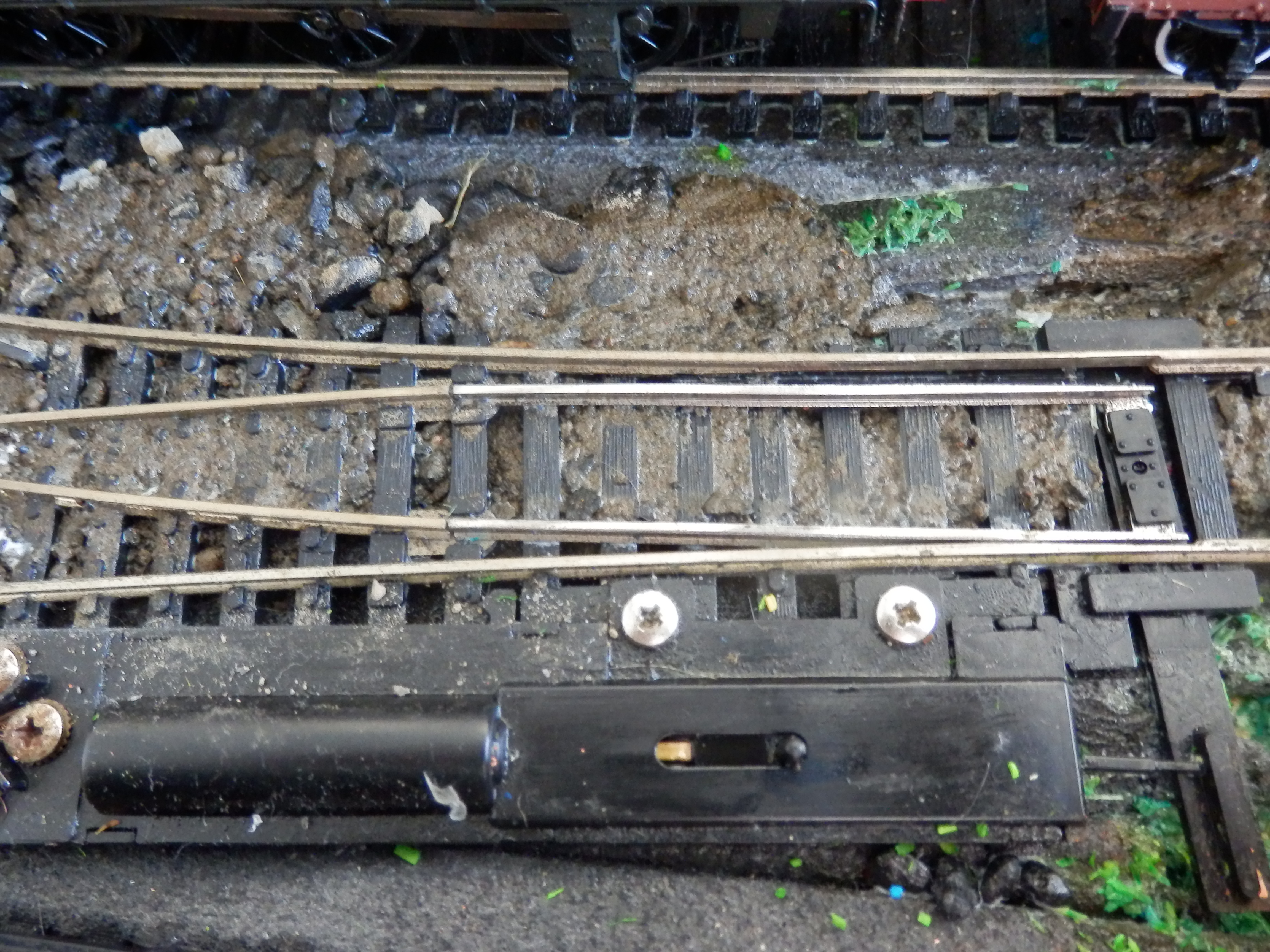
It is based around the traditional inglenook track plan with magnets buried under the track for automatic uncoupling.
I built this layout when I was about 16 and had a free weekend. I found a short odd shaped piece of wood in the garage and thought ‘I can get a layout onto that’.
The whole project was ‘completed’ (we all know a model railway is never finished) in about 10 days with a few extra bits of detailing added, such as the spares on the pallets, as time went along.
The whole layout was built using a mix of heavily modified kits and pre-built buildings from Peco, Bachmann & Hornby with some scratch built items such as the shed ‘spot lights’, point levers, signs, wagon spares and general line side clutter.
Sadly the layout hasn’t been used for a while so when I put power to it I discovered that not all the lights were working. Namely the interior shed lights and one of the yard lamps in front of the shed, so the layout doesn’t look its best in these photos but I hope you get the idea.
I hope you (and your readers) enjoy viewing this layout
Thanks,
James C”
A wonderful N scale (I’d go blind making one like that). But it got me thinking. The smaller the layout, the easier they are to store and sell.
That’s all for today folks. But don’t worry. Back tomorrow.
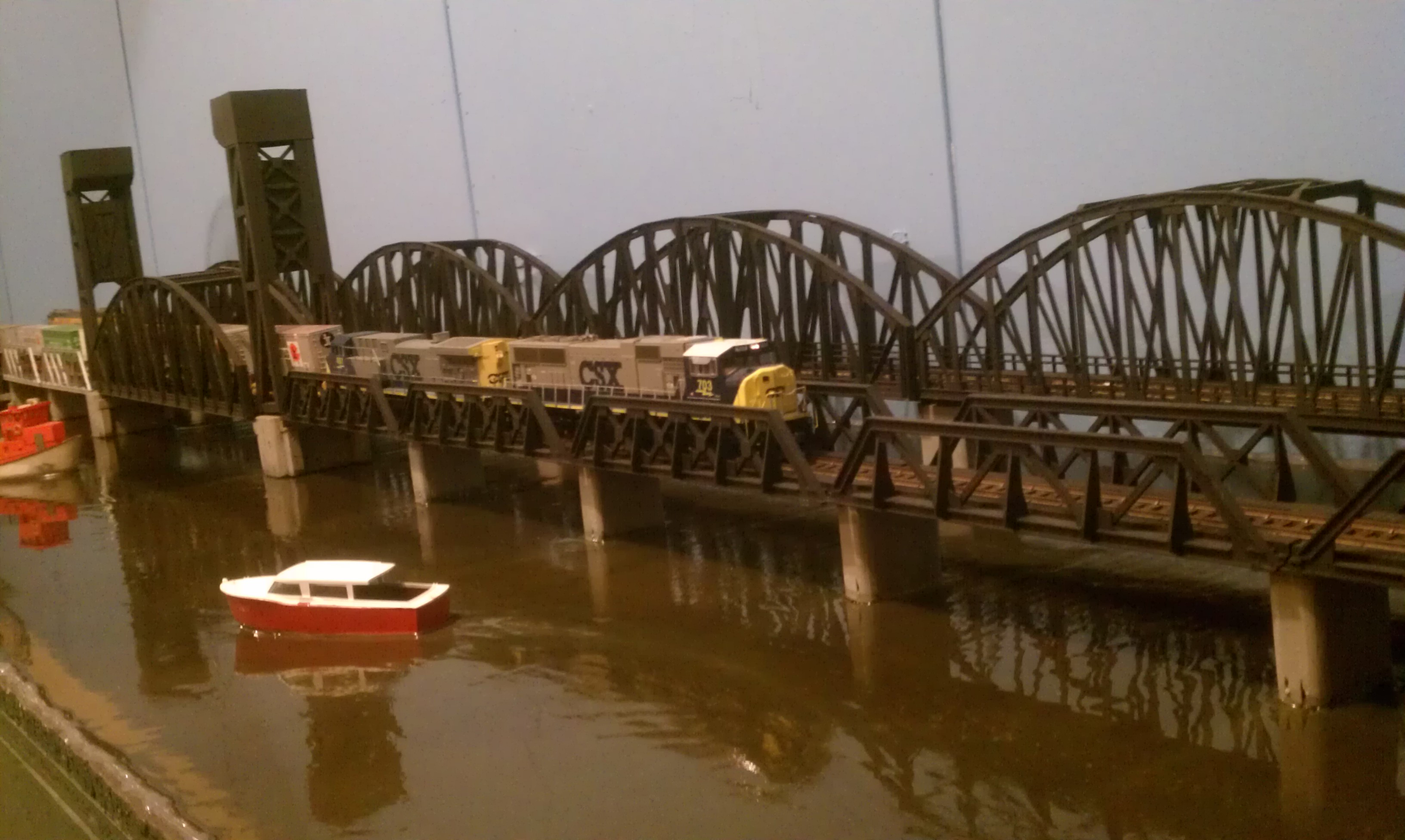
Will’s been in touch. He’s shared pics of his layout and his impressive scratch built model railroad vertical lift bridge.
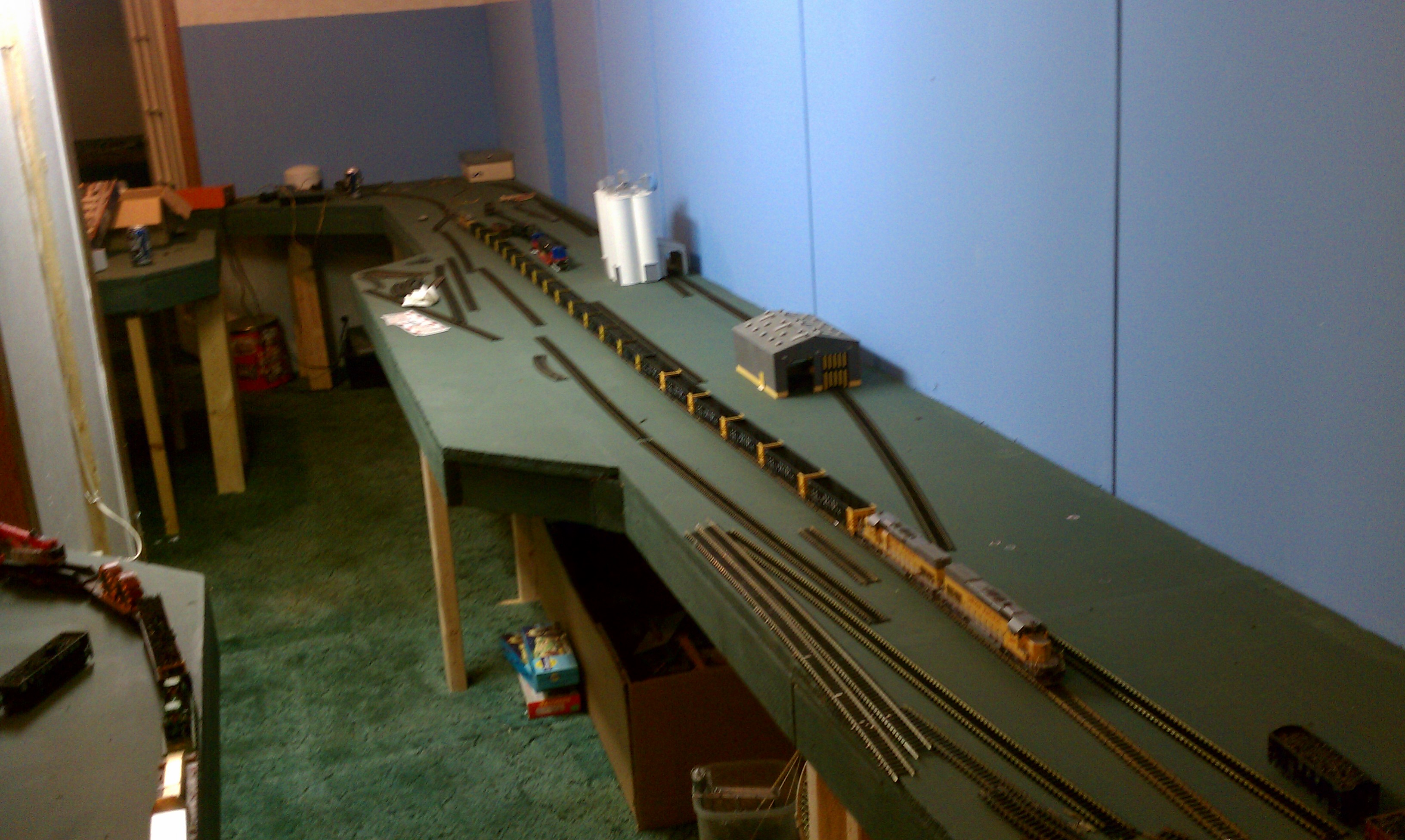
“This layout is gona be quite huge when complete,size is 15 x 33 feet with 2 islands.
I will include you a photo of my river span all kitbashed and scratch built. My very 1st attempt at a river span its 8 feet long.
I’m still laying track gona be doing that for long while LOL.
I took a break from it but plan on getting back to it soon. this is a walk around layout built in my house.most of my friends freak out when they come over and see it for 1st time at just the size of it. Plan is to also have 2nd level just for passenger trains.
And to give you more info its freelance and I’m incorporating some actual settings from my area.
The river scene is the Tennessee river in north Alabama with that scratch built model railroad vertical lift bridge that csx and northfork and southern use daily.
The layout will have 2 main lines,few yards, and long sidings to park long consist all analog dc for now because that’s what i have.
May go dcc later on because I have about 20 dcc locos out of the 80 I have now.
There will be plenty of rolling stock to fill the yards and run long trains last count I had about 450 peaces.been working on this layout for about a year buying inventory up for it about 3 years.
Will”
(images are clickable)
Will’s model railroad vertical lift bridge looks spot on – can’t wait to see more of this layout!
“HI AL,
Here are some more photos of the MIDLAND GREAT CENTRAL JOINT RAILWAY.
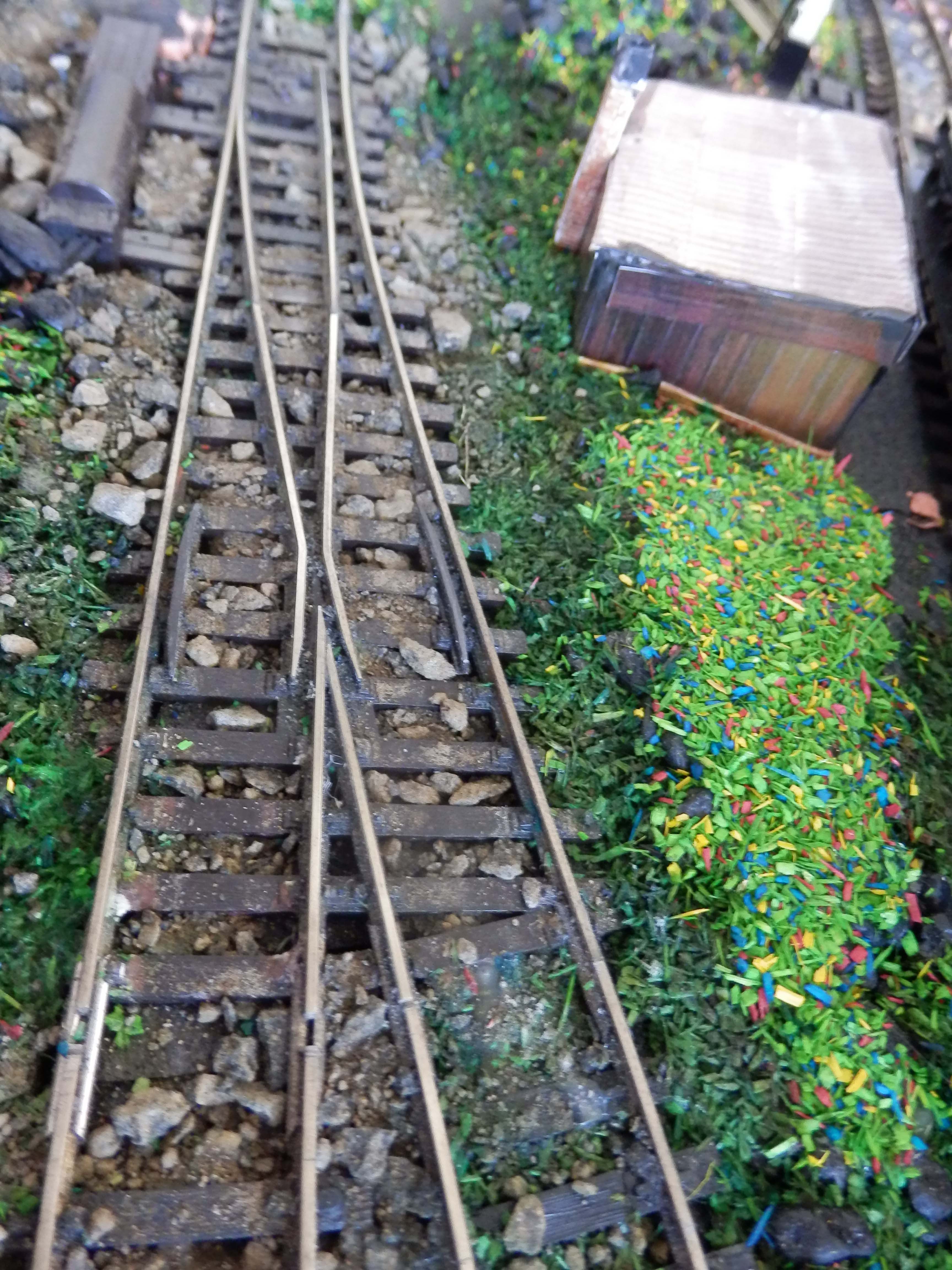
I ballasted the the goods yard area with sand and grit from a building site.
I also used faller scatter material to make some track weed grown.
I used Pva glue mixed with water and detergent.
A word of warning don’t put any glue near the moving parts of a point it will gum up the point, but if you do hot water melts the glue, and the point will work again.
Paul”
“Hi Al.
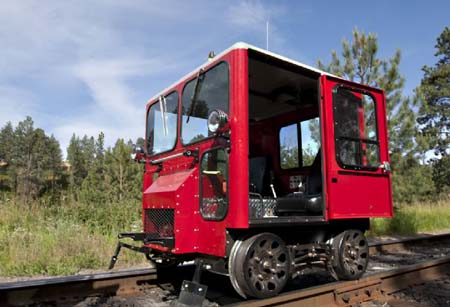
You have these sort of things in the UK.We have taken them and are using them on abandoned and working rail tracks in large groups. Sort of tour around. In the old days the track inspector’s used them to check out the track.But now they have modified pickup trucks and are bigger.
I been in a group who restored them to use on old tracks.Great fun and really boot along.they are called speedster’s.
Kim”
“Hi Al,
Further to the various posts about wagon loads, for what it is worth, here is my method:-
First I lay clingfilm over the wagon and push it down into the corners. I then squeeze in a thick layer of ‘No More Nails’ until the wagon is about half full. Next I pour in the load. usually some scenic coal, or track ballast and tamp it down just a little. At this stage I cut off the surplus clingfilm level with the top of the truck so that it will not be seen. I then top up the load to the brim of the wagon and sculpt it how I want it to look. Finally I spray with hair spray which seals it all in place. You need to start the spray away from the model so that the load does not get blown away by the initial burst of air. I make the load quite wet with the spray, but it dries clear. I have been using this method for a while and so far no problems. The trucks do not spill their loads in the event of a derailment. The purpose of the clingfilm is to allow you to remove the load without marking the wagon. I have had no need to do this so far, but assume it will work.
Best regards,
John”
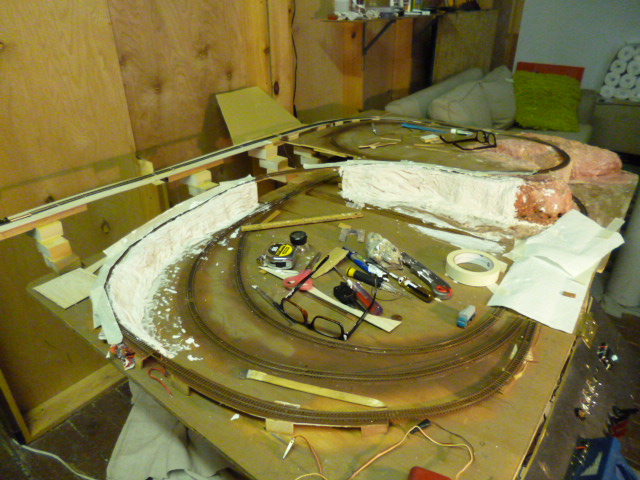
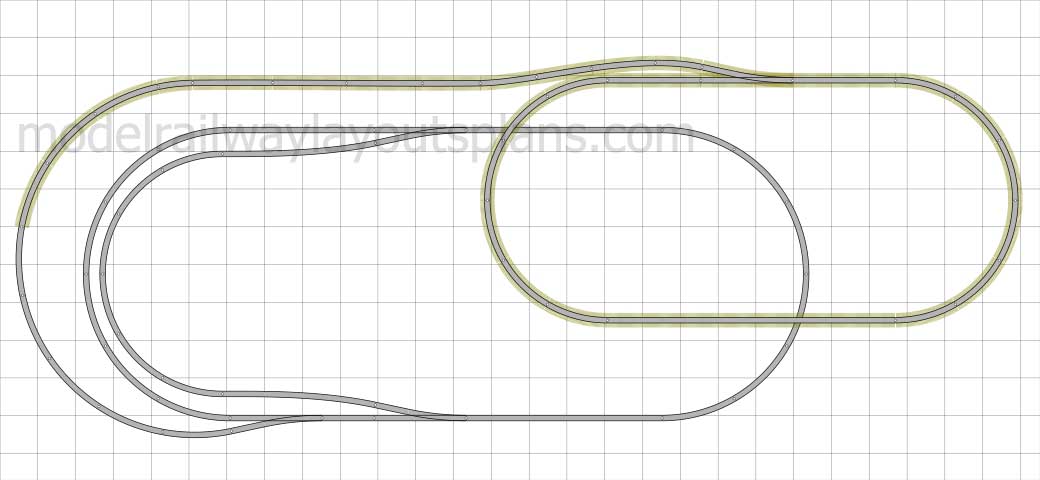
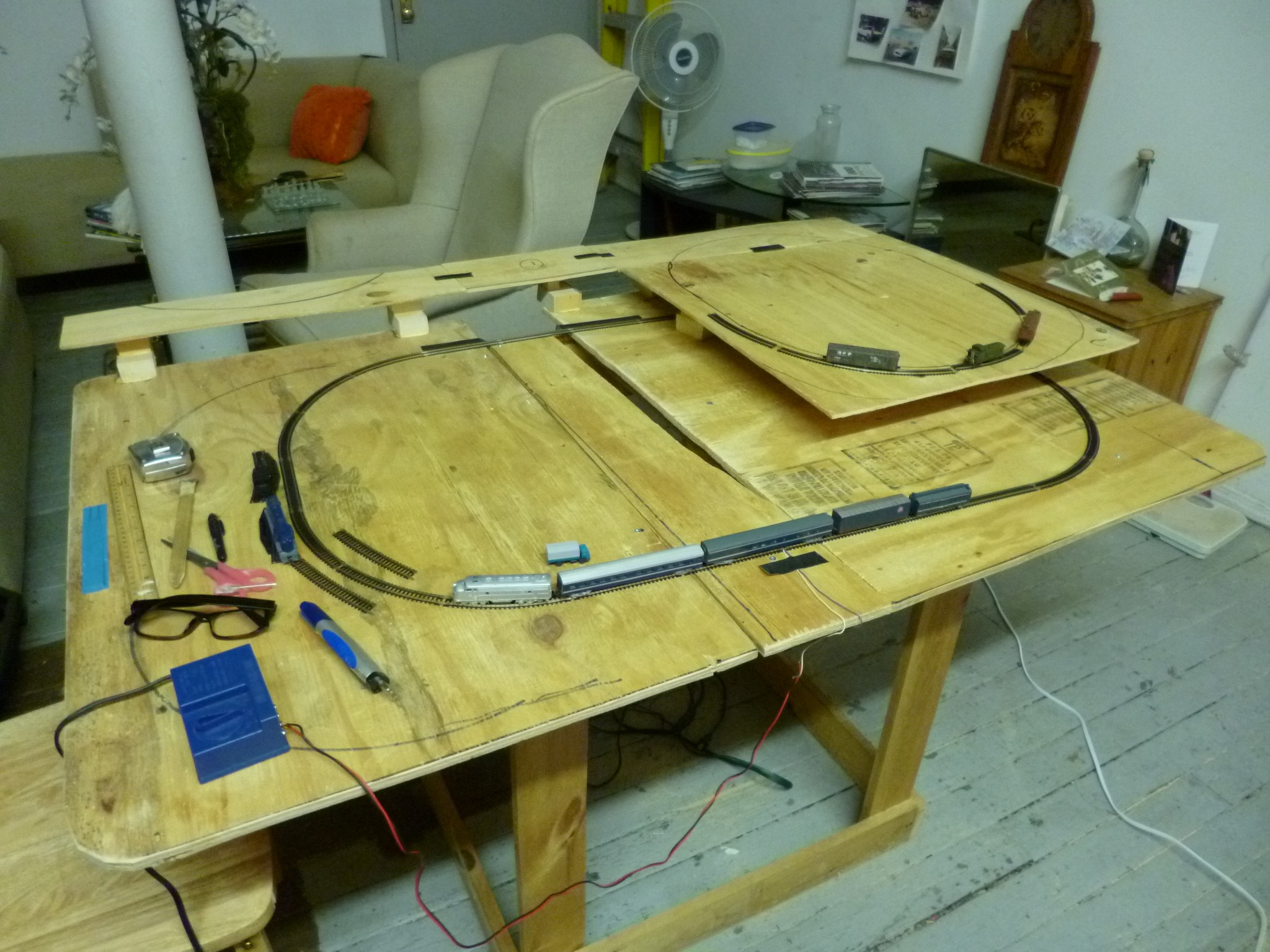
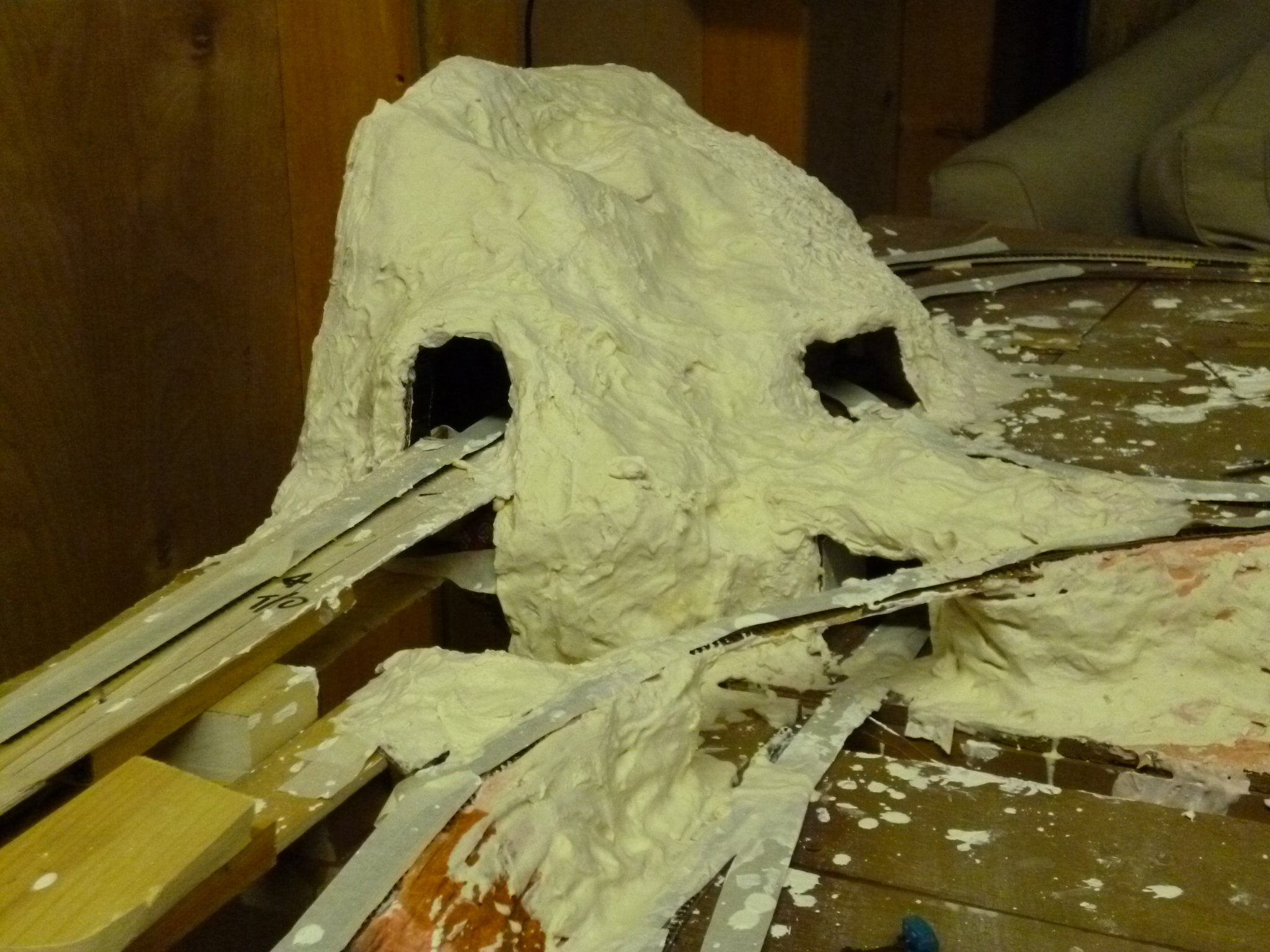
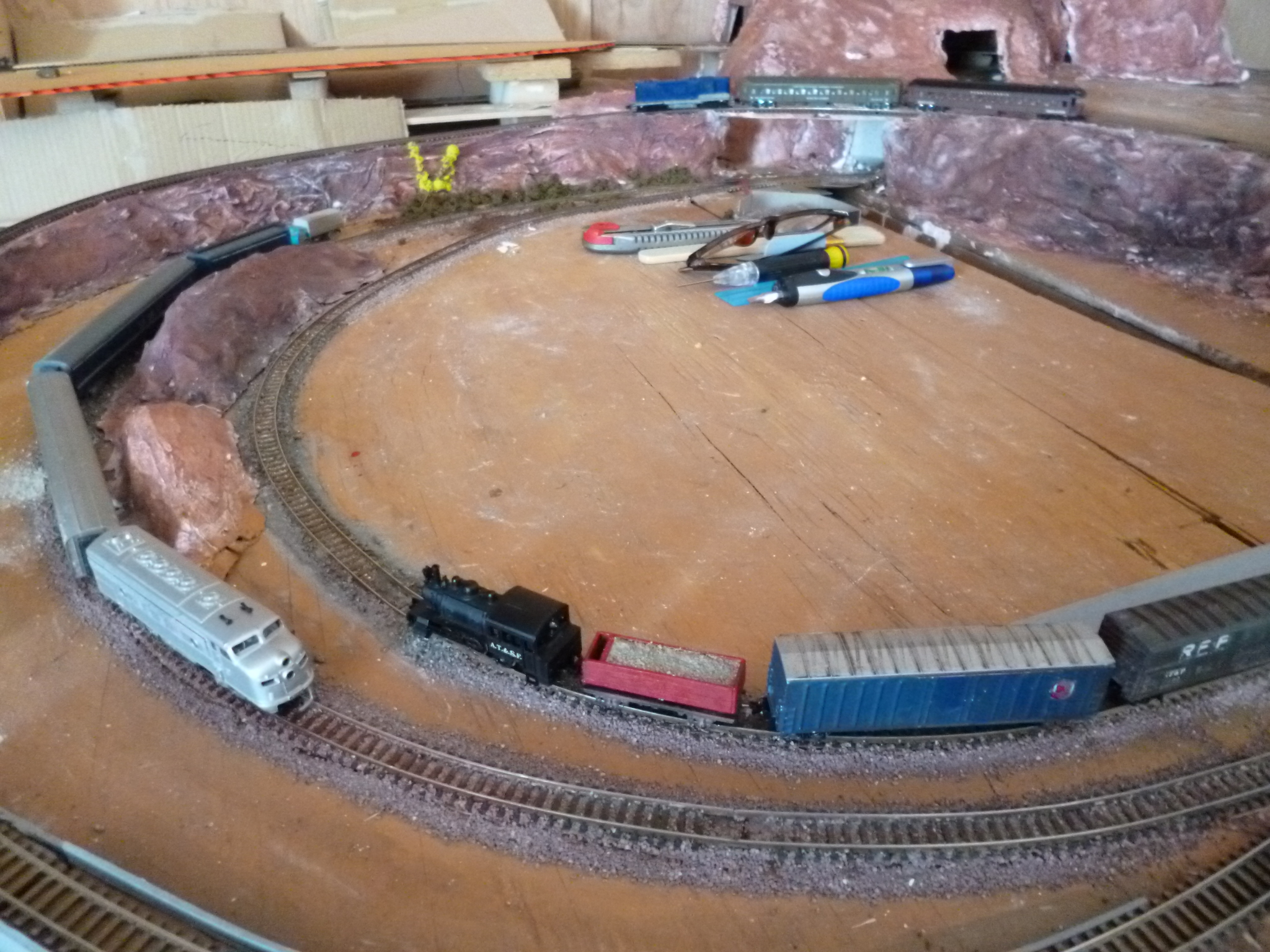
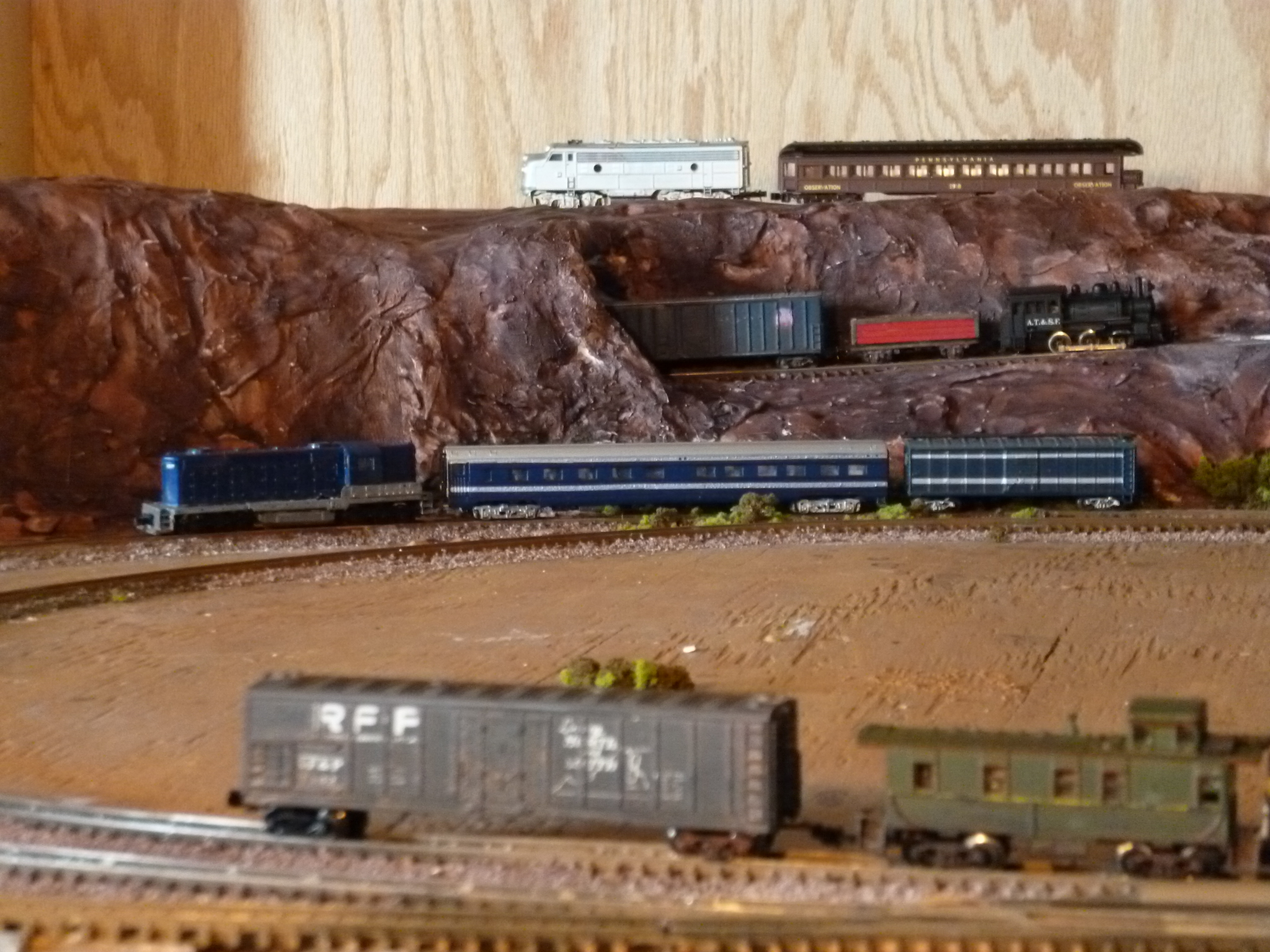
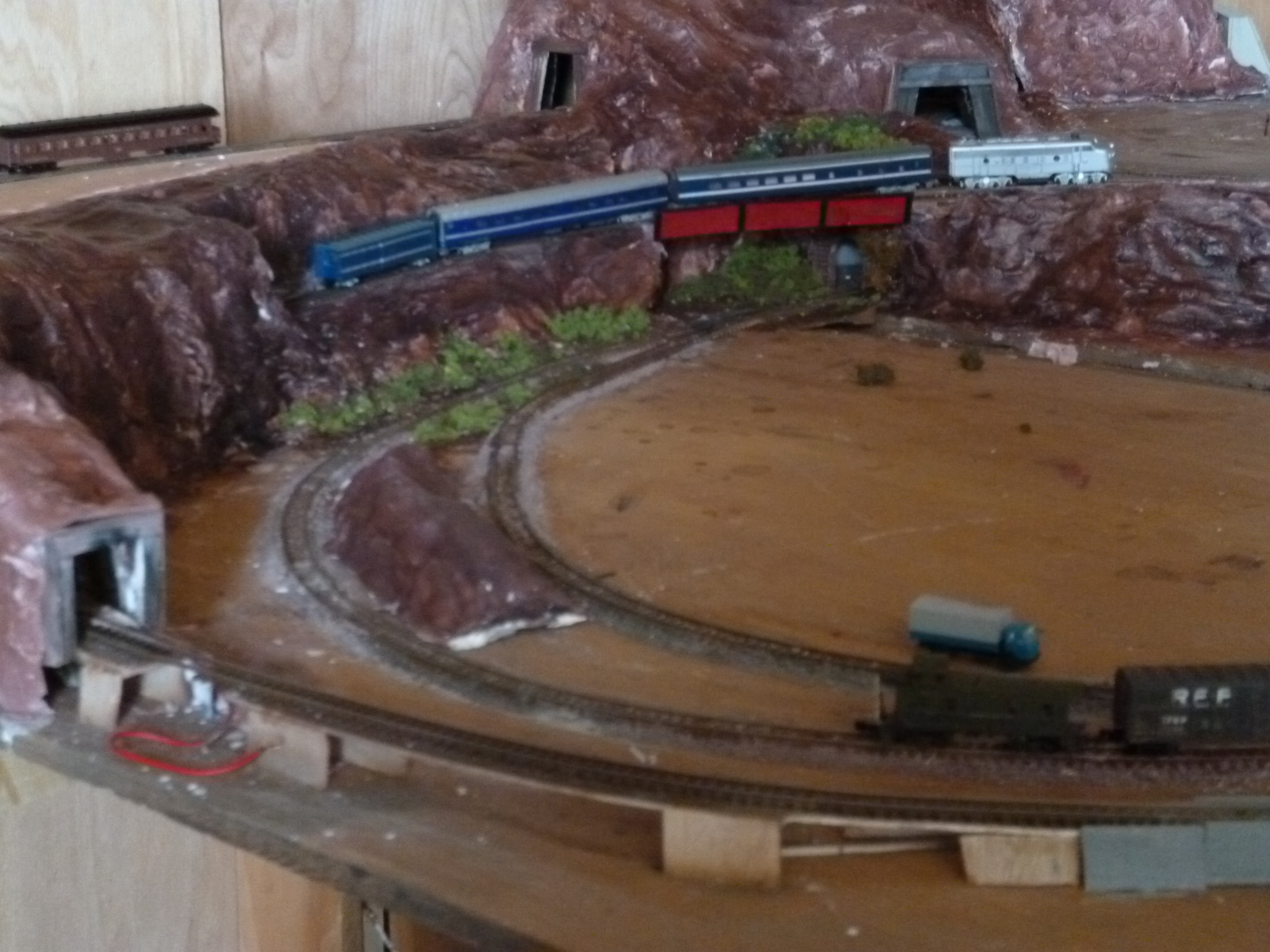
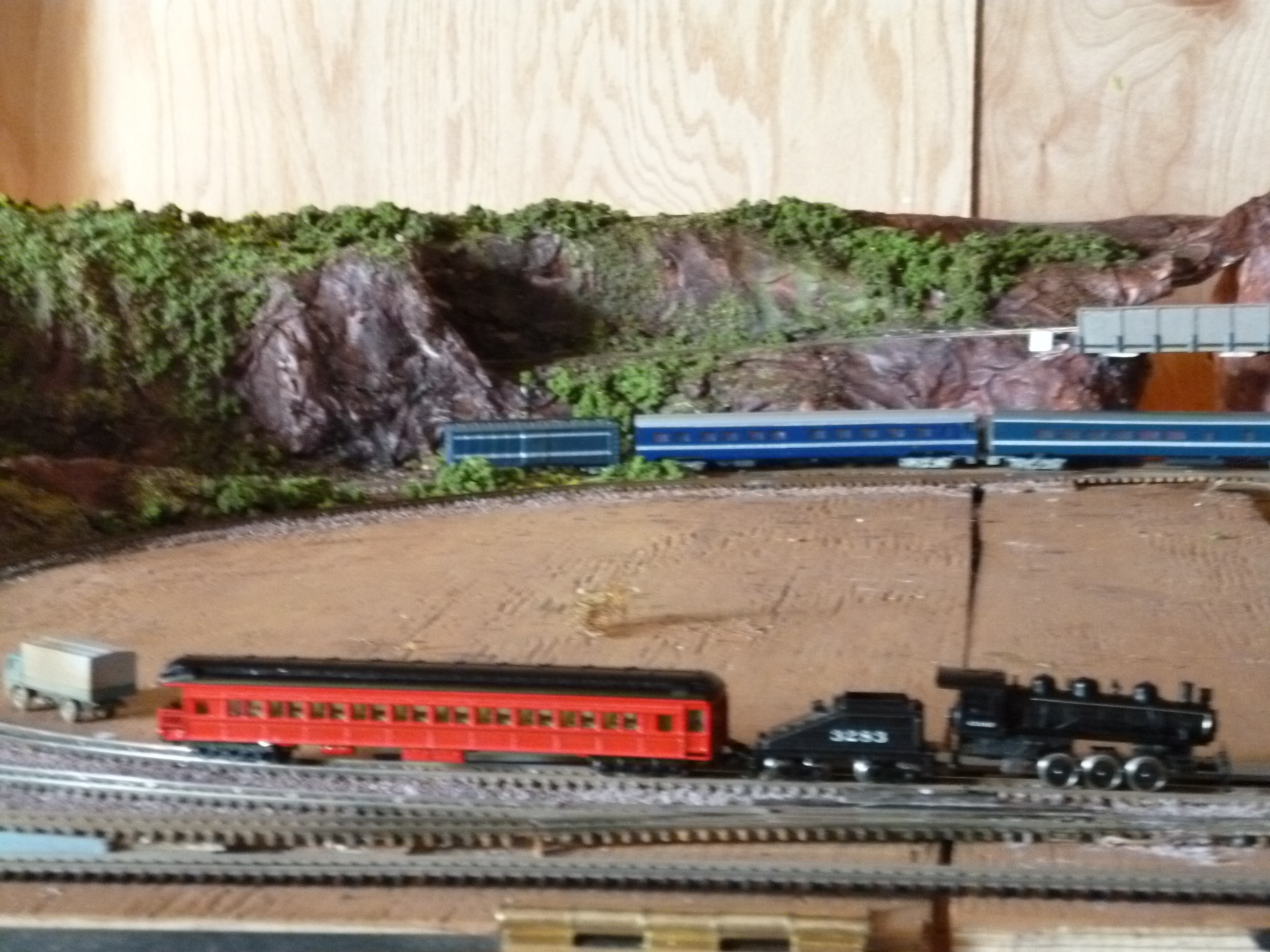
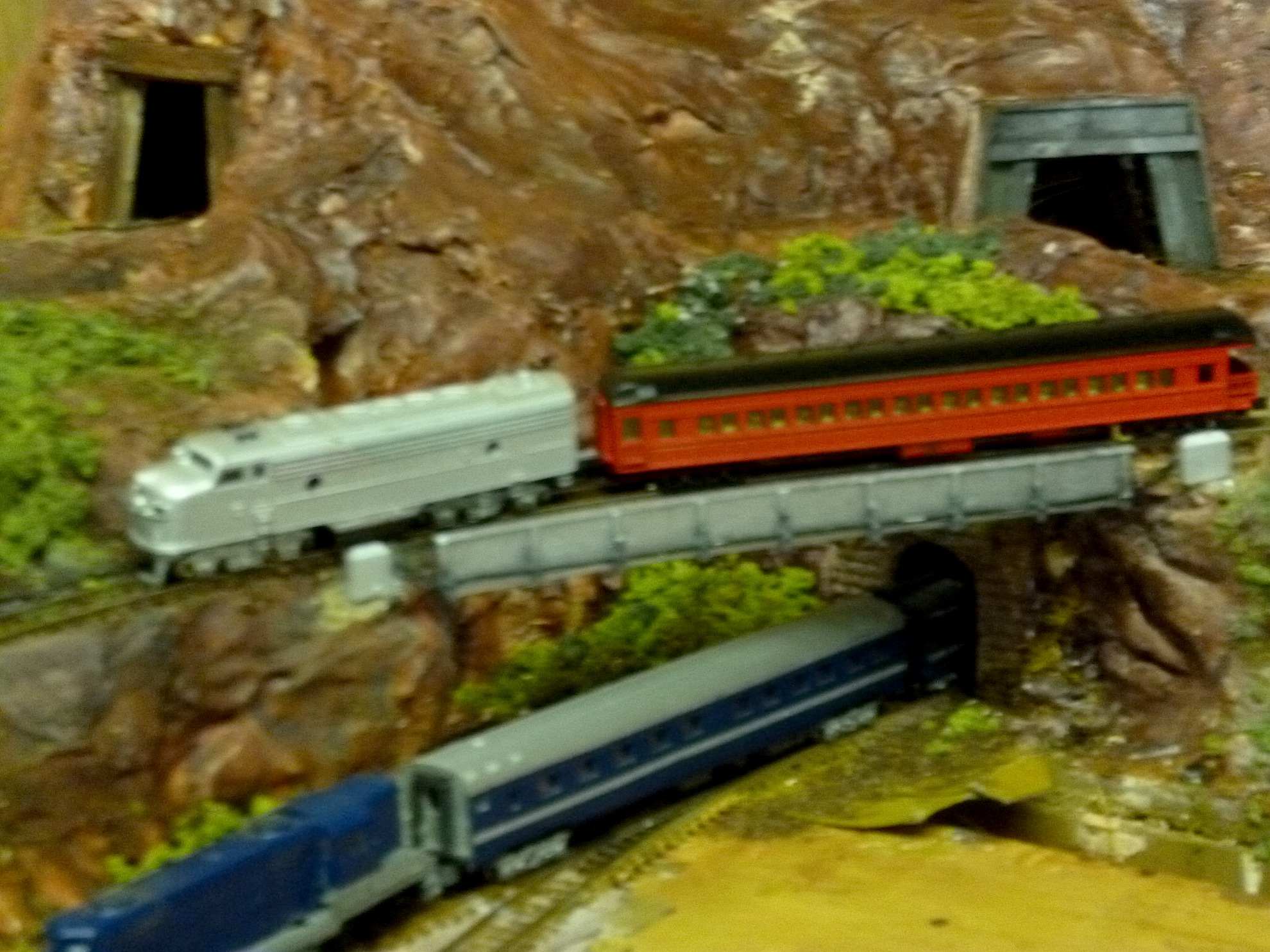
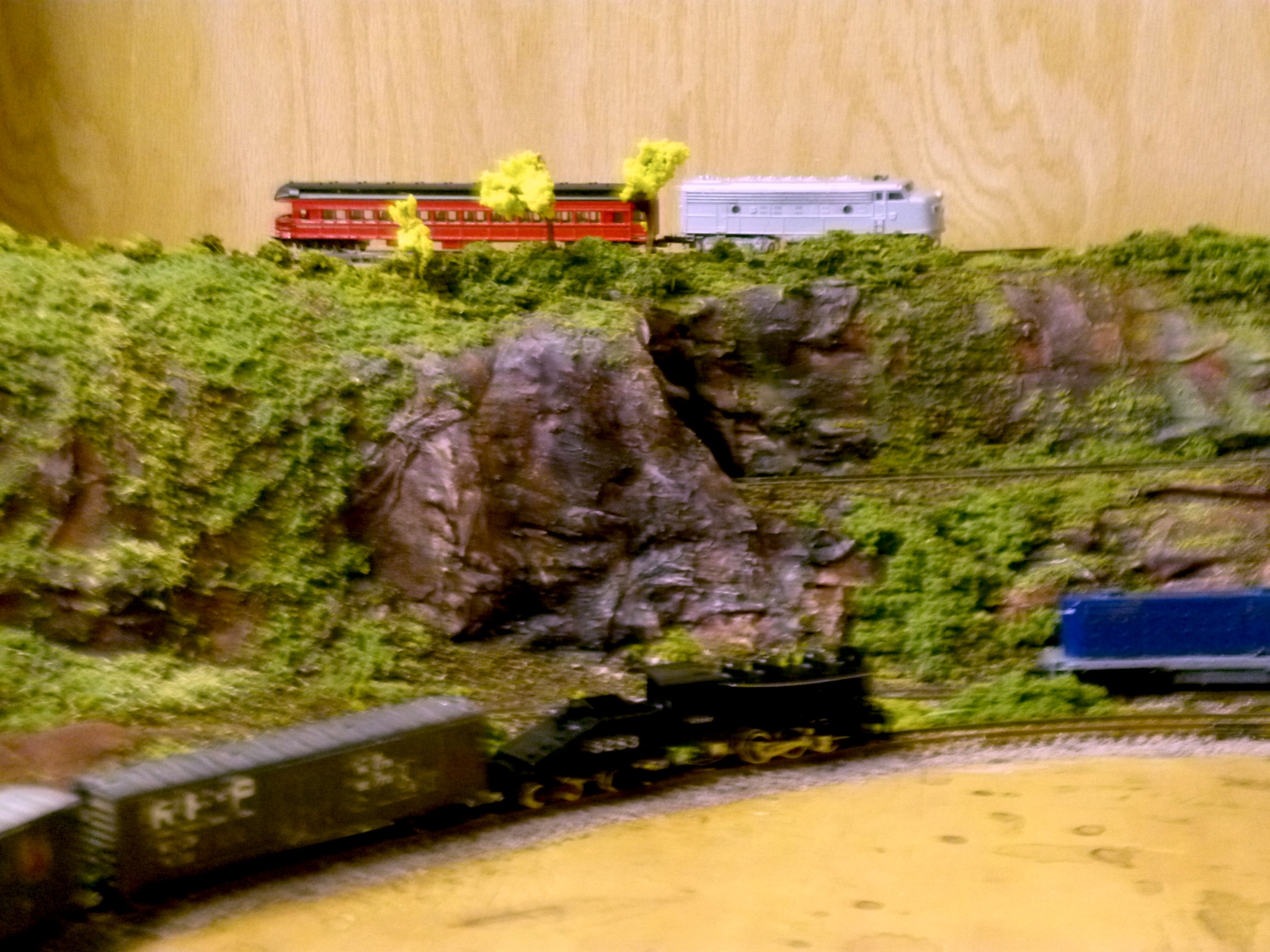
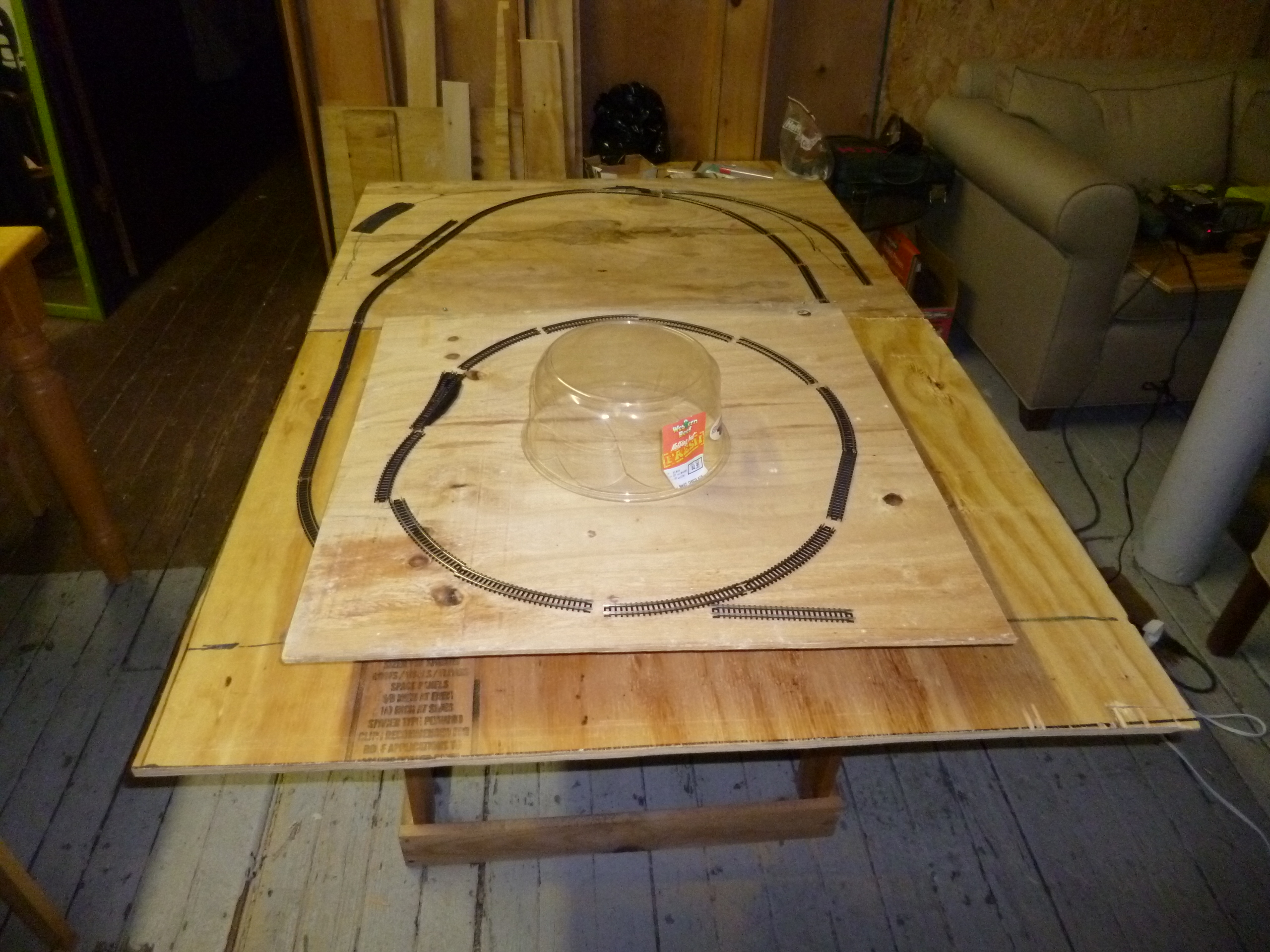
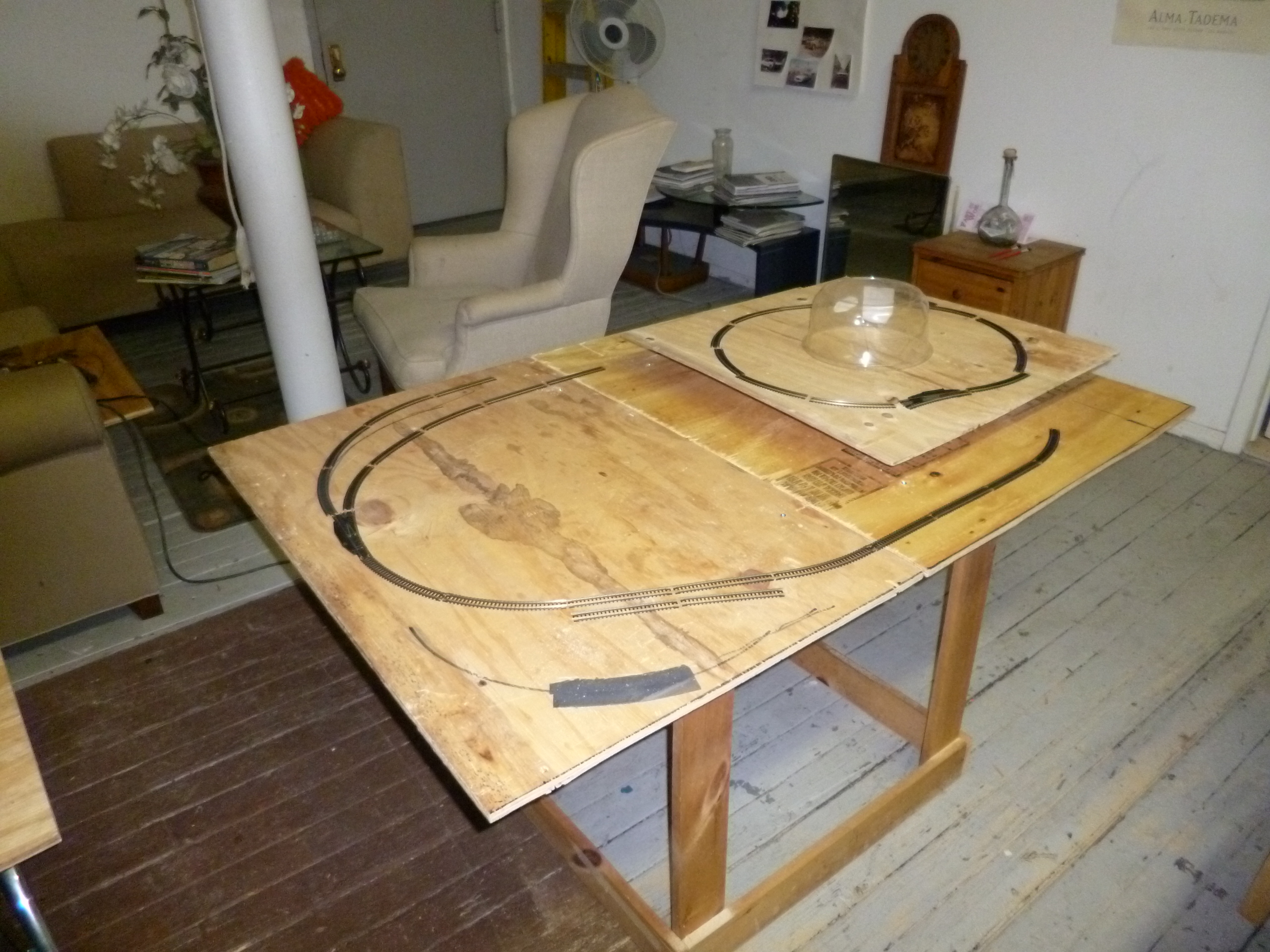
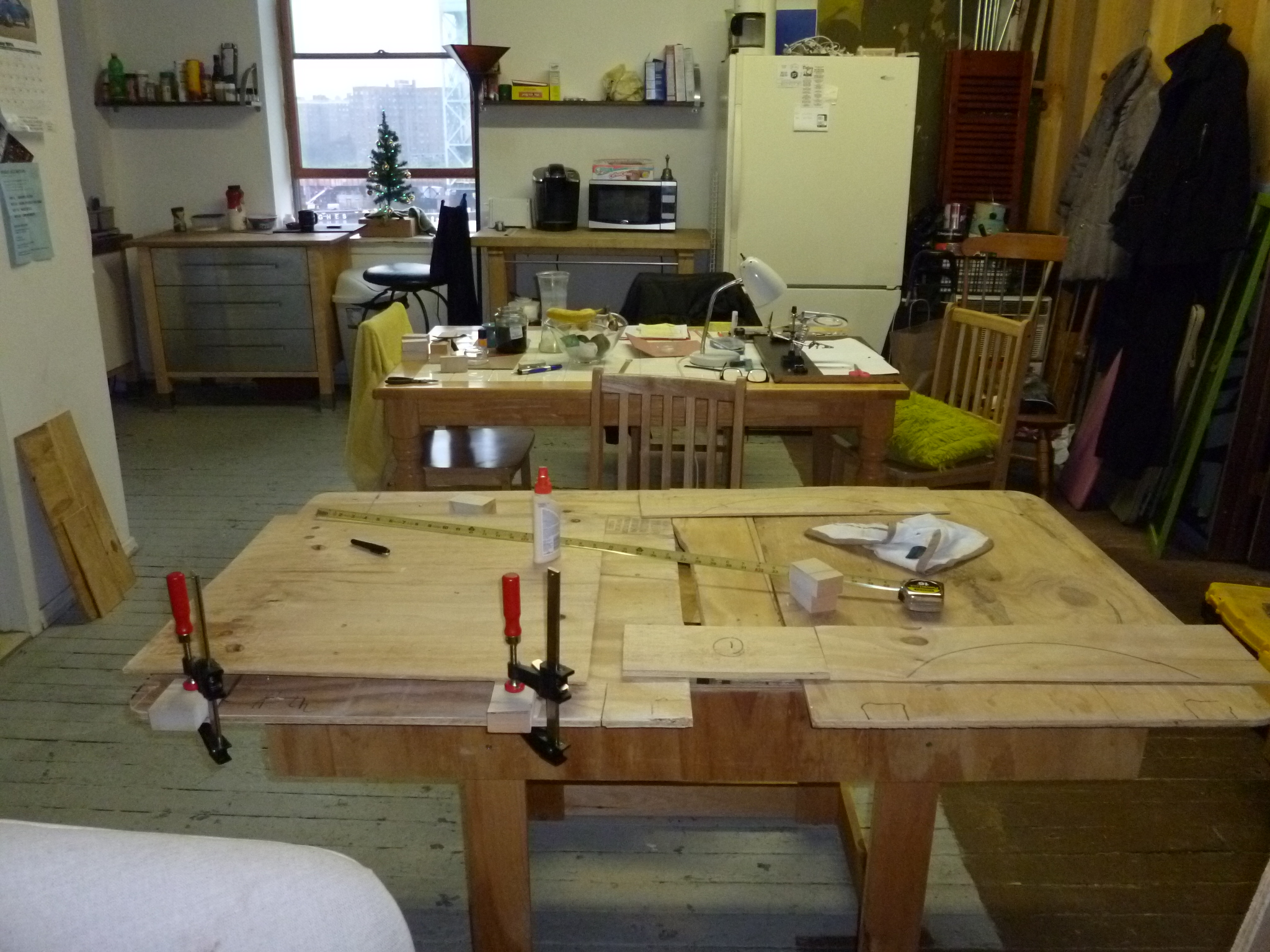
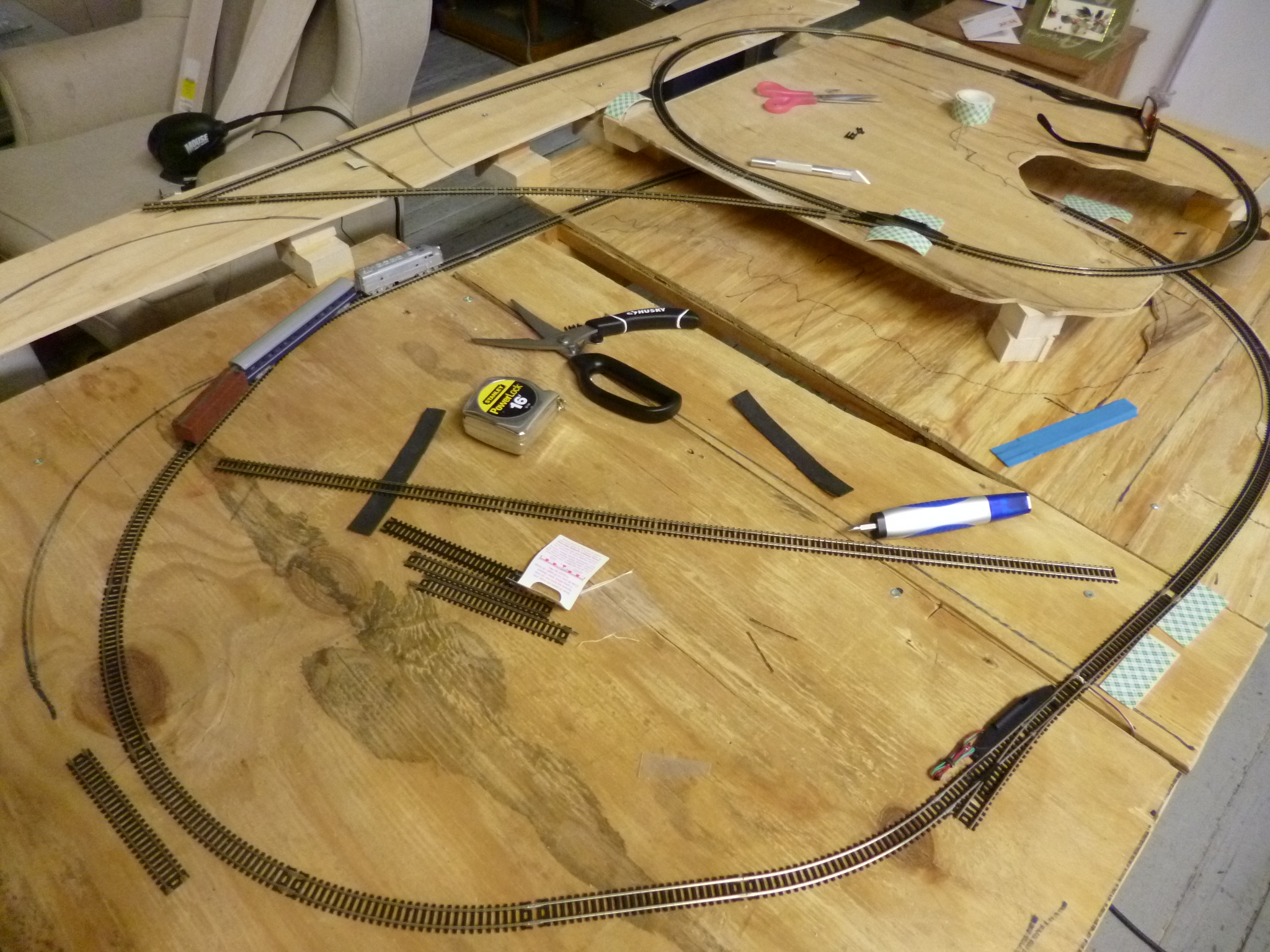
“Interesting stuff. In case it might appeal….I’m an Englishman living in New York…building my second ‘N’ scale layout with the help of my stepdaughter who is now 32 yrs… the first one we made was in California when she was 11 yrs.
The whole point of this one is to use as little as possible things from the model shop (which are lousy in NYC anyway) and also to make it as individual and asymetric as possible…. it’s going to be a sculpture/diarama of New Mexico that happens to have trains.
My rolling stock is nearly all pre-owned (second-hand things) that we bought as ‘broken’ and rebulit/painted whatever…the baseboard is an open 3’x3’x3′ cube that the scultor downstairs in my factory/loft used to put sculptures on, covered with teo sheets of plywood from the dumpster….the furniture factory on my ground floor supplies foam that I grind up for foliage etc and we collect coffee/tea for ground cover/ballast etc.
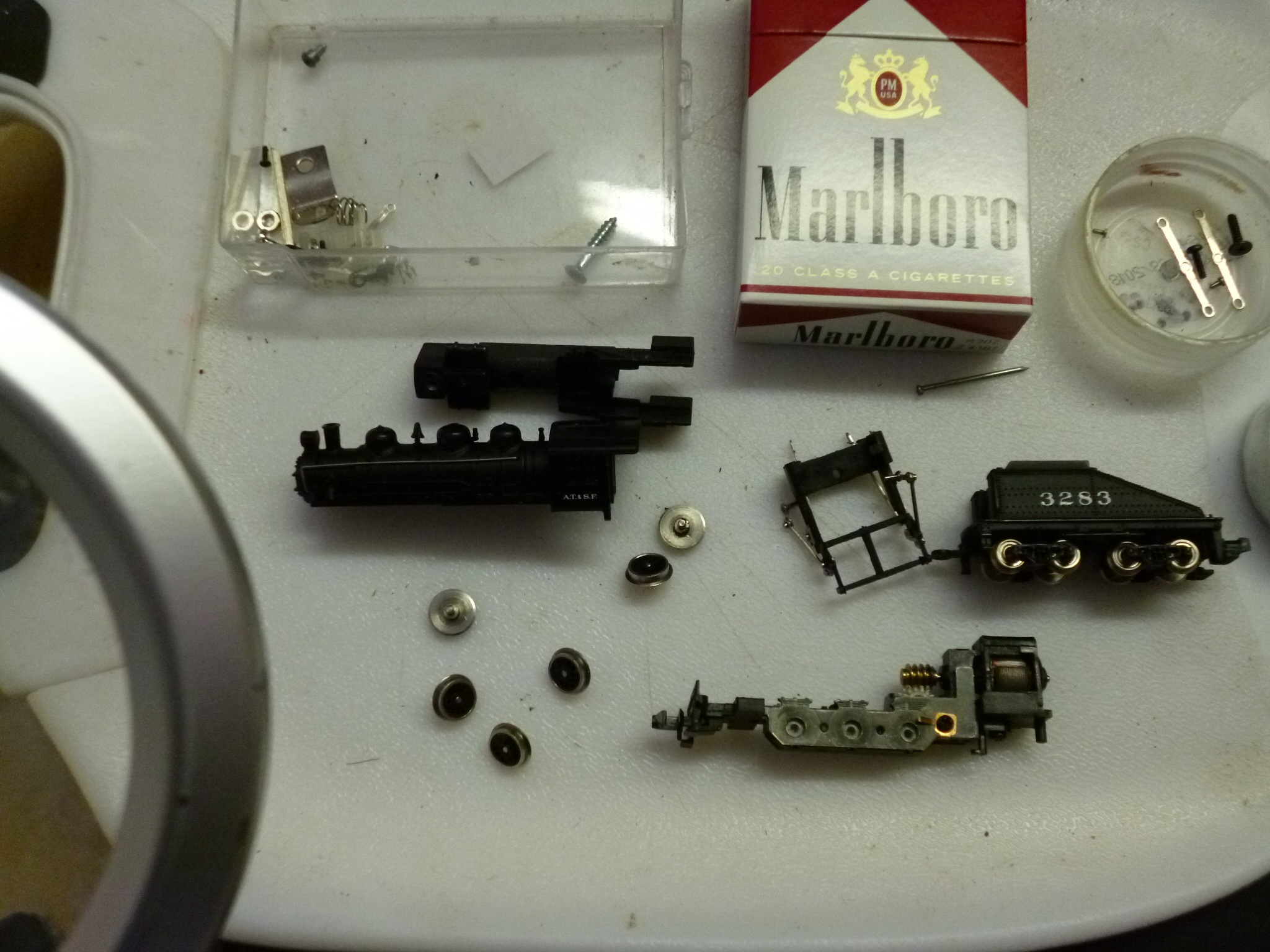
We break ALL the rules..train liveries are all my designs, passenger cars all lit with their own LED/batteries inside…I have a flair for rebuilding locomotives, old pre-war American ones are particularly tricky in steam (the first trick is to put current pick-ups in the stupid 8 wheel,2 truck tenders so that the short wheelbase 6 driving wheels don’t stall on the turnouts (points) …the list goes on…just thought it might be of interest..specially ” What Not To Do’ written in a funny, entertaining way.
My loft overlooks the Harlem River by the Park Ave lift bridge which carries ALL the trains out of Grand Central (sadly now only boring details) and there is a freight line IN THE RIVER on piles which takes the CSX garbage trains from New York to Virginia twice a a day so I am not lost for references.
Here’s a few pix of how we have progressed since December
Michael”
A big thanks to Will for sharing his model railroad vertical lift bridge, and to Michael, John, Kim and Paul.