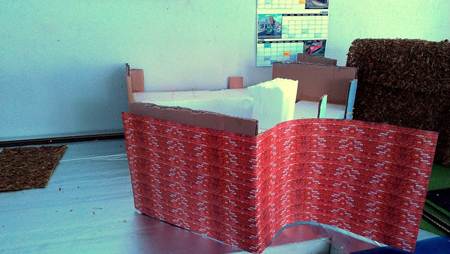
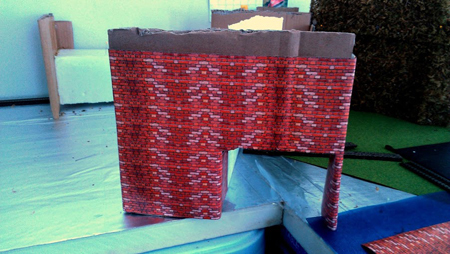
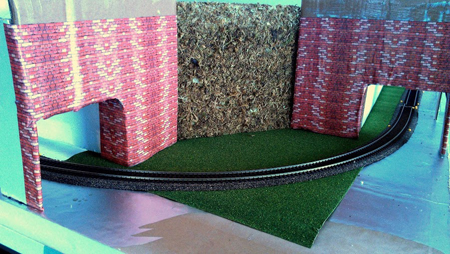
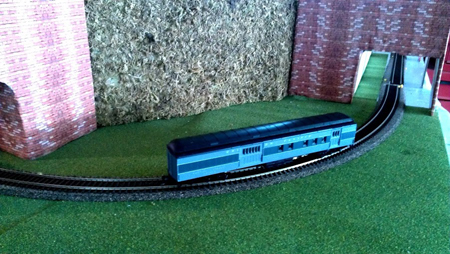
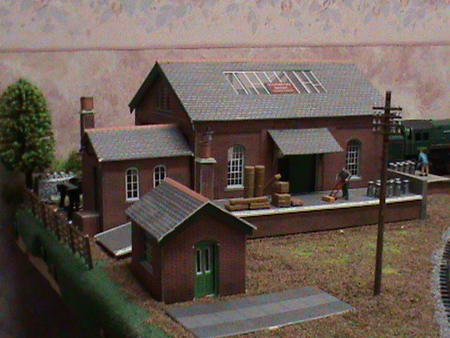
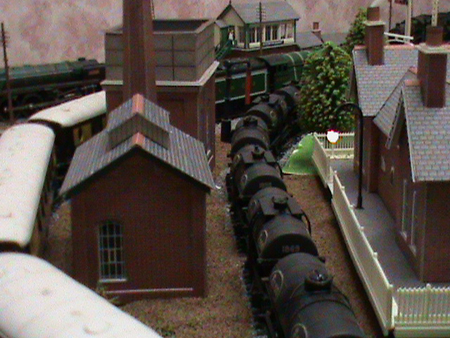
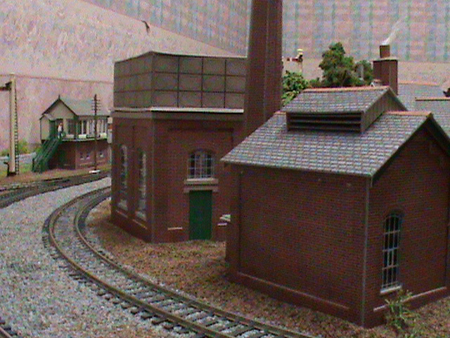
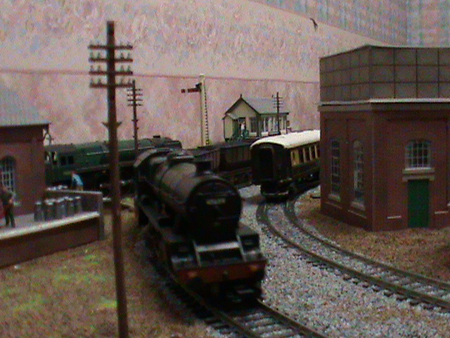
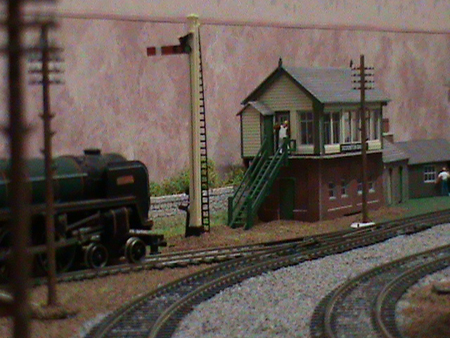
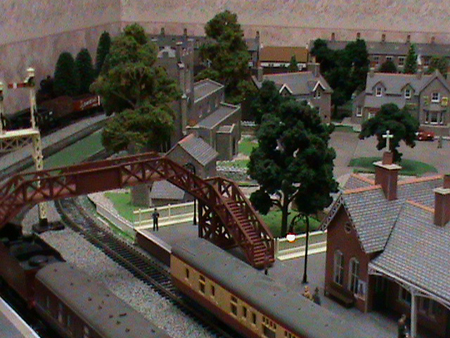
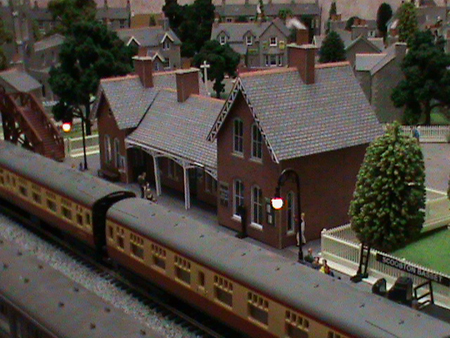
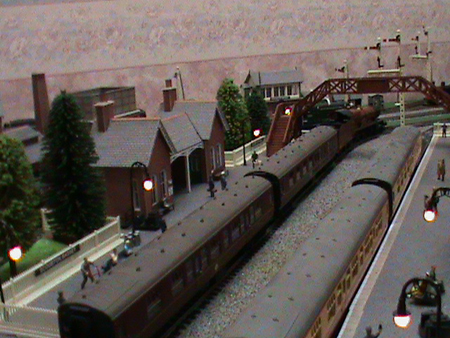
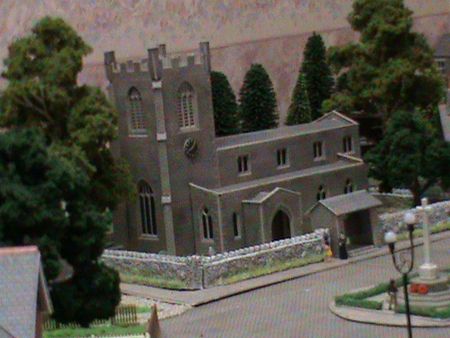
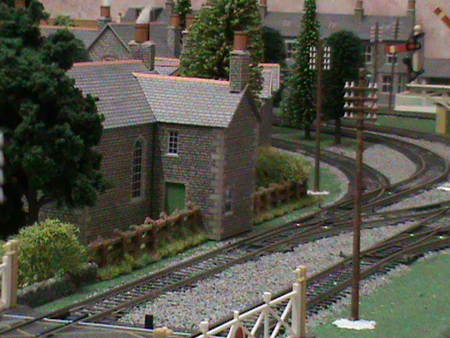
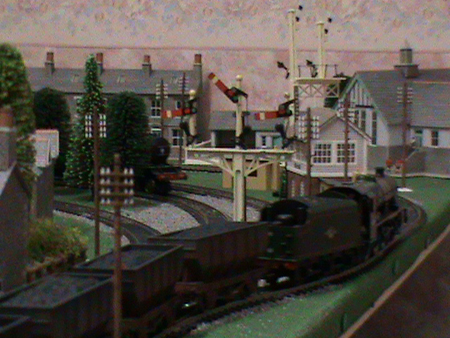
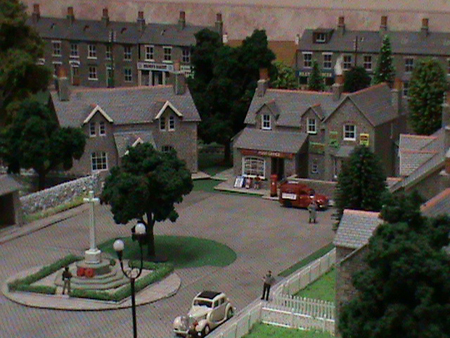
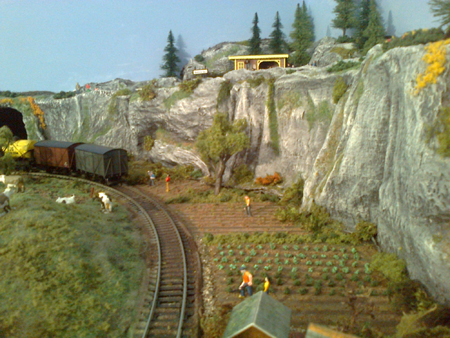
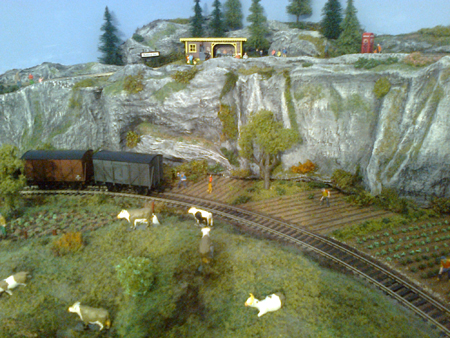
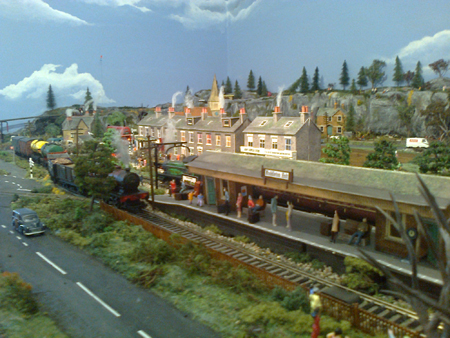
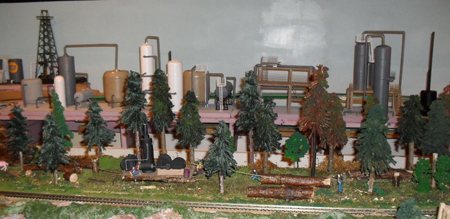
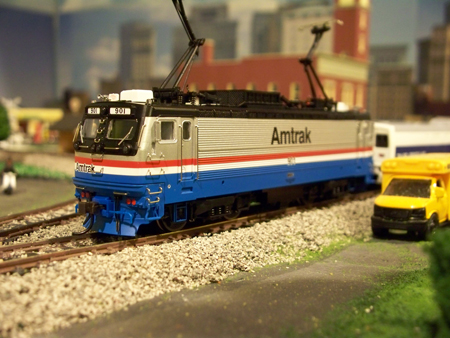
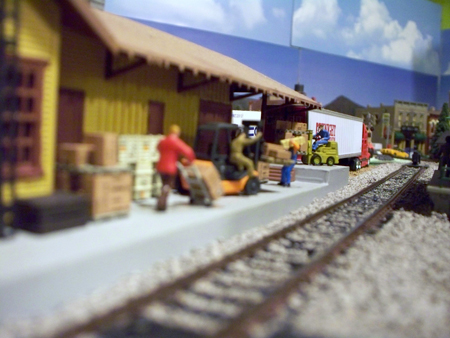
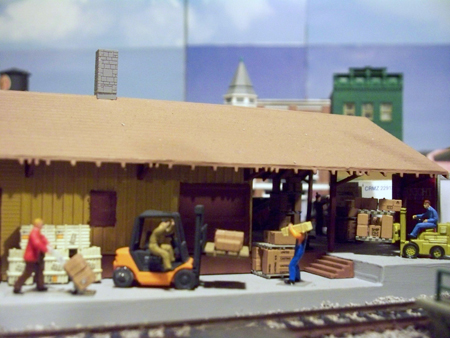
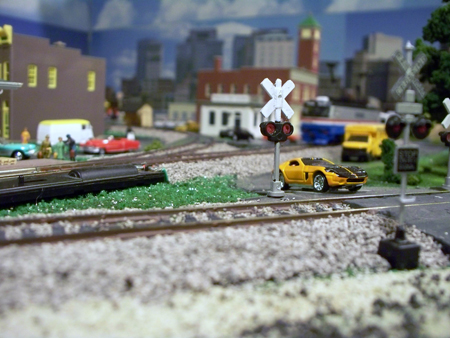
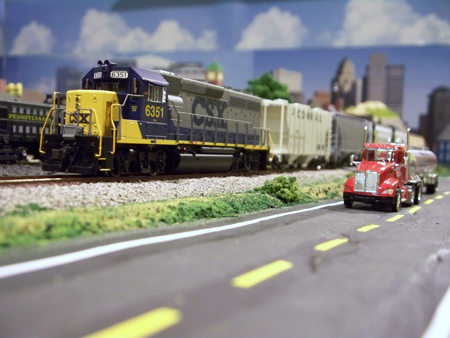
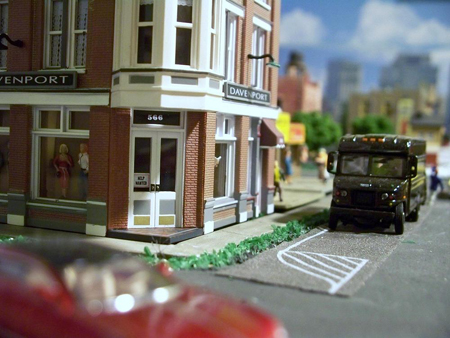
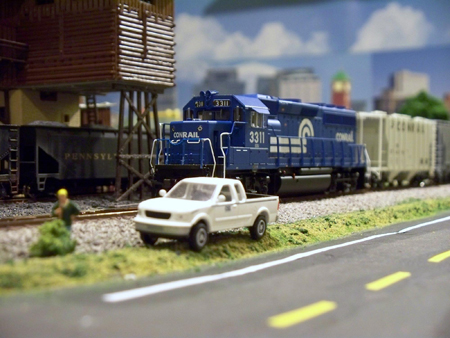
Barry’s Helix layout

I’ve been meaning to post this for a while.

I was amused when Barry got a few comments about his railroad layout: some said it wouldn’t work.

Come on, chaps, this is Barry we’re talking about it.


“AL,

This tip comes from Michigan the land of salted roads and automobiles. “Bondo auto body filler”. I have built trail layouts in basements and out buildings where moisture is a problem. Conventional mountain building material can mold and mildew. That is why I use Bondo.

I take metal window screen and bend, fold, and contour it into the desired shape. I use a staple gun to secure it. I add wood blocks underneath for support where ever needed. Then I spread a thin coat of Bondo over the screen. On the second coat I add more contour and detail to the mountain, cliff, or tunnel I am creating. After the second coat it is ready for painting. You end up with a rock solid detailed landscape that is impervious to moisture. The only drawback is the need for good ventilation when working with it.

David”


“Hello again Al,

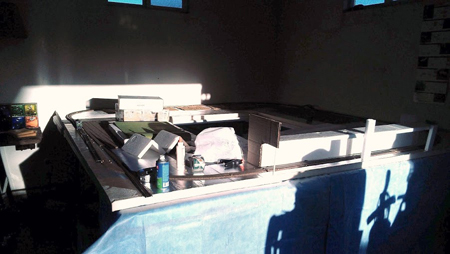
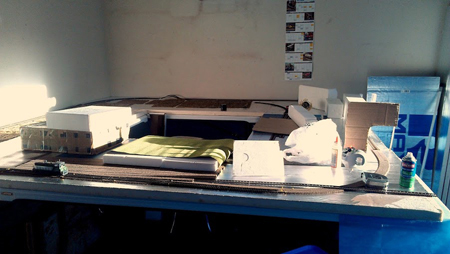
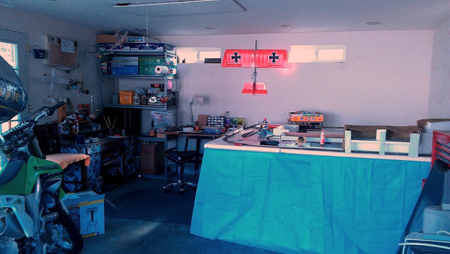
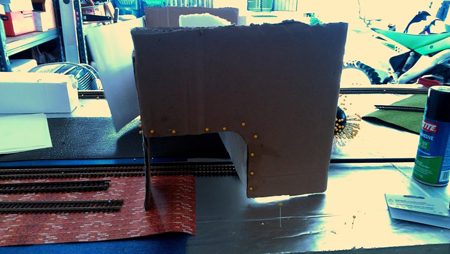
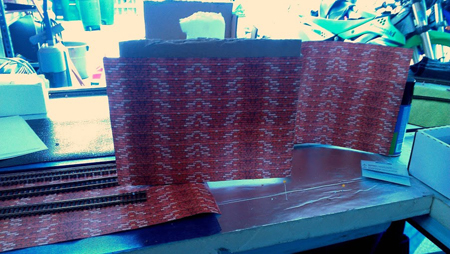
I’ve been busy working on my current layout. I call it My Last Layout because I’m 70 now and I figured it would be my last one. I was wrong! I have been tearing sections of it apart and re-structuring the layout for my newest variation – a radio controlled layout with battery powered locomotives. I sure wish I had known about this part of the hobby before, I could have saved a lot of time and a bunch of money. No wiring, no track or wheel cleaning, just a wireless throttle in my hand and a receiver with battery pack on board (with a DCC decoder if you like) and away you go. More on this at a later date. For now, I am sending you pictures of My Last Layout under construction.

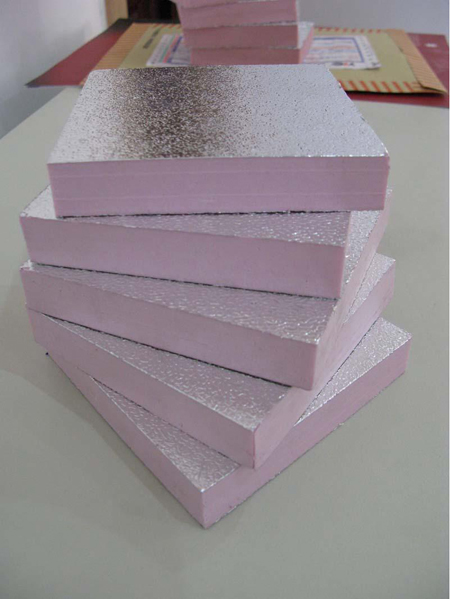
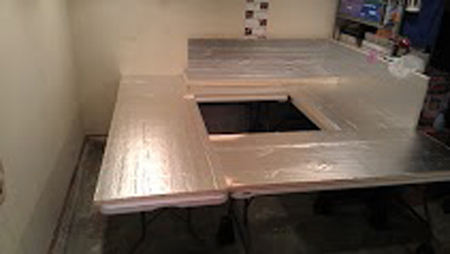
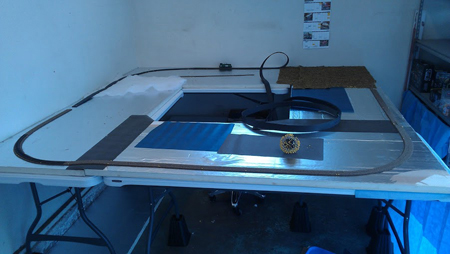
As you may remember from my last posting, I had my Depot enlarged so that I had a new space 12 feet by 24 feet. This would house my new layout and space for me to work as well. I have included a Track Plan (just drew it out on a piece of paper freehand). I lay my track on wood. I used to use plywood but had some problems with expansion so now I switched to MDF, very stable but also very hard. Once I get track down I then begin filling in with foam. I now use foam for most all the layout instead of using screen and/or cardboard covered with plaster cloth because I found it’s much easier for me to put in the scenery on foam (just shove the trees in and done). Also it’s a much easier process if I find I want to add or delete something, just glue more foam on or cut some out.

For those who have been following my progress, you will recognize item’s I salvaged from my previous layout and I found a new way to hold my track in place until I am ready to call things done and start to ballast. I usually ballast last because if I have to move or replace some track during the project it’s much easier if the track is open. I now use small pan head screws to hold my track in place. I use 3 or 4 per each 3 foot section of flex track and none to hold the turnouts. Works like a charm. If you find you have to move or replace track, you just remove a few screws. For those who like to lay track on foam, just cut out a small square section of the foam on the roadbed and glue in a piece of wood. That will give you a place to put the screw in.

This layout will have a wharf area with docks and such. I also had an idea to show my mine operation from above and below ground. Should be interesting. That’s all for now. Next time I’ll get you pictures of the mostly finished layout before I began taking it apart.

Bob”


“I’m but a new re-visitor of the hobby from the 1970’s. My best advise would be to keep the bills from the wife!!

Glenn”

That’s all for today folks.

Please do keep ’em coming.

And if today is the day you get started on your layout, the Beginner’s Guide is here.

Best

Al

PS Latest ebay cheat sheet is here.

Lighting for your model railroad layout

Arnie has been in touch again. Here’s what he wrote:

Jim, Nice work. Looks like your N layout is progressing nicely.

And Dave — many thanks to you for taking the time to create a How-To video on lighting.

I’ve gotten a number of requests on this topic but have not had an opportunity to make a How-To video.

I all too often jump into my projects only to realize later that a How-To on my lighting (and other things) would have been helpful to others. So thanks again.

SOME ADDITIONAL TIPS:

By the way, pay heed to Dave’s comments and reiterations of using regulated power. Using multi-voltage power supplies is a safe bet.

But if you don’t have such power supplies available, be sure to use resistors to help ensure the voltage capacity of bulbs and LEDs is not surpassed!

If your lighting items do not come with resistors, you can check online for info on how to calculate what capacity resistor you should be using with your light source.

I’ve found that resistor values of ~620 ohms to 910 ohms @ 1/4 watt work well with 3 volt DC or AC/DC light sources depending on how bright you want them to shine: The greater the resistance (ohms), the less bright they will shine. With LEDs, the resistor is usually connected to the positive lead.

Also, solder your connected leads to avoid separation if accidental tugging on the wires should occur.

And as Dave points out, use heat shrink tubing whenever you can to insulate your leads to avoid electrical shorts.

It’s neat and better than using electrical insulating tape which is very hard to wrap around thin wiring.

Instead of using a standard heat gun (because they generate great heat and you can easily burn yourself), I prefer to use an ‘electric’ match. These are the items that work like a cigarette lighter and are great, for example, for re-iginiting a gas pilot light that’s out on a hot water heater, charcoal on a BBQ grill, etc.

You just click and a small flame is generated that you touch to and run along the heat shrink tubing for a couple of seconds till it shrinks.

Also, after many, many hours of running hundreds of feet of wire under my N scale SV&GS layout, I found an easier way to do the soldering and heat shrink insulating.

I take a measurement from under the layout of the length of wire a hook up will need : from power source and/or power terminal strips to the lighted item.

Then allow at least 4 additional inches at each end of the wire for wire stripping, soldering and general slack for ease of movement.

Then OFF the layout, solder the wire to the leads of the light item and add the heat shrink tubing. It’s much easier than trying to do these things under a layout (especially in N gauge and with very fine wiring).

Then take the item and run the finished wires from above the layout down and to the power supply or junction terminals below the layout.

And one last thing I always do is make multiple copies of a label identifying the item and place them on/along the wire run. So if you have to trace the line on a problematic item at some point, it will be easier to do so.

Arnie”


“Hi Al,

Here are some photos, of my Hornby 0-4-0st pug number 51240, and Hornby railroad Jinty 0-6-0 S&DJR number 24 after I fitted a light bulb in the cabs to give a glowing fire box effect.

The tools and materials required are a light bulbs 12 volt, I purchased mine from Jay car, a soldering iron, solder, and a drill.

With the pug I unclipped the cab as that gives access the motor, and with the light bulb, it had leads already to it, I trimmed the leads, so that the bulb can sit in the middle of the cab. I then soldered the light bulb on to the contacts on top of the motor.

With the Jinty the work was more involved, I removed the body from the chassis, then drilled a hole through the backhead to where the firebox would normally be, I trimmed the leads again and .again soldered the lightbulb onto the contacts on top of the motor. After trimming the leads the ends of the wire leads have to be bared for this to work, this is done before soldering.

Paul”


A big thanks to Arnie and Paul.

Don’t forgot to have a quick look-see at the latest ‘ebay cheat sheet‘.

That’s all for today folks.

Please do keep ’em coming.

And if today is the day you get started on your layout, the Beginner’s Guide is here.

Best

Al


Modelling tips and pics

“Best tip…I experienced the negative side of this lately.

No matter what level someone is at, don’t put there work down. Encourage them.

I was helping a very beginner out, and we came across a problem.

I took the problem to some very experienced modelers, all they could do is say negative and horrible things about how stupid and basic the layout was, and that we should start over from scratch.

I know what I am doing, and this beginner I am working with, this is the way he wanted the layout. No one was helpful, all comments were negative, and never addressed the initial problem.

They decided to bring up 20 other problems instead. I understand that they are only trying to help with what THEY think is right, but I am doing right by the beginner.

You get too technical, and the beginner is scared away. But again, they only made negative comments, and never helped with the initial problem. Likely I won’t be talking to them again about anything.

Stephen”


“Alastair,

Just thought I’d like to share what I’ve been doing.

Your posts have kept me motivated for the past year, from renovating my shed to laying track and detailing my scenes, every time I loose momentum I’ve gotten a kick in the pants from one of your emails. Thanks to everyone that contributes to make this such a wonderful project.

My train house is six by twelve feet and my N scale track plan is basically a double track “mainline” L shaped loop with local tracks in the middle.

There’s a harbor branch off the west end and eventually there’ll be a mountain on the east end.

Jim”


Dave’s also recorded this after our recent flurry of lighting posts. He describes the three ways to add lighting to your layout:

That’s all for today folks.

Please do keep ’em coming.

And if today is the day you get started on your layout, the Beginner’s Guide is here.

Best

Al

PS Latest ebay cheat sheet is here.