Make HO scale sidewalks

Kim’s been in touch again, this time with a great step-by-step: how to make HO scale sidewalks:

“Hi Al.

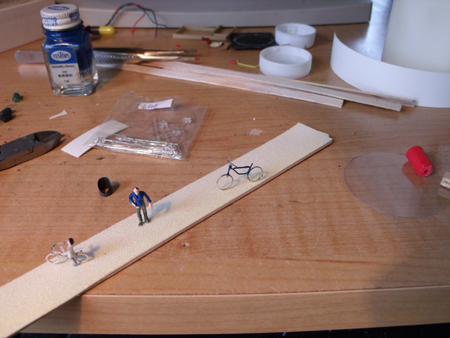
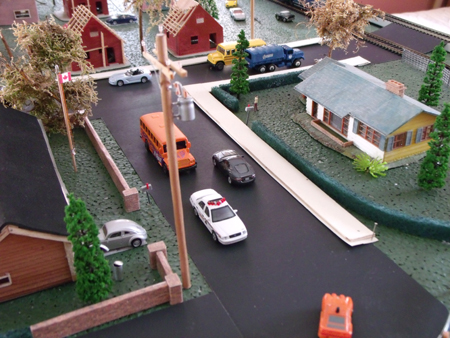
These are my sidewalks .They are not tacked down yet or painted yet.

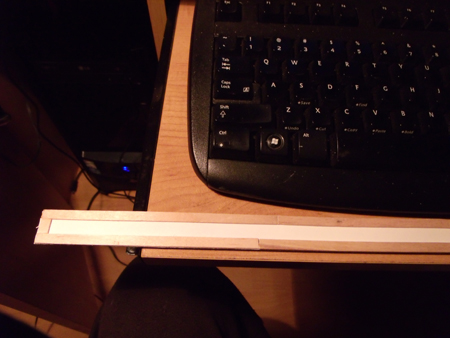
I used the shelf trim with the glue side up to walk on.

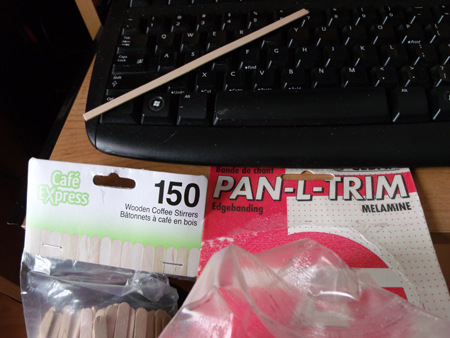
Then i used coffee stir sticks to stiffen it and to raise it up. When glueing the sticks, stagger them to keep it stiff.

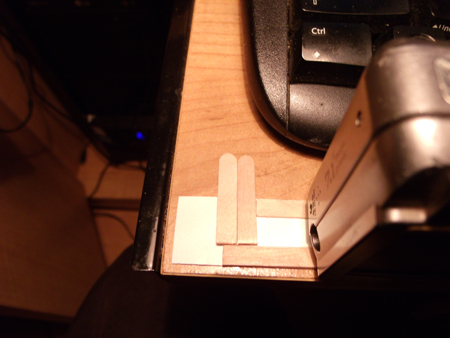
I added a strip onto the bottom and attached to the stir stick’s to act as water guttering (warning Al, don’t use white glue as it wont stick well). I use instant glue.

To turn left or right with the sidewalks, place sticks left or right as in photo.

When you finished a section, take fine sandpaper and run it along the road side of the sidewalks yo make it square and smooth. Then glue a small strip to make the guttering.

Now for the 1/100 scale or Ho scale bike. I used left over Led posts ya cut off. If you are really interested in how to make those bike’s i will send in a more informative way to make them. Was pretty easy. But i think you agree and use the word dang it’s small, honestly Al.

I think my bikes look more realistic than any plastic bike you can buy at this scale, if you can get them and i dont think ya can. Seat and peddles will be added later.

Im trying to make a sort of jig to follow how to make a mass amount. I could see a bike race on the road with these. I also attempted a kids bike. Now understand,this is my first tiny bike, so wont be perfect.

Tell me what ya think.

Can ya see a bunch in a bike rack in front of a store or something, or a bike shop?

Kim”
make ho scale sidewalks

materials for model railroad sidewalk

make ho scale sidewalks

ho scale

make ho scale sidewalks


“I have a tip,i make a lot of stone walls,i first coat the screen or surface with plaster. after its dry i mix another batch with what’s called rainbow cement color (its cheep) comes in black or red,a little black makes gray.

I then coat the surface with almost smooth surface.

Let dry and take a small screw driver and drag across the surface to make bricks,the red really looks like brick.the screw driver goes through the red or gray layer and makes motor joints.

Mike”


“I use the plastic sprues left over from a model. I take them and use them for metal piping for oil refineries, gas stations, rooftop vents, etc. I also use them for scenery, pipe loads.

I cut them down to the size of the load, I also drill out the ends, and then paint them whatever color you need to give it a more real appearance.

I don’t have a pic handy, but I just made a fuel island for my truck stop. Hope someone can use this idea.

John”

Some fine tips as usual. Thanks to everyone. A big thanks to Kim for sharing his how to make HO scale sidewalks.

There are some sidewalks availabe in the printable buildings range too:

The prints consist of 4 roads, 4 sidewalks and 4 tarmac tracks – giving you a limitless combination for your layout. In fact, it’s only limited by your imagination.

John kindly put the below together just to give you an idea of what you can come up with. Here it is:
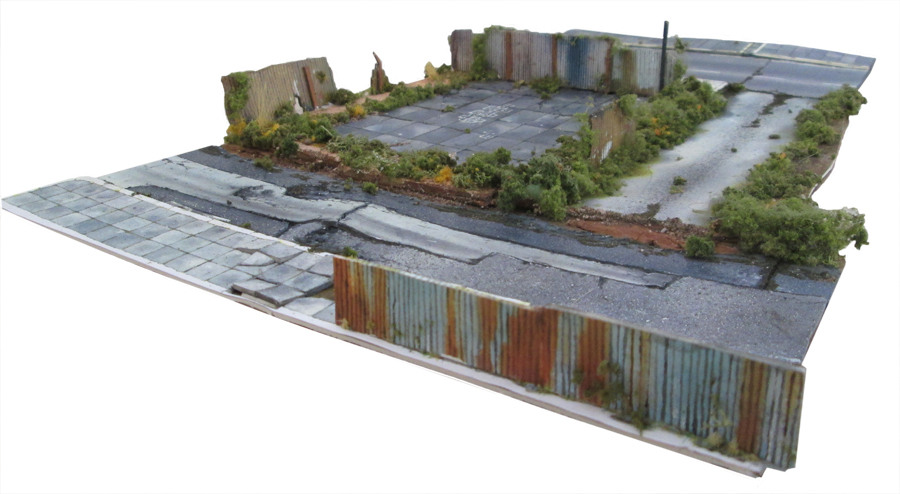
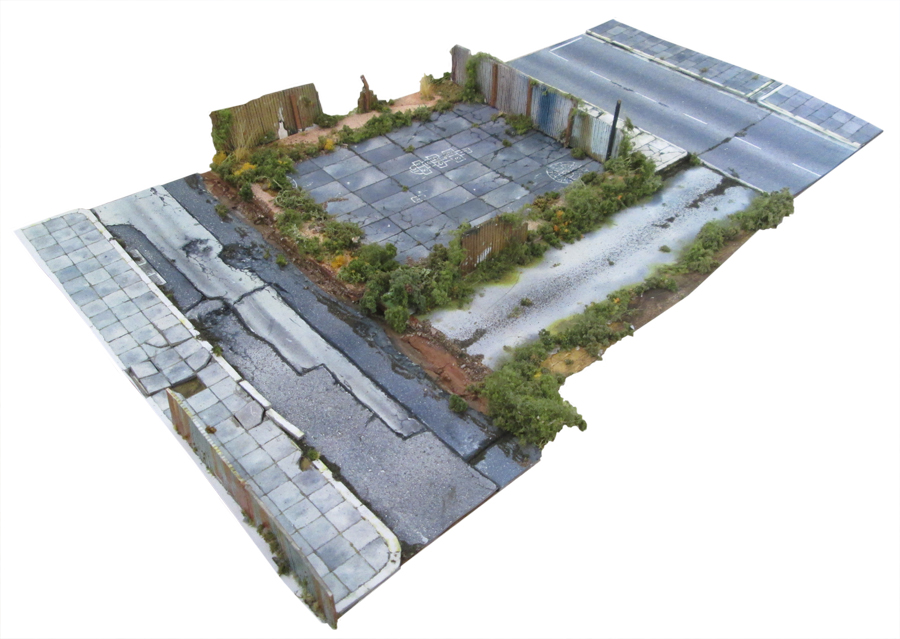
model railroad sidewalks

model railroad sidewalks

Just like every building in the store, it’s all made from print outs. Here’s his video. Hope it makes you smile as much as I did.


Here they are in the store:
printable building sidewalk

That’s all for today folks.

Please do keep ’em coming.

And if today is the day you get started on your layout, the Beginner’s Guide is here.

Best

Al

PS Latest ebay cheat sheet is here.



More model train pics and tips

“Hi Al,

just a photo to let you see how I am progressing, I would like to install street lights but without drilling holes in the baseboard, any ideas please?

Starting the scenery now and will keep in touch.

regards

Alasdair M”


“Hi Al,

Here are some more photos of my new railway under construction.

As you can see in the photos, some scenery has built before track was laid.

Also in the photos track laying is well under way. I am using trackrite underlay, which can be purchased from hobby shops and ToyWOrld stores.

The underlay has to be modified to go under points, but can easily be cut using sharp scissors

Paul”


“Color Coding

I have 5 or 6 different sized, diameter and thread, screws I use frequently while modeling. To make things easier, I color coded them so it was easy to identify the tap drill and tap as well as the screws for them.

I bought some cheap fingernail polish in different colors. On a particular drill and tap set, the same color of polish is painted on each. I have small zip-close bags for screws. The same color represents a particular size. For example, all bags with 2-56 screws, the bag has yellow polish stripe. Drills and taps for 2-56 have a yellow painted band around the base. 1-64 screw bags, drills and taps all carry a blue stripe or band and 0-80’s a red stripe or band.

In instances where I have both tight and loose fit drills for a particular size, the tight fit drill will only have the appropriate color for the size while the “loose fit” drill will have a second band of silver on it. Thus, the drill for a 2-56 for a loose fit, probably one where I intend to use some sealant to make it permanent, would carry the yellow band with a silver one beside it.

Not only do I store my screws in zip-close bags, but the drills and taps too are stored in them and the bags are all identified accordingly.

This makes identification easy and when several are left laying on the work bench, it very much simplifies sorting and putting them away.

Dick”


That’s all for this time folks.

Please do keep ’em coming.

And if today is the day you get started on your layout, the Beginner’s Guide is here.

Best

Al

PS More HO scale train layouts here if that’s your thing.


Need buildings for your layout? Have a look at the store.

They are great fun to make and great value too.

More lighting know how from Barry

“Hi Al,

Barry from South Australia here again.

This is a follow up to my last email re: the CL2N3-G IC (Integrated Circuit) module.

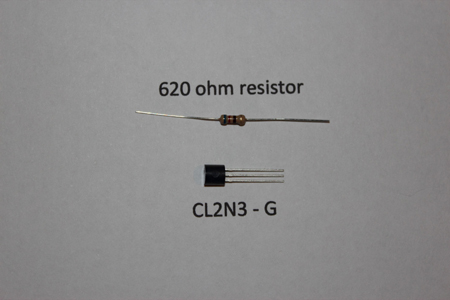
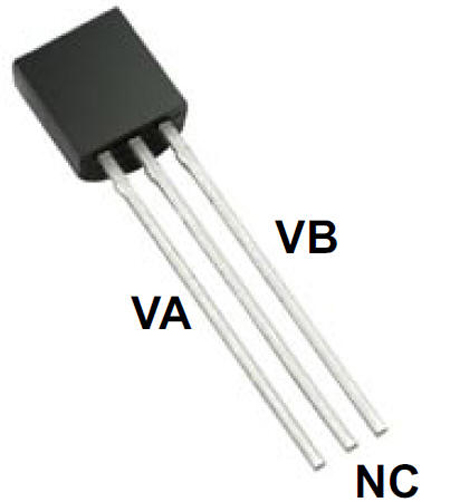
The CL2N3-G picture compares the size to a resistor, and the TO-92 picture shows the module with its 3 legs.

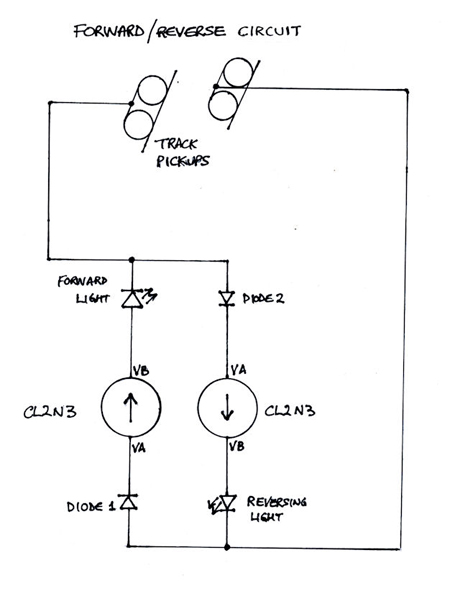
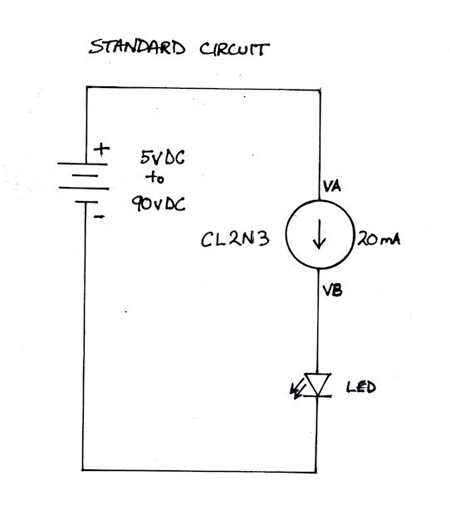
The leg marked NC (Not Connected), can be cut off flush with the body, as it is not needed. The VA leg is the + connection, and the VB leg is the – connection.

The FR_Circuit picture shows a simple circuit for wiring a forward & reverse LED for an Analogue setup.

The CL2N3 can be used with DCC, just replace the resistors with CL2N3’s.

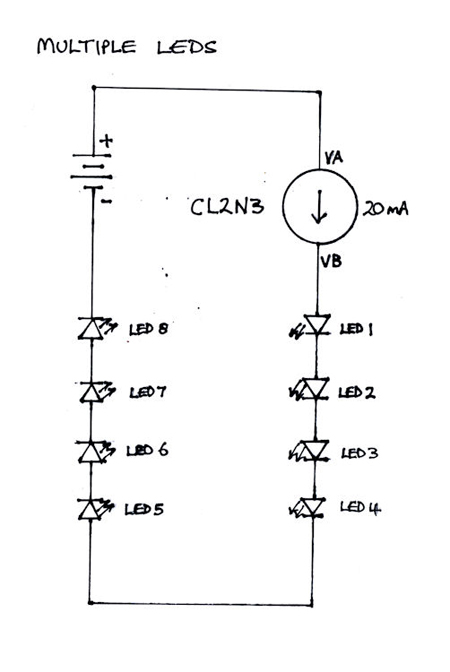
The Multiple LEDs picture, shows how to wire multiple LEDs to 1 CL2N3, which is good for lighting coaches (passenger trains).

The Standard Circuit picture, is, well, a standard wiring diagram of the CL2N3.

A search on the web will also provide many more applications for this wonderful little device, and there is another version that can supply 25mA to a LED, a CL25N3-G IC.

Regards,

Barry”


“I was looking at the TIPS FOR YOU and I want to give you one.

I am retired from a power utility and use the info I have to include running electric (not hot) to all of the locations that us electric.

I found that buying fencing of all this cost lots of money, so. I now use Plastic Window screen for fence.

You can turn it at different angles to get square, or diamond shaped fence. Just cut it to your right height with a pair of scissors.

For the posts I save used stick matches or tooth picks.

For the wire on the power poles and high tension towers I use the elastic thread sold at sewing supply stores. This makes hitting the lines not pull or brake the poles or towers.

G”


“I got a great tip from a Jim O’Connell of Santee,CA. he builtmy Z scale layout in 2012. I too neede a way to keep my ‘ MTL lumber loads,ect. from sliding off my flat cars.

Jim told me to get some elmers glue and put a small drop on the cars and also on the wood packs.

Then when you change from runnind those cars to something else you can peel the wood packs off of the cars and be able to put them back into the plastic “jewel cases” they came in.

To get the glue off of the load and the cars all you have to do is”roll” the glue spot back and forth until it comes off. The glue will stay “soluable” for several years.

It comes in a small brown bottle with a brush top applicator. Hopes this helps.

Most of what I have learned about Z scale is from the people who have been in that scale a long time. Now if it had anything to do with your HVAC system or your ductwork I know all th answers and tricks of that trade, as I was a sheetmetal mechanic for over 40 yrs.

Lee Barry Bristol,Va”

That’s all for today folks.

Please do keep ’em coming.

And if today is the day you get started on your layout, the Beginner’s Guide is here.

Best

Al

PS Latest ebay cheat sheet is here.