“Hello Al
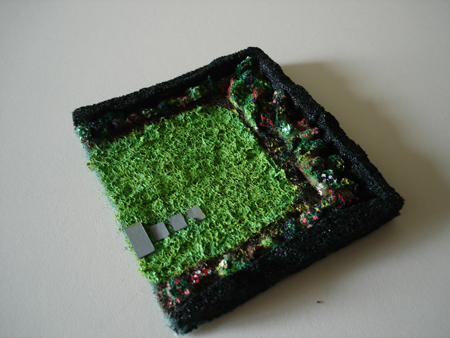
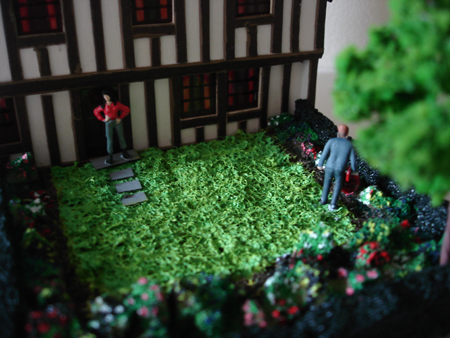
I was washing up the other day – again – and I thought to myself, ” I’ve got to stop chucking away these little sponges.” Then I had one of my loopier ideas. Model house kits come without gardens – so I decided to make one. I had no idea whether it would work – but oddly – I think it did. If you follow these simple instructions, you too can have a ‘sponge garden’.
PROCESS:
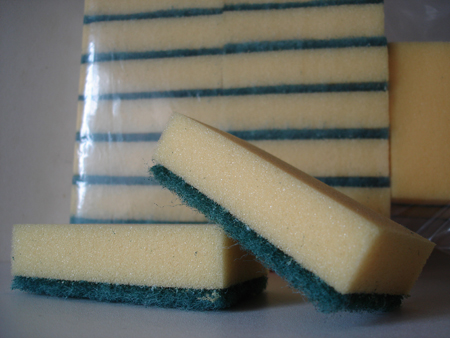
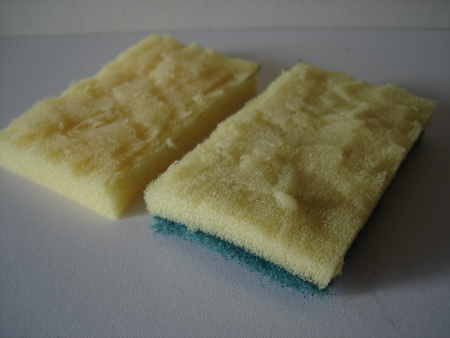
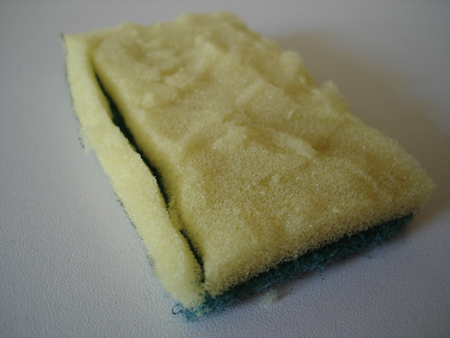
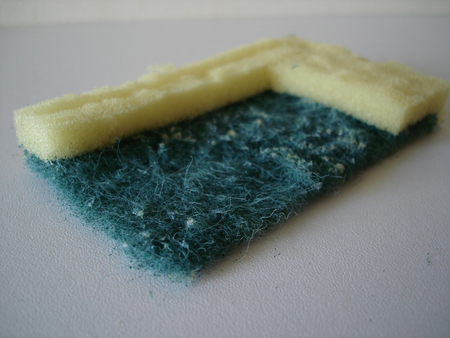
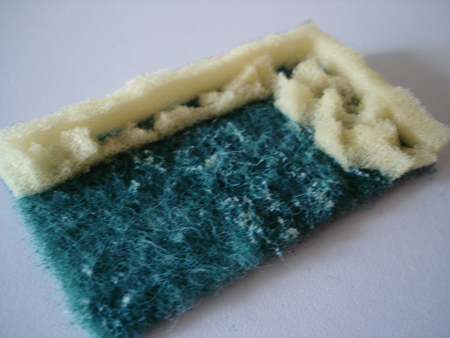
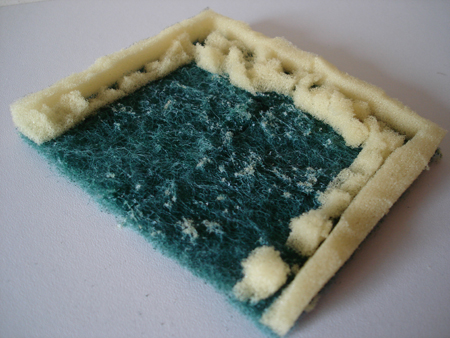
Unfortunately I need to explain what I did – the photos don’t tell the whole story. I needed a fairly large garden for my Tudor mansion so I glued two sponges together. Broke my rule and used NEW ones – at huge expense – so it would all look clearer in the photos. Basically, you’re going to ‘sculpt’ them! The ‘cutting’ section of the pictures shows just one sponge, half the garden – easier to show what’s going on – and of course I joined the two mirrored halves up when it was done.
1. Cut away the sponge – down to around 1 cm from the dark green ‘scourer’ pad (depends how high you want your hedge). Easiest way is to snip away with scissors. Don’t have to be too accurate – nature isn’t! Keep the discarded sponge – handy for making trees and bushes – and for painting with.
2. THE HEDGE. With a craft knife cut round the garden, 1 cm in from the edge. Cut down to the dark green ‘scourer’ pad but not through it. You can feel when you get down to it. This will be your hedge.
3. THE BORDERS. With a craft knife make a second cut round the garden, 1 cm in from your last cut – down to the scourer pad again.
4. THE LAWN. The fun part – if you like ‘picking’. Pick away the sponge from the whole centre section of the garden – down to the scourer pad. This will be your lawn.
5. THE SHRUBS AND FLOWERS. Go to your borders. More picking. Carefully pick away at the sponge to leave ‘lumps’ which will be your shrubs – tallest usually nearest the hedge. Snipping with a small scissors helps. Don’t need to be uniform and formal – different heights and shapes work best.
PAINTING
WARNING! DON’T USE YOUR EXPENSIVE HUMBROL or REVELL PAINTS! This material drinks paint. I used big tubes of artists’ acrylics which you can get very cheaply – and a sampler pot of green emulsion for the lawn (£1 from Wilkinson’s). Used very little of it – tons left over.
The painting is what makes it work. You don’t need skill but it’s worth taking a little time over it. It’s joyously messy and a lot of fun. Important to do it in this order: –
1. THE SOIL. Dark brown in and around all the plants and shrubs – you can pull back your hedge to get right down in amongst them. Paint out into the lawn a little. Humbrol is okay for this – you need very little.
2. THE HEDGE. Saturate it – pull it back to get down to the bottom. Dab away with a big brush. Paint the scourer too on the outside edge of the hedge. Now wash your hands, please.
3. THE SHRUBS AND PLANTS. Create lots of shades of green: –
– Pour some mid-green into a plastic milk bottle cap or suchlike.
– Paint a few shrubs
– Mix in some white or yellow – to lighten up
– Paint a few more then go lighter and paint some more
– Start adding blue or black to darken up – paint some more – etc.
This gives variety. Doesn’t matter if you splodge or paint into other plants – this is what happens in nature.
4. THE LAWN. You really need emulsion. With a huge brush daub it, flattening down the bare scourer pad as you go. Some of the original dark green will show through which looks great. Cut a small strip of card with a straight edge and lay it over the flower bed to mask it and get a nice straight edge to your lawn. Allow an area of brown bare soil IN FRONT OF the shrubs and plants
5. THE FLOWERS. Use bright colours to stand out. Unbend a paper clip and use it to blob drops of paint onto some of the shrubs and plants. Create some clumps at the front of the bed.
These washing up sponges glue together beautifully with superglue. I never use expensive makes of superglue – buy packs of the stuff from the Pound (99 cent) Shops for very little and it works fine. While you’re in the shop you’ll notice that they sell big packs of washing up sponges for peanuts so (can’t believe I’m saying this) you could use new ones.
And you could use the same process to make fields – hacking away all but furrows and crops – glue a few together. And it would work well for allotments too. The scourer (dark green) section of the sponge looks fantastic when daubed with emulsion – has a real earthy texture when brown and a rough grassy look when green. You can flatten it with the paint or make it stick up – kind of spikey. I’m going to try some further experiments with it.
Of course you can design your own garden – put gates and fencing and a patio in. Don’t have to copy my old-fashioned concept.
Best wishes to all.
Roger.”
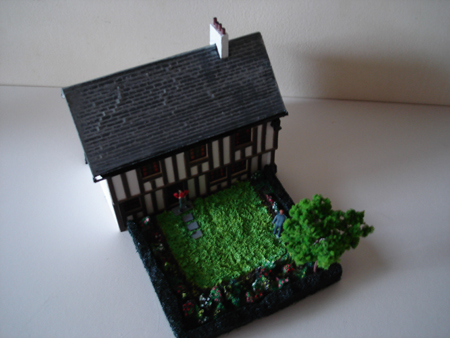
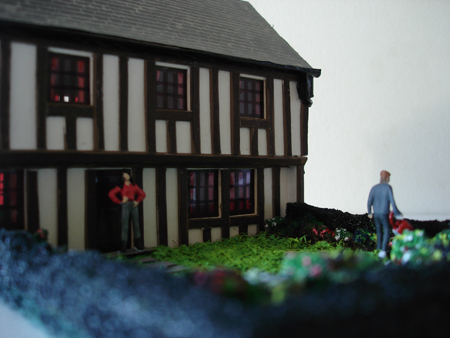
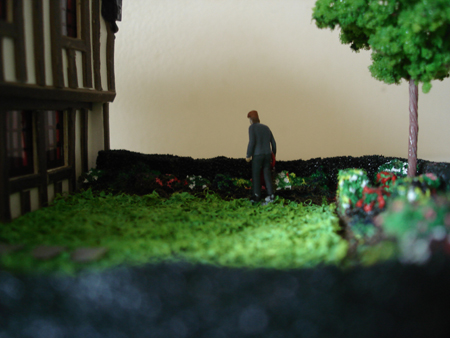
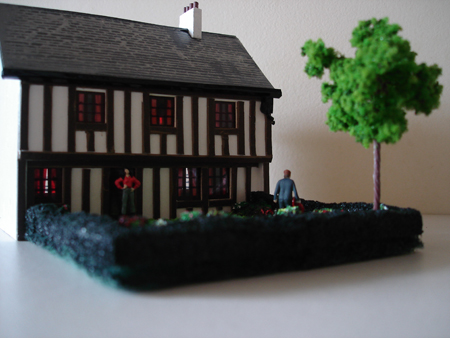
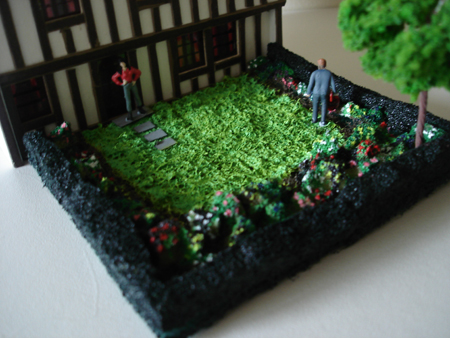
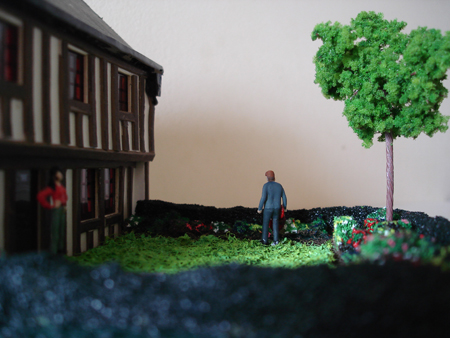
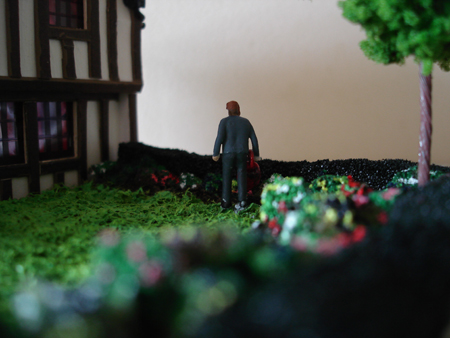
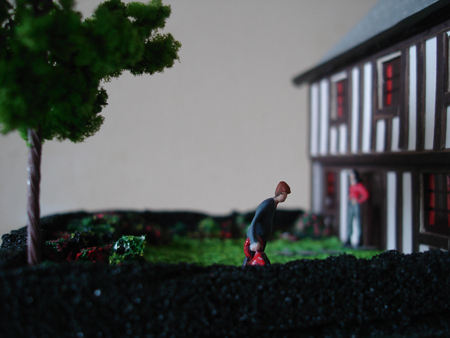
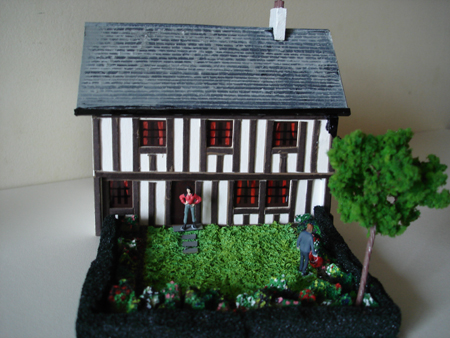
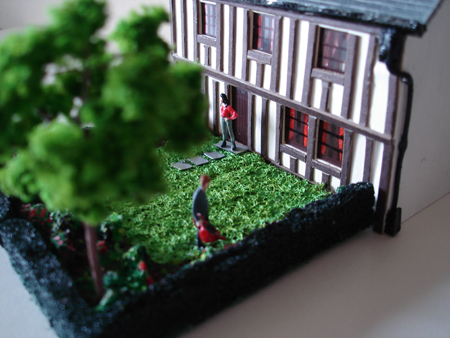
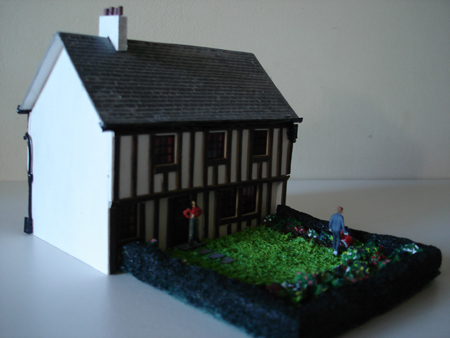
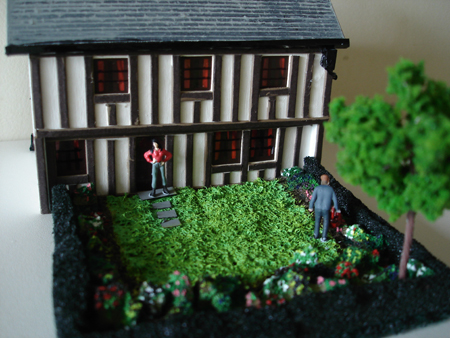
Another super cheap way of adding scenery! Thanks to Roger. Like that one.
And save even more money with the latest ‘ebay cheat sheet‘.
Let us know your thoughts by leaving a comment below!
Keep ’em coming.
Best
Al