Edward’s been in touch with his Kato unitrack layout:
“Hi Al,
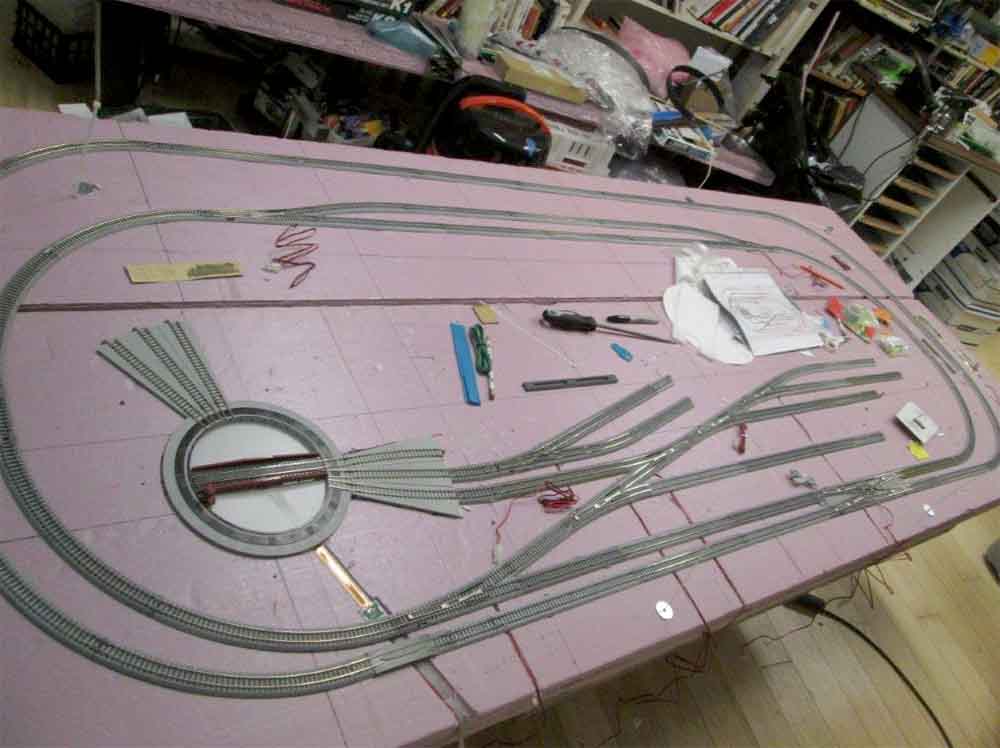
Attached are pictures of a Control Panel for my n scale Kato Unitrack layout shown in pic A.
It is a modification with Kato Unitrack layout from the 5th Edition of Hornby Railways Track Plans.
Hornby orginal:

The panel is mounted on a pull-out shelf under the layout.
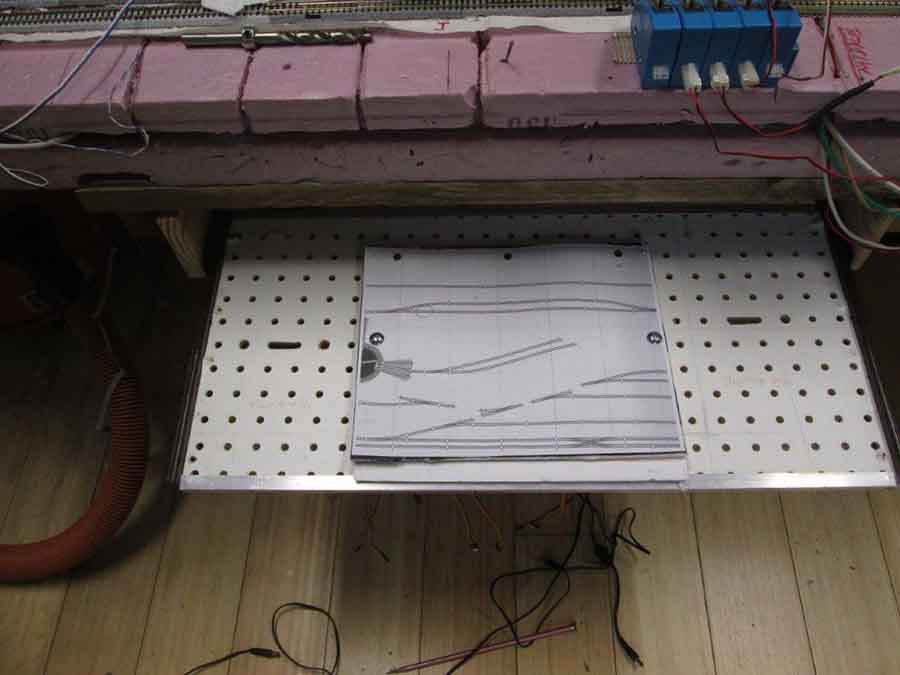
pic 1 – Top of pullout shelf with switch yard diagram. Toggles inserted in cutouts in foam board under the turnout locations in the diagram.
Toggle leads threaded through the perforated board to the control circuits underneath.
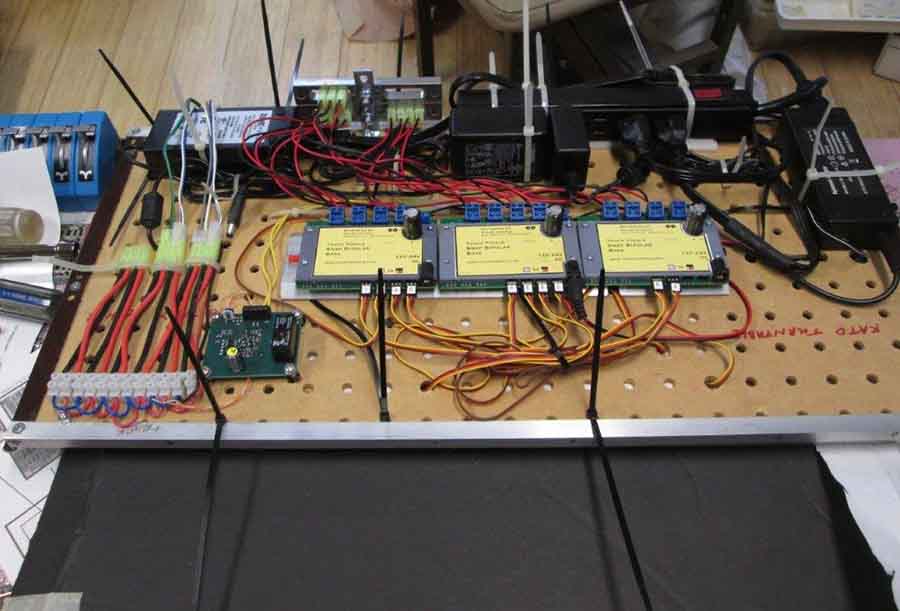
pic 2 – Underside. Power supplies to rear, Track power leads with mini Tamiya sockets for Kato power leads on right.
Small green circuit board is the Digitrax AR1 automatic reverse Controller for DCC operation of the Kato turntable.
Berrett Toggle circuit boards mounted on aluminum strip in middle.
Plugin panel with mini Tamiya sockets for cables to Kato turnouts at rear.
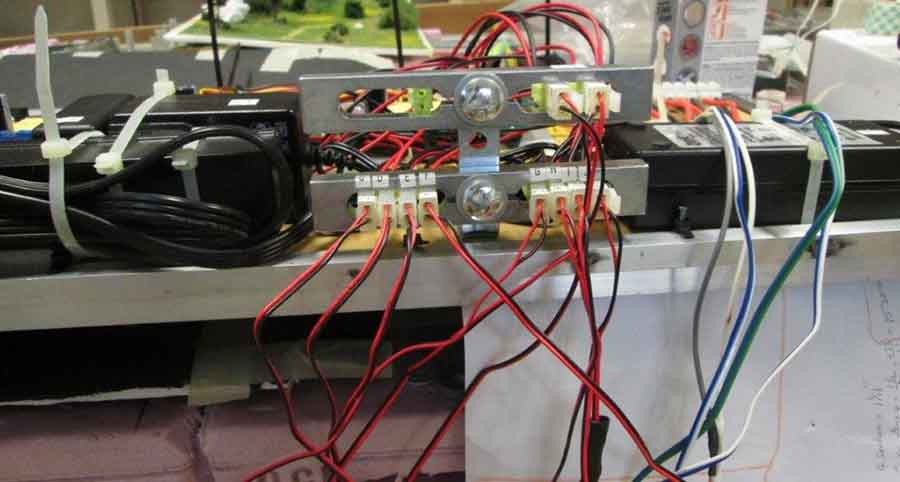
pic 3 – Front view of plugin panel with mini Tamiya sockets for cables to Kato turnouts.
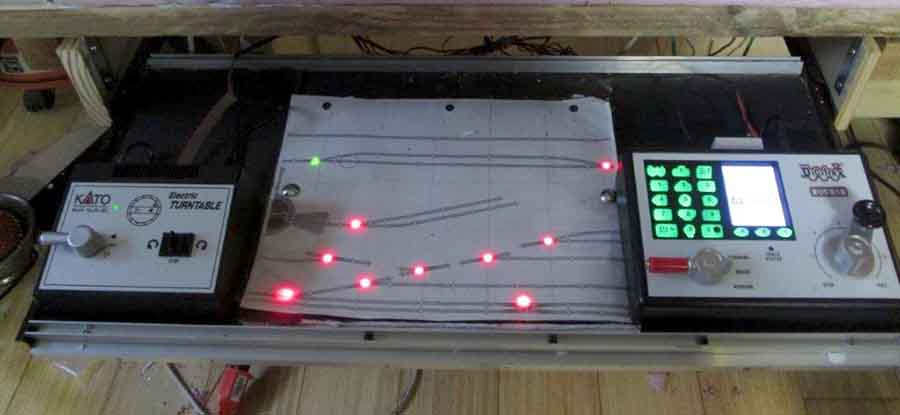
pic 4 – The finished panel.
Hope these ideas help others using Kato Unitrack.
Edward.”
Now on to Chuck who is in the middle of his layout:
“Hi Al,
I promised you that I would send you photos of what I am building with your downloads.
Sorry it took ne a while, but I am a slow worker!
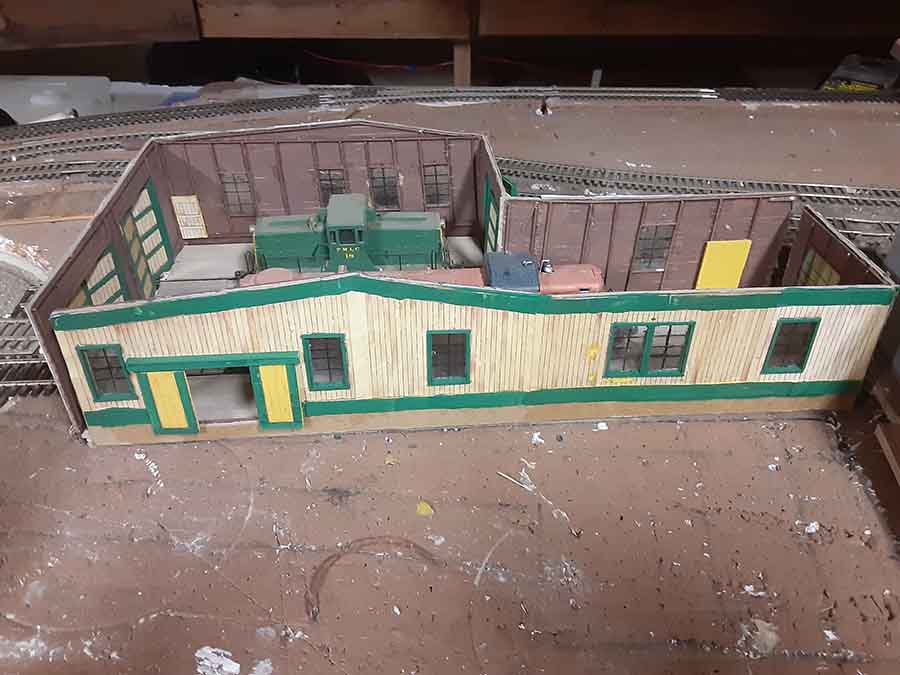
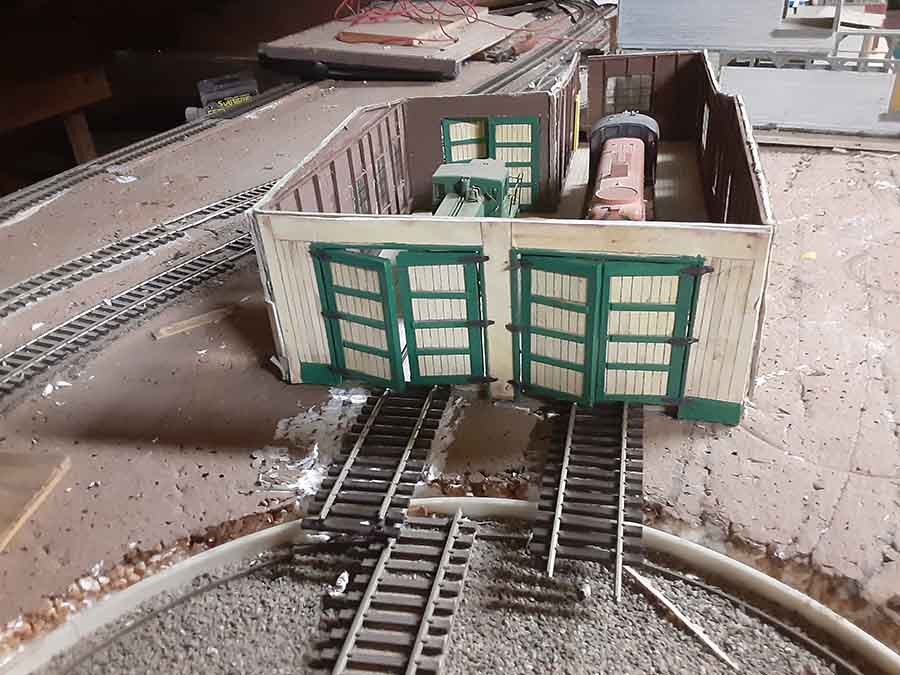
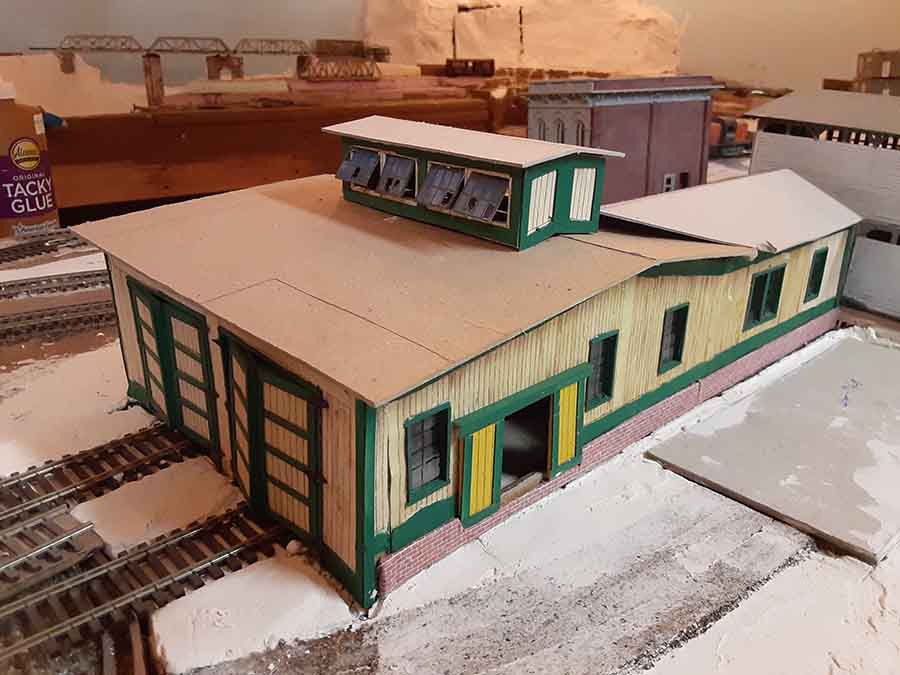
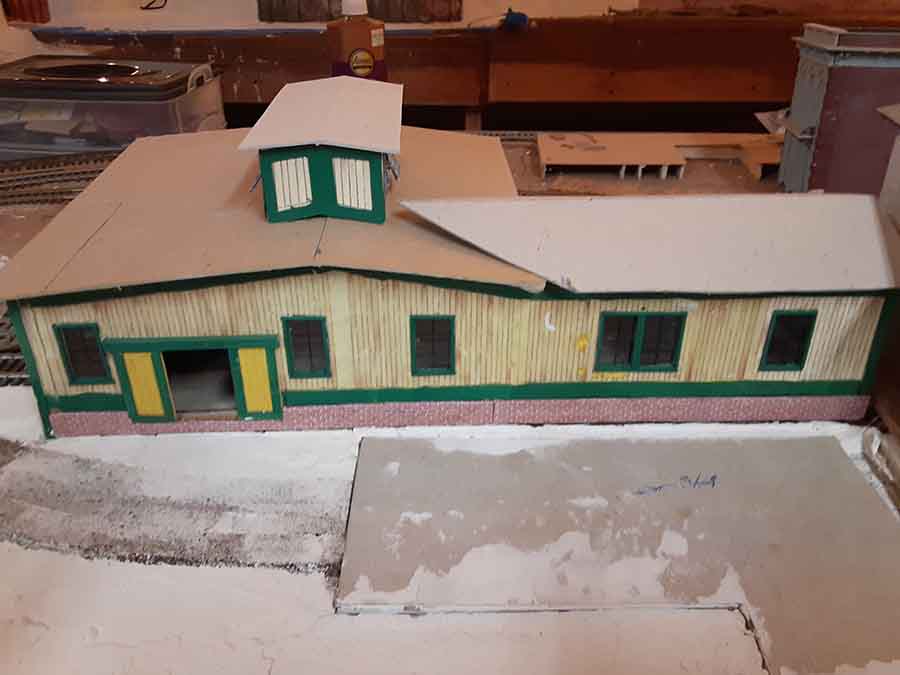
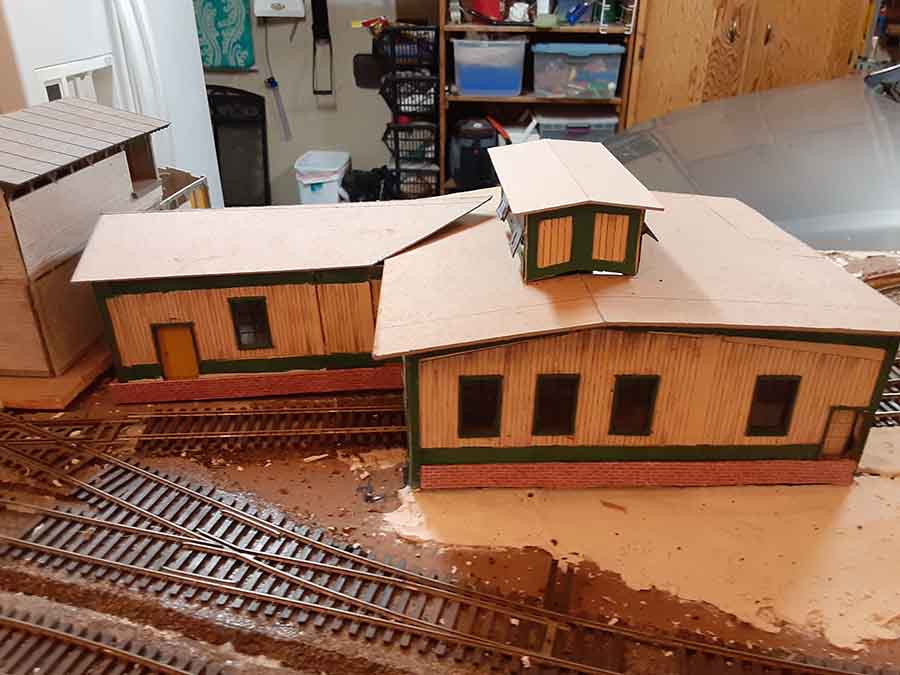
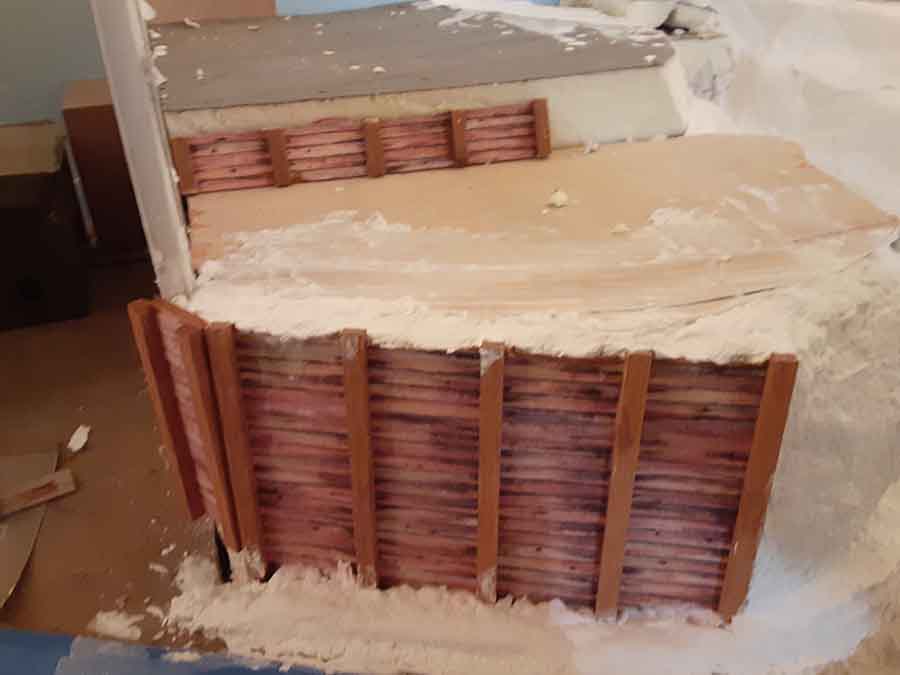
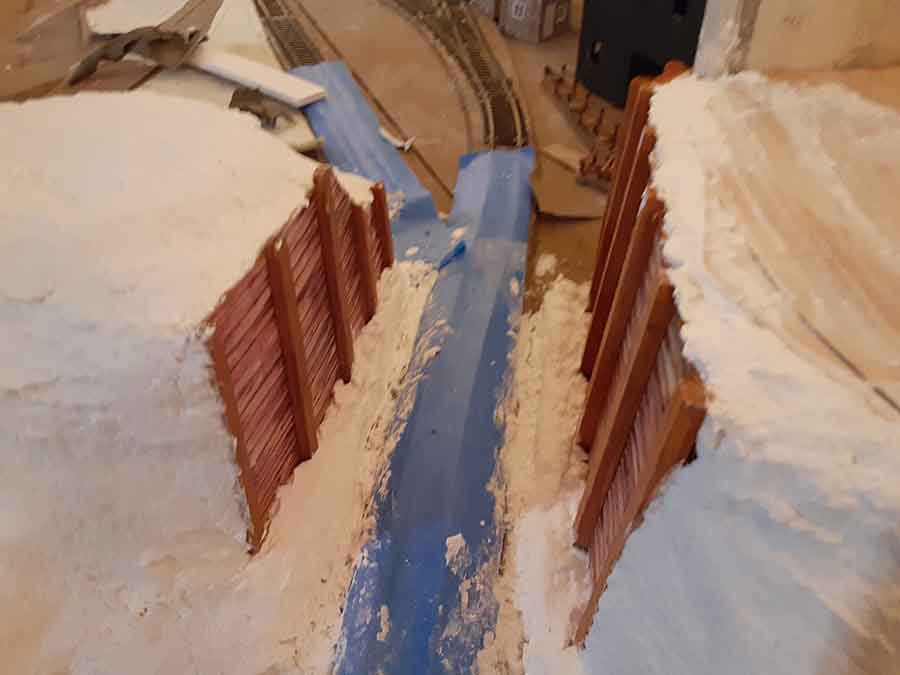
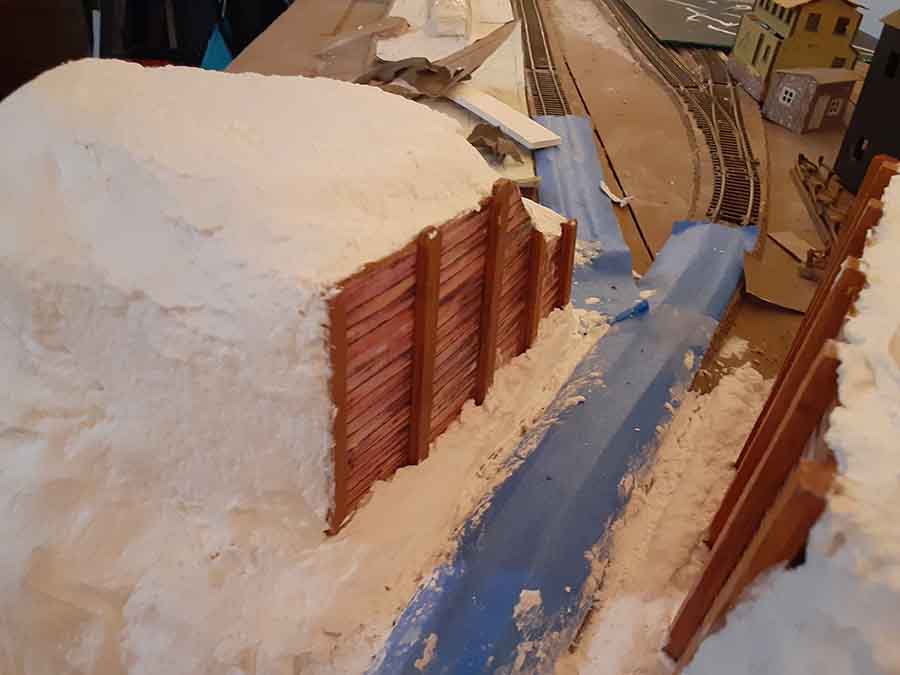
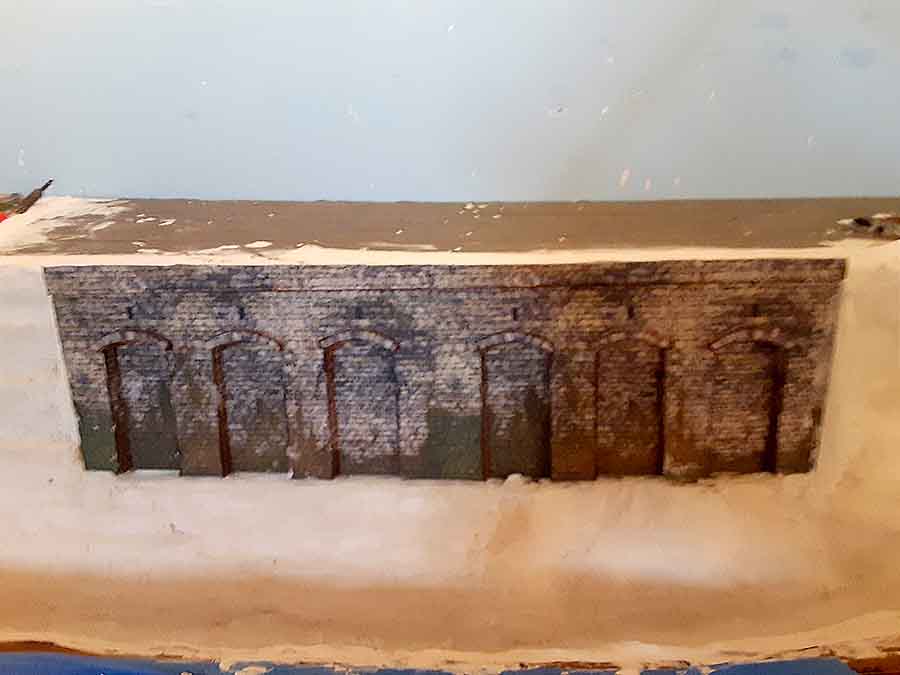
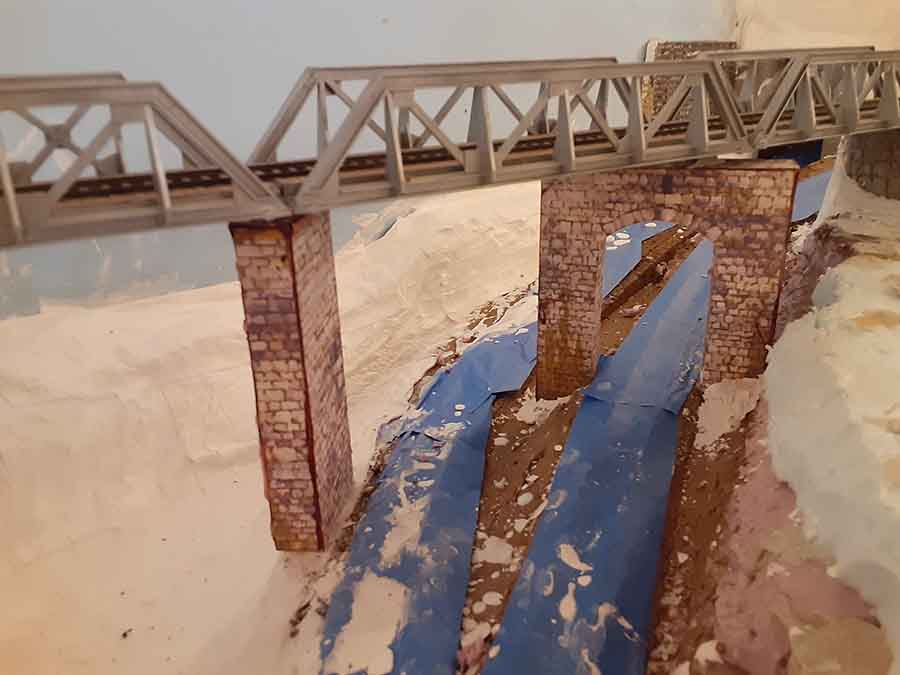
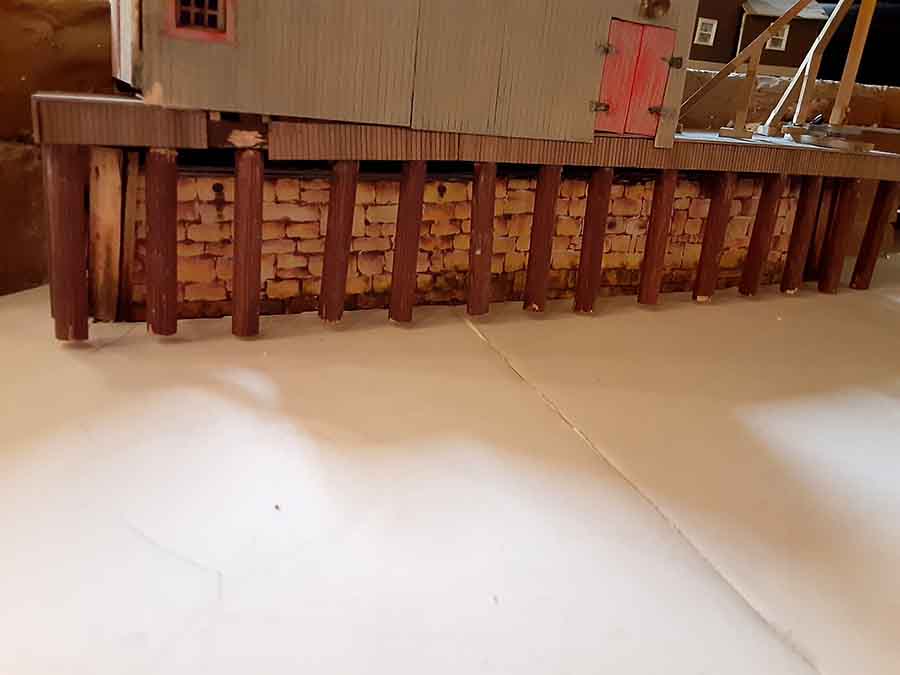
The photos are of the engine house, which I modified, added interior wall framing, windows, and made it a little longer on one side.
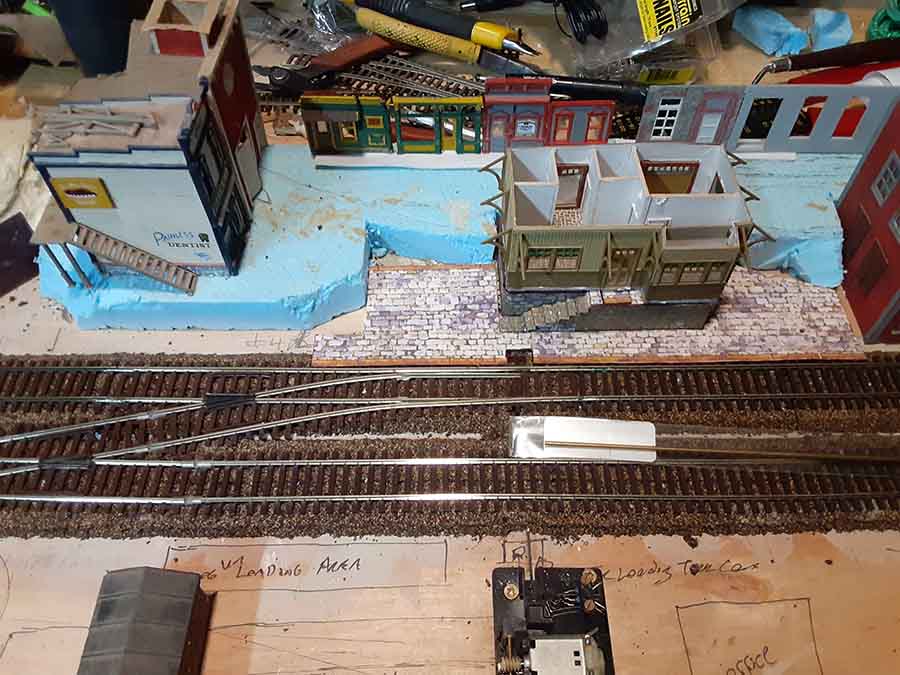
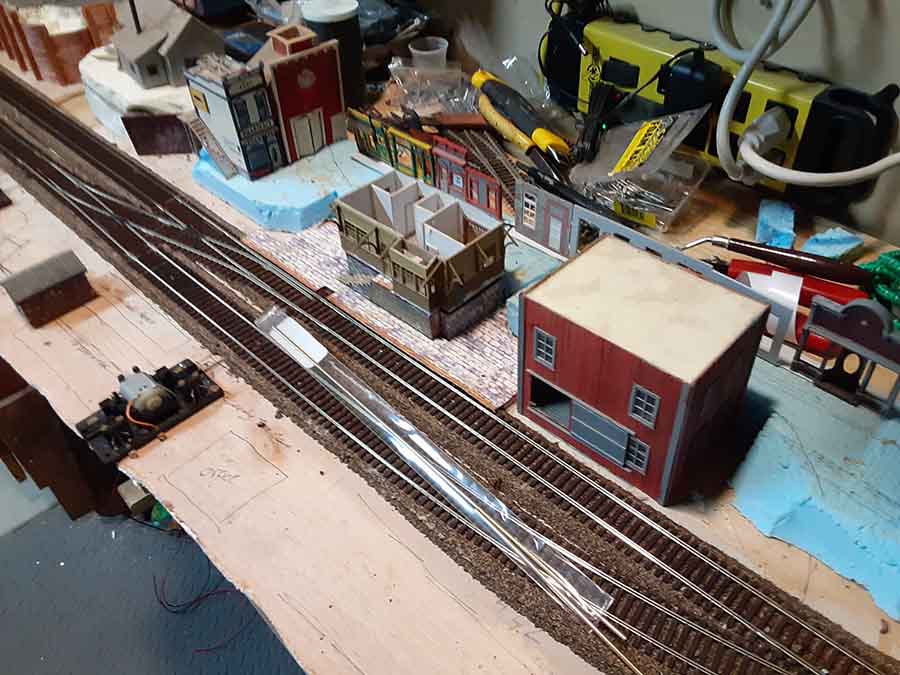
The embankment wall has also been used as bridge supports and a stone platform for the station of my mining town.
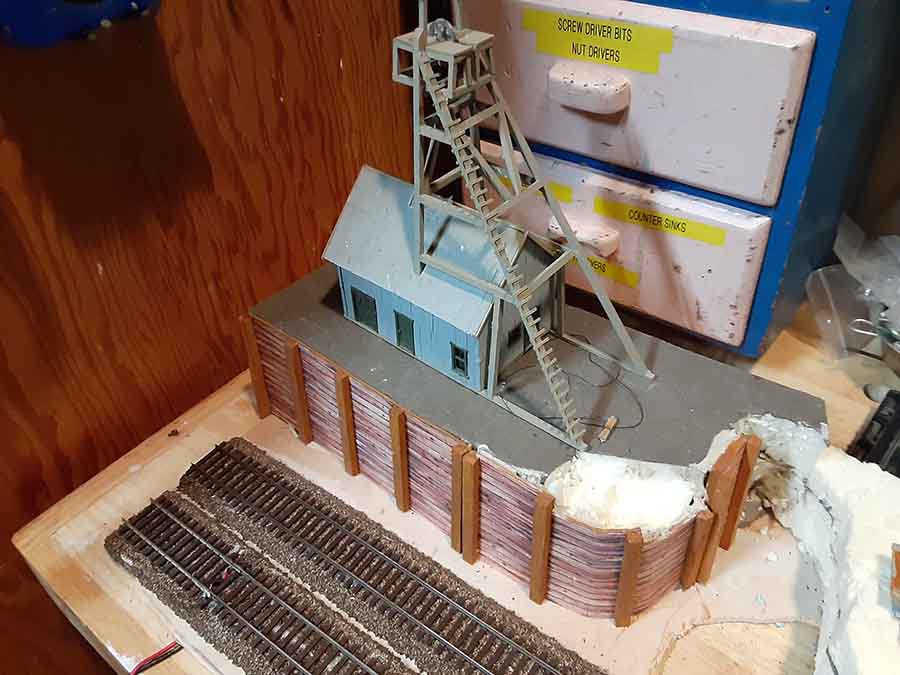
I also have used the wooden tunnel portal to make several retaining walls.
And finally, I used the jetty wall as a base for one of the wharves at my waterfront area.
As can be seen in the photos there is a lot of work left to do in all areas of the layout, but I am having a blast using your print outs!
Thanks to John’s great videos, I have found several uses for the printouts and I will update you as work progresses.
Thanks for your site and the great inspiration!
Sincerely,
Chuck from California”
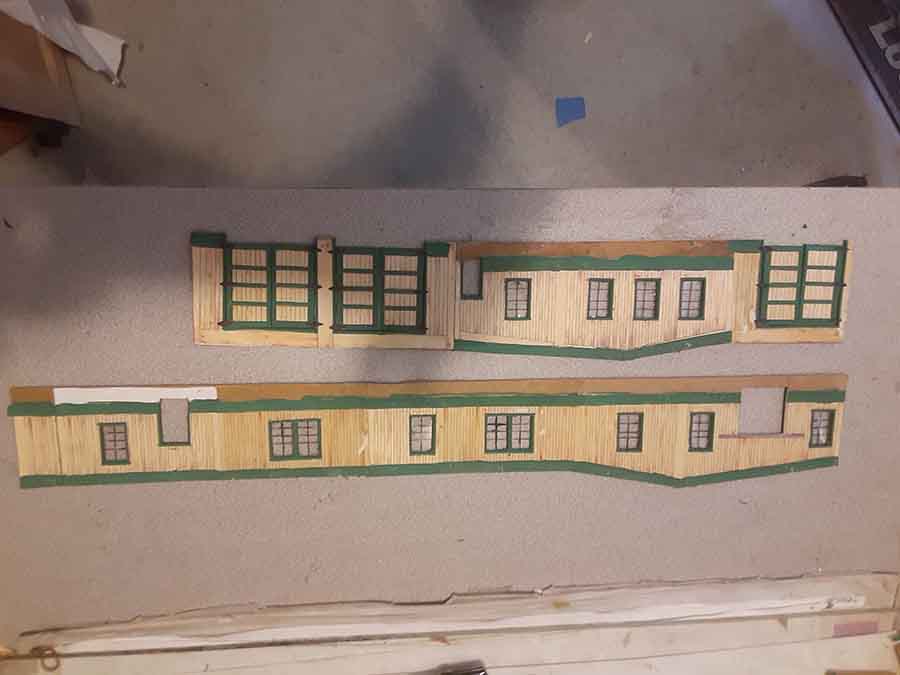
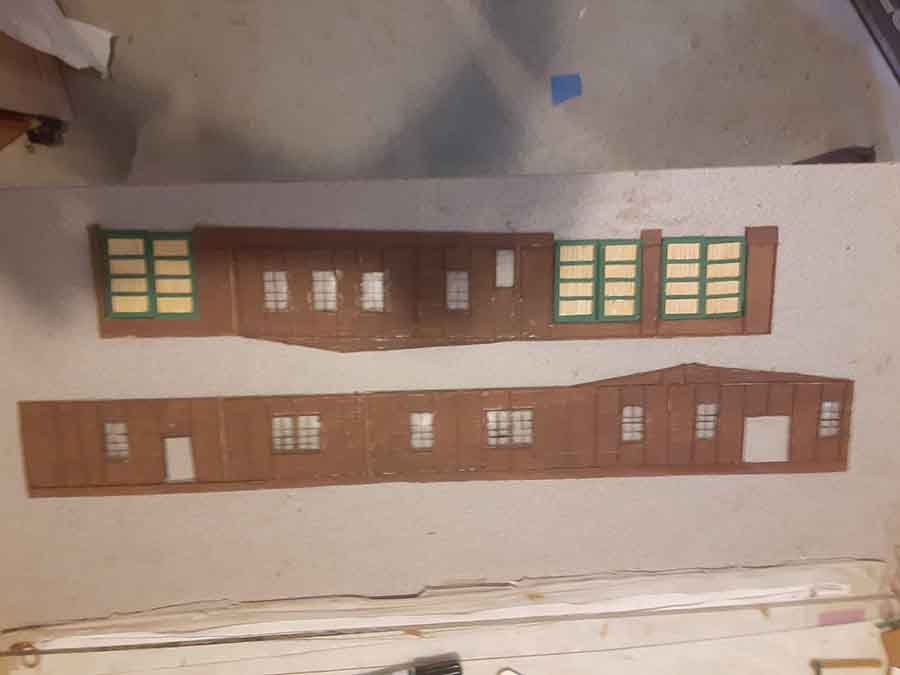
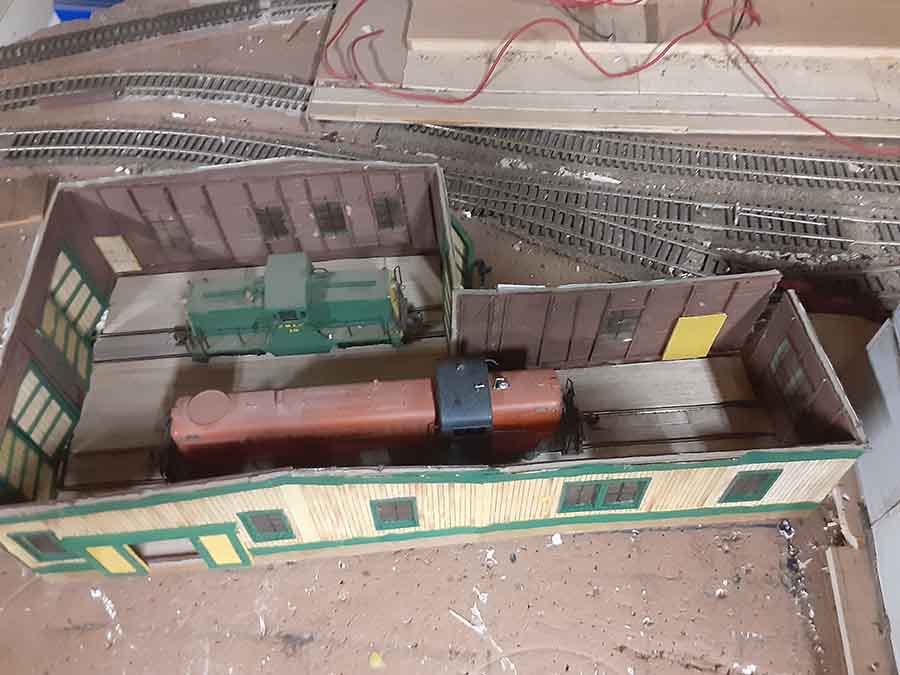
A big thanks to Edward and Chuck.
I do enjoy seeing what you’ve made with the printable buildings.
Here’s a collection of stuff from a while back too – you really are a creative lot. John’s videos always raise a smile too.
That’s all for today folks.
Please do keep ’em coming.
And if today is the day you wave goodbye to boredom and get started on your layout, the Beginner’s Guide is here.
Best
Al
Need buildings for your layout? Have a look at the store.
They are great fun to make and great value too.
Chuck
Very clever work with the printouts. Very impressive.
Edward, I like what you’ve done with your electronic components and your control panel. Great track plan too. Chuck you are doing a wonderful job with your building constructs. Nice work.
Rob McCrain – Farland Howe
Looks pretty good.
Excellent work on both parts.
Great layout and electronics process.
Very nice.
The pictures of Edward’s electronic network leads me to the suspicion that model railroading has passed by this 84 year old fellow. Guess I can rely on memories from here on out.
Edward, that’s a great layout and control panel. I’m a bit confused about the Berrett toggle switches: are they the lighted circles on the front of the control panel and do you just touch them to flip the turnout to its opposite position? Because, you also seem to have regular Kato turnout switches to the left of the control panel … Your modifications to the Hornby plan were spot on. Using the double crossover between the inner and outer loops allows trains to switch both ways between them and your turntable tracks make a lot more sense than Hornby’s design.
Chuck, you’ve made fantastic structures from Al’s printout buildings and materials. Combining the printouts with strip wood posts and such makes them much more three dimensional. Great job and thanks for sharing!
great detail modeling
Will, I also started with Berret Hill controls; the answer to your question is yes, those are small switch controls that change color when pressed and the switch is changed.. They are excellent and worked well with my Atlas and Peco switch motors. I then started to switch to Kato which are 10 volts DC, My question is do they now make controls for Kato switches? My N Guage Kato switches run on 10 volts DC while most switch motors use more current and operate off AC.