Rob’s been back in touch with a very good missive on model railroad track codes:
“Hi Al,
About a year or so ago, I built a model of a steel bridge for my layout. At the time, I used the same track as when I built the layout. Years after I built Farland, I learned about rail sizes and scale.
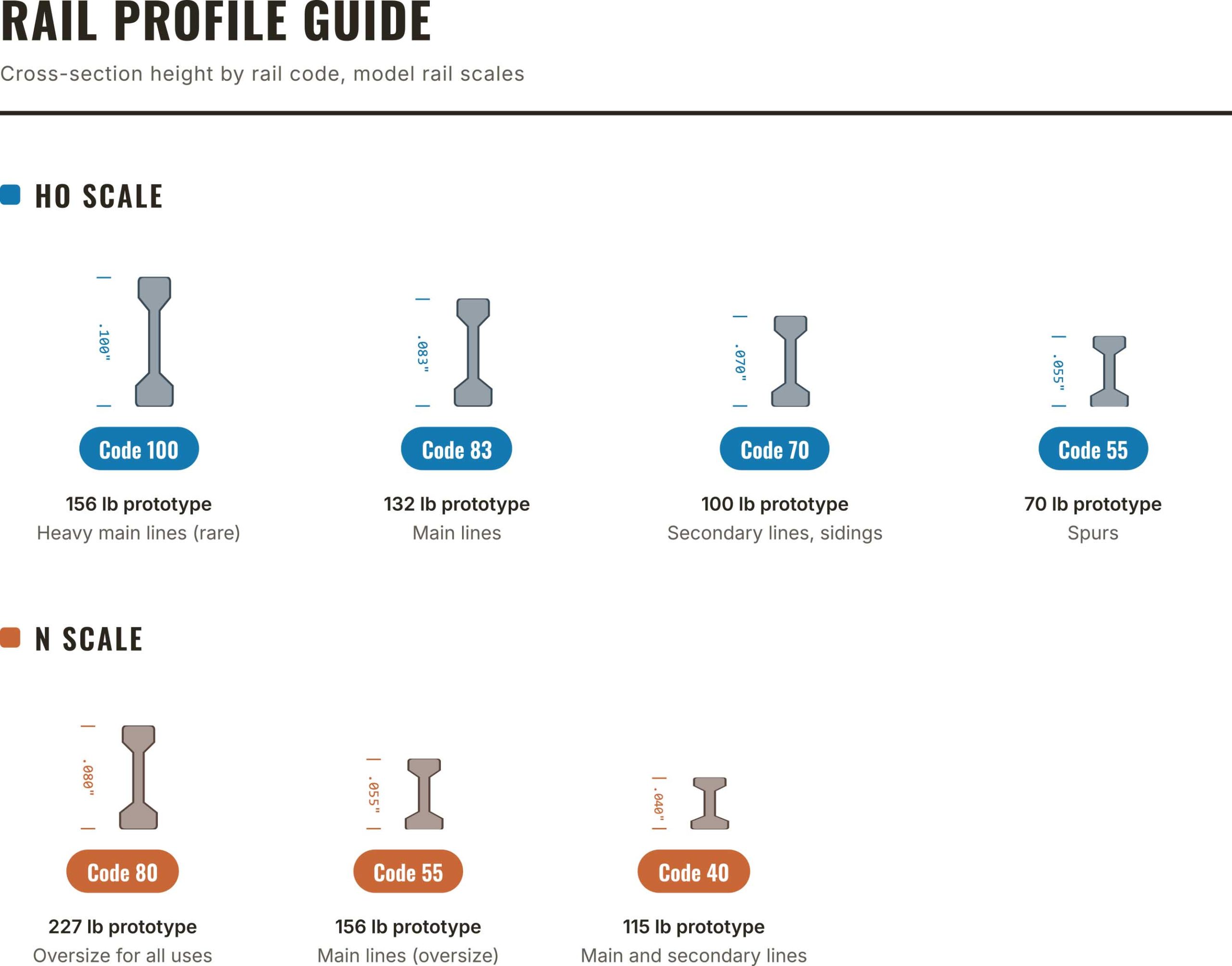
With that understanding, I felt the track on Farland was too big, and I wanted to use smaller code track. The code refers to the rail size. Code 100 rail is fairly chunky and out of scale.
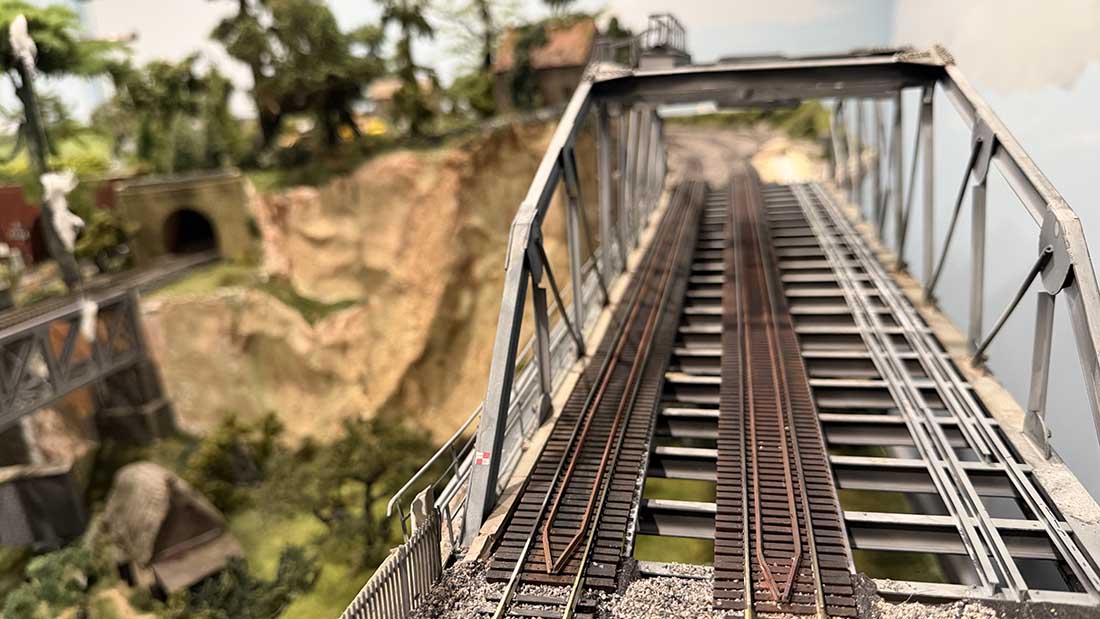
I wanted to change out the track on my steel bridge to something more appropriate, rather than the ordinary flex track that was on it from the beginning.
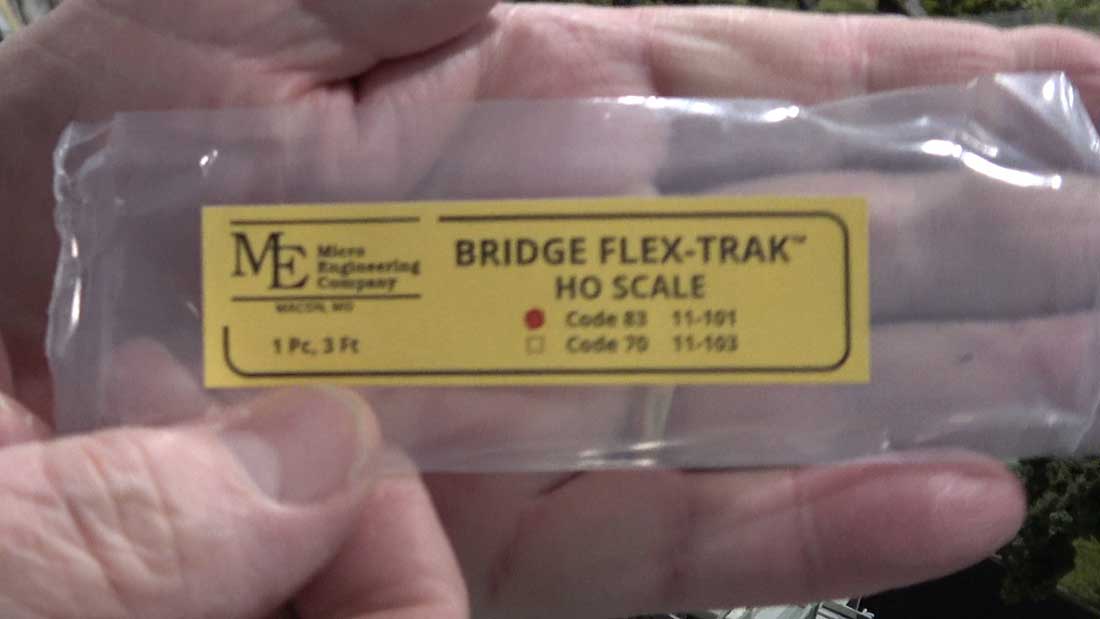
The new track has code 83 rail, which is smaller than the code 100 on the rest of the layout. This new track also models standard North American bridge track with sleepers laid closer together.
Another issue I wanted to address through this project was the straightness and flatness of the incline along that side.
When I cut the gap for the bridge, I had to cut through some timbers that ran the length of the benchwork front to back, keeping the track straight and flat.
At first it seemed fine, but eventually the track sagged, and it was not good for my less-strong pulling locomotives, like steam engines.
It did not look good either, with the trains bobbing up and down as they traversed the incline/decline along that side.
The first video is about restructuring the benchwork, replacing the track, and straightening the run.
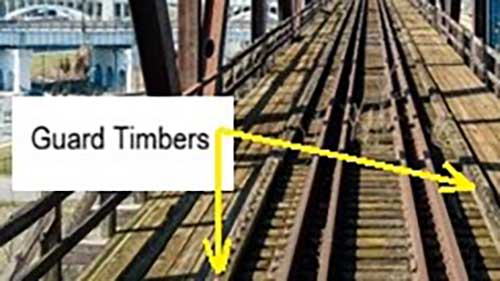
The second video is about installing and painting the guard timbers that are part of the bridge track’s structure.
Rob”
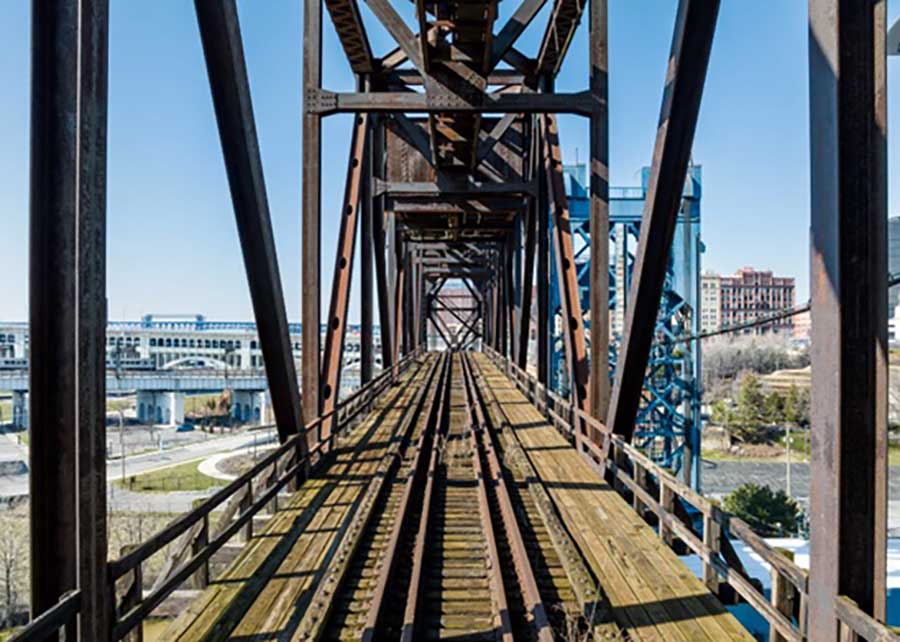
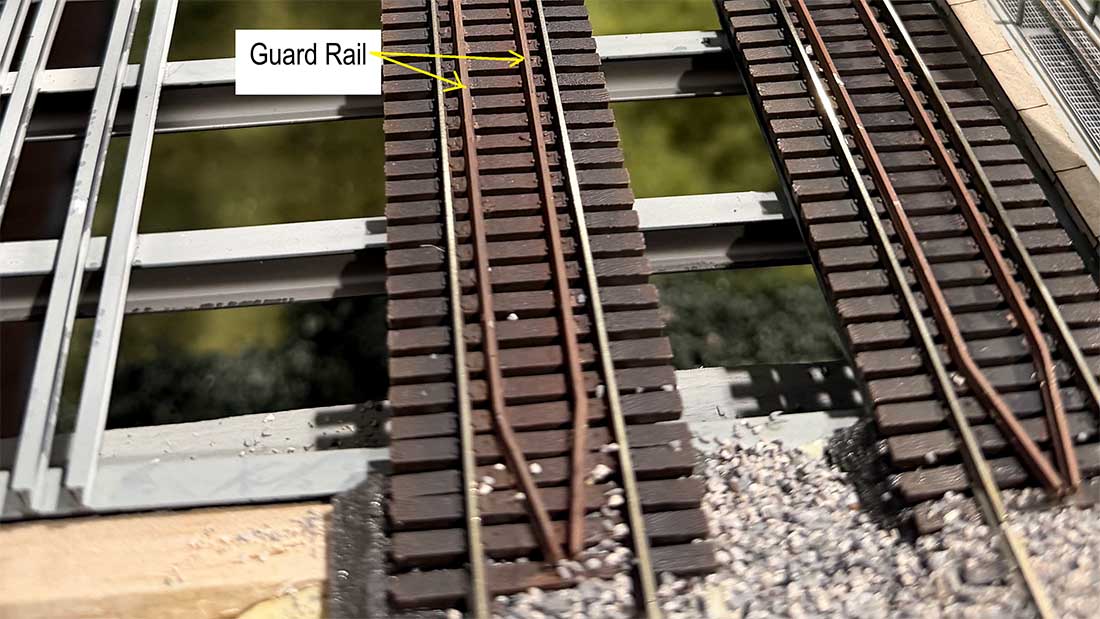
Rob’s post reminded me of a recent one from Brian (another Hall of Fame member): HO scale double track brige.
Next, on to John, who has sent in this ballast tip:
“Alastair:
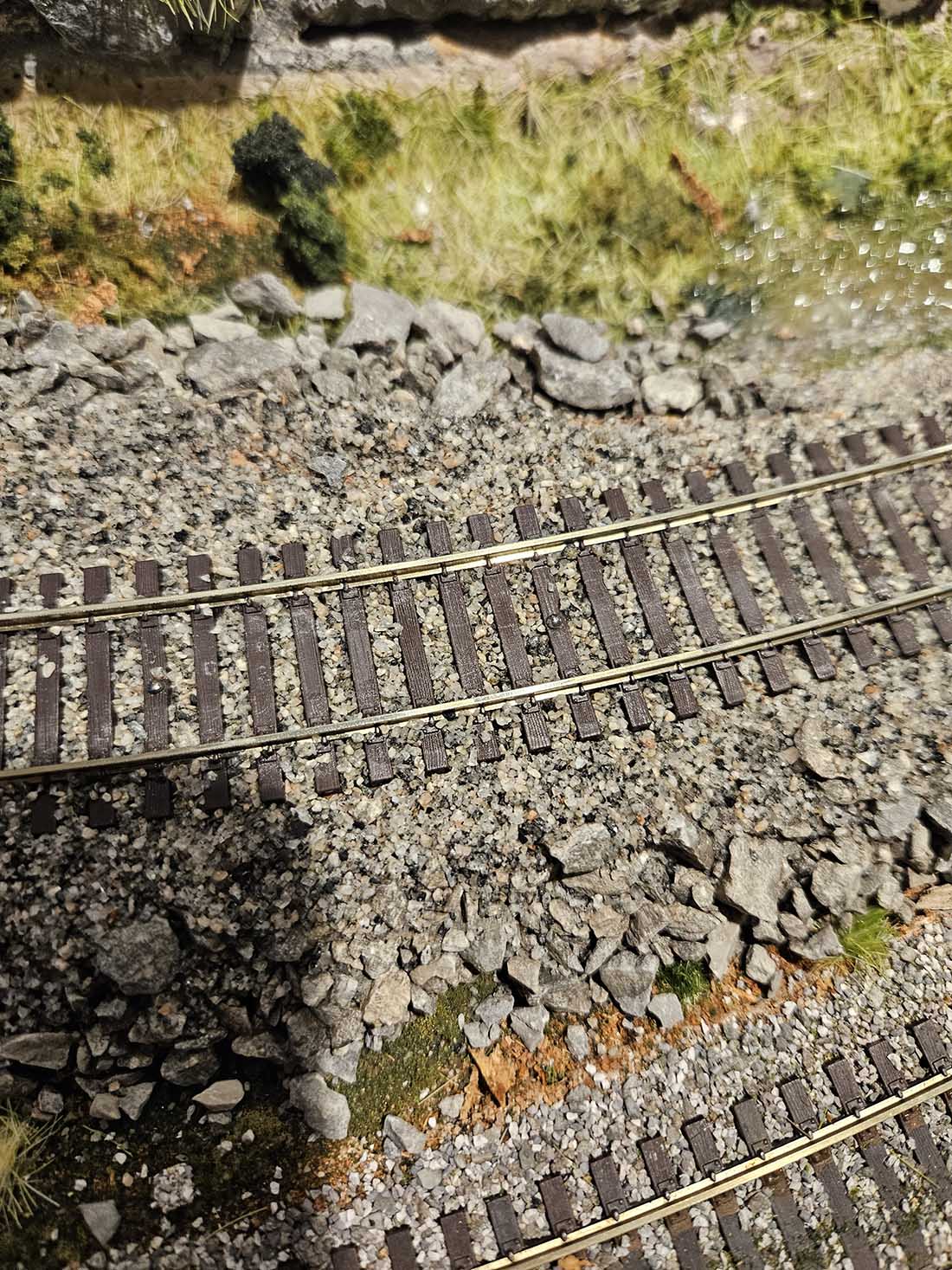
Here’s a tip to improve the look of your ballast. Purchase a bag of Polymetric sand used to sweep between newly laid paving stones.
This sand (at least in North America) has multiple colours of crushed granite providing a mild contrast to the very even colored store bought ballast.
Start by sifting using progressively finer screens. I sifted mine three times and found a perfect size for my HO scale layout. If you’re looking for a different natural and complimentary ballast, this could be for you!
John”
A big thanks John and to Rob for sharing his thoughts on model railroad track codes – and what an eye for detail he has. I always look forward to seeing his stuff in my inbox.
You can see more of Rob in the Hall of Fame.
That’s all for this time folks.
Please do keep ’em coming.
And if today is the day you get started on your layout, the Beginner’s Guide is here.
Best
Al
PS More HO scale train layouts here if that’s your thing.
Need buildings for your layout? Have a look at the store.
They are great fun to make and great value too.
Like holy shit that must have been tedious work !!!
Rob, when I began my layout in the early 90″s, code 83 became all the rage. For my hidden track and storage I used code 100. I bit the bullet and used the more expensive code 83. There is one place where there is a transition of the two that can be seen. (On purpose.) If you paint the track and ballast the track it is very difficult to see the difference between the two. I point this out to most of my visitors. They are surprised how hard it is to notice..
My layout has had many visitors. I would guess it is nearly 1,000 by now. This layout has been in operation since 1992.
Beautiful detailed work as always Rob- so realistic and well worth the effort which was considerable no doubt!