Toronto Hamilton & Buffalo Model Railway

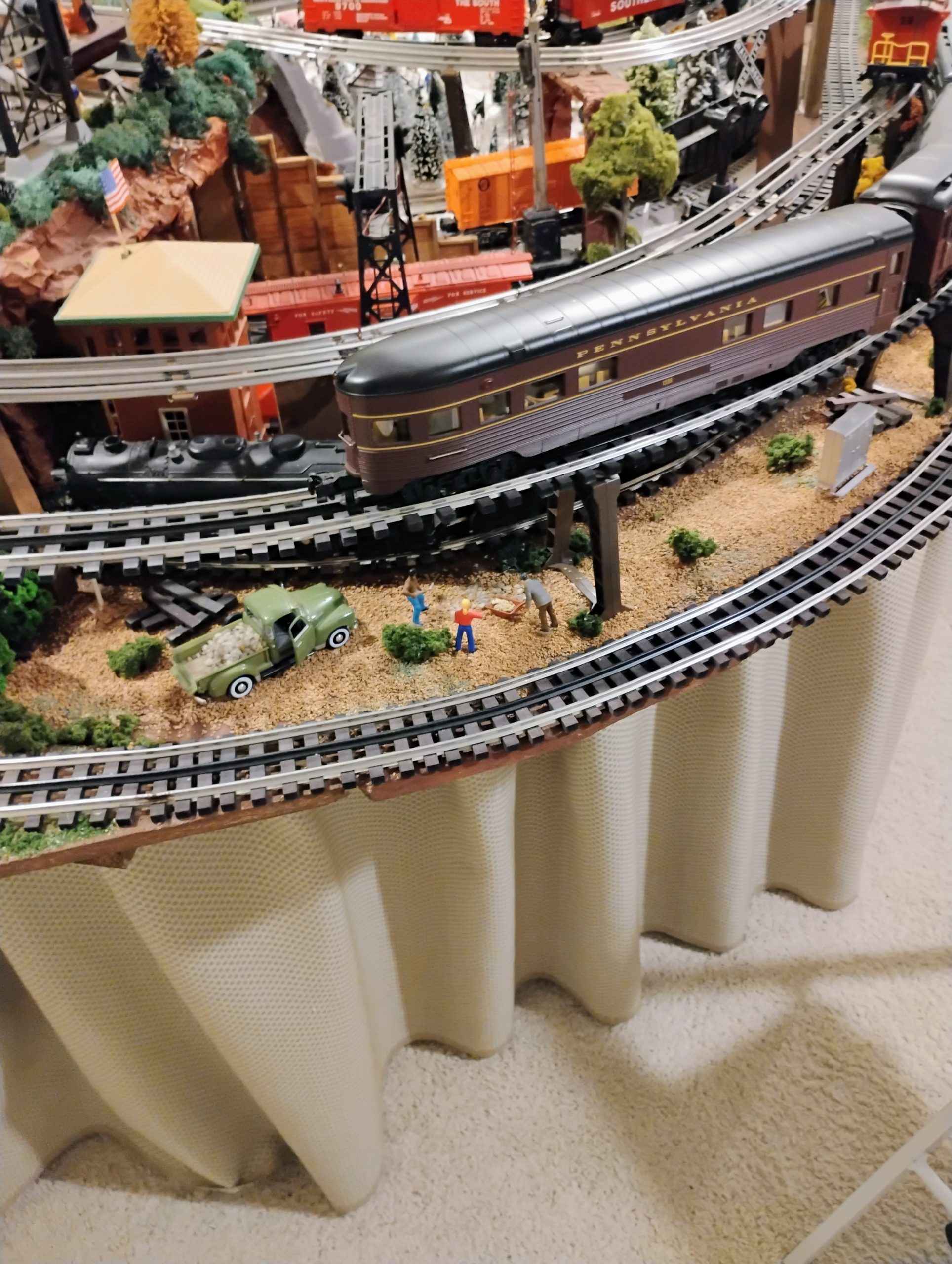
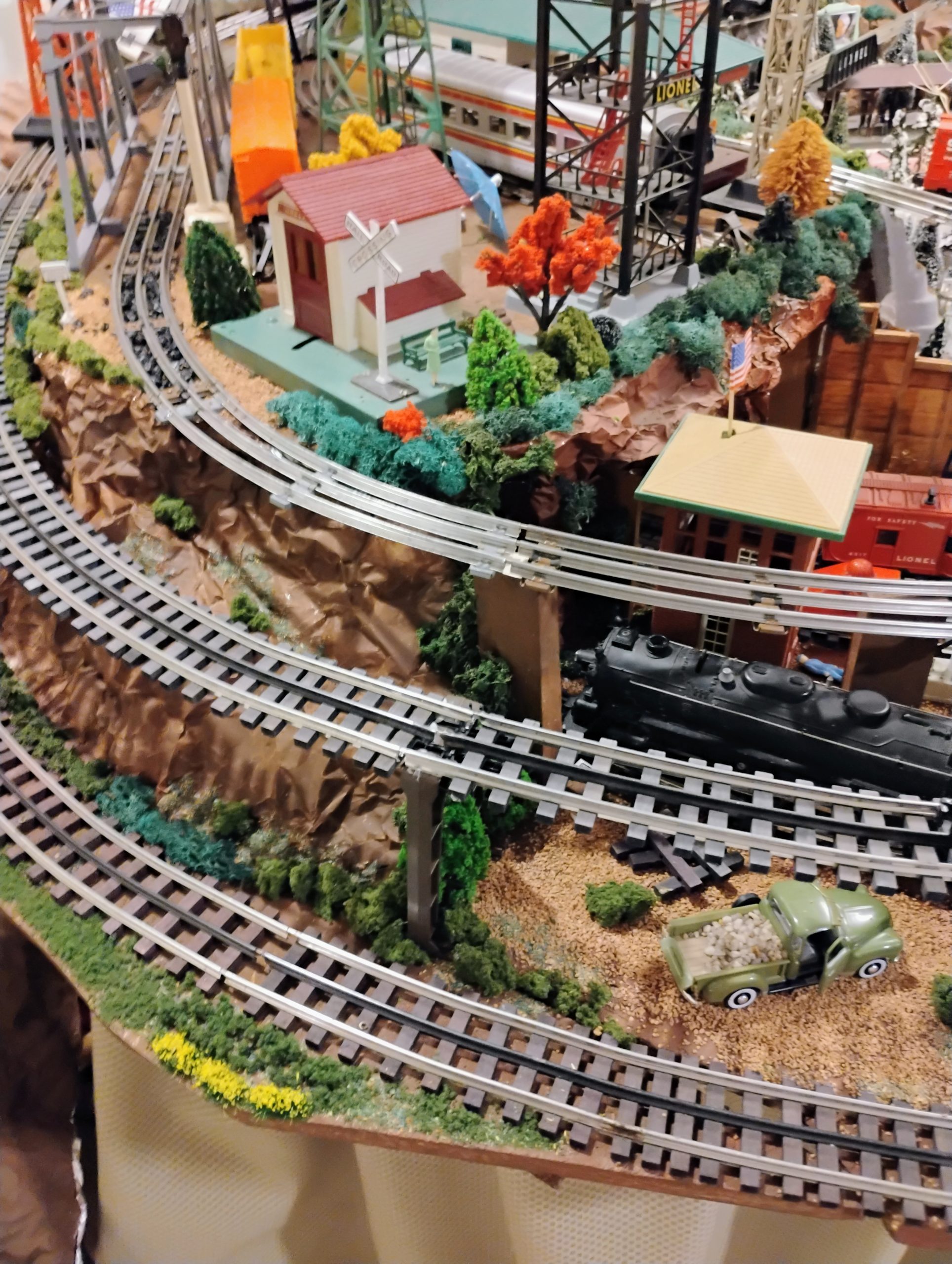
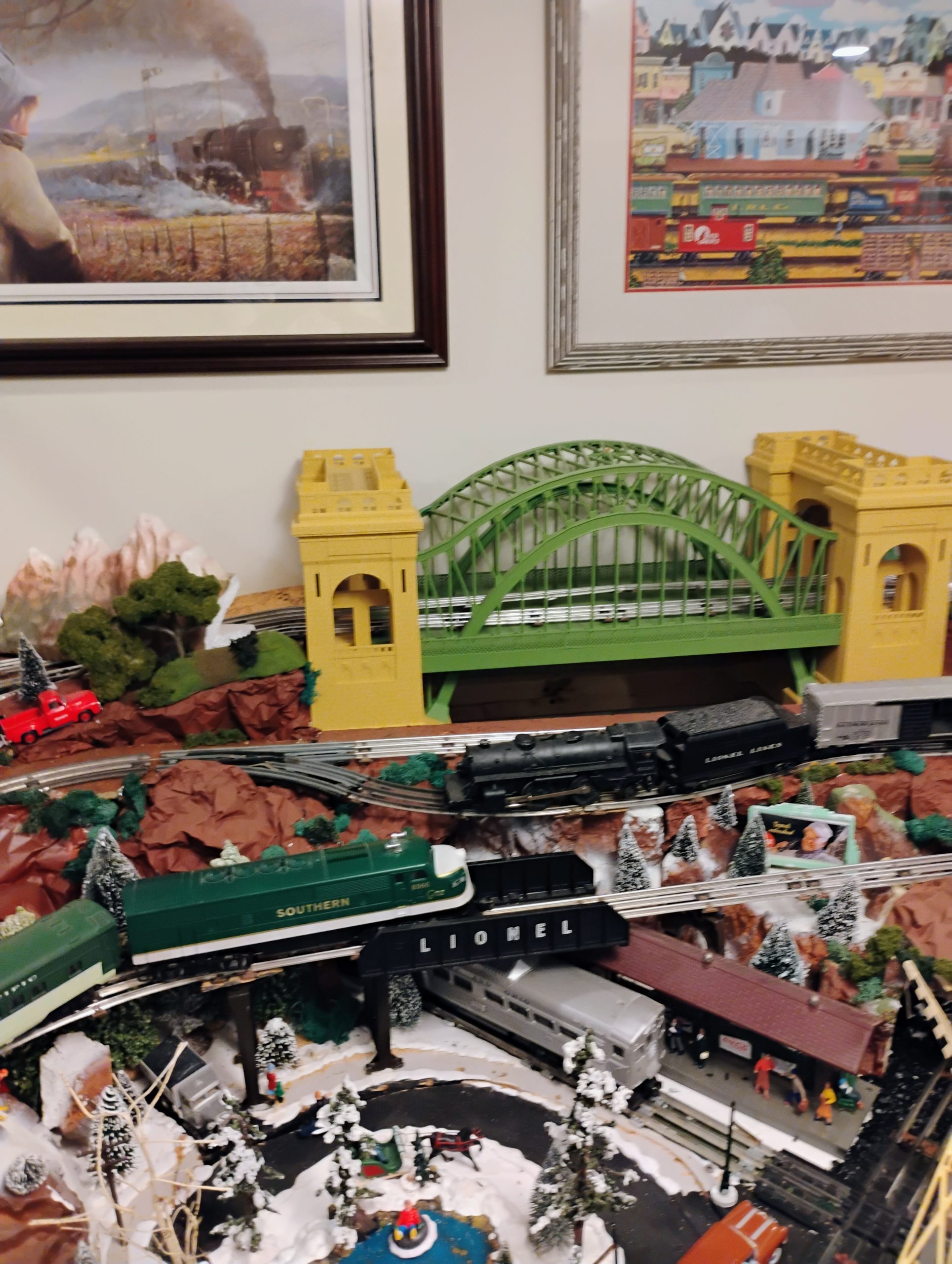
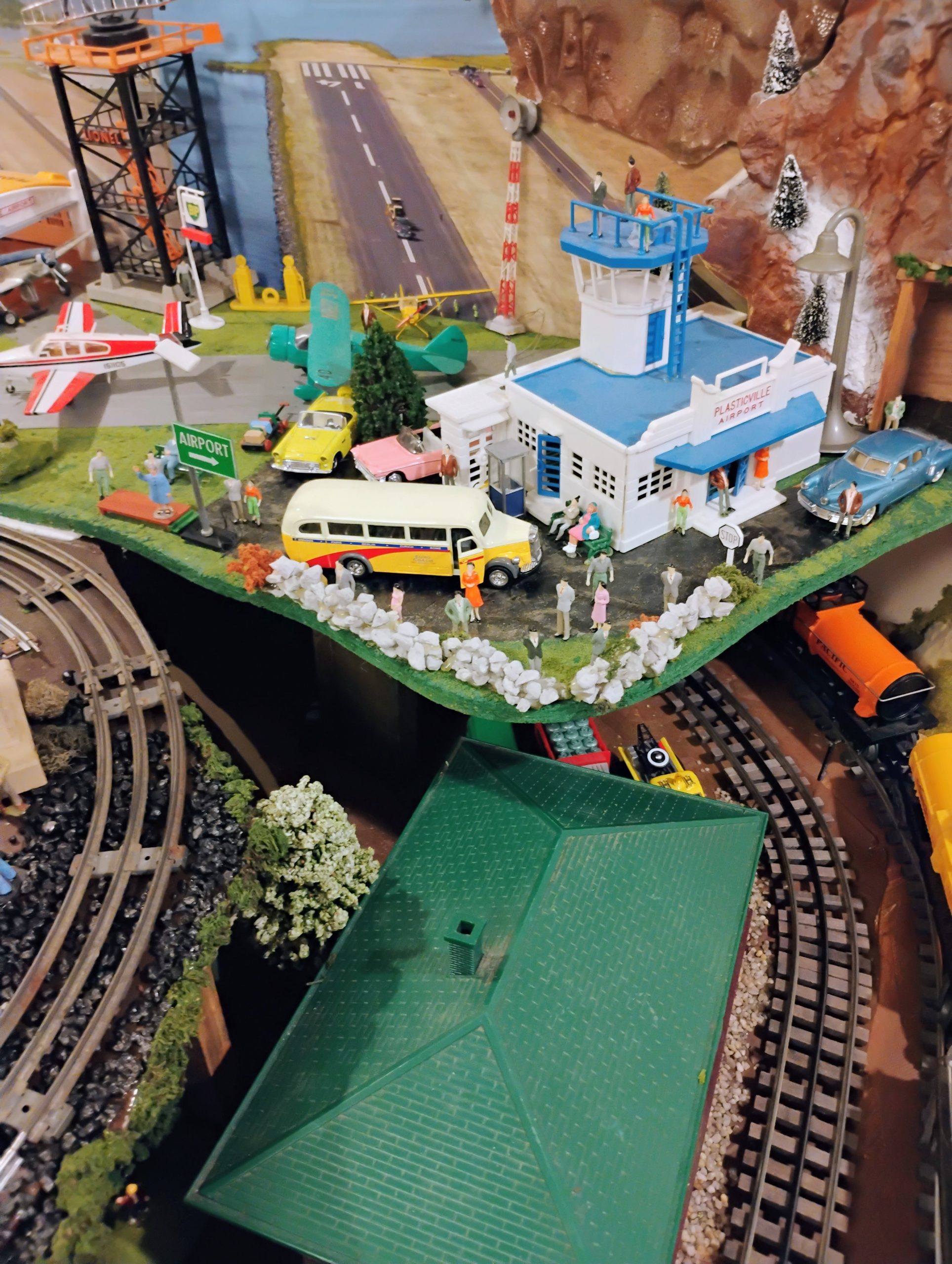
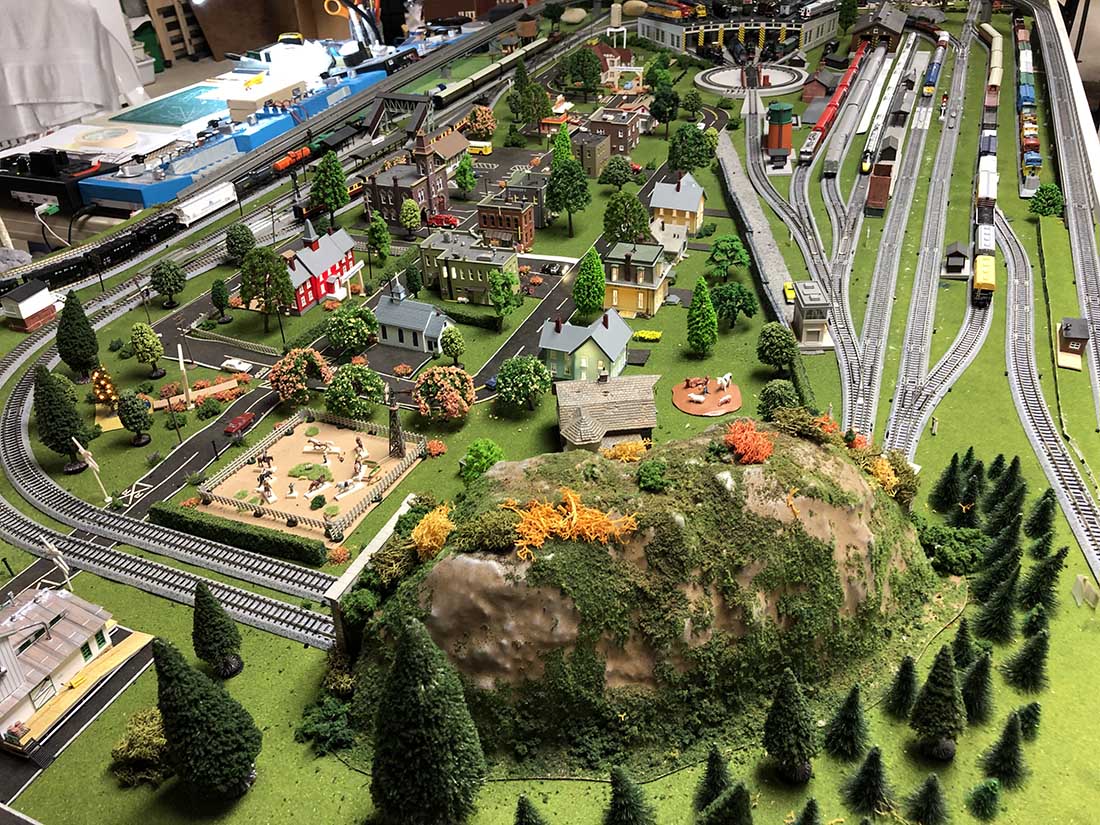
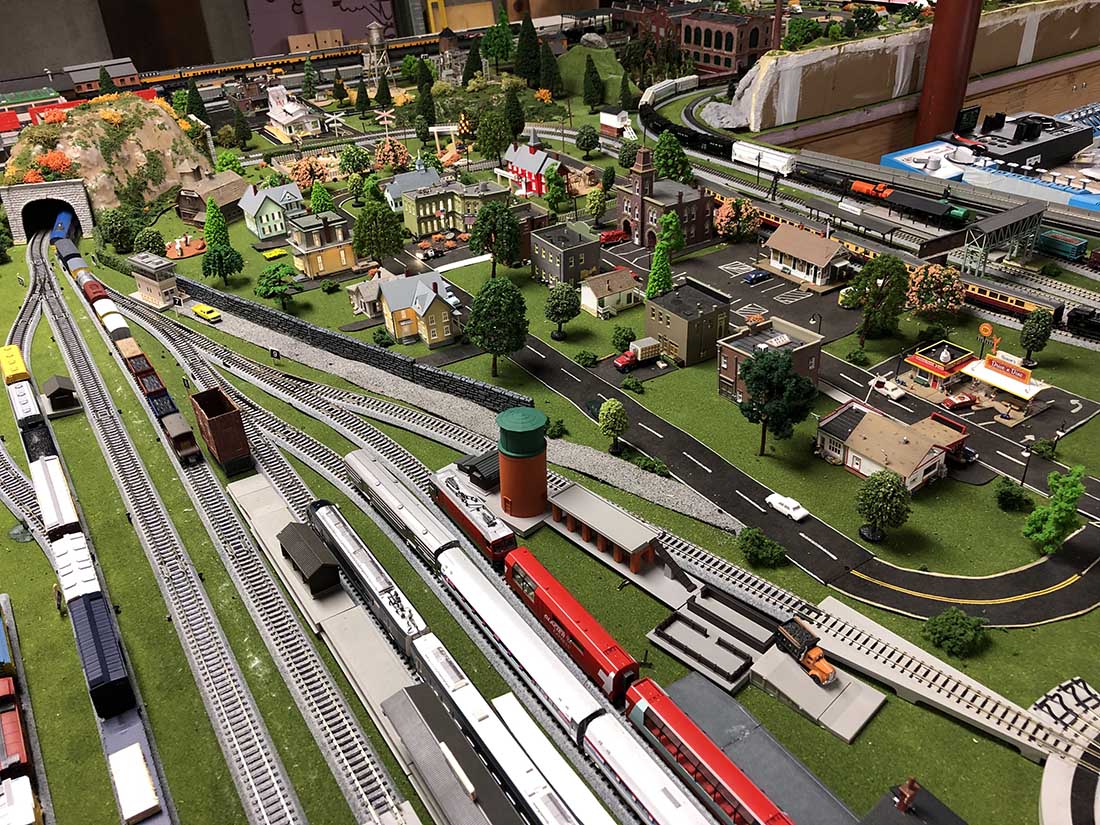
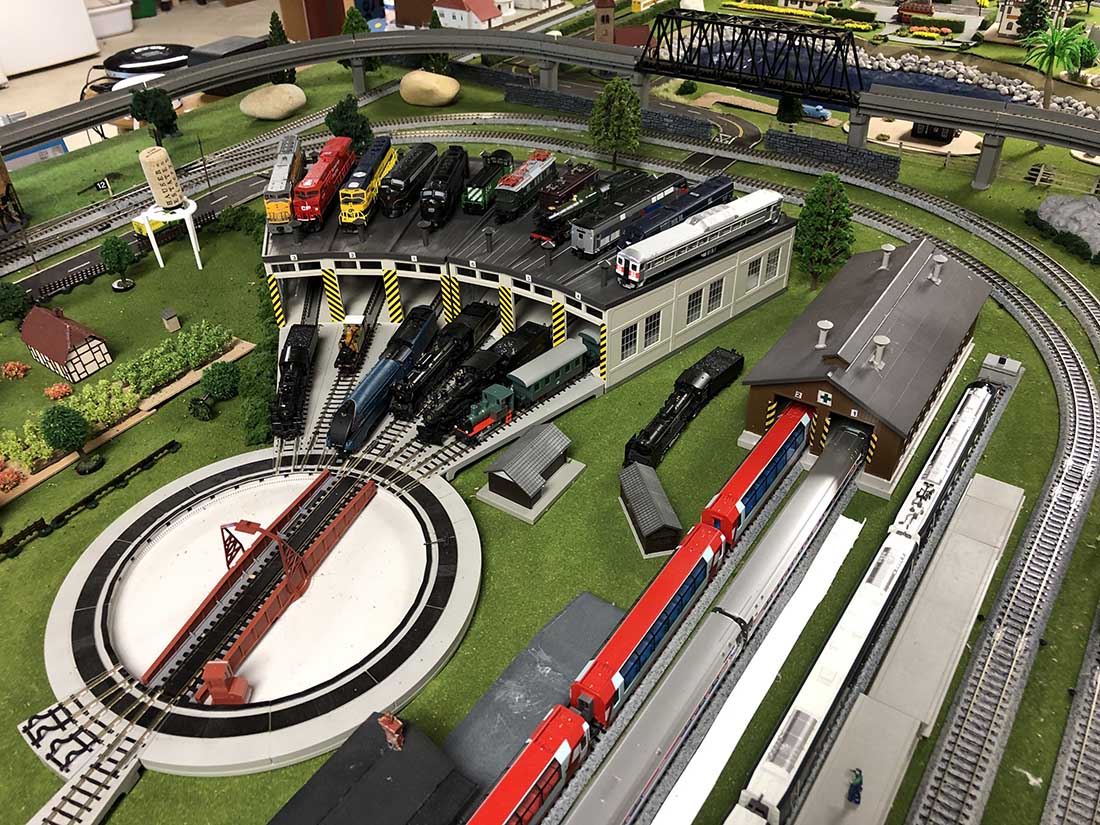
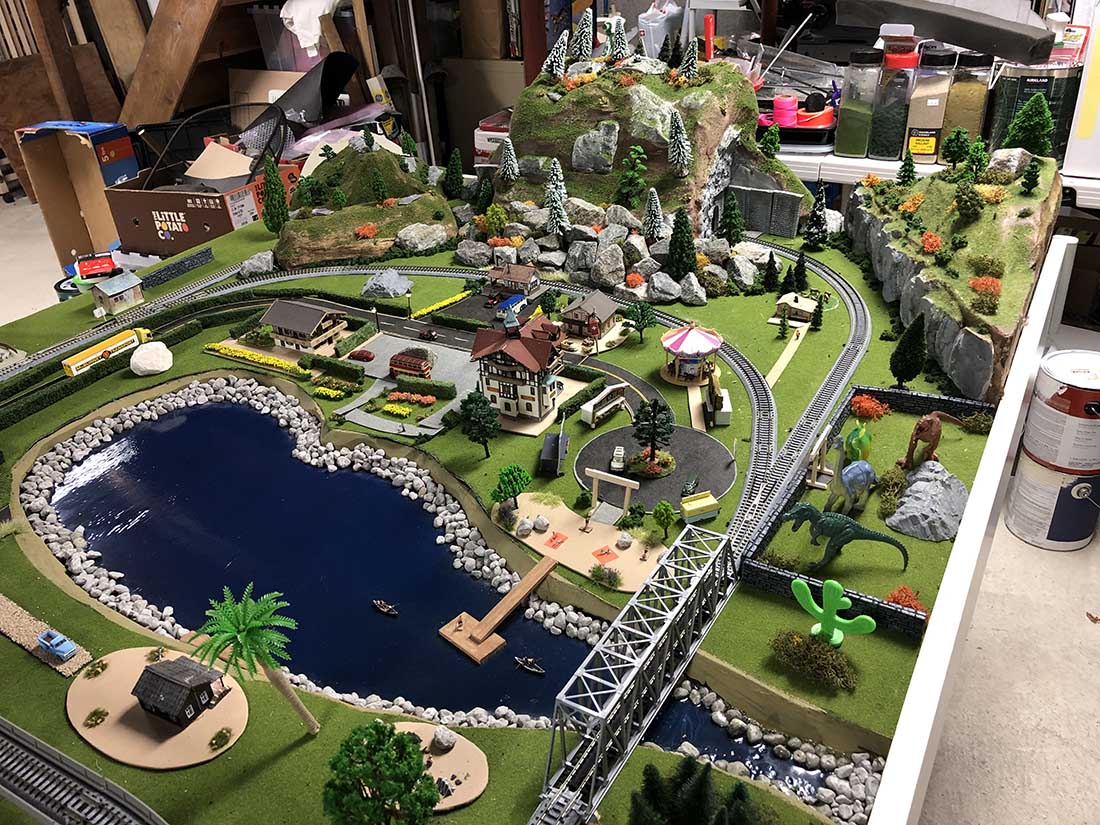
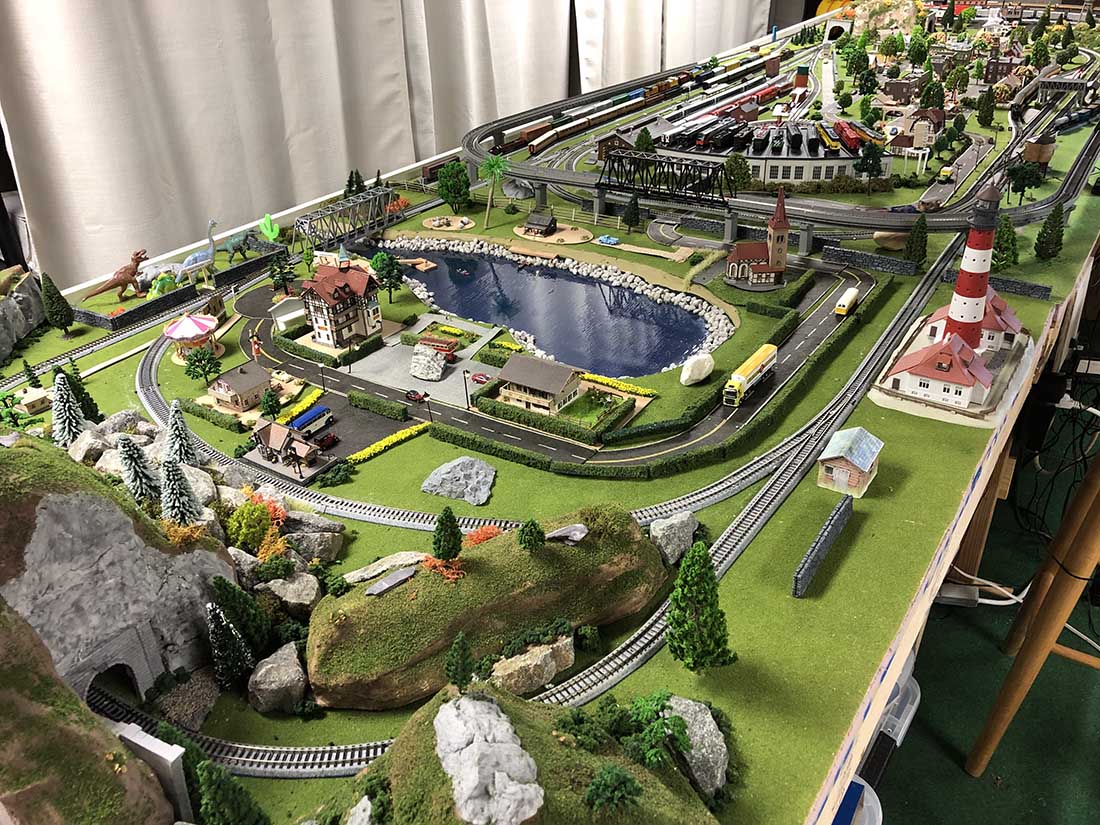
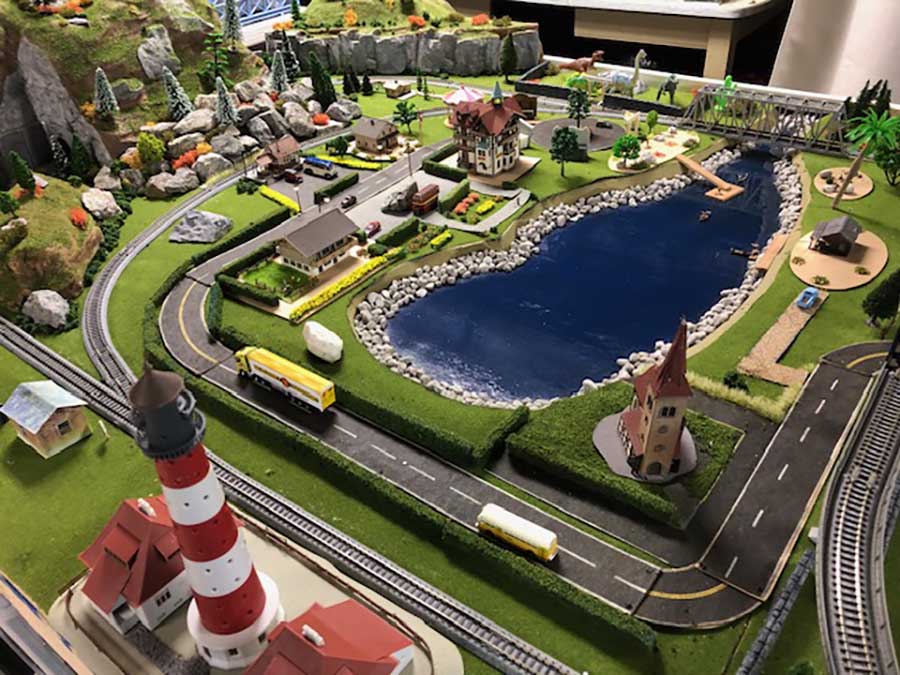
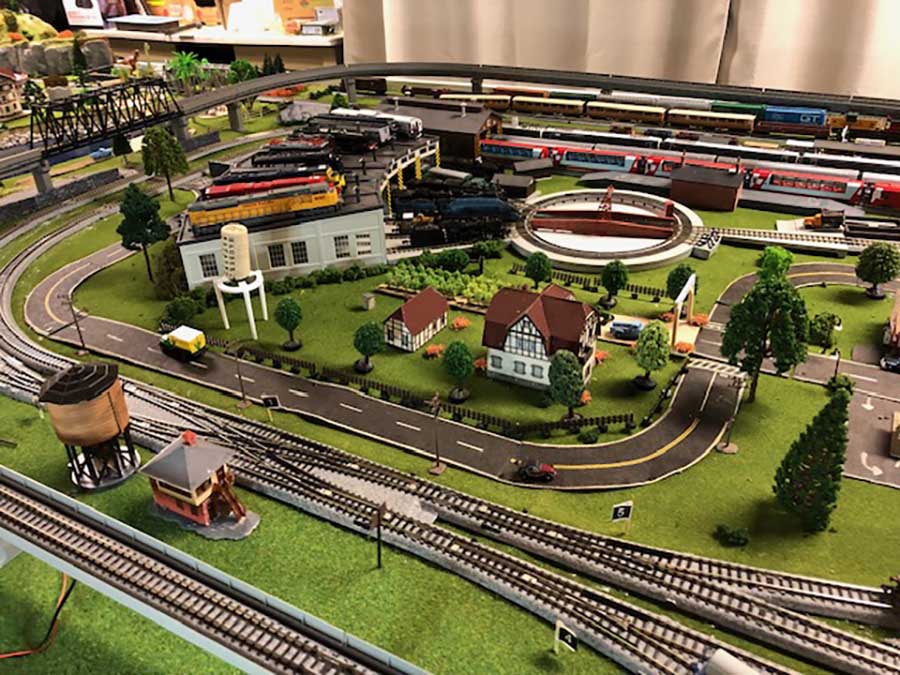
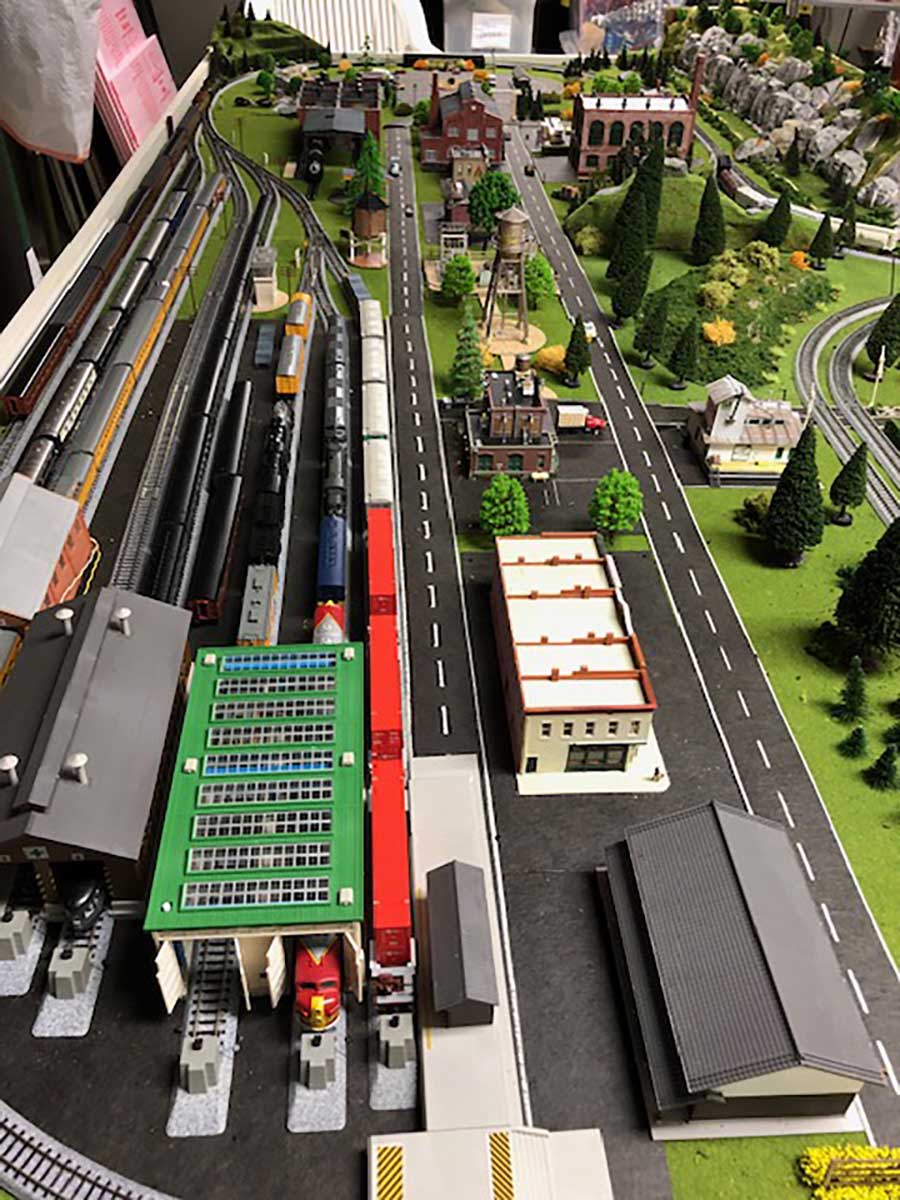
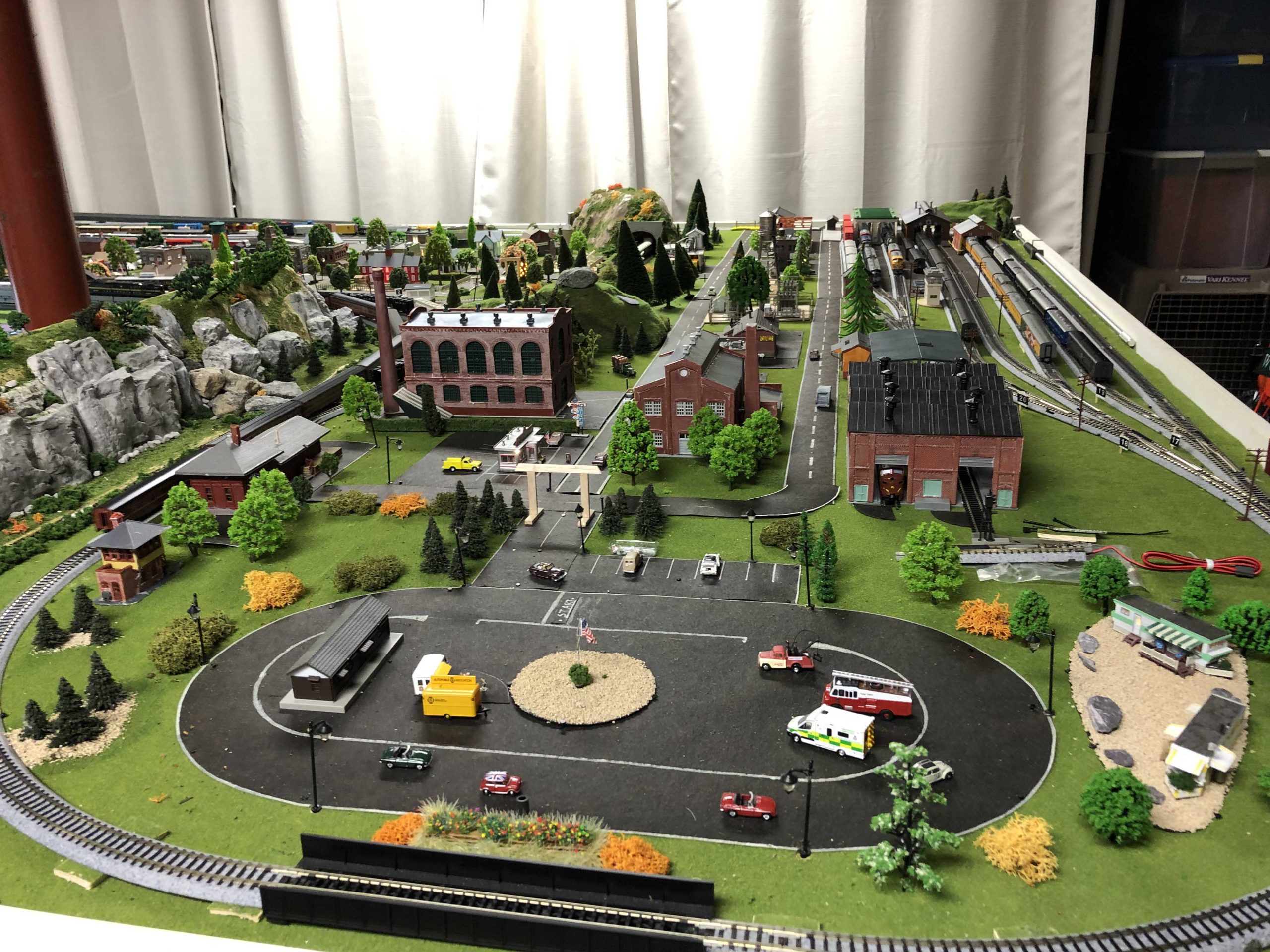
Peter’s been back in touch, this time with his stunning Toronto Hamilton & Buffalo Model Railway:

“Hello Al,

It’s been over two years since you posted my first “trial” switching layout. This gave me the confidence to proceed to my Empire Layout – inspired by the Toronto Hamilton & Buffalo Railway (TH&B), and fictitiously known as Amaranth Falls.

I started with benchwork that allowed a set of donated kitchen cabinets, mounted on casters, to slip under the benchwork making a more appealing facade to everything, and providing storage space for rolling stock.

I have an unusual and choppy space to fill, but the large section is a 5′ x 9′ space with a side fiddle yard.

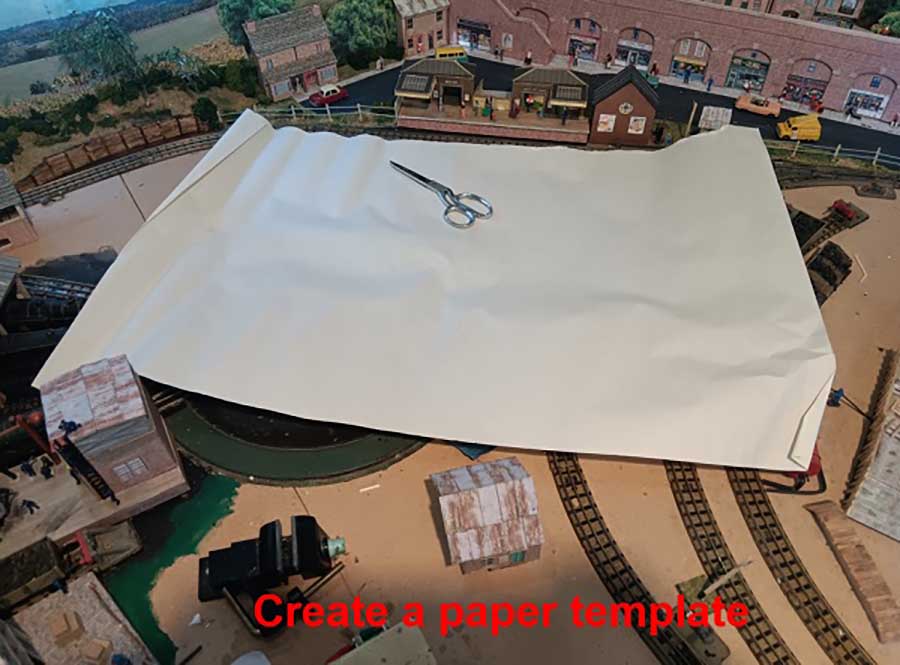
The photos show progress throughout the various construction phases. It was challenging putting a river flowing down a 5 inch drop with numerous falls and rapids…. and a golf course!

More photos to come once the final lighting, signage, fencing and level crossing lights become installed.

Peter”

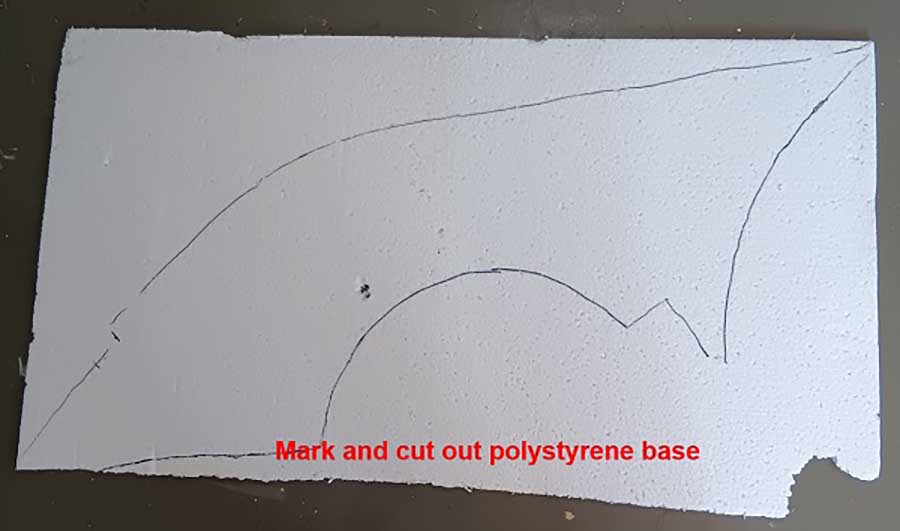
model train track plan

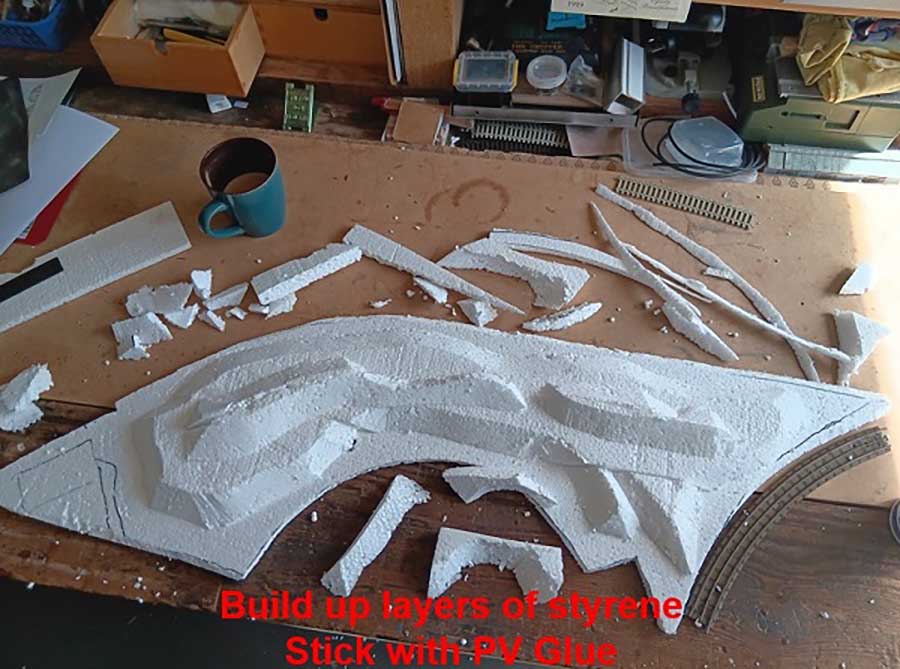
model train work bench

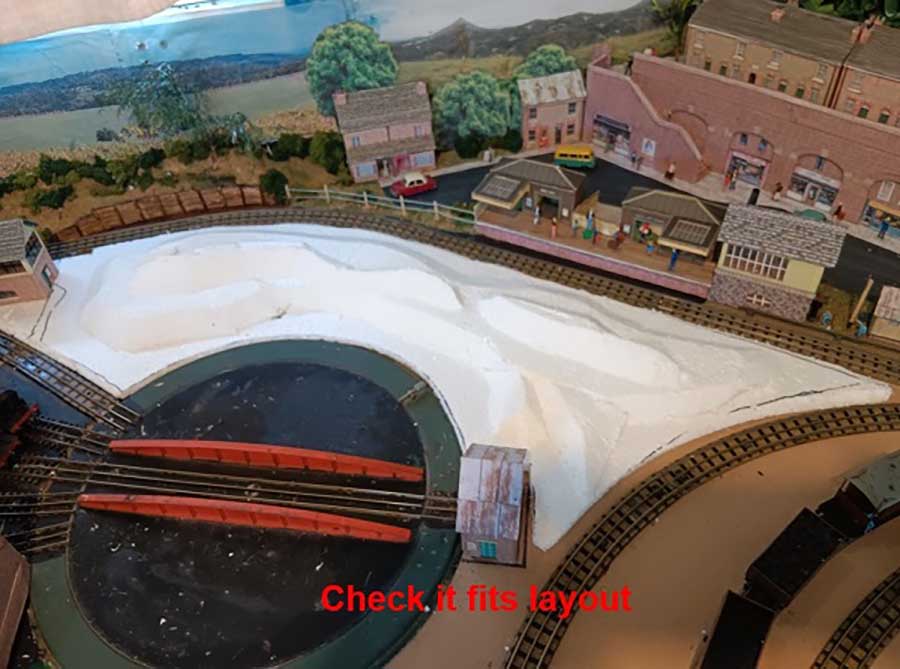
model train track bed

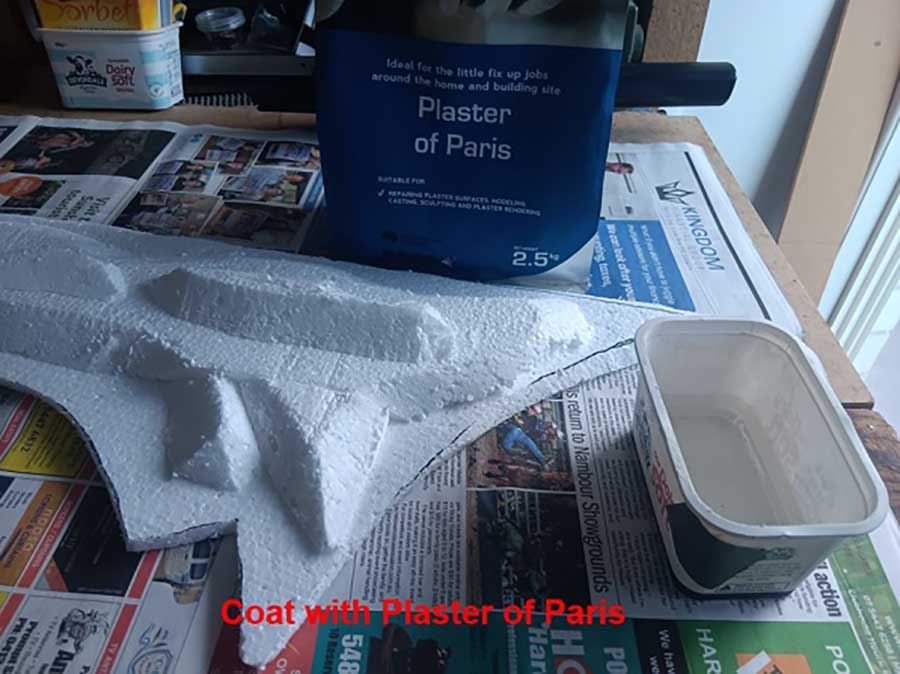
HO scale track bed

HO scale river

 Toronto Hamilton & Buffalo Model Railway


 Toronto Hamilton & Buffalo Model Railway

 Toronto Hamilton & Buffalo Model Railway

 Toronto Hamilton & Buffalo Model Railway

 Toronto Hamilton & Buffalo Model Railway

 Toronto Hamilton & Buffalo Model Railway

 Toronto Hamilton & Buffalo Model Railway

(Peter’s last post is at the bottom of this one: Model railroad grass.)

Next up is Frank.

He has a problem – can anyone help?

“Alastair,

I have a BIG problem and is a great one (I hope) to go into the section asking for help.

As you are aware, I have told you about my building a model railroad, I have come up agains a BIG problem.

I am using Kato track but it does not provide any way of communicating it’s position to an external device (an Arduino to control signals).

I am wanting to use a SPDT Reed Switch to communicate with the Arduino, but the issue was how to get the turnout to tell me which way it was set?

My first idea was to mount the reed switch UNDER the turnout and using the position of the magnet inside the turnout to operator the reed switch. It does work but it is a LOT of work to dig out the table below to install the turnouts with the reed switches below.

A second idea was to put a magnet on the peg of the turnout and put the reed switch on the side of the turnout. Several attempts with small magnets but it didn’t work because of the field of the magnet.
The third idea was to mount the reed switches INSIDE the turnouts. Again, this does work, but again, it is a LOT of work.

I am still looking for a solution, though, having built AND wired a lot of the layout, I am rapidly painting myself into an impossible corner.

I am open to any idea that is simple and works.

Thank you.

Frank

Surrey, BC, Canada”

That’s all this time. A big thanks to Peter for sharing his Toronto Hamilton & Buffalo Model Railway.

And if anyone can help Frank, please leave a comment below.

PS More HO scale train layouts here if that’s your thing.


Need buildings for your layout? Have a look at the Silly Discount bundle.
Denver and Rio Grande Western model railroad

Dean’s been back in touch with his take on a Denver and Rio Grande Western model railroad:

“Al, Cheers from Dean in New Mexico.

I’m working on a new L-shaped N-scale railroad.

The plans are below, but first I want to talk a little bit about its history. This layout will be located in northern New Mexico (actually well know to me since I live there).

Before I get to the history of my new fictitious Santa Fe Northern Railroad, I want to talk about the history of the Denver and Rio Grand Western Railroad in New Mexico. See the map below.

The D&RGW came down from Alamosa to Antonito (both in Colorado) as shown in the yellow line. This part of the railroad was converted to standard gauge early on and is still an active railroad running a few trains a month.

At Antonito the line continued onto Chama, New Mexico, on what is now the Cumbres and Toltek tourist line. Also leaving Antonito was the narrow gauge Chili Line down to Santa Fe, New Mexico.

The line traveled south on the plateau following closely what is now Highway 285. If you drive on this road, you can see much of the grading still visible, and at the town of Tres Piedras there is still an original water tower.

At a place above the ghost town, Embudo, the line dropped over a steep grade down to the Rio Grande river. At Embudo you can still see a turntable pit and another water tower. The line then followed the river, through Española. It crossed the Rio at a place named Otowi crossing, then proceeded to Santa Fe.

The original plan was to follow the river all the way down to the border with Mexico, but the Santa Fe RR won that race. Unfortunately, the Chili Line was abandoned in 1942 and the rails were pulled up to support the war effort.

The history of Otowi was written up in the book The House at Otowi Bridge: The Story of Edith Warner and Los Alamos , which talks about how Oppenheimer and other scientists at Los Alamos during the war often dropped in on Edith. She was the station master at Otowi and also ran a lunch stop.

Denver and Rio Grande Western model railroad map

In my imaginary history of the area, the Chili Line and the Los Alamos Lab did not exist. Instead, the Santa Fe Northern was built, following the route of the Chili Line, from Santa Fe down to Otowi, but then it turned away from the river into the mountains to service a large coal mine at Redondo and to haul off lumber from the forest.

A large coal mine actually existed in northern New Mexico in Madrid, a town south of Santa Fe. It serviced the Santa Fe Railroad until diesels replaced the coal locos. But coal does not exist in the area of the Santa Fe Northern, since that area is the remains of a large extinct volcano which blanketed the area with lava and volcanic ash. But my railroad, my history!

Denver and Rio Grande Western model railroad map

Below is my layout plans as developed using SCARM (free version can be downloaded from scarm.info). It is a double ovel connected by two sets of crossovers. The railroad can be run in three main modes.

1) Work train from Santa Fe to mine. Train runs CCW from Santa Fe to Otowi Crossing on the yellow or lower loop, continuing on taking the blue loop up to the mine.

2) One train over the whole main line. Start anywhere with both switch crossings set to the straight position, and eventually the train will get back to the original spot.

3) Two trains going in opposite directions, one on the yellow line, one on the blue. This requires both trains to utilize the red track, necessitating focused attention from the operator to manage the switches effectively. This would be a good thing to show kids.

The three modes of operation are all demonstrated using the Model Train Simulator add-on to SCARM in my YouTube.

Below is the 3D version of the plan showing track elevations at key points. The lowest point is at Otowi with an elevation of 0”. Tracks rise up to Santa Fe and the yards at 1”, then continue up to the mine at 2”. By breaking this up into three main elevations, the track inclines are decreased by half—this brilliant change was suggested by a viewer of my YouTube channel.

Denver and Rio Grande Western model railroad track plan

model railrod track plan


I had hoped to have this layout well under construction by now with the baseboard built and some of the track laid. But unfortunately, ” life is what happens when you’re making other plans”. A five-day stay at a hospital with a slow recovery has slowed me down. Hopefully, I can report progress in a month or so.

Thanks Al, for everything you do.

Dean”

A big thanks to Dean for sharing his Denver and Rio Grande Western model railroad plans – you all know how much I like a layout with a theme so I’m looking forward to seeing this one.

Now on to Kerry:

“Hello Alastair: I’ve watched many of the contributions of others. I have an HO layout 5’ x 9’ I started 30 years ago, but didn’t really make alot of progress until the last 8 years. Converted to DCC last year. Modeling the early 50’s. I used Atlas track and turnouts as that’s all I could afford 25 years ago. They still work, even with DCC technology.

Kerry”

model railroad with loco

model train layout

model railroad cars

model train trestle bridge

 model railroad

 model train track plan

I do love it when I receive stuff about 30 or 50 year old locos or track working just fine. Just makes me smile.

That’s all for this time folks.

Please do keep ’em coming.

And if today is the day you get started on your layout, the Beginner’s Guide is here.

Best

Al

PS More HO scale train layouts here if that’s your thing.


HO scale coal fired power plant

Dan’s been in touch with another missive, which includes a HO scale coal fired power plant:

(You can see the first part here: Northern Pacific railway.)

“Here is the second part of the Inland Pacific Railway We used car cards and switch lists to do the work at the businesses and industries. The finished layout was fully and correctly signaled. We had hand held phones at all yards. We had a time table with the rules of operation and signal indication information.

My part was the scenery design and about 75% of the buildings. He did the electrical and DCC work, track work, and construction.

The first set of photos are a review of the general “floor” plan and track plan as well as the dispatcher desk.

HO scale bench footprint

The foot print of all three layers.

HO scale coal fired power plant track plan

The track plan.

The dispatch panel frame I made for the panels.

dispatch panel

The finished dispatch panel. Terry (owner of the layout) did all of the hard work. The panel worked just like the prototype.

HO scale coal fired power plant control panel

control panel

Close up look. The rows of lights on the left and right are the indicators for the lower storage tracks as well as the run through tracks. The lights on the right side are easier to see.

HO scale layout schematic

Simplified schematic.

Cover of the book. It was a multi page booklet.

Signal dieagram for HO scale coal fired power plant

Signal aspects as it pertained to the layout.

HO scale coal fired power plant interchange

Random photos of the top level. There was as interchange with the B&O RR. Mostly coal for the power plant. To the left you see hopper cars going left. There was mirror strategically placed to make it look as if it went beyond the wall.

HO scale coal fired power plant

If you have ever had to attach a second level you know the issues involved. This photo shows the power plant segment. It had a loop around the power plant. It had a 6 foot section to attach to the wall because we had 30 inch radius track. Terry constructed what amounted to as a spooked wheel with a flat side to the wall.

HO scale coal fired power plant

The power plant. Notice the three stacks. The middle one had a length of all thread from under the building running up through it and up thru the I-beam that supported the floor if the house above. This supported the weight of entire wheel assembly. There was a minimum amount of attachments to the wall.


HO scale freezer plant

The coal unload facility for the power plant. I made the pile using a thick mailing tube and cut holes for the coal to fall out. The pile is just cone that I covered with white glue and sprinkled on the coal.. In this case real coal.

 HO scale grain

Photo 15 A box board plant. Basically card board for packaging. Goods go out to plants that make the boxes.

HO scale coal fired power plant upper level

Photo 16 A large grain elevator. The Walther’s kit plus extensions. Unit trains came in and out of here. The yard in front was for all of the top level locals and switching except the for the coal at the power plant . I usually did this job and it took about 3 hours to do.

This is also a VIEW BLOCK. The upper level trains come from the left after passing through the wall and passing behind (actually through) the elevator. In the next photos I will show more.

 HO scale coal fired power plant

Here is a better view of the set up. The building on the left is a tomato condiment plant. The grey building to the left of the elevator is the office. Between them is a slight “peek-a-boo” where you can see the view blocked trains pass.

model railroad greezer plant

A better view of the mini scene I did as the “Peek-a-boo” to verify that the trains was indeed there. The dispatcher knew. It was just fun to watch.

HO scale city scene

The plain grey building at the far right is a freezer storage place. Back in the days before folks had home freezers the rented space to store large amounts of frozen food. I needed a building to hide the hidden track that had not entered the “stage” yet.

HO scale coal fired power plant upper level west

After leaving the storage building the hidden track passed under the city scene and behind the rock wall.

model railroad

The upper level passes through the helix. This is to the left of the elevator and some more industries. There were at least 12 industries to be switched on the upper level.

 HO scale model railroad upper level

Photo 23 Just a scene along the way on the upper level.

HO scale upper level

Photo 22 The “connecting” of the previous photo. The train goes past several industries and at the far end it swings left past the Carnation dry milk plant and back past the B&O interchange. What you don’t see behind the interchange is more hidden track. At the very far end where you can just see a signal crossing is the, now viable track, about to pass behind the Carnation plant to the other side of the layout where the grain elevator awaits.

HO scale coal fired power plant

Photo 25 Local approaching another switching job.

HO scale town scene

HO scale model railroad wide view

Photo 26 A wider view.

 HO scale model railroad corner brief

Photo 29 Here is where the upper level hidden track reappears. Out of a tunnel and under a bridge helping to hide the sudden appearance of the trains. The track will continue to eventually the large elevators.

Below is a feed processing plant and to it’s right the track goes to the lower level storage and run through track.

This was a great layout to operate. There was the hump job, dispatcher, the locals, and run through trains to keep things interesting during the operations.

SantaFedan”

A big thanks to Dan for sharing his ho scale coal fired power plant pics.

You can see more of Dan in the Hall of Fame.

That’s all for this time folks.

Please do keep ’em coming.

And if today is the day you get started on your layout, the Beginner’s Guide is here.

Best

Al

PS More HO scale train layouts here if that’s your thing.


Need buildings for your layout? Have a look at the Silly Discount bundle.