Military model train layouts

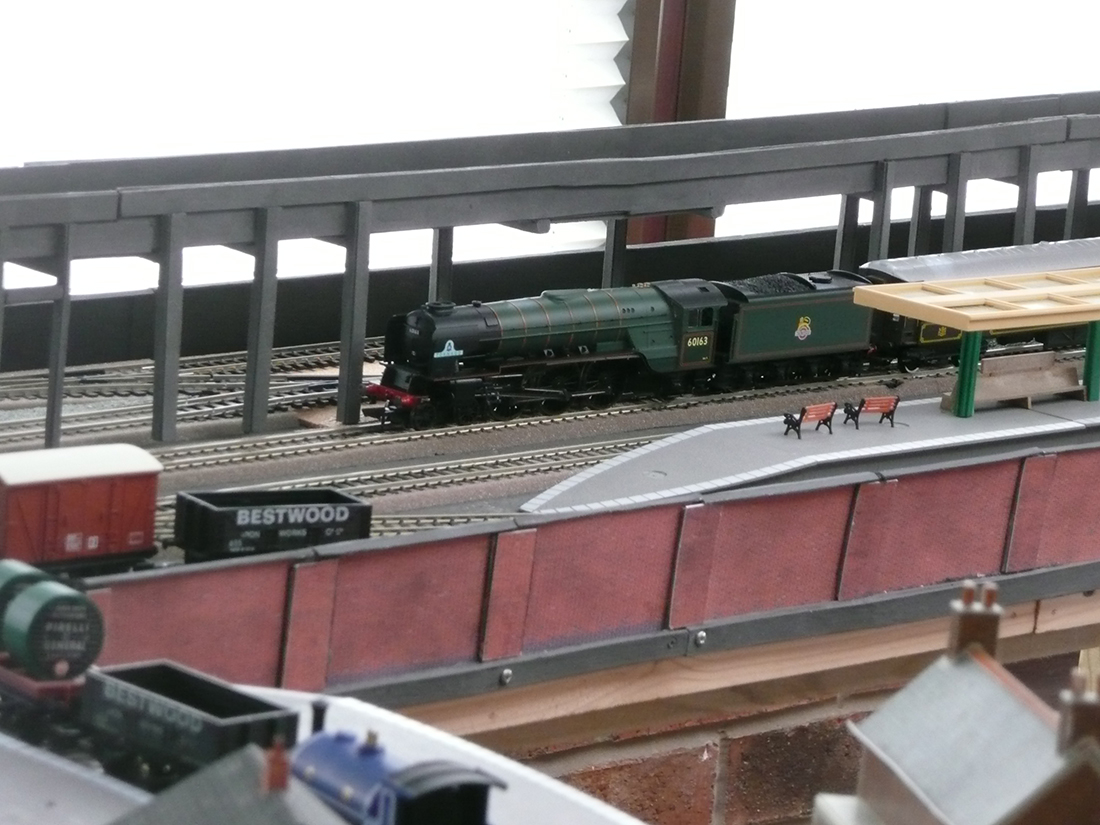
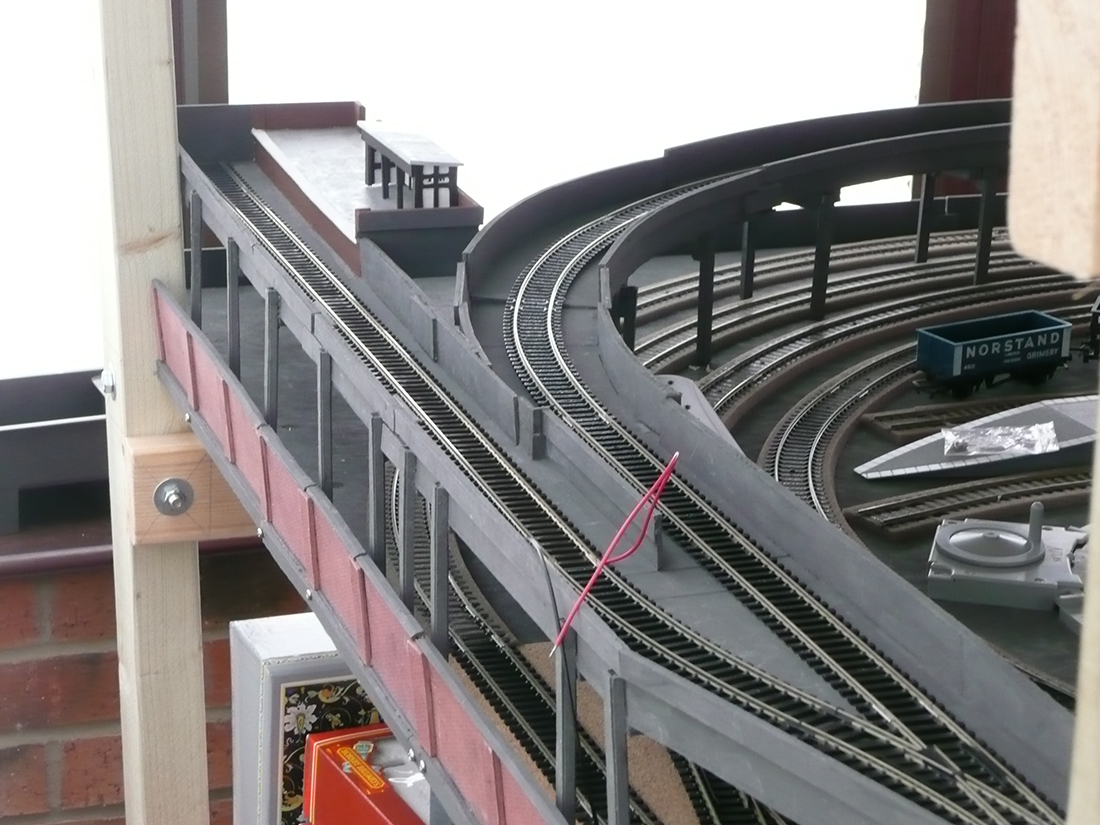
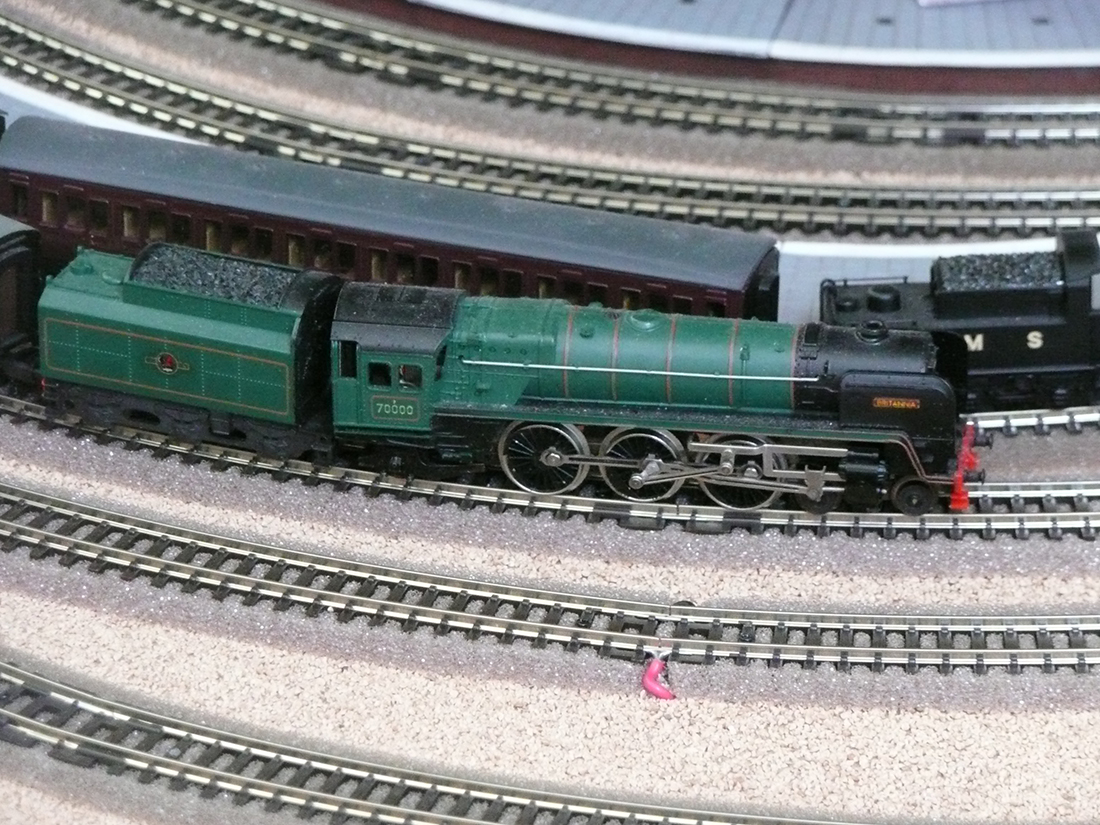
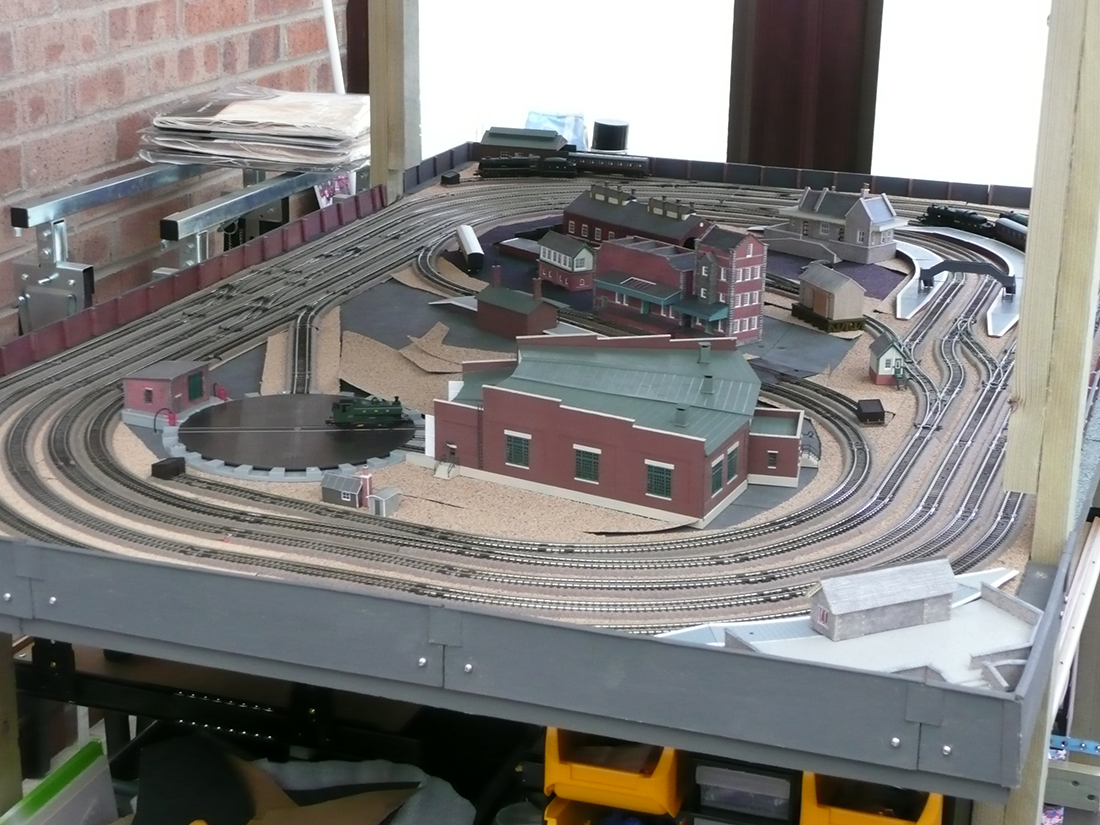
Andy’s been in touch with his military model train layout – he’s done some excellent scratch building:

“Hi Al and all the dedicated followers

In a previous post, you mentioned your fascination for wartime dioramas within the railway theme and I guess, thanks to my past, I am no different.

I have attached a few pics of just the one side of my very much in progress layout which is set on or around 16 March 1942.

The scene is a small port/harbour that has been taken over by an undisclosed Commando Battalion who are, in conjunction with the Royal Navy, preparing for Operation Chariot, “The greatest raid of all time”, namely the Raid on the Normandy Dock, which took place on 28 March 1942.

(I mention that more for the benefit of your younger followers as I do not wish to insult the older farts like myself).

Further for the youngsters (haha), this was where an old destroyer (HMS Cambeltown) was stripped down to look like a German ship, packed with 4.5 tone of high explosive and accompanied by 18 smaller craft (wooden motor launches, a gunboat and an motor torpedo boat), set sail for the French Port at St Nazaire with a mind to ram the Normandie dock and put it out of action thereby preventing the Tirpitz from having a suitable dry dock for repairs.

(Without boring your readers with the detail, Jeremy Clarkson did a superb presentation of the raid on youtube)

Back to my layout… the challenge was finding a suitable backdrop to the little dock that I have built (and herein lies a challenge I have not been able to solve, but more on that later).

Being 1942 and in keeping with the rest of the layout, I wanted a throw-back on the Victorian era and thought that an old warehouse would do the job.

But nobody had a warehouse that fitted the period in question and I had to return to the internet of things to find photographs of what I was looking for.

And I was in luck. I found two suitable options – The one being a photo of the Metropolitan Wharf (I don’t have a clue as to where it is) and another of a completely different building, a nice, old, stone building (which I guess could have been a warehouse).

So I downloaded the photos, pulled them into Photoshop, got them scaled to the right dimensions for OO and then started modifying them in terms of length, etc to fit in with my little harbour.

Military model train layouts

Needless to say, being a complete novice at working with cardboard, it took a few attempts where the demolishing company situated down the road at Stonemill Hamlet (My closest town to “Bridgeport”
were the only winners.

Eventually,I managed to construct something that I was reasonably happy with (it still has some imperfections but these are relatively minor in the greater scheme of things).

The Photos show the finished product with a narrow platform out front.

There is still plenty to do on the scene such as:

Solving the water problem in my dock (hope you like my scratch built dock gates), finish the concrete ground works, placing the figures, building the 2 Bofors guns and sandbag emplacements, the hoists above the warehouse doors, finish making the torpedo’s, place my sailors from Langley Models and so on and so on and so on…

…you guys know the drill.

Military model train layouts

Now, because my warehouse also serves as the divider between two completely different scenes, I needed to do something on the other side and found a factory that I could modify, on Wordsworth Model Railway and here I must sing the praises of the author (Mike) for the fantastic work he has done. It is a site worth (excuse the pun) visiting for any English OO modeller.

Military model train layouts

Al, you provide a far greater service than I think you imagine in keeping this hobby alive for all, old and young.

I also extend a thank you to all those contributors out there who have given so freely of their knowledge and experience as the many tips help to keep this amazing hobby affordable for so many of us.

That’s all for now and keep on trackin.

Andrew
Johannesburg RSA.”

A huge thanks to Andrew for adding to the military model train layouts on the blog – he’s been kind enough to supply me with the artwork he used to create his scene, so I will get it on the site as soon as possible.

I think it really does show in spades with a computer, bit of cardboard and glue you can create anything you want to.

Now on to Dana.

He’s used some of the prints and some imagination to help him with his wonderful harbour scene:

“My first ever Harbor/seaport site coming along with a lighthouse, sea captain house, 50+pine trees, (all my own designs – new ideas with a working lighthouse headlight), all my railroad layout scenes supported by my wife’s (Eileen’s) painted backgrounds…working on two sea vessels…stay tuned…a railroad wide short of our current D&E Model Railroad included…coming next…

Dana”

printable buildings

A big thanks to Andrew for another military model train layout, and also to Dana.

That’s all for today folks.

Please do keep ’em coming.

And if today is the day you get started on your layout, the Beginner’s Guide is here.

Best

Al
PS Latest ebay cheat sheet is here.


More of your scratch builds

Got another scratch build for you today, from Ryszard (which I’m told is Polish for Richard).

And it’s from the same print that is bundled free with the Beginner’s Guide at the mo.

What’s more – for this weekend only – the Beginner’s Guide is just $9.

I can’t think of a more fitting way to say thank you than this sale:

Thanks to you lot, with a few thrills and spills along the way, we’ve made it past 11 years of posts, pics and tips.

“Al

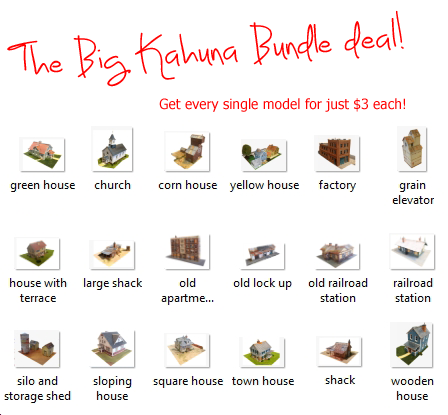
I have enjoyed your site for a long time, since I have retired had to find something to fill the spare time, I purchased one of your (Big Bundle Deal) and printed out one of the Engine sheds among many others.

I have created my own version of the Engine shed as shown in the pictures.

With added and above doors are my creation of lamps, LED lights.

Scratch built table and chairs with tools.

Interior detail.

Side walls have ventilation fan vents.

I have dreamed to set up a model railroad layout for a long time and when I started to make it a reality one thing came up after another, like kids, education, weddings and now I have time and room to finish the dream, but not much of a budget.

Best to all talented people like Hall of Fame Dave, talented hobbyists and their many beautiful layouts.

Ryszard”

Now on to the very same Hall of Fame Dave, who has also sent this vid in:

“Hi Al,

just uploaded video showing building that Railway cottage from your site, turned out not bad, and it was easier than what I thought, just a case of getting a decent piece of card to put the print on, then cutting to size.

Dave”


A huge thank to you Ryszard and Dave.

Dave built the stone cottage that is in the store.

Ryszard built his engine shed from the print that is free with Beginner’s Guide.

What’s more there are 7 other prints bundled free with the Beginner’s Guide too.

If you missed yesterday’s post, you can see John’s engine shed scratch build and Charle’s stunning barn build.

That’s all for today folks – but please don’t forget this silly sale is for this weekend only.

It will disappear just as quickly as it arrived, so if you want to bag yourself a great deal, please grab it while you can.

Best

Al

John scratch builds an engine shed

I have some fine scratch building and model making for you today.

John has scratch built the below engine shed, just using the printable buildings that come with the Beginner’s Guide.

And Charles has built a barn – straight from the print (but look at it, it’s a work of art).

Both of them are free with the Beginner’s Guide.

I wanted to have a sale just to say thank you to each and everyone of you.

I had some turbulent times with blog over the years (particularly last year), but thanks to you lovely lot, I’ve muddled through.

So thank you. Really.

Now on to John and his wonderful scratch build:

“For those who have never built one of Al’s wonderful paper print out kits, may I not so subtly suggest a small investment.

I have been a model railroader over 50 years now and nothing has helped me improve my modeling skills like Al’s print out kits have.

It was about 8 years ago that I built my first one of his kits. I was building a small layout and I needed an enginehouse. There were not any commercial kits that fit the space I had available.

As luck would have it, I fell across Al’s site and he was having one of his “Silly Sales”. I made a purchase of his engine sheds… And one fit my space with only a small adjustment in length.

My first effort was a disaster but I reprinted the model (you can print as often as you want) and my second effort was a success – one that Al shared on his site.

Since that point I do not believe I have built any plastic kits. Recently I decided to return to that first build and see what I could do with the same kit again.

Here are photos of my first effort and my most recent one.

Al seems to get complaints that his kits do not come with instructions. There may be some very good reasons for that. Way back in the 1950’s there were few model kits available. Every layout seemed to use the same kits in the same way.

There were a few exceptions, individuals who saw the kits as a collection of parts. And an opportunity to build their own unique structures. It became a bit of a joke that when I would build the models that I built from Al’s kits. I would always tease him by saying that I followed the instructions to the letter. One of these days I may actually build one of his kits as he designed it…

As to myself… What I do, anyone can. I do not make videos because I have a face for radio and a voice for silent movies.

My fingers are about the size of breakfast sausages and just about as dexterous. A lack of fine motor skills plagued me for years in both music and sports. If I were to choose an actor to play me in a movie of my life it would be Buster Keaton.

All that said… The best modeling tip that I ever got came from the inscription in a calculus text by Silvanious P Thompson:

“What one fool can do, so can another.” Ancient Simian Proverb..

Here is a bit of a “How To” on how I built my latest shed.

I began with the front wall. The kit is for a one road shed but I wanted a two track shed.

A little creativity with a razor blade and a straight edge and I had by new wall.


Once I had the basics of the front wall formed, I needed to clean things up. As part of the process I would remove some of the more British design elements and give it more of an American industrial look.

Engine houses like this one were common in the later part of the steam era. This was especially true in the post World War 1 era.

To clean up the wall I cut the pieces that I wanted from a couple of prints. I only wanted the “corrugated metal” parts. And I wanted to cut them to simulate real sheets of corrugated iron.

Layering also gives more dimension to the model. It helps get rid of that flat printed look.

With the front wall basically done, it is time to progress to the back wall. I used the completed front was to make a pattern for the back one. Then I made the necessary “adjustments” to the kit walls.

As I shingled the walls with my little corrugated pieces, I squared the windows as well.

American windows do not generally have the arched top that British and European windows seem to have. We like rectangular pieces of glass… Easier to cut and easier
to replace!

I also “framed” the windows to clean them up. This took a bit of “scratchbuilding”.

I used card that I painted to make the frames… In the past I would have cut these out using the kit parts… Great if you use an X-acto knife or scalpel… Much more challenging
when using razor blade and straight edge.

A quick note here on glues… I use Spray 77 to glue the print to the card that I salvage from soda can boxes or other food packaging. I use Aleene’s Tacky Glue for the rest of
the assembly.

The side walls were pretty easy. I did not have to do any radical adjustments.

As I built the side walls I shingled them as I did the ends. This process kept a consistent look and squared the windows as well. Again I framed the windows with the scratchbuilt parts for framing. Single thickness of card for the sides and top of the window frame, double thickness for the bottom of the frame.

Once all parts were complete, I cut and sanded the corners to something that approximated a 45 degree angle to make for a clean assembly.

I also added a square of basswood to strengthen and square the corner. I would later paint these square stiffeners a light grey to help hide them.

Sharp viewers may note that I also made copies of my walls when I completed them and glued the copies to the inside of the walls to give an interior.

When I built my first model from Al’s kit, the same kit that I used here, I noted the plain cardboard through the large open door of the shed. “No Bueno” (No Good). Seeing the cardboard destroyed the illusion. An interior was essential. And I have added interiors to more and more of my models.

With the basic structure assembled, I added an inner roof.

This inner roof stabilized the structure and allowed a thinner roof on top. The inner roof is two thicknesses of card and the visible roof is only one thickness.

While this is an engine shed… Look closely at the back of the shed. I see an industrial building lacking a shipping door!

The beauty of Al’s kits and the reason they lack instructions is their versatility!

The engine shed kits make great factory and industrial buildings as well.

One challenge with the print out models is that they can look “flat”. The more texture that you can work in, the more detail that you add, the more the model “breaks” the wall and creates the illusion of reality.

On this model I began by adding ribs to the roof. These were cut from some grey card stock that I had and then I weathered the card with a soft pencil… rubbing the graphite in with my
fingers.

The addition of roof vents that followed the pattern added even more visual texture.

One clear feature of American engine sheds is that they have doors.

Many reasons for this feature. My doors were made simply. Grey card glued to each side of a single thickness of my food box card.

The soft pencil was again used to “weather” the door and give visual interest. The four doors were done at the same time.

A bit of black panted card from the previous detailing (the windows) made the hinges. I have used card for hinges before where the doors are not likely to be moved. Often. It works.#

I do have some new ideas for hinges and windows that I cannot wait to try… But those ideas are things that I will need to practice before I incorporate them into a model.

I am also looking for a way to corrugate the card for the sheets of “metal” to add even more texture to a model like this one.

“Life is a journey, not a destination.” Each completed project gives a new base to move forward from. A new foundation of knowledge and skill to build on.

With the doors added, this shed is perfect for any American railroad using diesels.

From the 1950’s until the early 2000’s. The use of these sheds has seemed to decline over the past two decades. Buildings are a maintenance item that eats money. They now seem to be used where no alternative exists.

My goal was a steam era building. For a steam era building I need smoke stacks. I made my stacks from a painted soda straw.

Structures do not need to be expensive. I built this model over about a week. An hour or two each night. It has been a lot of entertainment, a lot of pleasure, all at a very small level of capital investment.

“Al,

Great project and a lot of fun.

The barn is on it’s way to the Railroad Club.

Charles”

(Click to enlarge pics).

A huge thanks to John and Charles.

What I like most about the print out scenery is how one comment in particular always surfaces: they are fun to build!

They created at HO scale. For N scale reduce the print size to 54%.

If you fancy trying your hand at one of the models, now is the time to have a go.

The engine shed above, and the barn, are free with the Beginner’s Guide.

Course, I’m biased, but the Beginner’s Guide on its own is a steal. But with these free buildings it really is a silly deal.

And best of all, with the buildings, you have enough walls, windows and textures to have a lot of fun scratch building too.

You can seem more of the printable buildings here.

That’s all for today, folks.

Please do keep ’em coming.

Best

Al

PS One last thing – please do leave a comment below if you’ve made any of the print out models before, or you enjoyed the Beginner’s Guide. I’d really love to hear what you think.

PPS Yes, the prints can be enlarged to any scale, but anything bigger than HO and you’ll need to take them to a print/office shop, as a normal home printer isn’t big enough.