Brian’s been back in touch with his HO scale model sawmill.
(You can see more of Brian here: Hall of Fame.)
“Hi Al, hope you can use this for your blog.
I have been off the layout and assembling a kit for a piece of real estate on the logging line.
Previously you posted my article on building an engine house by Fine Scale Miniatures and now I am using the same company to build this sawmill. I have 5 more of this manufacturer still to build. My layout is based in the 1930’s hence a lot of wood buildings.
There are a few people out there that have said – how can you build a collectors item when they are worth a small fortune. I do not buy collectors items to sit on a shelf, I buy them and assemble them to put on my layout where they will serve a purpose. (A perfect example of this was my Red Hook Wharf limited run kit of 300) 9 buildings in one kit. (See a previous posting)
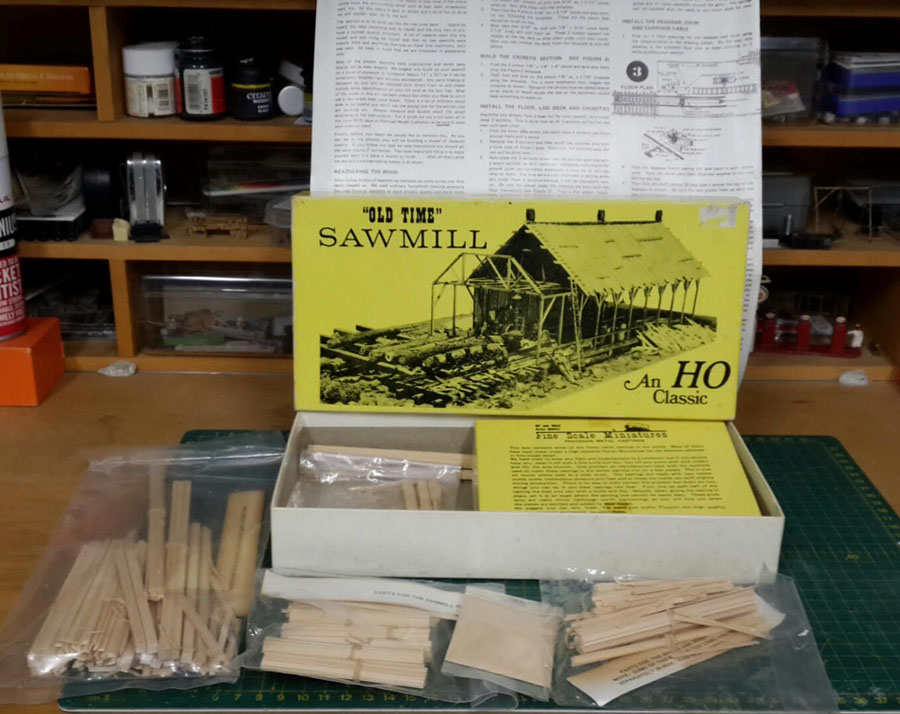
This is the kit (below) and what it looks like when opening the box. A lot of wood and metal castings.
First thing to be done is do I paint or stain the wood? The instructions suggest painting it a faded red.
I opted to stain the wood as sawmills were built for the specific area that they were serving and when all was said and done, were disassembled and moved elsewhere.
I mixed up a mixture of acrylic thinners and a weathered black acrylic paint (btw: I only use acrylic paints – no fumes and cleans up easily with water) I put the mixture in a tray and put all the wood in it to soak. Some wood is harder than the others thereby giving a different shade which is what I wanted.
After a short period, I took them all out and placed them on paper towels to dry. By using acrylic this way, the wood does not warp. The whole building is assembled using a fast setting white wood glue (Alcolin cold glue) It dries clear if you happen to mess a bit.
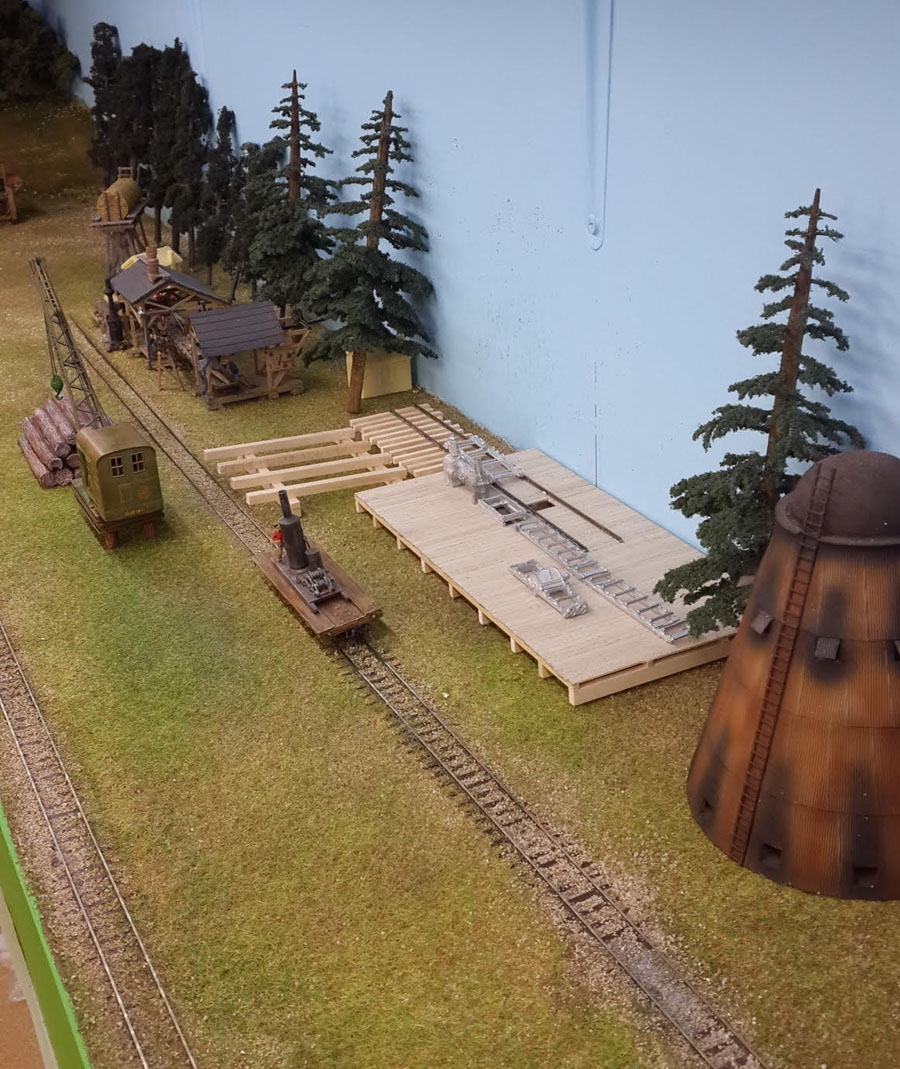
Next, I had to measure the area where it would be situated and then figure out how to modify the kit to suit. In this case, I had to narrow the the log loading deck as well as shortening the main work deck. The problem then arose on how to get the machinery to fit. Very simple after some thought, mirror image it vertically and hey presto, everything fitted very well.
(Below) Here is where it is going to be placed. Note: trees are temporary and will be placed once the sawmill is complete and in place.
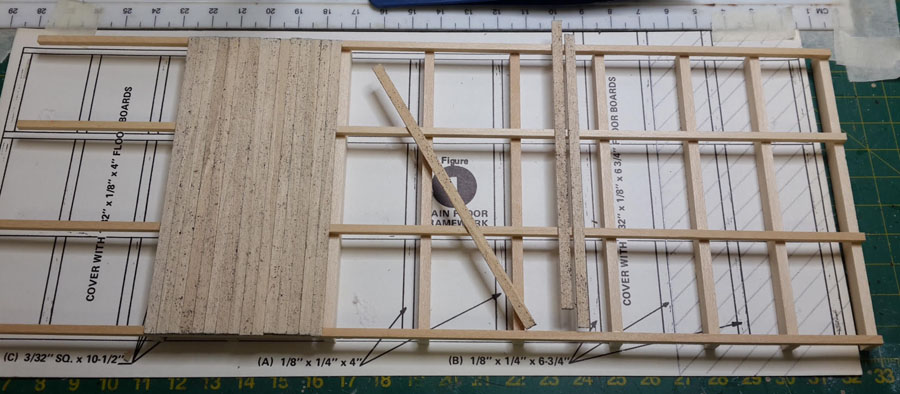
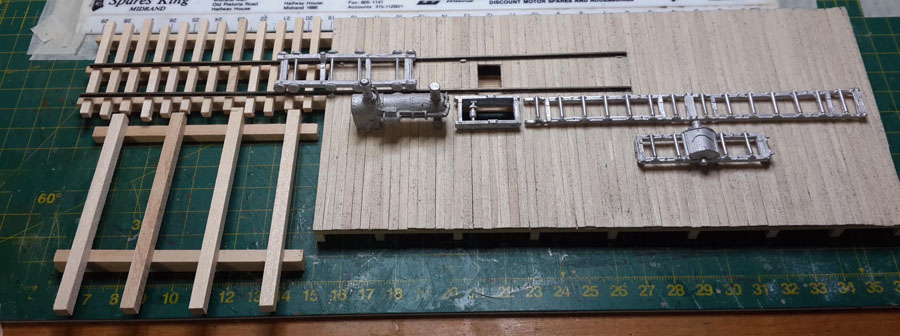
(Below) Here the floor is being assembled over the supplied template plank by plank on the already assembled deck. Time consuming but worth the effort.
(Below) After measuring and cutting the holes for the machinery, the rail (I opted for code 70) for the log carriage was measured and glued in place and the metal castings test fitted. (Minus the legs)
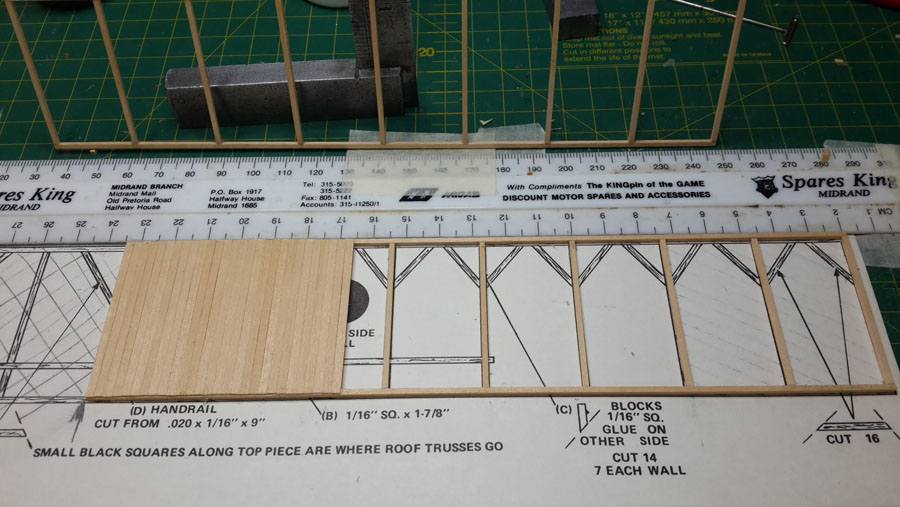
(Below) The rear planked wall is being assembled over another template. Note the pencilled crossed out area on the left to remind me where I must stop with the planking. Once complete, I turn it over and add the top corner bracing to each upright.
(Below) Here I use my very handy magnetic right clamps (available from Micro Mark in the USA) to hold the building together to see if everything is in it’s correct place.
You will note that the log loading deck (left) has been given the “well worn” look before getting a heavy wash of the stain. This section is not under the roof cover and is open to the elements.
The roof (double planked) behind the HO scale model sawmill has been completed and will have the roof trusses added once the main building is all glued together. It will be removable when finished.
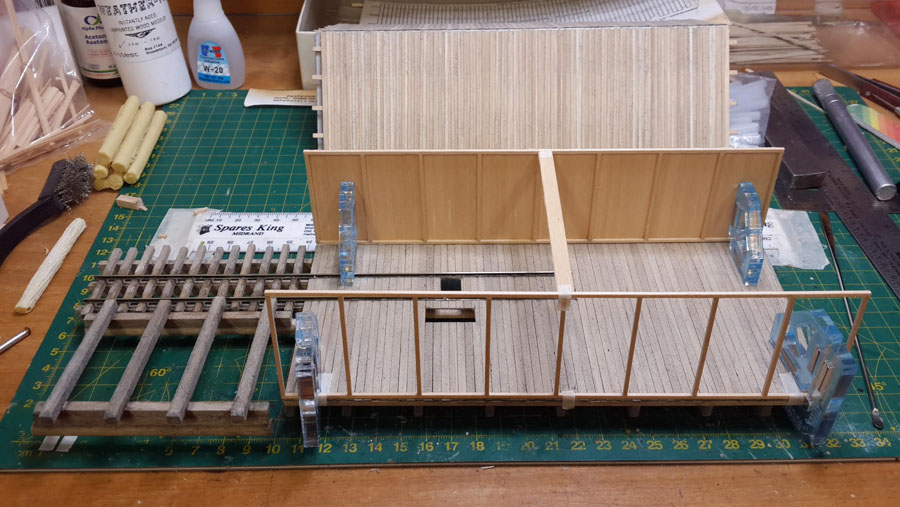
A note: I purposely stain the wood a bit lighter in the beginning for the reason that if I need it a shade darker, I add another coat of stain the get the right color. It is easy to darken a color but not so easy to lighten it once it is too dark. I was not happy with the too lighter color floor in the second photo and added a second coat of the stain as seen above. This is something I will always remember having learnt from that mistake in the past.
To get this far in the construction of this kit, it has taken 25 hours of pain staking board by board assembly.
When I get further with the construction, I will send an update with more photographs.
Regards
Brian”
I do enjoy seeing Brian’s kitbashes – he is breathing a lot of life into his HO scale model sawmill.
Now on to Joe.
Joe has very kindly sent in another installment (his last one is here).
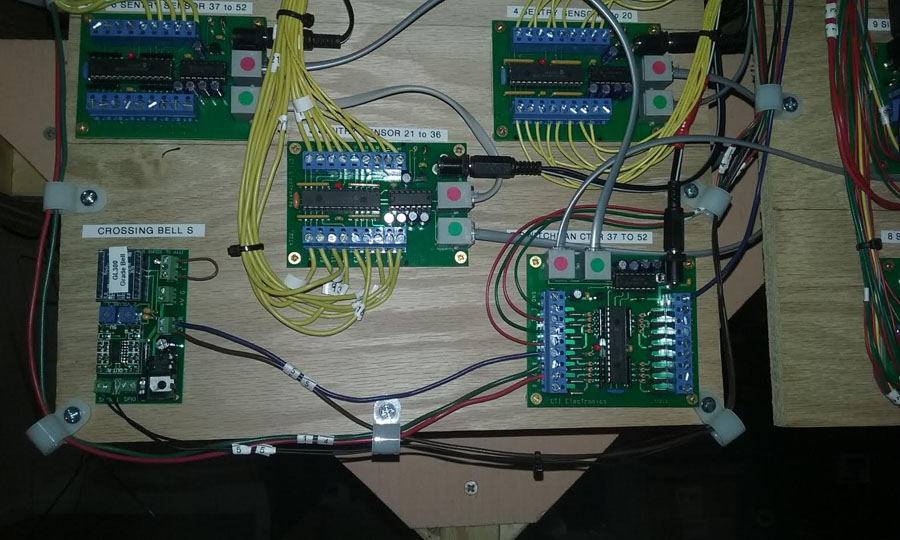
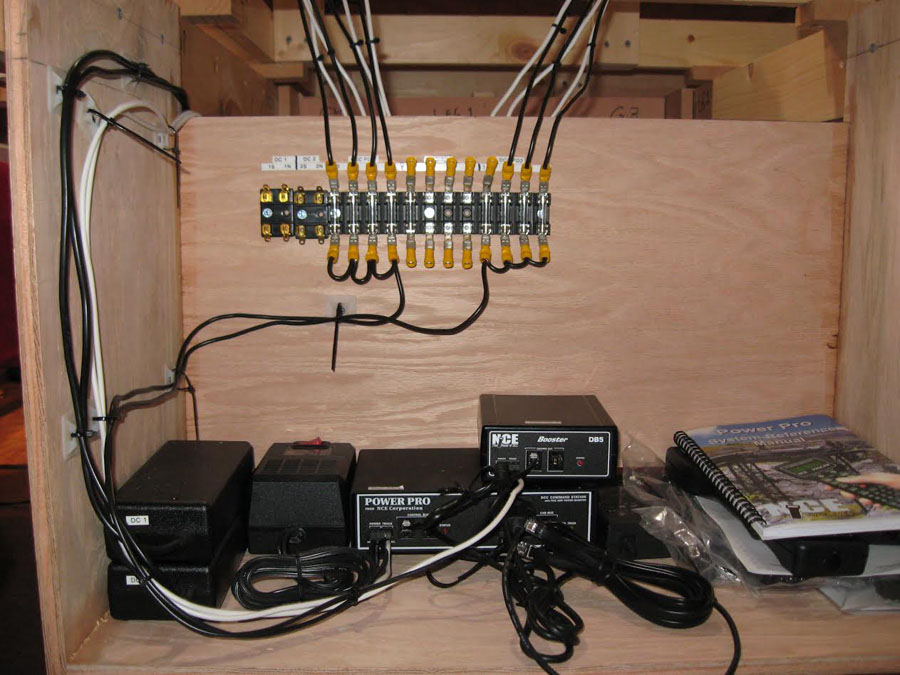
“This installment discusses the design concepts and control of my layout. I use the NCE DCC system for train control. My accessories are powered by two 12 volt 10 amp power packs, one for turnout and panel light operation, and one for all other accessories.
The layout was designed to simulate authentic railroad operations. It consists of a freight main line, a passenger commuter service, a freight classification and storage yard, industrial sidings, and engine and rolling stock repair and servicing facilities.
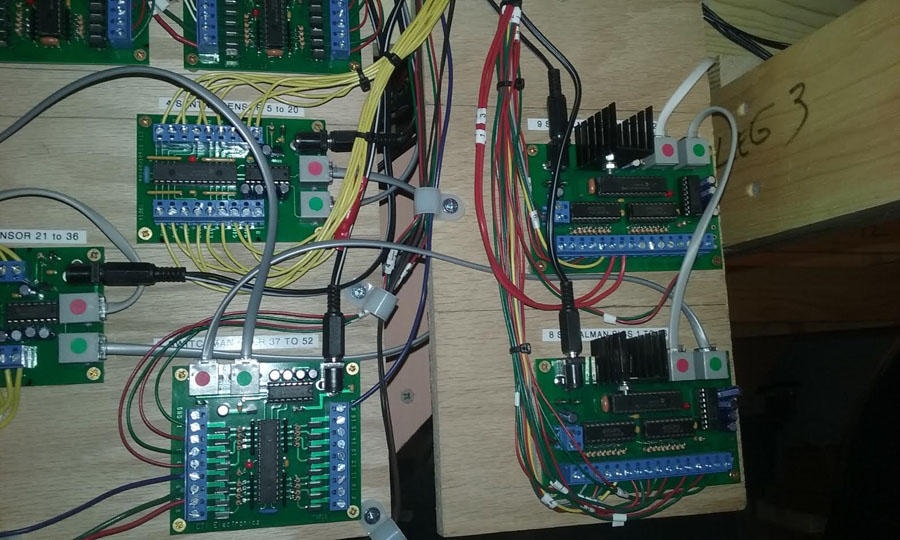
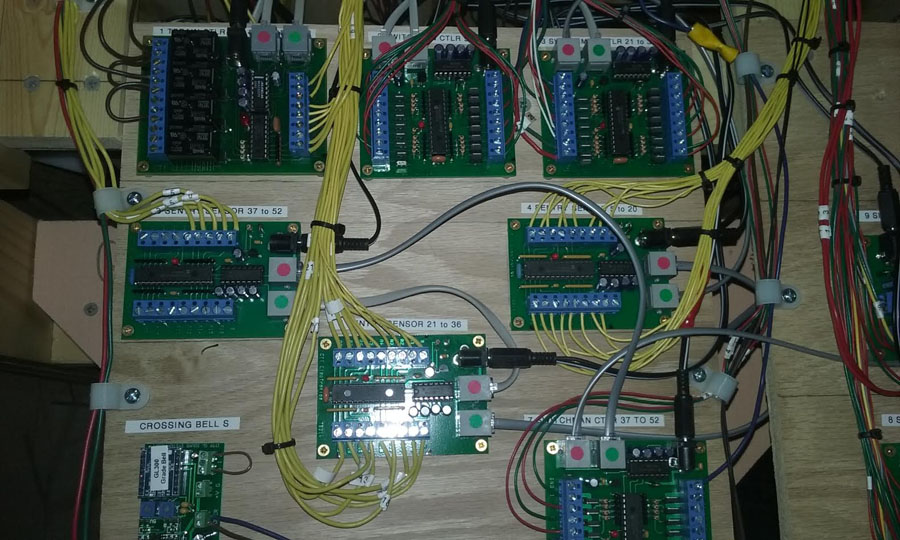
The freight main line and passenger commuter service are managed by computer and are fully automated. These sections use CTI’s Train Control Language (TCL) software and circuit boards and network. This application is quite capable and has extensive software functions to emulate real railroad operations, including blocking, signaling, etc. Non-railroad action such as street and building lighting, traffic lights, beacons, are all a cinch using this software. You will be amazed at the automation you can build with this application.
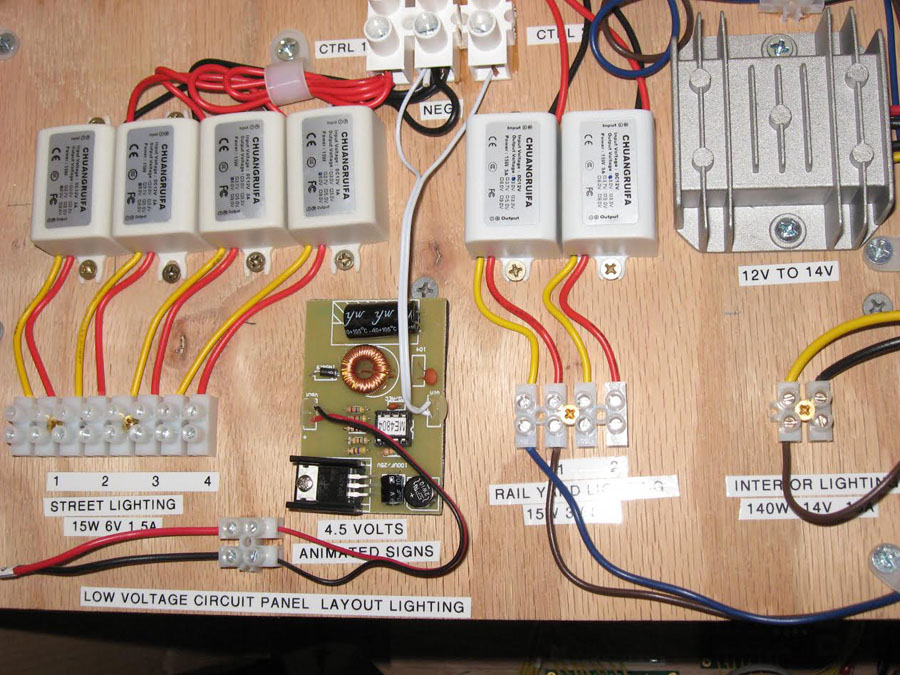
Many accessories require something lower than 12 volts, which means the use of resistors. Instead of spending considerable time soldering resistors on hundreds of accessories, I built a low voltage circuit panel which includes 3 volt, 4.5 volt, and 6 volt sub-circuits.
I have also built a 14 volt circuit for light bulbs that operate better at 14 volt than at 12 volt. You can see this panel in one of the photos. Finally, the entire layout is divided into numerous fuse-protected circuits which help minimize problem resolution should a short or mishap occur. All wiring is color coded to denote function, and I apply number tape on runs longer than three feet. To keep track of all the electrical assemblies, I created an operations manual to which I refer should any trouble shooting be required.
Because the layout was built to be disassembled, I have used Hitachi connectors extensively at each section boundary. If and when the layout would need to be moved, it would be a simple matter of disconnecting these connectors.
My next installment will include landscaping.
Thanks,
Joe”
Stunning stuff. A big thanks to Brian for sharing his HO scale model sawmill.
And thanks to Joe too – if you want to fast forward to his next missive, it’s here: 27×10 HO scale.
That’s all this time folks. Please do keep ’em coming. And if it’s got you all fired up, don’t forget the Beginner’s Guide is here
Best
Al
PS Latest ebay cheat sheet is here.
PPS More HO scale train layouts here if that’s your thing.