Weathering rolling stock

Got this in from Sam on weathering rolling stock – and it’s a cracker too: looks great and saves a load of money:

“Hi Al,

Thanks for the constant flow of info – really gets me inspired when I can’t really be bothered!

I’ve been working on a ‘how to’ guide for wagon loads, inspired by some of your readers. Thanks to many useful posts on your site I have been encouraged to experiment with many aspects of model railway systems.
weathering rolling stock

Due to the expense and often the lack of realism with plastic ‘loads’, I have come up with a fairly easy and certainly very realistic method of creating bespoke loads for your rolling stock. Hope you find it useful.
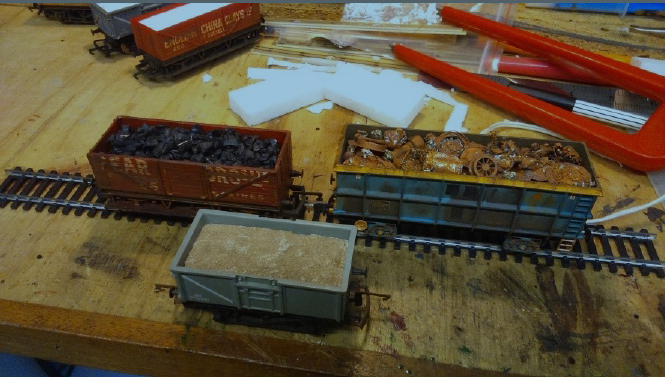
Weathering rolling stock

All you need is some expanded polystyrene, cling film, a hot wire cutter and of course some empty wagons.
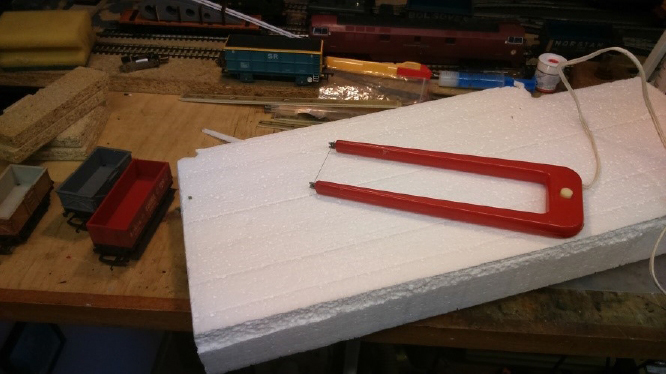
polystyrene for model train

To cut the polystyrene neatly and accurately I use some wooden blocks to hold the wire at the correct height then simply push the block through.
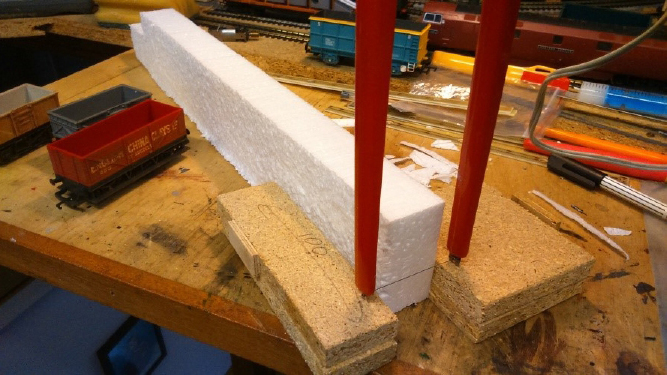
cutting polystyrene

Use a metal rule to guide the hot wire cutter when trimming to length.
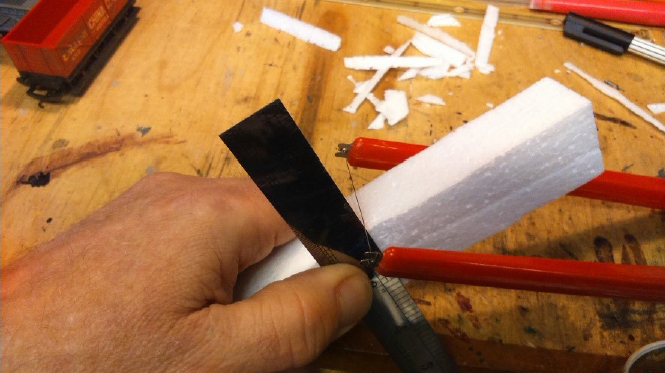
4

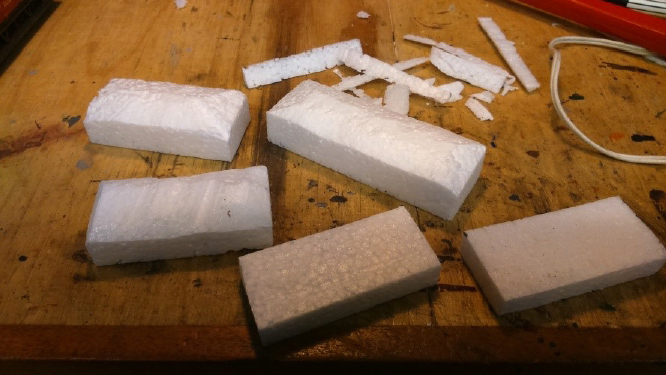
Shape the blocks or leave square depending on your load.
5

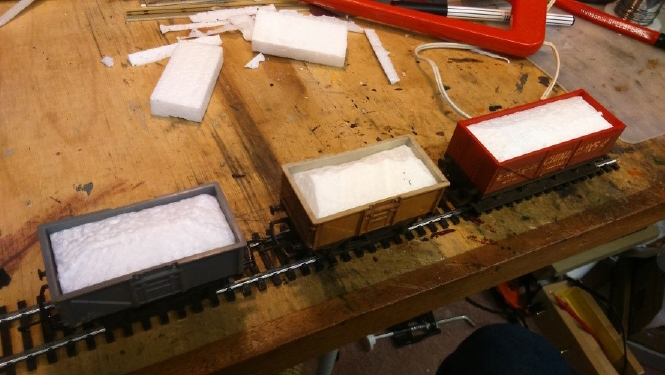
Make sure they fit snuggly in your waggons but not too tight.
Weathering rolling stock

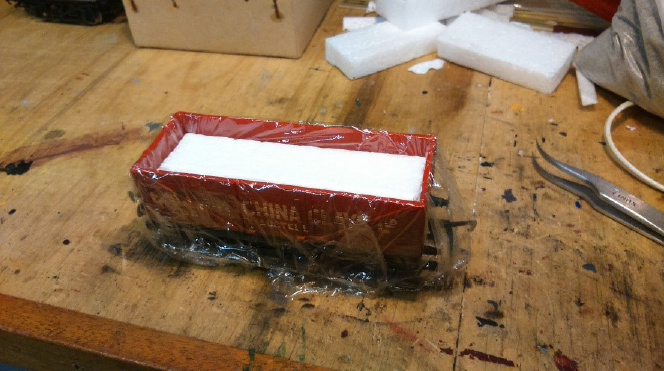
Lay the cling film over the wagon and carefully push the polystyrene block down into the wagon.

Wrap the excess around the bottom taking care not to pull the block back out. This will stop the load getting stuck to your wagon (unless you want a permanent load!)
Weathering rolling stock

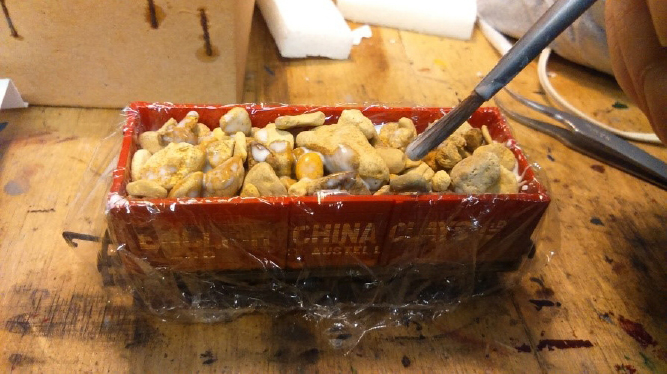
Add your load.

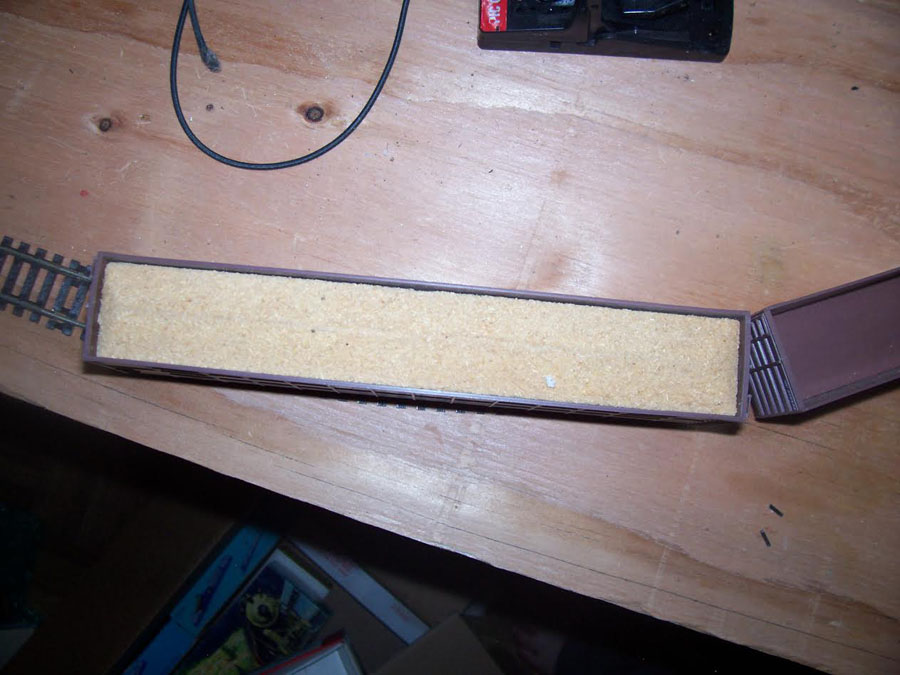
Stones, large coal pieces, rocks etc. can be dropped onto a film of PVA, then watered down PVA can be painted on to hold the load in place.
rolling stock


Weathering rolling stock:

Leave to dry fully. This has taken a couple of days in my experience.

You may find although the top is dry you will need to wipe off any PVA that has seeped under the polystyrene block.
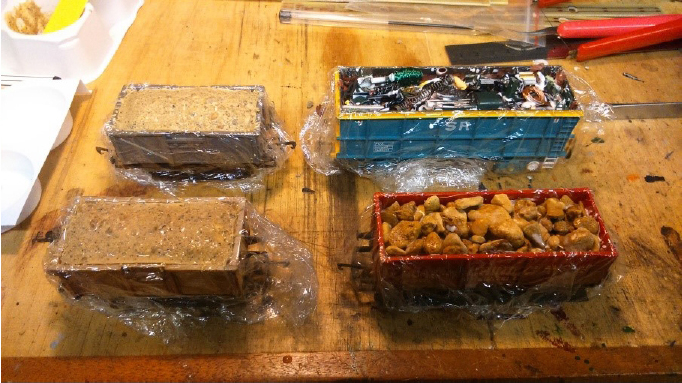
9

Maybe best to leave to dry some more out of the wagon.

You can touch up any visible white areas of the underlying polystyrene at this stage with acrylic paint and any other acts of realism!

Once dry you can fit to your rolling stock and enjoy.
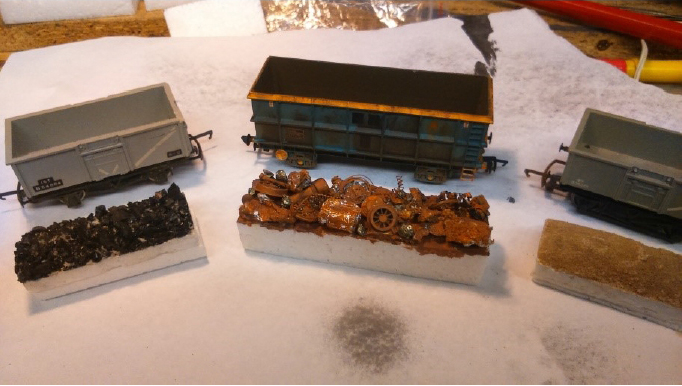
10

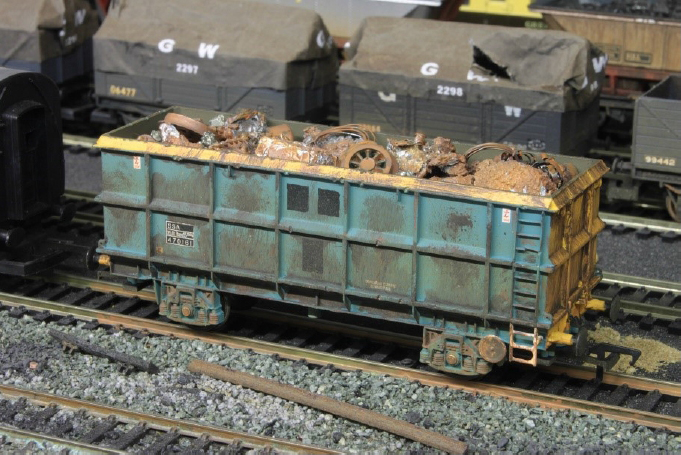
The scrap wagon load was made with bits and pieces from my ‘scrap’ drawer along with bits of wire, old model car wheels, chain and pretty much anything you have. Once dry I painted it with shades of rust coloured acrylic paint.

Weathering rolling stock

Sam”

A huge thank you to Sam for taking the time to share his weathering rolling stock ‘how to’.

You can see more weathering posts here: Weathering model trains.

And don’t forget, there are lots more like this in the Beginner’s Guide.

That’s all this time folks. Please do keep ’em coming.

Best

Al

PS
Latest ebay cheat sheet is here.



Small space model railway

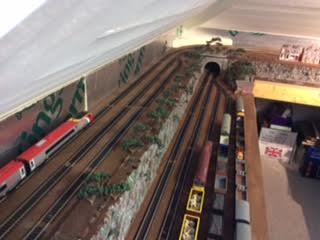
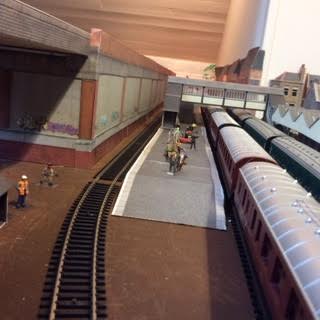
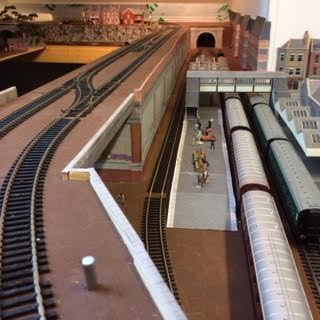
Got some small space model railway pics for you today – and some not so small:

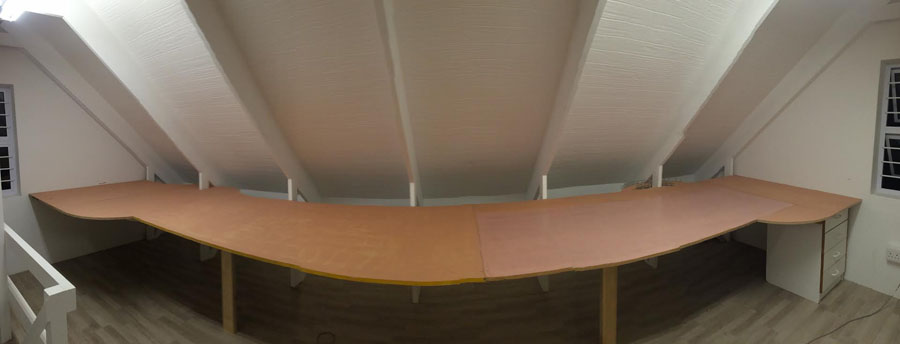
“Hi Alastair, I am enjoying your blog tremendously and learn something every time. I have been collecting model train stuff for 30 years and only recently unpacked everything that I have bought either new or at second hand dealers or in my travels around the world. So I have built a loft room to lay everything out.

The layout will be 7 metres (23′) by 1220mm (48″) and either end the width increases to 1600mm (63″) to facilitate nice easy curves. I am attaching a picture of the layout. It is a panoramic photo so appears round in the front, but it is staright. More on that later.

For the last 6 months I have been repairing houses, sheds, and a lot of the things that I have, but not yet laid a track. I will be working in HO scale, and my theme will be a real INTERNATIONAL railway, with engines and coaches from Germany, Belgium, Holland, USA, South Africa etc.

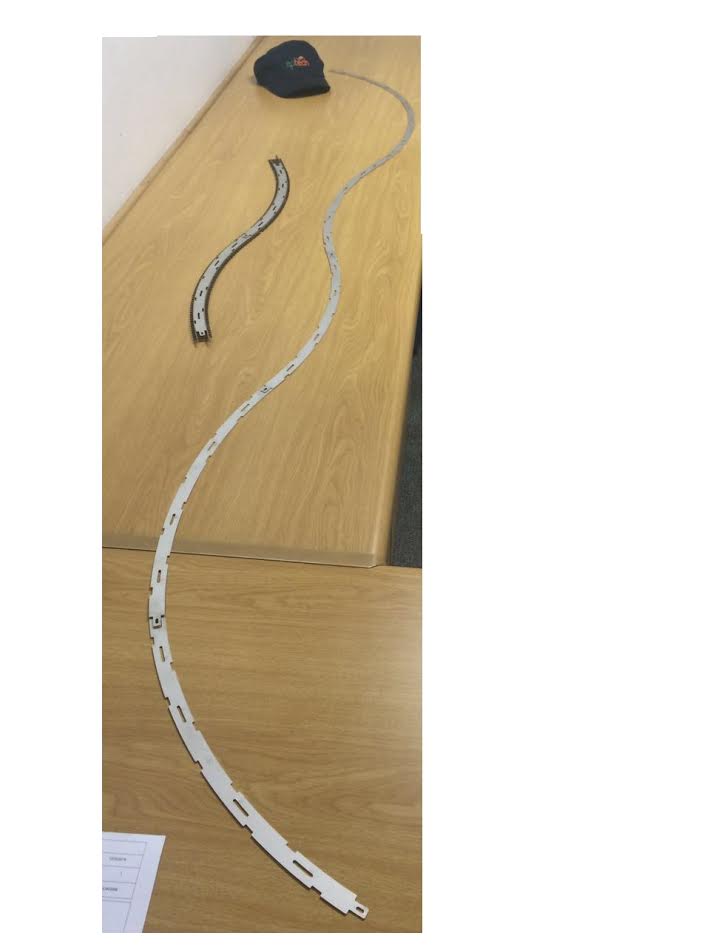
But I wanted to share something that I have had laser cut and they are track guides for flexible track, which enables you to make any layout curve to the exact degrees that you need. So I have made 15″, 18″ & 22″ guides. See pictures attached. Soon I will be starting my layout and will update as I go along.

Greetings from South Africa.

John B.”

small space model railway

small space model railway

small space model railway

“Hello Alistair

I wish to thank YOU for all the emails I have received from you over the last two or more years on the matter of model railways.

I only started my real interest in model railways as I approached my retirement. I am resident on Alderney in the Channel Islands (the only Island with a running standard gauge railway) where I have trained to be a Train Guard. Great fun.

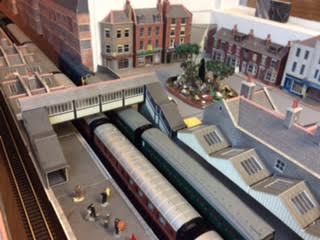
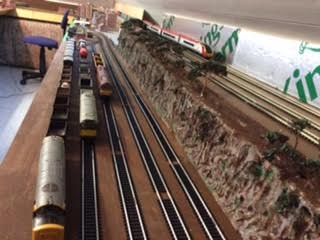
My wife and I have decided to return to live in the U.K. after nearly 11 years here so I have had to dismantle the whole layout in preparation of the move. We hope that next year we will be able to sell our home and move back, when I will start to rebuild my model railway. (22ft x8 ft).

I will send a couple of pictures of my now defunct layout following this email.

Keep up the good work and thank you again

Stuart Heap”

1

2

3

4

5

“Alastair,

I am a first time writer. I have read several posts and looked at several videos. I think all the ideas that you pass on are great. You provide a service we all need.

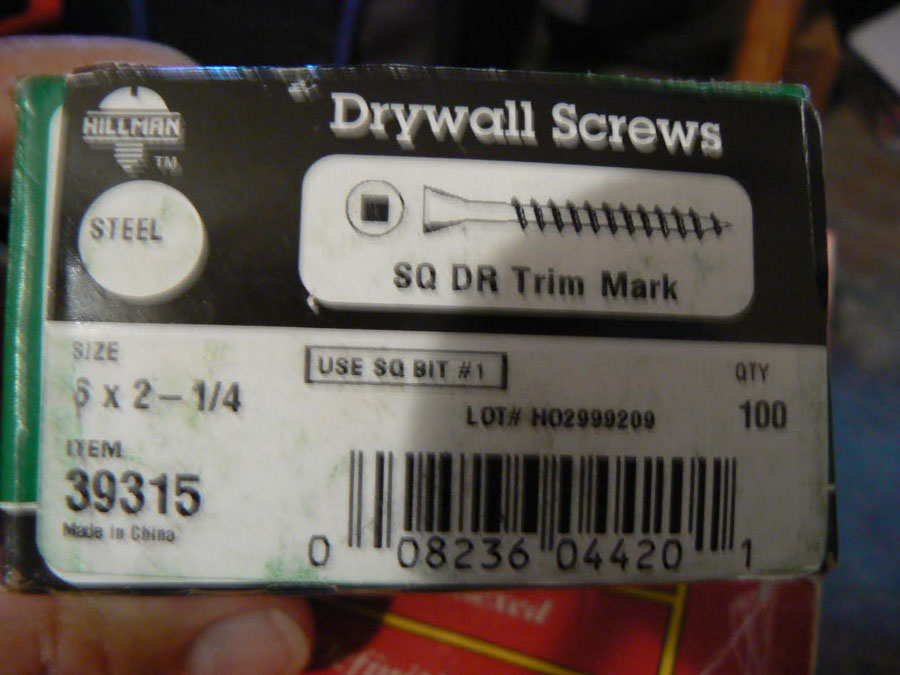
Now for my great find. I have seen many railroaders struggle with attaching the one inch foam to the base board and then the track to the foam. Gluing is a messy process to say the least. MTH track requires a #4 screw at least 1 3/4″ to 2″ in length to accomplish this. If anybody has found a #4×2″ flat head wood screw please let me know. I spent several hours on the phone trying to find them.

Finally a great guy, Skip at Copperstate Nut and Bolt in Flagstaff, AZ came up with a great solution. Since he was about 100 miles away I checked my local ACE Hardware store. And they had what he suggested. The screws are called SQ DR Trim Drywall Screws. The product number is 39315. They are a little longer then needed but look good. I have attached a photo. I hope some of the guys find this use full.

Best regards,

Terrence

Prescott Valley, Az”

1

2


“G’day Alastair,

I used to be a HO man 60 years ago, I’m into 5 inch gauge these days, but I still like to look at the beaut models and dioramas you present. Dangerous Dave is my favourite.

Keep up the good work.

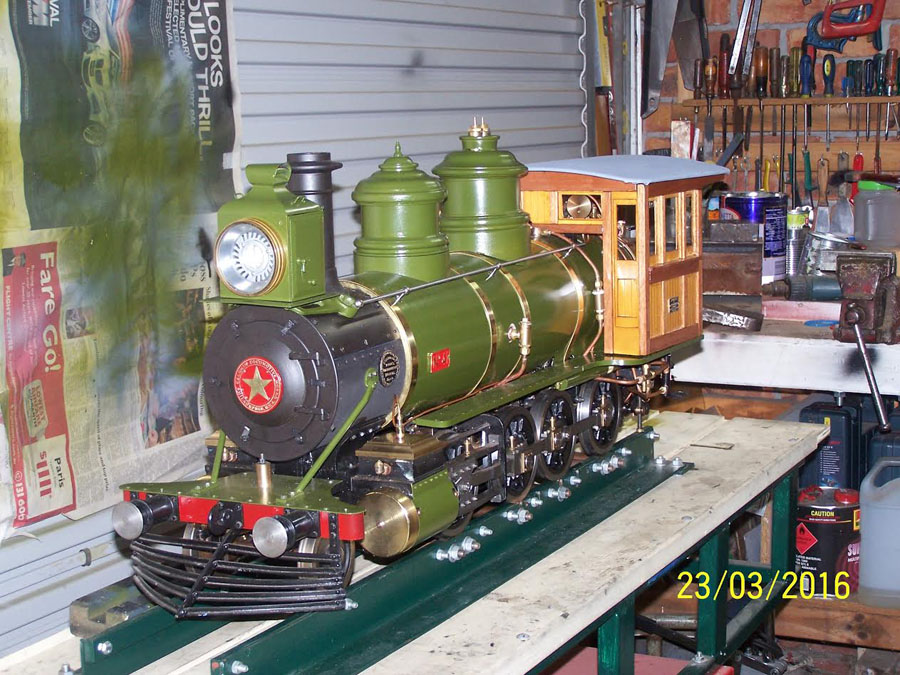
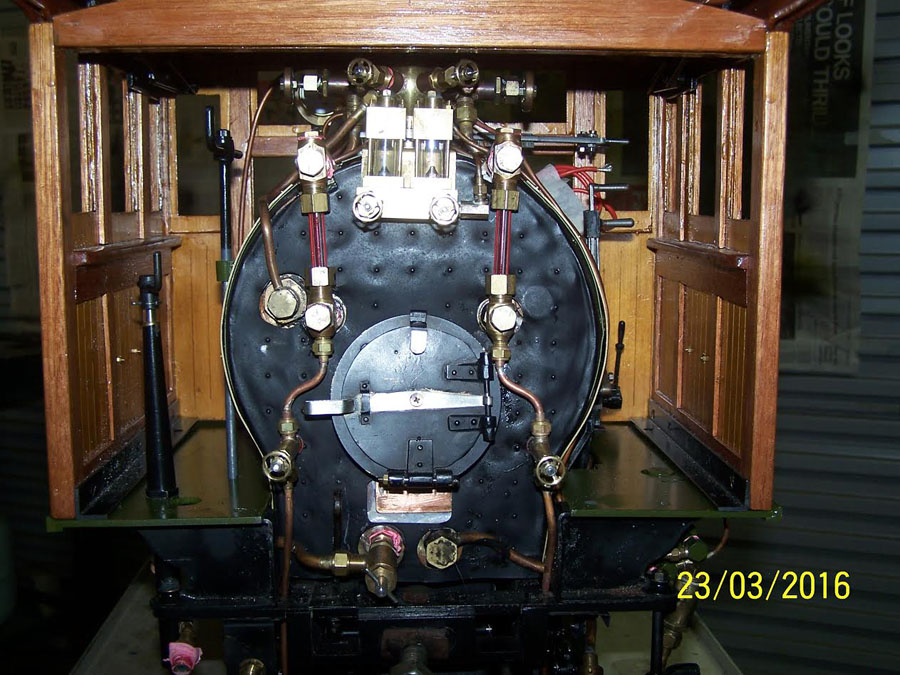
Attached two pics of my latest creation, 5″ gauge live steam model of a 3′ 6” gauge Queensland Railways 2-8-0 purchased from Baldwin in 1879. I hop they are in fact attached. The computer is playing up.

The loco is virtually complete but the tender is a work in progress. Began building in about 2008!

HO is certainly quicker.

John

Wandong Live Steamers

Victoria, Australia”

1-scratchbuild

2-scratchbuild

A huge thanks to everyone today – loved the fact the John has been building since 2008. I think that’s what this hobby is all about, doing a bit here and a bit there.

I pondered over publishing John B’s pics – not much to see at the mo, but then I thought, no, that’s the whole point: John’s made a start. And I do love seeing the progress pics.

Talking of which, here’s one that got away – I never heard from Tod again. Such a shame.

That’s all this time folks.

If you’re feeling inspired and want to make a start, don’t forget the Beginner’s Guide.

Please do keep ’em coming. Just hit reply to any of my mails if you’d like to share anything.

Latest ebay cheat sheet is here – still updated daily.

Best

Al

PS Thank you so much for all the nice replies to my last mail – I really was bowled over by them. Thank you. I’d like to reply to everyone but I’m struggling to do so. Please bear with me.

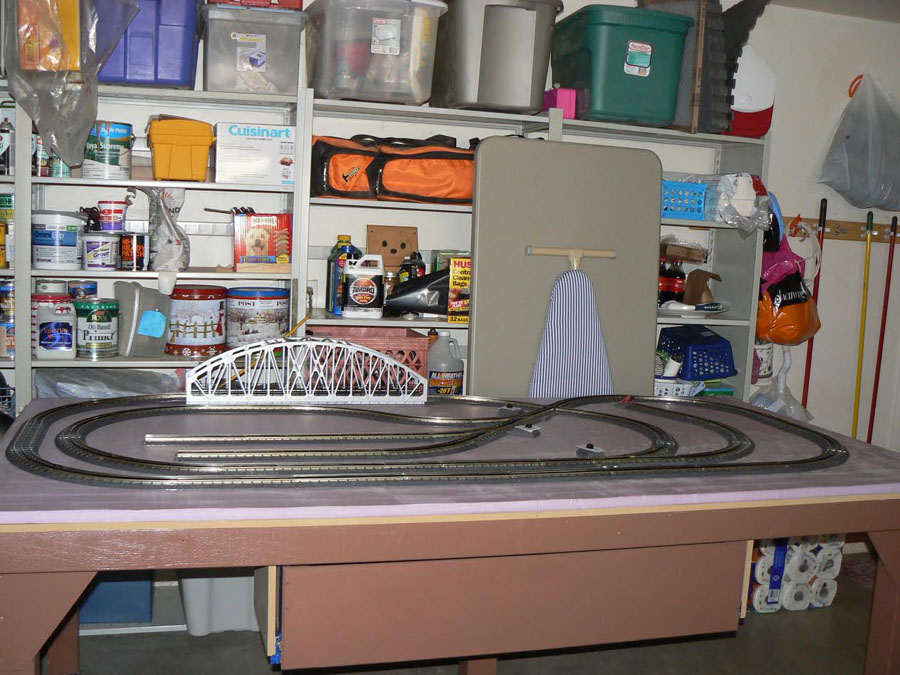
22′ radius curved track

Dan’s been in touch with a question on 22′ radius curved track- as always, the clever stuff is in the comment section.

Here’s the question – and below is Fred’s reply:

“Hello,

I admit to lurking around in the background and reading the blog for the past couple of years.

Each time I am about to start the project I come up with something that stops me.

This time it is wanting to use some passenger cars (Empire Builder) that require a 24” radius curve. I thought I was OK with that but those curves take a huge amount of space. I was planning on a a dog bone shape with 48”x48” end sheets to allow for future helix installation but then the scale just sounded wrong 2 helix units separated by 10’.

Should I just give up on the long cars and radii curves?

Thanks for the advice.

Dan”

And here’s Fred’s answer:

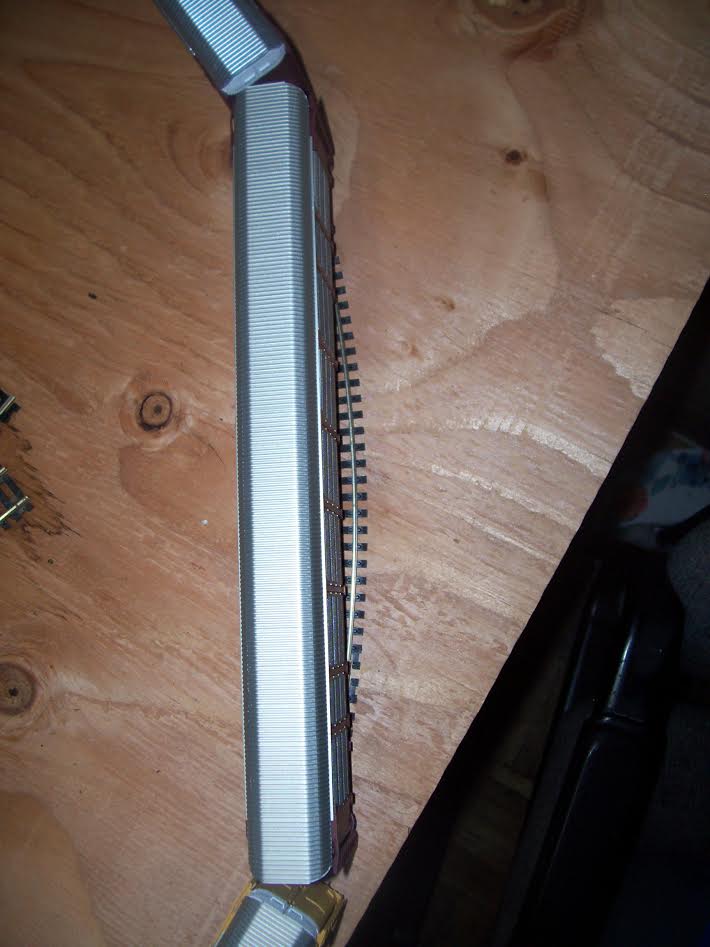
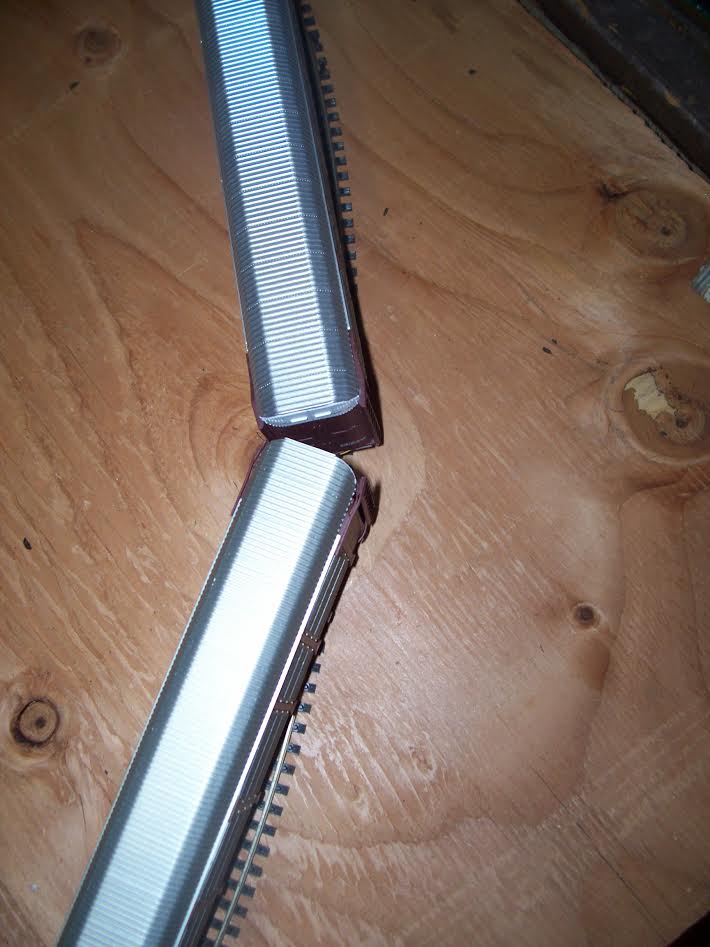
“i see no reason why a 65 foot or so long cars cannot be used with 22′ radius curved – they do have a bit of a hang over on the rails that has to be planned for.

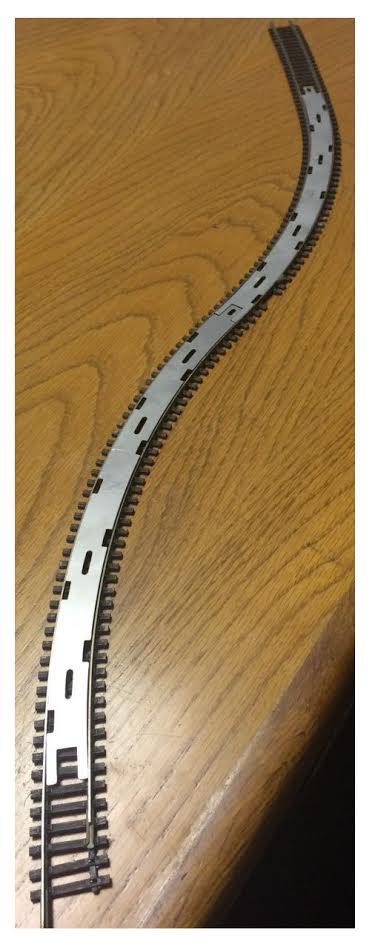
22 inch radius will fit quite nicely on a 48 in wide bench and allow for a circle.

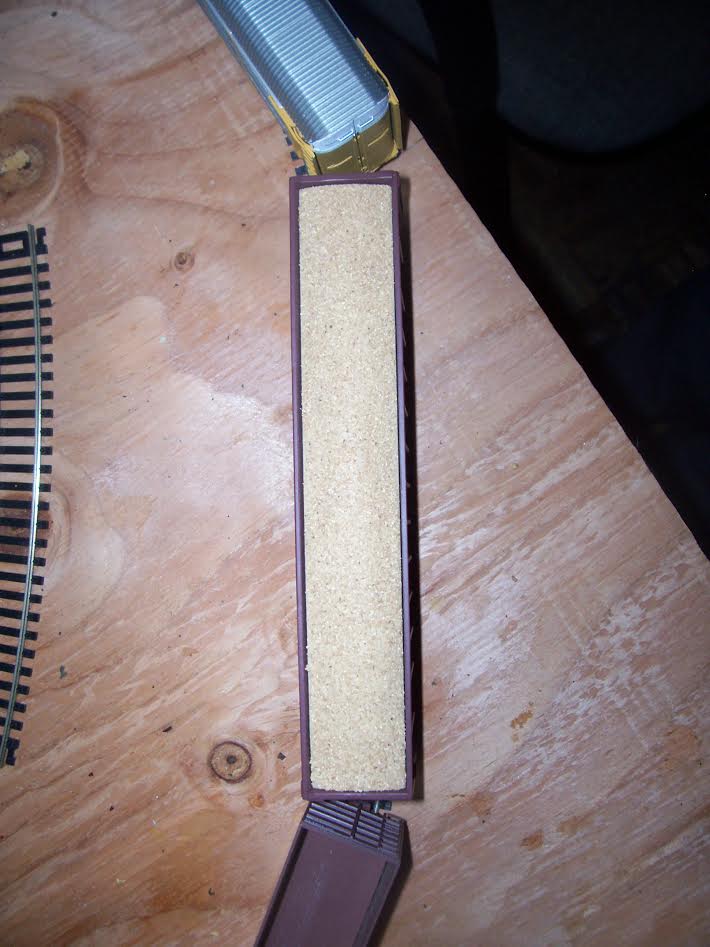
i took some pictures of 89 foot and 60 foot cars sitting a 22 in radius they will run but the 89 foot are bit of an issue with realism.

i am like the majority of blokes here no way to put anything over 22″ in any space i have.

Fred”

22' radius curved track

22' radius curved track

22' radius curved track

22' radius curved track

Fred’s post reminded me of Rob’s Big Curve project, which you can see here.

A big thanks to Fred for sharing his 22′ radius curved track thoughts.

Next, a tip from Mike:

“I have no budget for the hobby, so I love your trash-to-treasure ideas.

If you use home water filters (Brita style) cut them open for the charcoal – great “coal”)

If you make tea from teabags, dry them after use and save the tea – great “dirt” and ground cover. Coffee grounds work too.

For ballast, buy roofing granules. They come in a 5-gallon pail for about $25, assortment of colors, and you can size them for your scale by sifting through window screen or some other material. I’ve heard concern about iron in the material that could interfere with electronics, but I have not experienced it.

Mike”

That’s all this time folks. Thanks to Mike and Fred for his 22′ radius curved track insight.

Please do keep ’em coming.

And if today is the day you get started on your layout, the Beginner’s Guide is here.

Best

Al

PS Latest ebay cheat sheet is here.
PPS More HO scale train layouts here if that’s your thing.