Steve has asked for a little help and some comments with his layout.
Have a look at all the suggestions at the bottom of the page.
“Alastair,
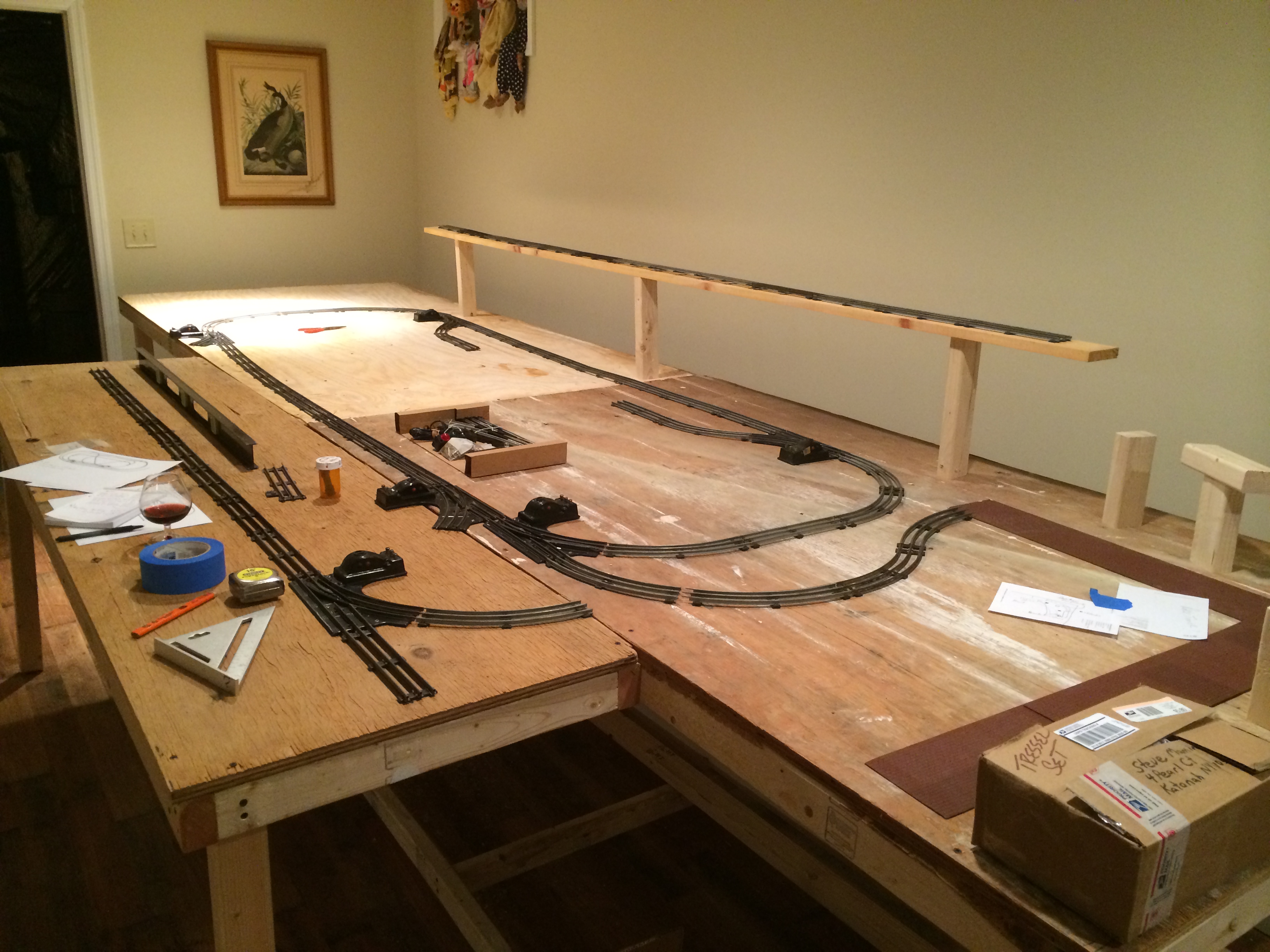
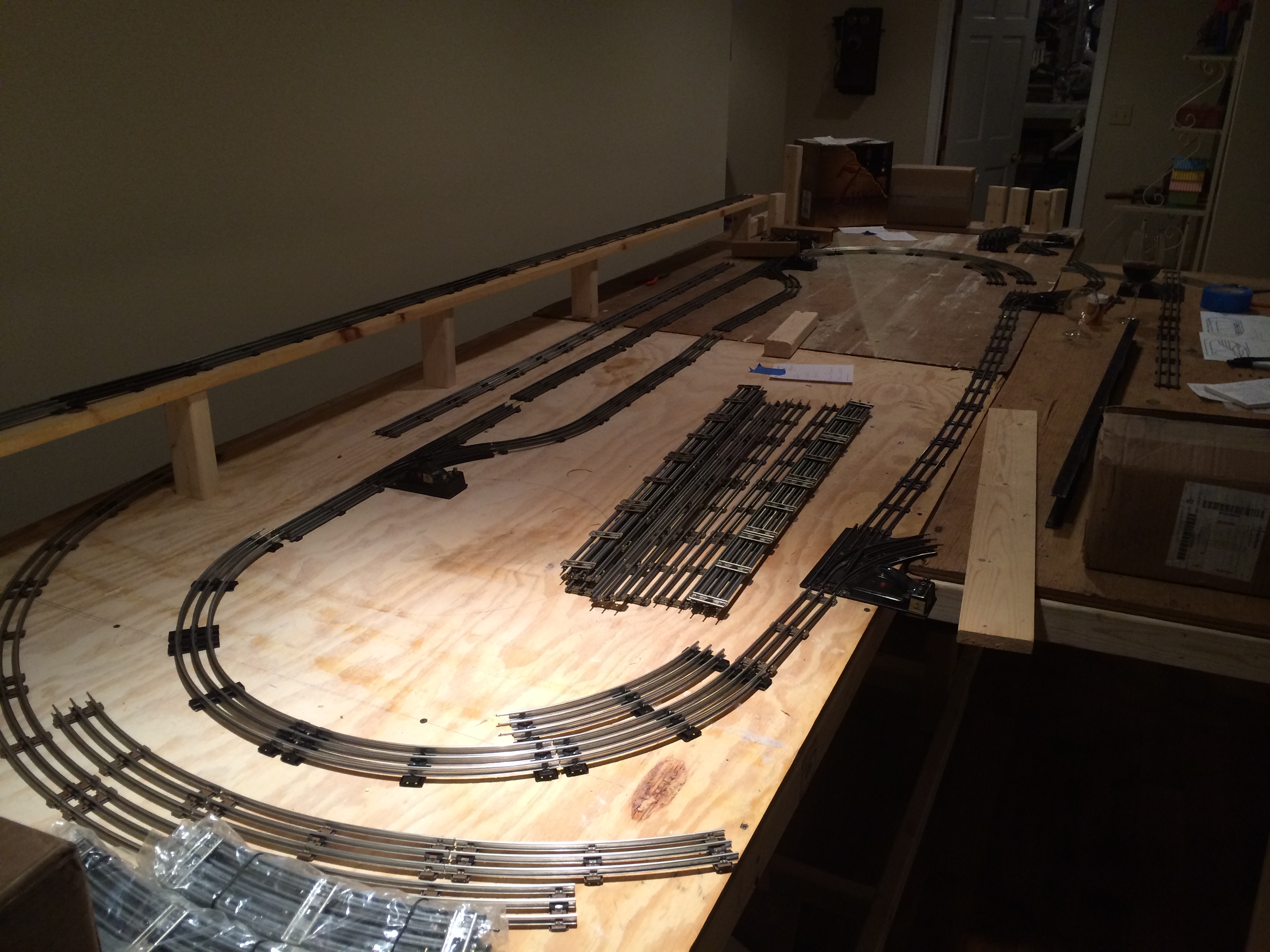
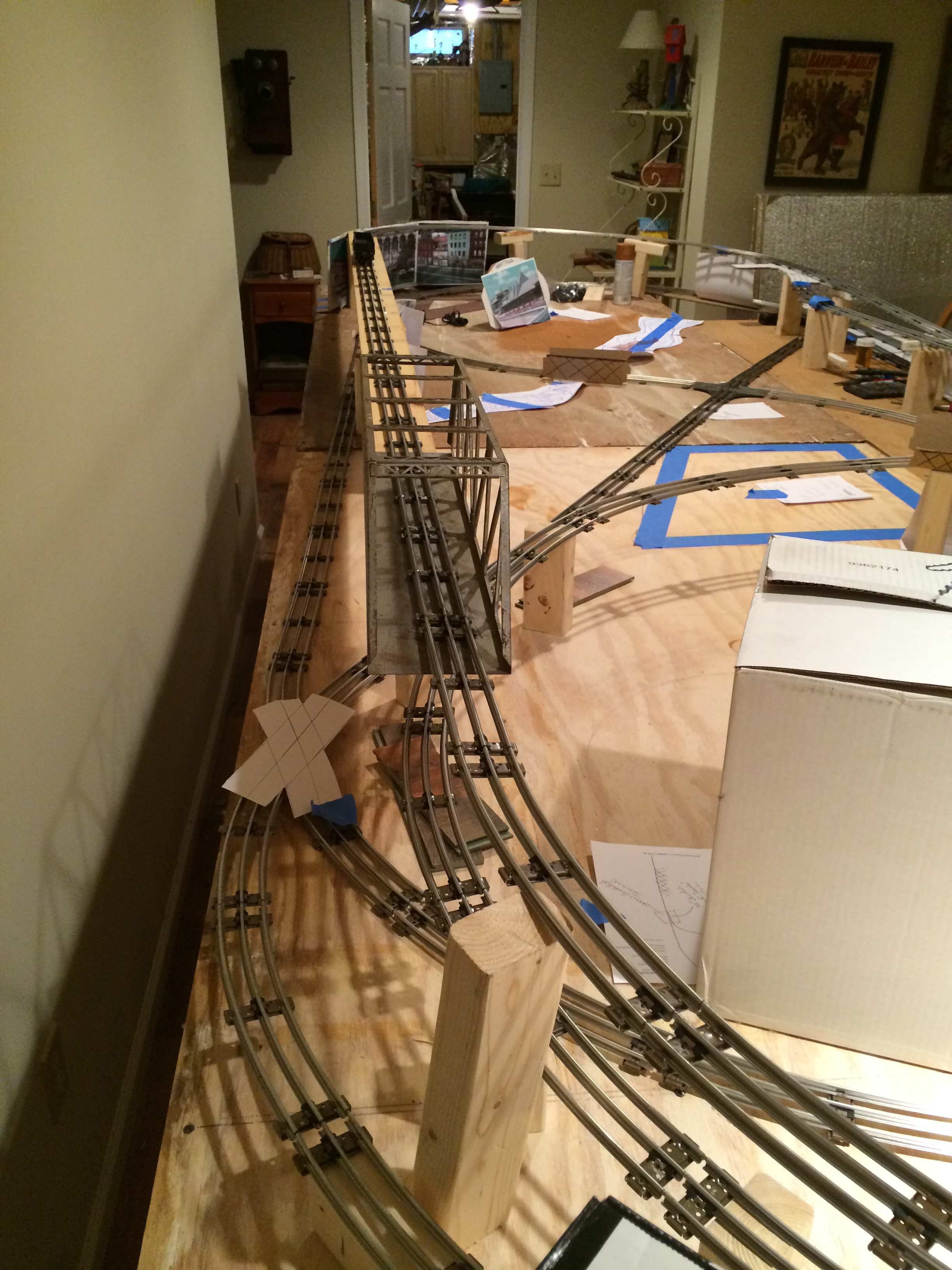
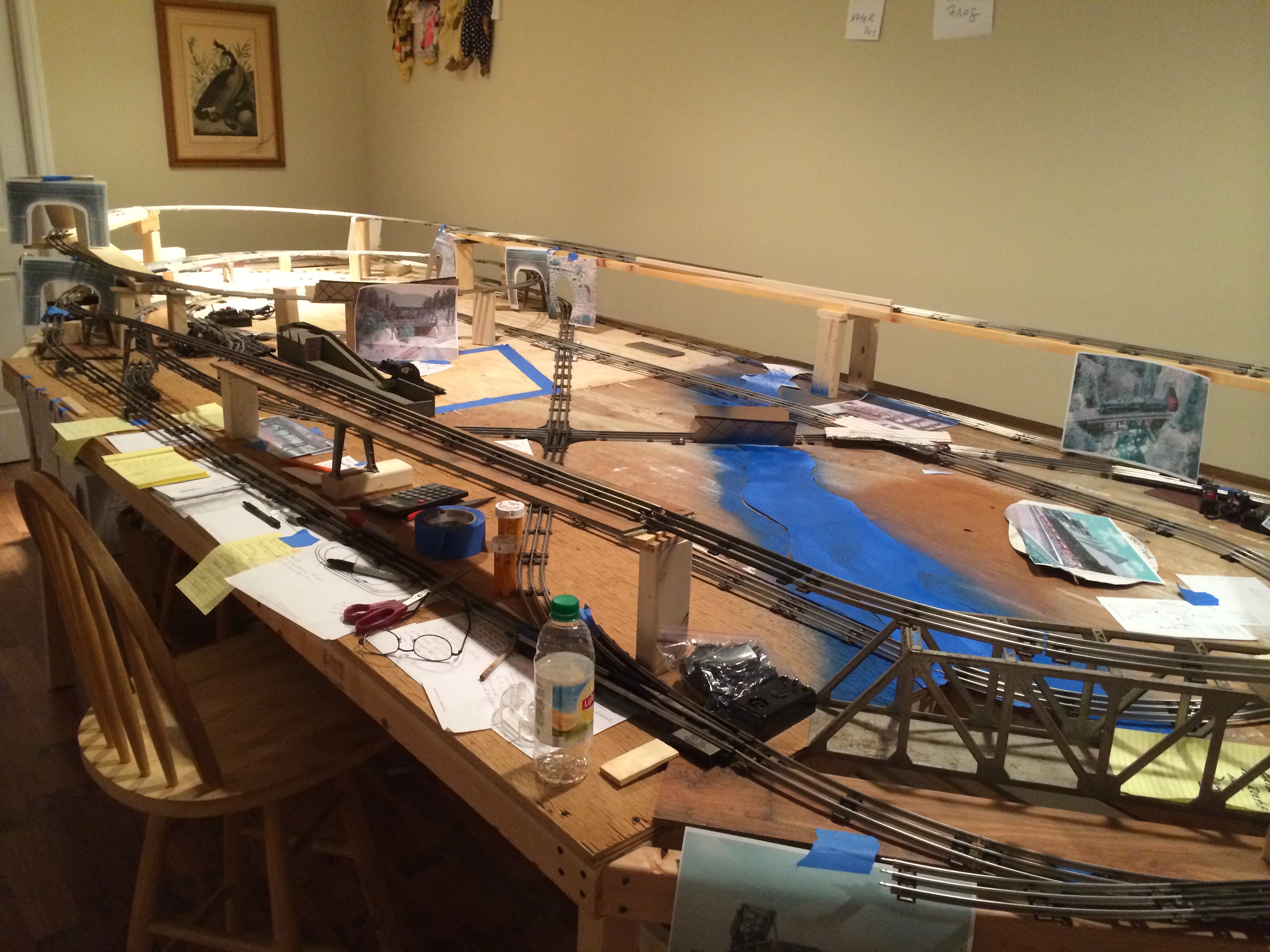
I’ve attached some “progress pictures” and would appreciate any feedback or comments anyone might care to provide. This is my 1st real non-Christmas layout.
It’s O gauge, bench is three 4’x8’s making an ___—–___ shape. I have some passenger trains and Intermodals that need 54″ turns, but 80% only need 31″…so my plan was all 54″ with an inner loop(s) with 31″.
The 31″ loop(s) concept was also to have an isolated loop that was very “kid, friend & cocktail safe” before letting them out on the “big” track where the larger more expensive trains play ( Platinum Ghost, Southern Daylight, GG1s, etc)
I used the Troy & Mohawk Valley Plan from 101 Track Plans as a basis and tried to modify it for my bench space. I also used software from AnyRail initially.
I have thick skin and would appreciate any guidance…
Steve”
“Hi Alastair,
You can use a lot of bought in or found items as scenery, such as cars, animals or figures, but these plastic items always look “cheap and plasticky”. Just give them a light coat of matt varnish, avoiding any ‘glassed’ areas. It tones down colours and evens the finish – it works great on rolling stock too.
Regards
Neil”
Who can help Steve? I think it has the makings of a wonderful layout.
I’ve attached some “progress pictures” and would appreciate any feedback or comments anyone might care to provide. This is my 1st real non-Christmas layout.
It’s O gauge, bench is three 4’x8’s making an ___—–___ shape. I have some passenger trains and Intermodals that need 54″ turns, but 80% only need 31″…so my plan was all 54″ with an inner loop(s) with 31″.
The 31″ loop(s) concept was also to have an isolated loop that was very “kid, friend & cocktail safe” before letting them out on the “big” track where the larger more expensive trains play ( Platinum Ghost, Southern Daylight, GG1s, etc)
I used the Troy & Mohawk Valley Plan from 101 Track Plans as a basis and tried to modify it for my bench space. I also used software from AnyRail initially.
I have thick skin and would appreciate any guidance…
Steve”
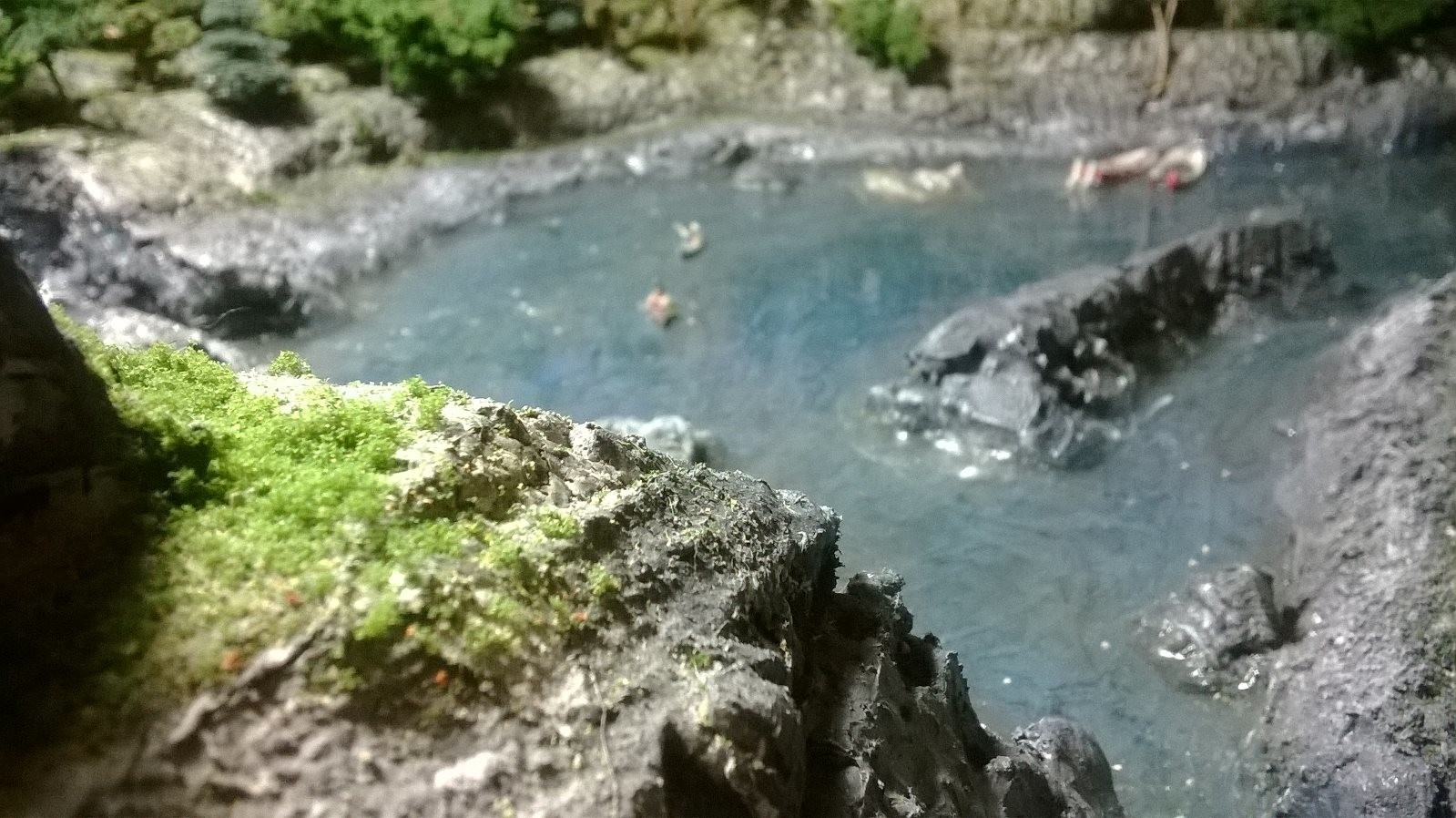
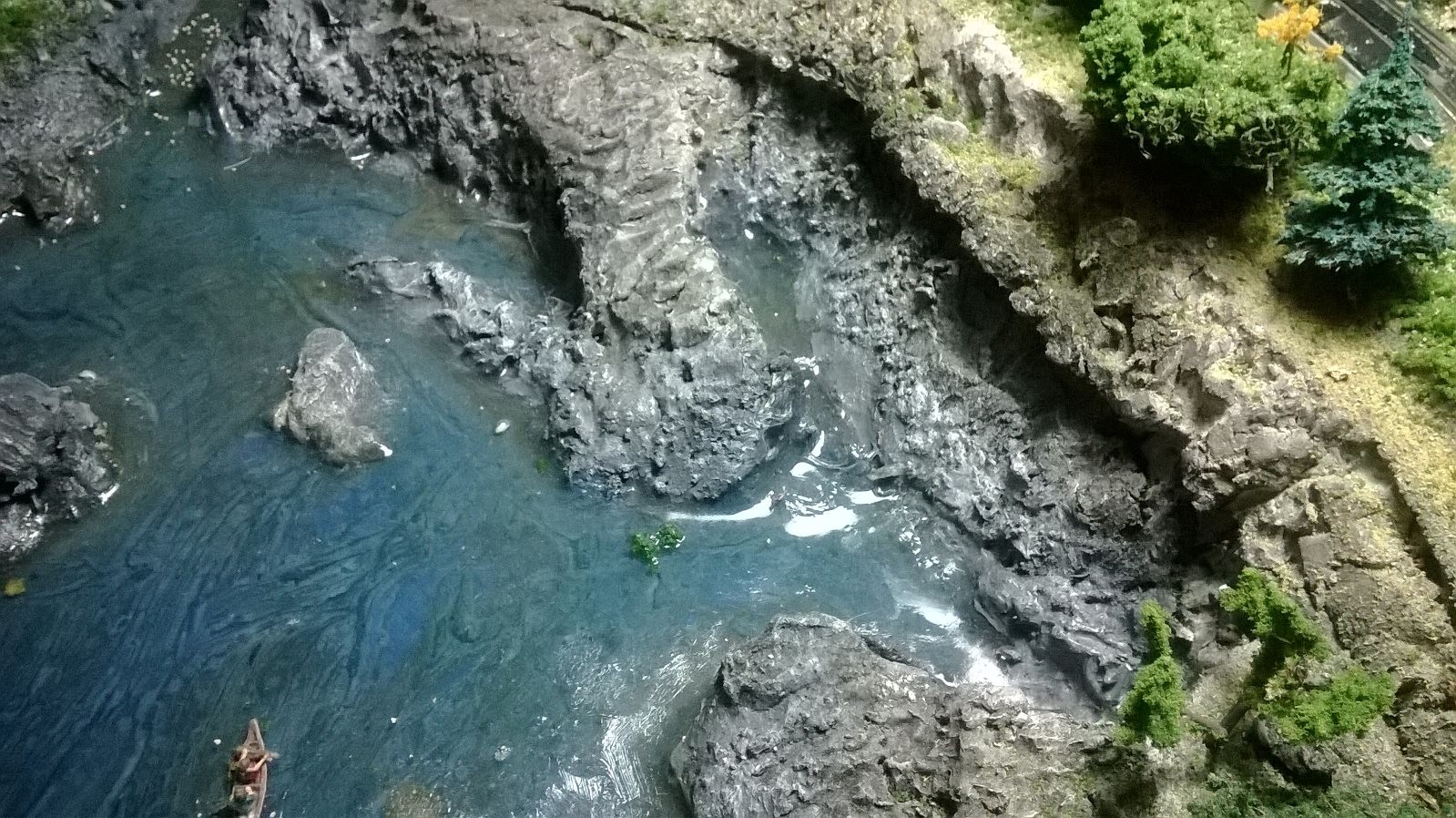
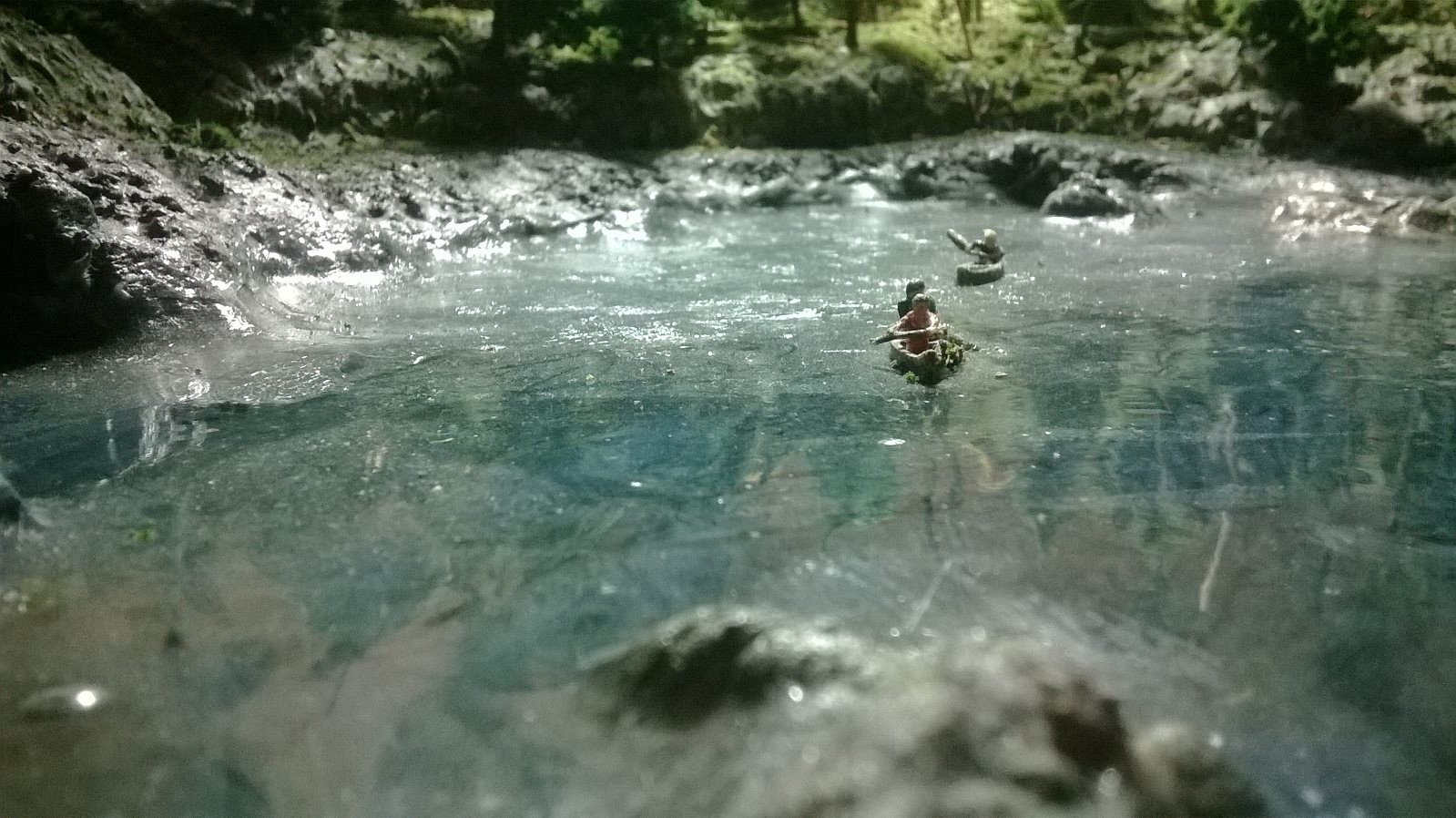
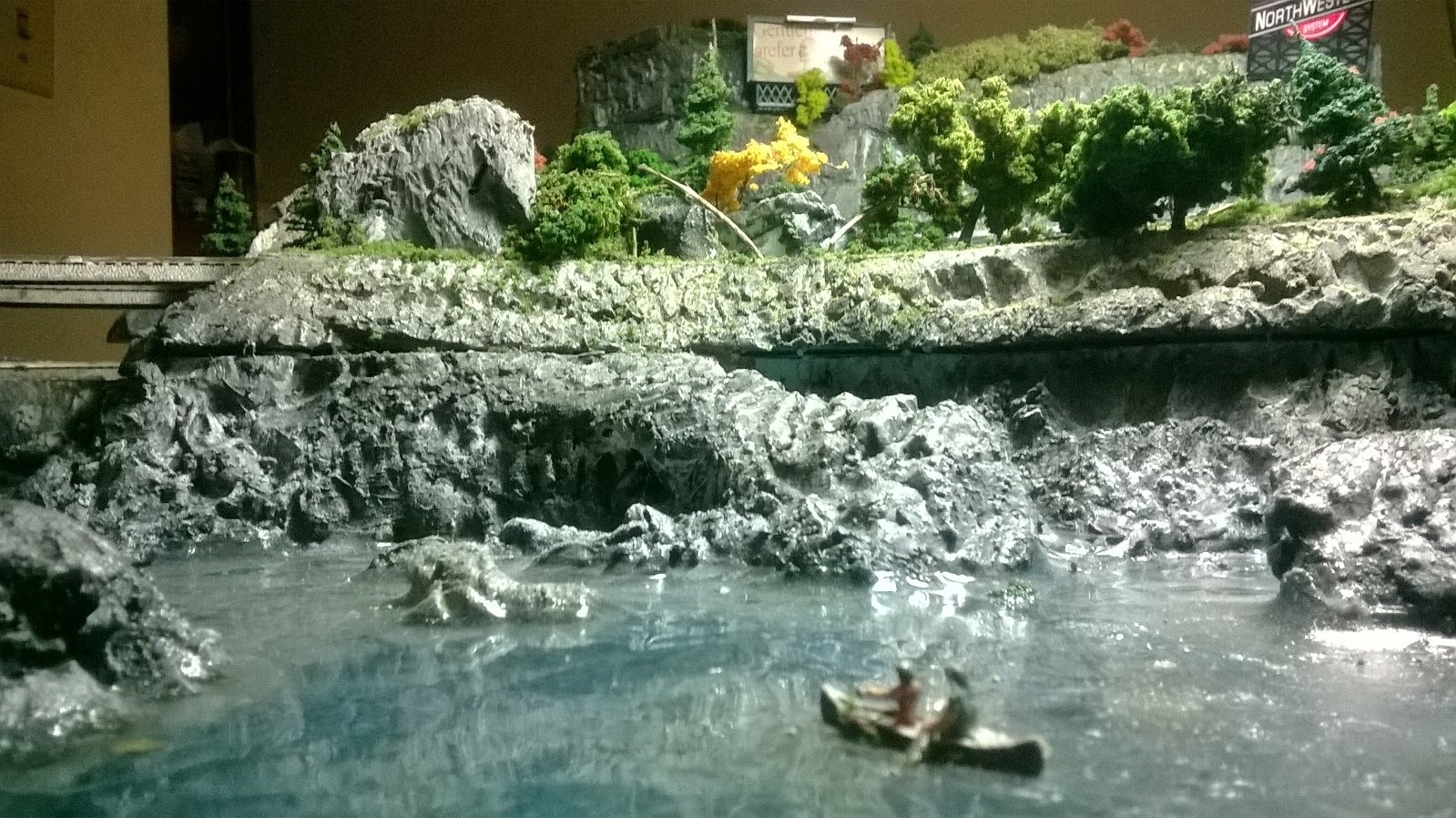
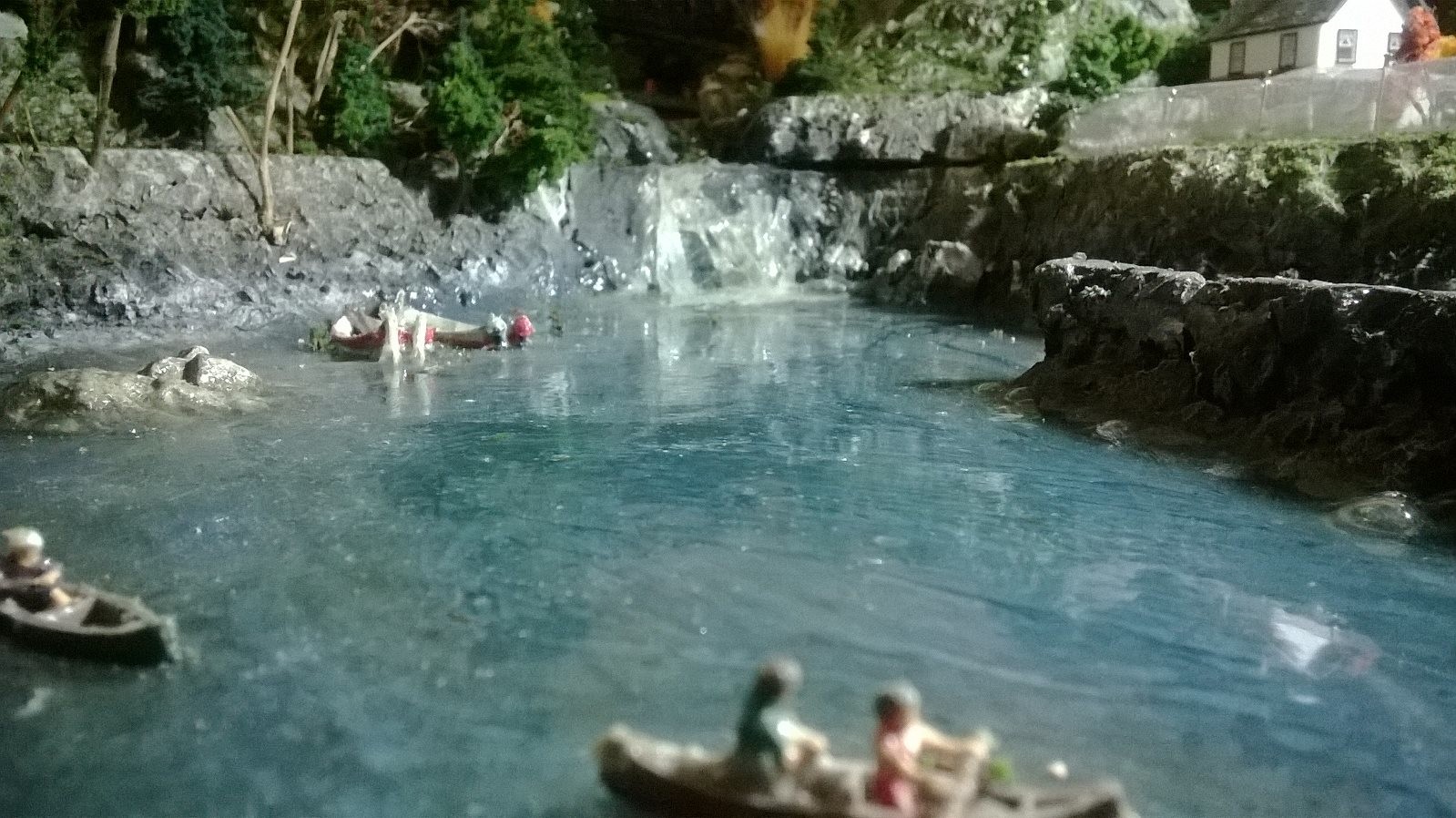
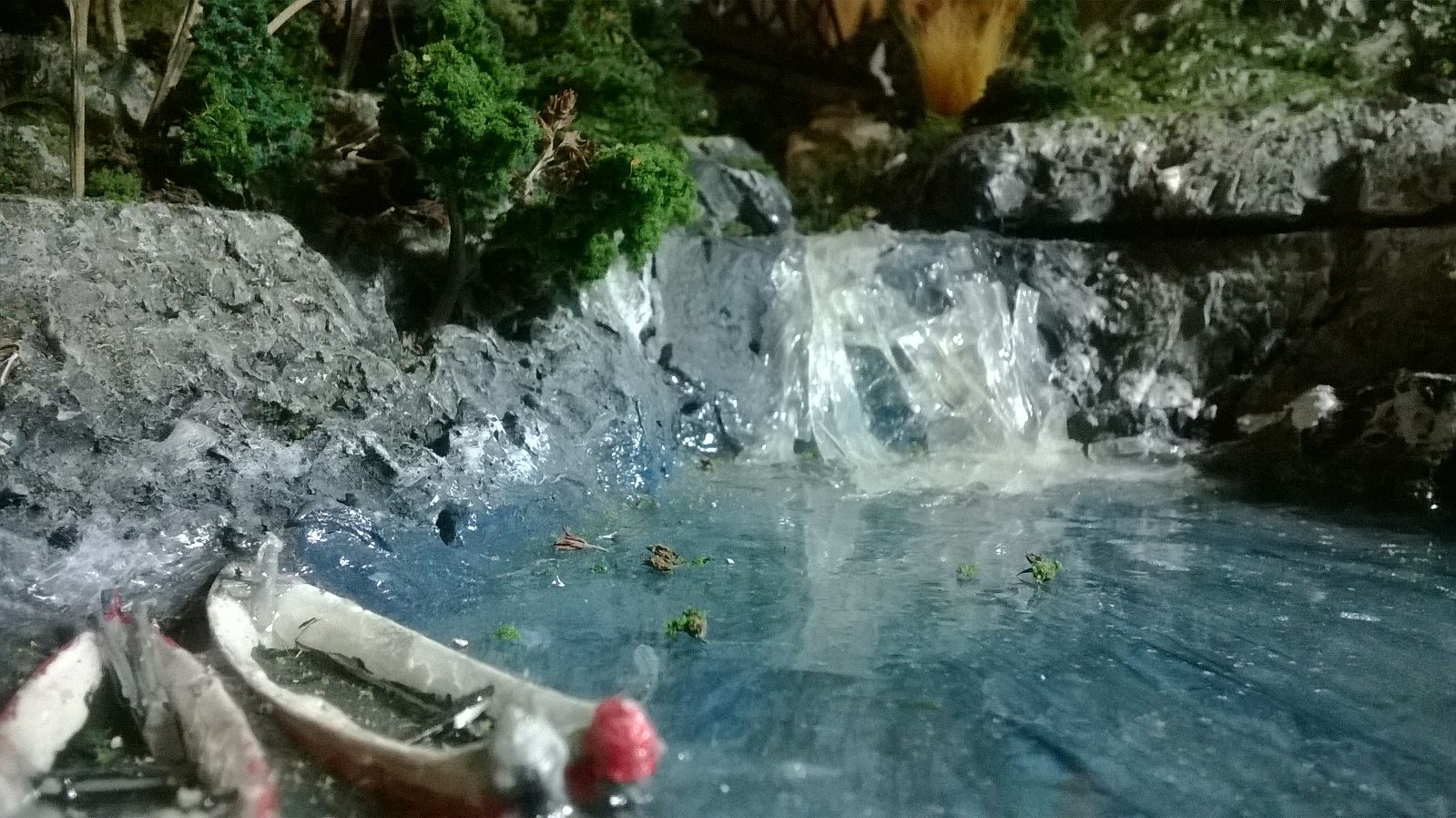
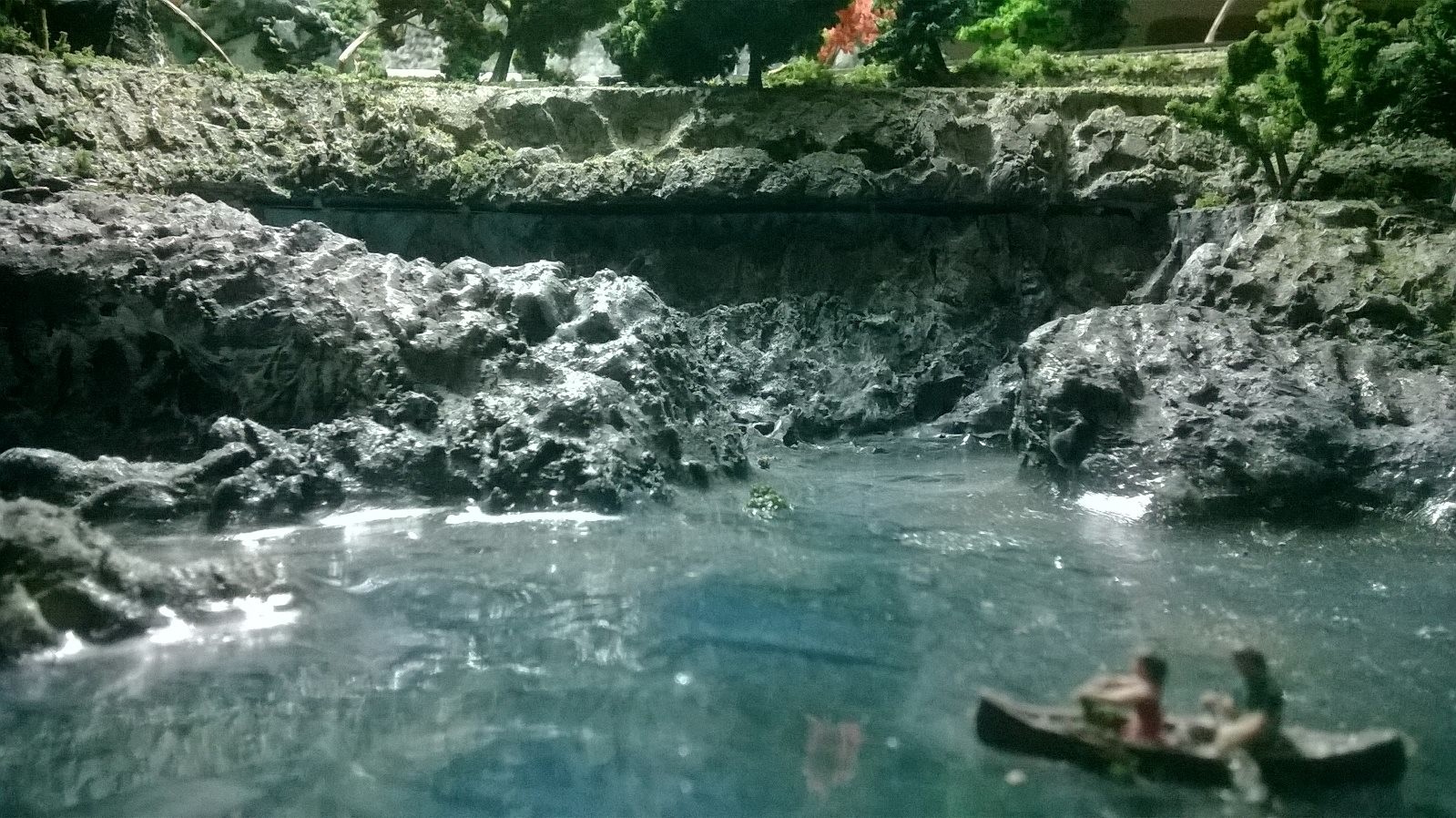
“These are just a few shots of the lake hope you like them.
You can use a lot of bought in or found items as scenery, such as cars, animals or figures, but these plastic items always look “cheap and plasticky”. Just give them a light coat of matt varnish, avoiding any ‘glassed’ areas. It tones down colours and evens the finish – it works great on rolling stock too.
Regards
Neil”
“Hi Al,
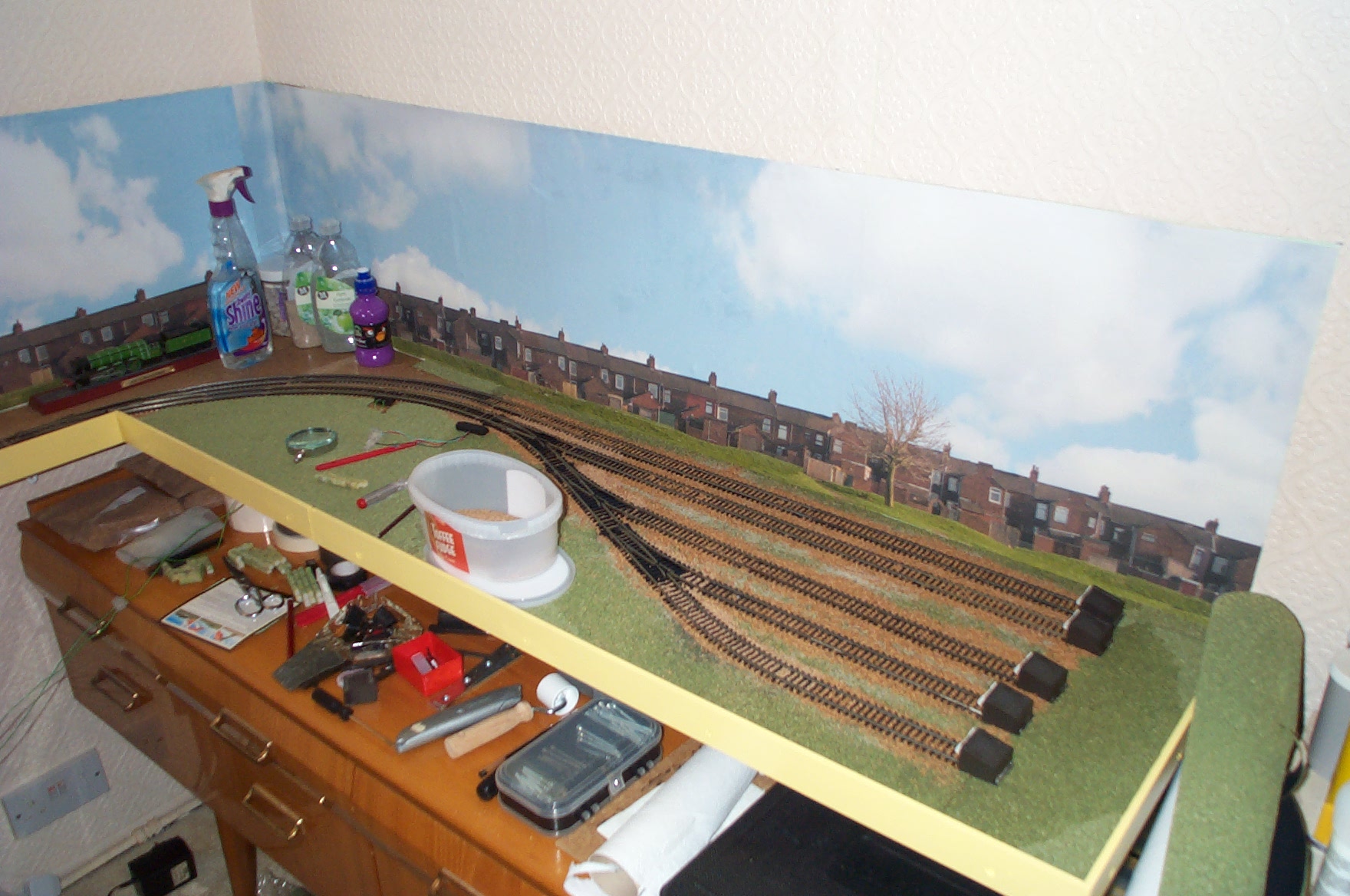
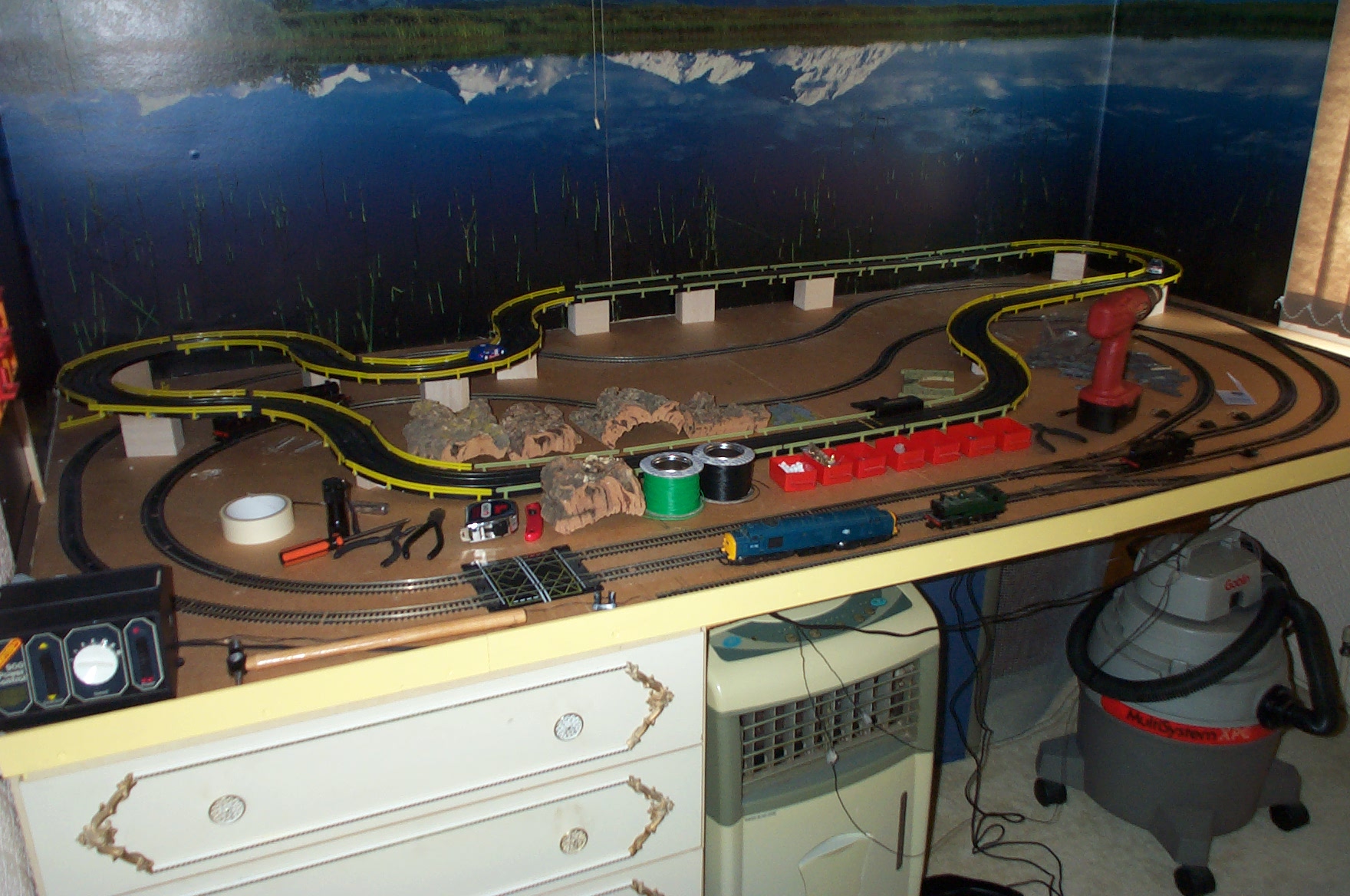
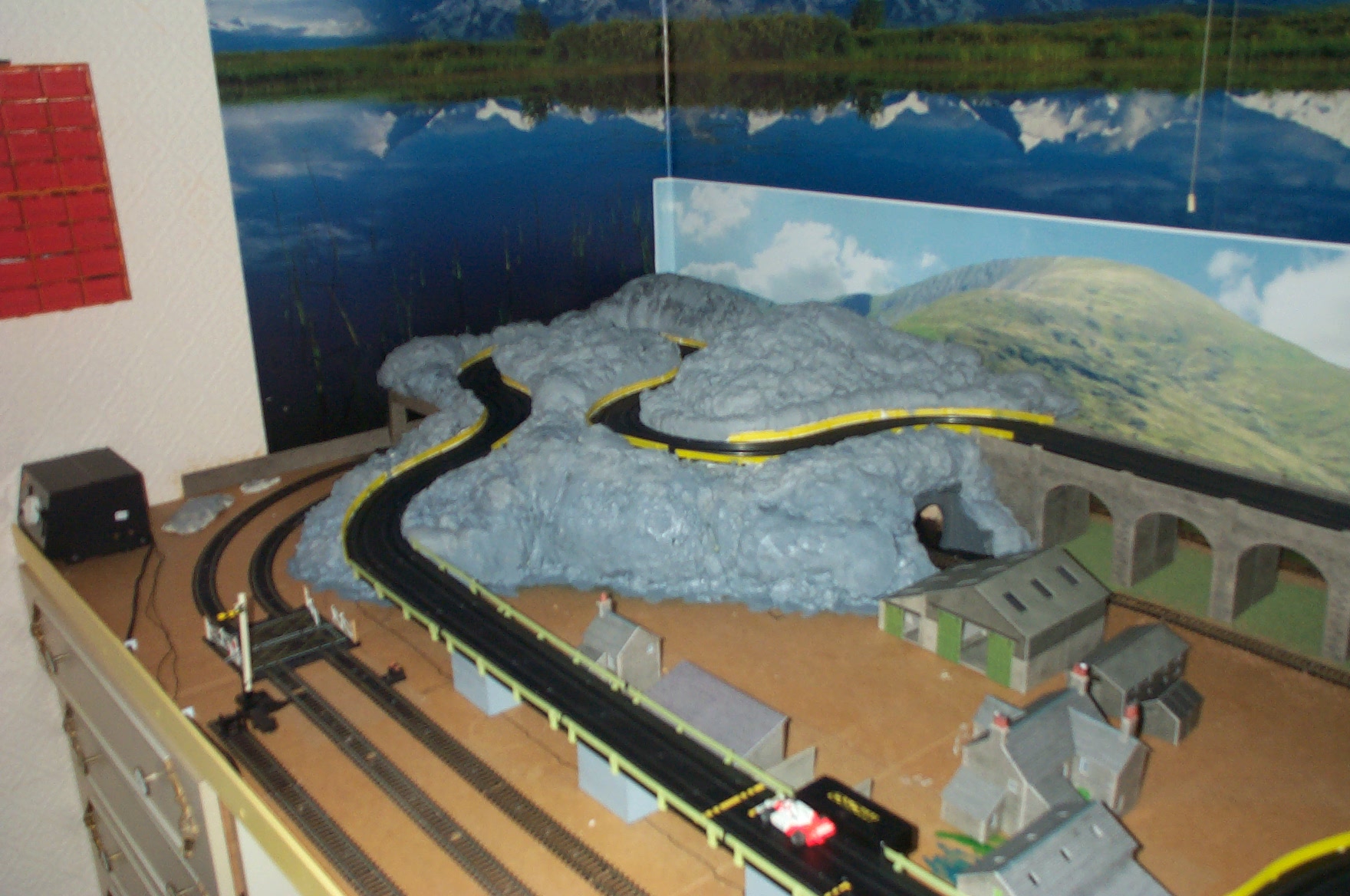
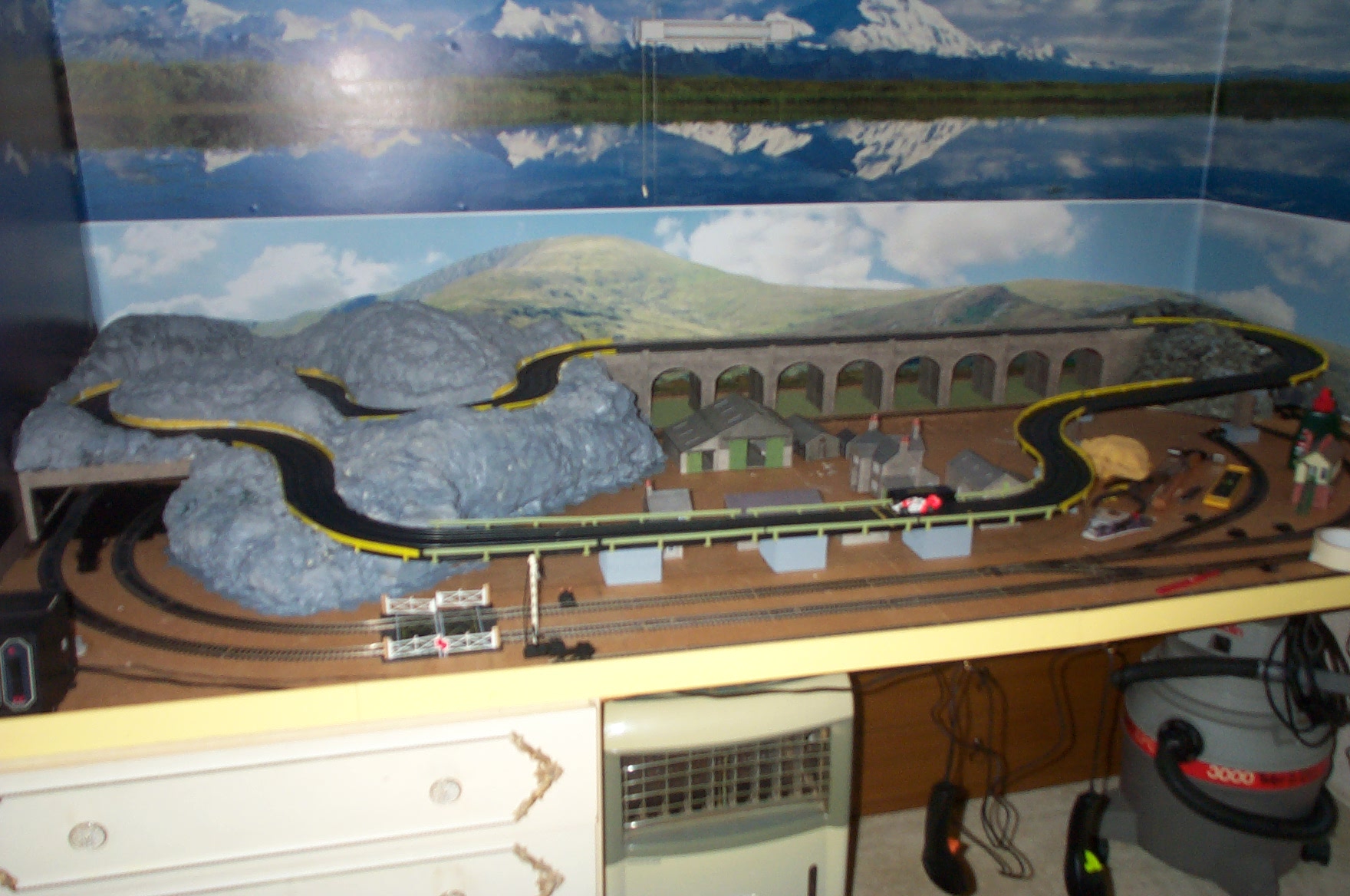
Layout is OO and I am incorporating the “Micro” car racing track to add a bit more fun – the grand-kids love it and the scale is comparative.
See photos of work in progress to date:
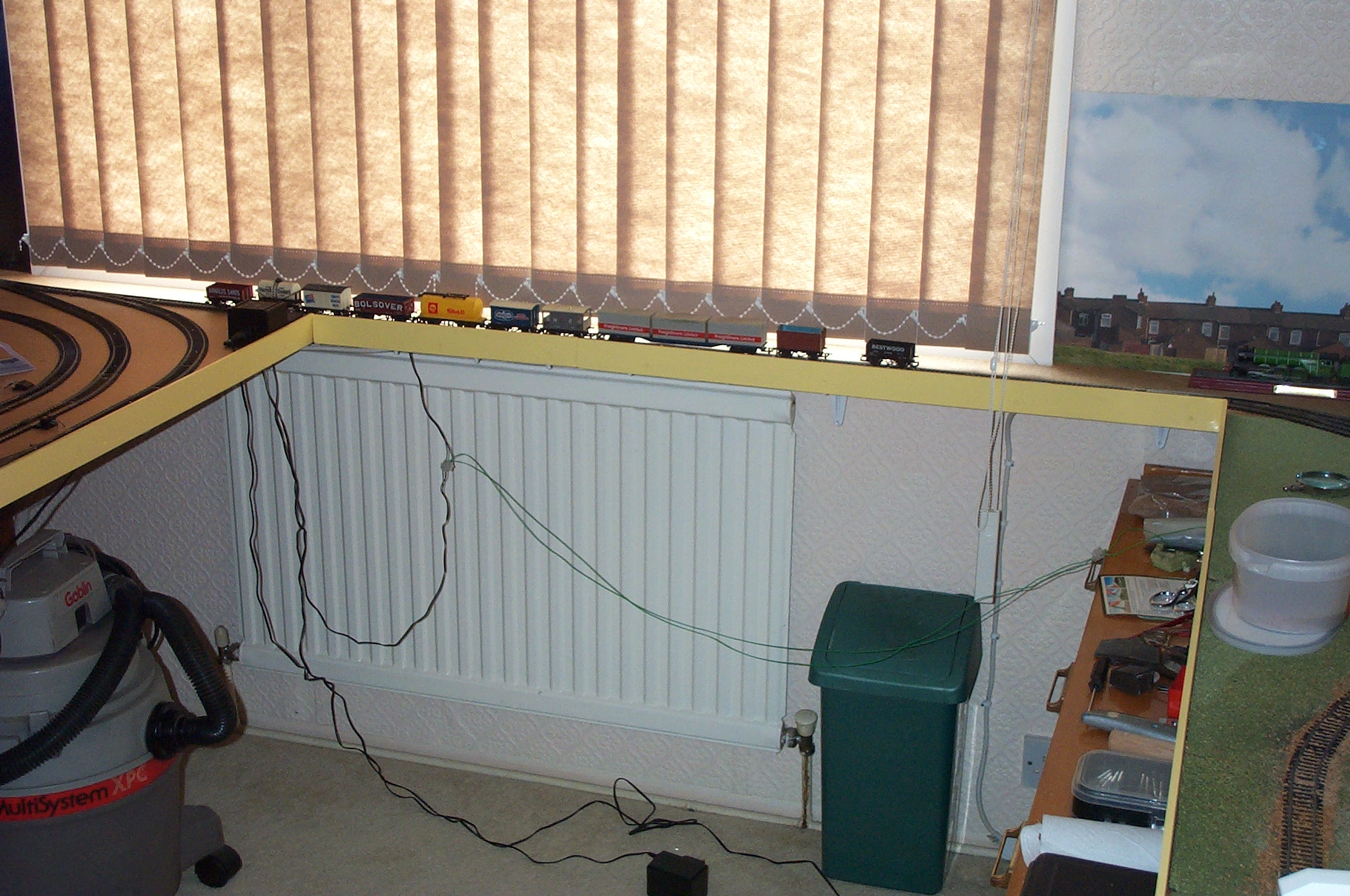
Layout is on a 8′ x 4′ top then running round the window to the goods yard.
Tony”
If you want to see how Tony’s layout turned out, have a look it’s here, it’s very popular on the blog:
“Hello all, from across the Big Pond It’s Jim Volmer Sr. with an new update on my dream layout.
I have finally decided to name the new layout after my best friend. Her name is Starr and she is now eleven years old. Not my child, my children are all grown. NO Starr is my Doberman. Starr is my sweetheart, very loving, and highly protective of me. When my ex-wife would go off and get stupid acting toward me, Starr would go in front of me and sit there, just waiting for her to do something really stupid. Thank goodness, my ex-wife would back down. So since she is my loving companion I thought the best way to remember her would be to name the layout after her, and therefore the railroad will be called STARR POINT, and no, Starr does not know how to point.
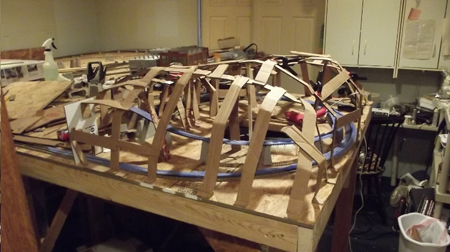
Ok now onto the update. The following pictures are of the MOUNTAIN. In the last update I showed the beginning of the mountain shape with the cardboard strips being used. So here is that last picture once again.
The picture does not tell the mere size of the mountain. It measures 4 feet 3 inches from north side to the south side, 2 feet 5 inches deep and 18 inches high. Whew, that is a very big mountain. It contains three portals, and two sets of track, one set that climbs up through the inside of the mountain to the 6 foot bridge that leads to the reverse loop and cargo terminal. The lower track runs through the mountain from the south portal to the north portal, exists and runs along the river that sits in the front of the mountain.
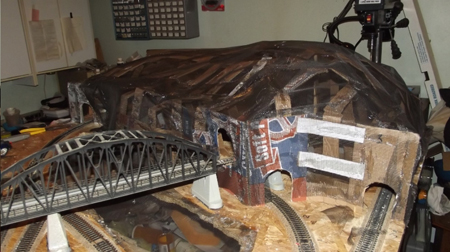
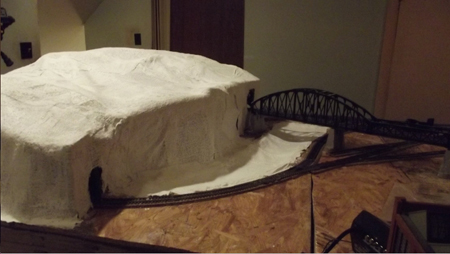
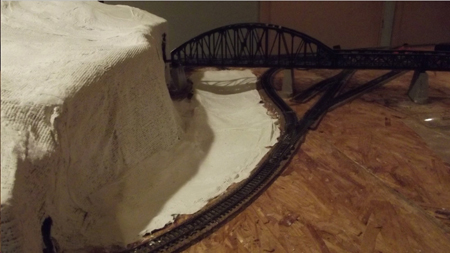
So here is a picture of the mountain with the screen installed and one with the plaster cloth also installed. It took 5 rolls of plaster cloth to cover the mountain and the river area.
This picture is looking back 6 feet ( the distance from the mountain to the end of the bridge area ) toward the mountain.
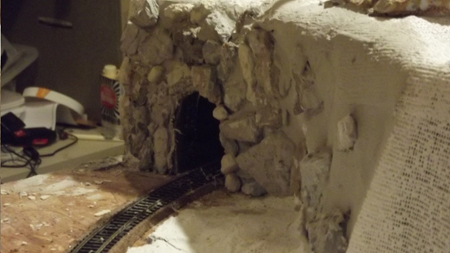
For the portals of the mountain entrances, I decided to use rock ‘ out cropping ‘ from the old mountain. When I dismantled the old layout, I saved most of the rock out cropping to use on the new layout. I still have to make some to replace the ones I could not save, but that is okay.
The first picture is of the North Lower Portal with the rocks installed. It took approximately 30 minutes to complete this opening.
The picture above shows the South Lower Portal without the rocks installed. I wanted to show how dramatically the portals look once the rocks were installed and how they enhance the opening appearance.
And here you can see the dramatic difference the rocks once installed make the opening stand out so much more. There are many, many other options available for tunnel portals. Since this is a mountain area, what better material to use than rock ‘out cropping’s ‘ made using HYDROCAL. As you will notice the ‘PORTAL ENTRANCE’ that takes the train(s) to the upper level is not completed here. It will be completed shortly and included in the next update.
On the top of the mountain will be trees, lots and lots of trees, along with a HO Lionel operating Radar Tower and some out buildings in “N” scale for ‘force perspective’ It should look pretty neat once it is fully completed.
The ‘river’ area in front of the mountain shown below will include people fishing both on land and
from a boat. I am also going to include HO ROCK CLIMBERS for the mountain. I think it would be neat to have rock climbers climbing to the top of the mountain.
Well that is all for now. In the next update I will be showing the COMPLETED MOUNTAIN less the climbers for now the river completed less the men fishing, HO PROGRAMABLE TURNTABLE, and HOLDING TRACKS FOR THE ENGINES plus much more.
Until then, HAPPY RAILROADING
Jim Volmer Sr”
Big thanks to Jim – hope you enjoyed this post as much as me.