“Hi Al
My tip is a modified version of a process, for making Z scale pine trees. Instead of twisting wire and chenille fibers in a drill, I got a long piece of a “giant chenille pipe cleaner” (see pictures ) which is 6.5′ long and 1″ (~18 scale feet) in diameter.
My local craft store carries these and it has fibers already twisted in wire. For a 40′ tree, I cut off a piece about 2.5″ long then remove about 1/2″ of fibers on one end to form a trunk.
The cylindrical shape is trimmed with scissors to form a typical pine tree shape then sprayed with hair spray and sprinkled with Fine Turf. Different trimming can vary the shape of the tree, so they don’t all look the same. If it will be seen, the “trunk” can be coloured with a furniture touch-up pen. The process takes about 5 minutes at most.
Hope this is useful to others.
Larry”
“Hi Al,
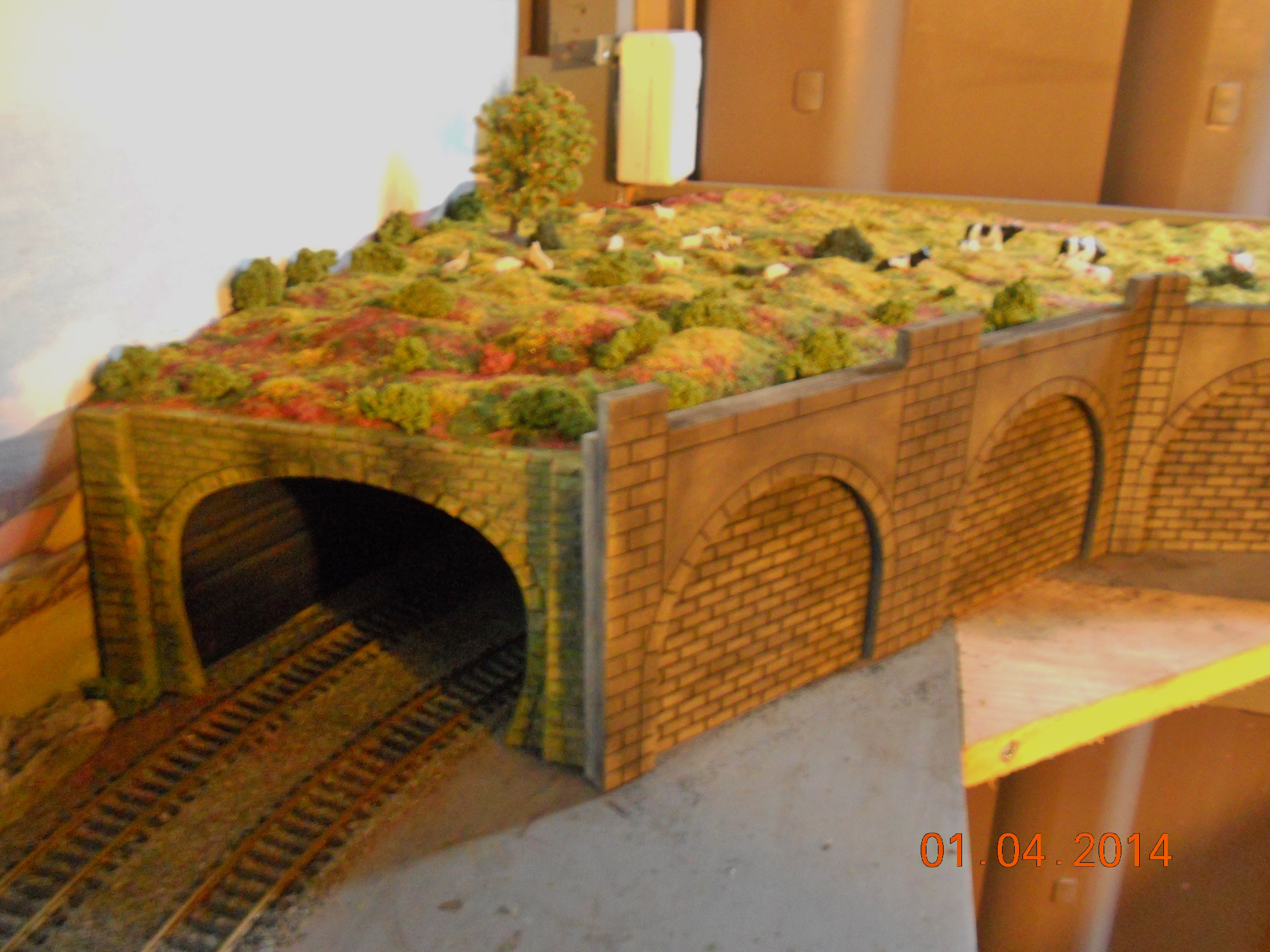
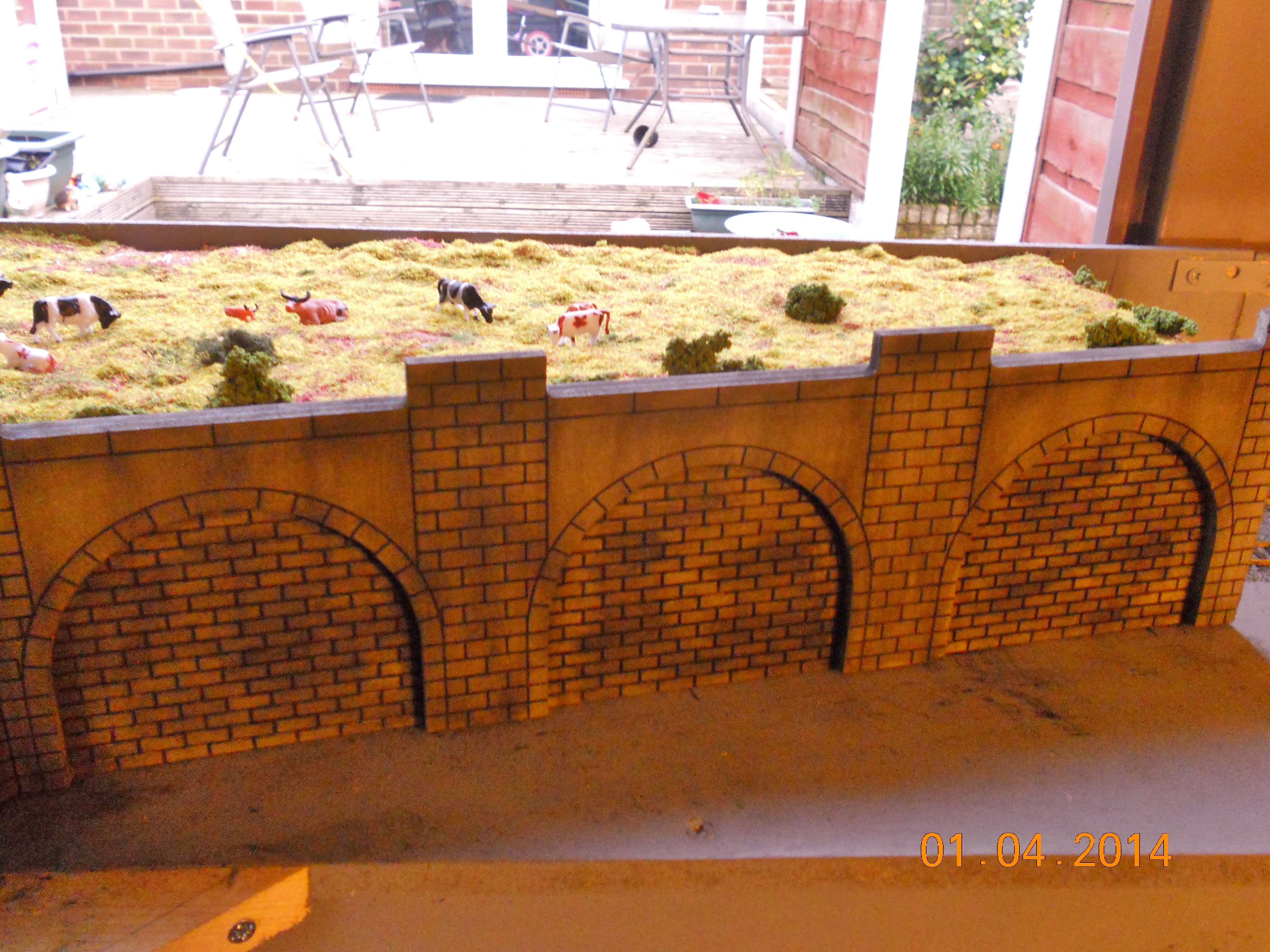
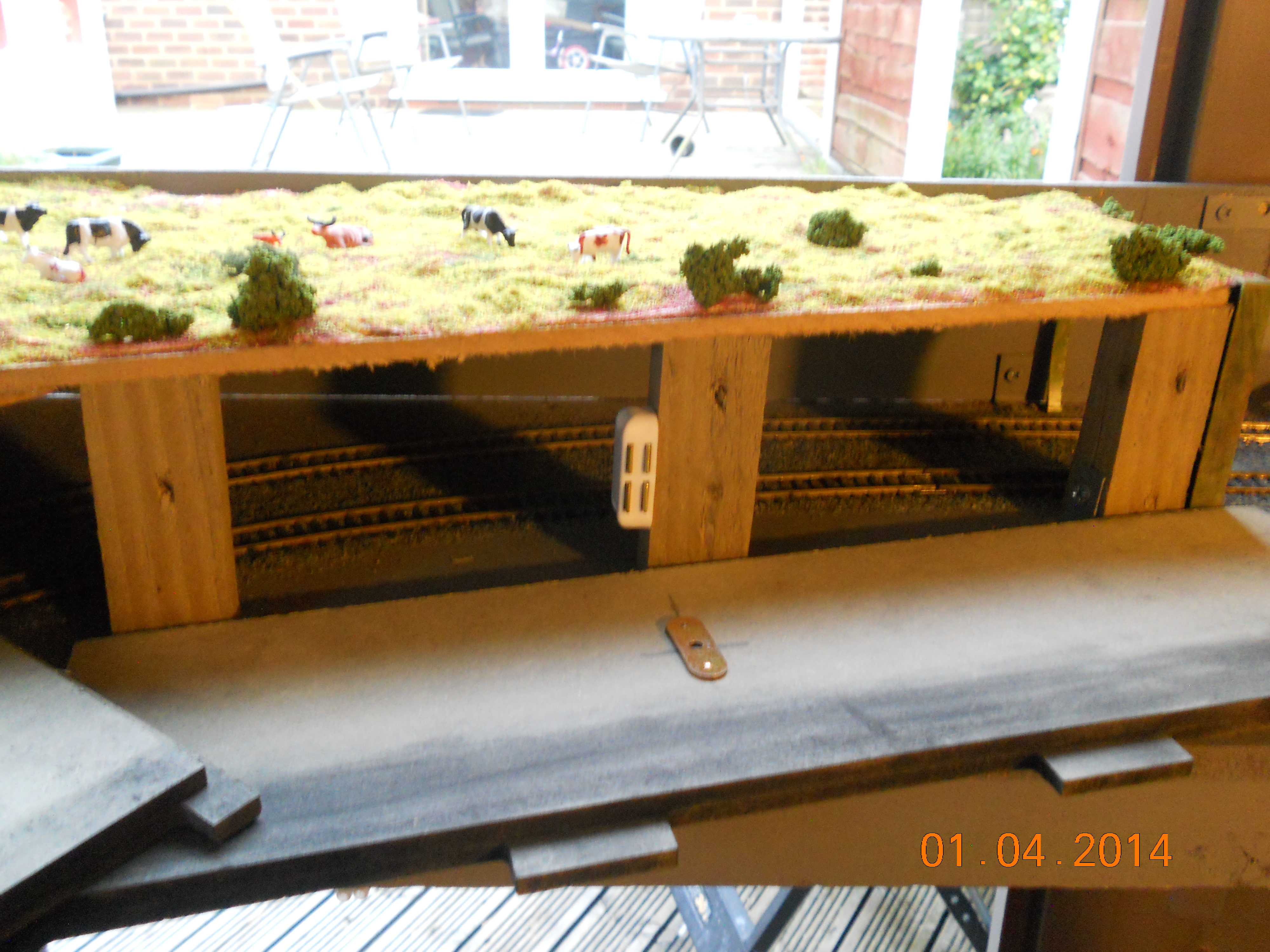
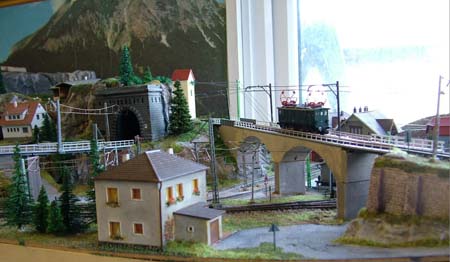
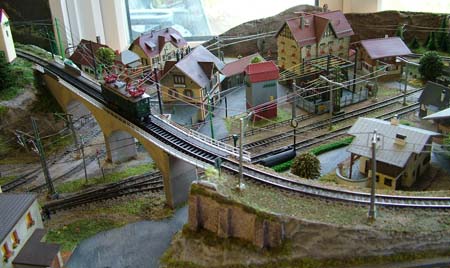
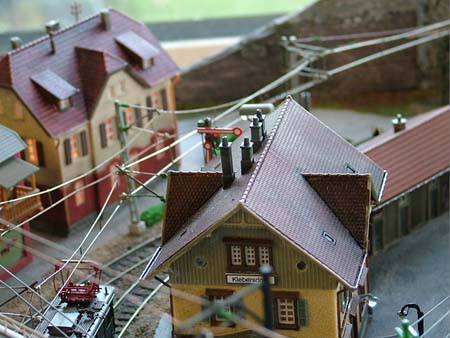
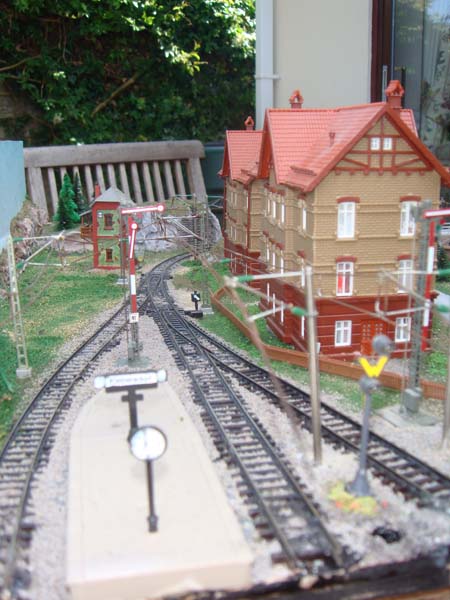
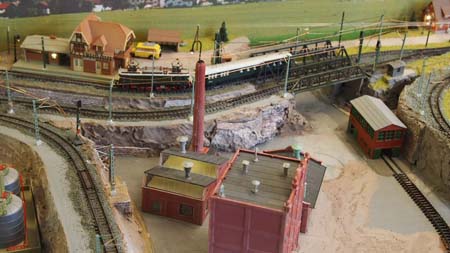
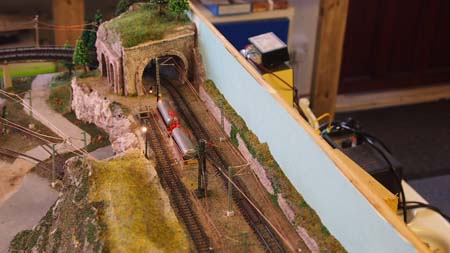
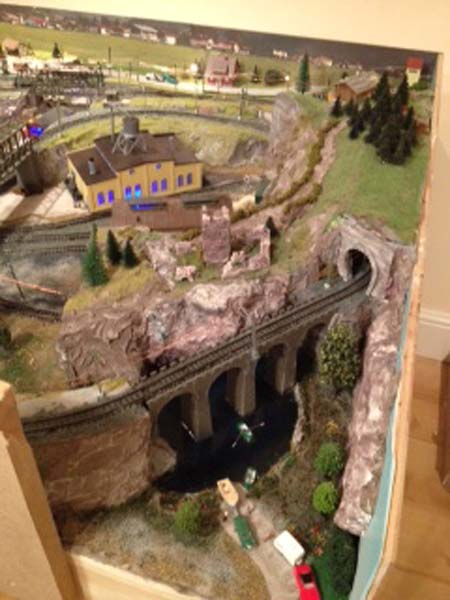
Thought you might be interested in the layout I’m building. It’s N gauge and modelled after Southern Germany in the 70’s & 80’s. It’s in a purpose built room attached to my wife’s craft room (which is located in a large shed ) with an adjoining door to take advantage of her A/C, and a door to the shed.
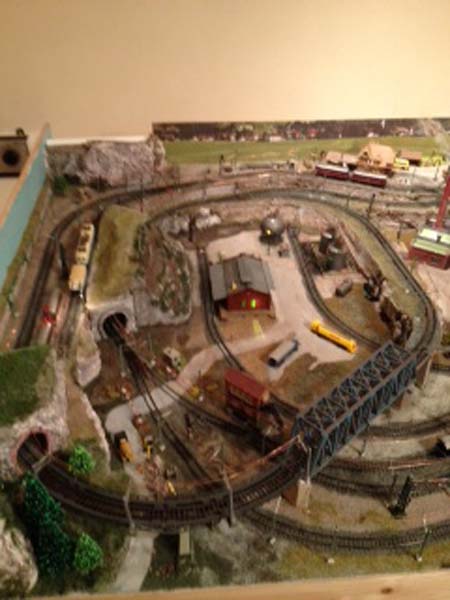
The room is 7 metres by 9 metres and I decided to build the layout in an “L” shape. Because of the limitations of the room the main framework was made with runners, made from drywall supports.
Then the actual layout framework was fitted with 16 castors made to take a total weight of 240 kilos. This allows the layout to be rolled forward for access to the back.
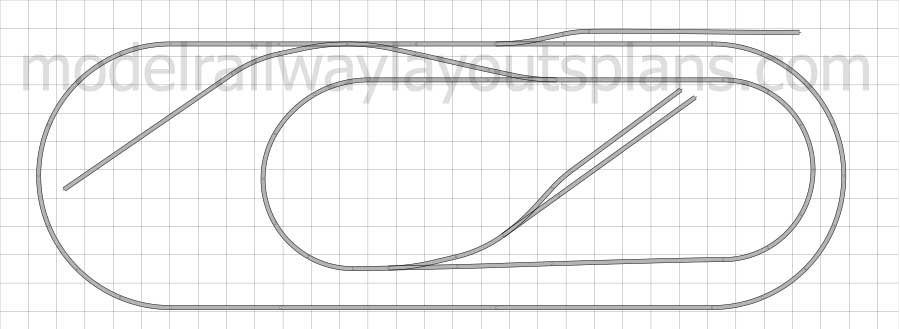
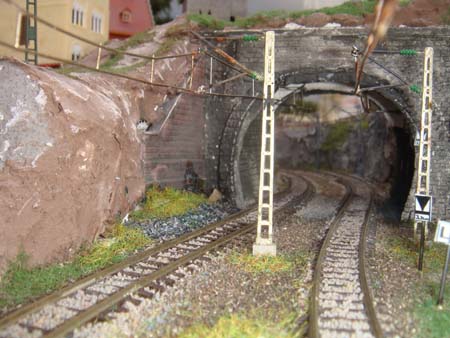
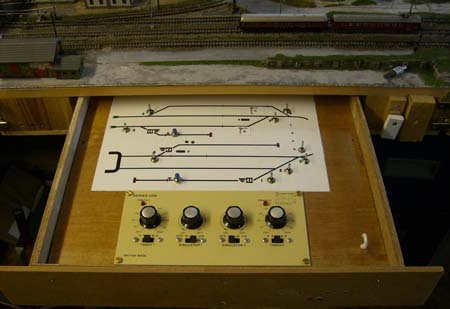
The layout consists of three main circuits all interconnected, one with a reverse loop incorporated. The height of the tracks raise from base level to 4 inches. The minimum radius is 15 inches. There are 12 electric points, 2 crossovers and 2 double slips. There will be multiple tunnel sections so infrared detector circuits were made to track the trains through these areas.
From the start of building the room till now has taken just on 12 months. I decided to go with DCC and after some trial and error I came to grips with it. I have a Tomix track cleaning car which is DC and I’d read that conversion to DCC was problematic, so I made the layout to operate on either DC or DCC enabling the cleaning car to be used with a DC loco.
Obviously the DCC locos are removed for this exercise. I made large clearly marked connectors for power supply so there’s no doubt about which power is being used. If you’re interested I’ll keep you informed as the layout progesses. You may remember the chair I made to do the wiring.
Regards
Roger”
I remembered Roger’s chair. Superb!
That’s all this time folks. Please do keep ’em coming.
Best
Al