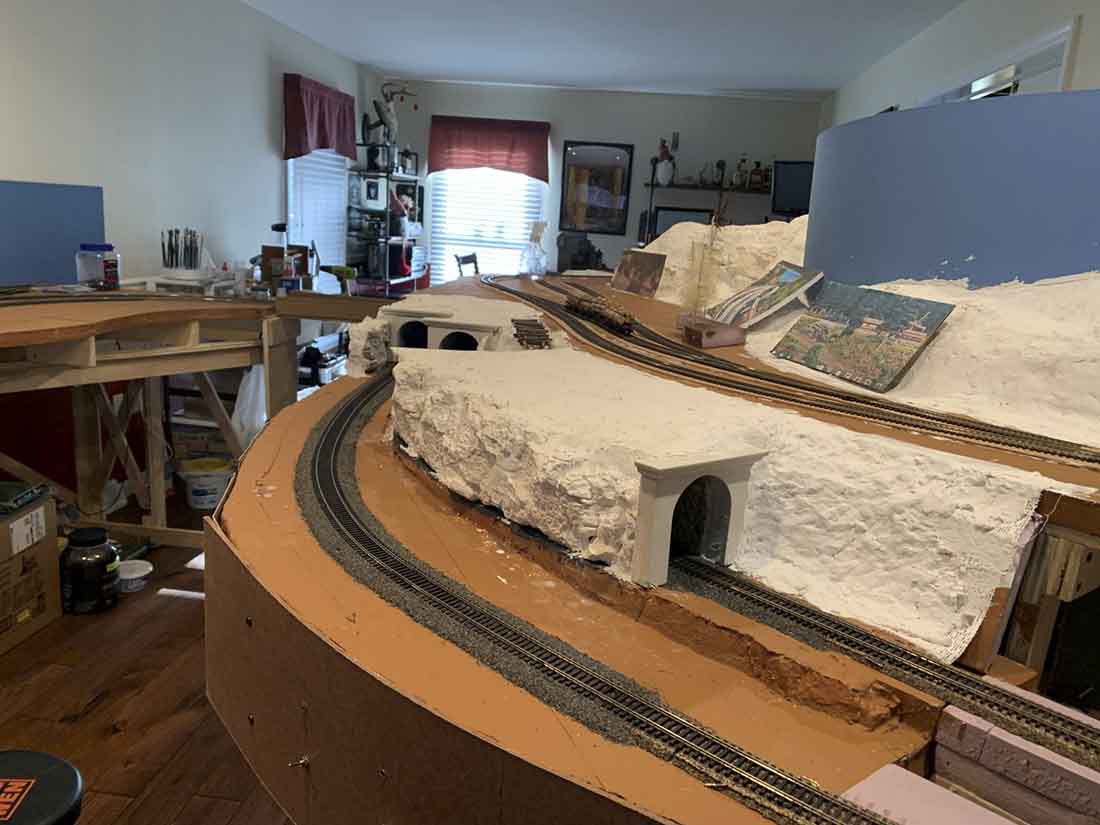
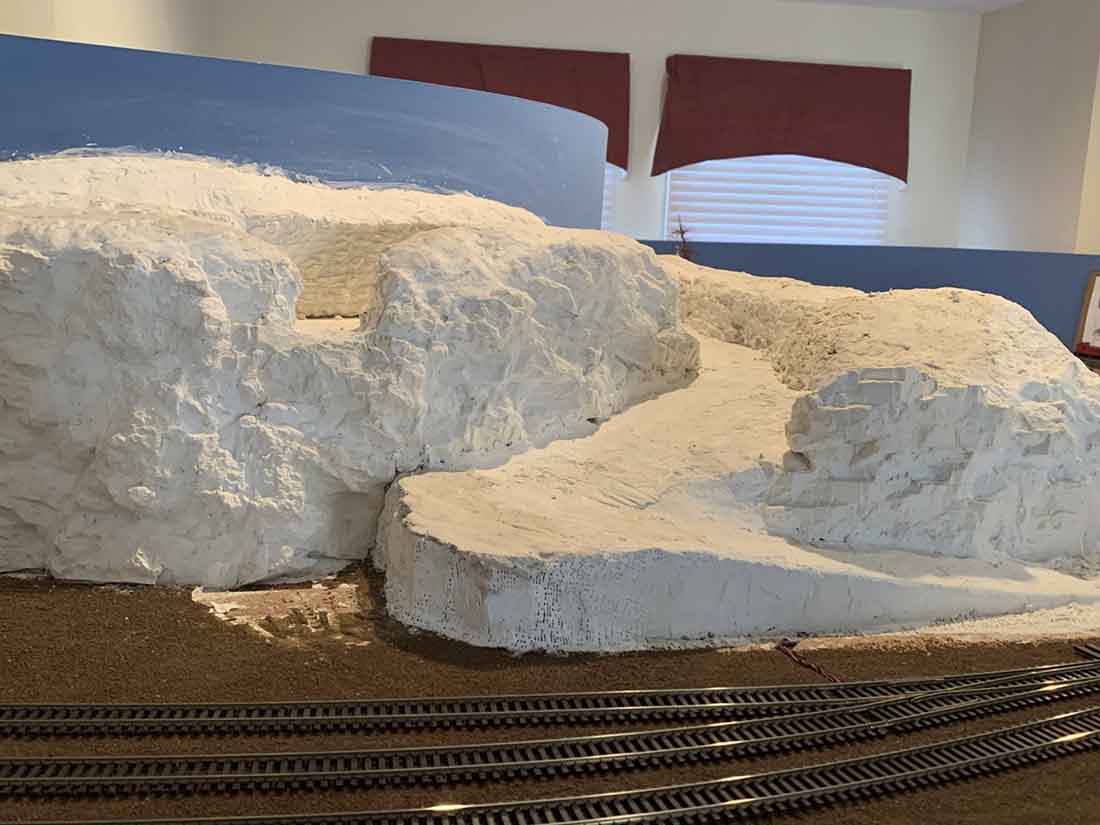
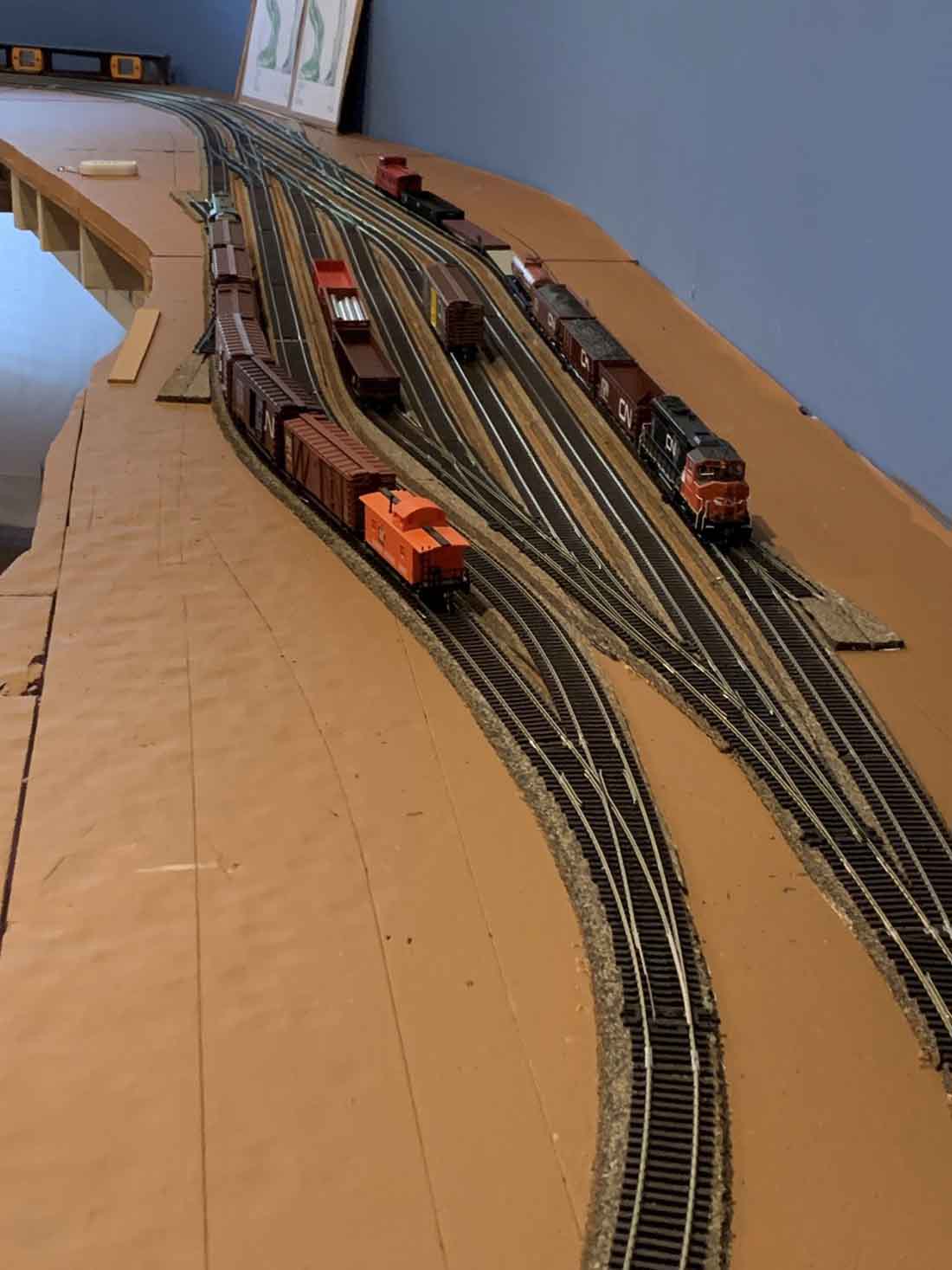
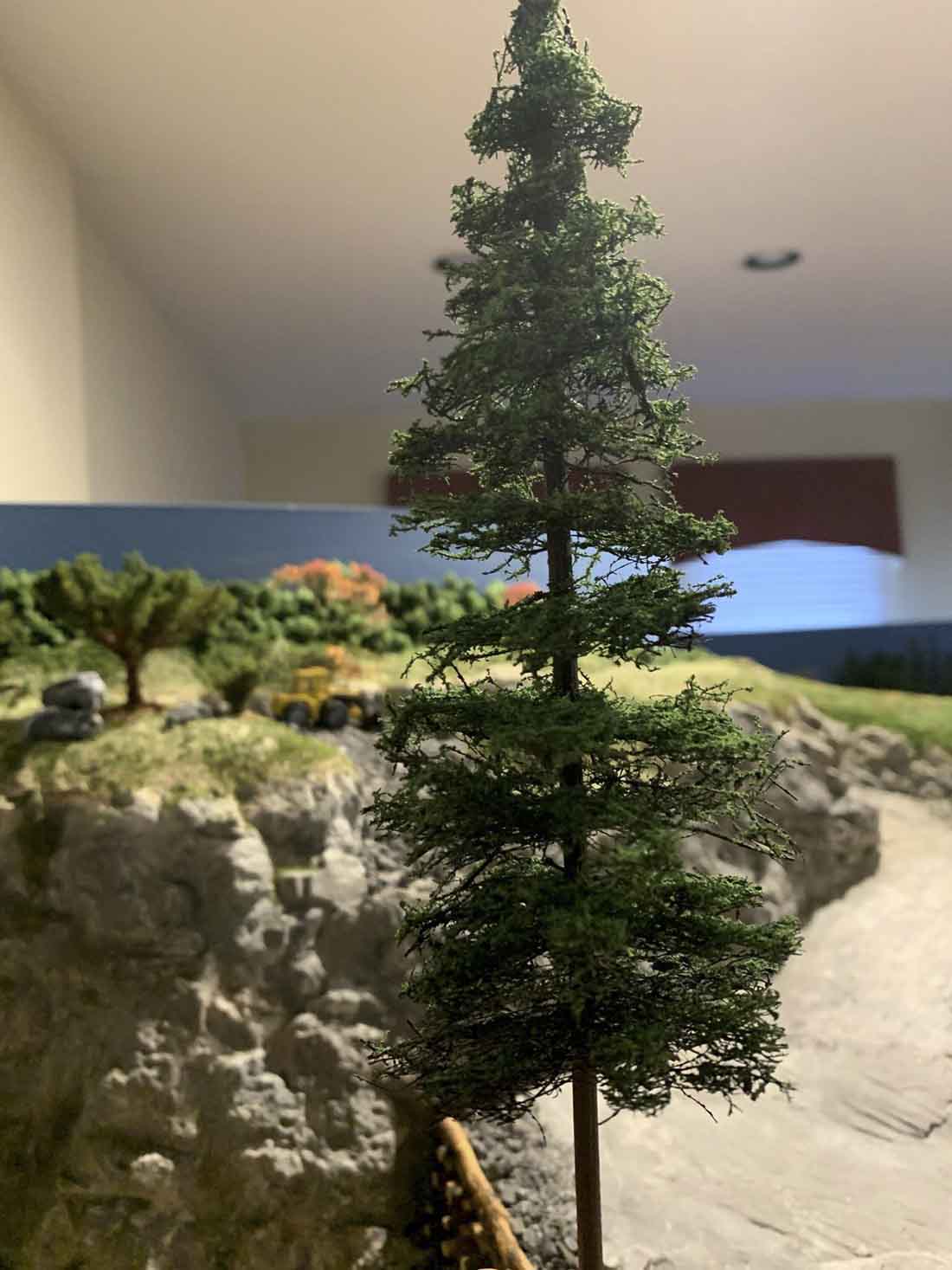
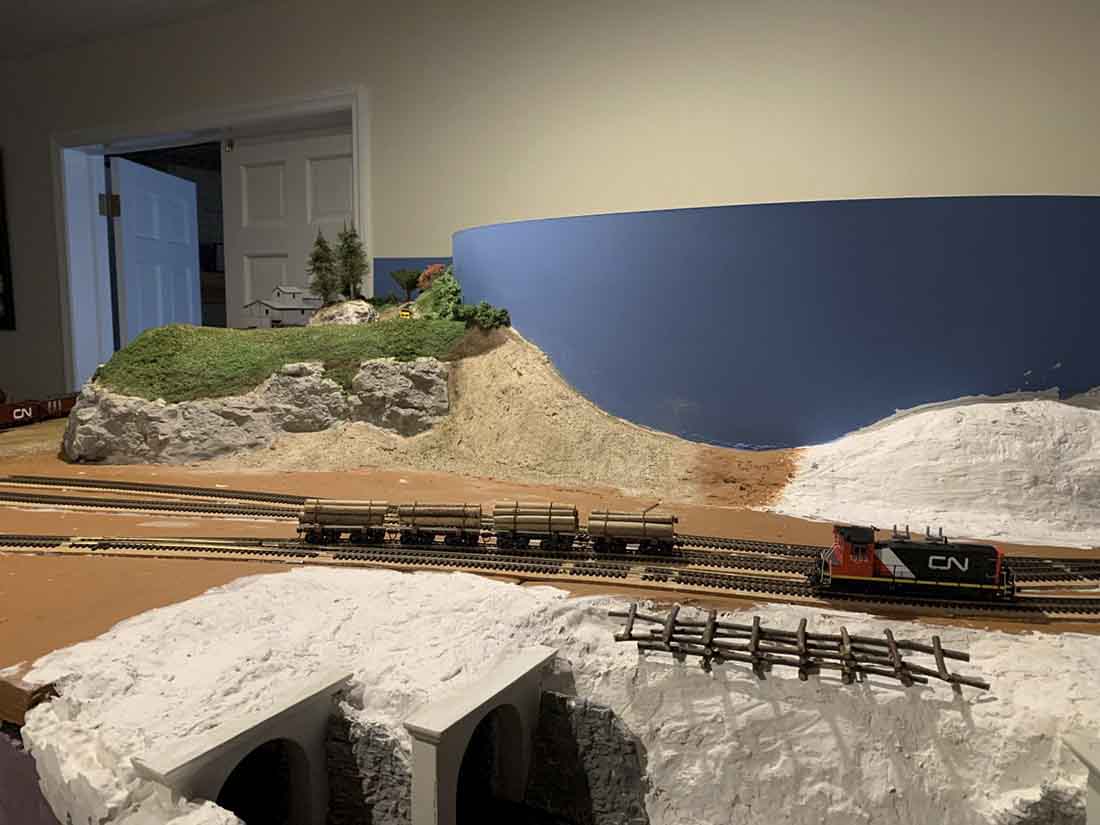
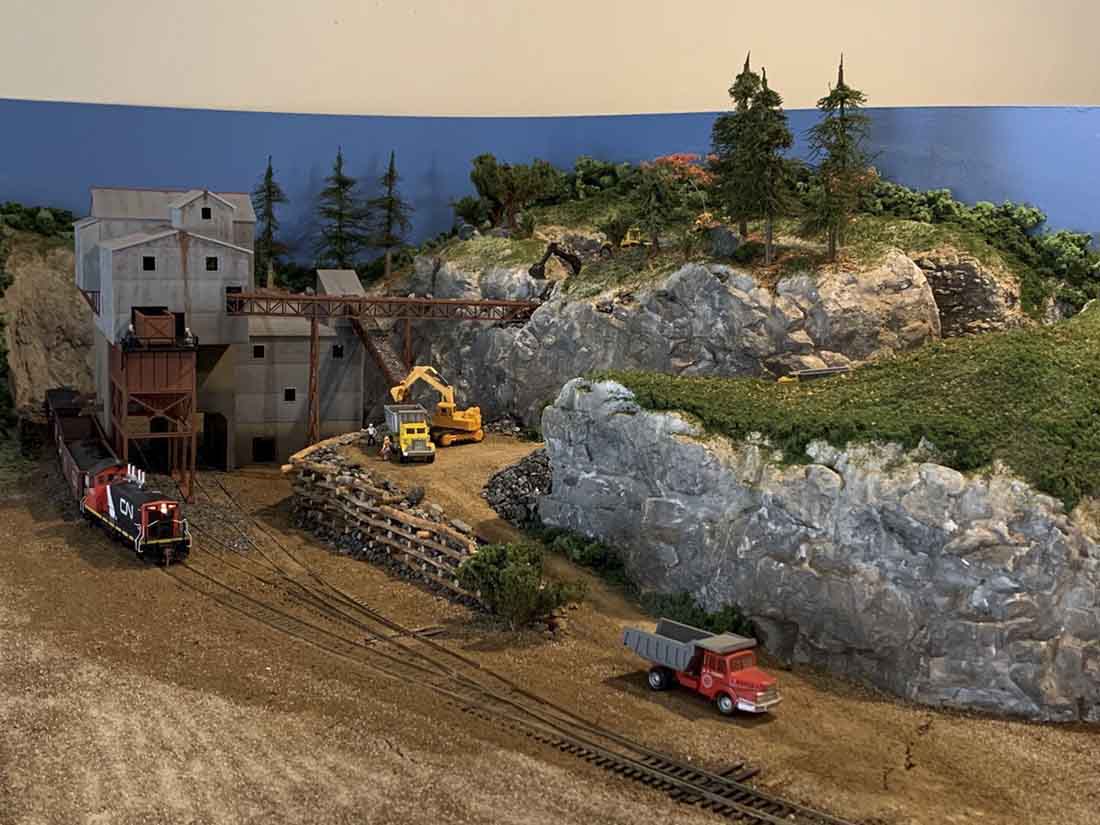
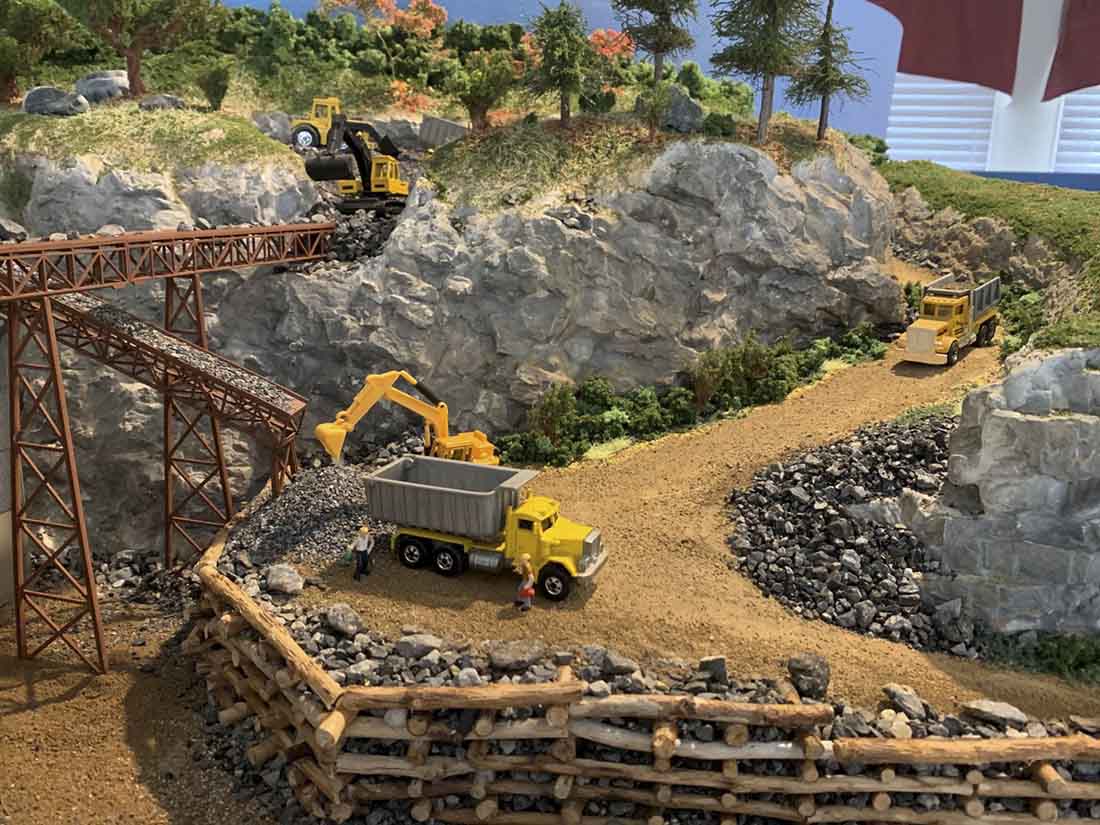
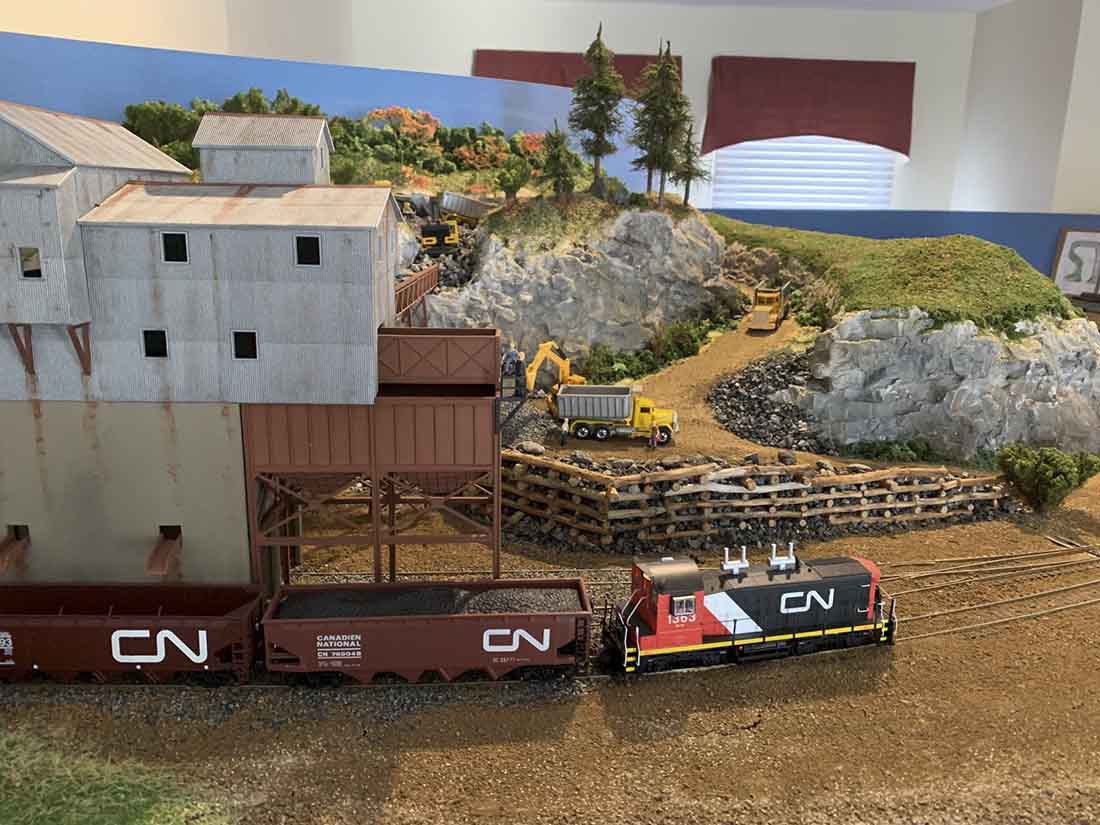
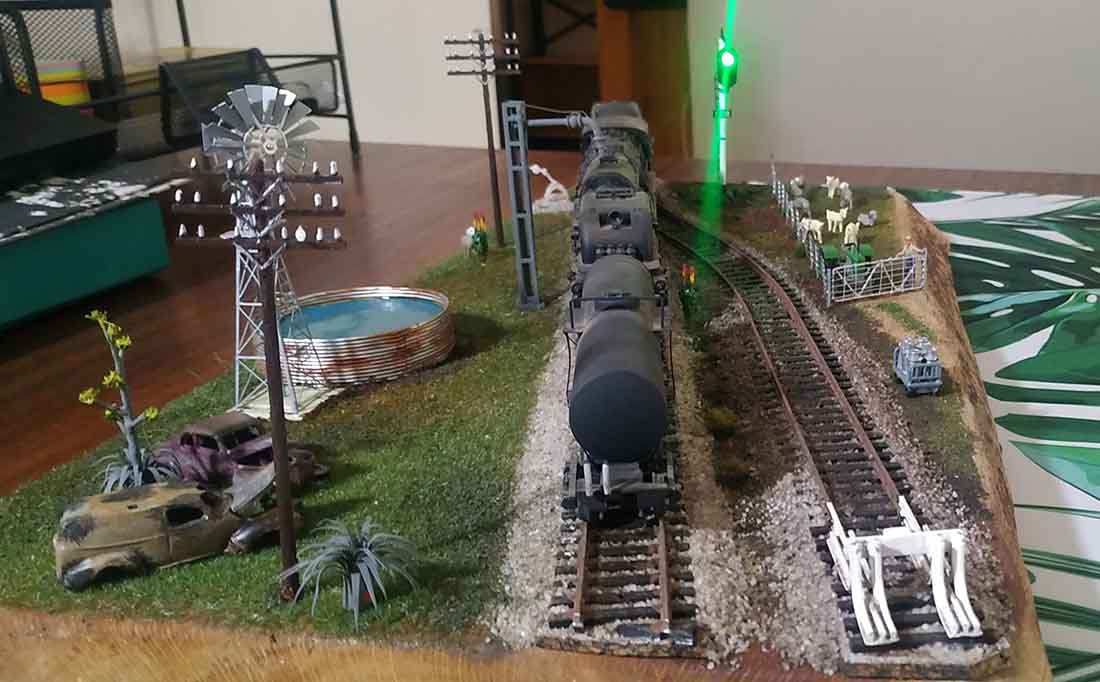
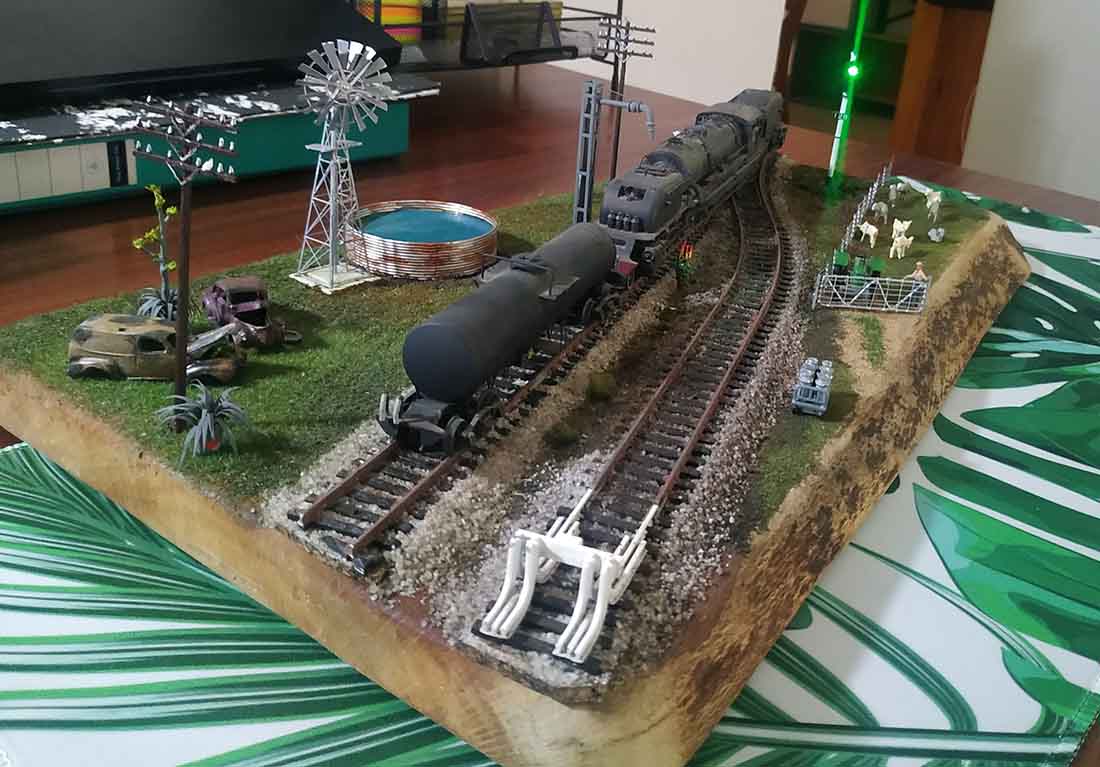
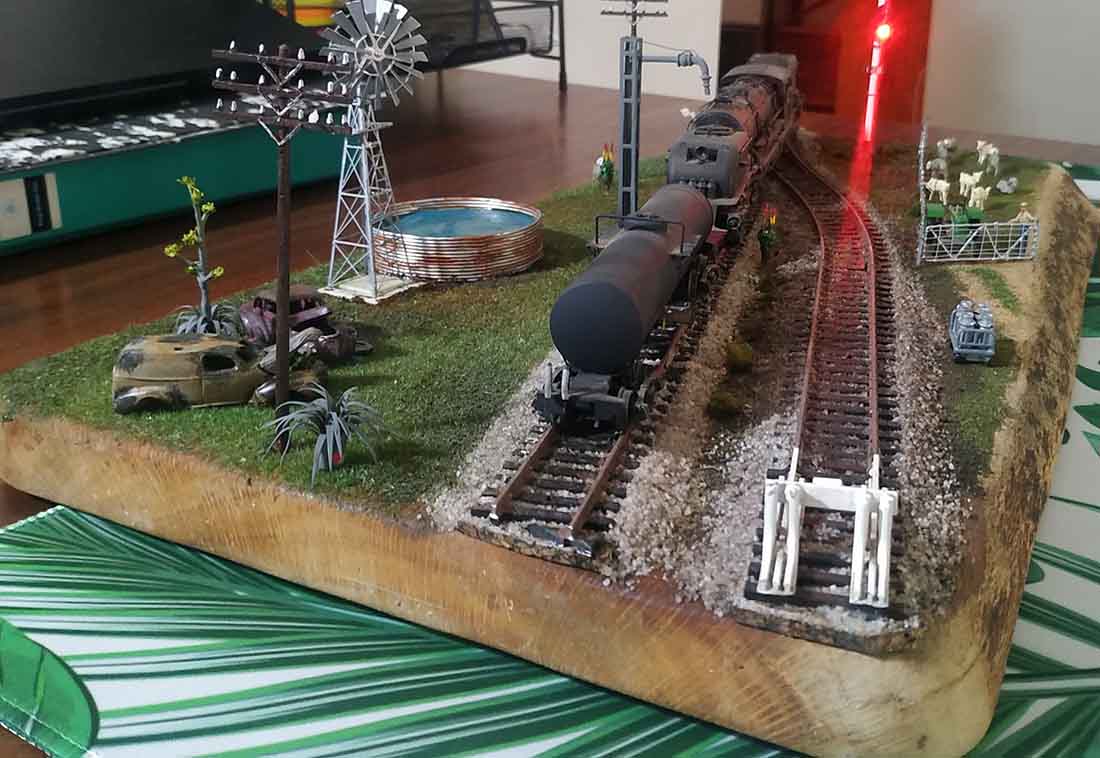
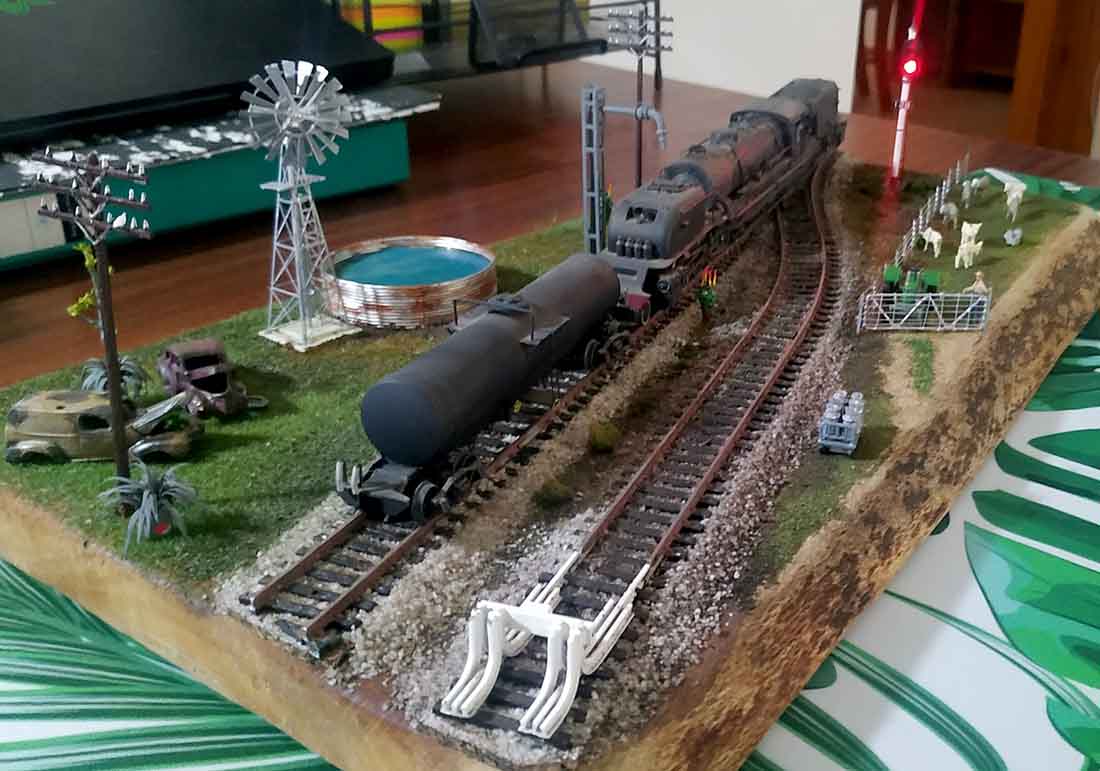
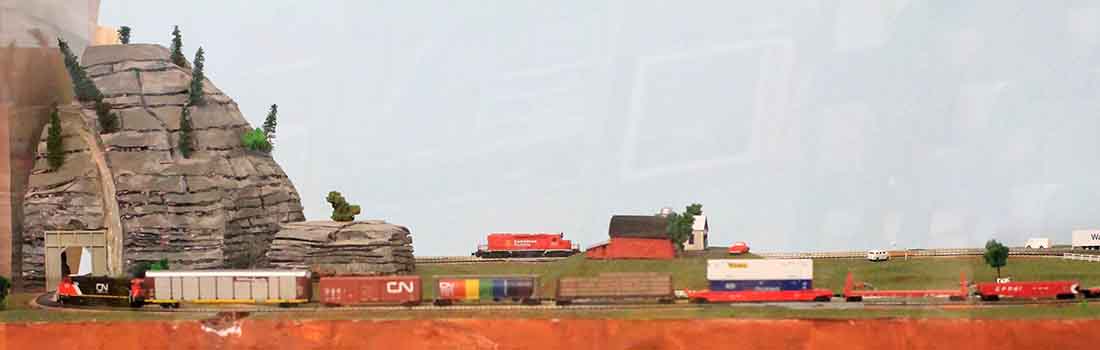
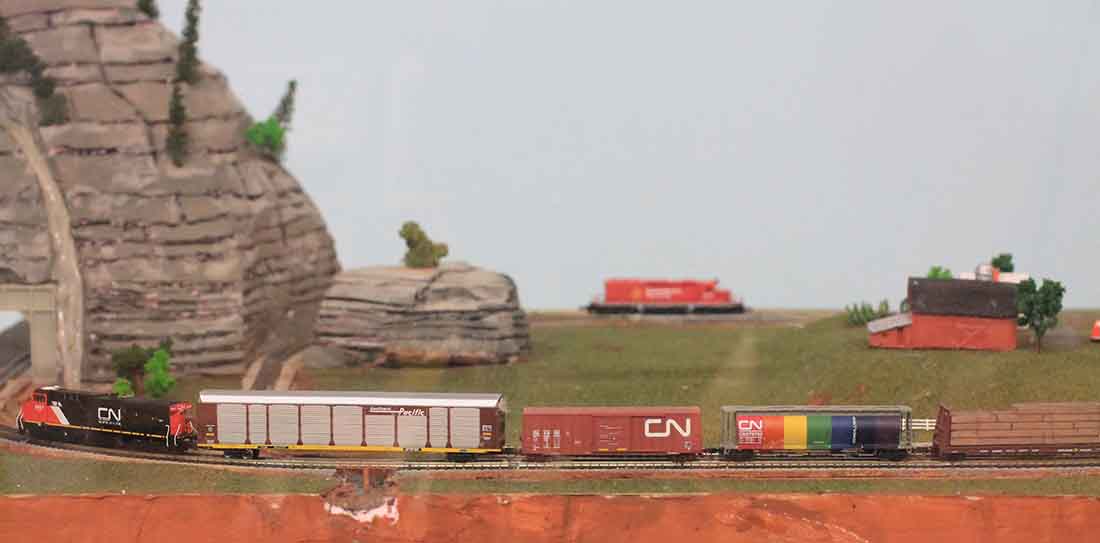
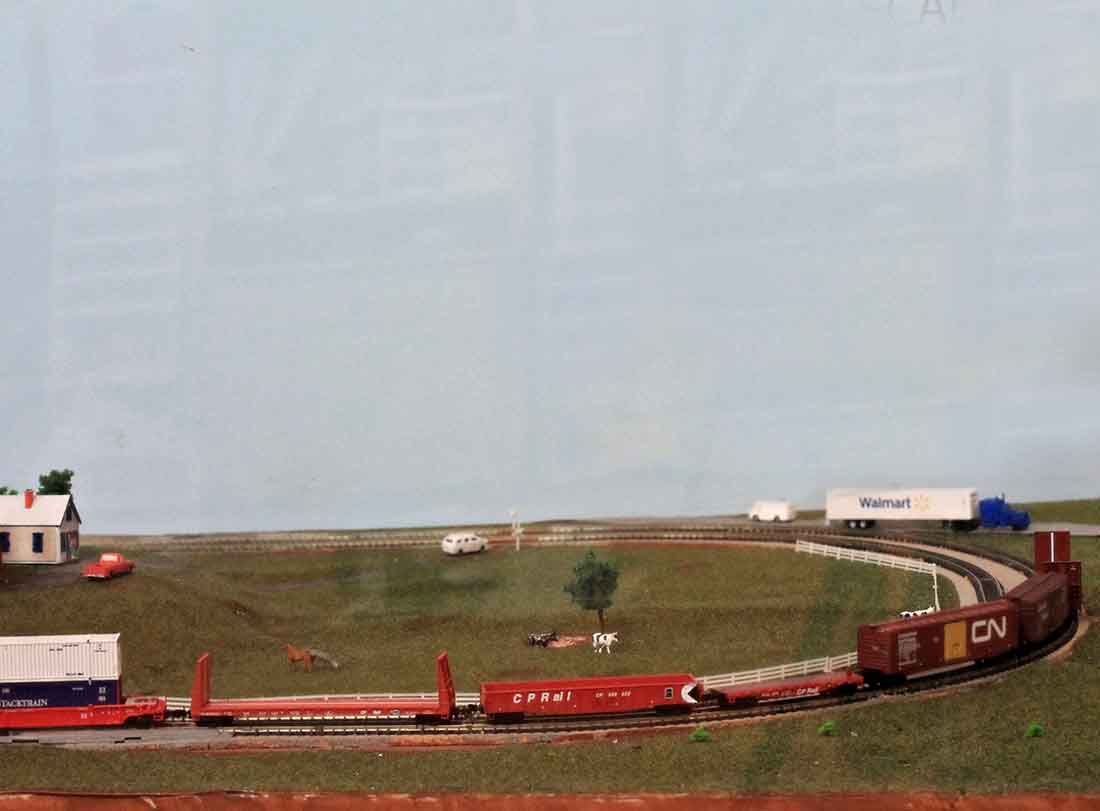
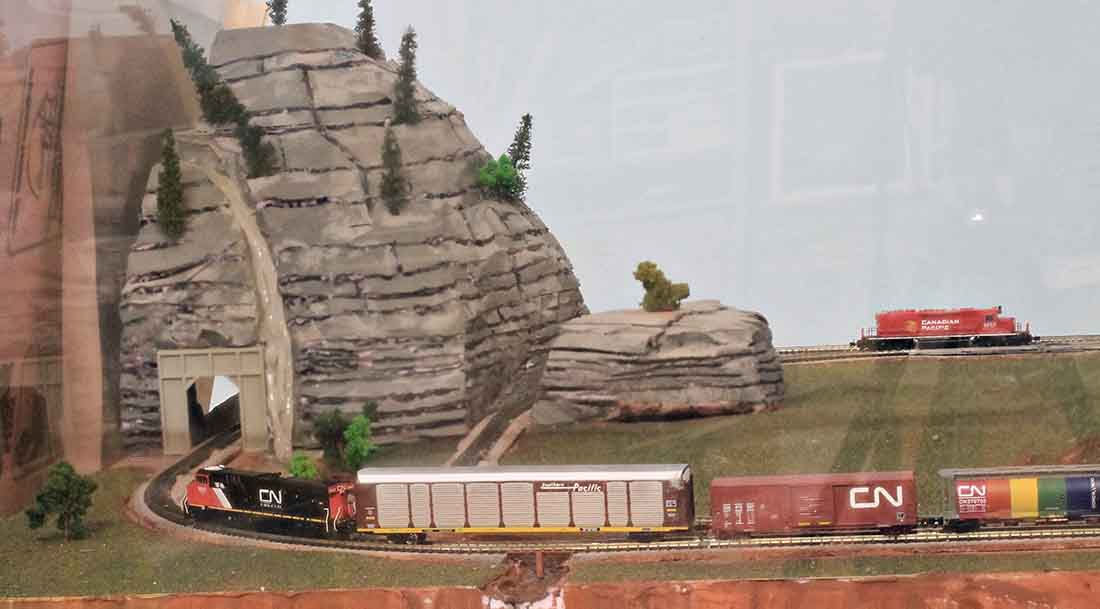
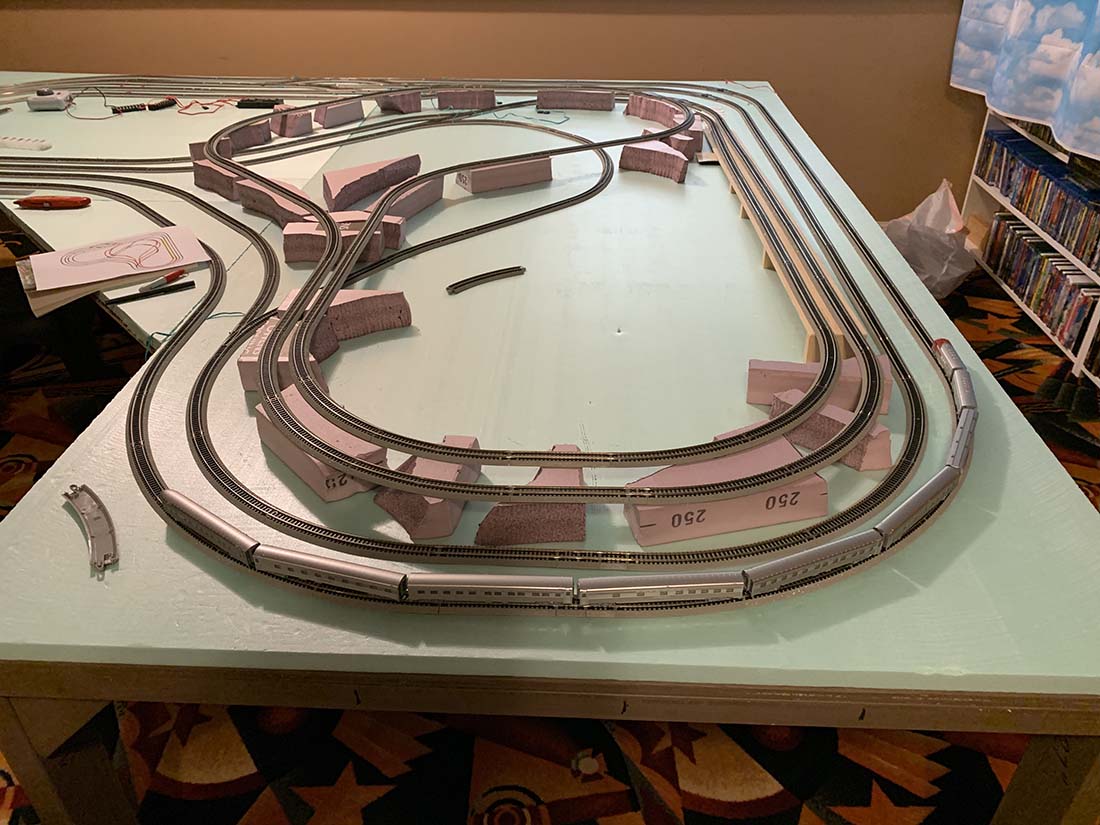
John’s HO scale track layout

John’s been in touch with his HO scale track layout.

I really enjoyed his narrative – I’m sure many of you will be nodding your heads in agreement:

“Hi Alastair,

I’ve subscribed to your daily emails for a few years now and finally have gotten the courage to submit something for your site. Hopefully you can use it.

I am in the fairly early stages of building my HO layout but thought I would share some info/photos of where I am some 20 months into the process.

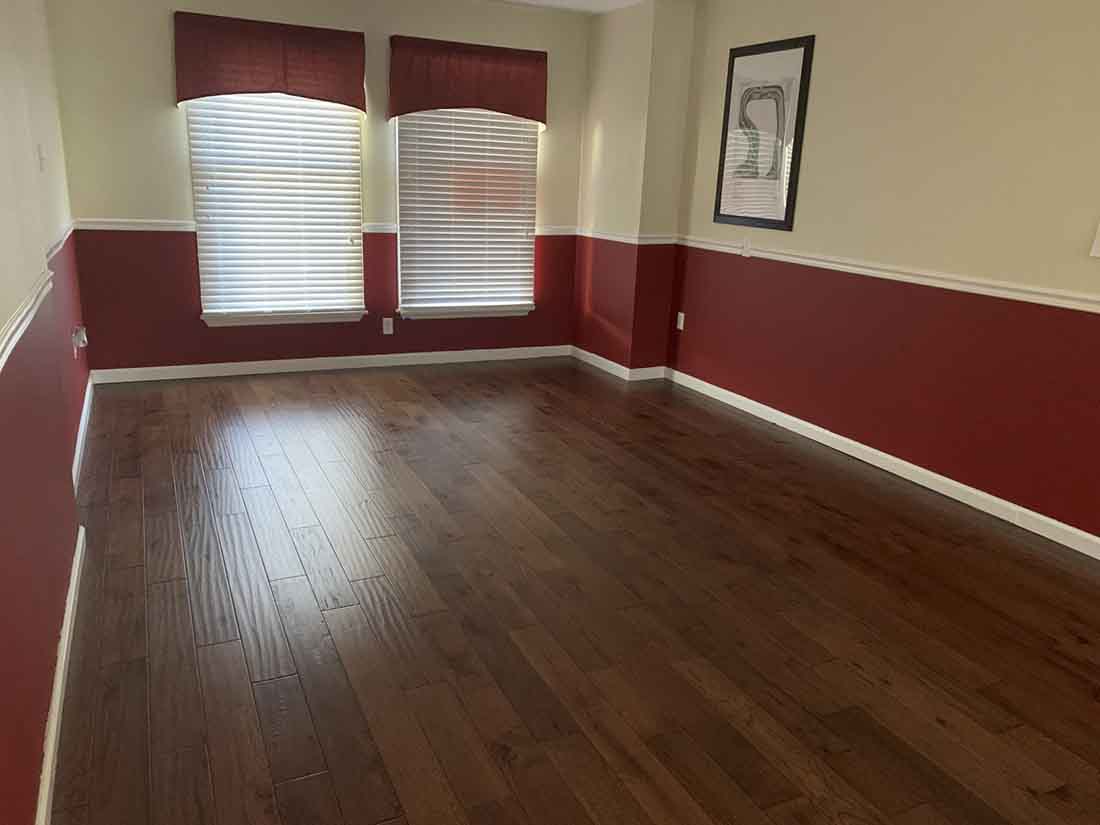
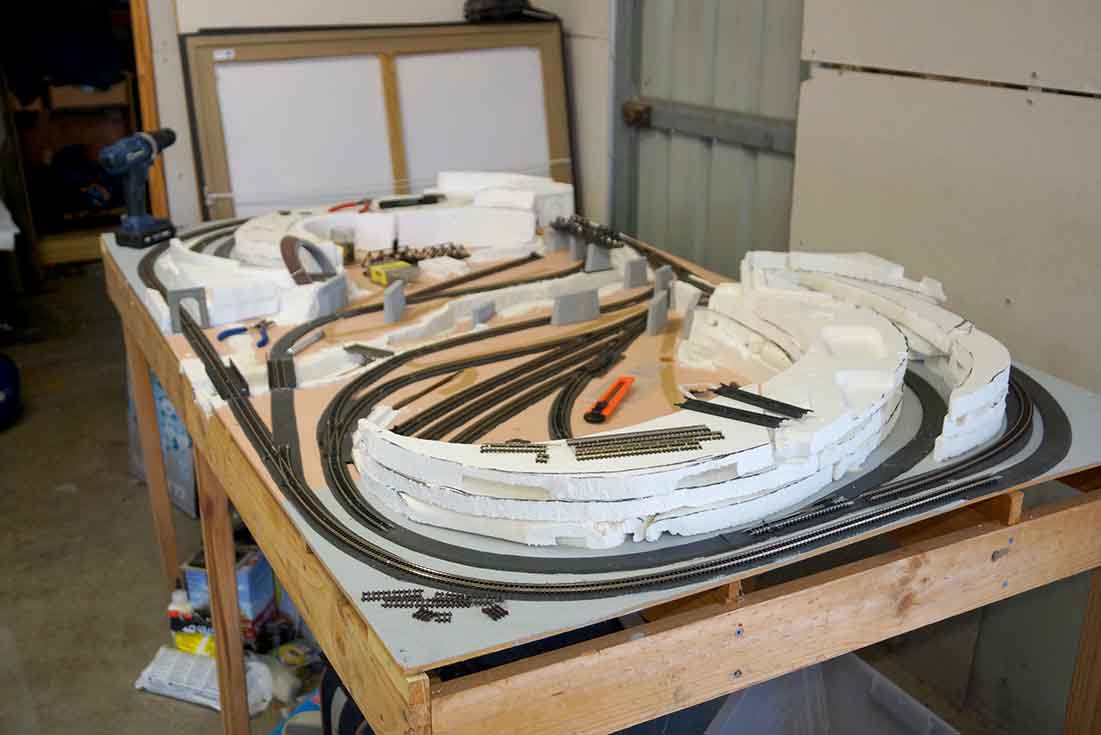
My railroad, the M&K Division of the Erie-Lackawanna Railroad, is an approximate 10′ x’15’ representation of a fictional division of the E-L located in the northern New Jersey-Pennsylvania-New York area.

It features a point-to-point main line (still under construction) and a branchline.

The branchline can function as a point-to-point via two connections to the mainline when I want to “operate” it, or as a large, self-contained loop to run trains for visitors.

I named the M&K in memory of the two people who were instrumental in developing my interest in model trains — my father-in-law, Joe Mandrick, and my dad, Otto Kampfe.

At this point, there are/will be 10 cities, towns and other points of interest on the layout.

With the exception of Hoboken, NJ, the actual eastern terminus of the E-L, and a 2-track hidden staging area representing Scranton, PA/Chicago at the other end of the main line, the rest are named after family members and places that are meaningful to me.

There will be a small amusement park with an operating carousel and ferris wheel, and a gazebo where there will be concerts for visitors. The carousel and ferris wheel kits are still in their boxes. 

I began the planning process for the M&K shortly after my retirement in late October 2020. Although I had helped out my late father-in-law with his layout, a 4’x12′ oval, this was my first attempt at building my own.

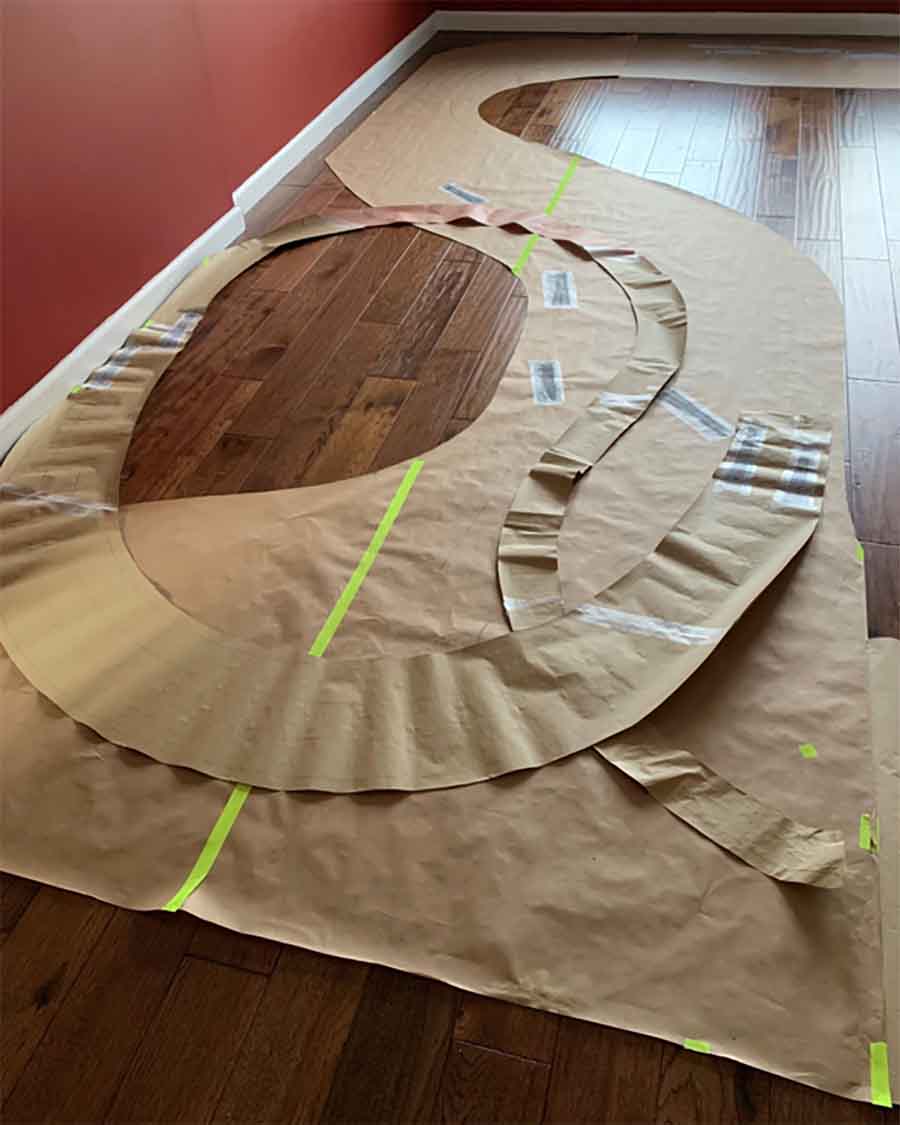
I devised a track plan over that first post-retirement winter that was in the shape of a question mark, which was inadvertently appropriate given my lack of layout building experience. 

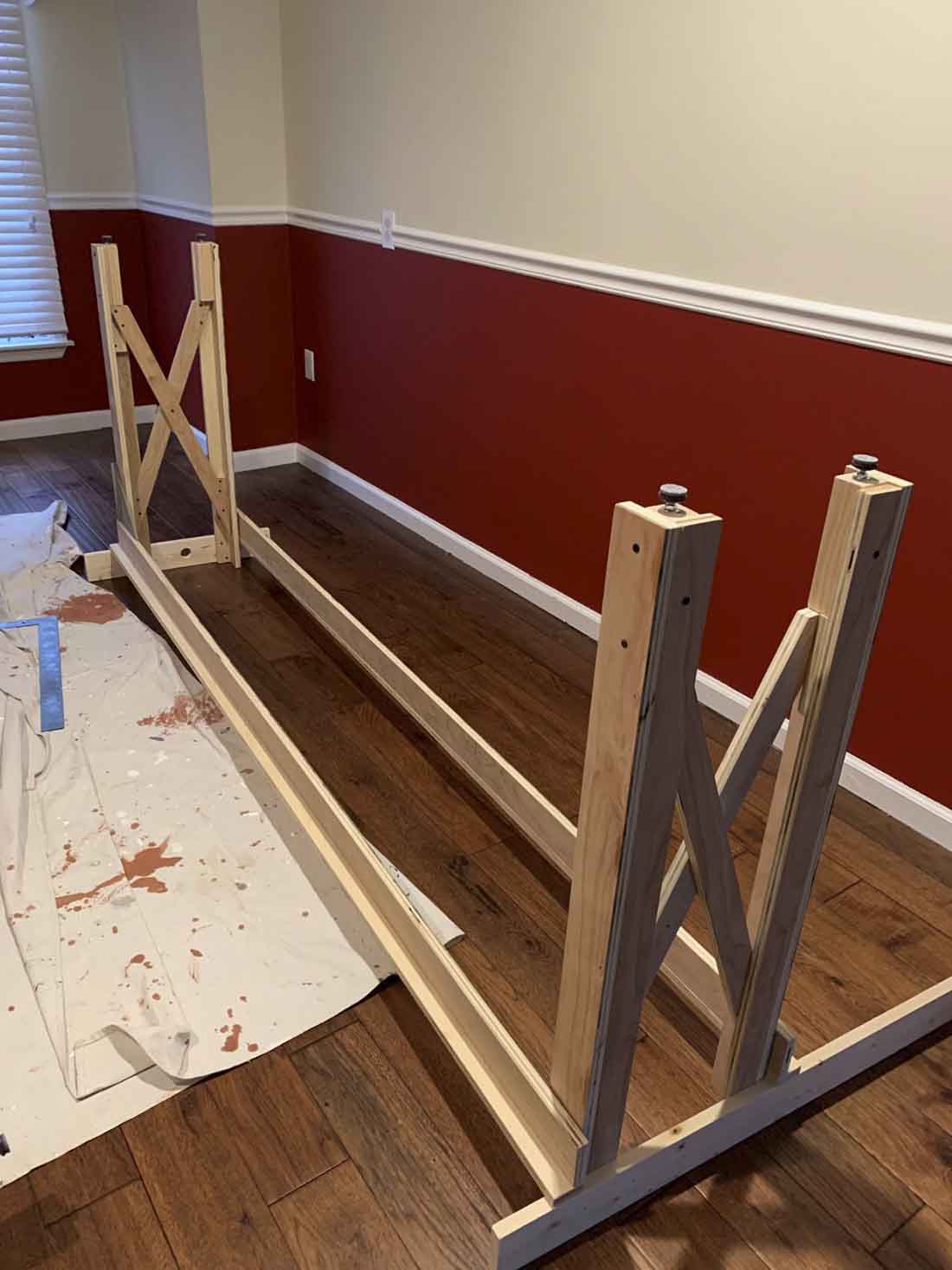
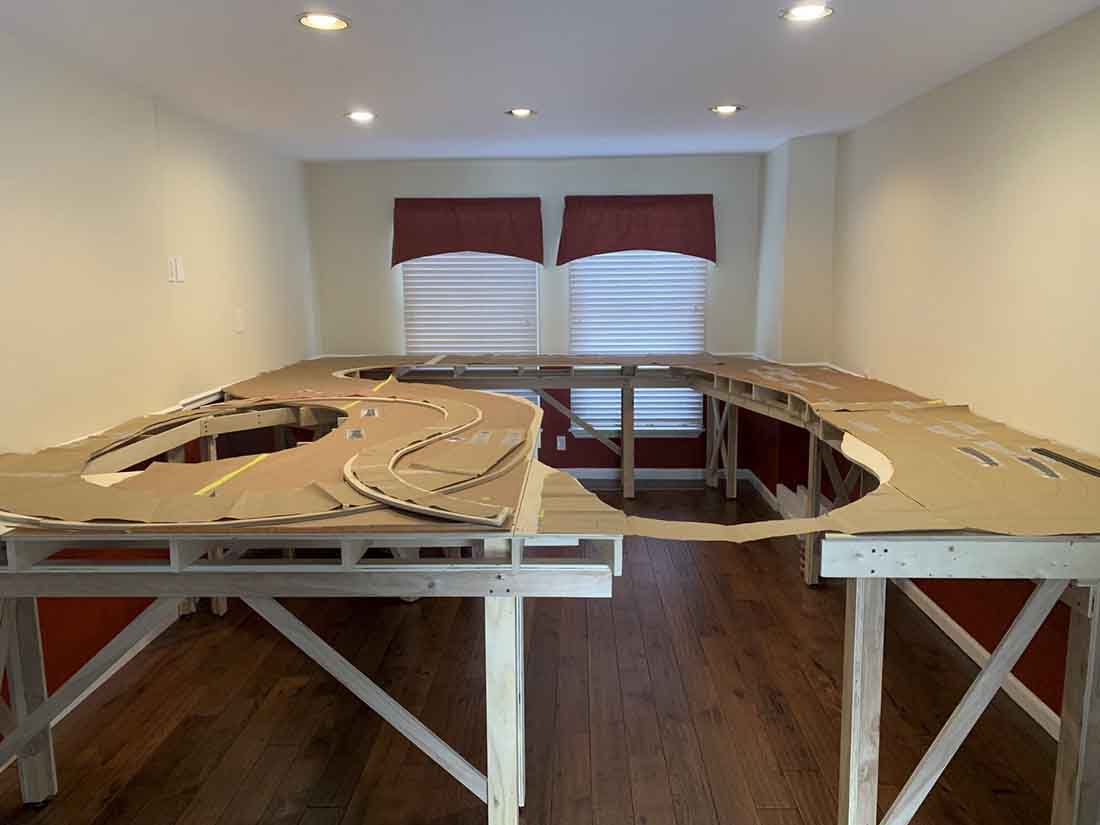
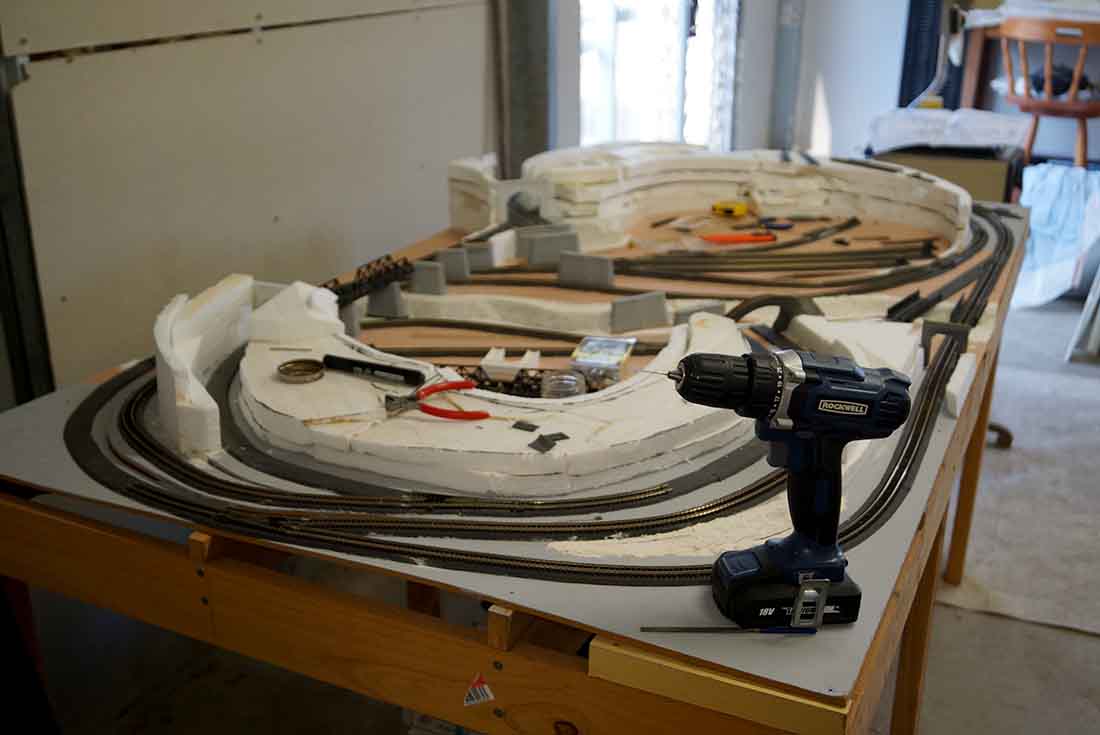
Construction on the benchwork began in early March 2021.The layout is a series of 7 smaller tables that were built using 1x3s for the frames and interior support braces, and 1x2s for the legs, which have adjustable feet. I also used 1x3s as leg braces.

The benchwork is 3 feet above the floor, which these days probably is a bit low. But I wanted to be able to stretch to reach the back corners of the layout.. 

I am far from being an even remotely accomplished carpenter. I watched some YouTube videos to get an idea of the basics of building benchwork and took it from there. All in all, it’s quite sturdy.

The benchwork was completed in late August 2021. I marked the milestone by inserting a “golden screw” (as opposed to a “golden spike”) in the area where the last screw was set into the benchwork.  

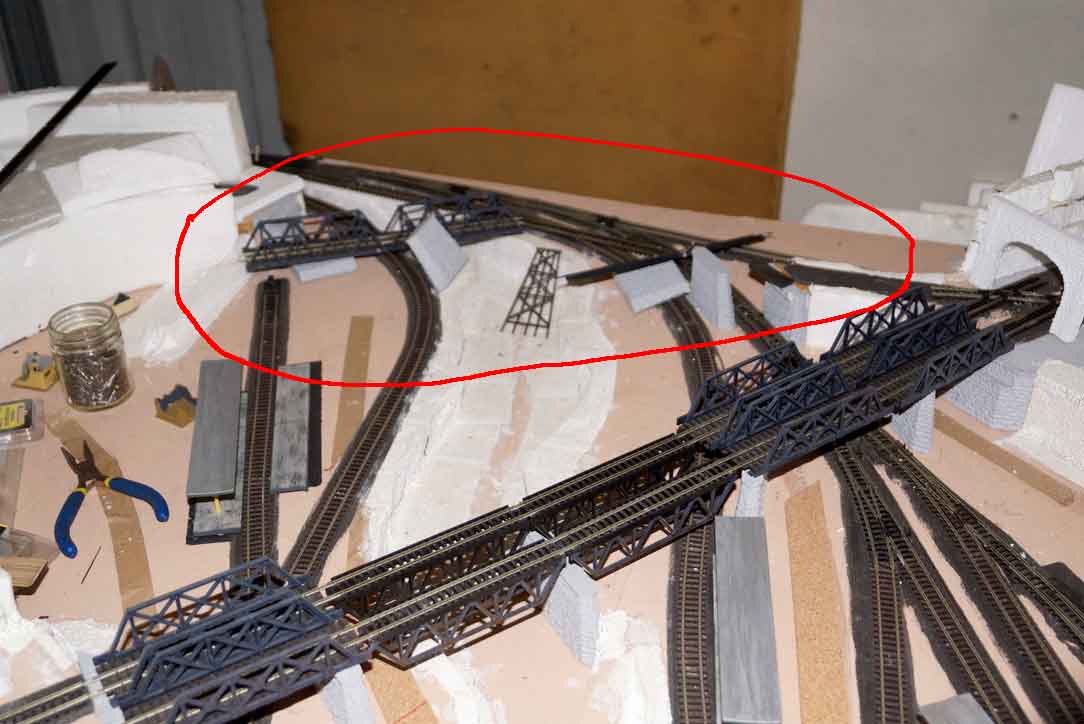
While the construction of the benchwork was easier than I anticipated, the laying of track has not been. The track plan is ambitious — probably overly so for a beginner — with several elevation changes as the track climbs to 8 inches above the benchwork at the hidden staging yard.

I have used 1″x3″ piers cut to varying lengths that are set on 1/2″ or 3/4″ thick bases. The piers support 1/2″ sub-roadbed between 3″ and 8″ wide. I started out using 1/2″ plywood for the sub-roadbed but, on the advice of a local model train store owner, have switched to using Homasote in most cases. It’s just much easier to drive track nails into the Homasote. 

I have had to make several changes during the track laying process. Whoever coined the phrase “life is full of compromises” must have been a model railroader.

I’ve made many with regards to curve radii, grade, track routing, etc. Grades were my biggest issue.

In many instances, I made them too steep. For example, I had to rip out a long section of track and rebuild it complete with new piers and sub-roadbed after encountering many problems when trying to run test trains through the area. That set me back a good month or so.

There were other instances where I had to rip-and-replace on a smaller scale to rework the track grade, as well. I now seem to have it correct. I’ve adhered as close as possible to a 1″ gain in altitude for every 4 feet of track.

I also did not follow the expert advice I found online with regards to electrical power blocks. The general rule of thumb cited by most was to space blocks about 6 feet apart. I thought that was excessive. I set up blocks that were much further apart and the result was either a noticeable slowdown by locomotives or complete stalls.

Luckily for me, I am using terminal tracks to supply track power — sorry, soldering is just not my thing at this point — so I installed a few more of them at strategic points along the rights-of-way and operations are significantly better.

As of now, I am going the DC route to power the layout. My locomotive fleet is entirely DC and the M&K treasury just cannot sustain the conversion to DCC.


Capital construction costs related to the purchase of lumber, track, turnouts, etc. have been much higher than anticipated thanks to COVID-related inflation and supply chain issues. Which brings me to some advice to model railroaders who are about to take the plunge like I did and build a layout: make sure that the size of your layout matches the size of your budget!

All of the wiring I’ve done is temporary. This allowed me to run test trains on the layout to test electrical performance and find trouble spots where trains might derail, uncouple, or “bottom out” due to grades that are too steep as I progressed with the track laying phase.

I still do have 2 major pieces to build: Hoboken with a scaled down passenger terminal and yard; and the fictional city of Gregson, which will house the division’s main freight yard. Those items likely will have to wait until the spring. 

Over the winter, I will build a control panel for the layout where I will locate switches for 2-cab power supply to the blocks along the main and branch lines and a few switches to remotely operate inaccessible turnouts.

Most turnouts, though, are easily accessible and, at least for now, I will throw them by hand. I just completed the table on which the control panel will sit. It is wide enough to accommodate 2 “engineers” sitting side-by-side. The remainder of the construction of the control panel and resultant permanent wiring should keep me busy over the winter. 

Another project for this winter is to get moving on scenery.

I have done a lot of work on an area named “Joe’s Landing,” where folks can rent rowboats to cruise on the “Delasack River.”

The Delasack name is a combination of the names of 2 prominent rivers the E-L crossed back in the day — the Delaware and the Hackensack.

Joe’s Landing features a scratchbuilt dock, a Woodland Scenics work shed (which serves as the rental office) and rowboats. The river itself is several layers of acrylic paint (brown, green and blue) topped with several coats of clear acrylic varnish. I learned this technique from a YouTube video produced by 2 modelers from the UK. 

For the hills surrounding the property, I experimented by using spray foam insulation, an idea I gleaned from Alastair’s Beginner’s Guide.

I painted the insulation brown and am now in the process of adding ground cover to the hills.

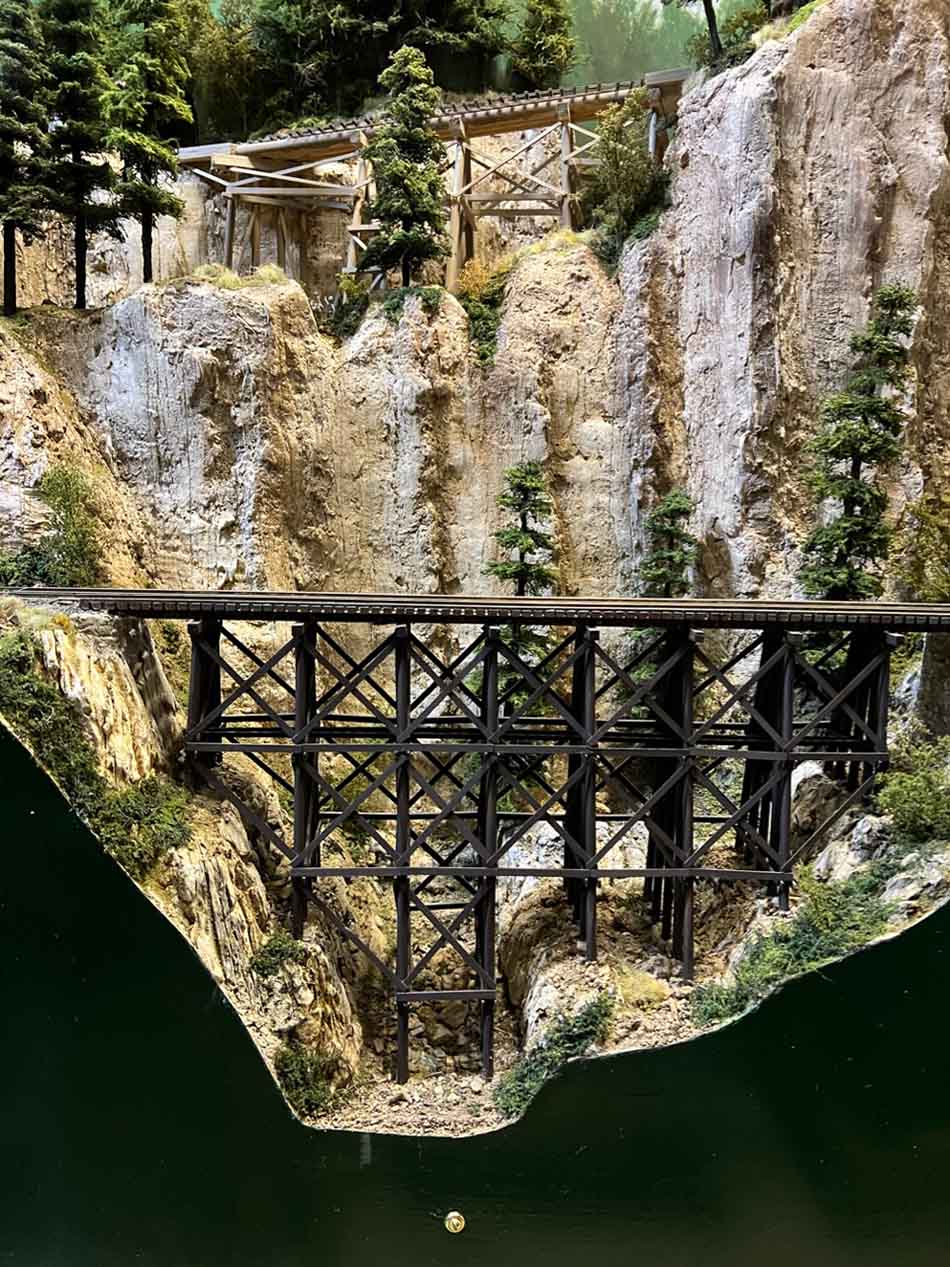
Hopefully this works well enough for me to use it throughout the layout. The real-life area in the vicinity of Hoboken is punctuated by igneous rock bluffs, called the Palisades.

I am attempting to represent these for a stretch of the layout between the Delasack River and the town of Marysville using discarded pieces of slate roofing that I have found in my yard. We will see how that works out. 

I have experienced plenty of highs and lows since taking on this project. There have been times when I considered scrapping the whole thing and, instead, using the tables to accommodate a layout of Lionel trains that I have inherited or accumulated over the years.

I’m sure I am not the first model railroader to want to throw in the towel. But, thankfully, those were relatively fleeting moments and I have moved forward, all-in.

Hopefully I will have an update on my progress on the M&K later this year.

Jersey Shore John”

HO scale track plan

HO scale bench work

laying HO scale track

golden spike

Golden Spike!

HO scale fishing scene by track

HO scale girder bridge

making HO scale tunnel

branchline HO scale

HO scale river fishing

Higlands street store

freight train marysville

HO scale junction box

A huge big thank you to Jersey Shore John for sharing his HO scale. If you want to fast forward to his next missive, it’s here: Erie Lackawanna model railroad.

I liked his narrative just as much as his pics – there are some pearls of wisdom in it.

I think at some point, everybody feels like throwing in the towel, or starting from scratch again. It’s all part of the journey. I’d really love to hear your thoughts on it, please do comment below.

That’s all for today folks.

Please do keep ’em coming.

And if today is the day you want to join in with the fun, the Beginner’s Guide is here.

Best

Al

PS More HO scale train layouts here if that’s your thing.


Need buildings for your layout? Have a look at the Silly Discount bundle.
Woodland scenics foam track bed

Rob’s been back in touch.

This time he talks us through using Woodland Scenics foam track bed, and why he does it:

“Hi Al,

This is video 2 of my 3-part series on building a simple and inexpensive layout for running trains. I am working on part three now and it should be ready for you soon.

These instructive videos are meant for the novice who would like to have a little layout but does not really know for sure how to proceed.

Over the years I have developed several methods that have proved themselves to be very reliable, easy, and relatively inexpensive. I would like to pass them on to the new guys and girls so they won’t have any excuse left not to start their own layout.

If a layout such as this is started it will build the skills needed to create more complex layouts and track plans later on if one wants to go on from here. Practice is what raises skill and knowledge levels after all.

As I said before on the earlier n scale layout submission after I sold my Colorado and North Western layout (CONW), I found myself with a considerable collection of (1:160) N scale engines and rolling stock but I had no place to run them. This little compact layout will solve that problem and allow me to run my little gems again.  

The video below is about how I glued down the Woodland Scenics foam track bed underlayment. It takes about 3 minutes to watch and took me an hour to glue down.

I like the foam track bed because, (A), it is fast and easy, (B) It provides an acoustic barrier between your board and the track. Without this sonic barrier, the sound of the trains is transmitted into the board where it reverberates and makes it sound like the trains are running across a cello top or guitar top.

I prefer to only hear the sound of the wheels running on the rails. (C) Many people use cork which is fairly cheap, but many times must be cut to the correct width and is not as flexible as foam.

(D) In addition to this, it is not as good of an acoustic isolator as foam. I will usually take more effective, faster, and better over cheap, slow, and ineffective any time. 

I am so appreciative of all you do for the modeling community around the world.  

Thank you, Rob McCrain – Farland Howe”

Woodland scenics foam track bed

Woodland scenics foam track bed

Woodland scenics foam track bed

Woodland scenics foam track bed

woodlands scenic foam track bed


(Rob’s last post – on curve radius – is here.)

Now on to Jim

You’ll remember him from his HO scale Santa-Fe layout.

He’s sent in some latest pics with a very conscise narrative – but it’s hard to disagree with:

“All railroads need people.

From Santa Fe Bob in Florida, USA”

HO scale santa fe model train

HO scale brake car

HO scale bus depot

HO scale car garage

Ho scale hardware store

HO scale pond

HO scale pong house

HO scale construction site

HO scale warehouse

A huge big thanks to Rob and Jim. Please do post at the bottom of the page if you’d like to comment.

That’s all for today folks.

Please do keep ’em coming.

And if today is the day you decide to stop missing out on all the fun, the Beginner’s Guide is here.

Best

Al

PS Latest ebay cheat sheet is here.


HO scale diesel loco

Craig’s been in touch with his HO scale diesel loco pics:

“Al:

I have been reading for quite awhile and …just thanks. I really appreciate the tips.

I sent one post in about making some street lights and keep telling myself that I should do another on some of the things I have been doing for my lay out.

Mine is about 5 x 9 feet, takes up half the garage (which my wife constantly reminders me about, but that’s another story).

I bought the cookie cutter layout benchwork from a guy who just likes to construct roadbed.

I have added all the pink foam insulation for the mountains and to fill in between the tracks. It’s a work in progress, but I thought to share, hope it’s worth looking at. My first layout, and I made mistakes and have learned much from the experience.

My layout has little towns named after my grandkids. Caelville shows a couple of boxcars being unloaded at the local mercantile.

Downtown shows the teaming metropolis of Hunter and a couple of policemen shaking down two suspicious guys hanging around outside the shops. A little welding operation is going on at Teds workshop across from the new house under construction.

Downtown #1 gives us a view of the biker bar tucked back in the alley. Farther down the road we see the plumbing and hardware store and the local market.

A hot dog stand supplies snacks to the people getting off at the train station across the street.

I also wanted to put lights in a truck, so I drilled out the headlamps and glued two grain of rice bulbs inside them and ran the wire down through the roadway to the transformer. Turned out OK.

At the outskirts of town, below Caelville some folks are enjoying the lake and the fishing, camping and canoeing. On the other end of the layout, Sonny’s gas station has the monopoly on all the cars coming into Hunter.

I’ll take some better pictures next time, sorry for the blurry ones. I made some silos and a corrugated steel workshop that I will send pics in of. They turned out OK and were interesting to do.
Thanks, and keep up the good work.

Craig”

turnout with tunnel

freight train on quay cliff

ho scale street scene 1940

ho scale street scene 40s


ho scale houses

ho scale bridge town

ho scale gas station

Now on to Texas Bob:

“hi alastair,

I’m Bob from Harrisville RI. I…like your email details and tips

i’ve been working on my mapleville Vermont railroad for 15 years now (isn’t it a shame there isn’t such a town ),and with an injury I had ample time to finish it (well 95% anyway).

I haven’t posted any pic’s anywhere I didn’t think any were worth posting well here goes

tx bob”

model train freight cliff

model freight train bridge

model train freight cars

model train freight bridge

HO scale diesel loco

HO scale diesel loco bridge

diesel loco ho scale

Well, Bob, I’m glad you sent them in because I think your layout looks fab.

And a big thanks to Craig too fo sharing his HO scale diesel loco pics.

That’s all for today folks.

Please do keep ’em coming.

And if today is the day you jump out of your armchair to join in on the fun, the Beginner’s Guide is here.

Best

Al

PS HO scale train layouts here if that’s your thing.