4×8 layout – John’s

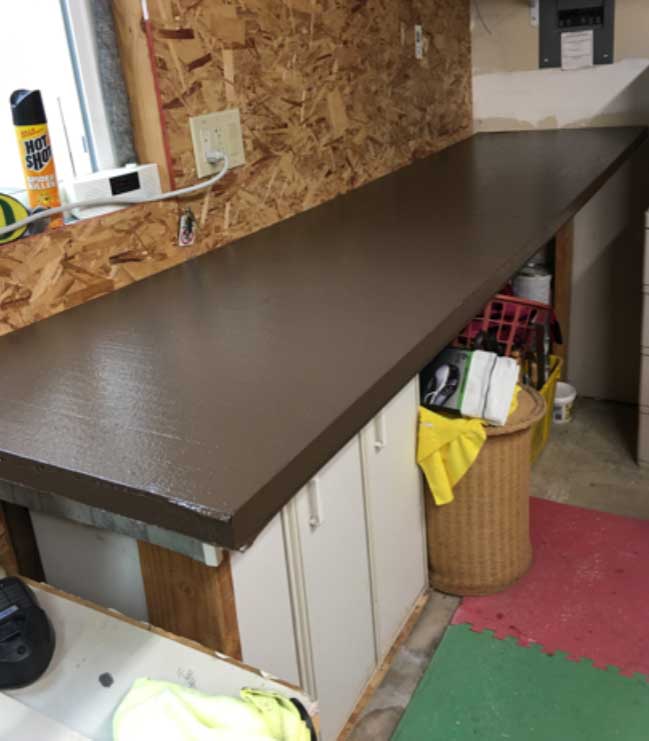
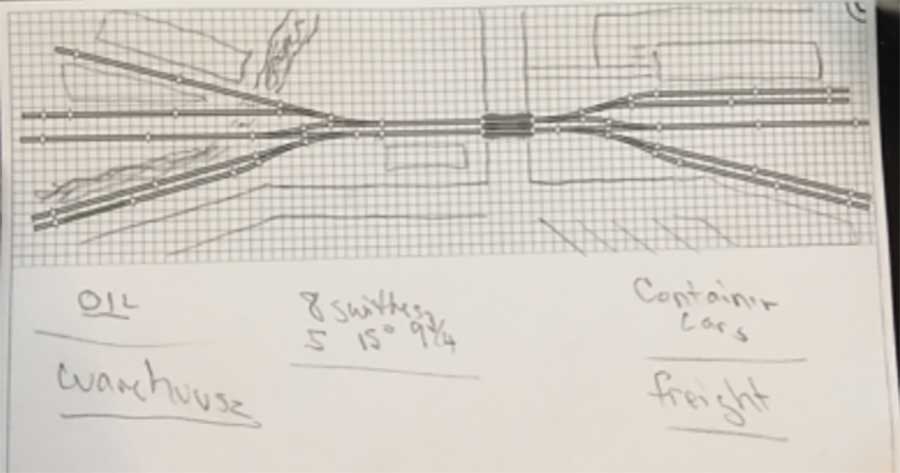
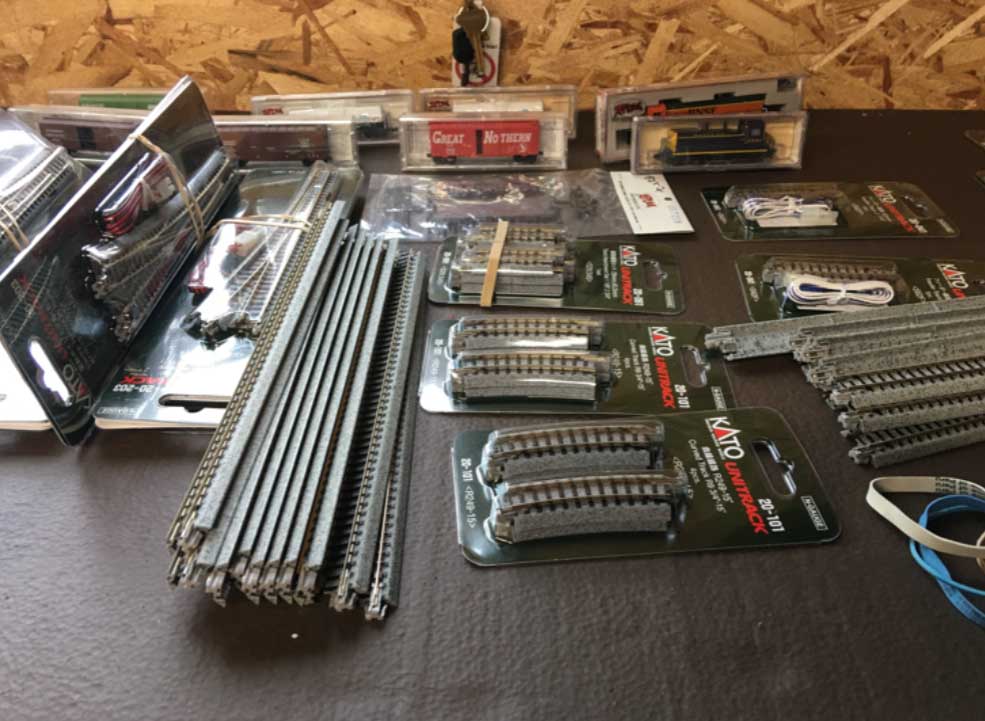
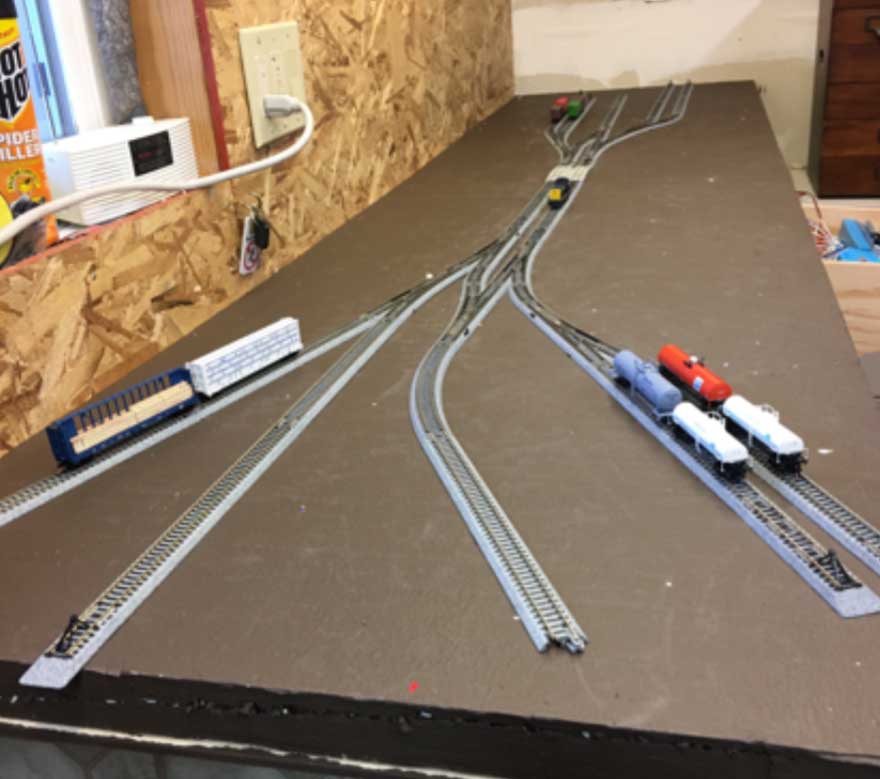
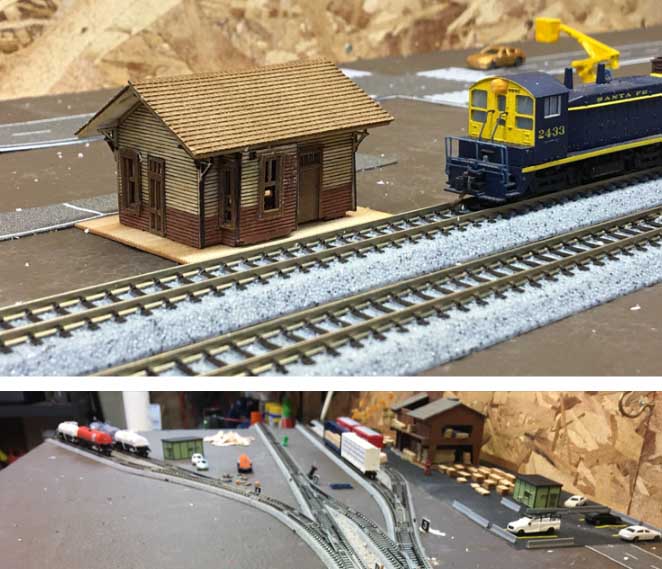
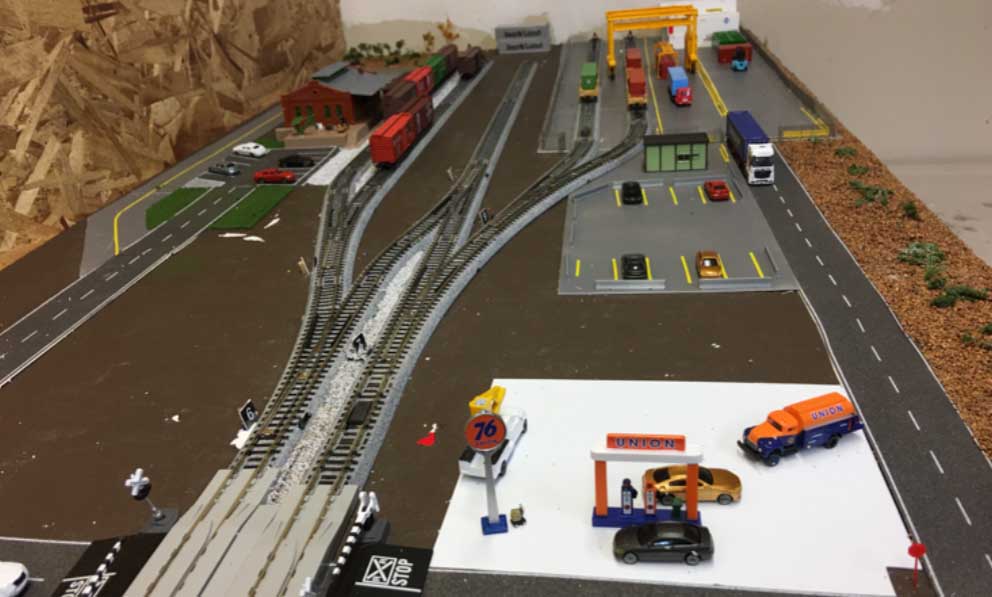
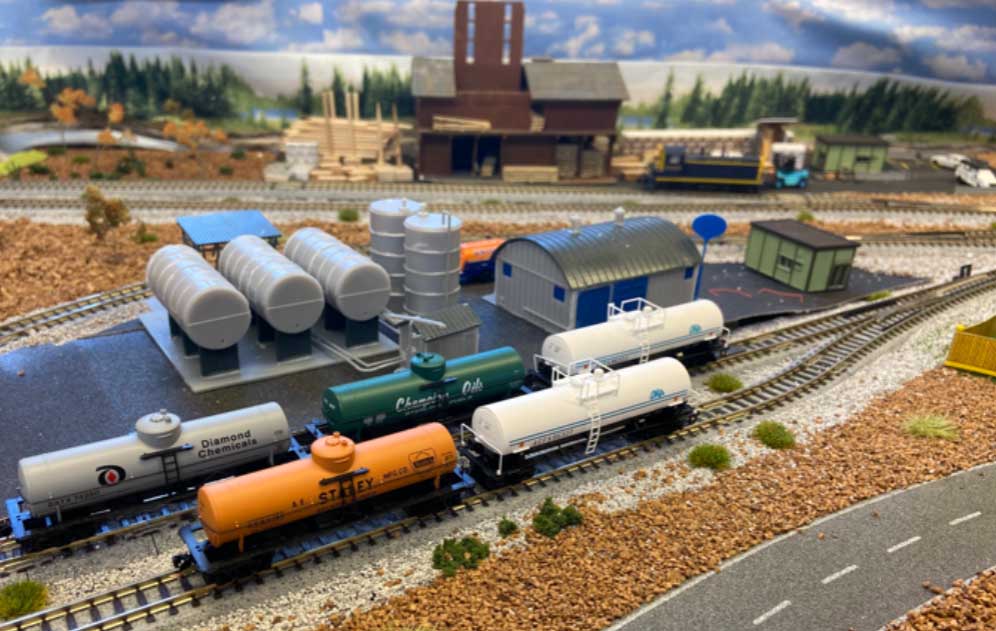
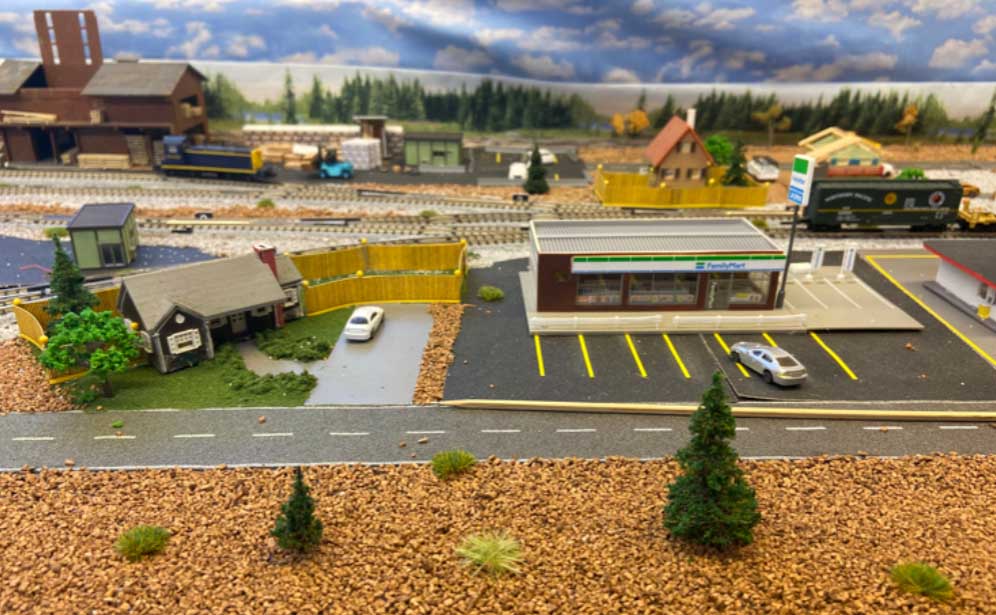
John’s been in touch with his 4×8 layout, or rather, one that started 4×8…

“Alastair:

After prodding from my dear friend George, I’m sending some pictures of my layout.

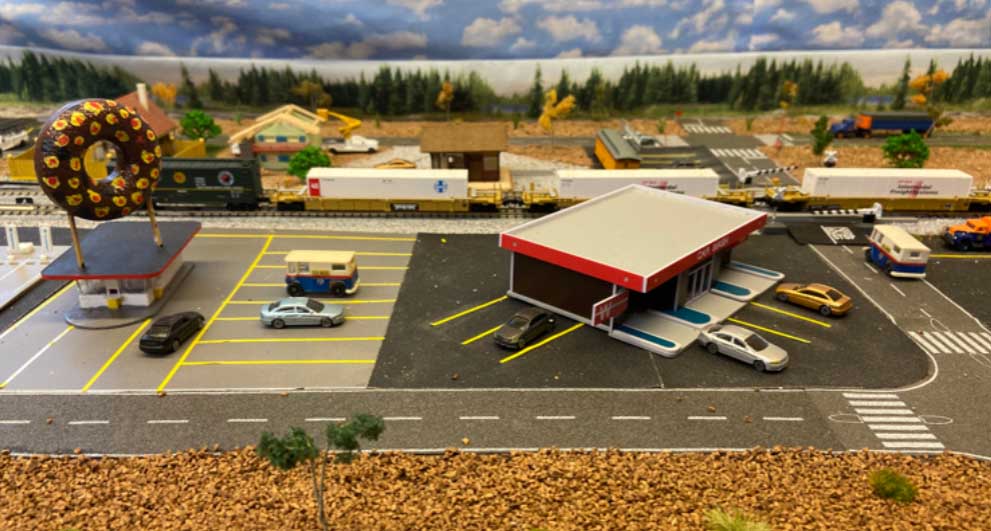
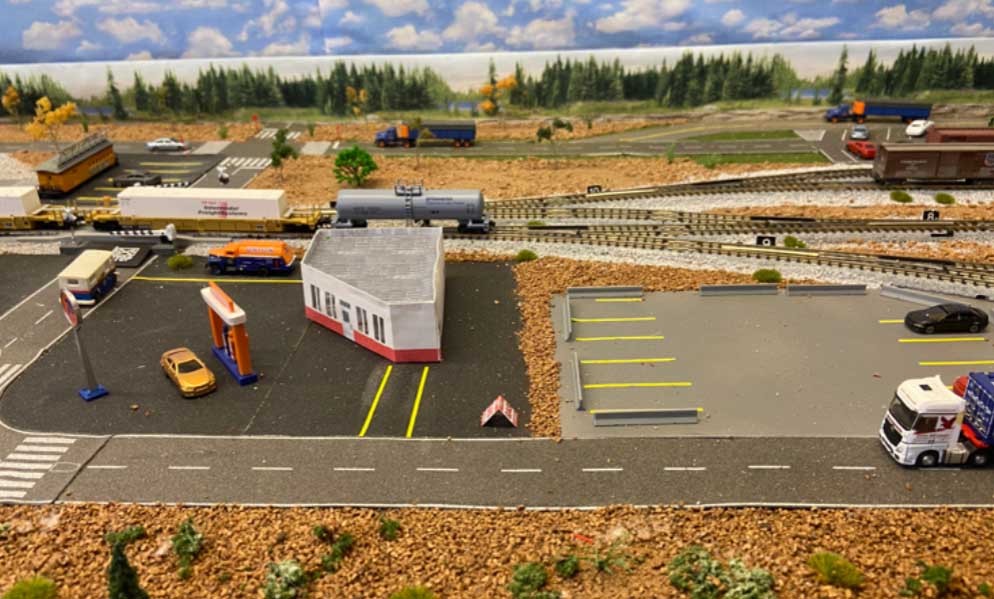
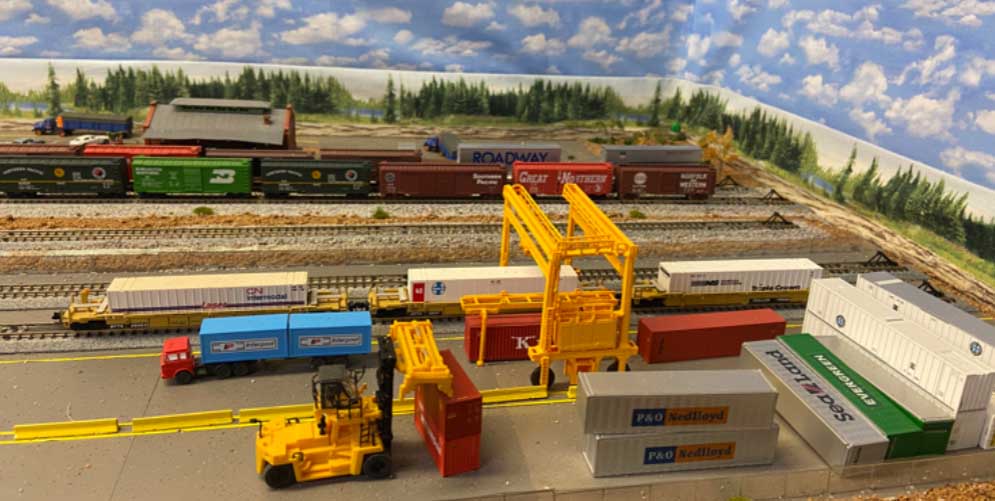
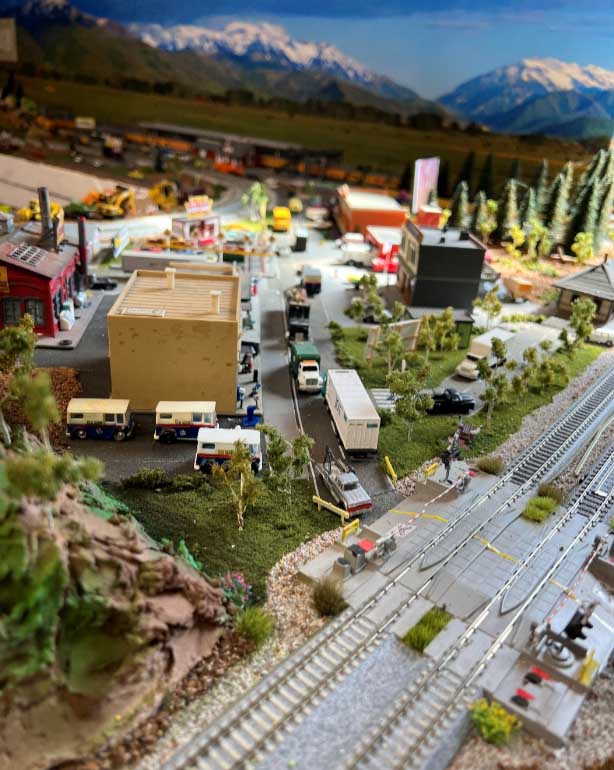
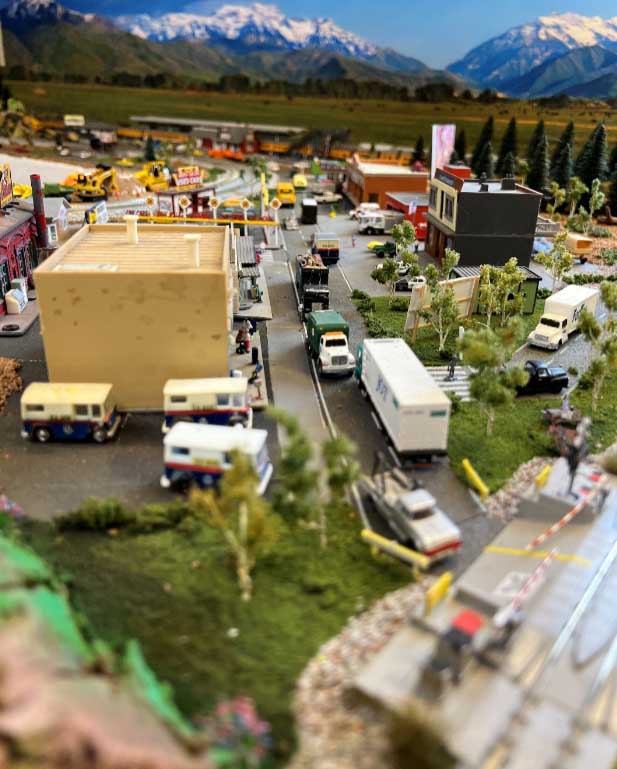
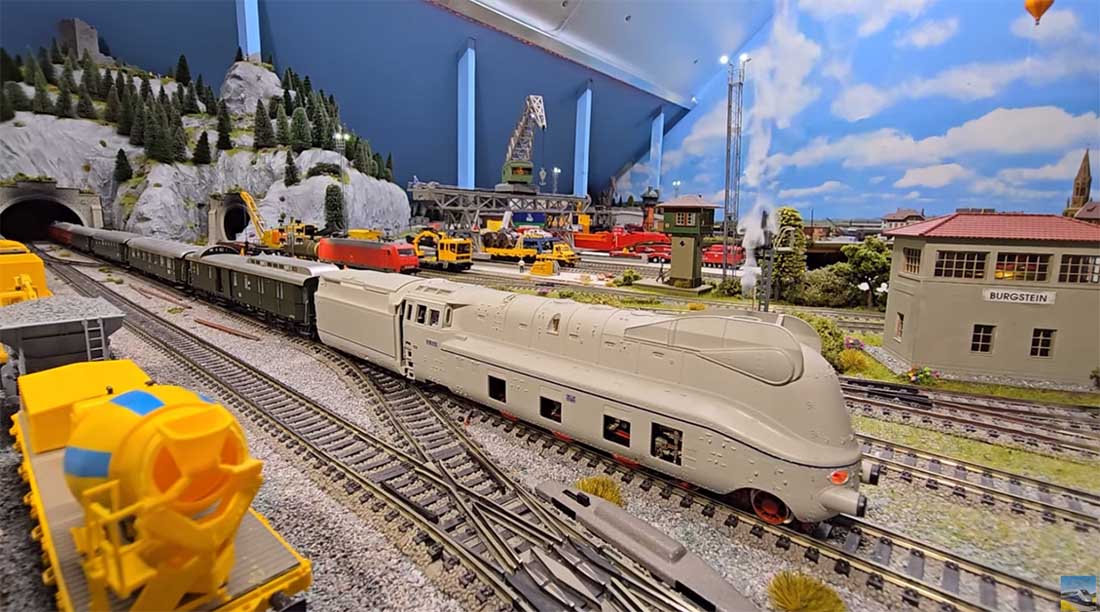
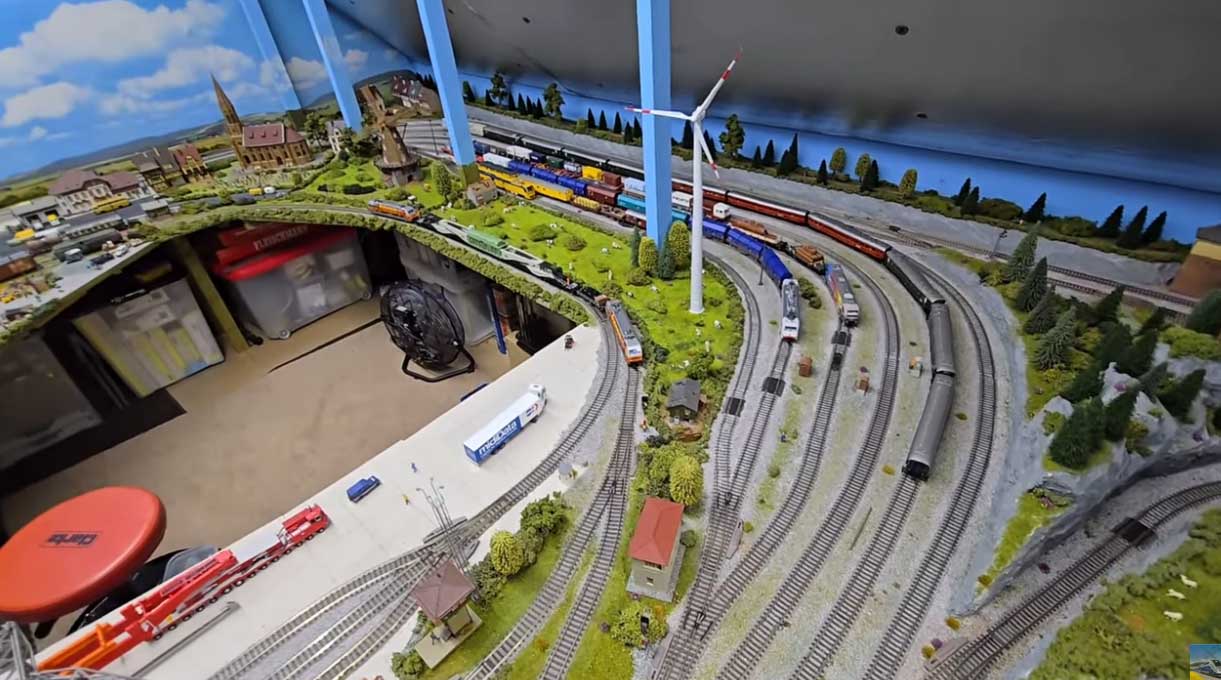
This started as a 4X8 ft N Gauge railroad but as we all know this hobby takes one on quite a journey.

Five years in on this, I began with a simple oval with two switches. This has grown, as you can see to 20. My train addiction began as a youngster with my dad building a Lionel layout some 70 years ago.

Semi retired and with a grandson we began the layout. It starts simple, first you buy trains and from there one becomes a landscape designer, half baked electrician, building kit assembler and most significant a substantial financial supporter.Being a kid again without having to ask for money having a supportive wife helps.

Your emails and the videos from Dangerous Dave fed an love of British trains as well as European trains too. So, I have accumulated quite a collection from many places in the world! Ah! The internet is wonderful.

This layout is on a grass mat, I built much of the landscape, and the European Village is from kits.

This all leads to vacations on the Orient Express, Glacier Express and in a few weeks some British rail excursions, and folks say gambling is addictive?

Everything on this layout is movable, by this I mean not glued down, except for the grass mat. I have no master plan, just add sections, with the assistance of my grand son, and enjoy every minute doing this. This way if I change my mind, a tear down is easy. Especially when you need that extra inch, which always seems to happen.

Most of my equipment is Kato and Dapol.

It will be interesting to see what our fellow adictee’s think.

John
Long Island, NY.”

4x8 layout

 4x8 layout

 4x8 layout

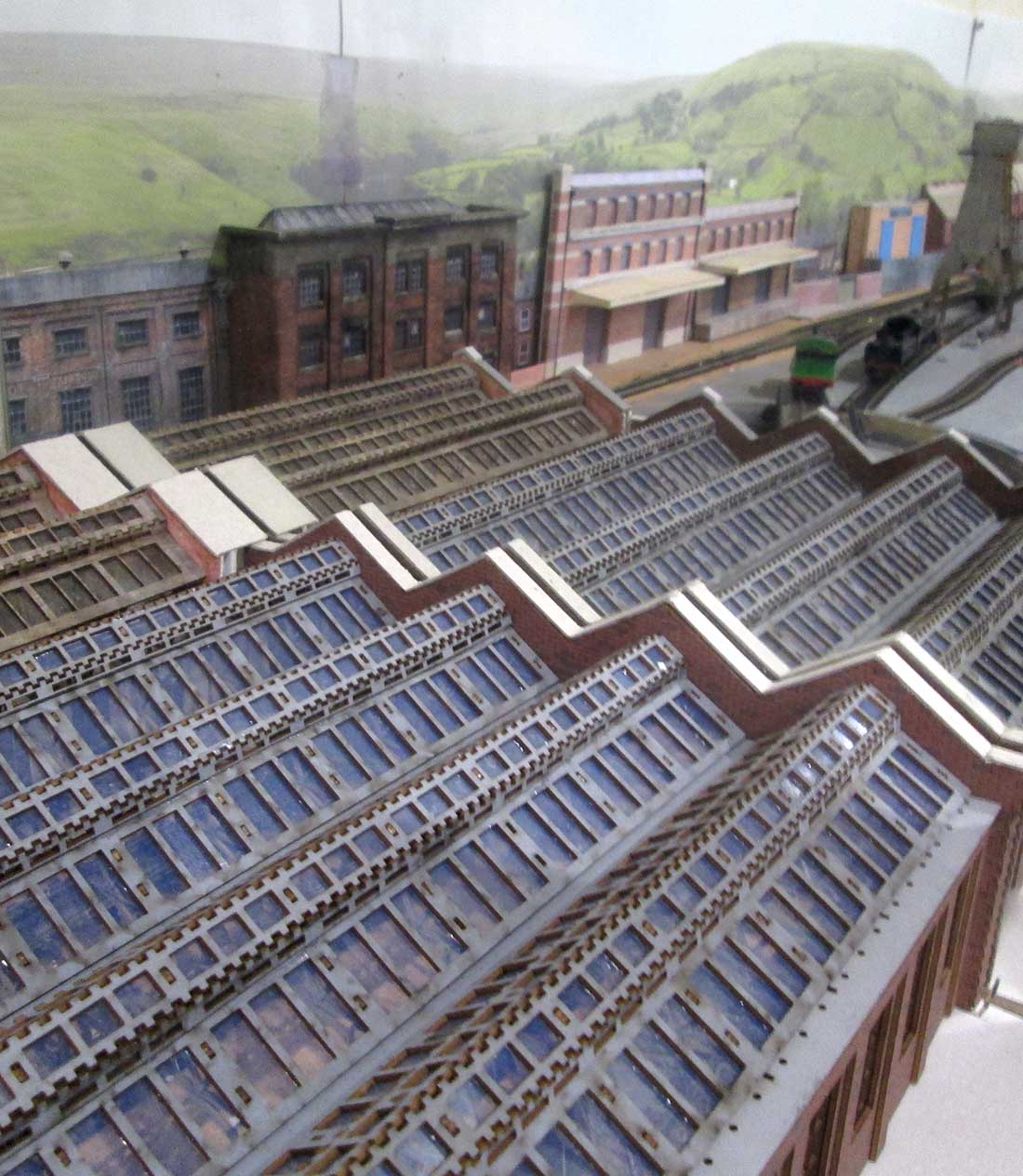
model railroad roundhouse

model railroad layout 4x8 layout


model railroad 4x8 layout

4x8 layout

model railroad 4x8

HO model train 4x8

A huge big thanks to John for sharing his 4×8 layout.

When it comes to 4×8 layouts, Rick’s always springs to mind: 4×8 HO layout.

That’s all for this time folks.

Please do keep ’em coming.

And if today is the day you get started on your layout, the Beginner’s Guide is here.

Best

Al

PS More HO scale train layouts here if that’s your thing.



Need buildings for your layout? Have a look at the Silly Discount bundle.
Plaster of paris for model railroad scenery

Andrew’s been in touch with a very useful ‘how to’ on using plaster of paris for model railroad scenery:

“Dear Al,

You have kindly posted my previous layouts as they were finished and fully operational. I am now working on my fifth layout in my shed with my 70 year old Hornby Dublo track and trains originally a gift from my father.

I am creating some of the scenery on platforms that enables me to work on the side that is close to the wall that would otherwise require double joints.

I start by making a paper template of the area I am modeling then transferring the paper template to a piece of polystyrene packaging.

At each stage I check that the template and the polystyrene base will fit the location and not catch any passing locomotive or its consist.

The polystyrene is built up in layers, carved with a sharp knife and stuck together with PVA glue.

I cover the polystyrene with Plaster of Paris then paint and decorate with coloured saw dust, grasses and Woodland Scenic bushes.

Attached are 16 photos that I hope might be of help and interest.

Yours sincerely.

Andrew”

Plaster of paris for model railroad scenery template


Plaster of paris for model railroad scenery template

Plaster of paris for model railroad scenery

Plaster of paris for model railroad scenery

Plaster of paris for model railroad scenery painting base color

model railway scenery

model railroad scenery

Plaster of paris for model railroad scenery painted

Plaster of paris for model railroad scenery painted

painted model railroad scenery

A big thanks to Andrew for sharing his method of using plaster of paris for model railroad scenery.

Peter uses plaster cloth: model railroad scenery design.

Richard put together a fantastic step by step too (not just on the plaster cloth, the whole layout): HO layout build.

You can see Boyd builing up his layers too: Model train hobby.

That’s all for this time folks.

Please do keep ’em coming.

And if today is the day you get started on your layout, the Beginner’s Guide is here.

Best

Al

PS More HO scale train layouts here if that’s your thing.


Need buildings for your layout? Have a look at the Silly Discount bundle.
Narrow gauge model railway

Keith has been in touch with his narrow gauge model railway:

“I follow your blog on a daily basis and felt that an example of a small narrow-gauge railway set in the English Cotswold countryside would help balance the big and amazing large layouts from the United States.

The Sibford Hills Railway is the fourth narrow gauge 4mm scale layout I have constructed in the last twenty-five years. All fictious and all located in an area of North Oxfordshire, in England which once had a narrow-gauge railway feeding an iron ore crushing plant just east of the Cotswold village of Hook Norton.

However the typography of the land for Sibford Hills bears no resemblance to the rolling hills around Sibford Gower and Sibford Ferris.

In fact, the model is an adaptation of a 4ft x 2ft layout by C.J. Freezer published in Railway Modeller Magazine in December 1970 and commonly referred to as a ‘Rabit Warren’ layout evidenced be the number of tunnels entrances.

Since I enjoy building rather than running a railway, I wanted to include a number of village buildings, a quarry and a farm. The quarry is taken from a 1920’s photo of Hook Norton Brymbo Works and my life-long Scouting membership prompted the Scout Camp.

The baseboard area to 6ft by 3ft on two 3ft square boards for ease of transport. The track runs to two levels with the village buildings on a third. Levels two and three lift off for access. The baseboards are constructed from 9mm ply with 100mm sides and 50mm x 25mm bracing underneath.

The lift-off top structures are made from 5mm foam board and pieces of 40mm thick insulation foam supports.

Vertical surfaces are covered with several layers of plaster bandage. Foam board being very light, it is easy to lift off the upper areas to clean the track and cope with de-railments, although this is not a task to be taken lightly because the track has to be re-connected where it changes levels.

narrow gauge model railway

Sibford Valley Railway – built on three levels

narrow gauge model railway track plan

Track plan

laying track

First track down

making model train layouts

Track down and second and third layers under construction with foam board and plaster bandage

model railway quary

Sibford Quarry based on Hook Norton Brymbo Quarry

narrow gauge model railway

Scout camp

narrow gauge model railway

Cows in pasture next to quarry


narrow gauge model railway

Stream and horses above lower station

model train green house

Cottage garden with greenhouse

model railway village street

The village street

Most of the buildings are scratch built using plastic sheet and from examples of real properties mainly around our North Cotswold communities. Over the years I have had trouble realistically modelling water until I recently discovered two-part casting resin for jewellery. This gives a satisfactory depth and reflection.

I chose 009 narrow gauge because pretty much anything goes in terms of modelling, with tight curves and unfenced track the norm.

Keith.

A big thanks to Keith for sharing his narrow gauge model railway.

It reminded me of Julian’s Narrow gauge layouts.

That’s all for this time folks.

Please do keep ’em coming.

And if today is the day you get started on your layout, the Beginner’s Guide is here.

Best

Al

PS More HO scale train layouts here if that’s your thing.


Need buildings for your layout? Have a look at the Silly Discount bundle.