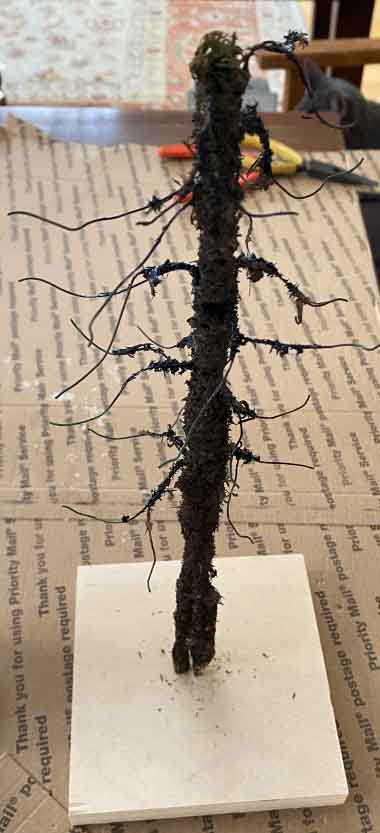
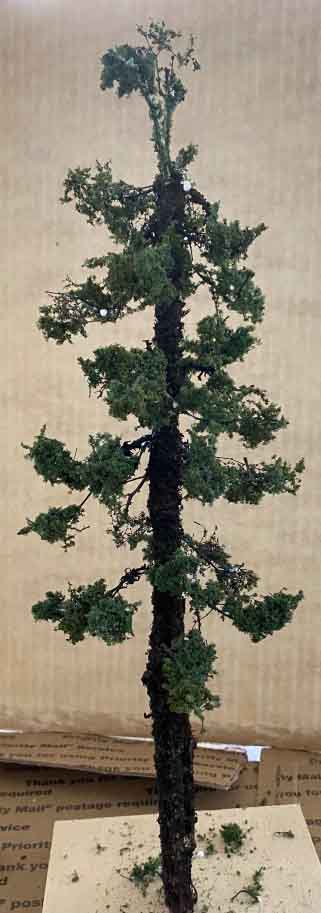
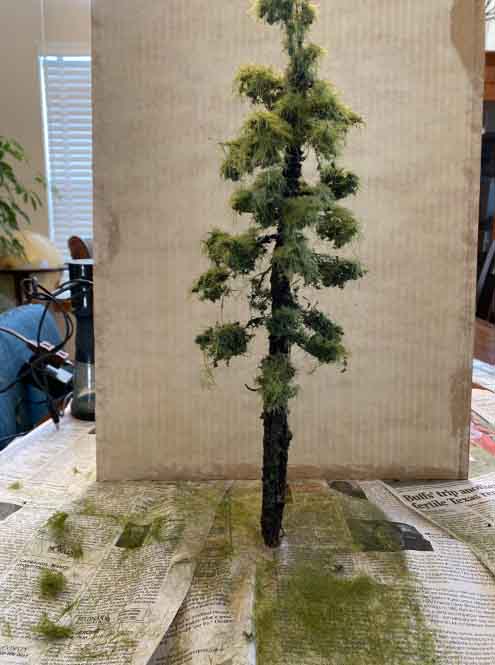
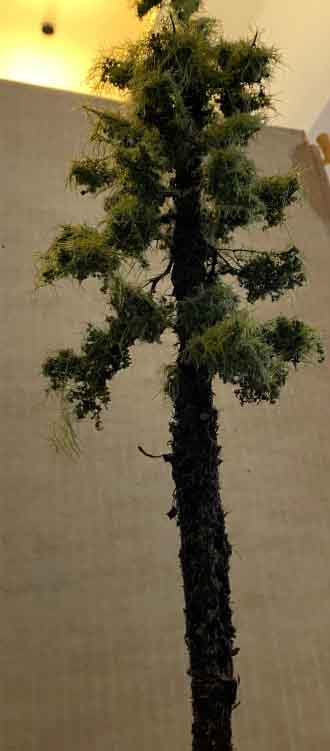
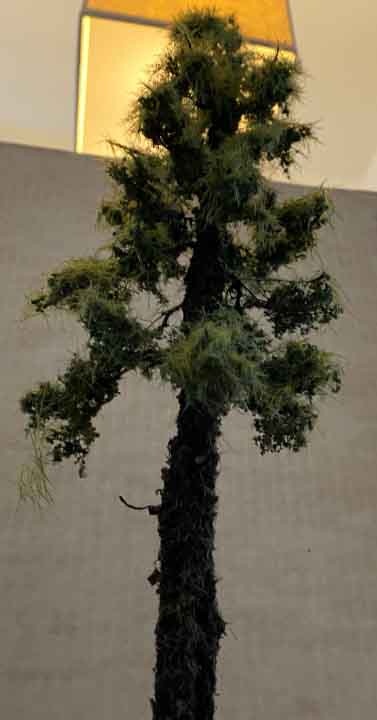
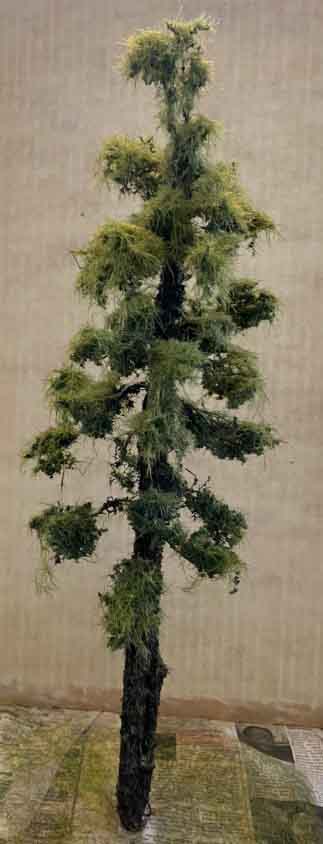
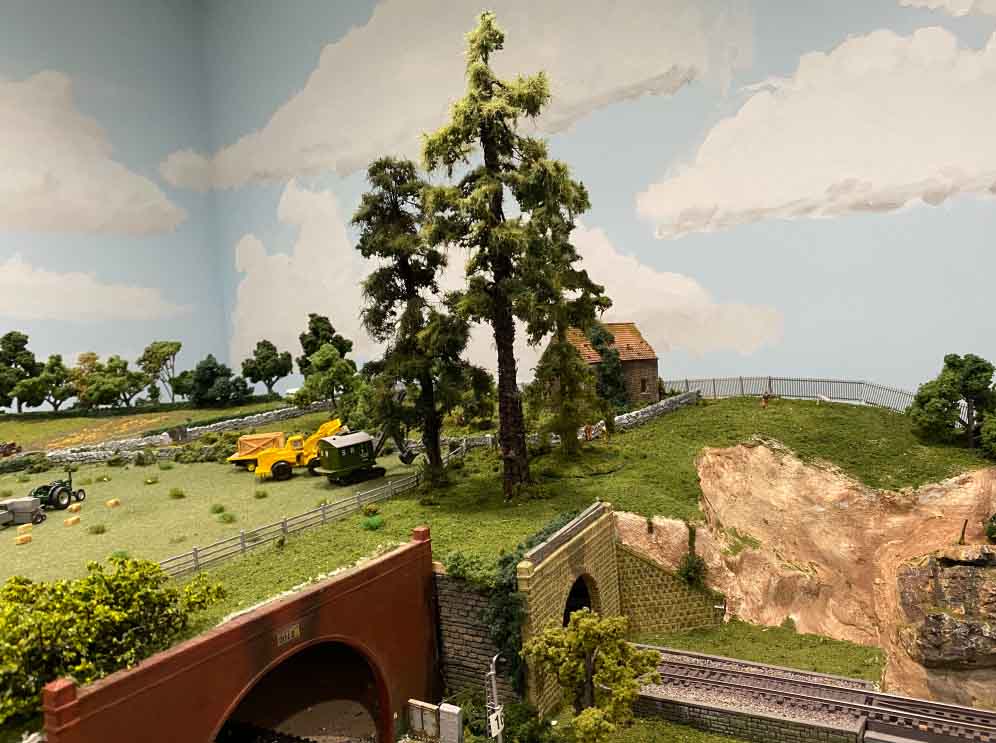
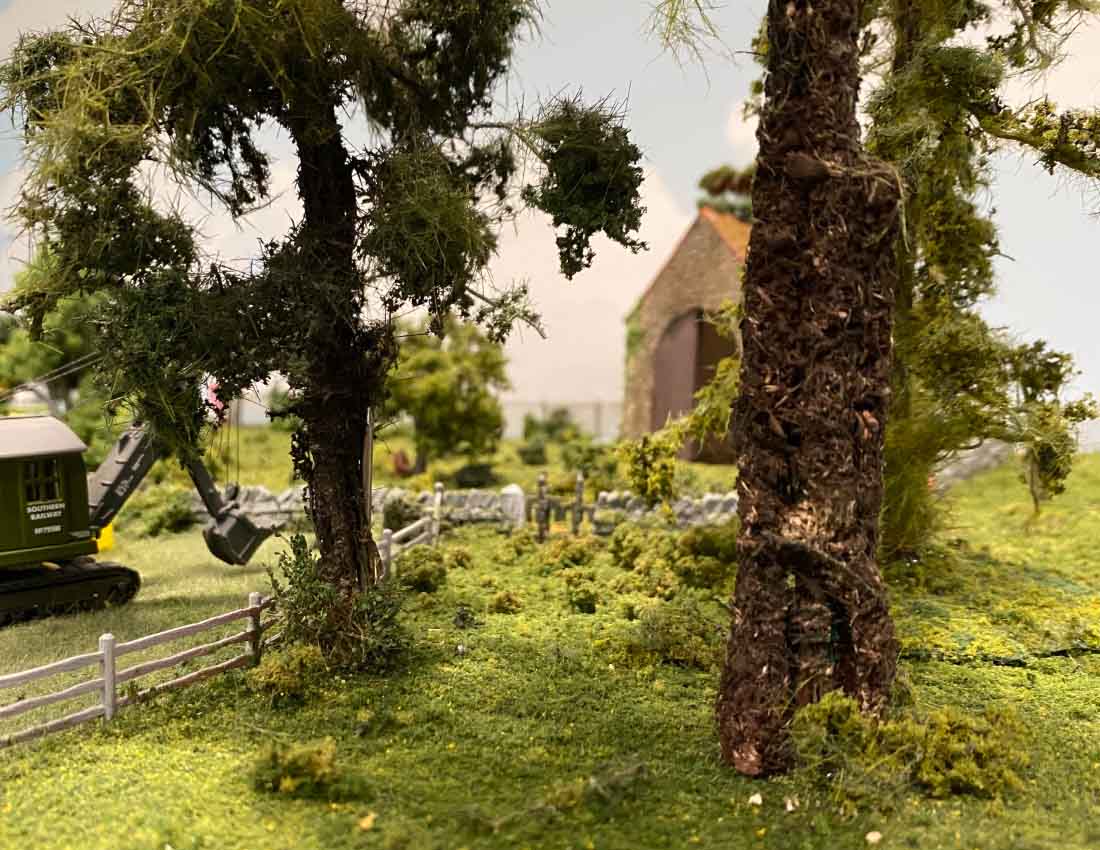
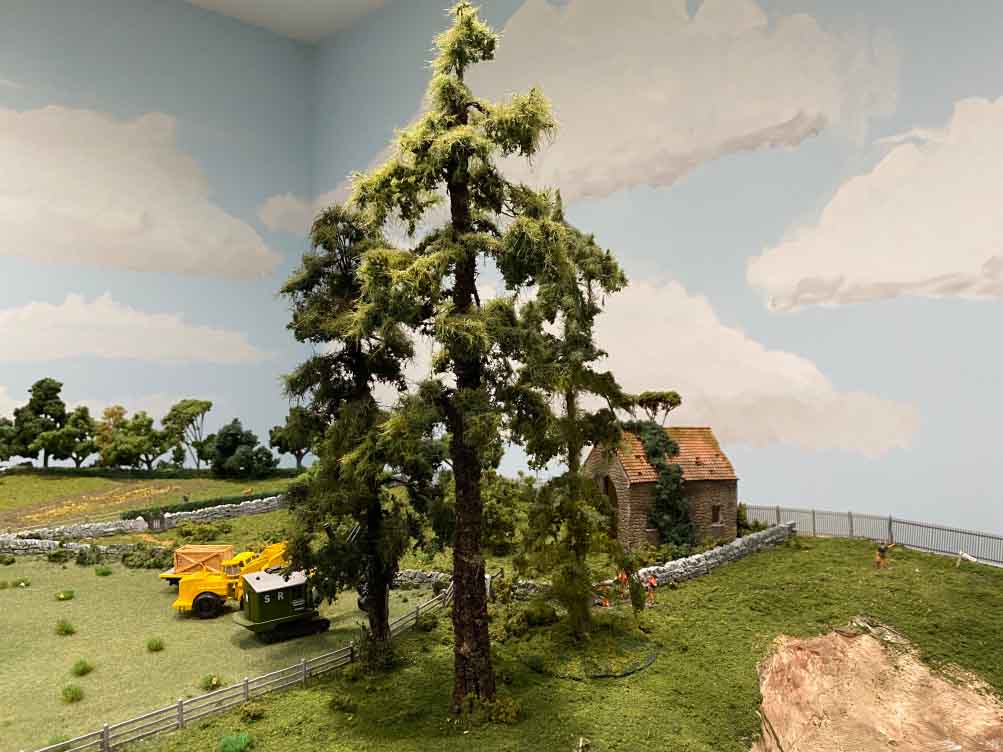
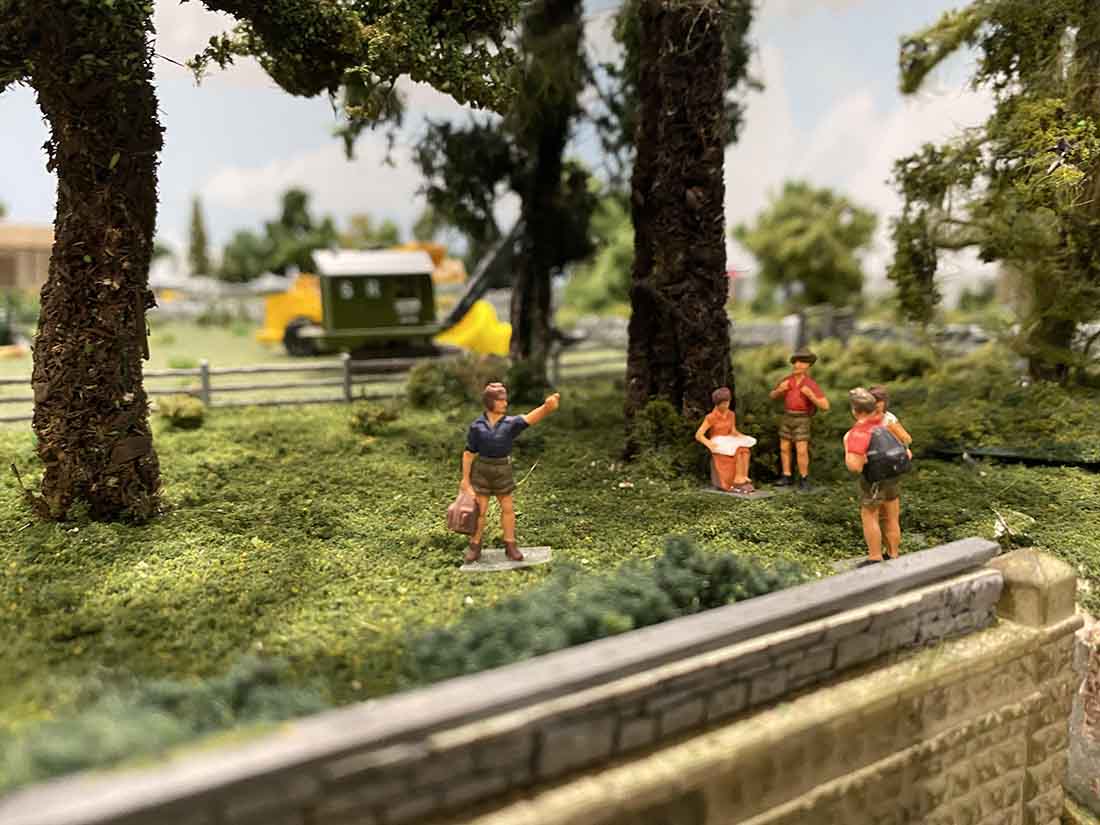
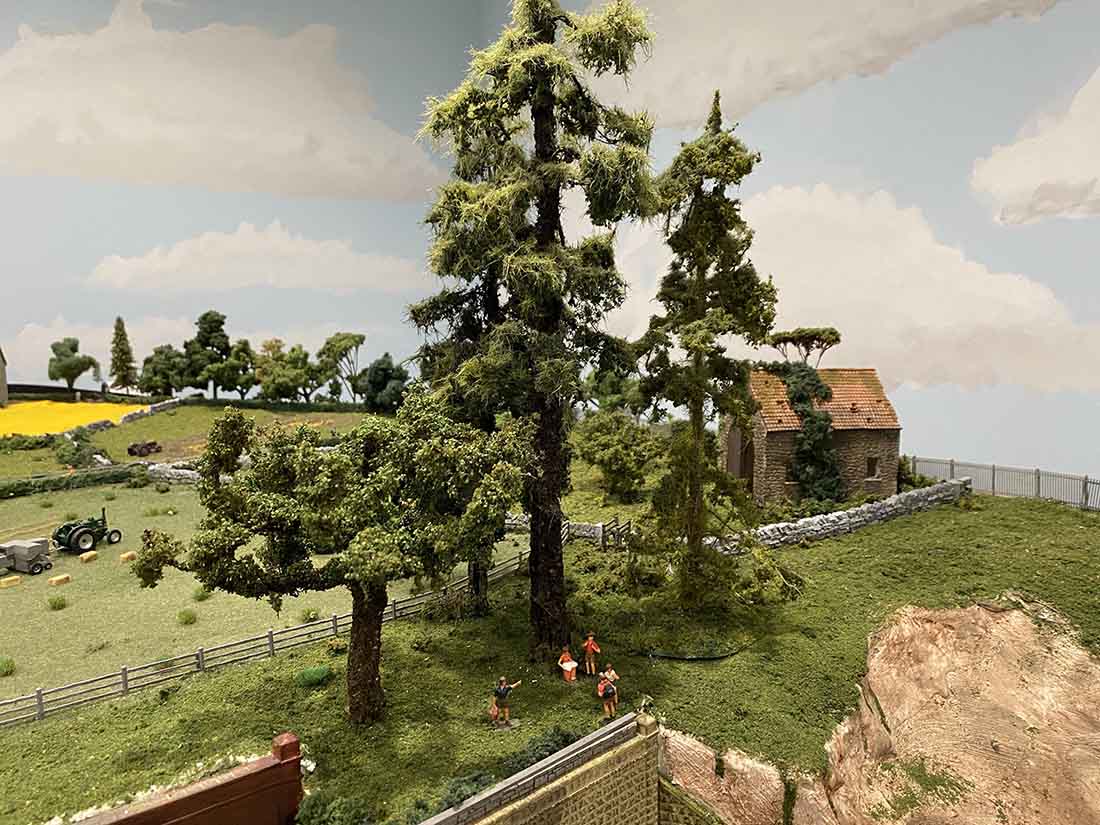
Rob’s sent in these pics and youtube on making trees for your model railroad.
Have a look at the results – impressve stuff:
“Hi Al,
I have decided to build a small remnant primordial forest for my layout Farland.
The tree I built for my holiday video was the first in the series. I have built two more since then and I am working on my first deciduous tree now which will be the subject of my next video, not this one.
This video is about building a Fir tree, an evergreen.
I experimented using sawdust to simulate bark in the video. I did not think of doing it until I had the first layer of foliage glued to the branches. It could have been a disaster adding the bark after the foliage but it worked out okay.
The tree I built next did get its sawdust/bark first and I also painted it before any foliage went on and it turned out really well. I have included photos of both the video subject tree and the one built subsequent to the video.
Rob”
A big thanks to Hall of Fame member Rob for his ‘making trees model railroad’ tutorial.
Over the years there have been quite a few on plants, trees and grass. Here are some of them:
Yale’s been back in touch with his ‘finished’ N scale DCC layout.
“Schiffy here.
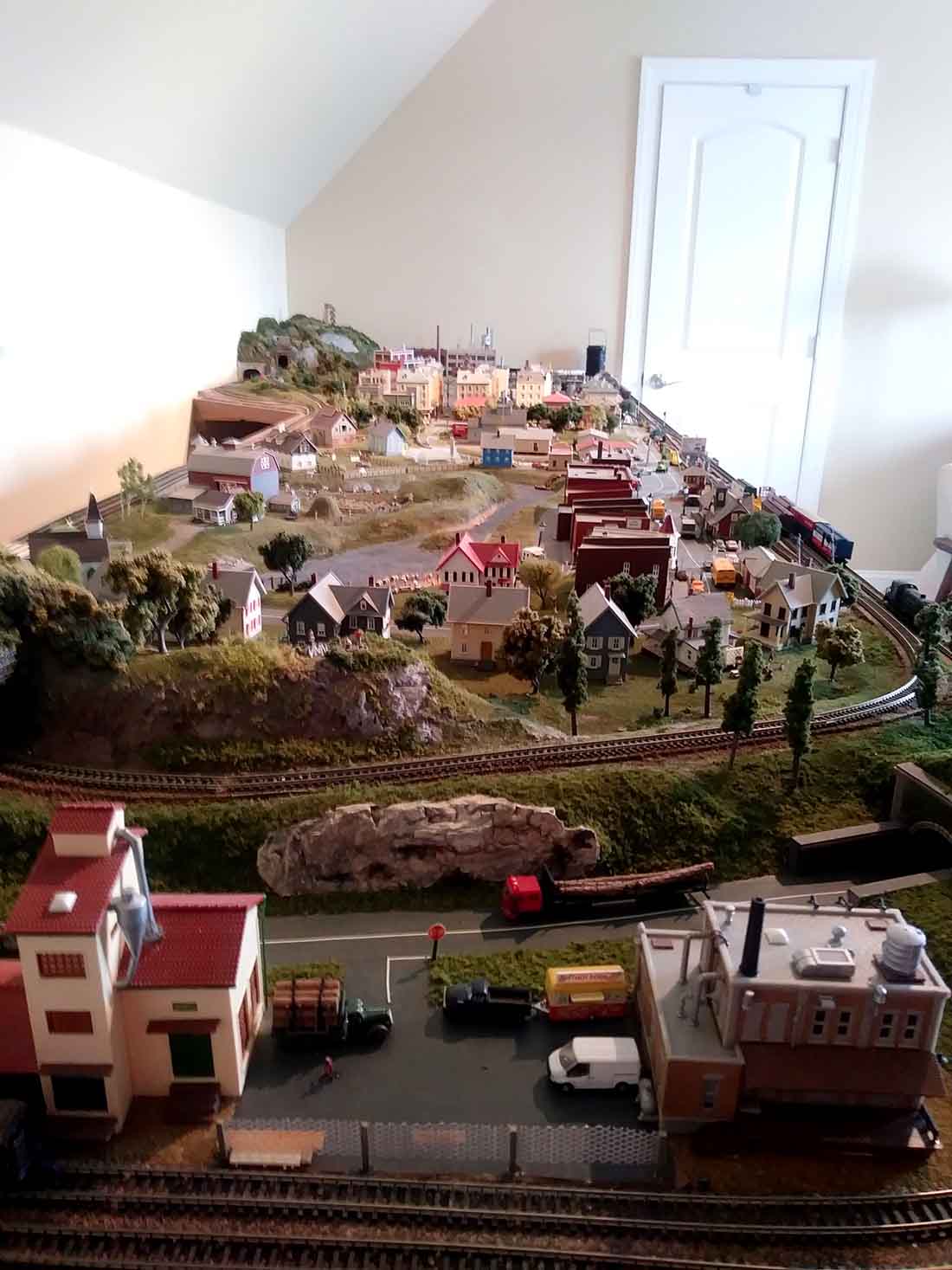
There have been a lot of updates to our N Scale Bristol and Cheston Line since my last post.
We underwent a name change. It is now Fairfield and Cheston.
With the completion of the Industrial Complex this phase of our railroad construction is pretty much done. That is if you can ever be done.
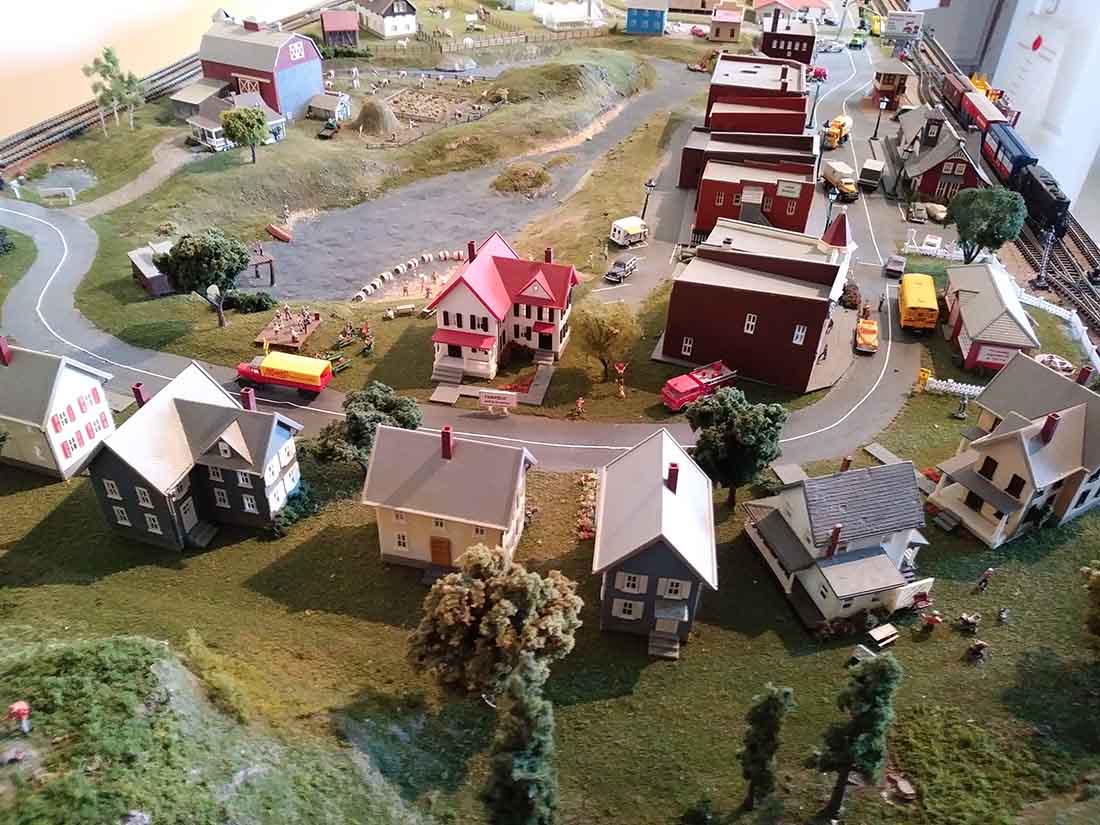
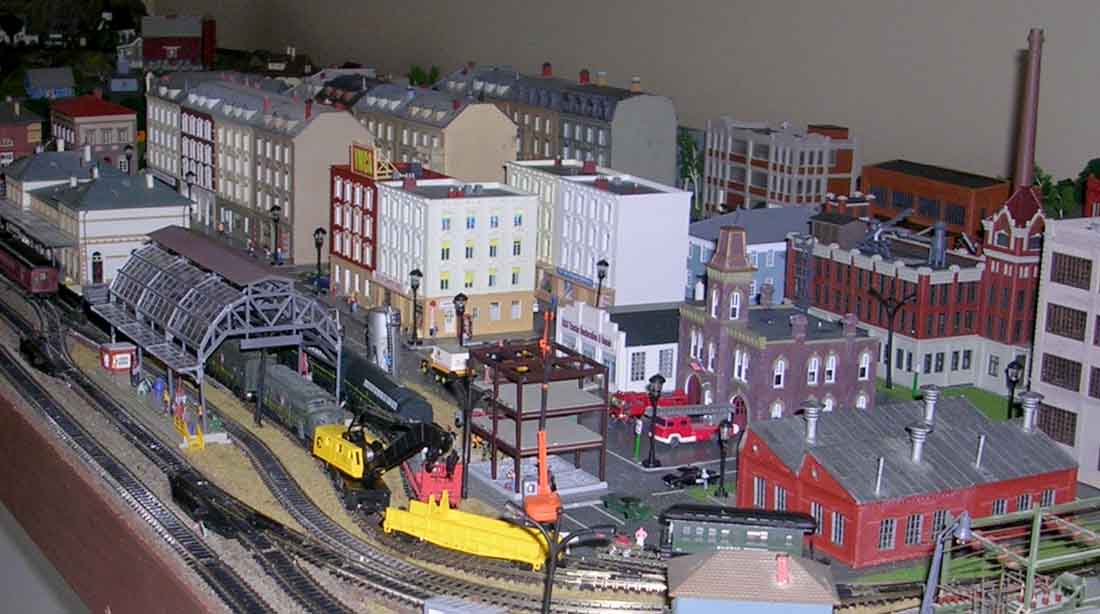
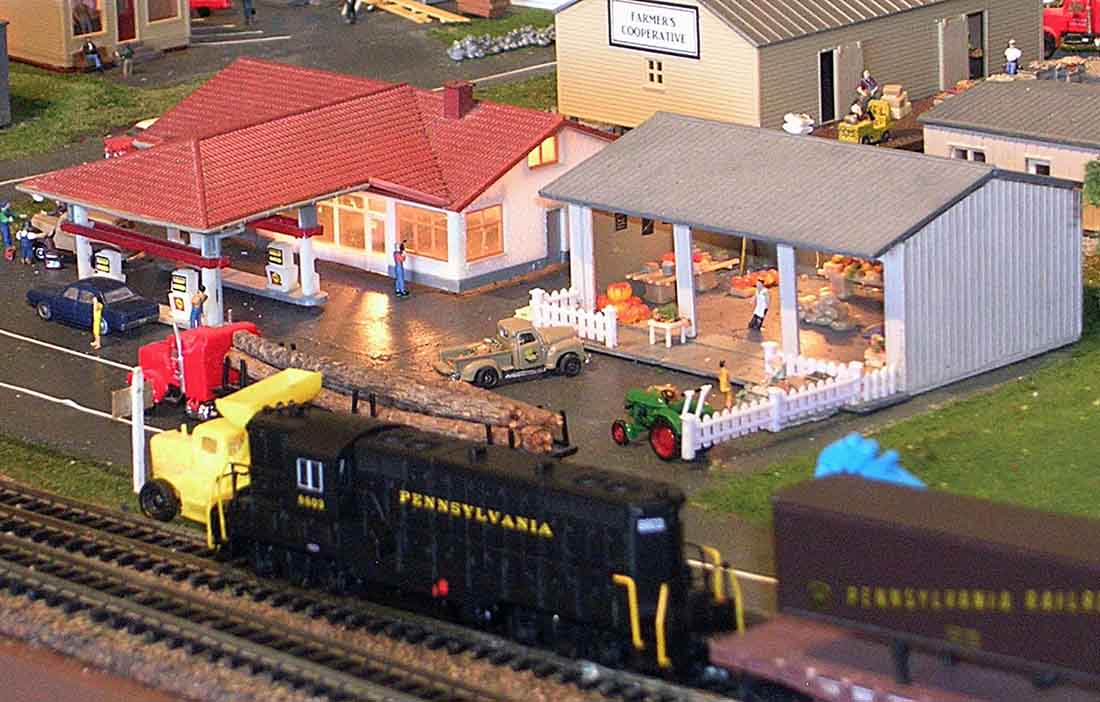
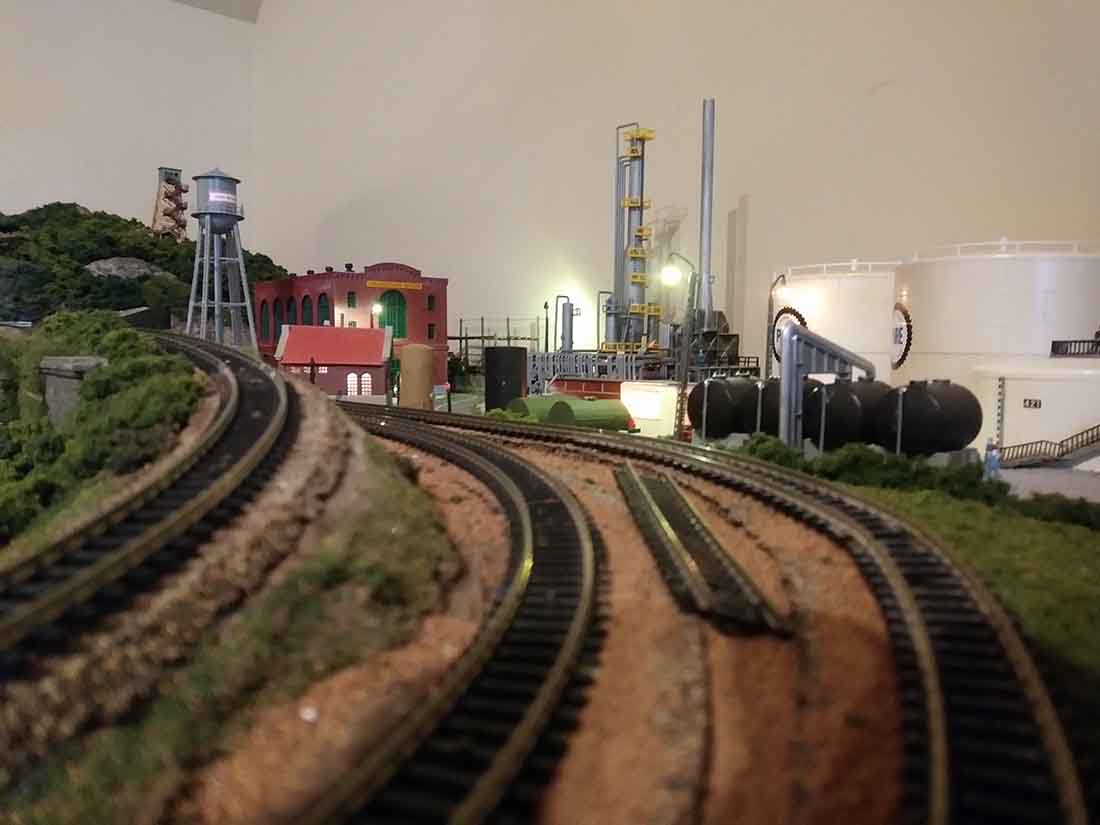
I’ve enclosed some photos which show the detailing that we started to add.
It is lot of work for arthritis hands but very satisfying.
We upgraded to DCC and added three DCC locomotives and two throttles in addition to the one that is on the DCC console. We used the jump ports and our old DC power pacs. My next goal is to have computer control of all train operations.
I am adding NMRI software along with some hardware so that we will be controlling our layout from our computer. In an earlier life I wrote computer programs.
I am looking forward to writing routines that will operate several routes including control of turnouts, signals and station stops.
For those folks thinking about this I will post my progress.
In the meanwhile hope you enjoy the enclosed photos.
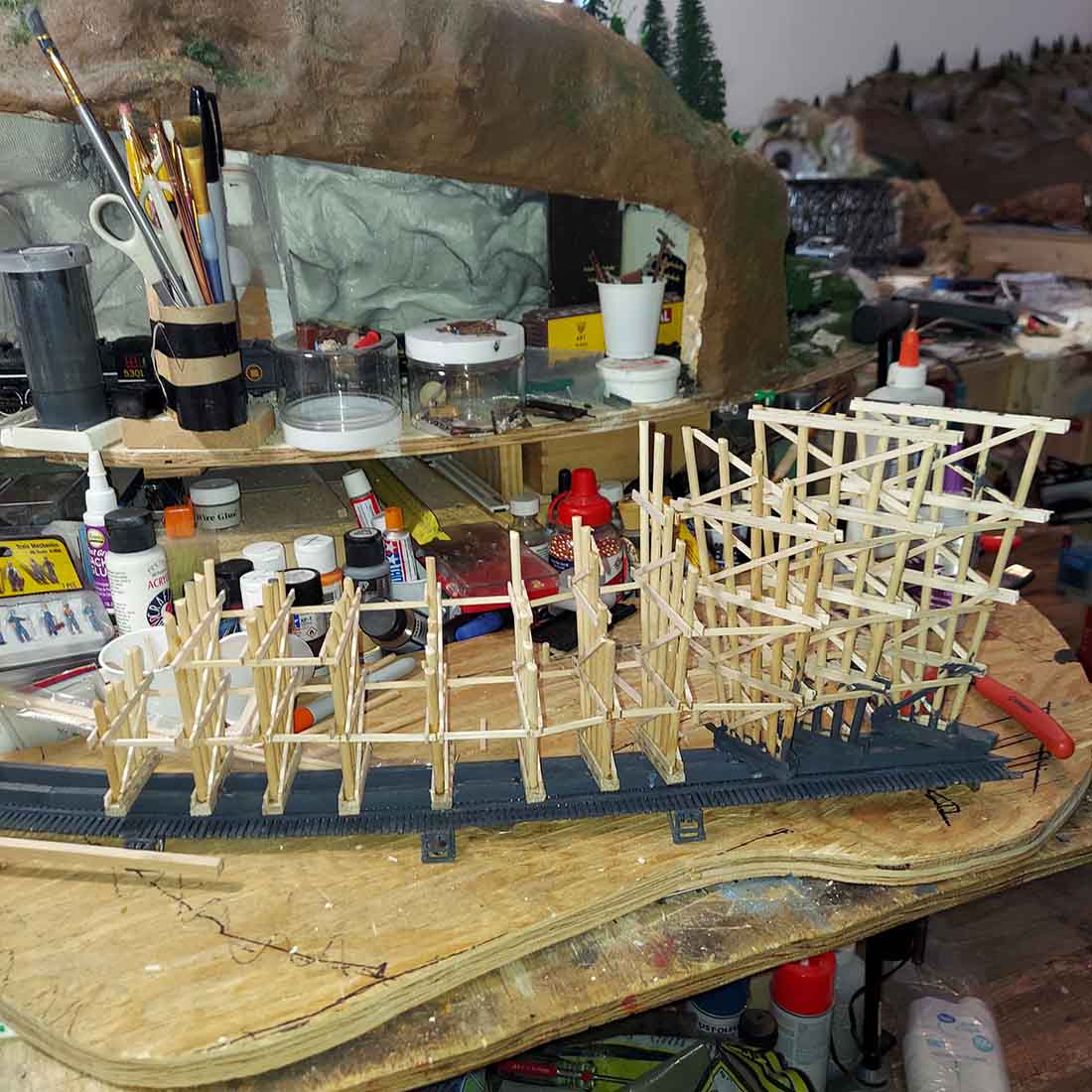
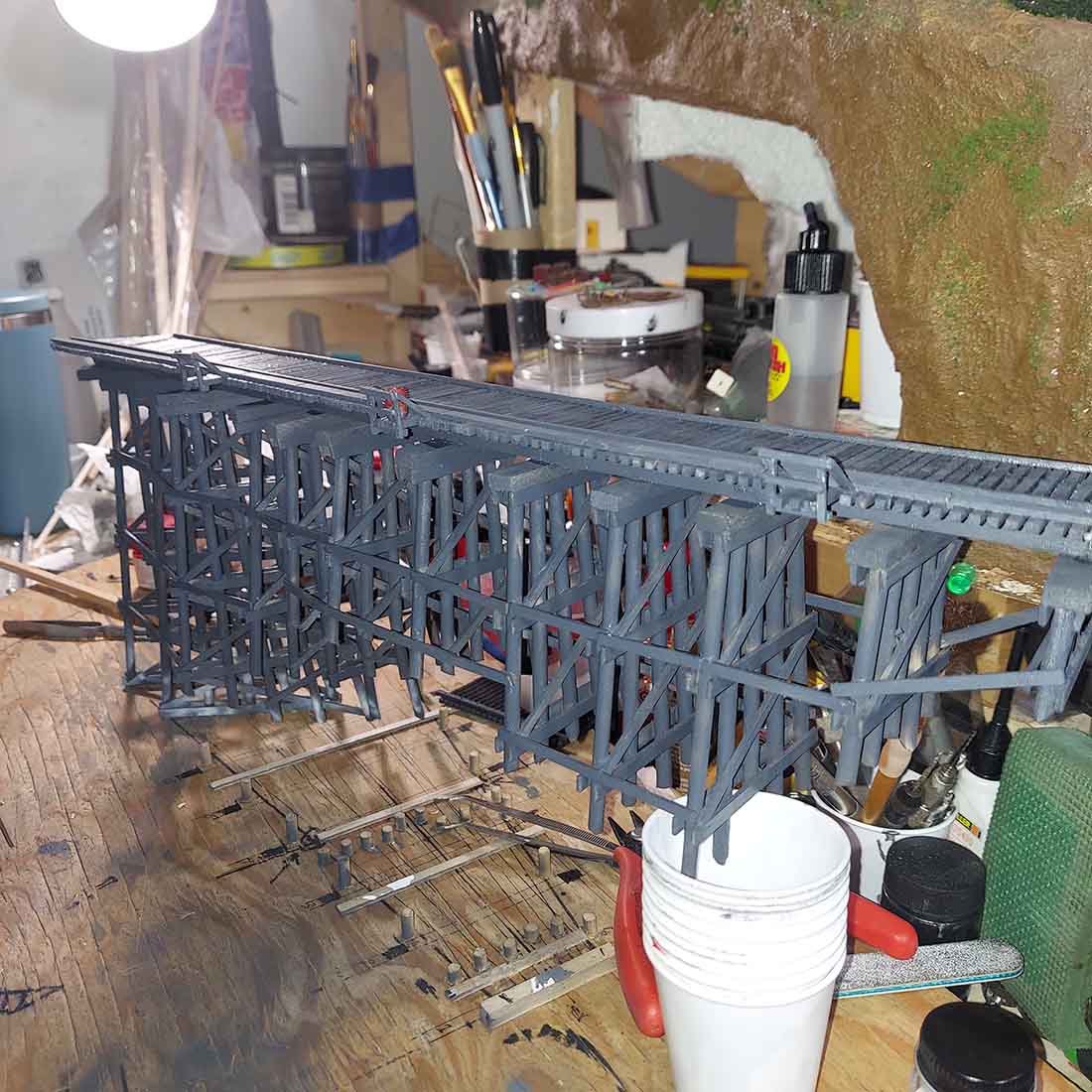
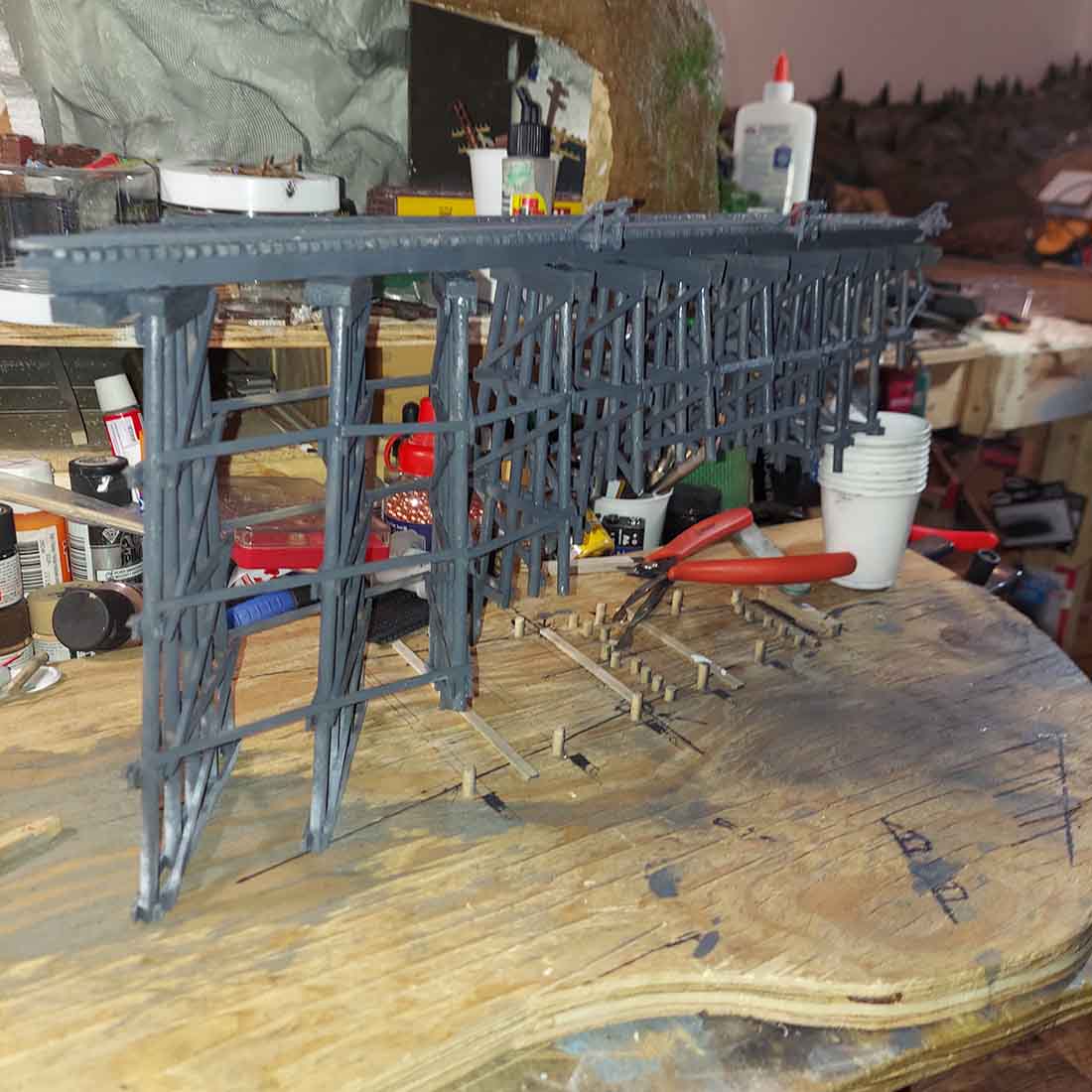
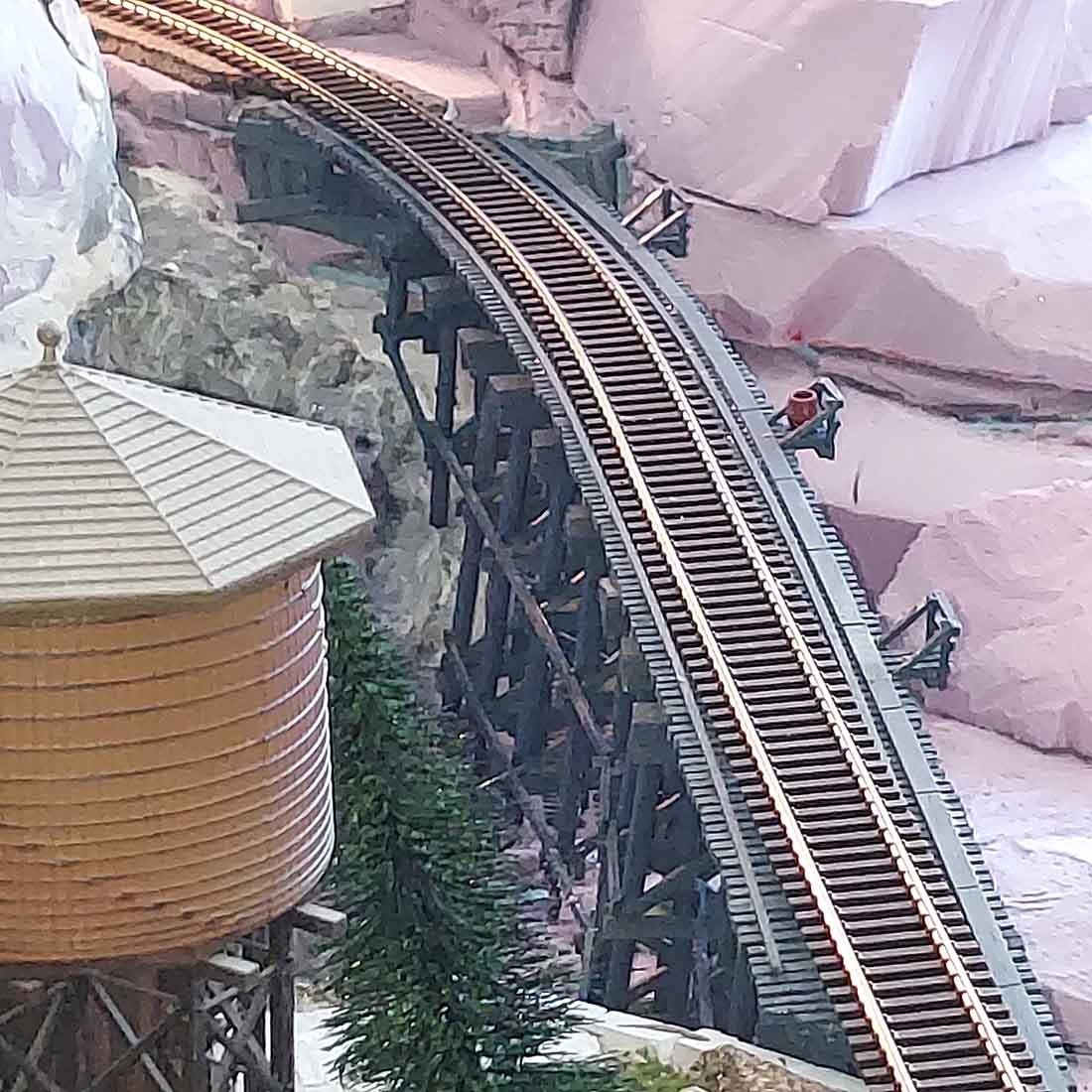
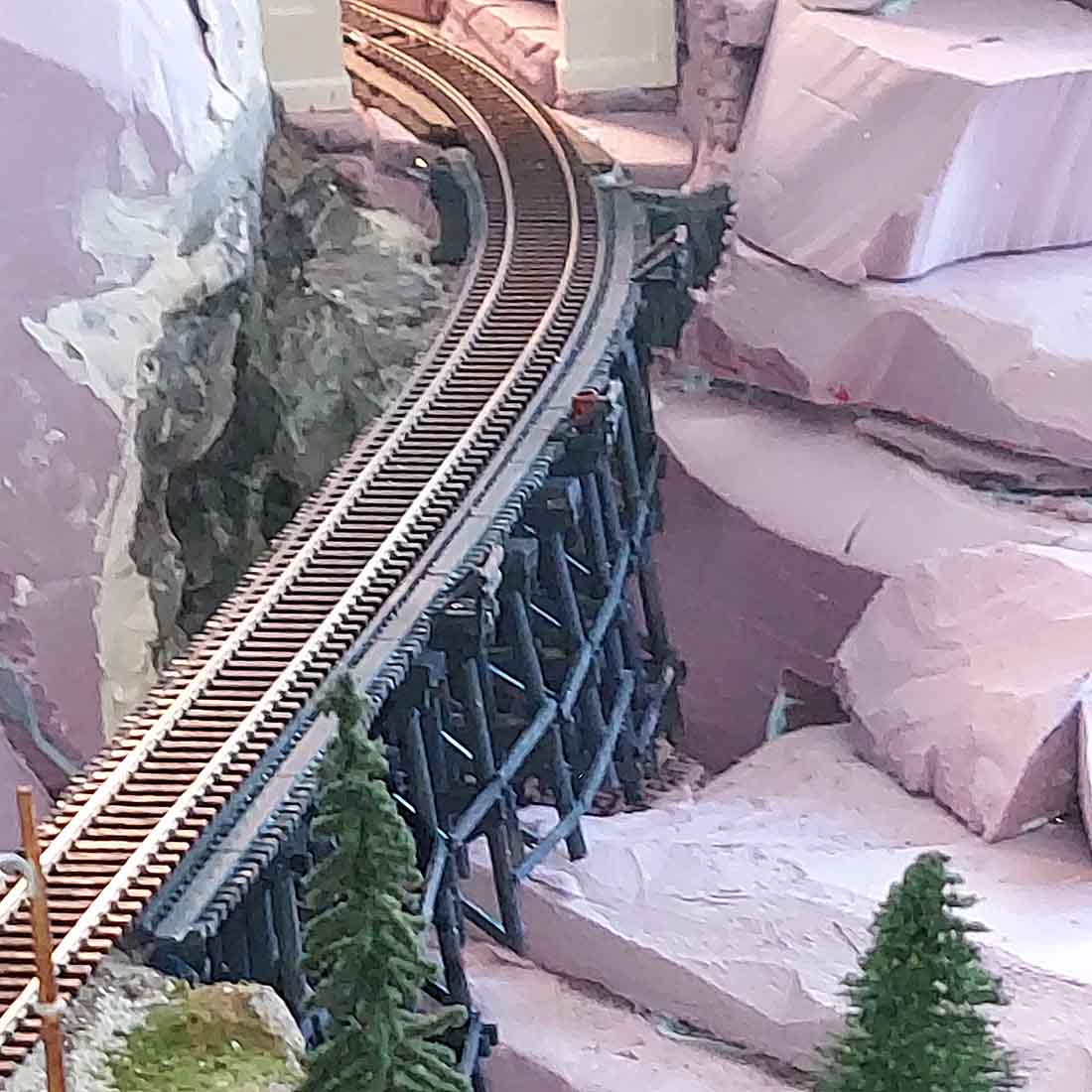
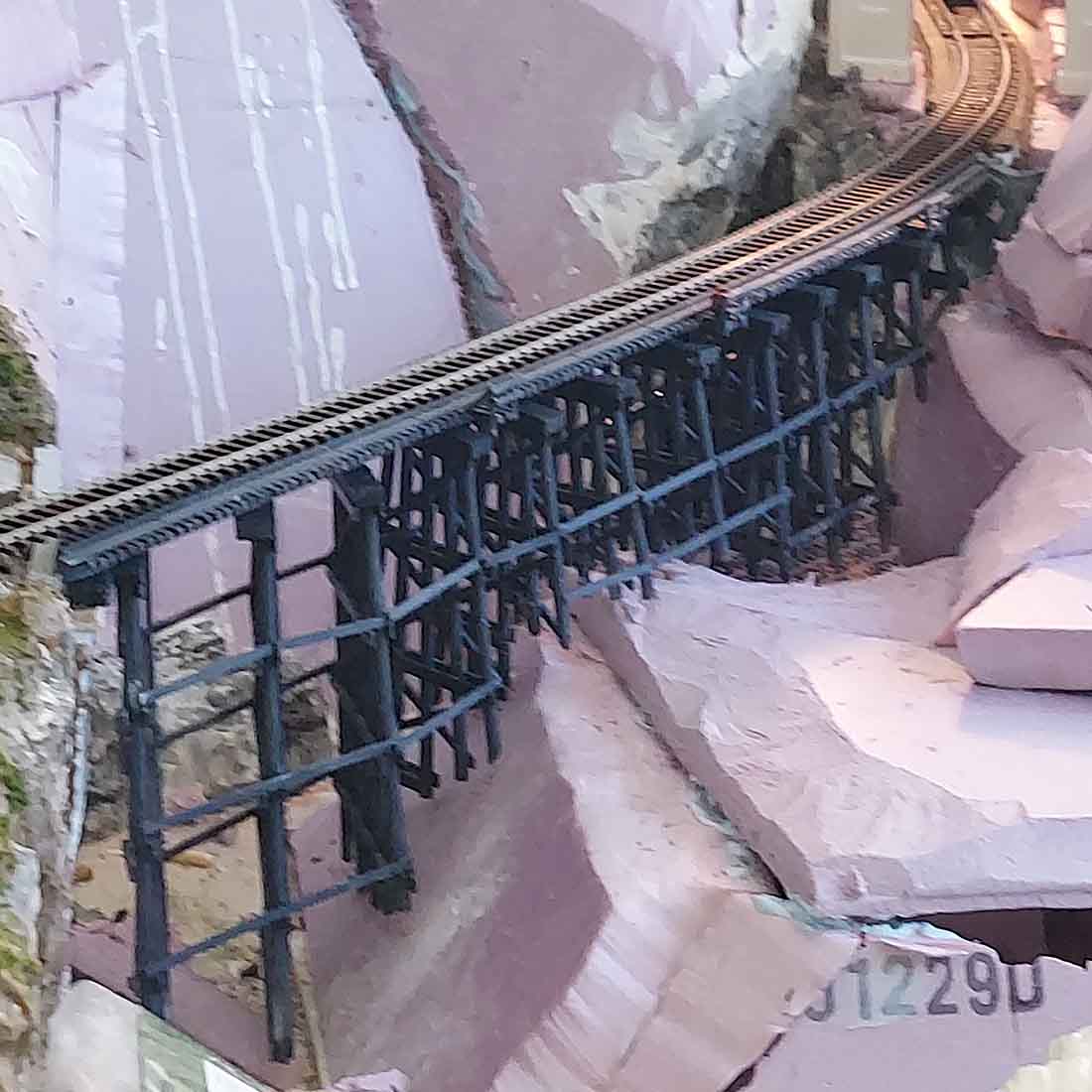
“Well I think I have the hardest part done. I have the trusle done and in place. Not to shabby for a old guy with a broken arm. I really like seeing what other people do with their layouts.
Nigel’s been in touch with the start of his 12×5 model railway.
He’s squeezed every inch out of the space he has – its very inventive!
“I have been following your blog for a couple of years now and it has very much helped we in wanting to fulfill a childhood dream of having a Model Railway.
I have found your blog to be an endless stream of useful information from all your contributors in helping me to try and avoid making any costly mistakes.
I live in Stacksteads in Lancashire and in the last couple of years kinda started the long journey of creating a Model Railway in a shed and wanted to give you some background as to how it came about and a progress report along with a few pictures.
When I was a young boy like many other kids I had a train set, it used to be put together on my bedroom floor most weekends and then have to put it away again.
I remember going to Hastings Pier in West Sussex as a young boy and seeing an amazing model layout of the Gotthard line (some of your followers may remember it), after seeing this fantastic model of trains going in and out of tunnels and the amazing scenery the dream was at some point to create a model of my own.
A marriage of over forty years to my lovely wife Lynda and the birth of my two daughters Charlotte and Becky and the time spent bringing them up removed any notion of railway modelling from my mind until I reached the milestone of my 60th birthday.
I started thinking about having a pastime in retirement, unfortunately still 5 years away those thoughts of having model railway of my own returned and the images of my visits to Hastings Pier came back to influence the sort of model I wanted to create.
I knew I would never get away with having a model in the house, even though the third bedroom would have been ideal, the wife would simply not entertain it. So I took the decision to make use of some spare outside space at the side of our house between the house and a conifer hedge which would allow me to make a good size model.
Now three months from my 63rd birthday progress has been made.
After deciding pre Covid 19 to create an N scale model operated by DC based on an Alpine scene with four main lines running around several loops of the layout crossing over each other thus using tunnels, bridges and gradients synonymous with the alpine region of Europe.
I started to purchase locomotives, rolling stock and track and after two years or so accumulated a good number of Swiss, German and Austrian locomotives albeit the majority of them used from ebay along with the rolling stock.
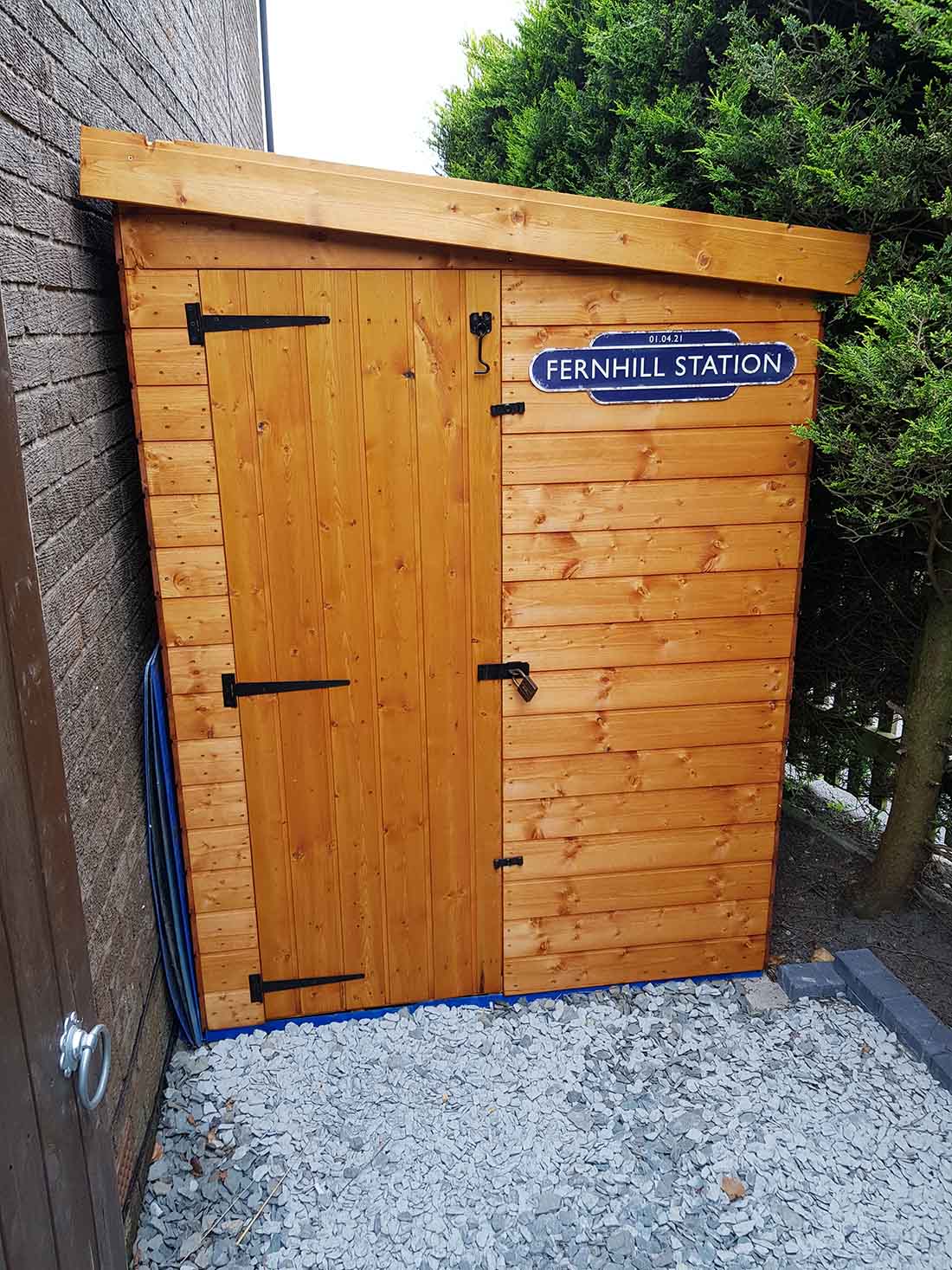
Having prepared the groundwork in early 2020 the erection of a 12 foot x 5 foot shed took place in June kindly being named Fernhill Station by my eldest daughter.
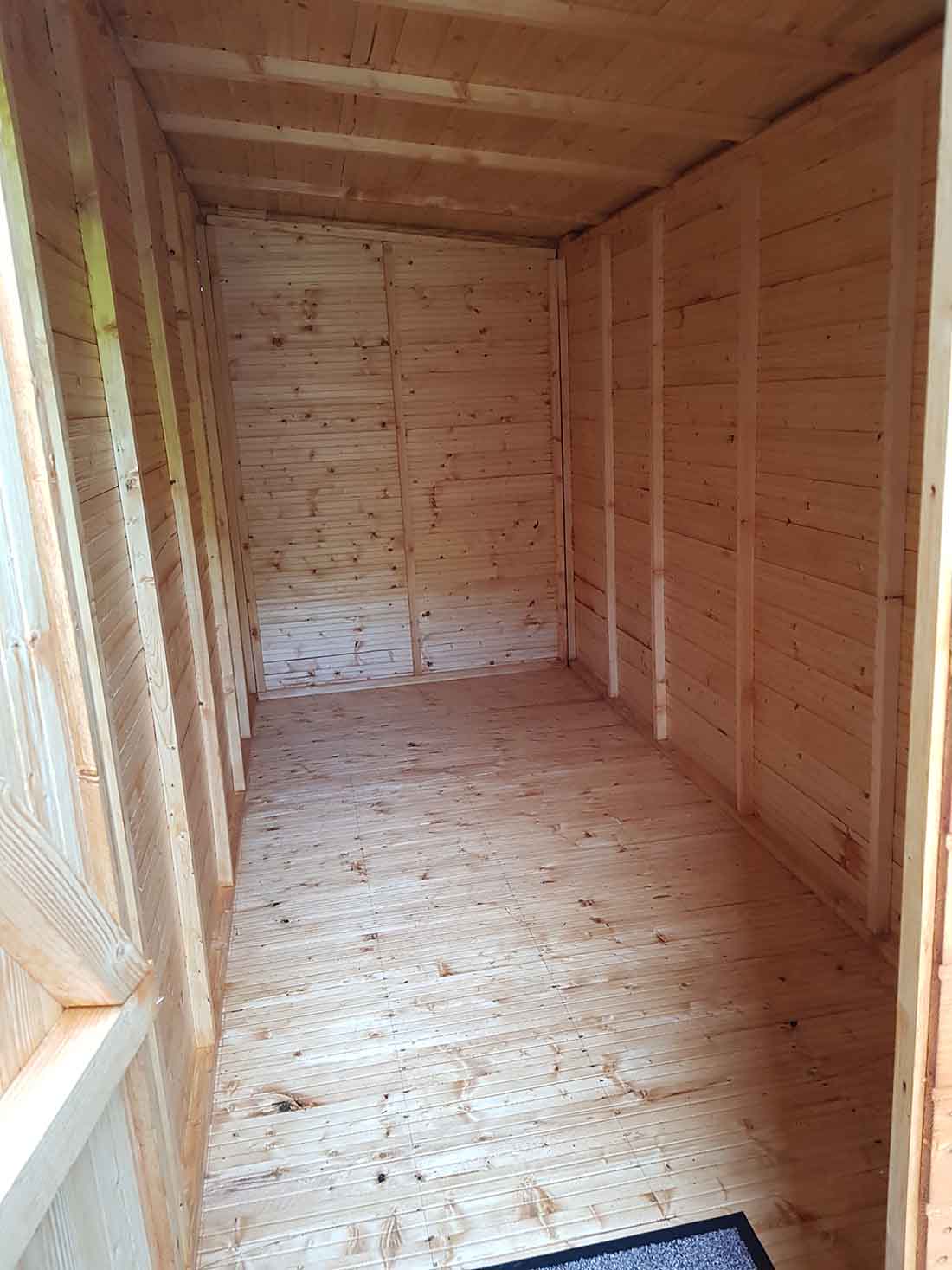
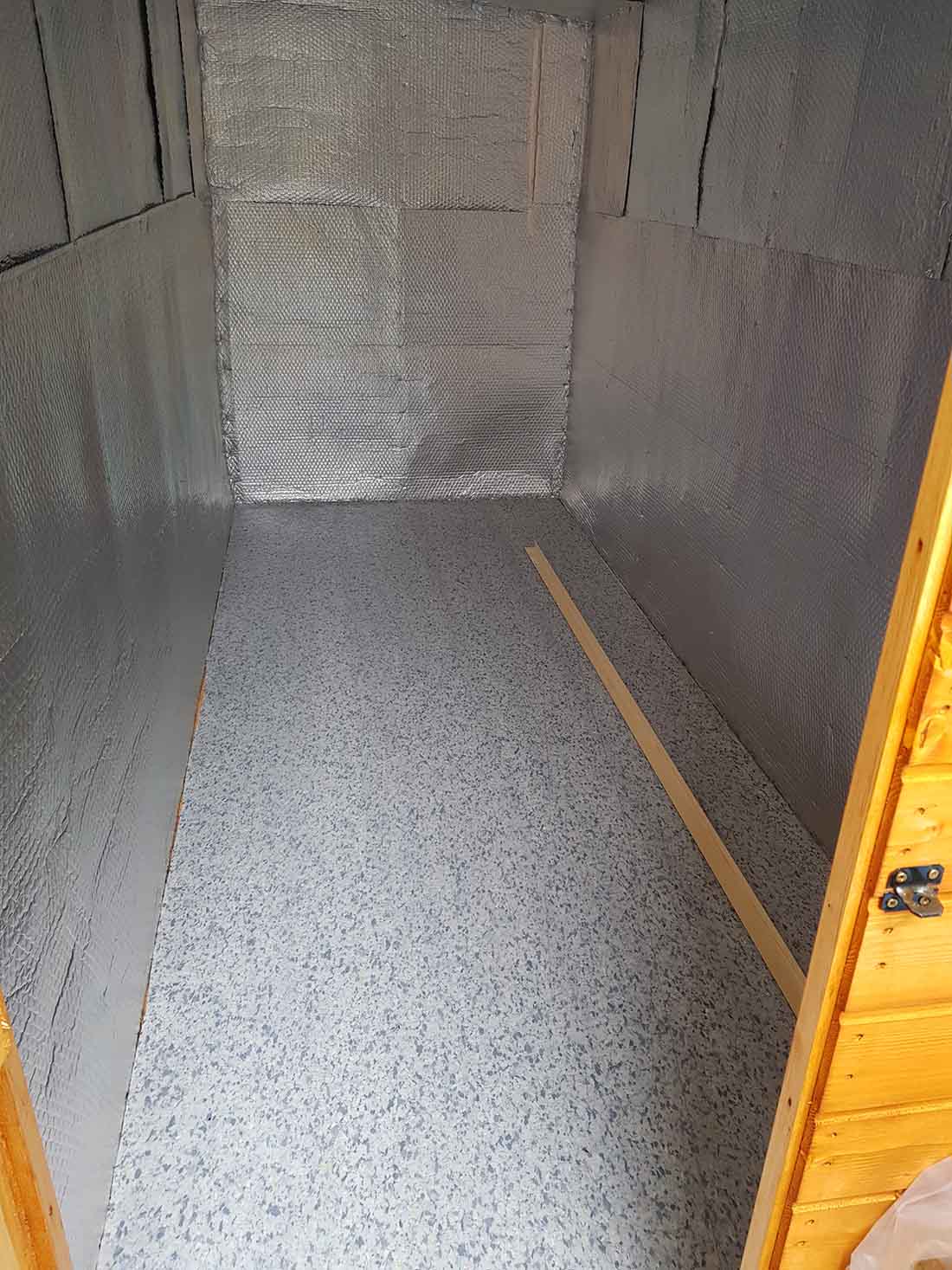
After triple coating the exterior of the shed with decking oil I started insulating it and installed the electrics.
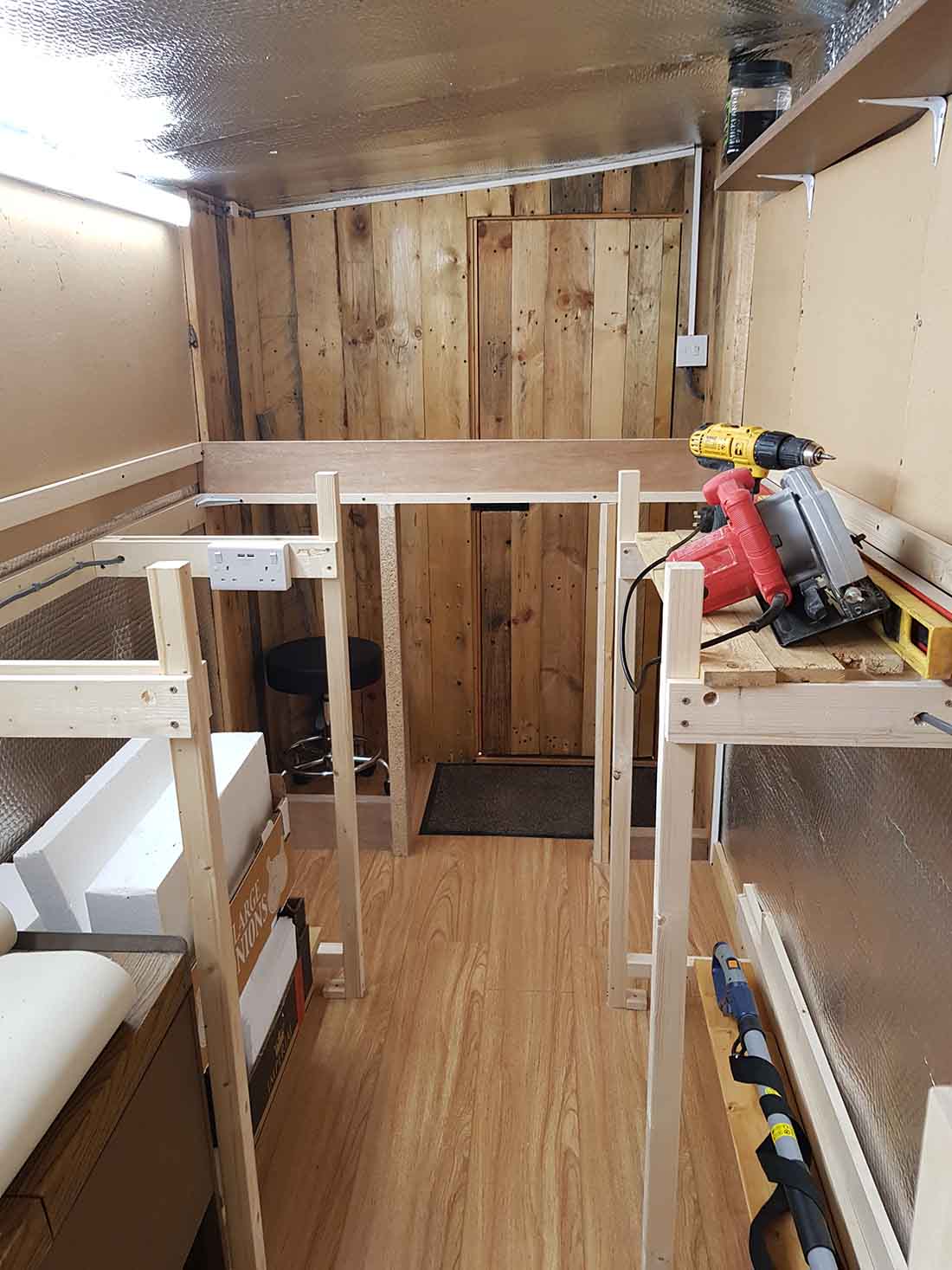
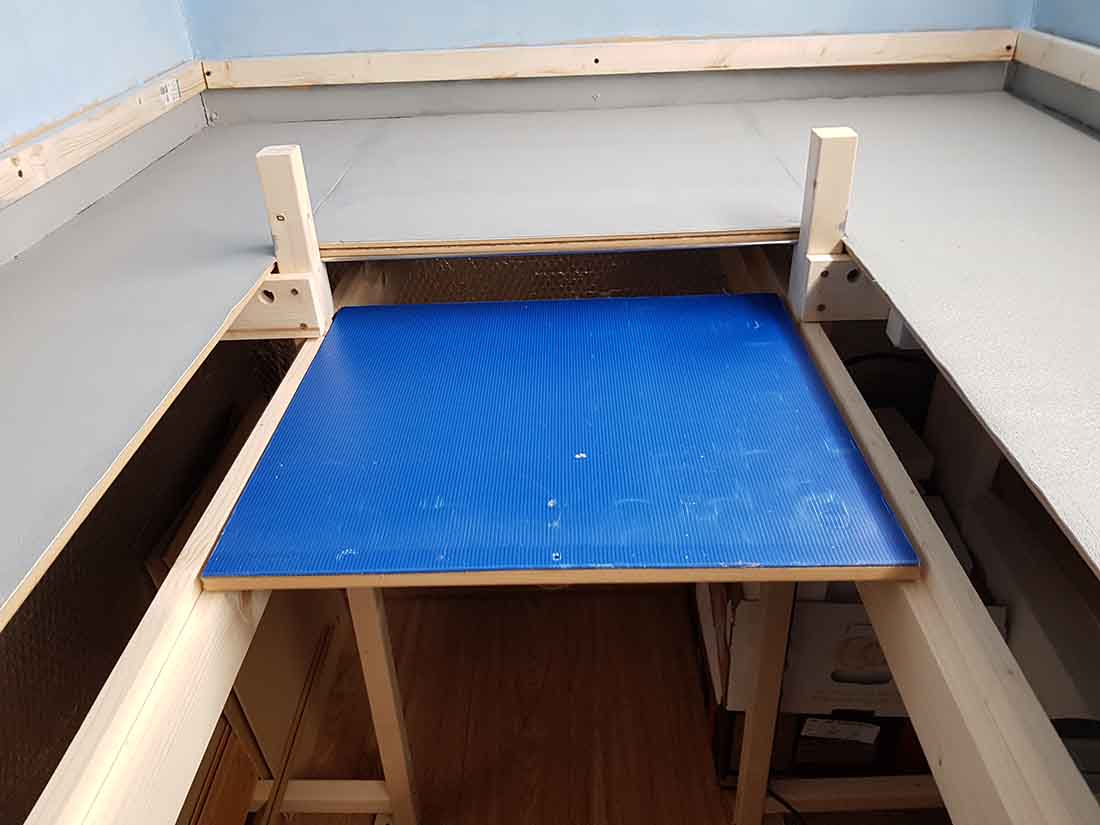
I calculated that I could achieve a layout 4 and a half feet wide by 10 feet in length with a 2 foot by 6 foot area in the centre for me to operate it from, accessed by me crouching forward sat low on a salon stool to avoid me crawling on my knees.
I also wanted to have a small place to work and managed to install a small slideaway work top.
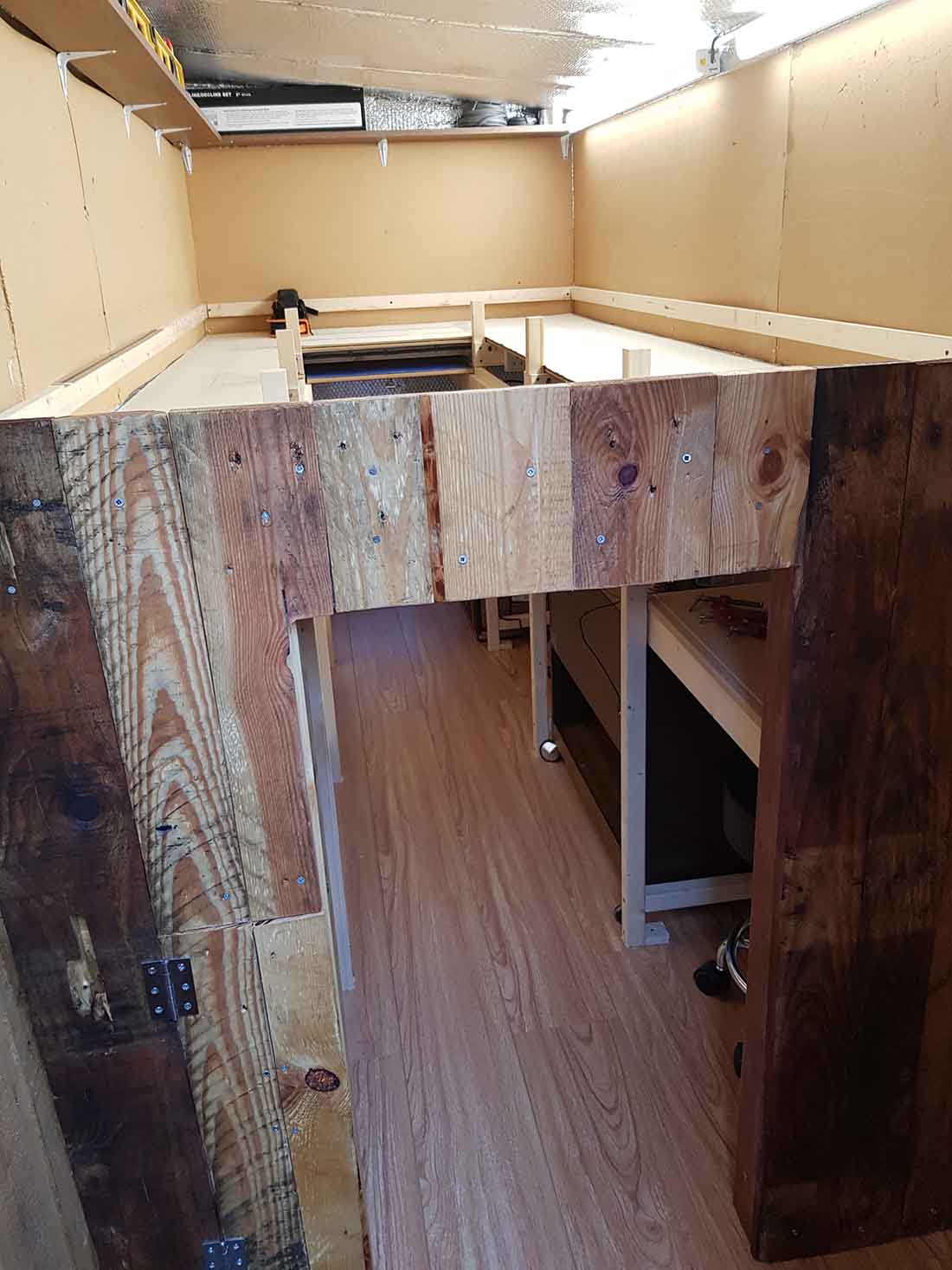
I wanted to have a place to store trains off the main layout and chose to have a lower deck with sidings to hold upto 8 made up train sets with two of my four main lines running around the lower deck, to link to the sidings.
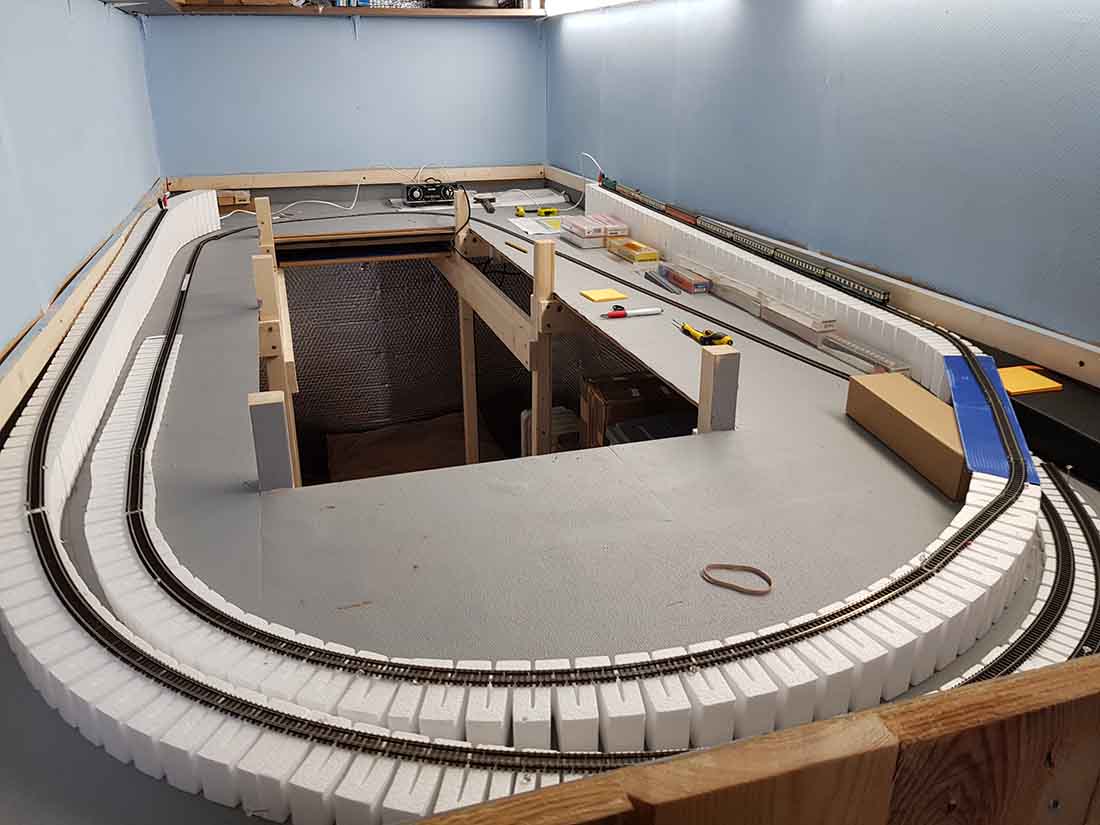
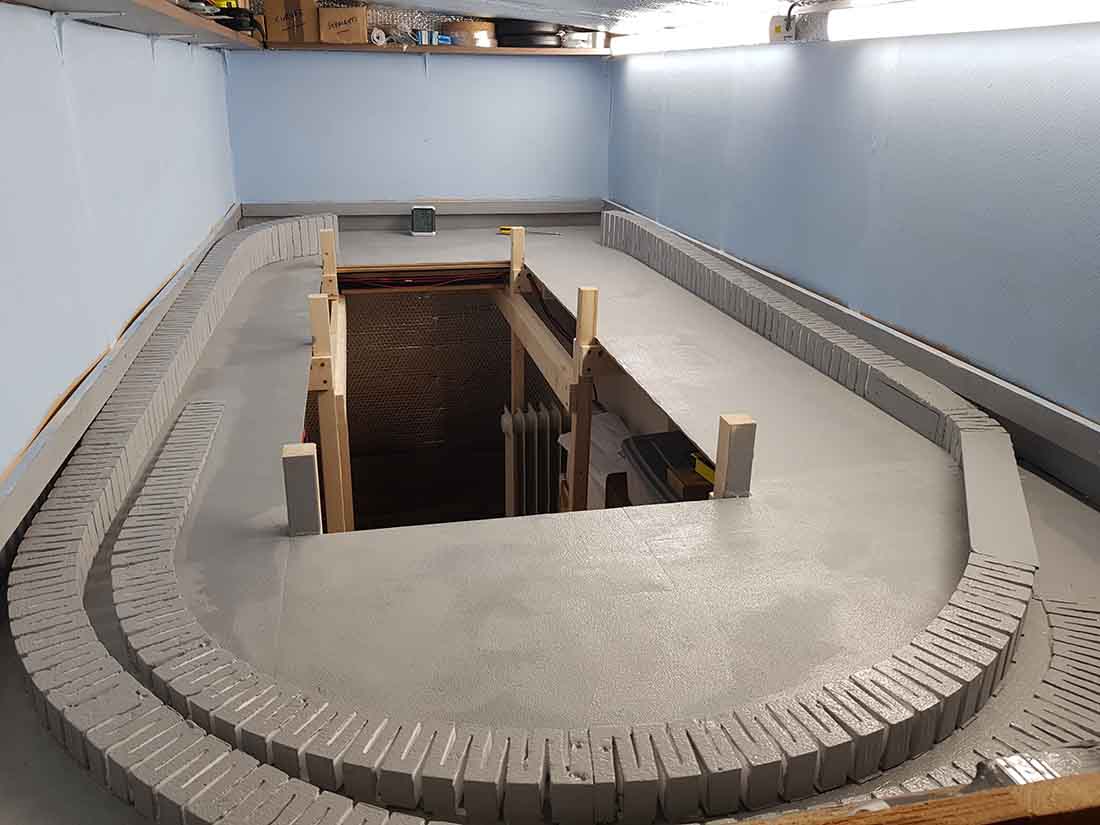
So in last four months of the year I built the frame to support a double deck baseboard and also installed the lower deck made up from the doors and casings from an old discarded wardrobe covering it with some spare lino face down, later adding the 3% gradients courtesy of woodland scenics to get the trains from the lower deck up to the main deck, having already tested all my locos with 7 coach sets to ensure they could all manage the inclines.
I am currently working on the bus wire and In the coming months plan to lay the cork on the inclines followed by the track, following on by moving onto laying the track on the lower deck.
Kind Regards
Nigel”
A big thanks to Nigel for sharing the makings of his 12×5 model railway.