John’s been in touch with the latest on his minimum gauge railway.
“I have read often about the challenges of ballasting track.
While I have never found it too much of a pain in the bum myself, a recent experience has begun to change my mind on the subject.
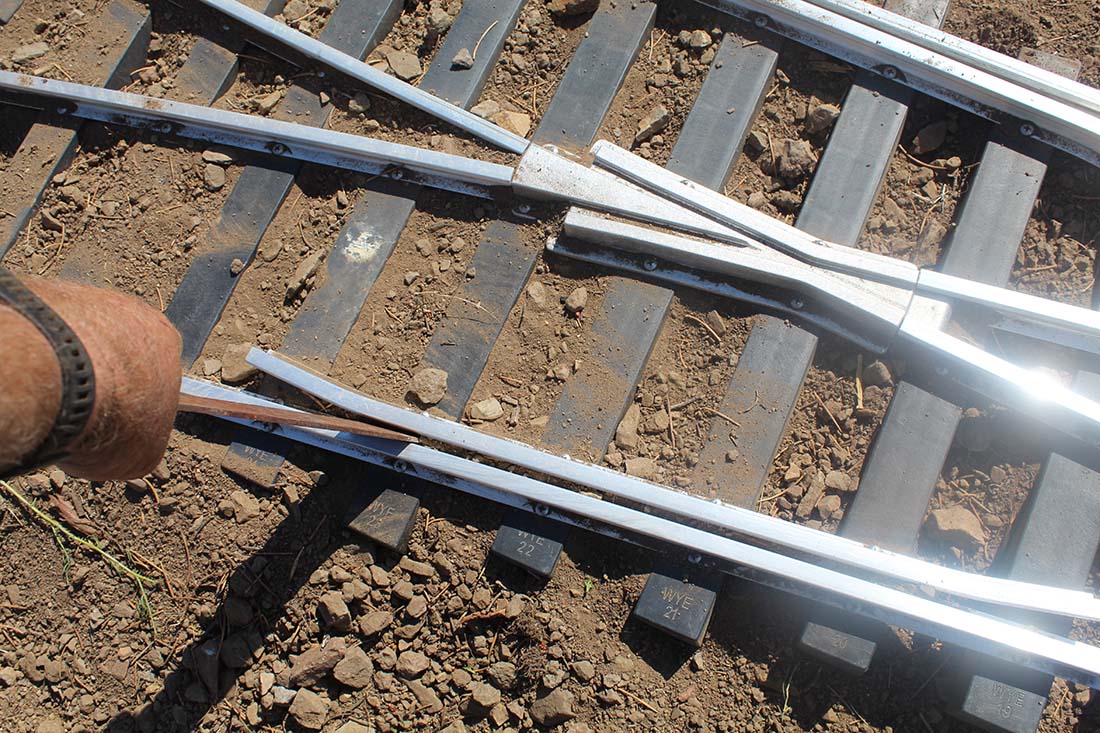
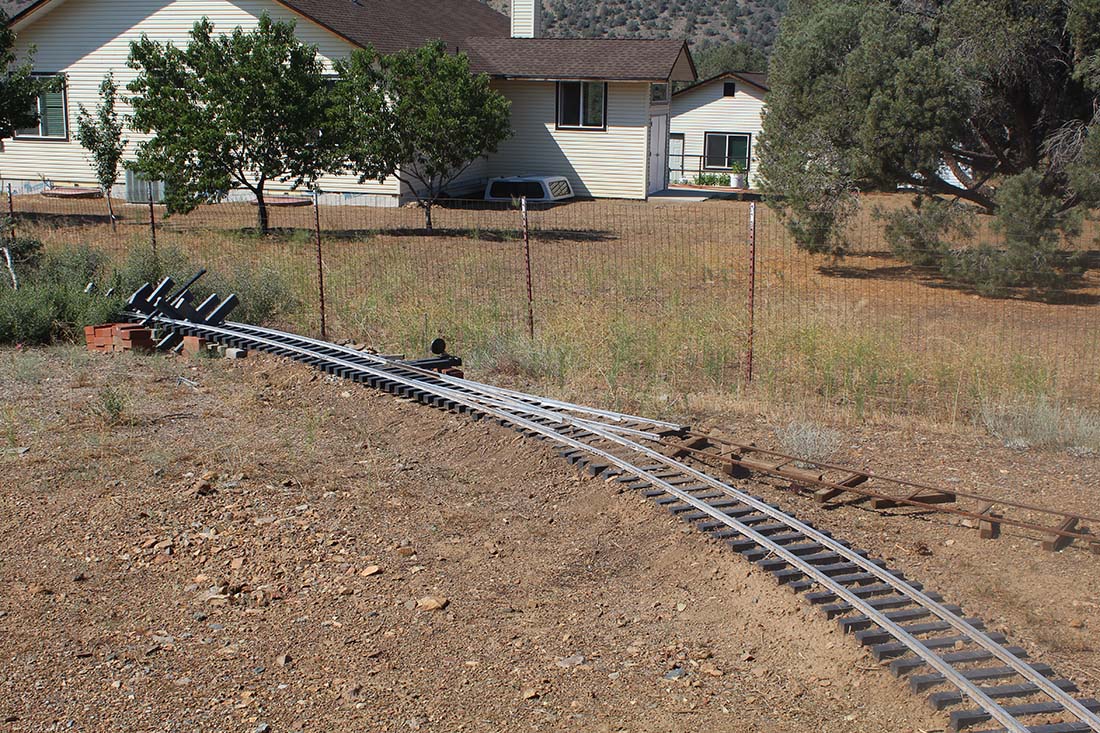
Ballasting a set of points is fiddly work no matter what scale you are working in!
In the small scales, ballast is usually an accommodation to make your track look more like a real railway.
With the minimum gauge railway I am building, the ballast is essential for leveling and securing the track. My four wheel wagons are not forgiving when the track is the slightest bit wobbly or if it tilts the wrong way on curves.
Here is a set of points that I am trying to level and secure.
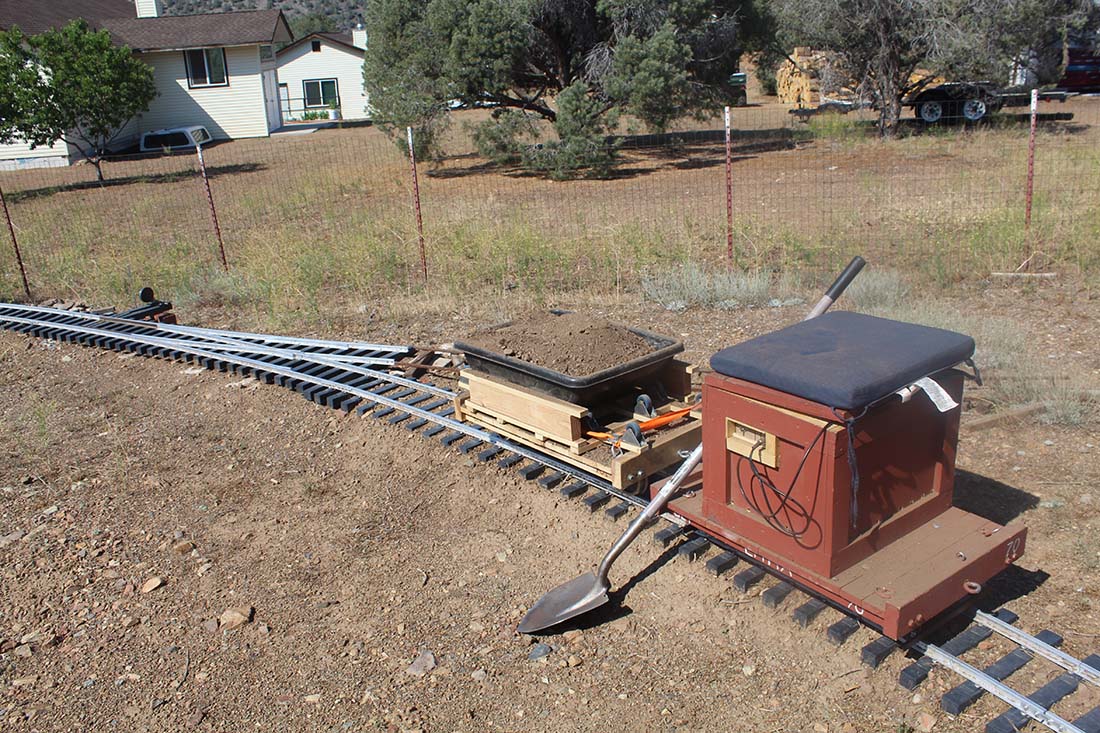
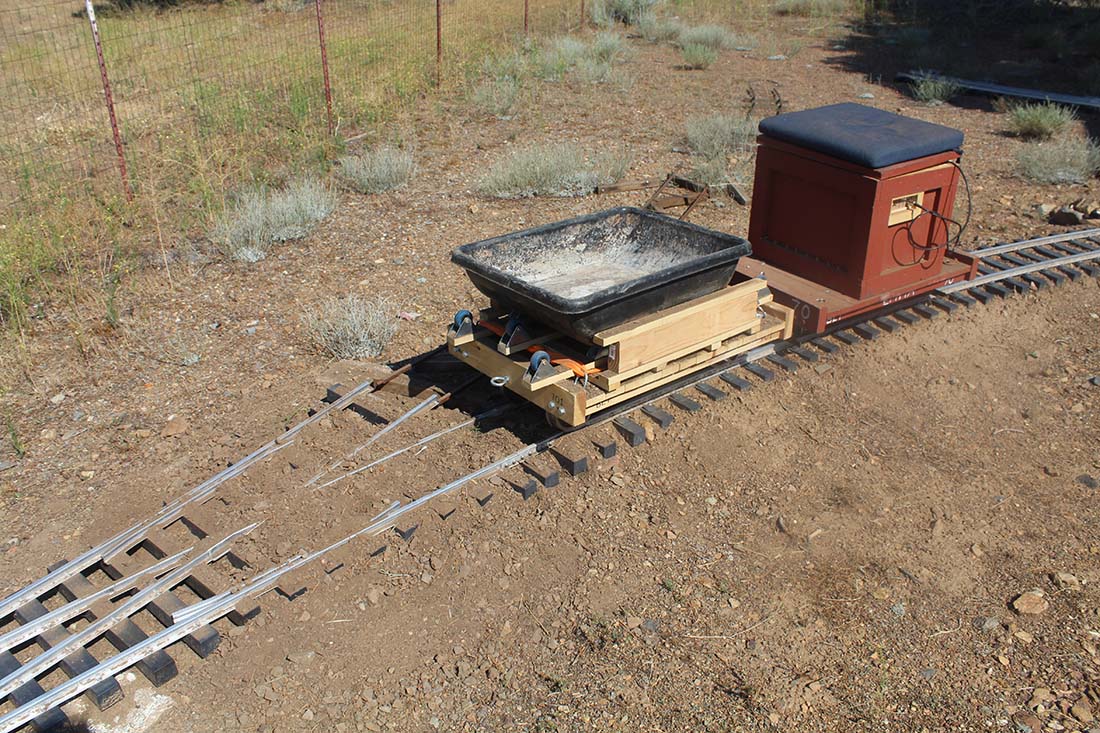
“Emma” is my work motor.
She does a good job helping me shunt my wagons.
One small problem with Emma is that she is not fond of less than perfect track.
This is a challenge with my four wheeled wagons as well. To the positive, their troublesome natures have helped me improve my trackwork!
Here Emma is in charge of my ballast wagon.
When full, the tubs on the wagon can weigh 100 pounds or a little more.
One of these tubs full of ballast is about the same as half a teaspoon of ballast when one is working in HO scale!
In the small scales one uses a paintbrush to spread the ballast. Here a broom does the job. Also I am using a small scrap of steel to clear the check rails (guard rails).
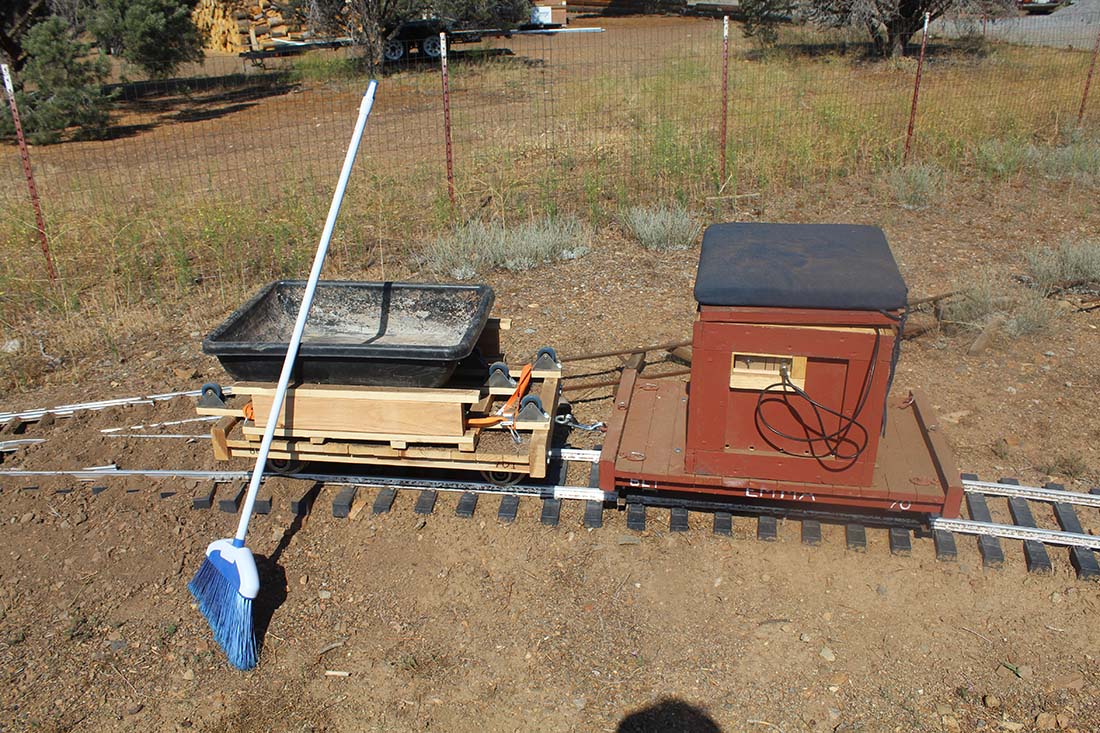
When it comes to ballast for my tramway, I am using “indigenous materials”.
I do screen the locally sourced ballast to remove the larger stones.
On my side of the pond, narrow gauge railways were not usually too fussy when it came to securing their track. Dirt was cheap, rock ballast is more dear… Much harder on the pocketbook!
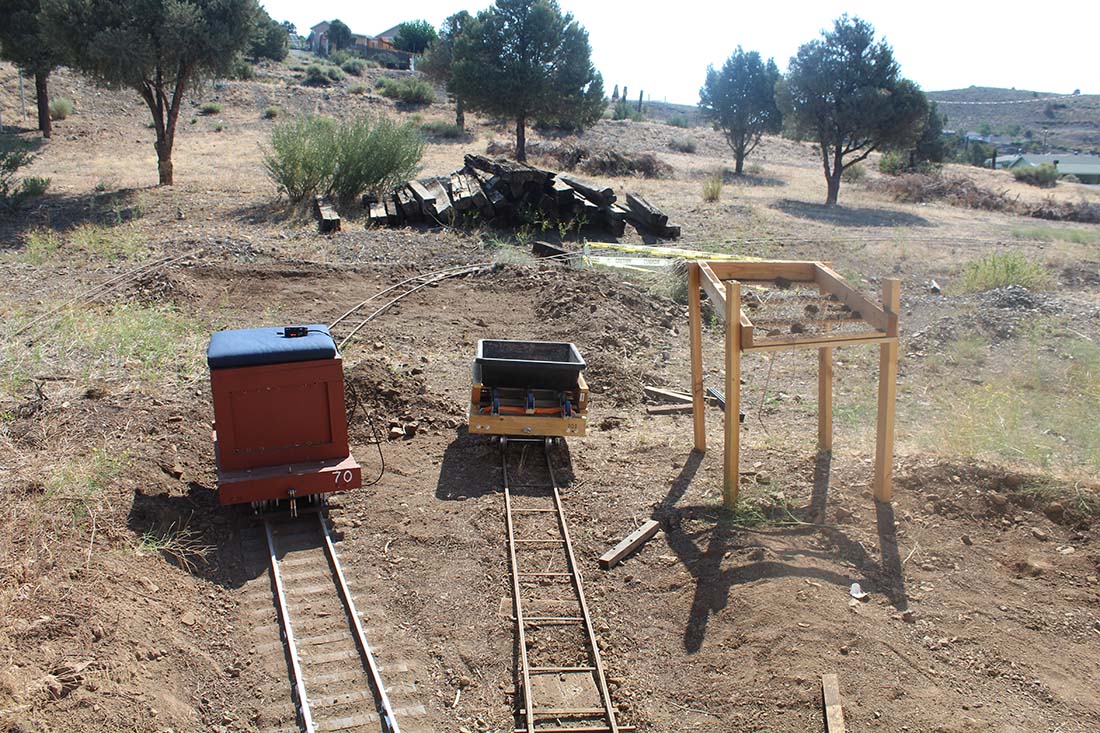
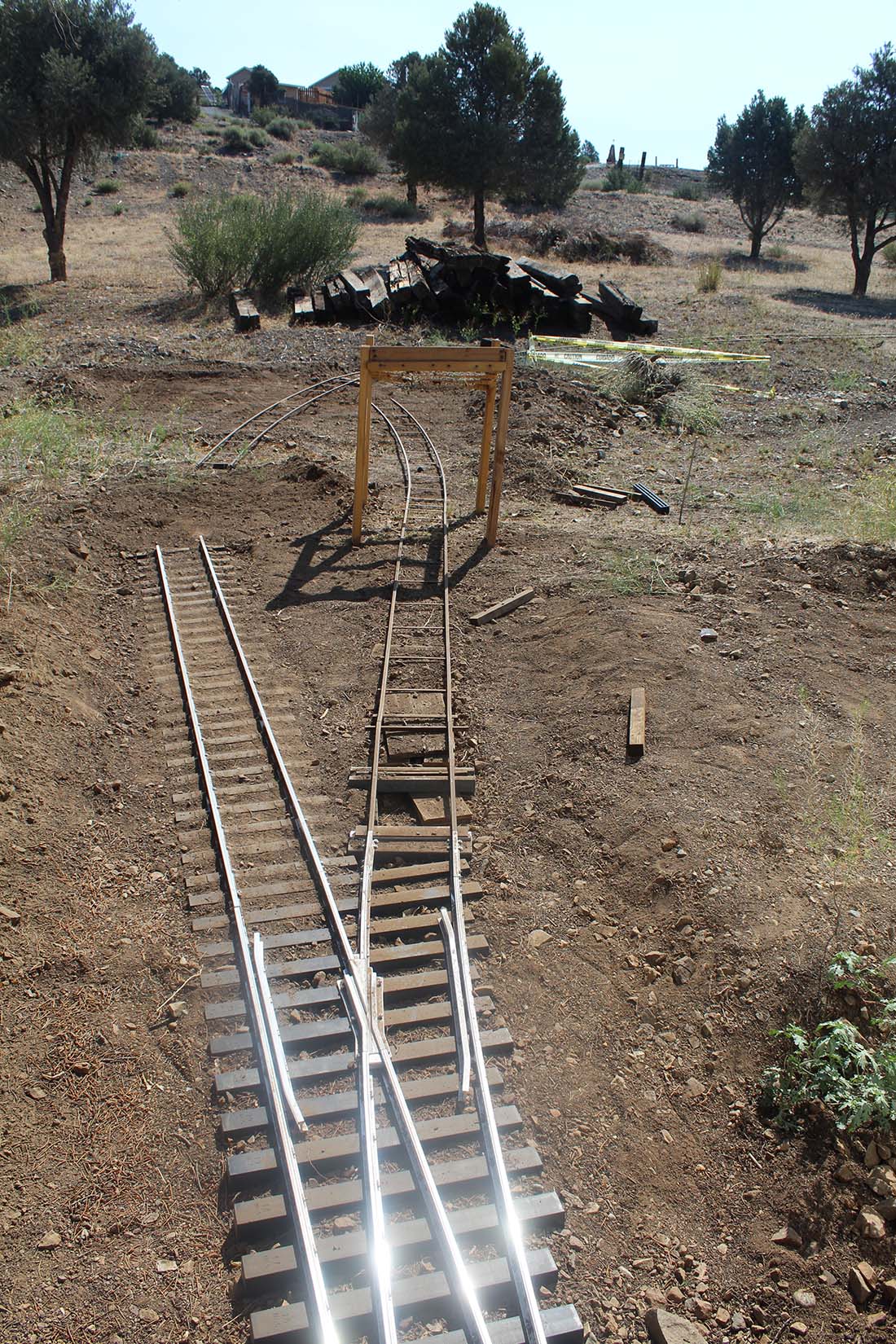
Here are a couple of photographs of the quarry end of my line.
Where the quarry now is, that is where my equipment storage shed will soon be.
They do not call this scale of railway “Hernia Scale” for nothing. I believe my soil is about 50 percent rock and 50% dirt.
One more pictures of Emma at work.
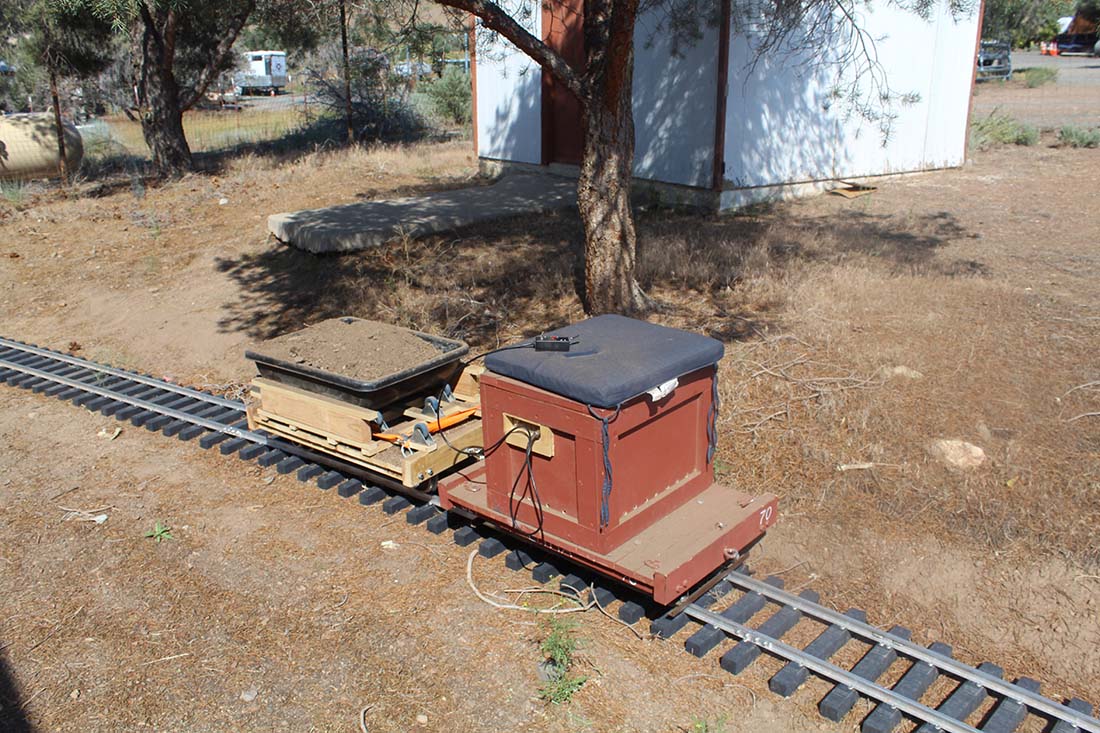
“Emma” was named after John Allen’s “organic switcher”.
That “locomotive” for his classic “Gorre and Daphetid” railroad was introduced in April of 1952, HO Model Trains Monthly magazine.
Technically it was a stegosaurus but it later became known as the “work bronto”.
When “Emma” misbehaves I remind myself that honoring locomotive 13 of a railroad known as the Gorre and Dapheted (pronounced Gore and Defeated) may not have been my best idea — Even if I did change the number…
John”
A big thank to John for sharing the latest on his minimum gauge railway.
Now onto Henry:
“Hello Alastair
I have recently sent you a few pictures of the completed passenger station on the upper deck of my double deck layout.
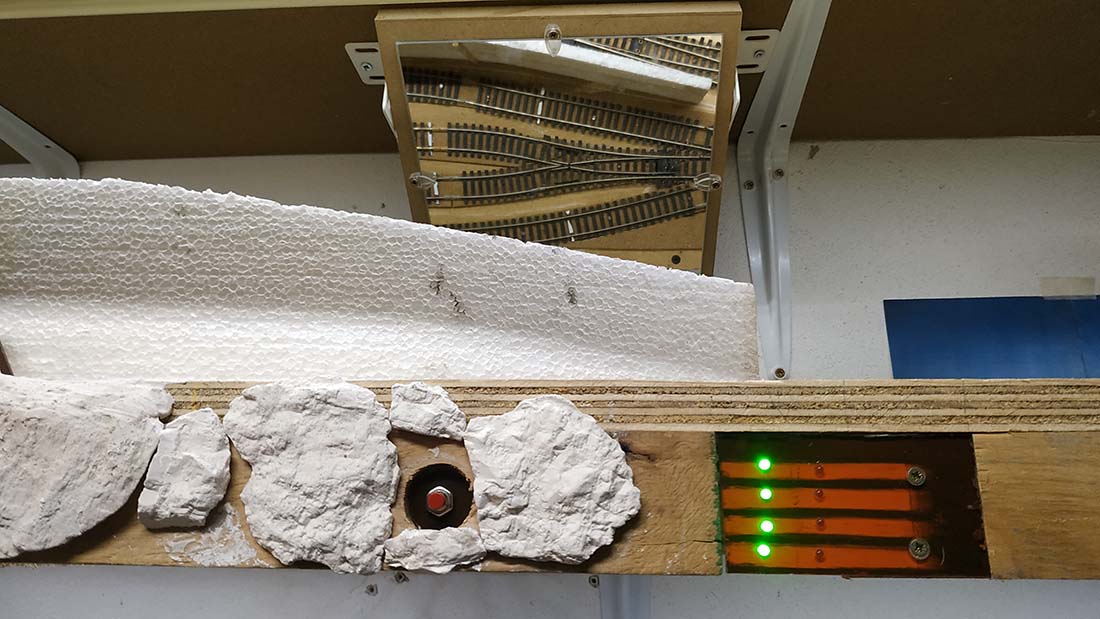
In the few weeks since then I have been hard at work, wiring current sensors into the hidden staging yard tracks.
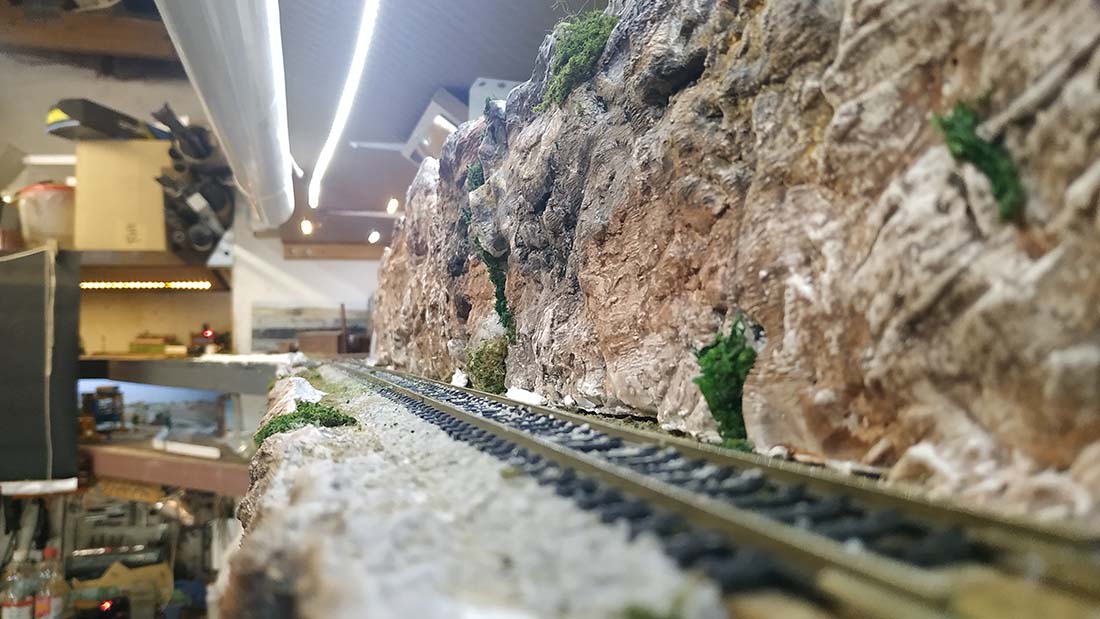
Once I was satisfied these were working reliably, I started the scenery to hide the staging yard.
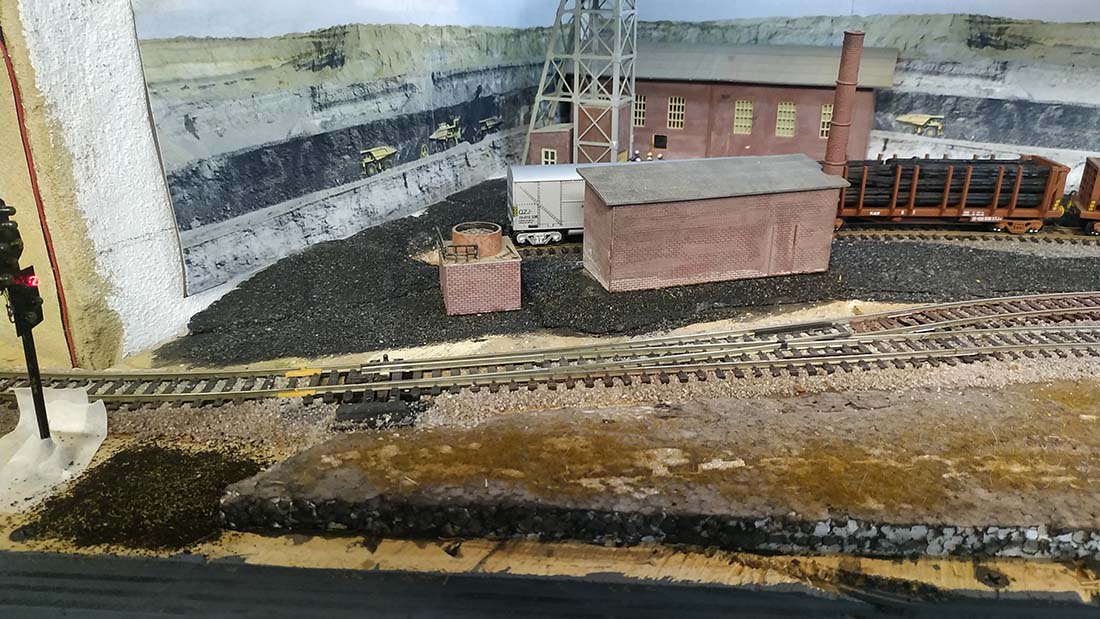
I also completed the coal mine scene just before you enter the staging yard.
I am attaching a few photos of the latest development. I am using two mirrors against the ceiling to see fouling point markers, a white tie or sleeper in this case.
Regards
Henry”
If you want to see Henry’s track plan, his last post is at the bottom of this one.
That’s all for today.
A huge thanks to John for sharing his update. Couldn’t help thinking of Larry’s ride on train with track whenever I see a layout like this.
If you want to get up to speed, John’s last post is here.
I so enjoy looking through my inbox each morning, especially when there’s a missive like John’s.
It’s wonderful to see what you all are getting up to.
Please do keep ’em coming.
And if you want to make a start on your own layout, the Beginner’s Guide is here.
Best
Al
PS Seen the latest ebay cheat sheet yet?