Model railroad planning ideas

Greg’s been in touch with more model railroad planning ideas.

Well, when I say update, he seems to be having just as much fun planning his layout as building it.

Personally, I think he’s doing the right thing. A little planning can go a long, long way.

If you want to get up to speed, his last post is here.

“Well, as I was developing the switching area on the left side, I realized that I had one spur facing in each direction.

That meant there was no way for the steeple cab loco to get to the other side of the cars being spotted.

I had three choices: get rid of the switching altogether (Nah!), keep all the spurs facing in the same direction (maybe, but not a great idea) or build a runaround track.

Here is my first attempt.

Model railroad planning ideas track

While this is doable, it is starting to infringe on the Waukegan area. So I put in some streets to help define the separate areas.

Putting in the streets gave me a better idea of how crowded it would be, so I eliminated one of the railroad interchange tracks. It was only there for scenic purposes anyway.

XTrkCad also allows me to add some buildings. They are just 2 dimensional, so you are looking down at the roofs. I drew the Main Street Station, City Classics 5 story buildings and Walther’s Merchants Row 2. They are all drawn to accurate dimensions on the Chicago side.

The runaround seemed to be causing some problems for me, so I tried a version with both sidings facing the same way.

Model railroad planning ideas track

And you can’t have spurs without industries on them. So I did some research as to what industries were served by the North Shore.

I used northshoreline dot com and found a complete list of businesses served by the North Shore and tried to find those types of businesses.

I was looking through Walther’s catalogue and found the Grocery Distribution kit.

This kit has the perfect look for this area, so I drew it and put it in.

model railroad planning ideas

But that didn’t leave much room for an industry on the second spur. But Walter’s Interstate Oil doesn’t have a fixed footprint. It comes in three parts, so I started to work that in.

model railroad planning ideas

After looking at it for a couple of revisions, I realized that the Grocery Distributors is a huge building.

So in an effort to save space I will use Suydam’s Day and Night Hot Water Heater factory.

That is a big building too, but the spur runs INTO the building, instead of ALONGSIDE the building. That is a big space saver.

 Model railroad planning factory

I can also cut off the last two sections of the building to help it fit even better. And I also already own the kit, so it saves money as well.

The pictures are not my building. I have an unbuilt kit.

So without showing you every tiny change I made, I fit in the runaround and Ravinia Park.

I planted a few trees, added a whistle stop in the upper left hand corner.

The grayish streets will be asphalt, the reddish streets will be cobblestone and the tan roadway will be gravel.

As I was looking through Walther’s catalogue I came across their Urban Embankments. These things just shout “Chicago!” So sorry Al, your flats (which I have already paid for) are being replaced.

Also, being raised higher than the rest of the scene, it should add visual interest.

And if I put a passenger train on top instead of a freight train, I have one more stop for the streetcar to make.

I’m just not sure yet, whether they will be single or double track. The street level track will pass into the opening and become hidden.

I’ll probably wait until I start planning the trackage full size before I commit to the width.

I named this XtrkCAD file “SecondTryPretttyGood”.

Think it’s done? Hah! Model railroads are never done. Watch for the next update.

Greg”


And now on to Peter who is making good use of his retirement:

“I have been enjoying your posts for a while and decided it was time for me share my efforts with you.

I rekindled my interest in railways when I retired 5 years ago and having a reasonable space in the garage dug out all my old models from 50 years ago and bought some new track.

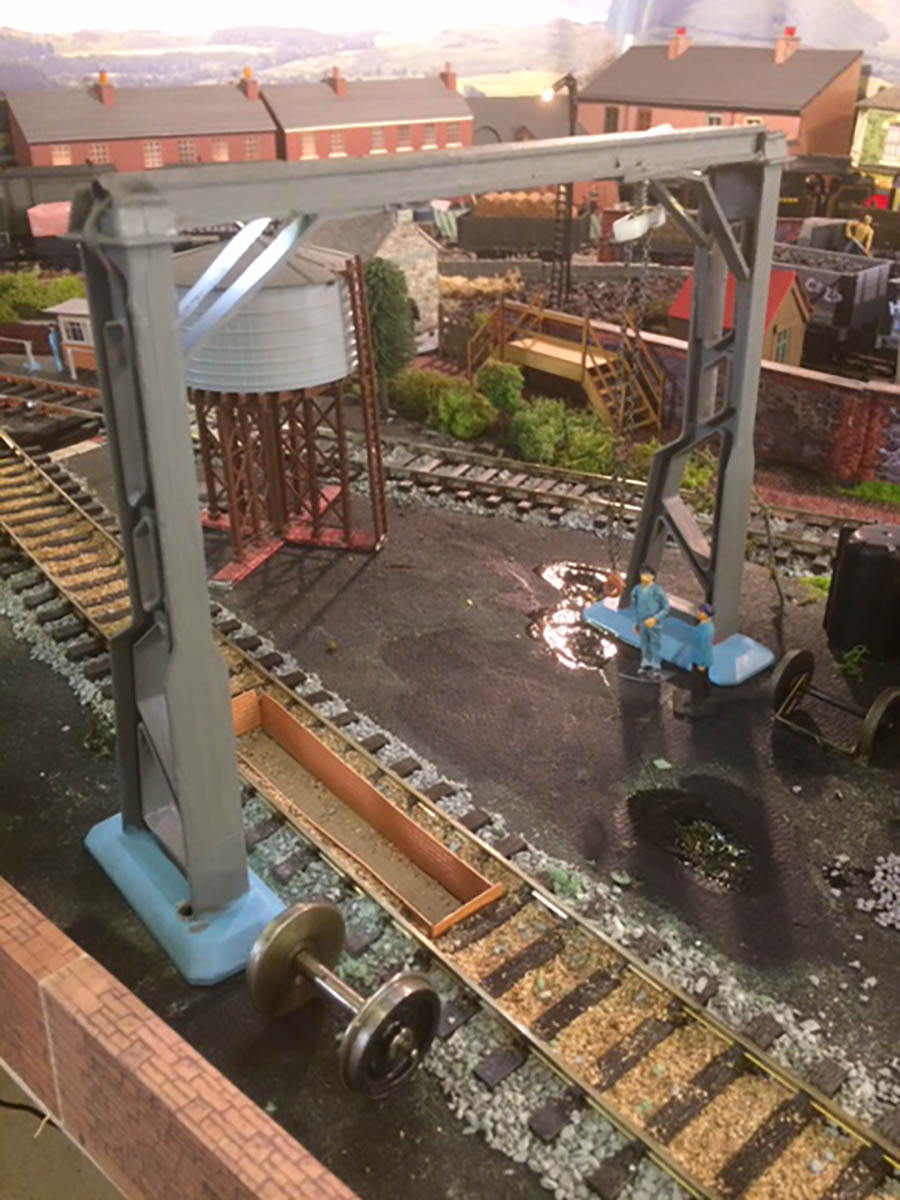
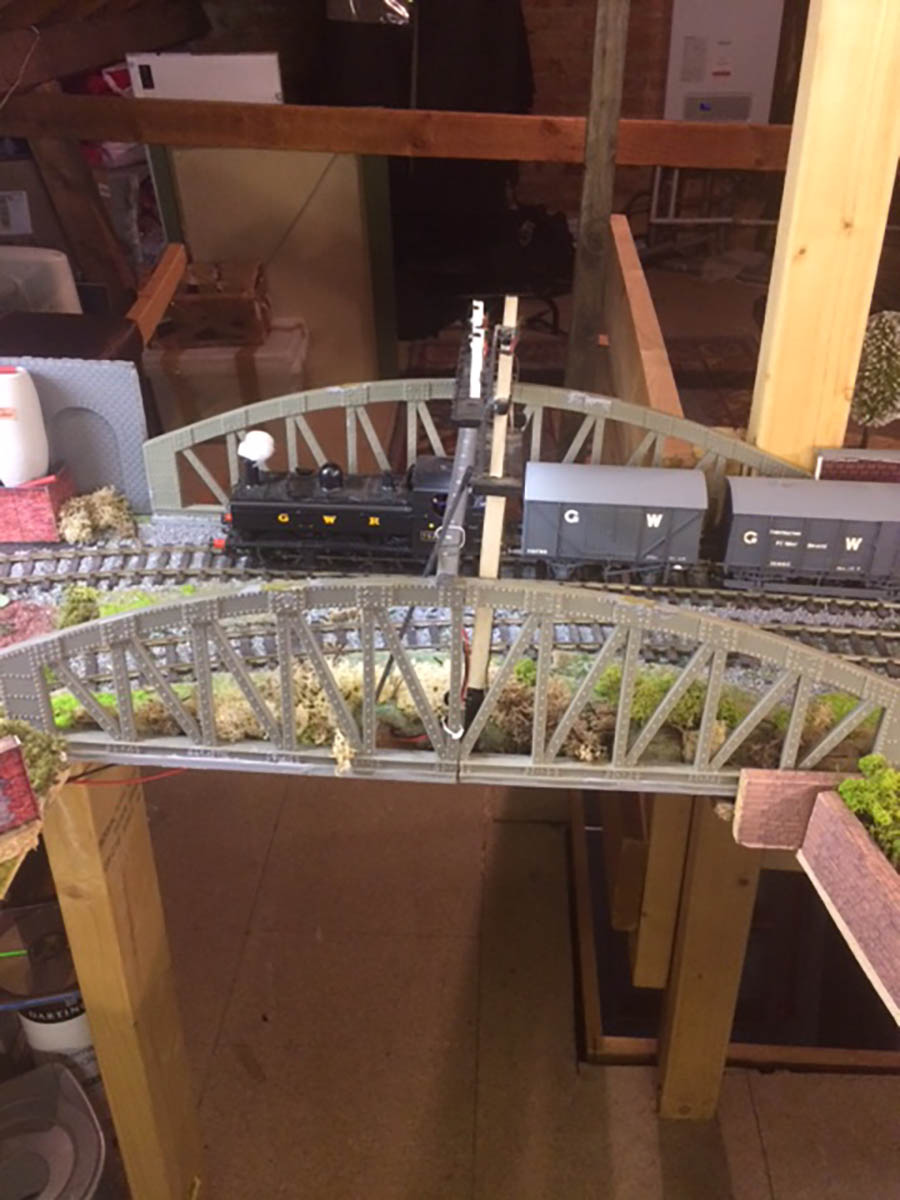
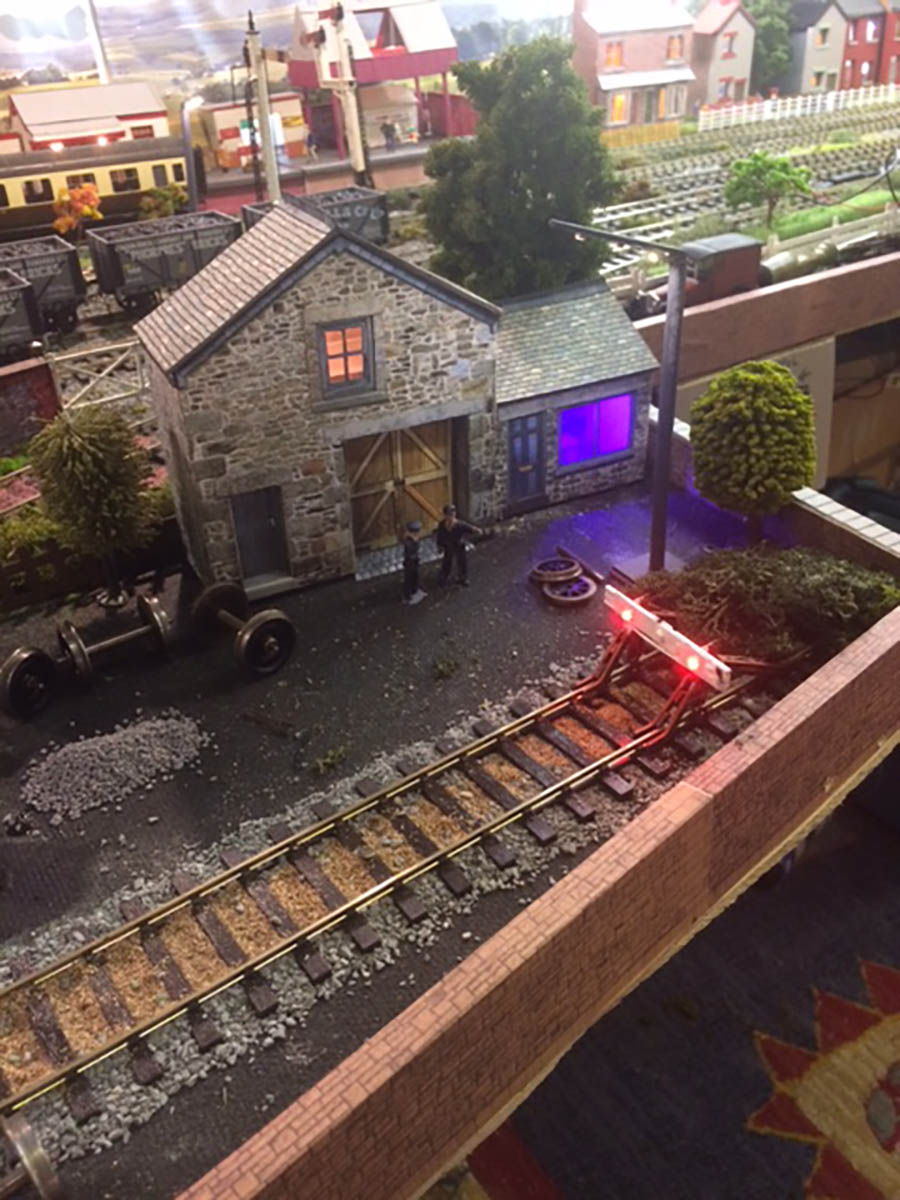
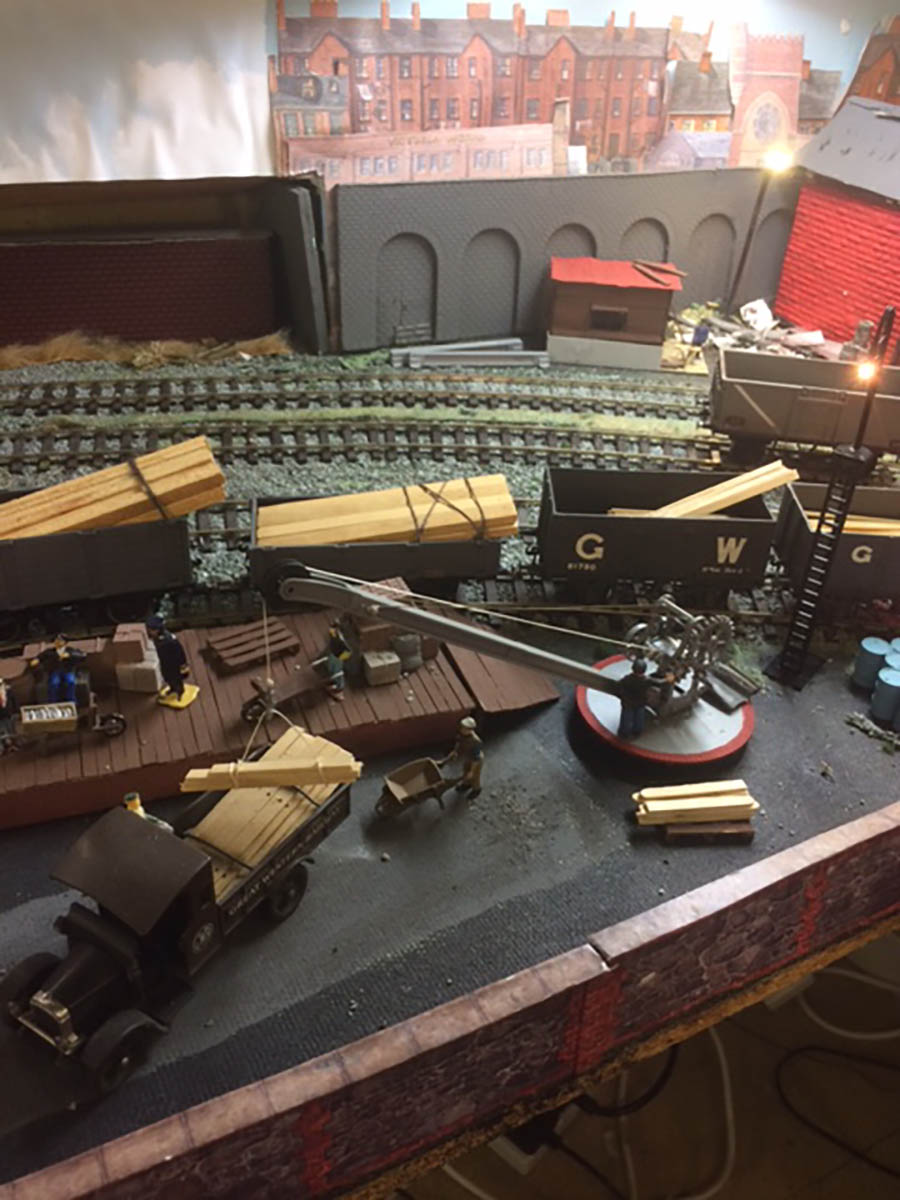
Needless to say I still have lots to do but here are a few photos.

Peter”

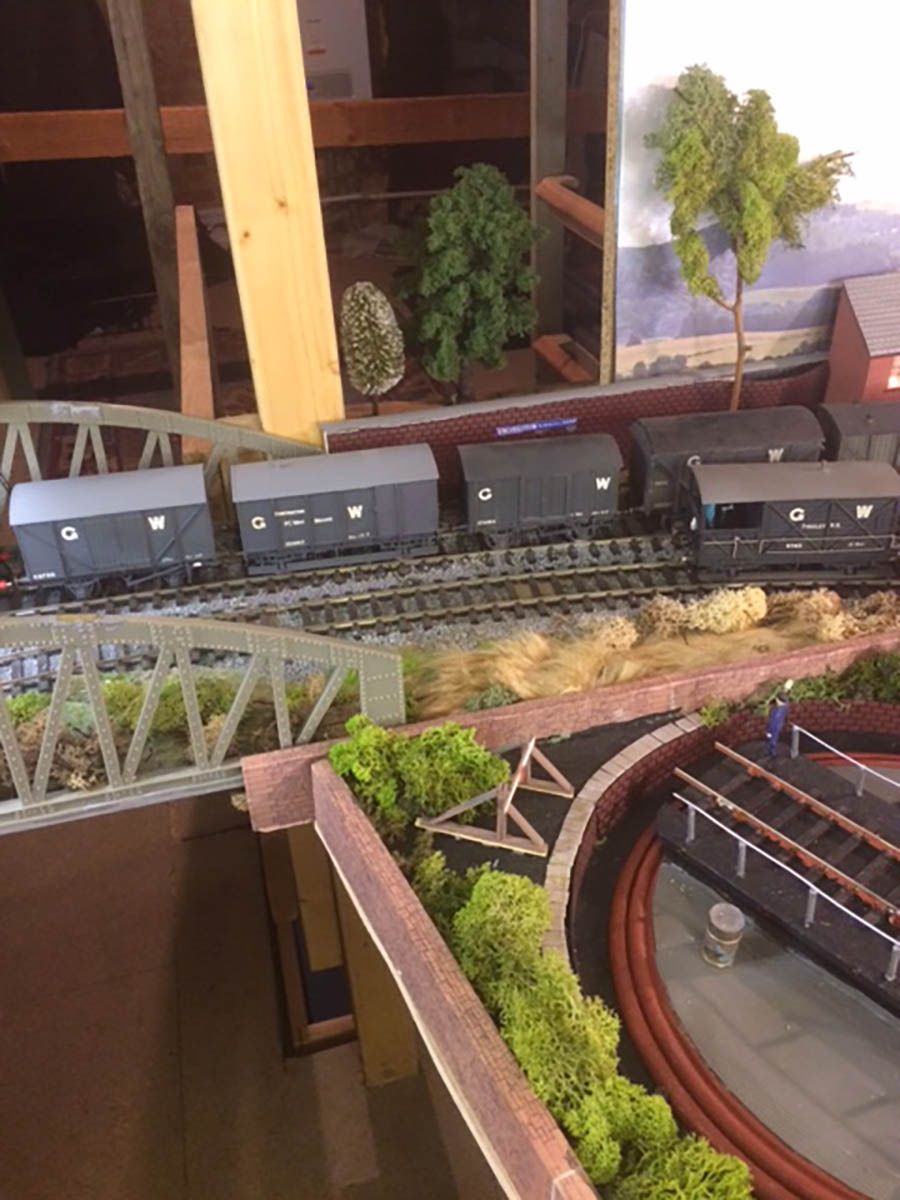
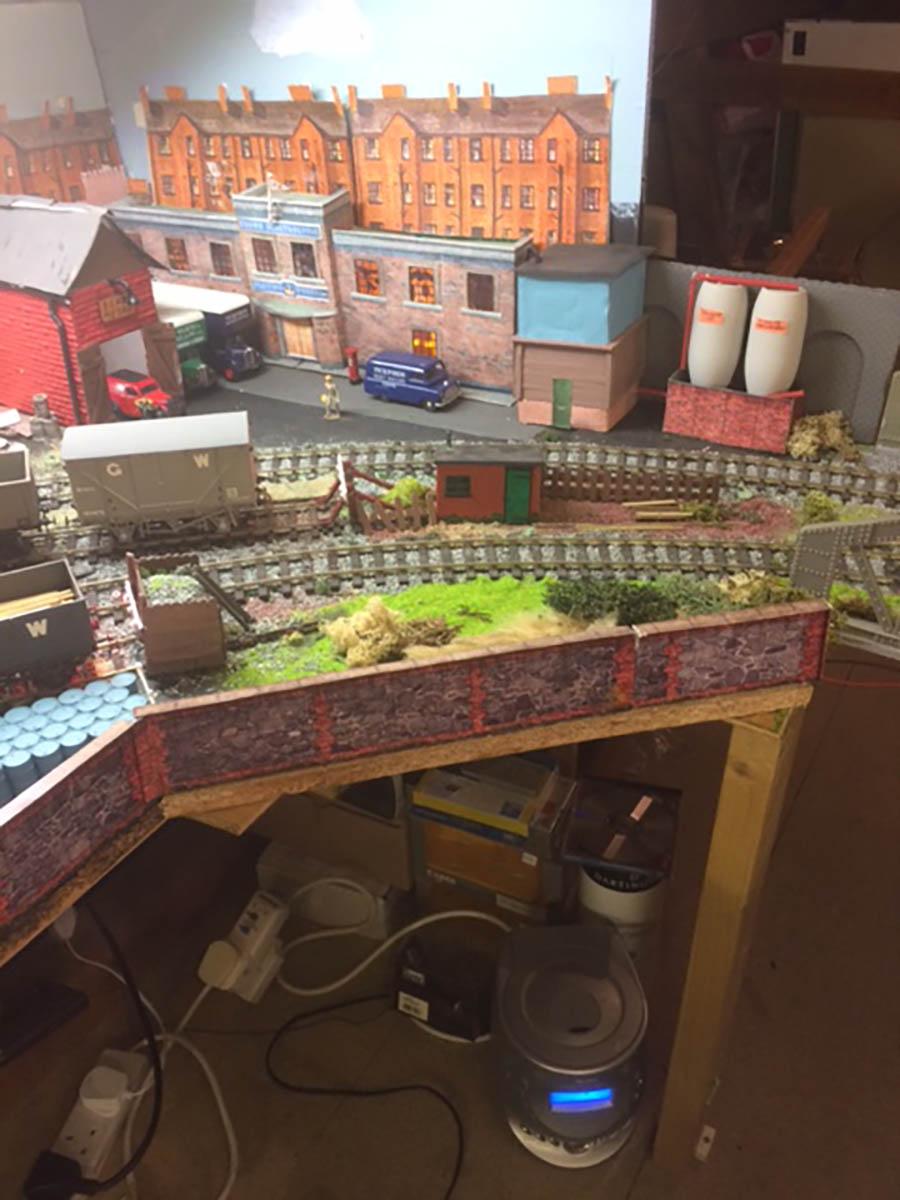
model railway viaduct

model railway viaduct

model railway viaduct

model railway engine shed

Next, Cassio.

He’s never a man of many words – I think it’s a language barrier, but what a layout:


A big thanks to Greg for sharing his model railroad planning ideas. Some folk just like to jump in, others like to plan. Both are fun.

That’s all this time folks.

Please do keep ’em coming.

And don’t forget the Beginner’s Guide if you want to get planning, and get going.

Best

Al


N scale railway – Tim’s

Tim’s been in touch with his N scale railway:

“Hello Al and greetings from Northern California.

I started my N scale layout, based on an English countryside village during lockdown.

I named my mythical village Covidshire.

Almost everything used in the layout was acquired from the U.K. I want to send a special thanks to the various shops, and people that I had the pleasure of dealing with.

Most of the structures are Metcalf kits and all of the landscape/trees, and stone walls were hand made.

Although I still have some finishing touches remaining, I wanted to share.
Sincerely,

Tim in California”

n scale railway

n scale railway

n scale railway

n scale railway

n scale railway


n scale railway

n scale model railway

n scale model railway

n scale model railway

n scale model railway

n scale model railway


A big thanks to Tim. His pics reminded me of Ron’s: N scale model railway.

Now on to Gary. He’s been kind enough to answer some of your questions on his last post, which is here.

“Hi Alastair…. thanks for posting……I wanted to send some thanks you to some of the modelers who responded.

To James: Thank you for the info on Walther’s White Tower Restaurant kit #933-3030. I am going to order one and see how to modify it. It would at least give me the foundation for the structure.

To George from LI, NY: Yes, I have to dirty it up a bit. Railroad yards are very dirty places. I have to figure out the best way to do that; I am going to use charcoal to dirty up the pavements and parking lots and vehicles. I am going to also use scraps to create garbage piles and liter. Thank you.

To Greg Schaefer: Thanks for the info and thoughts. You are right about the trash…..I have to dirty up the yard. I am going to add some pigeons and gulls aroun the lunch wagon. I have to figure out how to make paper trash on the ground. Also, that is a great idea with the sound of the trucks. I have an old cassette recorder that might work. Thanks again.

To John Reynolds: Thank you. I had to find a building that was two levels and those kits I thought were perfect.
John

To John Thorogood: Thanks, you are right about the maintenance in Delaware for the GG1s but I took some liberties with the engine yard because I love the GG1 engines; I think they are the best looking locomotive ever built.

Gary”

Now on to Mike.

You’ll remember him from this post. Well, now he has a question. Who can help?

“Hello Al:

As you’ve seen from my previous photos, I have a track layout (HO scale, Bachmann track) on several 4×8 tables and a 4×5.

I have created a satisfactory town resembling the Universal Studios backlot and the Western town from Old Tucson as you’ve seen. I have drilled holes and dropped all the remote switch track wires ready to hook up for the command center.

However, now that I have a great start, my layout is still primarily flat table top (except for one mountain with tunnel).

My question to the experts is: what is the best way to create realistic landscape and ground cover? That is, how do I create slight variations in elevation for the scenery in the areas surrounded by the tracks?

I have been attentively watching all your postings and have seen some great landscapes. I still haven’t concluded what are the best materials to give the landscape some vertical depth.

Any suggestions would be appreciated.

You’ve been an inspiration to get me going. All the best.

Mike
Michigan, USA”

That’s all for today folks.

A big thanks to Tim for sharing his N scale railway, and to Gary and Mike too.

Please do leave a comment below if you can help Mike.

That’s all for today folks.

Please do keep ’em coming.

And if today is the day you get started on your layout, the Beginner’s Guide is here.

Best

Al

PS More HO scale train layouts here if that’s your thing.


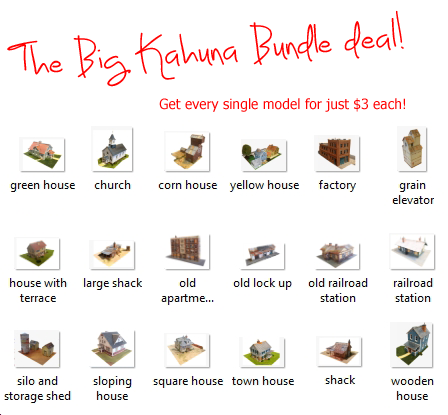
Need buildings for your layout? Have a look at the Silly Discount bundle.

Trains derailing – how to stop it happening

Mal’s been in touch – here’s how to stop your trains derailing on your track:

“Al and my fellow modellers,

Reading one of Al’s eMails today I noticed in the comments how many people were suffering from trains derailing on their layout.

Well, I thought, they are not alone! I have spent a lot of time over the last couple of weeks solving all of my own.

Various things cause derailments and I have done lots of research on why individual items choose to jump off the track and ruin my day.

I thought I should share the findings with you and hopefully point you in the right direction.

Firstly, they are all solvable! Even my most stubborn lightweight wagons have been solved. What you need to do is tackle the problem systematically.

Firstly, is it the track?

The track will only work well if it is in gauge. I foolishly assumed that my track (peco 100) would be in gauge at all times, after all it is made in a factory and the rail is inserted into sleeper chairs that are a fixed distance apart. WRONG!

Flexible track on curves has a tendency to slightly tighten up the gauge. Usually not a problem until you create a joint on a curve. These do tend to press inwards on the inside rail. I used a stout pair of pliers to bend the rail back outwards and re-checked with a track gauge. That was problem one solved.

Problem 2: almost everything struggled going into a particular point in the fiddle yard section. It was NOT the point (turnout/switch for the rest of the world) it was the 2 inch (50mm) section of track before it.

Once again the plastic sleepers had not proved sufficiently rigid to hold the track in gauge. The track had rotated inwards at the tops. You couldn’t see it, but you could measure it with a track gauge. Sure enough it was about .75mm too narrow.

Now for wheels:-

OK so if your wagons / rolling stock / locos cope perfectly well on a straight flat section of track why is it they fall off the track when going through a point?

Well first it is more common for trains derailing to occur going into the point from the toe. Hence why certain railway companies insisted that there be no facing points on mainline track and where possible to avoid it altogether. Not bad advice for us modellers too! Apart from anything it increases the operating complexity and allows us to shunt more than we would otherwise.

However, having said that, at some point in time you have to approach a point from the toe end in order to choose between two (or even three) route alternatives.

The main requirement is that the wheels follow the desired route. Seems simple enough doesn’t it?
Well often they don’t bother and de-rail instead. So why? What stops them following the rails around the correct curve?

Well let’s look at the relationship between the two wheels. They need to be the correct distance apart between their inner faces. This is known as the back-to-back setting. Buy a gauge! Set the back to backs and you will be a lot better off.

Older wheel sets tend to be too narrow on their back-to-back settings for modern track. This worked well on the coarser track like Hornby and Tri-ang but often fail miserably on code 100 and probably won’t even entertain code 75 track!

The best option for this type of stock if you can’t adjust the back-to-backs is buy replacement wheels. A caution here too. Dapol wheelsets seem to have very small flanges that are designed for code 75 track. They do not resist sideways pressure at all and will pop off the track with the slightest sideways provocation.

The Hornby replacement wheels are slightly deeper flanged and work really well.

Anyway let’s look what happens if the back-to-back is too narrow.

trains derailing

If the wheels are too narrow you can see that the flange is likely to collide with the switch blade at point A or collide with the check rail at position B.

Either way you will see the loco/wagon jump up slightly as it does so. Push it through by hand with very light finger pressure and you can feel the collision. Bad enough on the straight through section but almost always disastrous on the curved route and don’t even think about a curved point where both routes are curved!

So you might think the wider I have the wheels the better! Wrong again I’m afraid. Let’s have a look at what happens if you spread the wheels out so they are a tighter fit between the rails. i.e. too wide.

trains derailing

So initially it looks like we have solved the problem. As both wheels are pushed towards the rails then the clearance past the switch blade at position A is increased and no collision occurs, likewise at Point B the flange is held far from the check rail… but there is always a BUT!

trains derailing

Look carefully at position B. The flange of the wheel is far away from the check rail, so as we said no collision! BUT masses of free-play. The option is there to slide inwards and move closer to the check rail. So what then happens to the wheel crossing the frog?

train derailing

The free-play at position B between the check rail and the back of the flange has allowed this wheel to ride inwards pushing the far wheel outwards, often catching on the wrong side of the frog and riding up outside the rail. Derailing!


Again this is particularly a problem for the curved route as it is easier for the wheel at the frog to arrive out-of-gauge and slightly at an angle to the intended route further promoting riding up and out.

i) Ensure your track is in gauge everywhere. You can’t be too particular in going over every inch even if it looks correct it may very well not be.

ii) Ensure that the wheels you are running actually suit the track it is on. If not replace them.

iii) Set the correct back-to-back using a commercially available gauge on every set of wheels you have.

iv) If you still have problems with trains derailing then try closing the gap at B, which will prevent the opposite wheel escaping over the Frog. The suggestion to glue in a small strip of brass or very thin plastic to the inside of the check rail will catch the sideways movement before it allows the far wheel to get outside the frog.

trains derailing

v) You can glue check rails into position on the inside rail of any curve to do the same trick. Why not? Real railways have them and exactly for this reason, they don’t do it for fun you know! I did this on my own curves where the tracks split over a baseboard join. Before, almost everything de-railed, now everything passes without problems.

I hope you have found this explanation helpful in trouble shooting your own problems.

Happy Railroading everyone!

Mal
North Wales”

A huge big thanks to Mal – trains derailing can drive anyone mad.

Mal’s post reminded me of ken’s: Model train derailment.

And now on to Dangerous Dave:

“Just uploaded today, short session to show I’m still here!

Regards

Dave”


That’s all for today folks, a big thanks to Dave, and especially to Mal for taking the time to put that excellent derailment ‘how to’ together.

Please do keep ’em coming.

And don’t forget the Beginner’s Guide is here if today is the day you make your start, on your layout.

Best

Al