N gauge railways

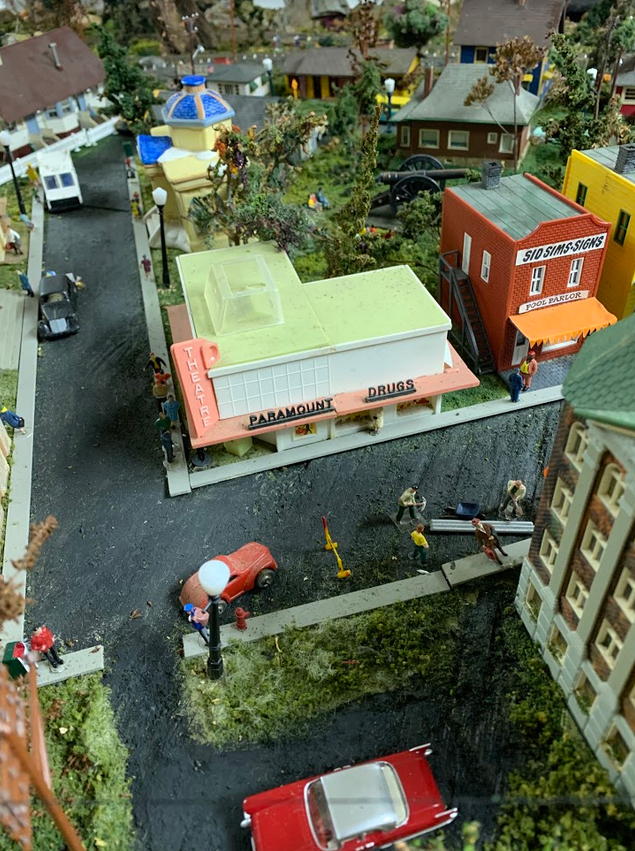
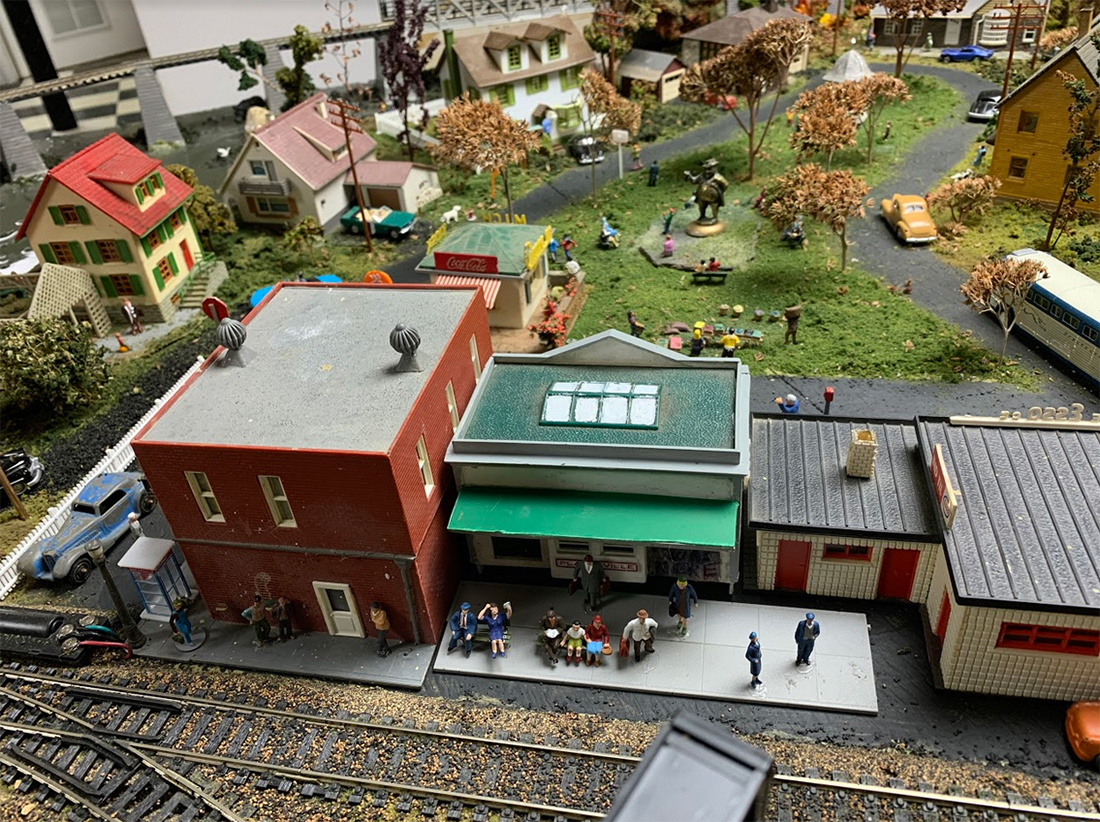
Mike’s been in touch. He’s added to the collection of N gauge railways on the blog:

“Hi Alastair.

Thought you might enjoy the fruit of my labours.

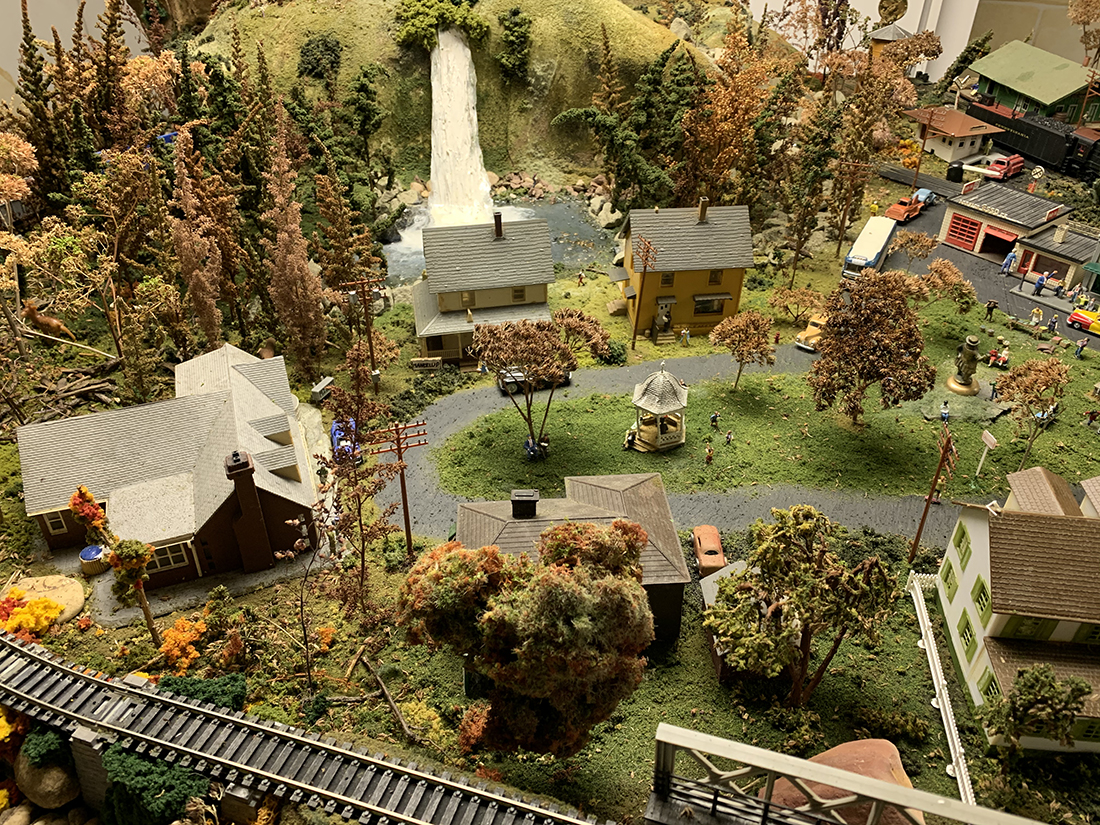
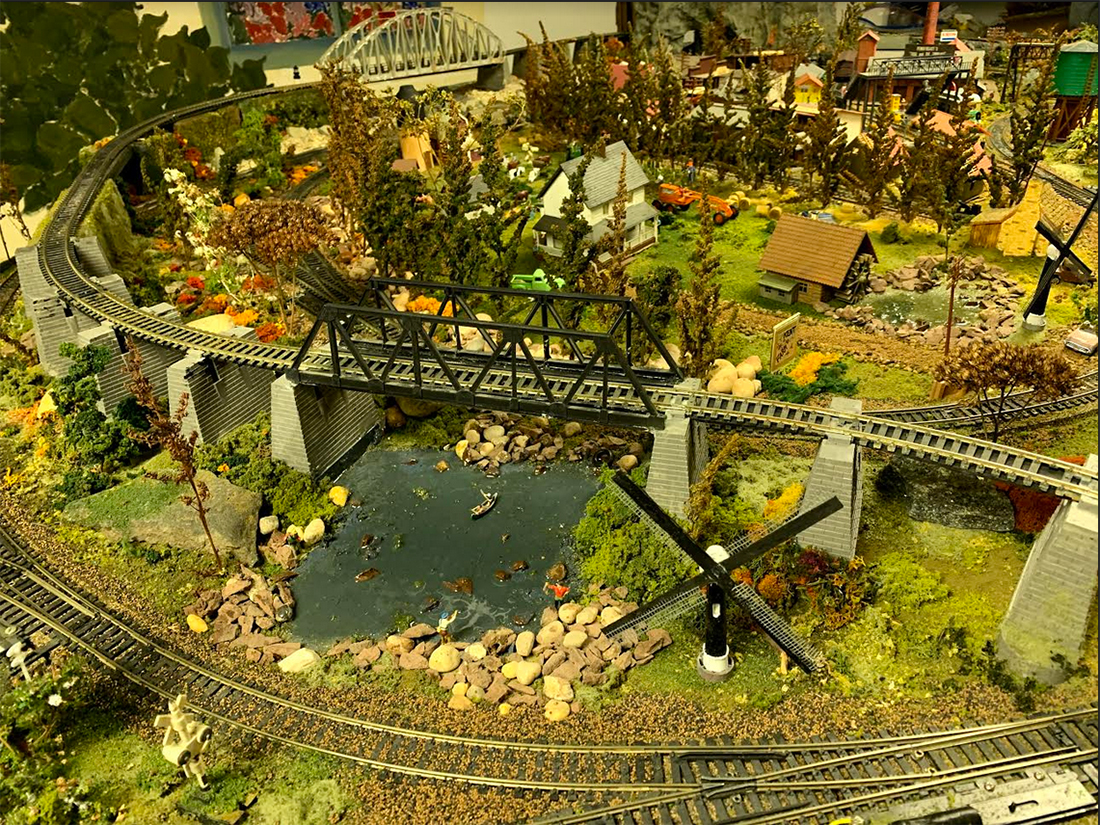
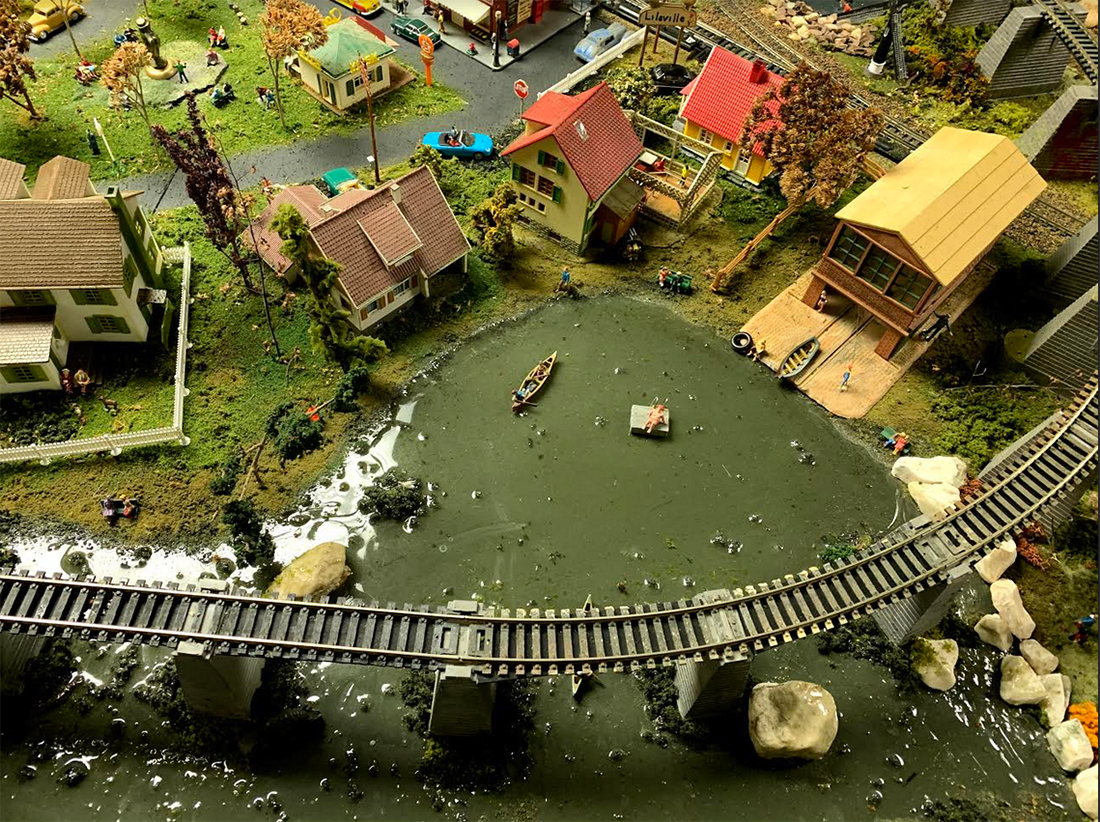
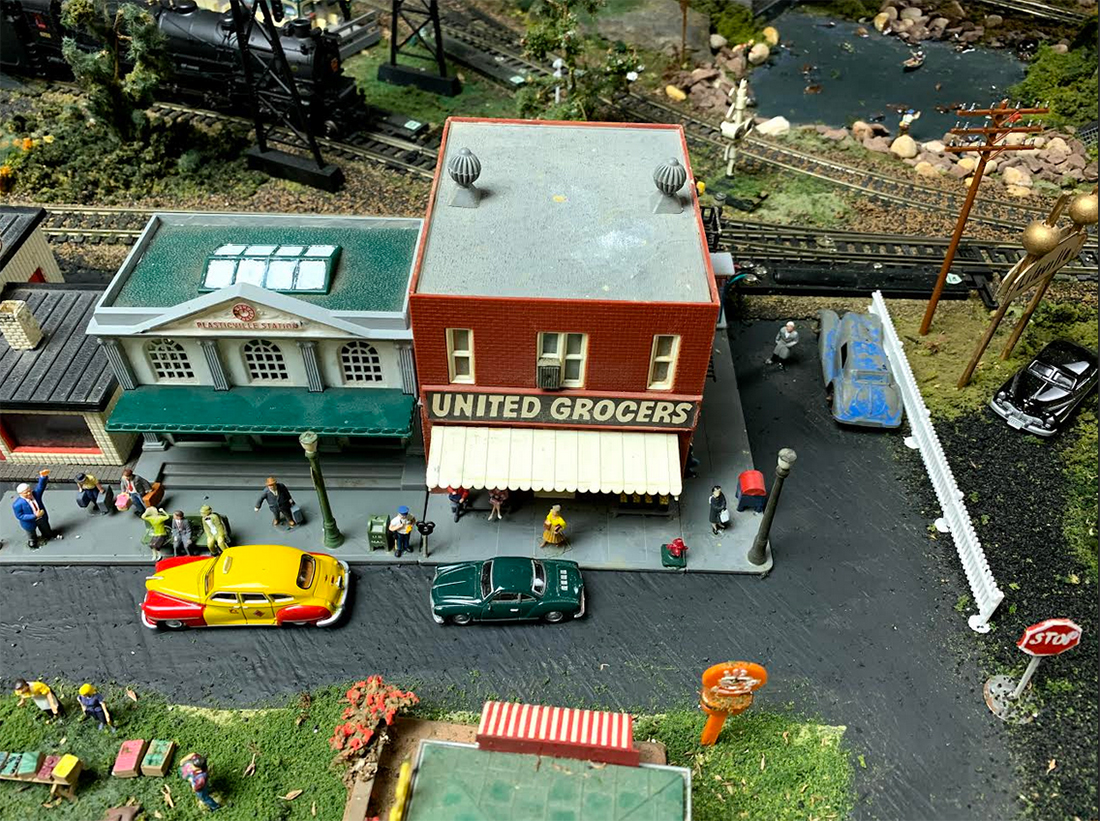
I had built an N gauge railway about 35 years ago and still had much of the rolling stock, so in October I decided it was time to start again.

I ‘finished’ it this month (there’s always more to do) so I thought you might like to see some of the pictures.

It is called Maple Shade, after a small town in New Jersey where I lived for a few years before finally returning to my native England. Hope you enjoy the shots. And yes, I know a few chimneys need fixing…

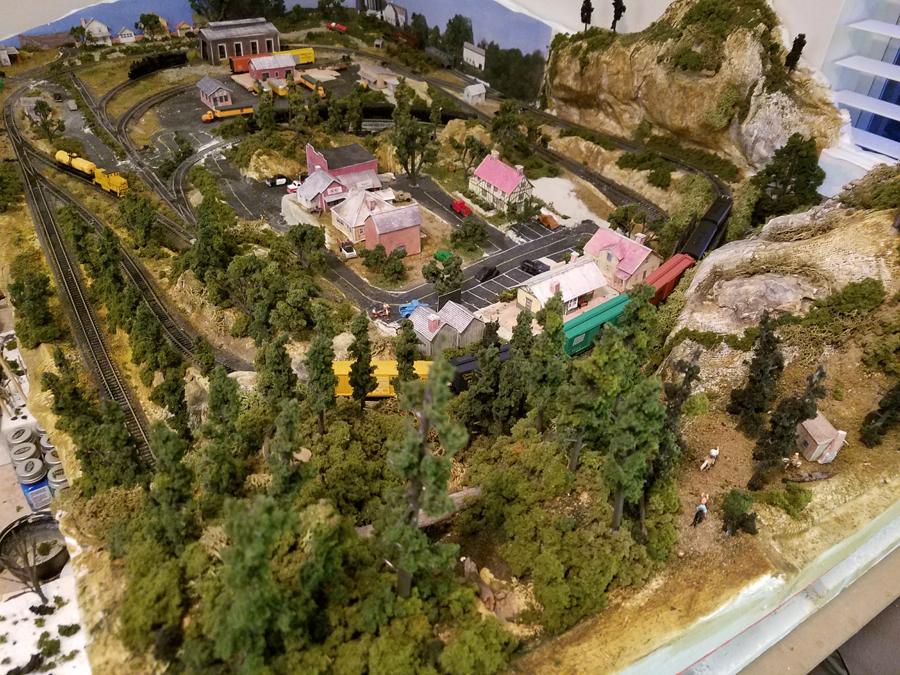
First, an overall view of the layout. Note, no backdrop as I need to be able to see behind the hills.

model railway

Here’s the Mallard in Maple Shade station.

mallard model railway

And the Flying Scotsman at the other end

flying scotsman

The local diesel waits for the passengers to board

railway storage

Then heads off

railway platform

Another train ready to leave

railway locomotive

At the works there are wagons to load

railway goods train

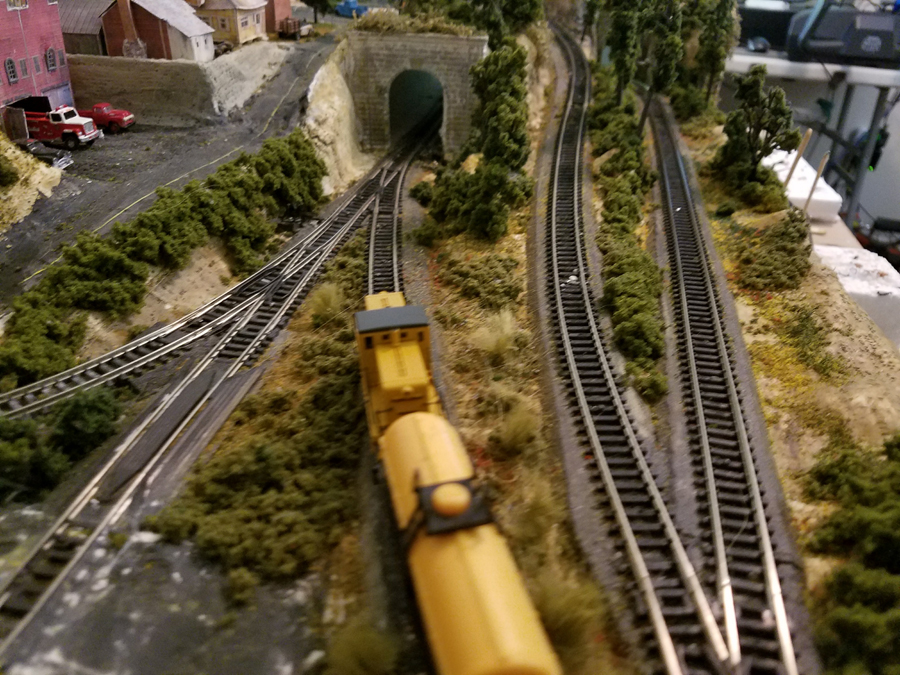
A goods train chugs past


N gauge railways

The local tea rooms are thriving

N gauge railways

The church sits on the hill

N gauge railways church

Here’s the station hotel

N gauge railways station

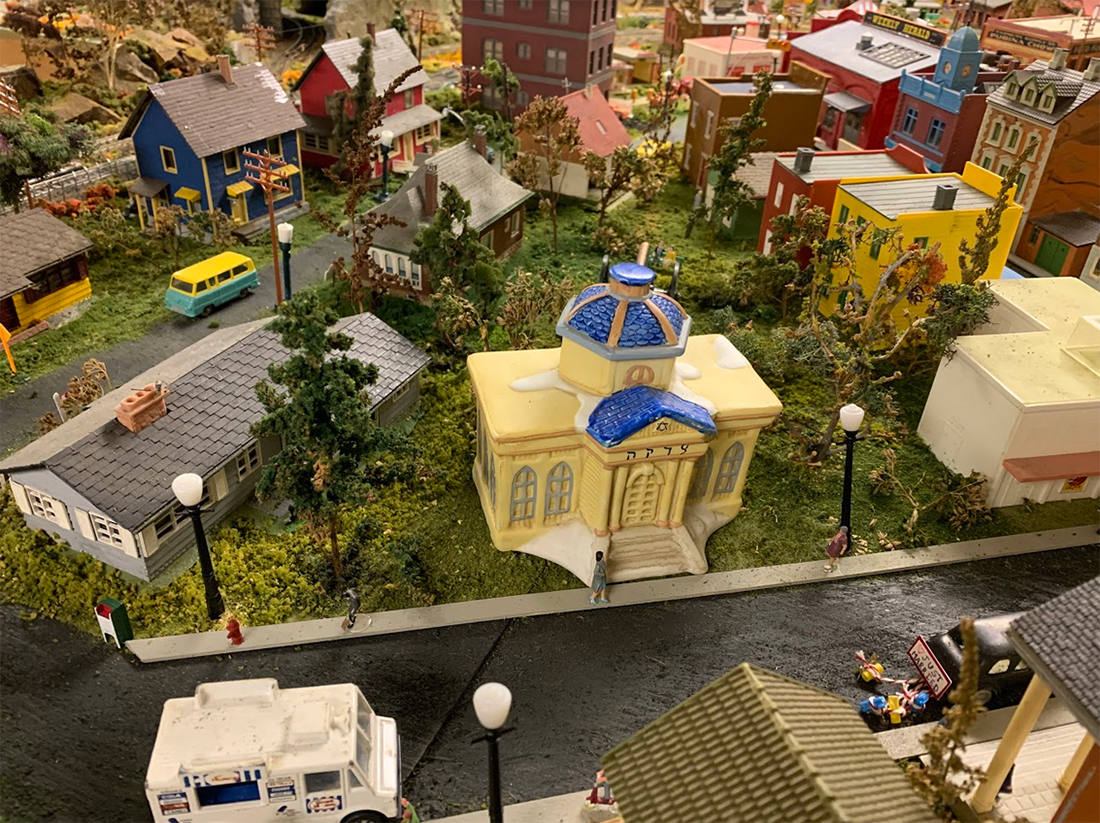
Main Street

model railway street

An express rushes past the farmhouse

N gauge railways farmhouse

The fishermen watch a train go by.

model railway pond

It’s playtime!

model railway school

Another goods train on its way

N gauge railways goods train

Bringing in the coal

model railway coal wagon

Hope you enjoyed it.

Mike”

And now on to Bill.

He’s still working on his switching layout – and he’s sent in these fab bird’s eye views and a video.

(His last post is here.)

“Hi Al

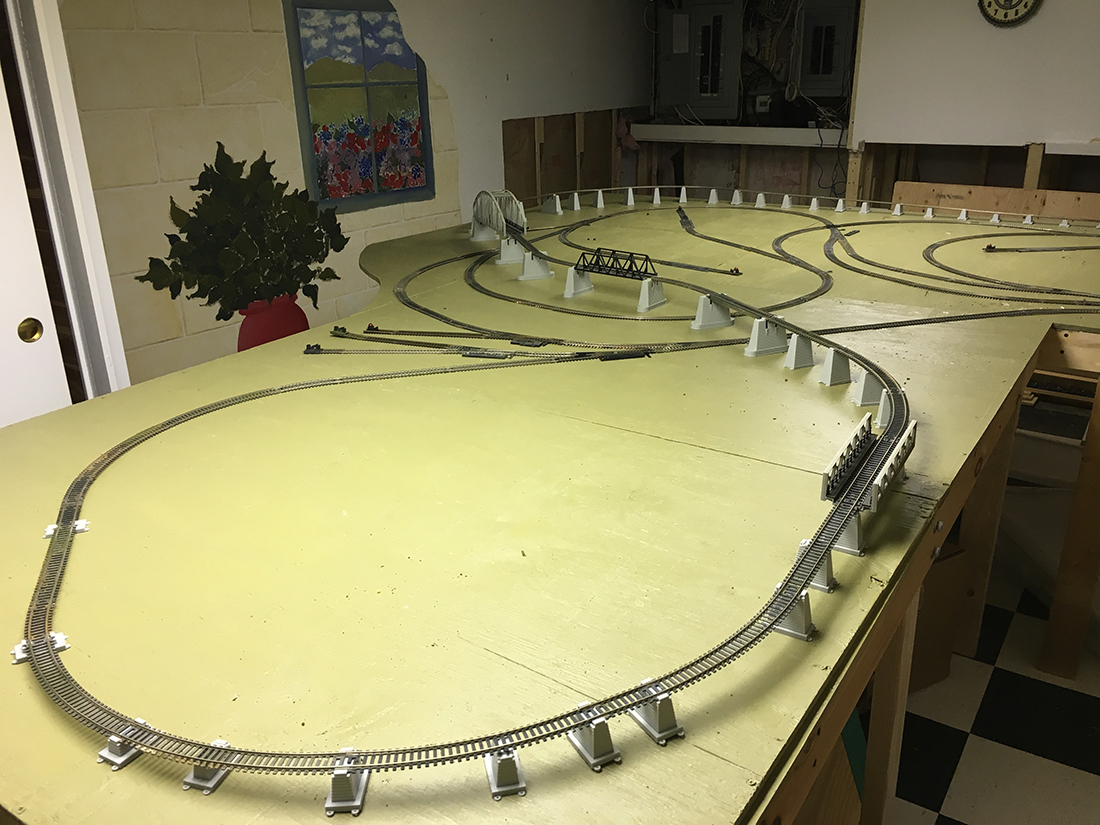
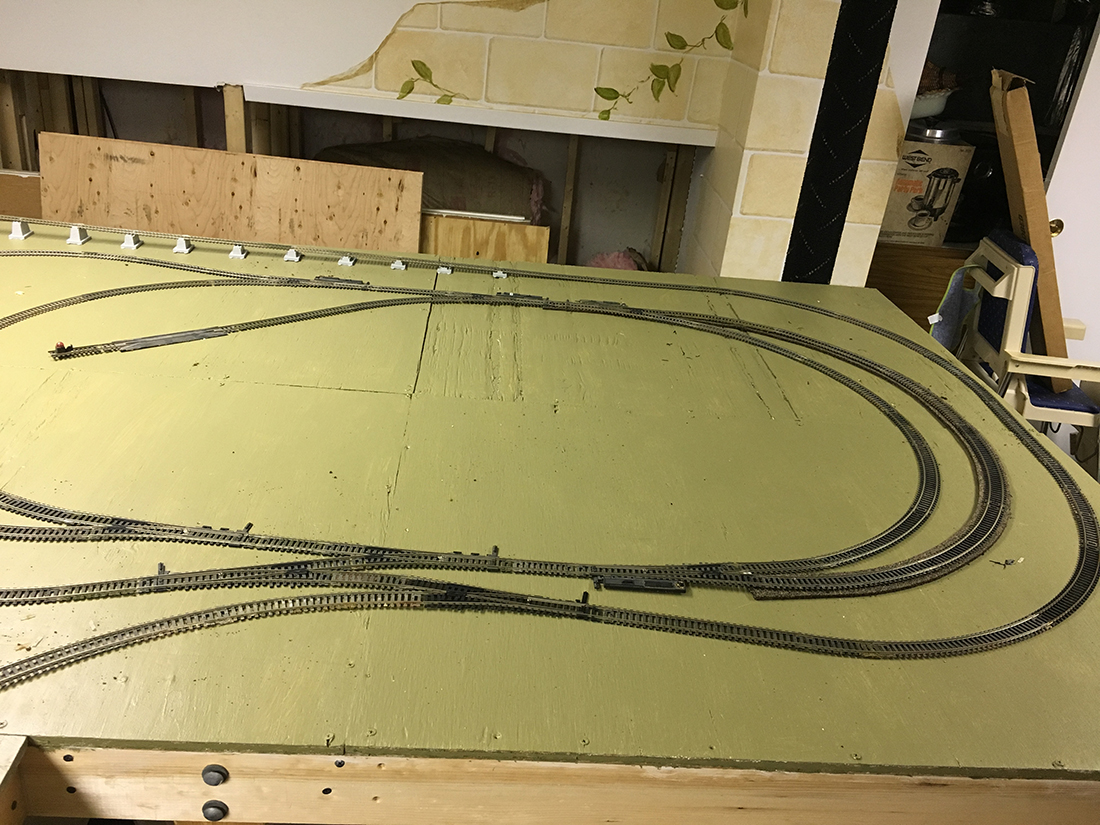
My switching layout continues to inch closer to having major work completed. I know a comment I’ve heard a few times is what does the track plan look like? I’ve climbed into my HO Scale piper and took couple of aerial pictures that shows the track on the ground 😀 between both sections there are 42 switches on the 4×16 layout. Most are #6 & #8 with a few #4’s.

I’ve also added a link that shows the layout set up in its second possible configuration with trains running.

As always thanks to you and everyone that submitted on your post. You guys got me back into being an active modeler!! Thank you !!

Bill in Virginia”


Latest ebay cheat sheet is here. Still going strong.

That’s all for today folks. A big thanks to Mike for adding to the N gauge railways collection, adn to Bill too. Impressive stuff.

Please do keep ’em coming.

And don’t forget the Beginner’s Guide is here it today is the day you bite the bullet and get going on your very own layout.
Best

Al

PS More N scale layouts here if that’s your thing.


O scale lift bridge – Lawrence’s

Lawrence has been back in touch with his O scale lift bridge:

“Hi Al

I am starting a new section of my layout.
I have two O scale, one N scale and numerous HO scale Engines. My concept is to build the O scale lift bridge at a height of 22 inches. And put the HO and N at a height of 39 inches (where it will connect with my Lincoln Nebraska rail yard).

All wiring will come out to the edge of the layout and run in a designated wire run tube, nothing underneath. I am presently working on the lower level at the present.

I plan on two separate loops with a run of 30 feet between the ends, 24 inches wide on the long runs. This means that the long run will have four tracks side by side, I decided not to have a cross over between the ends. After watching many utube videos on lift bridges I decided I wanted one of them for access purposes. The lift bridge is what this is about.

After looking at many bridge designs on the web I decided on one. Then by measuring the height of the tallest item, on a track, I figured out the height required for the bridge framework.

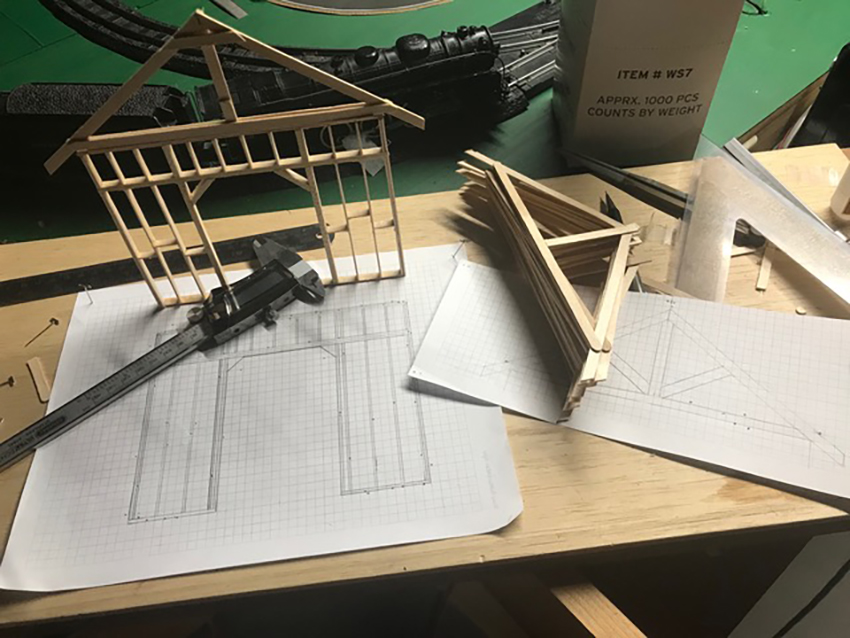
The first picture displays the type of bridge and the design drawing. The drawing is made to the actual size required for the structure.

I did a similar sequence for the top of the structure. I used regular wood glue to attach the pieces. Then it was easy to size and cut the square balsa wood, from Michael’s. With four tracks, I wanted two bridges each covering two tracks.

planning O scale lift bridge

Then build the structures and brush painted them with acrylic silver paint. Just for a check I put the two on the layout with the tallest items underneath. My initial idea was to make the top ten inches wide. Doing the measurements, I decided it was too wide. I tore the structure apart and made it eight inches wide. This turned out to be the correct size for train spacing and layout structure.

O scale lift bridge

The next picture shows where the layout has been cut out. I decided on three hinges to help ensure no rotation of the bridge in the future from usage. The upper board in the picture has been beveled so the hinges are perfectly level with the top of the board.

O scale lift bridge hinges

The next picture shows the track base board connected to the brace board. The brace board is needed as a back stop for the rotation of the bridge. The layout is built with 2×2’s and a 2×2 is used for the legs as part of the leg is displayed in the picture.

The brace board is a 2×4 so it sets it back from the layout frame. But it is also the width of the track base board so when installed it comes out to the edge of the layout and leaves a space at the back for clearance when the bridge is lifted as shown later.

The next picture the rotator section is installed (hopefully the only time I will have to lay flat on the floor) and the foam put in place. The foam on the rotating section needs to be cut back for rotating clearance. The track foundation boards are installed with the bridge side pieces and for alignment. Had trouble with the height of the foam at this point causing the layout track and the bridge track having a height differential of one eight of an inch. Replaced the one-inch foam with ¾ inch foam and problem corrected (not shown in the last picture).

O scale lift bridge

The next picture shows the bridge structure attached to the track base boards. Also attached is two aluminum cross pieces to help ensure the bridge is lifted as one unit and there is no rotation of the tracks with each other. But of course, the cross pieces are the walkway between tracks for the workers.

The far end of the bridge layout is cut out of the foam so the bridge lays flat. Had a slight problem here as the near end board would not lay flat. As it turned out by carful adjustment of the screws, at the right of the picture, the problem was corrected.

O scale lift bridge

Final testing. The next two pictures show the lift bridge working as it should. This gives me a two-foot access. The picture shows a close up of the rotating section. Also note that the bridge framework does not impact the layout.


O scale lift bridge

O scale lift bridge

The last picture displays the track in place with the tallest and widest O scale item I own. Plenty of height spacing available and enough width spacing. This bridge is 2 feet long. The next problem way in the future is building the bridge for the upper layout at 39 inches. Might have to make that lift bridge 3 feet long.

O scale lift bridge

Final note, nothing I perfect. The height of the track of the layout comes out to be 1/32 of an inch lower than the track on the bridge. Because of the bridge rotation no joiners at either end can be used. Lifting the layout track to match the bridge is just a minor problem.

The wiring of the bridge track will be the only under track wiring between the bridge and the layout. But with the bridge lifted I can sit in a chair next to it and wire it up with a rotation loop at the layout end.
I hope this has been helpful for anyone willing to take on this enterprise. It was a real learning experience for me.

Lawrence”

A huge thanks to Lawrence for sharing his O scale lift bridge- it’s a real pleasure to see the pics and the progress of a project like this. I do find myself reading them again and again. Clever stuff.

That’s all for today folks.

Please do keep ’em coming.

And don’t forget, if today’s the day you start on your very own journey, the Beginner’s Guide is here.

Best

Al

PS Latest ebay cheat sheet is here.


Small HOn3 track plans

Dave’s been back in touch, he’s added to the collection of small HOn3 track plans:

If you missed his stunning layout, it’s here.

Small HOn3 track plans

“Track Planning For The Nickel Creek & Western HOn3 Layout

My track plan was primarily determined by two things. The first was the space available in my room and second, the desire to build an operational railroad. My room is small measuring 10.5 feet by 11 feet, but the real limiting factor is that I only had use of two full walls. A set of French doors that open up into that room and a large closet on an adjacent wall eliminated two of them.

So, my best and really only option was to include a peninsula coming off of the one shorter wall. That peninsula needed to be wide enough to easily turn a train using an 18 inch radius while still leaving some space outside of that track. It also had to leave enough isle room around it to comfortably move around and ideally allow two people to pass each other is necessary.

Small HOn3 track plans

An operational railroad is one that serves an actual function of doing work and does not just have trains running in circles around nice scenery. The work that is done involves moving cars around the railroad, picking up some while dropping others off at different industries and yards along the way. Trains on such a railroad have a place of origin and one of termination. It’s difficult to find small HOn3 track plans that do this.

To allow this to happen and come off as being semi-realistic a layout needs to include different locations separated from each other by either some actual distance, or a scenery block of some sort. Then, within each there needs to be multiple industries and places that require rail service.

My railroad has three such locations. Nickel Creek is the section which forms the shelf part of the layout against the long wall. Widow Rock is next down the track on the side of the peninsula opposite of Nickel Creek. Lastly, Lost Valley is on the other side of that same peninsula with the small railyard.

Trains leaving Lost Valley can either stay on the peninsula and go to Widow Rock, or take the outer track to Nickel Creek. That inner loop on the peninsula can be used to run a circular train when desired. I can also have such a train running while an operational one is doing work around it. All trains that enter Nickel Creek from that direction will get end-for-ended using the turntable.

All of this is placed into motion on my layout by having manifests created by a computer program called JMRI. It is freeware based and can be easily downloaded off of the internet – ideal for small HOn3 track plans. JMRI can be set up to be as simple, or complex as one desires. It is the kind of program that you get out of it the time, data and info that you put into it. Currently I have mine running in a very simple way.

From the initial basic data input JMRI knows the location and lengths of all my sidings, spurs and yard tracks. It knows the lengths of the rail cars and their placement within the railroad. It also knows which industries and yards will accept what kind of car. In simple mode JMRI looks at how many times a particular car has been moved and targets those with the least number of moves to be a part of the next train to run. For a car to be moved it must have a location available to go, or one that can be made available.

The created manifest will show where that particular train will be built and where the cars will be initially pulled from. This can be a railyard, various industries, or a combination of both. Trains can also come from staging and I will explain that a little later. The manifest will also show the route, various stops along the way, the exchange of cars, and where the train will terminate.

The far end of Nickel Creek shows the track entering a tunnel and apparently just ending. That is a limitation of the printing out of that plan. That track is actually entering a long closet terminating into a three track staging yard. A staging yard is a place off of the layout that often represents a location far away. It is a way of bringing a prebuilt train on to the layout to work and then terminate in the same way.

If I choose to run a staged train a manifest will be created showing it as prebuilt and leaving staging. A typical route would be for it to first enter Nickel Creek and do work there. Next in line is Widow Rock for possible further car exchanges. From Widow Rock Lost Valley is usually the next stop. That train will most often leave Lost Valley to once again enter Nickel Creek for work from the other direction. That train would then get end-for-ended and backed back into staging for termination.

It is very common to have a train originating from Lost Valley and being assembled from the yard there. The manifest may have it go first to Nickel Creek, get end-for-ended there and then next go to Widow Rock. From there it would go back to Lost Valley for termination.

On a large model railroad such as what my friend Art has, it can take several hours to run a single train and usually there can be as many as eight, or more running at the same time given enough operators. My layout is from small HOn3 track plans. The average running time of one of my JMRI created trains is about 45 – 50 minutes, which for me is just perfect.

Dave”

Now on to Brian.

He’s involved in making a display for a shopping mall.

If you missed his post, It’s at the bottom of this one.

“Here are the answers to the questions on the post:

# – why did a retail mall contract for a model railroad (ie – relevance)?

Answer :- the owner of the retail mall is into model trains but does not have a layout yet, but wanted to get the hobby going in our town. He will start his once the mall layout is complete and the alterations to his garage.

If anyone can remember, we had tremendous fires in our town (Knysna) in 2017 which destroyed about 800 houses, a hotel and quite a few B & Bs. It was a big blow to us and the town is slowly recovering from this.

# – who paid for the construction?

Answer :- the owner of the mall, he paid for and supplied everything needed for the layout.
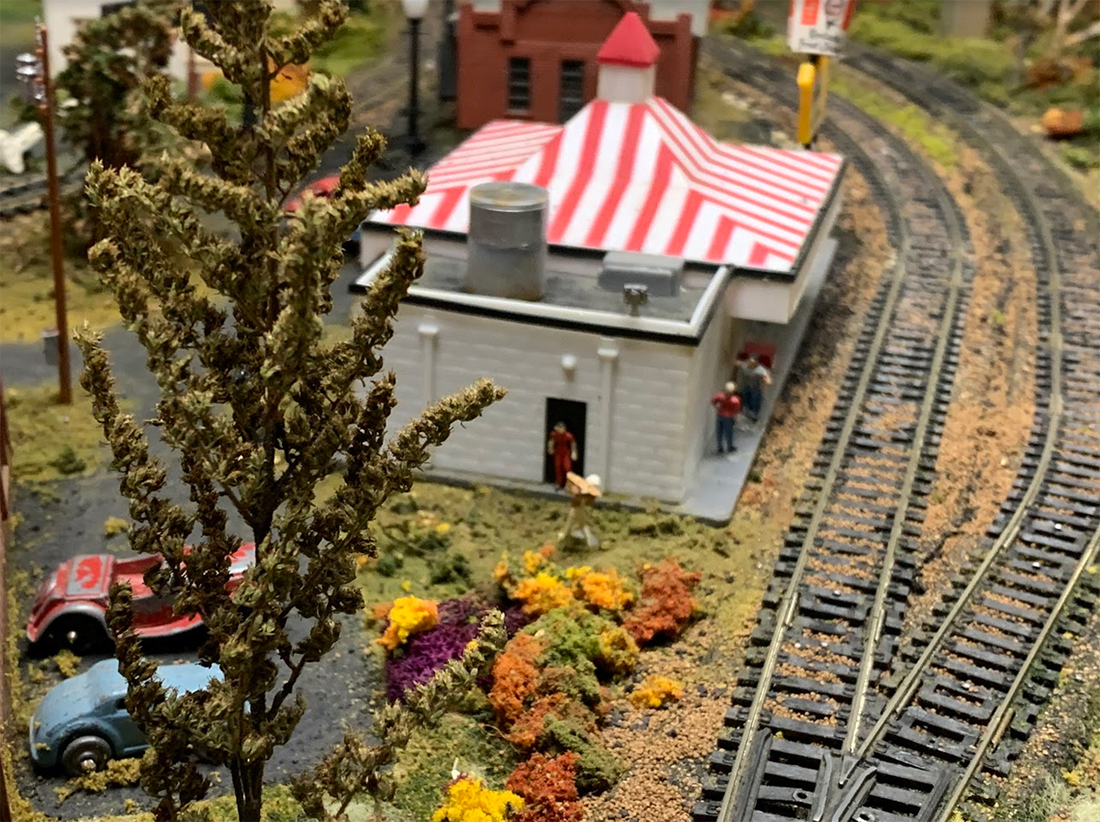
# – who will have the enjoyment of operating the layout, and how frequently?

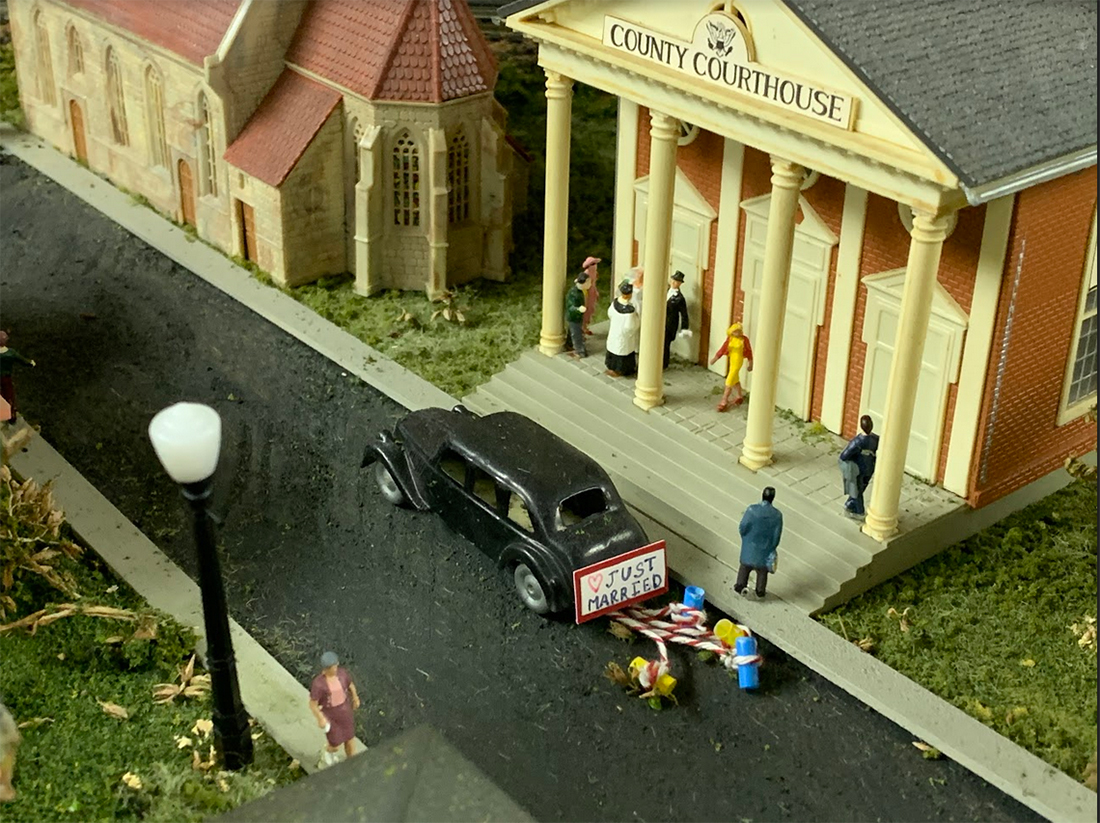
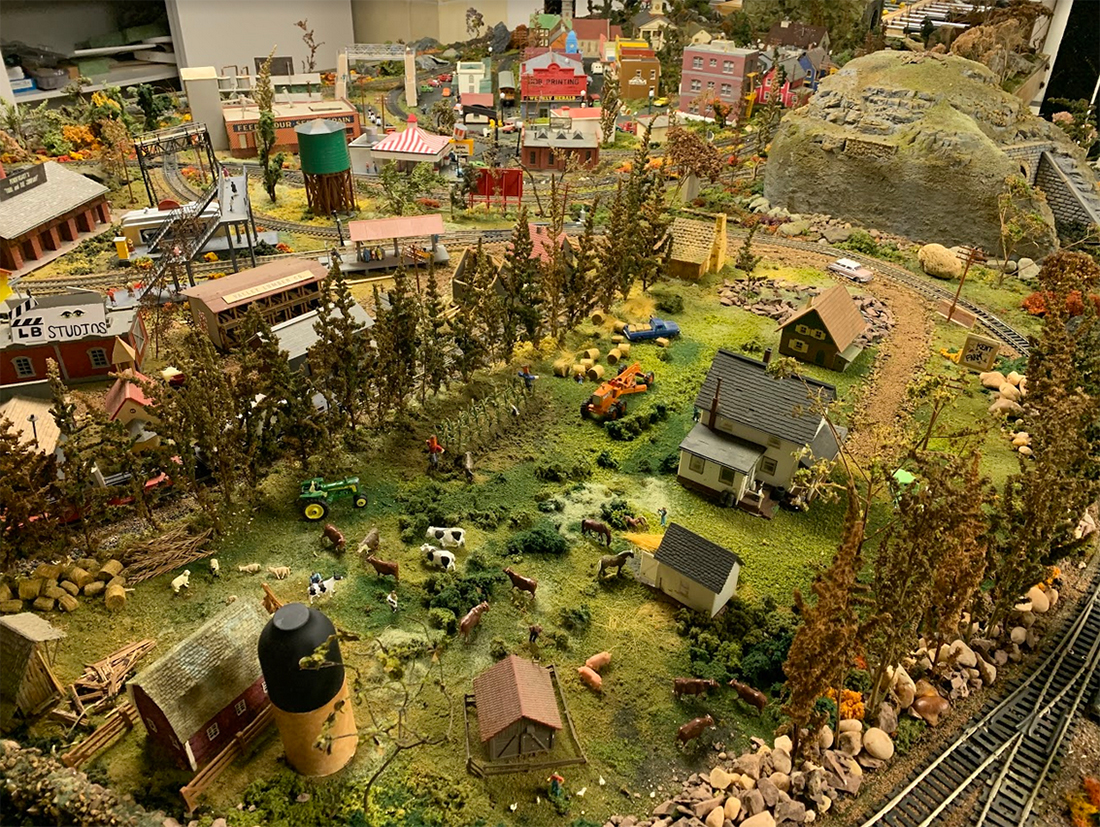
Answer :- there are 8 people involved in the construction of this layout when they can. The owner himself is very much involved in this construction as well as a female (16 year old art student) whose has developed a fascination for model trains and as explained above, made over 500 trees for the layout as well as some of the scenery. Once it is installed and operational, we will all take turns to run the layout. The mall is open daily 9.00 to 5.00 Monday to Friday and 9.00 to 1.00 Saturday.


# – who will service and maintain everything, and who will pay for upkeep?

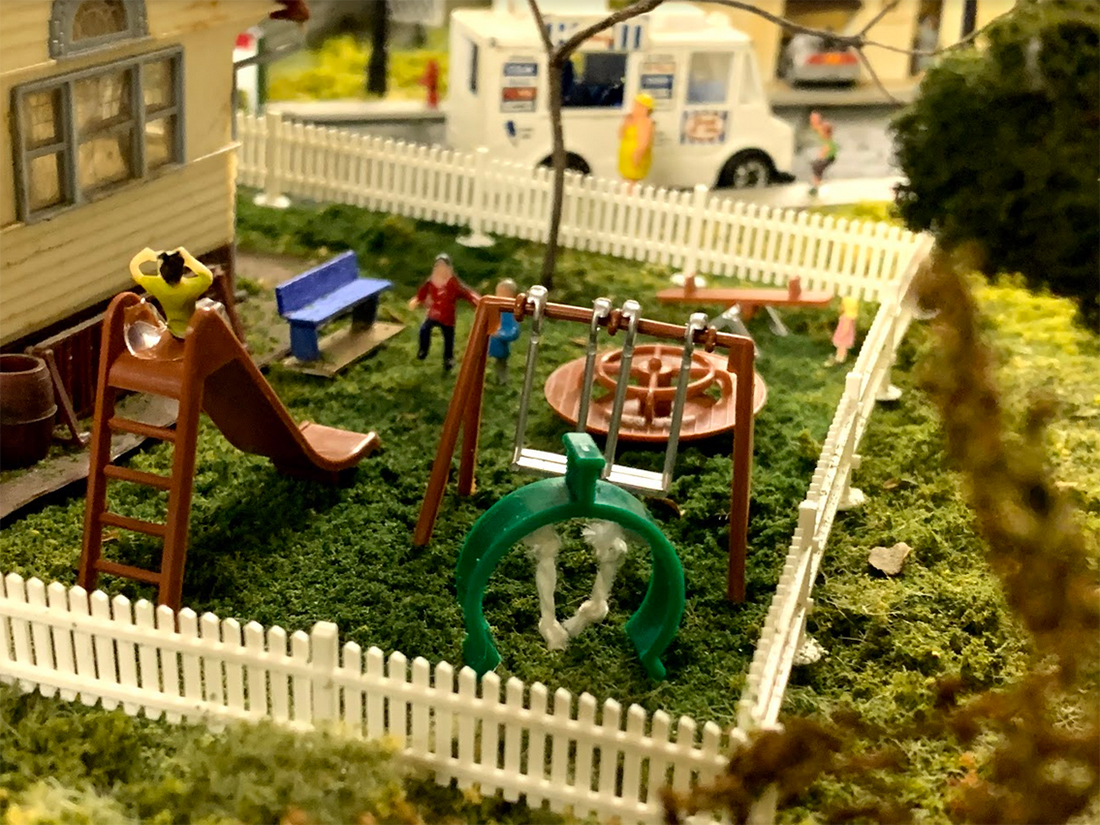
Answer :- we will all take turns in servicing and maintaining it. The cost will (if anything) will be for the centre owner. There is no cost as far as space, electricity and entry in the mall. There are 2 major banks and about 30 shops on 2 levels in this mall. This mall is in the Main Street almost central in the town. Facebook page – Garden Route Center layout.
# – The project sounds wonderful, and could well be a stellar way to spark the imagination of prospective new hobbyists, both young and old. But with respect to location and application, it seems a bit unusual, no?

Answer :- Our coastal town (holiday destination and retirement place) has (out of season) about 70,000 people and in season increases to about 120,000 people in season. There will be signage in the Main Street showing how to find the display layout.
The owner and the rest of us feel that this will be an excellent way of attracting new comers to the hobby.
The down side is that we do not have any hobby shops in this town and the nearest (almost decent one – not much in the way of model train stock holding) is 500kms away. All the materials procured for this layout was via emails to a good (well stocked with train stuff) hobby shop about 1400kms away with a 2 day shipment.

As of December 2019, I have a data base of model train enthusiasts totaling about 25 between the next town (25kms away to the west) and a smaller town to the east of us (30kms) Our town has 5 operating layouts in various stages of construction and in scales from ‘0’ scale, HO scale and ‘n’ scale and of British, Continental, South African Railways and American prototypes.

There is a club in the next big town 60kms away that has a club in the railway museum (SAR prototype) that open when they feel like it and are not very forthcoming with information if you are not a member.

I hope the answers above are of help to those that asked them.

Below is three of the makers.

Brian – Knysna RSA”

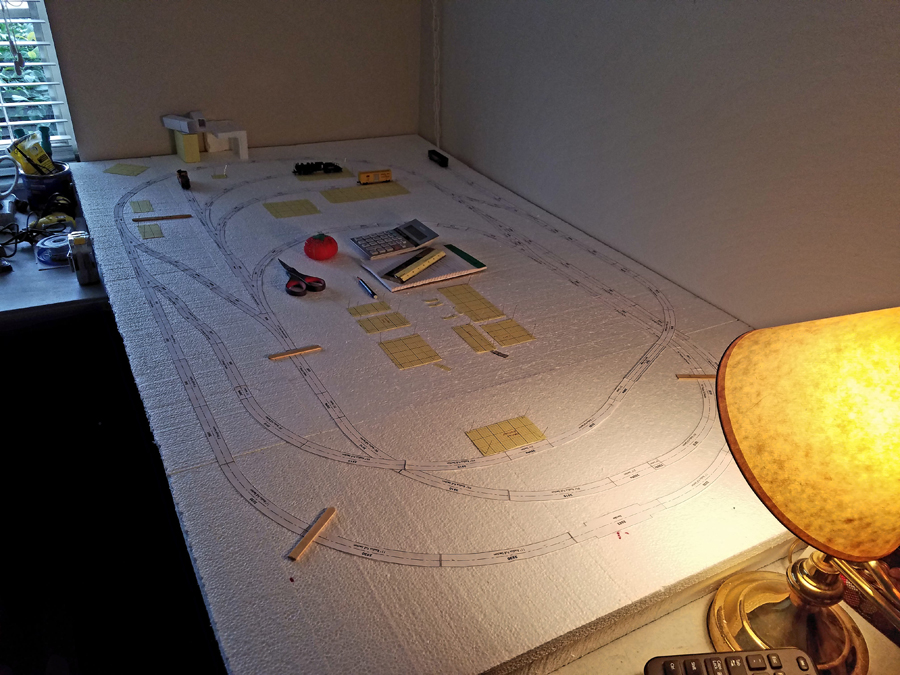
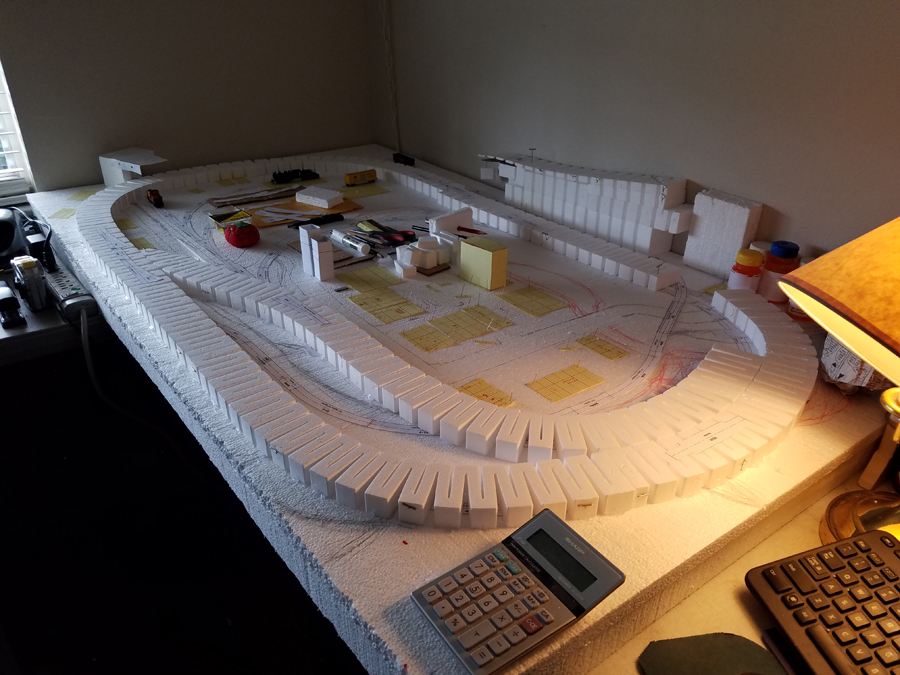
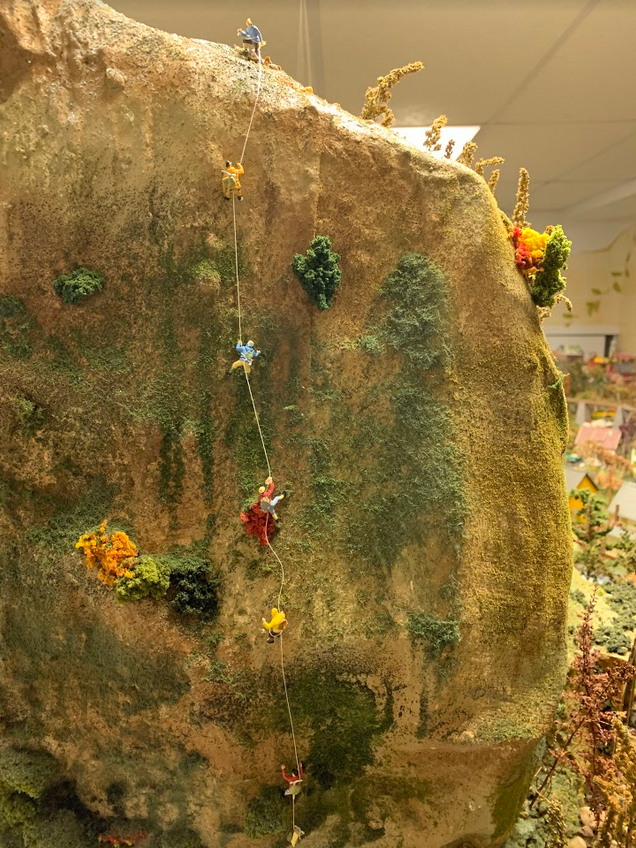
N scale mountain

N scale track plan

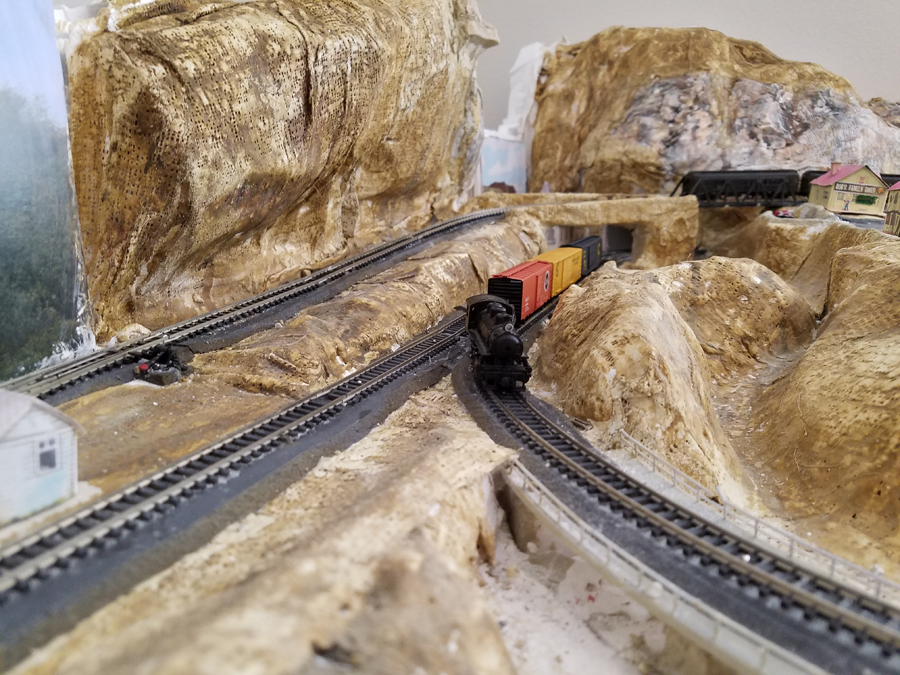
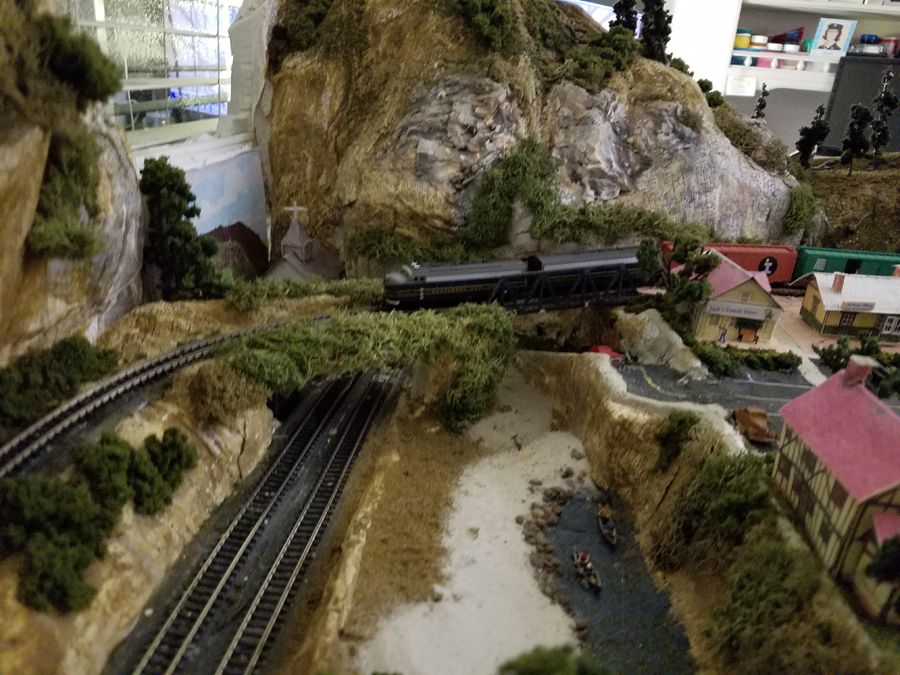
n scale mountains

“Hi Al, Enjoy all the tips from your site.

I have been doing HO train layouts for years. Recently moved and started over. I just did a swing bridge and thought the guys may like to see it.

I used electrical wire, house thread and balsa soft wood for the trestle and rail supports. My rails are laying on 3/8″ flooring, cut to shape my rail layouts 1 3/8′ width. I also do my background painting.

Another thing I needed was some small trees, not wanting to buy. I used the small party tooth picks, dipped in hodge-podge glue, then rolled in the woodland Scenics underbrush foliage.

Joe”

HO scale model railroad

HO scale model railroad

HO scale model railroad

That’s all for today folks.

A big thanks to Dave for adding to the small HOn3 track plans, and to Brian and Joe.

That’s all for today folks.

Please do keep ’em coming.

And if today is the day you get started on your layout, the Beginner’s Guide is here.

Best

Al

PS Latest ebay cheat sheet is here.