N gauge model railway layouts

Barry’s been in touch. He’s added to the collection of N gauge model railway layouts on the blog:

“Hi Al,

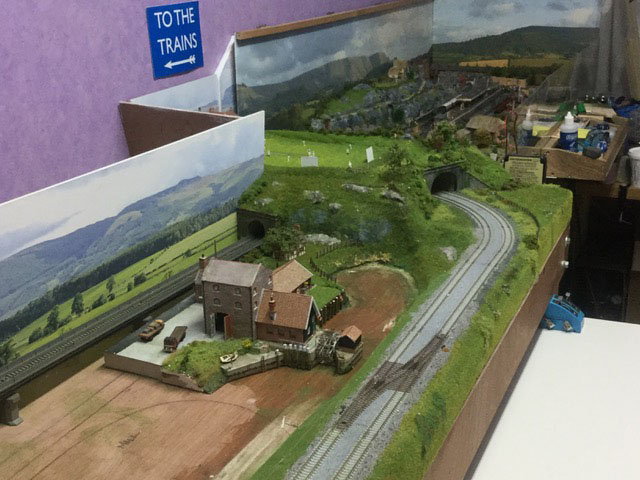
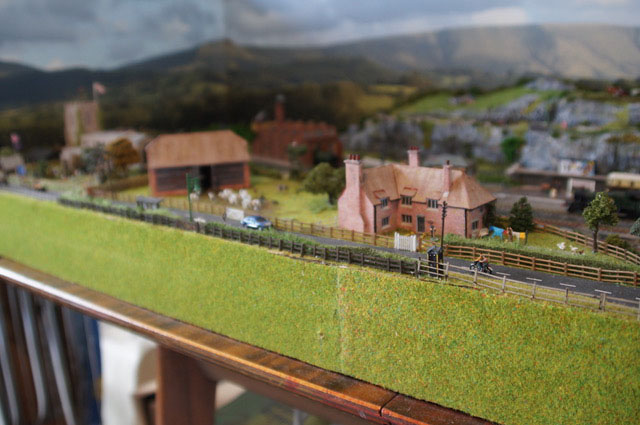
Thought you might be interested in my modelling skills, I started on my latest layout after my Daughter left us to go and live in Australia.

I already had layout 6’x2’ in a small room upstairs so I moved into her room which was some 18’ longer and decided to add to it.

So I bought two 6’x3’ boards and started to build.

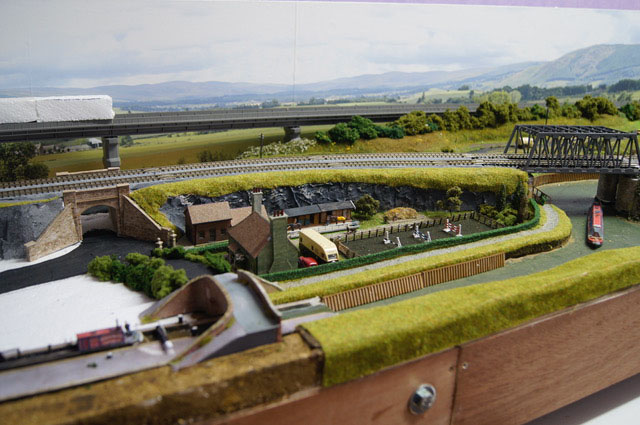
The layout of old was called Meadow Falls and is a small end of line station and surrounding countryside.

I decide to join it to the larger layout I was building so that it would run to a small station at the other end of the layout with a small station and turntable, as they were both N gauge model railway layouts.
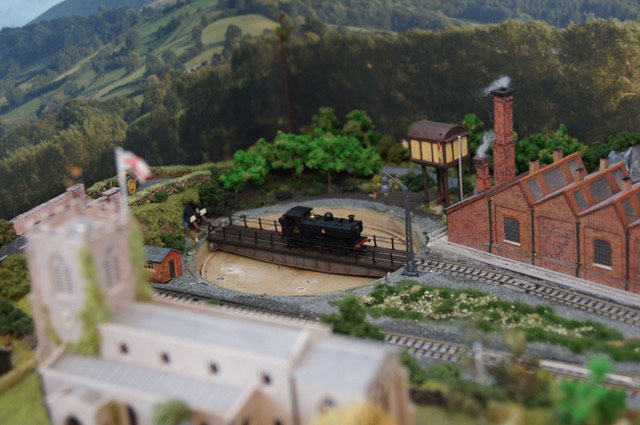
N gauge model railway layouts

N gauge model railway layouts

N gauge model railway layouts

Then I when on to my main board which I am still working on but have at present got Carpal Tunnel Syndrome in my Right hand so it is making the job very difficult
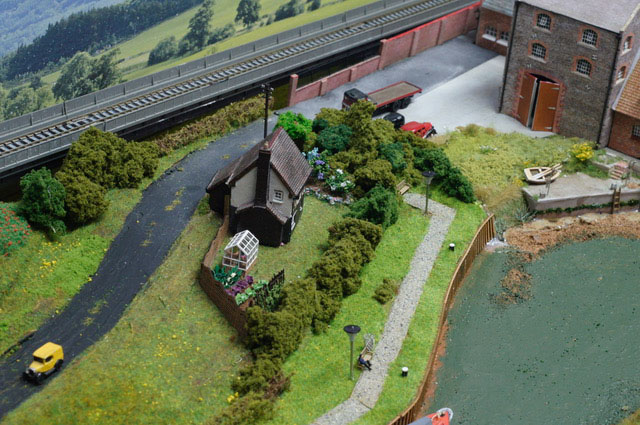
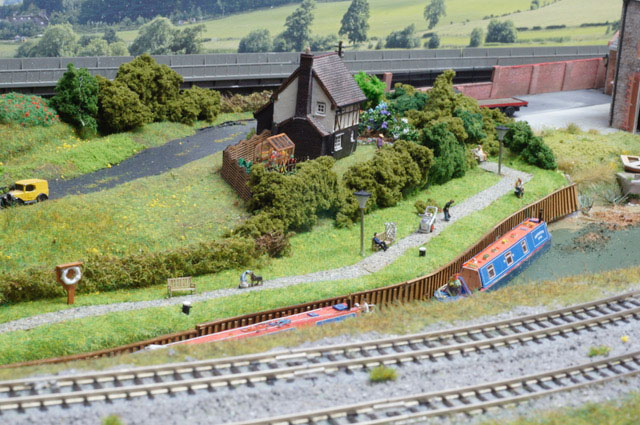
N gauge model railway layouts

N gauge model railway layouts

N gauge model railway layouts

N gauge model railway layouts


N gauge model railway layouts:

N gauge model railway layouts

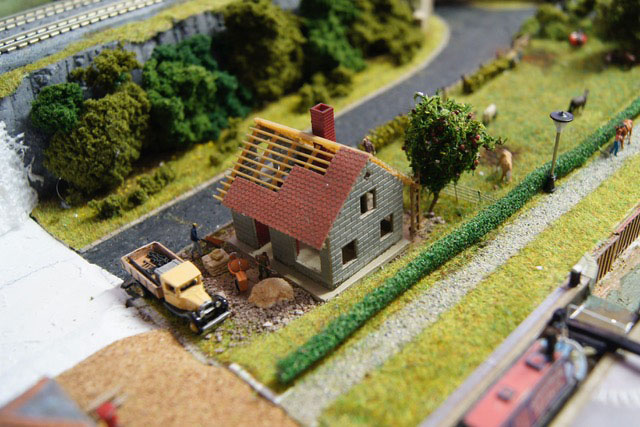
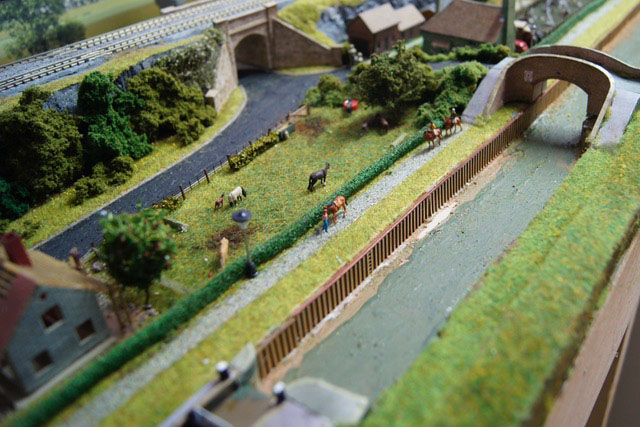
The Mill is based on the one in Battlesbridge, Essex but the remainder of the layout is form my imagination and with the help of input from my Daughters, hence the riding stables.

I still have a lot of work to do as the far end at the left has scenery and a stone etc to build. But until I have had and operation on my wrist it will all have to wait a while.

I run mainly Graham Farish and Dapol on a DCC unit by GaugeMaster on the extension , but Meadow Falls is DC. The track and points are all Kato on my N gauge model railway layouts.

Hope you have enjoyed my pics if the want to see more please contact me.

Keep up the good work it really helps us to get so enthusiasm to continue with our work.

Yours Sincerely

Barry”

And now on to Hall of Fame member, Brian (his last post is here). He’s sent in another fine update:

“Hi Al.

I have been working on the layout, specifically the harbor area on the lower level. Fine eyesight not need for this yet.
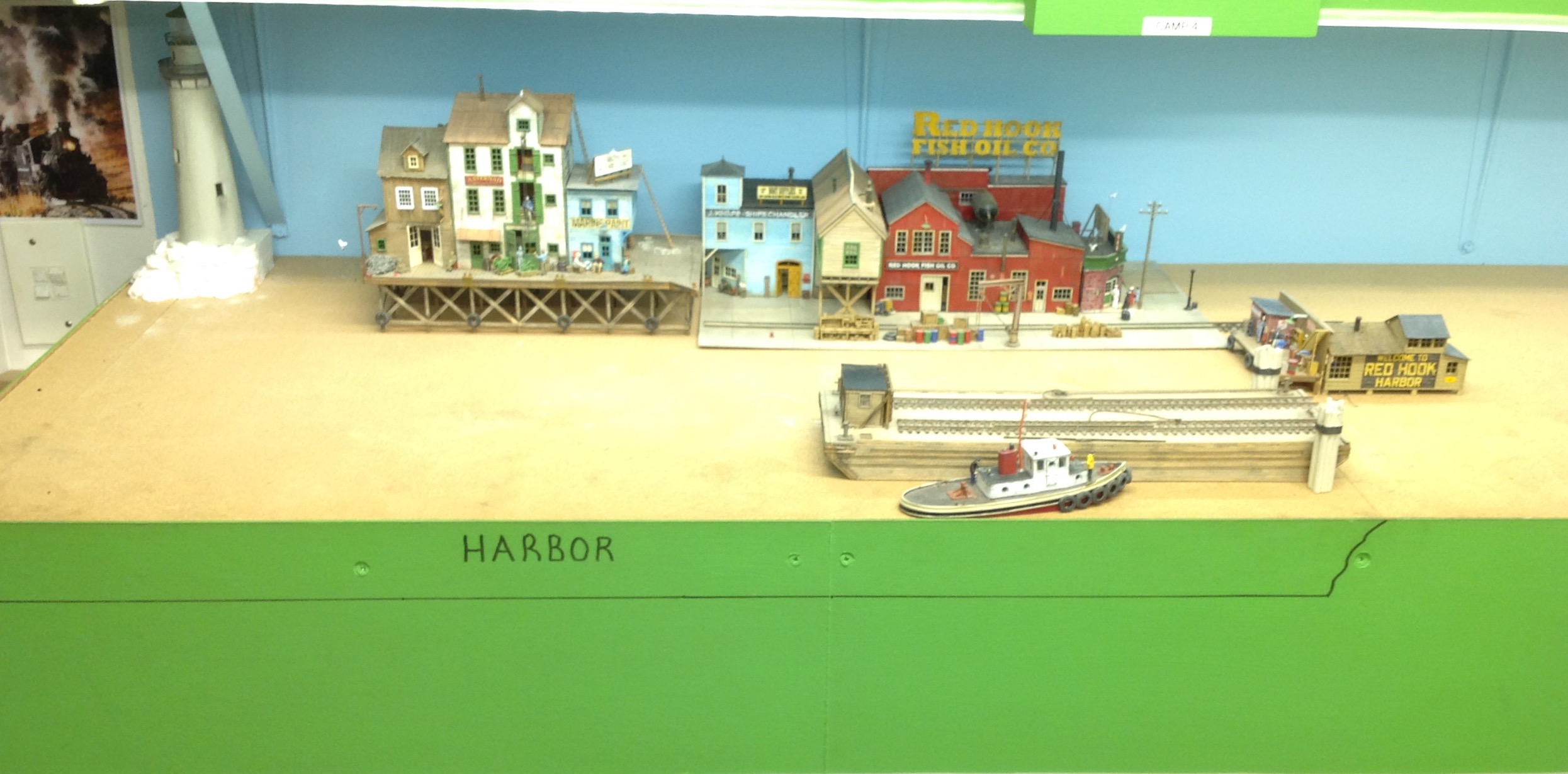
model rairoad wharf

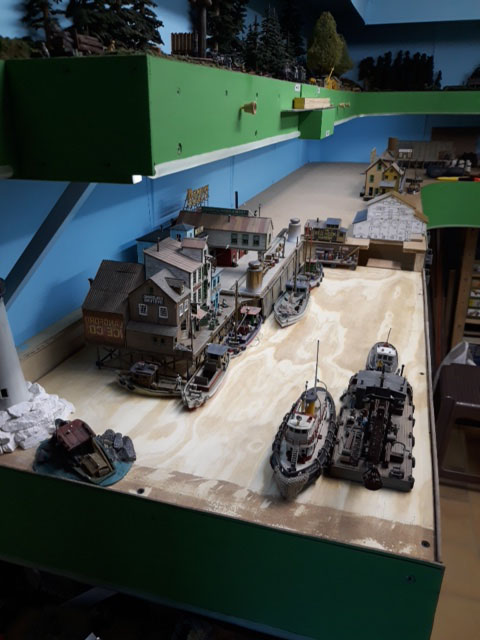
The above photo is an approximate layout of the harbor area before deciding where and what depth to cut.
model railroad boat yard

Here above, placing the objects (in this case, a car ferry) to see if there is enough space for all the harbor related buildings/boats and the like.
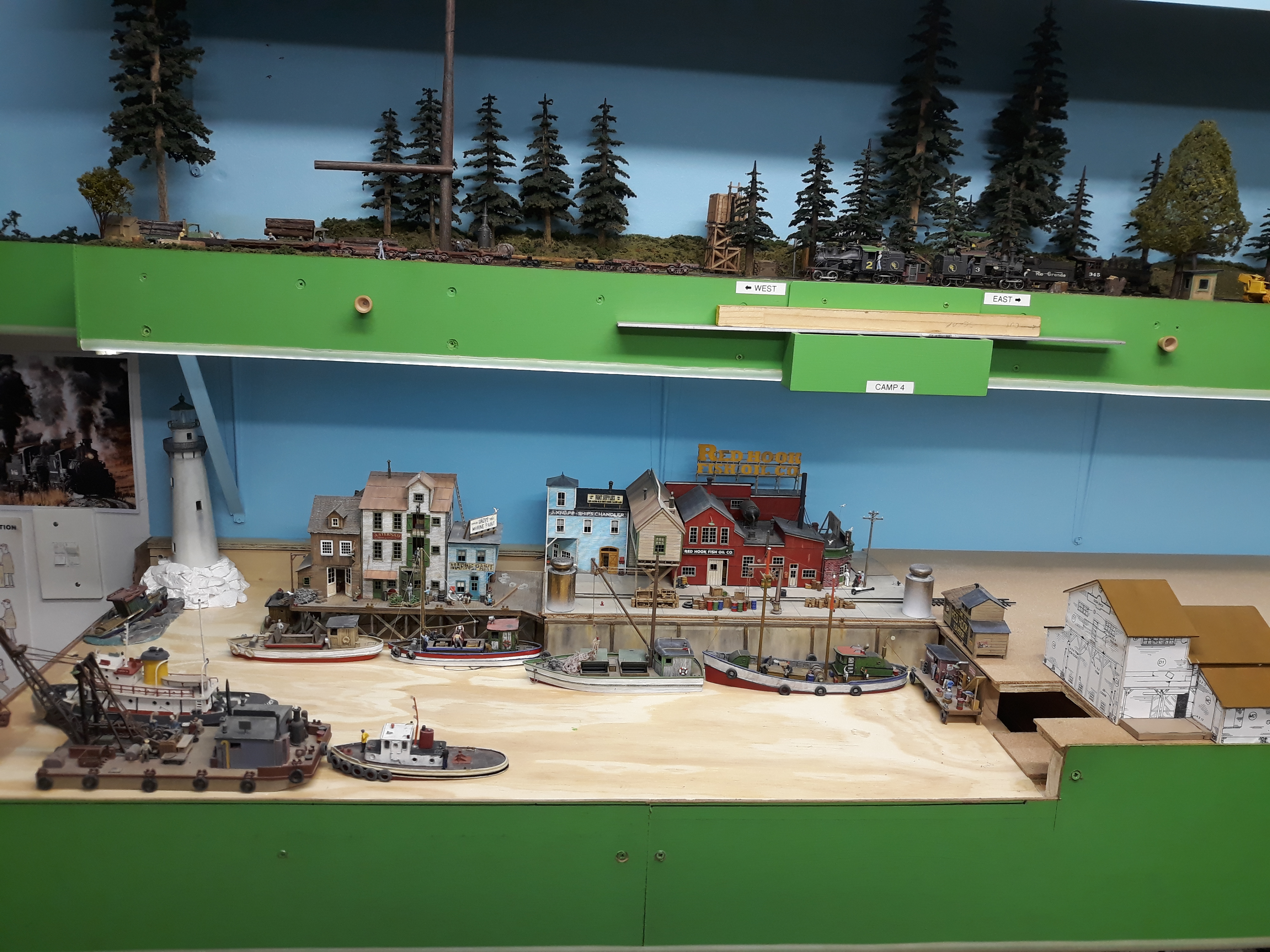
After cutting the base of the harbor to the correct level, placing the models that I want in the area, discovered that there will not be enough space for the car ferry nor the loading ramp and the rest of its needed bits and pieces as well a storage track for the idler cars needed for loading the ferry. That means that the whole car ferry system will have to find a place elsewhere on the layout (if at all).
model railroaf wharf

As seen above, a workers barge fits better in the scene as there is a lot more detail to be seen on and around it.

The cardboard mock up building (still needs to be scratch built) top right was removed and my scratch built (incomplete) boat repair shop put in its place.

Looks much better in that area and has a lot more forefront detail in and around it.
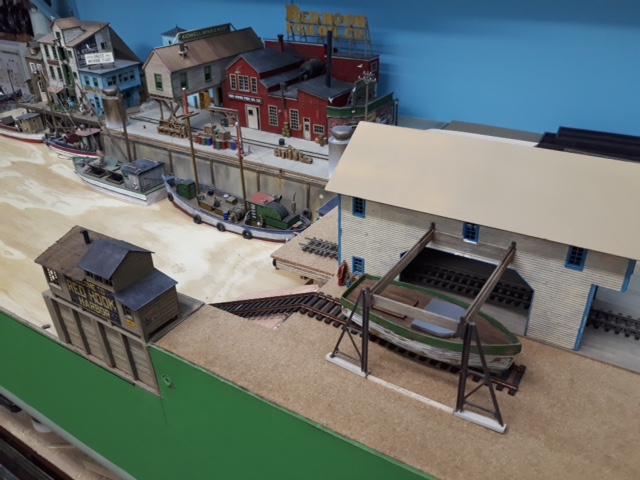
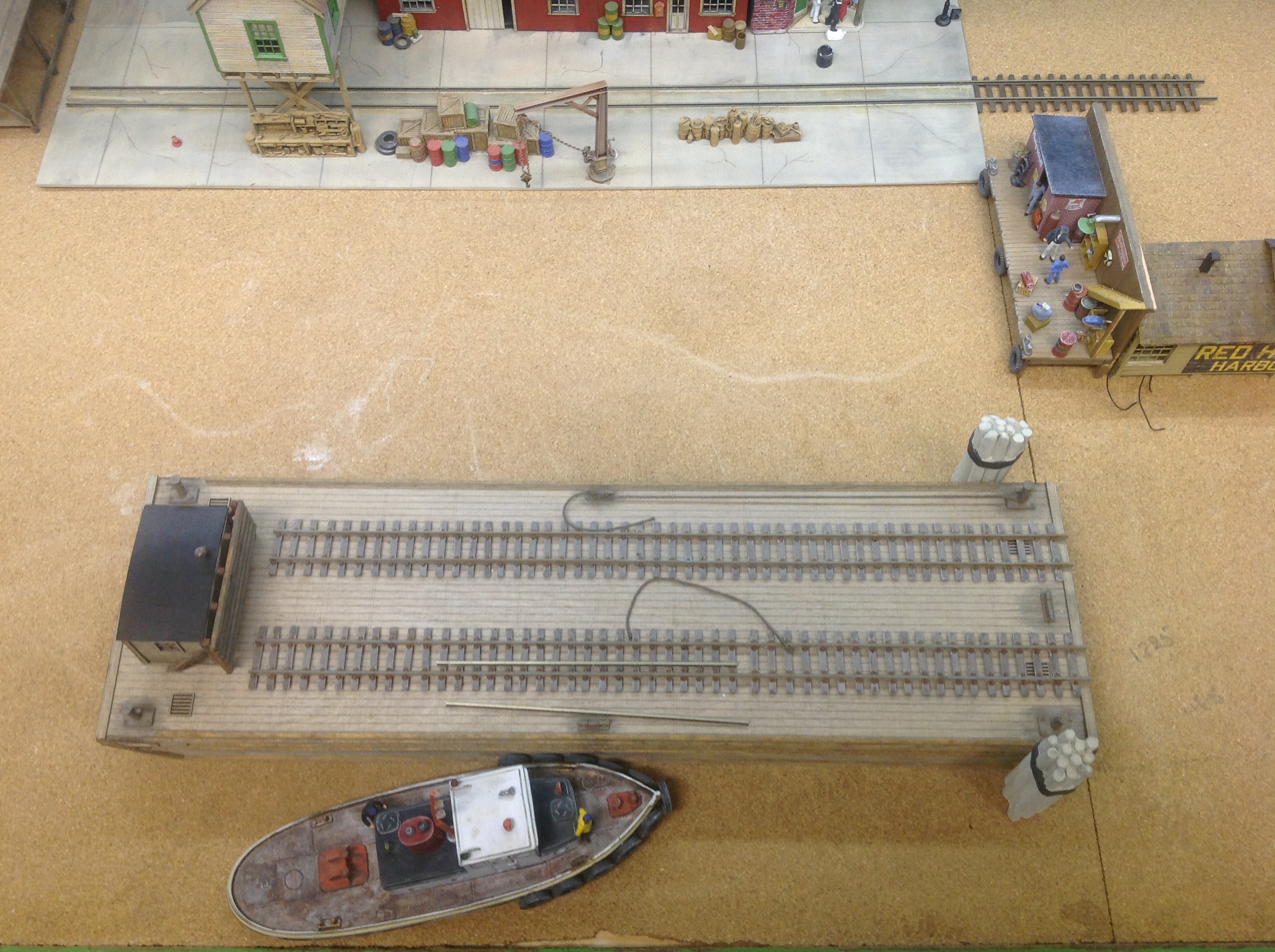
Next was how and where to place the harbor masters office (currently next to the ramp).Too close to the ramp as well as not enough clearance around the surrounding buildings.
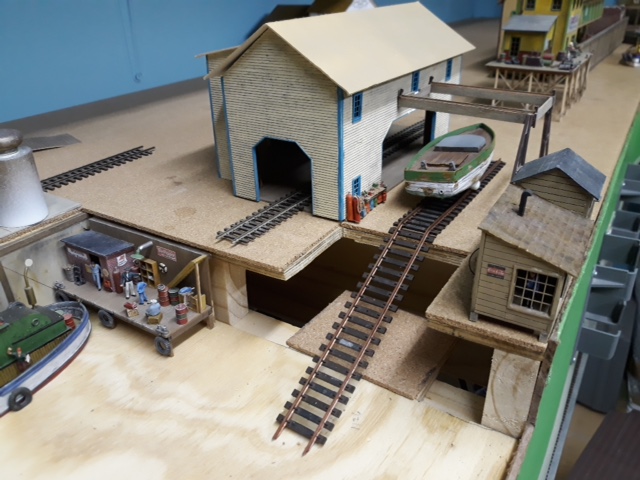
I built up a wooden extension from the original ground level and now the harbor master has an excellent view of the harbor. I will add safety railings around his office at the final stage of construction.
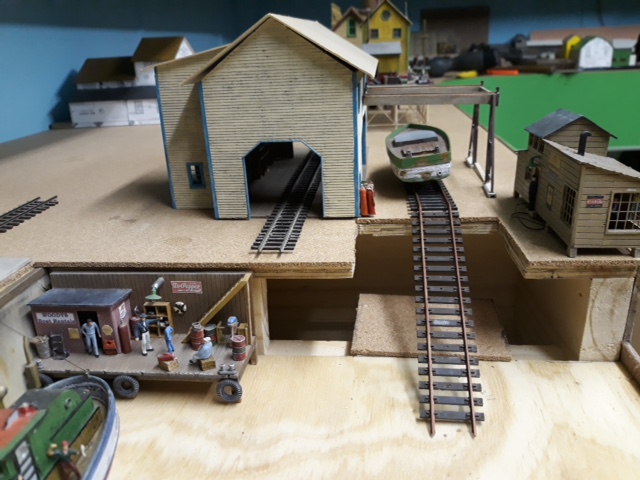
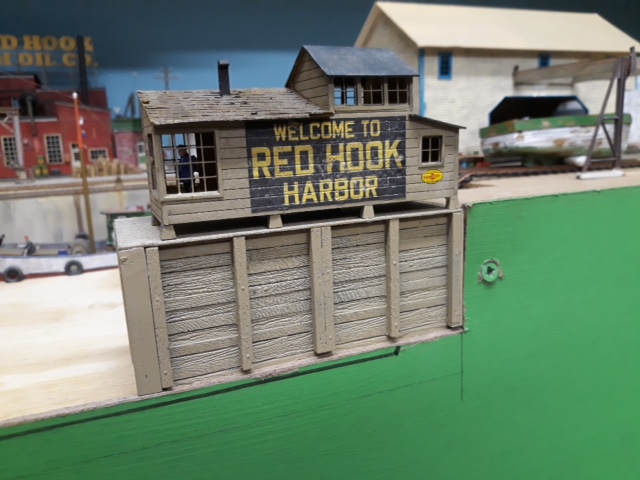
This is as far as I have got as of today.

I will follow up with photos as I progress.

All the best

Brian”

A huge thank you to Barry for adding to the N gauge model railway layouts, to and Brian.

It’s so wonderful to see how different each and every layout is – no two layouts are the same.

And when it comes to harbours or harbors (depending on where you are in the world), who can forget Fred’s stunning layout.

That’s all for today folks.

Please do keep ’em coming.

And if today is the day you get started on your layout, the Beginner’s Guide is here.

Best

Al

PS Latest ebay cheat sheet is here.

PPS More N scale layouts here if that’s your thing.


Model train incline

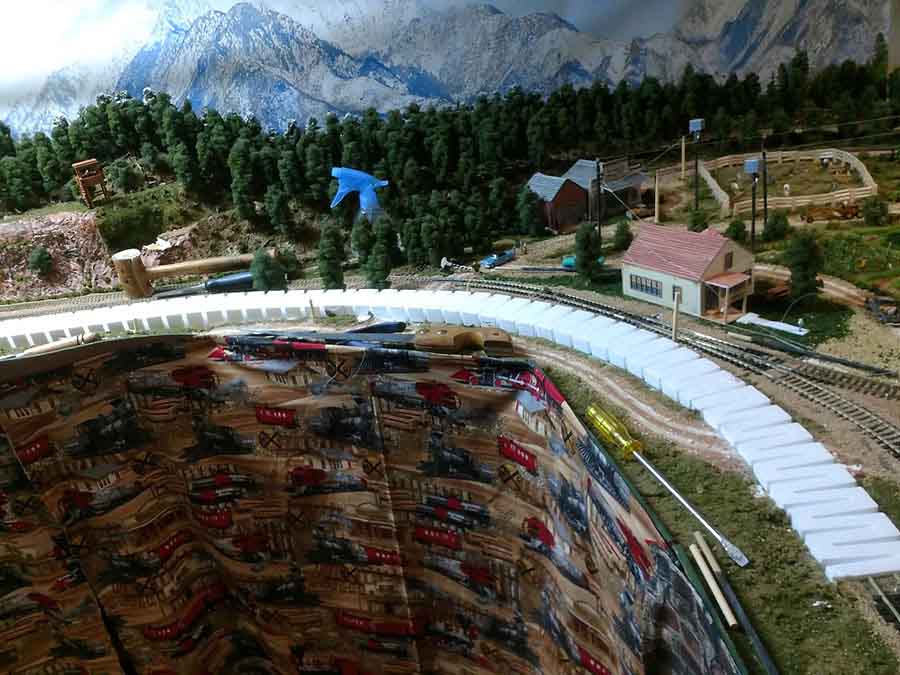
Lawrence has been in touch because of his model train incline.

Like many of us, he found out the hard way what is acceptable when it comes to running trains up an incline.

“Hi Al

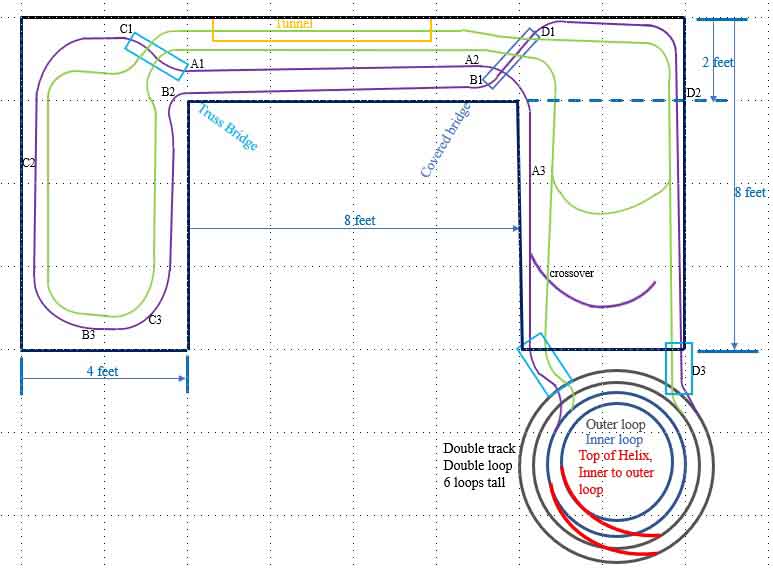
The following pictures are all referenced to the first picture that displays the layout that I have.

When I initially built the layout, I did not know what I was doing when it came to inclines. Since then I found the formula for determining the percent of grade.

I was having trouble with trains going uphill and using the formula I found out that I made grades from 3.5% to 5.5%. The optimum is 2%. My model train incline was too steep.

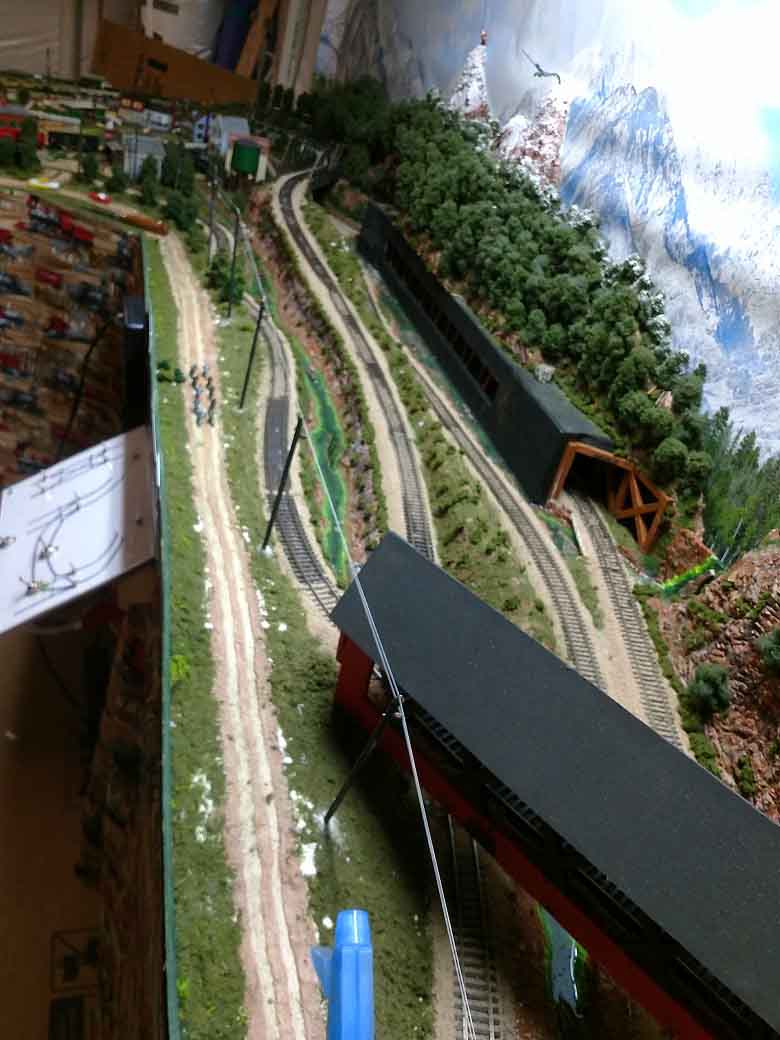
Example A1 to A2 was 5.5%, to make it 2% I had to change the rise from A1 to A3 (on the diagram). The A1-A2 track goes from the top to under the covered bridge. The B1-B2 track, at 3.9% goes from the covered bridge.

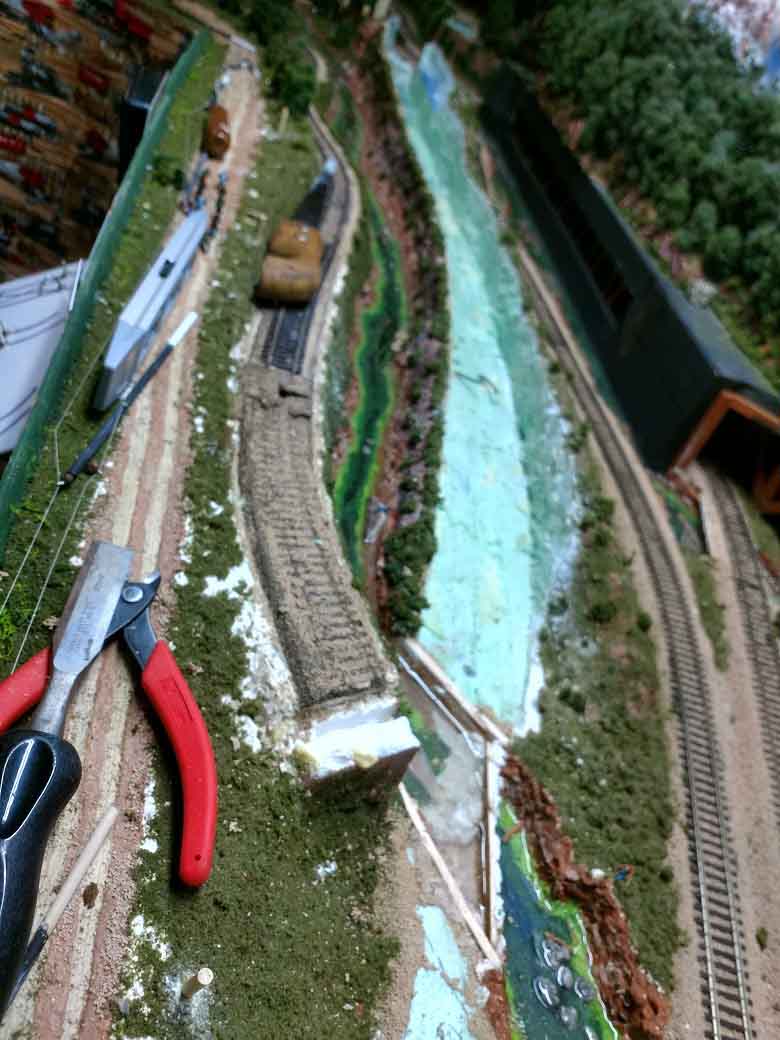
Another angle of the two mentioned tracks before reconstruction. I wanted to pull the track without having to redo all the scenery. Lifting the covered bridge off the layout and starting to remove the track to the base foam layer at the lower end (A2 area).

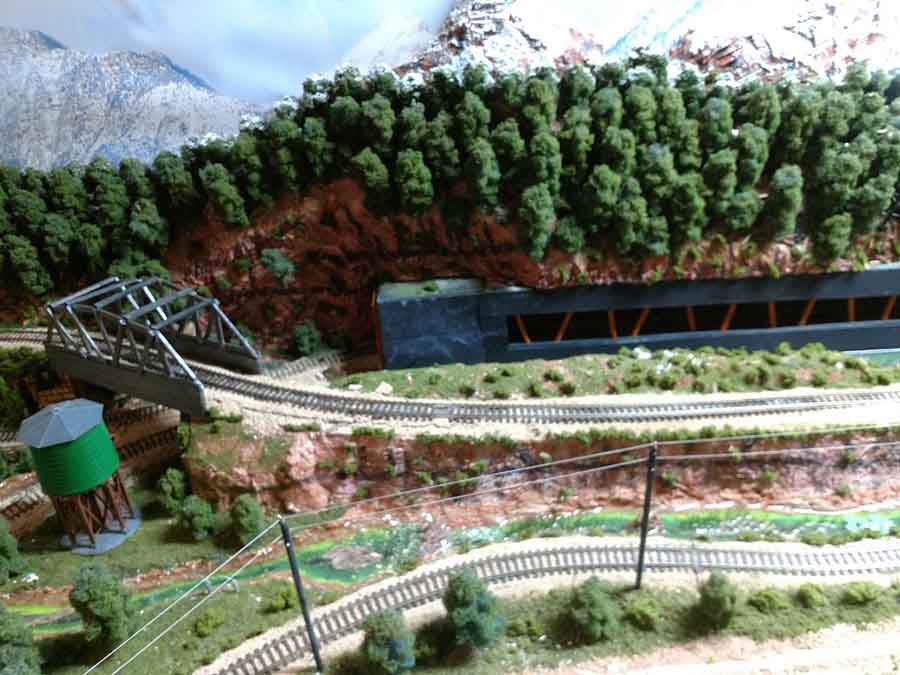
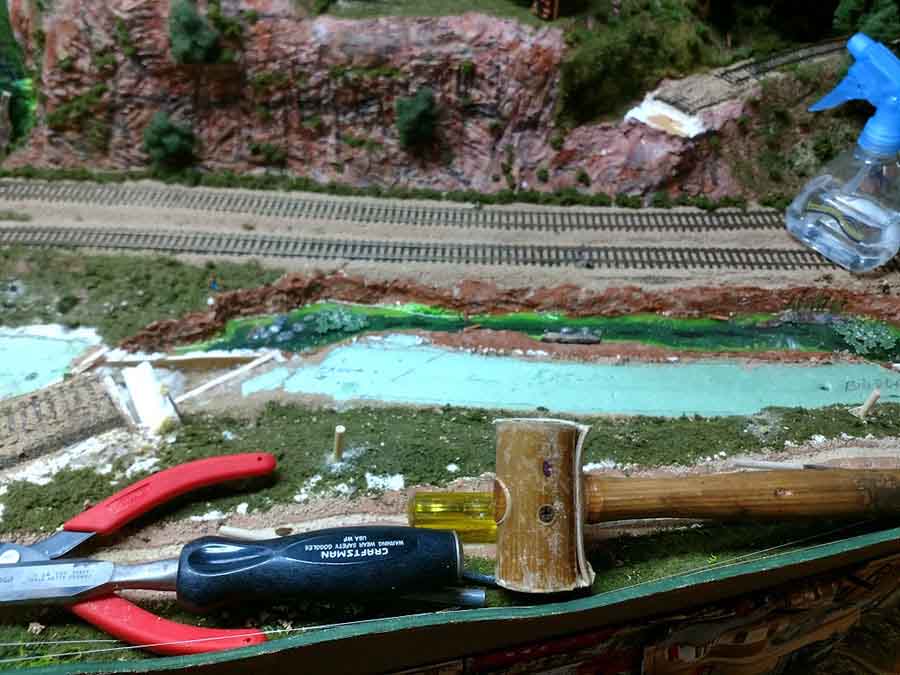
Cutting out the track at the upper end, cutting down to the base foam but keeping the scenery intact as much as possible on either side. Another shot of the A1 section of the track area cut out. the smaller bridge also had to be temp taken out.

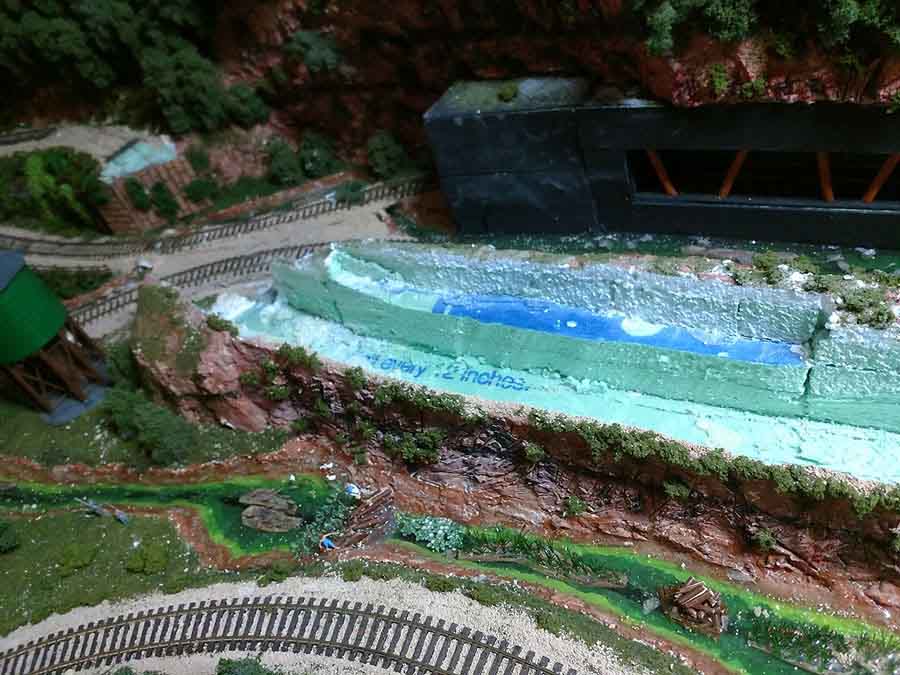
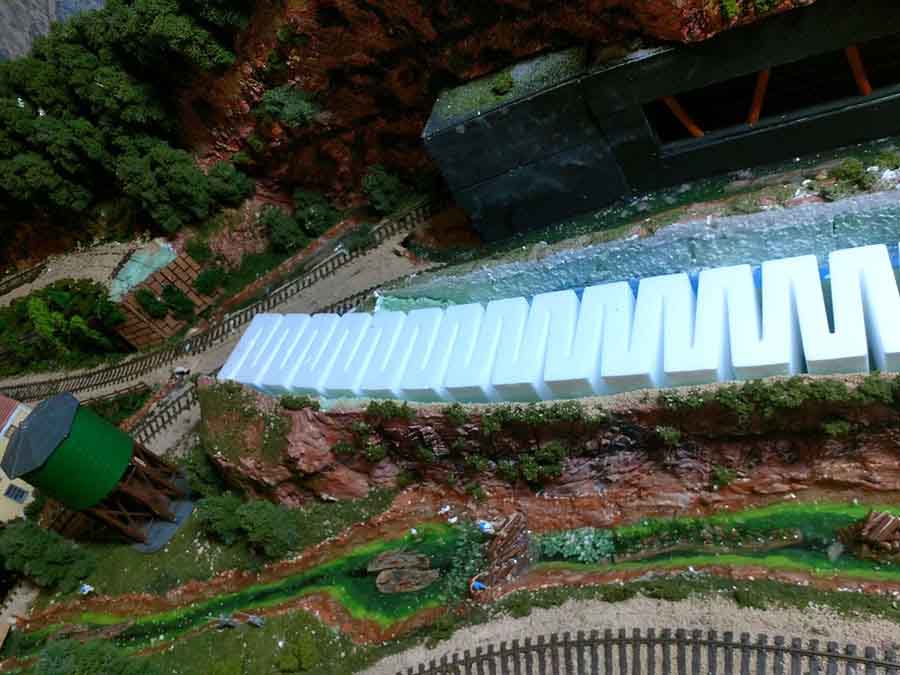
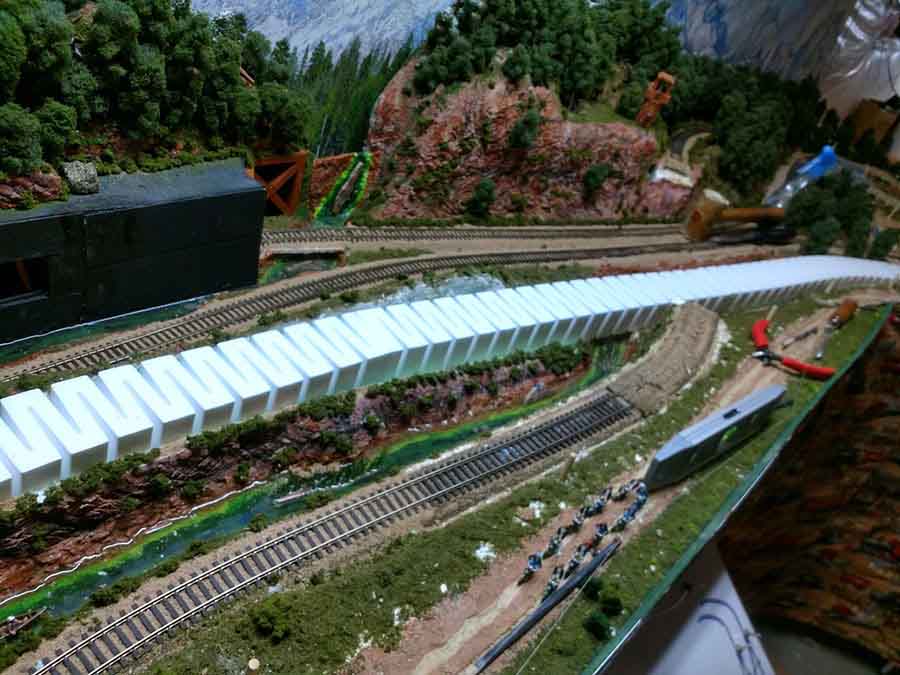
The upper end of the A1 section with the store bought 2% grade foam in place. The middle section of the 2% foam in place. this is where I found out at the level of the track under the covered bridge would be 2 inches higher than before. This is a problem as before the change there was only one quarter of an inch clearance for the train to travel under the bridge. Laying the 2% foam around to the now A3 location after puling all the track to this point. The D section of track was handled in the same way. BUT – –

Forcing the B1 section to now be raised from 3 inches to 5 inches the B3 section goes around to the new B3 area. BUT – – The C1-C2 section over lapped the B3 section. PLUS, at the B3-C3 area two roads cross the bridge.

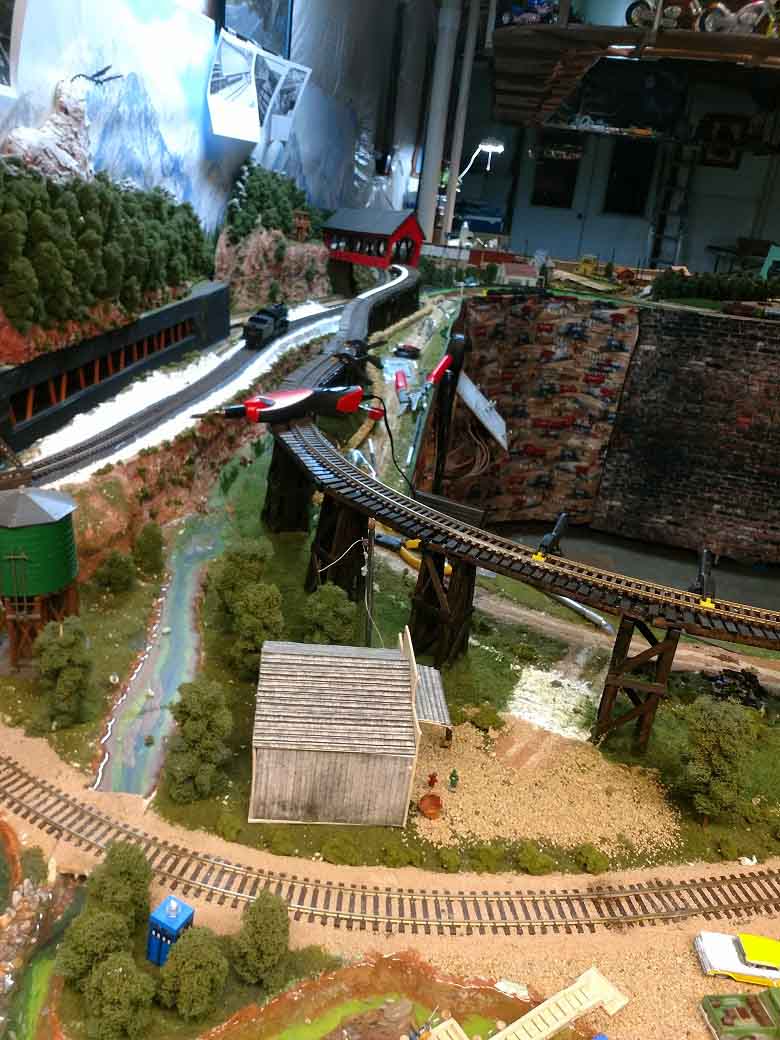
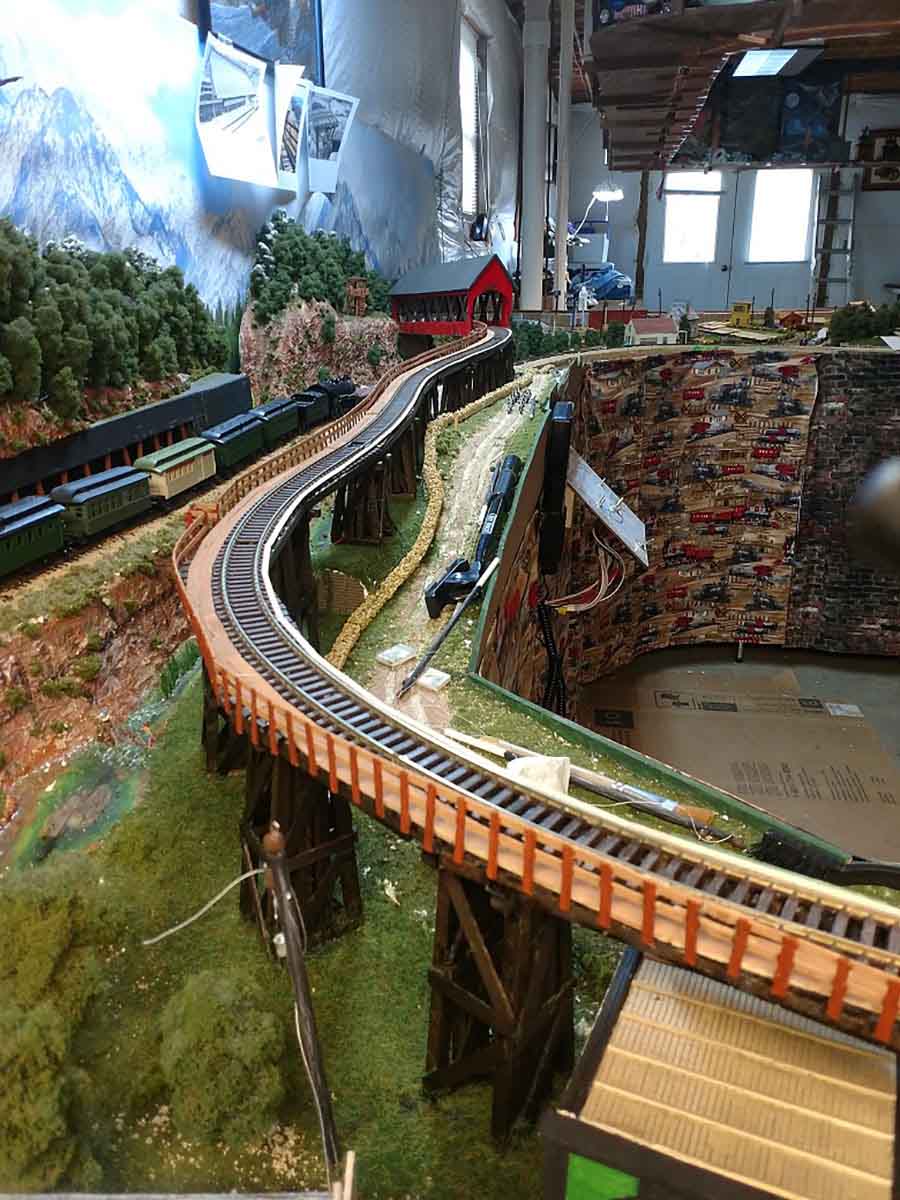
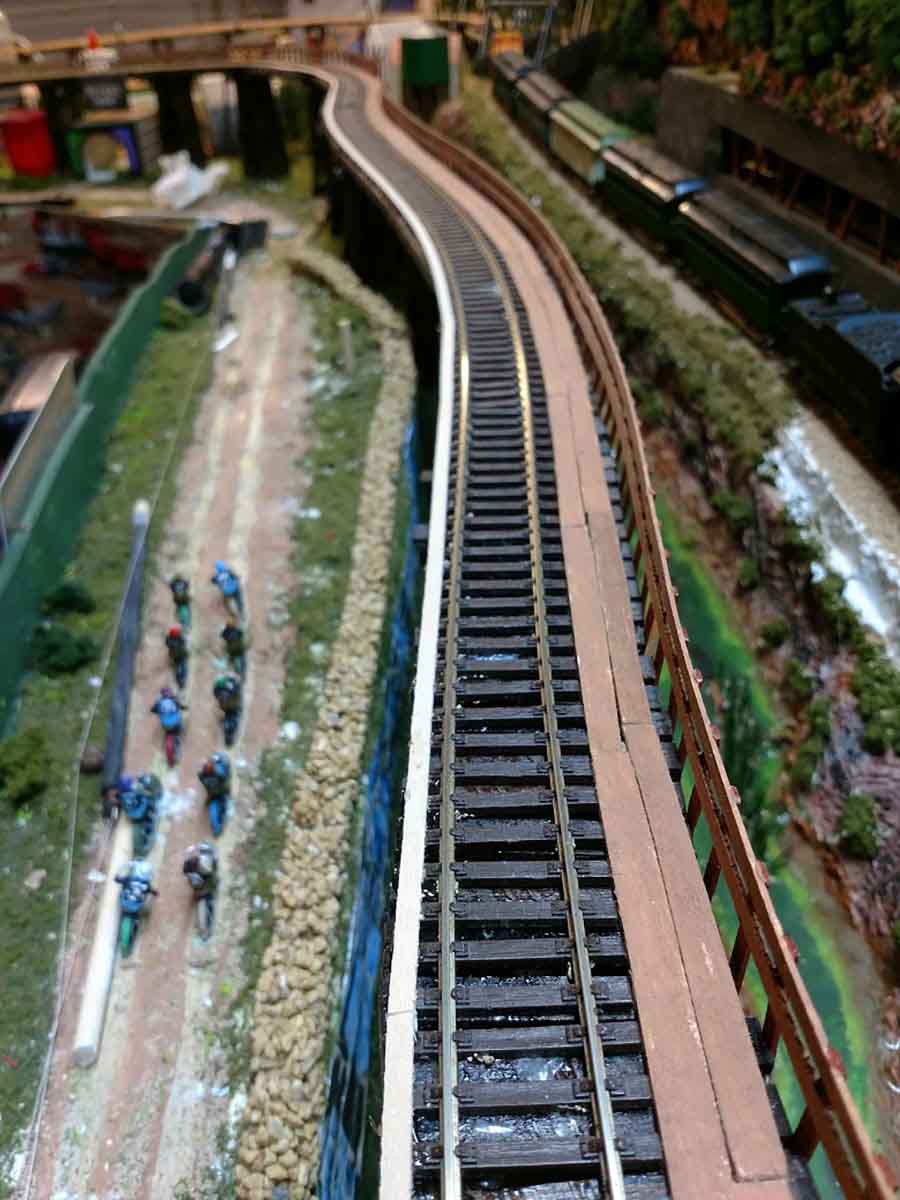
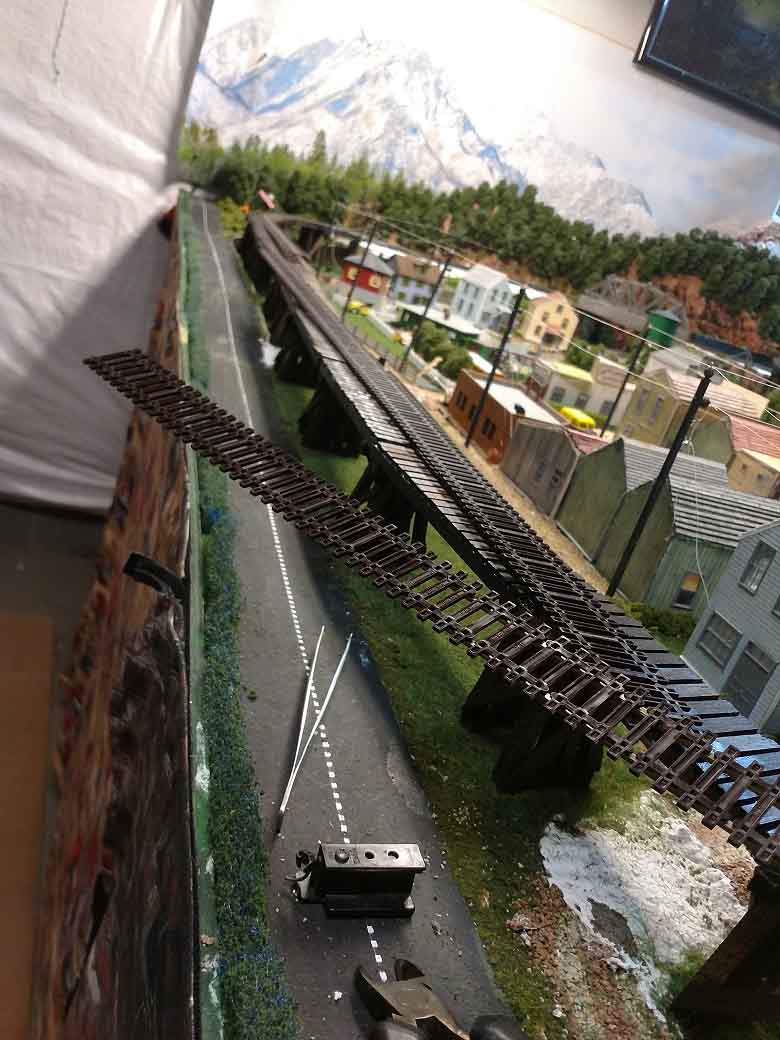
To solve the problem a Trestle bridge had to be built from B1 all the way around to C1. Here the bridge goes over the road (under construction) to the Antique shop.

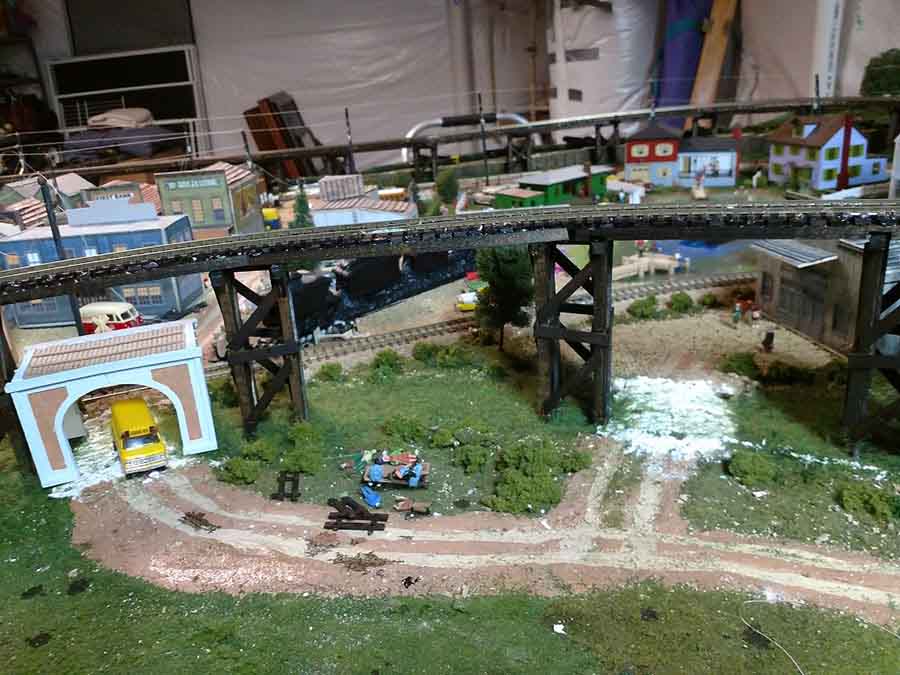
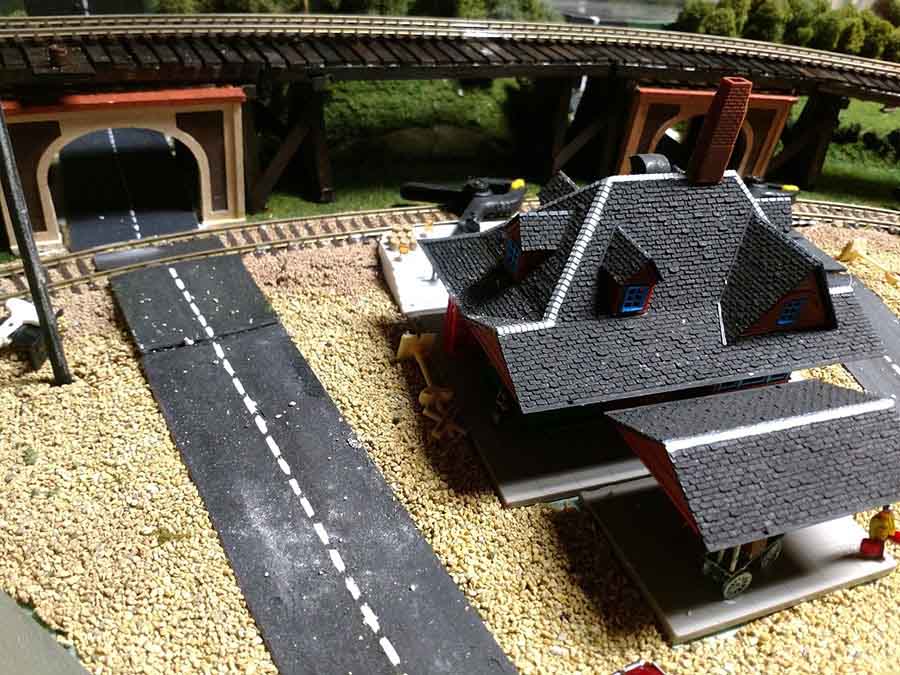
The B section of the Trestle, in the foreground, and the C section to the rear. N gauge train tunnels built for the HO gauge layout for auto traffic.The train is on the mostly finished A section of track.

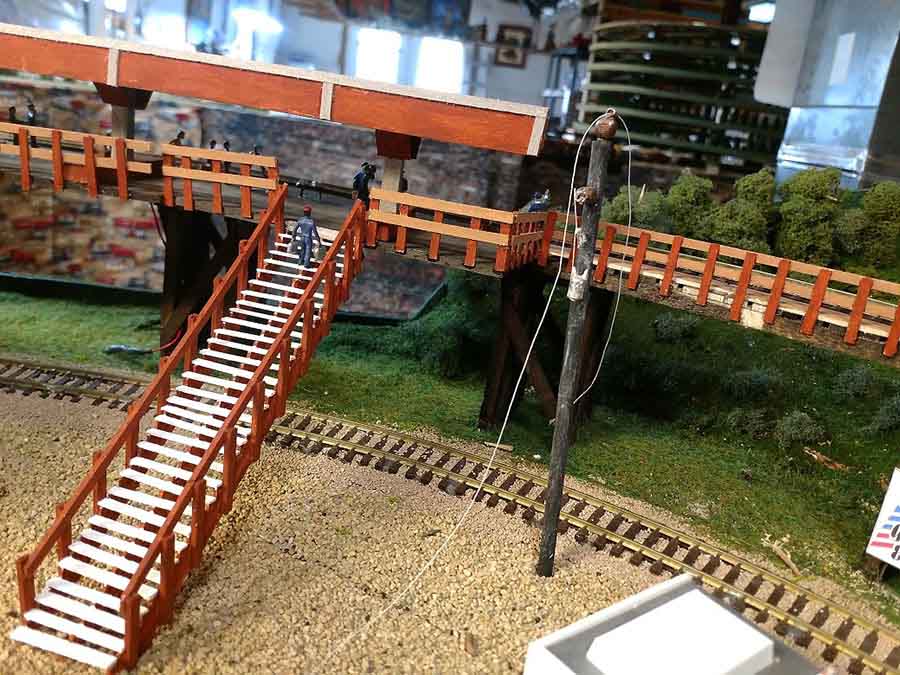
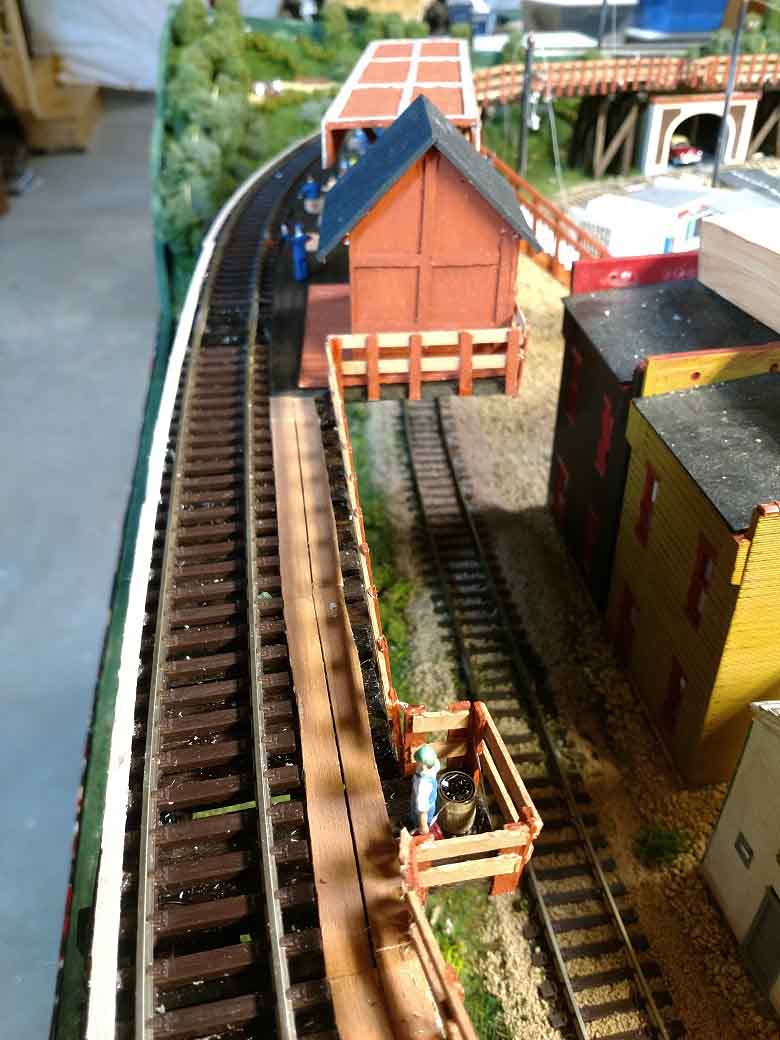
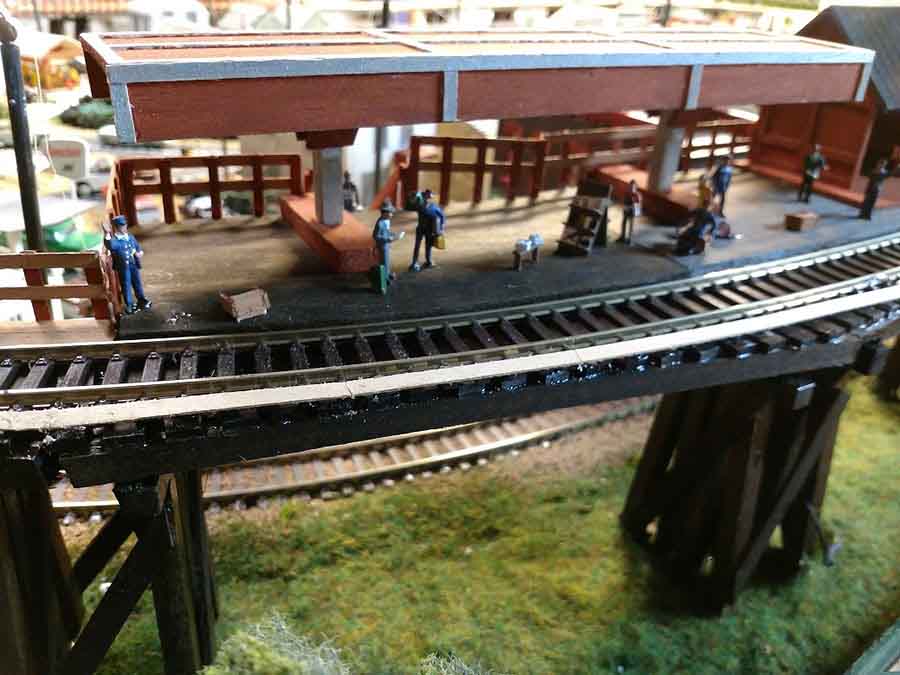
The trestle has a walkway for the engineers and a banister for safety. Another pic of the A1 section of trestle track finished. About where the A2 area was a new raised train waiting station for passengers.Another angle of the passenger station. Also, the water barrel in place for the steam engine usage. The passenger station and news stand.

The two roads going under the trestle bridge with the N gauge tunnels. The trestle had to be raised not the 1-inch minimum need for the 2% grade in both directions but another inch to allow for the auto tunnels. Laying the track around the C section. The actual last to be worked on at this time.

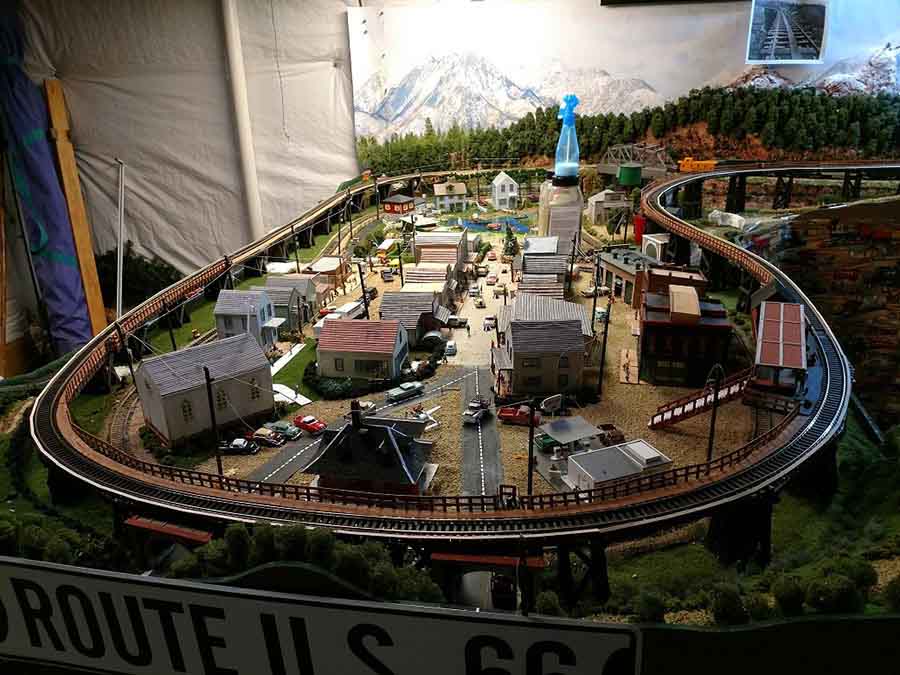
And last off is a pic of the overall area for the trestle bridge – it shows the my model train incline – from the upper right, around the town, to the middle back. The banister still not finished in the C section. That is physically 20 feet of layout trestle track.

Lawrence”

model train incline track plan

model train incline trestle bridge

model train bridge

landscaping incline


Model train incline:

incline to trestle bridge

model train incline landscaping

polystyrene for incline

polystyrene for incline

polystyrene for incline curve

trestle bridge model train incline

model train

model train incline trestle bridge

model railroad trestle track

model railroad passenger bridge

model railroad platform

model train platform elevated track

model train tunnel under elevated track

model railroad laying track

model railroad incline side view

A huge thanks to Lawrence for putting this together. Just goes to show a model train incline is no different to any other part of scenery – one small change to your track means lots of other changes need to happen too…

That’s all for today folks – but please don’t forget the Beginner’s Guide if you want to get going on your own layout and side step the mistakes we all make.

Keep ’em coming.

Best

Al

PS Latest ebay cheat sheet here.

PPS And if you fancy reading even more on inclines, this post will help.

PPPS Here’s another great incline ‘how to’ as well.

How to make a model train dirt road

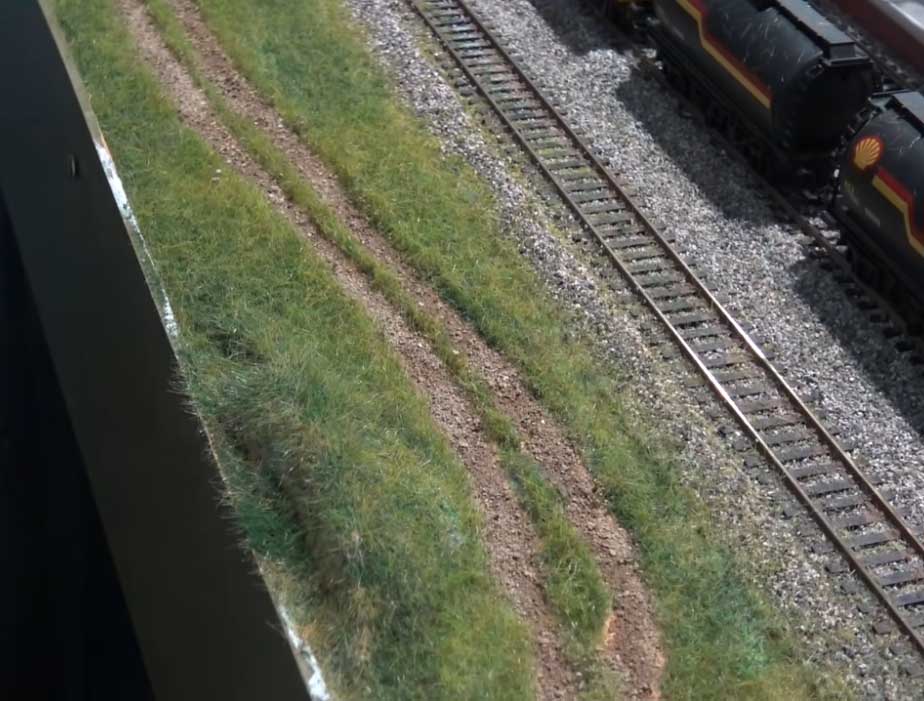
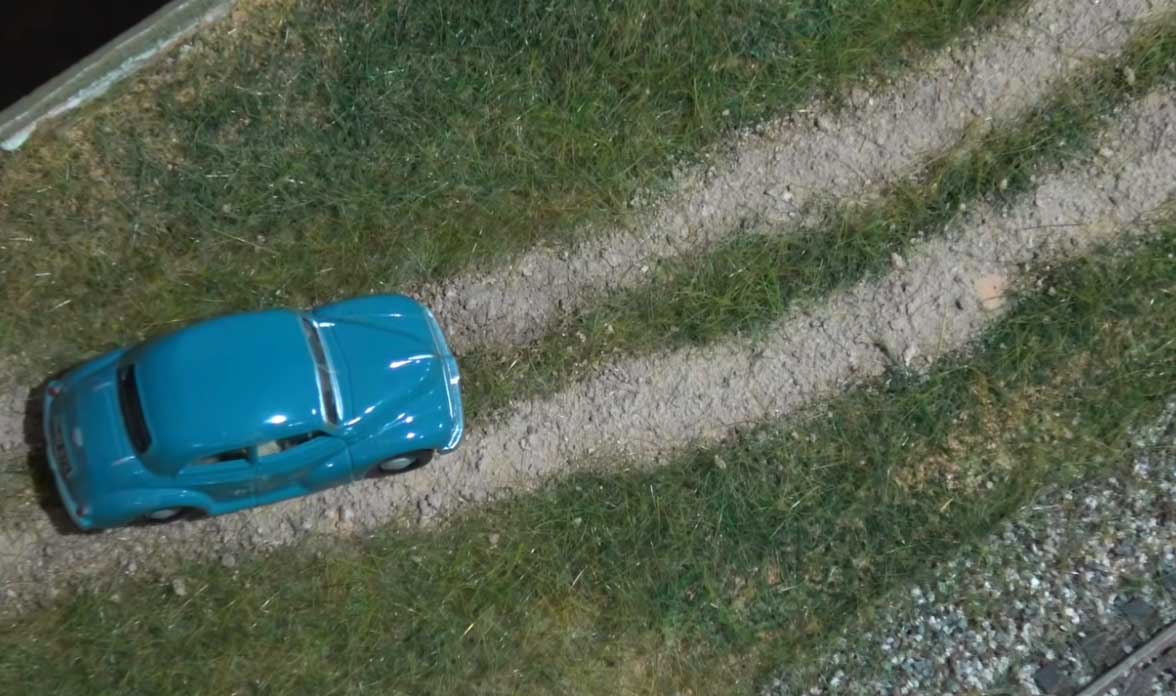
Rob’s been in touch again. This time he shows us how to make a model train dirt road.

(his last post is here).

“Hi Al,

It seems I have been perfecting single track roads through the rough.

In my latest effort, I have created this simple tutorial. There are a couple of things necessary to build a road as I’ve built in the video that I don’t go into in this short tutorial.

One is collecting the dirt, drying it, sterilizing it and sifting it to various grain sizes. Perhaps in the future, I will do a video on that, It is a subject to tackle some other day.

In this video, I use dirt out of my garden in an area where it has not been subjected to amendments like softeners or fertilizers, etc.

The other thing I do not get into is the special tool I have developed to initially layout the dual grooves that form it. This tool is homemade of course and it has N scale tracks at one end and OO tracks at the other.

To determine how wide one needs to make the tool drags, just take a scale vehicle and measure it. In fact, I would recommend you take 4 or 5 to measure since they are not all the same.

You could drill the ends of the small block I have mounted them on if you have the patience. When I originally realized I needed this tool, I was in a hurry but I have used it for years now and it works just fine.

One important thing about car or truck tracks is that though they may wind around and around, they always stay exactly the same distance apart. That is why I realized I needed the tool. It is simple but works as you see in the video like a dream.

The way you use it is to drag it along where you want the track to be. It works really well in foam board as I used here.

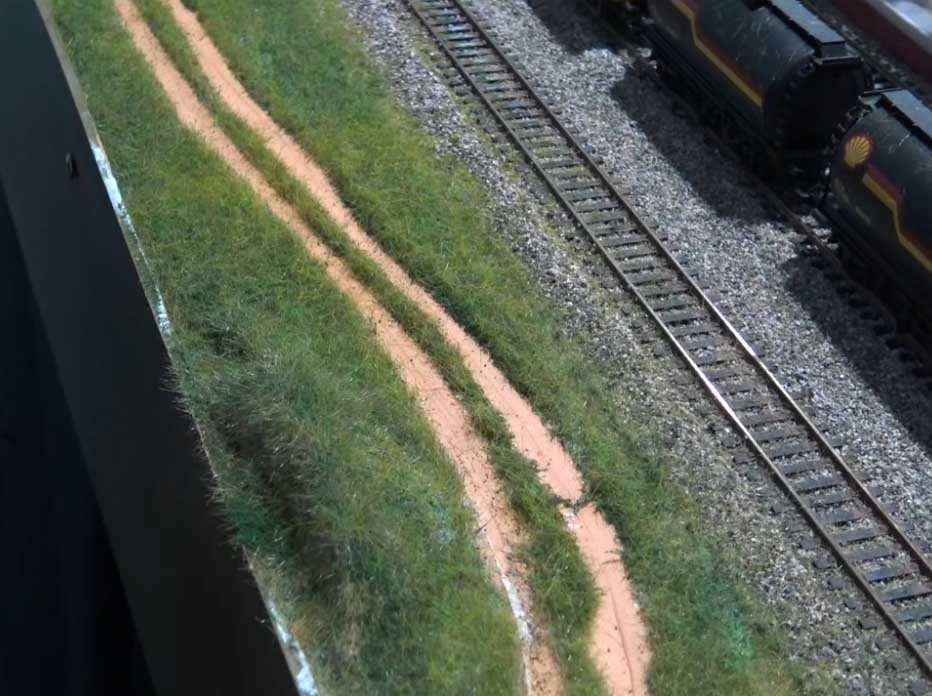
I glued 4 mm thick foam board along where the path was to be, created the ruts, taped them to protect them with Tamaya 1/4 inch tape then put the grass down over the tape.

When I pulled up the tape, it left the tracks without any grass so I could finish them separately.

The tool also works in wet drywall compound or wet plaster for a muddy track effect. It is harder to control in wet plaster however and you may ruin your tool. No worries though it that happens, just make a new one.

Thank you for all you do for the modeling community around the world. Though I don’t always comment, I do read every one.

Rob”

How to make a model train dirt road

How to make a model train dirt road

How to make a model train dirt road


Latest ebay cheat sheet here. Had a look yet?

A huge thanks Hall of Fame member, Rob, for showing us how to make a model train dirt road.

A wonderful ‘how to’ – the end result really does look fantastic.

In fact, this post goes very well with Bob’s grass ‘how to’.

That’s all for today folks.

Please do keep ’em coming.

And if today is the day you get started on your layout, the Beginner’s Guide is here.

Best

Al

PS Latest ebay cheat sheet is here.

PPS More HO scale train layouts here if that’s your thing.