Signal lights for model train switch

Eric’s been in touch with a clever but simple way to manage his signal lights for model train switch.

“Hi, Alastair,

Thank you for your daily blog, which is a real service to the model rail community.

I have attached details of a way to change a simple 2 aspect, red/green led signal using contacts on a points motor. As there are only two wires from the led signal this can be a real challenge. I hope this helps others that may have encountered this difficulty.

The Problem: How to use Gaugemaster SEEP points motor PM 1, to switch Gaugemaster SEEP 2 Aspect colour light signals from red to green etc, when ONLY 2 wires are present from the light signal unit and you would normally need 3-4.

You need to change both the positive and negative to each coloured LED and this is normally achieved manually by the supplied manual crossover switch with the light unit.

However to achieve this automatically by using the contacts on the points motor is a challenge.

The Solution: Shown below is a low tech proposal using 2, 9 v batteries. The red and green LED are in effect using one battery each to provide the required polarity change when the points change.

The thicker line shows the current path at each change over.

Signal lights for model train switch:
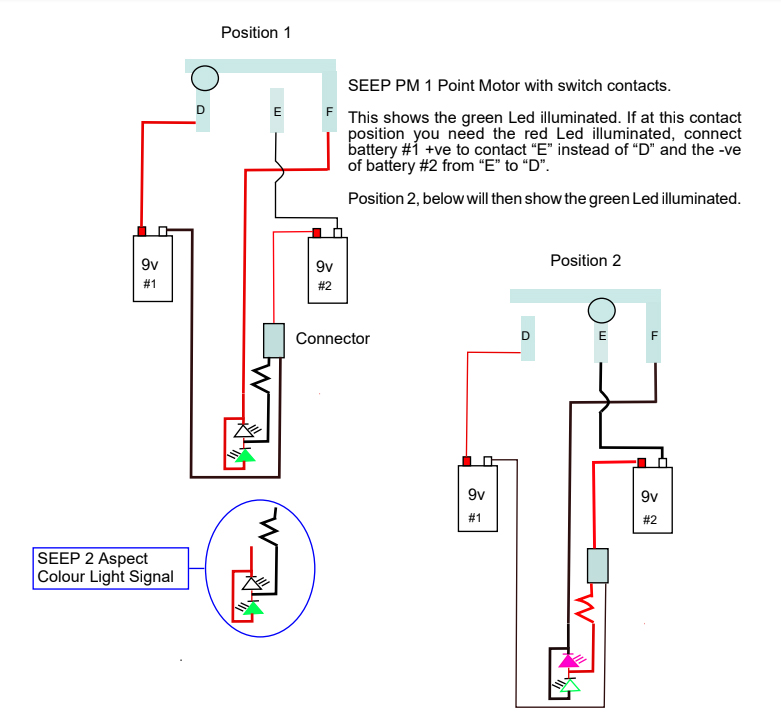
Signal lights for model train switch wiring diagram

Image is clickable

Eric”

Now on to Fred:

“Al –

I didn’t tell you, but I’ve been working on my lighting.

Theater gels on fluorescent tubes in the diorama soffit, dimmers on the incandescent spots, and a small planetarium for my celestial effects!

Obviously the moon isn’t exactly to scale, but I can make it appear to rise from behind the mountains, and I’m working on the optics to make it smaller.

A little “over-the-top,” but sort of a cool effect, don’t you think?

Fred”
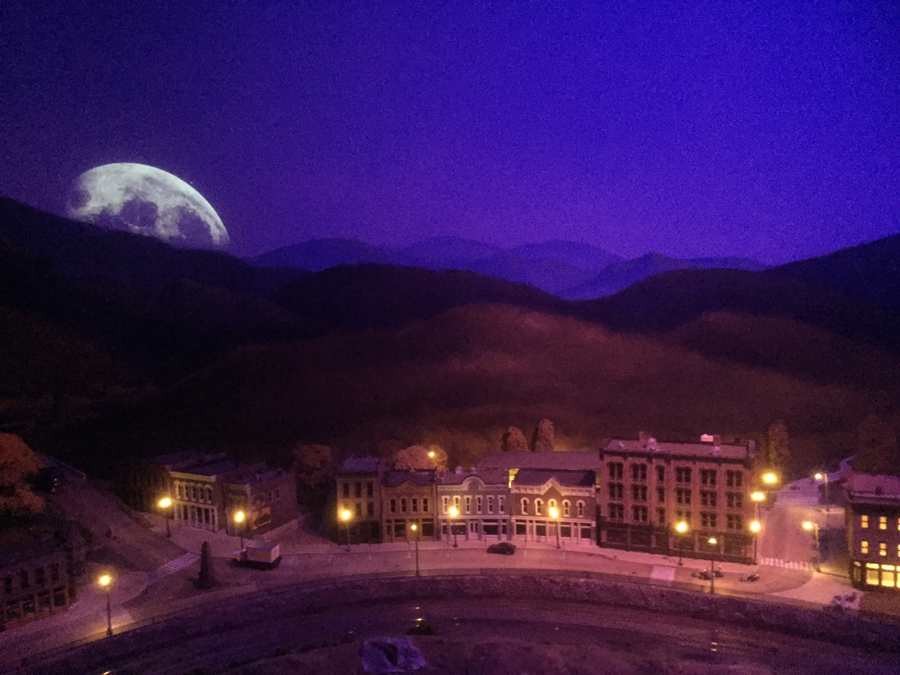
model railroad backdrop LED lighting

Joe’s been in touch with his progress (his last post is here).

“Hi Al; Thanks for putting up the pics.

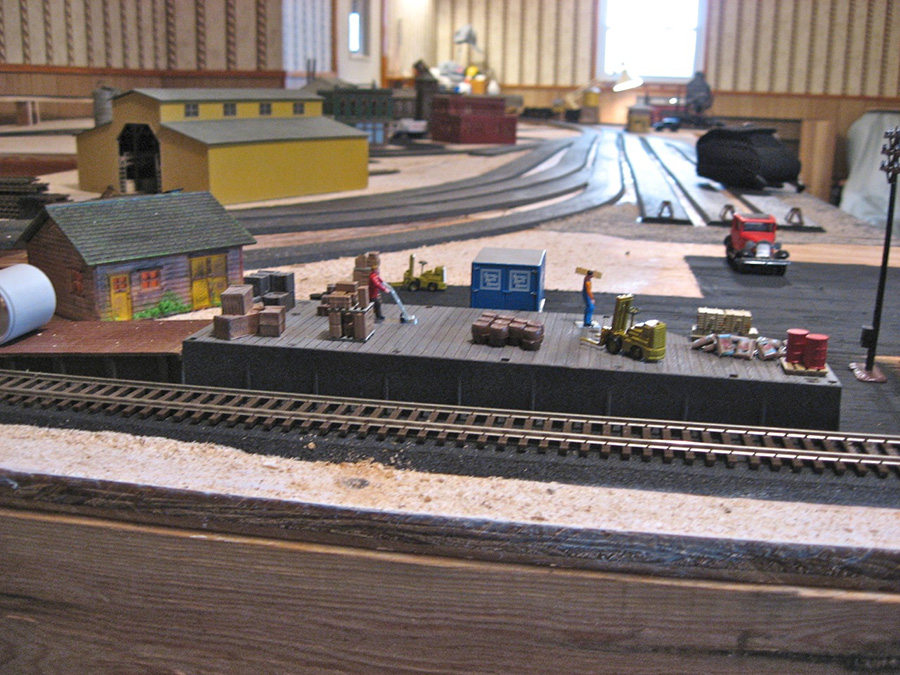
Here are some more “construction” pics.

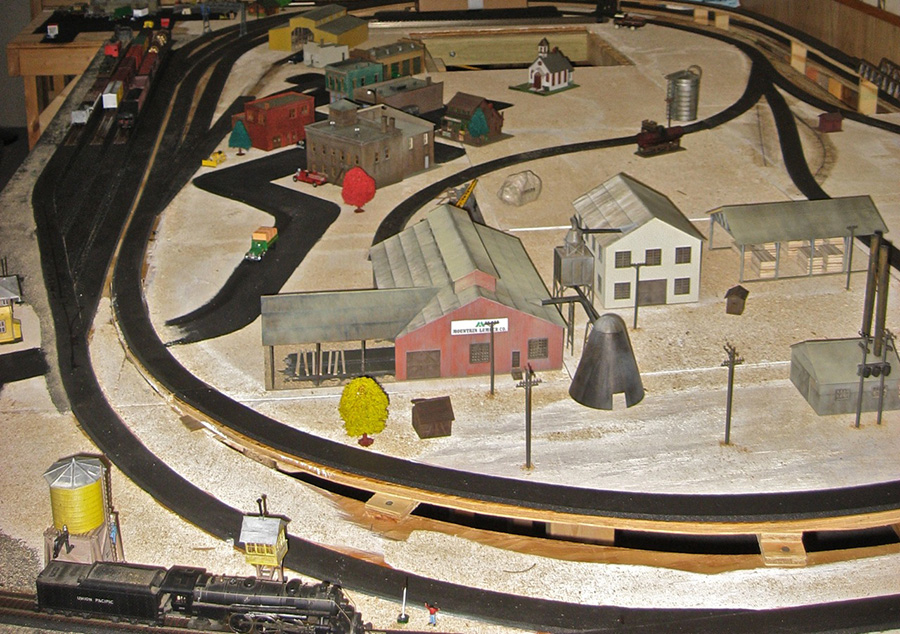
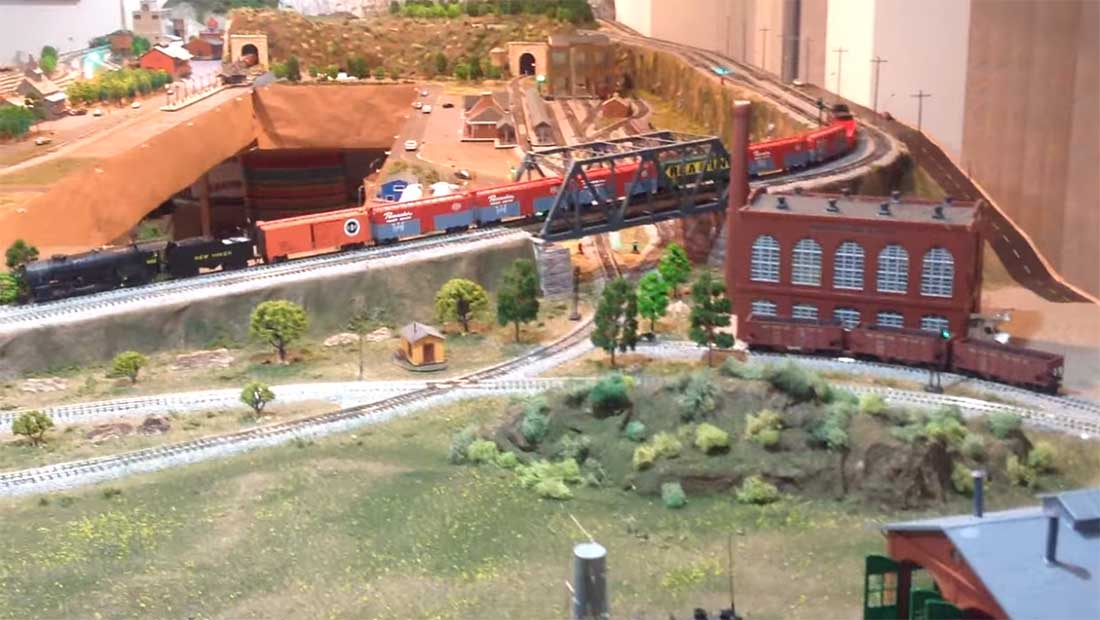
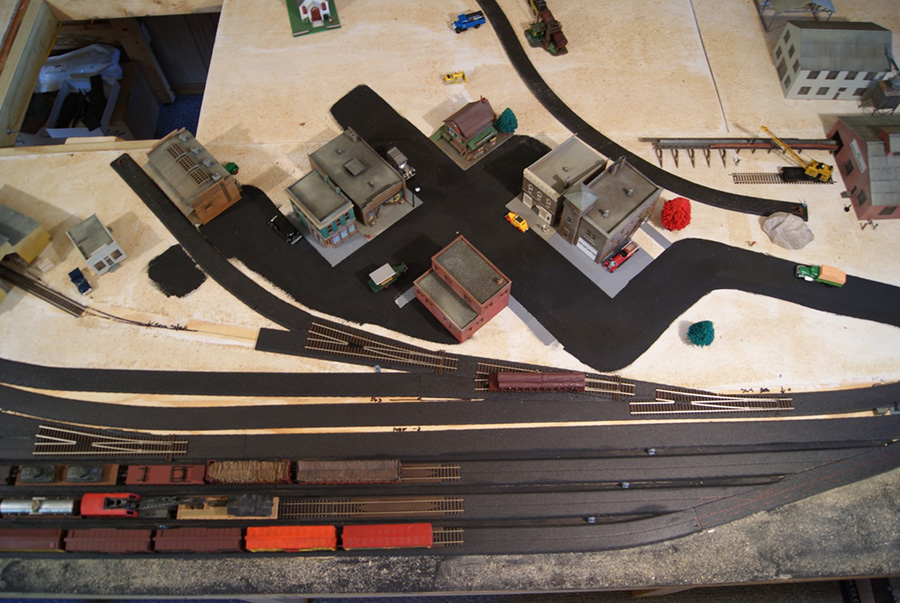
The layout is a ‘free lanced’ 1940 – 1950 steam era set roughly in the “town” of San Juan Creek in N.W. New Mexico.

The main industries are coal mining and lumber.

I can’t tell if I already sent these. IF they are duplicate, please discard.

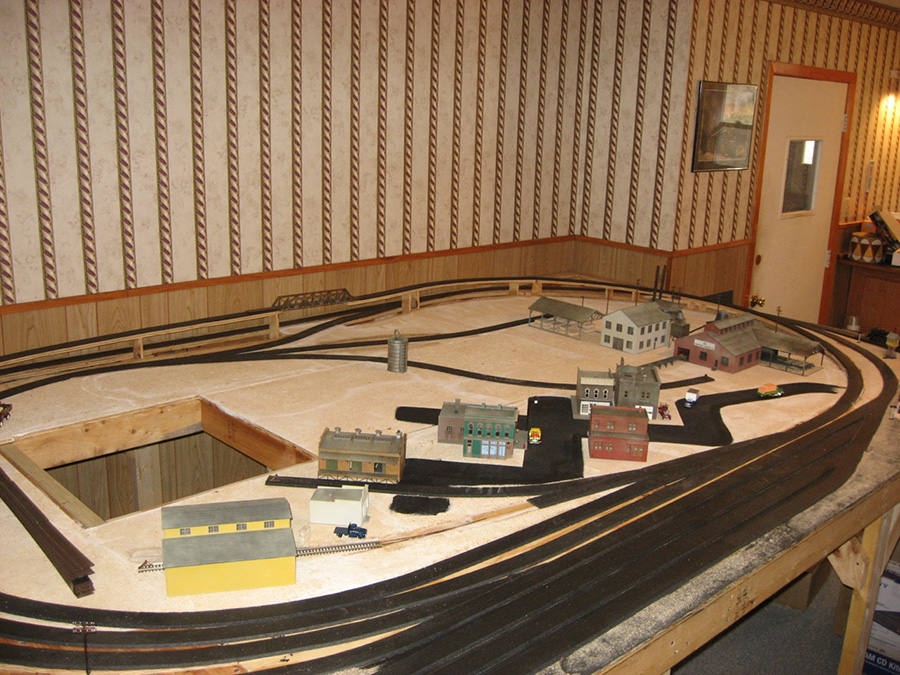
Laying roadbed. Elevation for inner main line completed. 2.75% grade.

Joe”
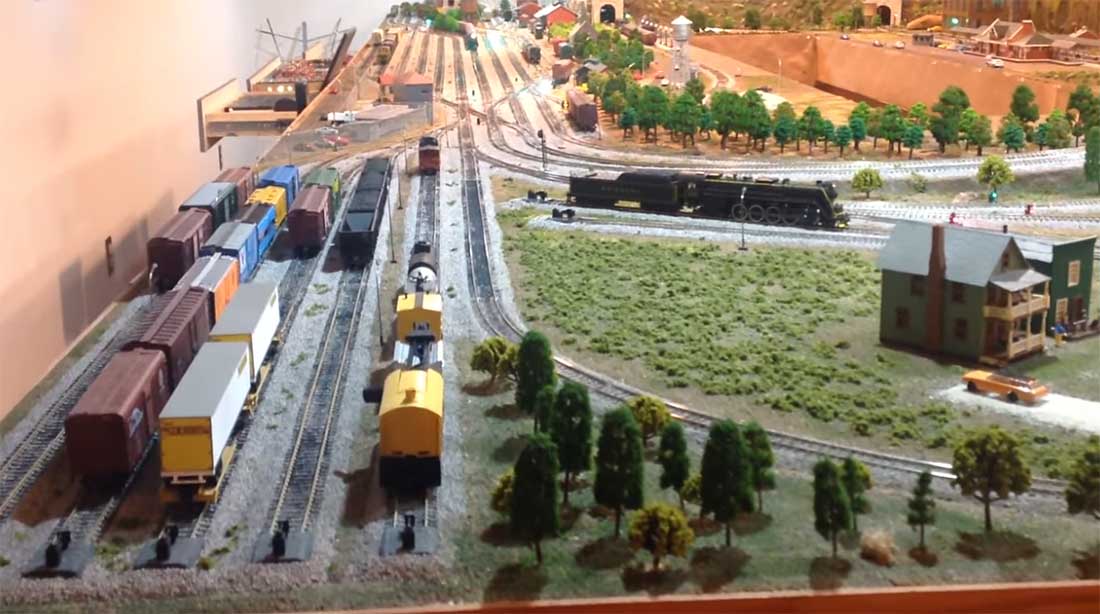
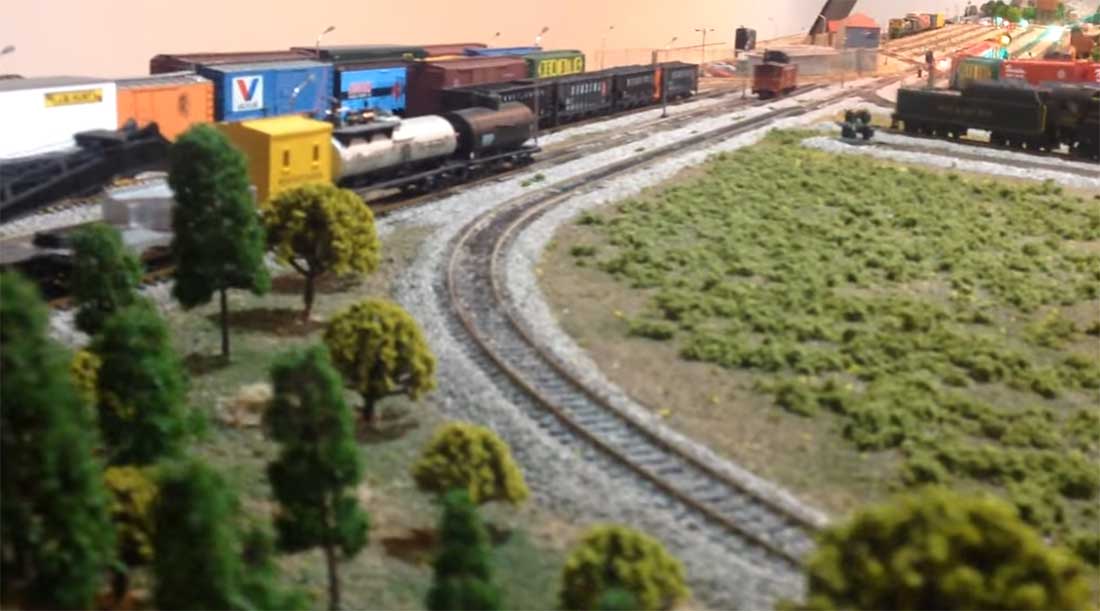
model railroad freight yard

model train loading platform

model railroad oval loop

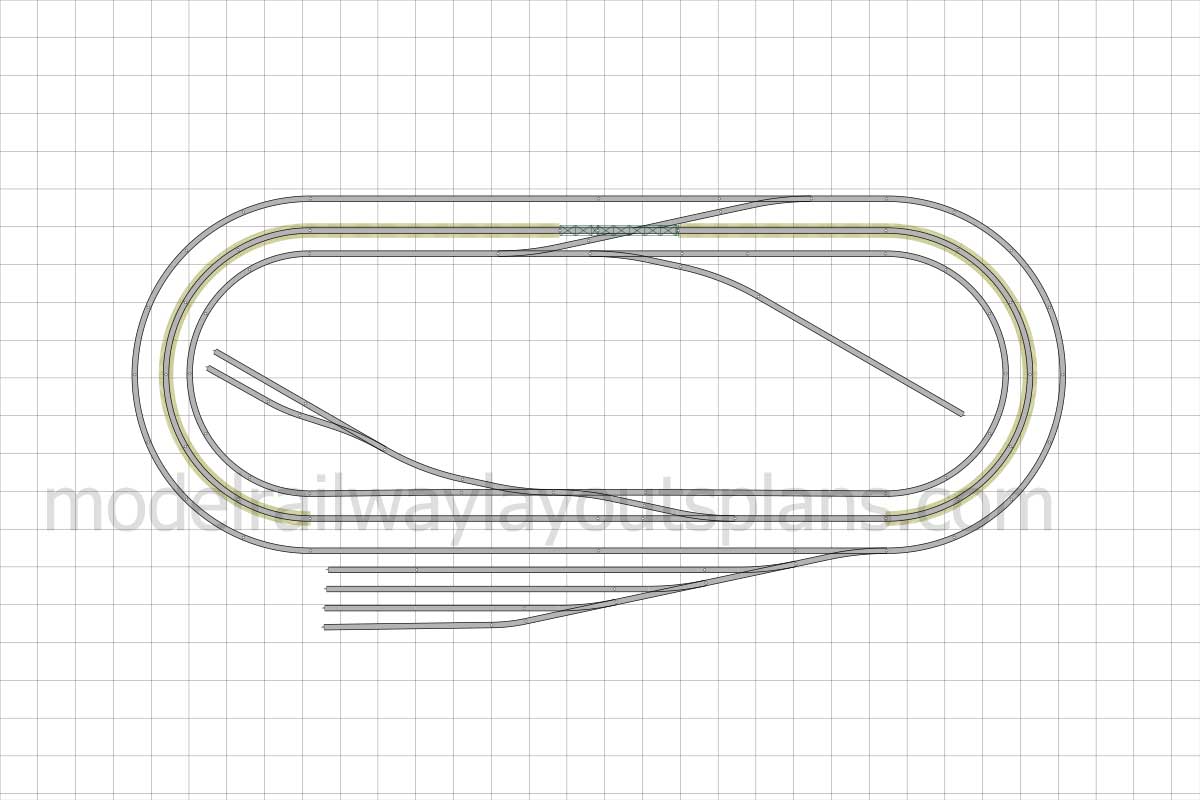
model train track plan

That’s all for today folks – a big thanks to Fred and Eric for sharing his signal lights for model train switch wiring diagram.

Please do keep ’em coming. If there’s anything you want to share just hit reply to any of my mails.

(You can send as many pics as you like, but please don’t send more than 3 pics per mail – send as many mails as you like…)

And if you’re enjoying the posts, don’t forget there are hundreds and hundreds more with the Beginner’s Guide.

Best

Al

PS Latest ebay cheat sheet is here.



English model trains

If you are looking for English model trains, two posts on the site spring to mind:

Loft railway – Dave’s.

english model trains

And:

British model railway.

english model trains

But it’s a funny old world.

Pretty much, every week, I get emails asking, “Why do you show so many American layouts?”

And I get just as many saying, “Can you show more less British and more American layouts?”

Well, the truth is, I’m not fussy – I don’t give a jot where they come from, what their theme is, or their era.

If there’s something to learn from them, or marvel at, I publish.

But I know what folk mean – have a look at these two for example. Polar opposites when it comes each side of the Atlantic:

Barry’s

Barry’s update

And:

Julian’s

Polar opposites… but some real gems of wisdom.

But sometimes, no layout is necessary to tap in to some sage advice. Have a look at the comments in this one:

Pat’s dilemma

Perhaps Bill says it best when it comes to English model trains, or American ones:

“Celtic Thunder sang a song that fits this: “All of God’s Creatures Got A Place In The Choir.”

Sometimes we forget that and start trying to do things our way. We also have a tendency to forget that model railroading is a hobby and not an exact science. If one is a purist, that may be true but a great number of us are not.

Either way, most of the things you post are filled with all kinds of things which turn on the light that says, “Why didn’t I think of that?!”

I have found countless things that can be applied to my own little 4X8 island pike.

All of the trains simply run around in circles and it would be infinitely boring to a lot of the folks who frequent your fine website but to me (and no doubt, hundreds of other “kids” in the hobby) it is a lot of fun, very relaxing and the children of friends who come and visit are able to “play” with it – just like me.

I think the best example I have ever seen as to what our hobby is all about was posted on your site some weeks back.

It was Hank’s O gauge layout with several trains running around in various circles, some at breakneck speeds, spilling the occupants’ coffee (or tea, if is on the British side).

I saved that post and play it every once in a while just to keep my 81 year old head in perspective and remind me that I am not a John Allen or a George Sellios, etc.

So, regardless of which side of the ocean they come from, keep posting your videos, helpful hints and photos. I (we) love ’em.

I live, by the way, on the Olympic Peninsula, in Washington state, just 80 miles from the northwesternmost point of the continental U.S. Colonies so there is a whole continent PLUS an ocean between us.

God bless.

Bill”

So there you go – oh, and one last thing. I also get mails everyday asking why I don’t publish the scale / gauge / track plan of some layouts. It’s all very simple: I publish everything I get. If I don’t have it, I can’t publish it.

That’s all for today. Hope you enjoy the English model trains posts, and the American ones too. I enjoy them all.

That’s all for today folks.

Please do keep ’em coming.

And if today is the day you get started on your layout, the Beginner’s Guide is here.

Best

Al

PS Latest ebay cheat sheet is here.
PPS More HO scale train layouts here if that’s your thing.


Model railroad computer control – Joe’s

Joe has been in touch with his model railroad computer control video – have a look, it’s clever stuff.

(If I’m not mistaken, his last post on his 27×10 HO scale layout is here).

“Hello,

I have been looking at all the layouts you’ve been sending, and they all feature something that is interesting.

I am sending a video of my layout which I have been building for about 3 1/2 years. It is about 90% complete. It is a 27×10 HO scale.

It features a single track main line that doubles back on itself several times to simulate a double track main line.

The passenger line features a commuter service that shares a single track in both directions.

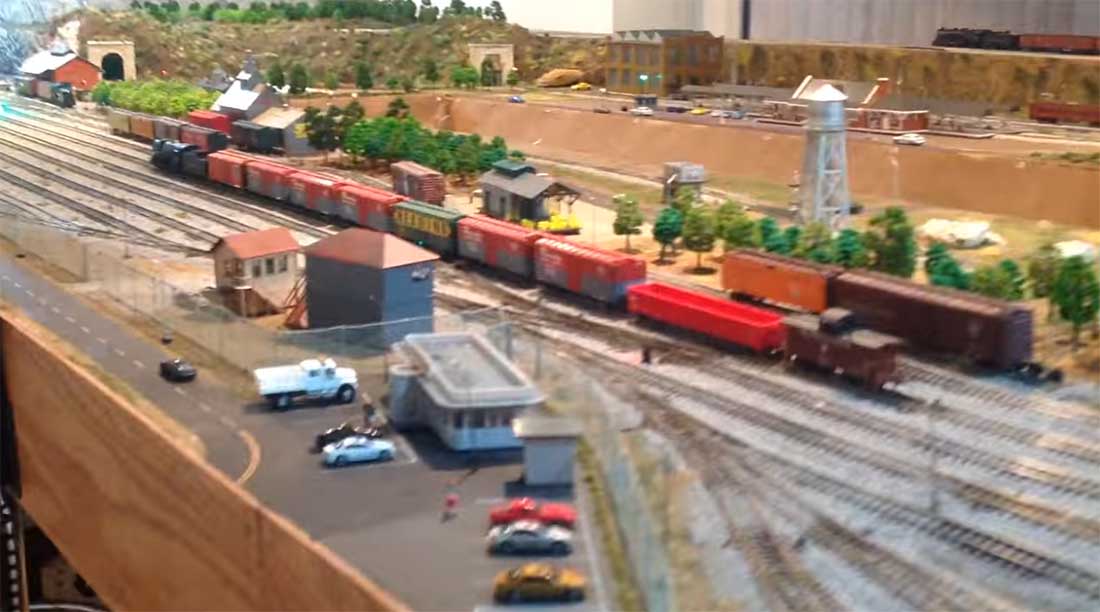
All the landscaping was done from scratch. Much of the track is under the bench work and is accessed through three tunnel portals, giving the illusion that the trains enter the tunnels and go off to some distant point.

The below-bench track work also hides two passing sidings each for both the freight and passenger lines. These are used to alternate trains at random so that the sequence of trains differs.

There is also a passing siding that is exposed to allow faster passenger trains or priority freight trains to overtake slower or non-priority freights.

There are several sections of the DCC layout that are operated manually, such as engine services, industrial sidings, and freight and passenger car yards.

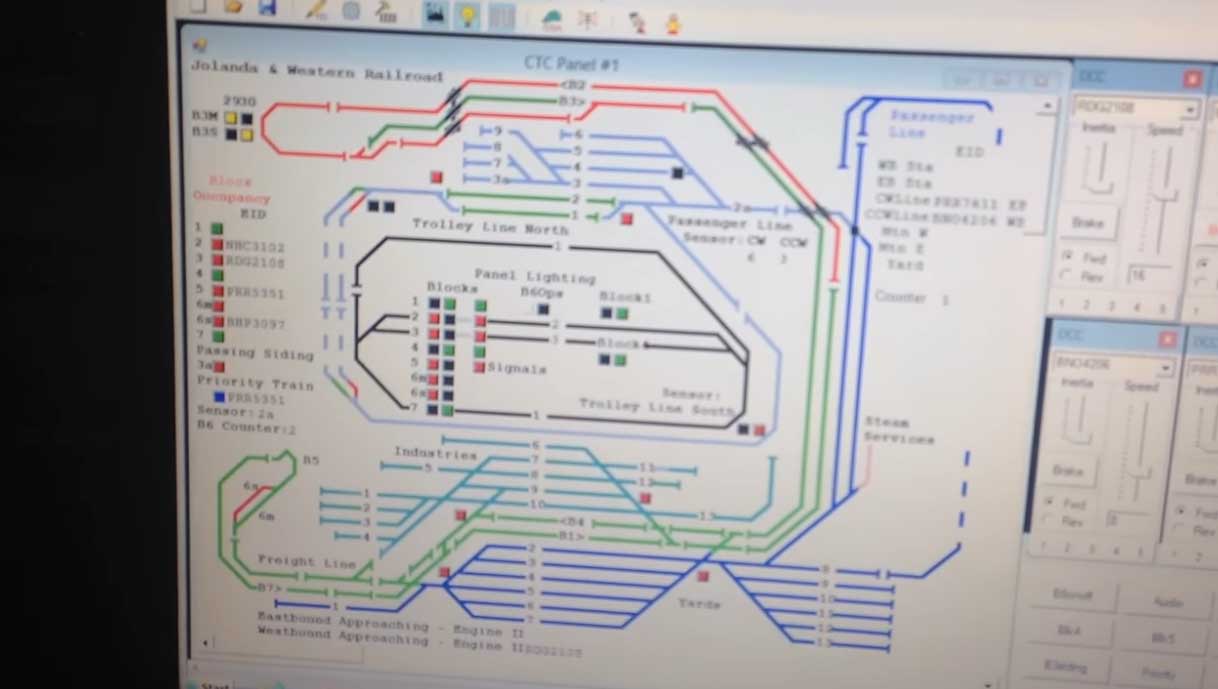
But the main feature of the layout is that the freight and passenger main lines are computer controlled.

I use a model railroad computer control software application from CTI known as Train Control Language (TCL). For you programmers, it is based upon the C language.

All engine movements, sounds, signals, lighting, auto traffic lights, etc. are controlled by TCL.

At any given time, up to 7 trains can run in automatic mode, and with the addition of engines being operated manually in the other sections I mentioned, the layout offers a lot of action when four operators and the yardmaster are present.

The layout was designed and built so that it could be disassembled into 13 sections.

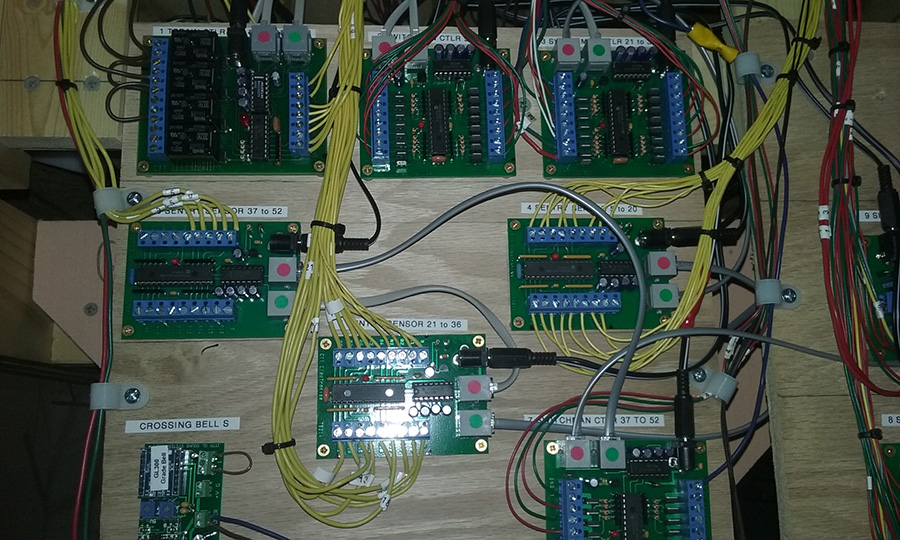
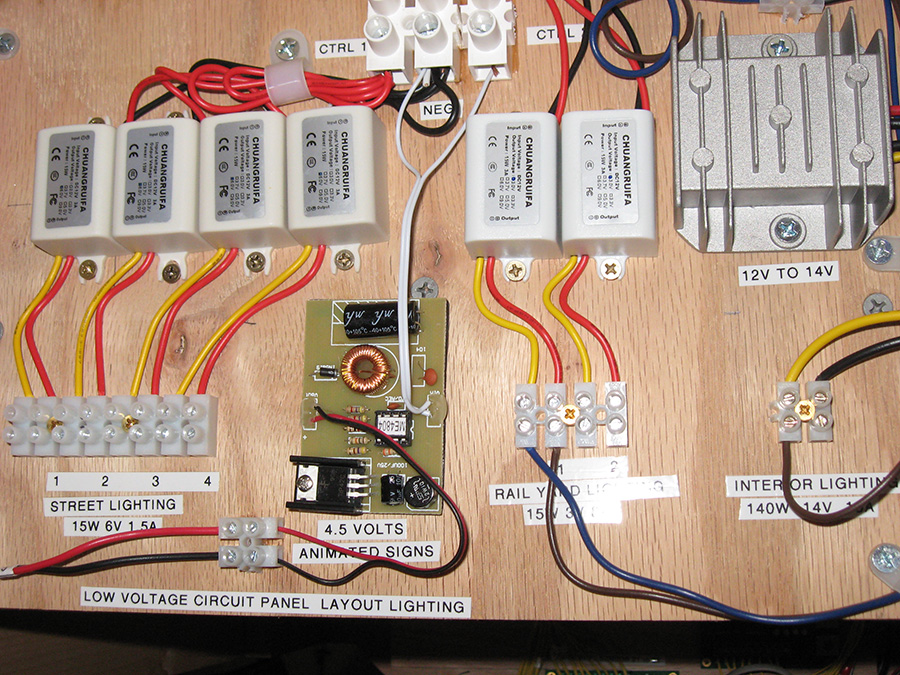
All wiring at section boundaries has Hitachi type connectors. Photos demonstrate a portion of the circuitry associated with the CTI system, which is essentially a local area network.

It shows how I dealt with the varying voltage requirements of my accessories, which draw 3 volts, 4.5 volts, and 12-14 volts. Instead of installing a huge number of resistors, I simply stepped the voltage down from 12 volts for each application. This saved huge amounts of time when wiring accessories.

You will notice an open rectangle in the center of the layout. This is where the town, with automated streetcar service, is planned to be. I have not yet decided if I am going to complete this section.

Joe”

model railroad computer controled by TCL

model railroad computer control freight

HO scale freight sidings

model railroad freight sidings


model railroad computer control

model railroad computer control

model railroad computer control


Now on to Bruce:

“Alastair … I actually have two pretty decent things to pass along:

I have found that using bark or weathered or drift wood for making rocky hills looks really good.

And, when using sculptamold (or similar) for terrain, tint it with brown, grey or green paint before installing. That will prevent the white specks you get when trying to paint afterwards.

Bruce”


“Hello Al,

how are you, my name is Christopher, and it’s nice to meet you.

I want to thank you for your emails, and I enjoy looking at your model railroad layout plans.

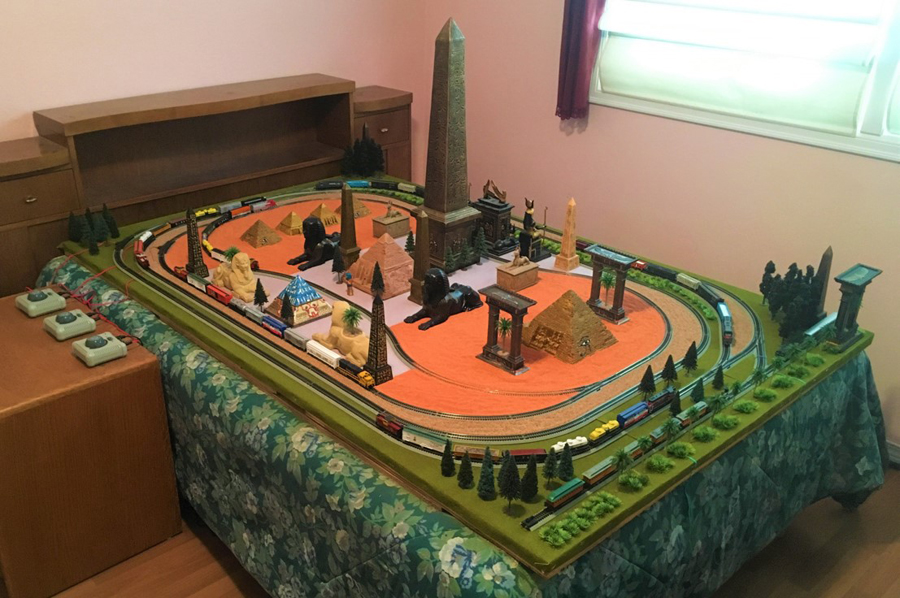
I just completed my first N scale train set, and I would like to expand on it someday.

Back in the 1980,s it was HO, now it’s N scale. I made a layout that you might not see everyday that I believe is creative, and somewhat artistic.

Please let me know if this N scale train set with an Egyptian layout looks good to you.

The size of it is 4 feet by 6 & ½ feet. Most of it is Bachmann, but someday I would like to have a Kato Set because Kato has my favorite train in N scale the Southern Pacific Daylight Freedom Train # 4449.

Please feel free to send me more of you emails, you have yourself an excellent day, take it easy, and peace out from Christopher”

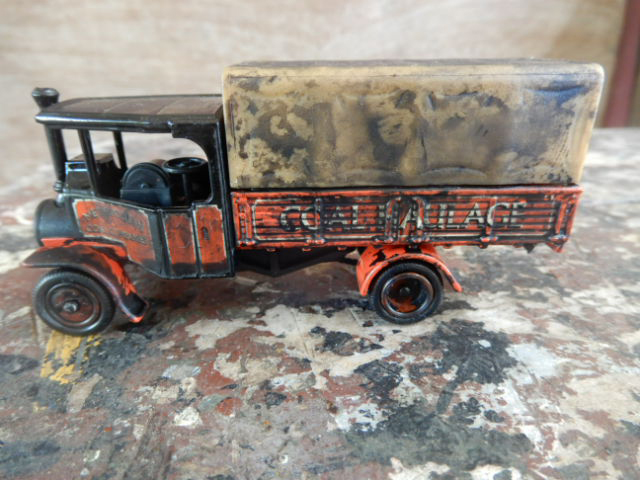
“Hi Al,

Here is a photo of my steam lorry after I weathered it, using washes of thin black , gey and brown paint . and weathering powder.

Paul”

And seeing as weathering is such a hot topic with you lot at the moment (thanks to Jim for that), I thought I’d have a look through the archives, and came out with these two:

Bobby weathers his engine.

Alan’s weathering trick.

There’s a long list of weathering posts on the blog now.

A big thanks to Joe for sharing his model railroad computer control vid – and to Paul and Bruce too.

That’s all for today folks.

Please do keep ’em coming.

And if today is the day you decide to roll your sleeves up and get busy, the Beginner’s Guide is here.

Best

Al

PS More HO scale train layouts here if that’s your thing.


Need buildings for your layout? Have a look at the Silly Discount bundle.