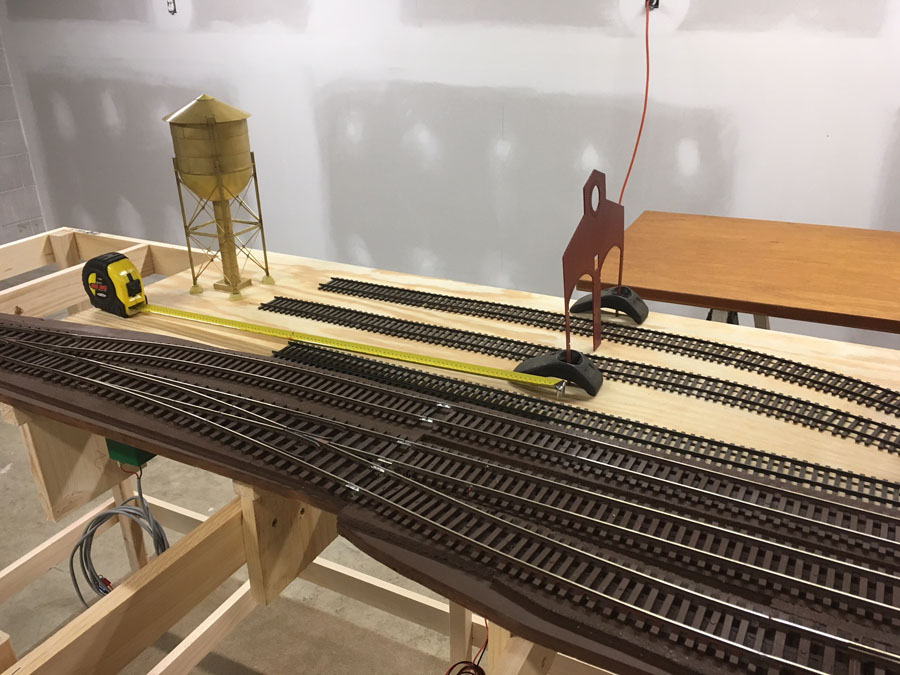
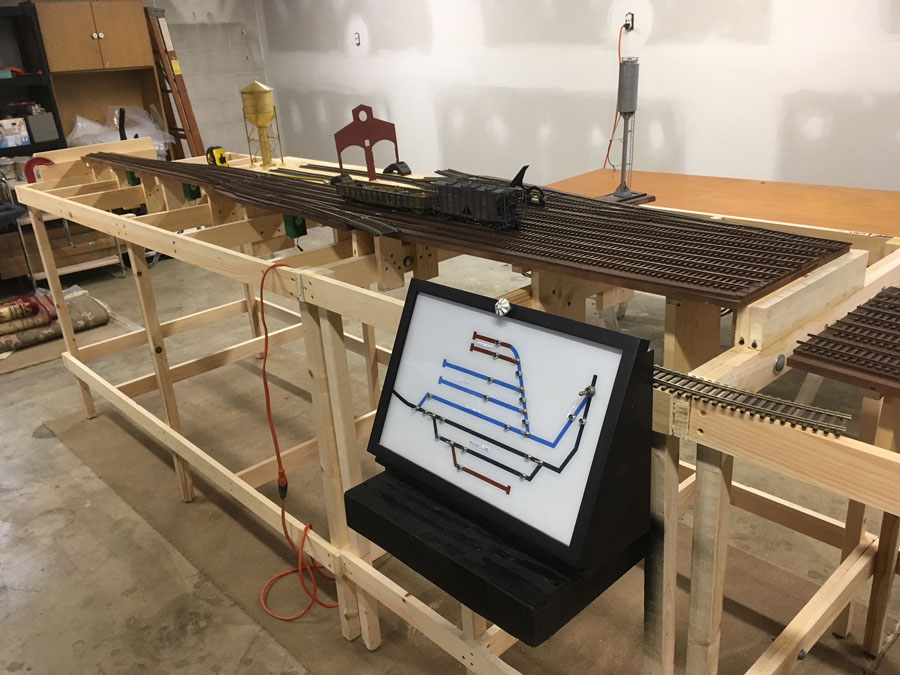
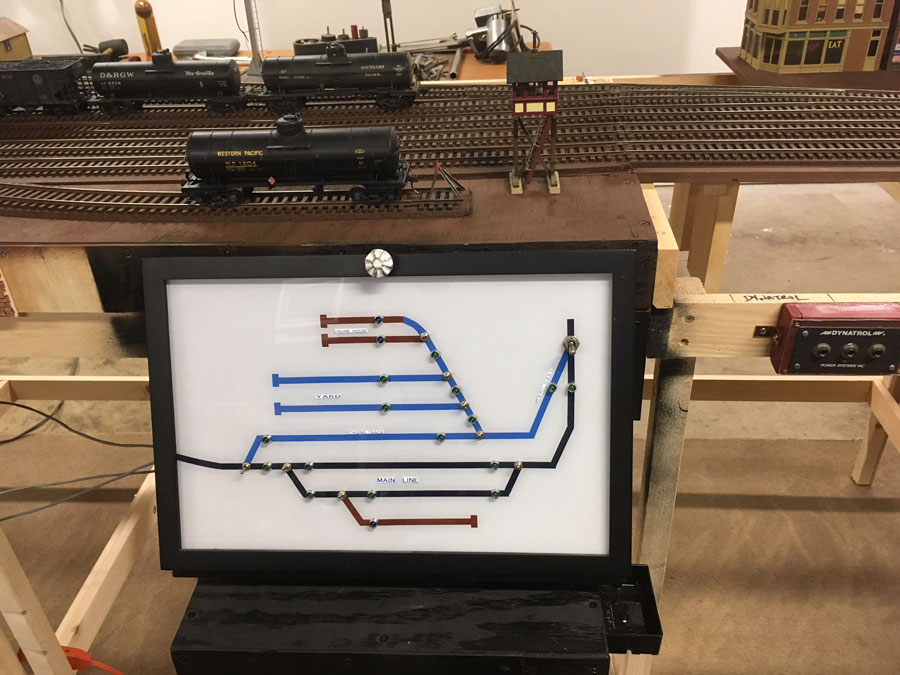
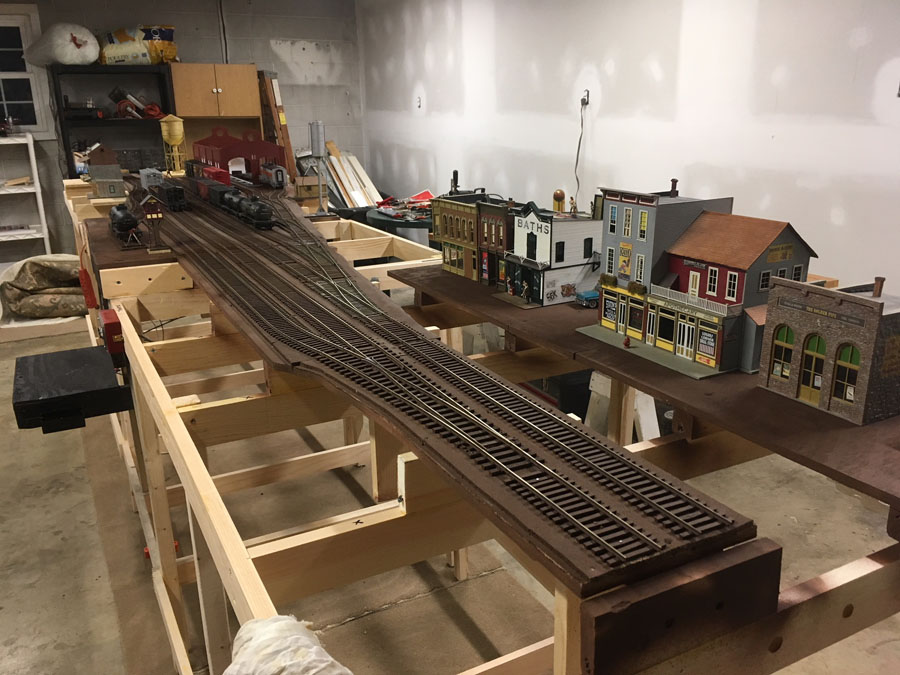
On30 shelf layouts

John’s been back in touch, he’s added to the On30 shelf layouts on the blog:

“Dear Mr. Lee…

You have often said how much you enjoy updates.

My current On30 layout is almost complete.

For those who do not know, On30 is 1/4 inch O scale that runs on HO track to represent 30 inch narrow gauge.

30 inch gauge was a common industrial and agricultural track gauge in many places around the globe.

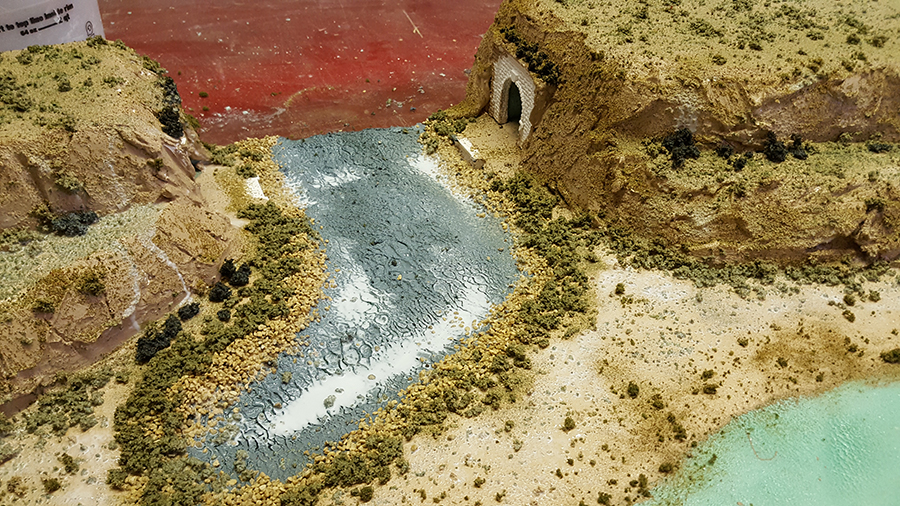
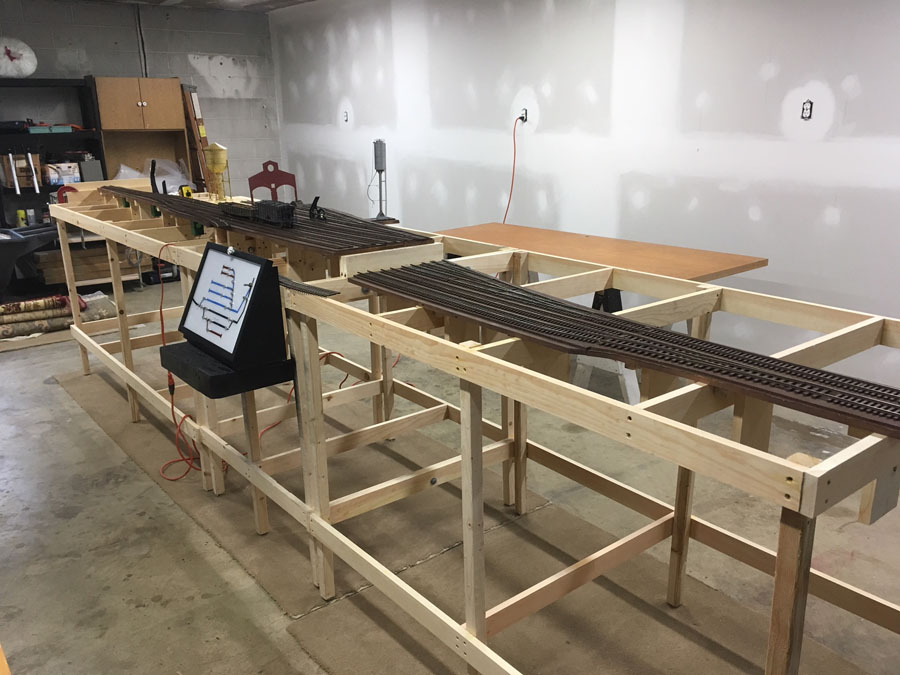
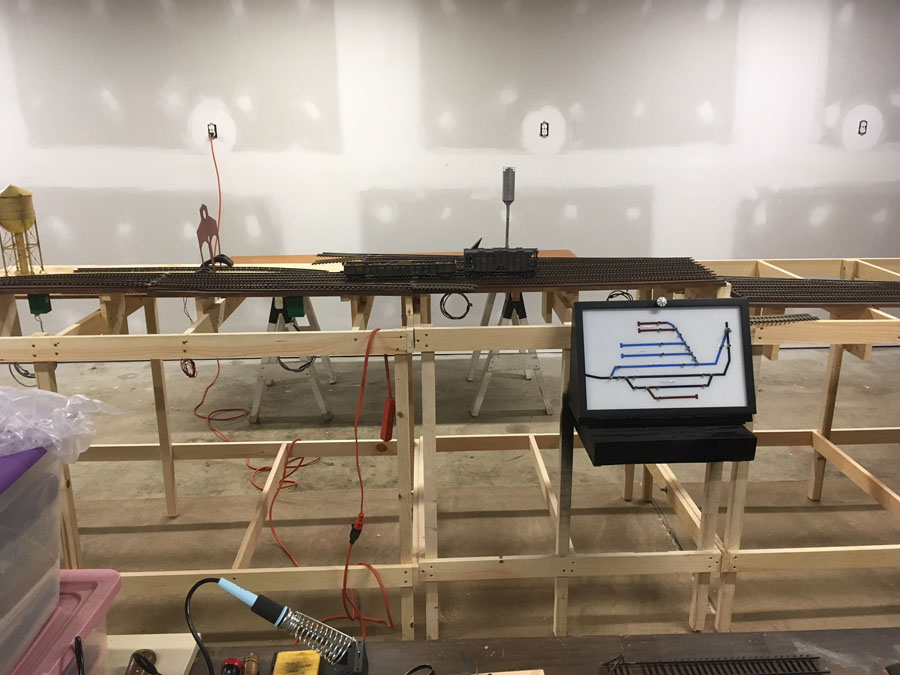
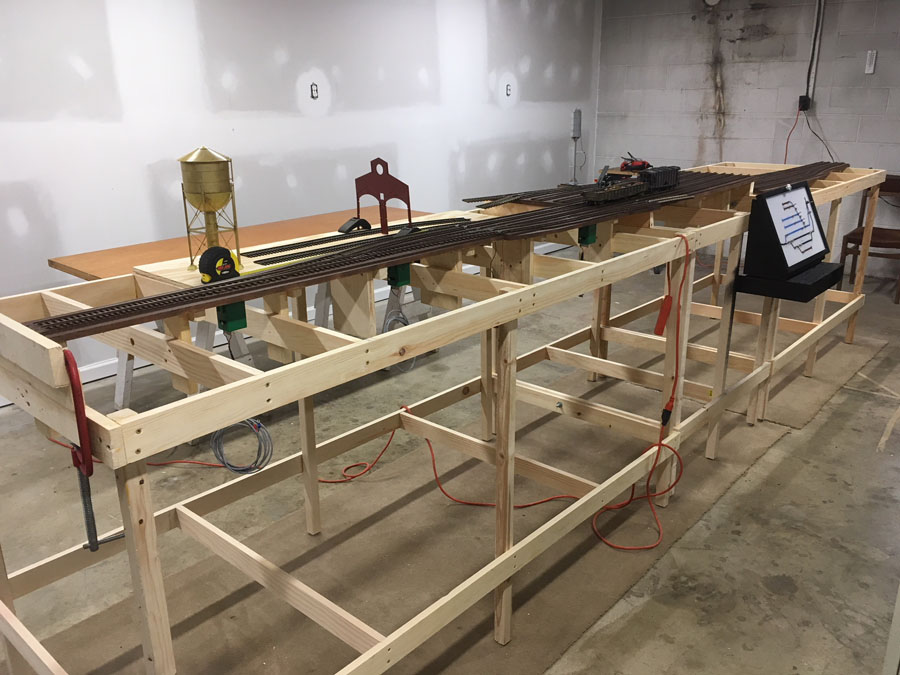
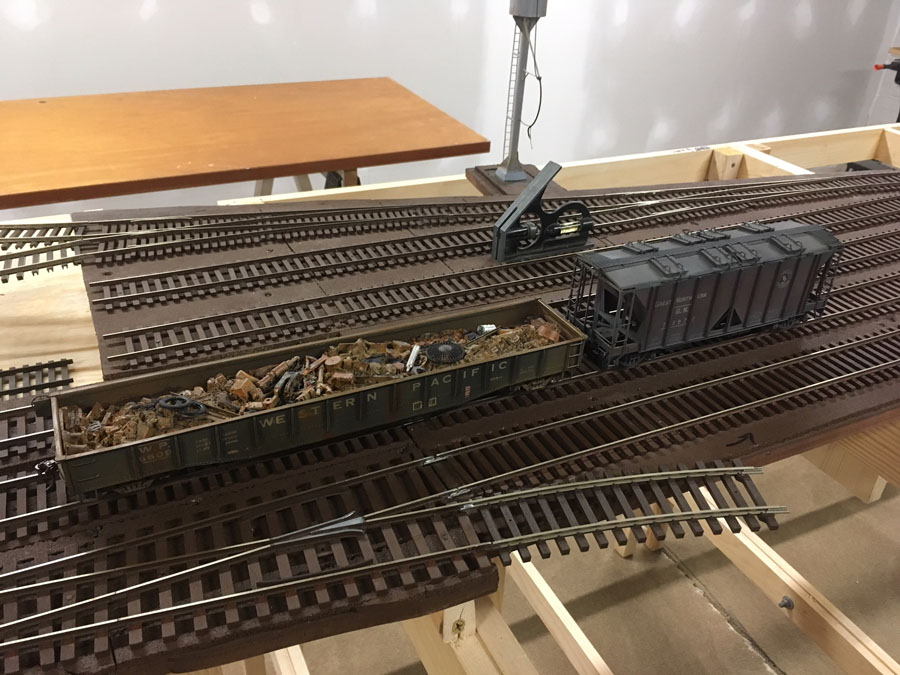
“Grasse Pointe” represents a small service yard at the end of a small industrial railway (tramway) that serves a brickworks.

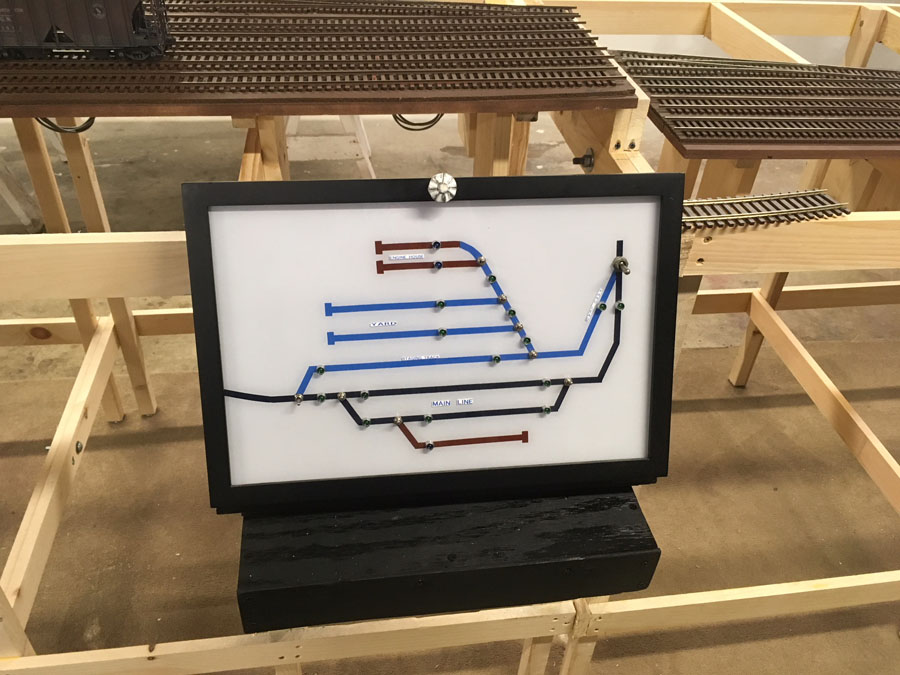
The trackplan is the popular Inglenook in a 2-2-3 pattern (maybe 2-2-4 if I push it) I used a sector plate and one set of PECO Setrack points (Turnout or Switch here in America).

The railway is in the twilight of its operations and maintenance is somewhat lacking. The weeds are taking over!

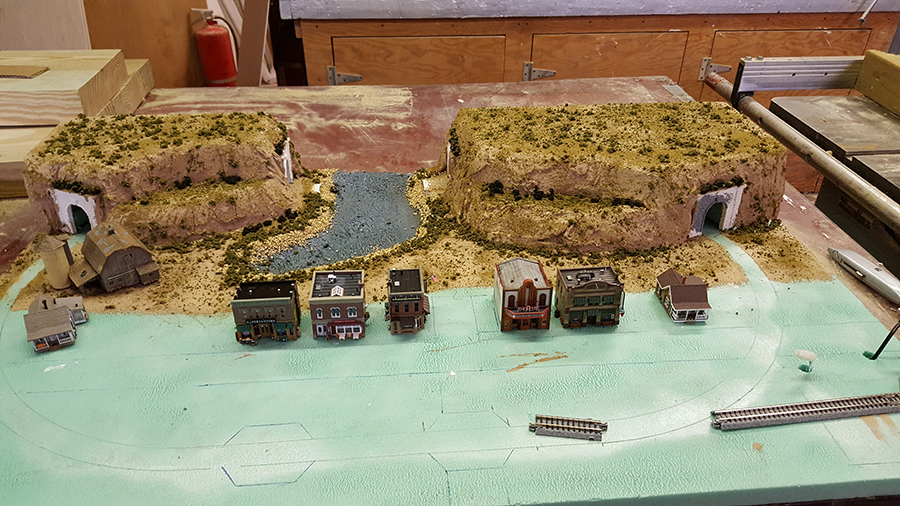
Here is the first set of photos showing the basic setup.

The dimensions are 10 inches wide (29 mm if I have my conversion right) and 28 and 1/2 inches long (725 mm if the conversion is correct).

The layout is my smallest to date and downright minuscule for 1/4 inch scale.

It will fit on a common bookshelf.

Some call this a micro layout in that it is less than 4 square feet in total area.

John

California, USA

aka John from Cali”

On30 shelf layouts track plan

shelf layout track

shelf layout track

On30 shelf layouts.

On30 shelf layouts

On30 shelf layouts


On30 shelf layouts:

shelf layout backdrop

model railroad shelf layout trees

overhead view shelf layout

overhead view shelf layout.

On3 building

model railroad buildings

model railroad buildings

A huge thanks to John for adding to the On30 shelf layouts. I find it interesting to hear what he has to say about Peco tracks.

Over the years I’ve noticed one name that comes up time and time again when it comes to the best quality of track / points / turnouts – and that’s Peco.

I would love to hear your comments below on that.

That’s all this time folks.

Please do keep ’em coming. And don’t forget the Beginner’s Guide if you feel it’s your time to shine.

Best

Al

PS Latest ebay cheat sheet is here.

PPS More HO scale train layouts here if that’s your thing.


N scale train layout plans

Dale’s been in touch and added to the N scale train layout plans on the blog.

I really do enjoy the posts where you can see the layout from the very start:

“After having an HO layout as a kid, I decided that, at 68 years old, it was time to have another one.

This time, due to space limitations, I had to go with N scale.

My design considerations were 1) that I would be able to sit back and just watch trains run if I wanted, or 2) have a hands-on “operating” session if I wanted. The first consideration mandated a closed loop; the second mandated rail-served businesses with sidings and a team track.

The following track plan gave me what I needed.

N scale train layout plans track plan

The second major design decision was era and locale.

Era was easy since the limited space required tight radius curves. Thus, a time frame of the 1950-1970s was indicated, where locomotives were diesel and relatively short. I went with an EMD GP7 and an F7a. Rolling stock had to be no more than 60 feet long.

Locale was a bit harder to decide until I started thinking about the operation aspect. I set the scene as an area in a small town, not the center of town but somewhere on the edge of town. Since it depicts an area no more than a mile or so east to west, I kept to flat terrain.

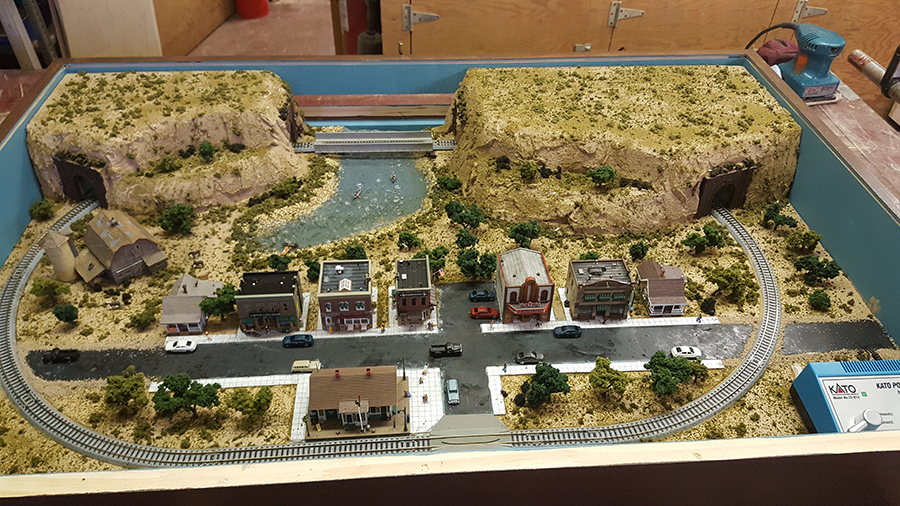
n scale train layout plans overhead view

There are two spurs at the east end where a staging yard or connection to an expansion can be done but I haven’t decided if I will build them.

The only way to get what I wanted in the space I had was to model in N scale. The layout measures 2 feet by 4 feet.

Build details:

The layout is on a piece of 3/8 inch MDF attached to a framework made from 1×3 lumber. The height is 42 inches. This height is right for me to operate the layout while standing (and high enough to keep my lazy cat from jumping up on it.)

The track is a combination of code 80 Atlas flex track and Peco turnouts on N scale cork roadbed. The sidings to the businesses are sloped so that the track at the business is at ground level. The tightest radius on the layout is just under 8 inches.

Wiring is 14 gauge for the DCC bus to the track with feeders every 24 inches. For the LED lighting in the buildings and the street lights I used 18 gauge stranded wire. All wiring is color coded so I can tell easily what lines are for what purpose.

Taking my time, the layout took about a year to build. Or, more correctly, I took about a year to build it. I wanted to go slowly and get it right, especially the trackwork. I had to take up and replace two of the Peco curved turnouts because the original ones kept causing derailments and I finally got tired of trying adjustments. Once replaced, both worked fine without fiddling with alignments.

Operations – Running trains

As I mentioned earlier, the layout is designed for two styles of running. Sometimes I just want to sit back and watch the trains run. For this, I will have one train running westbound (clockwise) on the inner loop and one eastbound (counter-clockwise) on the outer loop. I often do this when I’m thinking about some other problem or deciding on what to do next.

Although there is a station, there is no passenger service. With the tight radius required, passenger cars are just too long, or too old style for the era, to look good on the curves, so the station is pretty much abandoned.

Operations: Operating session

Even for such a small layout there is sufficient challenge for operating it as a railroad. Here’s how my imagination guides it.

The outer loop becomes an inter-city mainline and is not part of the local scene unless the manifest train on it needs to pick up or drop off cars. Pick-ups and drop-offs are done on the back part of the inner loop. Once that is done, the manifest is constantly in motion around the outer loop but is “seen” as going to or coming from somewhere off site. Since the outer loop is not “really there” it can’t be used in the switching of cars for the local businesses.

I looked through a lot of N scale train layout plans to find what I wanted.

So, an operating session, which may take anything from 10 to 30 minutes, starts out by the switcher picking up the cars that are due to be routed out the next time the manifest hits town and staging them on the back of the inner loop. When the manifest, headed up by the EMD F7a, has arrived, dropped off the cars tagged for the town, picked up its new batch and departed, the EMD GP7 switcher has to do its job of delivering the cars to the appropriate business or to the holding track.

To keep things interesting, (remember, you can’t use the outer track) the siding to the Feed and Seed at the west end of the layout can only hold the locomotive and one car and still clear the turnout.

The run-around there can only hold one car and the locomotive and still clear the turnouts at each end. The distance between the points leading to the fuel depot and the Feed and Seed can hold the loco and two cars. All this together means that care must be taken to move the cars so that the loco can be at the proper end of the car it needs to spot.

A car may be at a business or on the holding or team track for no less than one and no more than three operating sessions. Plus, some cars may be routed to either the Feed and Seed or the freight warehouse, depending on what I think it’s carrying. Other cars will never be sent to the Feed and Seed since their contents make no sense there. And, of course, tank cars only go to the fuel depot or the holding track.

n scale laying track

n scale laying track


N scale train layout plans:

n scale laying track

n scale store

n scale loading platform

n scale train layout plans

n scale street

n scale train layout plans street

n scale train layout plans night time LEDs

n scale house

n scale house

Lastly, just for fun:

N scale train layout plans backdrop

I printed out a three-page wide backdrop and taped it to the wall behind the layout.

Dale”

I love what Dale has done, there are lots of N scale train layout plans on the site now, here are some that spring to mind:

Small N scale train layouts.

N scale steam layout.

N scale switching layout.

Lots more N scale layouts here.

Rob’s N scale also springs to mind because of the stunning detail:

London underground model trains (N scale).


Now on to Dave:

Hi Alistair… just uploaded this video, showing two different ways to add lights to a coach on the layout, also adding people, then I show the CMX track clear at work, and how it works, and of course finish off with a bit of a running session

Dave”


Brand spanking new ebay cheat sheet here.

A huge thank you to Dave and especially to Dale for adding to the N scale train layout plans on the blog.

Really liked Dale’s narrative – so many folk overlook a theme / locale / era – and they are so important to breath life in to a layout.

That’s all this time, folks.

Don’t forget the Beginner’s Guide if you want to stop dreaming and start doing.

Best

Al

PS More N scale layouts here if that’s your thing.


Need buildings for your layout? Have a look at the Silly Discount bundle.

Model train reversing loop units

We start today with Terry, who has been scratching his head over model train reversing loop units.

(His last post is here if you want to get up to speed.)

“Alastair: A few weeks ago I asked for help from the members here in creating an addition to the Damnit Railroad.

Thank you for publishing my plea and from the members who responded with numerous ideas.

I have tried most of them and have ended up taking a bit from each one to make what I think works best for me.

As you may remember I was trying to build a 24 inch radius car storage area for very long passenger cars.

Although several folks recommended a helix with the tracks below table level–that doesn’t work well for an old guy who would have to get down on his creaky knees and fumble around.

Many suggested a switch on the blue line near the word “up” but because that is the start of an elevation rise and the need for another crossover on the green line, it was just too complicated to build.

I also found out that because of all the loops on the original portion of the railroad I will now be able to turn the trains in opposite directions on the extension WITHOUT having to worry about rail polarity.

Although I’ve gone over the track several times, if someone happens to see a place where I need a model train reversing loop units please let me know.

The other good thing is that all of the track on the extension is at zero elevation so no worries about grades.

I added a 3 way switch to solve one of my problems and left an area for possible expansion of a shop/turntable section.

I’m attaching some photos–the first is my original extension that your members were asked to tweak. The second is my final solution to the problem and the last is the extension plus the existing track plan for the layout.

Thanks again to you and your readers…and to “Larry” who loves lots of switches–you should be very happy.

If and when I actually build it, I’ll send you some pictures if you like.

Regards

Terry/Idaho USA”

model train reversing loop units

model train reversing loop units

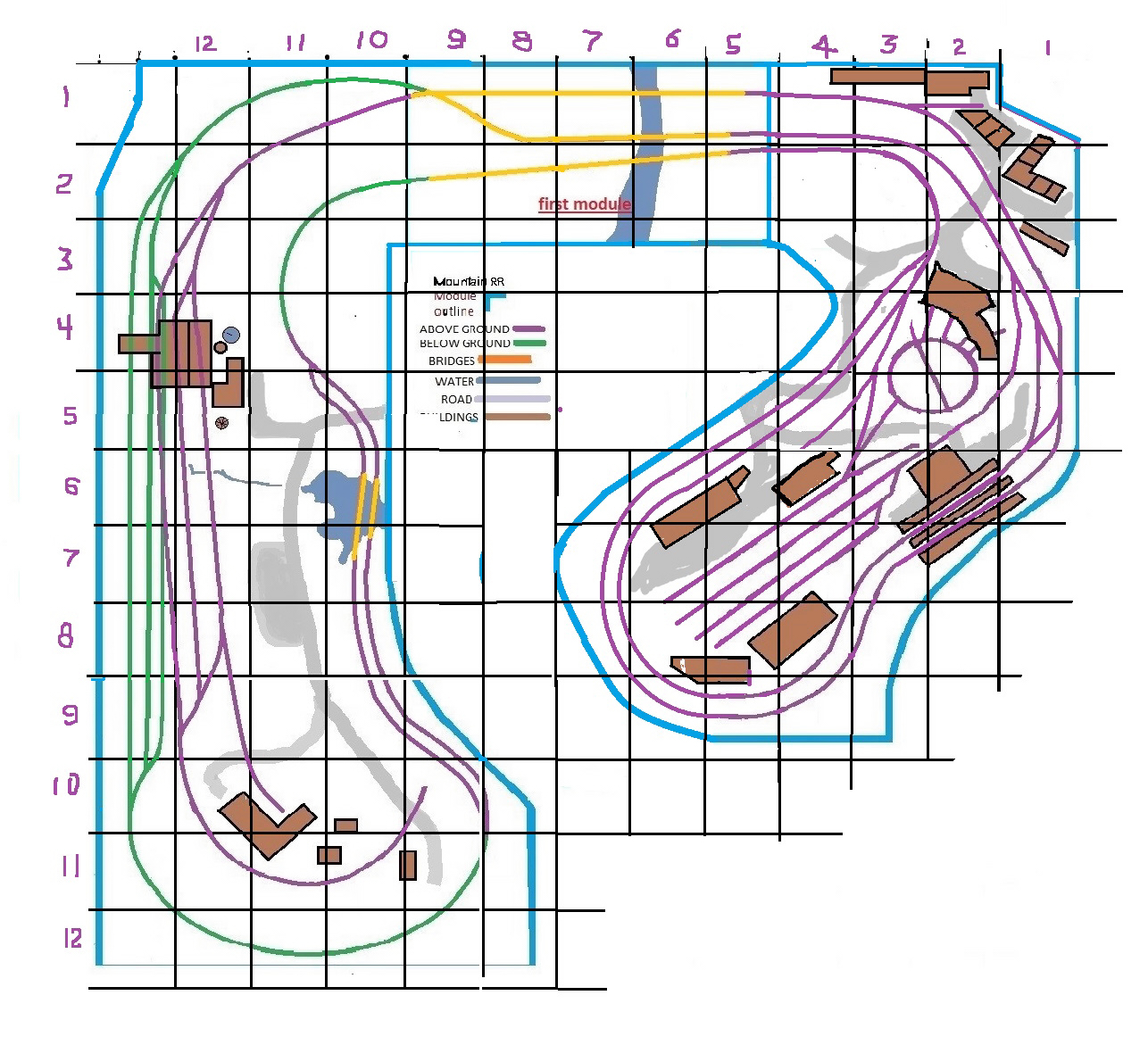
model train reversing loop units track plan.

“Hi, I’ve enjoyed your postings and have started to set up my old trains again after many years.

I’ve had some of these since I was a child, others have been bought more recently. These are American Flyer trains, mostly from the 1940’s, 50’s, and 60’s, though some are newer.

They are S Gauge, 1/64 scale, between O and HO.

Lots of issues to deal with, the bench work needs bracing, the older locomotives are not always willing to run, and the switches are causing problems. The stuff on the table is not in any real placement yet, and the lights and accessories need to be wired.

Lots of work to do, but that’s part of the fun. I like the idea of keeping these old toy trains running.

Roger”

american flyer model train

american flyer model train


“Hi Al,

Simple easy-peasy way to connect track. I work in N scale but this could work in any scale.

Atlas makes a rather cheap looking bumper for and end of line stop and it’s not at all prototypical.

However, the use I found for mine was to use it to slide track connectors onto the rail.

First, take the bumper and file the base of the short rails just enough to make it easy to slide on a rail connector. Filing the shorter rails allows the connector enough room to slide it onto the track. Do this on both rails.

Now you can slide the connector easily onto your new “tool” and then slide it onto the rails of the track you are laying. Also if it’s a bit tight you can spread the connector with a small jeweler’s screwdriver, or what I do is simply run a file along the base of the rails to help it along.

This is the quickest way I know to attach the sliders without using needle-nose pliers or pressing them on with your fingertips. The latter seems to hurt after a while.

Remember to solder all connections for trouble-free running of your trains.

Next tip is how to build engine sheds, warehouses, barns, water towers and the like using bamboo reed on a cardboard frame using only wood glue

Hope this helps.

Keepin’ the Rhythm,

Steve”

Roger’s mail made me smile – I get so many similar ones. It’s hard to throw away the memories of your childhood, and how much better if you can get them going again?

A big thanks to Terry for sharing his finding on his model train reversing loop units, and to Roger and Steve.

That’s all today folks.

Don’t forget the Beginner’s Guide if you more tips and tricks than you can shake a stick at.

And there’s also the brand spanking new ebay cheat sheet here.

Best

Al

PS More HO scale train layouts here if that’s your thing.